
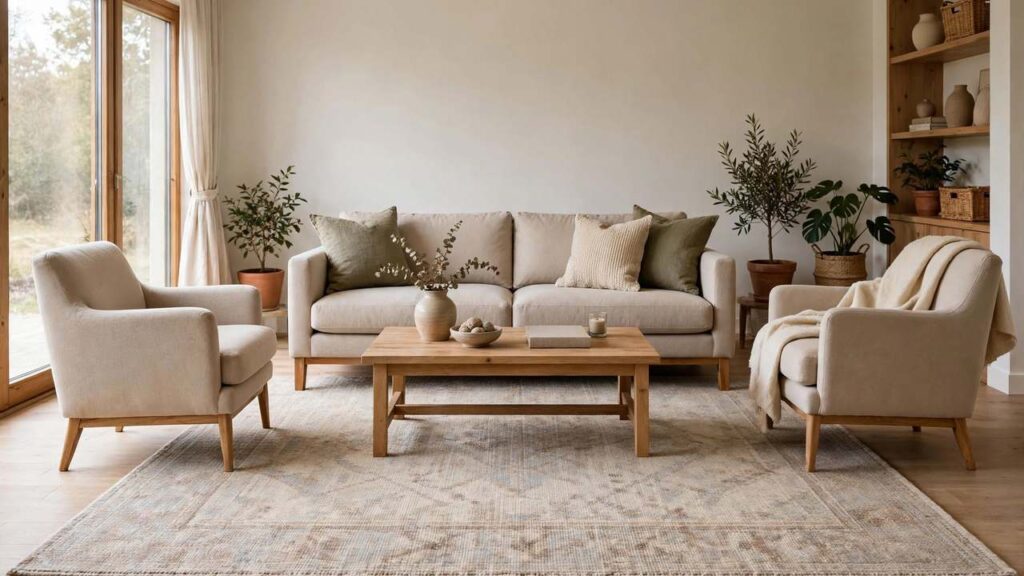
Introduction
Most rugs that disappoint were the wrong size, not the wrong colour. Good area rug measurement is the quiet skill behind every room that feels pulled together: the rug reaches the furniture it should reach, and never strands a chair leg half on and half off.
Measuring is simple once you know the few numbers that matter — how far a chair pulls out, how wide a hallway really is, how much rug a bed needs each side. This guide collects those numbers room by room.
Once the size is right, styling follows: the ideas below pair every measurement with the rooms where it matters most, from bedrooms layered like these beautiful bedroom decor schemes to hallways, kitchens and home offices.
1) Tape the Outline on the Floor Before You Buy
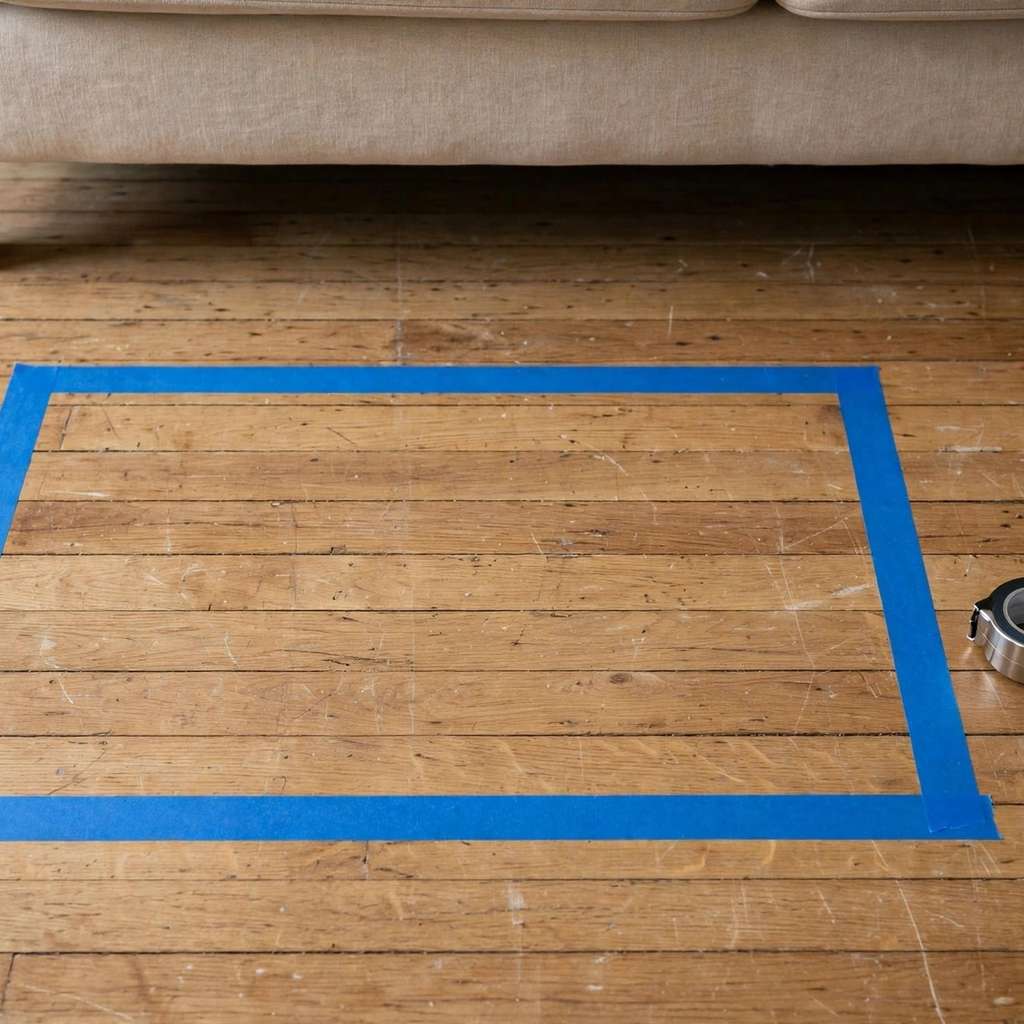
Before ordering, mark your shortlisted size in painter’s tape — say 200 × 290 cm (6 ft 7 in × 9 ft 6 in) — and live with it for a day. You will see whether chair legs land inside it and walkways stay clear.
Why it works:
- Shows the true footprint
- Costs nothing, peels off cleanly
- Settles arguments between sizes
Tip: photograph the outline from the doorway; rooms are judged from there.
2) Leave an Even Border of Bare Floor
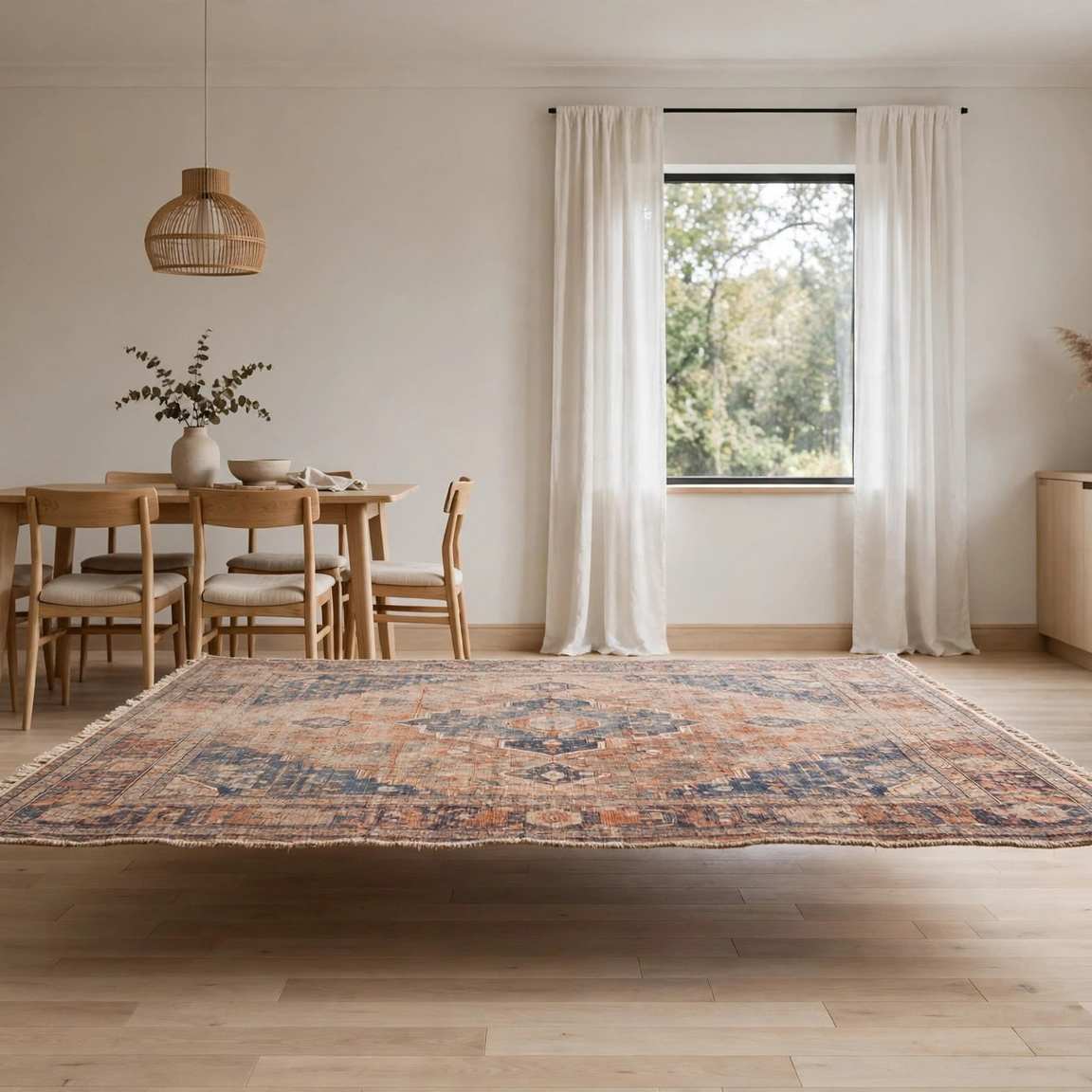
A rug should float, not touch the walls. Aim for 20–30 cm (8–12 in) of bare floor on every side, up to 45 cm (18 in) in a large room. That frame of floor makes the rug a deliberate island, not a cheap fitted carpet.
How to style it:
- Keep the border even all round
- Centre the rug on the room
- Pale floors widen the effect
Tip: wall to wall minus twice your border is your maximum size.
3) Area Rug Measurement Starts With the Front-Legs Rule
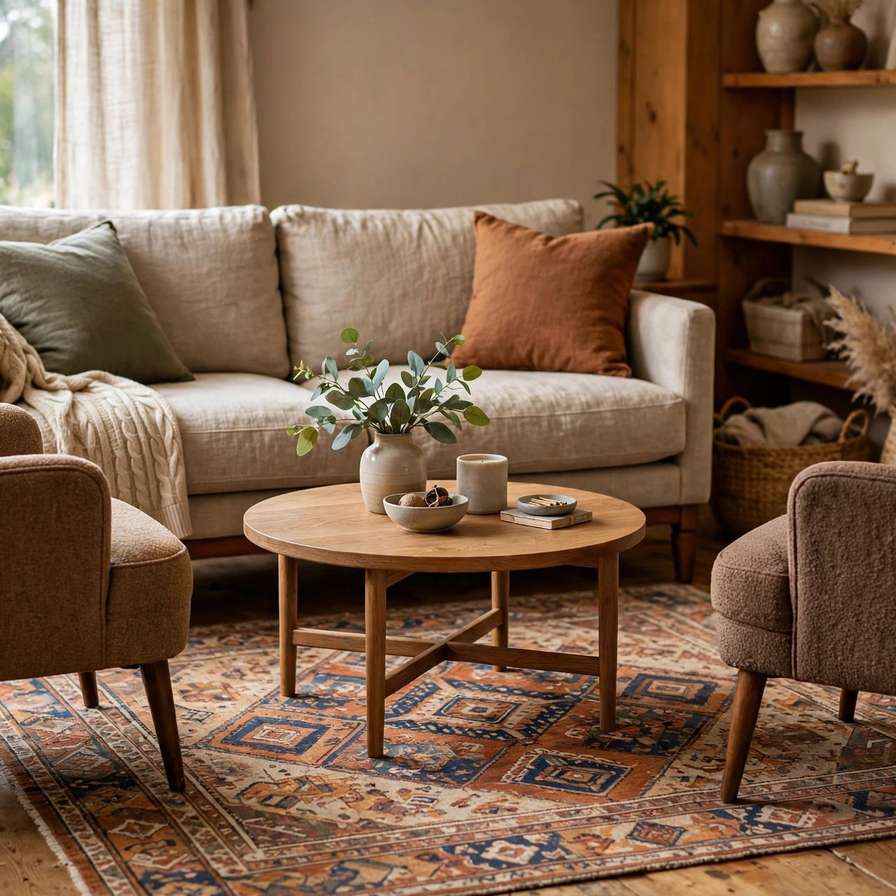
The classic layout puts every seat’s front legs on the rug, back legs off it. For a three-seat sofa about 210 cm (6 ft 11 in) long, that usually means a rug of at least 160 × 230 cm (5 ft 3 in × 7 ft 6 in).
Best for:
- Average living rooms
- Renters who cannot cover the floor
- Anchoring a sofa group cheaply
Tip: if the sofa’s legs fit but the chairs’ do not, size up.
4) Go All-Legs-On in a Large Living Room
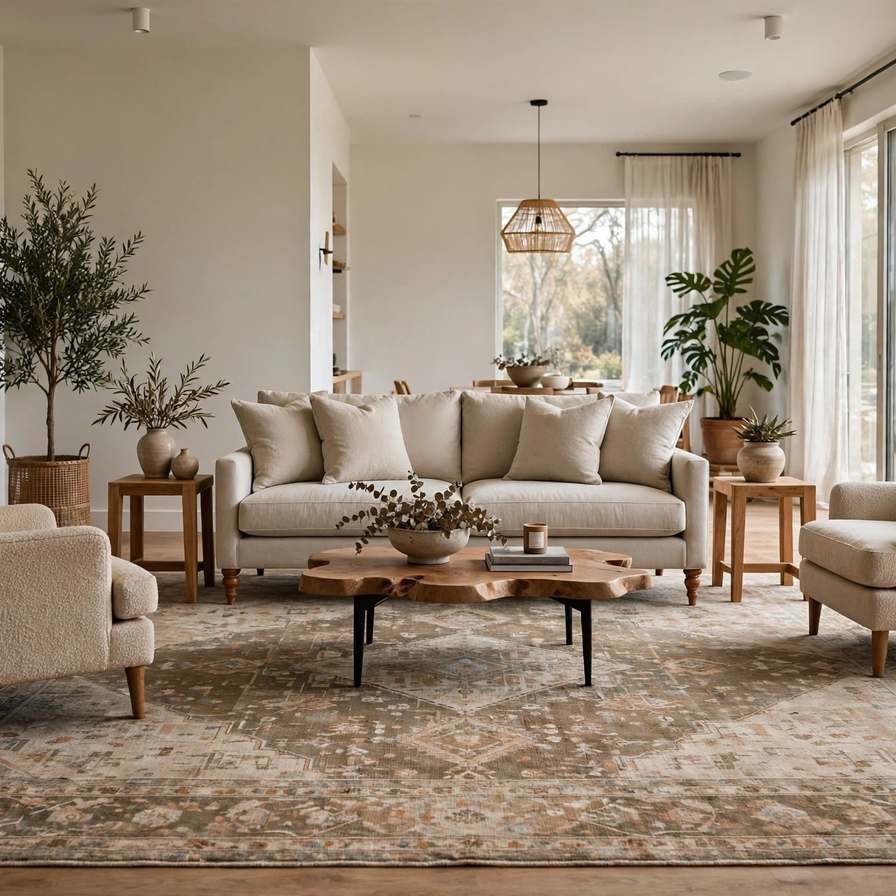
In a big room, choose a rug that takes every leg of the seating group — typically 240 × 340 cm (7 ft 10 in × 11 ft 2 in) or 300 × 400 cm (9 ft 10 in × 13 ft), with 20 cm (8 in) to spare behind the back legs.
Why it works:
- Stops furniture drifting apart
- Defines one open-plan zone
- Feels generous, not apologetic
Tip: measure the seating group’s width and add 40 cm (16 in).
5) Learn the Standard Sizes Before You Shop
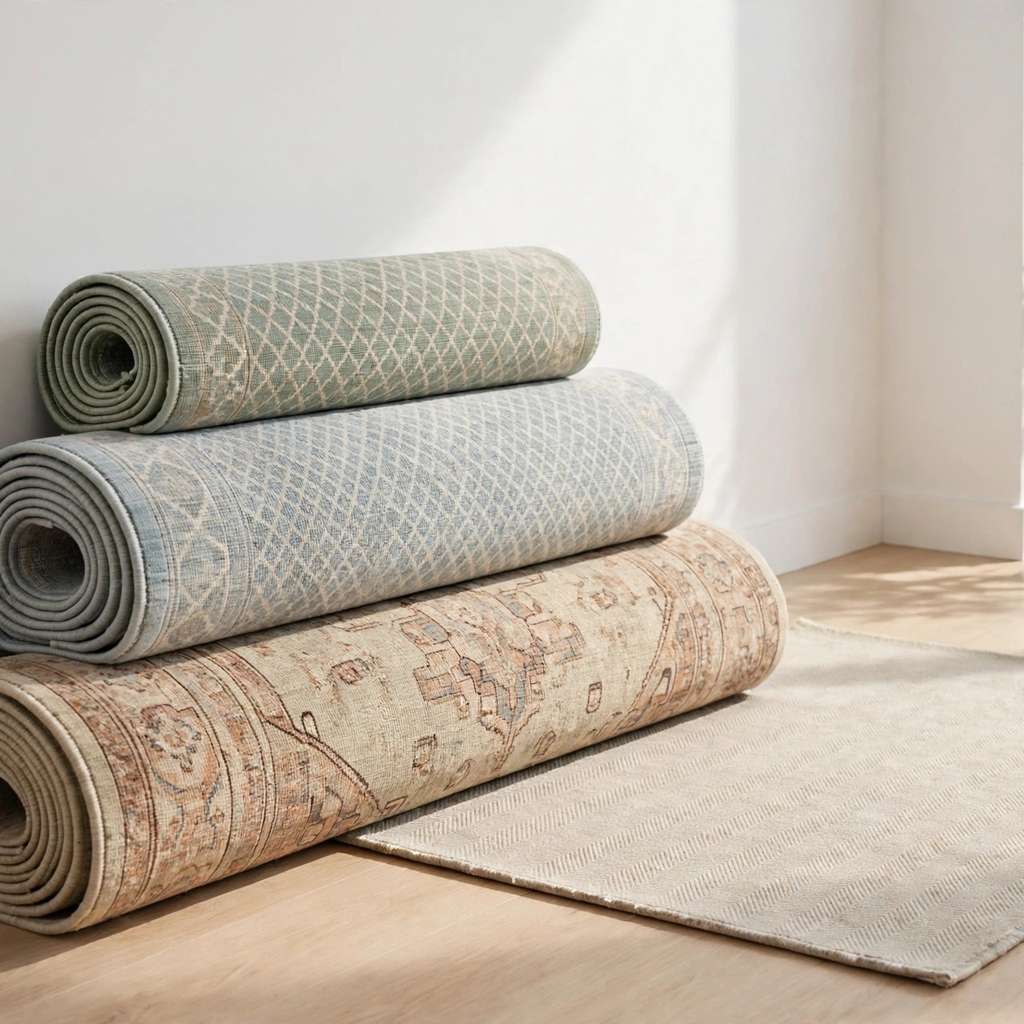
Stock sizes are few: small 120 × 170 cm (4 × 5 ft 7 in), medium 160 × 230 cm (5 ft 3 in × 7 ft 6 in), large 200 × 290 cm (6 ft 7 in × 9 ft 6 in), extra-large 240 × 340 cm (7 ft 10 in × 11 ft 2 in). Measure first, then pick the nearest.
How to use it:
- Medium suits most sofas and beds
- Large is the dining-room size
- Small works under a desk only
Tip: a stock size is far cheaper than the same rug made to order.
6) Measure the Seating Zone, Not the Whole Room
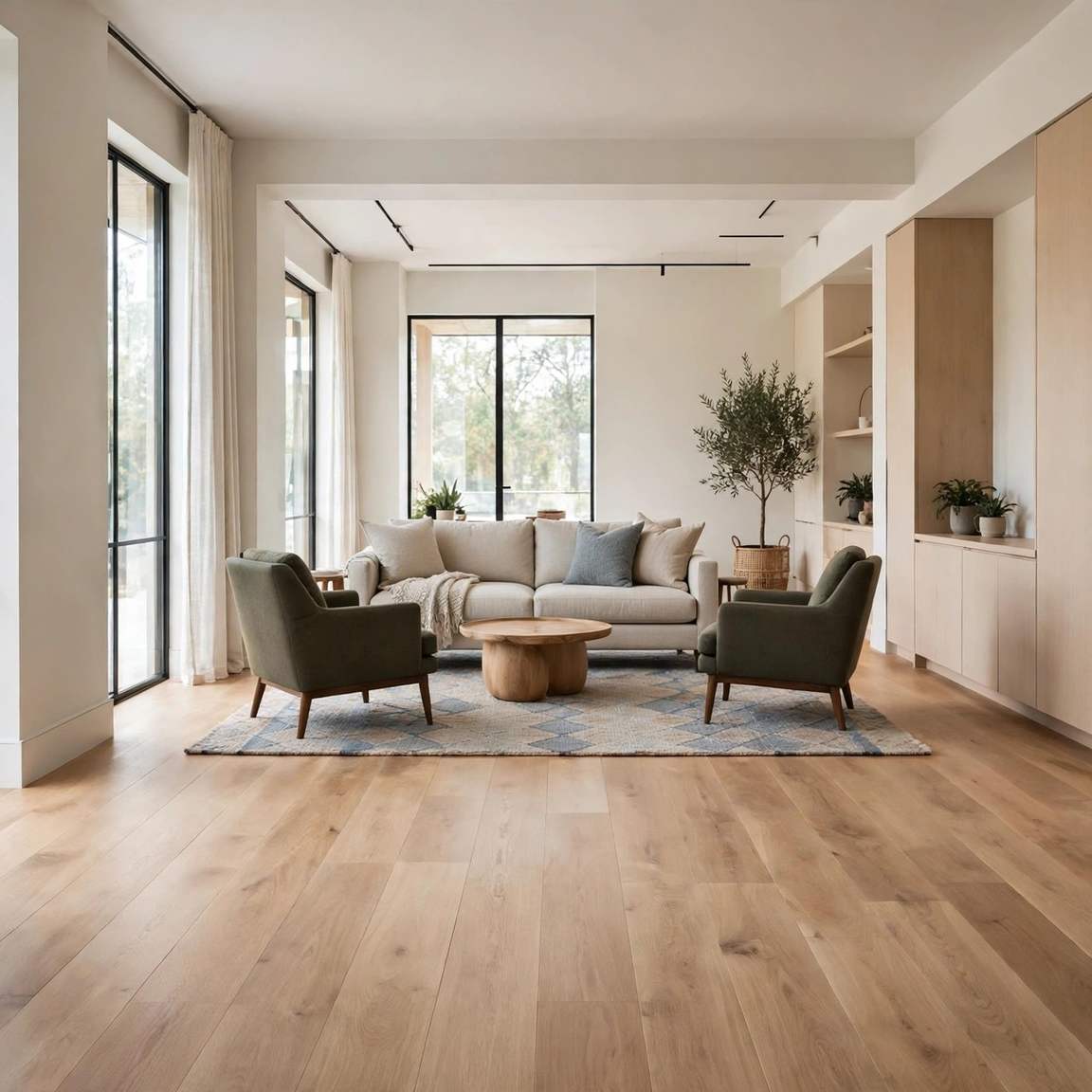
In a long or open-plan room, the rug only needs to serve the furniture group. Measure the rectangle your sofa and chairs occupy — often about 3 × 4 m (10 × 13 ft) in a room twice that length — and size the rug to that zone.
Best for:
- Open-plan living spaces
- Long through-lounges
- Fireplace rooms with one focal end
Tip: leave 90 cm (3 ft) of open floor as a walkway behind the zone.
7) Let the Rug Run Wider Than the Sofa
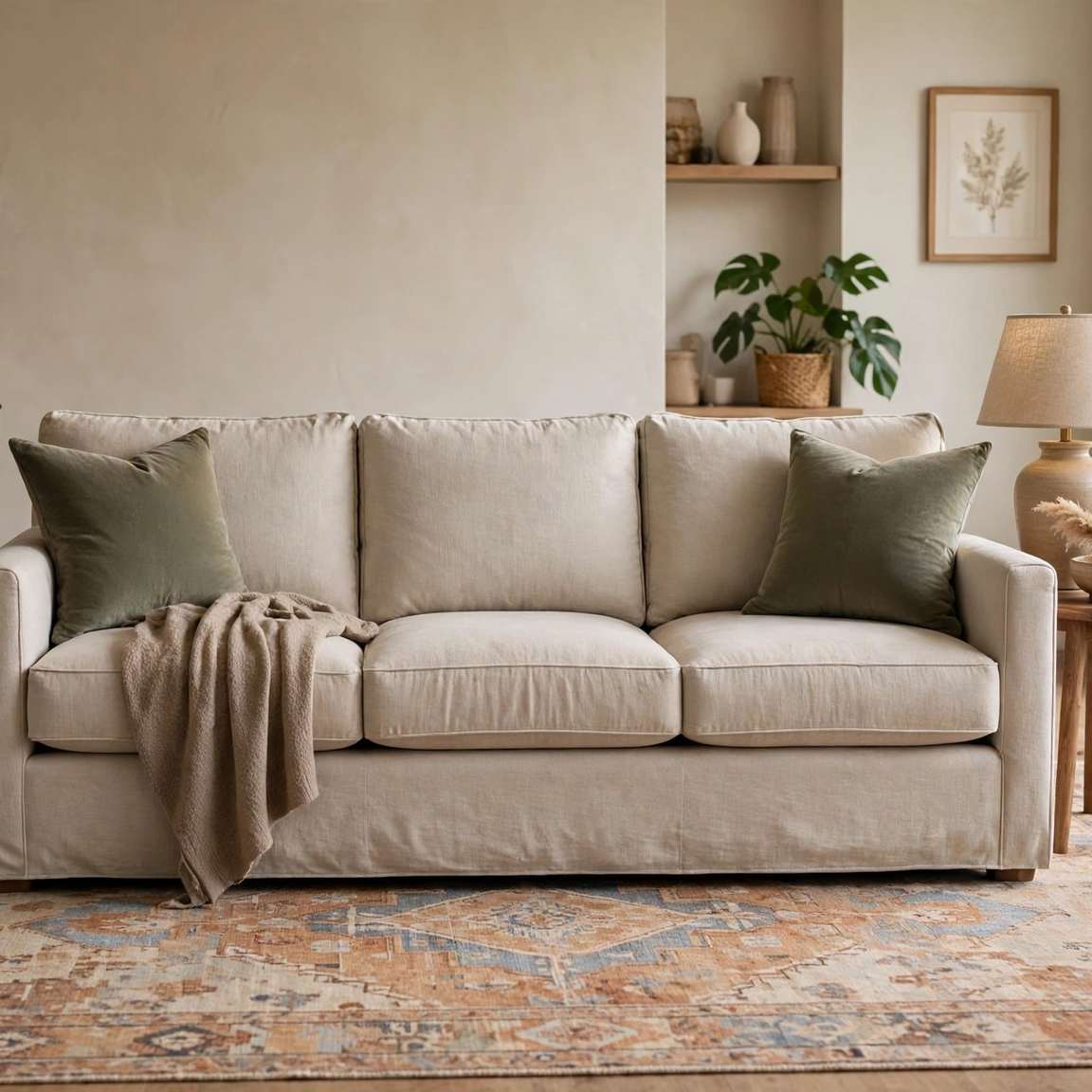
A rug narrower than the sofa always looks like a mistake. It should run at least as wide as the sofa, ideally extending 15–30 cm (6–12 in) beyond each end, so side tables feel included rather than stranded.
Why it works:
- Frames the sofa as centrepiece
- Stops the arrangement looking pinched
- Gives feet rug on both sides
Tip: measure arm to arm first; that is your minimum rug width.
8) Give a Bed 45 to 60 Centimetres on Each Side
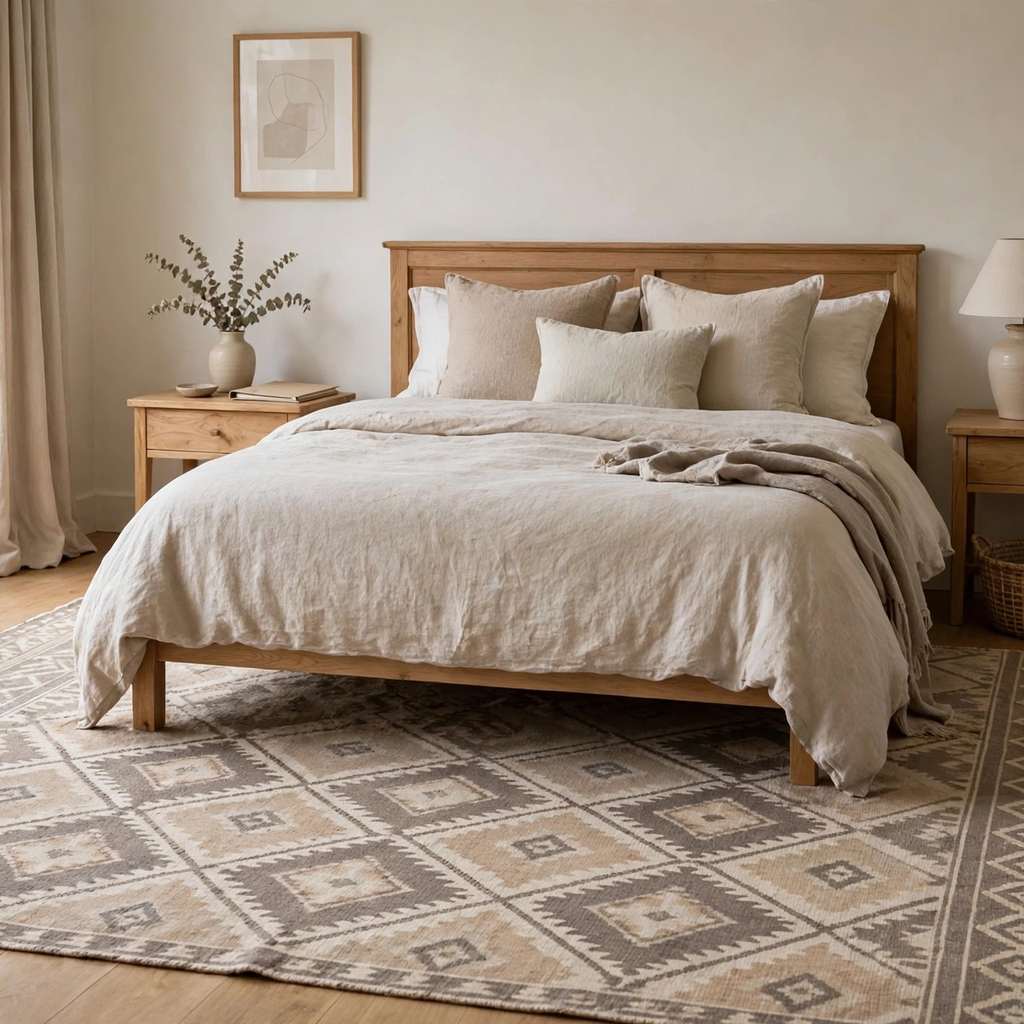
The bedroom rug goes under the bed’s lower two-thirds and should spill out 45–60 cm (18–24 in) on each side and at the foot. A king bed 180 cm (5 ft 11 in) wide therefore wants a rug around 230–300 cm (7 ft 6 in–9 ft 10 in) wide.
How to style it:
- Start the rug below the bedside tables
- Keep the side spill equal
- Let the foot clear the door
Tip: 200 × 290 cm suits most doubles; kings need the next size up.
9) Use the Two-Thirds Rule Under the Bed
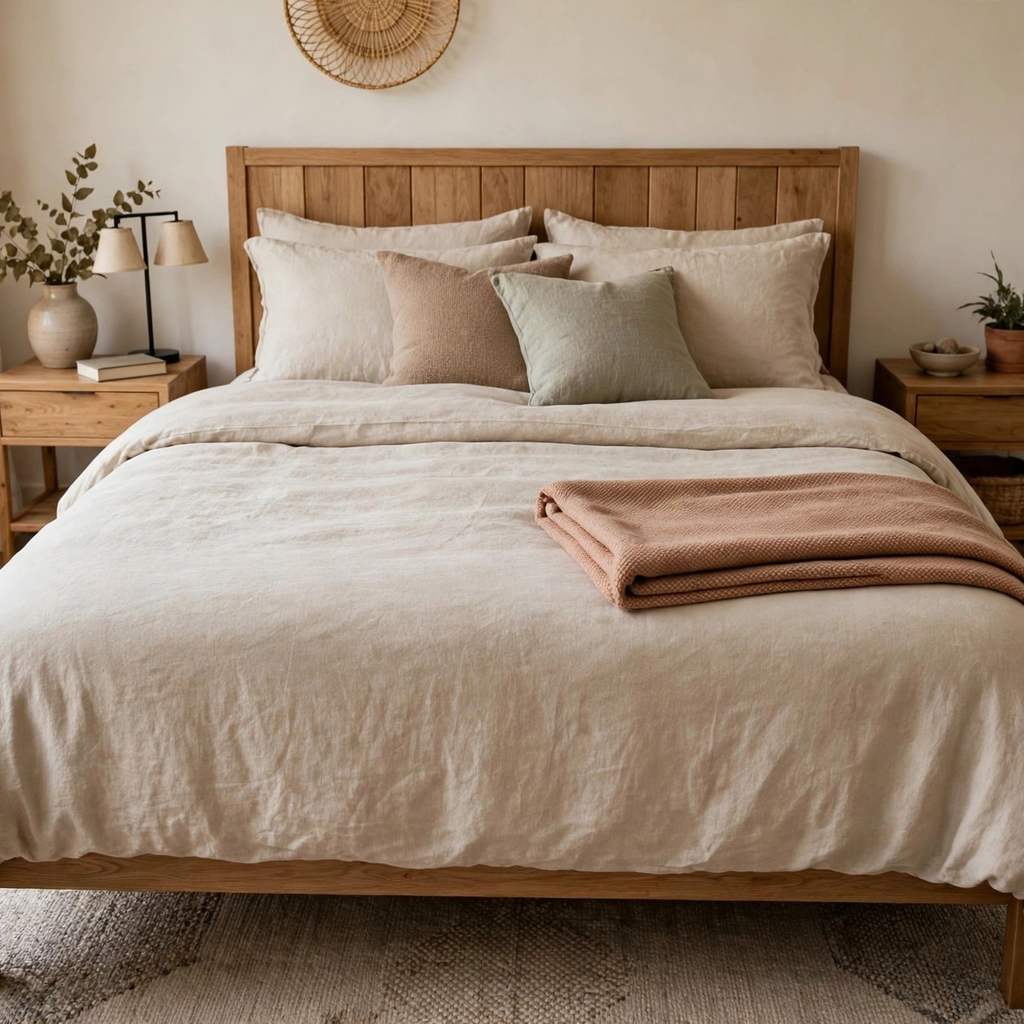
Slide the rug under the bed so the top third of the mattress sits on bare floor, the bottom two-thirds on the rug. On a 190 cm (6 ft 3 in) bed, start the rug about 60 cm (2 ft) down from the headboard wall.
Best for:
- A large look from a medium rug
- Beds against a wall
- Rooms a full rug will not fit
Tip: the rug must cover the line where your feet land sitting up.
10) Choose Two Runners Instead of One Wide Rug
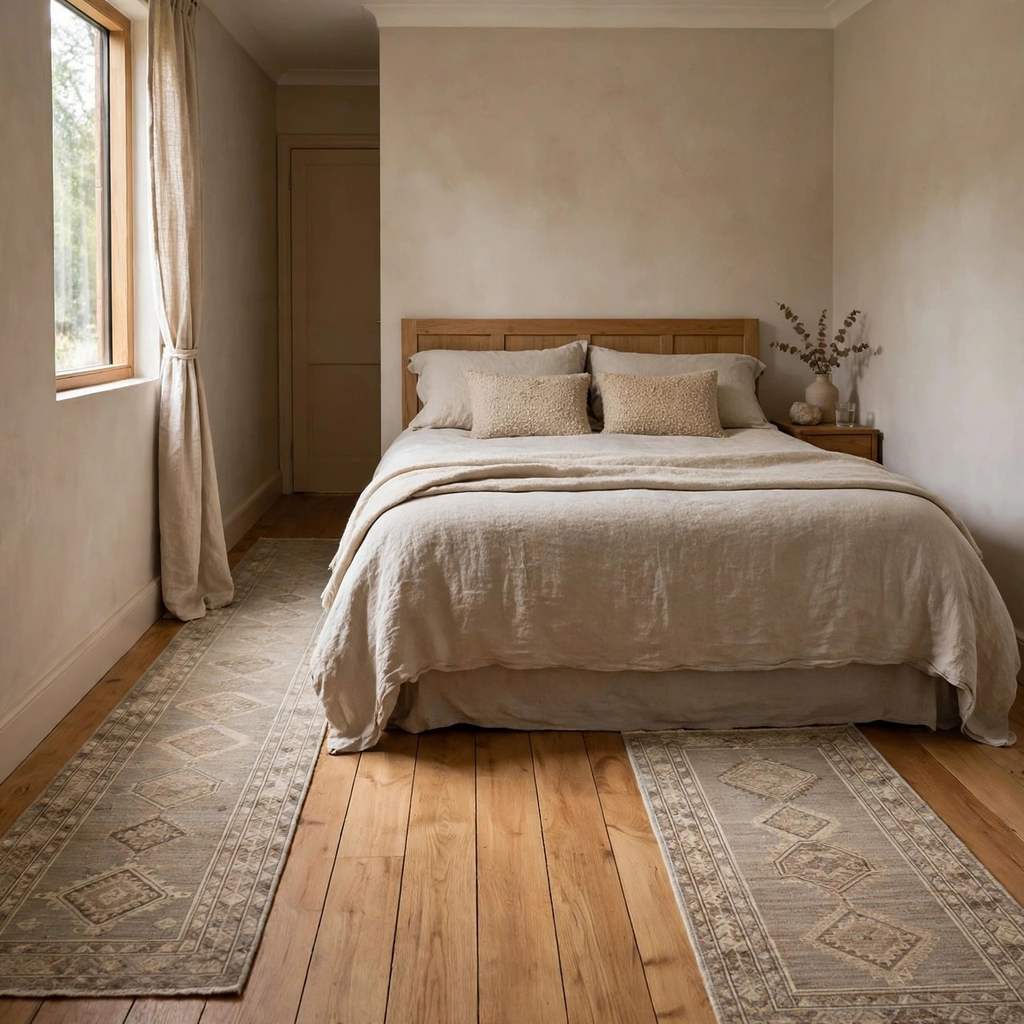
When a wide rug is too costly or the room too narrow, two runners of about 60 × 180 cm (2 × 5 ft 11 in) down each side of the bed cover the strip where feet land — for less than one 230 cm (7 ft 6 in) wide rug.
How to use it:
- Match the pair exactly
- Align tops with the bedside tables
- Add a third runner at the foot
Tip: a 60 cm runner needs at least 70 cm of clear floor.
11) Area Rug Measurement for the Dining Table
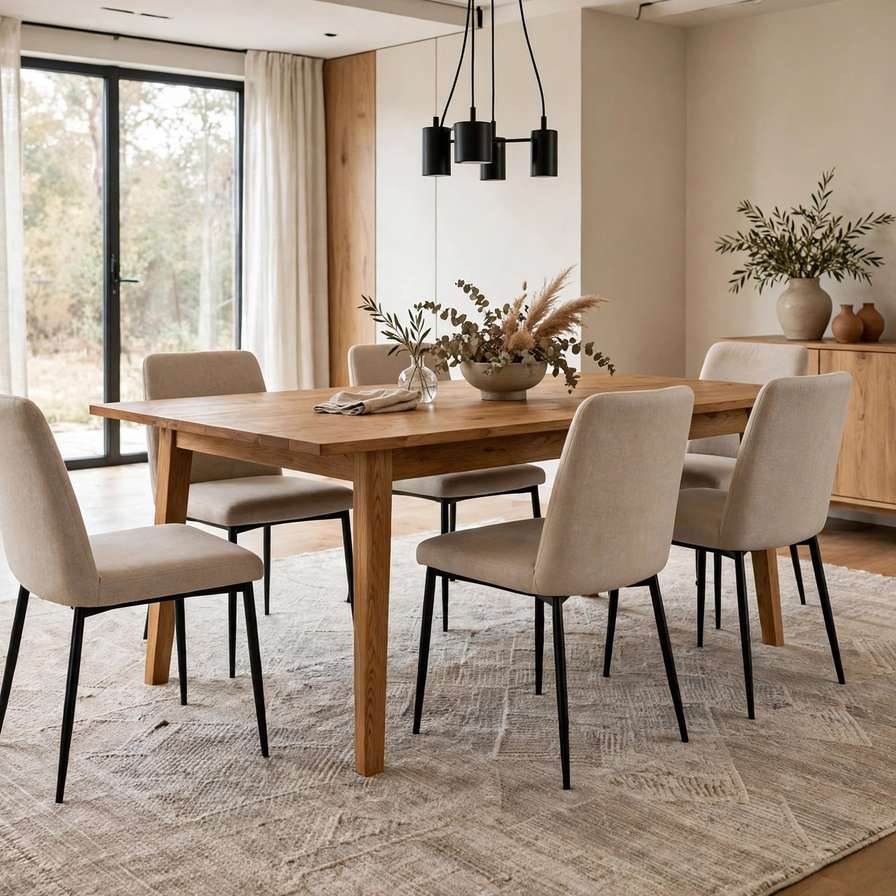
The dining rule: extend the rug at least 60 cm (24 in) beyond the table on every side, so chairs stay on it when pulled out. A table of 90 × 180 cm (3 × 6 ft) therefore needs a rug of at least 210 × 300 cm (6 ft 11 in × 9 ft 10 in).
Why it works:
- Chairs never catch the rug edge
- The setting reads as one island
- Spills land on rug, not boards
Tip: add the 60 cm with the table’s leaves open, not closed.
12) Do the Chair Pull-Out Test With Tape
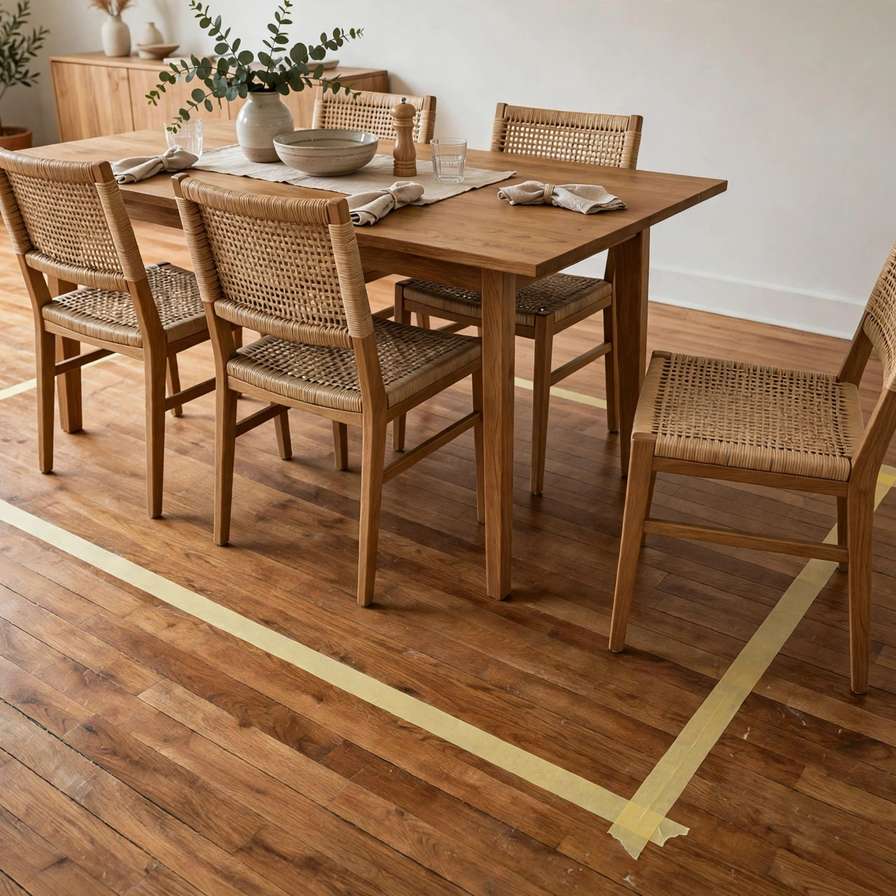
Tape your planned dining outline, sit in each chair and push back as you would after a meal. Back legs travel roughly 45–60 cm (18–24 in) from the table edge; if any leg crosses the tape, the rug is too small.
How to use it:
- Test chairs at the table ends
- Use the heaviest chair
- Retest with the table extended
Tip: carver chairs pull out further — measure with those in place.
13) Match a Round Rug to a Round Table by Diameter
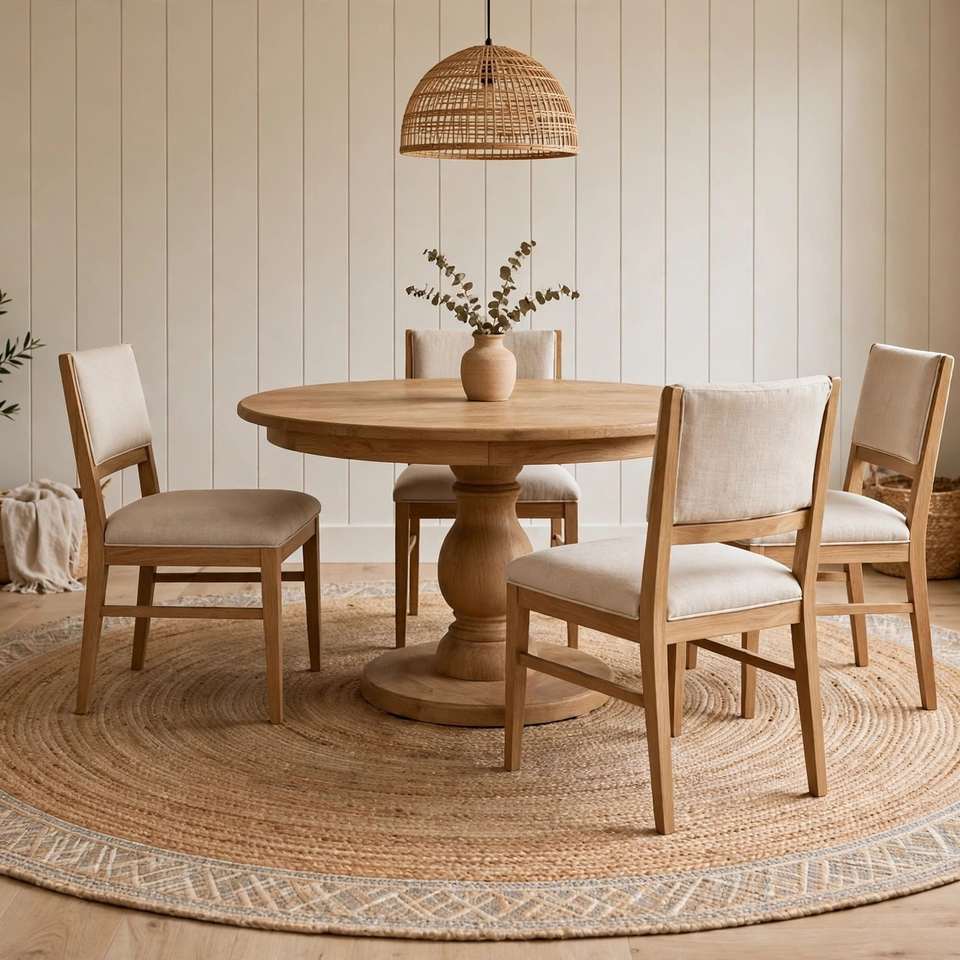
Under a round table, choose a round rug whose diameter is the table’s diameter plus 120 cm (4 ft) — the same 60 cm (24 in) chair allowance all round. A 120 cm (4 ft) table pairs with a rug about 240 cm (7 ft 10 in) across.
Best for:
- Pedestal tables in breakfast nooks
- Square rooms suiting a circular island
- Corner dining spaces
Tip: centre the rug on the pedestal, not the room, if they differ.
14) Keep Dining Rugs Thin Enough for Chairs to Glide
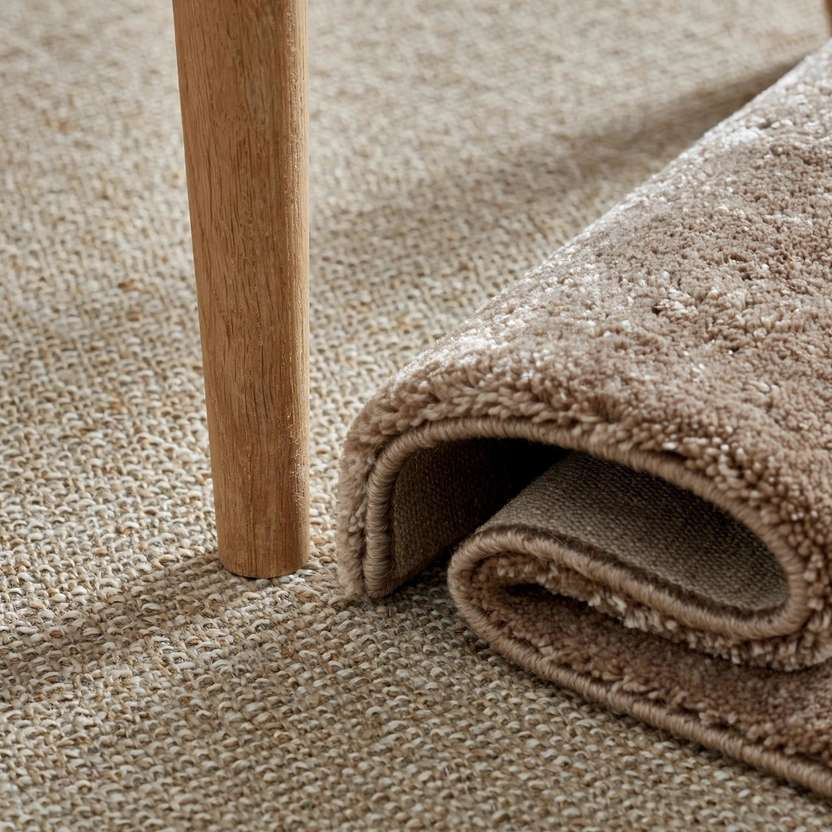
Pile height is a measurement too. Choose a flat-weave or a pile under 1 cm (about ⅜ in) so chair legs slide instead of digging in, and keep fringes out of the chair zone — a fringe adds 8–10 cm (3–4 in) per end.
How to style it:
- Flat-weave or low wool piles
- No fringe on the chair sides
- Patterns hide crumbs
Tip: measure total length including fringe before trusting your outline.
15) Size a Hallway Runner by the Width Left Over
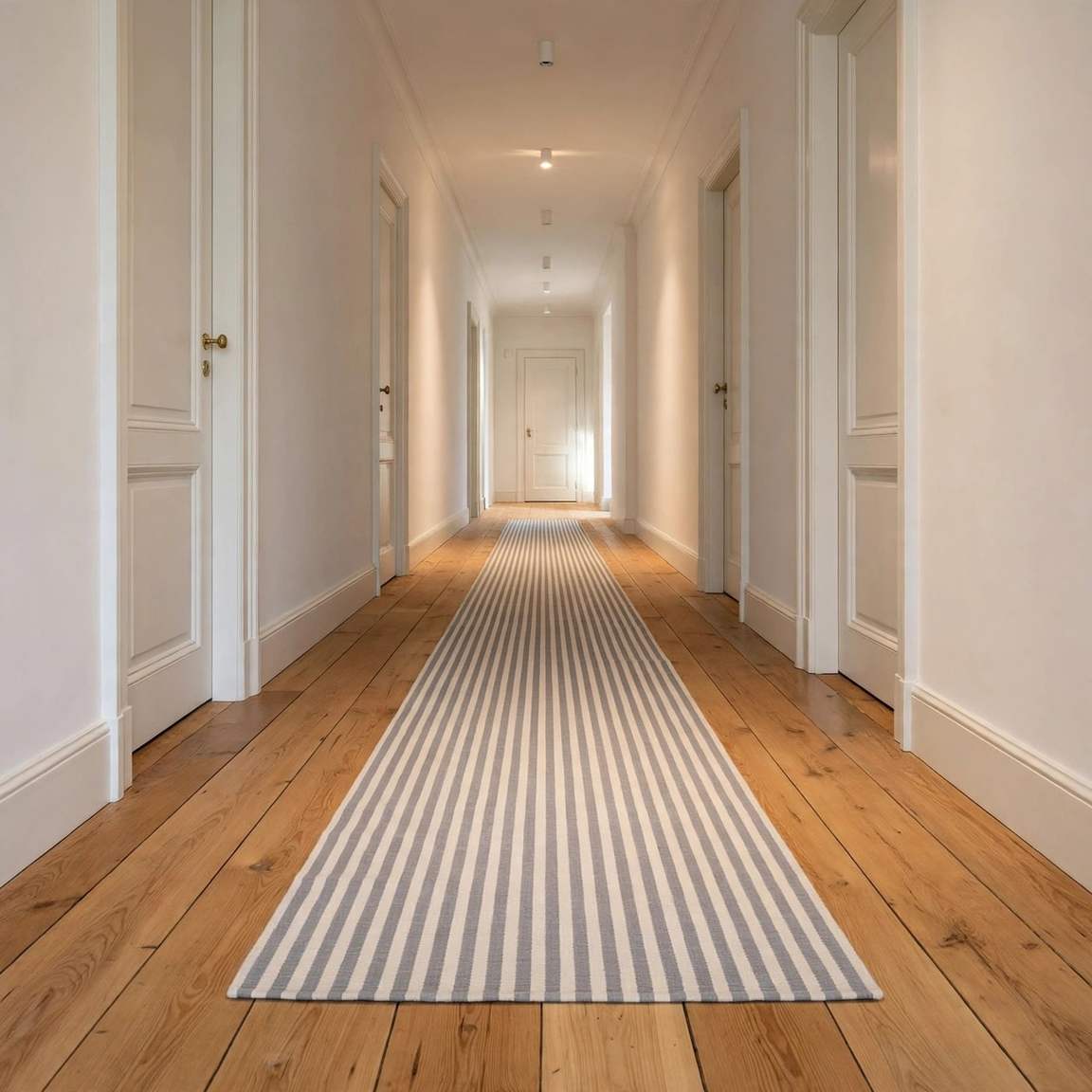
A hallway runner should leave 7–10 cm (3–4 in) of floor showing each side. In a typical 90 cm (3 ft) hallway, that means a runner of 70–75 cm (2 ft 4 in–2 ft 6 in) — standard widths exist because hallways are standard too.
Why it works:
- A sliver of floor widens the hall
- The runner stays flat, not climbing skirting
- Hall doors clear it easily
Tip: measure at the narrowest point — radiators steal width.
16) Stop a Runner Short of Both Ends
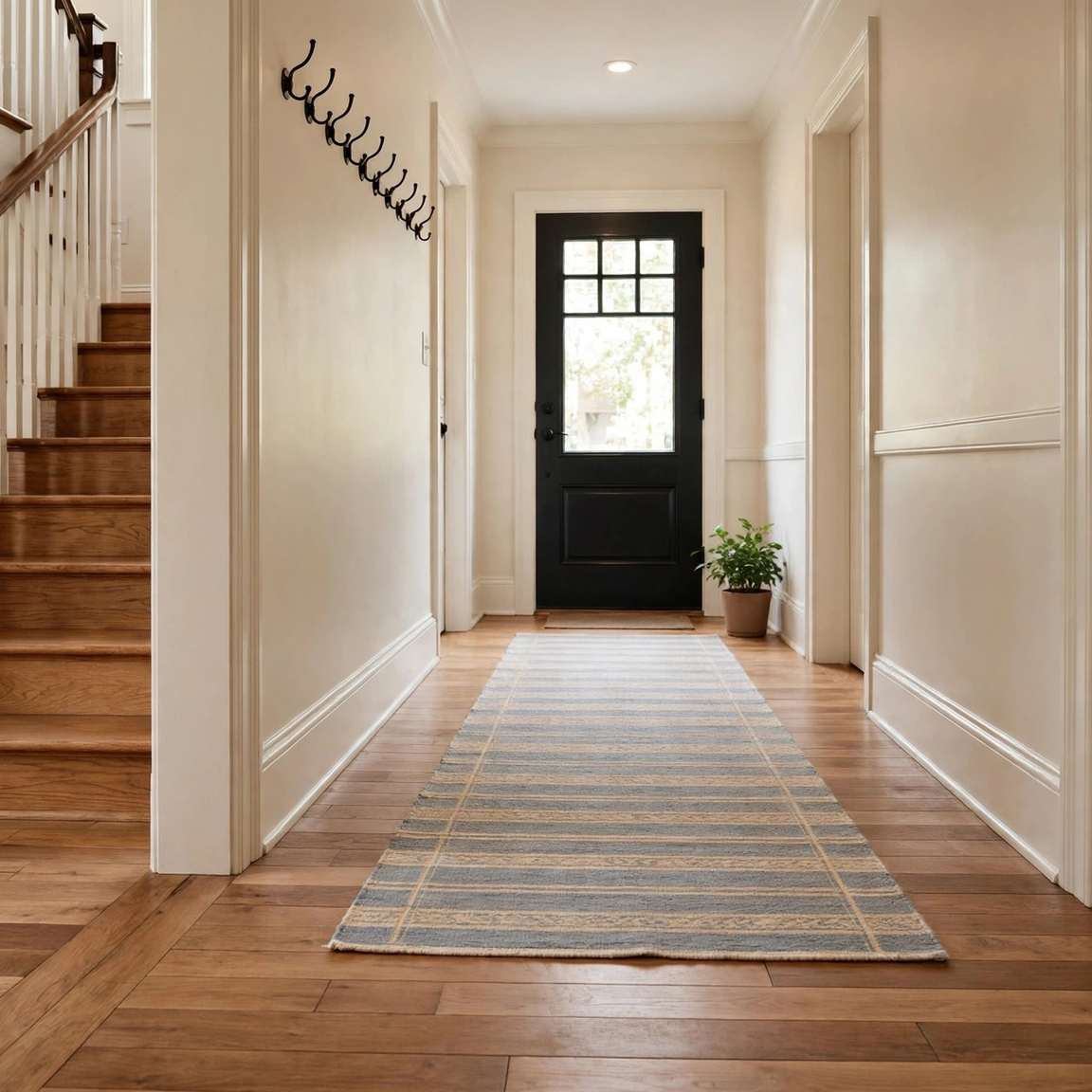
Leave about 15–20 cm (6–8 in) of bare floor at each end of a runner, so it reads as a placed piece, not cut-off carpet. A hall 4.5 m (14 ft 9 in) long suits a runner of about 4.1 m (13 ft 6 in), or two shorter runners.
Best for:
- Long corridors and entrance halls
- Runners meeting a staircase
- Halls with doors at both ends
Tip: centre the leftover space — equal end gaps look intentional.
17) Measure a Galley Kitchen Runner Between the Counters
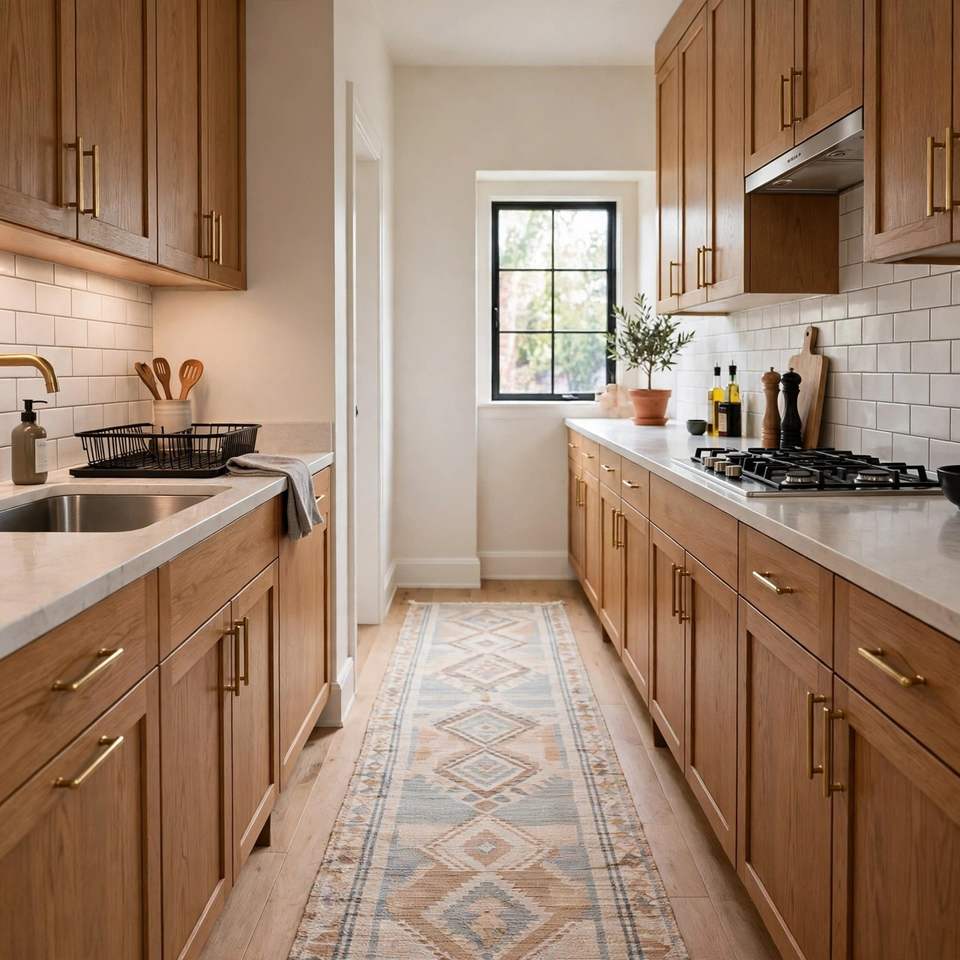
Measure the gap between the cabinet fronts — often 90–120 cm (3–4 ft) — and choose a runner 15–20 cm (6–8 in) narrower, around 70 cm (2 ft 4 in) wide, covering the standing strip by sink and hob without curling up the kickboards.
How to use it:
- Length to cover sink and hob
- Washable, low-pile weaves only
- A non-slip pad is essential
Tip: check a dishwasher door drops clear of the rug’s thickness.
18) Put a Short Rug Where You Stand in the Kitchen
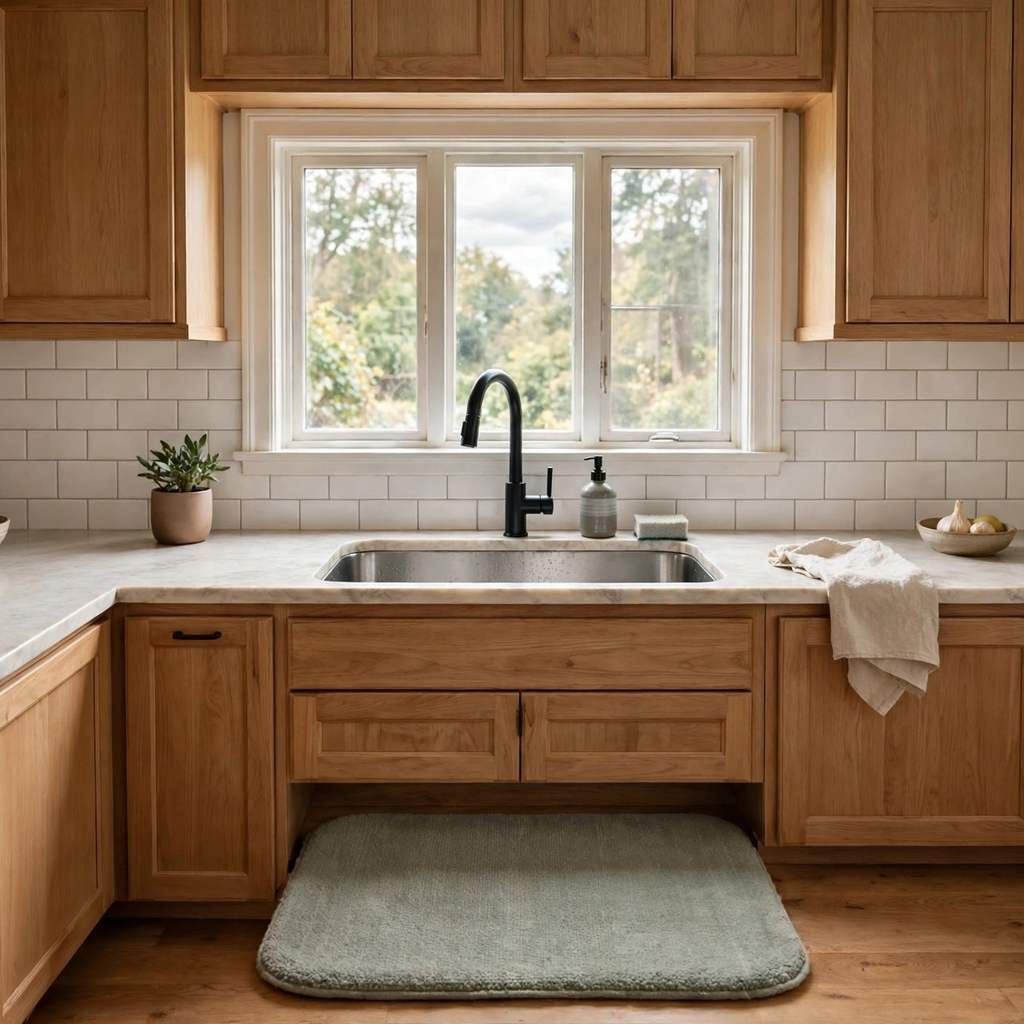
Not every kitchen needs a runner; a mat of about 60 × 110 cm (2 × 3 ft 7 in) in front of the sink covers the spot where you stand longest. Sit it within one or two cabinet widths, centred on the sink, so it looks placed, not lost.
Best for:
- Small kitchens without runner space
- Cushioning one hard-working spot
- A quick, cheap renter’s change
Tip: a mat the exact width of the sink unit looks neatest.
19) Size the Home Office Rug for the Chair’s Roll Zone
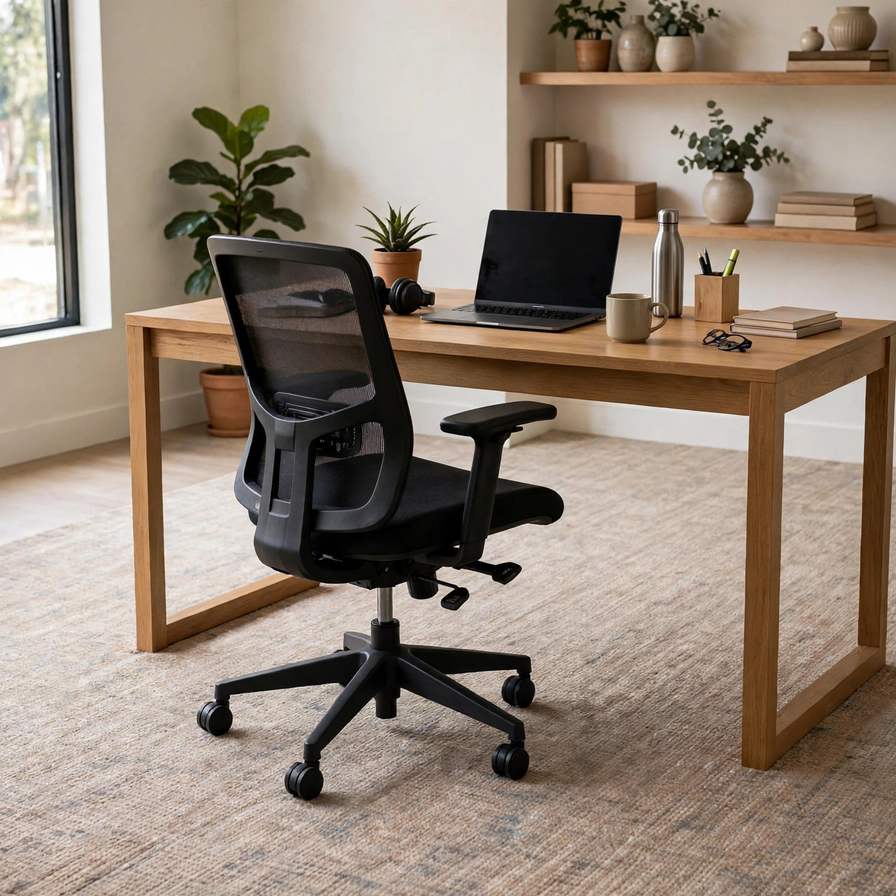
An office rug must cover where the chair travels: about 60 cm (2 ft) behind the desk edge as you push back and roll. A rug of at least 140 × 200 cm (4 ft 7 in × 6 ft 7 in) keeps all five castors on it all day.
Why it works:
- Castors never drop off the edge
- Protects the busiest square metre
- Defines the work zone
Tip: sit, roll to your furthest reach, and measure that footprint.
20) Check Every Door Swing Before You Commit
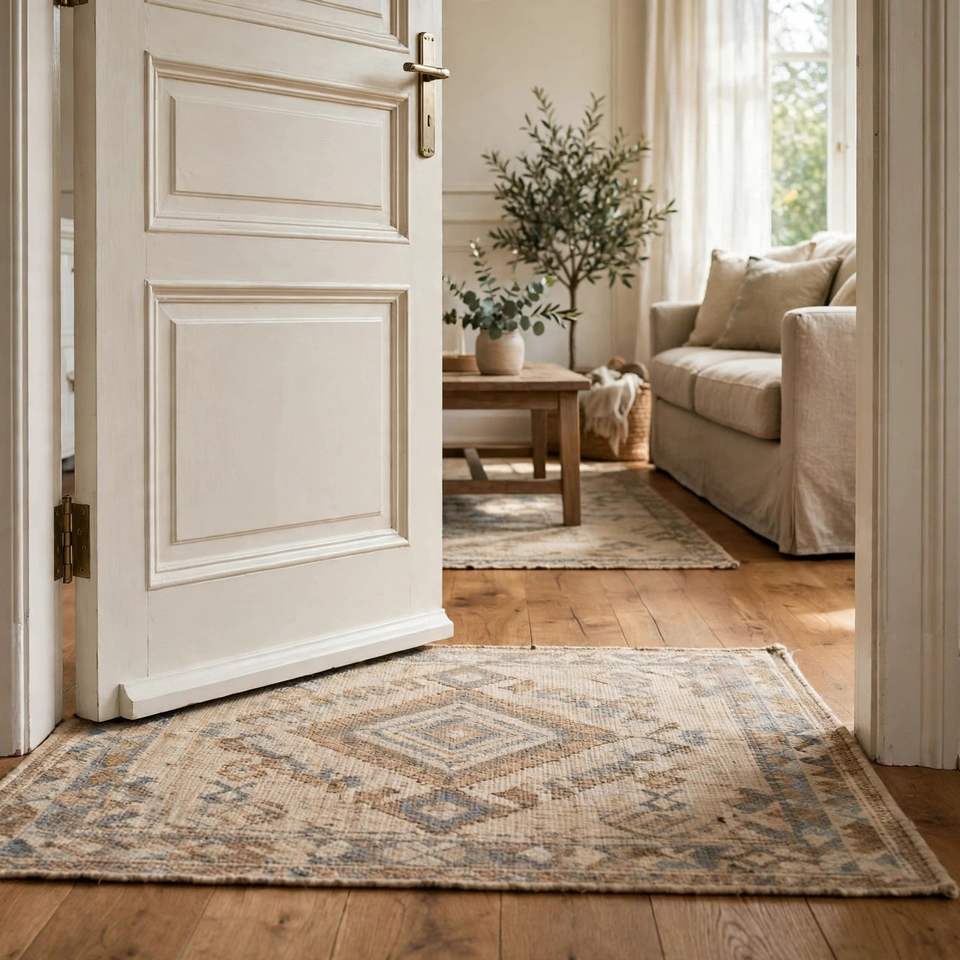
Check each door that opens over your planned rug: most sit 1–2 cm (about ½ in) above the floor, so a rug plus pad thicker than that drags and bunches. If it drags, choose a lower pile or shift the rug out of the swing arc.
How to use it:
- Add rug and pad thickness together
- Check inward-opening doors especially
- Note each arc’s direction
Tip: tape tracing the arc shows where the rug must not sit.
21) Order the Rug Pad Slightly Smaller Than the Rug
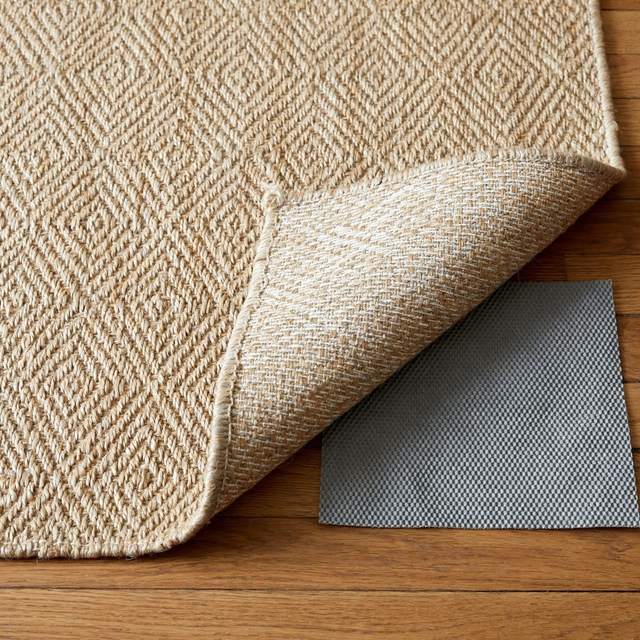
A rug pad should measure about 2.5 cm (1 in) less than the rug on every side, so its edge never peeks out: for a 200 × 290 cm rug, order a pad around 195 × 285 cm.
Best for:
- Rugs on wood, tile or laminate
- Thin rugs that creep or curl
- Cushion under a flat-weave
Tip: buy the pad in the rug’s size class and trim it to fit.
22) Layer Rugs With a Clear Size Difference
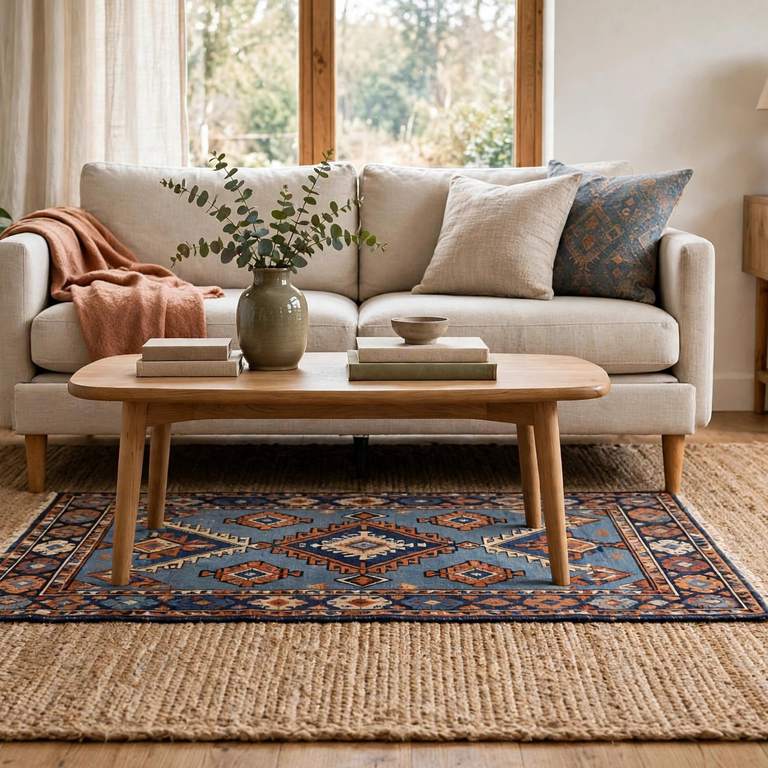
Layering works only when the size gap is obvious: the top rug at least 60 cm (2 ft) shorter in each dimension, leaving a frame of about 30 cm (12 in) all round — say 160 × 230 cm patterned over a 240 × 340 cm jute base.
How to style it:
- Plain textured base, patterned top
- Centre the top rug
- Watch the combined door clearance
Tip: measure the base for the furniture first; choose the top for colour.
23) Make a Paper Template for an Awkward Room
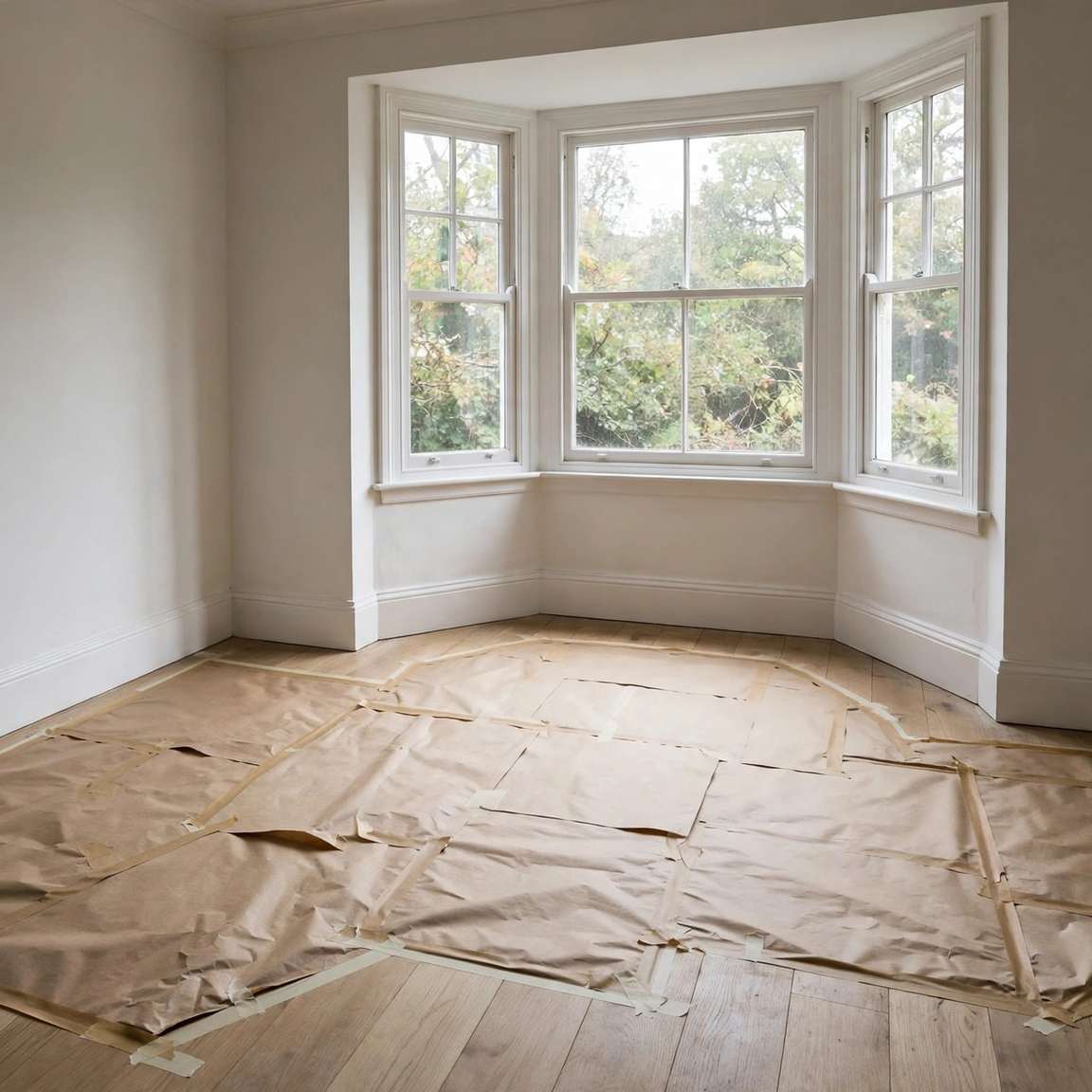
For L-shaped rooms, bays and fireplaces that bite into the floor, build the rug’s shape from taped-together paper first. Its longest and widest points tell you whether a stock size works or a rug must be cut down from the next size up.
Why it works:
- Reveals clashes tape cannot
- Doubles as a cutting pattern
- Shows the fit at angled walls
Tip: mark the template’s top edge so you can relay it later.
24) Keep a Safe Gap Around a Fireplace Hearth
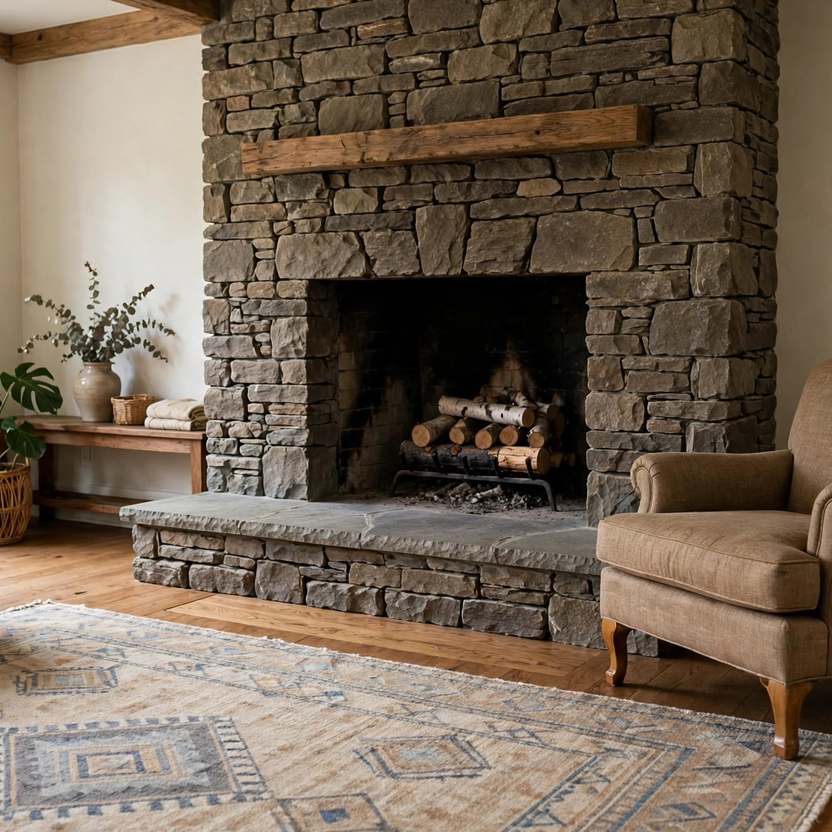
Measure from the hearth, not the wall: leave at least 30 cm (12 in) of bare floor between the rug’s edge and the hearth stone. If your outline crosses that line, drop a size or shift the layout rather than trimming the gap.
Best for:
- Rooms with open fires or burners
- Wool rugs that scorch easily
- Seating grouped around a fireplace
Tip: synthetics melt rather than burn — near a hearth, wool is safer.
25) Size an Entryway Rug to the Door and the First Steps
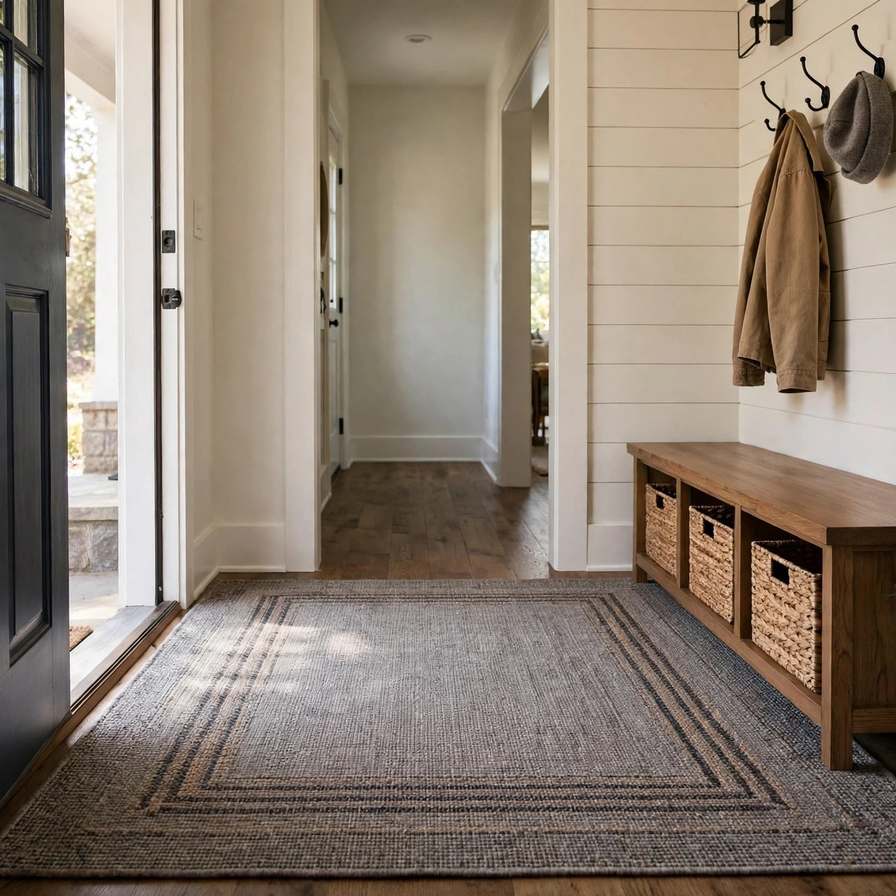
An entryway rug should be at least as wide as the door — usually 90 cm (3 ft) — and long enough for two full steps inside, about 120–150 cm (4–5 ft). Wet shoes then land twice on the rug before reaching the good floor.
How to use it:
- Flat, dark, washable weaves
- Width matched to the door
- Pad it so it never slides
Tip: measure with the door open; the first 90 cm often sits under its swing.
26) Cover the Play Zone, Not the Nursery Walls
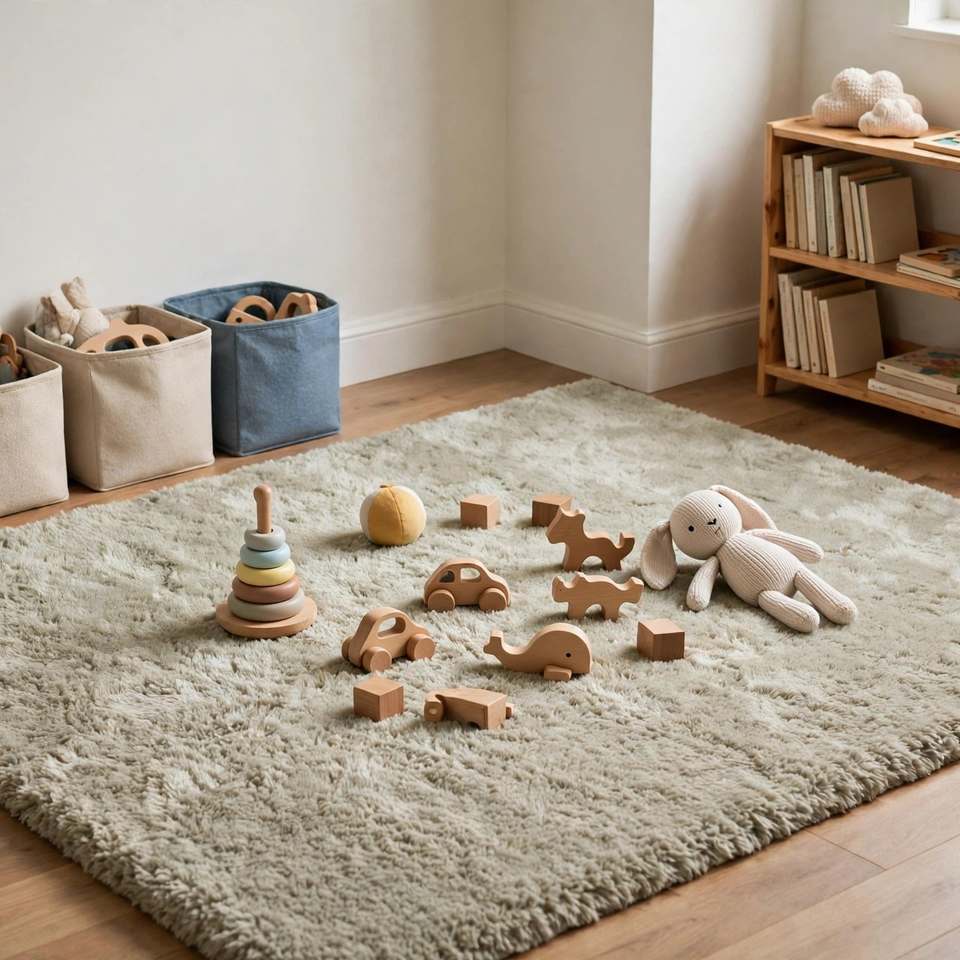
In a nursery, measure the play zone itself — where a child sits, crawls and tips out toys, usually about 160 × 230 cm (5 ft 3 in × 7 ft 6 in) — and let storage stand on bare floor outside it, where a rug only gathers dust.
Best for:
- Toddlers who live on the floor
- A soft landing by a play gym
- Rooms doubling as guest space
Tip: add 30 cm (12 in) on the side where toys get tipped out.
27) Stretch a Patio Rug Under the Outdoor Table
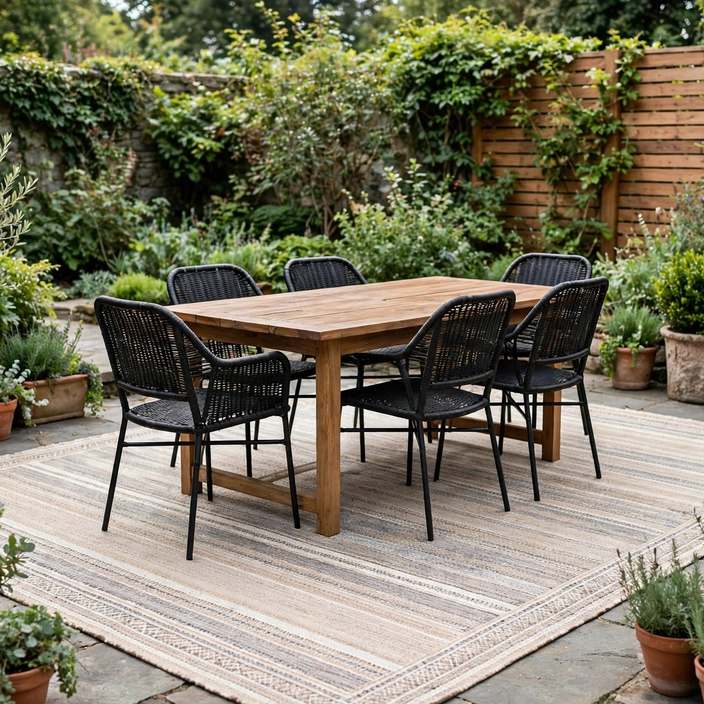
Outdoor rugs follow the dining rule: allow 60 cm (24 in) beyond the table for chairs, and leave 20 cm (8 in) of paving as a border. On a 3 × 4 m (10 × 13 ft) patio, about 230 × 300 cm (7 ft 6 in × 9 ft 10 in) is the largest that still floats.
Why it works:
- Defines the eating zone on paving
- Stops chair legs grinding on stone
- Softens a hard, echoing patio
Tip: measure the usable area after planters and steps, not the full slab.
28) When Between Two Sizes, Size Up
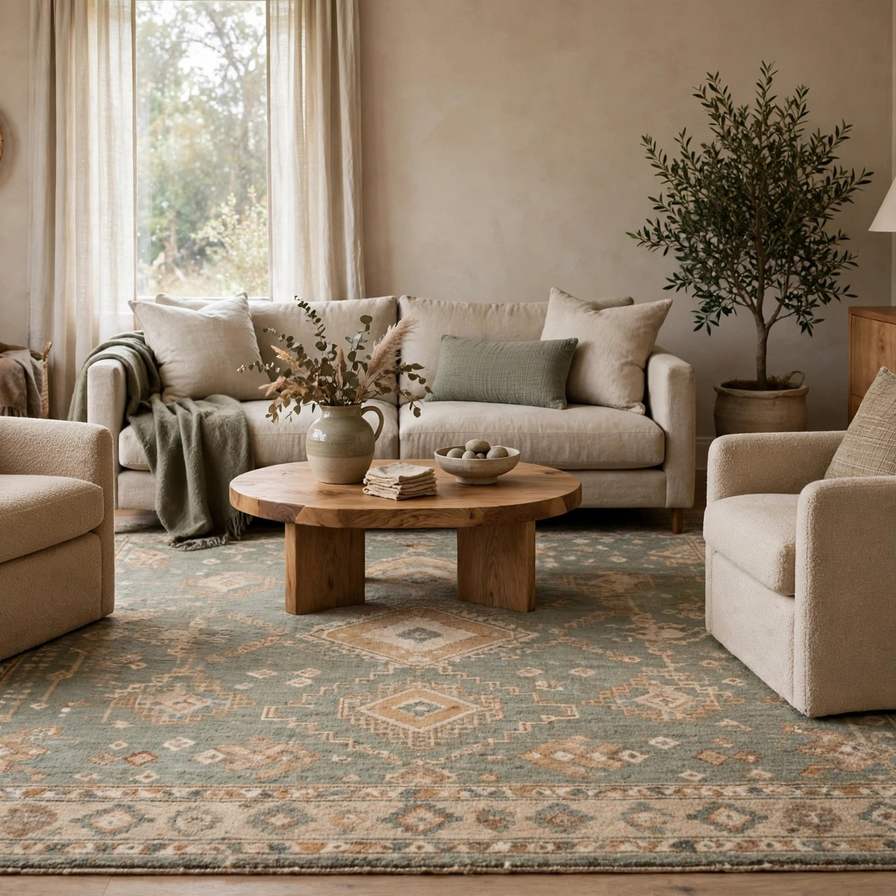
If your zone measures 220 × 310 cm (7 ft 3 in × 10 ft 2 in) against stock sizes of 200 × 290 or 240 × 340 cm, choose the larger. A rug slightly too big still anchors a room; one slightly too small looks mean from every doorway.
How to use it:
- Size up when the gap is under 30 cm
- Tape-check the bigger outline first
- Confirm doors still clear it
Tip: the exception is a small room — re-tape so the border rule survives.
29) Measure Twice in Different Units to Catch Errors

Measure every dimension twice — once in centimetres, once in feet and inches — and check they agree before ordering. A classic slip is reading 230 cm as 2.3 ft instead of about 7 ft 6 in; the second unit exposes it while fixing is free.
Best for:
- Online orders with costly returns
- Rooms measured by two people
- Converting a holiday-bought rug’s size
Tip: write both units on one line — 200 × 290 cm / 6 ft 7 in × 9 ft 6 in.
30) Photograph Your Measurements With the Furniture in Place
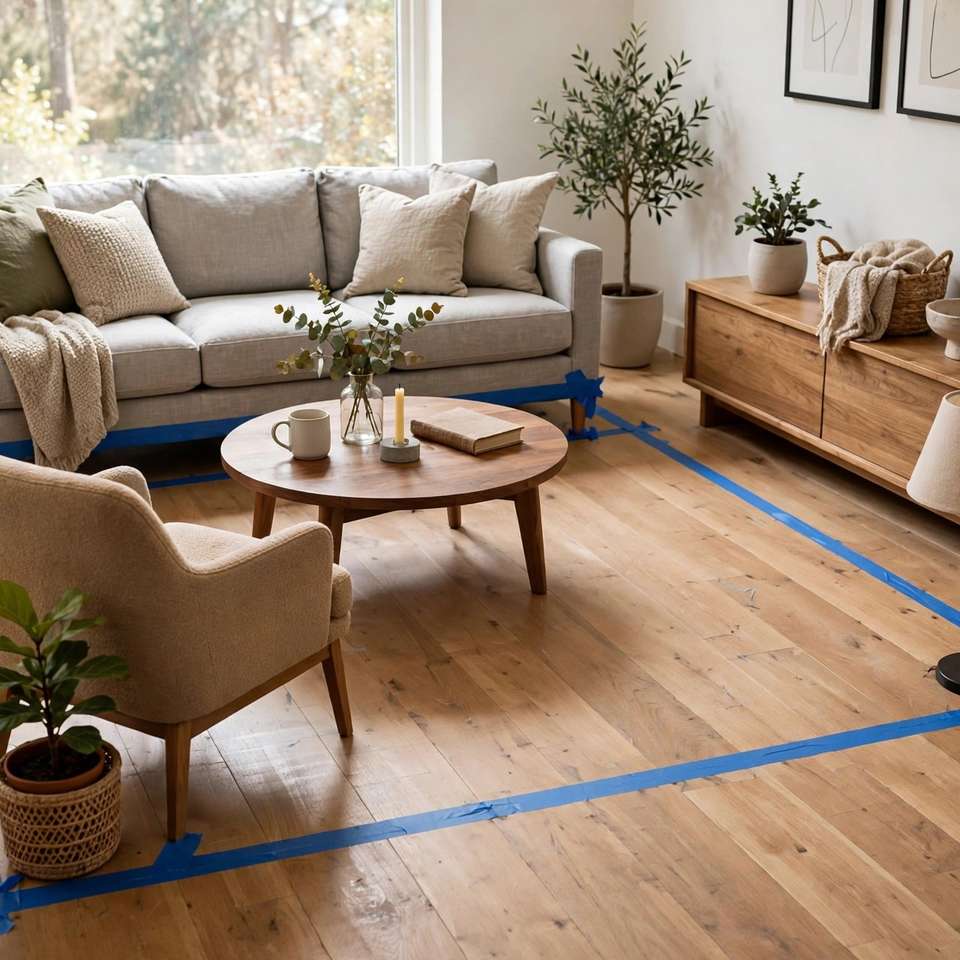
Finish by taping your final size, putting every piece of furniture back in position, and photographing from the doorway. Paper numbers cannot show a rug edge landing mid-walkway; a photograph can, and it becomes your reference on delivery day.
Why it works:
- Catches clashes numbers miss
- Settles placement before heavy lifting
- Gives a delivery-day target picture
Tip: shoot at the time of day you use the room most.
Measure Twice, Buy Once: The Checks Before You Order
Every disappointing rug purchase shares one story: the room was measured from memory, the furniture was not, and the size was chosen by hope. Run the full check instead — wall to wall, furniture group, door swings and hearth gaps. A rug must satisfy the smallest of those limits, not the largest.
Proportion is where colour meets size: a pale rug in a generous size can open up a room in the deep, grounded palette of these earth tone living room ideas, while the same colour two sizes smaller would vanish under the sofa. Settle the size with tape first, then choose colour to fit it.
Making One Rug Size Work Across Rooms
A medium rug, around 160 × 230 cm (5 ft 3 in × 7 ft 6 in), is the hardest-working object in a house: front legs in the living room this year, two-thirds under a spare-room bed next year, under a desk the year after. A glance at the other rooms’ measurements tells you whether it has a second life waiting.
Small workspaces need that flexibility too: the compact layouts in these small home office ideas often borrow a living-room rug to define the desk zone, and a size you already own beats a new purchase. Keep a note of every rug you own, with its size, and future rooms become a matching exercise.
Conclusion
Good area rug measurement is not guesswork; it is a short list of honest numbers. A border of 20–30 cm, 60 cm beyond the dining table, 45–60 cm beside the bed, 7–10 cm along a hallway runner — hold those figures and nearly every rug will look made for its room.
Start with the painter’s tape. Ten minutes of outlining tells you more than an hour of scrolling product pages, and costs nothing but a roll of tape.
For more real rooms measured and styled well, Houzz is full of photographs worth studying before you buy. Then measure twice, order once, and enjoy a rug that fits first time.


More Stories
33 Stunning Kitchen Design Ideas
32 Cozy Home Decor Ideas for a Warm Space
35 Beautiful Boho Bedroom Ideas