
Introduction
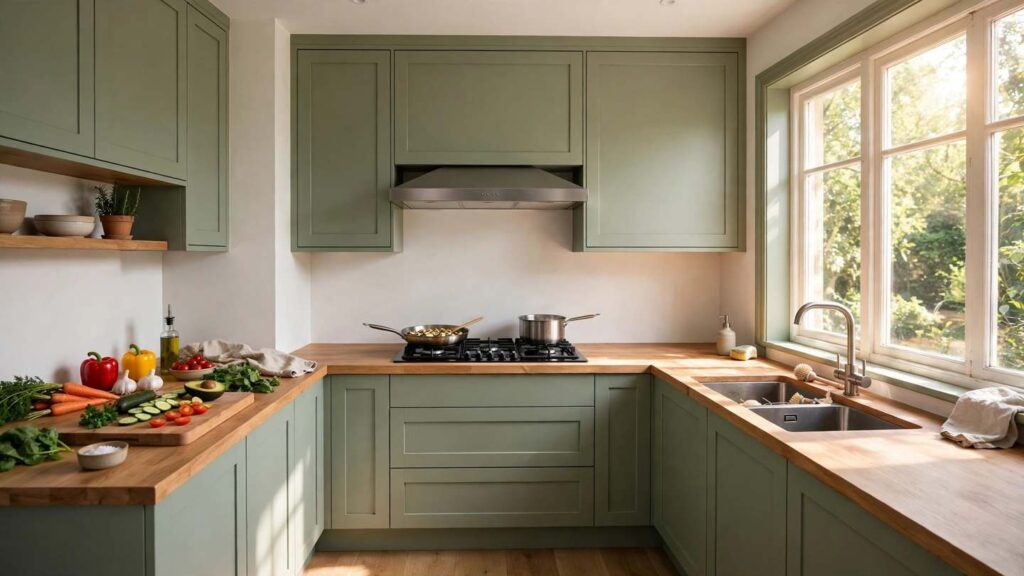
Every well-run kitchen quietly follows the kitchen rule of three: three zones, each with one job. A prep zone for chopping and mixing, a cooking zone around the hob, and a cleaning zone built around the sink — nearly everything moves between those three.
Once you see your kitchen this way, the muddles explain themselves: knives by the oven, washing-up crowding the chopping boards. Each is a zone problem with a simple fix.
If your room is compact, these small kitchen rule of three ideas show trios making tight spaces work harder. Here we teach the zone system itself: 35 ideas, alternating zone explanations with rule-of-three tricks for inside each one.
1) Start With the Work Triangle: Sink, Hob and Fridge
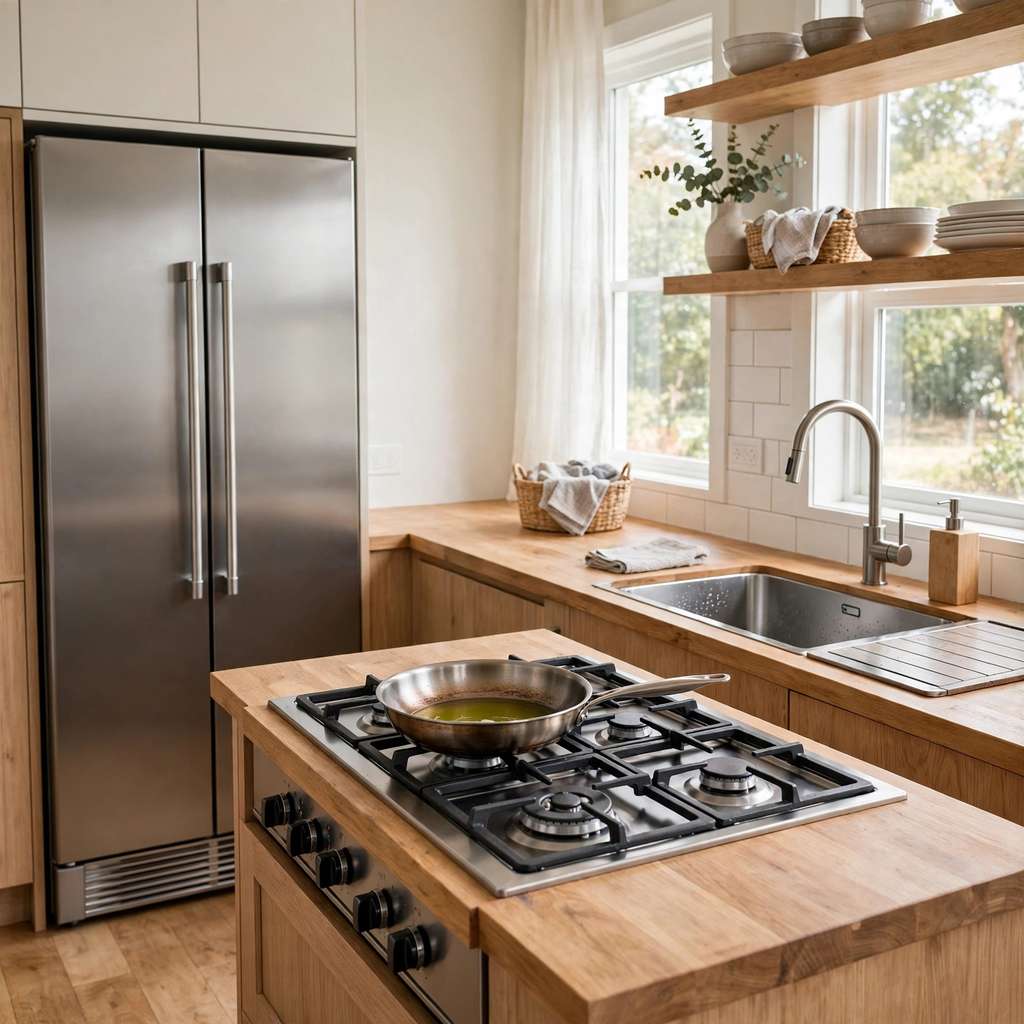
Designers call it the work triangle: a three-sided shape linking sink, hob and fridge. Every meal travels those lines, so a clear triangle makes cooking feel easy.
Why it works:
- Every meal follows the same three stops
- Shorter paths, less walking and fewer spills
- A clear triangle exposes wasted storage
Tip: pace your triangle; each side should be a few easy steps.
2) Zone One Explained: The Prep Zone
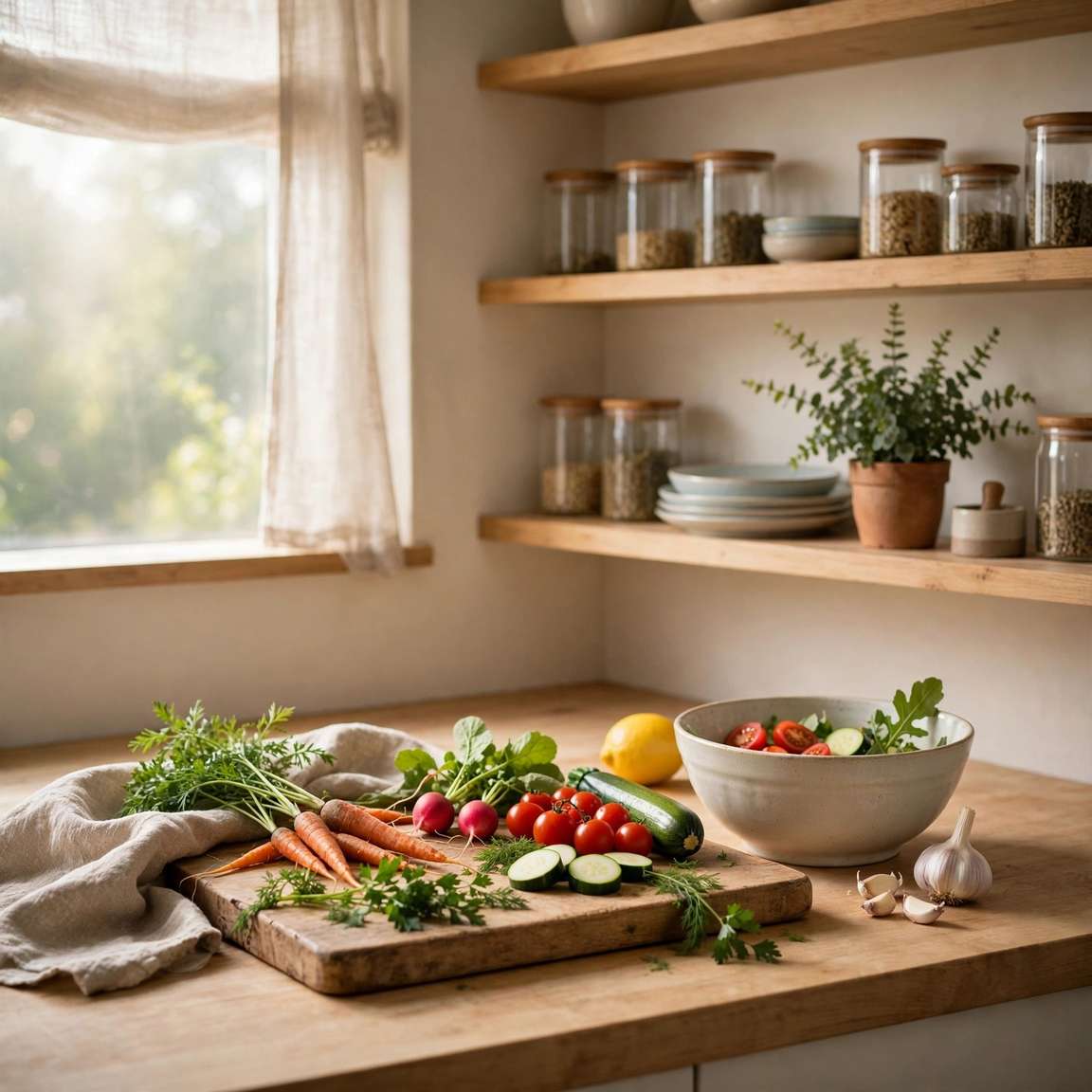
The prep zone is where ingredients become a meal: chopping, mixing, seasoning, assembling. It needs your longest clear worktop, knives, boards and the fridge close by.
Best for:
- The main worktop run, near the fridge
- Chopping, mixing and seasoning tasks
- Keeping raw ingredients away from the heat
Tip: fix prep first; most kitchen time is spent there.
3) Three Knives That Do Nearly Every Prep Job
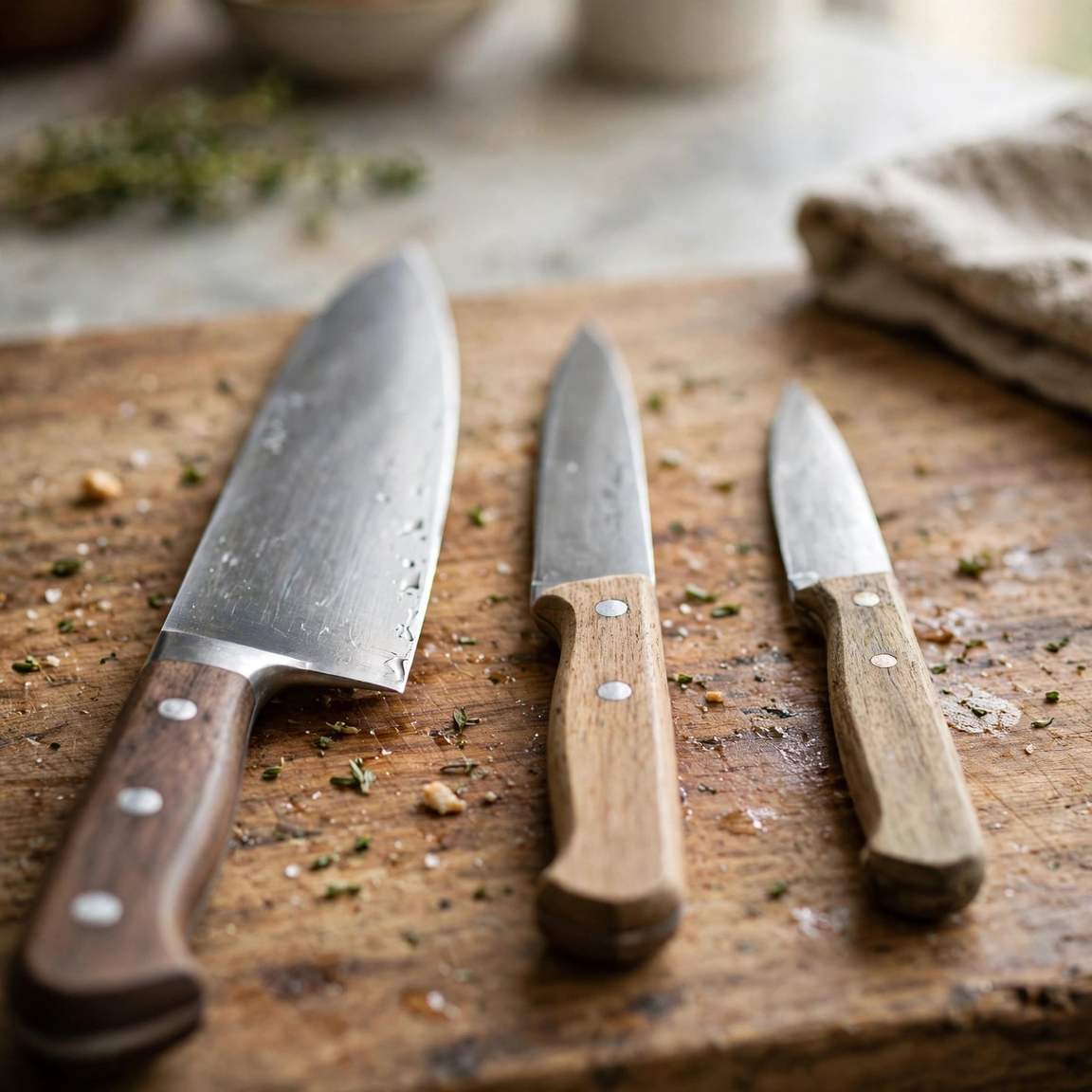
You do not need twelve knives. Three cover almost everything: a chef’s knife for chopping, a utility knife for tomatoes and bread, a paring knife for fiddly jobs.
Why it works:
- Three blades cover big, medium and fiddly jobs
- Fewer knives stay sharper, as you maintain them
- A magnetic strip keeps all three in sight
Tip: store the trio on a wall strip in the prep zone.
4) Three Boards for Three Jobs
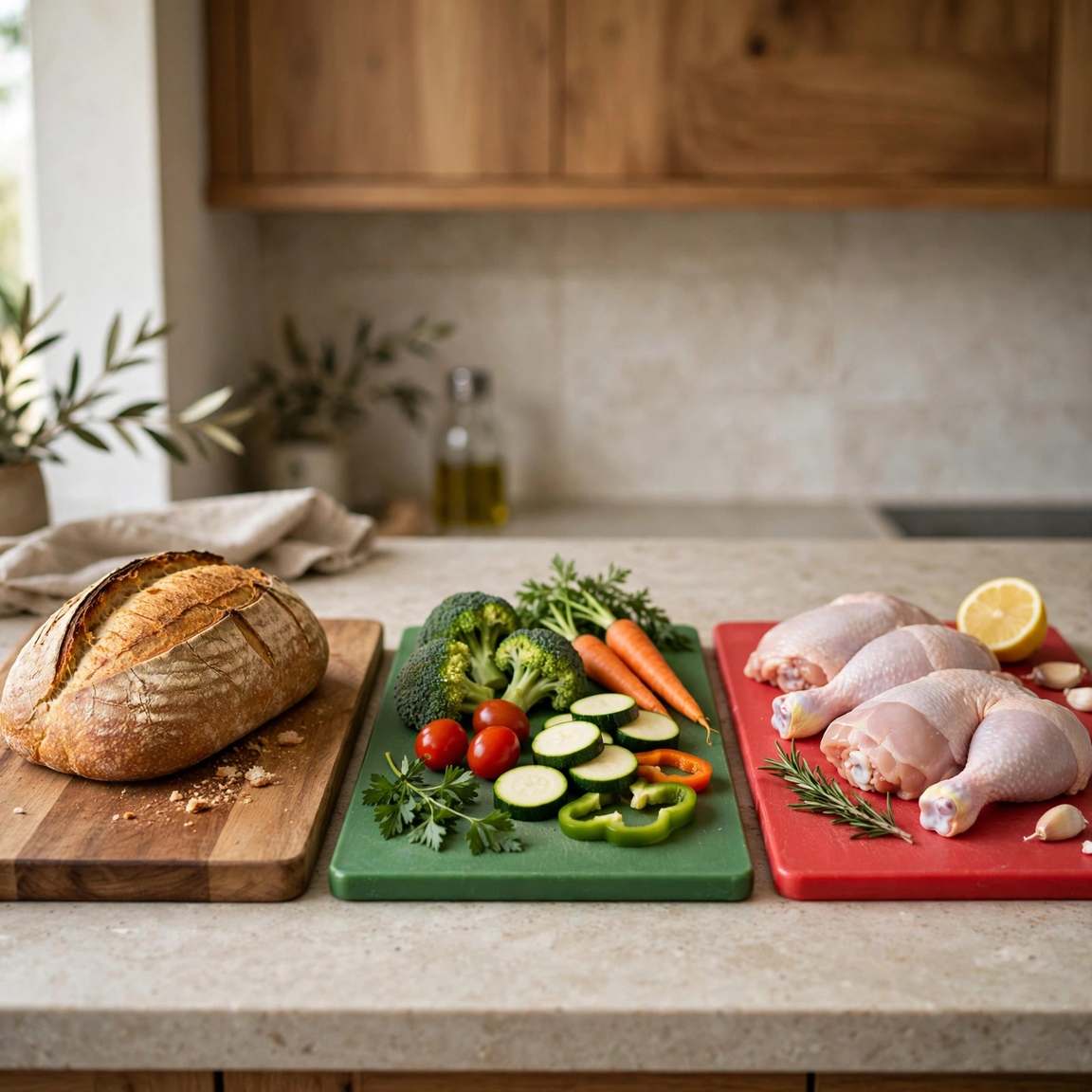
Separate boards stop flavours — and germs — travelling. Keep three: raw meat and fish, vegetables and fruit, bread and cooked foods. Colour-coding makes it effortless.
How to use it:
- One board kept only for raw meat
- A mid-size board for everyday vegetables
- The nicest wooden board doubles for serving
Tip: stand all three upright in one slot for easy grabbing.
5) Three Storage Layers in the Prep Zone
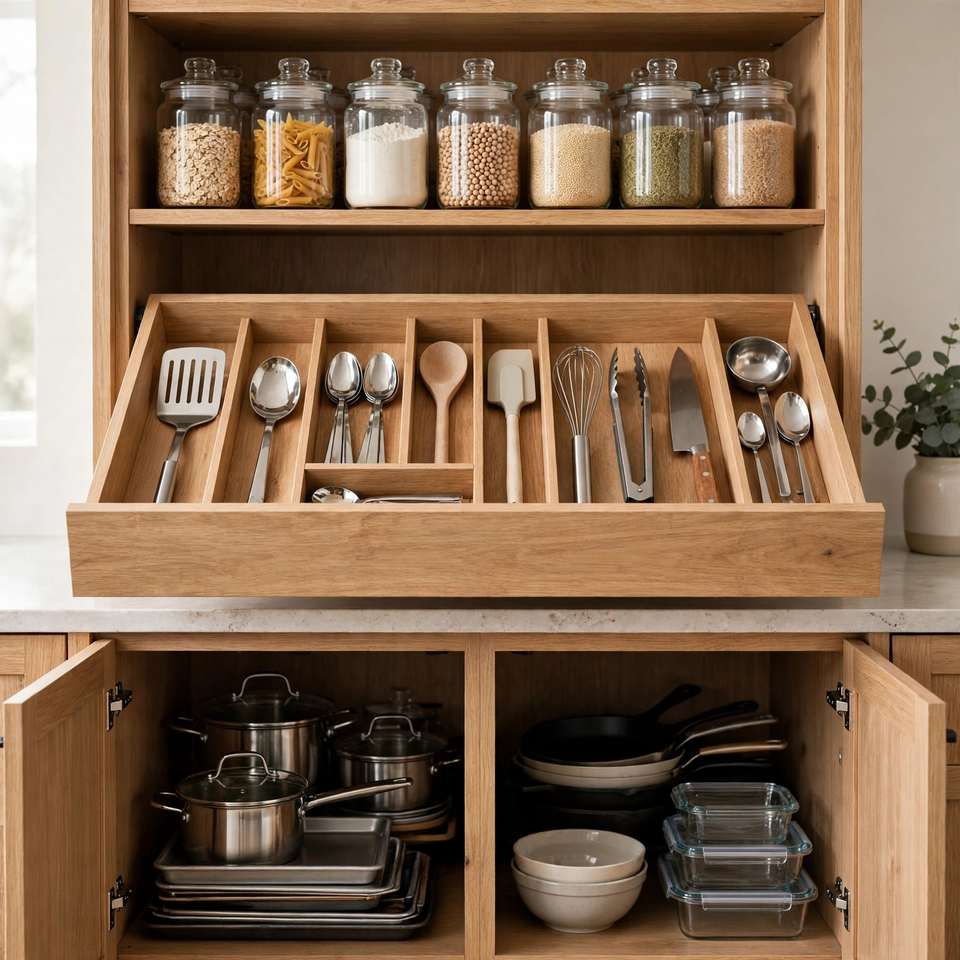
Arrange prep storage in three layers by touch frequency. Daily tools live in the top drawer, weekly items on shelves, rarely used gadgets in deep cupboards below.
How to style it:
- Top layer: shelves with jars used weekly
- Middle layer: one drawer for daily tools
- Bottom layer: cupboards for gadgets and bulk
Tip: a dusty layer’s contents belong one layer lower.
6) Three Heights of Prep Light
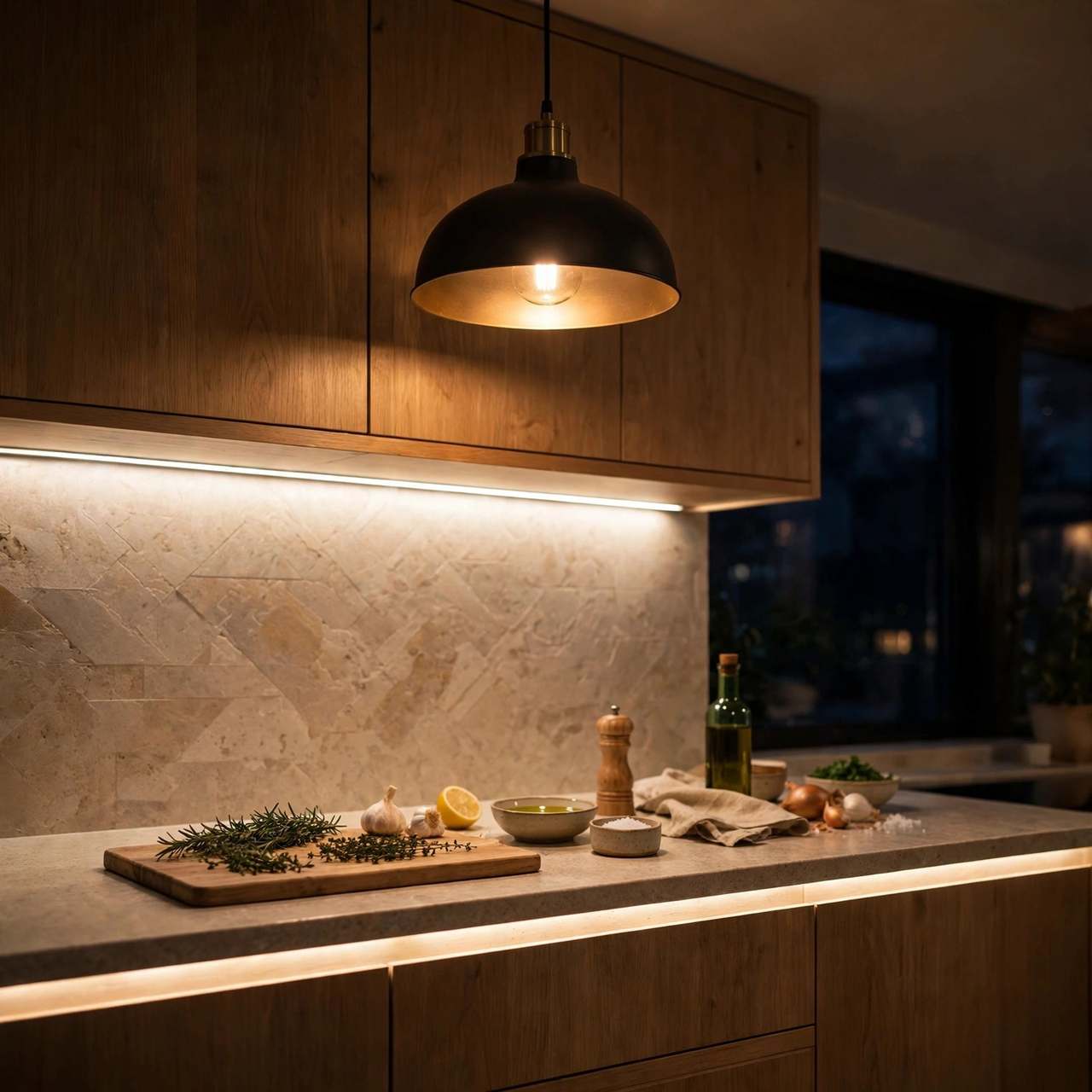
Prep is close work, and shadows fall where you chop. Light it at three heights: ceiling light, under-cabinet strips on the worktop, window light or a lamp for softness.
Why it works:
- Under-cabinet light removes your body’s shadow
- Layers let you dim the room, keep boards bright
- Good light makes chopping safer and faster
Tip: choose warm-white strips so vegetables look appetising, not clinical.
7) Zone Two Explained: The Cooking Zone
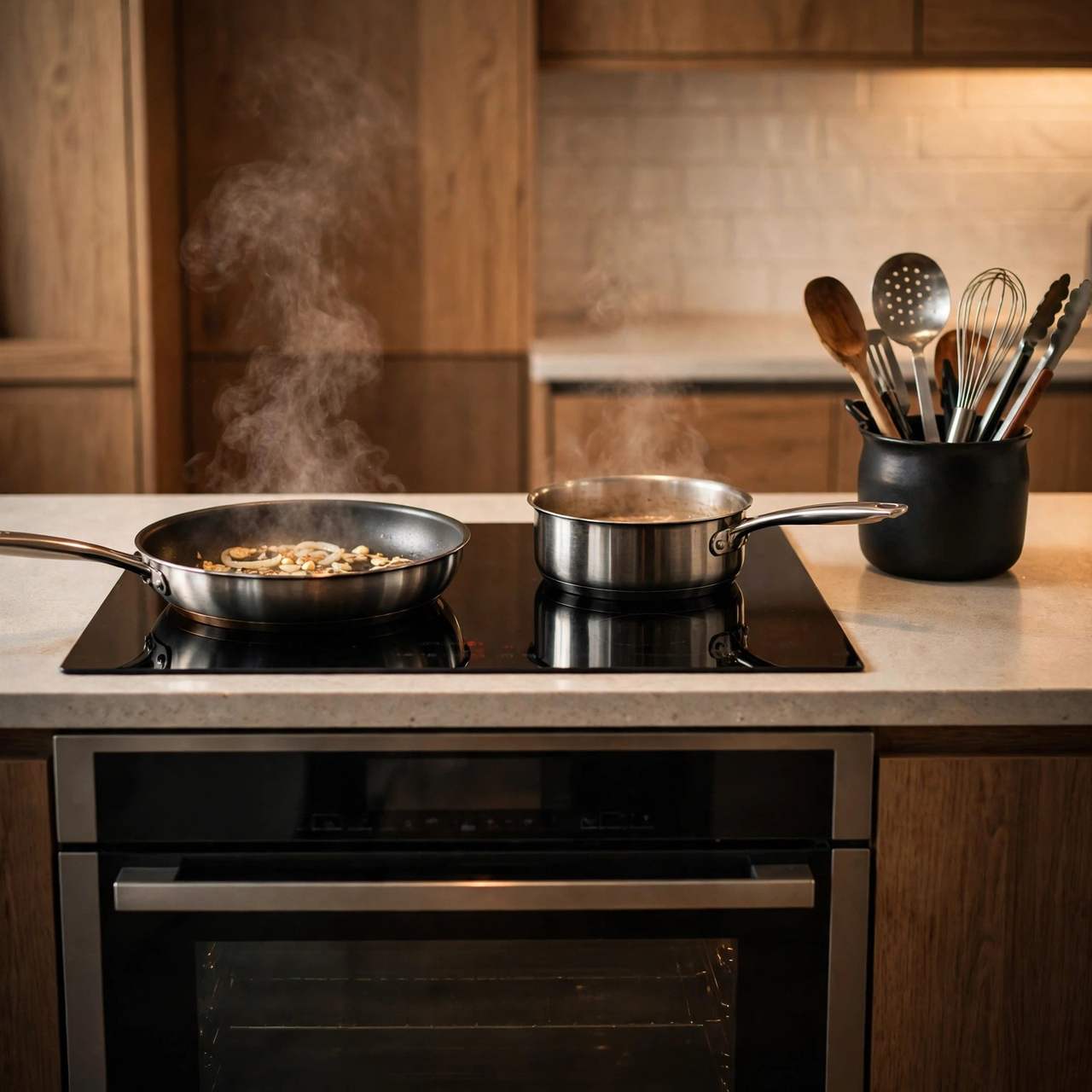
The cooking zone centres on the hob and oven: hot, busy, time-sensitive. Everything should be reachable without a step — pans, utensils, oils, seasonings — because a boiling pan will not wait.
Best for:
- The hob, oven and worktop either side
- Pans and seasonings within arm’s reach
- Landing space for hot dishes off the heat
Tip: daily items should sit within one turn of the hob.
8) Three Pans That Cover Almost Every Meal
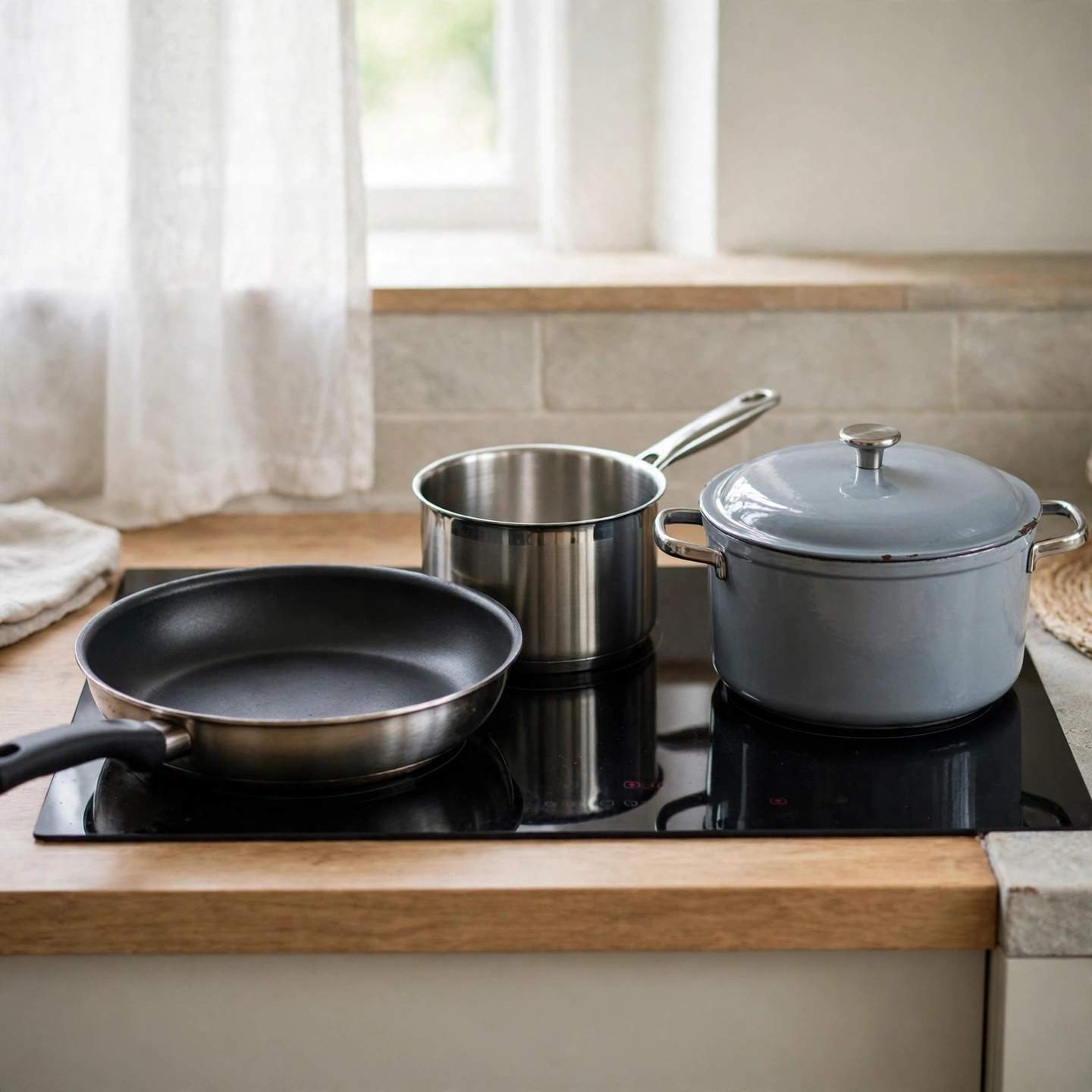
Three good pans beat a cupboard of mediocre ones: a large frying pan for eggs and browning, a deep saucepan for pasta and sauces, a wide lidded casserole for stews and one-pots.
Why it works:
- The trio covers frying, boiling and braising
- Heavy bases cook evenly and last for years
- Three pans store neatly where twelve never did
Tip: buy the best three you can and let the rest go.
9) Three Utensils That Never Leave the Hob
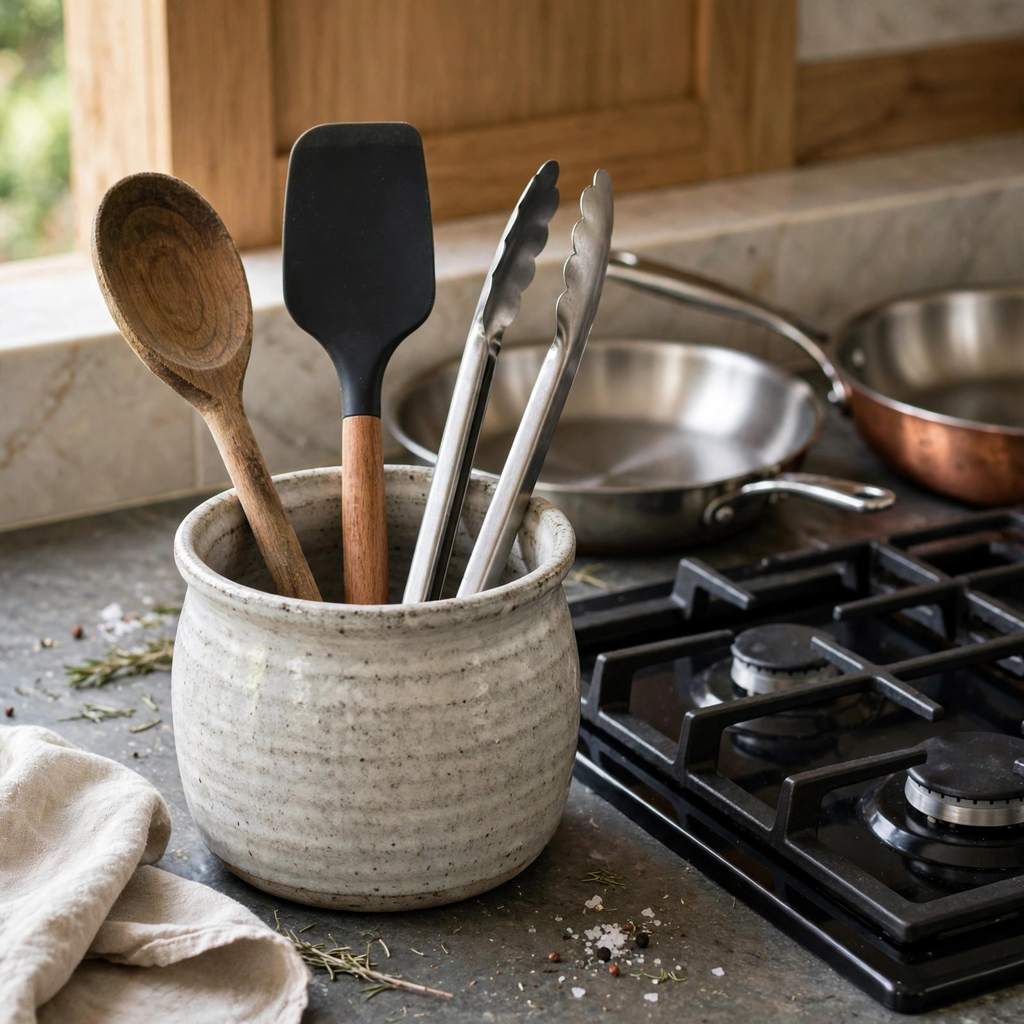
Keep a pot beside the hob holding just three utensils: a wooden spoon for stirring, a spatula for lifting and flipping, and tongs — heat-proof fingers for everything else.
How to use it:
- Spoon for sauces, soups and stirring
- Spatula for eggs, fish and pancakes
- Tongs for turning, serving, rescuing toast
Tip: if a fourth utensil creeps in, question it.
10) Three Seasonings Within Arm’s Reach
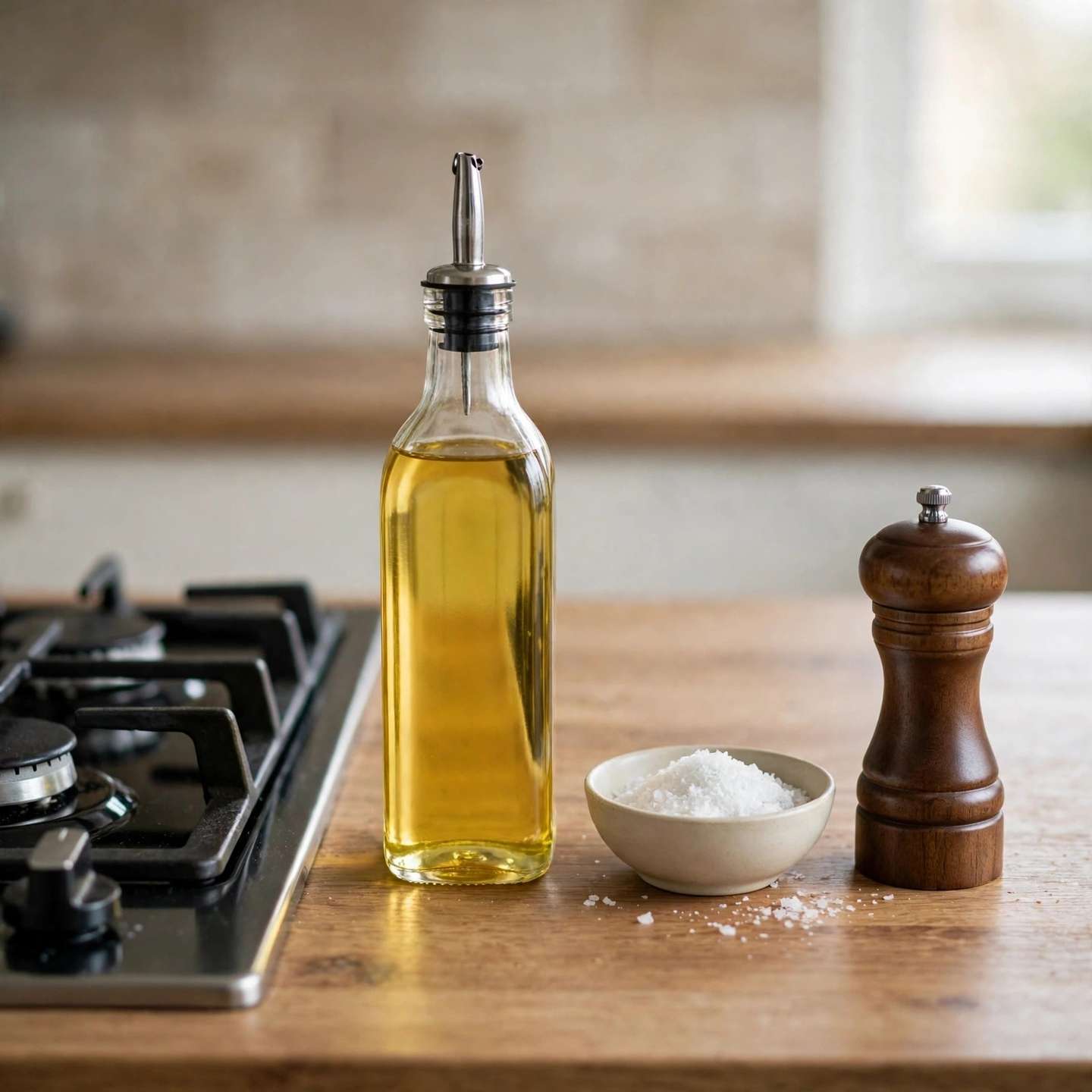
Seasoning mid-cook should take seconds. Keep three things beside the hob: cooking oil, a small open bowl of flaky salt for pinching, and a pepper grinder. The spice rack lives a step away.
Best for:
- Fast seasoning without leaving the pan
- Pinchable salt, easier to judge than a shaker
- Keeping spices out of the hob’s heat
Tip: refill the salt bowl weekly to avoid mid-recipe emergencies.
11) Three-Part Ventilation in the Cooking Zone
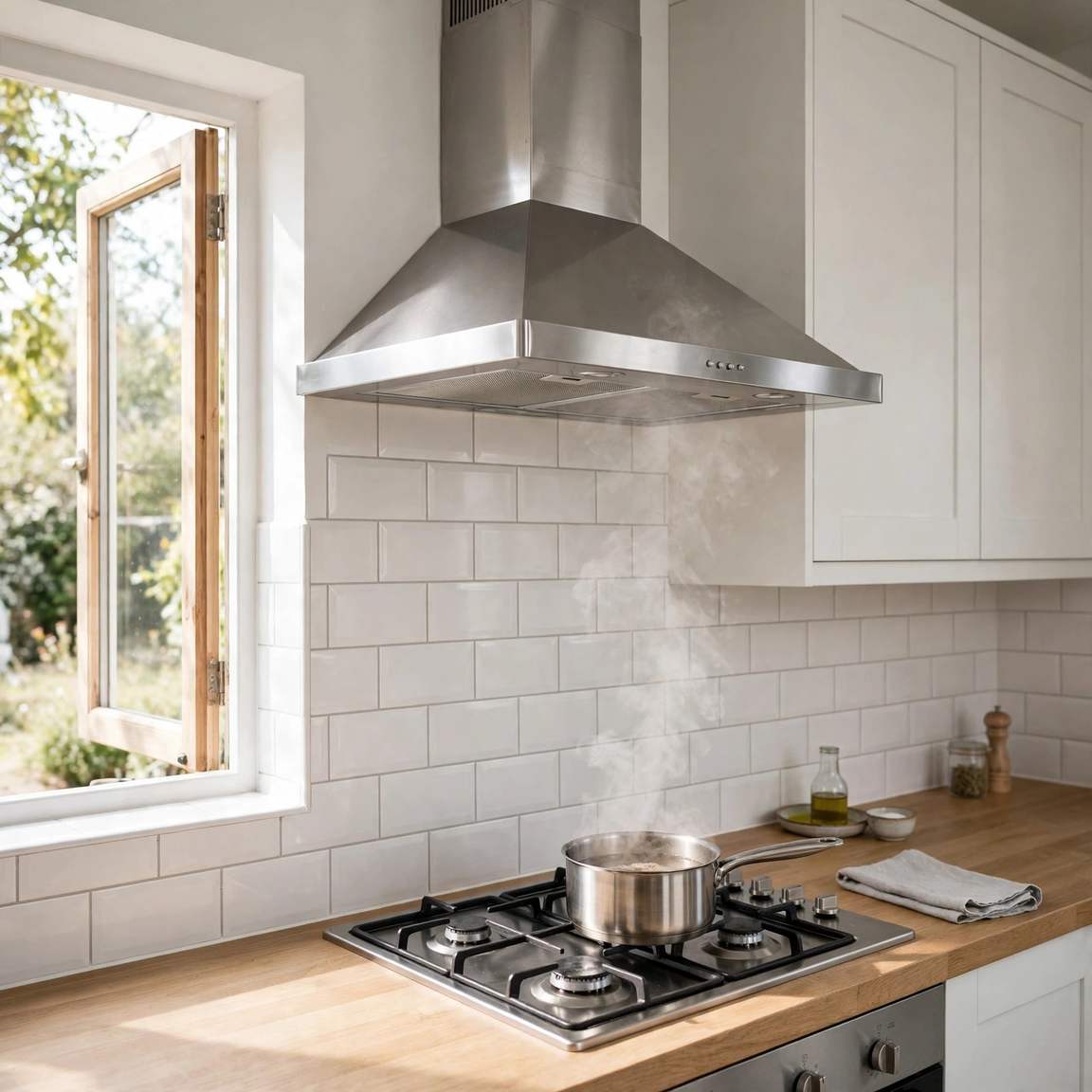
Heat, steam and smells need three escape routes. The extractor hood does the heavy lifting, an openable window brings fresh air in, and simmering gently cuts steam at source.
Why it works:
- The hood catches grease before it settles
- Fresh air in stops window condensation
- Gentler simmering means less steam to clear
Tip: switch the hood on before the pan heats up.
12) Three Lights That Make the Cooking Zone Glow
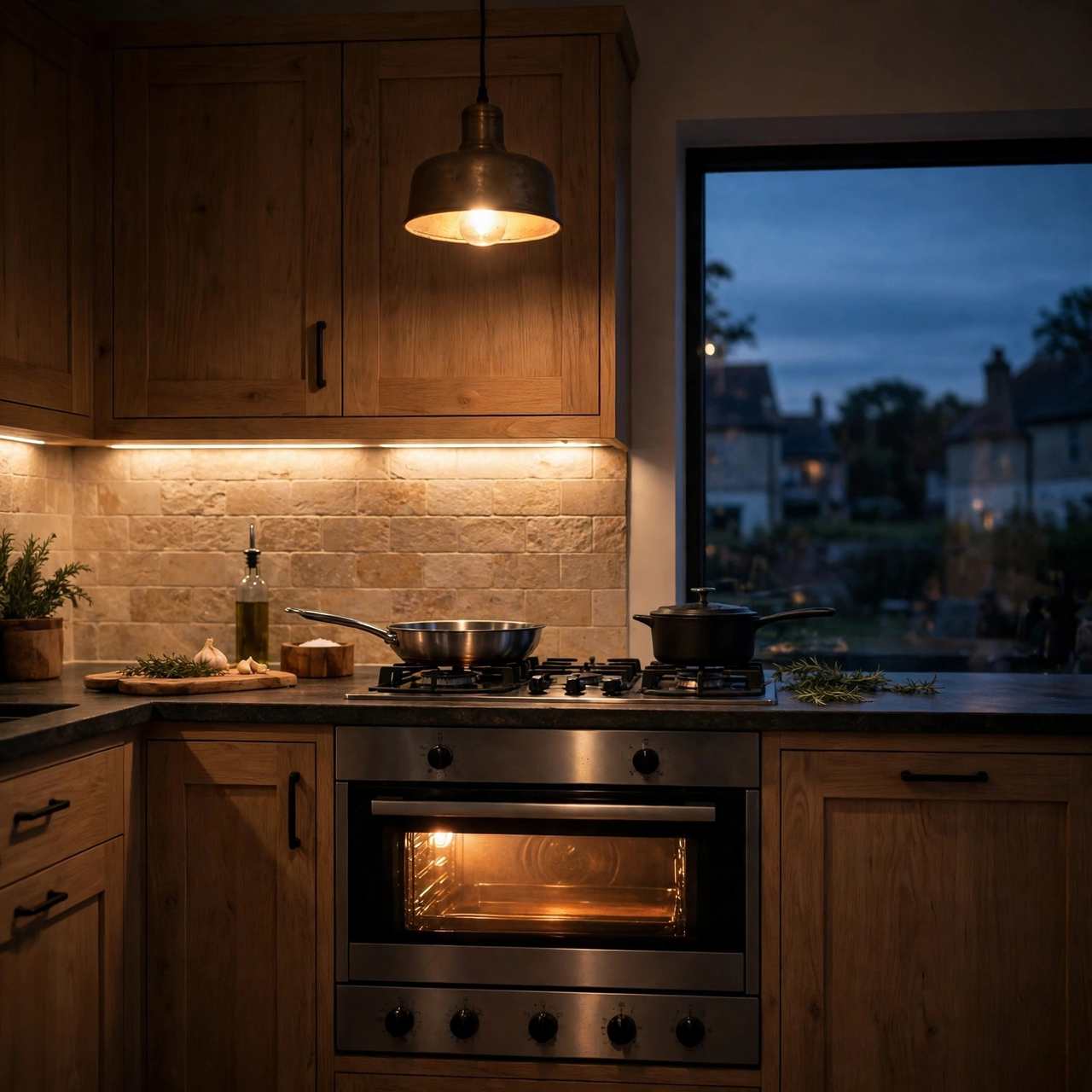
The cooking zone deserves its own trio: a pendant, under-cabinet light to judge colour in the pan, and the hood light for close work.
How to style it:
- One overhead light for the whole zone
- Under-cabinet light aimed into the pans
- Hood light on for serving and late cooking
Tip: judging golden onions needs good light — guesswork is how things burn.
13) Zone Three Explained: The Cleaning Zone
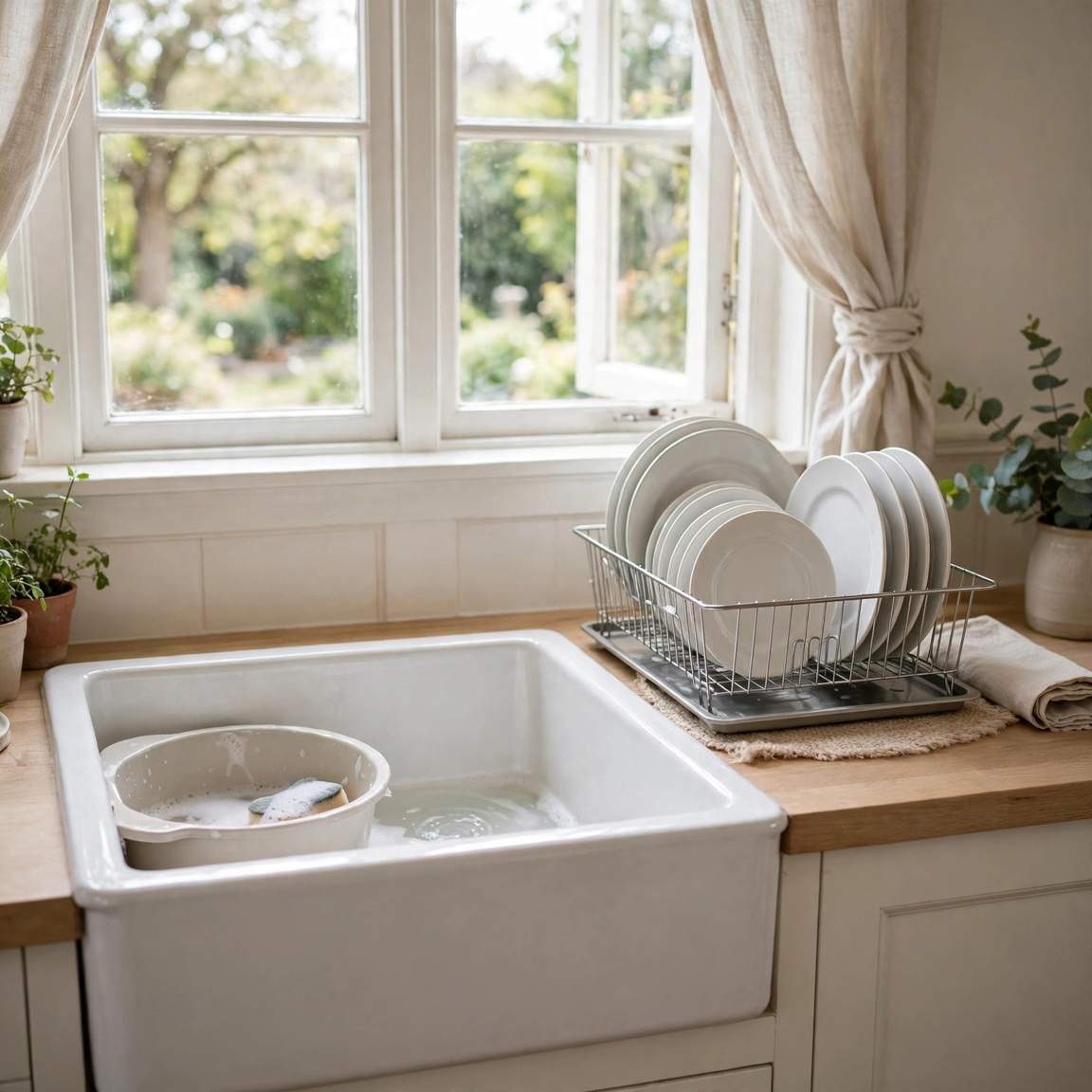
The cleaning zone is built around the sink, with dishwasher and bins as partners. Everything wet happens here — washing-up, rinsing, soaking — so it needs drainage, drying space and kit within reach.
Best for:
- The sink run, ideally under a window
- Washing, rinsing, soaking and draining
- Bins and dishwasher one pivot from the sink
Tip: judge this zone by drying space, not sink size.
14) Three Steps at the Sink, in the Right Order
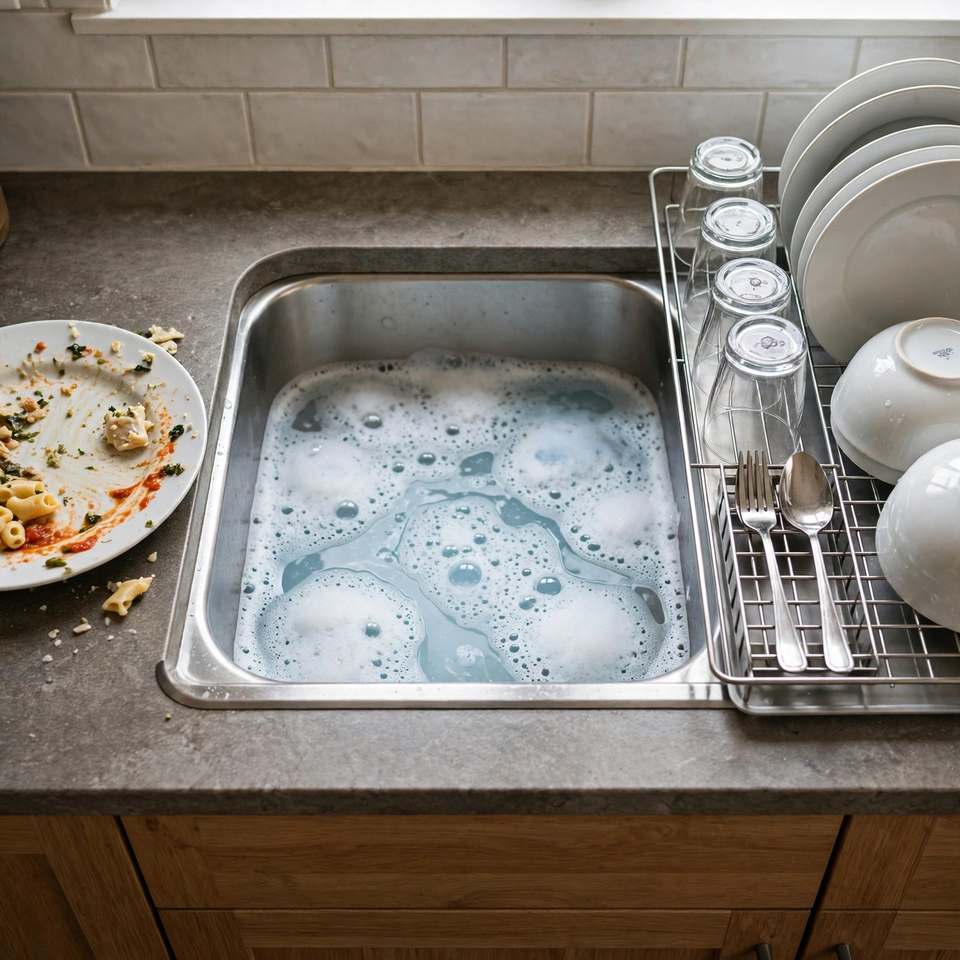
Washing-up flows in three steps: scrape and stack on one side, wash in soapy water in the middle, drain on the other side. Arrange the sink run that way and washing becomes a conveyor belt.
How to use it:
- Dirty dishes land on one side only
- The sink stays for washing, not storage
- Clean dishes drain on the opposite side
Tip: scrape into the food bin first; water stays cleaner longer.
15) Three Cloths, Three Jobs by the Sink
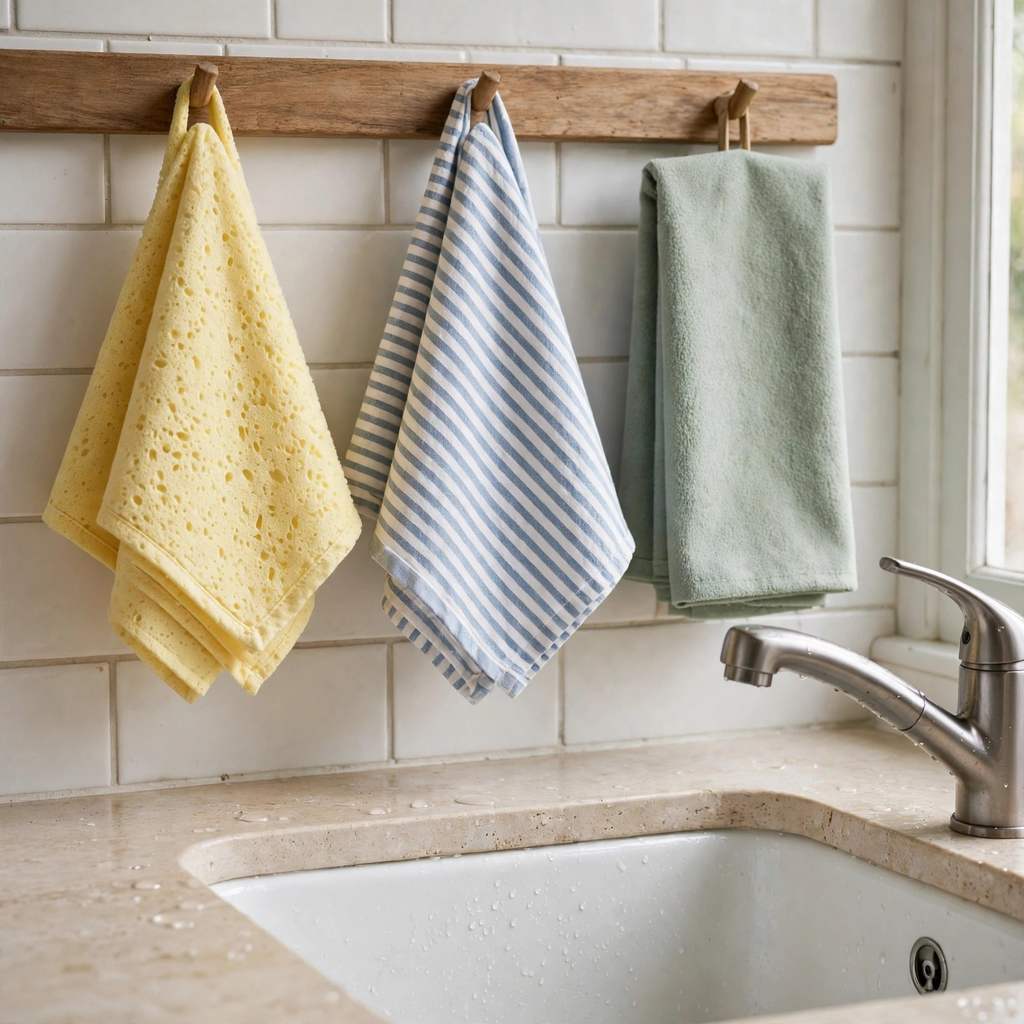
One ancient cloth doing every job is how kitchens get grubby. Keep three: a sponge cloth for surfaces, a tea towel purely for drying dishes, and a microfibre cloth for glass and taps.
How to style it:
- Three colours so nobody mixes the jobs
- Hooks by the sink keep them drying
- A small basket below for the laundry rotation
Tip: the drying towel never wipes a surface — that rule lifts the zone.
16) Three-Layer Storage Under the Sink
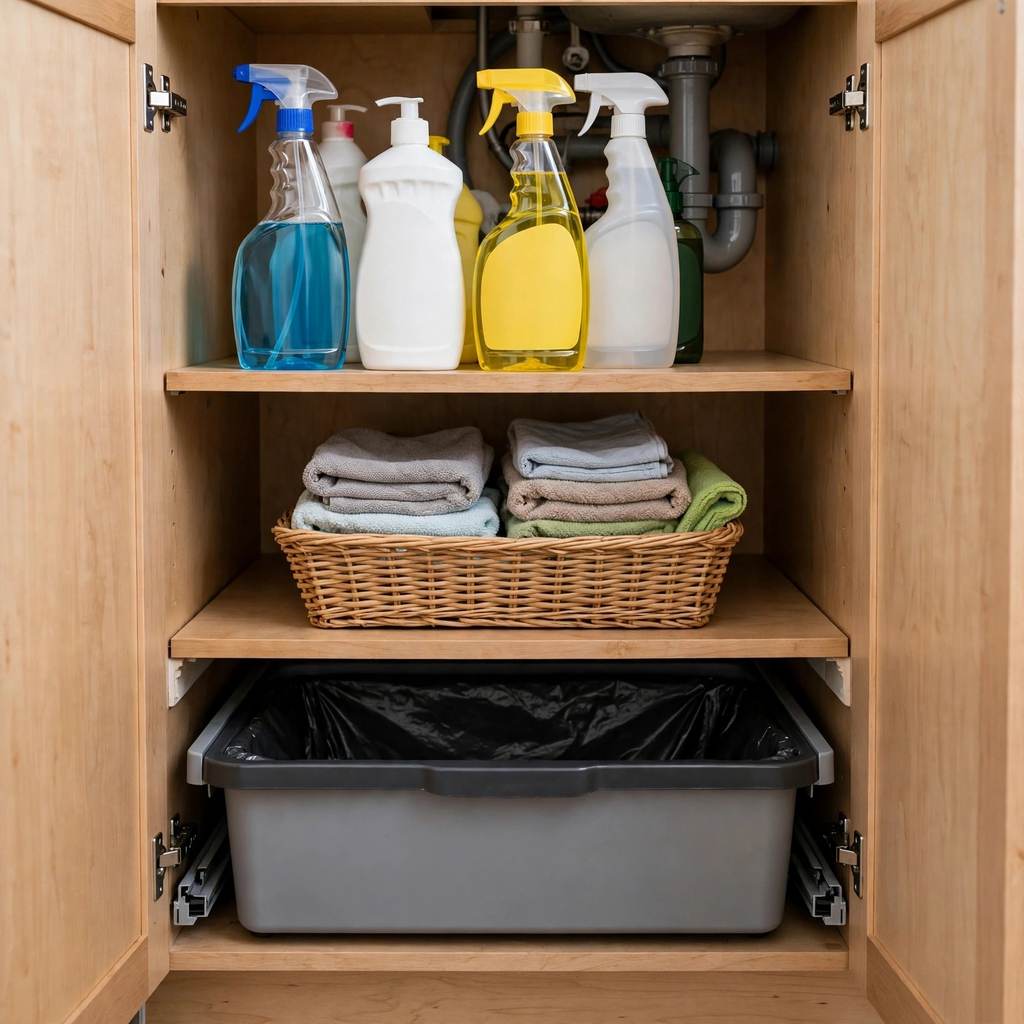
The under-sink cupboard works best in three layers. Top: daily cleaning bottles on a lift-out tray. Middle: cloths, brushes and bin bags in a basket. Bottom: the bin, or extras like descaler.
Why it works:
- A tray stops bottles spreading into chaos
- Daily items sit at the front, at hand height
- Awkward pipe space is planned around, not fought
Tip: measure around the pipes before buying baskets.
17) A Landing Strip in Every Zone
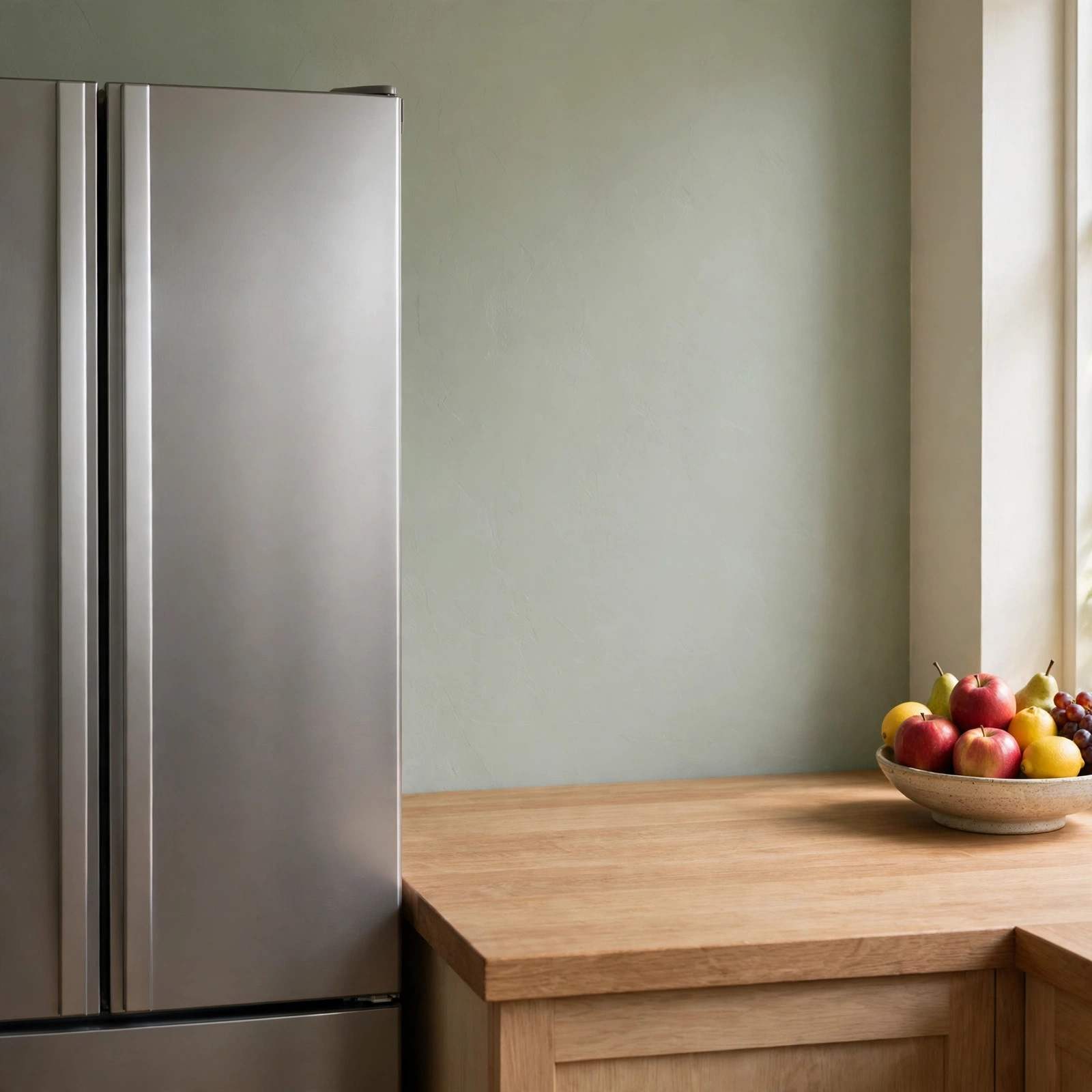
Every zone needs a landing strip: clear worktop for setting things down mid-task. Beside the fridge for shopping, the hob for hot pans, the sink for drained dishes. No empty space, no working zone.
Best for:
- Fridge side: unloading shopping straight away
- Hob side: hot pans and resting spoons
- Sink side: stacking before washing
Tip: defend the landing strips — clutter always tries to move into them.
18) Kitchen Rule of Three: Three Materials in Every Zone
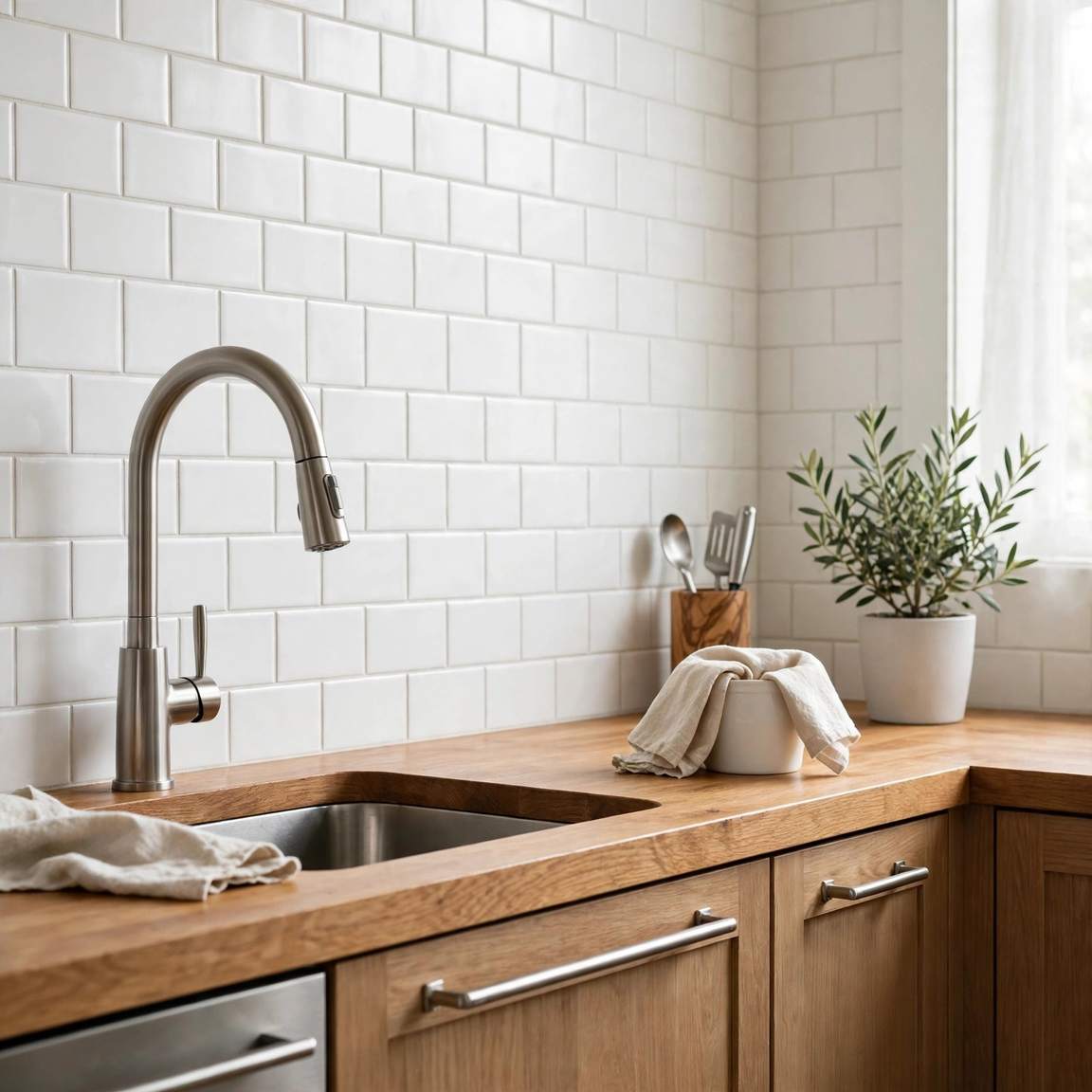
For zones that look designed rather than assembled, repeat a trio of materials in each: warm wood, one ceramic or stone surface, one metal — wood worktops, white tiles and steel fittings throughout.
How to style it:
- Pick your three materials once, repeat them
- Wood warms, ceramic calms, metal shines
- Keep proportions similar in every zone
Tip: photograph each zone; a fourth material marks the odd one out.
19) Three Heights of Storage in Every Zone
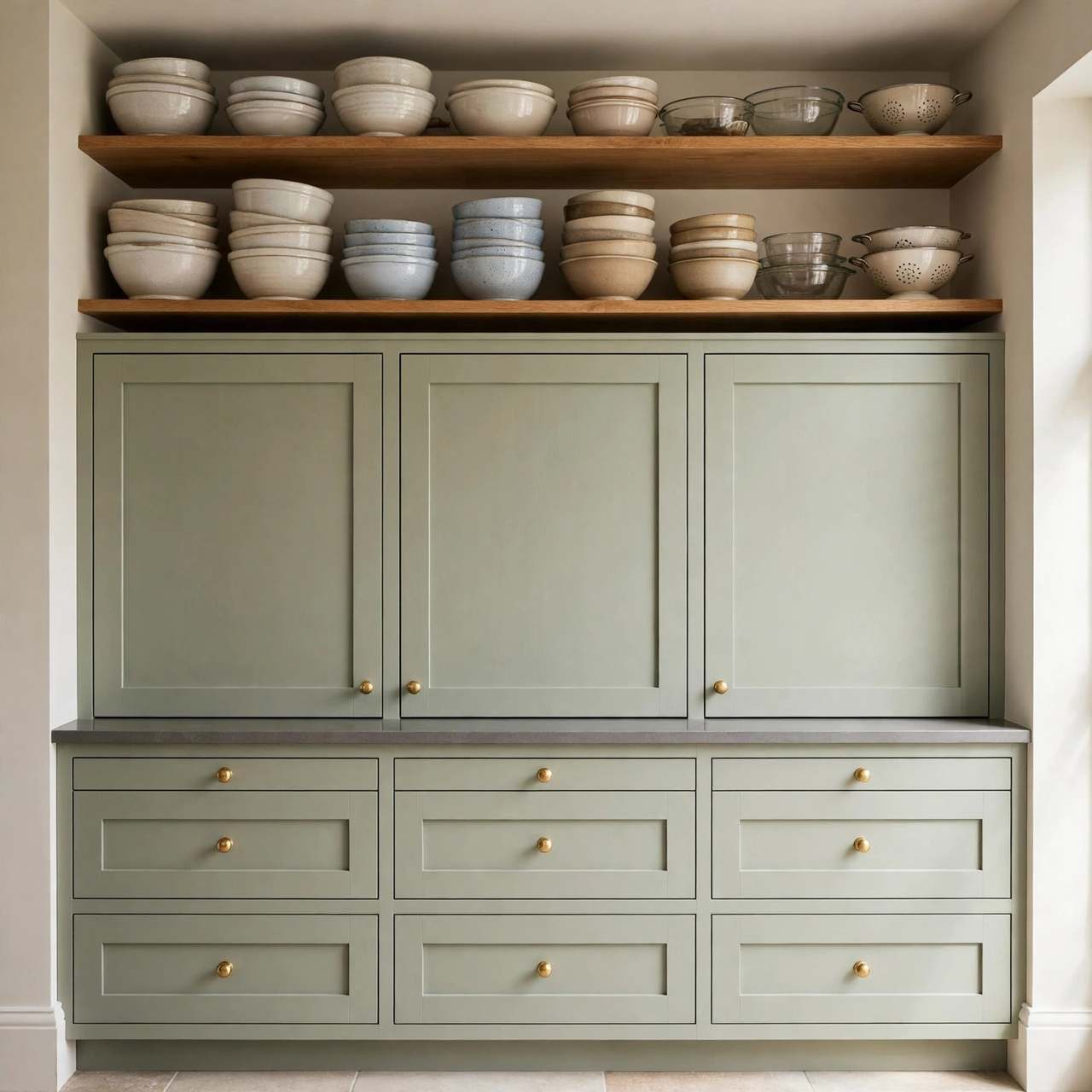
Whatever the zone, sort storage by height. High shelves hold the rarely used. Eye-level cupboards hold weekly items. Low drawers hold the heavy and daily.
Why it works:
- Heavy things live low, where lifting is safe
- Daily items sit between knee and shoulder
- High storage stops tempting you to hoard
Tip: if you need a stool weekly, swap that item downwards.
20) Three Steps Between Zones
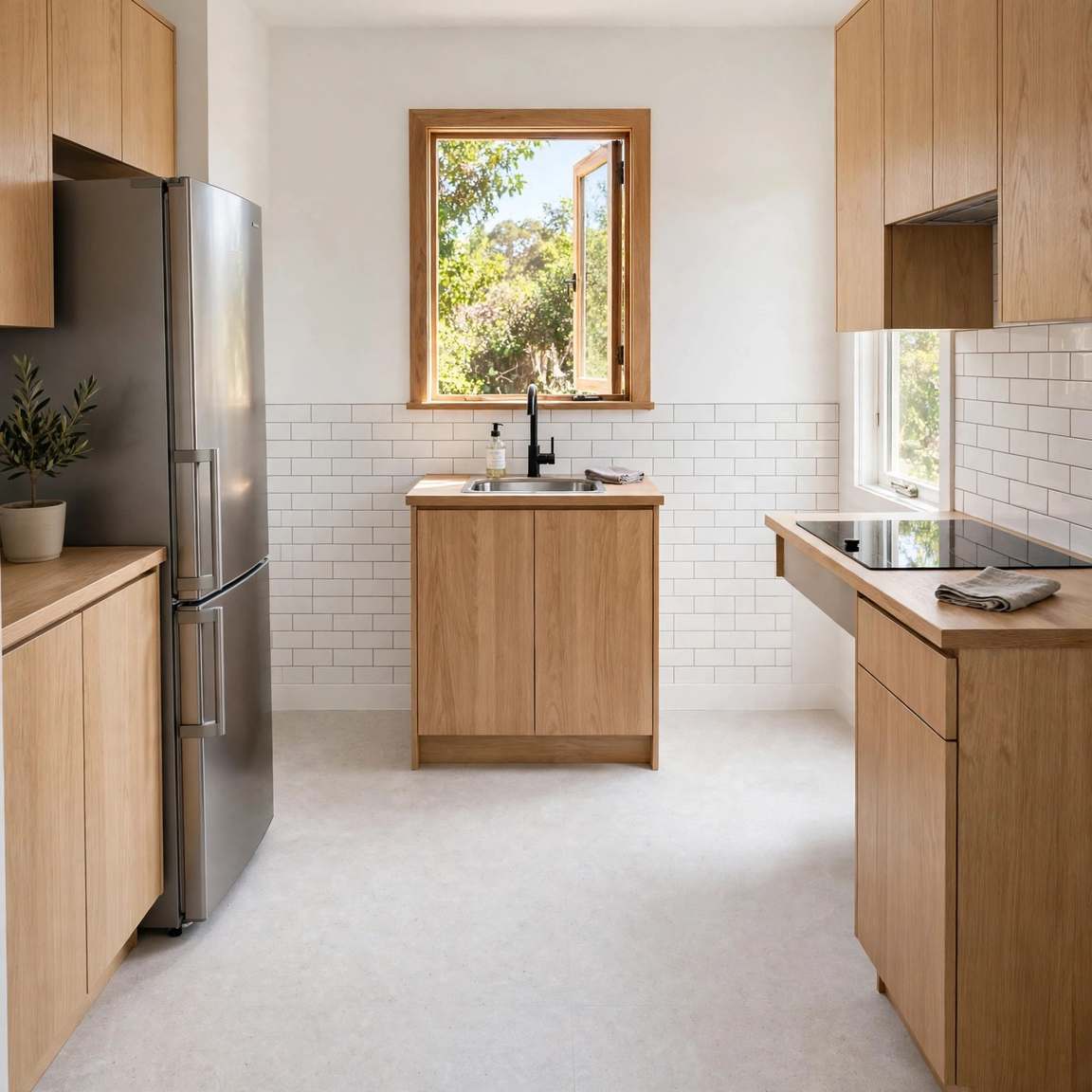
Classic guidance gives each work point roughly three comfortable steps of breathing room, and not much more before it feels spread out. Too tight, two cooks collide; too wide, dinner becomes a hike.
Best for:
- Planning a new layout on paper
- Checking whether an island helps or hinders
- Spotting why a big kitchen feels tiring
Tip: in a galley, keep the line order: fridge, prep, hob, sink.
21) Three Appliances Grouped in the Prep Zone
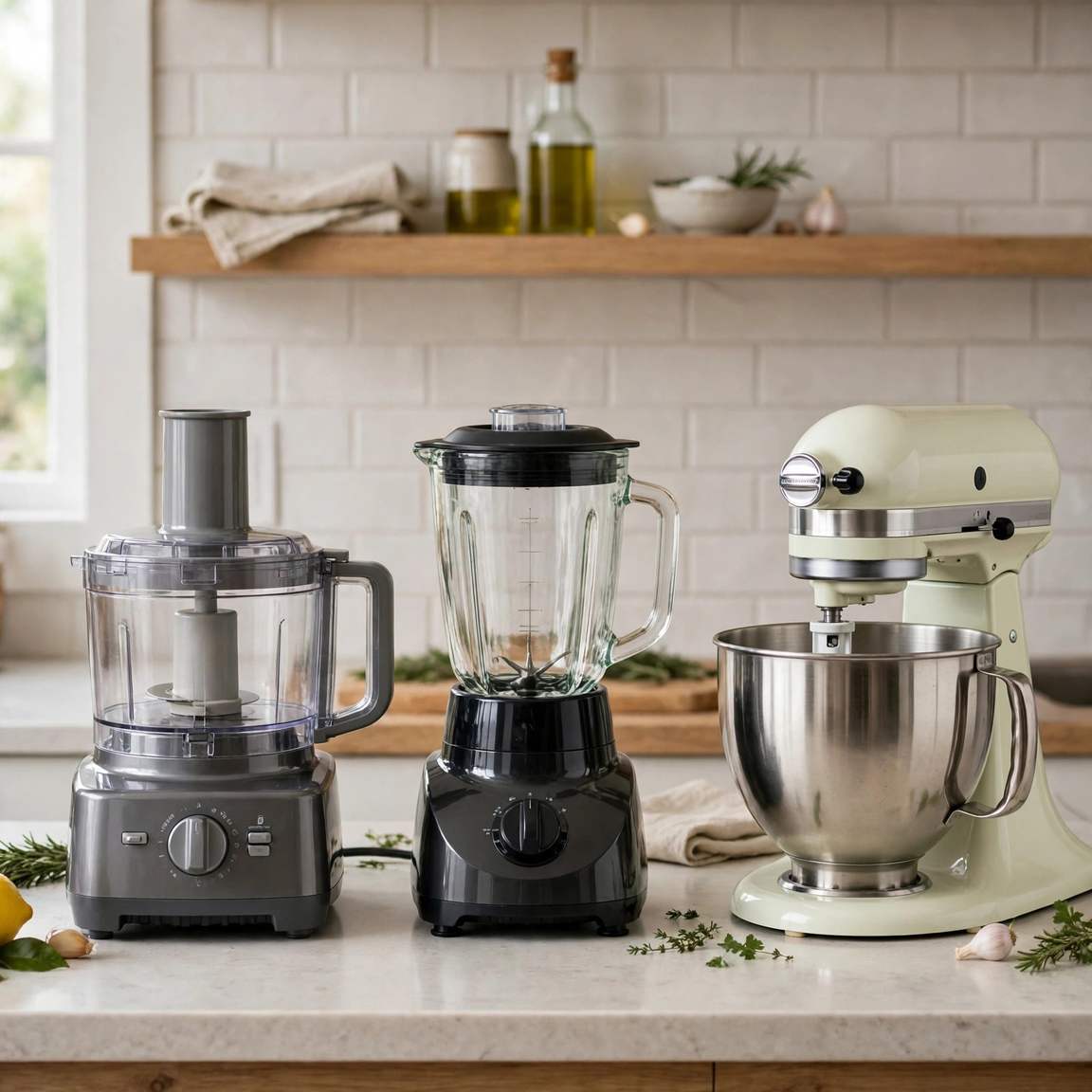
Small appliances belong to prep, so group the three you truly use — processor, blender, stand mixer — along one counter near sockets and the fridge. Scattered appliances chop zones into fragments.
How to use it:
- Only weekly-used appliances earn worktop space
- Group near sockets to avoid trailing cables
- The rest share one deep cupboard
Tip: be honest about the waffle maker; cupboard it.
22) Three Herbs on the Prep Zone Windowsill

A windowsill above the prep zone is home for three herbs you actually cook with — basil, parsley and mint are the classic trio. They flavour food at arm’s length and ask only for light and watering.
Why it works:
- Fresh herbs sit where chopping happens
- Three pots look generous, never crowded
- Growing your own cuts the plastic-pack habit
Tip: mint gets its own pot; it bullies anything sharing.
23) Kitchen Rule of Three: Mark the Zones Without Walls
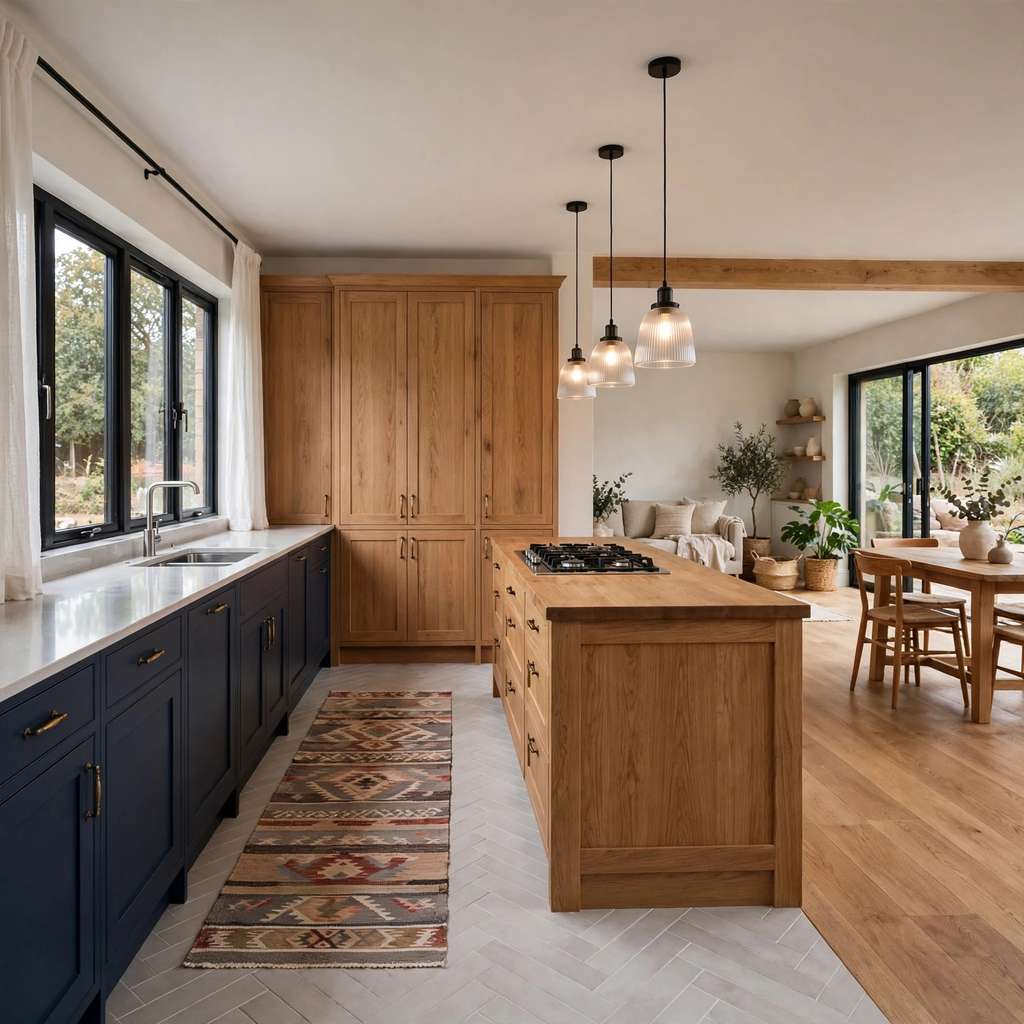
Open-plan kitchens have no walls, so mark zones with three signals: a runner or floor change for the cleaning zone, pendants over the cooking zone, a cabinet colour change for prep. Your eyes learn the map fast.
How to style it:
- Flooring or a runner signals the wet zone
- Lighting signals the cooking zone
- Colour signals the prep zone
Tip: keep signals subtle and repeated — one kitchen, three moods.
24) One Colour Thread Through the Zones
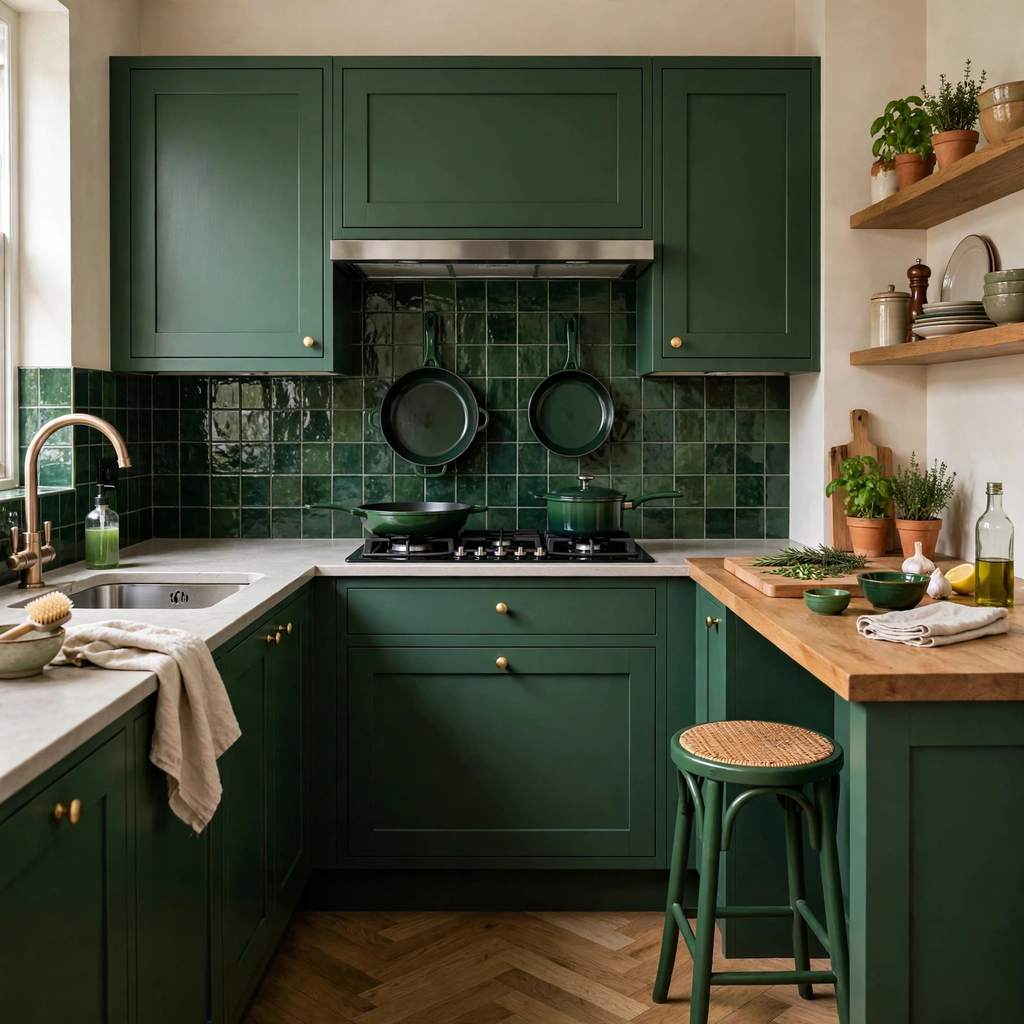
Zoning can split a kitchen into three strangers unless something travels between them. Repeat one colour in small doses everywhere — green tiles at the sink, green pans on the hob, a green stool at prep.
Best for:
- Open-plan and multi-colour kitchens
- Renters using accessories instead of paint
- Tying new cabinets to old ones
Tip: three sightings per zone is plenty; more becomes a theme park.
25) Three-Point Lighting Across the Whole Kitchen
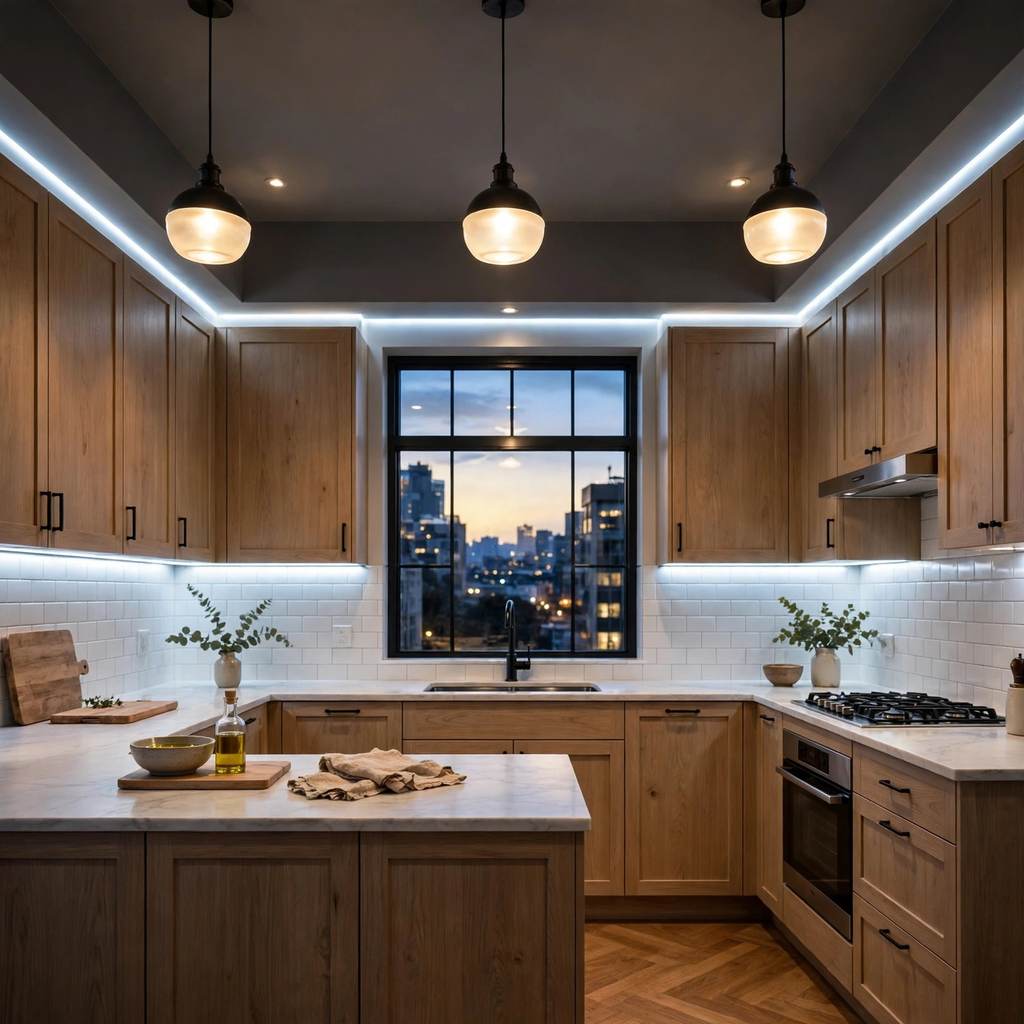
Light the whole kitchen as three points: ambient light from ceiling pendants, task light under cabinets for worktops, and accent light — a lit shelf, a glowing blind — for mood. Every zone borrows from all three.
Why it works:
- No zone is left in gloom or glare
- Layers switch separately for cooking and evenings
- Accent light makes a practical room feel finished
Tip: give each layer its own switch — one-for-all is the classic mistake.
26) Three Deep Drawers in the Cooking Zone
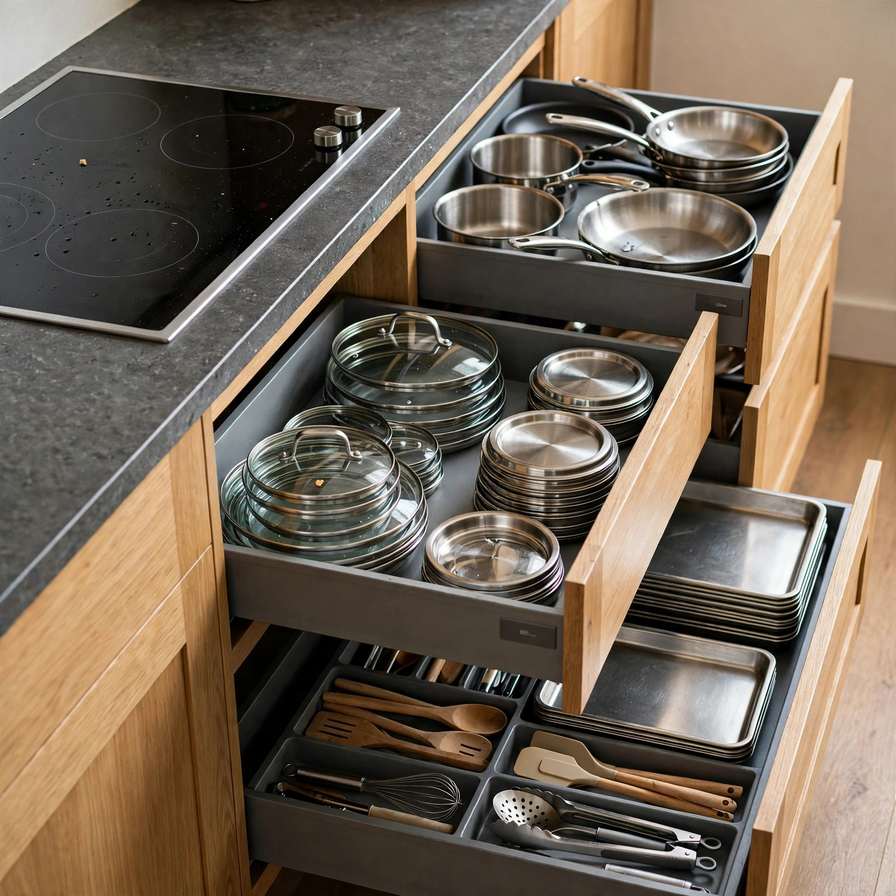
Deep drawers beside the hob are the cooking zone’s best storage. Use three: top for utensils and trivets, middle for pans with protectors, bottom for lids and roasting tins upright.
How to use it:
- Top drawer: flat things and daily utensils
- Middle drawer: pans, within easy lift
- Bottom drawer: lids and tins standing upright
Tip: dividers earn their keep here — pans that slide are pans that scratch.
27) Three Bins in the Cleaning Zone
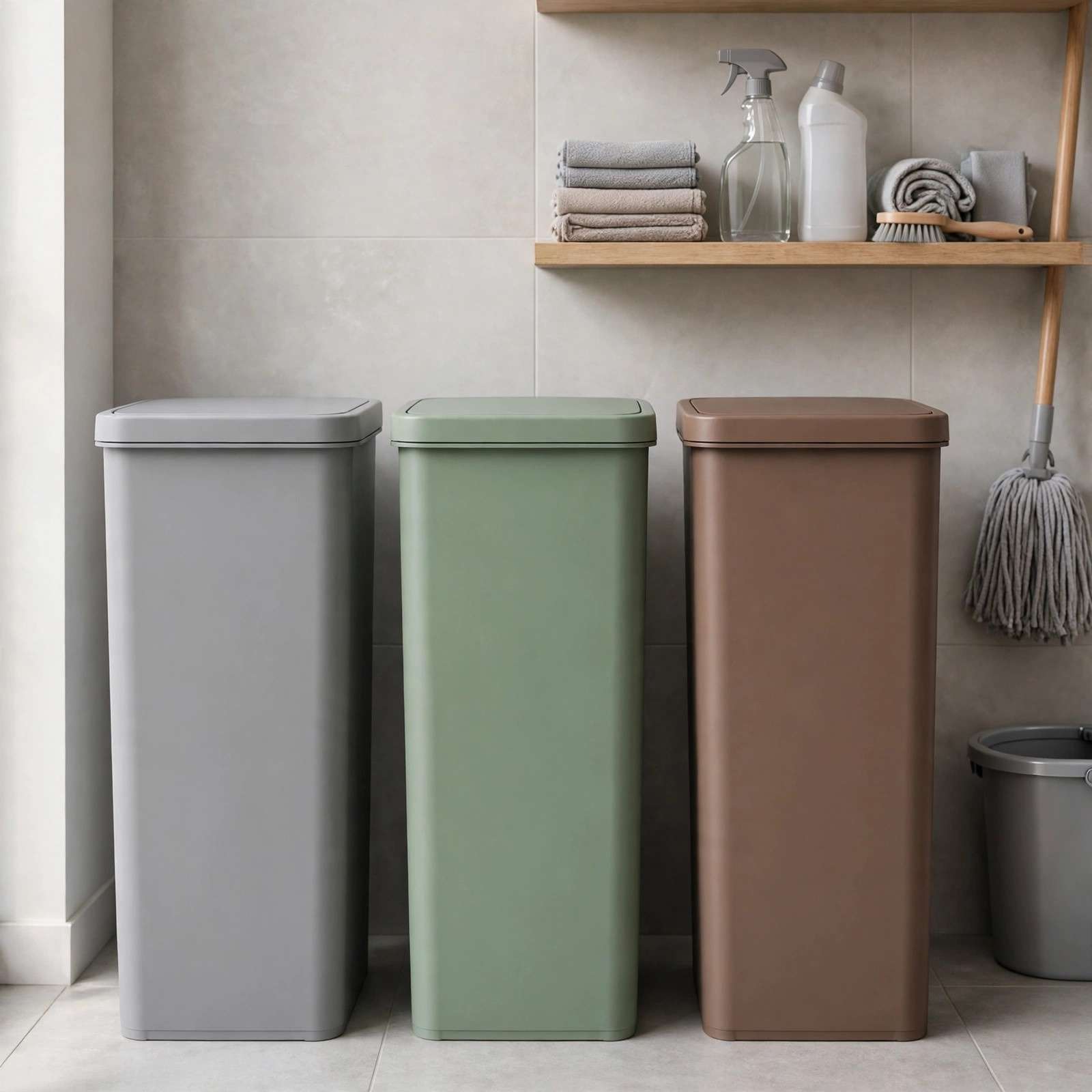
Sorting waste where washing-up happens takes three bins: general rubbish, recycling, food waste. Slimline bins side by side — or one divided pull-out bin — mean peelings are sorted in the moment, not in a weekly dig.
Best for:
- Busy kitchens producing daily food waste
- Small kitchens using a divided pull-out bin
- Anyone whose recycling lives by the back door
Tip: put the food waste bin nearest the prep end.
28) A Breakfast Mini-Zone With Three Essentials
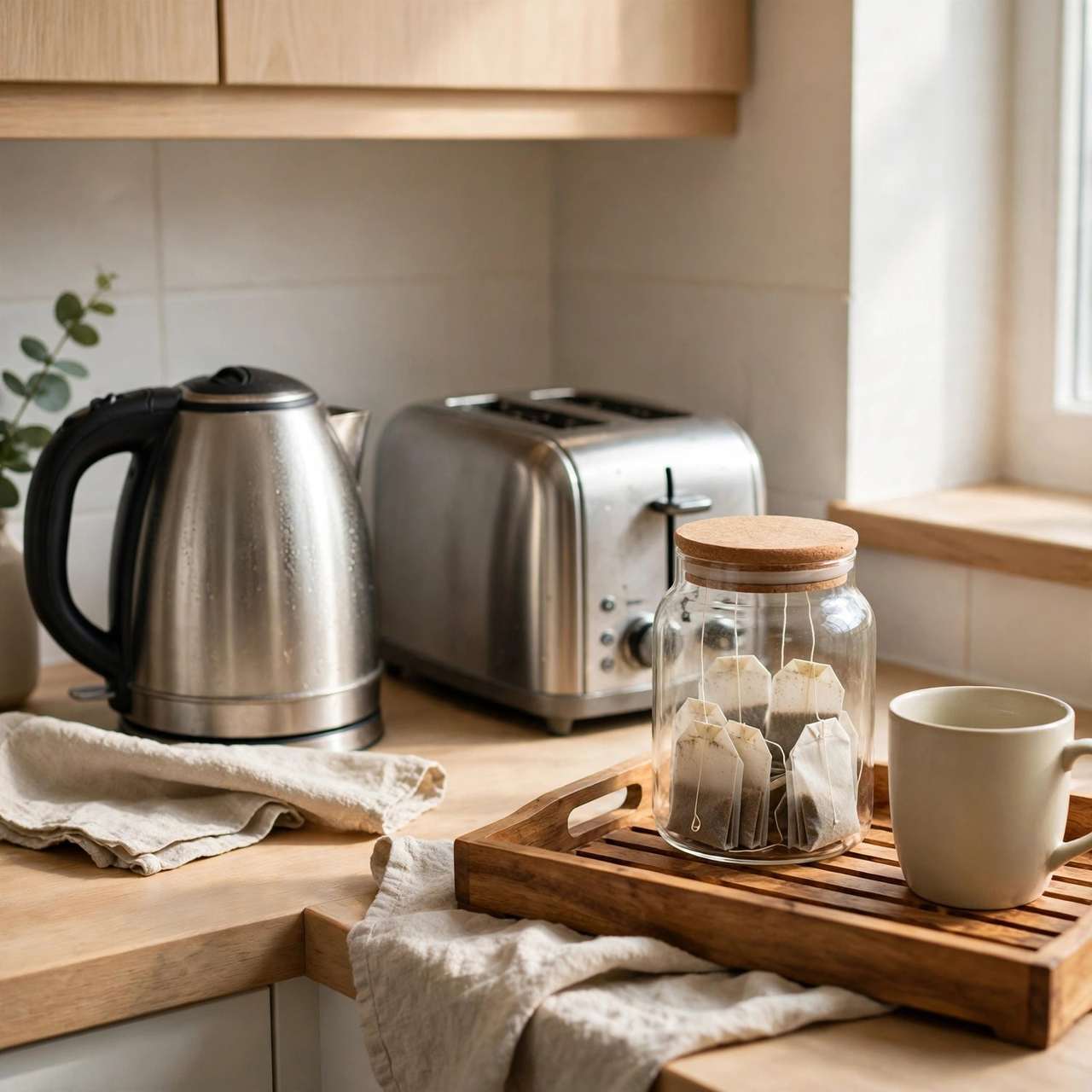
Zones can nest. A breakfast mini-zone on one tray — kettle, toaster, tea or coffee supplies — keeps mornings inside a square metre, so nobody collides with last night’s washing-up.
How to style it:
- One tray gathers the whole routine
- Mugs and bowls on the shelf above
- Keep it near the fridge for milk and butter
Tip: mini-zones also work for baking, cocktails or a child’s snack station.
29) A Baking Corner Inside the Prep Zone
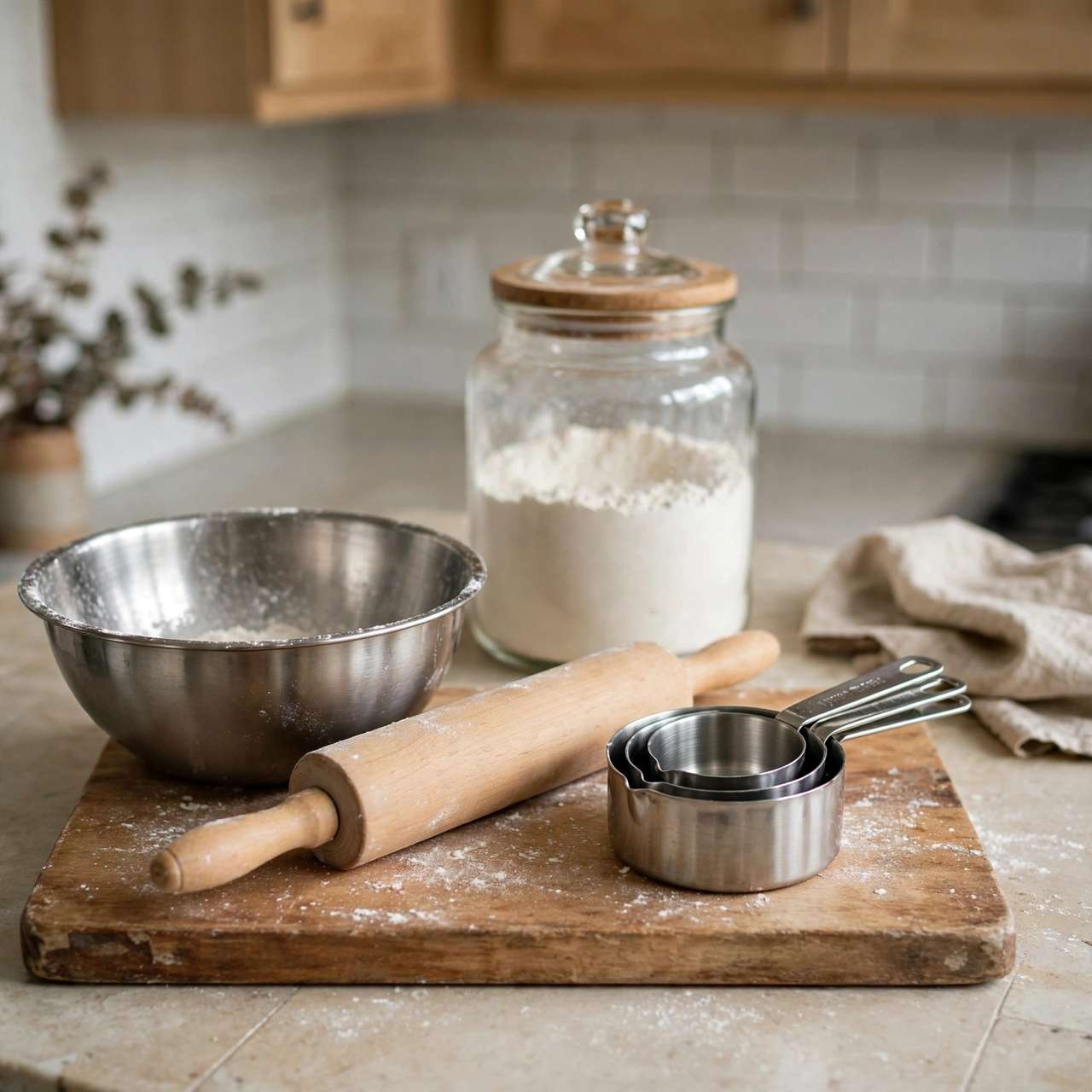
Bakers, take a corner of the prep zone: mixing bowl, rolling pin and measuring cups grouped on one board, flour and sugar jars behind.
Why it works:
- One grab replaces five cupboard searches
- Flour stays in prep, away from hob heat
- The corner signals “bake here” to everyone
Tip: a marble slab or cool worktop stretch makes the best pastry spot.
30) Three Safety Habits in the Cooking Zone
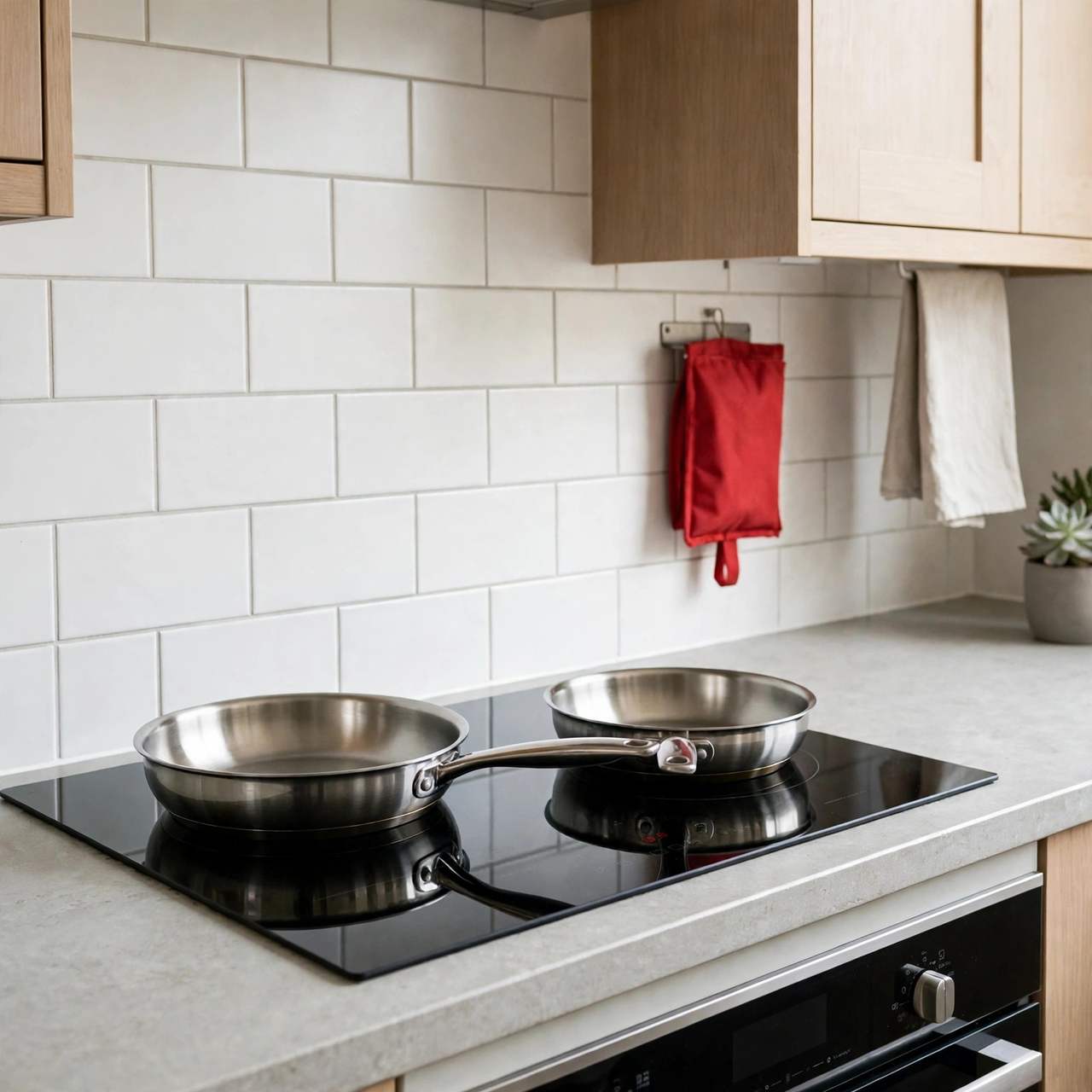
The cooking zone concentrates heat, so three habits keep it safe: pan handles turned inwards, clear space beside the hob for hot dishes, and a fire blanket mounted nearby and genuinely reachable.
Best for:
- Homes with children reaching upwards
- Gas hobs and enthusiastic frying
- Anyone who cooks in a hurry
Tip: practise finding the fire blanket blindfold.
31) Three Rules for Keeping the Triangle Clear
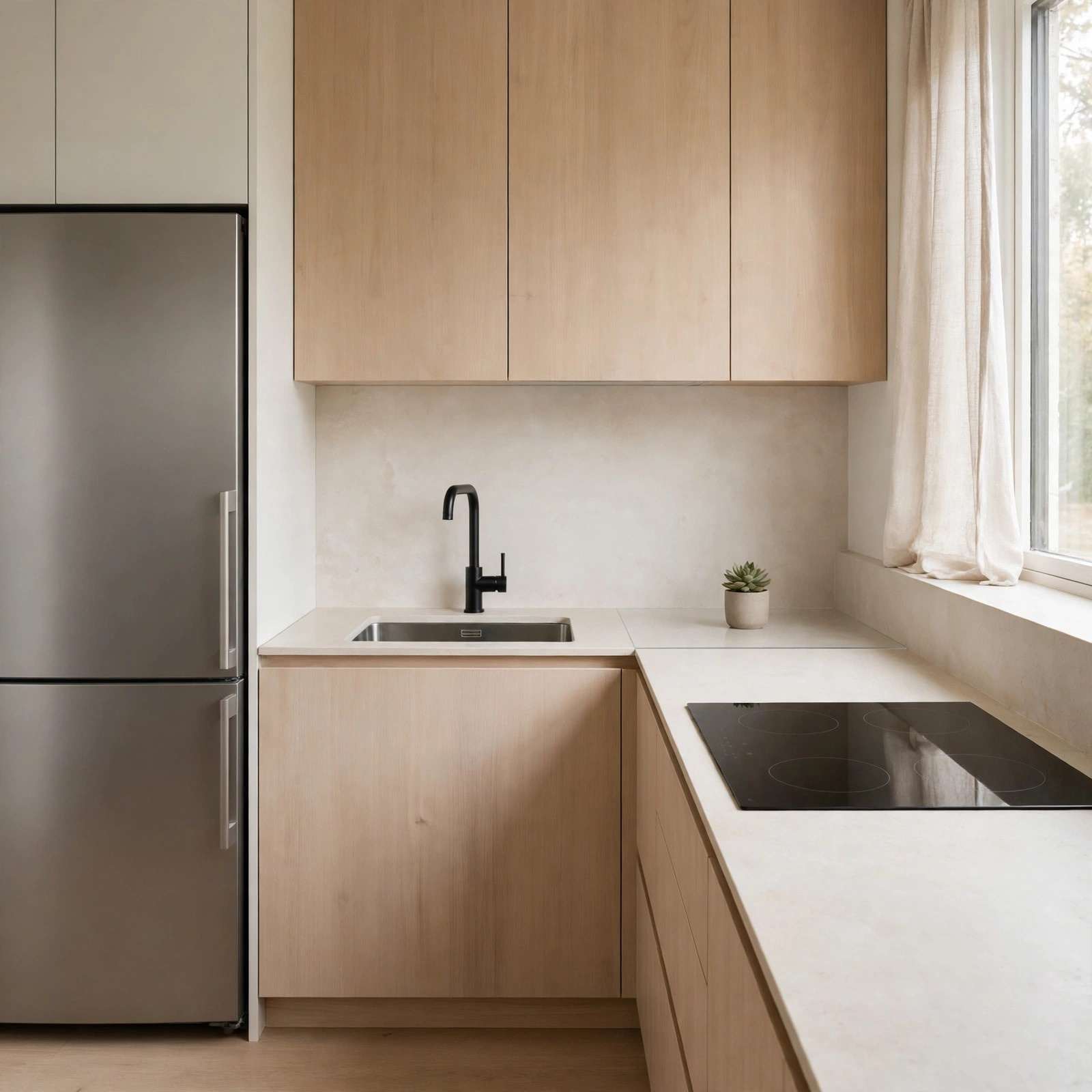
The triangle only works when its paths stay clear. Three rules protect it: nothing on floor routes between zones, no permanent clutter on path worktops, and a non-prep home for post and keys.
How to use it:
- Floor routes stay walkable with full hands
- Path worktops hold only what is mid-task
- Bags and post land by the door instead
Tip: walk the triangle with an imaginary hot pan; whatever you dodge, moves.
32) Three Seasonal Swaps for Each Zone
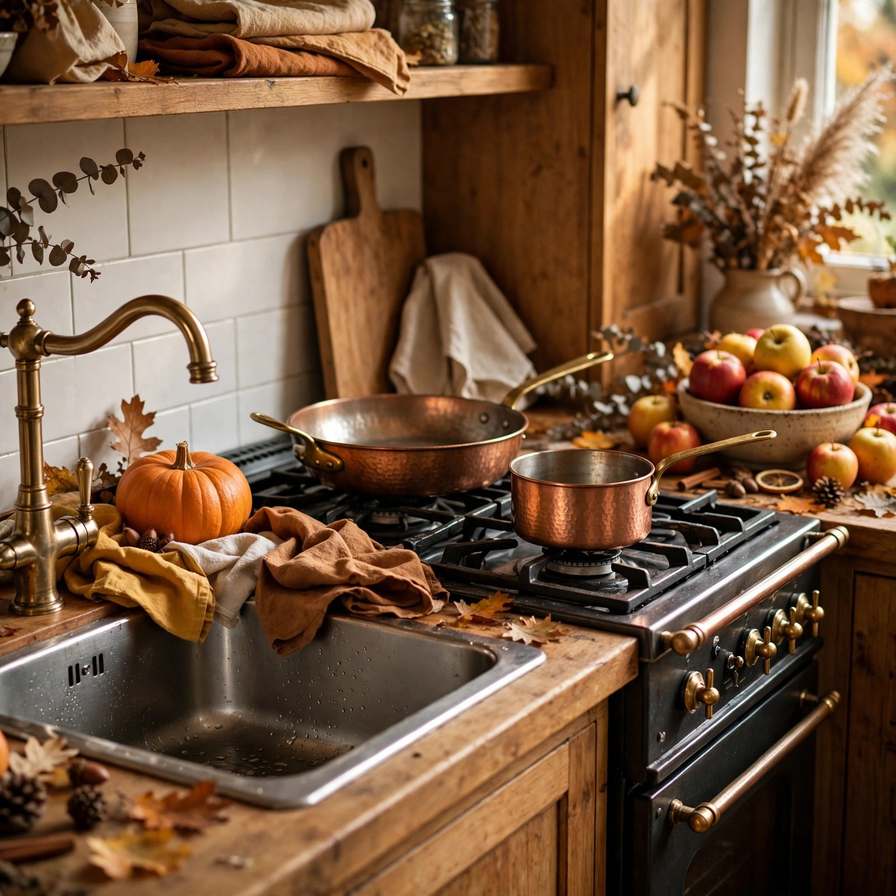
Zones stay fresh with small seasonal swaps, three per zone being plenty. Prep gets the season’s fruit bowl; cooking gets copper pans for autumn; cleaning gets fresh cloths and a scented seasonal soap.
Why it works:
- Tiny changes make the kitchen feel newly loved
- Seasonal kit rotates instead of cluttering
- Each zone gets attention in turn
Tip: swap each season’s first weekend, and audit one drawer too.
33) Three Stations for Cooking Together
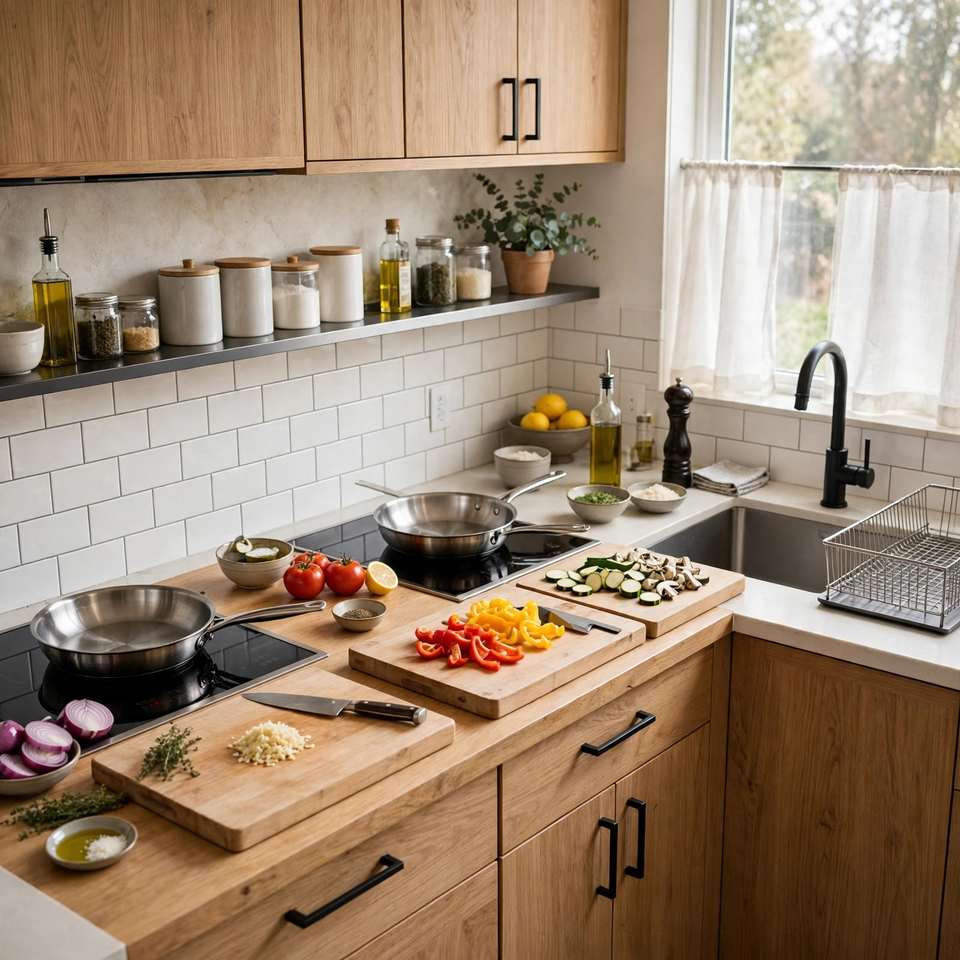
Cooking with company works when each person owns a zone: one preps, one cooks at the hob, one washes and tidies at the sink as you go. Nobody queues for the same knife, and washing-up is shared.
Best for:
- Family cooking and teaching children
- Dinner parties cooked as a team
- Couples who trip over each other
Tip: swap zones between courses so everyone learns the whole triangle.
34) Three Small Upgrades for Each Zone
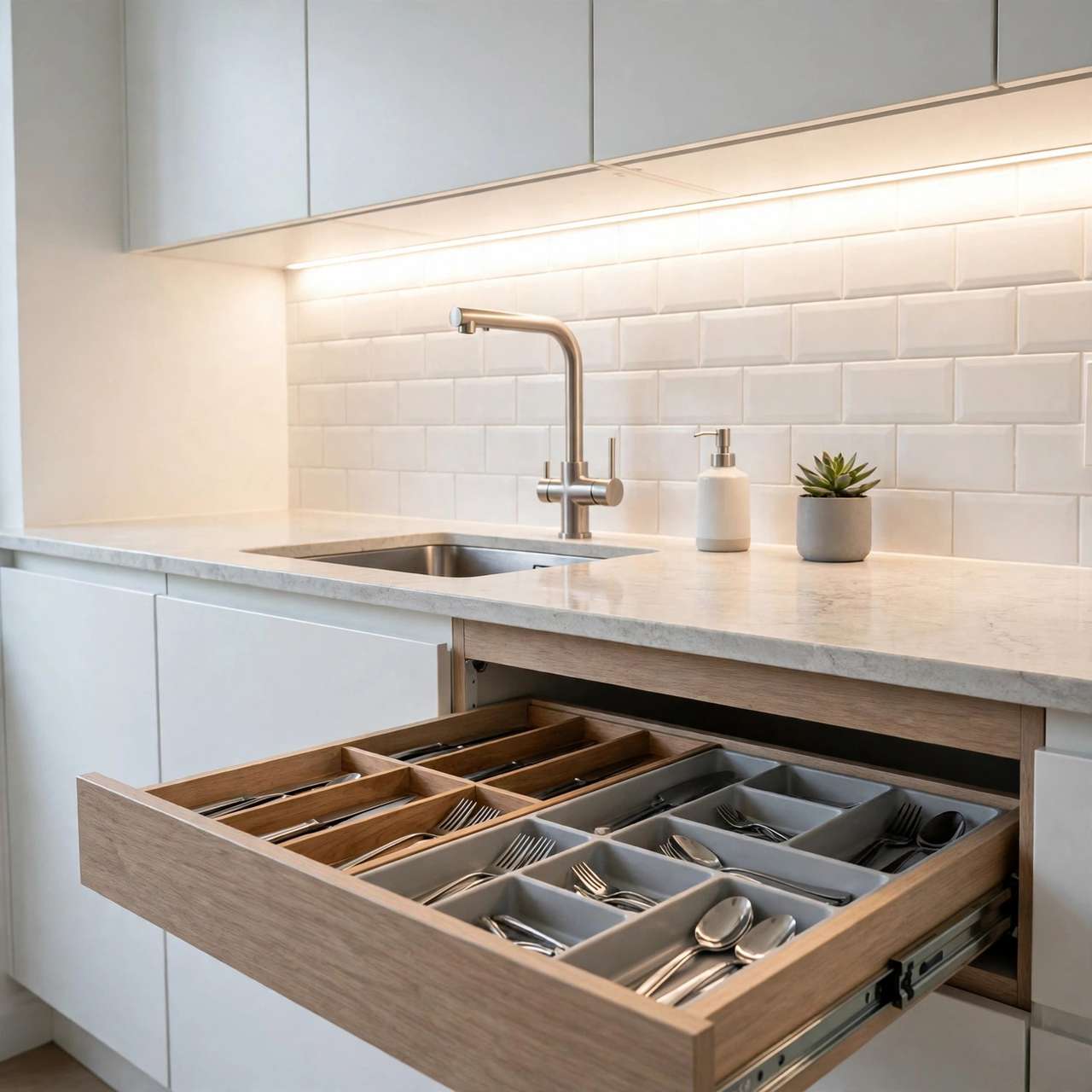
You do not need a refit — three small upgrades per zone will do. Prep loves a light strip and knife strip; cooking loves a pan divider; cleaning loves a pull-out bin and a pull-down spray tap.
How to use it:
- Spend on your most-used zone first
- Choose upgrades that remove a daily irritation
- Fit one upgrade per zone per season
Tip: buy the nine upgrades in irritation order, not catalogue order.
35) Kitchen Rule of Three: The Nightly Zone Reset
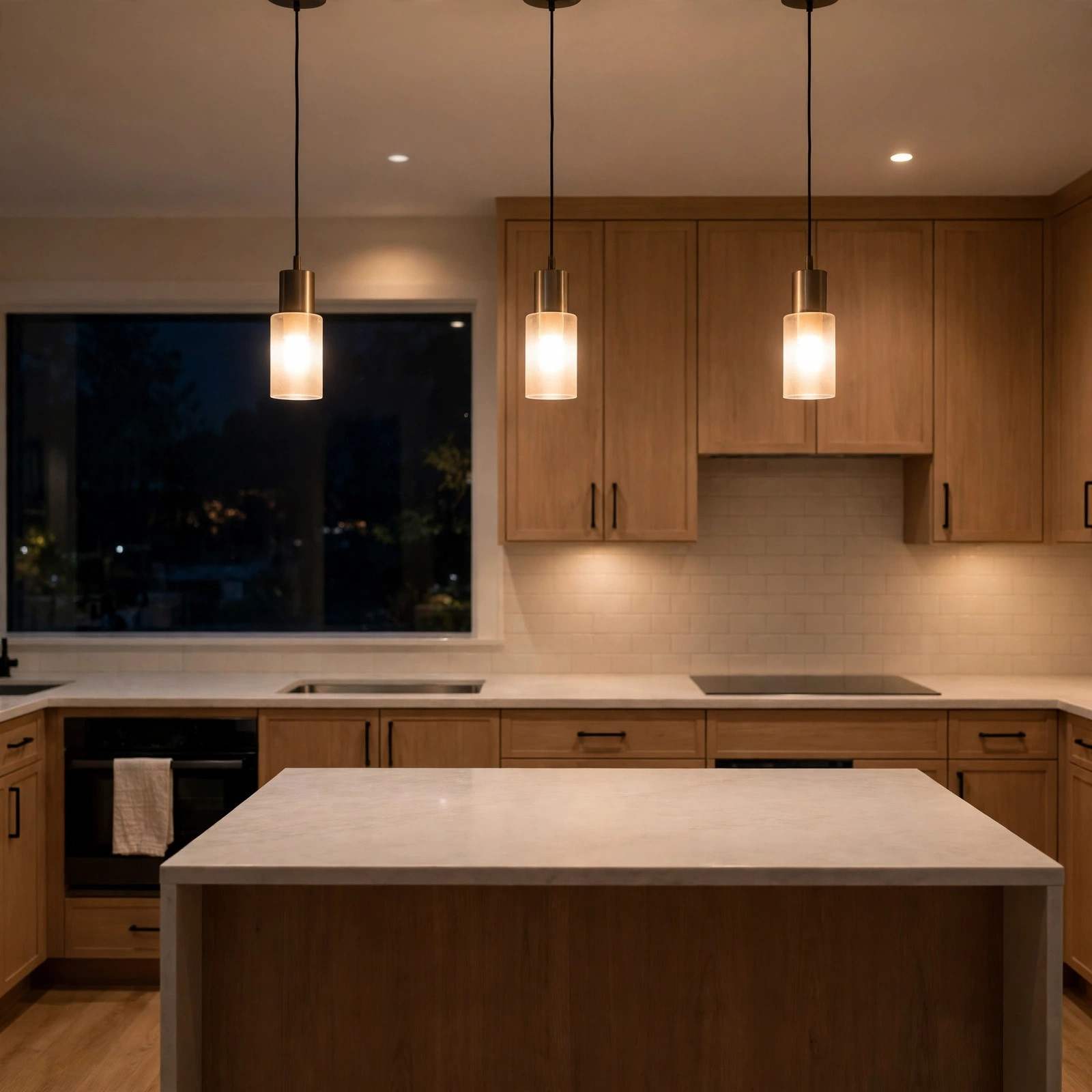
End the day with a five-minute reset visiting all three zones: prep counter wiped, boards away, hob checked, pans home, sink empty, cloths hung. Tomorrow starts in a kitchen that already works.
Why it works:
- Five minutes nightly beats a weekly deep clean
- Each zone is checked in cooking order
- A clear morning sink changes the whole day
Tip: use a favourite song as your timer.
Planning Your Three Zones on Paper First
Before moving a pan, sketch your kitchen and mark the zones in pencil: where paths cross, where landing strips belong, which cupboards hold the wrong zone’s kit. Most kitchens need an afternoon of swapping, not a renovation.
Lighting belongs in that plan, especially in low rooms: sensible low ceiling kitchen lighting keeps pendants from crowding the cooking zone while prep stays bright. Then move things in zone order, prep first.
Small Habits That Keep the Zones Working
Zones fail by drift: the oil migrates to the window, post lands on the prep counter, a fourth pan joins the three. A weekly two-minute tour fixes it — stand in each zone, return three strays home, and check the landing strips are clear.
Designers layer light across a whole room; these beautiful kitchen lighting design ideas show task and ambient light together, exactly what a three-zone plan needs. Keep trios honest and paths clear, and the kitchen runs itself.
Conclusion
Three zones, three of everything that matters: that is the whole system. A welcoming prep zone, a cooking zone with everything at arm’s reach, and a cleaning zone flowing scrape-to-dry will change how every meal feels — calmer, quicker, more enjoyable.
Do not reorganise everything this weekend. Pick the most frustrating zone, apply its three fixes, live with it a week; the other two will soon ask for the same.
For more real kitchens planned around how people cook, Houzz is full of layouts to browse. Now draw your triangle, claim your zones, and enjoy a kitchen that makes sense.




More Stories
33 Ways to Maximize a Small Backyard
30 Beautiful Bedroom Decor Ideas
32 Bedroom Rule of Three Color Ideas