
Introduction
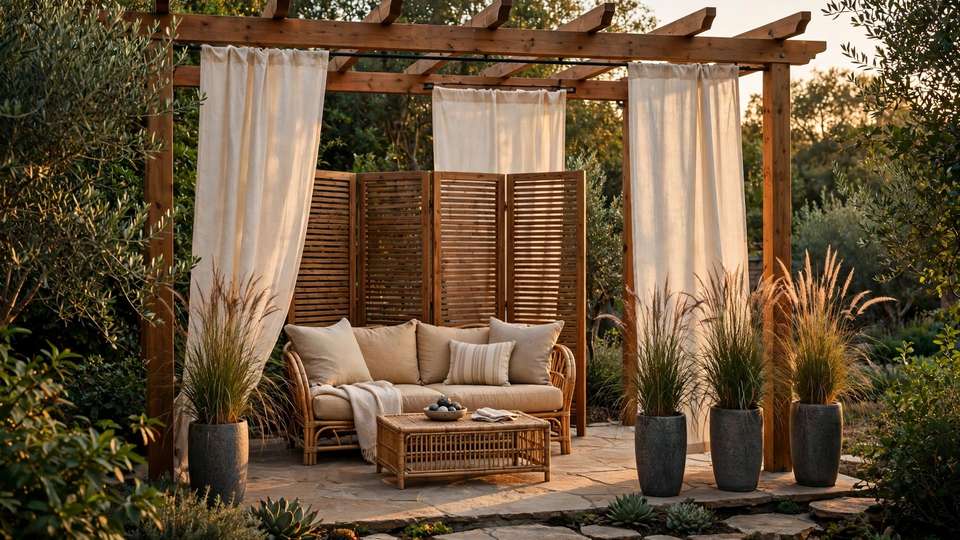
An overlooked patio is hard to relax on, but privacy rarely needs a fortress. The patio rule of three offers a gentler fix: group your screens, planters and curtains in threes, and each trio works harder than a single piece ever could, blocking sightlines while looking like decoration.
Threes suit privacy because three pieces can turn a corner, span a gap or step down in height where one panel falls short. A trio reads as designed, not defensive, so neighbours see a styled patio, not a barricade.
If you like grouping tricks in the wider garden, these backyard rule of three ideas show the same thinking outdoors. Here the focus stays tight: 34 ways to make a patio private with well-placed threes.
1) Three-Panel Folding Screen Around Your Seating
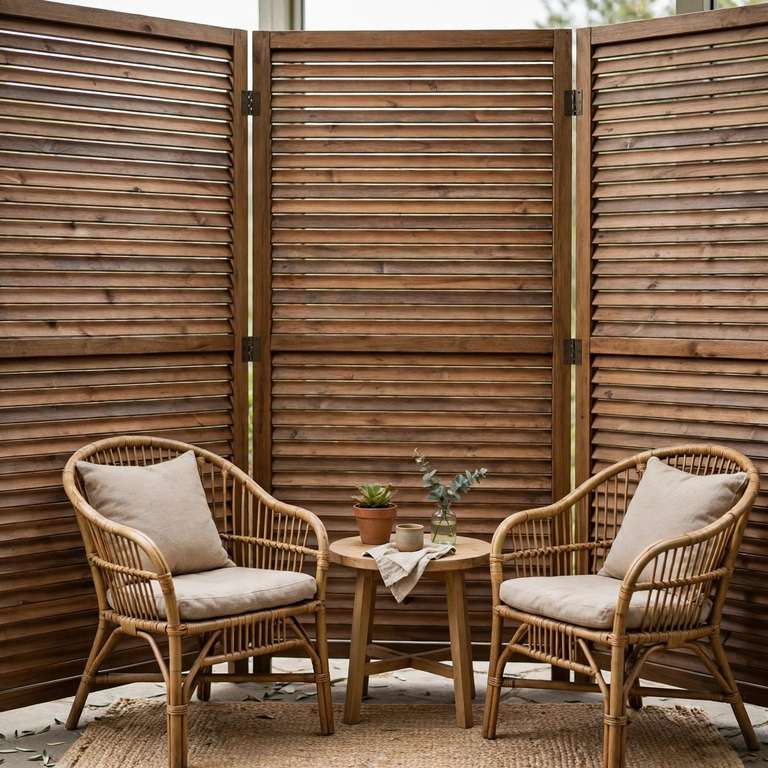
A three-panel folding screen is the quickest private corner you can build. Angle the outer panels inward and it hugs your seating like a bay, blocking the view from next door and the path alike.
Why it works:
- Three panels turn corners flat screens cannot
- Folds flat for winter storage
- Slats filter light rather than blocking it
Tip: stand it on the side the overlooking window faces, not all the way round.
2) Patio Rule of Three Planters in One Tall Row
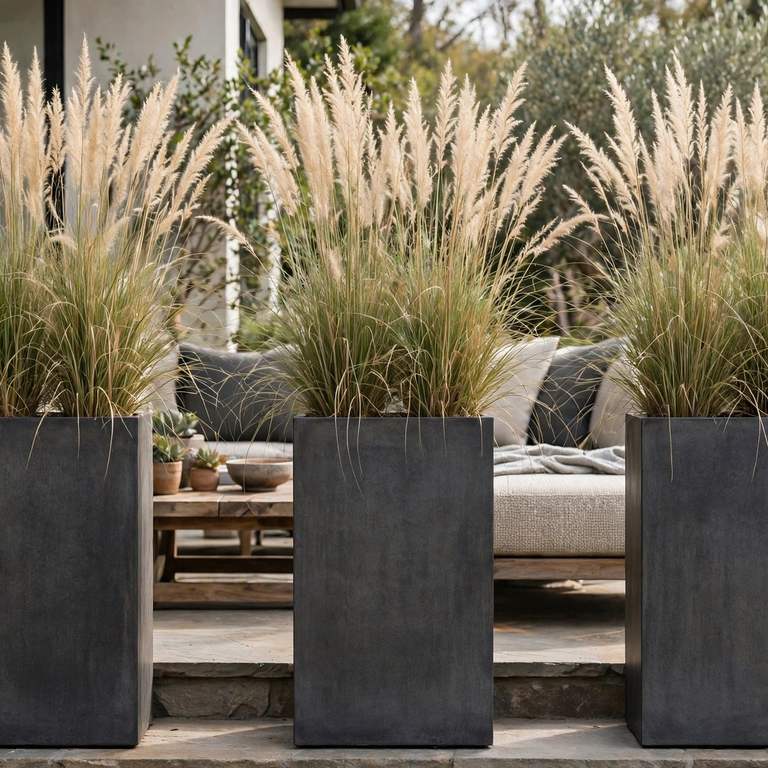
Three tall planters in a row make a green wall exactly where you need one. Fill them with feathery grasses and the row sways and blurs the view through, while the pots stop anyone seeing straight across.
How to style it:
- One grass variety in all three pots
- Tallest planting in the middle pot
- Pots in one material and finish
Tip: castors underneath let you slide the green wall open for access.
3) Three Curtain Panels on a Pergola Rail
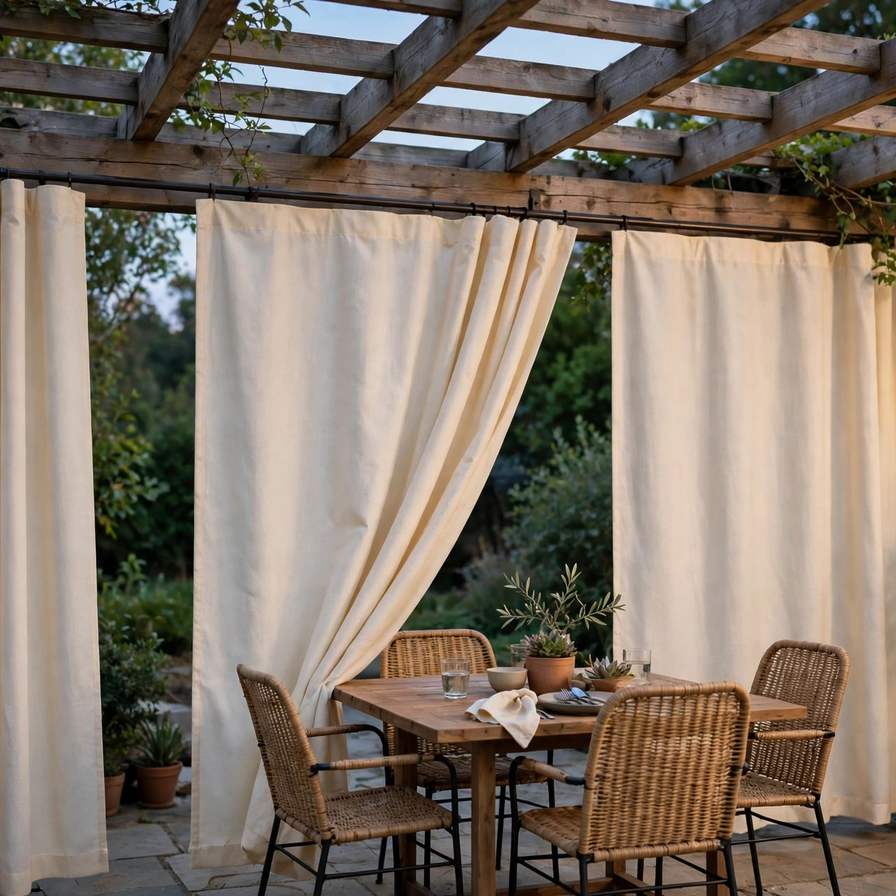
Outdoor curtains soften privacy like nothing else, and three panels cover a pergola side with graceful overlaps. Drawn together they close the view; tied back, each becomes a soft pillar that still breaks the sightline.
Best for:
- Pergolas overlooked from one side
- Shaded, fabric-soft seclusion
- Renters who cannot build anything
Tip: choose outdoor fabric and weight the hems so panels hang straight.
4) Triple Trellis Panels Dressed With Climbers
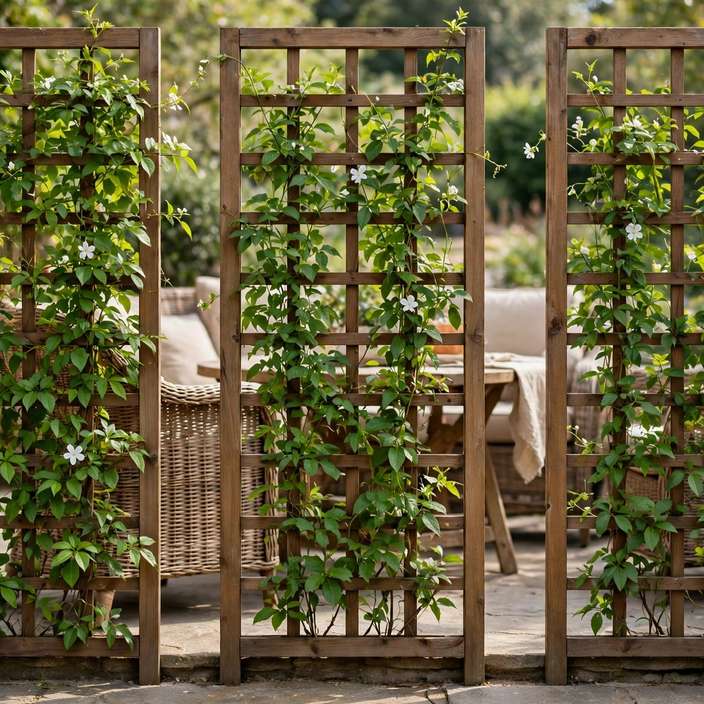
Three trellis panels in a row give climbers a framework and you a wall that improves monthly. Jasmine, clematis or ivy weave through the lattice until the panels read as one green, scented screen.
How to use it:
- One climber per panel, planted at the base
- Evergreen ivy where winter privacy matters
- Panels fixed to posts, not just the fence
Tip: train stems sideways to close gaps at eye level first.
5) Three Heights of Planting in One Corner Bed
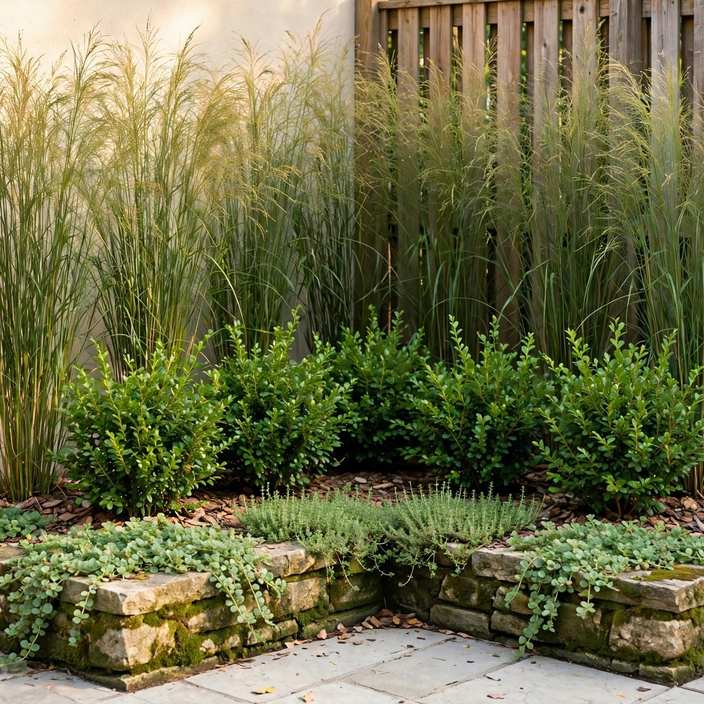
A corner bed planted in three heights hides more than a single hedge. Tall grasses catch the highest windows, mid shrubs fill the middle view, and low plants close the gap at ankle height.
Why it works:
- Every sightline meets a green layer
- Stepped heights look natural, not wall-like
- One bed uses less floor than three pots
Tip: put the tallest layer in the corner and step down towards the seating.
6) A Trio of Bamboo Screens Along the Boundary
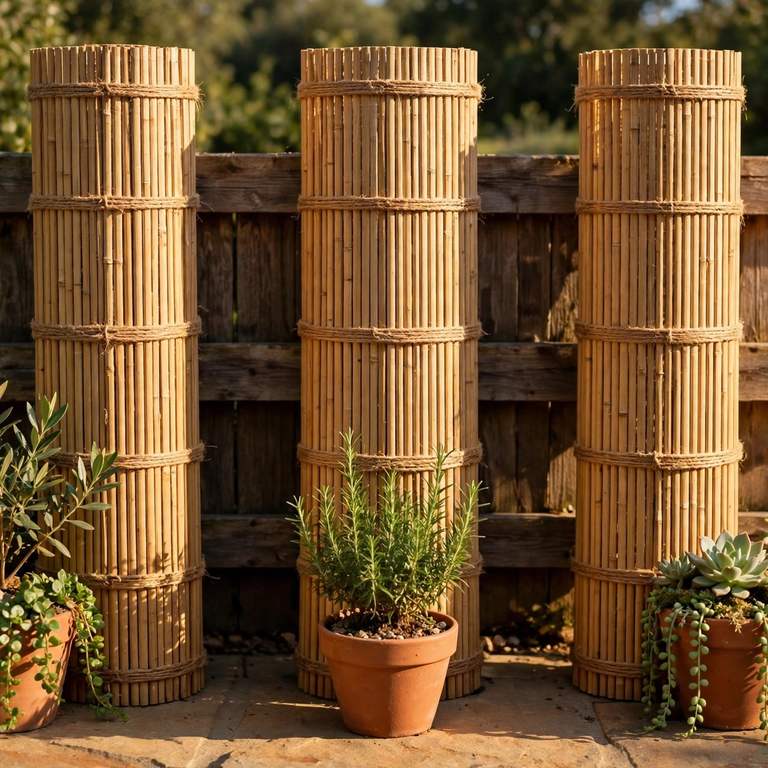
Bamboo screening is cheap and cheerful, but one layer can look thin. Stand three panels along the boundary, each overlapping the next, and the doubled edges close the see-through strips one roll leaves.
How to style it:
- Overlap each panel by a hand’s width
- Fix top, middle and bottom firmly
- Pair with pots to hide the base line
Tip: bamboo weathers silver-grey, which suits pale, calm schemes best.
7) Three Lanterns That Mark Out a Private Corner
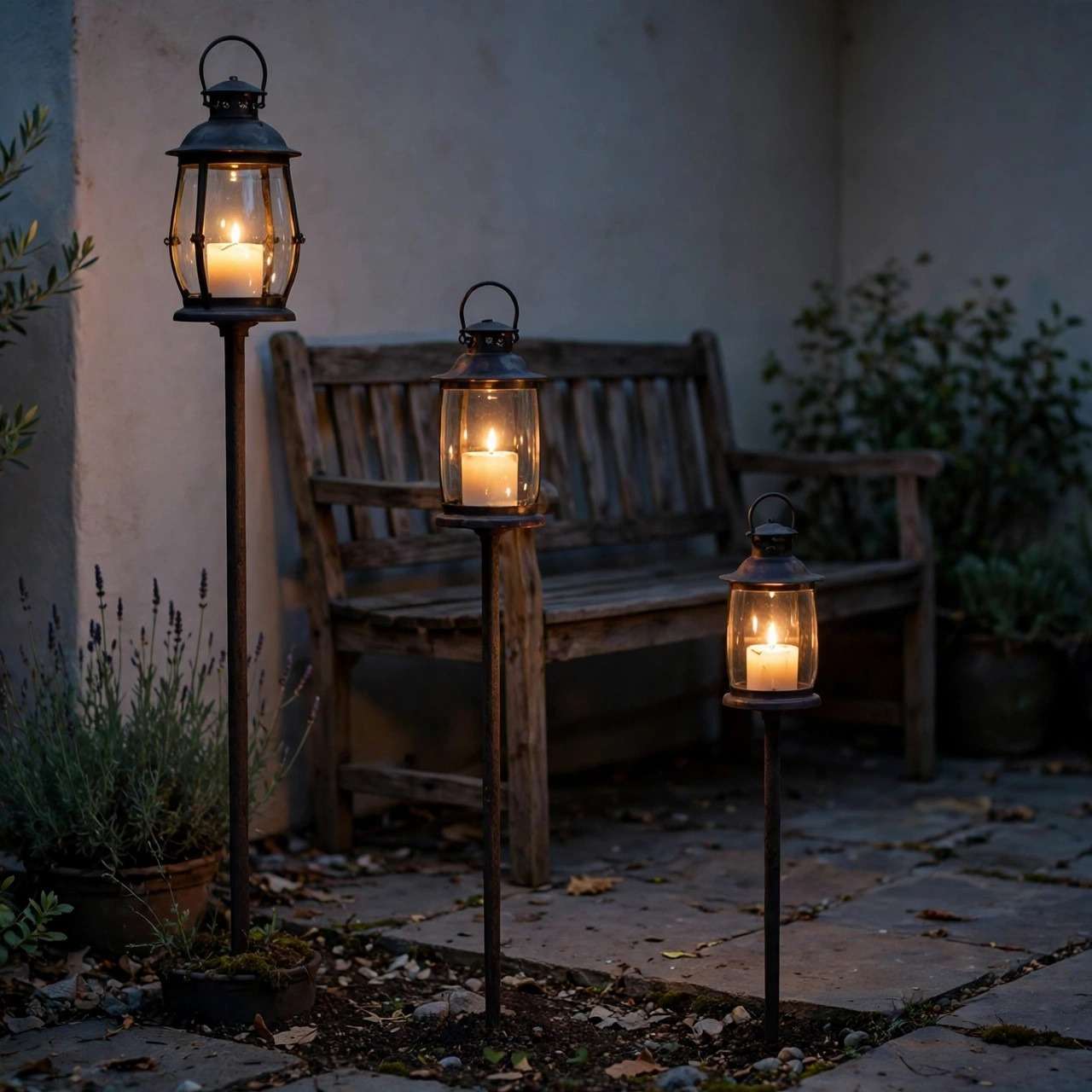
Privacy is partly about where eyes land, and three lanterns give them somewhere better to go. Grouped at staggered heights, they draw attention into your patio’s glow and away from the seating behind.
Best for:
- Evening privacy without building anything
- Corners that feel exposed at night
- A gentle boundary guests read instantly
Tip: tallest lantern at the back, shortest at the front, like steps of light.
8) A Three-Tier Plant Stand Against the Fence
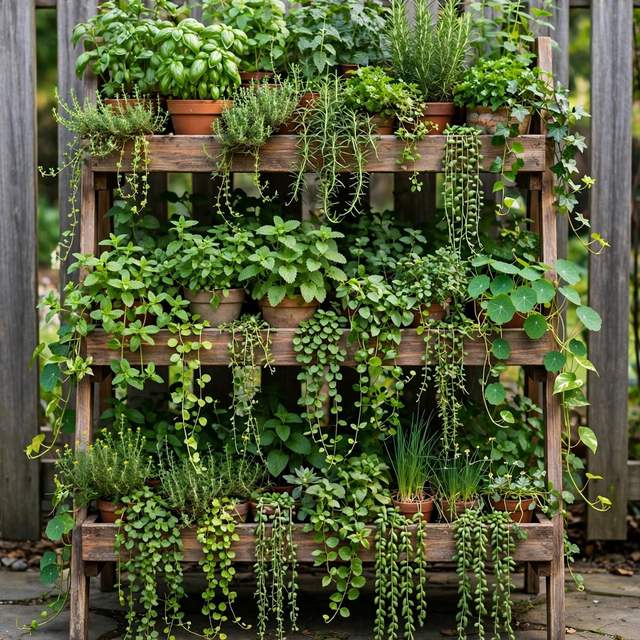
A tiered stand turns a patch of fence into three shelves of screening. Top-tier pots reach eye height, the middle tier thickens the green, and the lowest hides the stand’s legs and bare fence base.
How to use it:
- Trailing plants on top, to spill down
- Heaviest pots on the bottom
- One plant family per tier
Tip: a stand on wheels can follow the gap as the seasons move it.
9) Patio Rule of Three Sails for Shade and Seclusion
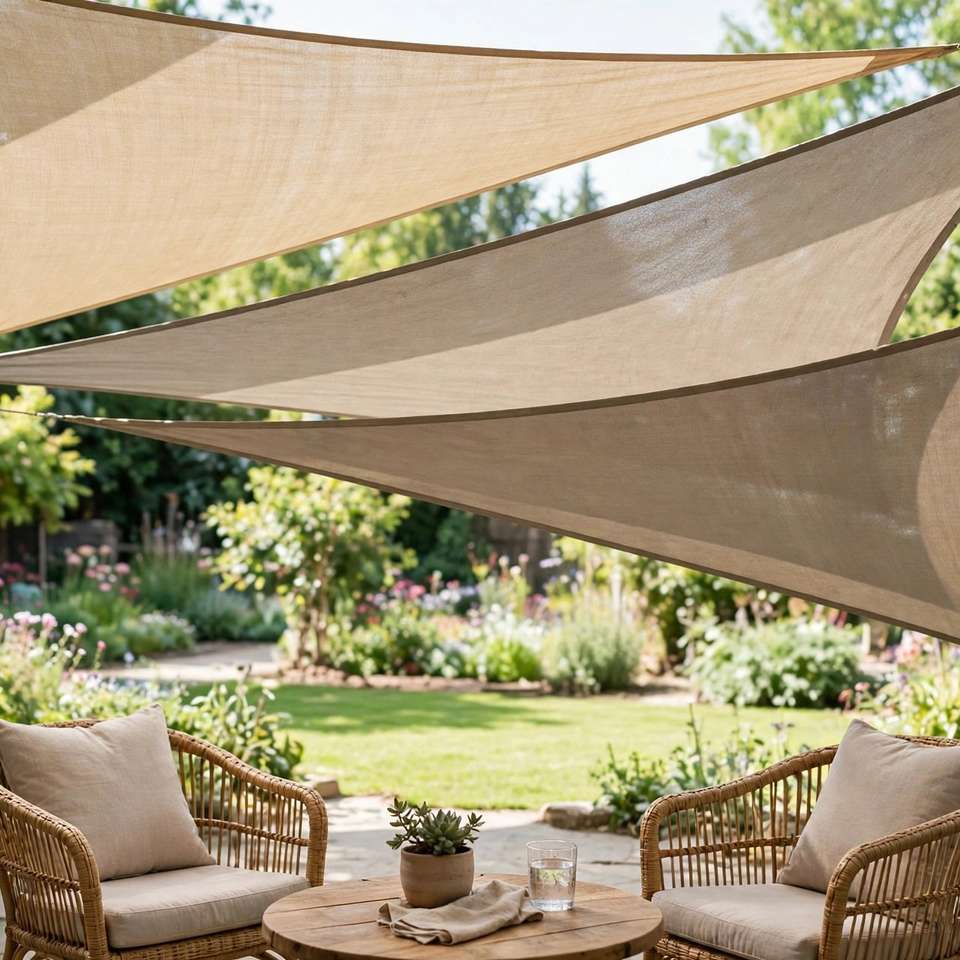
Overlooked from above is still overlooked, and three shade sails answer it from overhead. Overlapped at different heights, the trio closes the gaps a single sail leaves and throws dappled shade across the seats.
Why it works:
- Blocks views from upstairs windows
- Three sails span L-shaped patios
- Overlaps close the see-through middle
Tip: slope each sail so rain runs off one corner, never the middle.
10) Three Tall Planters Flanking the Patio Doors
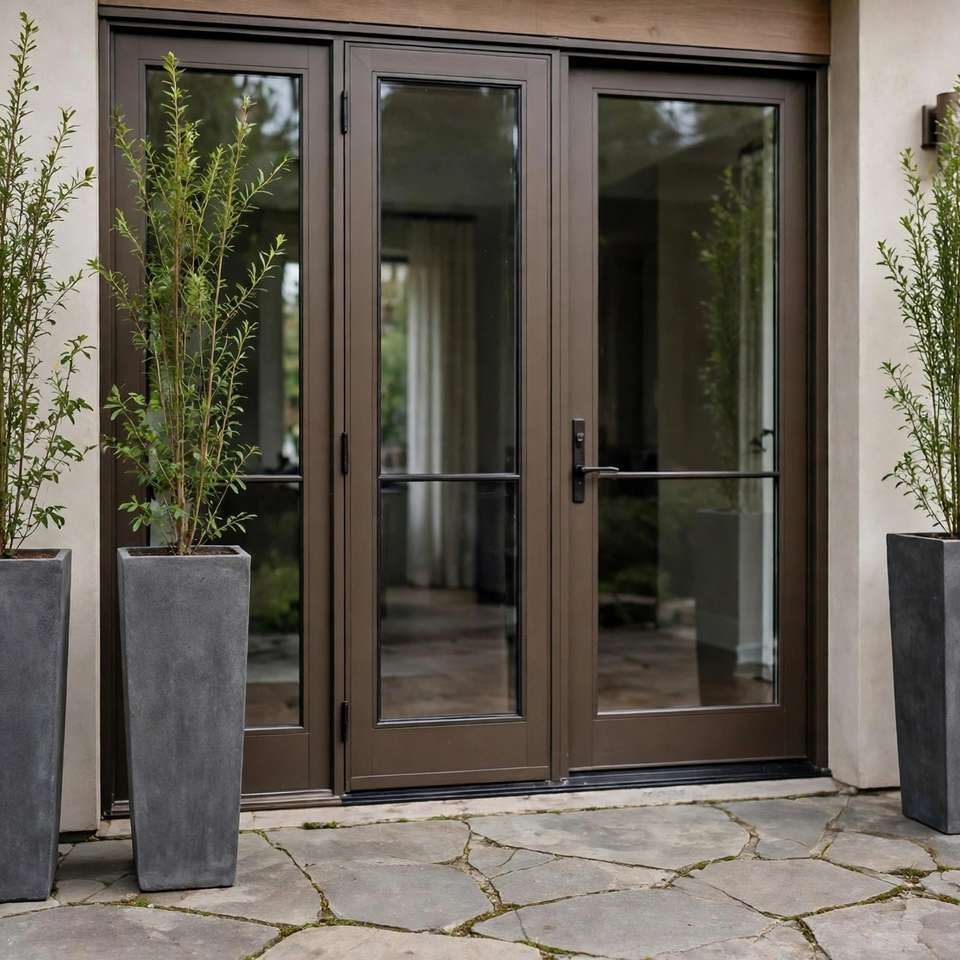
The stretch beside patio doors is prime overlooking territory, and three tall planters guard it without blocking the doorway. Two on the wider side, one on the narrow side, screen the glass at standing height.
How to style it:
- Slender shrubs that grow up, not out
- Matching planters, for a framed look
- Keep the doorway itself clear
Tip: evergreen shrubs earn their place here, screening glass all year.
11) Three Reed Rolls Layered on One Boundary
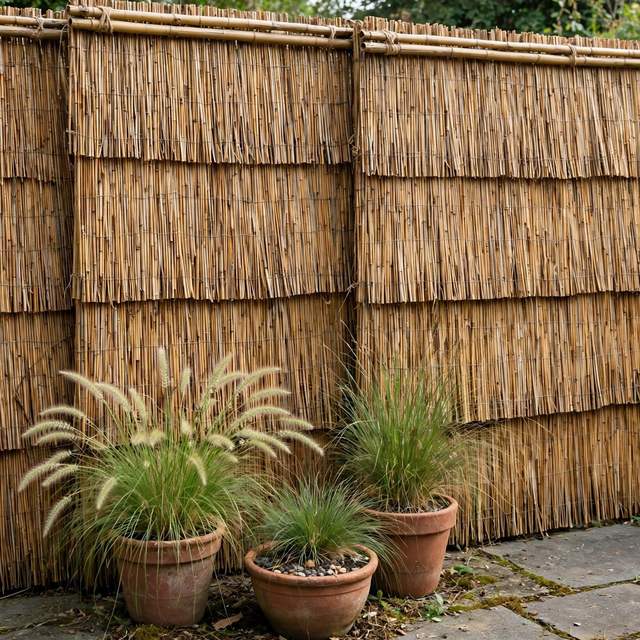
One reed roll can be nearly see-through at night, when lights come on behind it. Layer three sections with staggered joins and doubled thickness on the overlooked stretch, and the boundary turns properly opaque.
Best for:
- Chain-link or slatted fences that leak views
- Fast cover while climbers grow in
- Natural, rustic patio styles
Tip: check privacy after dark with house lights on; thin screening fails then.
12) A Trio of Espalier Trees Against the Wall
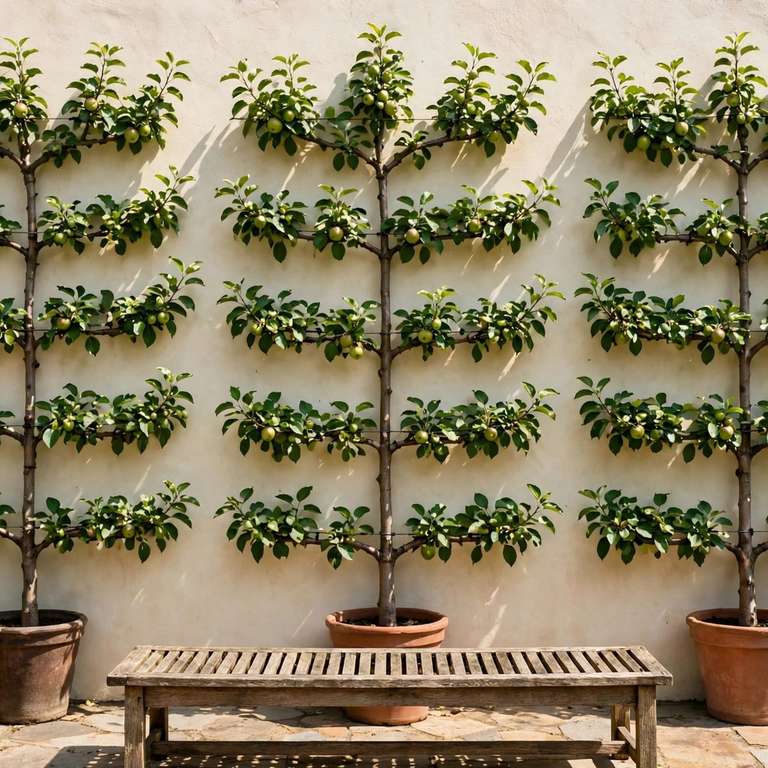
Espalier trees are privacy trained flat: three side by side cover a wall in leafy tiers while taking almost no floor. Their horizontal branches make a living blind that fruits as a bonus.
How to use it:
- Train branches along horizontal wires
- One tree per two metres
- Prune twice yearly to keep tiers open
Tip: espalier thrives on the sunniest wall, where leaves grow thickest.
13) Three Arch Panels That Form a Green Entrance
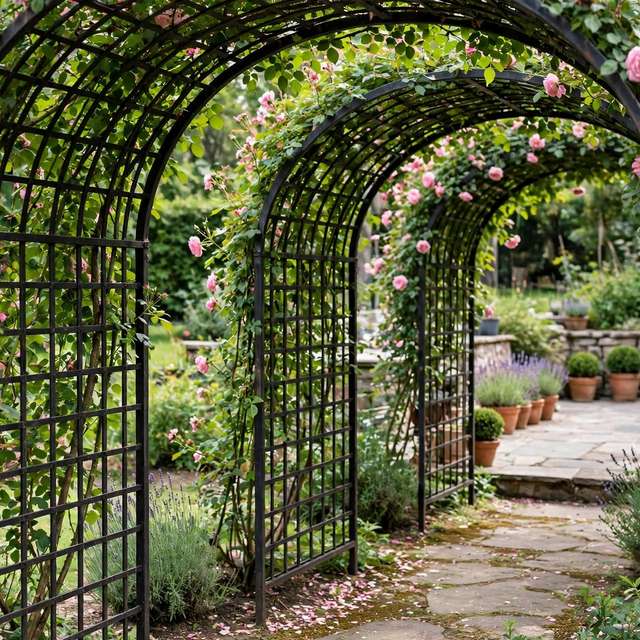
Three arches in a row make a short green tunnel at the patio entrance, and a tunnel changes everything: visitors arrive through leaves, and the seating beyond cannot be seen from the gate.
Why it works:
- Hides the patio behind a planted threshold
- Roses add scent at head height
- The row reads as a feature, not a barrier
Tip: keep the middle arch clear of low stems for an easy walkway.
14) Three Green Shelves Stacked With Pots
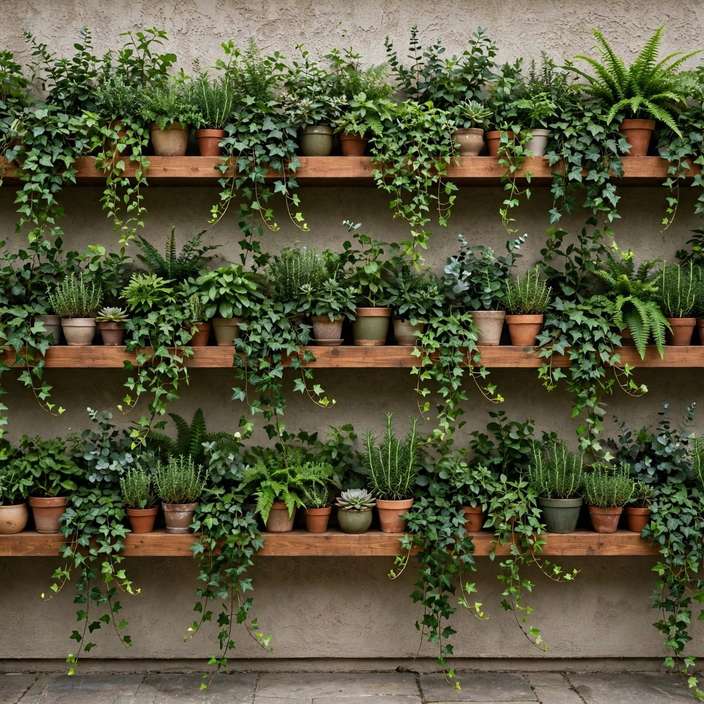
Wall shelves are planters that use air instead of floor. Three long shelves stacked up a bare wall hold a whole border of pots, and the layered green hides the wall and neighbours behind it.
How to style it:
- Trailing plants on the top shelf
- Herbs on the middle, hand-height shelf
- Bulky pots low, where weight is safe
Tip: fix shelves into solid brick; a loaded shelf is heavy.
15) Three Hanging Baskets at Eye Level
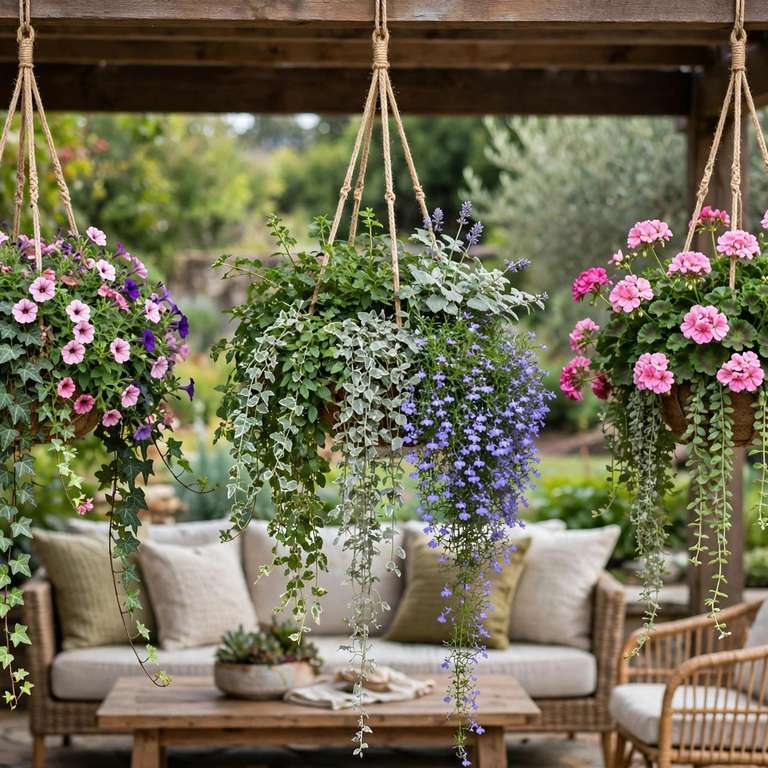
Hanging baskets usually decorate; hung at eye level in a row of three, they screen. Their trailing foliage sits exactly where a standing neighbour’s view would pass, turning the edge into a soft green curtain.
Best for:
- Edges under a pergola beam or rail
- Privacy at standing eye height
- Renters, since nothing is fixed to the ground
Tip: hang the middle basket slightly lower so the row ripples.
16) A Three-Sided Screen Nook for the Seating Corner
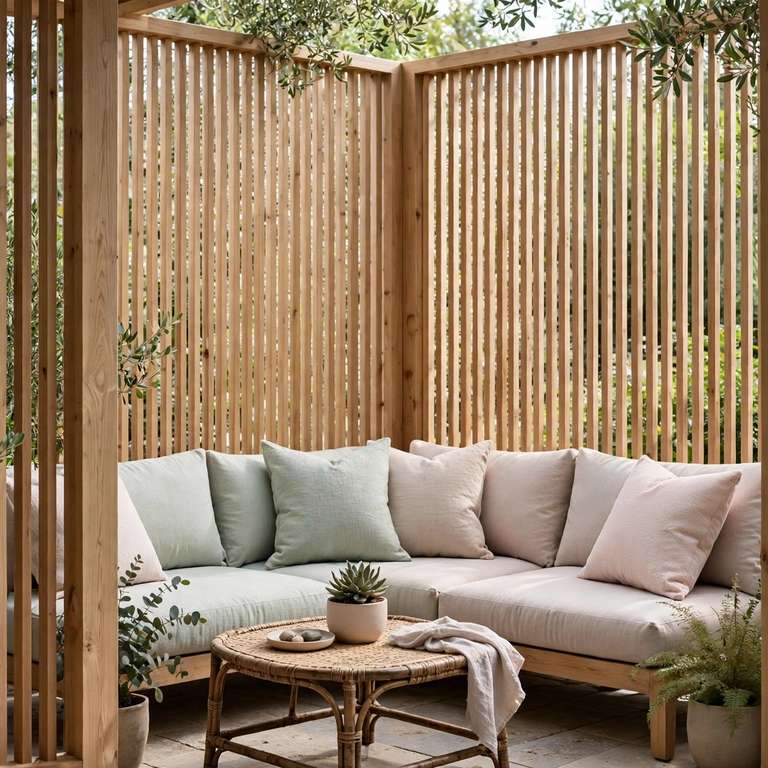
One screen blocks one direction; three screens in a U make a room. Build the nook around your sofa corner and you gain privacy from left, right and behind, the open side facing your garden.
How to use it:
- Leave the fourth side open
- Match slats to decking or fence
- Add a climber at each corner post
Tip: measure the sofa inside the nook before fixing the third side.
17) Three Gabion Planters as a Living Wall
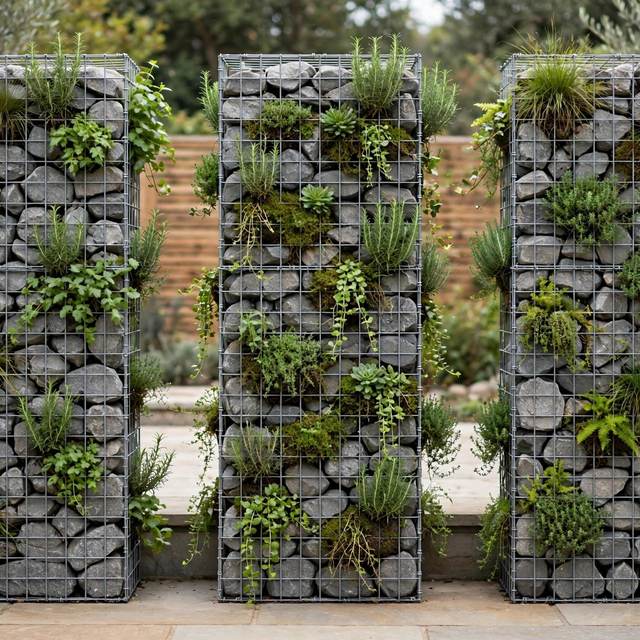
Gabions bring real weight to privacy: three stone-filled planters in a row make a boundary nothing sees through. Plants tucked into the pockets soften the stone until the wall looks grown, not built.
Why it works:
- Stone blocks sound as well
- Three units span most edges
- Planted pockets keep it garden-like
Tip: build gabions on a firm, level base; they cannot be shifted later.
18) Three Rows of Potted Shrubs, Tall to Small
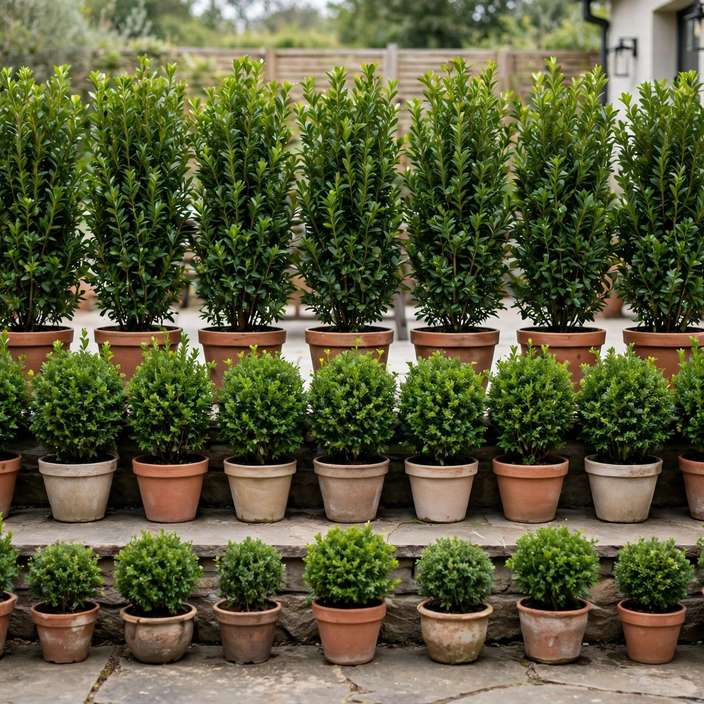
A single row of pots leaves gaps at every height. Three rows, stepped tall to small, overlap their foliage until the screen is solid from the ground to above head height.
How to style it:
- Back row tallest, in the biggest pots
- Stagger pots so gaps never line up
- Repeat two shrub varieties only
Tip: this screen rearranges fastest when a new window appears.
19) Three Outdoor Blinds on the Pergola Sides
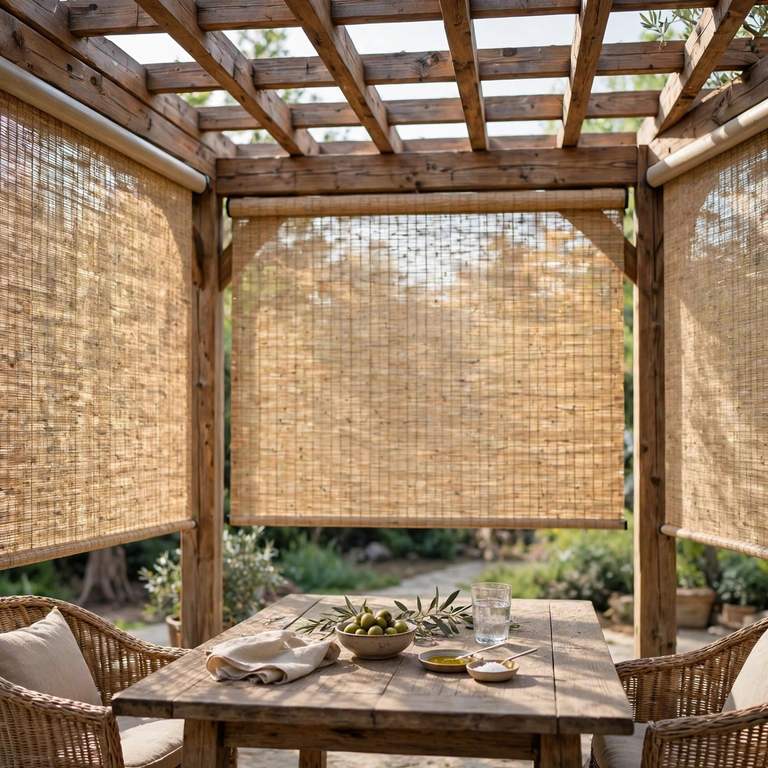
Roller blinds give privacy you can dial up and down. Three of them, one per exposed pergola side, drop in seconds when neighbours come out and roll away when the coast is clear.
Best for:
- Pergolas exposed on several sides
- Privacy only when you want it
- Filters low evening sun too
Tip: woven blinds block views but let air through, so it never feels shut in.
20) A Trio of Columnar Trees in Oversized Pots

Columnar trees are skyscrapers for small patios: three in big pots make a tall, narrow wall of green reaching windows a shrub never could, each trunk taking barely a dinner plate of floor.
How to use it:
- Choose pencil-shaped, slim varieties
- Biggest pots you can manage
- Space evenly to read as a row
Tip: water potted trees generously; tall foliage in a pot dries fast.
21) Three Lattice Panels Woven With Ivy
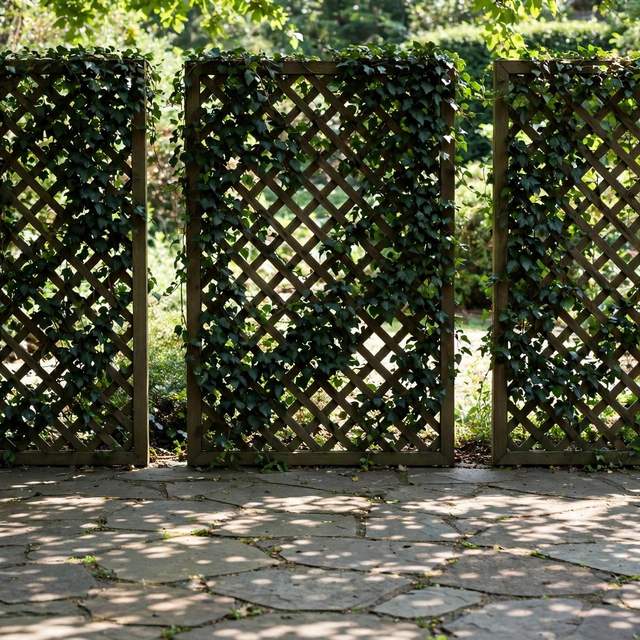
Lattice alone is more pattern than privacy, but weave ivy through three panels and the diamond gaps fill with leaf. The result is a dark green wall that looks established within two seasons.
Why it works:
- Ivy is evergreen, so the screen never thins
- Three panels flex around corners
- Lattice supports ivy without wires
Tip: trim ivy twice a year so it thickens inward, not over the top.
22) Three Willow Hurdles in a Staggered Line
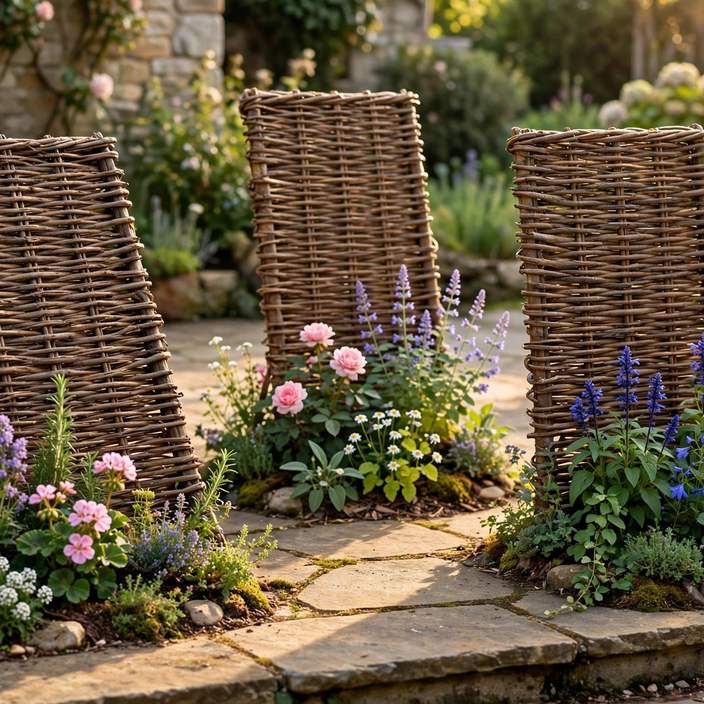
Willow hurdles bring cottage softness to screening, and staggering three in a shallow zigzag closes the gaps a straight run leaves at the joins. The angled line also looks deliberate, like a feature.
How to style it:
- Angle each hurdle against the next
- Cottage flowers along the sunny side
- Fix to short posts against wind
Tip: hurdles last longest raised slightly off damp soil on gravel.
23) Three Slim Water Blades That Mask Conversation
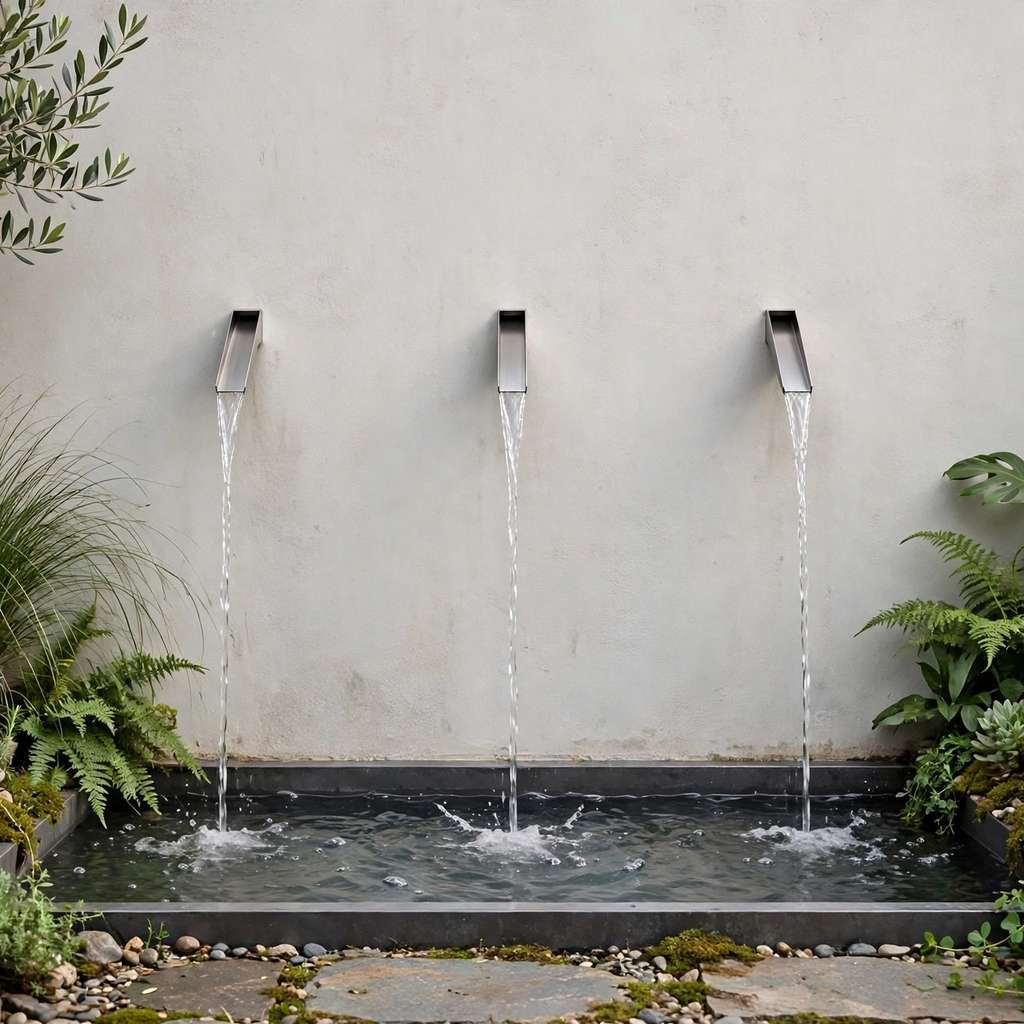
Privacy is sound as well as sight: three water blades fill the air with a gentle hush that keeps conversations yours. The falling sheets also catch the light, giving the patio a spa-like edge.
Best for:
- Close neighbours where voices carry
- A focal point that earns its space twice
- Modern patios with clean styling
Tip: run all three blades from one pump for an even sound.
24) Three Evergreen Screens in Large Pots
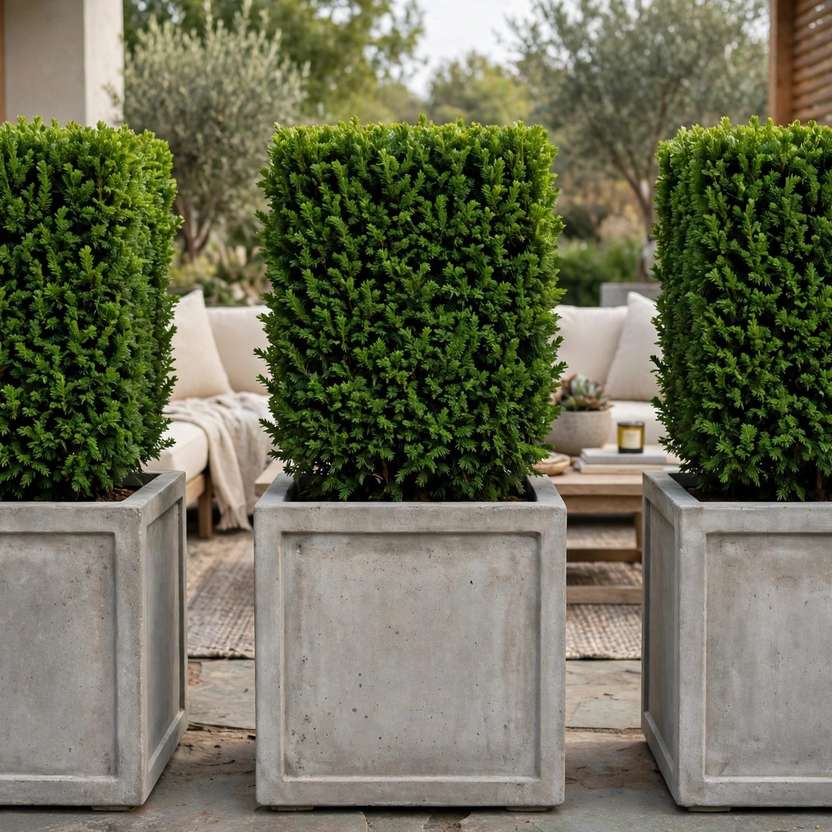
When privacy must work in January too, evergreens answer. Three large pots of clipped laurel, yew or privet hold their leaves all year, a formal green wall that never takes a season off.
How to use it:
- Clip little and often for density
- Line pots up tight, shoulder to shoulder
- Feed in spring for new growth
Tip: thick-walled pots survive frozen compost in hard winters.
25) Three Linen Drapes on a Garden Rail
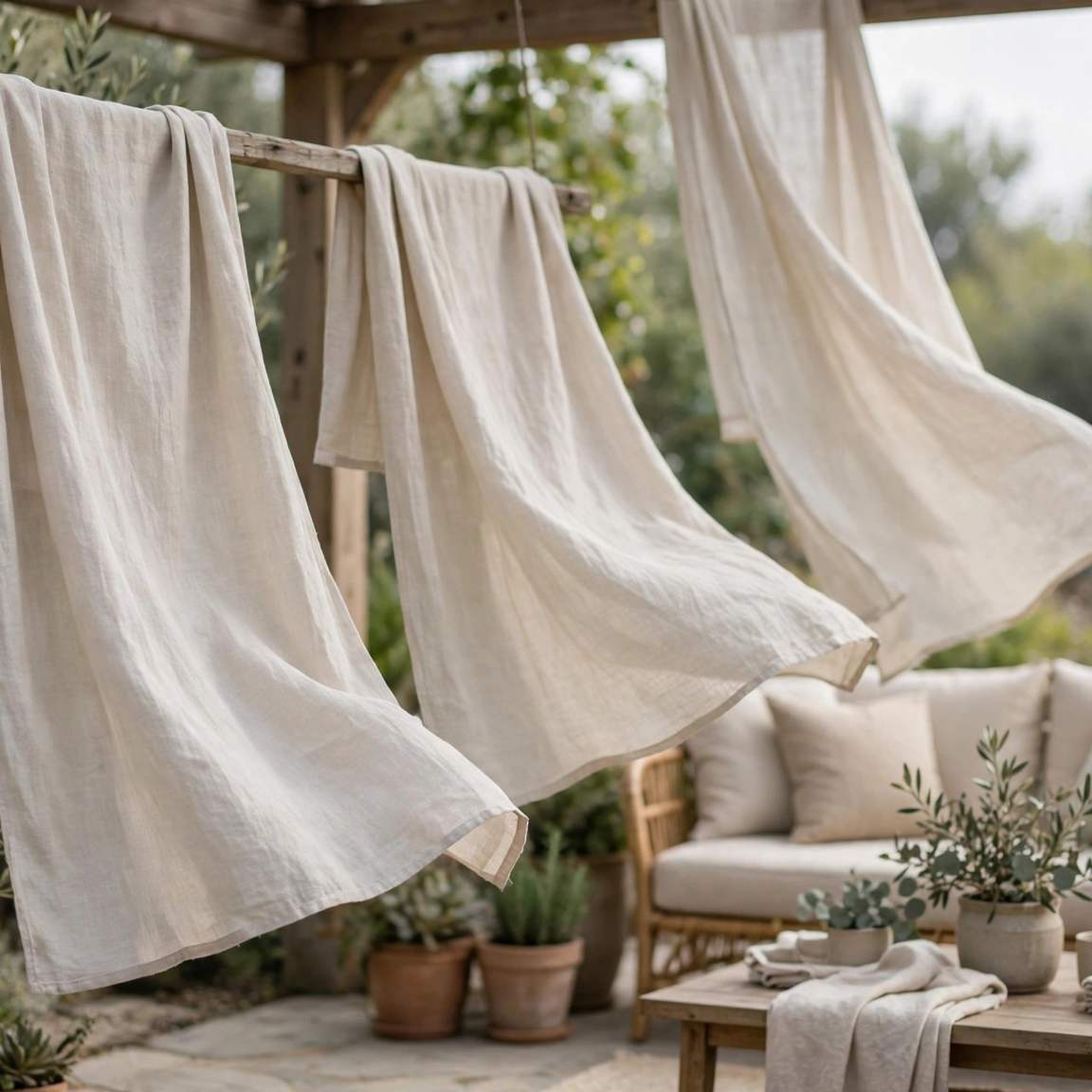
Linen drapes are the softest screen of all: three panels on a simple rail drift in the breeze, blurring everything behind them. They feel like a holiday veranda and pack away to nothing.
Why it works:
- Movement keeps the screen feeling light
- Translucent fabric glows softly
- No structure beyond one rail
Tip: bring linen panels in for winter and they will last for years.
26) Three Raised Beds That Wrap the Corner
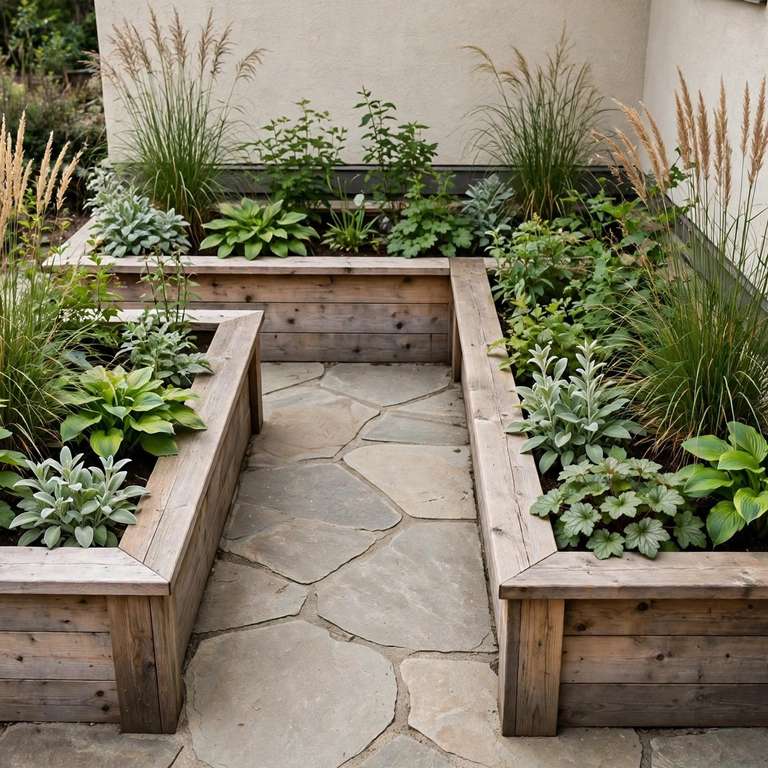
Three raised beds in an L turn a leaky corner into planted architecture. They hold tall planting exactly where two sightlines cross, and their wide caps double as extra seating.
How to style it:
- Tallest planting at the fence corner
- Cap edges wide enough to sit on
- Keep soil rich; raised beds dry fast
Tip: herbs nearest the kitchen door get used ten times more.
27) Three Obelisks of Climbing Roses
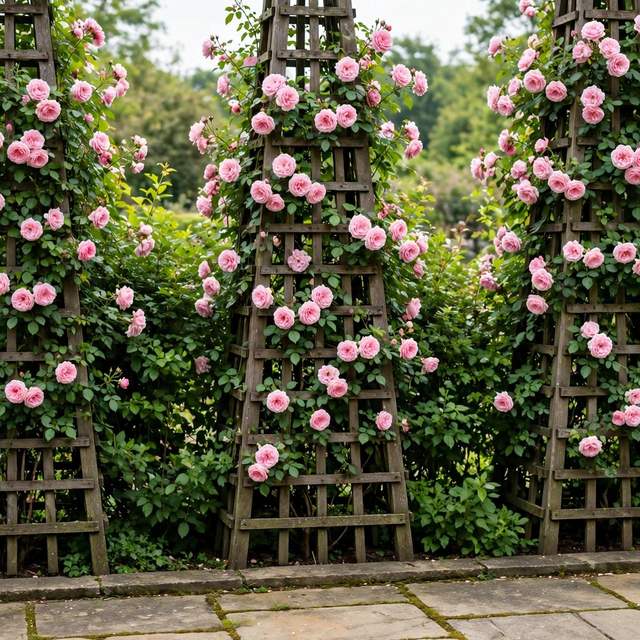
An obelisk is a pillar of flowers, and three in a row make a scented colonnade. Along the exposed edge, their rose-covered columns break every sightline while smelling wonderful at head height.
Best for:
- Sunny edges where roses thrive
- Romantic, cottage-style schemes
- Screening at its best in summer
Tip: add an evergreen clematis to one obelisk for winter cover.
28) A Trio of Shrubs Behind the Outdoor Sofa
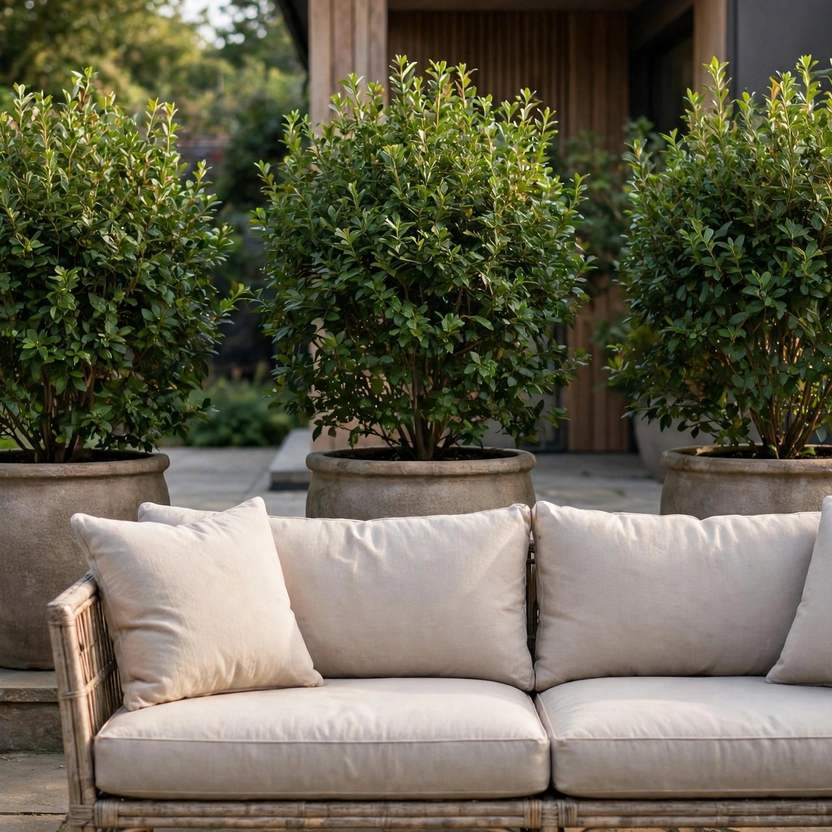
The most overlooked seat deserves the most direct screen: three big shrubs in pots, lined up immediately behind the sofa. Neighbours see only foliage; you get a green backdrop that tucks the sofa in.
How to use it:
- Heads starting at sofa-back height
- Pots too heavy to tip in wind
- A gap behind for air and watering
Tip: this screen moves with the sofa, so it suits rented patios.
29) Three Frosted Glass Panels in Timber Frames
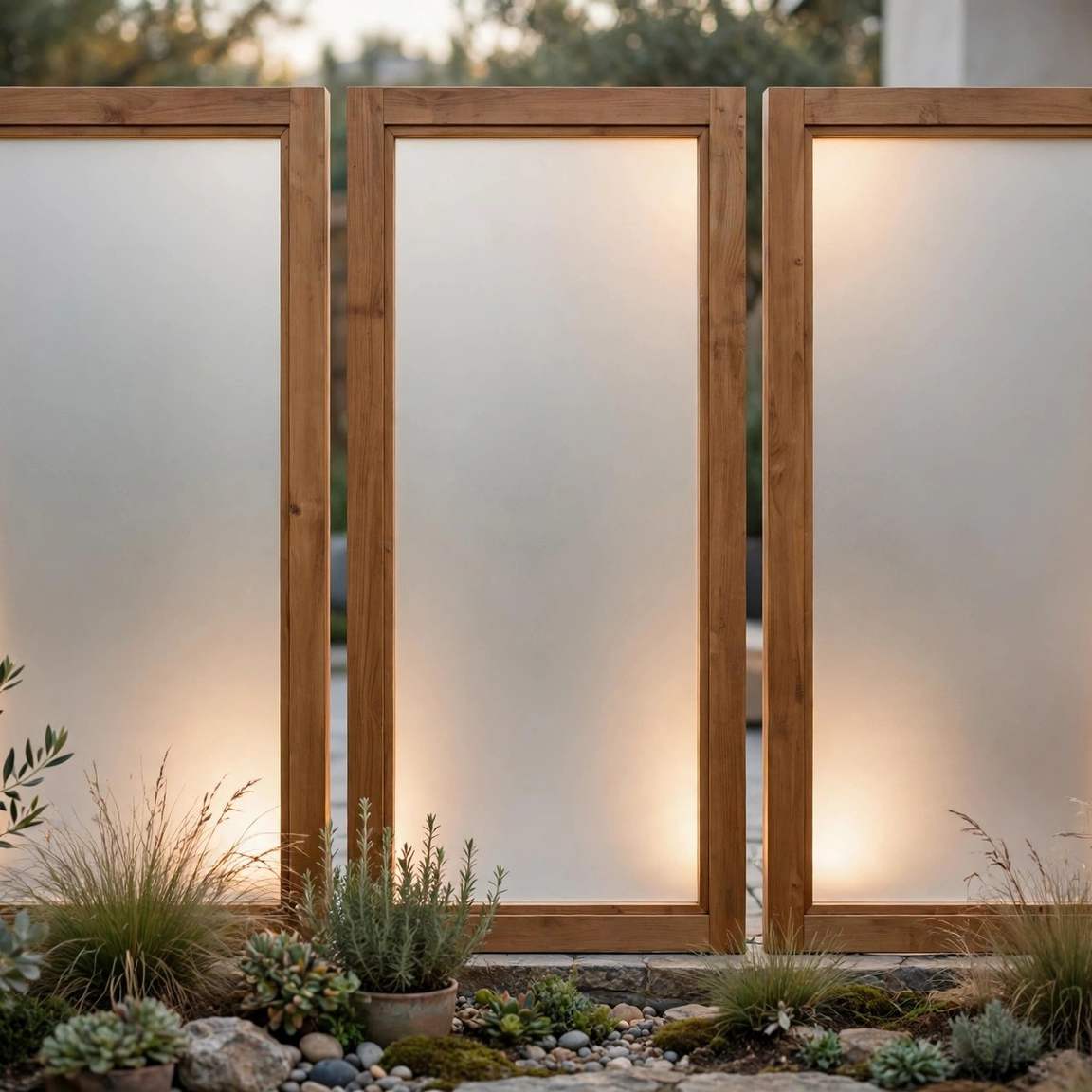
Frosted glass gives privacy with light attached. Three panels in timber frames blur figures to soft shadows while still glowing in the sun, so the patio stays bright behind its screen.
Why it works:
- Total privacy, zero darkness
- Timber frames soften the glass
- Wipes clean, never needs pruning
Tip: toughened safety glass is essential near seating and play.
30) Three Living Wall Panels Above the Bench
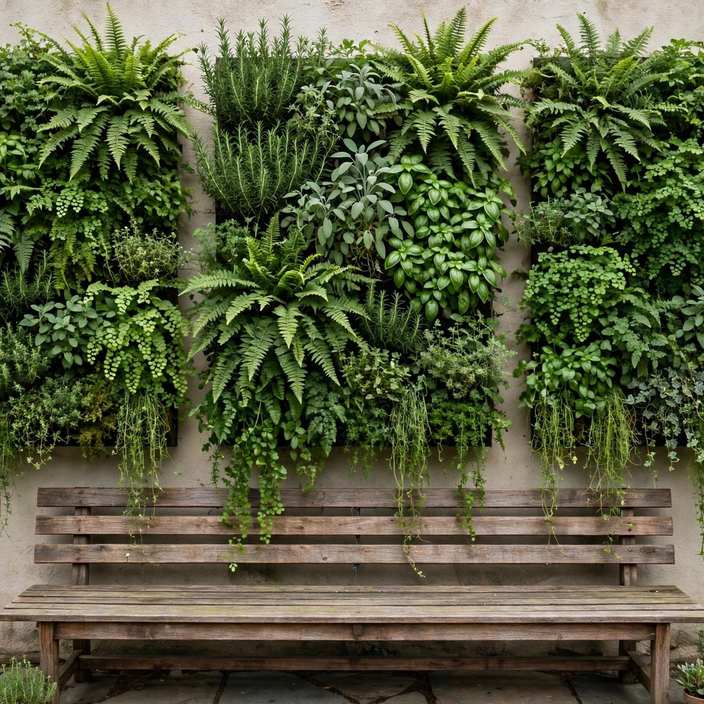
Living wall panels hang a garden where a blank wall used to stare back. Three side by side cover the view above bench height, the band where overlooking windows look down into your seat.
How to style it:
- Ferns and trailers for softness
- Panels at staggered heights
- A drip line keeps watering easy
Tip: plant panels flat weeks before hanging, so roots grip first.
31) Three Pergola Posts Wrapped in Climbers
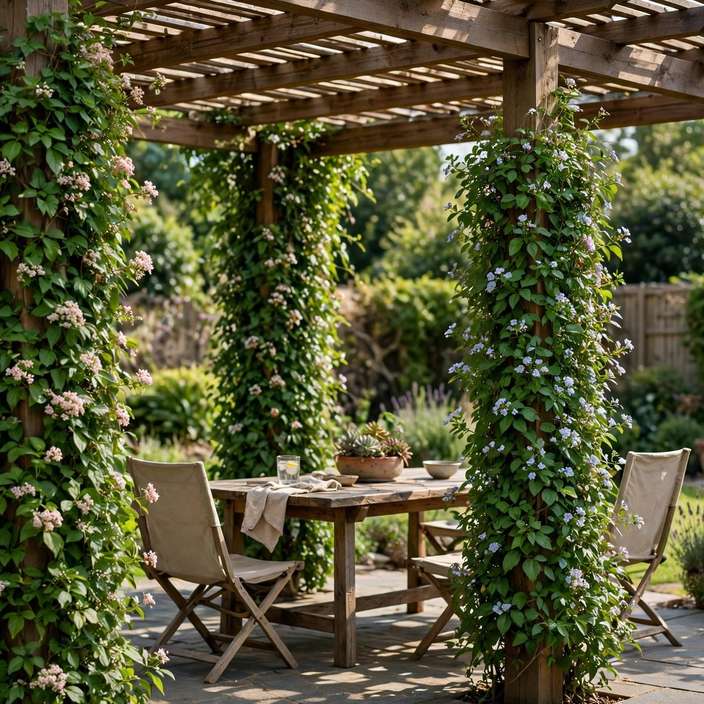
A pergola’s posts already stand where privacy is needed; wrapping three in climbers turns structure into screening. The leafy columns close the pergola’s open sides one post at a time.
Best for:
- Pergolas that feel too open at the corners
- Fast cover, one plant per post
- Scent and shade together
Tip: leave the post nearest the house bare to keep the doorway open.
32) Three Topiary Cones Guarding the Steps
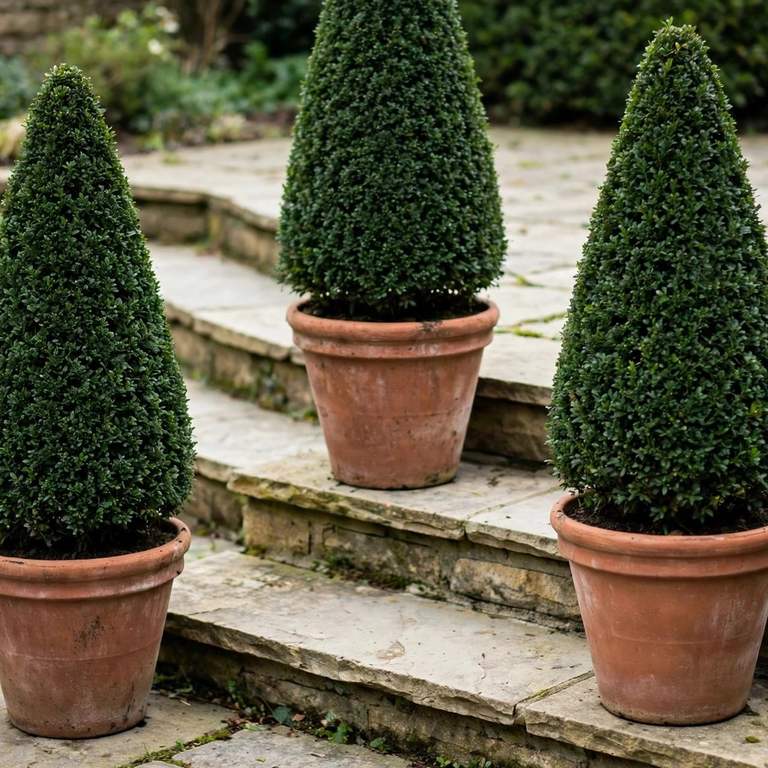
Topiary cones bring height with manners. Three arranged around the patio steps make a formal green guard that screens the entrance and quietly tells visitors the space beyond is private.
How to use it:
- One cone each side, one at the top
- Terracotta or stone pots
- Clip twice yearly for crisp cones
Tip: cones in pots march to any gap, the most flexible screen you own.
33) Three Hedge Planters on Wheels
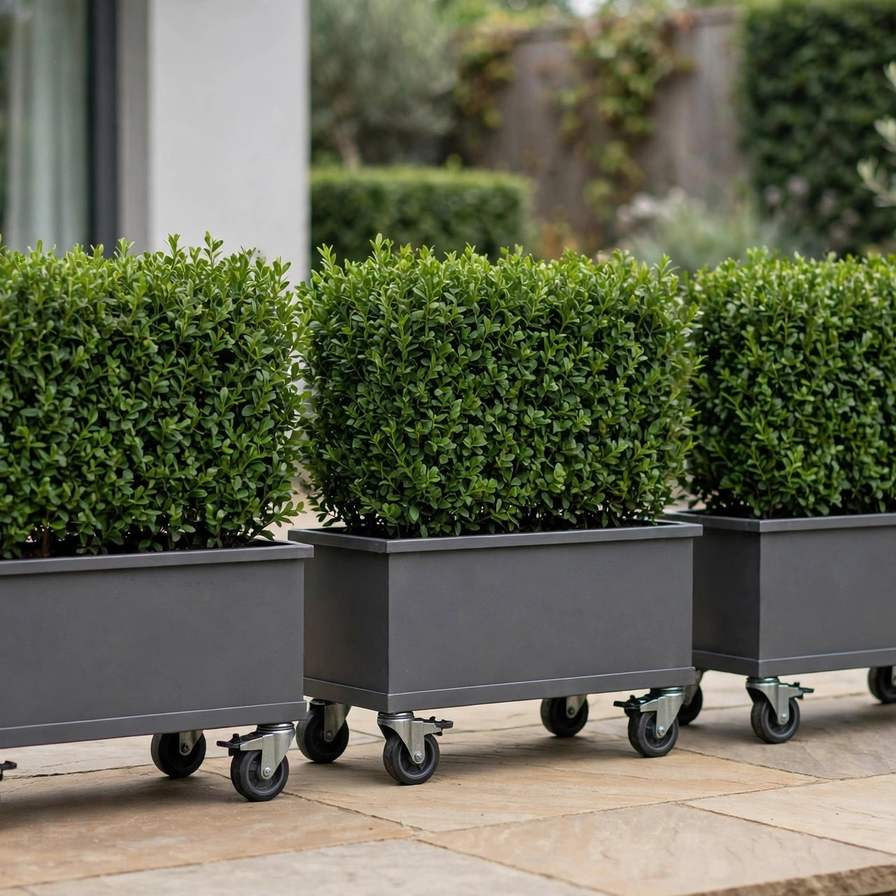
Hedges usually take years and stay put; hedge planters on wheels do neither. Three troughs of dense mini-hedge roll into a screen wherever overlooking is worst, then roll aside for parties.
Why it works:
- A real hedge at full height instantly
- Wheels make it fully movable
- Three troughs cover most widths
Tip: lock the castors once positioned; a wandering hedge screens nothing.
34) Three Layers Together: Screen, Plants and Shade
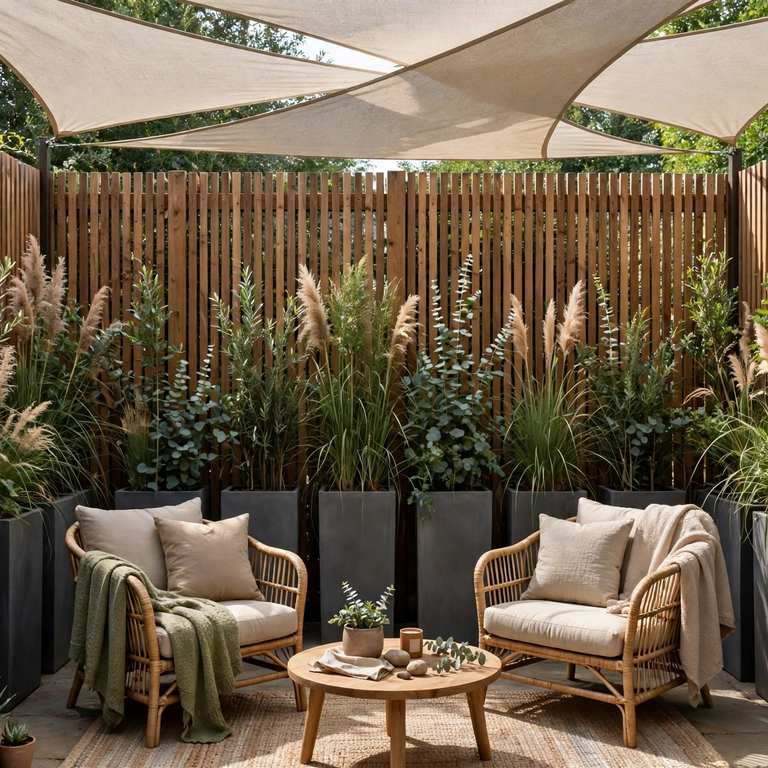
The strongest privacy stacks the patio rule of three vertically: a screen for the ground-level view, planters for standing height, and a sail for the windows above. Each layer covers the others’ gaps.
How to style it:
- Screen first, facing the worst window
- Planters where people stand
- Shade last, over the seats
Tip: build the layers one per season; live with each first.
Start With the Worst Sightline, Then Work in Threes
Every patio has one direction that matters most: the neighbour’s kitchen window, the upstairs landing, the fence gap by the gate. Find that sightline and aim your first trio straight at it. One screen, planter row or curtain set placed for the worst view usually fixes most of the problem.
Once the main trio is in, walk the patio again and look for the second view. This is how most private patio ideas come together in real gardens: not one giant project, but a few well-aimed groups, each earning its place before the next arrives.
Keep the Threes Balanced, Not Matched
Trios work because the eye reads them as one group, and that grouping survives variety. Pots can step down in size and lanterns stagger in height, as long as one thing repeats: the same pot colour, fabric or timber. That thread makes three separate pieces feel like a set.
Resist filling every gap until the patio feels like a showroom of screens. Privacy that keeps air and light in it stays pleasant to sit behind, and the calmest results feel closer to calm and cozy patio ideas than to a fortress. Leave one side open to your best view.
Conclusion
Patio privacy needs neither bulk nor a big budget. It needs groups that work together: three panels where one falls short, three planters where one leaves gaps, three layers where one leaves the windows above uncovered.
Start with your worst sightline and first trio, live behind it a week, then add the next group only where the view still leaks. For planting and screening guidance you can trust, the RHS is full of advice for small outdoor spaces.
The neighbours will still be there, but your patio will feel like it belongs to you again: private, calm and quietly pleased with itself.




More Stories
33 Stunning Kitchen Design Ideas
30 Area Rug Measurement Tips & Ideas
32 Cozy Home Decor Ideas for a Warm Space