
Introduction
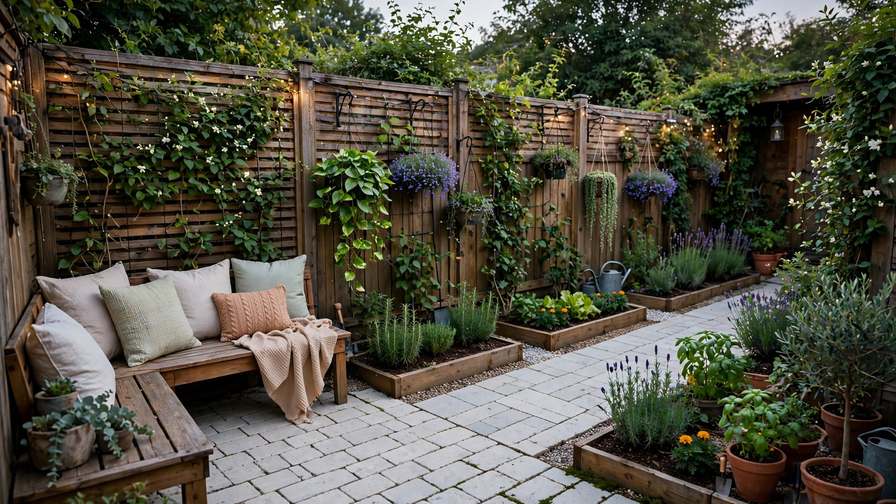
A small backyard is not a failed big garden; it is a different puzzle. Learning how to maximize a small backyard means treating every metre as precious, because in a tiny plot it is.
The secret is not smaller versions of everything; it is zoning the space, growing upwards instead of outwards, and choosing pieces that fold, stack or do two jobs at once. If you enjoy grouping tricks, these backyard rule of three ideas pair well with the moves below.
Here are 33 practical ways to fit more living, planting and relaxing into the smallest of yards.
1) Zone a Tiny Yard Into Three Small Rooms
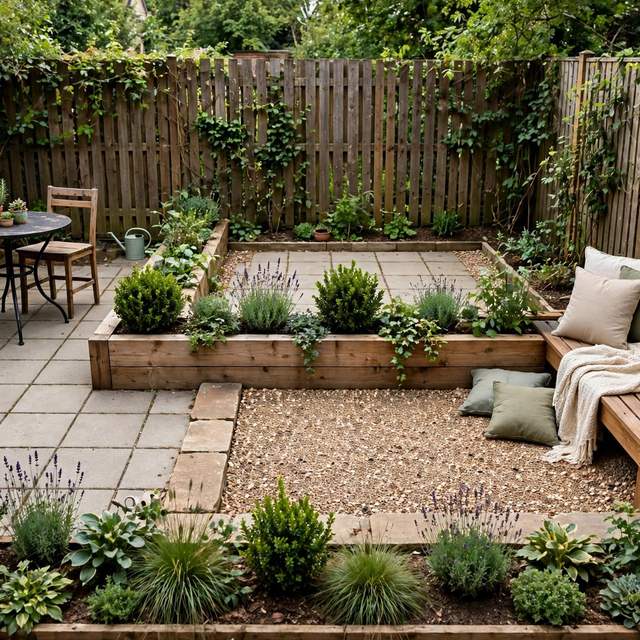
One open square of paving reads as small at a glance. Divide the yard into little rooms – dining here, lounging there, plants along the edge – and the same space feels like a journey.
Why it works:
- Each zone gives the eye a new place to land
- Changes of surface do the dividing, not walls
- Every activity gets its own small home
Tip: mark zones with paving changes or a low planter rather than fences.
2) Maximize a Small Backyard With a Corner Bench
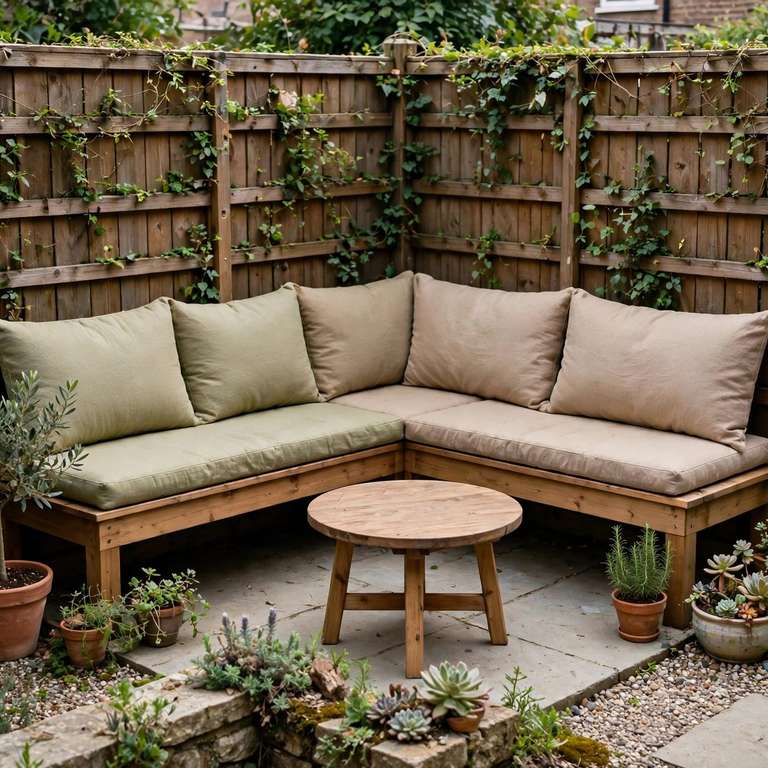
Corners are the most wasted ground in any small yard. An L-shaped bench tucked right into the corner seats five where two chairs seat two, hugging the boundary instead of floating mid-plot.
How to style it:
- Seat cushions in one pale, washable fabric
- A round table keeps the walkway clear
- Scatter cushions in a single accent colour
Tip: build the bench with a lift-up lid and the cushions store inside it.
3) Grow Upwards With Vertical Gardening
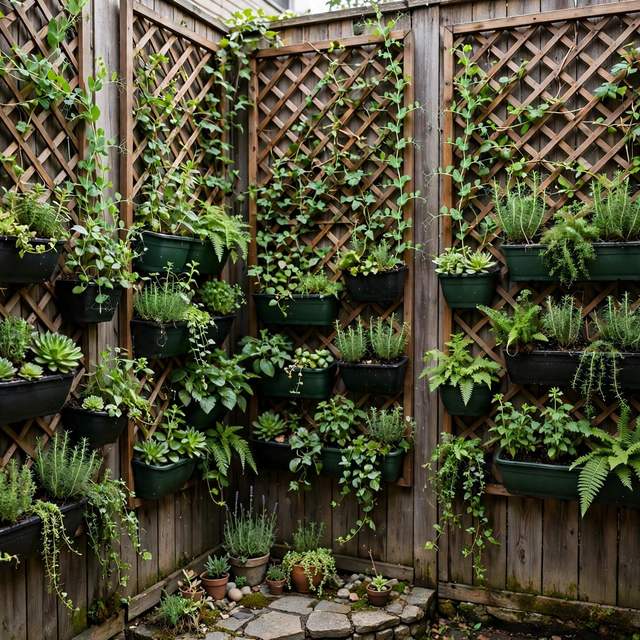
When floor space runs out, the fence becomes your biggest flower bed: trellis panels, wall planters and shelves turn a blank boundary into metres of growing space while the ground stays free.
Best for:
- Yards where the patio takes most of the floor
- Covering an ugly fence without rebuilding it
- Herbs and trailing plants that love height
Tip: fix the heaviest planters low and keep the top rows light and trailing.
4) Choose Fold-Away Furniture You Can Put Away
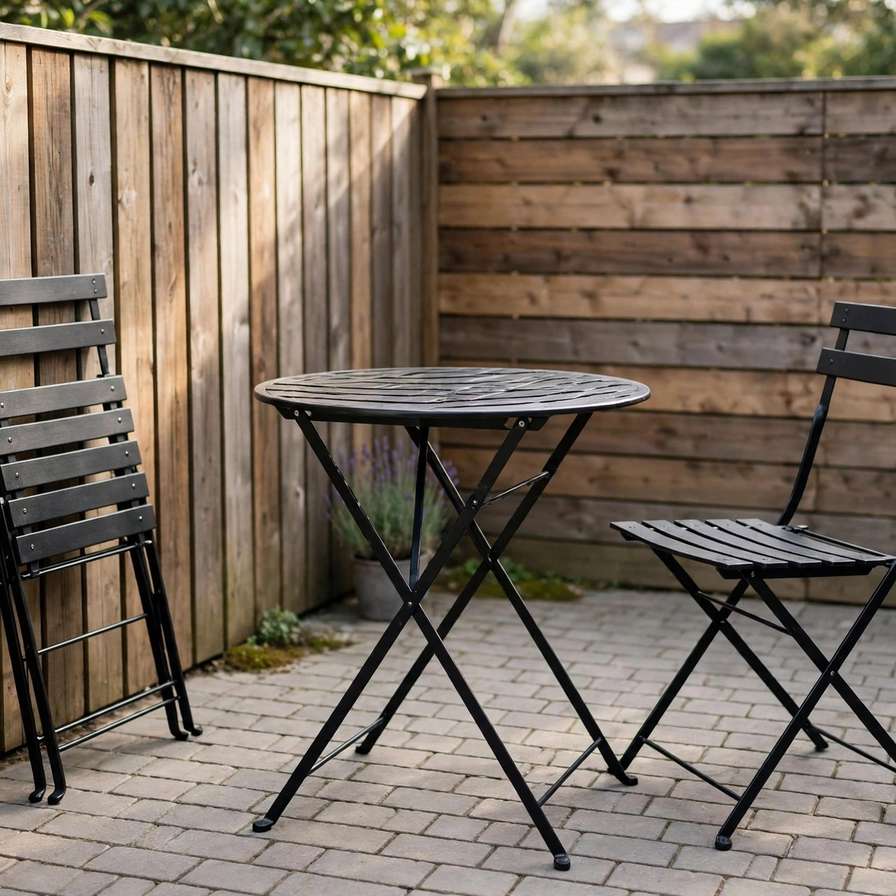
A fixed dining set owns your patio all year round. Folding chairs and a fold-down table give you a dining room when guests arrive and an open yard the rest of the week.
Why it works:
- The yard changes size with the occasion
- Folded pieces store flat against a wall
- Nothing weathers outside all winter
Tip: add two simple wall hooks so folded chairs hang tidy, not stacked.
5) Hang a Mirror to Double the Garden
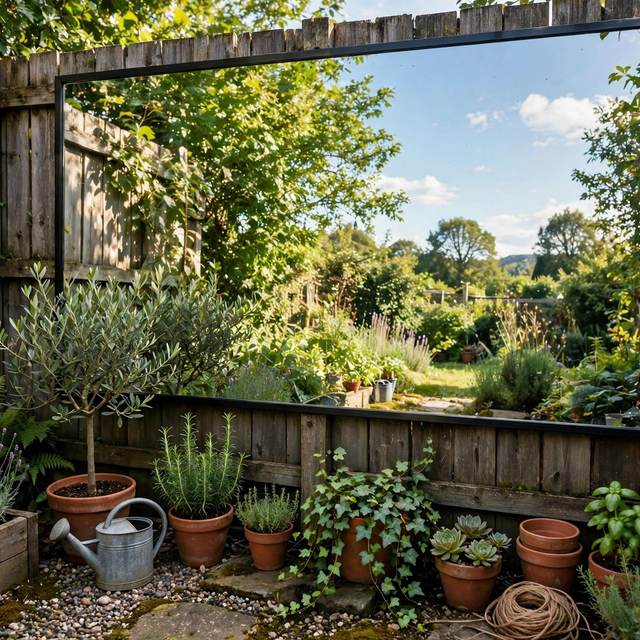
An outdoor mirror is the oldest small-garden trick there is. Hung on a shady fence, it reflects the planting opposite and convinces your eye the garden continues beyond the boundary.
How to style it:
- Angle it to reflect plants, not the house wall
- Frame it with climbers so the edge disappears
- Choose acrylic or toughened glass for safety
Tip: a slightly weathered frame looks like an old window and blends in best.
6) Hide Clutter in a Slim Storage Bench
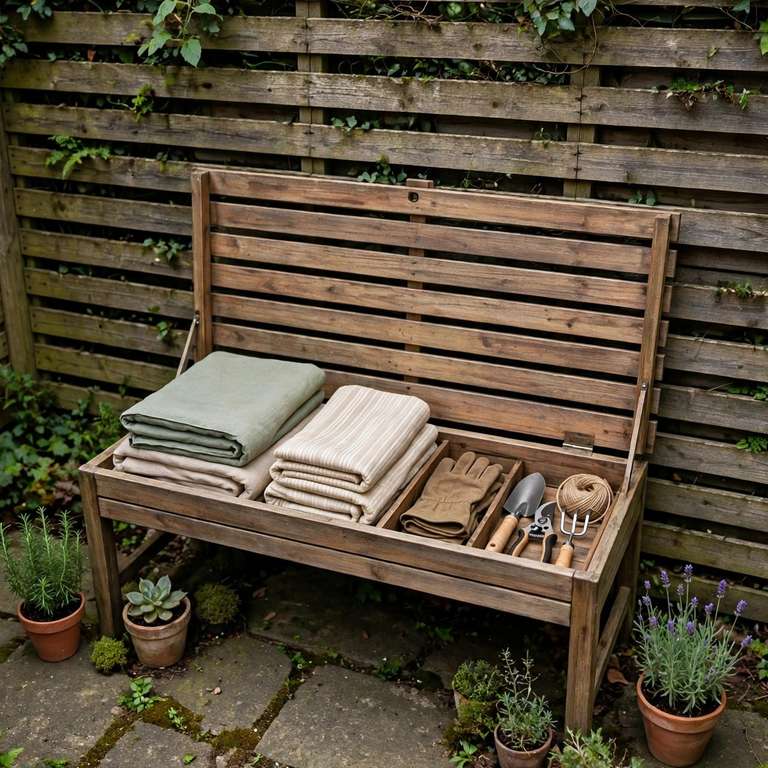
Small yards look smaller when stuff piles up. A slim storage bench swallows cushions, tools and the watering can, then earns its keep as extra seating when friends arrive.
Best for:
- Cushions that need a dry home
- Tools with nowhere else to live
- Yards with no room for a shed
Tip: line the base with a waterproof mat so damp never reaches the cushions.
7) Lay Paving Diagonally to Stretch the Space
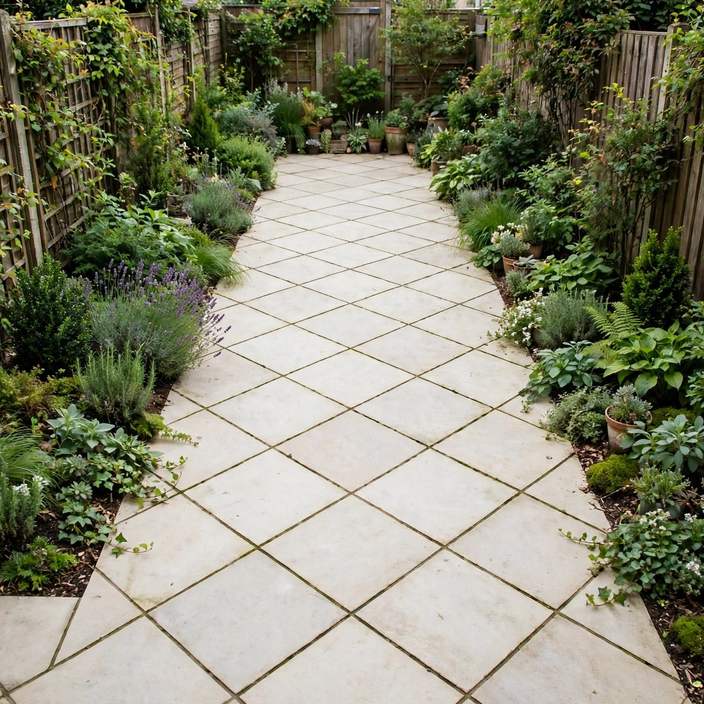
The longest line across a square is its diagonal, and your eye follows it. Laying slabs at forty-five degrees borrows that extra length, so a boxy patio reads wider than it is.
Why it works:
- Eyes travel the diagonal and overestimate size
- It hides slightly wonky boundaries
- The pattern adds interest without colour
Tip: use large-format slabs; fewer grout lines mean a calmer, bigger feel.
8) Paint Walls and Fences in Pale Colours
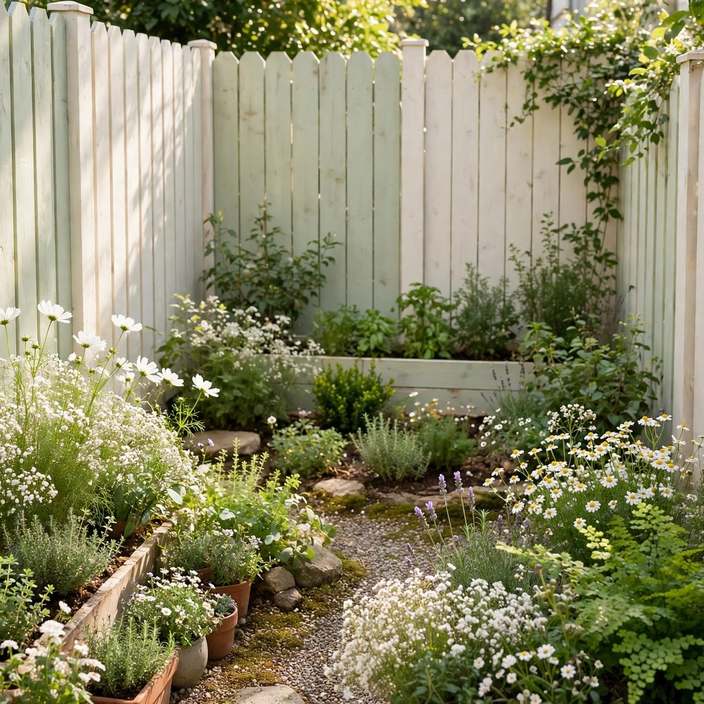
Dark fences close in on a small plot like the walls of a well. Pale paint – soft sage, warm cream, silvery grey – bounces light around instead, and the boundary steps politely backwards.
How to use it:
- One pale colour on every boundary surface
- Match pots to the fence for a seamless look
- Keep one dark accent so it does not feel washed out
Tip: test a panel first; pale colours look brighter outdoors than on the tin.
9) Layer Planting in One Deep Border
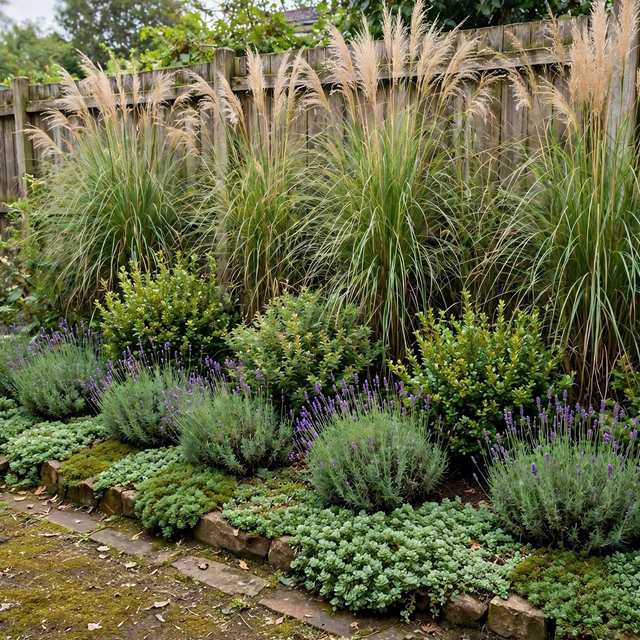
Three shallow borders waste corners and paths. One deep border, planted in layers, gives far more plants and a lush, borrowed-landscape depth that thin strips never manage.
Best for:
- Tall texture at the back, softness at the front
- Hiding the fence completely behind green
- Seasonal change in a single sweeping bed
Tip: repeat one plant in threes along the border so it reads as designed.
10) Hang Planters at Eye Level
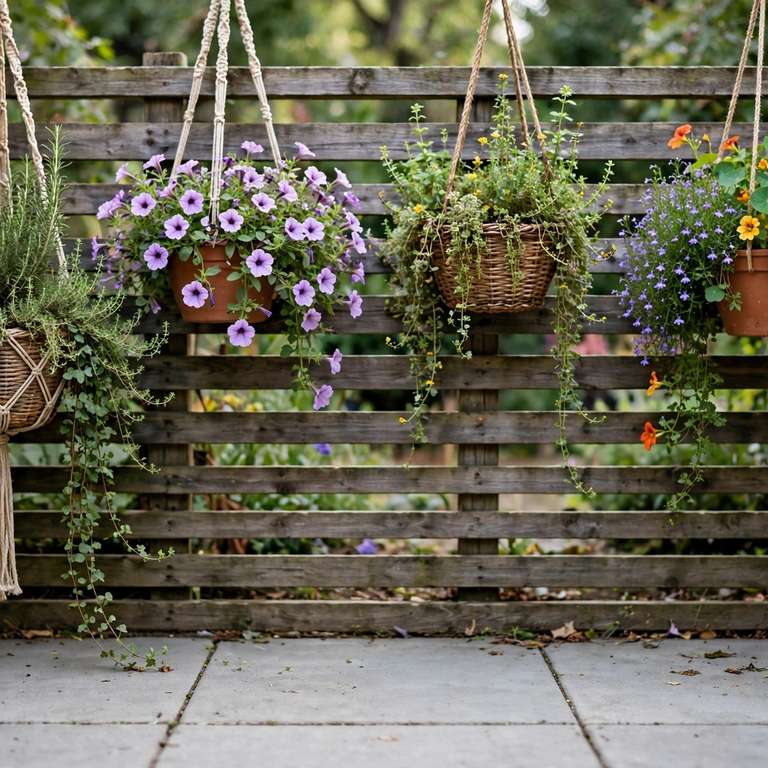
Eye-level planting is free planting: it uses air, not floor. Baskets and hanging pots along the fence put flowers exactly where you look, while the ground beneath stays open.
How to style it:
- Trailing plants soften the fence line
- Odd numbers of baskets look most natural
- Keep heavy baskets at hook height, not head height
Tip: water hanging baskets little and often; they dry out faster than beds.
11) Run a Narrow Raised Bed Along the Boundary
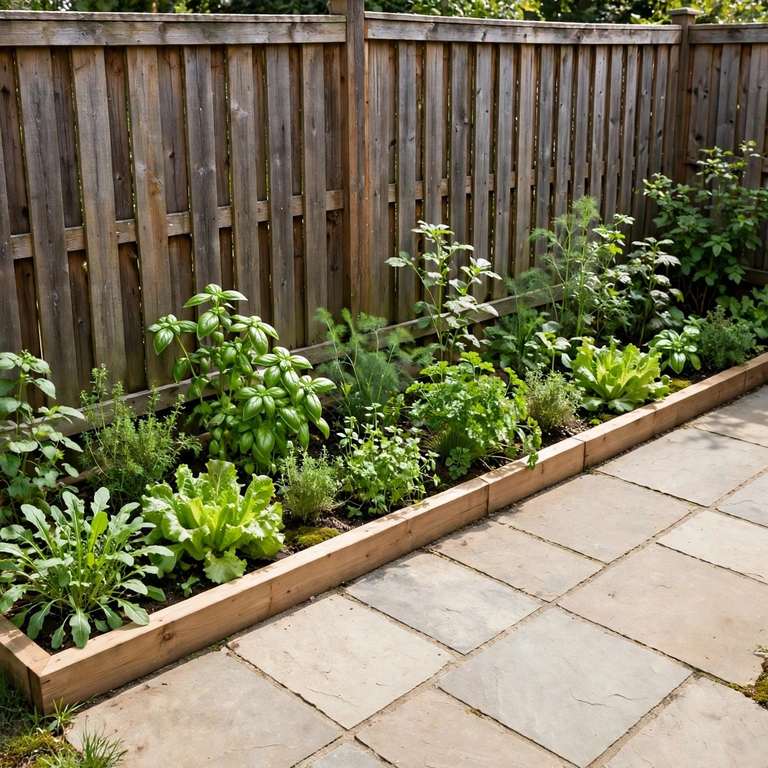
A raised bed only forty centimetres wide still grows herbs, salad and a row of flowers. Running it along the boundary turns dead edge space into your most productive strip.
Why it works:
- Raised soil warms fast and drains well
- The edge doubles as a perch or drinks ledge
- No digging into poor or rubbly ground
Tip: cap the wall with a wide plank and the bed becomes extra seating.
12) Pick Multi-Use Pieces That Earn Their Place
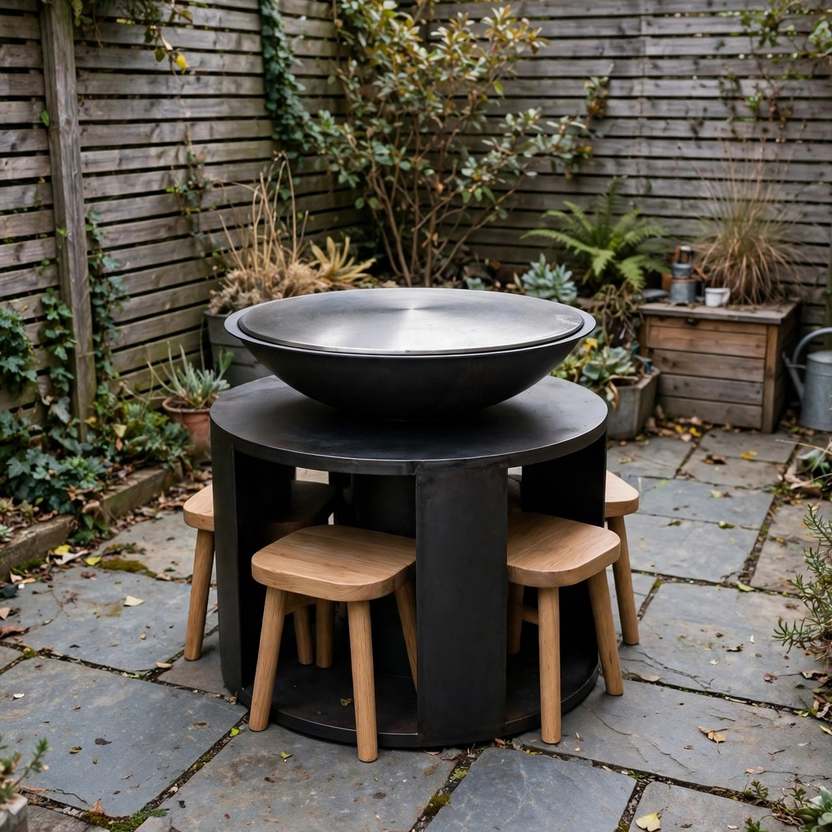
In a tiny yard, single-job furniture is a luxury you cannot afford. A fire bowl with a lid becomes a coffee table; a stool becomes a side table; an ottoman hides blankets inside.
Best for:
- Pieces that work at both lunch and dusk
- Stools that slide under the table when not needed
- Storage hidden inside anything with a lid
Tip: before buying, name two jobs for the piece or leave it in the shop.
13) Fix a Drop-Leaf Table to the Wall
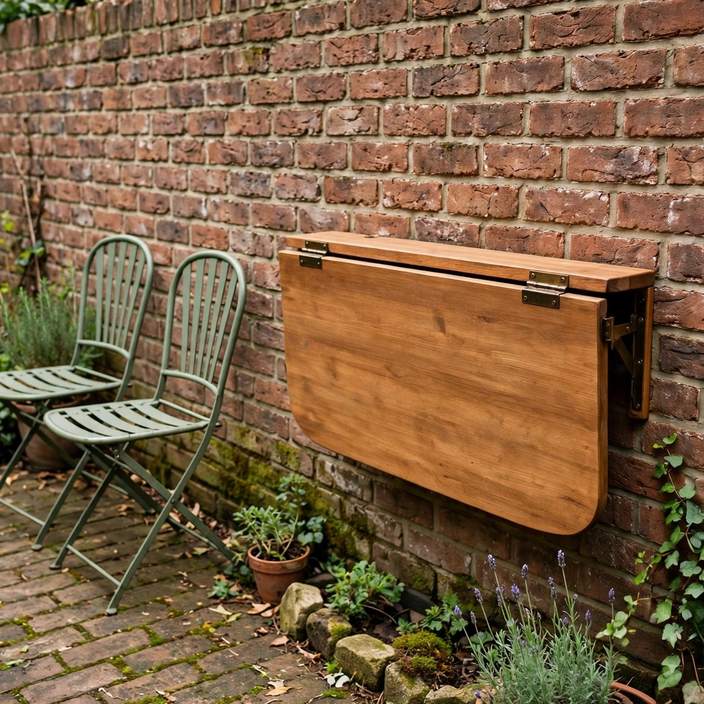
A wall-mounted drop-leaf table is a dining table with a zero footprint. Flip it up for breakfast, drop it flat for yoga, and the floor never gives up a square metre.
How to use it:
- Mount at standard table height, about 75 cm
- Two folding chairs complete the set
- A coat of exterior oil keeps it weatherproof
Tip: fit it on the sunniest wall so morning coffee lands in the light.
14) Let Climbers Do the Work of Ten Pots
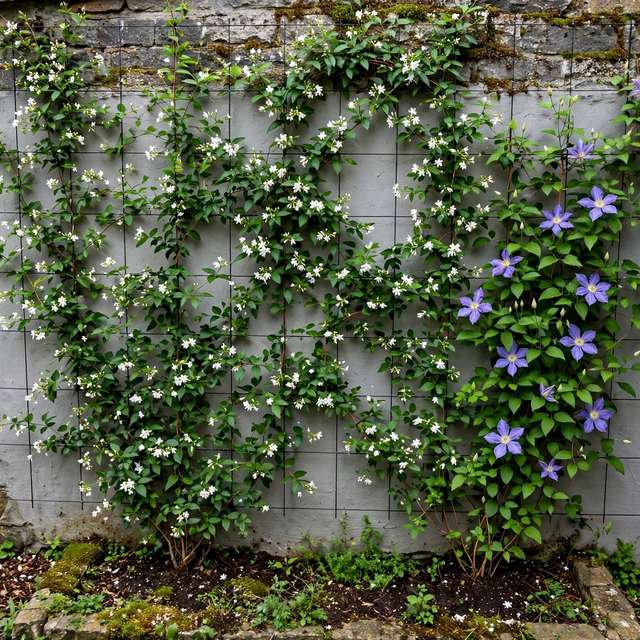
One climber in a handkerchief of soil can clothe an entire wall: jasmine, clematis and honeysuckle give the green of a dozen pots for the floor space of one.
Why it works:
- Huge leaf area from a tiny root run
- Scent at nose height where you sit
- Softens brick and fence lines completely
Tip: train stems sideways along wires to cover width faster than height.
15) Maximize a Small Backyard With Built-In Seating
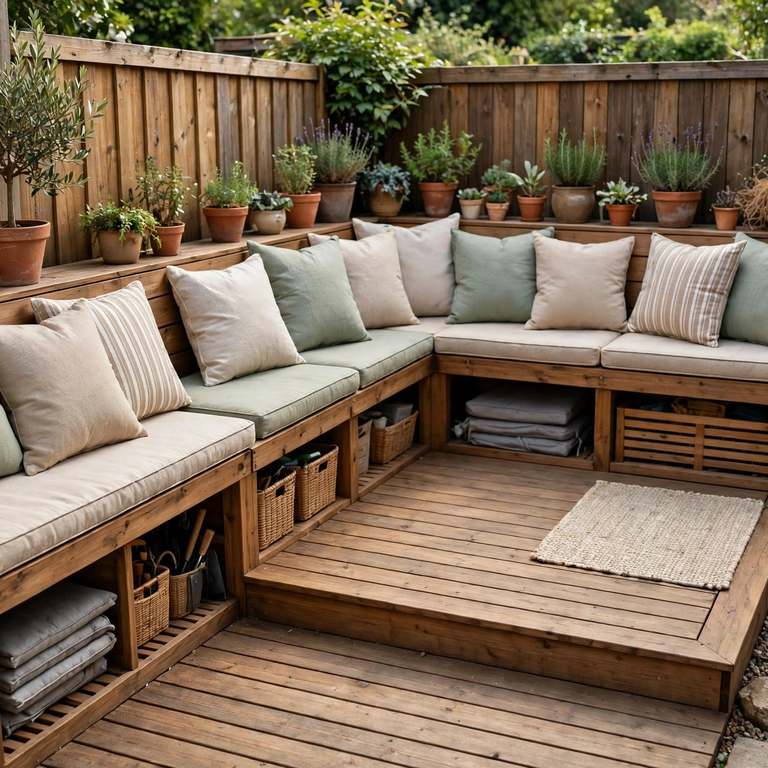
Built-in seating fits where freestanding furniture cannot: hard against the wall, around the deck edge, even around a tree – and because it is measured to your space, not a showroom, nothing is wasted.
How to style it:
- Run it along the two sunniest boundaries
- Deep cushions make hard timber comfortable
- A loose chair or two keeps the layout flexible
Tip: build the seat at 45 cm high with a hinged top for hidden storage.
16) String Lights Overhead Instead of Floor Lamps
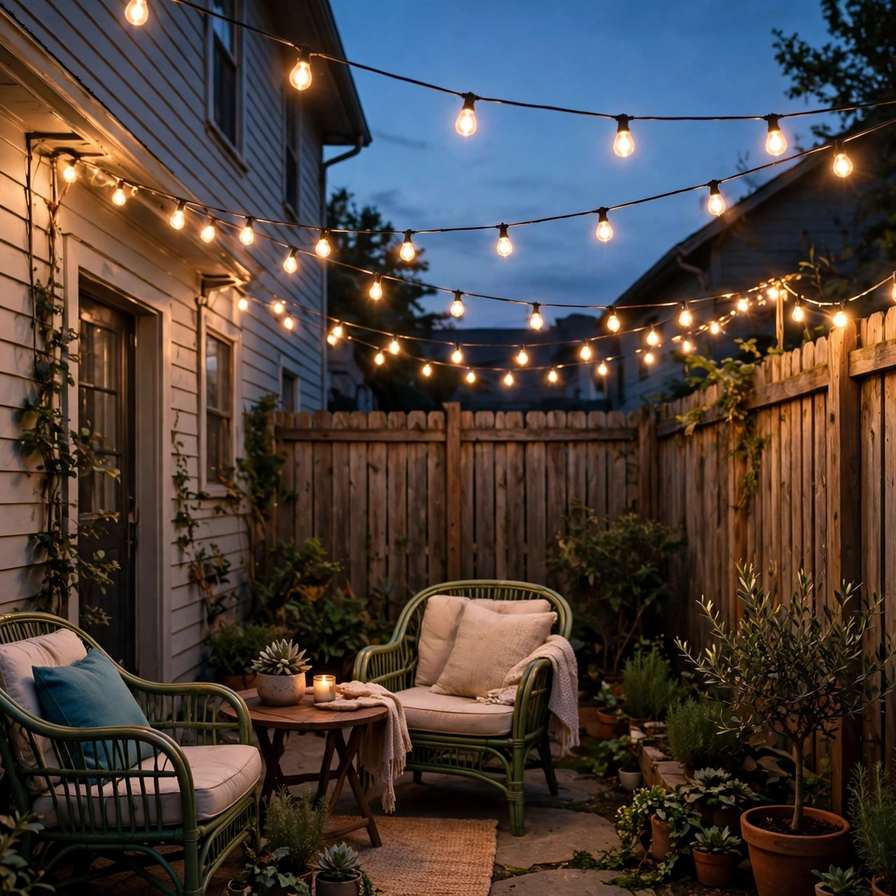
Floor lamps and lantern clusters eat the exact floor space you are trying to save. Festoon lights strung overhead light the whole yard from the air, leaving the ground free for people and plants.
Best for:
- Light that spreads over the whole plot
- A ceiling effect that makes the yard feel taller
- Evenings that stretch long past sunset
Tip: zigzag two strings in a cross so no corner is left in shadow.
17) Tuck a Slim Water Feature Into the Corner
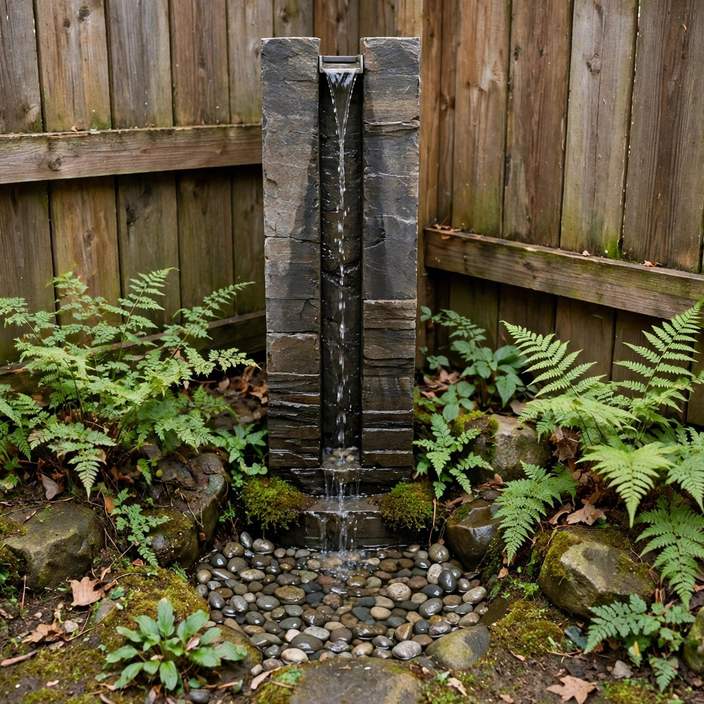
A pond is out of the question, but a slim wall fountain or bubbling pebble bowl fits almost anywhere. The sound of water makes a tiny yard feel like a retreat, and it steals only a corner.
Why it works:
- Moving water masks traffic and neighbour noise
- Birds visit even the smallest water source
- A vertical design uses height, not floor
Tip: choose a solar pump if running a cable means lifting the patio.
18) Stack Pots on a Tiered Plant Stand
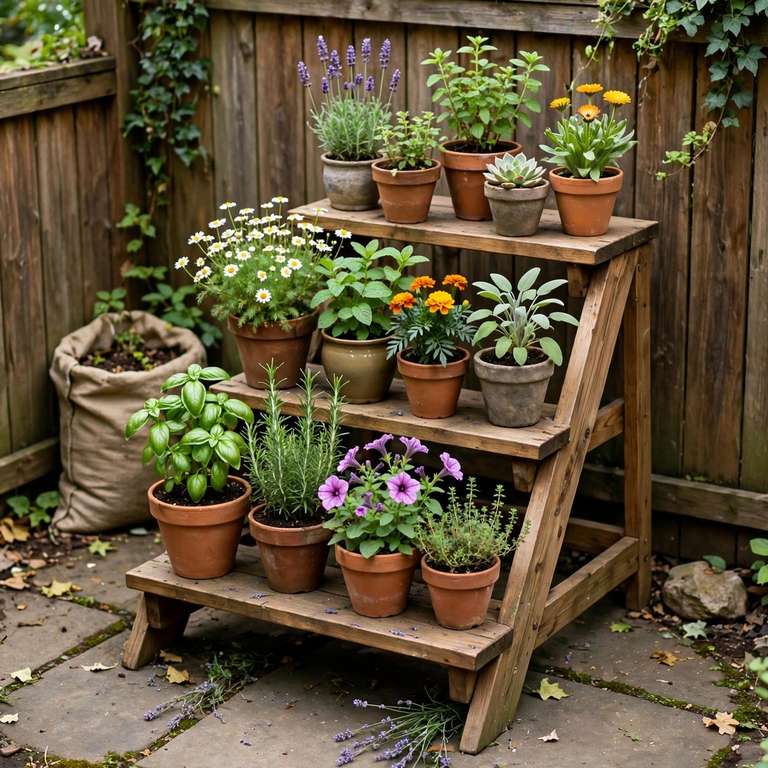
A tiered stand is a bookshelf for plants: one footprint, three shelves of growing. It is the fastest way to keep a collection of herbs and pots without lining every edge.
How to style it:
- Heaviest pots on the bottom shelf
- One plant family per tier looks calm
- Wheels make chasing the sun easy
Tip: stand it where you pass daily, so watering never gets forgotten.
19) Plant One Small Tree With a High Canopy
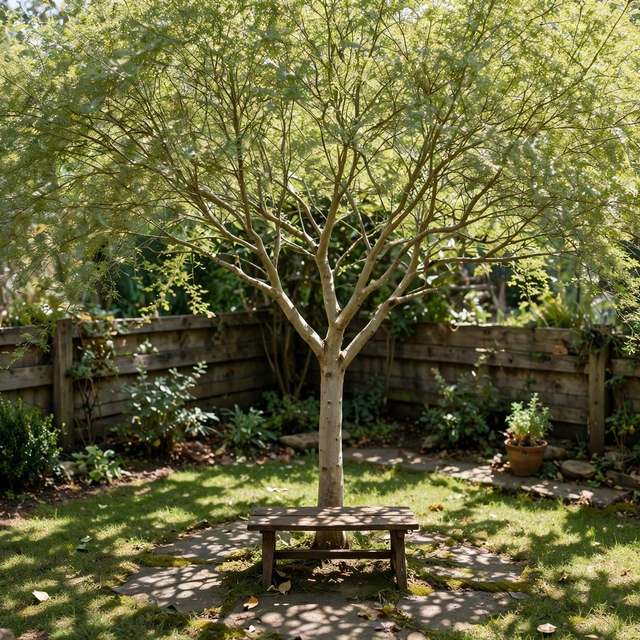
A small tree sounds like madness in a tiny plot, but a standard with a high, light canopy gives shade, height and seasons while the trunk takes almost no room.
Best for:
- Dappled shade that never darkens the yard
- A ceiling of leaves over the seating corner
- Spring blossom and autumn colour in one plant
Tip: multi-stem amelanchier and small acers behave beautifully in small spaces.
20) Swap the Lawn for Gravel and Stepping Stones
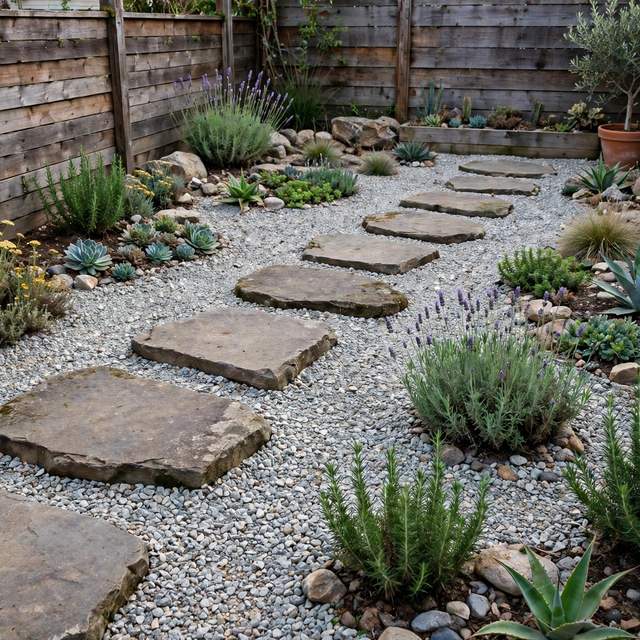
A pocket lawn is mostly mower storage and mud. Gravel with stepping stones turns the same ground into usable space all year, with planting pockets where grass never grew well.
Why it works:
- No mowing, edging or muddy winter patch
- Chairs sit on it without sinking
- Rain drains straight through
Tip: lay a weed membrane beneath and top up the gravel once a year.
21) Fold Down a Bar Shelf From the Fence
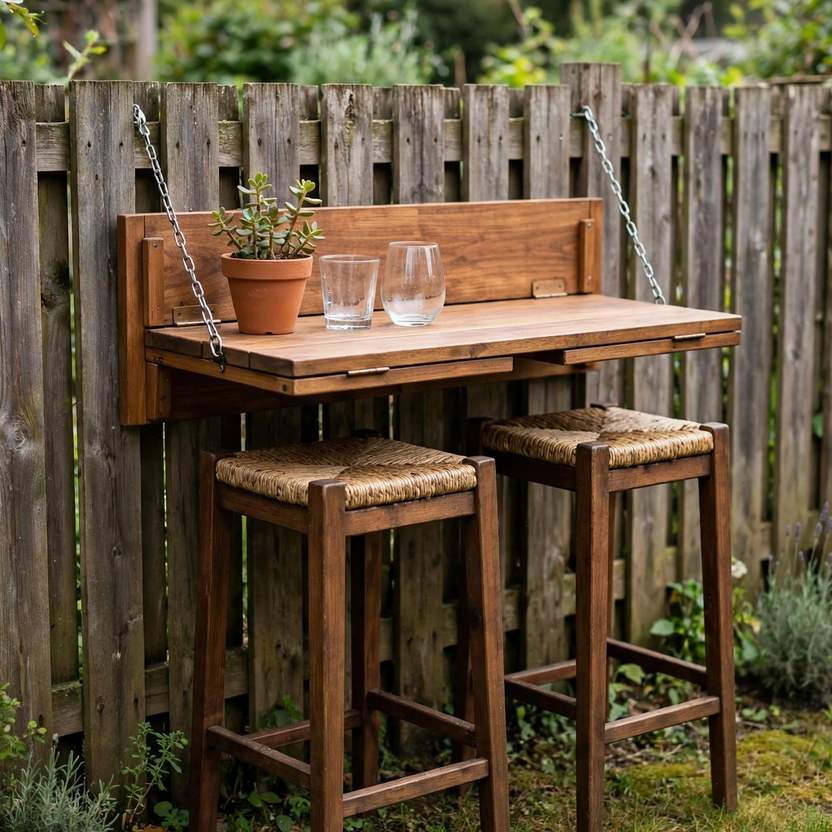
A fold-down bar shelf turns a blank fence into a breakfast spot, a potting bench and a drinks station. Fold it away and the walkway clears in seconds.
How to use it:
- Fit at bar height and add two tall stools
- Chains or brackets rated for real weight
- Sand it smooth; it will double as a desk
Tip: position it facing your best planting.
22) Use Stepping Stones Instead of a Solid Path
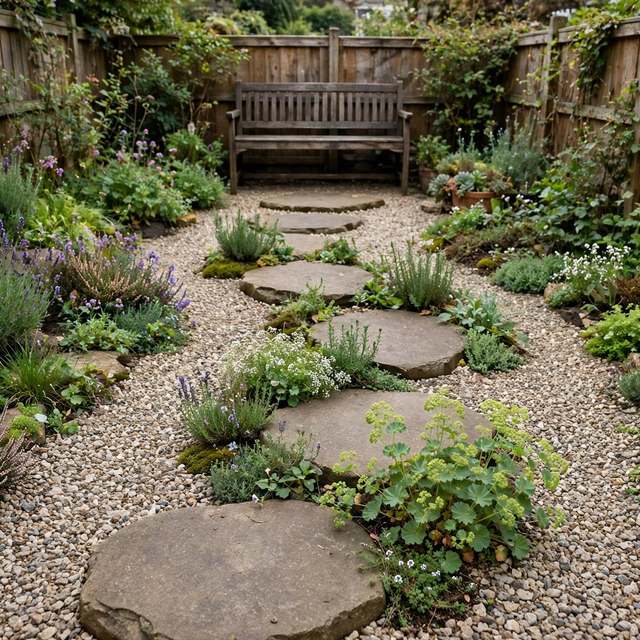
A solid path cuts a small garden in two and eats a strip forever. Stepping stones suggest the same journey but let planting and gravel flow around them, so the space stays whole.
Best for:
- Routes to the shed, gate or seating corner
- Gardens that feel chopped up by paving
- Bare feet on warm summer evenings
Tip: set stones a comfortable stride apart and bed them dead level.
23) Stretch a Shade Sail Above the Seating
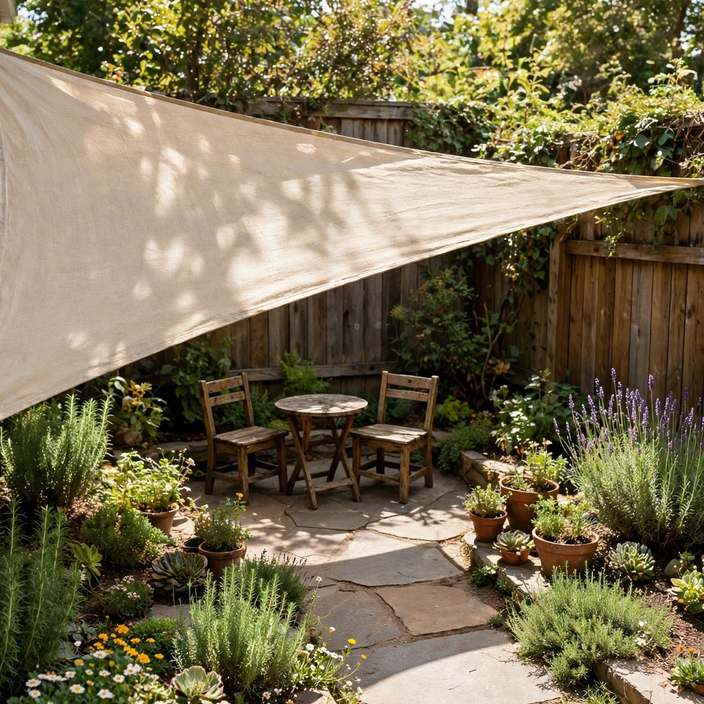
A pergola’s posts would crowd a small patio; a shade sail floats. One triangle of canvas gives a cool seat at noon and makes the yard feel like a room with a ceiling.
Why it works:
- Shade with no posts on the ground
- It comes down in minutes for winter
- The angle sheds rain off the seating
Tip: fix one corner lower than the others so rainwater runs off cleanly.
24) Nest Tables and Stack Chairs When Guests Leave
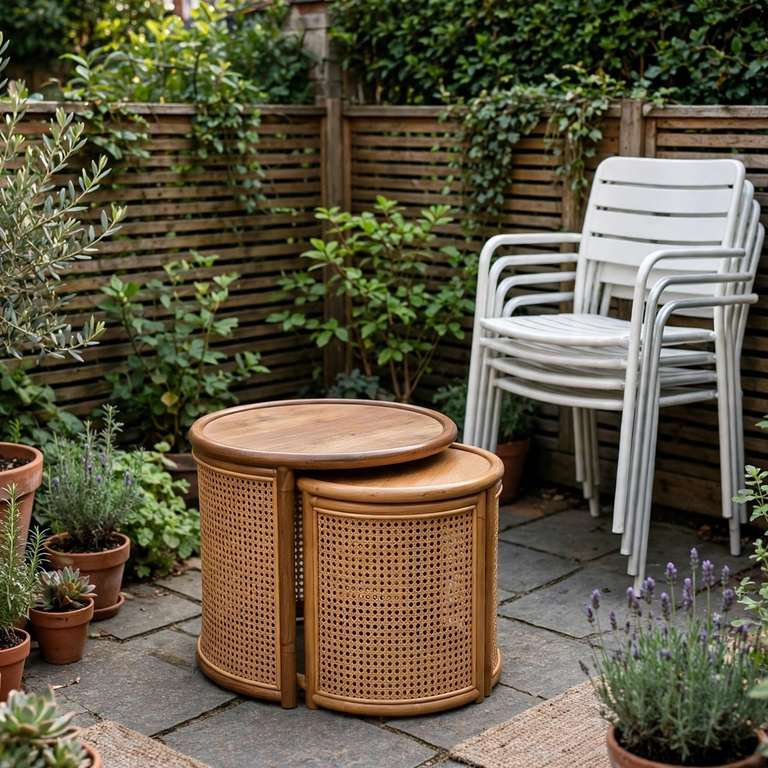
Nesting tables are the small yard’s party trick: three surfaces when friends are round, one stack when they leave. Stacking chairs play the same trick in the corner.
How to style it:
- Keep the nest beside the main seat
- Choose chairs that stack at least four high
- One finish across all pieces keeps it calm
Tip: store the stack under a simple cover and it lasts twice as long.
25) Keep Furniture Low and Leggy
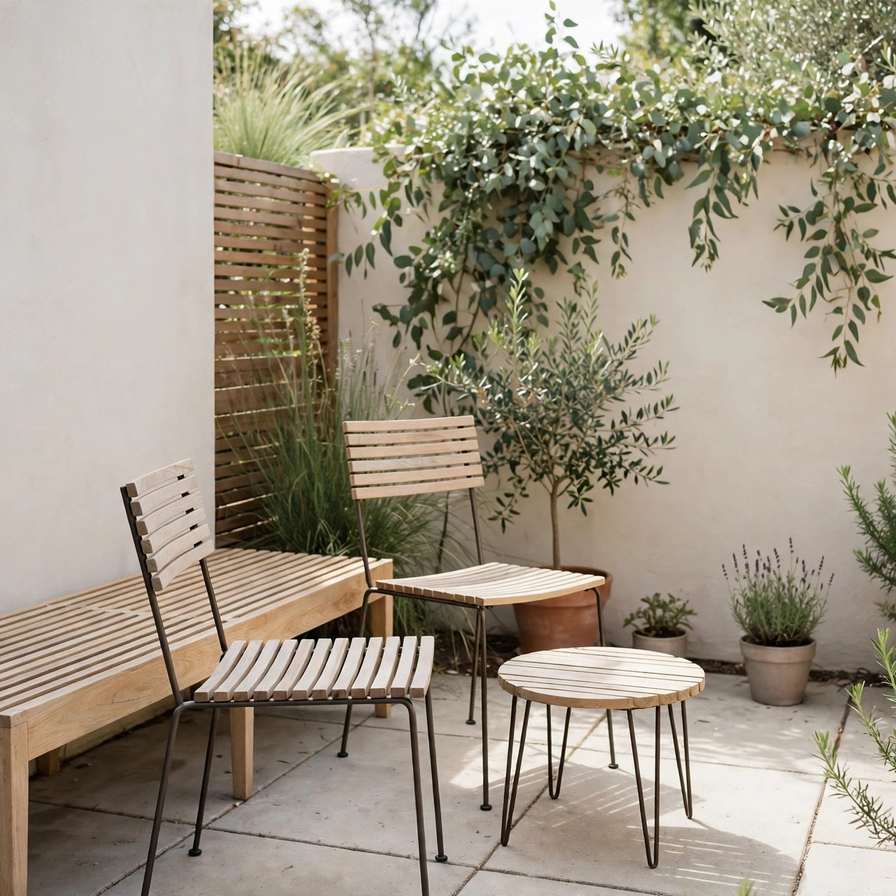
Bulky furniture with skirts to the ground makes a small patio feel stuffed. Low, leggy pieces show the floor running underneath, and a visible floor convinces your eye the space is generous.
Best for:
- Small patios that feel crowded fast
- Airy, modern schemes
- Seeing paving continue under every piece
Tip: if you can see under it, it will work in a tiny yard.
26) Plant Tall, Thin Specimens Along the Edges
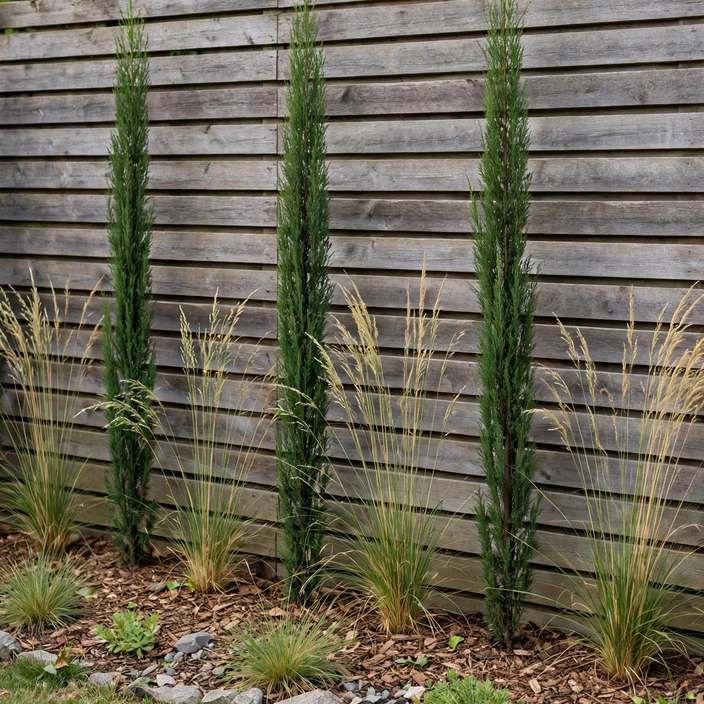
Columnar plants are the skyscrapers of the small garden: all height, almost no width. Slender grasses, fastigiate shrubs and pencil conifers give privacy and drama from a dinner-plate footprint.
Why it works:
- Height without stealing the border’s depth
- They soften fences without leaning on them
- Movement from grasses keeps it lively
Tip: plant them in loose threes at uneven gaps so the line never looks like a queue.
27) Turn One Wall Into a Herb Garden
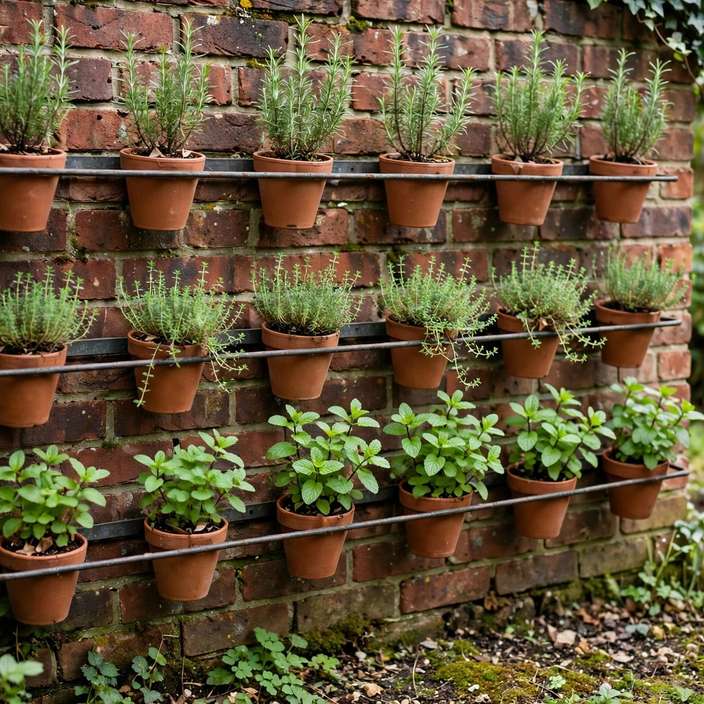
Rows of small herb pots on rails turn wasted wall into a herb garden: rosemary, thyme and mint at snipping height, perfuming the seating area while borders stay free for flowers.
How to use it:
- South or west walls suit Mediterranean herbs best
- One herb per pot keeps thirsty mint in check
- Label rails, not pots, so you can swap plants freely
Tip: hang the lowest rail at waist height so watering cans stay easy.
28) Build Storage Under Benches and Decking
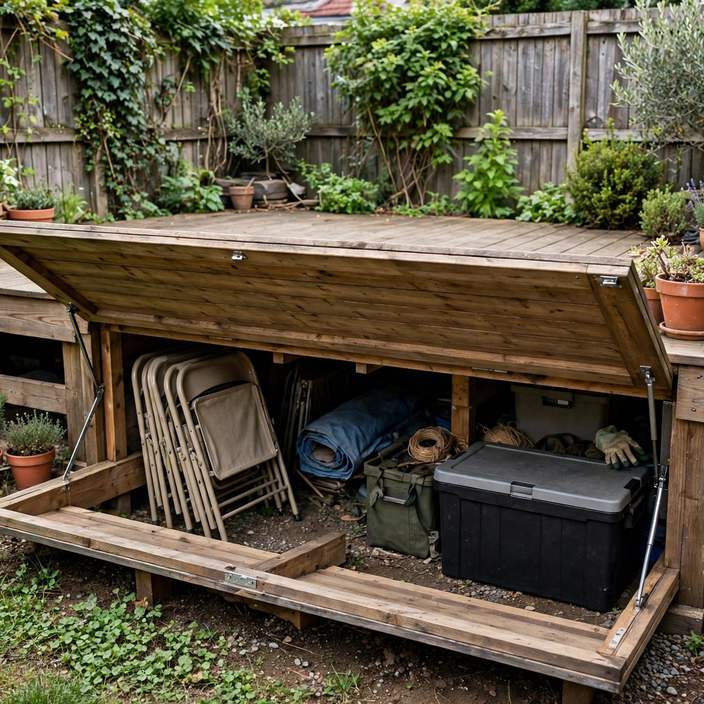
The space under a deck or inside a bench is a free cupboard most small yards never use; hatches and hinged lids turn those dead voids into homes for chairs, cushions and tools.
Best for:
- Hollow deck edges and raised platforms
- Benches with lift-up seats
- Waterproof boxes slid beneath seating
Tip: keep a list inside the lid of what lives there; out of sight is out of mind.
29) Choose a Compact Fire Bowl Over a Fire Pit
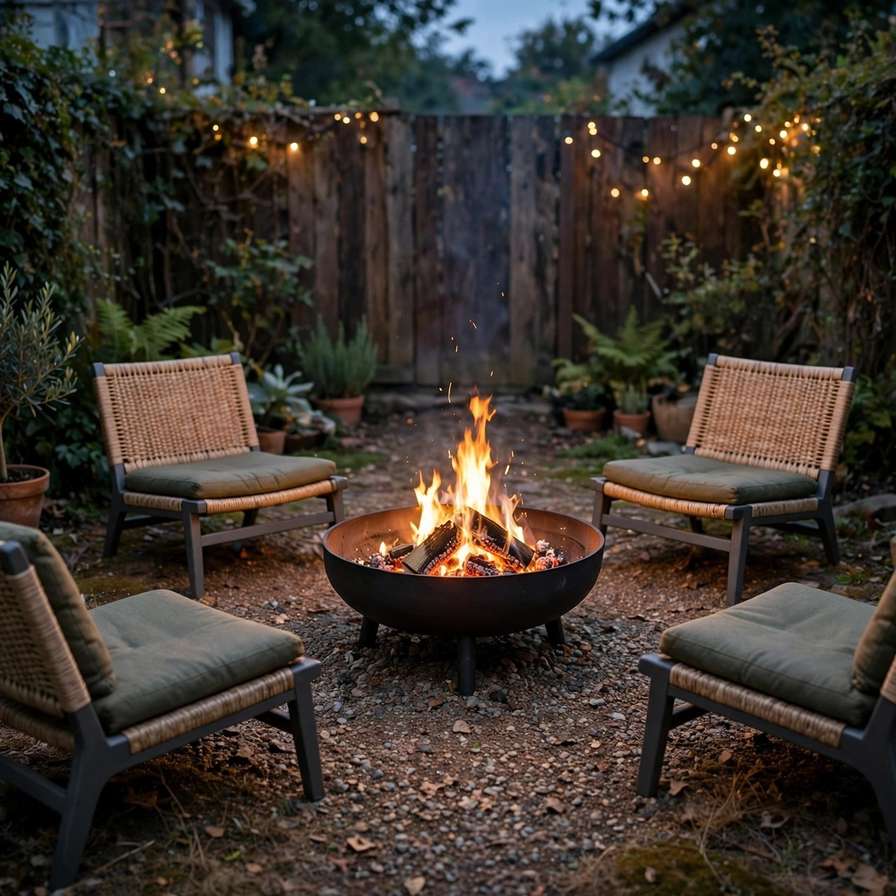
A built fire pit owns a square metre forever. A compact fire bowl gives the same flames and marshmallow rights, then moves aside when you want the space back.
Why it works:
- Full fire experience, portable footprint
- Doubles as a table with a lid by day
- Small enough for the tiniest seating circle
Tip: keep a paved or gravel spot for it; bowls and lawns are not friends.
30) Add Window Boxes and Railing Planters
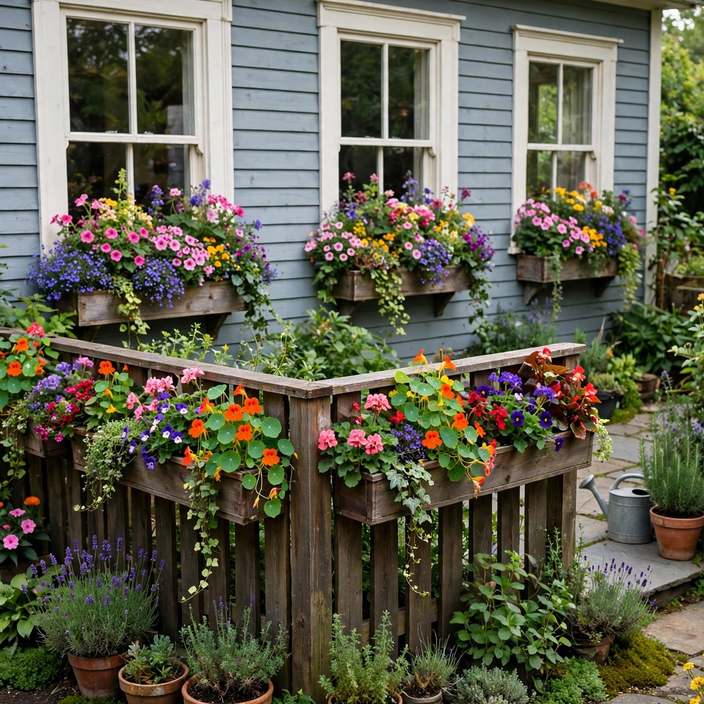
Window boxes and railing planters are pure bonus planting: they hang on surfaces doing nothing else. They frame the house wall and soften railings without touching the floor plan.
How to style it:
- Match box colour to the window frames
- Trailing plants hide the box itself
- Repeat the same two plants for a calm rhythm
Tip: line boxes with plastic so watering does not stain the wall beneath.
31) Set One Focal Point at the Far End
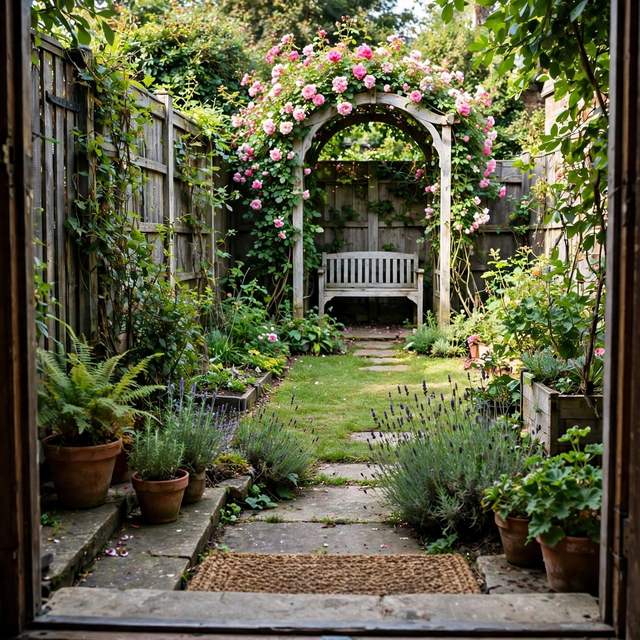
A small garden with nothing to look at feels like a corridor. One strong focal point at the far end – an arbour seat, a statue, a specimen pot – pulls your eye the full length of the plot.
Best for:
- Long thin yards that feel like alleys
- A reason to walk to the far end
- Framing with an arch or a pair of standards
Tip: light the focal point at dusk and the garden gains a second act every evening.
32) Keep the Centre Clear and Push Everything to the Edges
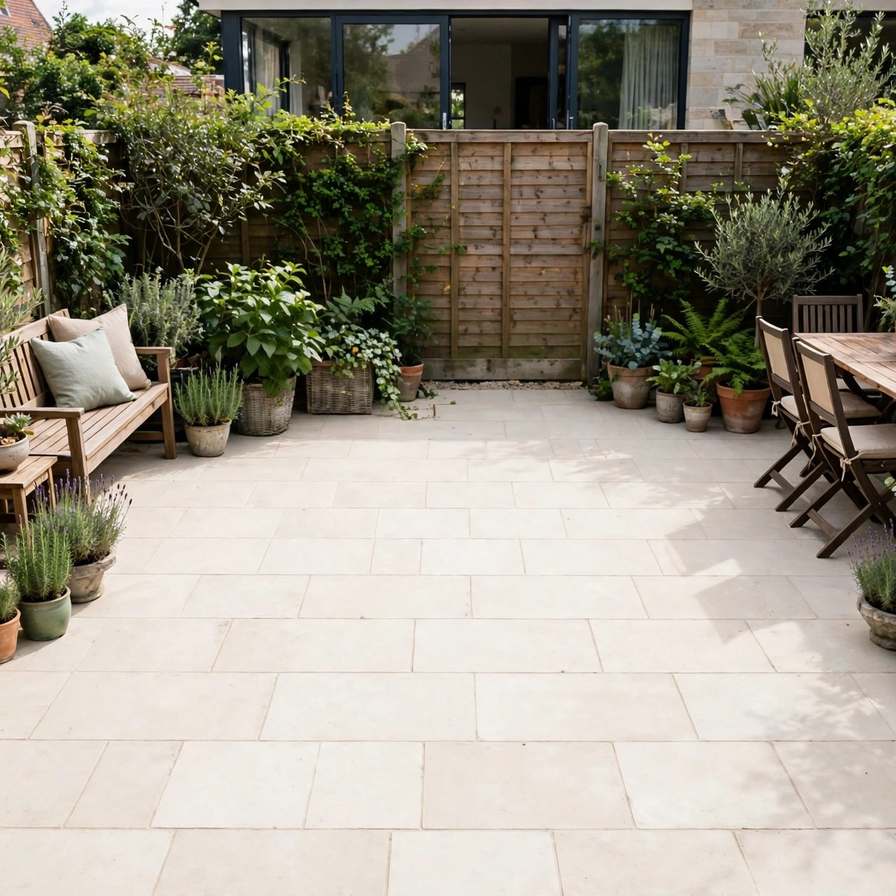
A clear middle makes a small yard feel bigger than a furnished one. Push seating, storage and planting to the edges and the open centre becomes flexible space for everything from yoga to paddling pools.
Why it works:
- Open floor reads as generous space
- The layout can change by the hour
- Nothing blocks the route through
Tip: a pale rug or mat can mark a temporary centre without building anything.
33) Light in Layers to Win Back the Evenings
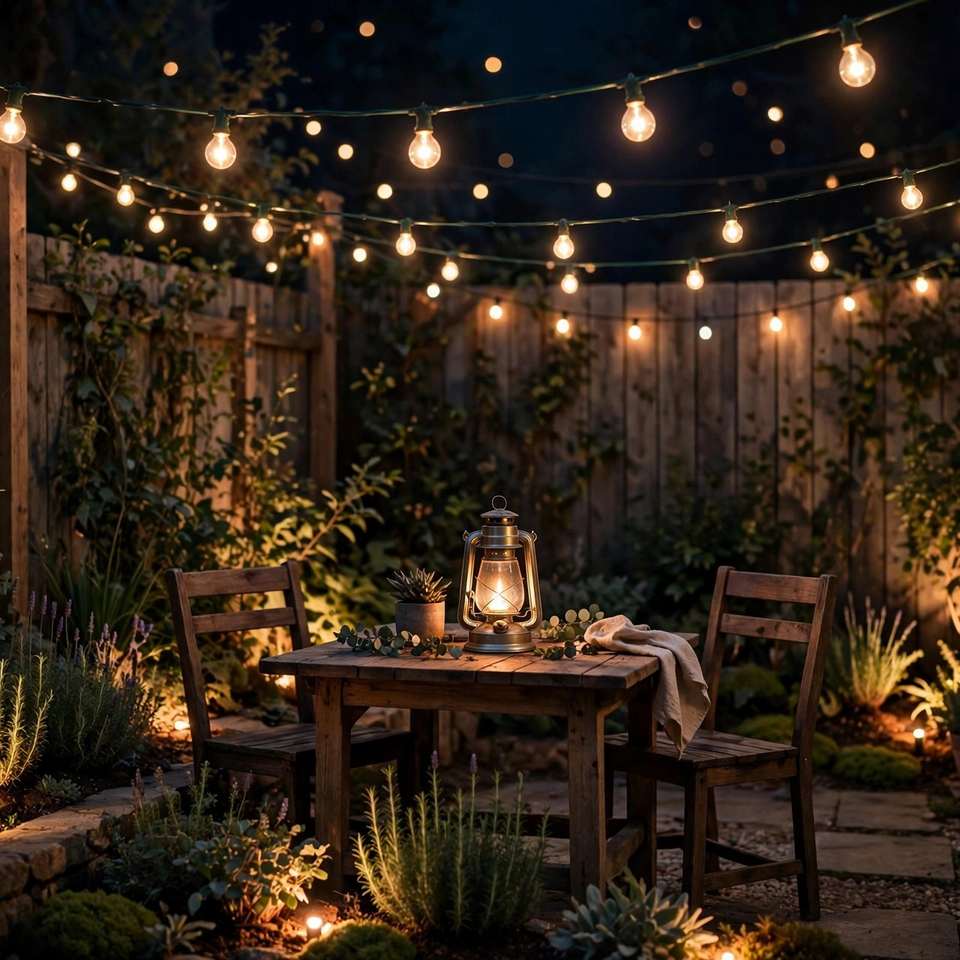
Darkness shrinks a small yard to whatever the kitchen window shows. Layered light – festoons overhead, a lantern on the table, small uplights in the planting – redraws its full size every night.
How to style it:
- Warm white bulbs only, never blue-white
- Light the far end to stretch the view
- Solar stakes in the borders need no wiring
Tip: put the prettiest light at the focal point and the garden will feel twice as deep.
Measure First: Plan the Zones on Paper
Before you buy a single chair, sketch the yard to scale and mark where the sun lands at breakfast, midday and evening. Small plots forgive nothing: a bench thirty centimetres too deep can block the only route to the gate, and you want to discover that on paper, not after delivery.
Decide your zones in that sketch – eating, lounging, growing, storing – and give the fire a place early. These backyard fire pit ideas show compact ways to plan flames into a small layout safely, and a portable bowl keeps the plan flexible. Measure every big piece twice, and leave a clear walking line through the middle of the plot.
Small Habits That Keep a Tiny Yard Feeling Big
Making the most of a small backyard is a habit, not a one-off project. Edit ruthlessly: when something new comes in, something tired goes out, because clutter is what shrinks a garden. Keep one colour family for pots and cushions so the eye reads calm, not chaos, and sweep the paving weekly – clean lines make any space feel considered.
Fold, stack and hang things the moment you finish using them, the way these DIY camper deck ideas make every centimetre of a small outdoor platform work twice. Review the layout each spring; last year’s perfect corner may be this year’s wasted one.
Conclusion
A small backyard asks for thought, not money. Zone it, grow upwards, fold things away, hide the clutter and light it well, and a plot you once apologised for becomes your most-used room.
Start with the move that fixes your biggest frustration – the wasted corner, the homeless cushions, the border that grows nothing – and let one success argue for the next. For trusted planting advice, the RHS is full of small-garden guidance.
Now measure your metres, claim your corners, and enjoy a backyard that works far bigger than it is.


More Stories
30 Beautiful Bedroom Decor Ideas
32 Bedroom Rule of Three Color Ideas
35 Kitchen Rule of Three Zones Explained