
Introduction
You do not need a spare room to work well from home. The best small home office ideas turn a quiet corner, an unused cupboard or a wide stretch of hallway into a workspace you actually enjoy, with nothing more than a compact desk and a little planning.
Small setups have real advantages too: everything sits within reach, there is less to clean, and the limited space keeps clutter honest. If you love snug, characterful rooms, these dreamy den ideas show how a modest space can feel like a retreat, and the same cosy thinking suits a desk corner beautifully.
Here are 27 ideas, from fold-down desks and closet offices to cable tricks and space-stretching colours. Each comes with why it works and a simple tip, so you can mix and match what fits your home.
1) The Corner Desk That Claims Dead Space

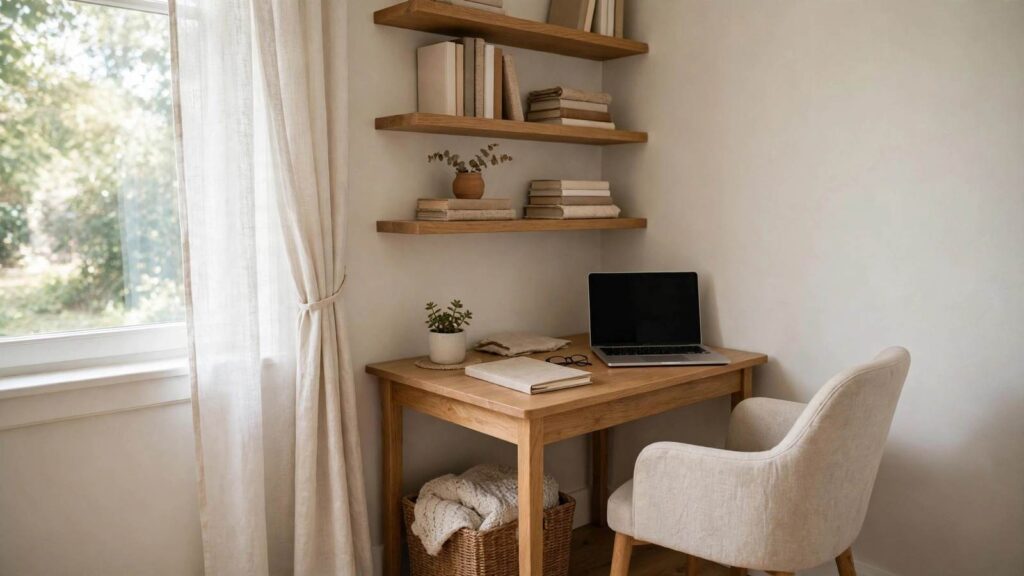
Every home has a corner that does nothing. A corner desk turns that dead patch into a proper workstation with room for a laptop, notebook and cup of tea.
Why it works:
- Uses floor space that was wasted
- Two walls for shelves and pinning
- Naturally separates work from the room
Tip: measure both walls first; leave room behind for cables.
2) Cloffice: Small Home Office Ideas Inside a Closet
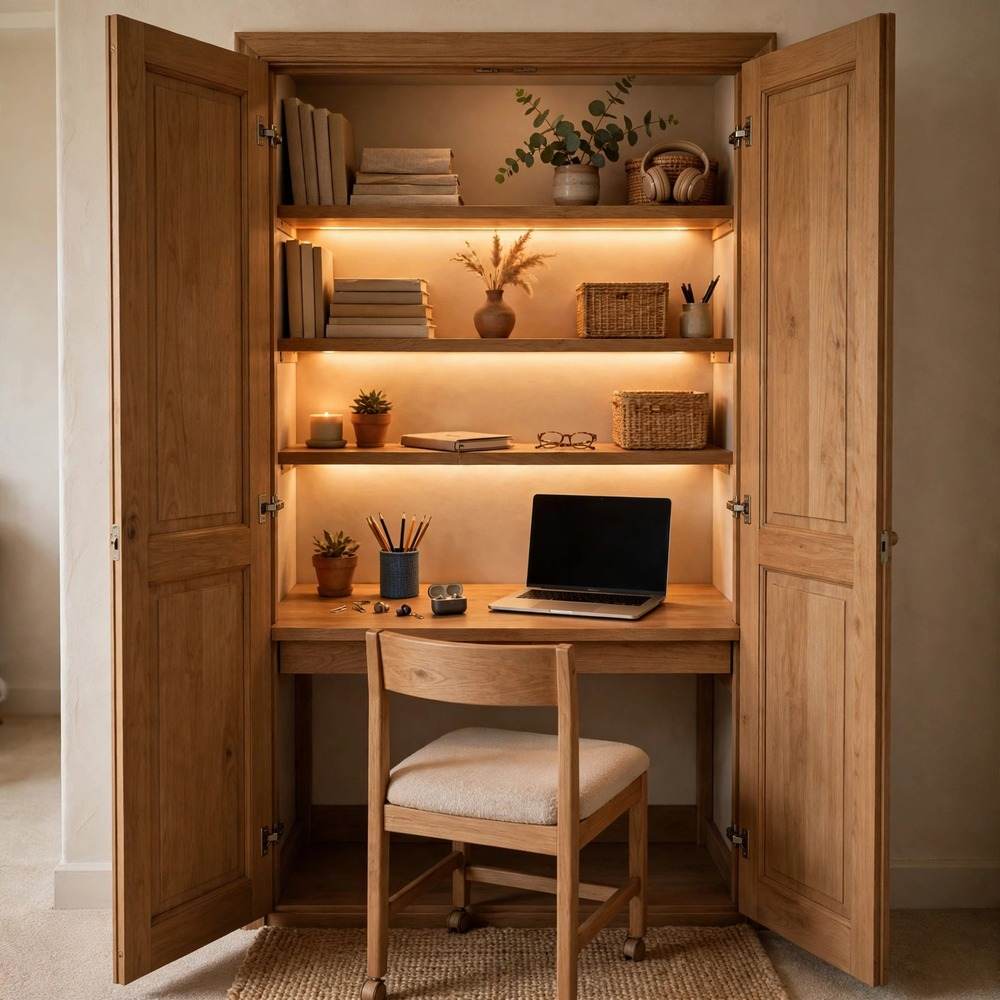
Fit a desktop inside a deep cupboard, add shelves above, and you have a cloffice — an office that closes away at the end of the day. A favourite for flats and busy family homes.
Why it works:
- The whole office hides behind doors
- Shelves use the cupboard’s full height
- A clear boundary helps you switch off
Tip: paint the inside a shade darker for a cosy, cocoon-like feel.
3) The Under-Stairs Nook Office
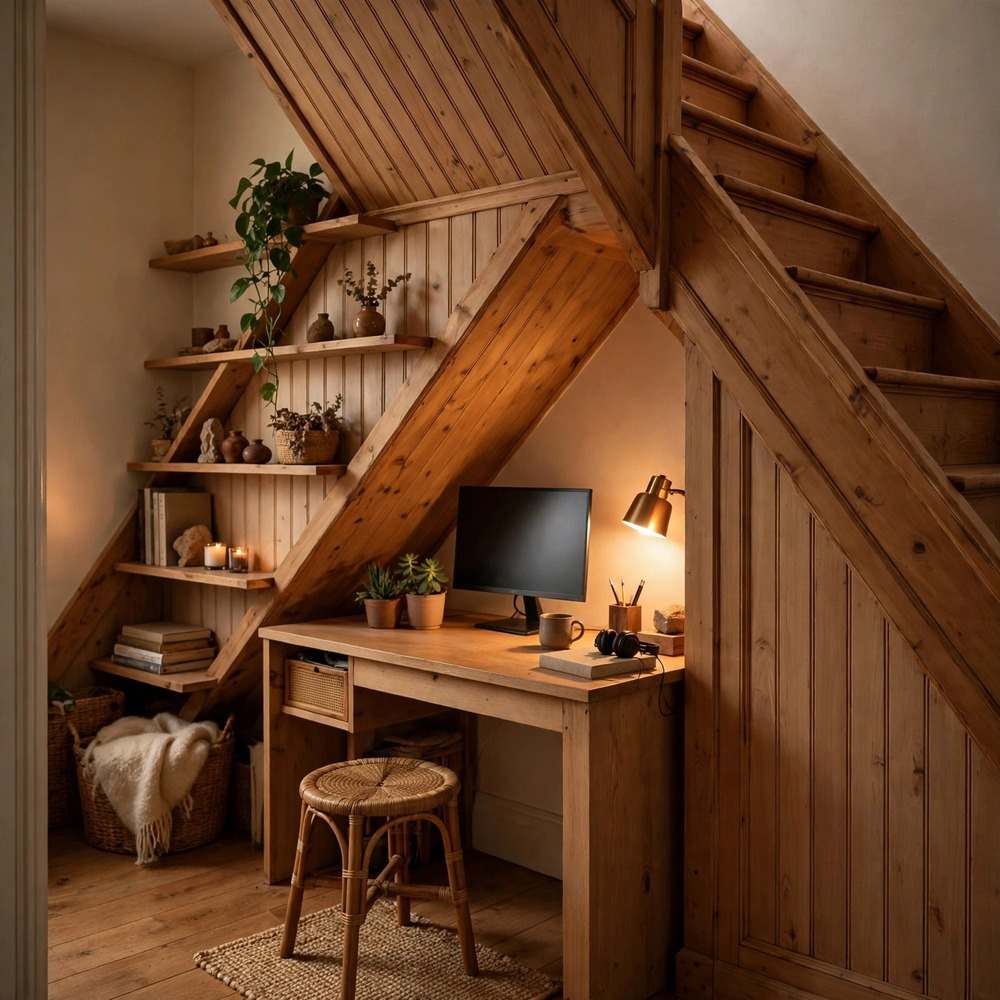
The triangle under the stairs is usually a dumping ground, yet it is exactly the right shape for a seated desk beneath the slope.
Why it works:
- Reclaims a genuinely awkward space
- The slope creates a sheltered feeling
- Central spot for quick work bursts
Tip: place the desk at the high end of the nook, where headroom is greatest.
4) A Wall-Mounted Fold-Down Desk
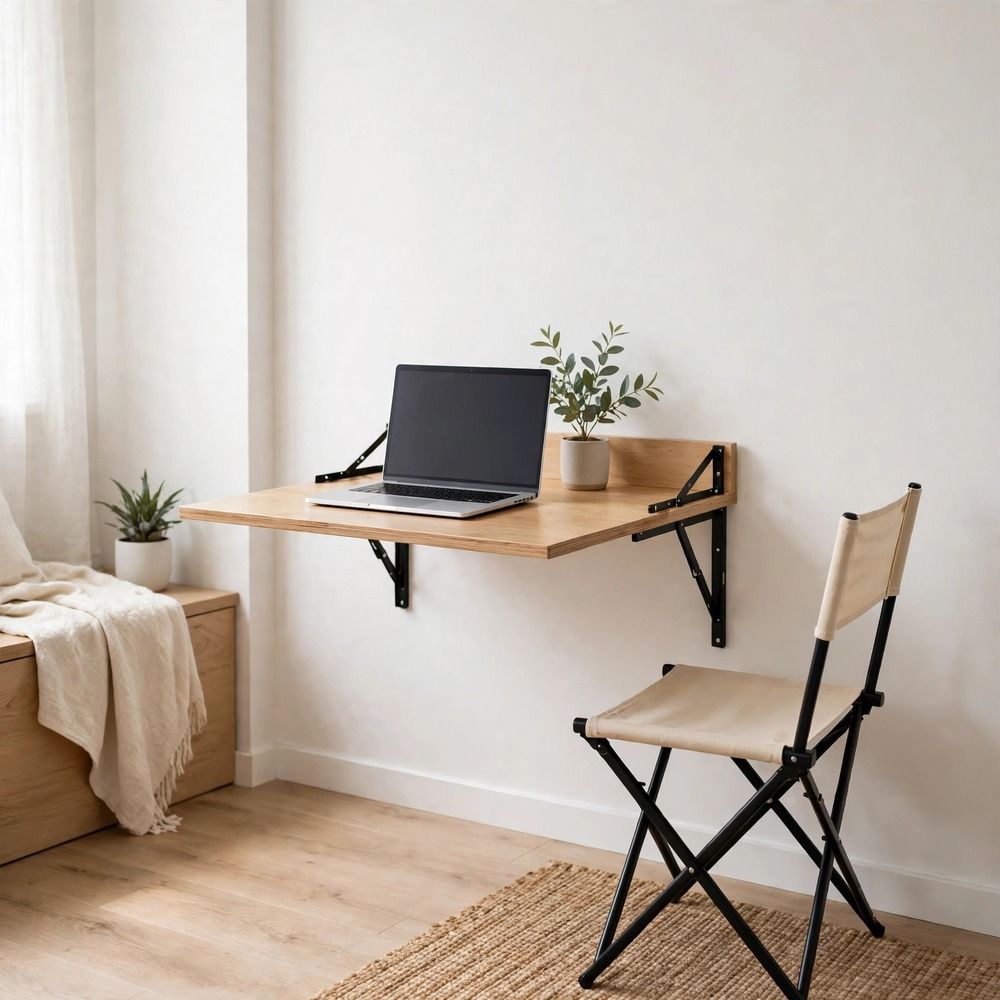
A fold-down desk drops open when you work and lifts flat against the wall when you finish — a real desk with no permanent footprint, perfect for studio flats.
Why it works:
- Folds flat, so the room resets instantly
- Ideal for renters, nothing built in
- Doubles as a breakfast or craft table
Tip: fit it at standard desk height, around 75 cm, on solid wall fixings.
5) A Desk in Front of the Window
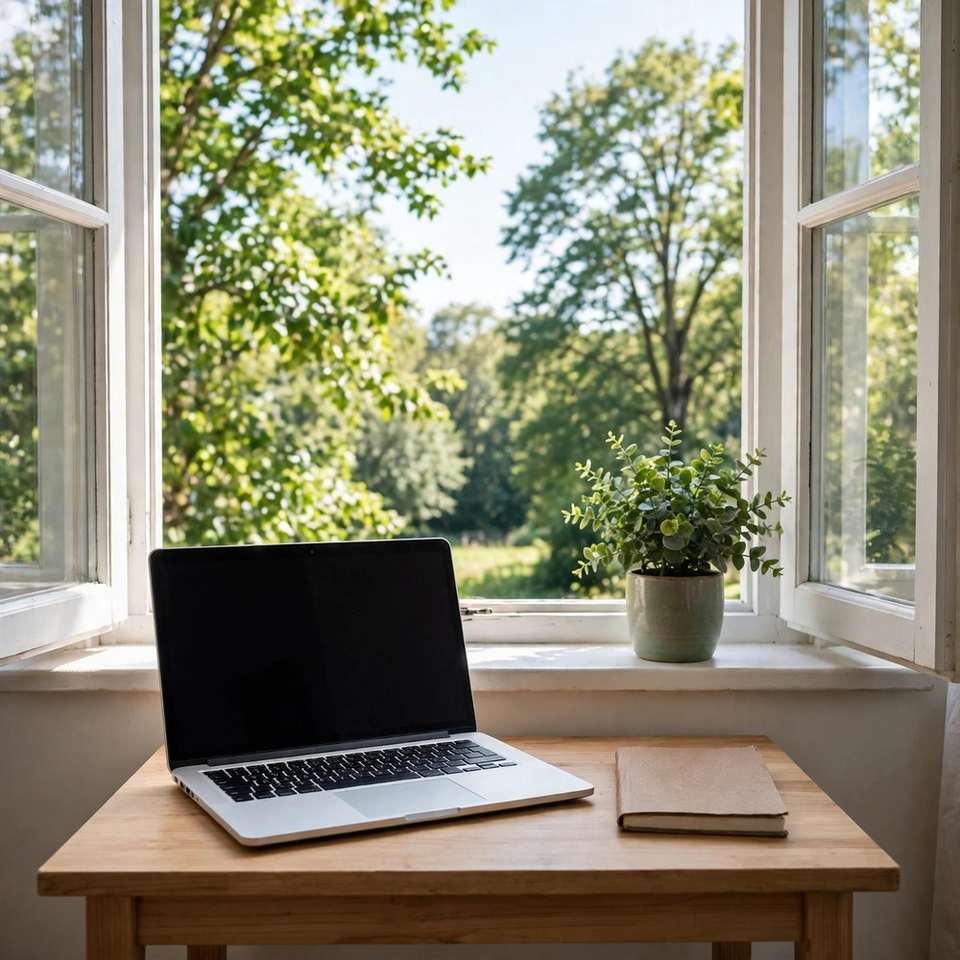
Sliding a slim desk up to a window gives you the best seat in the house: natural light that lifts your mood, eases eye strain and flatters video calls.
Why it works:
- Free, flattering light all day
- A view outdoors rests tired eyes
- The sill doubles as a shelf
Tip: if afternoon sun glares on the screen, add a sheer blind instead of moving the desk.
6) Vertical Shelving That Climbs to the Ceiling
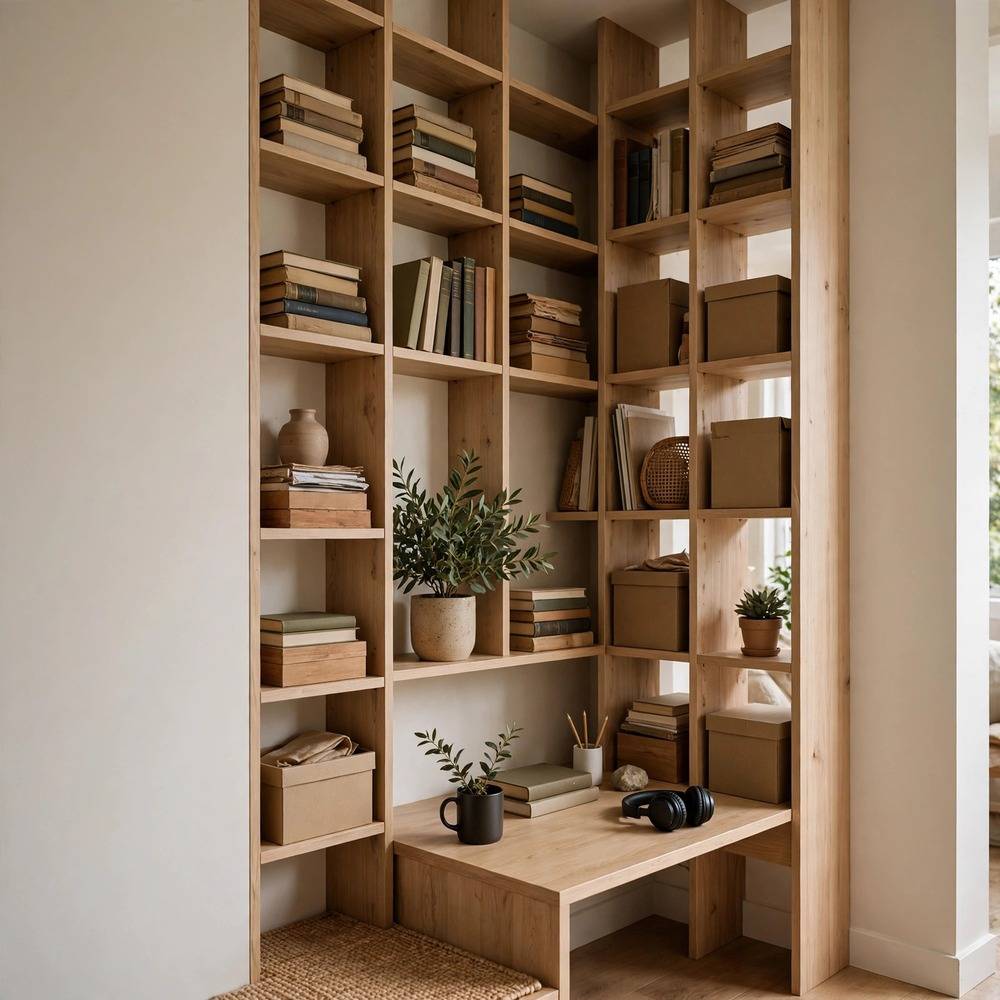
When floor space runs out, the only way is up. Tall, narrow shelving above your desk stores books and files without growing your footprint, and makes the corner feel taller.
Why it works:
- Storage grows, the desk does not
- Keeps the desktop clear for working
- High shelves suit rarely used items
Tip: everyday things at arm height; archive boxes at the top.
7) The Slim Ladder Desk
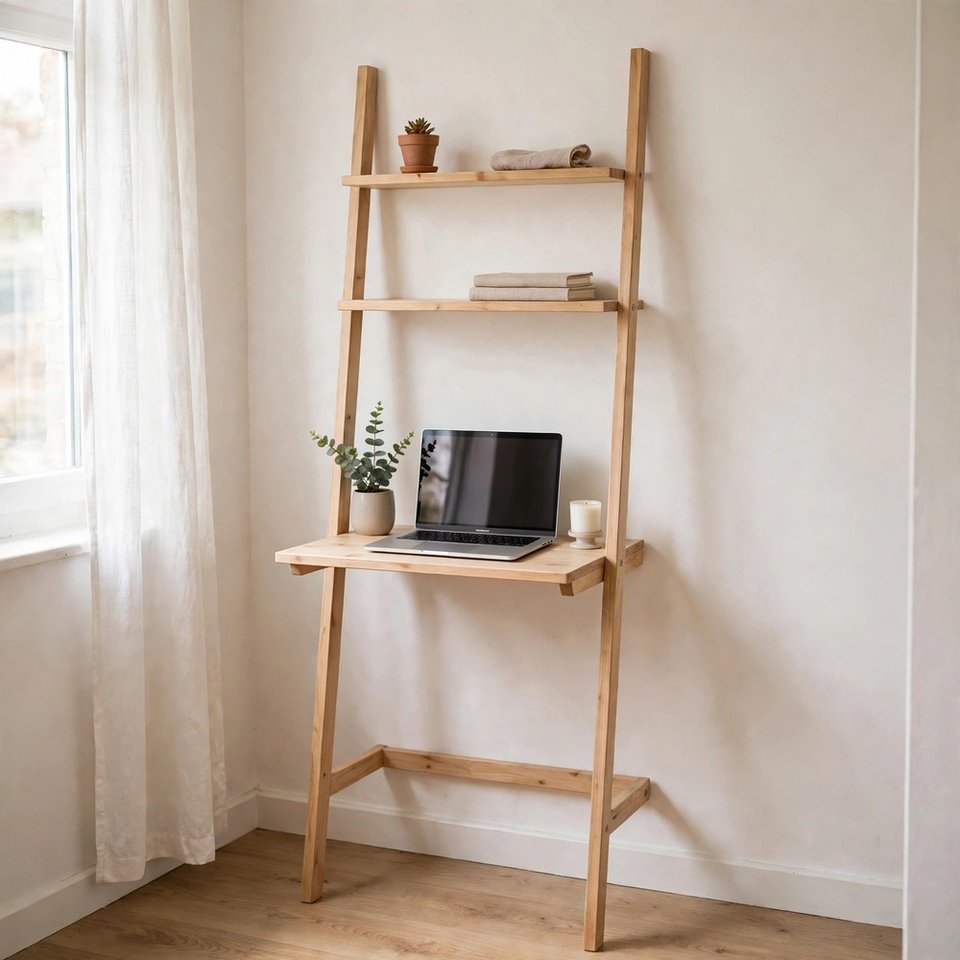
A ladder desk leans against the wall, its desktop at sitting height and shelves narrowing as they rise — a light footprint for renters, hallways and shallow alcoves.
Why it works:
- Very shallow, fits tight spots
- Shelves hold printer, books or plants
- Easy to move when rearranging
Tip: choose a desktop at least 50 cm deep so your forearms rest comfortably.
8) A Floating Desk With Built-In Drawers
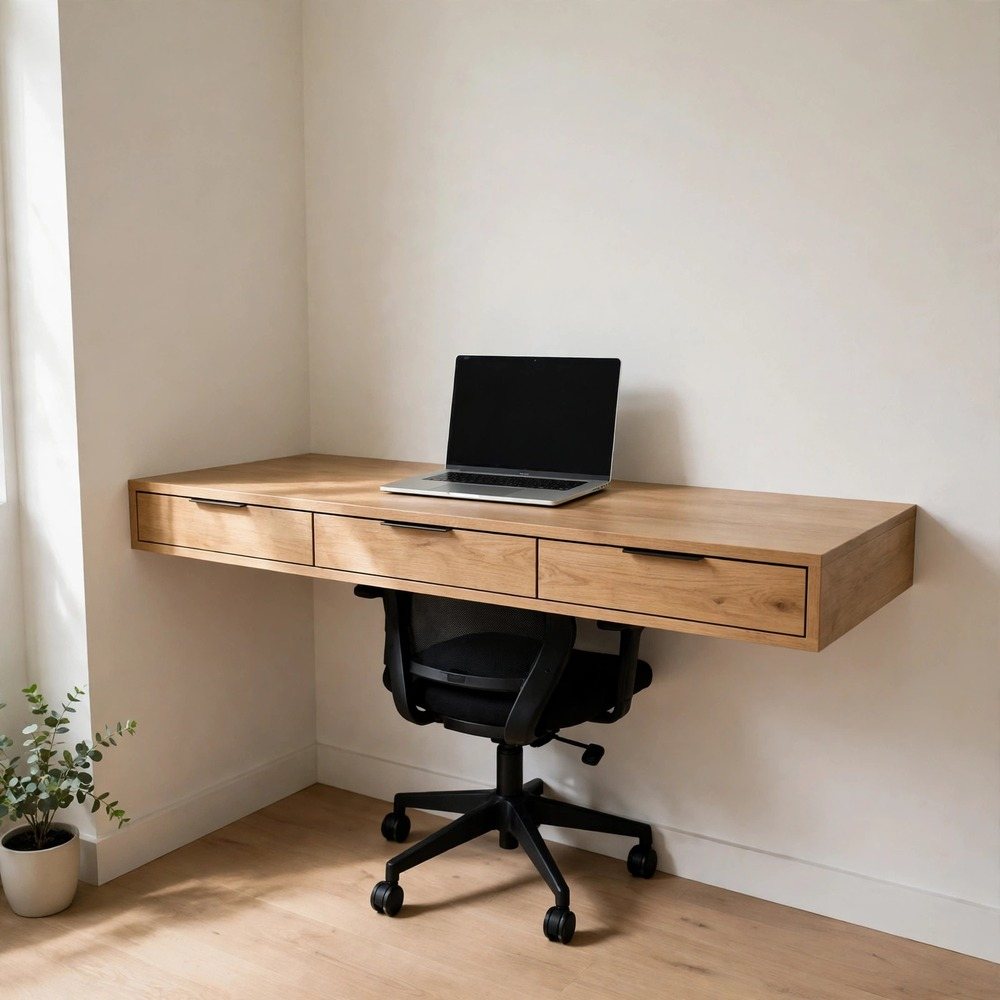
A floating desk fixes straight to the wall, with no legs to bump or trap dust. Shallow drawers hide pens and chargers, and the clear floor below makes the corner feel bigger.
Why it works:
- More legroom, easier cleaning
- Drawers swallow clutter in seconds
- Empty floor lightens the whole look
Tip: run cables down a slim trunking strip painted the wall colour.
9) A Rolling Cart as a Mobile Office
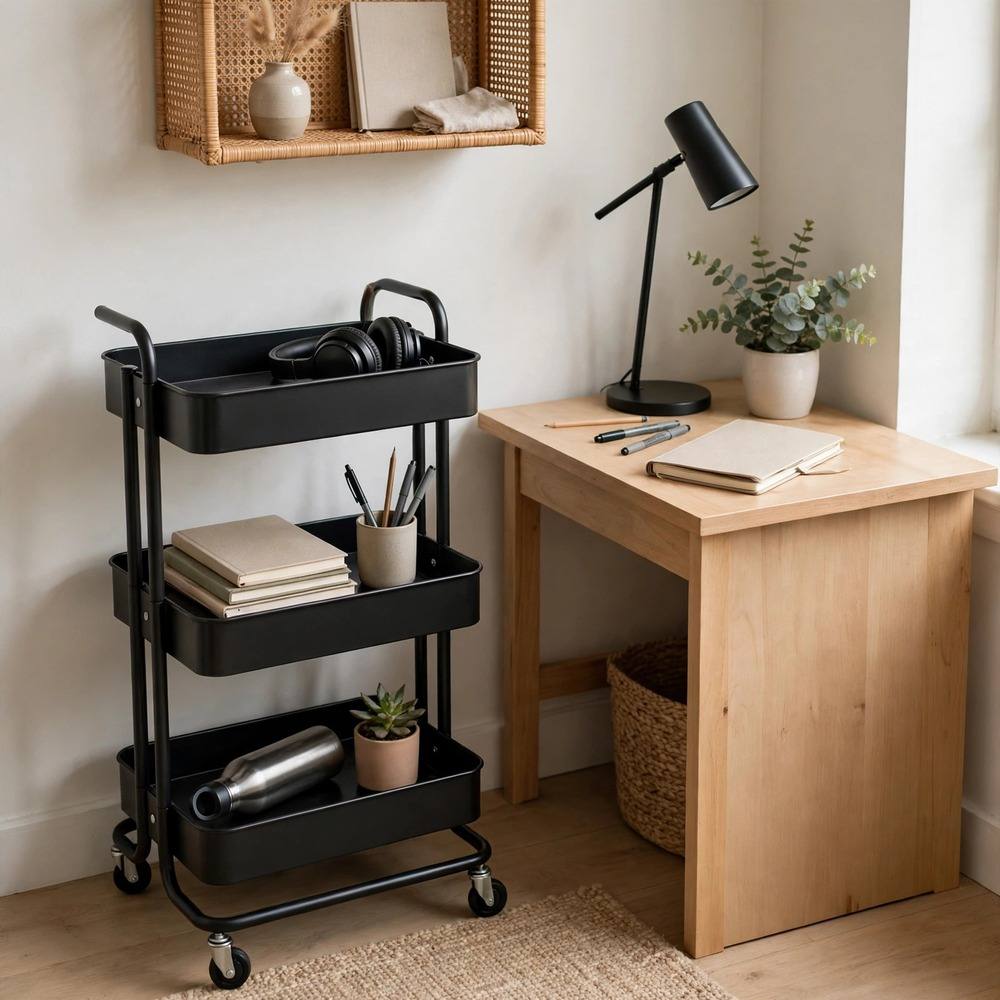
A three-tier trolley is the hardest-working piece in a small office: park it by your desk for files and stationery, then wheel it away at night so the room is a living room again.
Why it works:
- Storage that moves where you need it
- Wheels away out of sight nightly
- Tiers separate work, tech and bits
Tip: one job per tier — tools top, papers middle, chargers bottom.
10) A Pegboard Wall for Everyday Tools
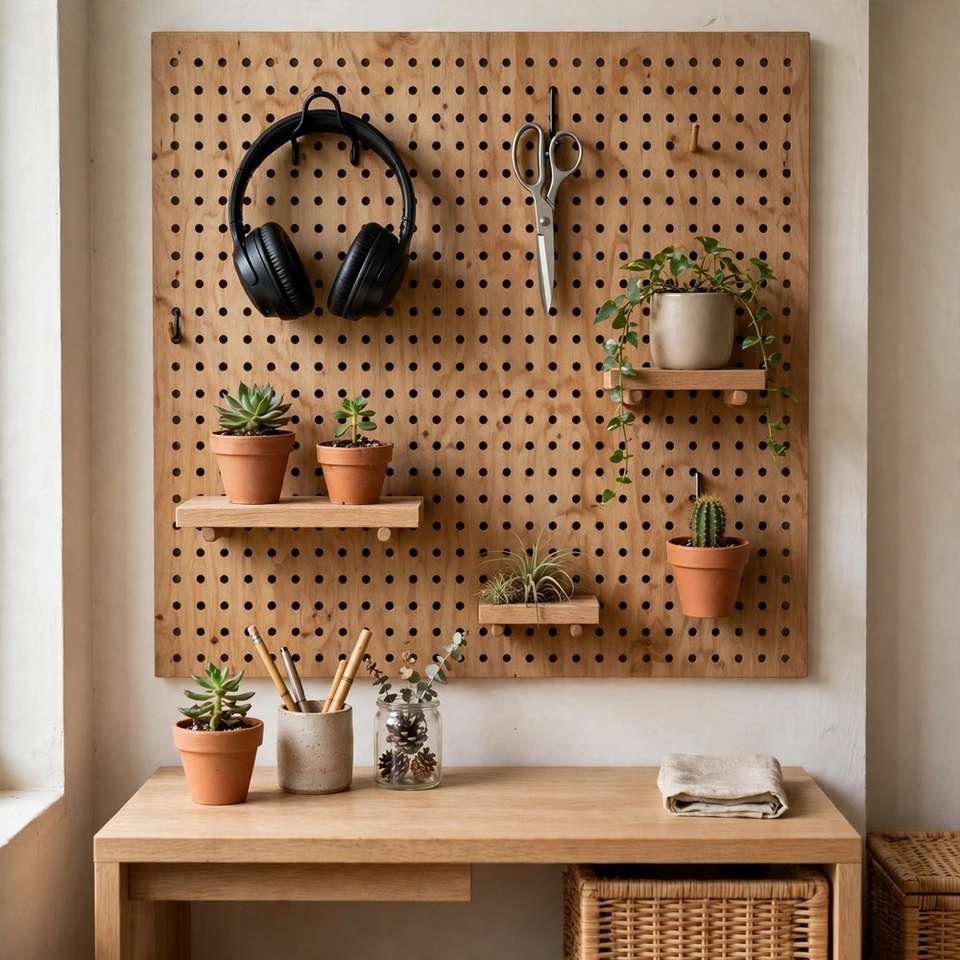
A pegboard turns the wall above your desk into flexible storage. Hooks hold headphones, scissors and chargers where your hand expects them, and the layout rearranges in minutes.
Why it works:
- Everything visible, nothing buried
- Frees the desktop for laptop and notebook
- Rearranges with no new holes
Tip: make the board the same width as your desk for one neat workstation look.
11) Cable Management You Never See
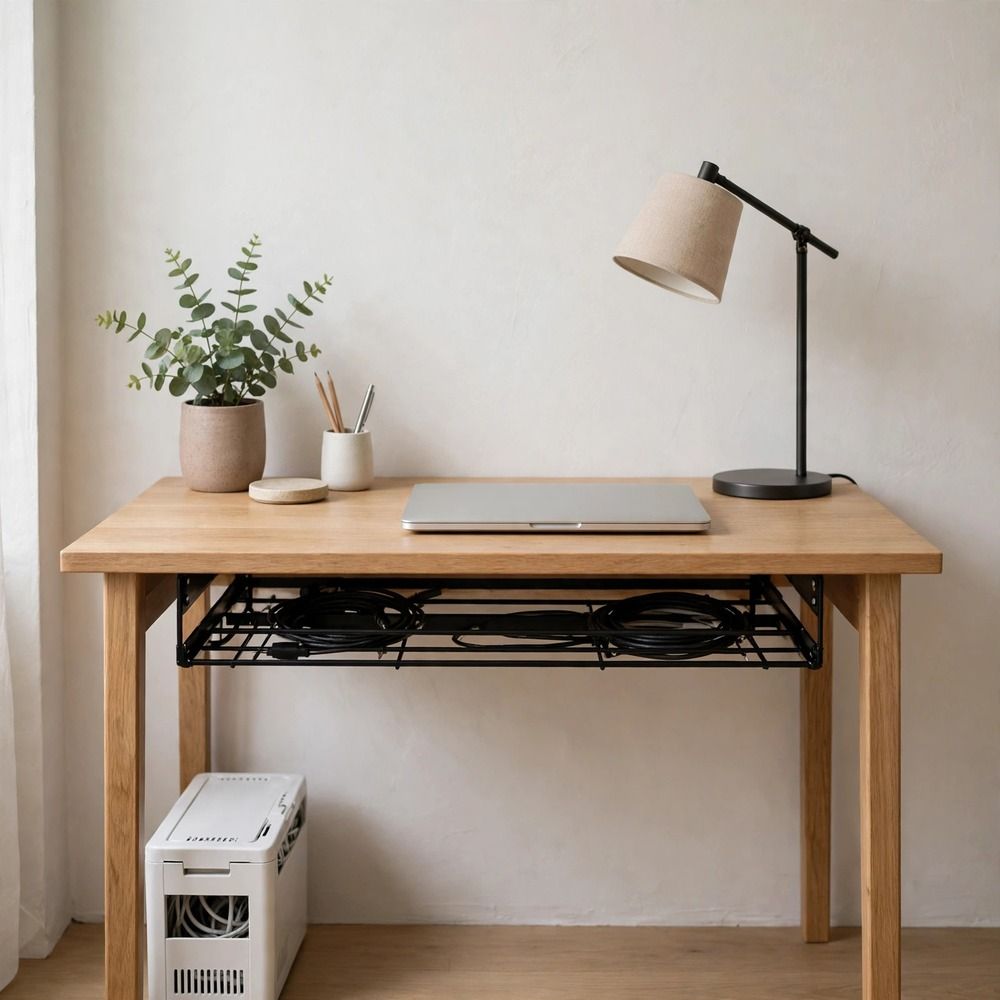
Nothing shrinks a small office like a nest of wires. A cable tray, a lidded box for the extension lead and a few velcro ties hide the tangle completely.
Why it works:
- Clear surfaces instantly look bigger
- Dusting takes seconds
- Fewer trip hazards around chair wheels
Tip: label each plug, so unplugging one device never means pulling them all out.
12) A Bookshelf Divider That Creates a Zone
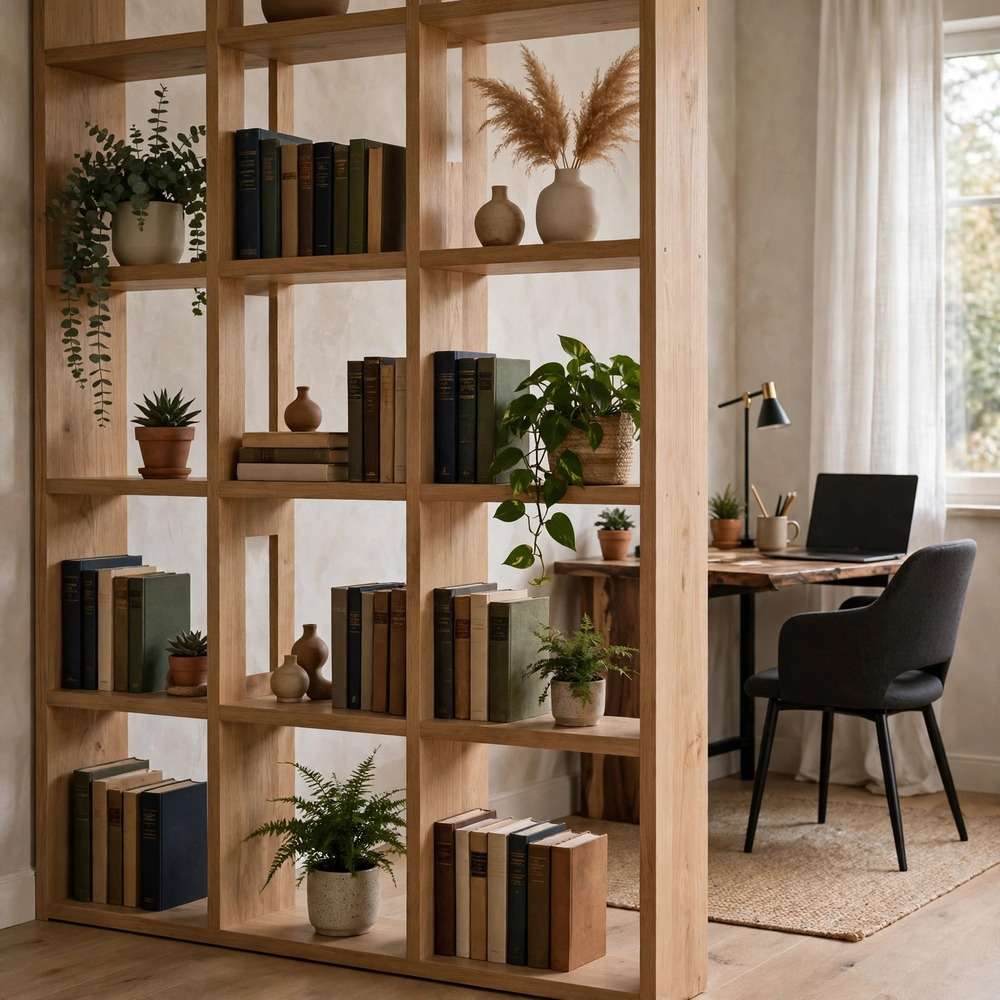
In an open-plan room, a low open bookshelf at right angles to the wall carves out an office zone — a boundary, storage on both sides and a tidy call backdrop, with nothing built.
Why it works:
- A room within a room, free
- Storage faces both sides
- Open shelves keep light flowing
Tip: keep the top shelf partly empty with a plant, so the divider feels light.
13) A Desk Tucked Under a Loft Bed
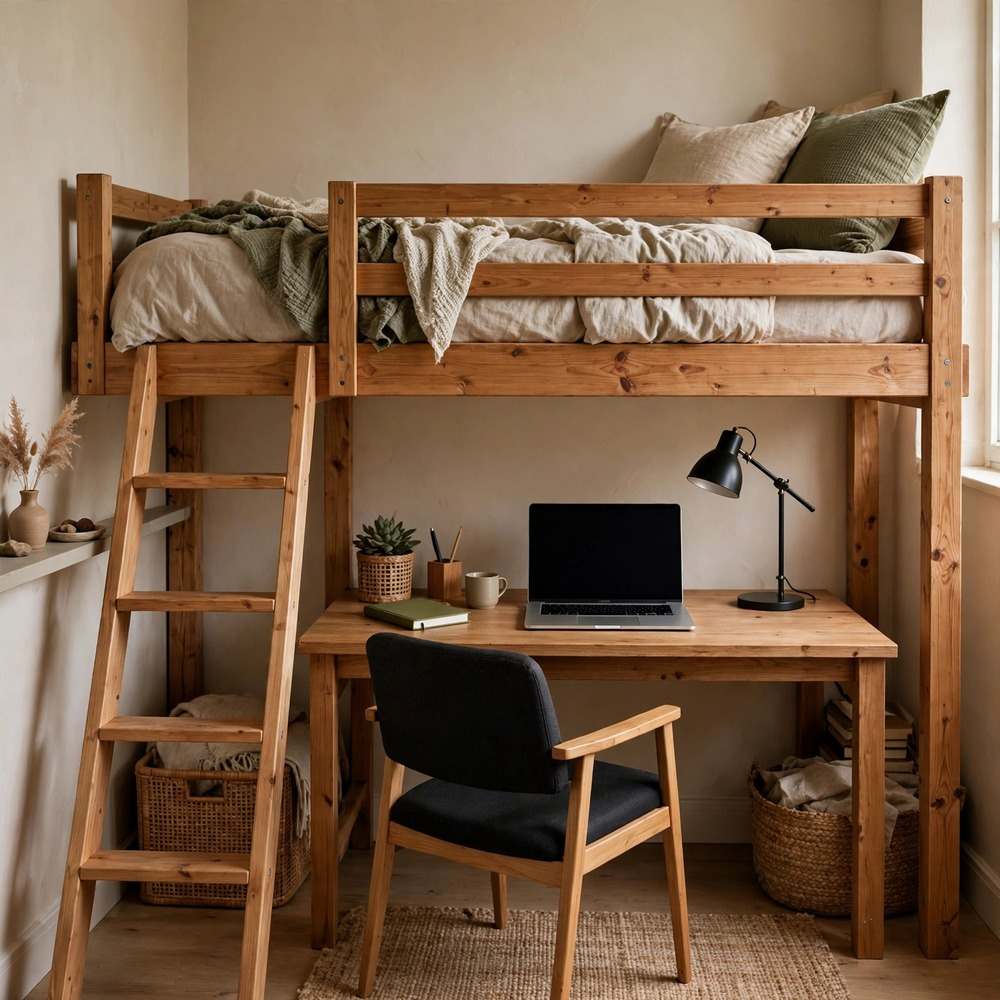
A loft bed lifts sleeping space up high and frees the floor beneath for a full desk — bed and office sharing one footprint, a favourite in student rooms and compact flats.
Why it works:
- Bed and desk, one footprint
- The frame makes a den-like feel
- Floor left for wardrobe or chair
Tip: add a warm strip light under the frame, as the desk sits in shadow.
14) An Armoire Office That Closes Away
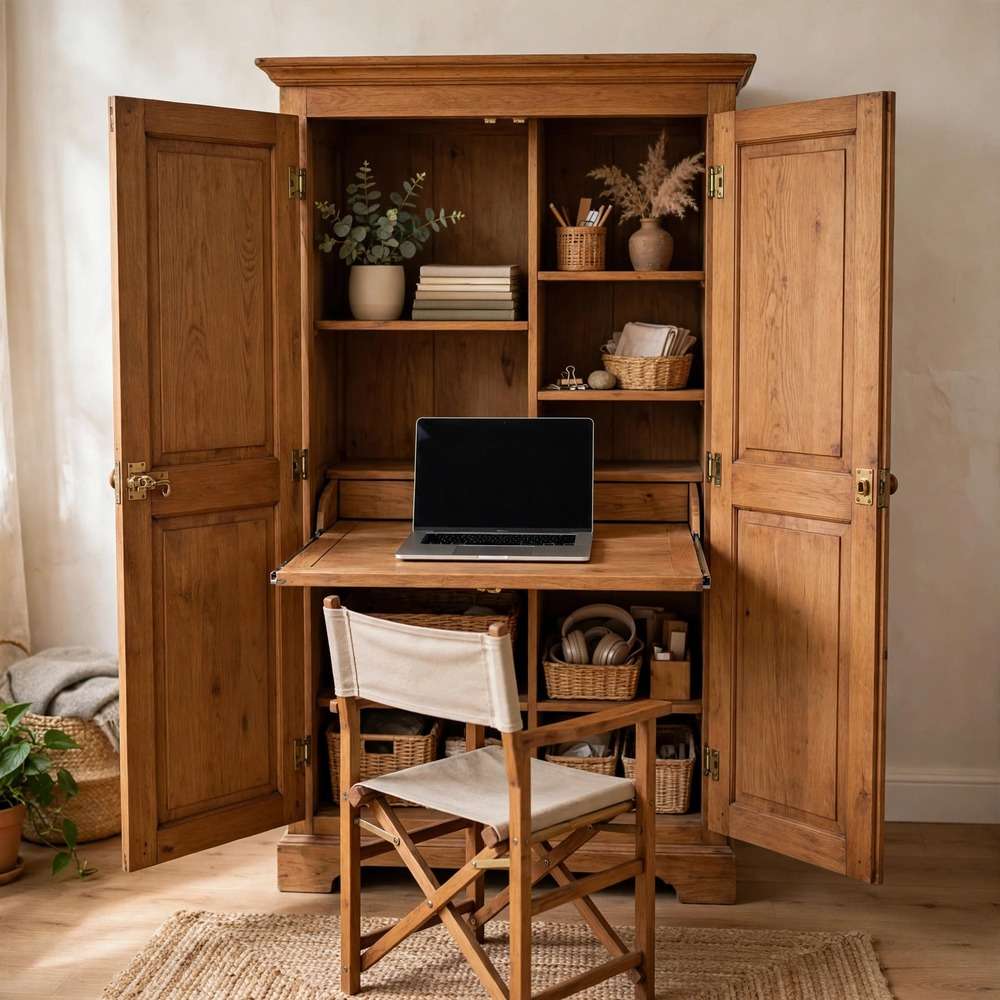
An old wardrobe can hide a complete office: a pull-out shelf for your laptop, shelves for papers, and doors that close on the mess at six o’clock.
Why it works:
- The office disappears behind doors
- Vintage pieces add character
- Work and rest stay separated
Tip: store a folding chair inside too, so nothing office-like stays on show.
15) A Landing Desk in a Wide Hallway
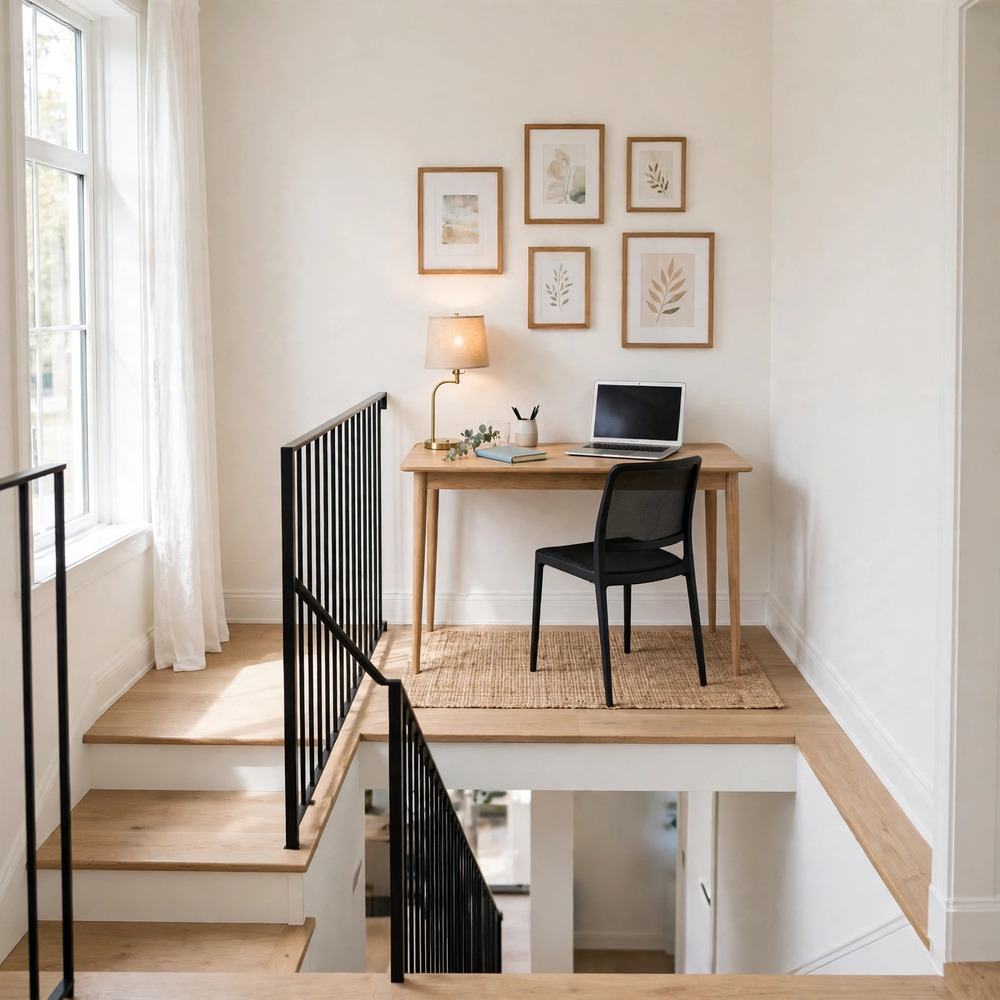
Many landings are wider than they need to be. A slim console desk turns that passing space into a quiet workstation, away from television and kitchen noise.
Why it works:
- Uses space that sits empty daily
- Quieter than the living rooms
- Stairwell light is often bright
Tip: check for a power socket nearby, and never trail leads across the stairs.
16) A Bay Window Alcove Workstation
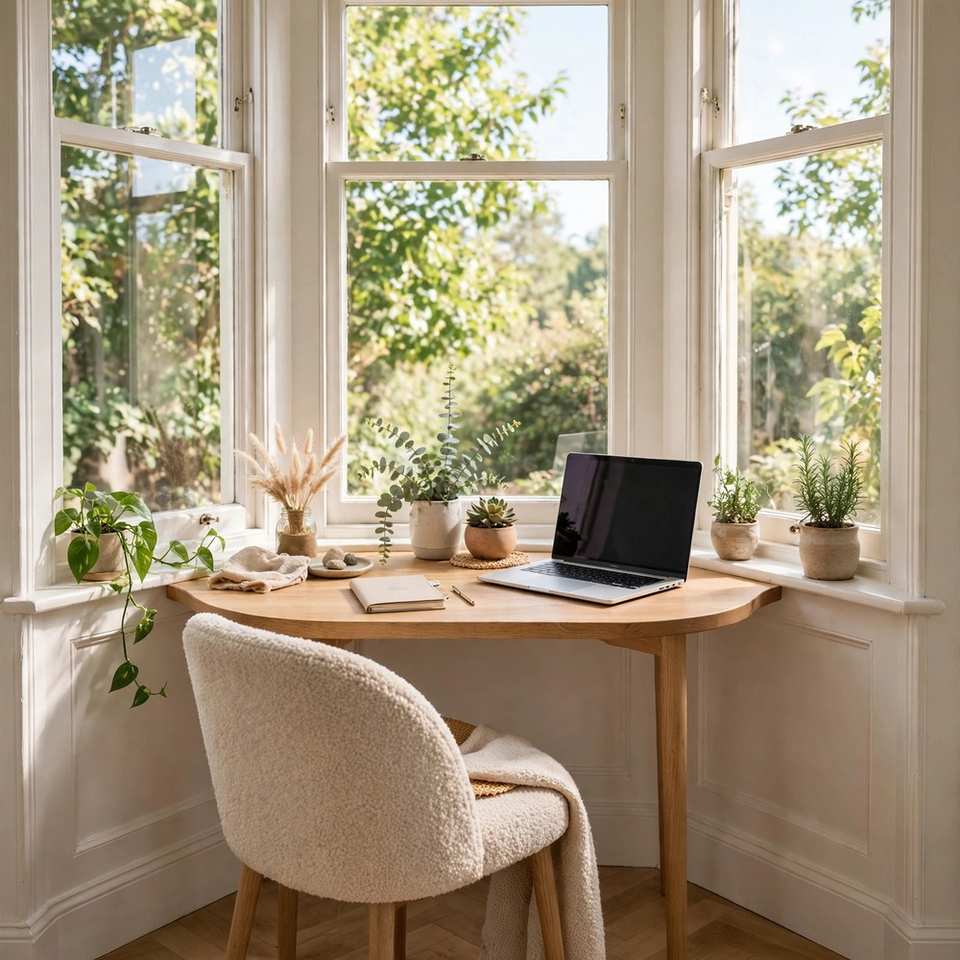
A bay window’s angled walls form a natural alcove that is almost desk-shaped already. Fit a desktop in and you get light from three sides in a workspace that looks like a feature.
Why it works:
- Light from three directions
- The alcove separates you from the room
- Pretty enough for living rooms
Tip: a painted board cut to fit is cheaper than you think.
17) Layered Lighting for a Tiny Workspace

Small offices often sit in the darkest corner of the house. Add a focused desk lamp and one soft background glow to the room light, and the space feels warm instead of cave-like.
Why it works:
- A desk lamp stops eye strain
- Warm light makes small feel cosy
- Background glow softens shadows
Tip: choose an adjustable lamp arm, so light lands on your notebook, not your eyes.
18) A Monitor Arm That Frees the Desktop

A screen on a stand steals a surprising amount of a small desk. A clamp-on monitor arm lifts it to eye height and frees the whole area underneath.
Why it works:
- Frees a large patch of desk
- Eye-level screen, less neck ache
- Desk pushes closer to the wall
Tip: a laptop stand plus separate keyboard gives the same benefit for less money.
19) Under-Desk Storage That Stays Hidden

The space beneath a desk is storage waiting to happen. A slim drawer unit on castors or lidded boxes keeps files close while the desktop stays clear.
Why it works:
- Storage grows, the room does not feel fuller
- Everything hides below the desk line
- Castor units pull out for cleaning
Tip: keep the middle knee space empty and store to the sides for comfort.
20) Small Home Office Ideas for a Guest Room That Still Hosts
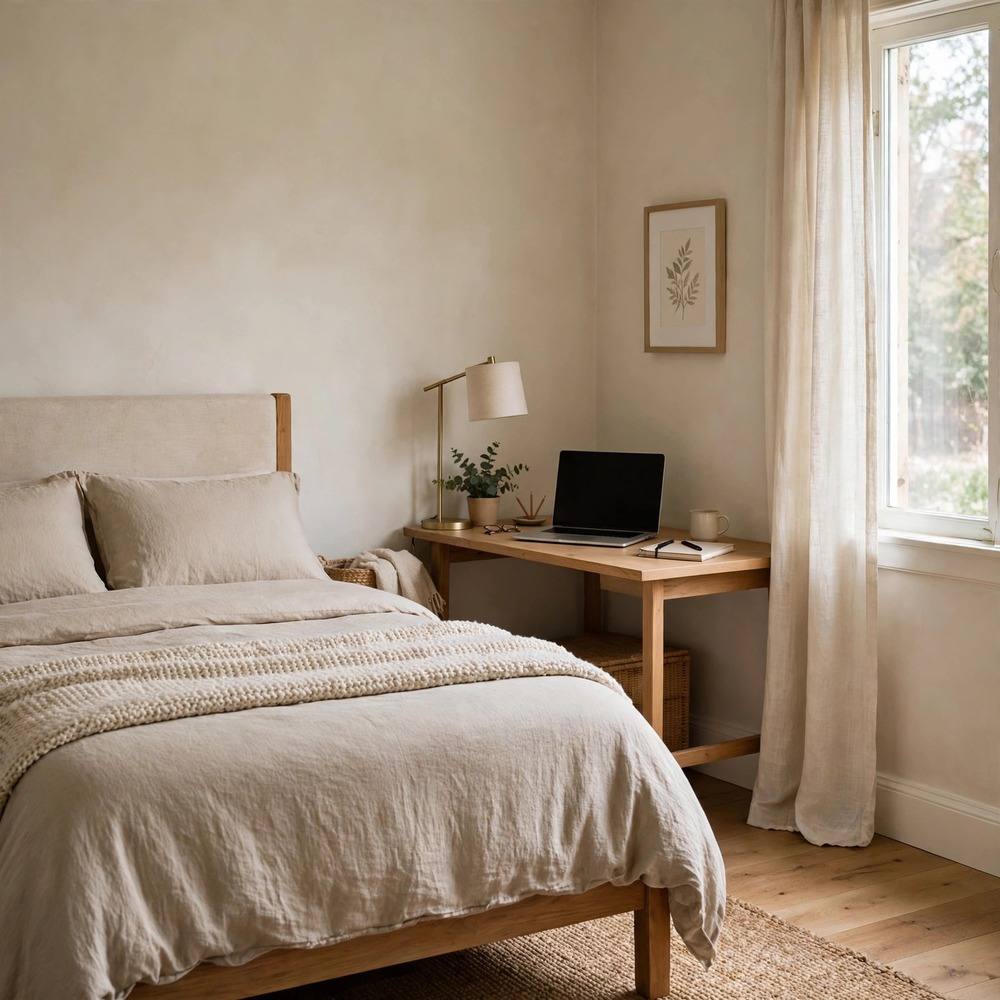
The guest room is the natural home for a desk, as long as it still welcomes visitors. Keep the bed dressed as a bed and give work things one drawer, so the room converts back in minutes.
Why it works:
- The least-used room earns its keep
- A closing door means real focus
- One box keeps guest mode simple
Tip: match the desk to the bedside furniture so the room never looks like an office with a bed in it.
21) A Fold-Out Table in the Living Room
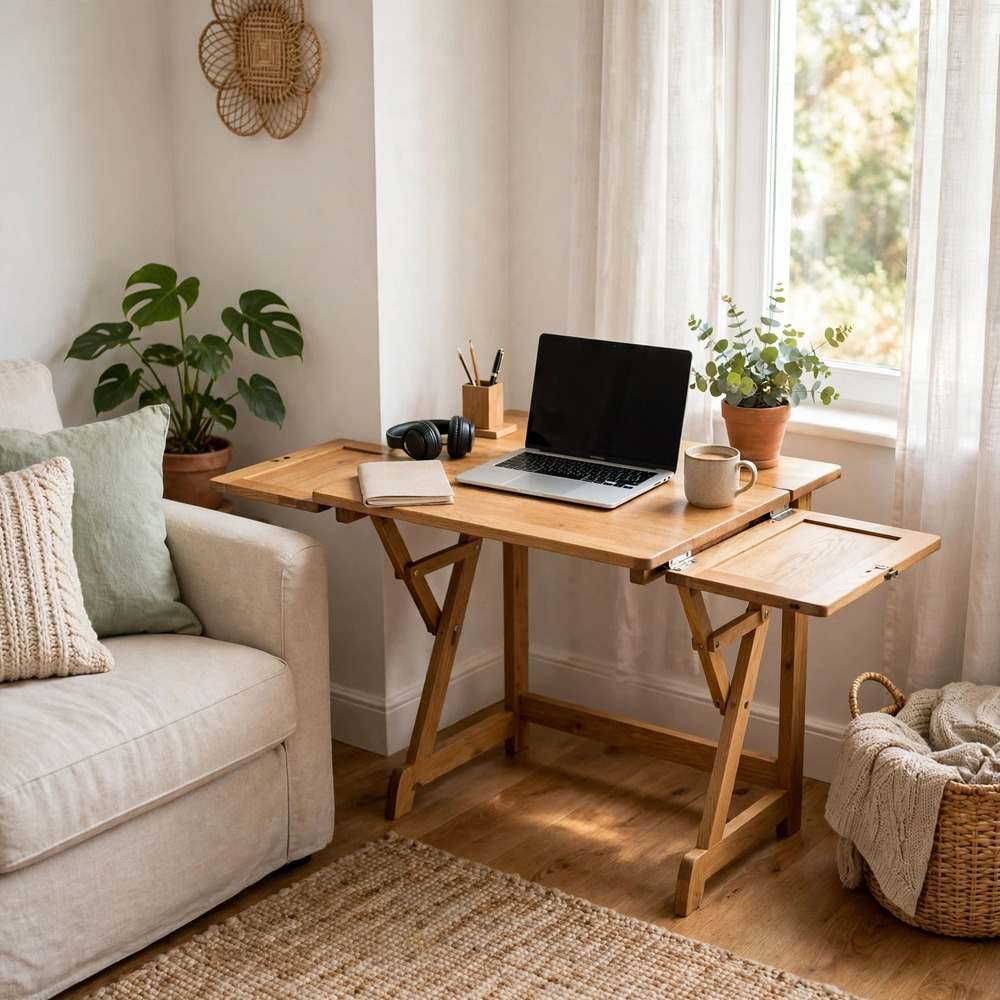
A gateleg or drop-leaf table is a desk only when you need one: open both leaves for paperwork days, fold it to a slim console when friends come round.
Why it works:
- Three sizes in one piece
- Looks like ordinary living room furniture
- No installation or drilling
Tip: keep your laptop and kit in one basket on the table, so setting up takes a minute.
22) A Compact Chair With Real Support
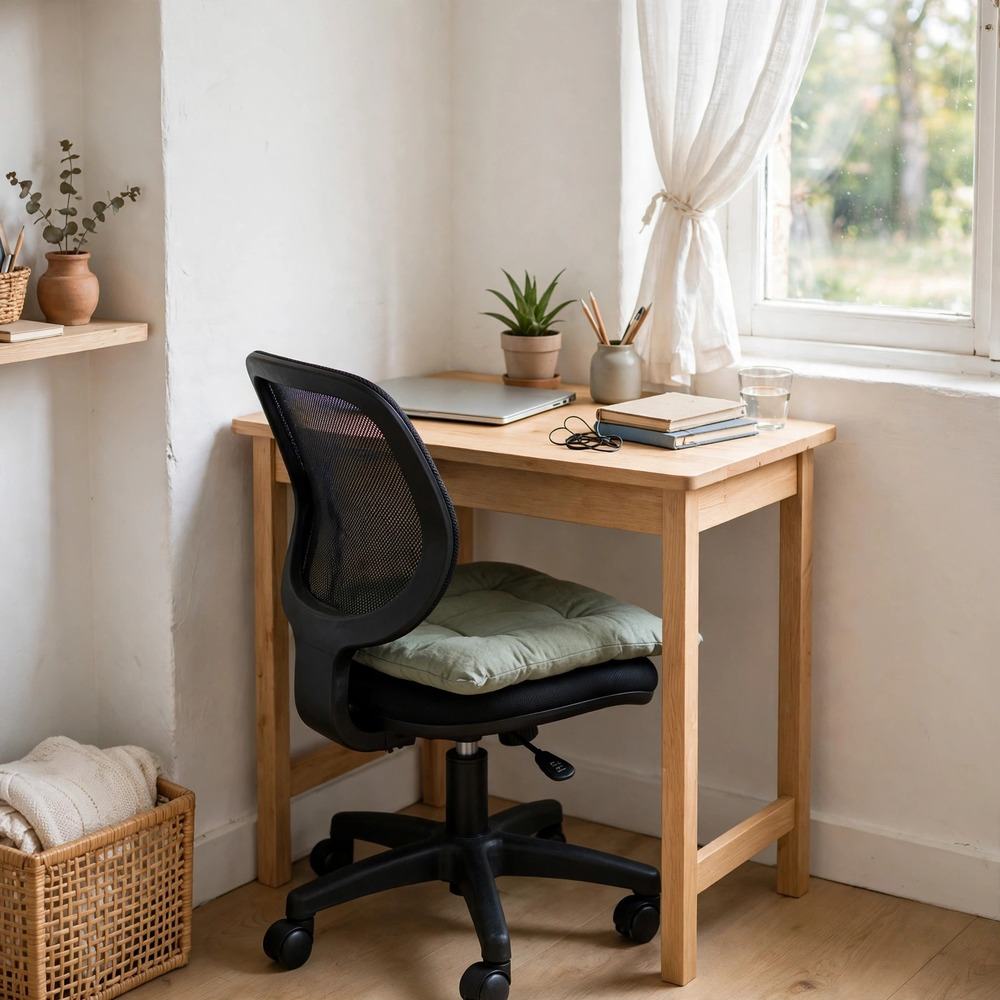
In a tiny office the chair matters more than the desk. An armless task chair tucks fully under the desktop, while proper back support keeps long days comfortable.
Why it works:
- Armless designs slide under the desk
- Real support prevents aches
- Smaller footprint suits tight corners
Tip: measure chair and desk together; elbows should rest at a right angle.
23) A Wall Grid Command Centre

A wire grid above the desk keeps your week in view — deadlines and reminders on the wall instead of in piles, replacing the filing space you do not have.
Why it works:
- Papers leave the desk, stay in sight
- Clips rearrange in seconds
- Doubles as decoration
Tip: one job per row — this week at eye level, reference notes above, pretty things on top.
24) Pale Colours and a Mirror to Stretch the Space
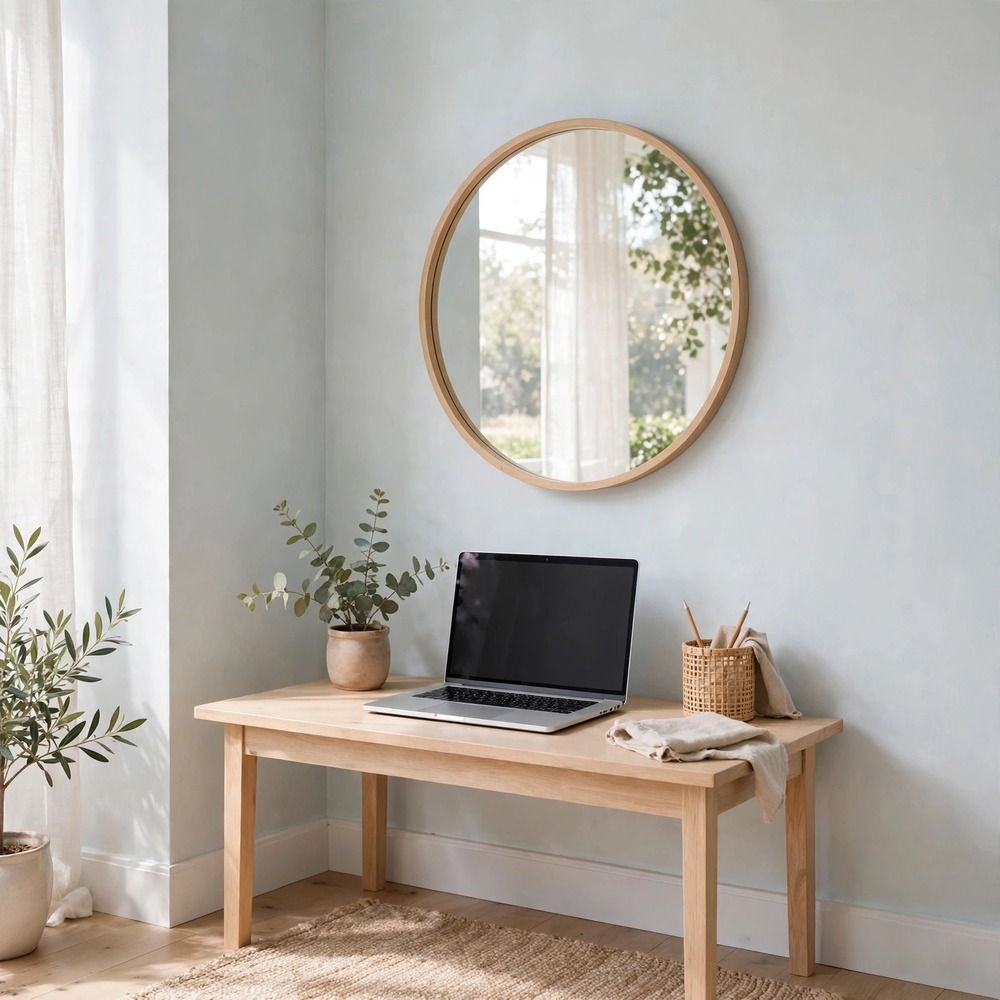
Colour is the cheapest space-maker there is. Pale walls, a light desk and a mirror opposite the window bounce daylight around, making the corner feel calmer and larger.
Why it works:
- Light colours reflect more daylight
- A mirror doubles the sense of depth
- A calm palette reduces visual clutter
Tip: keep desk, chair and shelves within two or three tones, and let one plant carry the colour.
25) Storage on the Back of the Door
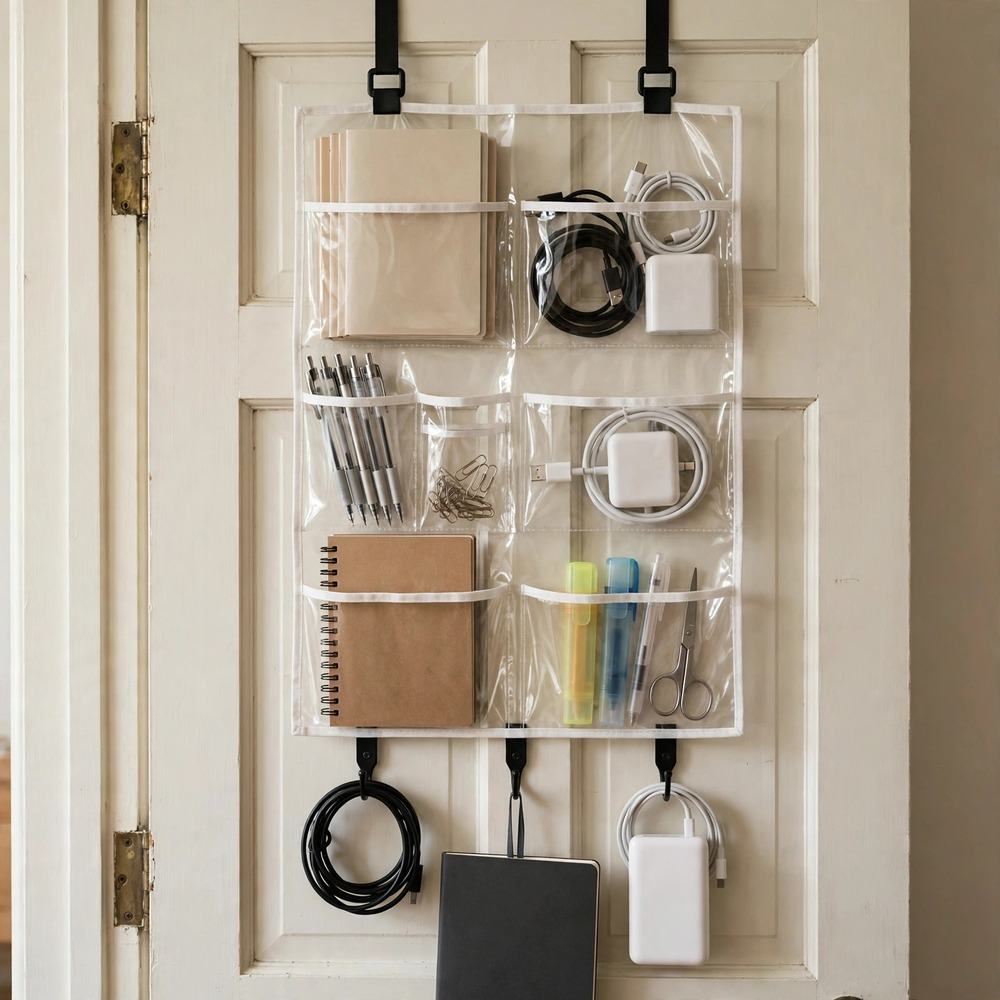
The back of the door is a storage wall most small offices ignore. Over-door hooks or a pocket organiser hold notebooks, headphones and chargers, hidden when the door is open.
Why it works:
- Uses completely dead space
- Small items stay sorted and visible
- Nothing new stands on the floor
Tip: store light things only — heavy items make doors sag and bang.
26) A Two-Tray System That Kills Paper Piles
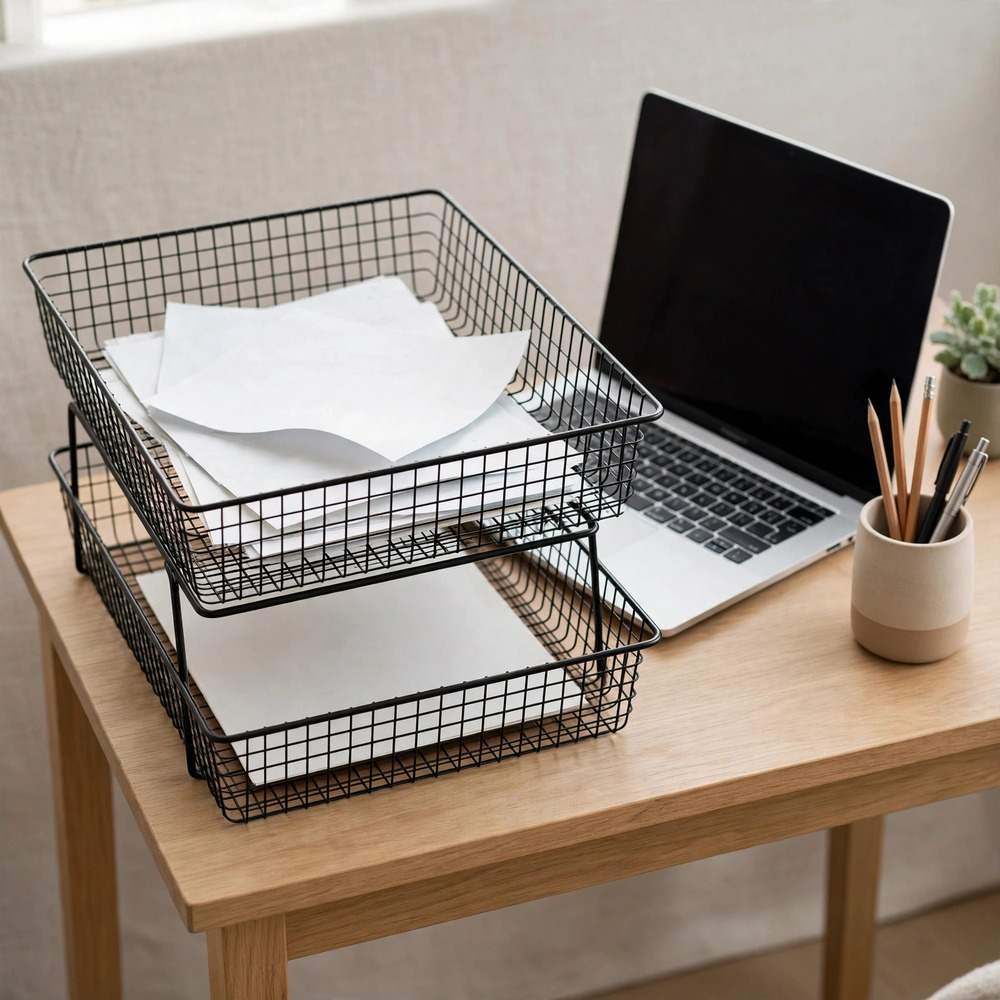
Paper piles grow fastest where there is nowhere for them to go. Two stacked trays — one to deal with, one to file — give every letter an immediate home.
Why it works:
- Every paper lands in a tray
- The desk clears in a minute
- A visible in-tray shows real workload
Tip: when papers overflow, file for ten minutes instead of buying a third tray.
27) A Standing Converter on a Small Desk
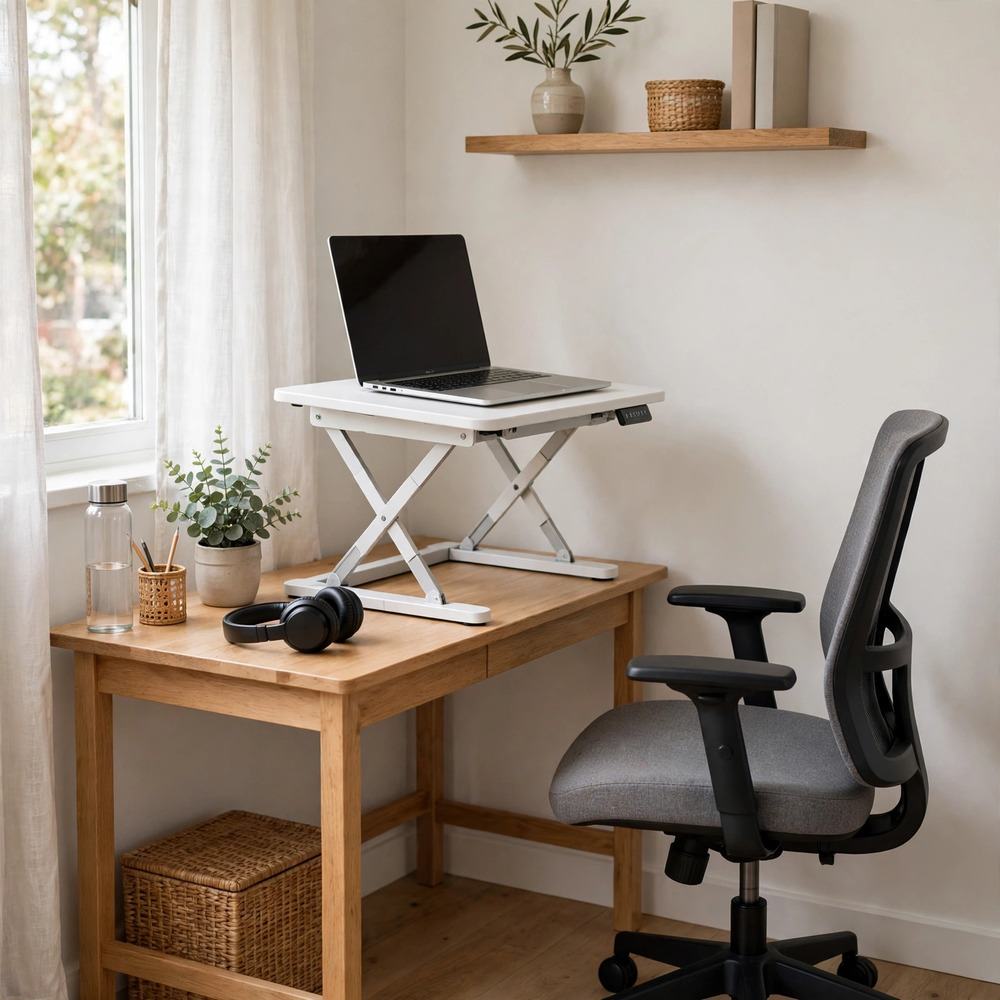
A sit-stand converter sits on your existing desk and lifts your laptop to standing height. Where a full standing desk will not fit, it adds movement to your day for no extra footprint.
Why it works:
- Standing breaks boost energy and posture
- No new furniture footprint
- Lowers flat when you sit again
Tip: start with fifteen standing minutes at a time; a mat or soft shoes help.
How to Choose the Right Setup for Your Space
Start with the space you actually have. Measure it, then check three things: a socket within reach, enough light to work without squinting, and a chair that fits while you sit, not just pushed in.
Then match the idea to your situation. Renters do best with fold-down desks, ladder desks and trolleys that leave no marks. Sharing a room? Choose a setup that closes away, like the cloffice or armoire, and think about doors early — these DIY closet door ideas make cupboard doors look smart on show. And plan storage before the desk: one shelf, box or cart decided in advance stops clutter creeping back.
Making a Small Workspace Feel Bigger
A few visual tricks make any compact office feel generous: a light, limited palette, daylight let in wherever possible, and storage that goes upwards, not outwards. Passing spaces follow the same rules — these entryway ideas show how slim furniture and good light transform narrow spots, and every lesson applies to a landing desk.
Routine matters as much as furniture. A two-minute reset each evening — laptop closed, mug away, papers in the tray — means every morning starts in a tidy room.
Conclusion
A small home office is not a lesser office. With the right corner, cupboard or fold-down desk, it can be the most focused, personal spot in your home — and most of these ideas need only a shelf, a trolley or a free Saturday morning.
Start with the idea that matches the space you already have, add storage before decoration, and let the setup grow with your working life.
For more inspiration once your corner is taking shape, Homes & Gardens is a lovely place to browse. Now pick your corner, measure twice, and claim it.


More Stories
29 Ways to Create a Calm and Cozy Patio
22 Bedroom Rule of Three Wall Decor Ideas
27 Black Accent Wall Ideas for a Bold Home