
Introduction
You step outside with your morning coffee and the deck under your feet sets the mood for the whole yard. When you start exploring deck stain ideas, you quickly realise colour is not a small detail — it is the background to every barbecue, quiet evening and weekend plan out there.
A fresh stain does two jobs at once. It protects the boards from sun and rain, and it completely changes how your outdoor space feels, from tired and faded to warm, calm or bold in a single weekend.
If you are weighing colour against finish, these deck paint ideas are a helpful comparison before you commit. In this guide, you will find 17 stain colours, finishes and effects, each with simple tips to help you picture it in your own yard.
1) Deck Stain Ideas Start With Natural Cedar Warmth
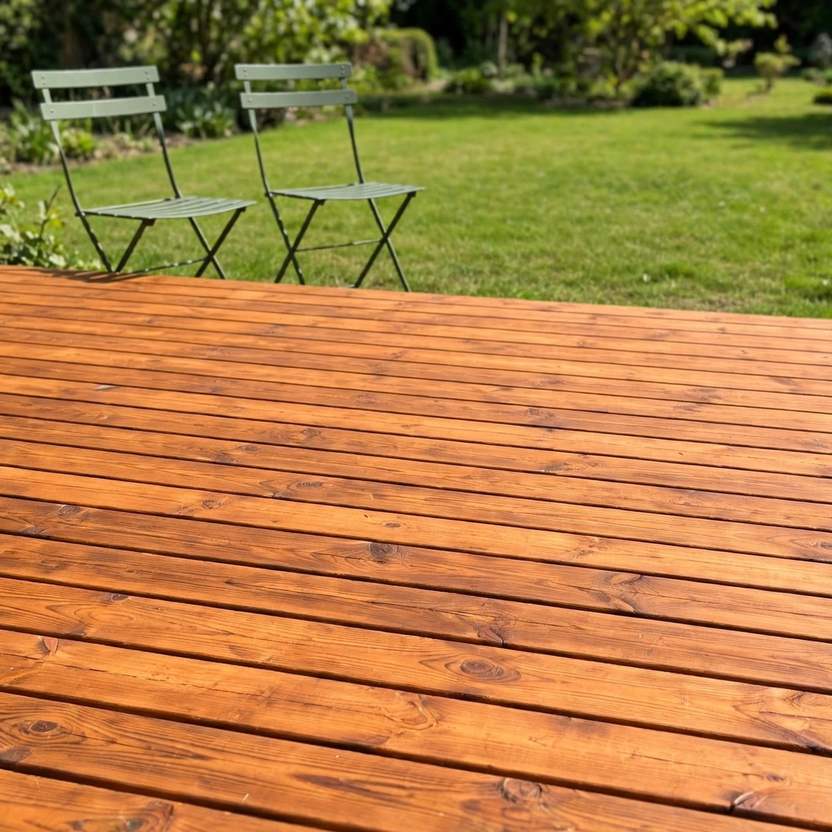
Natural cedar is the colour most people picture first, and for good reason. Its warm orange-brown tone flatters almost every house colour, makes green planting look richer and never really goes out of style.
Choose a transparent or semi-transparent version and the grain stays the star. Your deck looks refreshed and cared for, rather than covered up, which suits relaxed, natural gardens beautifully.
Best for:
- First-time stainers who want a safe, timeless choice
- Gardens with lots of green planting
- Homes with warm brick or cream walls
Tip: cedar deepens slightly as it dries, so judge the colour a full day after your test patch.
2) Rich Dark Walnut for a Bold, Modern Look
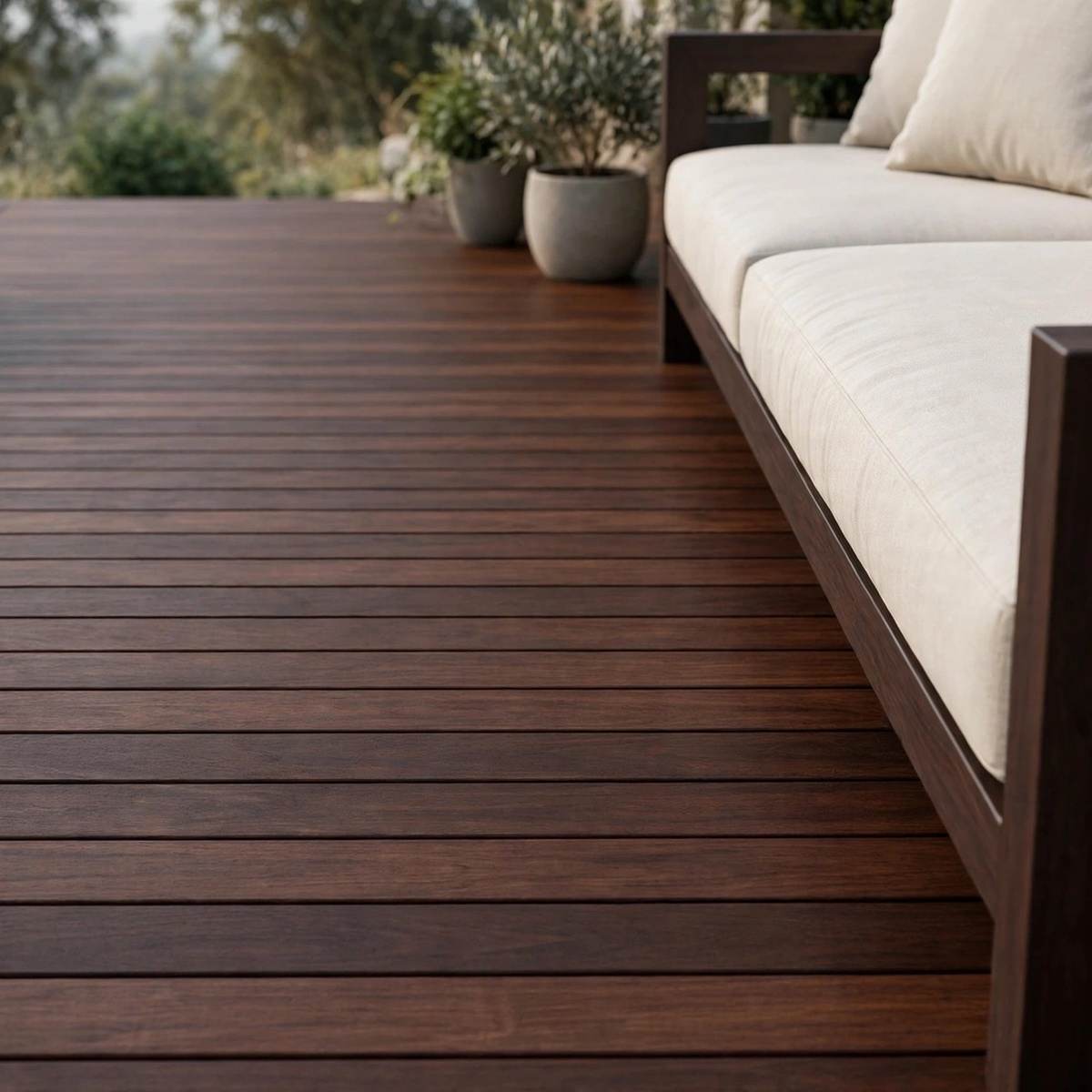
Dark walnut brings instant polish. The deep chocolate tone makes pale furniture, light cushions and green plants stand out sharply, and a plain deck suddenly looks designed rather than simply built.
It is also forgiving in busy family yards, because the darker colour hides scuffs, footprints and small marks far better than pale finishes ever will.
Why it works:
- Strong contrast makes light furniture shine
- Hides everyday marks and wear well
- Suits modern and traditional homes alike
Tip: dark boards feel warmer underfoot in full sun, so test a patch if your deck bakes all day.
3) Soft Grey Wash for a Calm Coastal Feel
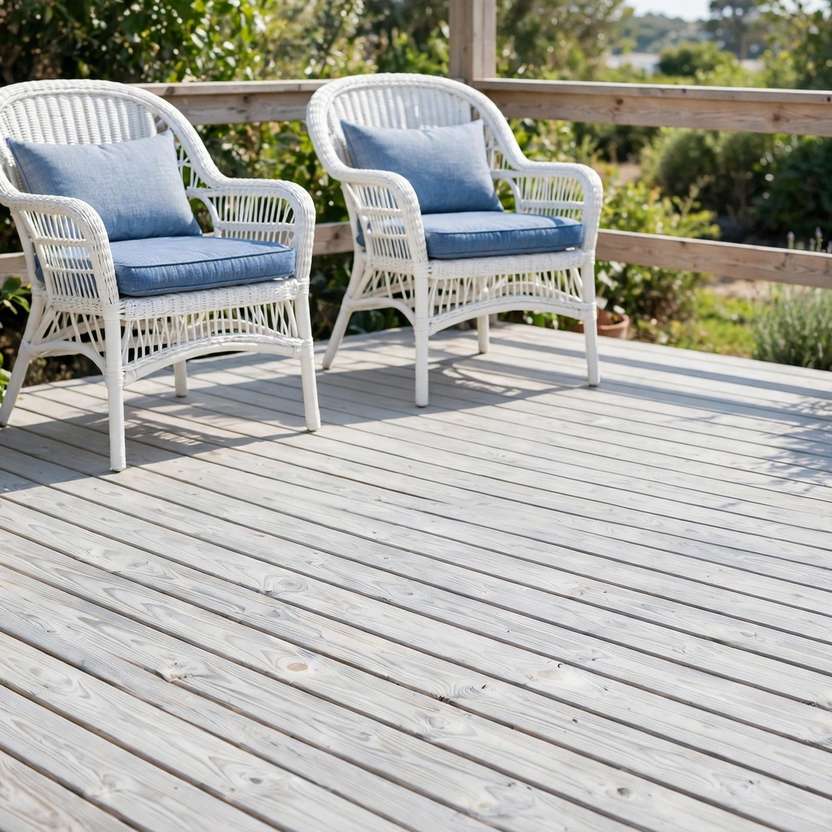
A soft grey wash cools a sunny yard down visually. The pale, silvery tone lets the grain show through, so the deck feels light and airy instead of flat or painted.
Pair it with white, navy or soft blue cushions and you have that calm, seaside feeling at home, even if the coast is hours away from your door.
Best for:
- Very sunny decks that need a cooler look
- Small yards you want to feel bigger
- White or pale-rendered houses
Tip: grey can look blue in shade and silver in sun, so view your test patch at different times of day.
4) Classic Honey Oak That Glows in Sunlight
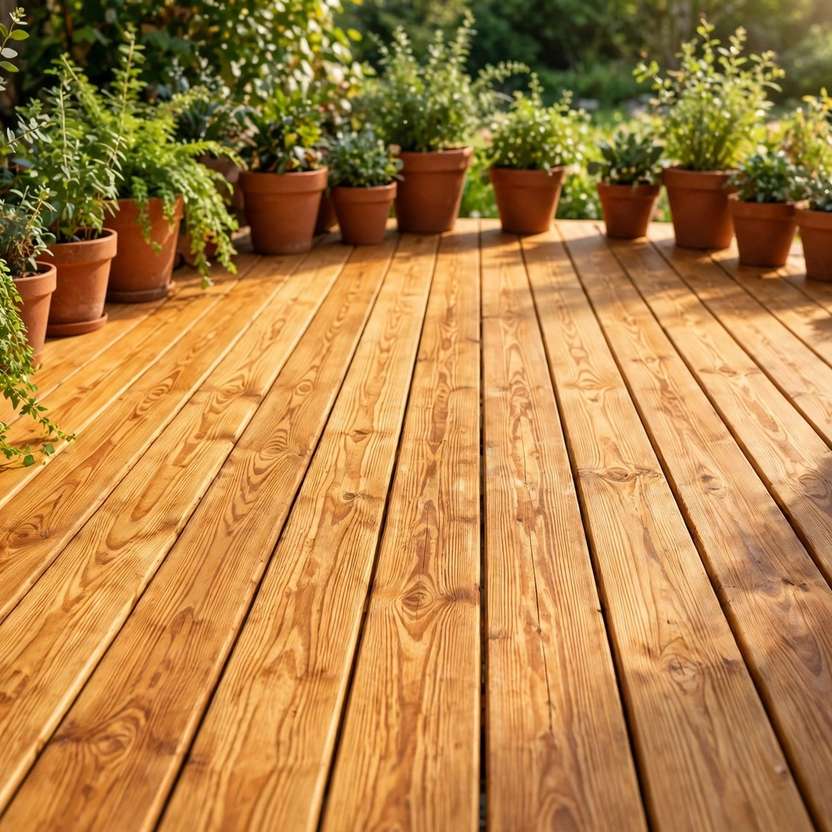
Honey oak sits happily between pale natural wood and deep cedar. Its golden, amber warmth seems to hold the sunlight, so the deck glows on bright mornings and still looks cosy on grey ones.
This is a friendly, welcoming choice for family decks where you want colour and cheer without anything too dark or dramatic underfoot.
Why homeowners love it:
- Golden tone lifts dull, weathered boards
- Works with almost any furniture colour
- Glows beautifully in morning and evening light
Tip: honey tones can look more orange on reddish timber, so a test patch matters here more than most.
5) Weathered Driftwood Grey for Relaxed Charm
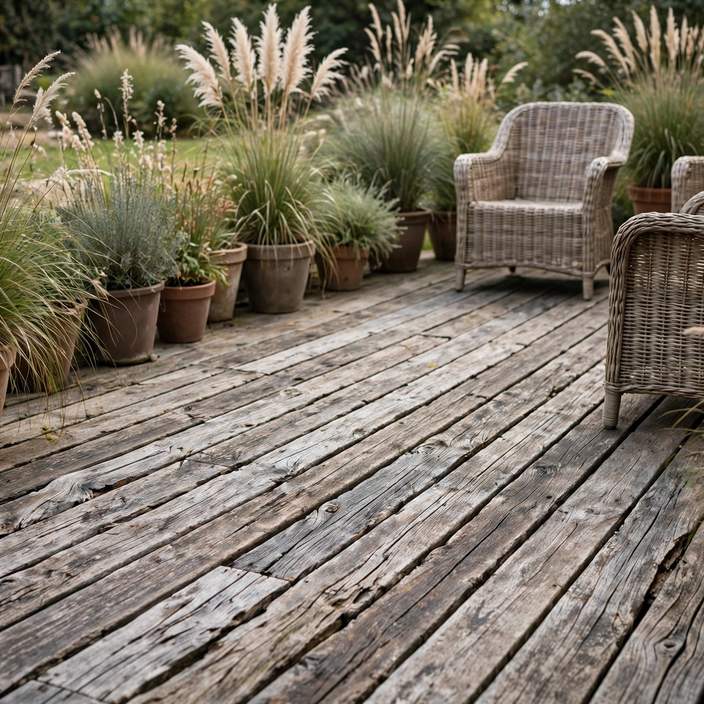
Driftwood grey is softer and browner than a clean grey wash, with that sun-silvered look boards earn naturally over years by the sea. Staining to this tone gives you the charm without the patchy, tired finish real weathering brings.
It is a wonderfully relaxed backdrop that never fights with colourful cushions, patterned rugs or bright planting around it.
How to style it:
- Add natural textures like woven chairs and grasses
- Let colourful cushions supply the contrast
- Keep metal details dark for definition
Tip: this tone hides fading gracefully, so it is a kind choice for decks you cannot restain every year.
6) Deep Espresso Brown for Evening Drama
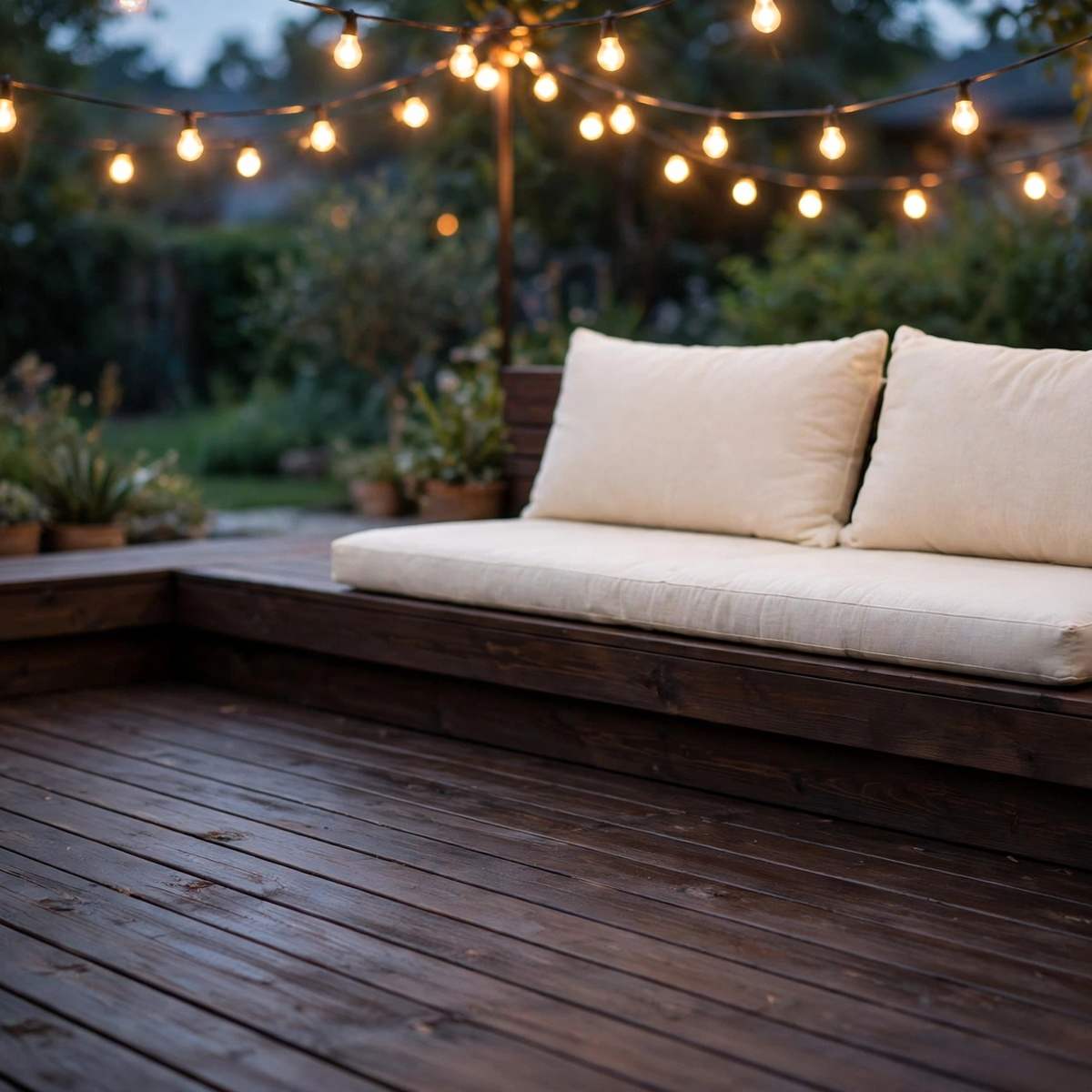
Espresso is walnut’s moodier cousin — a very deep, rich brown that turns a deck into an evening room. Under warm lights it looks luxurious, and cream or metallic accents gleam against it.
Choose it when your deck is mostly used after work and at weekends, when that dramatic, cocooning feel matters more than daytime brightness.
Best for:
- Evening entertaining spaces
- Decks with warm outdoor lighting
- Creating contrast with a pale house
Tip: keep nearby cushions and throws light, or the whole corner can feel too heavy after dark.
7) Warm Redwood Tone for a Lively Yard
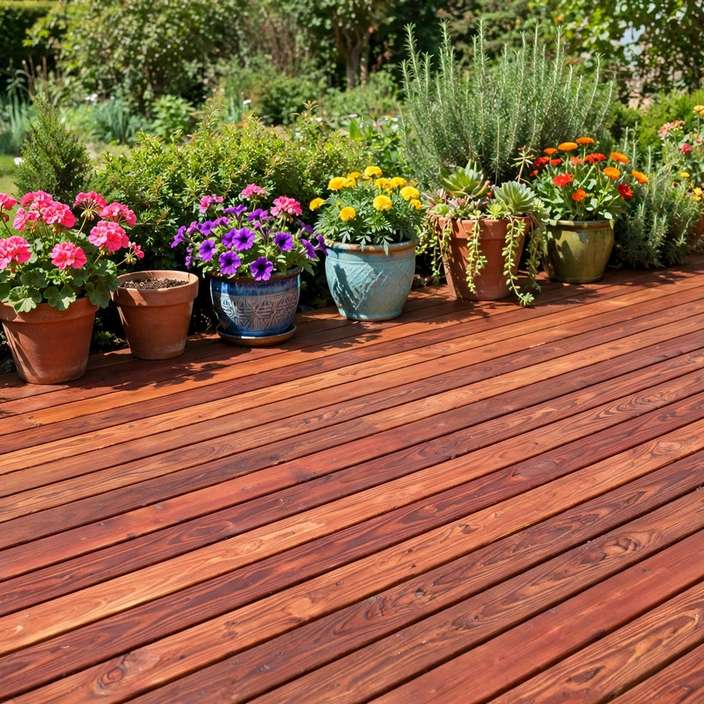
A redwood tone brings energy. Its rich red-brown colour warms up north-facing yards, flatters terracotta pots and autumn planting, and makes a simple rectangular deck feel generous and welcoming.
Because the colour is strong, let it lead. Keep furniture simple and let plants and pots echo its warmth rather than compete with it.
Why it works:
- Warms cool or shaded yards instantly
- Beautiful beside terracotta, rust and autumn colours
- Makes plain decks feel richer and larger
Tip: red tones fade unevenly in harsh sun, so plan a light refresh coat sooner than you would for brown.
8) Two-Tone Boards in Light and Dark
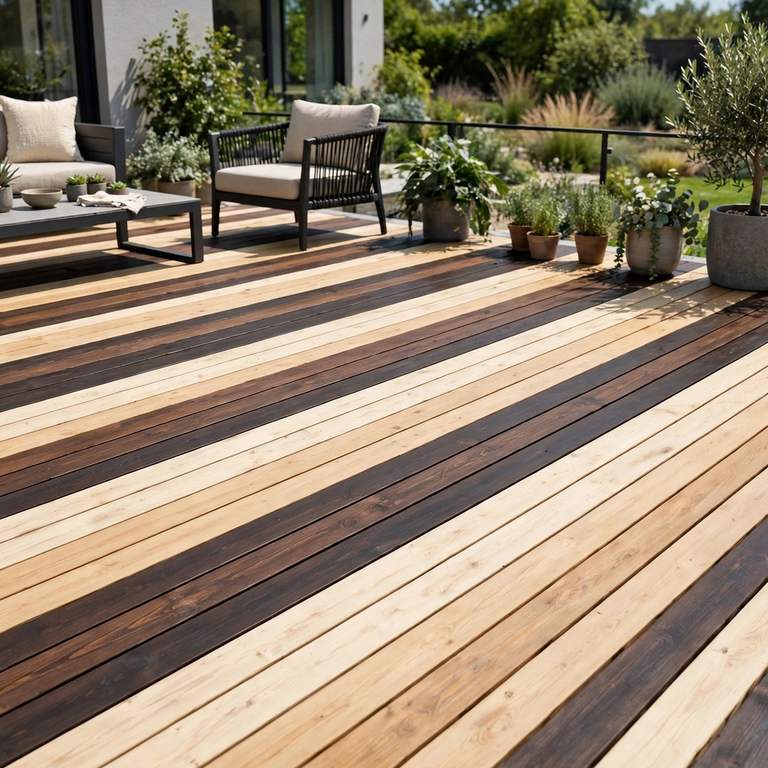
Why choose one colour when two can define your space? Alternating bands of light natural and dark walnut stain can mark out a dining zone, frame the deck edge or simply turn plain boards into a pattern.
It takes a little more patience with tape and timing, but the result looks bespoke — like the deck was designed around how you actually use it.
Best for:
- Zoning a large deck without rugs or furniture moves
- Framing steps and edges so they read clearly
- Making a plain deck look custom-built
Tip: stain the lighter tone first and mask it carefully before the dark coat goes anywhere near it.
9) Whitewashed Boards for a Bright, Airy Deck
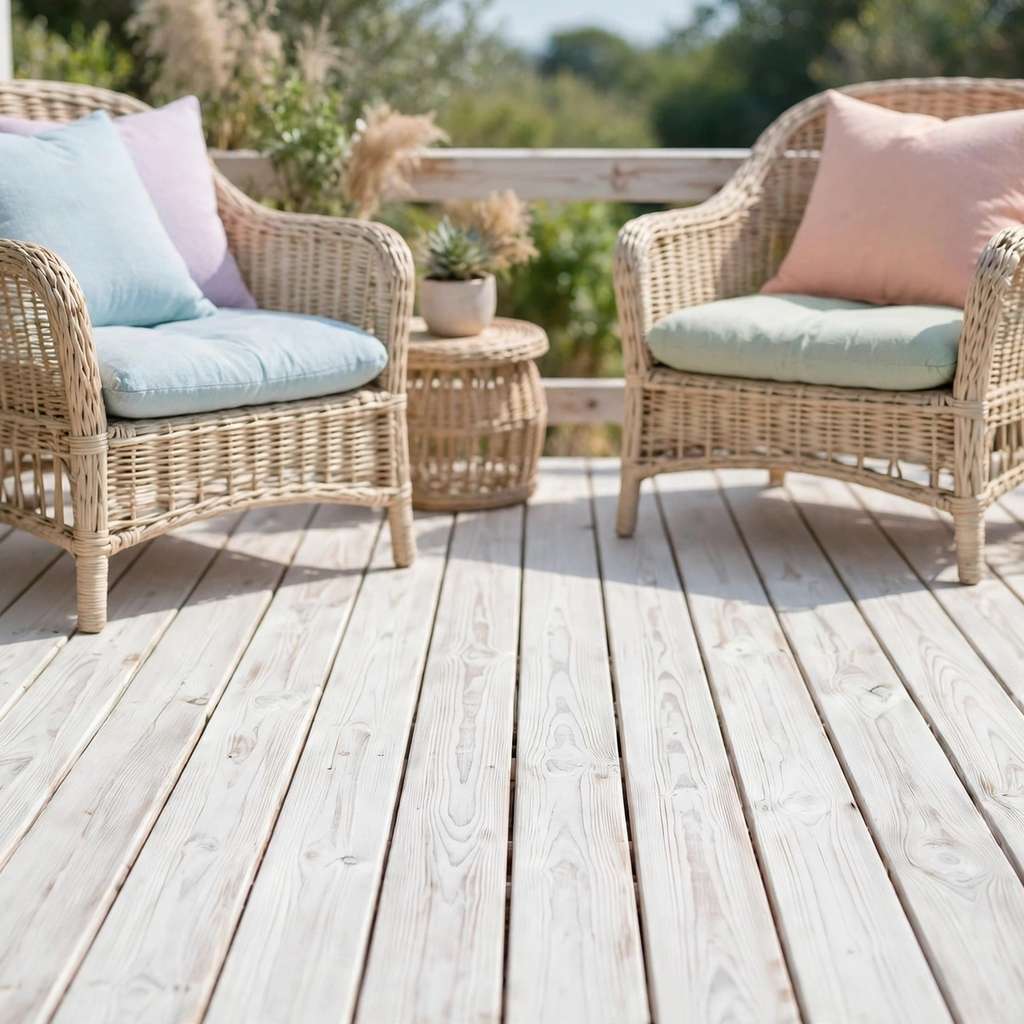
A whitewash brightens like nothing else. The soft white finish bounces light around a shaded yard, makes small decks feel wider and gives planting a fresh, gallery-like backdrop to grow against.
Because the grain still whispers through, it reads as wood rather than paint — calm, cottagey and wonderfully easy to live with in summer.
How to style it:
- Pastel and natural cushions keep the airy feel
- Wicker and pale wood furniture suit it best
- One dark accent stops it looking washed out
Tip: whitewash shows dirt sooner than mid-tones, so keep a soft brush by the door for quick sweeps.
10) Charcoal-Black Stain for Sharp Contrast
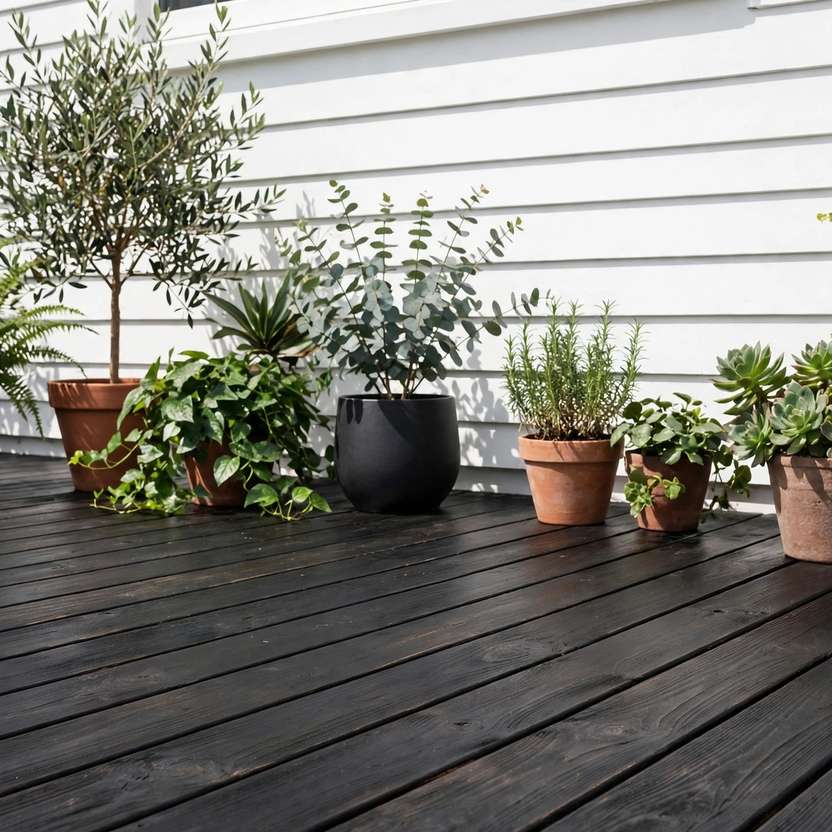
Charcoal-black stain is the boldest choice on this list, and on the right deck it looks stunning. The deep, matte boards ground pale walls, make green leaves look electric and give outdoor furniture a sharp, gallery edge.
It suits simple shapes best. The cleaner your deck lines are, the more this dramatic colour looks intentional rather than overwhelming.
Best for:
- Modern homes with pale walls
- Simple, rectangular deck shapes
- Making planting and furniture pop
Tip: black shows pale dust and pollen clearly, so expect a quick rinse more often in spring.
11) Sage Green Stain for a Garden Blend
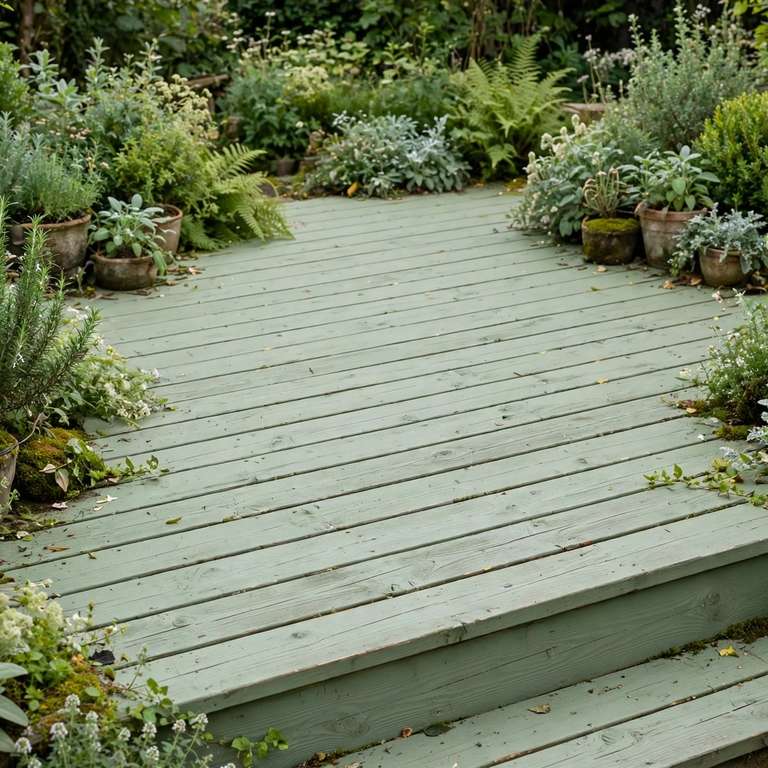
Sage green lets your deck melt into the garden. The muted, leafy tone bridges the gap between house and planting, so the whole yard feels like one calm, connected space instead of boxes placed side by side.
It is a gentle way to add colour without shouting, and it flatters cream cushions, natural wood furniture and terracotta equally well.
Why homeowners love it:
- Blends the deck into surrounding planting
- Colourful but calm and easy to live with
- Lovely with cream, wood and terracotta
Tip: hold your test patch beside your shrubs — sage should sit between leaf green and your house colour.
12) Navy Blue Stain for a Fresh Twist
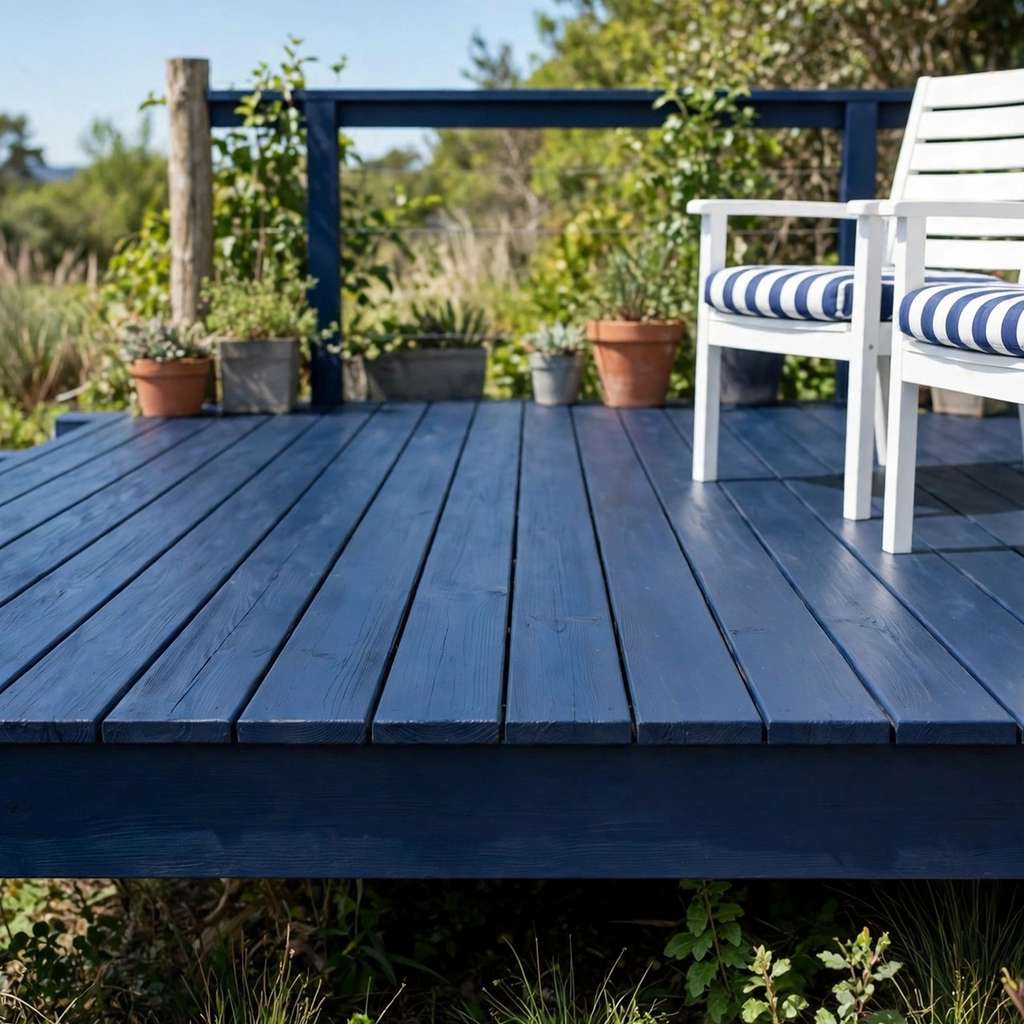
Navy blue is the surprise that keeps working. Deep blue boards feel fresh and crisp, pair naturally with white furniture and striped cushions, and give a plain deck a smart, coastal-city character all of its own.
Unlike paler colours, navy holds its depth well in bright sun, so it is a confident pick for south-facing yards that fade gentler shades quickly.
Best for:
- A fresh twist without going black
- White furniture and striped fabrics
- Sunny decks where pale colours fade fast
Tip: keep the rest of the palette simple — white, natural wood and one metal — so the blue stays the hero.
13) Clear Natural Finish That Shows the Grain
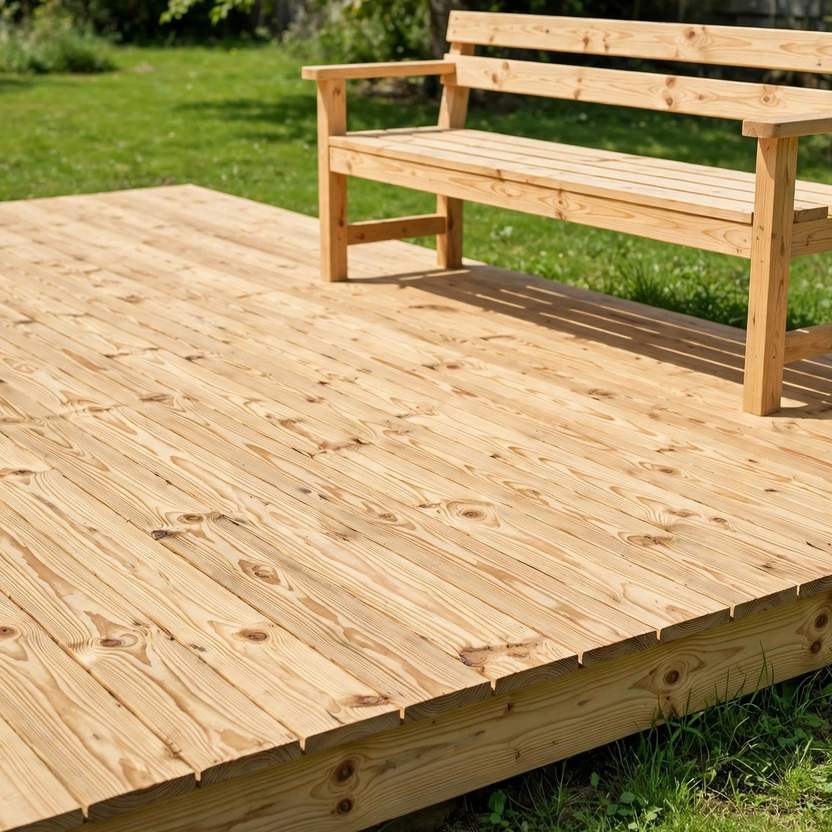
Sometimes the best colour is the one your timber already has. A clear finish adds no pigment at all — it simply seals the boards, deepens the grain slightly and lets knots, swirls and natural variation tell the story.
New or well-sanded decks benefit most, because there is lovely wood worth showing. It is the honest, understated finish that never dates.
How to use it:
- Best on new or freshly sanded boards
- Expect the colour to deepen a touch when wet
- Reapply more often than pigmented stains
Tip: clear finishes offer the least sun protection, so plan on a refresh coat every year or two.
14) Semi-Transparent Stain for Balanced Colour
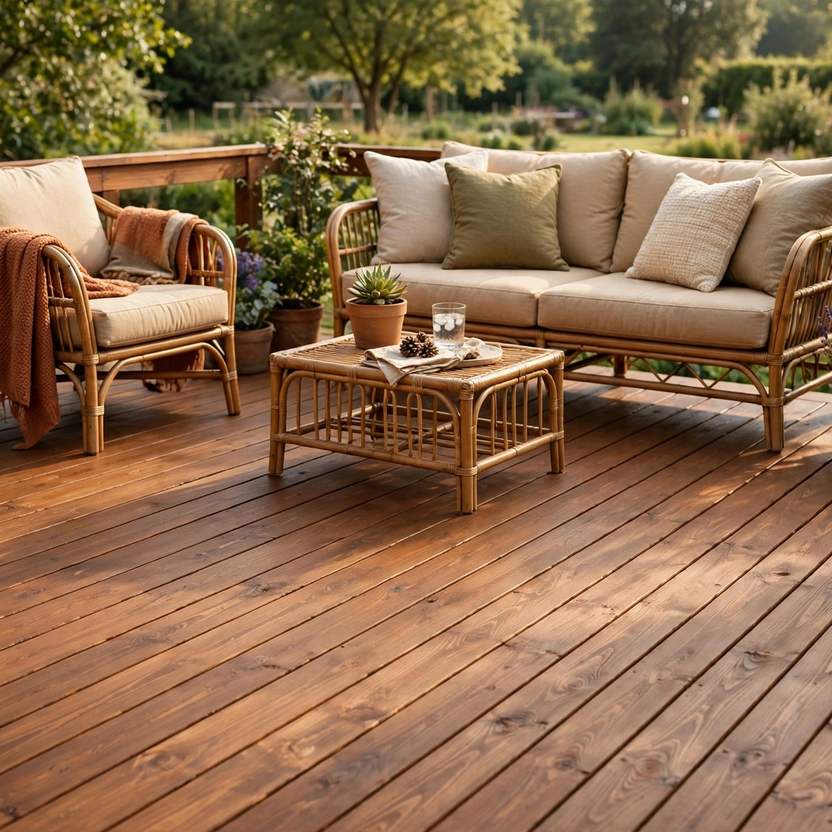
Semi-transparent stain is the happy middle ground most decks end up loving. You get real colour — a warm chestnut, say — while the grain still shows through, so the boards look like wood, not plastic or paint.
It also forgives small application overlaps better than clear finishes, which makes it a kind choice if this is your first time staining.
Why it works:
- Real colour with the grain still visible
- Forgiving to apply evenly
- Lasts longer than a clear finish
Tip: one coat keeps it light and grainy; a second deepens the colour, so decide after the first dries.
15) Solid Colour Stain for a Painted-Look Finish
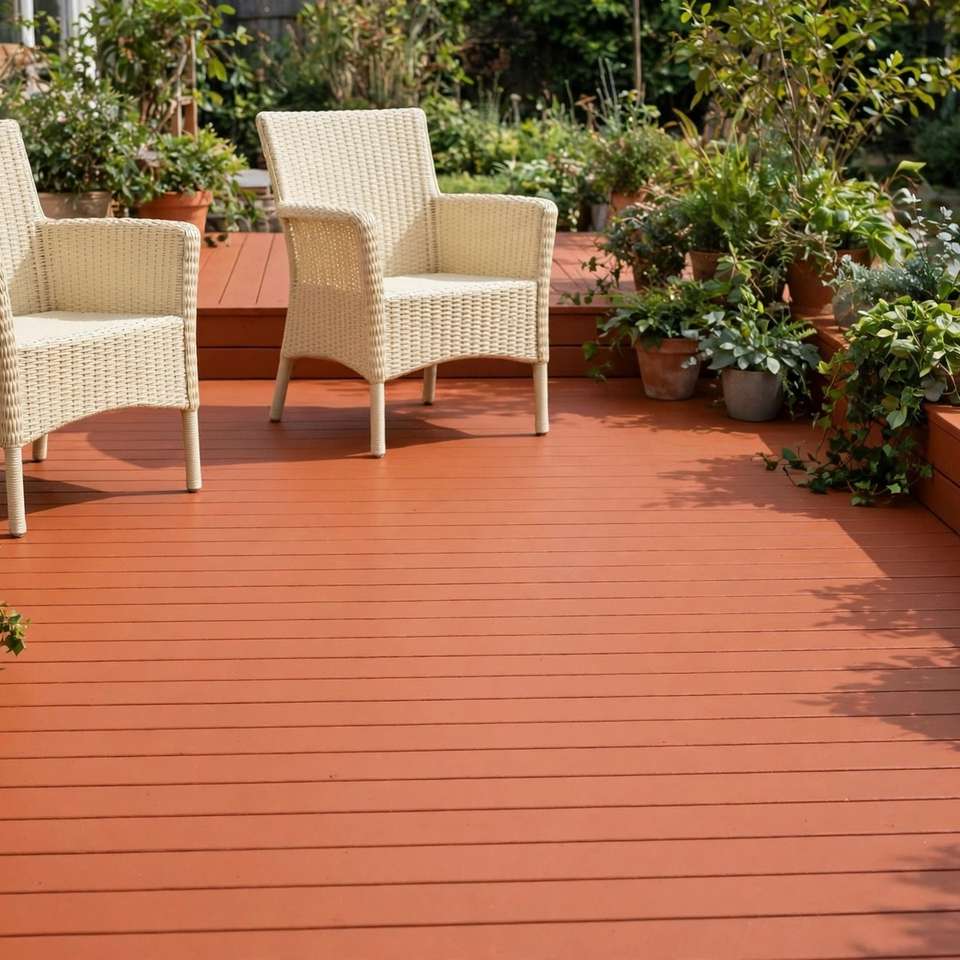
Solid stain covers like paint while soaking in like a stain, hiding tired, mismatched or previously stained boards under one even colour. A warm terracotta clay, for example, gives you a bold, Mediterranean mood in a weekend.
Choose solid when your boards are sound but ugly — different ages, old stain patches or strong discolouration that transparent finishes would only highlight.
Best for:
- Older decks with patchy, uneven boards
- A bold colour change from your old stain
- Hiding repairs and replaced boards
Tip: solid finishes show wear paths eventually, so keep a little stain back for quick touch-ups at doorways.
16) Before-and-After Grey-to-Warm Transformation
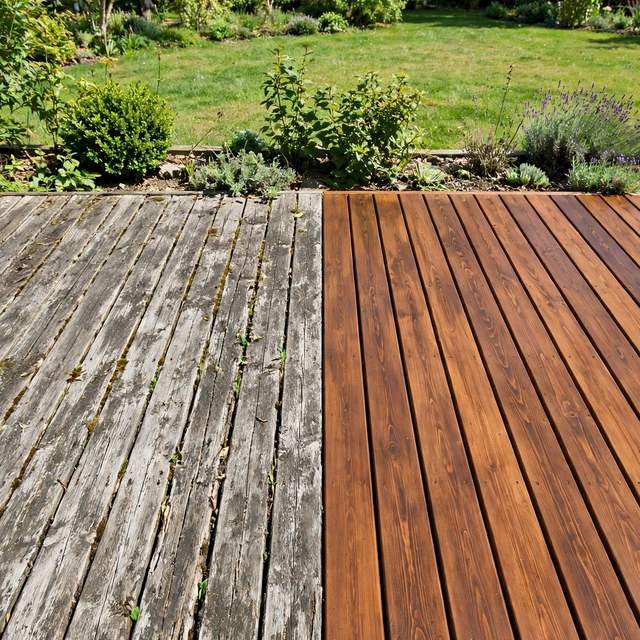
Few home jobs reward you like this one. A deck that has silvered and faded to dull grey can come back to rich, warm brown in a single weekend, and the before-and-after difference is the kind neighbours stop to admire.
The secret is honest preparation: a good clean, a brightener if the grey is deep, and patience to let the boards dry fully before colour goes on.
Why it works:
- The most dramatic result for the least building work
- Proves how much colour alone can change a yard
- Deeply satisfying at every stage
Tip: take your own before photo from the same spot — you will not believe the difference by Sunday.
17) Deck Stain Ideas With a Satin Sheen Finish
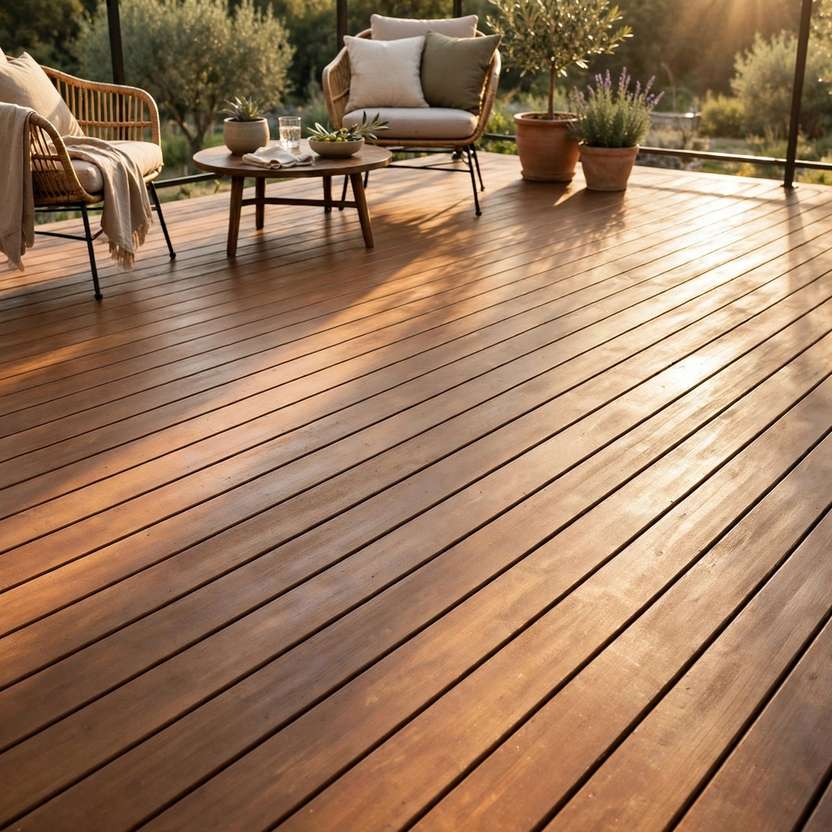
Finish matters as much as colour. A satin sheen sits between flat matte and shiny gloss, giving warm medium-brown boards a gentle glow that catches angled sunlight and makes the whole deck look freshly cared for.
Satin also tends to clean more easily than a dead-flat finish, because dirt sits on the surface rather than settling into it — a quiet, practical bonus.
Best for:
- Adding polish without a glossy, slippery look
- Making mid-tone colours look richer
- Decks you want to hose clean quickly
Tip: sheen shows lap marks more than matte does, so keep a wet edge and work board by board.
How to Choose and Test Your Deck Stain Colour
Start with your house, not the colour chart. Hold options against your walls, your planting and the furniture you already own, and notice whether your yard needs warming up, cooling down or calming down. Thinking about how the space is arranged helps too — these deck layout ideas can show you which zones a two-tone or bold colour would define best.
Always test before you commit. Brush your shortlisted deck stain ideas onto a spare board or a hidden corner, let them dry fully, then live with them for a day. Colours shift between wet and dry, sun and shade, morning and evening — and the patch that wins at noon is not always the one you love at dusk.
How to Prep and Apply Stain for a Lasting Finish
Good staining is mostly preparation. Sweep and wash the deck thoroughly, let it dry completely, and sand any rough or splintered patches so the stain soaks in evenly instead of sitting in streaks. Work on a dry, mild day with no rain forecast, because moisture trapped under stain is the fastest route to peeling.
Apply thin, even coats along the full length of each board, keeping a wet edge so overlaps never dry into dark stripes. For step-by-step project guidance from experienced DIY editors, Family Handyman is a reliable place to check your method before you start.
Conclusion
A new stain colour is one of the smallest jobs with the biggest effect in your whole yard. The same boards, the same furniture — yet a shift from faded grey to warm cedar or bold navy makes the space feel newly built.
You do not have to try all 17 ideas at once. Start with one colour you keep coming back to, test it properly, and let that single change settle in. If you need more inspiration for the finished look, these stunning deck ideas show what your refreshed deck could sit alongside.
Pick a dry weekend, put the kettle on and give your deck its new colour. By Sunday evening, you will wonder why you waited so long.



More Stories
18 Small Bedroom Decorating Ideas
20 August Home Maintenance Tasks
15 Cozy Boho Living Room Ideas