
Introduction
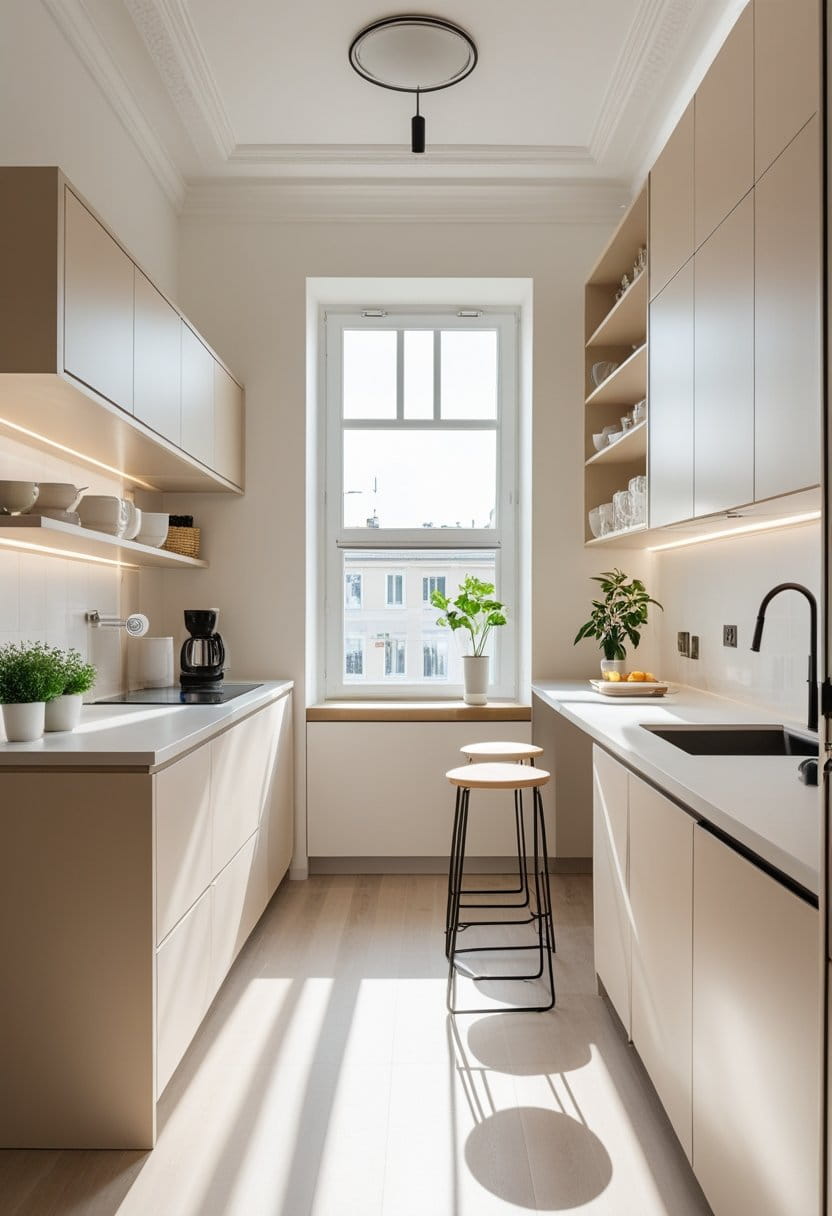
A small kitchen can still feel open, bright, and surprisingly “high-end” when the layout works, storage is smart, and the finishes are chosen with intention. The goal isn’t to make the room larger—it’s to make it feel larger and function better every single day.
Before you start, remember this: a “small kitchen remodel” usually looks best when it reduces visual clutter, improves lighting, and creates clear zones for cooking, washing, and storage. Designers often use the classic work triangle idea (sink, stove, fridge) to keep movement efficient—many guidelines suggest keeping each leg of that triangle roughly 4–9 feet and the total around 13–26 feet for smoother flow.
Also, if resale value matters, smaller, targeted kitchen updates can be a strong investment. The 2024 Cost vs. Value data cited by multiple remodeling sources shows a minor kitchen remodel can recoup close to the project cost in many cases, while major upscale remodels tend to recoup less.
Below are 22 practical, space-smart remodel ideas that make a small kitchen feel big—without needing a giant budget.
1) Remove a Upper Cabinet Section and Add Open Space

Upper cabinets are useful, but too many can make a small kitchen feel boxed in. Consider removing one small run of upper cabinets (especially near a window or corner) and replacing it with:
- Open shelving
- A short stack of floating shelves
- A slim rail system for mugs and tools
This creates breathing room and makes the whole wall feel lighter.
2) Go Lighter on Upper Cabinets, Deeper on Lowers

A simple trick: keep upper cabinetry light (color and visual weight), and make base cabinets do the heavy lifting. Deep drawers and smart pull-outs below hold more than most people think, and they reduce the need for bulky uppers.
If you love contrast, use a darker or wood tone on lower cabinets and a softer tone above to keep the upper half airy.
3) Choose Full-Height Cabinets to the Ceiling

In a small kitchen, every inch matters. Cabinets that stop short of the ceiling collect dust and create a “cut-off” look.
Full-height cabinetry:
- Adds storage for less-used items
- Creates a taller, cleaner wall line
- Makes the room feel more custom and intentional
Even if only one cabinet wall goes to the ceiling, it can change the whole vibe.
4) Swap Some Doors for Glass to Reduce Visual Bulk

Solid cabinet fronts can feel heavy in tight kitchens. A few glass-front doors can break up the blocky look.
Best places for glass:
- Upper cabinets near the sink
- A cabinet beside a window
- The “pretty” cabinet where you keep matching dishes
Tip: keep what’s inside tidy and simple so it feels calm, not cluttered.
5) Use Slim, Simple Hardware (or Go Handle-Free in Spots)

Chunky handles can make cabinets feel crowded, especially in narrow aisles. Consider:
- Slim bar pulls
- Small knobs
- Finger-pull edge profiles on a few cabinets
This can make cabinetry look cleaner and less busy.
6) Add Under-Cabinet Lighting for a Brighter, Bigger Feel

Small kitchens often feel small because of shadows—especially under upper cabinets. Under-cabinet lighting makes counters brighter and the space more inviting.
LED under-cabinet lighting is widely used because it’s energy-efficient, long-lasting, and improves task visibility without taking up space.
Bonus: it makes your backsplash and countertops look more premium.
7) Layer Your Lighting Instead of Relying on One Ceiling Fixture

One ceiling light usually isn’t enough. Layered lighting creates depth, which makes a small kitchen feel bigger.
A simple lighting plan:
- Ceiling lighting for overall brightness
- Under-cabinet lights for task work
- A small pendant or two (if space allows) for style
Trend and design reports repeatedly highlight lighting as both functional and a visual focal point in modern kitchens.
8) Pick a Reflective Backsplash to Bounce Light

Glossy or reflective surfaces help spread light around the room. Good options include:
- Glossy subway tile
- Light-toned zellige-style tile
- Polished stone slab backsplash (even a short run)
If you prefer matte finishes, choose lighter colors and keep grout lines minimal for a calmer look.
9) Use One Countertop Material Throughout

Mixing countertop materials can break up a small kitchen visually. A single countertop material (especially in a light-to-medium tone) creates a smoother, more spacious feel.
If your kitchen has a tiny peninsula or small island, matching countertops can make it feel like one continuous surface—bigger and cleaner.
10) Choose a Larger-Format Counter Pattern (or Minimal Pattern)

Busy patterns can make surfaces feel “noisy.” In small spaces, calm reads bigger.
Look for:
- Subtle veining
- Solid or lightly speckled finishes
- Low-contrast patterns
This doesn’t mean boring—it means easier on the eyes.
11) Replace a Bulky Table with a Slim Peninsula

If your kitchen can spare a bit of floor area, a slim peninsula can add:
- Prep space
- Seating
- Storage under the counter
To keep it feeling open, use a narrow overhang and consider open legs on one end instead of heavy panels.
12) Add a Mobile Island Cart Instead of a Permanent Island

Not every small kitchen should have a built-in island. A rolling cart gives you flexible space when you need it—and disappears when you don’t.
Look for:
- Locking wheels
- A butcher-block top
- Shelves or drawers underneath
This is one of the most practical small kitchen remodel ideas that feels big without construction.
13) Use Deep Drawers Instead of Lower Cabinets

Deep drawers are a small-kitchen hero. They can hold pots, pans, small appliances, and even dishes—without digging through a dark cabinet.
Try organizing drawers with:
- Peg systems for plates
- Dividers for lids
- Bins for snacks and packets
Daily life gets easier fast.
14) Install Pull-Out Pantry Storage in a Narrow Gap

That awkward 6–12 inch gap beside the fridge or cabinet run can become valuable storage.
A pull-out pantry is perfect for:
- Oils and sauces
- Spices
- Canned items
- Baking supplies
It feels like “found space,” which is exactly what a small kitchen needs.
15) Create a Dedicated “Appliance Garage” or Hidden Zone

Counter clutter shrinks a kitchen instantly. If you use a toaster, blender, or coffee machine daily, give it a home that isn’t “on display.”
Options include:
- A small cabinet with a roll-up door
- A countertop niche with outlets
- A tall cabinet with a pull-out shelf
Less clutter = more space (visually and physically).
16) Upgrade to a Single-Bowl Sink (It Often Feels Larger)

Double-bowl sinks are useful, but a single-bowl sink can feel more open and handle bigger pans better. In a small kitchen, that can make cleanup smoother and reduce frustration.
Pair it with a simple pull-down faucet for flexibility.
17) Use a Compact, Powerful Vent Hood (Not a Giant Box)

A huge hood can dominate a small kitchen. Consider:
- A slim chimney hood
- An integrated hood insert
- A concealed hood inside cabinetry
The goal is strong ventilation without visual heaviness.
18) Choose Appliances That Match the Scale of the Room

Oversized appliances can eat up valuable clearance. A well-planned appliance choice can make the kitchen feel instantly more spacious.
Examples:
- Counter-depth fridge for better walkway space
- Slim dishwasher models (where available)
- Slide-in ranges for a built-in look
Even a few inches saved can improve movement.
19) Continue the Same Flooring Into Nearby Areas

If your kitchen connects to a dining or living area, using the same flooring helps the space feel larger because the eye doesn’t “stop” at a threshold.
If changing flooring isn’t possible, choose a transition strip that’s minimal and low-contrast.
20) Paint for Space: Soft Walls, Clean Trim, Calm Contrast

Paint is one of the simplest remodel tools. For small kitchens, aim for:
- Light to mid tones on walls
- A clean, consistent trim color
- Limited contrast (too many sharp transitions can feel choppy)
If you want drama, add it with lighting or hardware—not five competing colors.
21) Add a “Beverage Station” to Free Up the Main Counter

When coffee, tea, water bottles, and mugs scatter across the main counter, prep space disappears.
A small beverage zone can include:
- A tray with mugs and coffee tools
- A small shelf or cabinet for supplies
- A mini fridge drawer (if budget allows)
Modern kitchen trend reports often point to specialized zones as a practical way to keep kitchens organized and functional.
22) Make the Layout Work Harder (Sometimes One Change Is Enough)

Many small kitchens don’t need “more stuff”—they need better placement. Even shifting one element can change everything.
Smart layout upgrades include:
- Moving the fridge so it doesn’t block a walkway
- Widening a tight entry by changing a door swing
- Relocating the trash pull-out closer to prep space
- Improving the work triangle so cooking feels smoother
If you can only invest in one big change, invest in flow.
Quick Checklist: What Makes a Small Kitchen Feel Big
Use this checklist as you plan your remodel:
- Bright, layered lighting (no dark corners)
- Less visual clutter (clear counters, calm finishes)
- A layout that reduces extra steps
- Storage that’s easy to reach (drawers, pull-outs)
- Consistent materials (flooring, counters, hardware)
- A few “open” moments (open shelves, space near windows)
Common Mistakes to Avoid in a Small Kitchen Remodel
These mistakes can make a remodel look nice—but feel worse day-to-day:
- Choosing style over storage (then clutter returns fast)
- Using too many different finishes and colors
- Skipping under-cabinet lighting (shadows make spaces feel tight)
- Oversizing appliances
- Forgetting landing space near the fridge, sink, and stove
- Adding open shelves everywhere (a little is great, too much looks messy)
A Simple Way to Prioritize Your Remodel Budget
If you want the biggest impact without overspending, prioritize like this:
- Layout and flow (how you move and work)
- Storage upgrades (drawers, pull-outs, pantry solutions)
- Lighting (layered + under-cabinet)
- Surfaces you touch daily (countertops, sink, faucet)
- Cosmetic finishes (paint, hardware, backsplash)
Small, targeted remodels are often a smarter value play than oversized projects, especially if resale matters.
Conclusion
The best “22 Small Kitchen Remodel Ideas That Feel Big” aren’t about cramming in more cabinets or chasing fancy trends. They’re about making the space brighter, calmer, and easier to use. When you combine smart storage, layered lighting, and a layout that flows, a small kitchen can feel open and expensive—even if the square footage never changes.




More Stories
20 Easy Halloween Room Decor Ideas for 2026
16 Halloween Outdoor Decor Ideas for Your Yard
15 Cozy Halloween Farmhouse Decor Ideas 2026