
Introduction
A well-designed pantry can make your kitchen feel cleaner, calmer, and much easier to use. In 2026, pantry design is moving beyond simple shelves. Homeowners are looking for storage that keeps food visible, reduces clutter, and makes everyday cooking faster.
The best pantry does not have to be large or expensive. Even a small cabinet, narrow wall, or unused corner can become useful storage with the right layout.
Here are 20 practical food pantry ideas that combine organization, accessibility, and modern style.
1) Create a Walk-In Pantry for Maximum Storage

If you have enough space, a walk-in pantry can completely change how your kitchen functions.
Instead of filling kitchen cabinets with cans, snacks, appliances, and dry goods, you can move most of them into one organized area.
Useful features include:
- Adjustable shelves for different container sizes
- Deep storage for bulk items
- A countertop for small appliances
- Door racks for spices and sauces
- Baskets for snacks and smaller packages
A walk-in pantry works especially well for busy families who buy groceries in larger quantities.
2) Turn an Empty Wall Into a Pantry

You do not always need a separate room for pantry storage. An unused kitchen wall can become a practical pantry with tall cabinets.
This is a smart option for smaller homes where every square foot matters.
Try adding:
- Floor-to-ceiling cabinets
- Pull-out shelves
- Narrow vertical storage
- Closed doors to hide visual clutter
The result looks more like part of the kitchen design than traditional pantry shelving.
3) Use Pull-Out Pantry Cabinets
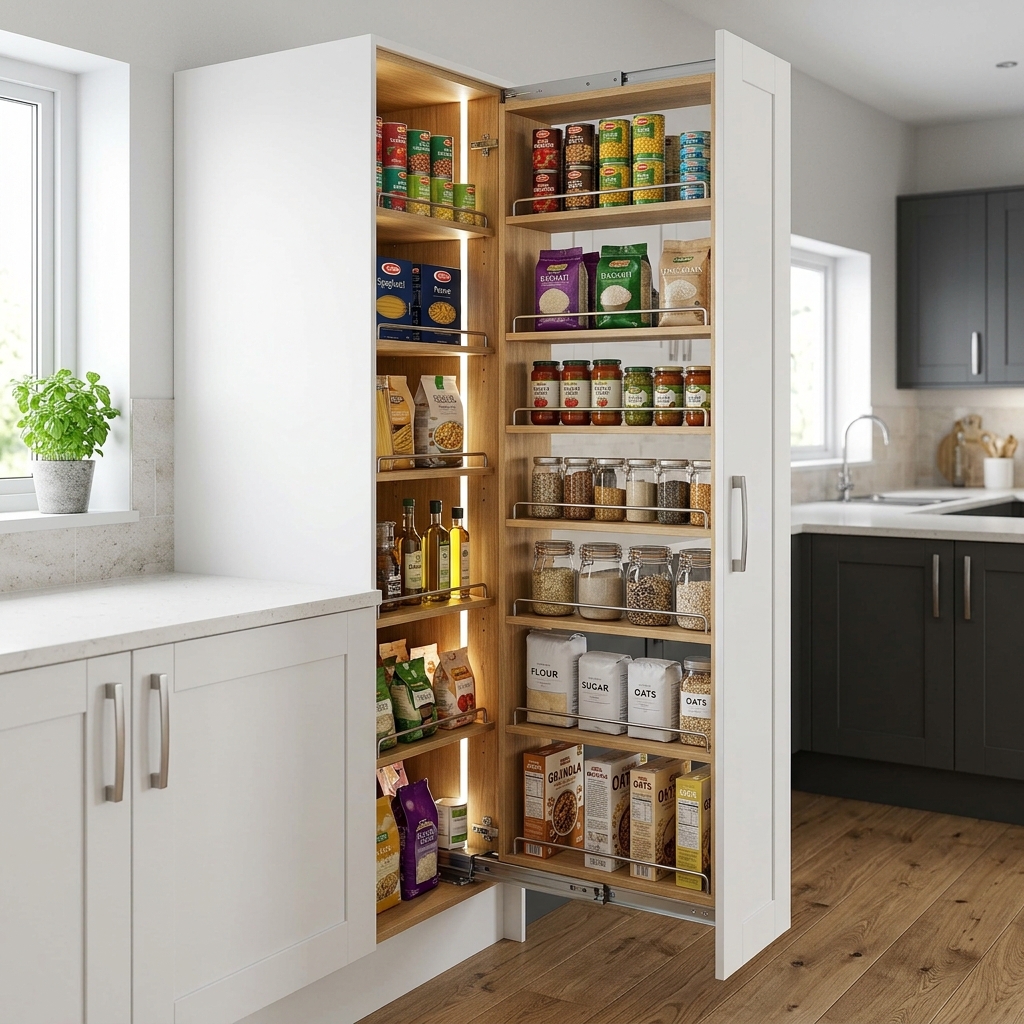
Deep cabinets can be difficult to organize because items often disappear toward the back. Pull-out pantry cabinets solve this problem.
The shelves slide toward you, allowing you to see everything without reaching into a dark corner.
Best items for pull-outs:
- Canned foods
- Pasta and rice
- Cooking sauces
- Baking ingredients
- Breakfast foods
This design is particularly useful in narrow kitchens.
4) Add Clear Containers for Dry Foods
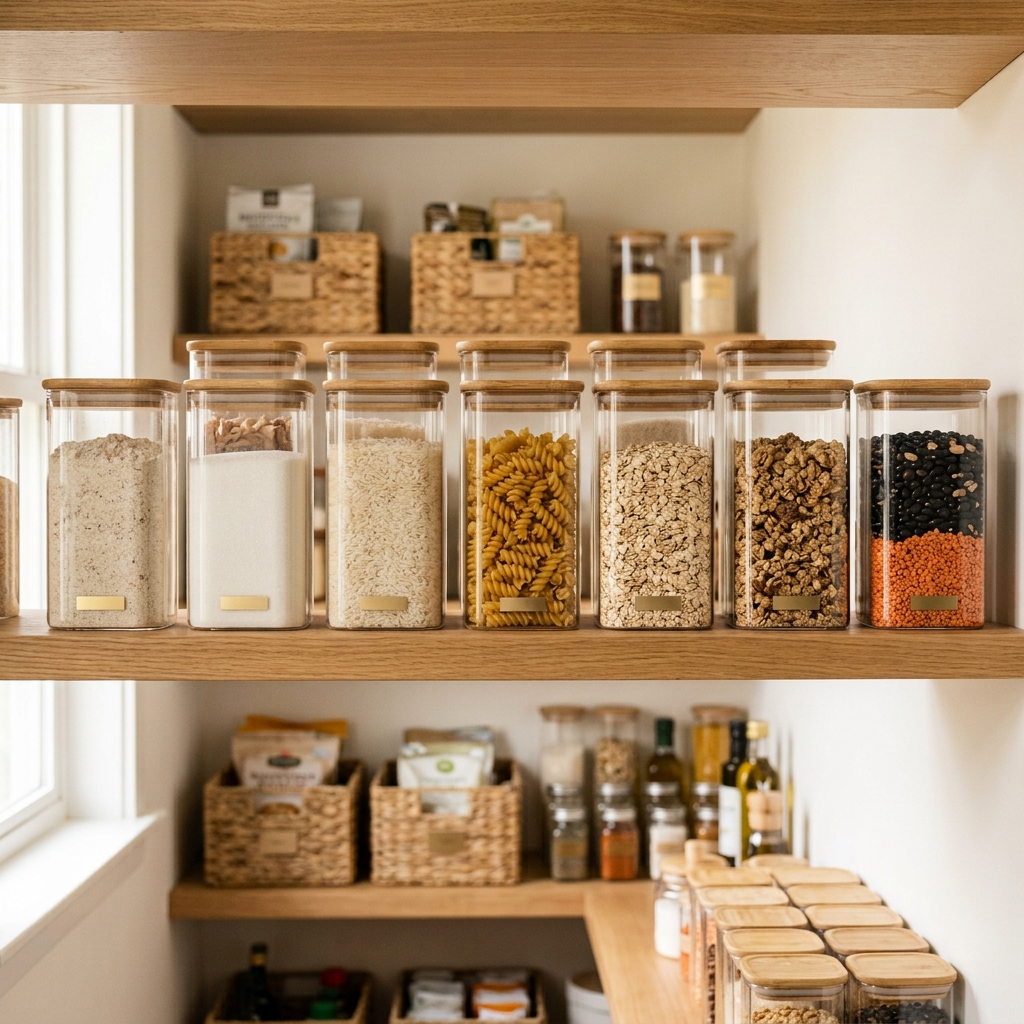
Clear containers make pantry organization easier because you can quickly see how much food is left.
They also create a cleaner appearance than keeping every ingredient in different packaging.
Good foods for clear containers include:
- Flour
- Sugar
- Rice
- Pasta
- Oats
- Cereal
- Beans
Choose airtight containers for ingredients that need protection from moisture and air.
5) Build a Dedicated Snack Zone

If your family regularly reaches for snacks, give them their own section.
A dedicated snack area prevents small packets from spreading across multiple shelves.
Create separate baskets for:
- Kids’ snacks
- Granola bars
- Crackers
- Nuts
- Chips
- Quick breakfast items
You can place everyday snacks at eye level so they are easy to grab.
6) Install Door Storage

The back of the pantry door is valuable storage space that is often ignored.
A slim rack can hold many smaller items without taking up shelf space.
Use the door for:
- Spices
- Condiments
- Small jars
- Packets
- Measuring tools
- Wraps and food-storage bags
Just make sure the rack is strong enough for the items you plan to store.
7) Add a Small Appliance Station

Kitchen appliances can quickly take over countertops. A pantry can provide a dedicated home for appliances that are used regularly but do not need to remain visible.
Consider storing:
- Toaster
- Blender
- Air fryer
- Coffee machine
- Stand mixer
If you want to use appliances directly inside the pantry, plan electrical outlets and appropriate ventilation during the remodel.
8) Use Adjustable Shelving
Fixed shelves can become frustrating when you have products of different heights. Adjustable shelving gives you much more flexibility.
You can create taller sections for cereal boxes and appliances while keeping shorter shelves for cans and jars.
A flexible pantry should include:
- Adjustable shelf heights
- Removable shelves
- Different shelf depths
- Strong supports for heavier items
This makes the pantry easier to adapt as your storage needs change.
9) Create a Baking Pantry Section
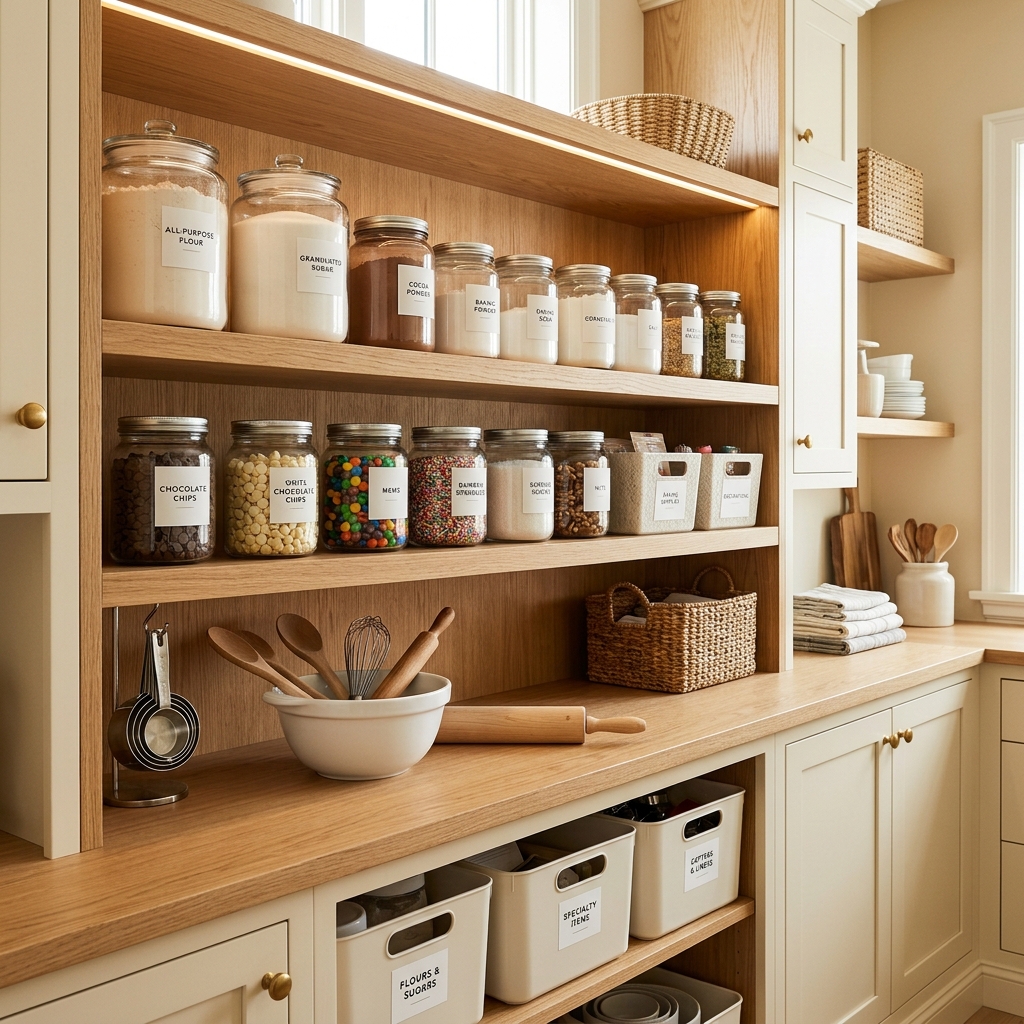
Baking supplies can become messy when flour, sugar, chocolate, sprinkles, and tools are stored randomly.
Give baking ingredients their own area so everything is easy to find.
Keep together:
- Flour and sugar
- Baking powder and soda
- Chocolate chips
- Sprinkles and decorations
- Measuring cups
- Baking tools
A small labeled basket can also keep specialty ingredients together.
10) Add Lazy Susans for Corner Storage

Corners are some of the hardest areas to use efficiently. Lazy Susans make them much more practical.
A simple rotating tray lets you reach items from the back without moving everything in front.
They work especially well for:
- Sauces
- Oils
- Vinegar
- Jars
- Spices
- Canned goods
For deep corner shelves, this small upgrade can make a surprisingly big difference.
11) Use Baskets to Control Small Items

Not everything needs to be stored individually. Baskets are excellent for grouping similar foods.
Instead of having loose packets scattered across shelves, place them into labeled baskets.
Helpful basket categories:
- Breakfast
- Pasta
- Snacks
- Baking
- Lunch supplies
- Backstock
Choose baskets that are easy to lift so you can bring several items to the counter at once.
12) Design a Family-Friendly Pantry

A pantry should work for everyone who uses the kitchen, not just the person who cooks.
Place frequently used items where family members can reach them easily.
For a family-friendly layout:
- Keep everyday snacks on lower shelves
- Store heavier items below waist level
- Place less-used foods higher up
- Use simple labels
- Keep children’s foods together
This can also reduce unnecessary traffic around the main cooking area.
13) Add a Pantry Countertop

If you have enough room, a small countertop inside the pantry can provide an extra work zone.
It can be useful for food preparation, organizing groceries, or keeping appliances off the main kitchen counters.
A pantry countertop can become a:
- Coffee station
- Breakfast station
- Baking area
- Small appliance zone
- Grocery unpacking space
It adds function without requiring a larger kitchen.
14) Try Floor-to-Ceiling Pantry Storage

Vertical storage makes use of wall space that would otherwise be wasted.
Tall cabinets can provide several levels of storage while keeping the kitchen visually clean.
Store items by frequency:
- Eye level: everyday foods
- Waist level: heavier containers
- Lower shelves: bulk supplies
- Upper shelves: seasonal or rarely used items
Use a small step stool safely for higher shelves.
15) Add Labels for Faster Organization

Labels may seem like a small detail, but they can make a pantry much easier to maintain.
When every basket and container has a clear purpose, family members know where things belong.
Useful labels include:
- Grains
- Snacks
- Breakfast
- Baking
- Canned goods
- Pasta
- Pet food
The goal is not to label everything unnecessarily. Label the areas that tend to become messy.
16) Create a Bulk Food Storage Area

Buying larger quantities can be convenient, but bulk packages can quickly overwhelm regular shelves.
Create one dedicated section for backup supplies.
Good bulk-storage items include:
- Paper products
- Rice
- Flour
- Cereal
- Canned food
- Bottled drinks
Keep only reasonable quantities that your household can use before they lose quality or become difficult to manage.
17) Use Deep Drawers for Heavy Items

Deep drawers can be easier to access than low shelves, especially for heavier pantry products.
Instead of bending down and reaching toward the back, you can pull the entire drawer forward.
Ideal drawer items include:
- Potatoes and onions
- Large bags of rice
- Pet food
- Bottled drinks
- Heavy kitchen supplies
Choose sturdy drawer hardware designed to support the expected weight.
18) Make a Coffee and Breakfast Station

A pantry can become the perfect location for a small morning station.
Keeping breakfast essentials together can make busy mornings much smoother.
A simple setup might include:
- Coffee or tea
- Mugs
- Cereal
- Oats
- Sweeteners
- Bread
- Spreads
If appliances are included, make sure the electrical setup is planned properly rather than relying on crowded extension cords.
19) Add a Dedicated Inventory System

A beautiful pantry is useful, but knowing what you already have is even more practical.
A simple inventory system can reduce duplicate purchases and help you use food before it gets forgotten.
Try these habits:
- Keep newer products behind older ones
- Check expiration dates regularly
- Group similar products together
- Make a shopping list before buying replacements
- Do a quick pantry check every few weeks
You do not need complicated technology. A simple list on your phone can be enough.
20) Combine Open and Closed Pantry Storage

The best pantry designs do not always have to be completely open or completely closed.
A combination can give you the convenience of open shelves while keeping less attractive items hidden.
For example:
- Open shelves for attractive containers
- Closed cabinets for bulk packages
- Drawers for heavy items
- Baskets for snacks
- Glass doors for frequently used ingredients
This approach creates a pantry that is practical but still visually organized.
How to Choose the Right Pantry Idea for Your Kitchen
With so many storage options, it helps to start with your actual needs rather than copying a design from another home.
Ask yourself:
- Do I need more storage or better organization?
- Which foods do I use every day?
- Do I regularly buy items in bulk?
- Do I need space for small appliances?
- Is my pantry easy for everyone in the household to access?
- How much cleaning and maintenance can I realistically manage?
A simple priority order can help:
- Storage capacity – Make sure everything has a logical home.
- Accessibility – Keep frequently used foods within easy reach.
- Visibility – Use clear containers, labels, or open shelves where helpful.
- Flexibility – Choose adjustable shelves and movable organizers.
- Maintenance – Select materials that are easy to wipe and keep clean.
Conclusion
The most useful food pantry is not necessarily the biggest one. It is the pantry that makes everyday life easier.
The 20 Practical Food Pantry Ideas You’ll Love in 2026 focus on simple improvements such as pull-out shelves, clear containers, baskets, dedicated zones, vertical storage, and better accessibility. These ideas can work in both large kitchens and small homes.
If you are planning a new pantry, start by thinking about what causes the most frustration in your current kitchen. If groceries disappear into deep cabinets, improve visibility. If appliances cover your counters, create an appliance station. If snacks are always scattered around, give them their own zone.


More Stories
12 Sunken Living Room Ideas for 2026
15 Laundry Room Pantry Ideas That Work in 2026
20 Small Dining Room Ideas You’ll Love Today