
Introduction
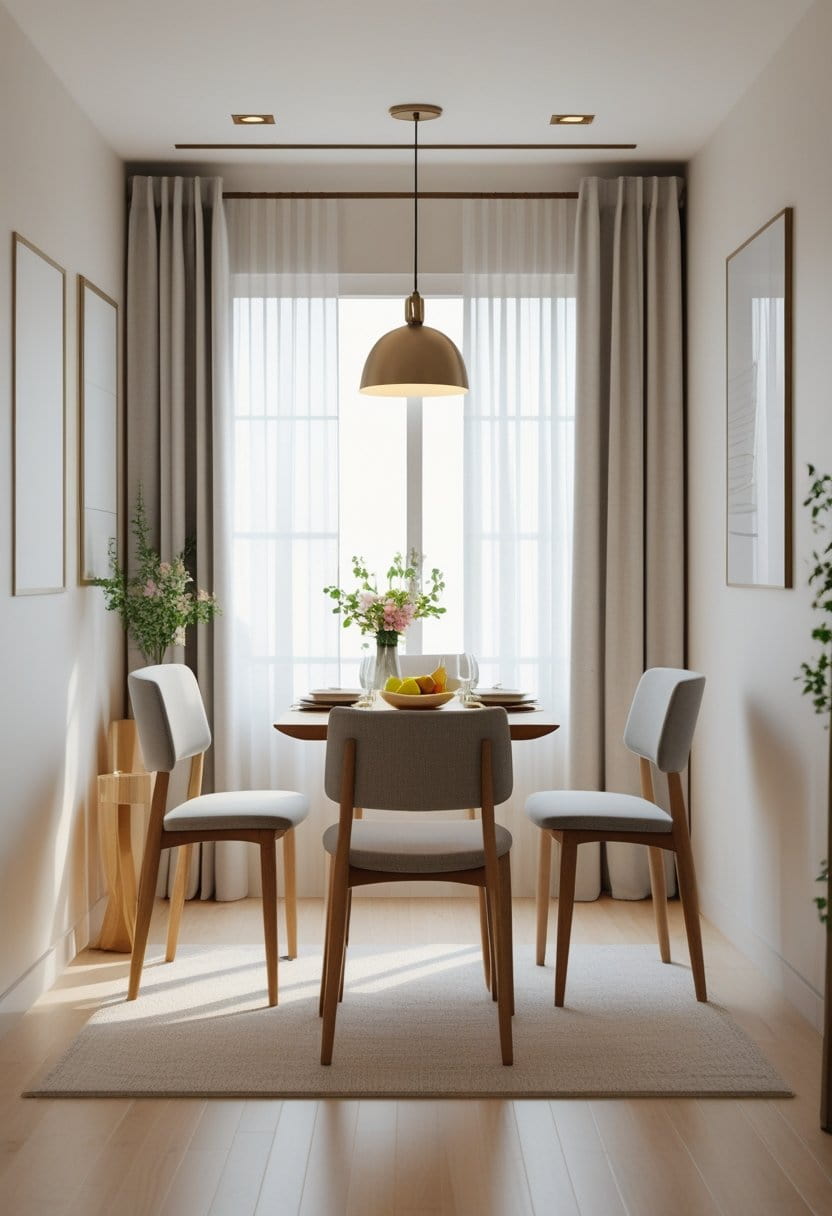
A small dining room can still feel big on style, comfort, and function. The trick is choosing designs that fit your space without making it feel cramped. Below are 21 Small Dining Room Design Inspo to Steal, packed with practical ideas you can copy today—whether you’re working with a tight corner, an open-plan layout, or a narrow room.
Before you jump in, here are a few quick “designer rules” that make small dining areas work better:
- Aim for at least 36 inches (about 91 cm) of clearance behind chairs for comfortable movement. If space is tight, 24–30 inches can work when the area isn’t a main walkway.
- For everyday comfort, many people find 24 inches of table width per person a good target.
- Round tables often feel easier in small rooms because corners don’t poke into walkways.
Now let’s get into the fun part.
1) Choose a Round Table to “Soften” a Tight Space

Round tables are a classic small-space win. Without sharp corners, you can slide around them more easily, and the room feels less boxed-in.
Try this:
- Pick a pedestal base (one center leg) so chairs tuck in neatly
- Use armless chairs for an airy look
- Add a simple centerpiece to keep the surface uncluttered
2) Steal the Bistro Look with a Tiny Two-Seater

If your dining area is truly compact, lean into it. A café-style setup looks intentional and stylish.
Simple bistro formula:
- Small round table
- Two lightweight chairs
- One statement pendant light above
This creates a charming “mini destination” in your home, even if it’s only a few feet wide.
3) Swap Bulky Chairs for Slim, Open-Back Seating

Chairs matter as much as the table. Thick, heavy chairs visually “fill up” the room fast.
Better small-room choices:
- Open-back chairs
- Slender metal or wood frames
- Benches (especially against a wall)
Bonus: You can often fit more seating without it feeling crowded.
4) Use a Bench on One Side to Save Space

A bench can slide fully under the table when not in use, which helps keep walkways open. It also gives a clean, modern look.
Bench idea that works in most homes:
- Bench against the wall
- Two chairs on the open side
- Optional: one chair at the head for balance
5) Create a Banquette for a Built-In, Cozy Feel

A banquette (built-in bench seating) is one of the smartest space solutions for small dining rooms. It uses corners well and adds a custom, high-end look.
Make it even better:
- Add storage under the seat
- Use washable performance fabric
- Include a few pillows for comfort
6) Go for a Drop-Leaf Table for Flexible Living

Drop-leaf tables are perfect when you need a dining spot sometimes—but not always. Keep it small daily, expand it when guests arrive.
Look for:
- A sturdy hinge (so it doesn’t wobble)
- A shape that suits your room (round or rectangle)
- A finish that matches your kitchen or living area
7) Try a Wall-Mounted Folding Table

If you’re working with a narrow dining nook, a wall-mounted table can be a game changer. Fold it down when you need space and fold it up when you don’t.
Best places to use it:
- Along a blank wall
- In a small apartment dining zone
- Near a window as a dining + work spot
8) Use a Glass or Acrylic Table for Instant “Airiness”

Transparent surfaces let the eye travel through the room, making the area feel larger.
How to keep it practical:
- Choose a scratch-resistant top if possible
- Use textured placemats to reduce fingerprints
- Pair with soft seating so it doesn’t feel cold
9) Add a Large Mirror to Visually Double the Space

Mirrors reflect light and create depth. In small dining rooms, one well-placed mirror can make the room feel almost twice as open.
Easy mirror placement:
- On the wall opposite a window
- Behind a sideboard
- As a full-height mirror in a narrow dining area
Keep the frame simple if your space is already busy.
10) Paint the Dining Area a Slightly Different Shade

If your dining space is part of an open-plan room, a subtle paint shift can define it without adding walls.
Ideas that work:
- One accent wall behind the table
- A slightly deeper shade than the rest of the space
- Soft neutrals if you want a calm look
This trick creates a “room within a room.”
11) Use Vertical Space: Tall Art, Tall Shelves, Tall Impact

Small dining rooms often lack floor space, so go upward. Vertical elements draw the eye up and make the ceiling feel higher.
Quick upgrades:
- One tall piece of artwork
- Floating shelves above a sideboard
- A slim vertical cabinet for storage
12) Pick a Statement Light That Anchors the Zone

Lighting isn’t just practical—it sets the mood. A bold pendant or chandelier makes a small dining space feel designed on purpose.
A few simple lighting tips:
- Hang the light about 30–36 inches above the tabletop
- Use warm bulbs for a cozy feel
- Put it on a dimmer if possible
Even a small room can feel dramatic with the right light.
13) Keep It Bright: Light Walls, Light Rug, Light Feel

Light colors reflect more light, which helps spaces feel bigger. You don’t need all-white—just keep the overall palette light.
Good small-room color families:
- Soft beige and warm white
- Light greige
- Pale sage
- Powdery blues
Then add contrast with accessories so it doesn’t feel flat.
14) Use One Bold Color to Add Personality

Small doesn’t have to mean boring. One bold choice—like deep green chairs or a black table—can give your dining room a designer vibe.
Easy ways to add bold color:
- Painted chairs
- A single dramatic wall
- A bright piece of art
- Colorful curtains
Keep the rest simple so the bold element shines.
15) Add a Rug That Defines the Dining Spot

A rug helps visually “frame” the dining zone, especially in open layouts. It also adds warmth and comfort.
A practical rug guideline:
- The rug should extend at least 24 inches beyond the table edges so chairs stay on the rug when pulled out.
Choose low-pile rugs for easier chair movement.
16) Skip the Big Sideboard—Choose a Slim Console Instead

Traditional dining rooms often have heavy furniture, but small rooms need slimmer pieces.
Look for:
- A narrow console table
- A wall-mounted shelf ledge
- A compact bar cart
You still get storage and styling space without losing the walkway.
17) Use a Bar Cart as a Mini Dining Station

A bar cart can hold napkins, placemats, glasses, and even small serving dishes—without taking up much space.
What to store neatly:
- Everyday plates and bowls (if stable)
- A small tray for condiments
- A vase or candle for style
You can roll it away when needed, which is a huge plus in tight rooms.
18) Choose Curtains That Go High and Wide

If your dining area has a window, use curtains to make it look bigger. Hanging curtains higher than the window frame can visually lift the ceiling.
Simple rule:
- Hang the curtain rod close to the ceiling
- Extend the rod wider than the window
This makes the window feel larger and the room more open.
19) Make the Corner Work with a Dining Nook

Corners are often wasted space. Turn yours into a dining nook with a small table and corner seating.
Corner nook setup:
- Corner bench or two small benches
- Compact table (round is often best)
- Wall sconce or pendant light
This is one of the most “steal-worthy” ideas from cafés and small European kitchens.
20) Use Matching Tones for a Calm, Bigger Look

When too many finishes fight each other, small rooms feel busy. Matching tones creates a clean, spacious look.
Try a simple “3-tone” plan:
- One main wood tone (table or floor)
- One neutral fabric tone (chairs or curtains)
- One accent metal (light or frames)
It looks polished without trying too hard.
21) Add Texture Instead of Clutter

In small rooms, too many objects can feel messy fast. Texture gives depth and richness without adding a lot of “stuff.”
Easy texture ideas:
- Linen or cotton placemats
- A woven pendant shade
- A textured rug
- A ceramic vase
- A simple centerpiece with greenery
This keeps the dining area interesting but still clean.
A Quick Mini Checklist to Pull It All Together
If you want your space to look intentional (not just squeezed in), use this quick checklist:
- Pick one space-smart table shape (round, drop-leaf, or slim rectangle)
- Choose chairs that don’t visually “block” the room
- Define the area with lighting and/or a rug
- Use one storage piece that’s slim and functional
- Add personality through one bold detail or texture
Conclusion
The best small dining rooms aren’t the biggest—they’re the most thoughtfully designed. Use these 21 Small Dining Room Design Inspo to Steal as a menu of ideas: take one or take five, mix them up, and make them fit your home. When your table, seating, lighting, and storage work together, even a small dining space can feel welcoming, stylish, and surprisingly roomy.


More Stories
25 Classy Living Room Designs for Timeless Elegance
18 Green Bathroom Designs for a Fresh, Calm Look
22 Luxury Kitchen Design Inspirations for High-End Homes