
Introduction
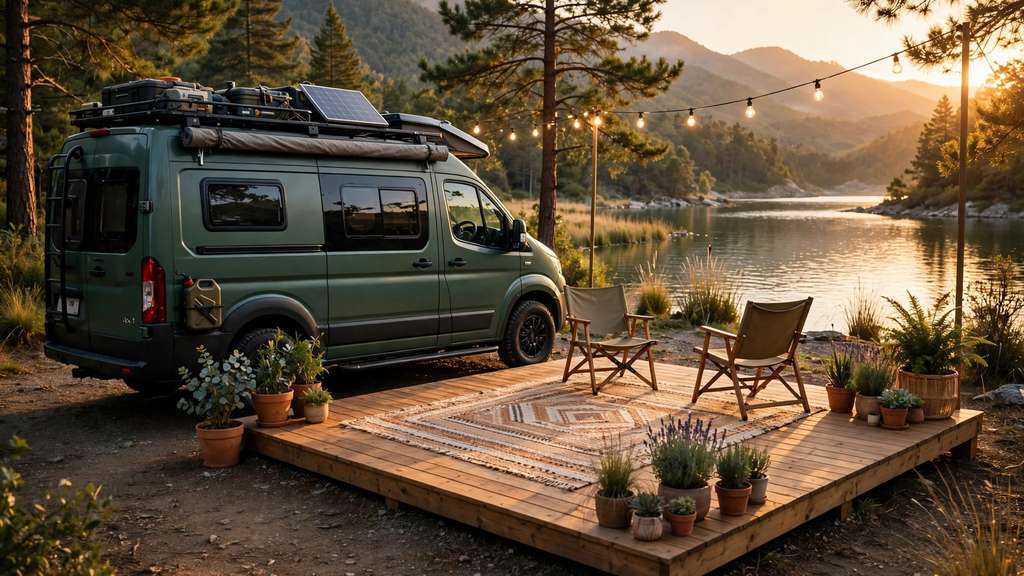
A camper gives you freedom, but it is the space just outside the door that turns a pitch into a little home. The best camper deck ideas do exactly that: a flat, clean platform where muddy boots stay outside, chairs sit level, and coffee comes with a view instead of a puddle.
None of it needs a builder, either. Portable panels, pallets, click-together tiles and roll-out slats can all be made at home and laid in minutes. For inspiration, these stunning deck ideas show what a well-planned platform can do.
Here are 35 ideas to try, from the simplest pallet platform to shaded, plant-filled corners — every one realistically DIY-able or portable, each with why it works and a simple tip.
1) Camper Deck Ideas Start With a Sectional Platform
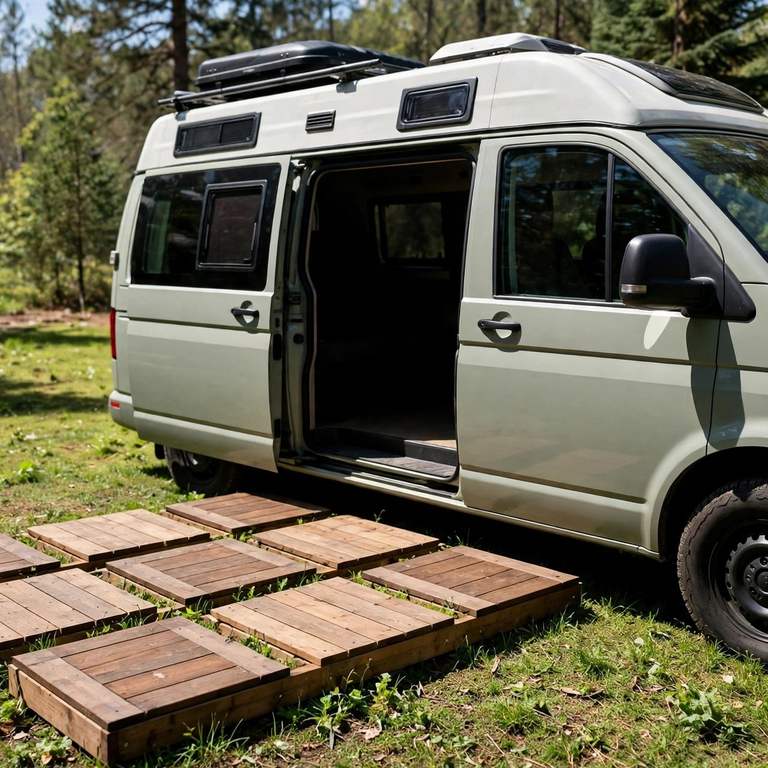
Build the deck as four or six square frames, each light enough to lift one-handed, laid side by side. Sections travel stacked, suit any pitch, and one damaged panel never ruins the whole deck.
Why it works:
- Sections stack flat for travel
- Fits awkward pitch shapes
- One panel repairs alone
Tip: number the undersides so sections return in order.
2) A Pallet Wood Deck Built in a Weekend
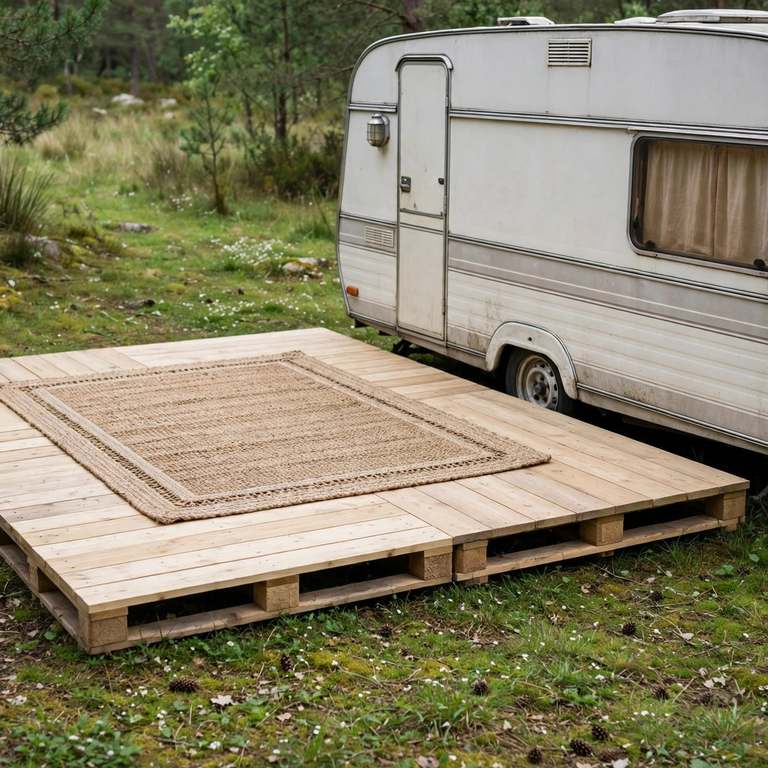
Sound pallets, sanded smooth and screwed together, make the cheapest deck there is. Levelled on flat stones, they become a sturdy platform for the price of a box of screws.
Why it works:
- Almost no material cost
- Strong and easy to repair
- Quick with basic tools
Tip: choose heat-treated pallets and sand all edges.
3) Interlocking Deck Tiles That Simply Click Together
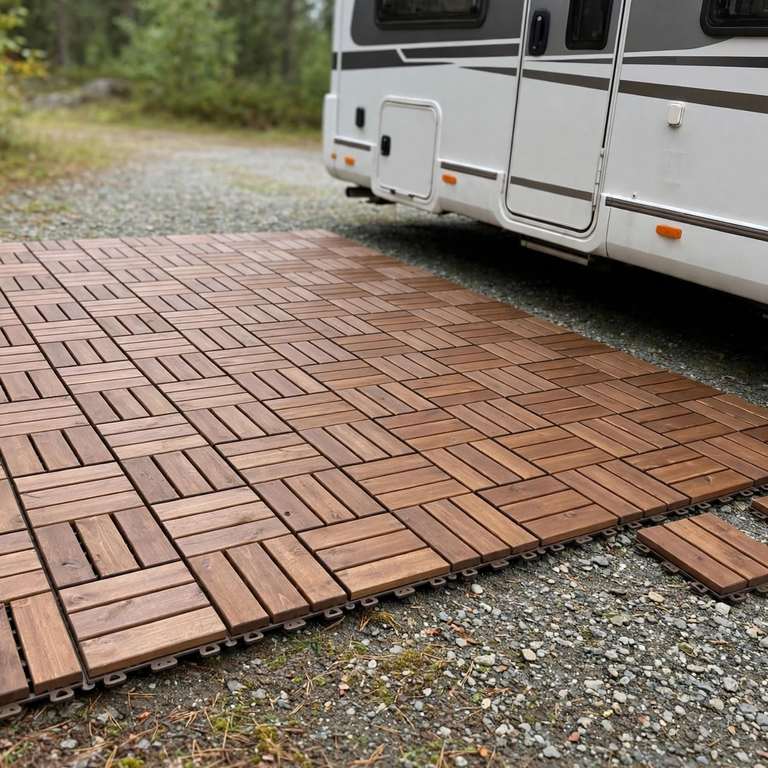
Interlocking tiles click together over a plastic grid base, so a whole deck appears in minutes with no screws. The surface lifts apart just as fast when it is time to move on.
How to use it:
- Lay on grass, gravel or hardstanding
- Mix two tones for chequered effect
- Keep spare tiles for replacements
Tip: store tiles flat so locking edges never bend.
4) A Folding Deck That Packs Flat for the Road
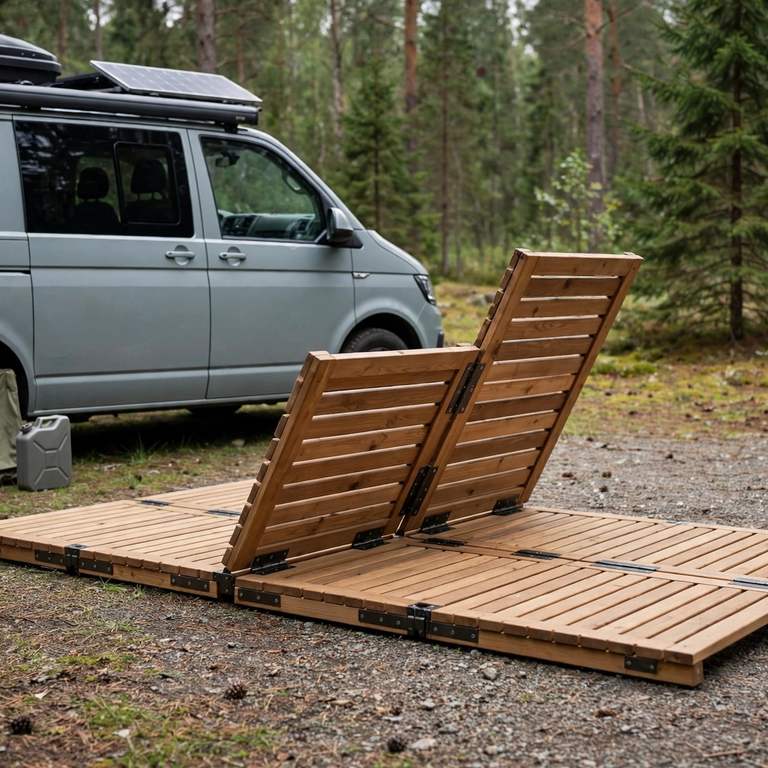
Hinge two or three slatted panels together and the deck folds flat like a book. It slides into a locker, unfolds in a minute, and leaves no loose parts to lose.
Best for:
- Campers with little storage
- Short stops where speed matters
- Anyone who dislikes loose parts
Tip: fit hinges underneath so the walking surface stays smooth.
5) An Awning-Side Deck for Instant Outdoor Living
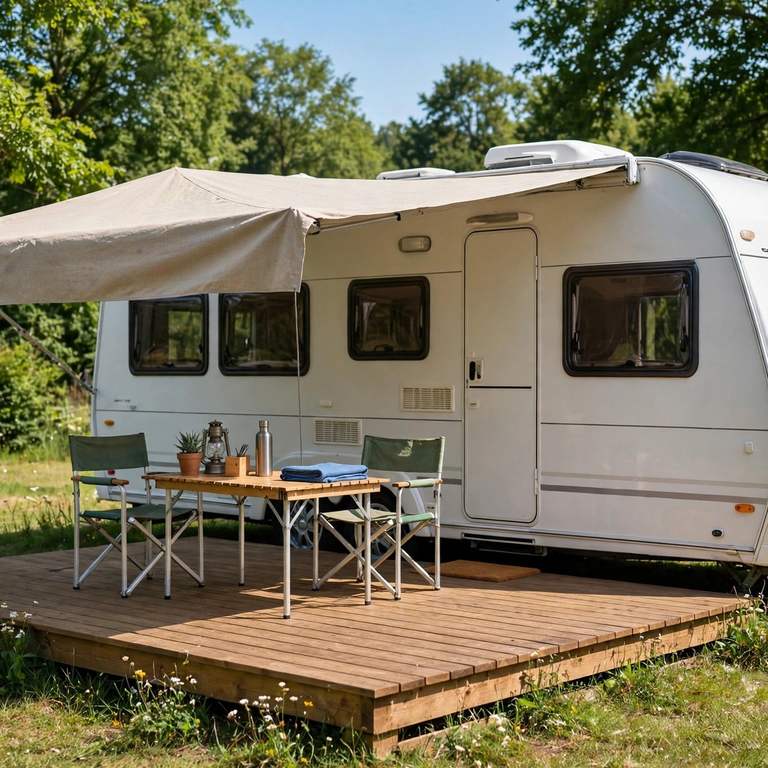
The space under a rolled-out awning is your outdoor room, and a deck completes it. Chair legs stay off wet grass, the groundsheet stops creeping, and simple shade becomes somewhere you live all day long.
Why it works:
- Dry, level floor in all weathers
- Chairs and tables sit steady
- Feels like a proper room outdoors
Tip: size the deck slightly inside the awning so rain drips clear.
6) A Raised Platform Deck for Sloping, Uneven Ground
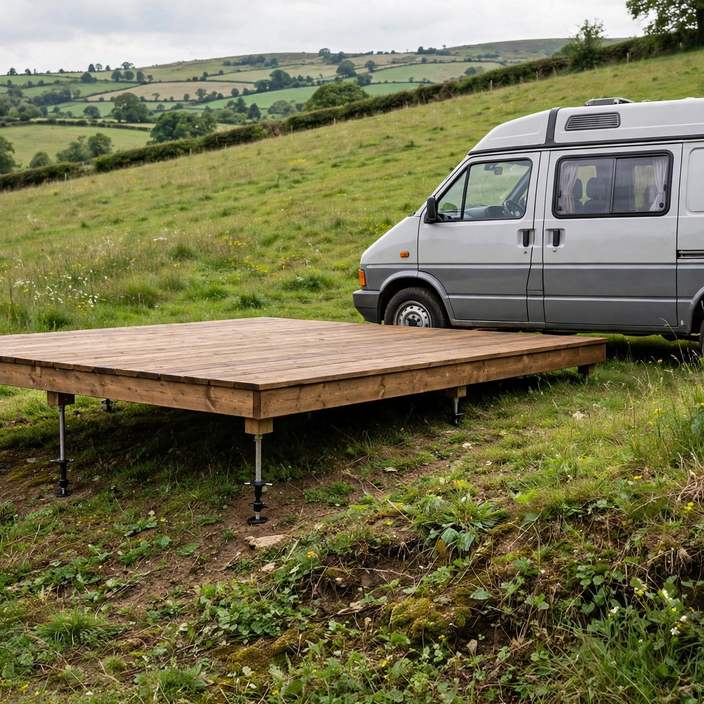
Pitches are rarely level, so put the platform on short legs and level the deck instead of the ground. Raised boards stay out of puddles, and air flowing underneath dries everything.
Best for:
- Sloping or bumpy pitches
- Wet ground after rain
- Longer stays in one place
Tip: make legs different lengths in pairs, marked front and back.
7) Wide, Low Steps That Double as Extra Seating
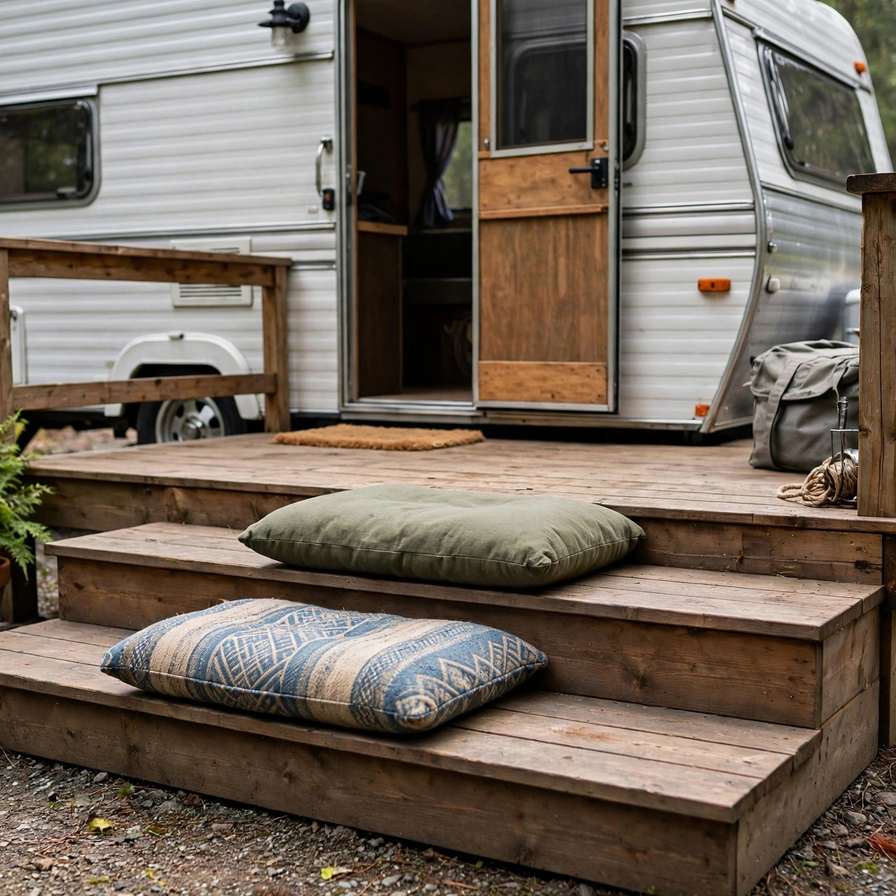
One tall step is a trip hazard in the dark. Two wide, low steps feel generous and become the most popular seats on the pitch at sunset.
How to style it:
- Treads deep enough to sit on
- Outdoor cushions for lingering
- A small plant at the side
Tip: a strip of pale paint on the step edge prevents missteps.
8) A Simple Rope Railing for a Finished Edge
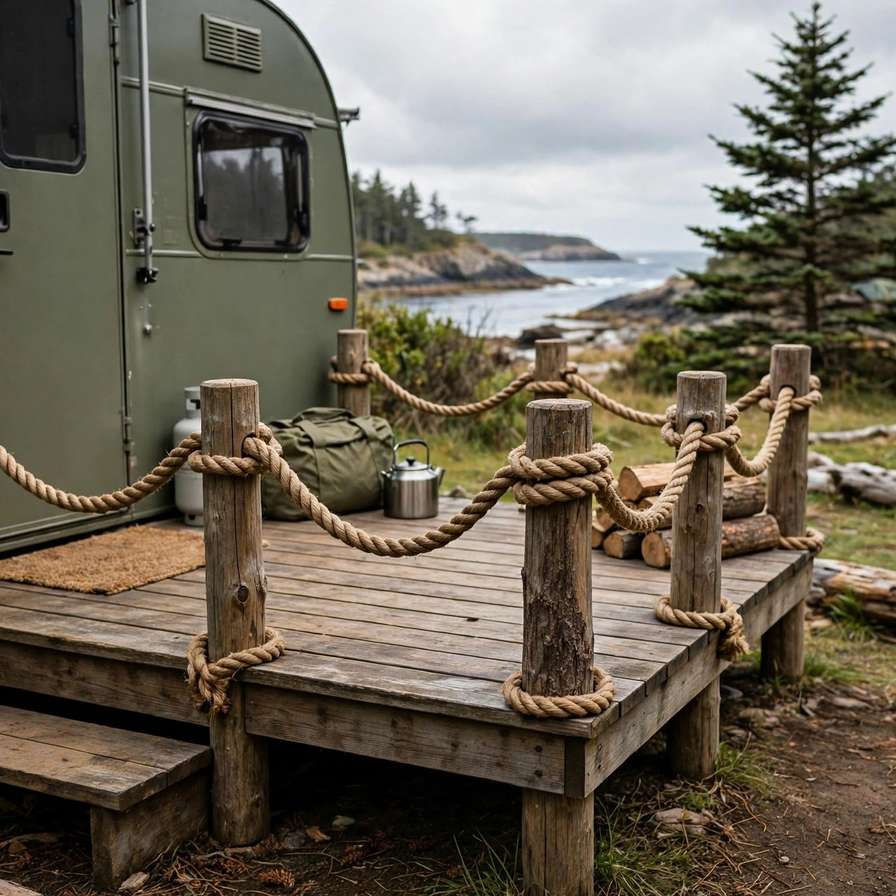
Short posts with thick rope looped between them edge a deck beautifully without boxing it in. The rope marks the end, and the posts lift straight out when packing.
Why it works:
- Defines the space without walls
- Nautical look suits coastal pitches
- Removes in seconds when packing
Tip: leave a graceful sag; tight rope looks like a barrier.
9) An Outdoor Rug to Anchor the Whole Space
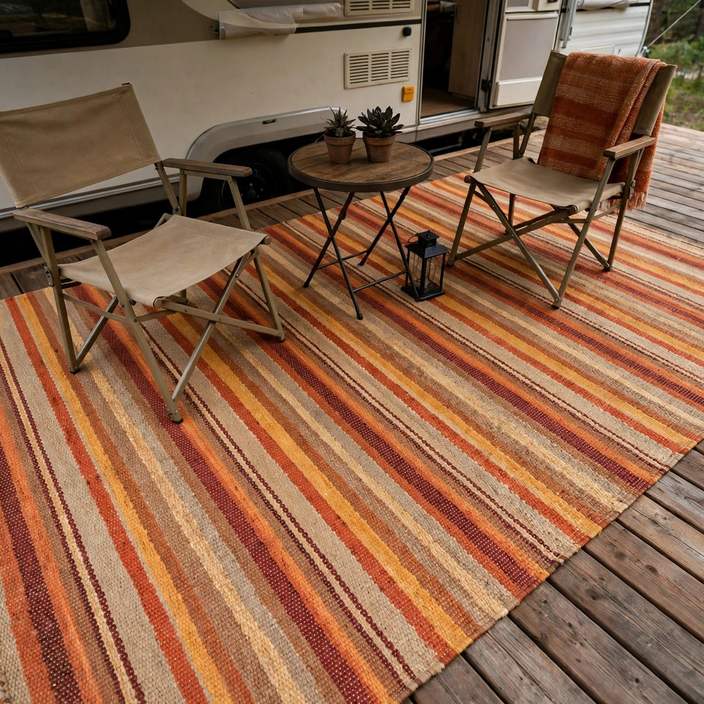
A washable outdoor rug is the fastest styling trick here. It covers plain boards, feels soft underfoot, catches grit before it reaches the camper, and pulls the furniture together.
How to style it:
- Woven plastic for easy hosing
- Leave a border of boards showing
- Match one colour to your cushions
Tip: roll the rug dry side in, so it never stores damp.
10) String Lights Strung Overhead for Cosy Evenings
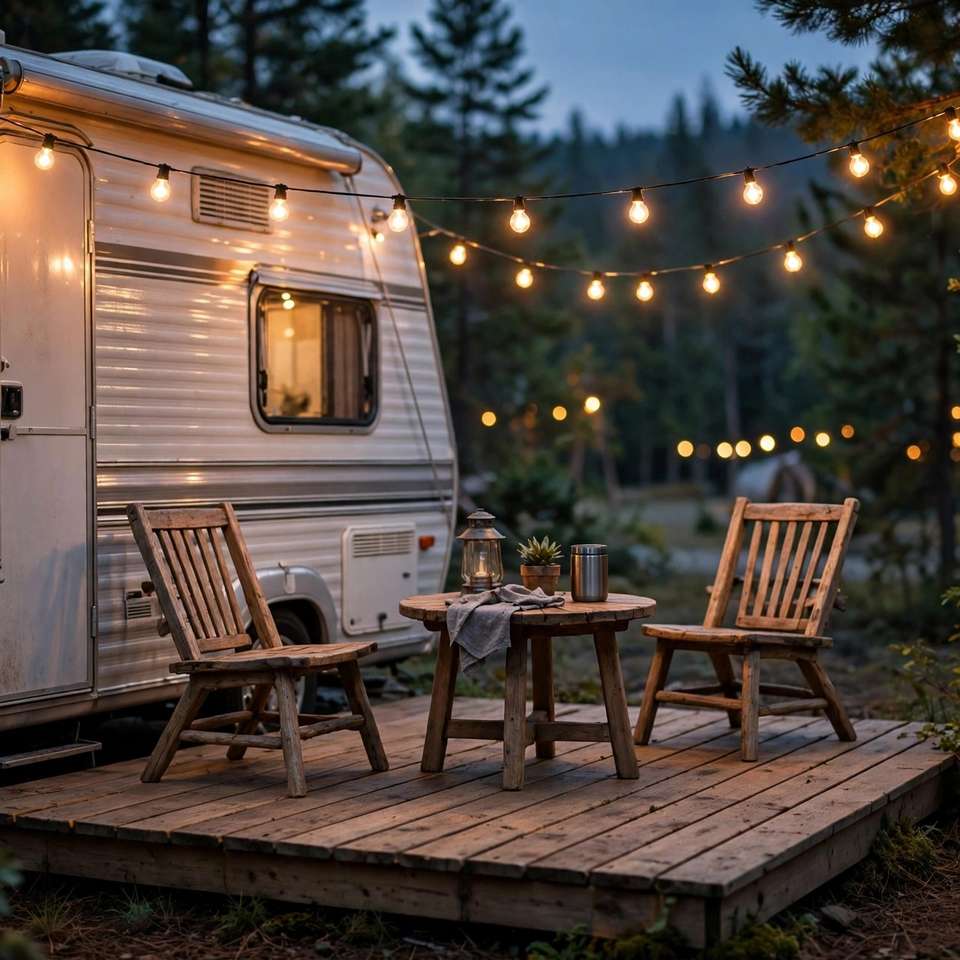
Festoon lights turn a plain pitch into the cosiest corner of the site. Run a line from the camper to a pole, and the deck glows softly enough for cards and one last cup of tea.
Why it works:
- Instant atmosphere after dark
- Battery sets need no hook-up
- Gentle light, never glaring
Tip: hang lights before dark so nobody clotheslines themselves later.
11) Solar Lanterns Lining the Deck Edge
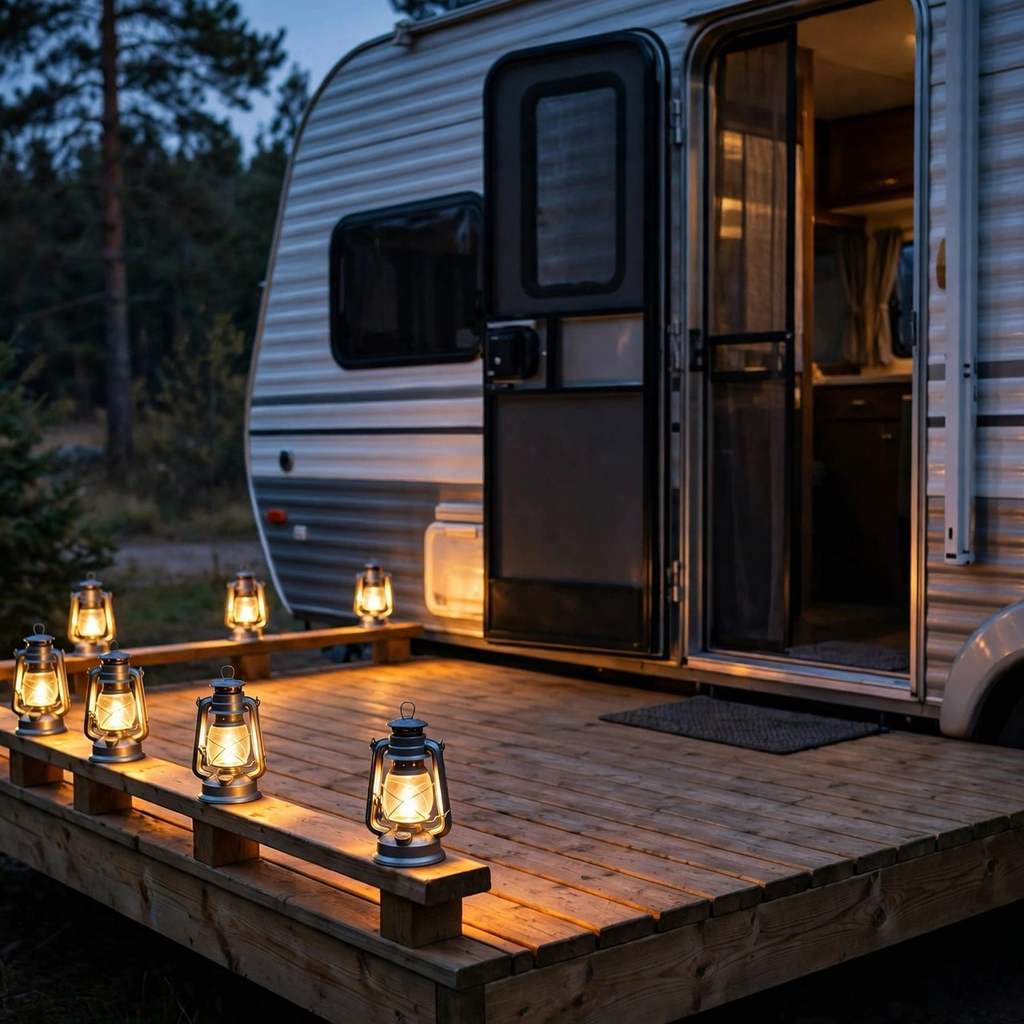
Solar lanterns along the edge look magical at twilight and mark the step down so nobody misses it. They charge all day on the boards and switch on at dusk.
Best for:
- Marking edges and steps safely
- Zero-effort evening light
- Decks used by children and dogs
Tip: place one lantern at each corner, where feet wander most.
12) Storage Benches Built Into the Deck Frame
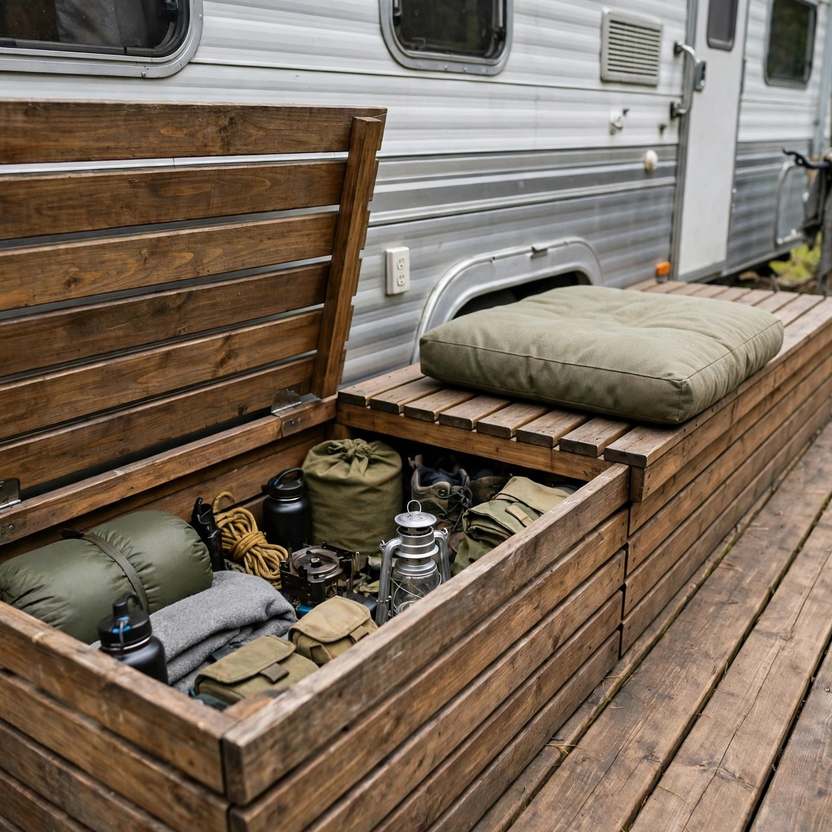
Build the edge bench as a lidded box and gain hidden storage where clutter collects. Shoes, leads, games and the rug vanish inside, and the lid gives a long seat for free.
Why it works:
- Hides clutter out of sight
- Doubles as generous seating
- Keeps essentials beside the door
Tip: drill base drainage holes so rainwater never pools.
13) Planter Boxes That Soften Every Corner
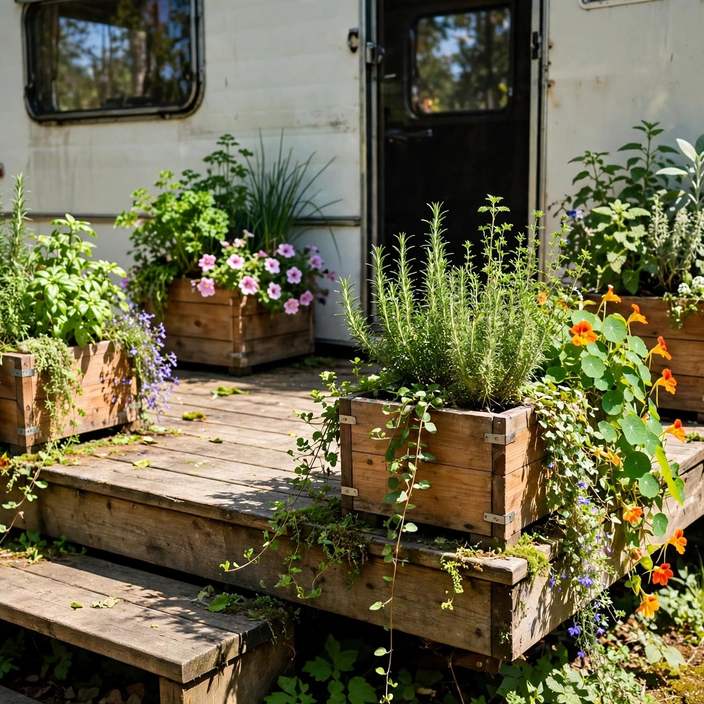
Squared corners look harsh until a planter sits on each one. Herbs, trailing geraniums or grasses turn the platform into a garden corner — and the herbs earn their keep at dinner.
How to style it:
- Match planter timber to the deck
- Mix one tall plant, one trailer
- Herbs by the door, flowers in front
Tip: line planters with an old compost bag to protect the boards.
14) A Privacy Screen Along the Windward Side
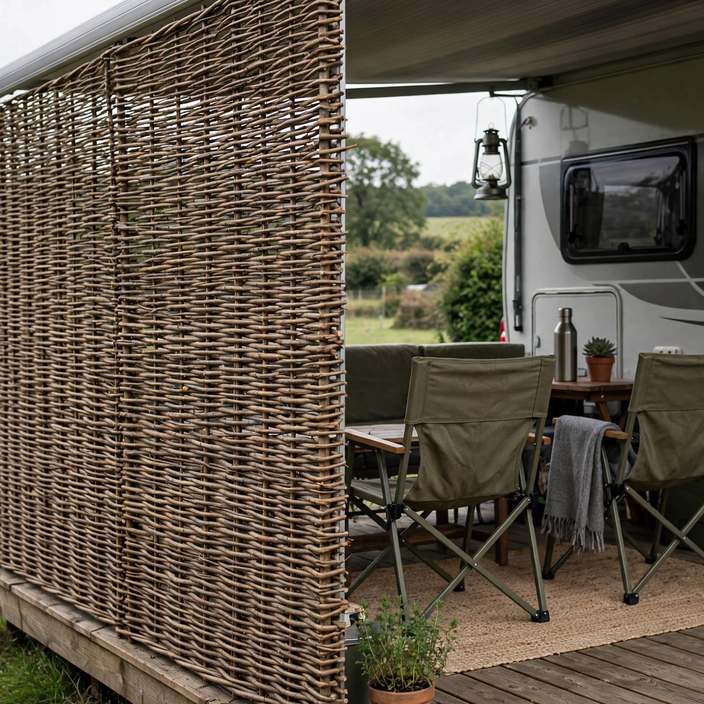
A woven willow screen along the open side blocks breeze and neighbours’ views in one move. Roll-up screens travel easily and make the deck feel like a garden room.
Best for:
- Busy sites with close pitches
- Sheltering from a steady breeze
- Napping babies and shy dogs
Tip: angle the screen slightly so air still moves through.
15) A Two-Level Deck for Longer, Wider Pitches
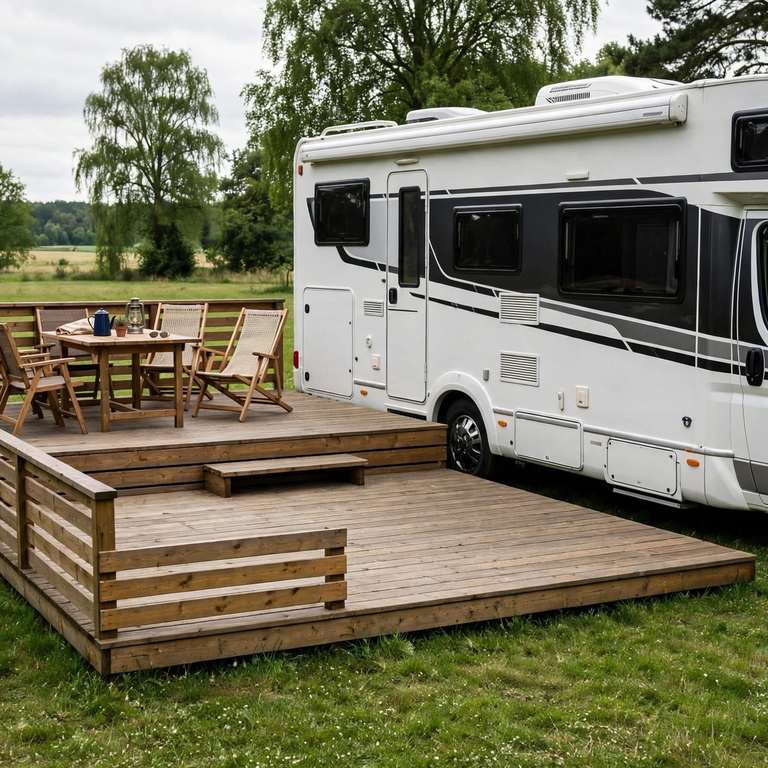
If you tour with a big outfit and stay a week or more, split the deck into two levels. Dining sits up top, loungers below, and the step between makes a field feel designed.
Why it works:
- Zones the space without fences
- Feels generous on long stays
- Adds a sense of occasion
Tip: keep the level change to one shallow, safe step.
16) Deck Boxes That Double as Extra Seats
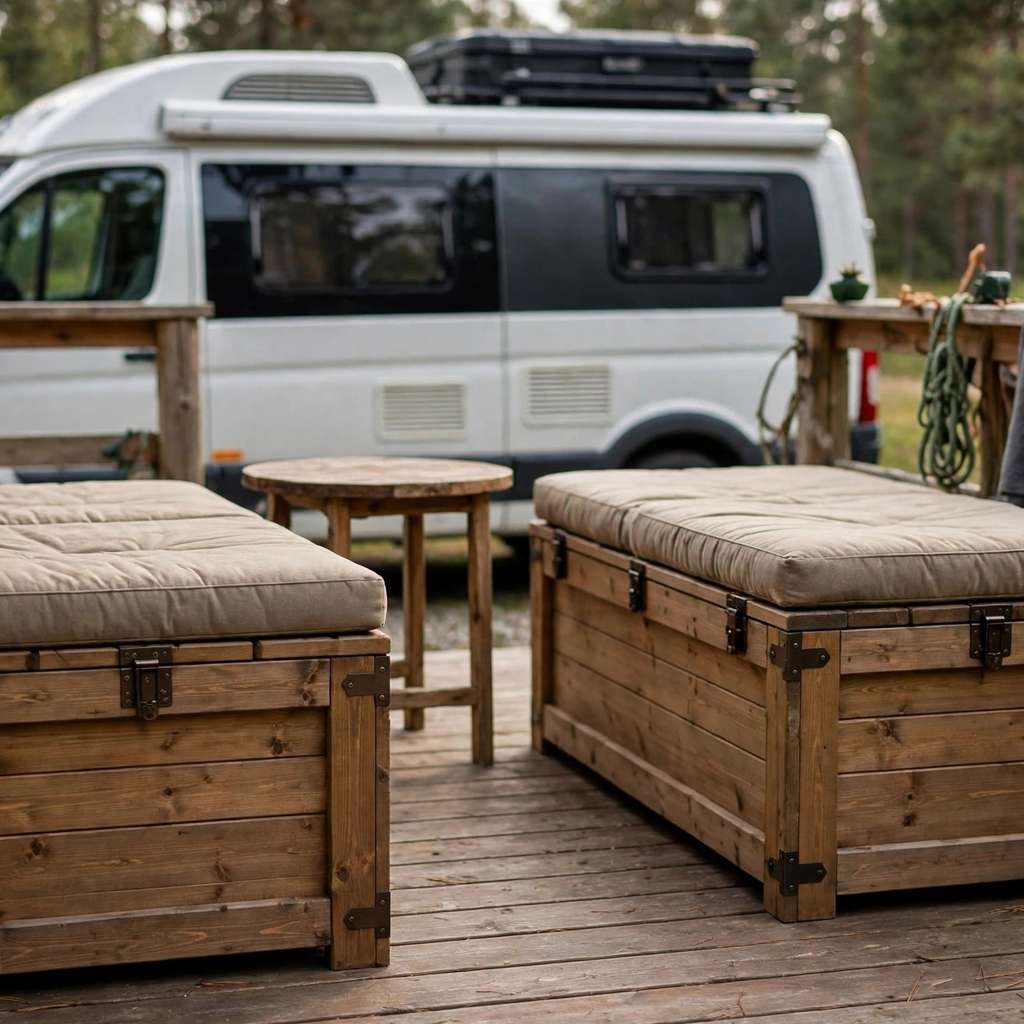
Two lidded boxes with cushion tops wander wherever they are needed — seats tonight, side tables tomorrow, footrests at sunset — and carry their own contents from pitch to pitch.
How to use it:
- Fill with blankets, games, dog kit
- Clip cushions on for travel
- Use one as a child’s step
Tip: add rope handles; loaded boxes are heavier than expected.
17) A Roll-Out Bamboo Slat Deck
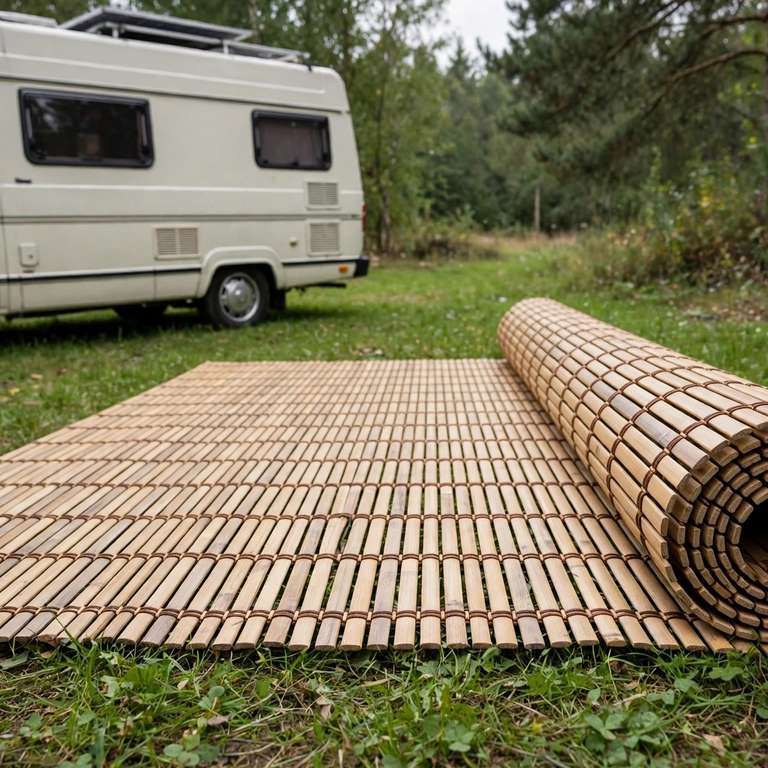
Bamboo slats joined with cord roll out like a blind and up like a rug. Nothing packs smaller: unroll it by the door for an instant dry floor, then it rides beside the chairs.
Best for:
- Very small campers and vans
- Beach and festival pitches
- A quick dry patch by the door
Tip: lay slats across the walk so wet shoes grip, not slip.
18) A Lightweight Deck on Adjustable Feet
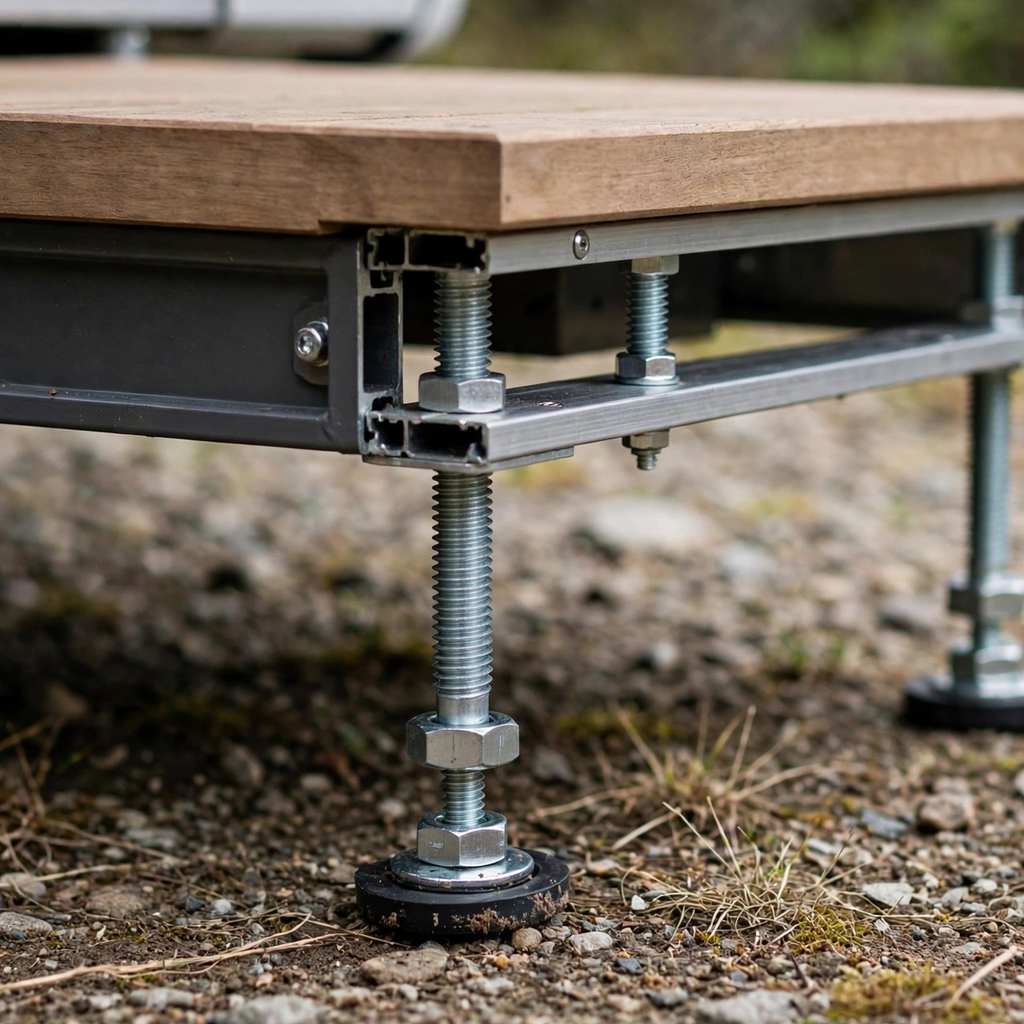
Threaded screw feet under a light frame solve levelling in seconds: twist each foot until the bubble sits central. No digging, no rocking, no pile of stones under one corner.
Why it works:
- Perfectly level on rough ground
- No rocking or board bounce
- Packs into a small stack
Tip: keep a small spirit level in the deck crate.
19) A Corner Deck That Wraps the Camper Door
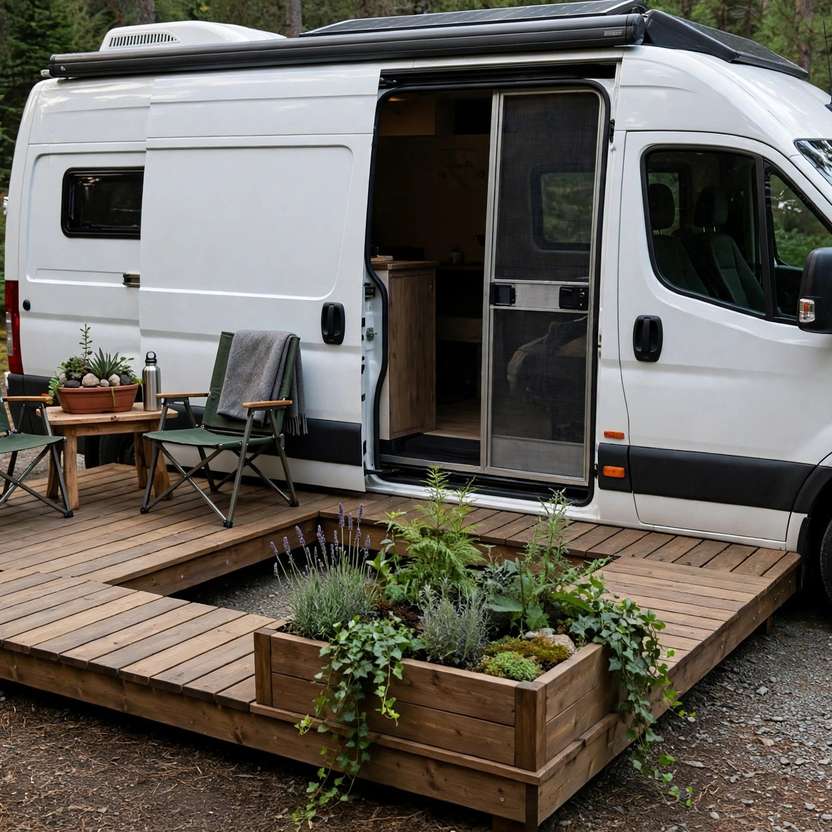
An L-shaped deck turning the camper’s corner gives two zones instead of one rectangle: chairs and coffee on the long arm; shoes and the dog bowl around the corner.
How to style it:
- Short arm purely practical
- Long arm facing the view
- One square panel at the corner
Tip: build the corner from one fixed square so the L never twists.
20) Camper Deck Ideas for Small Pitches and Tight Spaces
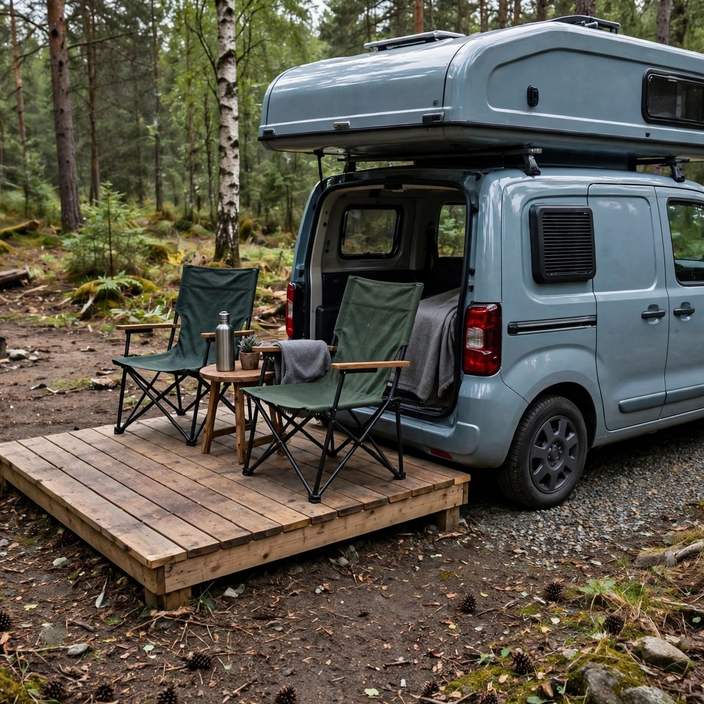
Small pitches still deserve a deck; it just has to earn its footprint. A platform the size of two chairs and a folding table keeps feet dry and leaves room to pass.
Best for:
- Compact vans and micro campers
- Crowded festival and town sites
- One-night stops
Tip: hang the folded table on the camper wall.
21) A Non-Slip Deck Surface for Wet Mornings
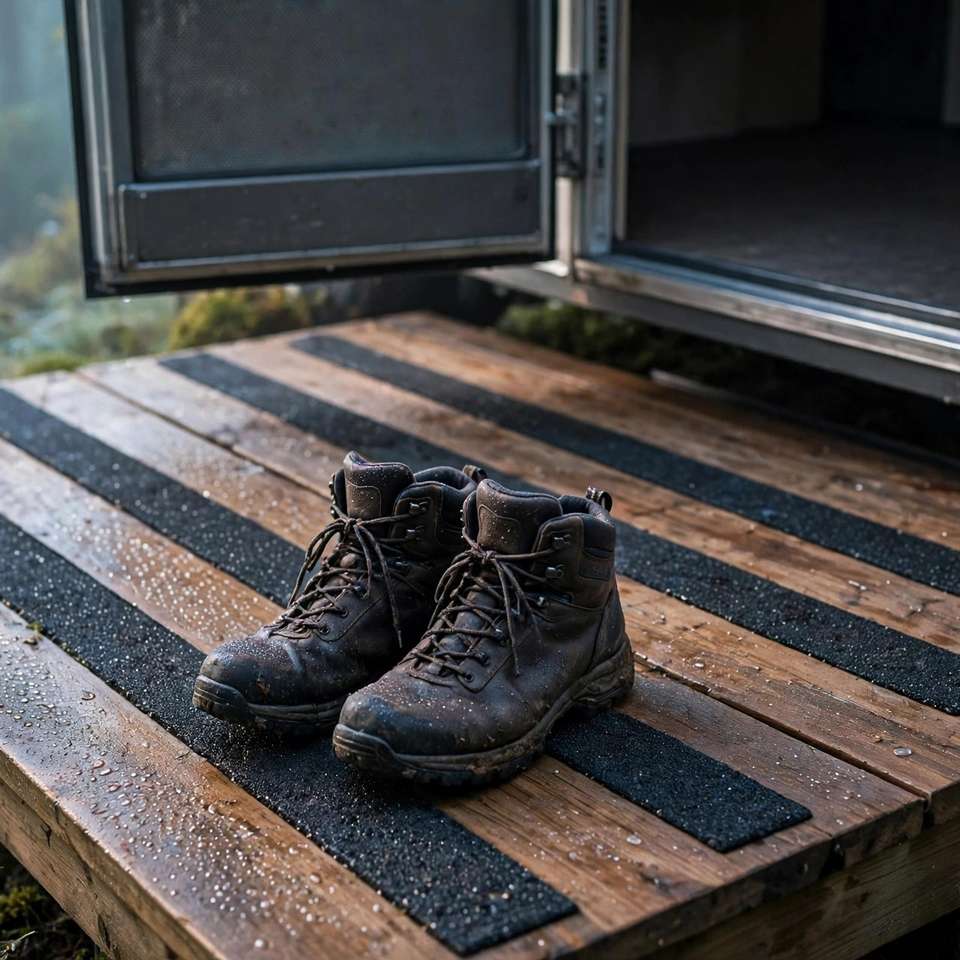
Dew turns smooth boards into a skating rink, usually discovered in slippers carrying a full mug. Grit strips across the doorway boards, or decking paint with fine sand, keep every step safe.
Why it works:
- Grip where you step most
- Invisible once fitted
- Protects the busiest boards
Tip: run strips across the boards, not along them, for grip.
22) A Boot-and-Shower Station at the Deck Steps
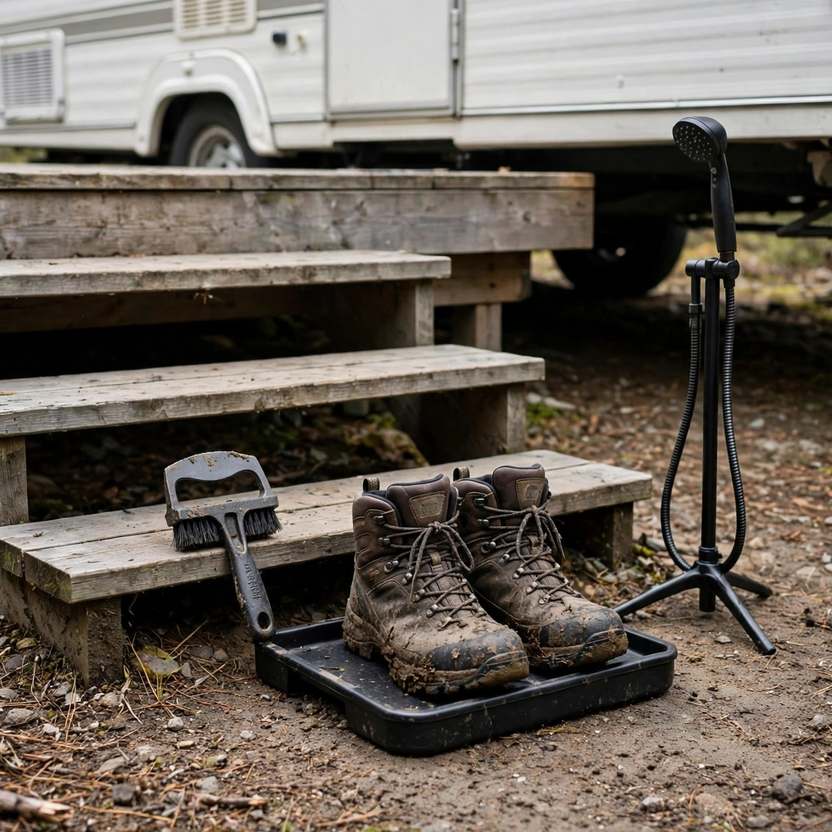
Site everything muddy at the bottom of the steps: a boot tray, a scraper and a hook for the solar shower. Feet get cleaned before the boards, keeping the deck a barefoot zone.
How to use it:
- Tray first, then one step up
- Small towel on the rail
- Dog towels in the same spot
Tip: a lipped tray contains mud instead of spreading it.
23) A Slide-Out Kitchen Shelf Beside the Deck
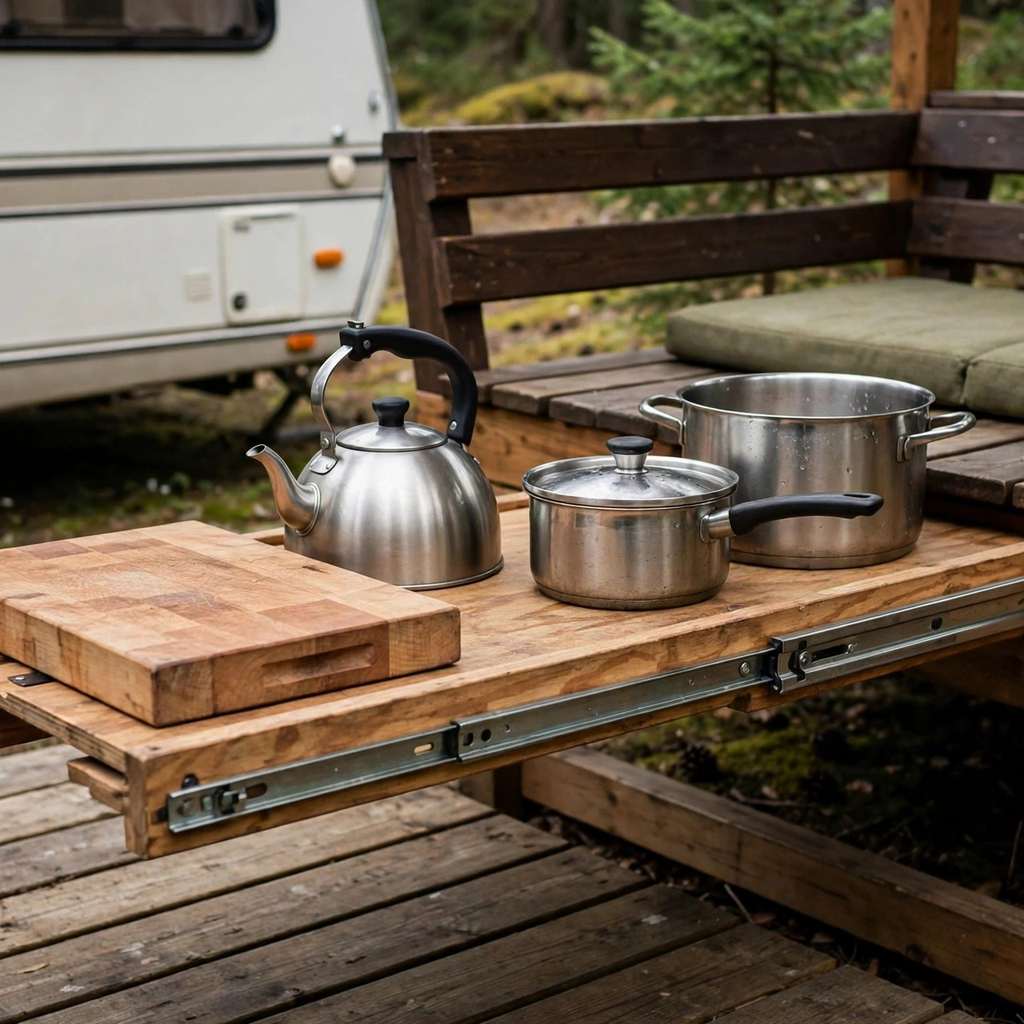
A shelf that slides or folds out beside the deck turns cooking into a social event instead of a crouch at the door. Pans sit level, and helpers reach everything from their chairs.
Best for:
- Outdoor cooking in good weather
- Keeping hot pans off grass
- Breakfast for a crowd
Tip: keep the shelf downwind so smells drift from the seating.
24) Hanging Planters on a Simple Rail

A slim rail along one edge, with planters hooked over it, gives a garden that never touches the ground. Flowers soften the edge, herbs hang near the kitchen shelf, and everything unhooks for travel.
How to style it:
- Odd numbers of planters look best
- Pot colours in groups of three
- Trailers at the ends, uprights middle
Tip: hang the heaviest planter nearest a post.
25) A Deck Awning Extension for Shade and Shelter
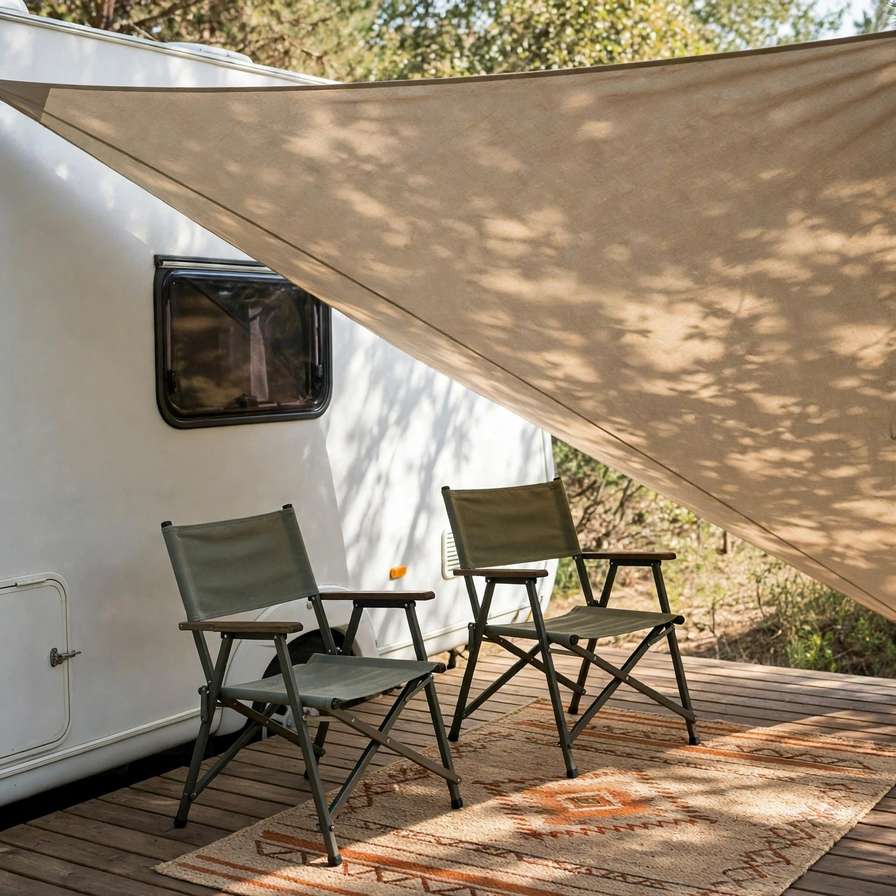
When the camper’s awning is small or absent, a triangular sail cloth rigged from the roof rail to two poles extends your shelter. It shades the deck at noon and packs into a stuff sack.
Why it works:
- Shade without a heavy structure
- Angles to follow the sun
- Doubles as a windbreak dropped low
Tip: rig one corner lower so rain runs off instead of pooling.
26) Painted Deck Boards in One Cheerful Colour
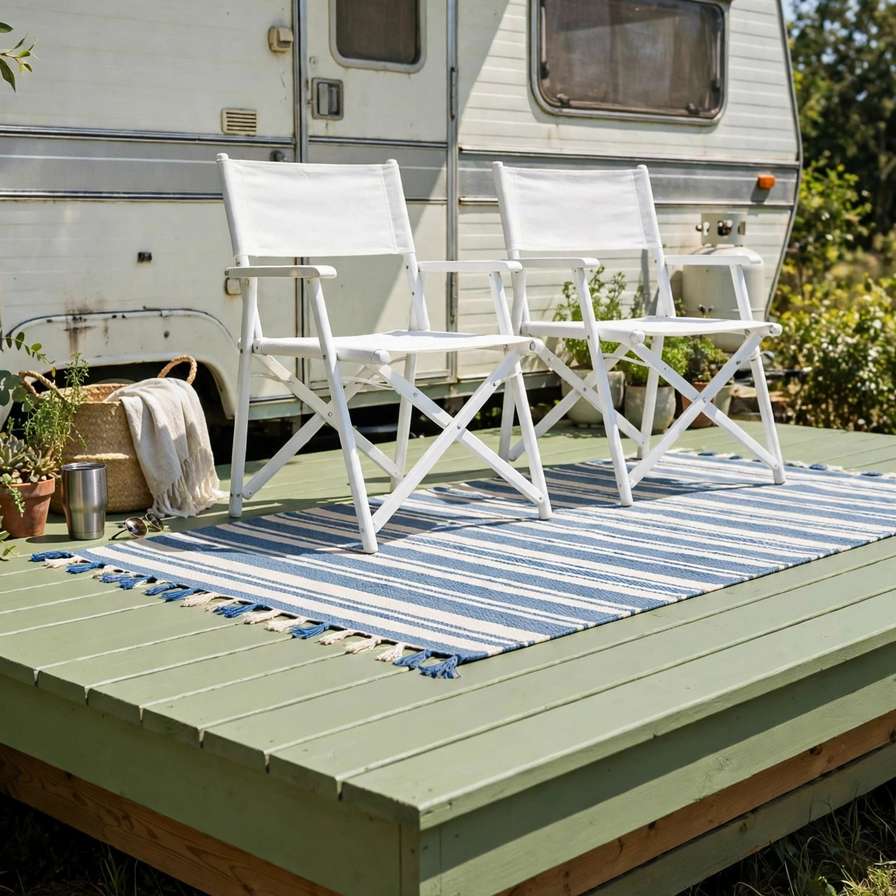
Deck paint transforms tired boards in an afternoon. One cheerful colour — sage, soft blue or terracotta — hides patchwork timber, protects the wood, and makes your pitch recognisable across the site.
How to use it:
- Exterior decking paint, never gloss
- Paint the edges for a finished look
- Leave one test board unpainted
Tip: paint in dry weather at home so boards arrive fully cured.
27) A Fire-Bowl Corner Kept Safely Beside the Deck
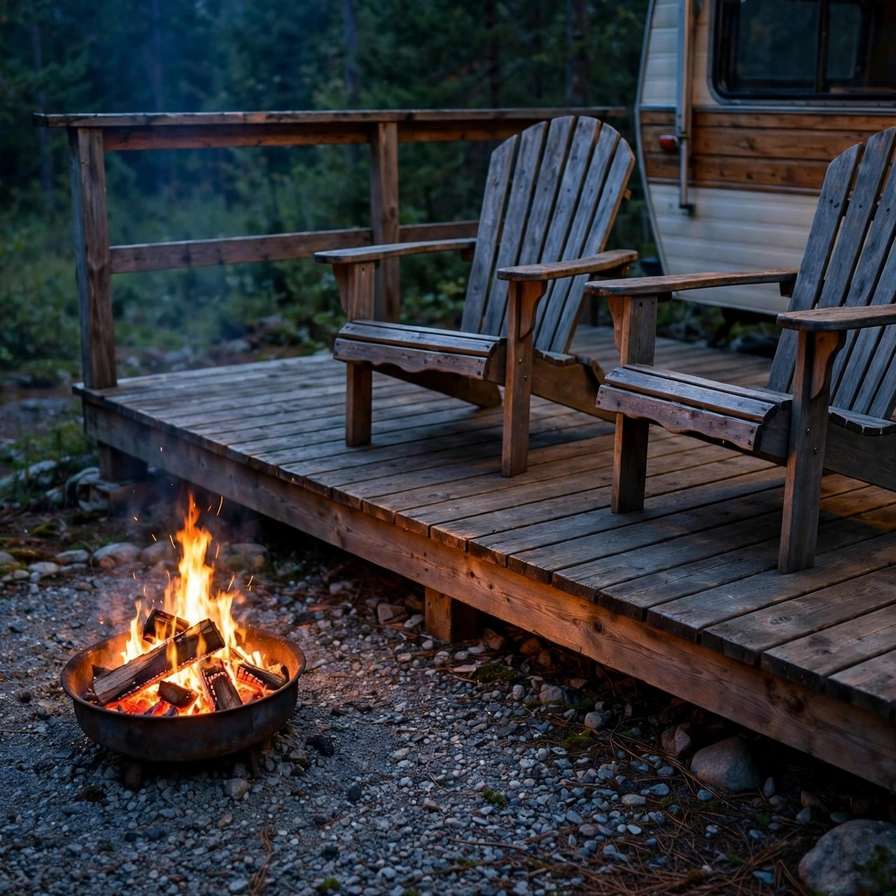
Fire belongs beside the deck, never on it. Set a fire bowl on gravel a safe stride from the boards, turn chairs towards it, and enjoy the glow without scorch marks.
Best for:
- Cool evenings after dinner
- Toasting and storytelling
- Sites allowing contained fires
Tip: keep a bucket of water by the steps whenever it is lit.
28) A Children’s Play Corner With a Low Border
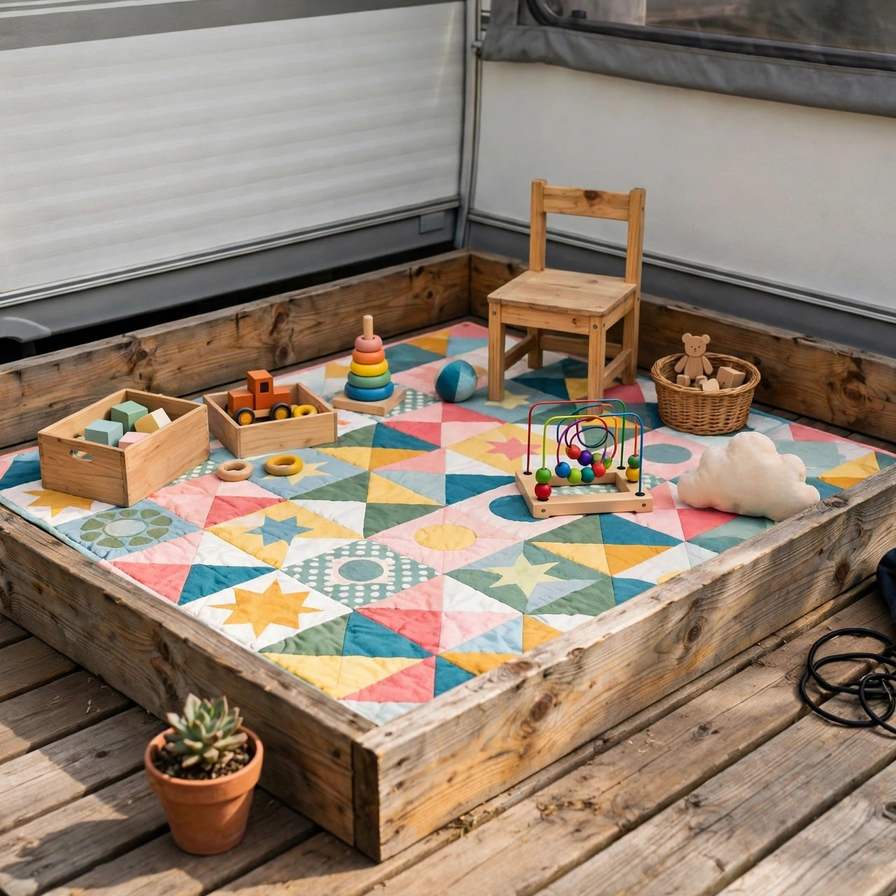
A low border across one corner gives children a kingdom of their own. Toys stay inside it, grown-ups keep the rest of the deck, and everyone knows where the chaos lives.
Why it works:
- Toys stop spreading everywhere
- Children feel the corner is theirs
- The border doubles as a seat
Tip: make the border removable for adult use after bedtime.
29) A Pet-Friendly Corner With Shade and a Tether Point
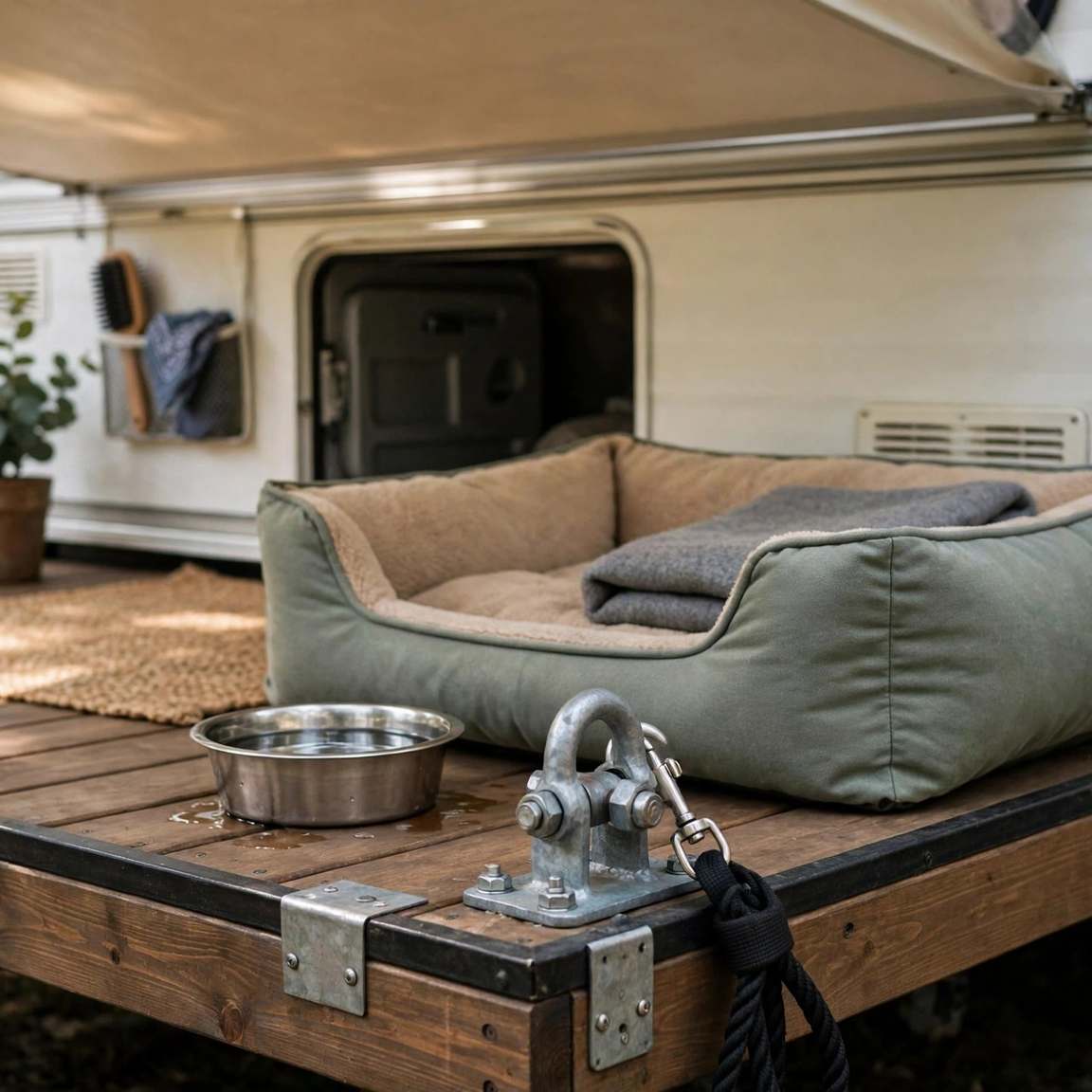
Dogs deserve deck planning too. A shaded corner with a bed, a heavy water bowl and a tether point screwed to the frame lets your dog watch the site without tangling around chair legs.
How to style it:
- Shade first; dogs overheat quietly
- Raised bed keeps joints off boards
- Bowl where it cannot be kicked
Tip: clip the tether to the frame, never a loose board.
30) Low Lounge Seating for Stargazing Nights
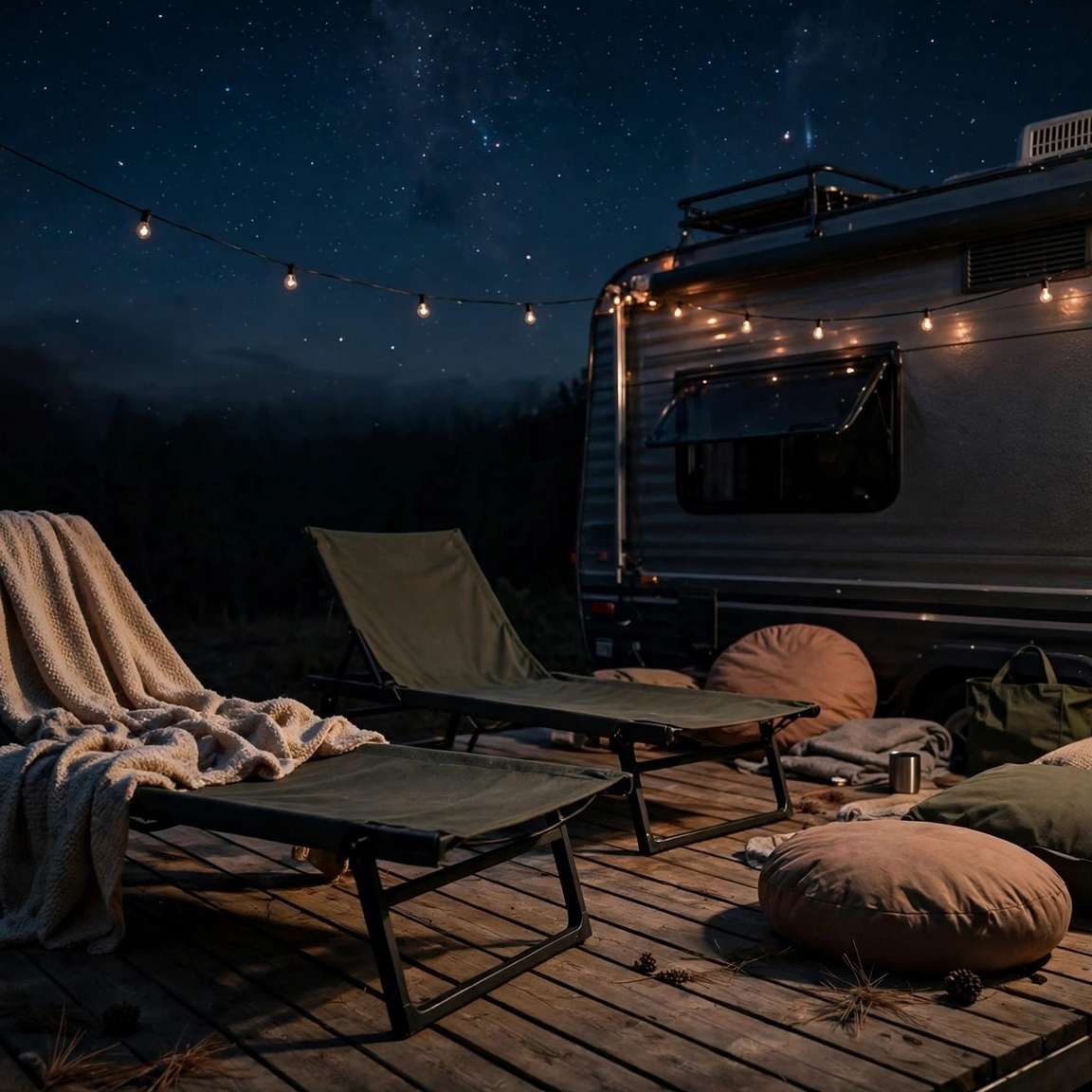
On clear nights the deck becomes an observatory. Low loungers or floor cushions let you lean back properly, a blanket defeats the chill, and the camper roof blocks site lights so stars do the rest.
Best for:
- Clear, dark-sky sites
- Slow evenings after children sleep
- Meteor showers and satellite spotting
Tip: give your eyes ten dark minutes; stars arrive slowly.
31) A Hammock Stand Set Beside the Deck
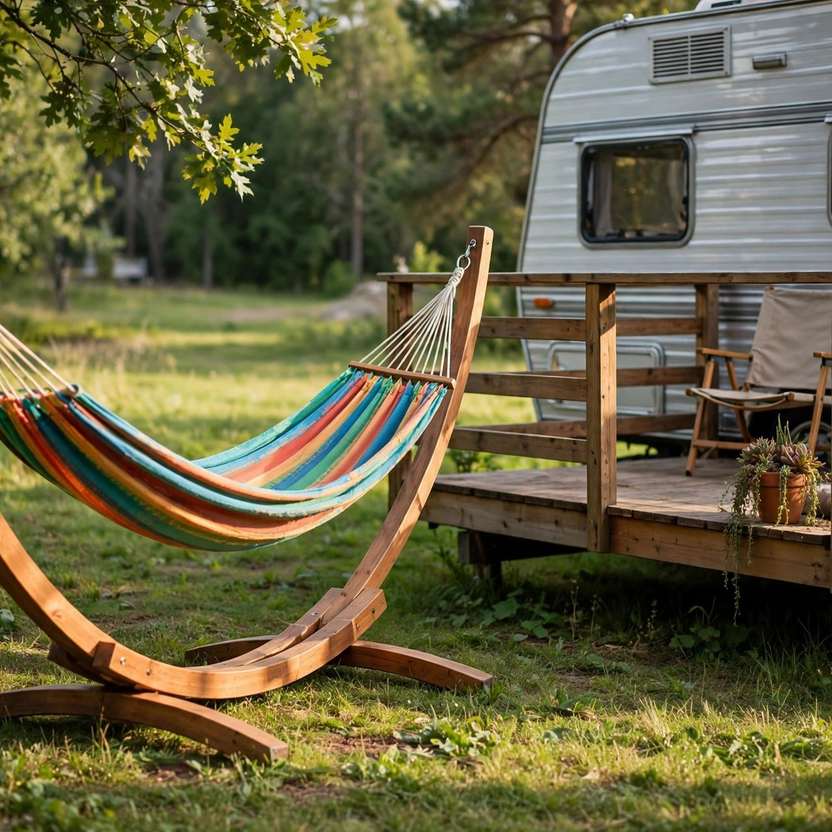
No trees, no problem: a freestanding hammock stand parks happily on the grass beside the deck. Naps happen within earshot of the kettle, and the stand folds away when space is needed.
Why it works:
- Works on treeless pitches
- Moves to follow sun or shade
- Guests fight over it politely
Tip: position the stand with the head end in shade.
32) Rustic Log Edging Around a Ground-Level Deck
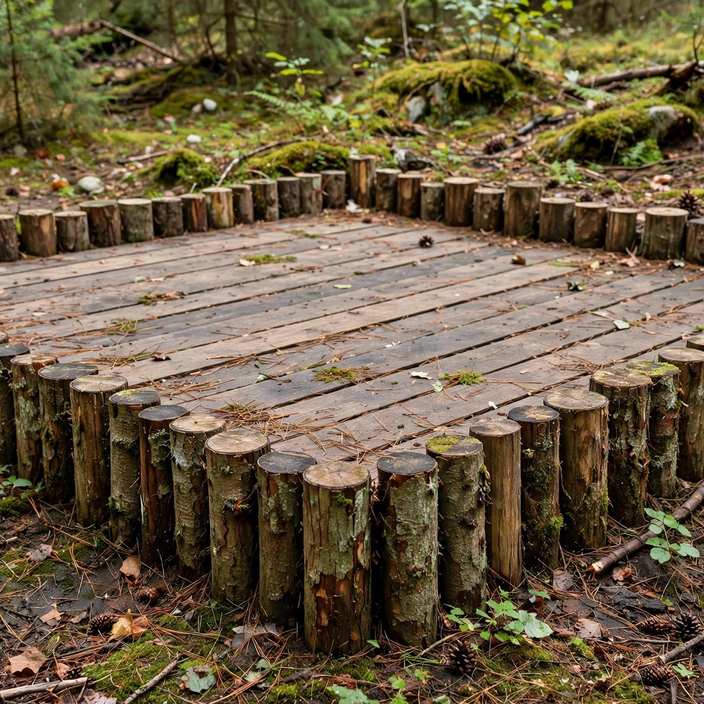
Short log rounds stood upright around a ground-level deck hide the gap beneath the boards and make the platform look grown from the landscape. It suits woodland pitches perfectly.
How to style it:
- Vary heights slightly for natural line
- Sink each log a third down
- Leave a gap at the steps
Tip: line the inside with landscape fabric to stop soil washing under.
33) Under-Deck Storage Crates on Wheels

The space beneath a raised deck is a free cupboard. Shallow crates on wheels slide under carrying chairs, tools and the barbecue, then roll out smoothly instead of dragging across wet grass.
Best for:
- Bulky kit cluttering the camper
- Raised decks on longer stays
- Keeping gear dry but outdoors
Tip: label each crate’s end; luck never finds the right one first.
34) Fairy Lights Woven Through the Railing
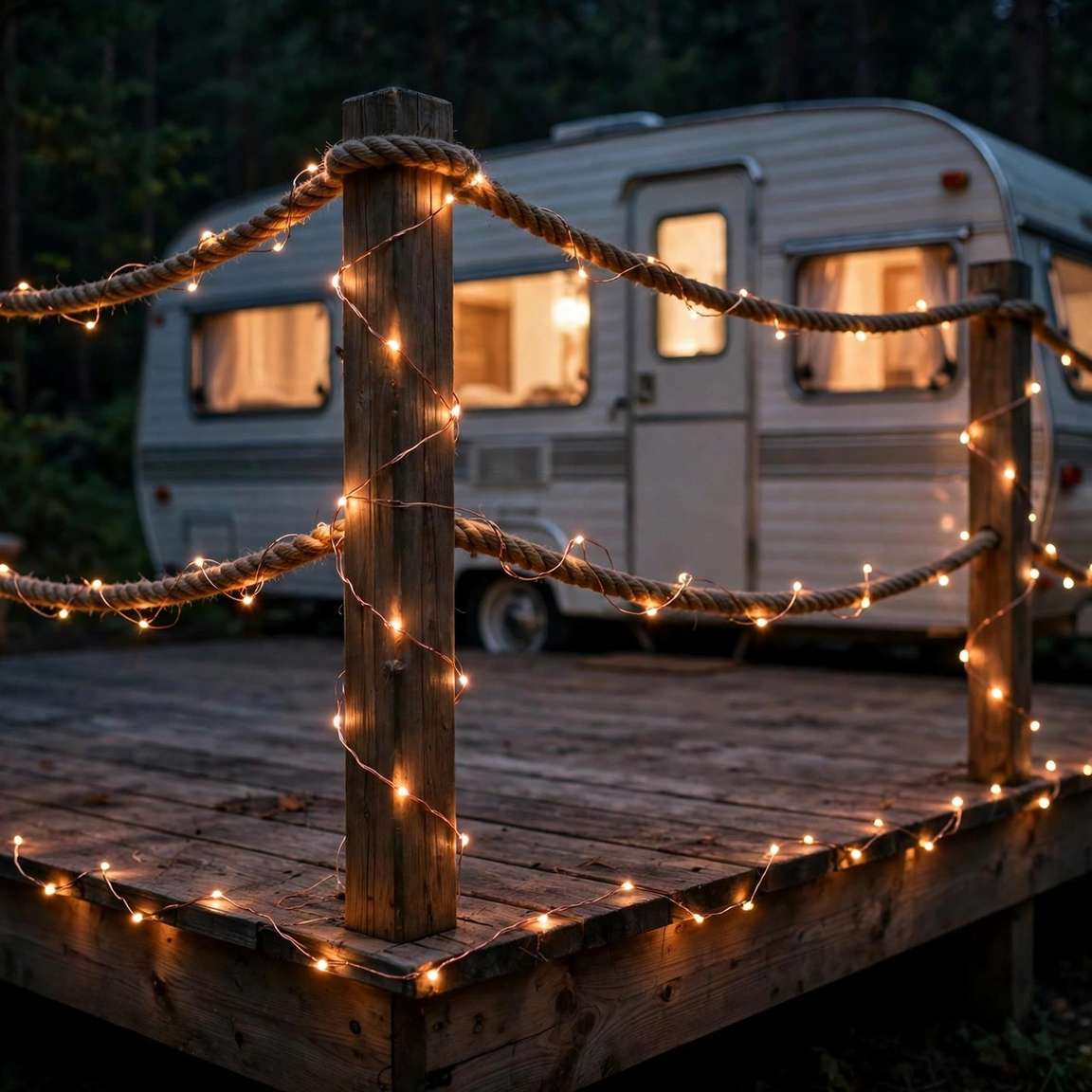
Where festoon lights are the headline, fairy lights are the whisper. Copper-wire strands weave through a rope railing, tracing the deck’s shape in tiny warm points.
How to style it:
- Weave loosely, never strained
- Battery pack tucked under a board
- One warm-white strand beats mixed colours
Tip: set a timer so the deck glows when you return at dusk.
35) A Sunrise Coffee Corner Facing the View
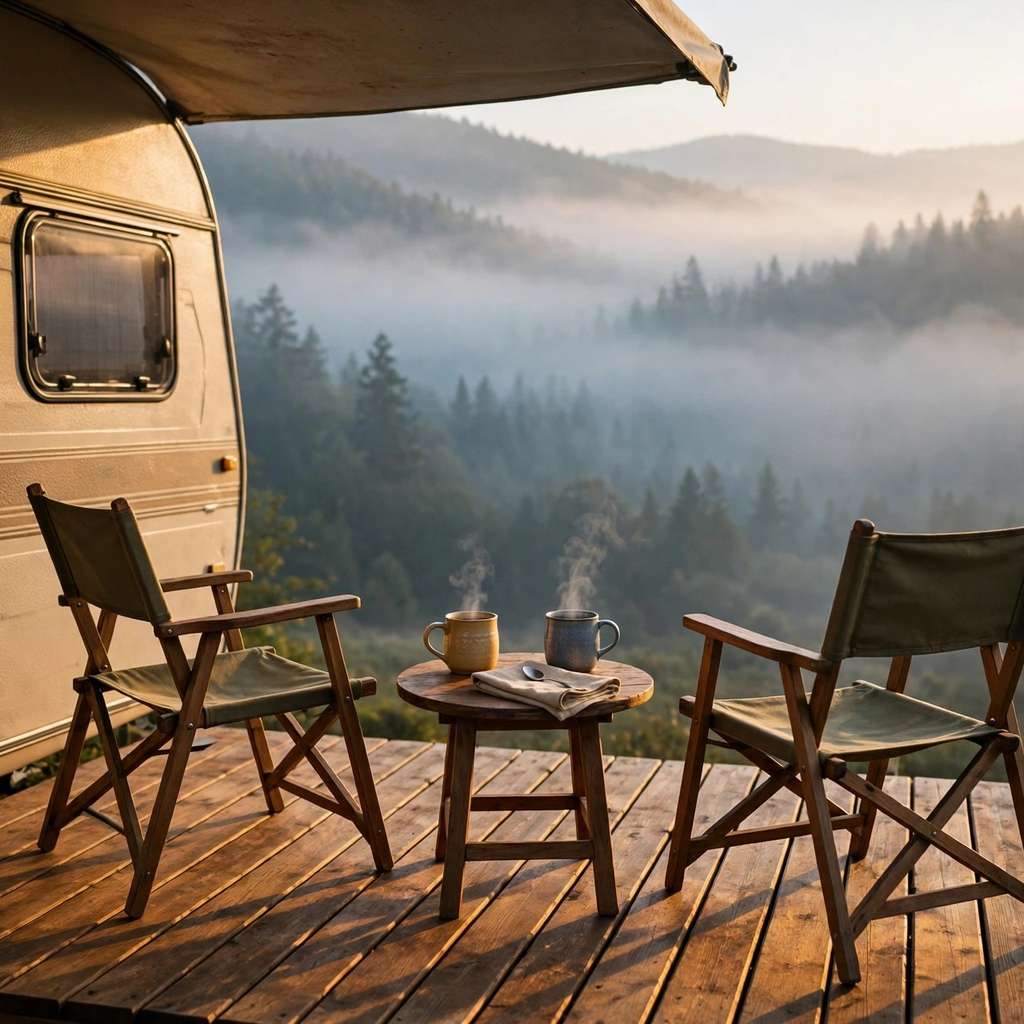
Save the deck’s best edge for the morning. Two chairs and a tiny table facing the sunrise make the first quiet half hour feel like the trip’s whole point.
Why it works:
- Starts every day gently
- Uses the deck before others wake
- Costs nothing but positioning
Tip: pitch with the view in mind; a deck faces what the camper faces.
Planning Your Pitch: Size, Ground and Layout First
Measure the space your awning covers, then plan the deck a fraction smaller so everything stays dry. Walk the pitch before laying a board: note where water pools and where the door swing lands. Good deck layout ideas all begin with that habit of planning the flow first — where people enter, where they sit, and where the clutter corner hides.
Keep the build modular. Sections, tiles and crates that stack, clip or roll will still serve you in five seasons; one giant fixed platform becomes a burden by the second trip. Do a dry run at home: build it, sit on it, pack it away. Anything annoying at home will annoy you tenfold in the rain.
Staying Safe, Level and Welcome on Site
Check the deck is firm and level before the chairs come out, and re-check after the first rain, when ground softens. Keep every flame away from the boards — a fire bowl belongs on gravel beside the deck, and if a proper fire is the evening’s plan, these backyard fire pit ideas show how to arrange seating at a safe distance. Never use a barbecue under an awning, and let embers cool fully before storage.
Leave no trace when you move on: lift the deck, scatter flattened grass, and take every screw and peg home. Mend a splintered board that evening rather than letting it catch a bare foot tomorrow.
Conclusion
A camper deck is not really about boards. It is about barefoot mornings, a level chair, the dog asleep in the shade and the last drink under the lights — comforts that turn touring into living.
You do not need all 35 ideas at once. Start with a platform and a rug, live with them for a trip or two, and let each new idea earn its place by being missed when absent.
For more hands-on projects and honest tool advice, Family Handyman is worth a browse before you build. Now measure your pitch, choose your first platform, and enjoy the campsite feeling like home.



More Stories
31 Master Bedroom Ideas for a Luxury Look
32 Low Ceiling Kitchen Lighting Ideas
22 Spring Decor Trends to Refresh Your Home