
Introduction
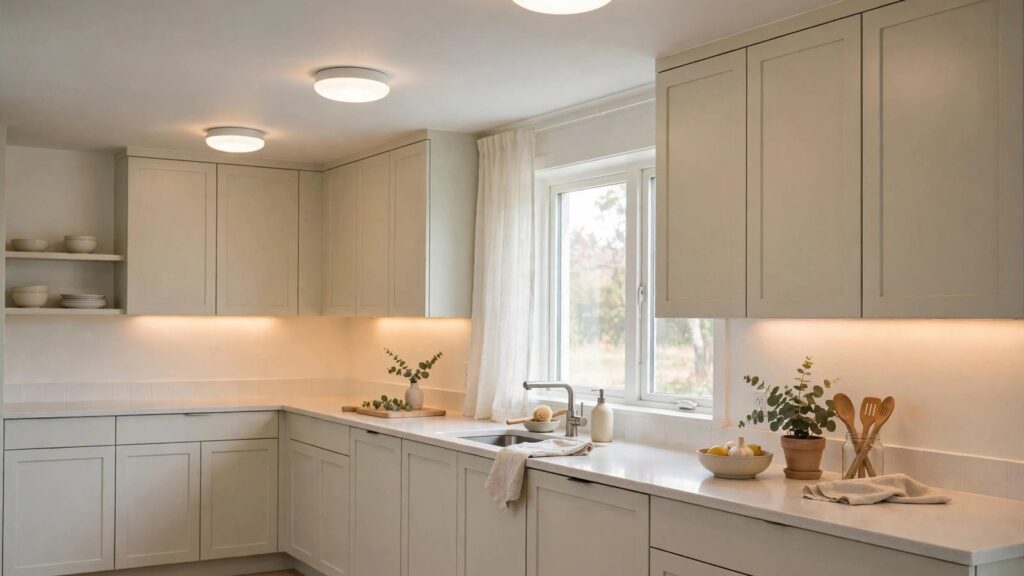
A low ceiling does not have to mean a gloomy kitchen. The right low ceiling kitchen lighting ideas work with the height you have: fixtures that sit tight to the ceiling, light layered at different levels, and pale, reflective finishes that bounce brightness into every corner.
Forget long pendants that steal headroom. In a low kitchen, the smartest light comes from fittings that barely hang, from under the cabinets, and from surfaces that reflect it back. For the broader picture, these beautiful kitchen lighting design ideas cover kitchens of every shape and height.
Here are 32 ideas made for low ceilings only, from flush mounts to toe-kick strips and glossy ceilings. Each comes with why it works and a simple tip.
1) Low Ceiling Kitchen Lighting Ideas Begin With Flush Mounts
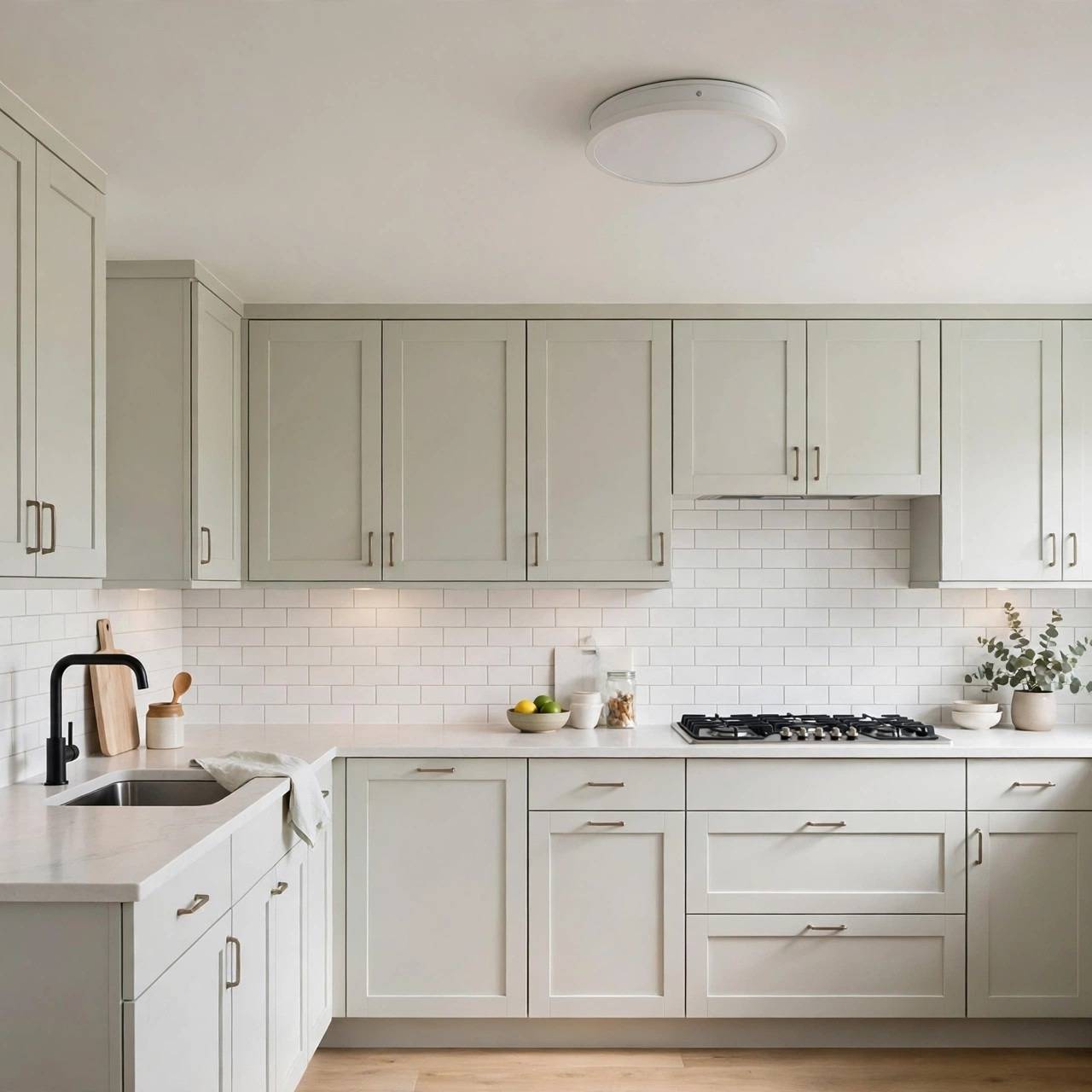
The flush mount is the low-ceiling hero: it bolts flat against the ceiling, lighting the whole room without using a centimetre of headroom. Choose a wide, shallow design for an even spread.
Why it works:
- Uses no hanging space at all
- Spreads light across the room
- Suits every kitchen style
Tip: pick a fitting wider than it is deep for the broadest spread.
2) Semi-Flush Mounts for a Hint of Drop
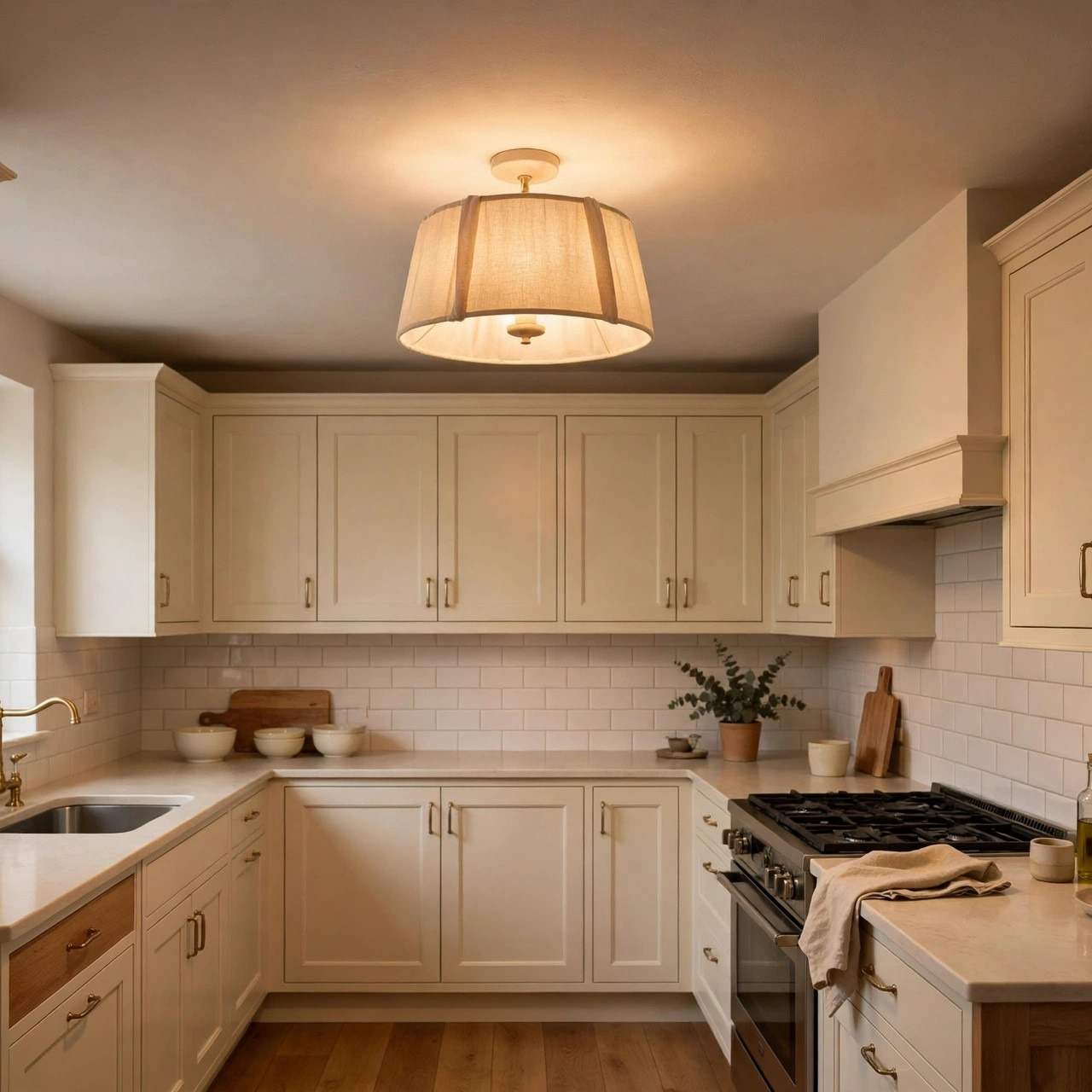
A semi-flush mount drops a few centimetres on a short stem, letting light escape around the shade as well as downwards. It looks more decorative than a flush mount, yet keeps almost all your headroom.
Why it works:
- More finished than a flat fitting
- Light spills sideways too
- Only a tiny ceiling drop
Tip: keep the drop under 15 centimetres so tall cooks never feel crowded.
3) Recessed Downlights in a Tidy Grid
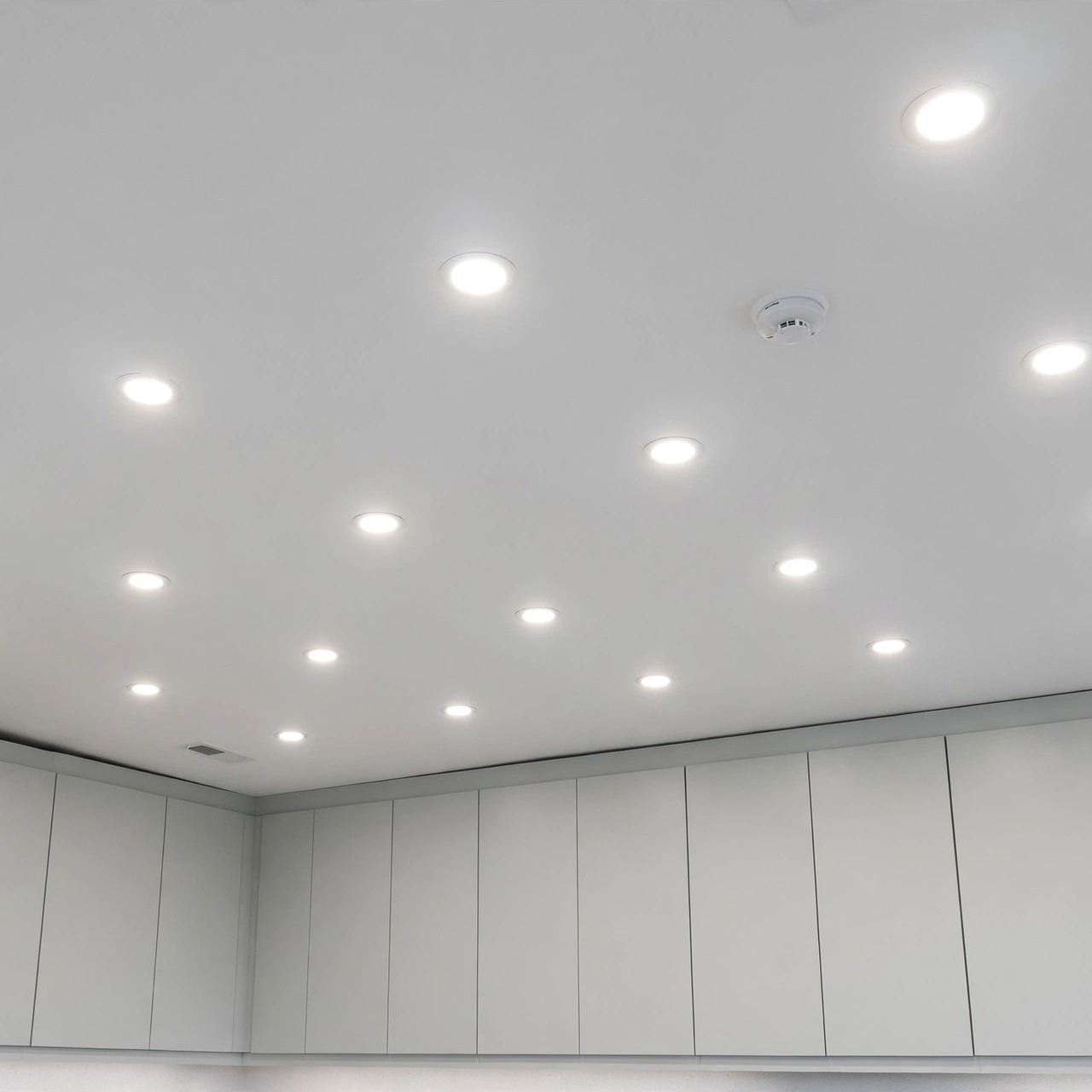
Recessed downlights disappear into the ceiling itself, so a low room gains light without a single visible fitting. A neat grid over the work zones keeps the ceiling calm and uncluttered.
How to style it:
- Space lights evenly over work areas
- Choose slim, low-profile trims
- Add a dimmer for evenings
Tip: slim LED downlights need only a shallow ceiling void, suiting older homes.
4) Ultra-Slim LED Ceiling Panels
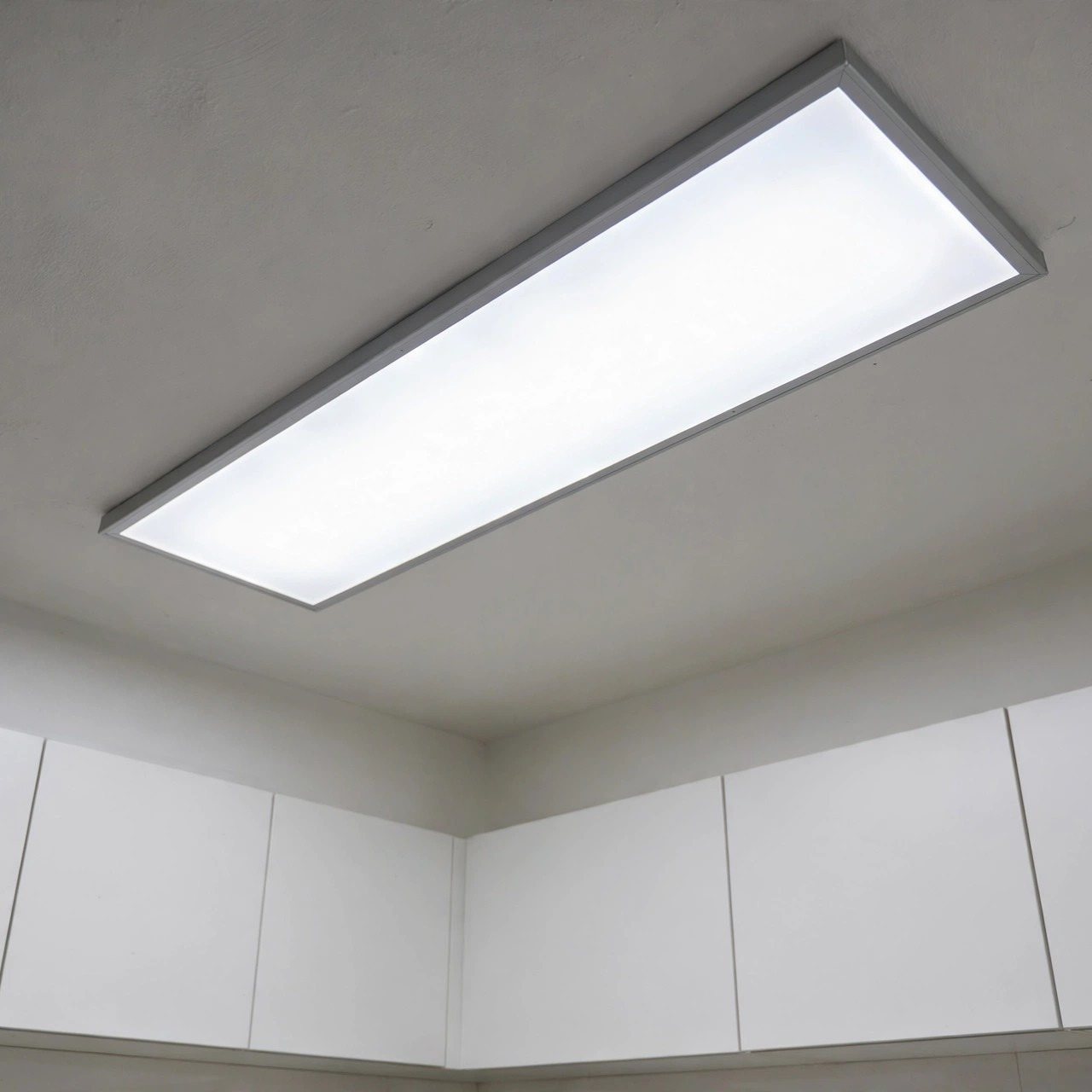
Flat LED panels are a couple of centimetres thick, yet they flood a kitchen with even, shadow-free light. One large panel can replace several smaller fittings, keeping a low ceiling smooth.
Best for:
- Windowless or north-facing kitchens
- Even light, no dark corners
- Modern, handleless cabinet schemes
Tip: choose adjustable colour temperature, so mornings feel bright and evenings warm.
5) Track Lighting That Maps Your Work Zones
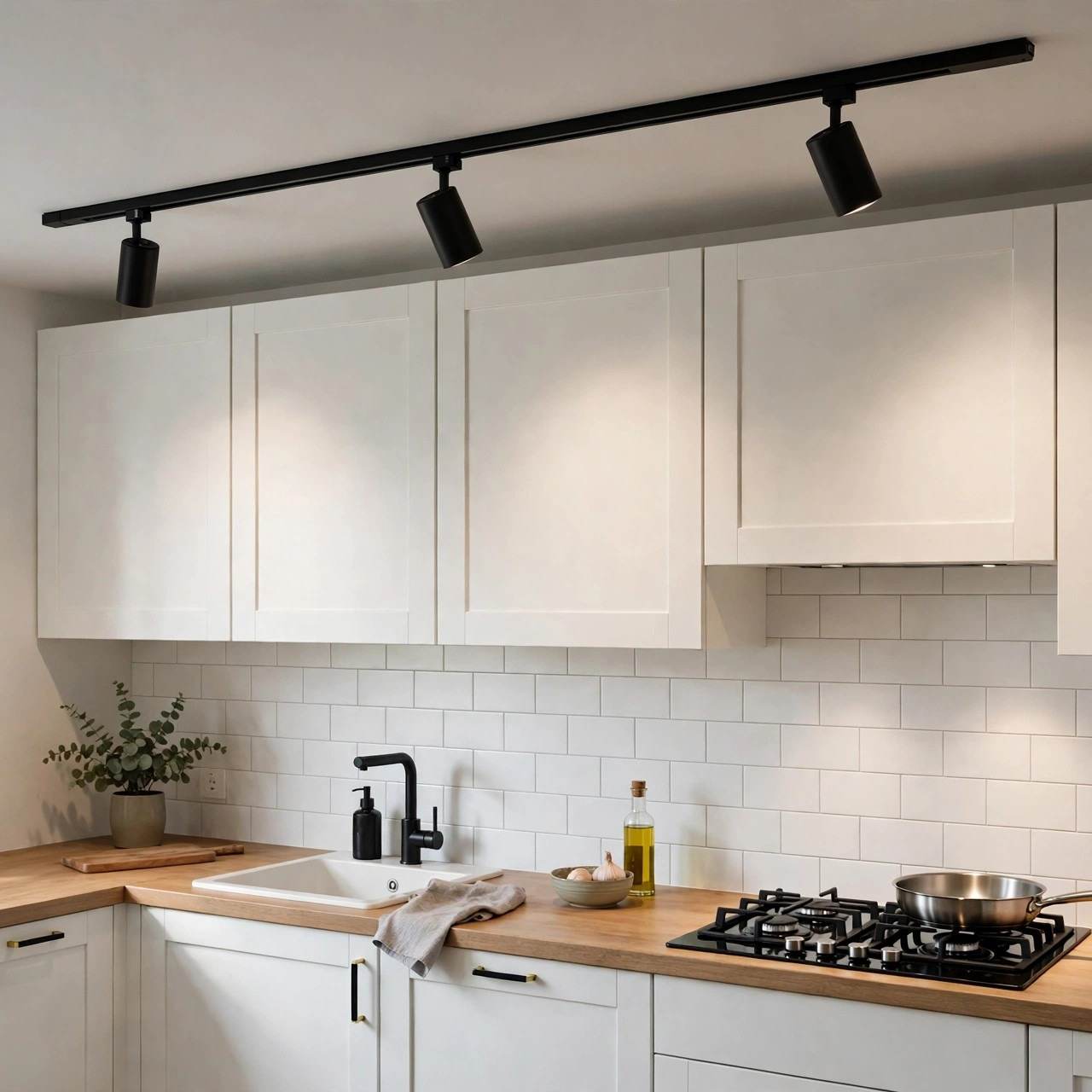
A ceiling track sits almost flat, and its adjustable heads point light exactly where you chop, stir and wash up. One track along the worktop run gives a low kitchen proper task lighting.
How to use it:
- Angle heads at worktops
- Run track parallel to cabinets
- Mix wide and narrow beams
Tip: matt black track on a white ceiling reads as a deliberate design line.
6) Under-Cabinet LED Strip Lights
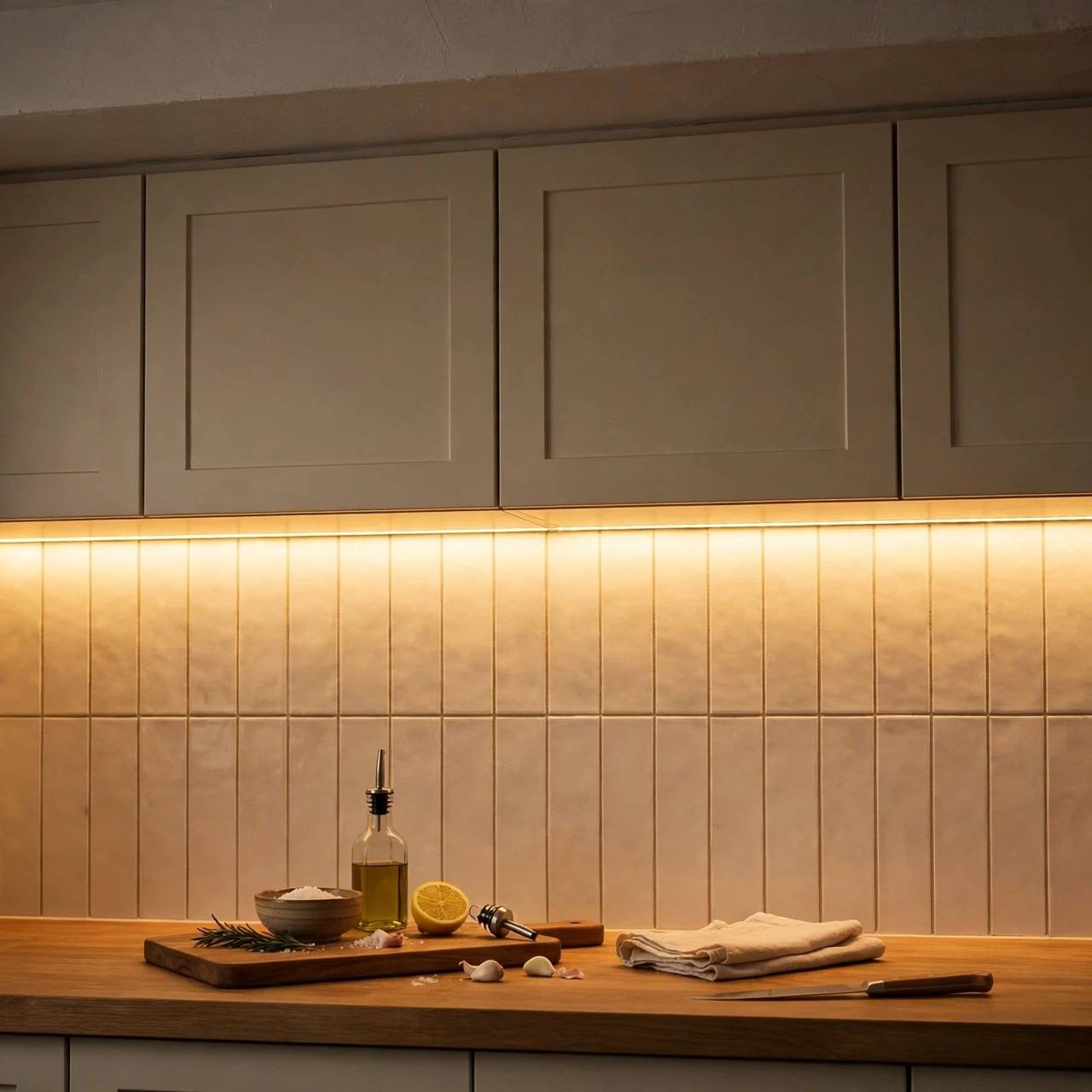
The worktop is where kitchen light matters most, and a hidden LED strip under the wall cabinets delivers it without shadows from your own body. The ceiling stays completely clear, too.
Why it works:
- Lights the worktop, not your shadow
- Invisible in daylight
- Cheap to run for hours
Tip: fit the strip near the cabinet’s front edge, over the worktop.
7) Under-Cabinet Puck Lights for Pools of Light
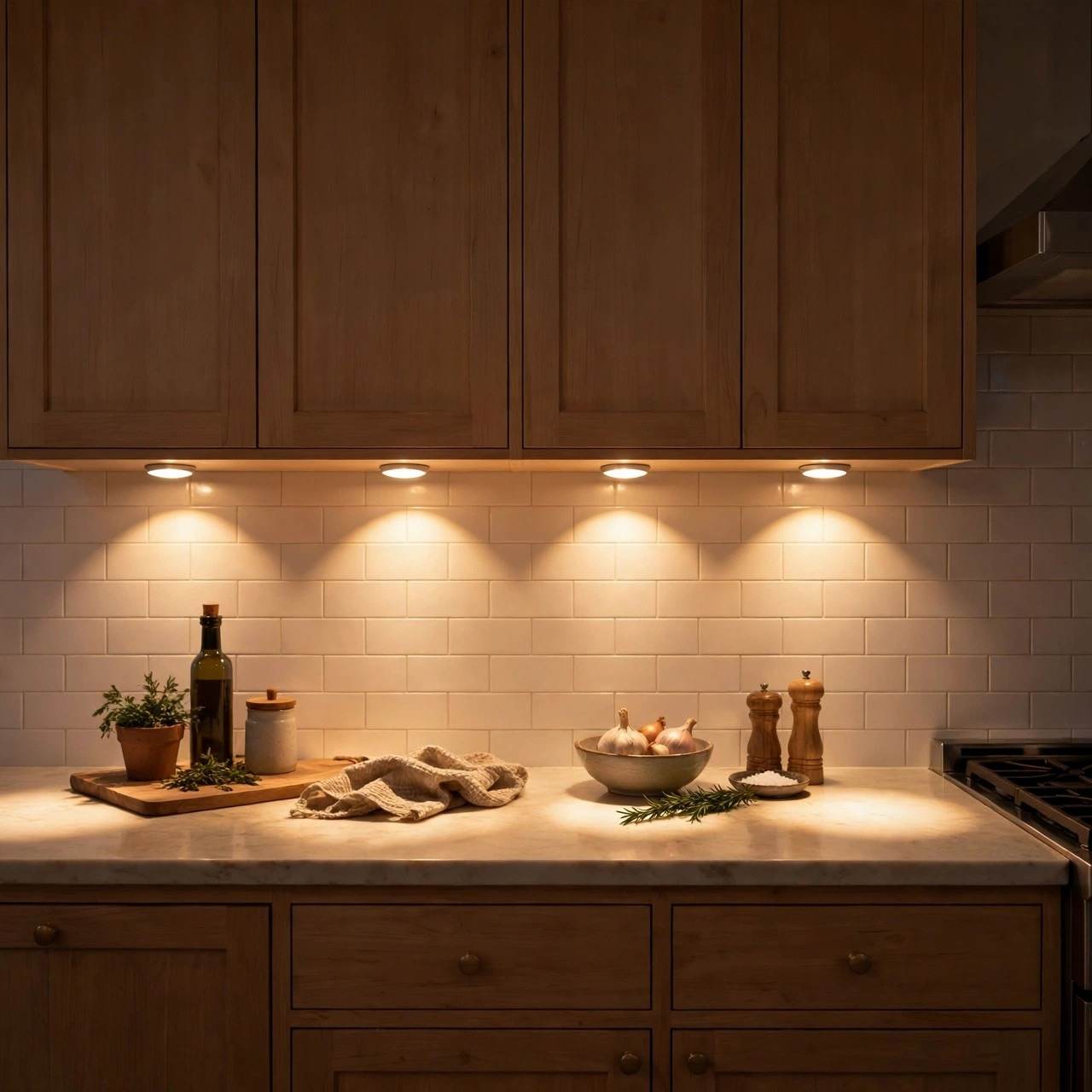
Small round puck lights sit under wall cabinets and cast soft pools of light along the worktop. They fit one at a time, so you can light the kettle corner first and add more later.
Best for:
- Renters and gradual upgrades
- Cosy pools of evening light
- Highlighting one worktop stretch
Tip: space pucks evenly along the run for a balanced rhythm.
8) Low-Profile Pendants Over the Island
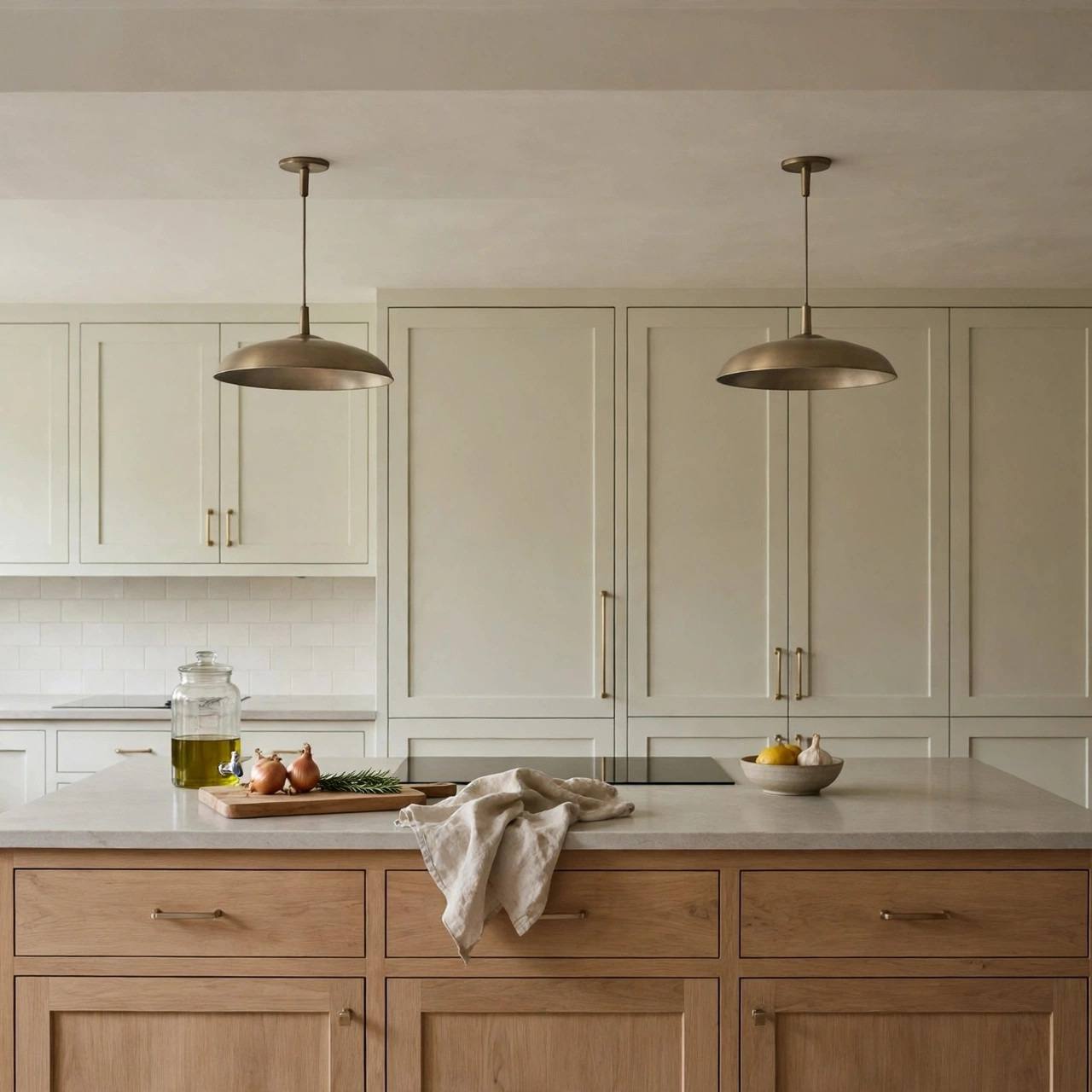
A low kitchen can still have pendants — they just need short rods and shallow shades, hung over an island where nobody walks underneath. Kept high and tight, they add a focal point safely.
How to style it:
- Use the shortest rod allowed
- Choose wide, shallow shades
- Hang over islands only
Tip: leave 75 centimetres between shade and island surface for clear sight lines.
9) Shallow Drum Shades That Hug the Ceiling
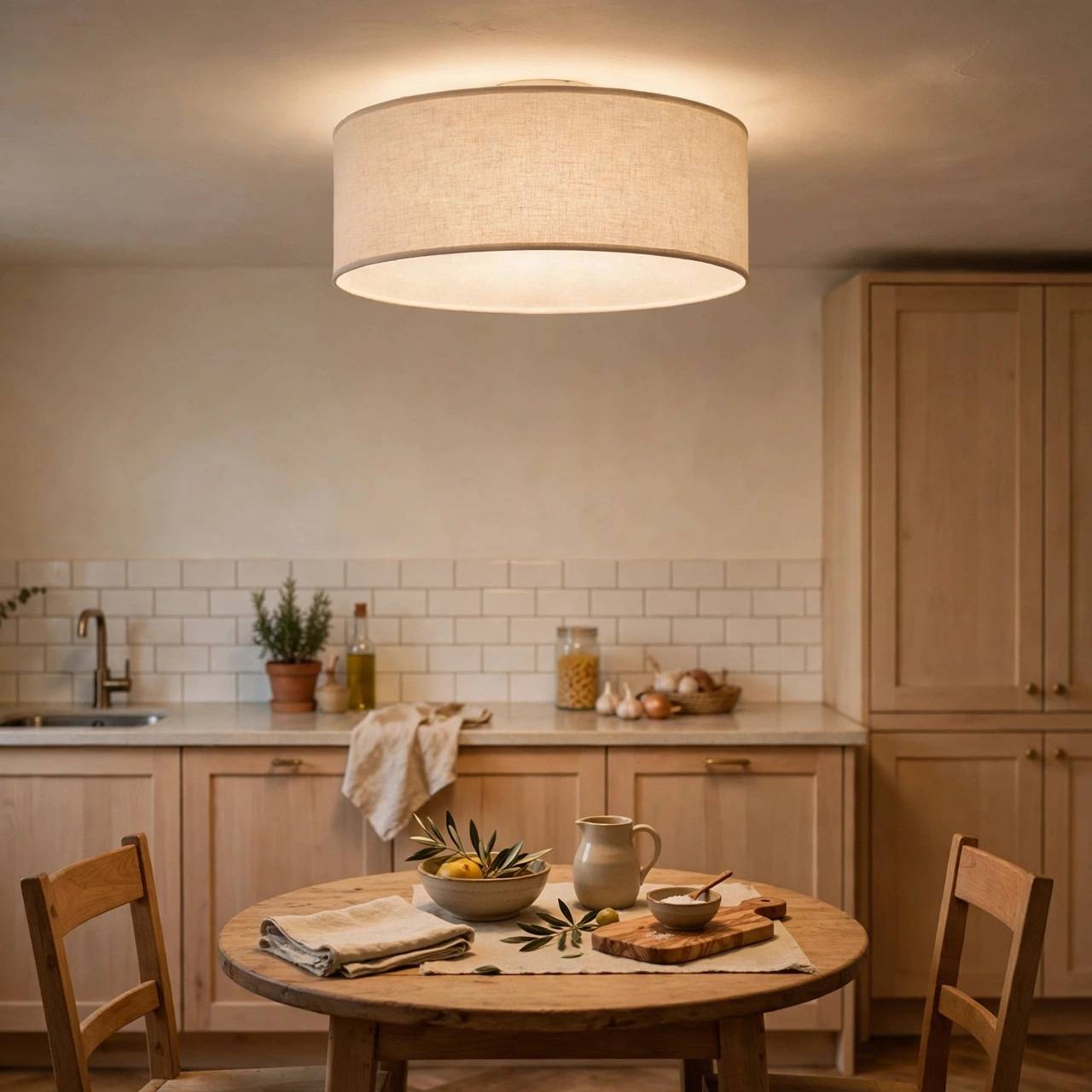
A wide, shallow drum shade gives you a fabric pendant’s softness with a flush mount’s footprint. The fabric diffuses the light, so a low kitchen feels gentle rather than stark.
Why it works:
- Soft light with no glare
- Fabric warms hard kitchens
- Barely deeper than flush mounts
Tip: choose pale, washable fabric — kitchen air is greasy.
10) One Statement Flush Mount as a Focal Point
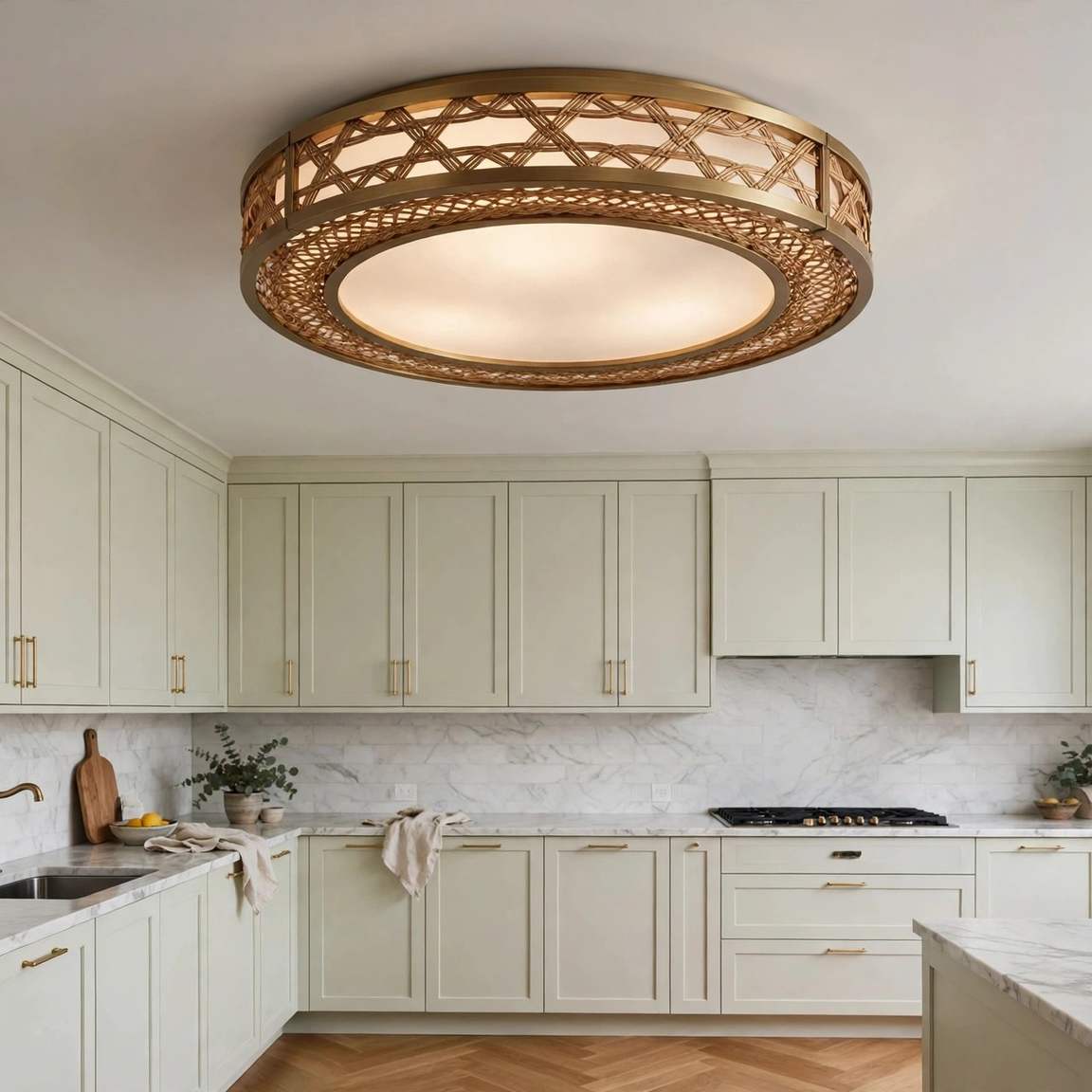
Low does not have to mean plain. One generous decorative flush mount — a brass ring, a scalloped dish, clustered globes — gives the kitchen a centrepiece while sitting flat to the ceiling.
Best for:
- Kitchens that feel plain
- One fitting instead of many
- Open-plan kitchen diners
Tip: let the statement light be the only decorative fitting in the room.
11) Clear Glass Fixtures That Keep Sight Lines Open
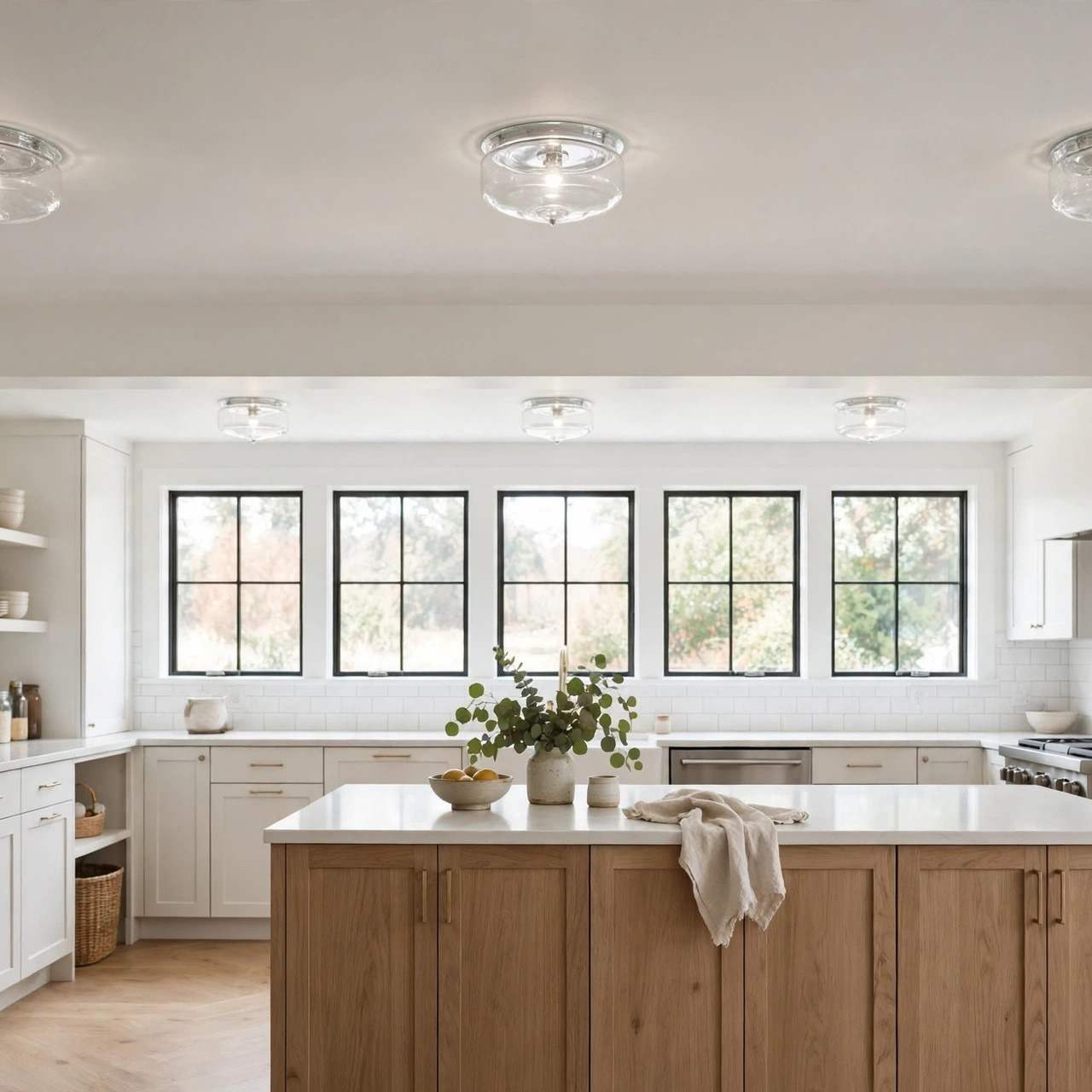
Glass shades barely register visually, so the eye travels straight past them to the far wall. That openness matters in a low kitchen: clear glass fittings light the room without lowering the ceiling visually.
How to use it:
- Choose clear, not frosted, glass
- Keep bulbs pretty, not dazzling
- Wipe glass often; it shows dust
Tip: warm filament-style bulbs look lovely through clear glass.
12) White-on-White Fixtures That Disappear
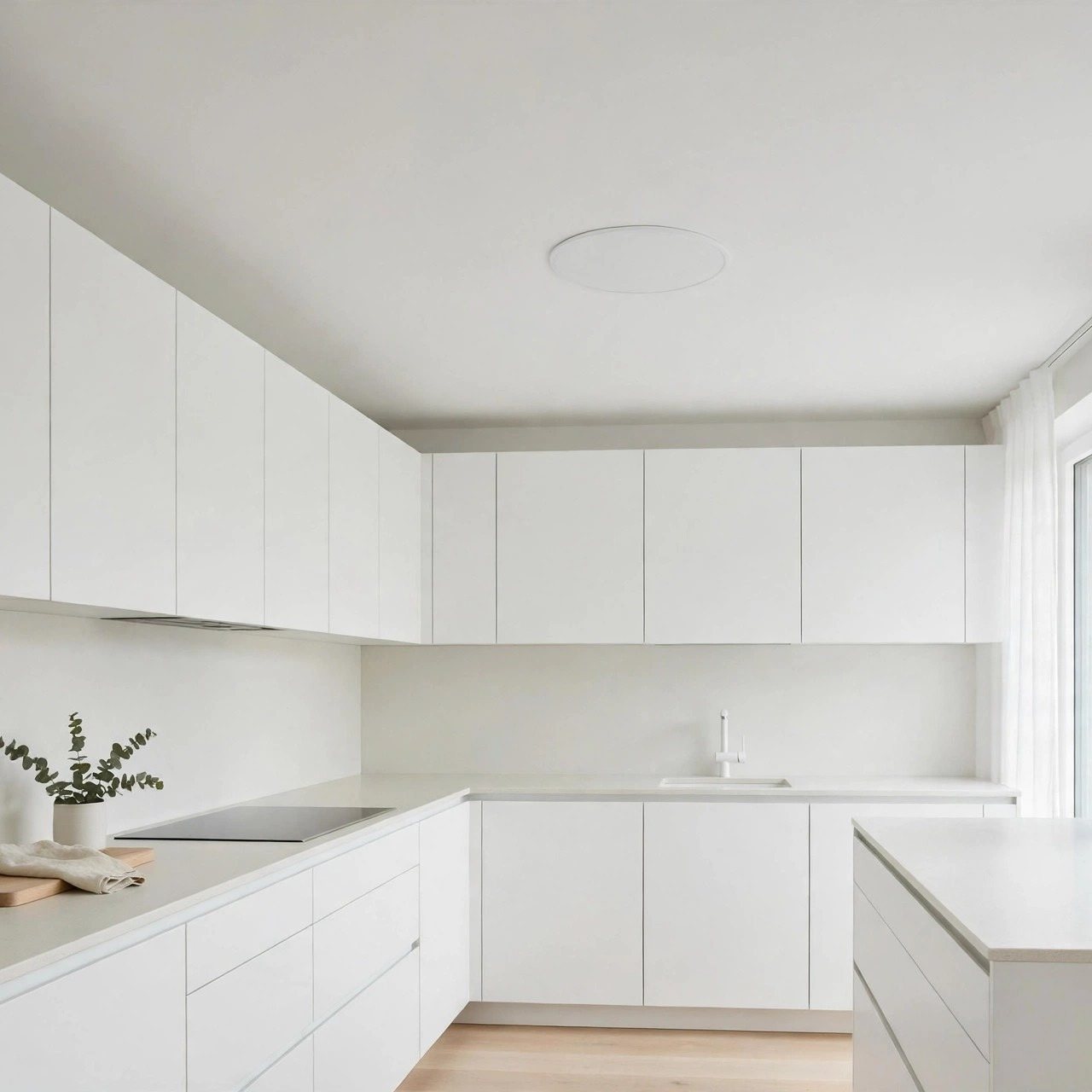
Paint the ceiling white and choose white fittings, and the lighting vanishes into the surface. With nothing dark overhead pulling the eye down, a low ceiling reads higher and the room feels seamless.
Why it works:
- No visual weight overhead
- Ceiling line stays clean
- Works in every kitchen size
Tip: match the fitting’s white to the ceiling paint for a truly invisible finish.
13) Polished Chrome Fixtures That Bounce Light
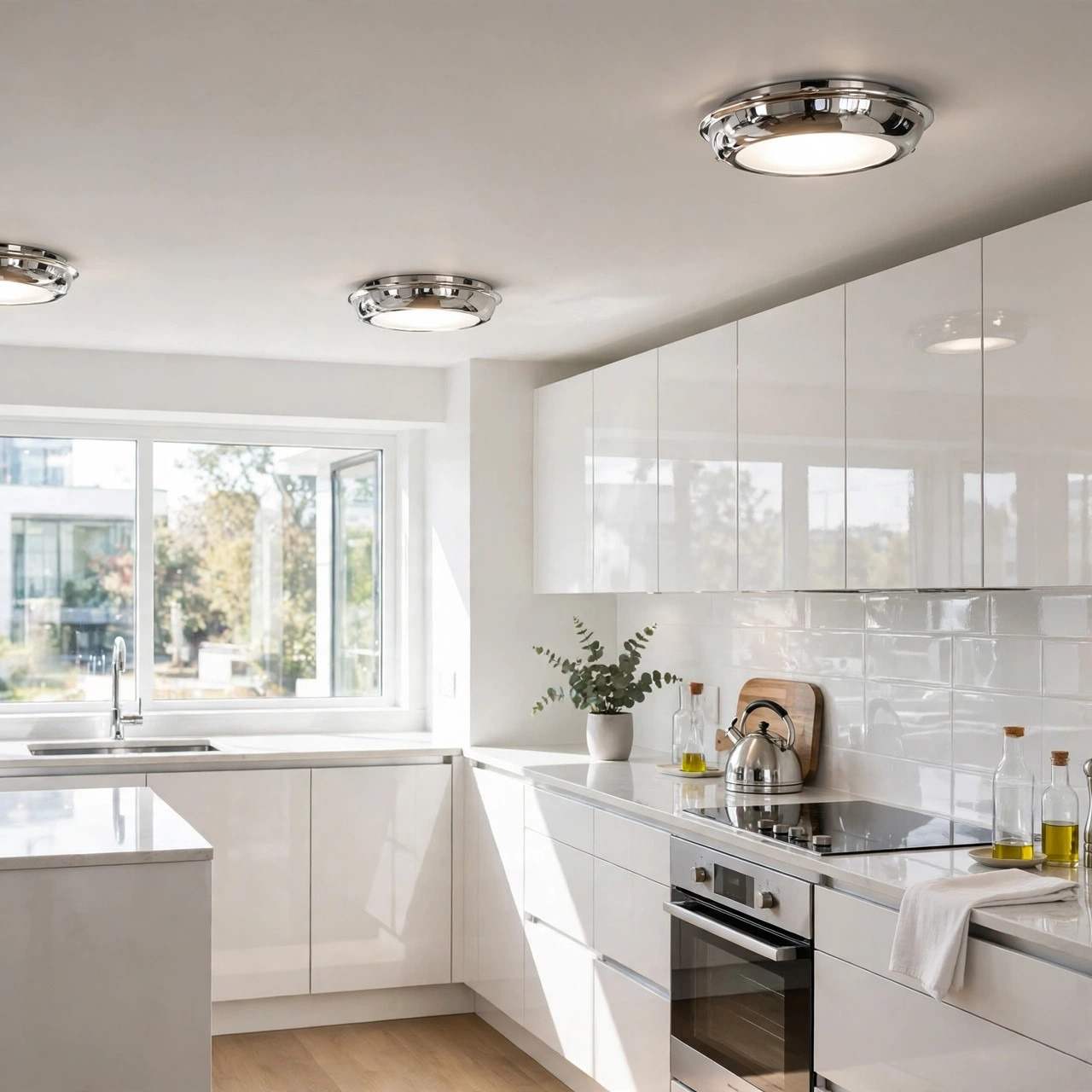
Shiny metal is a light multiplier. Polished chrome and nickel fittings catch light from windows and bulbs and scatter it around the room, so a low kitchen feels brighter than its bulb count suggests.
How to style it:
- Echo chrome in handles
- Pair with gloss cabinets
- Keep shapes simple, shallow
Tip: polished finishes show fingerprints, so save them for fittings you rarely touch.
14) Perimeter Recessed Lights That Wash the Walls
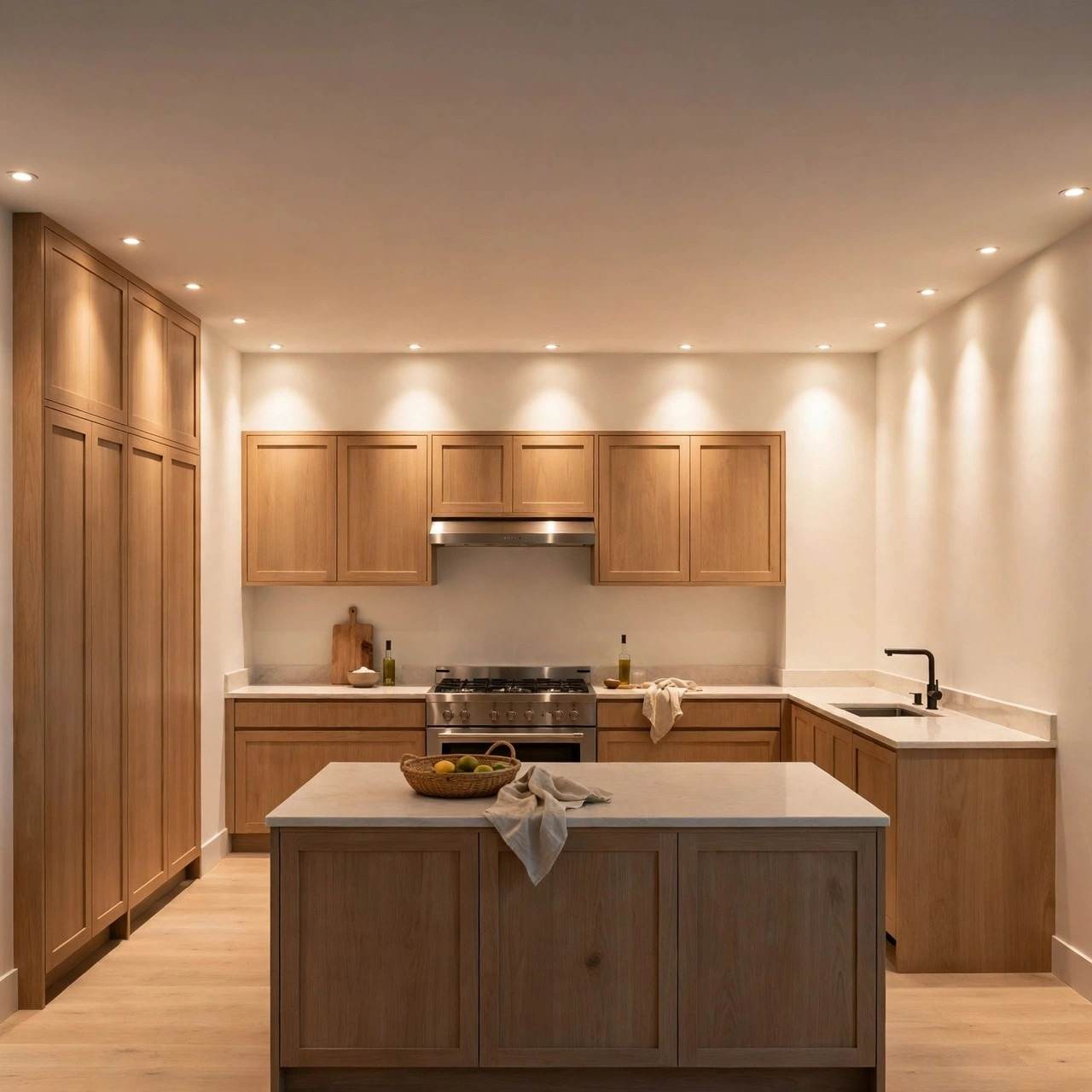
Instead of a central grid, set recessed lights in a ring near the walls and aim light down the wall surfaces. Lit walls push the room’s boundaries outward, and the ceiling feels less like a lid.
Why it works:
- Lit walls feel bigger
- No fitting in the middle
- Lovely over panelled walls
Tip: place perimeter lights 30–50 centimetres from the wall for an even wash.
15) LED Strips on Top of Cabinets for a Ceiling Glow
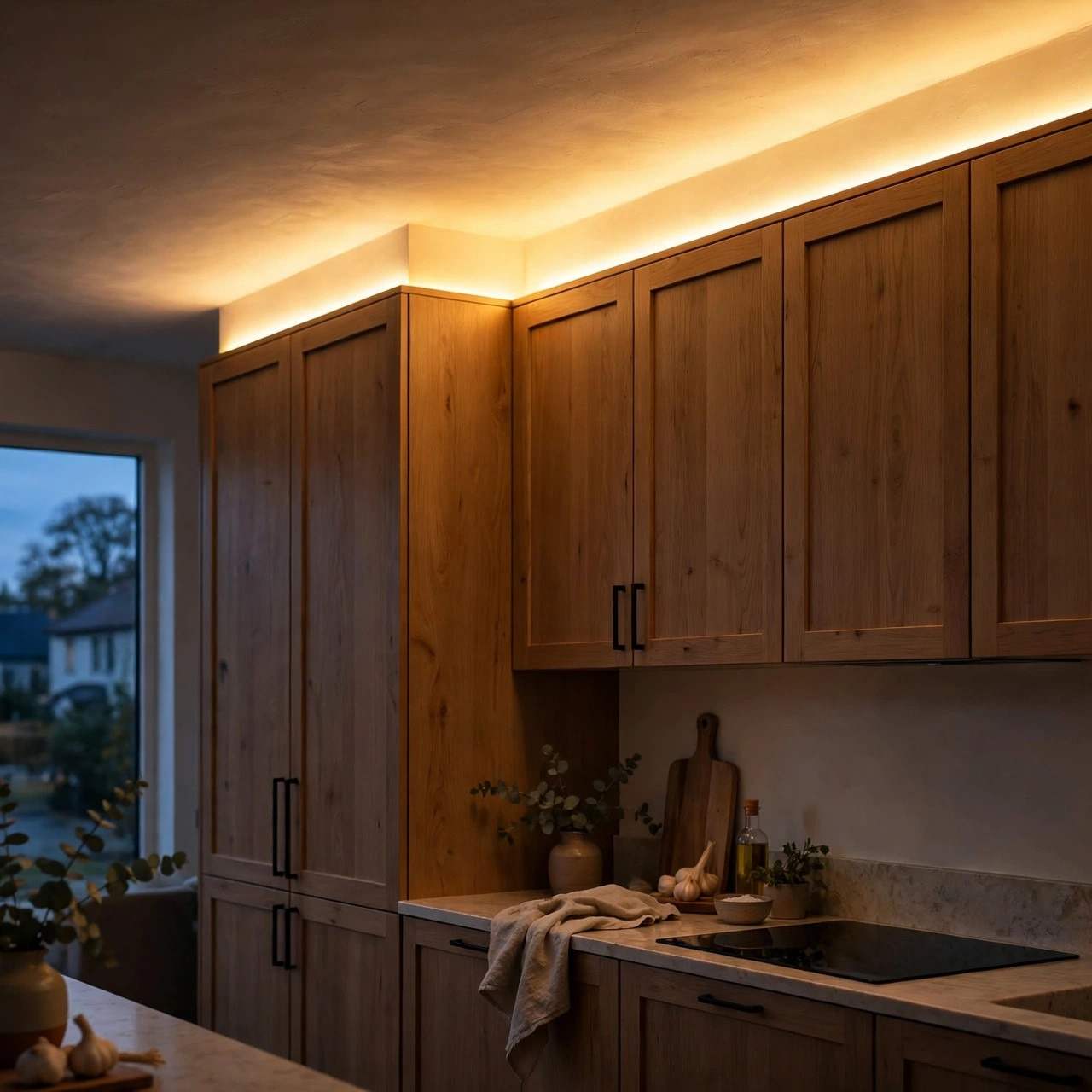
If your wall cabinets stop short of the ceiling, hide an LED strip on top of them. Light washes upwards and pools softly on the ceiling, lifting the whole ceiling plane.
Best for:
- Cabinets with a gap above
- Gentle evening background light
- Ceilings that feel too close
Tip: warm white strips feel cosiest; keep cooler tones for under-cabinet task light.
16) Short-Stem Pendants Over a Breakfast Bar
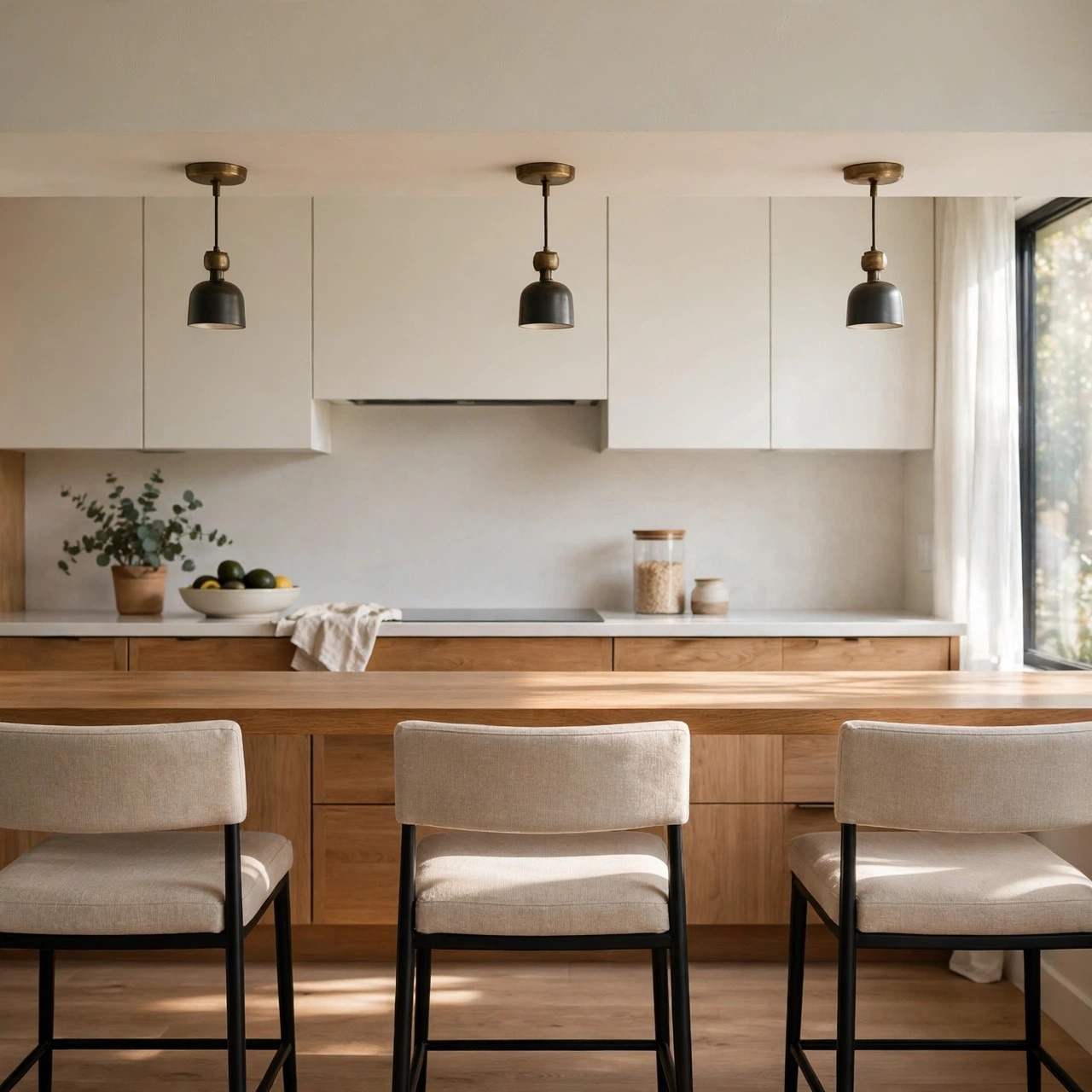
A breakfast bar is the other safe place for pendants in a low kitchen: people sit there, nobody walks beneath. Three small shades on the shortest stems give a café rhythm without eating the height.
How to style it:
- Keep shades small, light
- Line up with the stools
- Use one finish throughout
Tip: if the shortest stem still feels low, swap to matching flush mounts.
17) Wall Lights That Stretch the Room Upwards
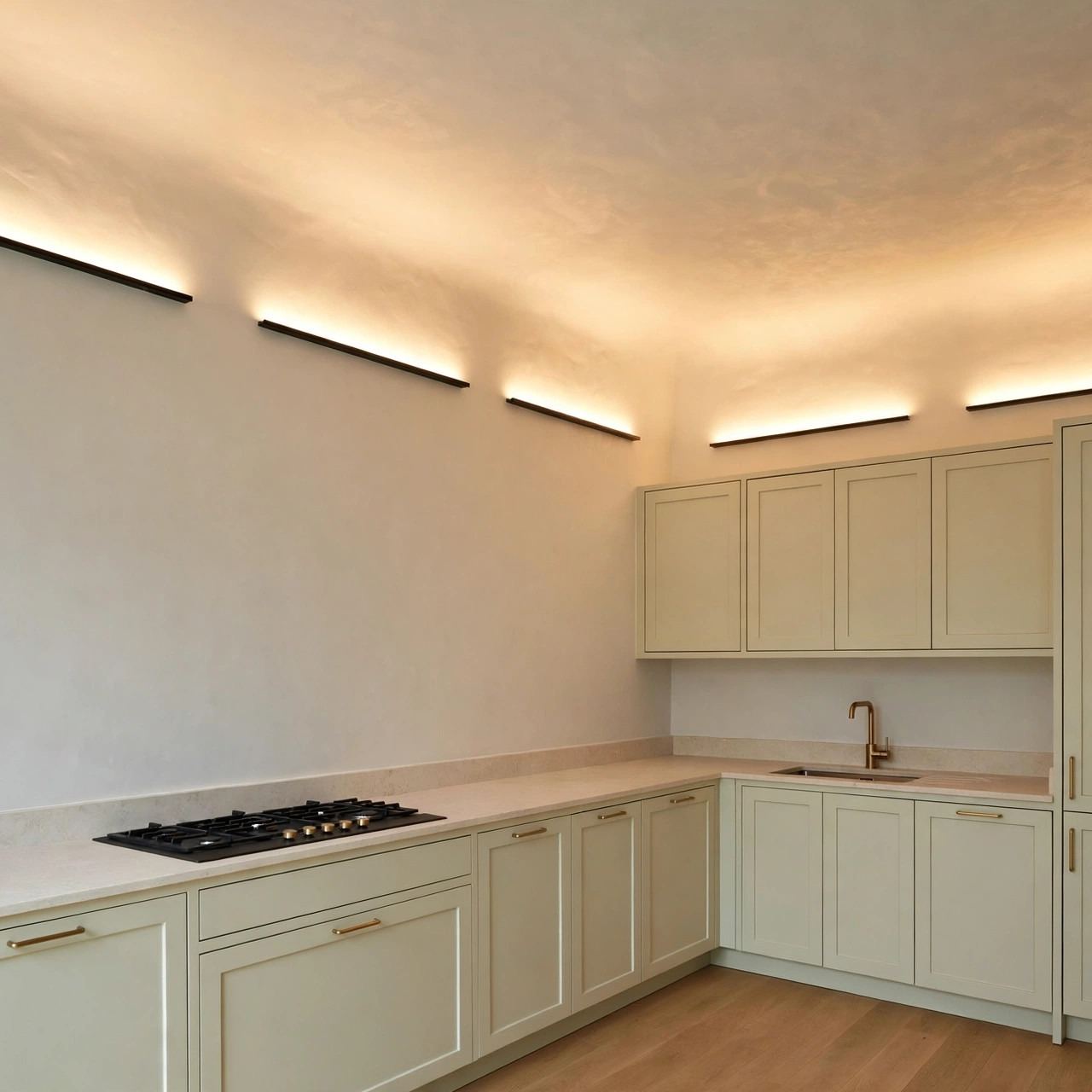
Wall lights fitted high wash light up the wall and across the ceiling, drawing the eye upwards and stretching a low room visually. They also leave the ceiling completely free of fittings.
Why it works:
- Upward light stretches rooms
- Ceiling stays completely clear
- Adds a hotel-like layer
Tip: place wall lights above eye level so they never glare while you cook.
18) Toe-Kick Lighting That Leaves the Ceiling Clear
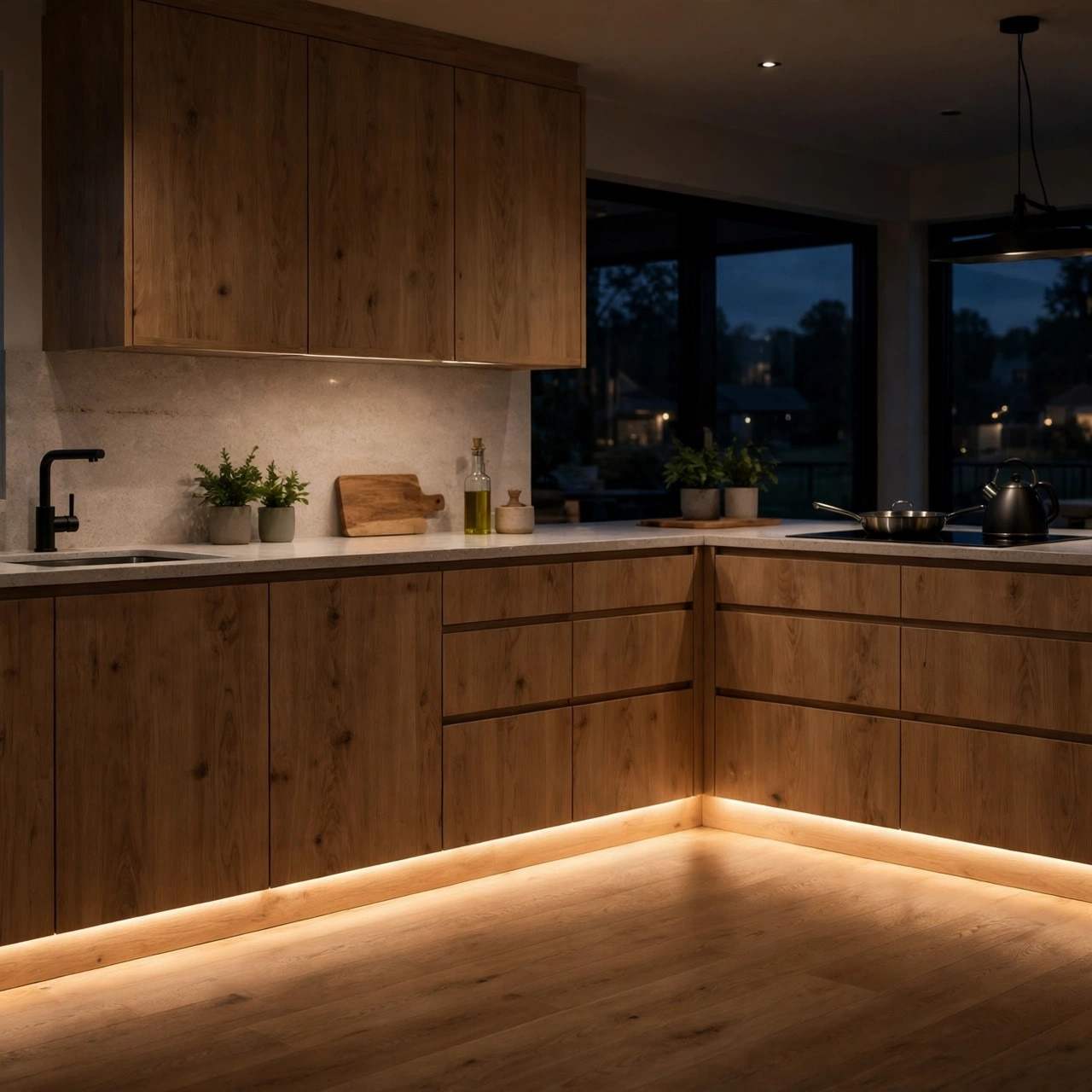
A strip along the plinth at the base of your cabinets lights the floor and nothing else. It is the gentlest night light, and with all the drama at floor level, the ceiling stays out of the story.
Best for:
- Night-time kitchen trips
- A floating-cabinet illusion
- Layers without ceiling fittings
Tip: put toe-kick lights on a separate switch, so they can glow alone.
19) A Slim Light Over the Sink
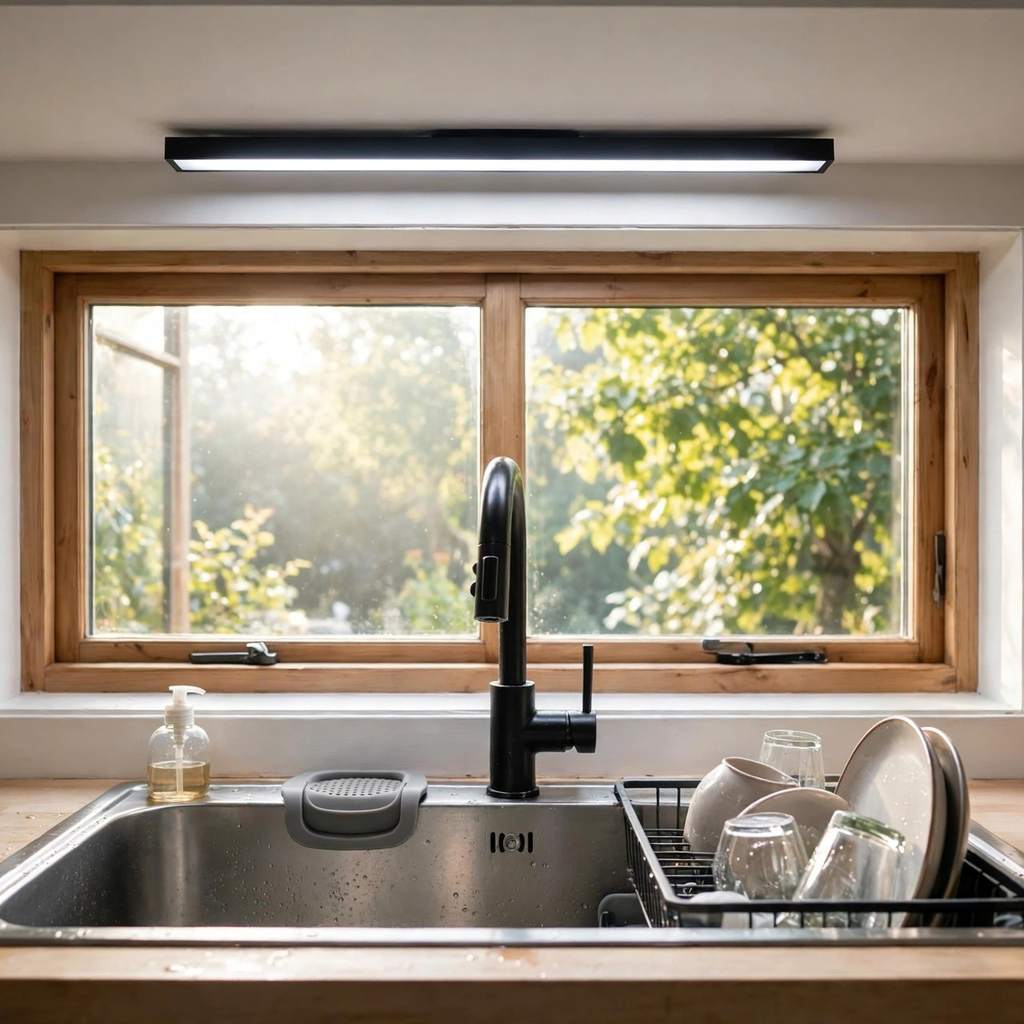
The sink is often a low kitchen’s darkest spot, tucked under a window or wall cabinet. A slim bar light or single downlight directly above it ends the gloom without adding bulk overhead.
How to use it:
- Centre it over the sink
- Choose steam-rated fittings
- Match finish to the taps
Tip: under a window, a small downlight in the soffit above the glass works beautifully.
20) A Faux Skylight Panel for a Windowless Kitchen
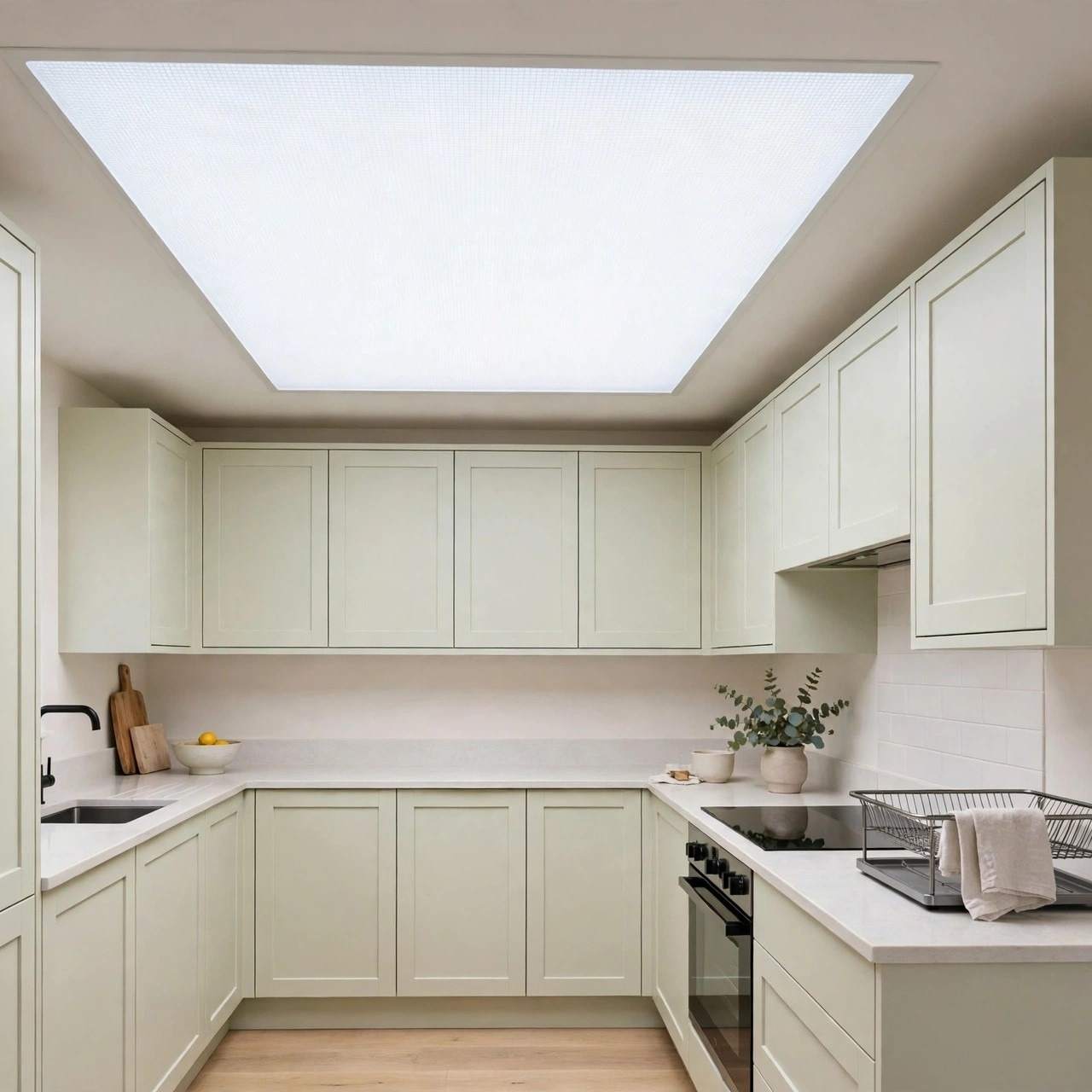
Some low kitchens have no window at all. A large, flat daylight panel fitted flush to the ceiling mimics a skylight, tricking the eye into reading the ceiling as sky rather than surface.
Best for:
- Internal, windowless kitchens
- Flat and basement conversions
- Even, shadow-free cooking light
Tip: choose a panel whose colour temperature shifts, so evenings do not feel like noon.
21) Lights Inside Glass-Front Cabinets
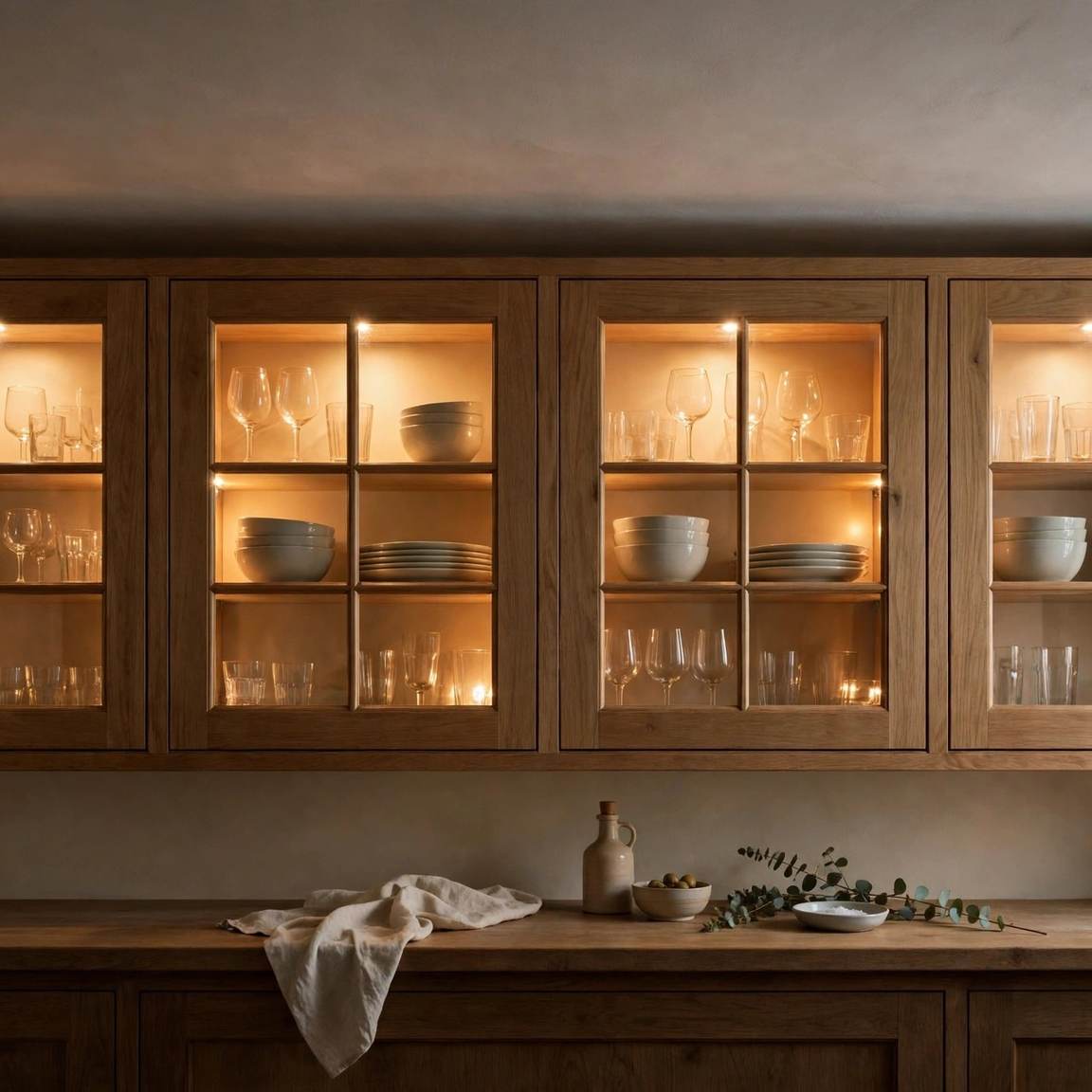
Tiny lights inside glass-front cabinets turn storage into a display and add a soft middle layer of light between ceiling and worktop. The glow through glass feels gentle and layered, never harsh.
How to style it:
- Fit strips inside each shelf front
- Show your prettiest glassware
- Hide clutter behind solid doors
Tip: warm light makes glassware sparkle; cool light can look clinical.
22) Strip Lights Along Open Shelves
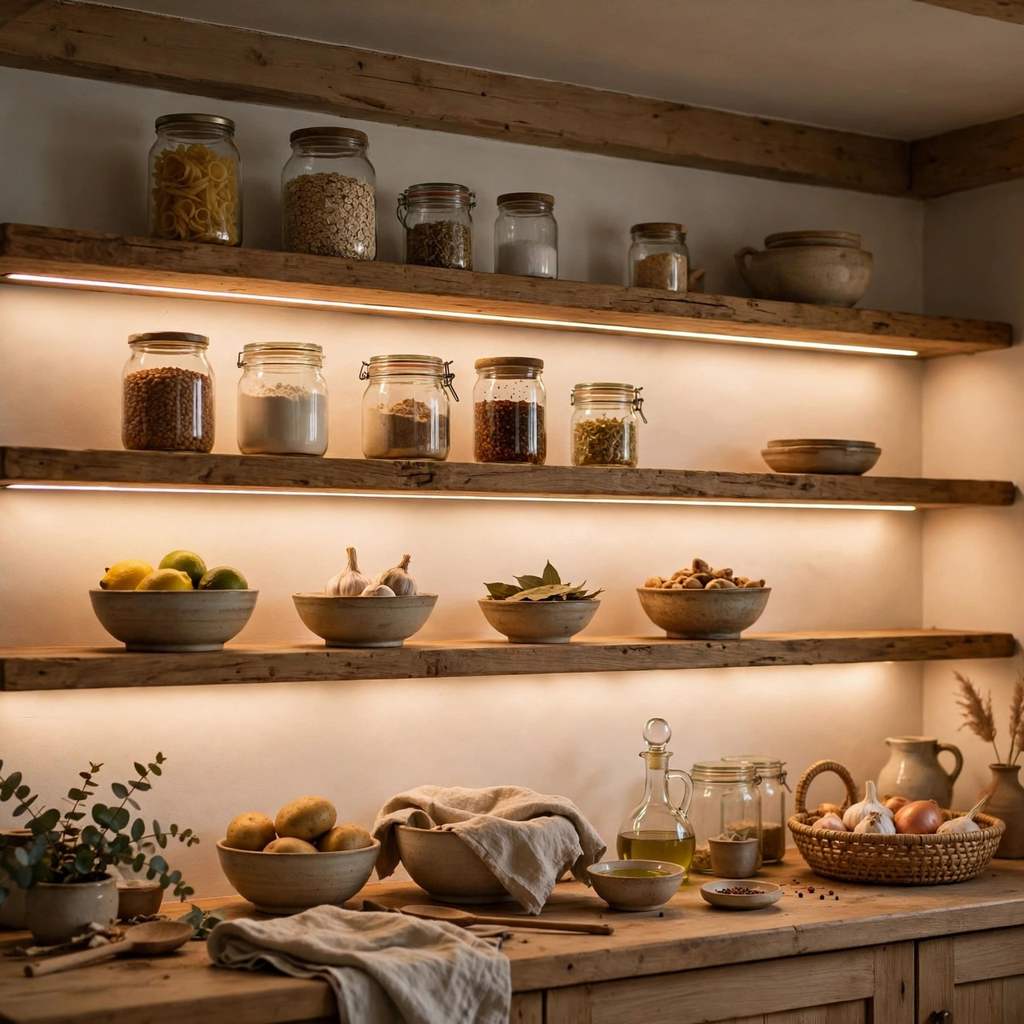
Open shelves already make a low kitchen feel airier than wall cabinets. Add a slim strip under each shelf and they glow like a café display, while everything below gets proper light.
Why it works:
- Shelves feel lighter than cabinets
- Every shelf gets light
- Shows off jars and bowls
Tip: hide the cable behind a shelf upright so strips look built in.
23) An Extractor Hood With Built-In Lights
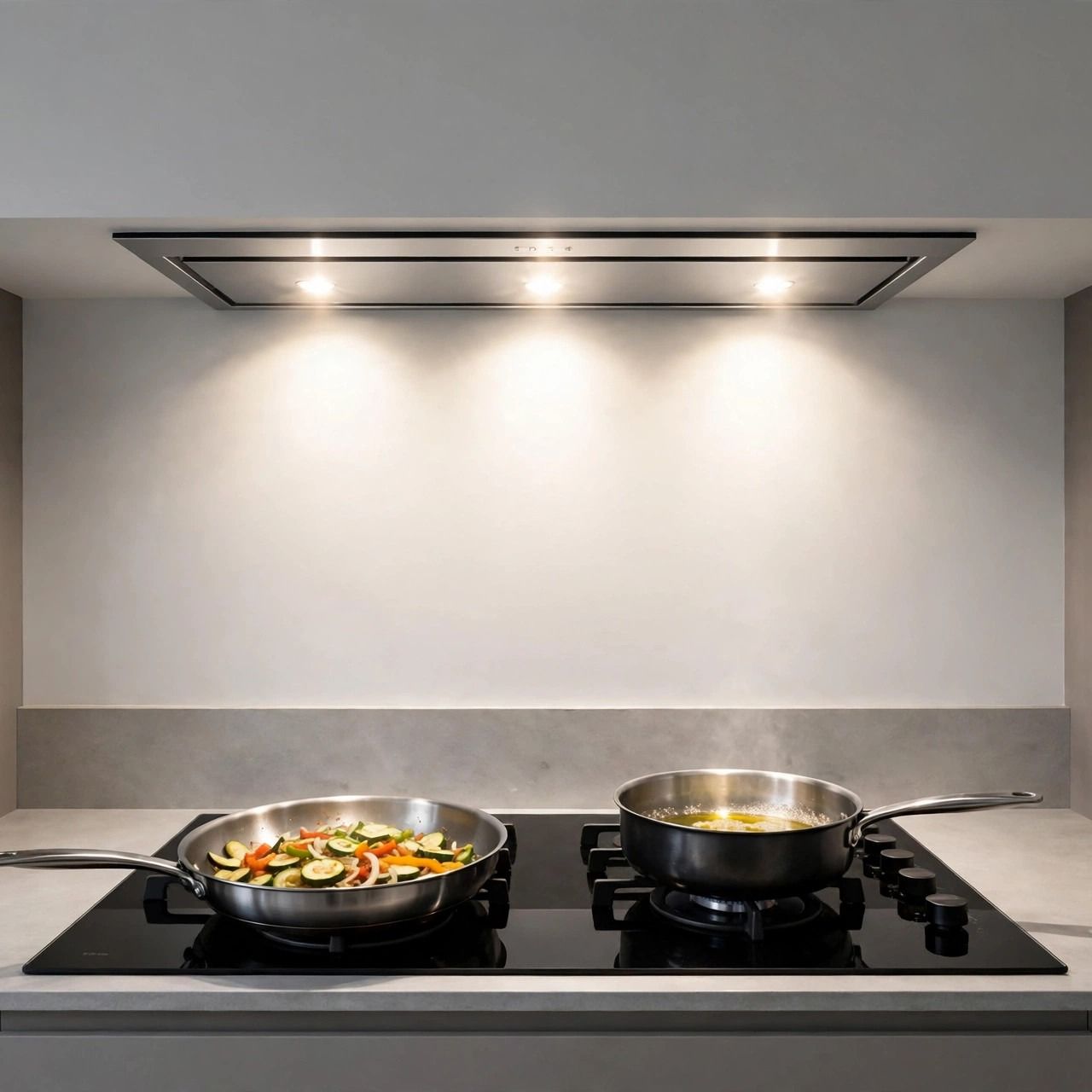
The hood is the one fitting a low kitchen cannot skip, so make it earn its place: a slimline hood with strong built-in lights gives proper hob lighting with zero extra ceiling fittings.
Best for:
- Small kitchens, little fittings space
- Bright light over the hob
- One appliance, two jobs
Tip: check the hood’s light colour matches your other fittings.
24) Stick-On Lights for Renters and Quick Fixes
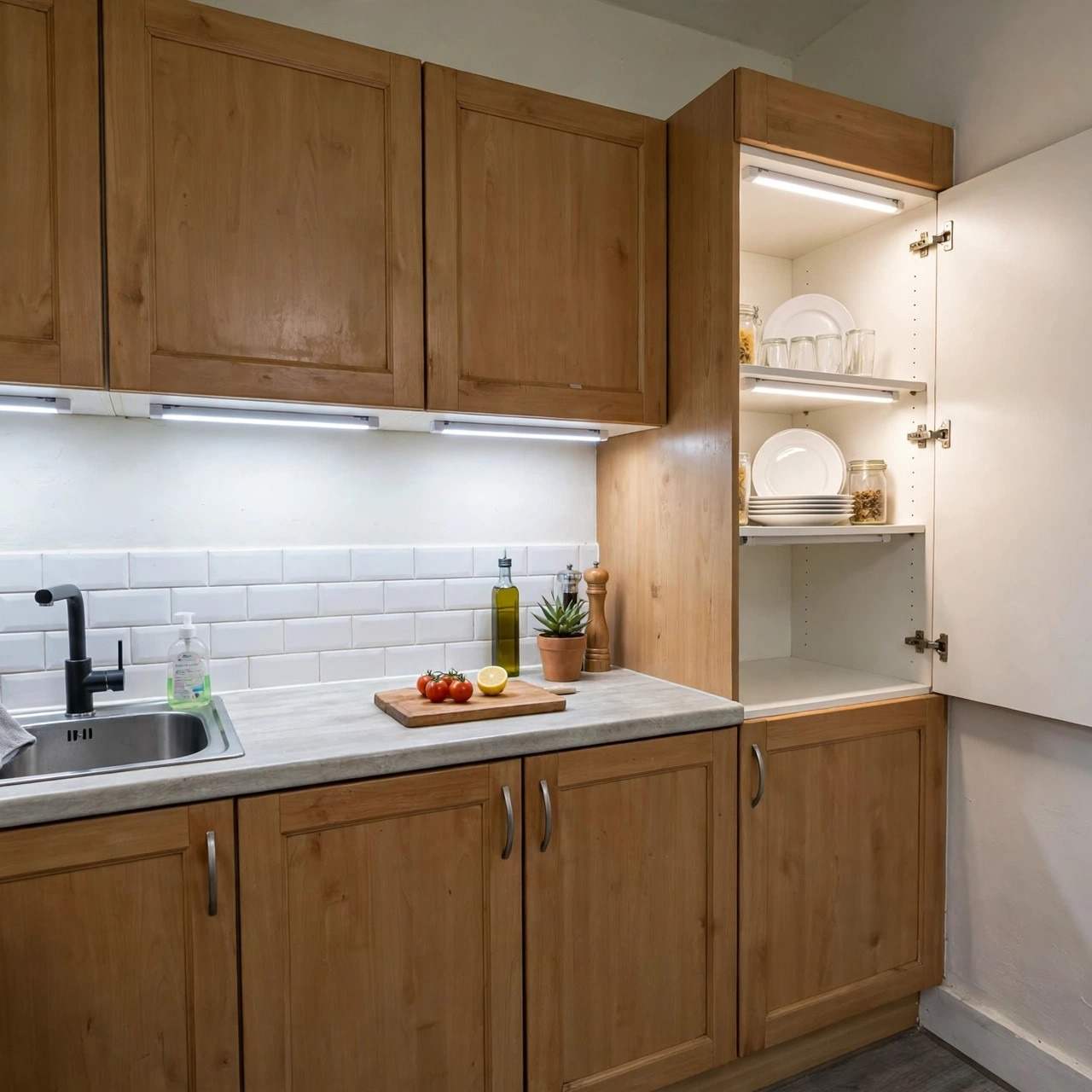
No wiring, no drilling, no landlord negotiations: rechargeable stick-on light bars fit under cabinets in minutes. They are the fastest way to test where your low kitchen needs light before fitting anything.
How to use it:
- Start under wall cabinets
- Choose rechargeable models
- Add one inside deep cupboards
Tip: live with stick-ons a month, then wire in where they proved useful.
25) Small-Scale Fixtures in Proportion
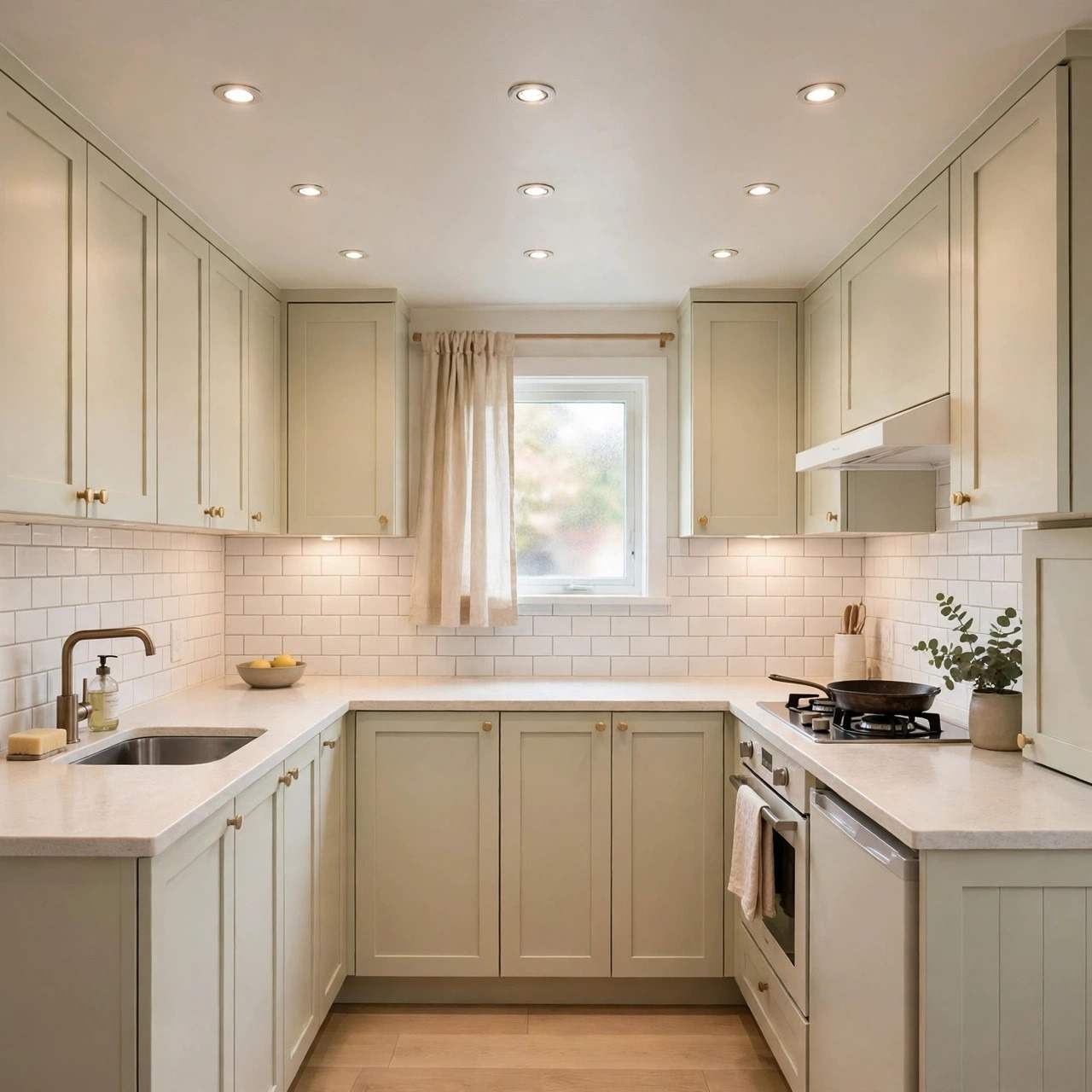
Scale is everything in a low room. Small, shallow fittings in proportion keep the ceiling calm, while one oversized light — however shallow — presses down visually and makes the height feel meaner.
Why it works:
- Proportion keeps ceilings calm
- Small lights spread brightness better
- Nothing overhead feels heavy
Tip: keep a fitting’s width under a third of the room’s width.
26) A Low-Profile Sputnik-Style Flush Mount
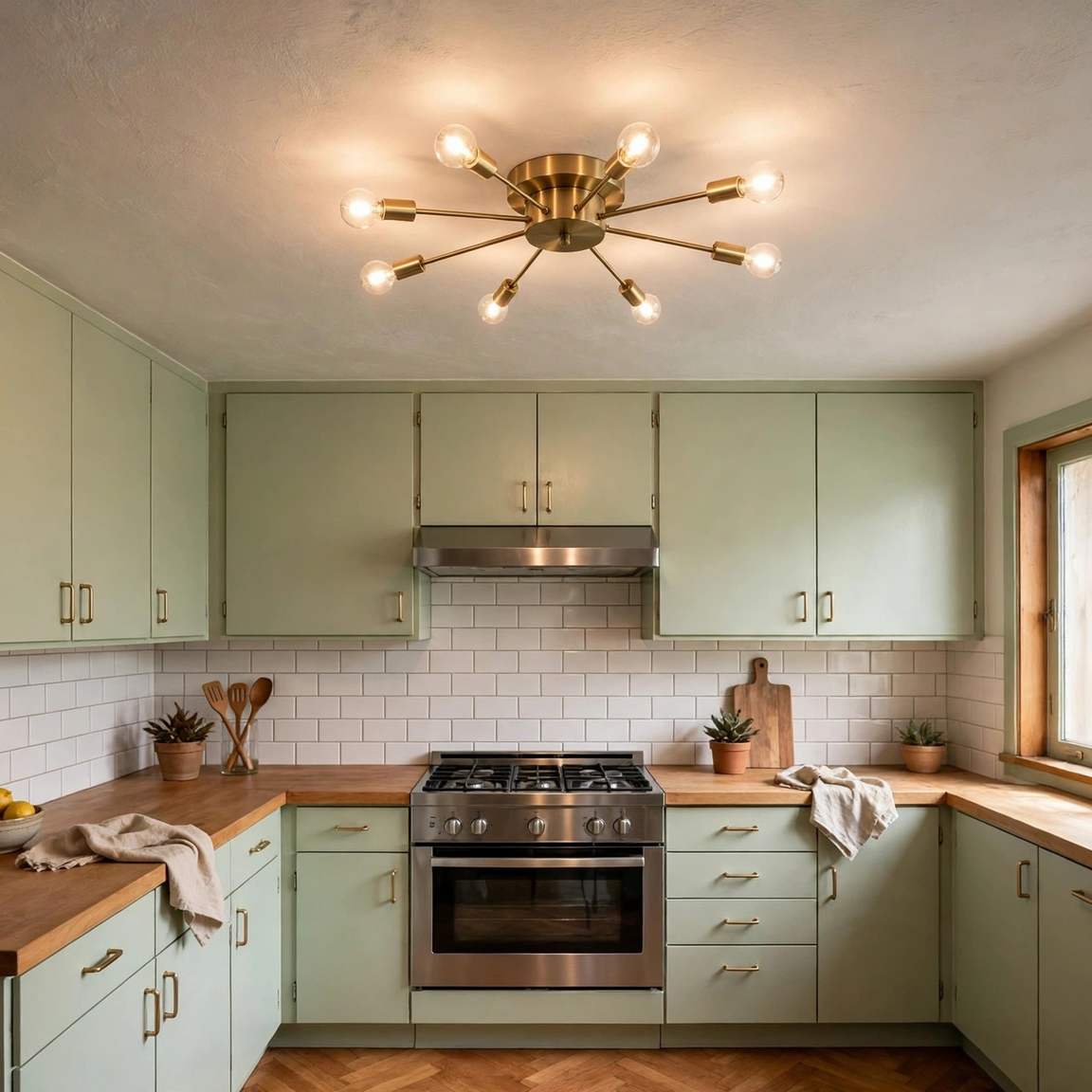
A sputnik fitting flattened for low ceilings spreads small globe bulbs across a wide, shallow starburst. It throws light in every direction and brings a playful retro note while staying tight to the ceiling.
Best for:
- Mid-century and retro schemes
- Wide light from one fitting
- Kitchens that need a smile
Tip: use dimmable bulbs — a starburst at full power can dazzle at breakfast.
27) Tunable Warm-to-White Light for Day and Night
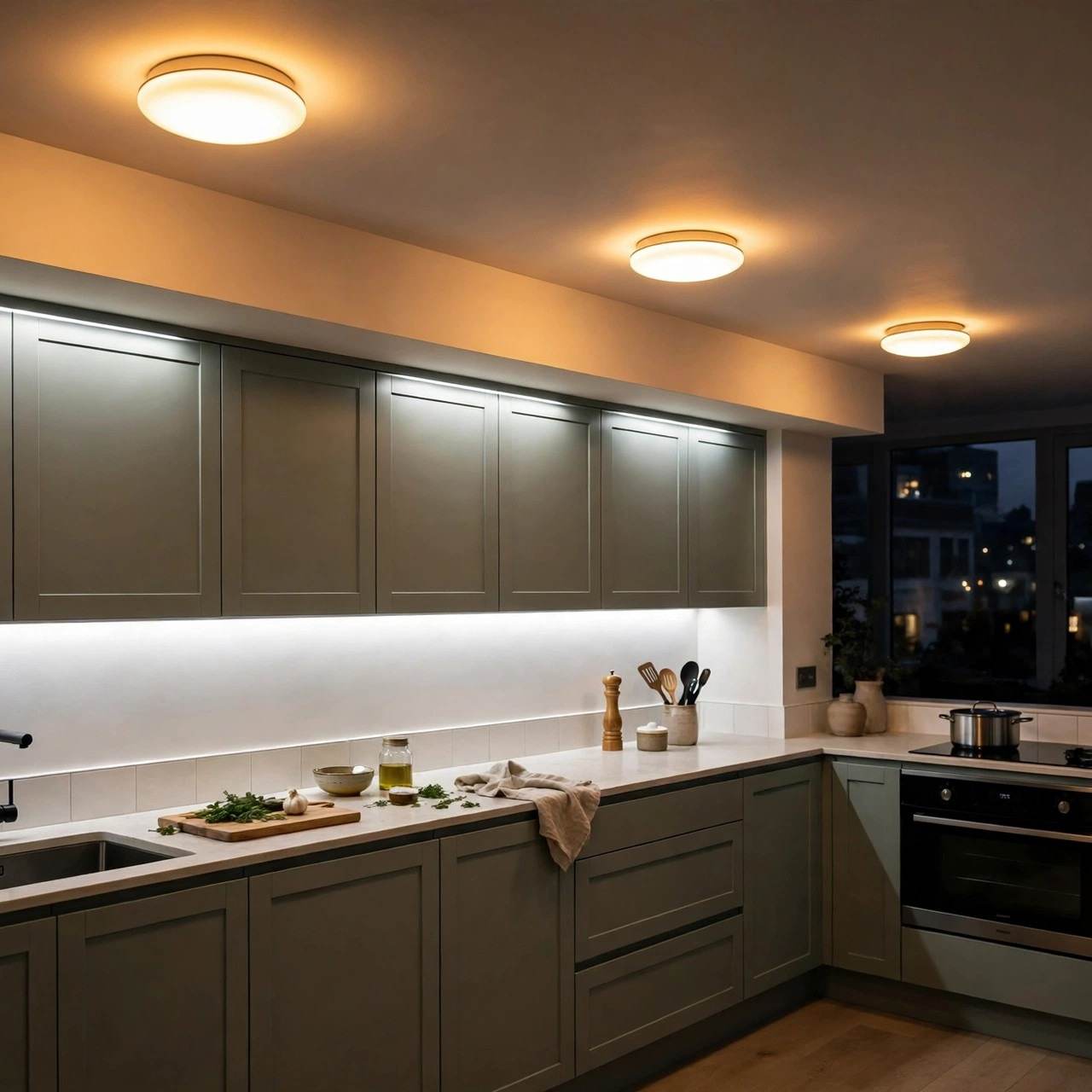
Tunable fittings slide from crisp daylight white for morning prep to a soft warm glow for dinner. In a low kitchen that one change does the work of several fittings.
How to use it:
- Cool, bright light for tasks
- Warm everything down for eating
- Keep worktops brightest
Tip: smart bulbs in flush mounts are the cheapest way to try tunable light.
28) Three Layers of Light Without a Single Pendant
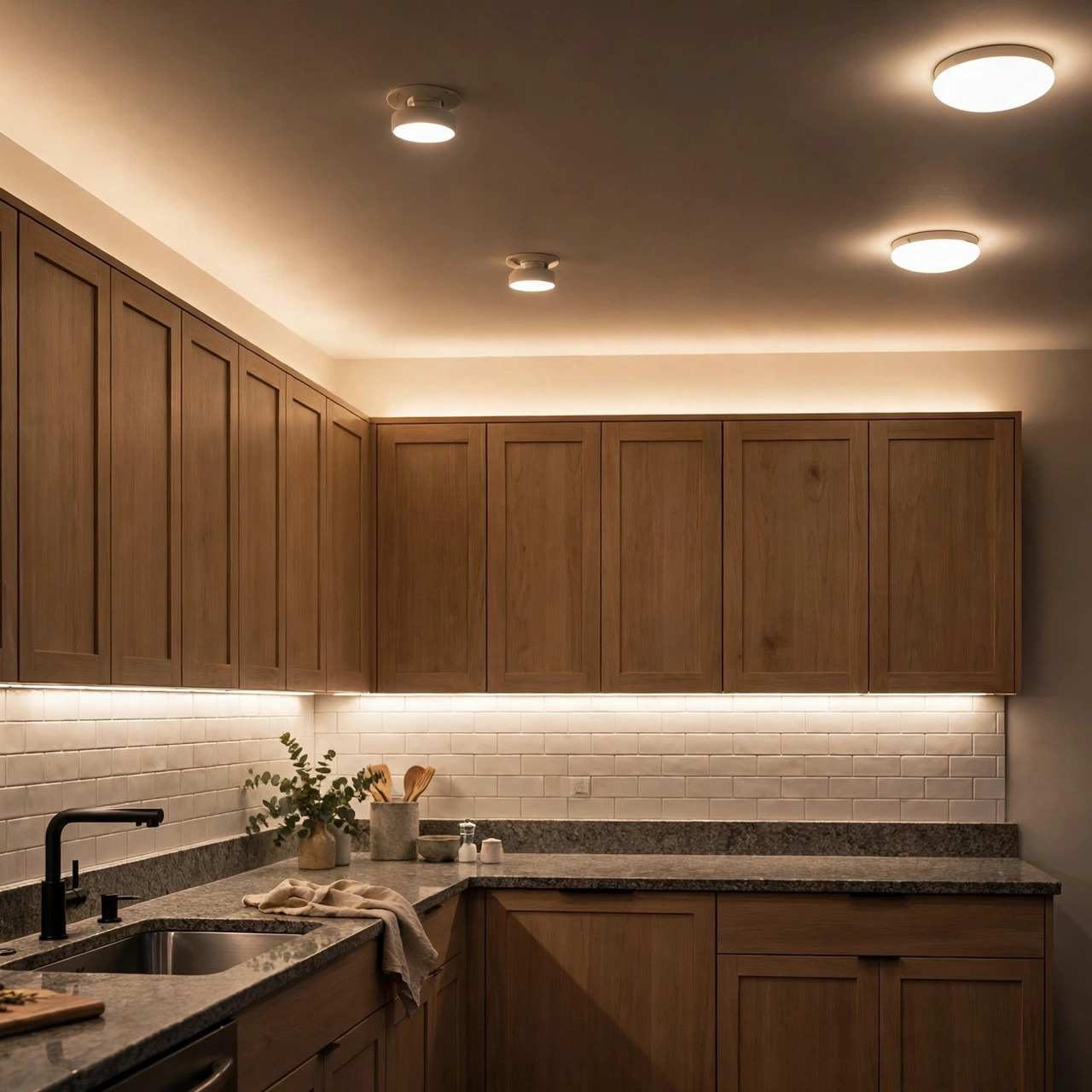
Layering is the secret: ceiling light for the room, under-cabinet light for the work, and a soft glow — cabinet tops, toe-kicks, shelves — for atmosphere. Three shallow layers feel rich, not flat.
Why it works:
- No layer hangs down
- Each layer switches separately
- Depth makes rooms bigger
Tip: wire each layer to its own switch or dimmer, so you can separate them.
29) A High-Gloss Ceiling That Reflects the Light
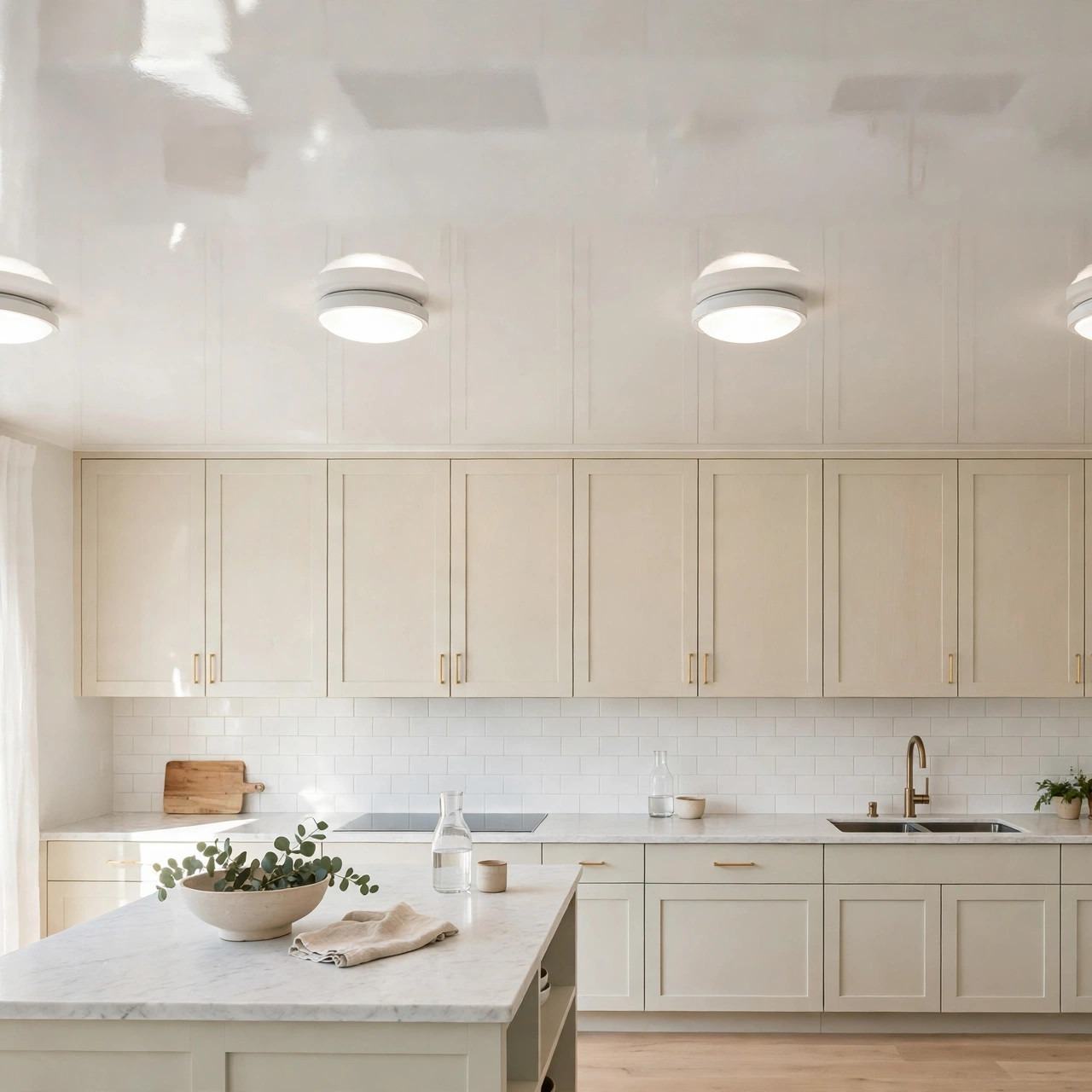
Ceiling paint is a lighting tool in its own right. A satin or high-gloss white ceiling reflects light back into the room instead of swallowing it, softening shadows and adding a sky-like sheen.
Best for:
- Smooth ceilings in good condition
- Kitchens needing every lumen
- Pairing with white flush mounts
Tip: gloss shows every bump, so fill and sand first — or choose forgiving satin.
30) Mirrors and Glossy Splashbacks That Double the Light
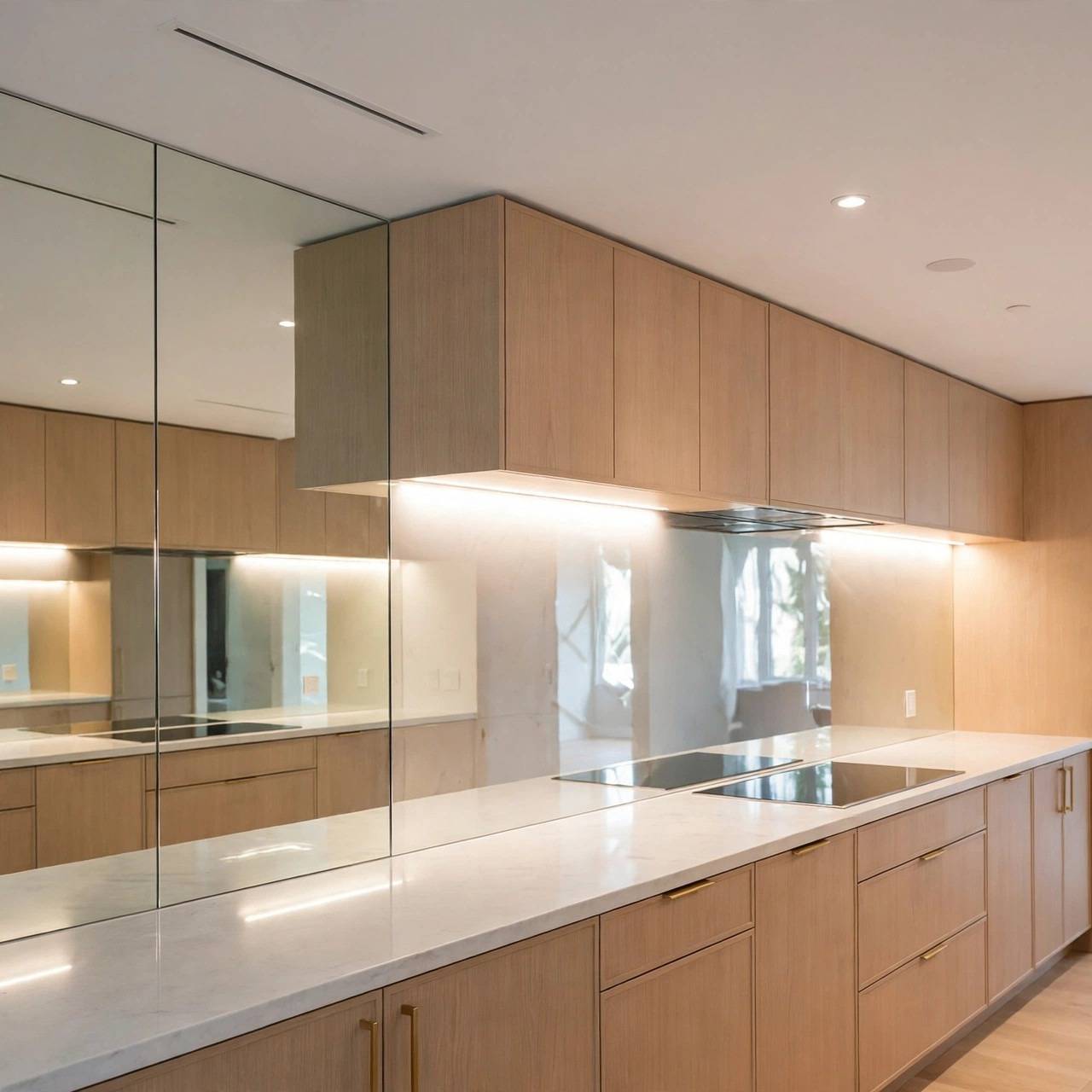
Reflective surfaces at worktop level do the same job as glossy ceilings. A glass or high-gloss splashback, even one mirrored panel, catches under-cabinet light and throws it back into the room.
How to style it:
- Run gloss behind hob, sink
- Keep colours pale
- One mirrored panel is plenty
Tip: toughened glass splashbacks wipe clean in seconds, which matters behind a hob.
31) Low Ceiling Kitchen Lighting Ideas for a Galley Kitchen
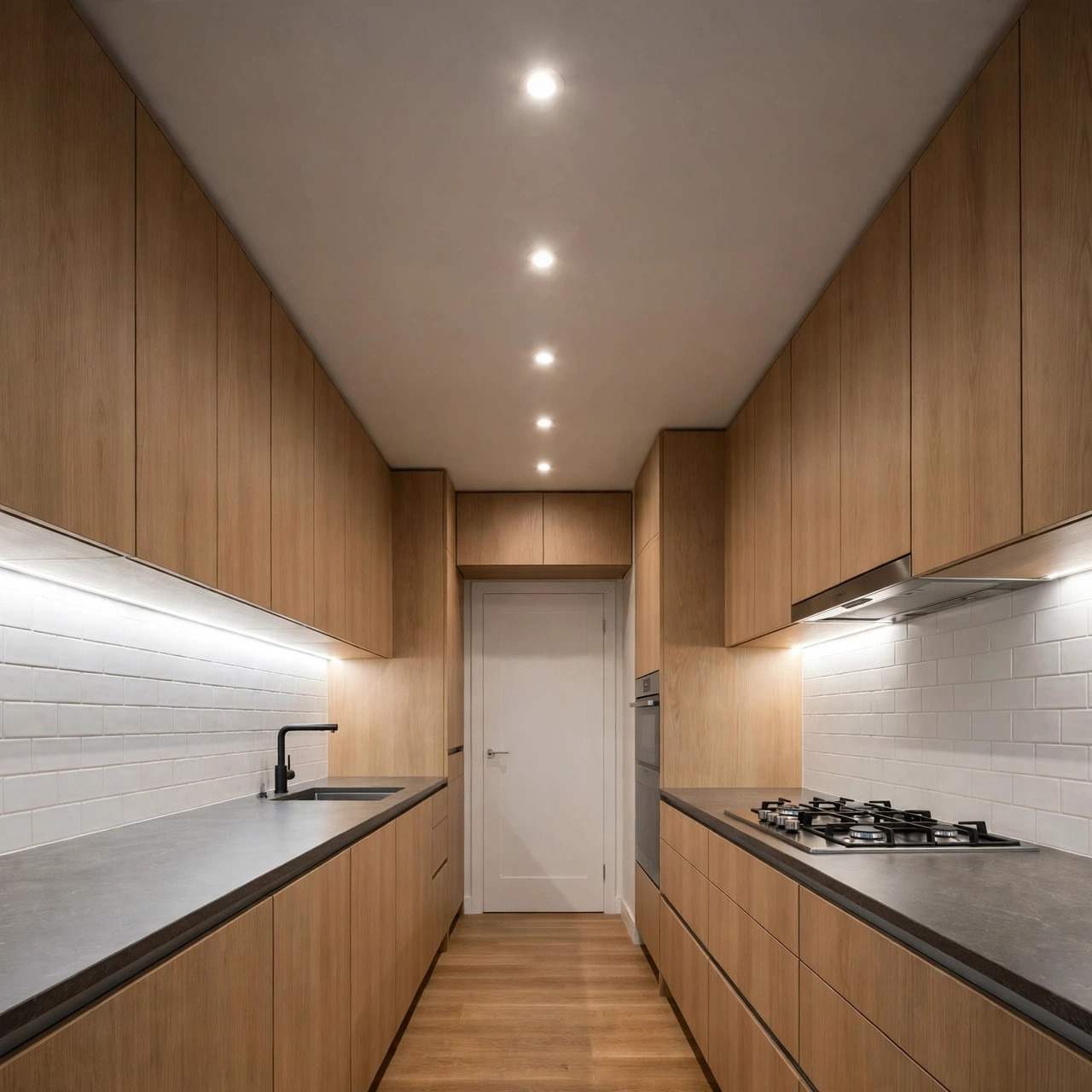
A galley’s long, narrow shape suits one line of small recessed lights down the centre, with under-cabinet strips on both runs. Nothing hangs, nothing crowds the corridor, and the eye travels to the end window.
Why it works:
- One line suits narrow rooms
- Both worktop runs lit
- View to window stays clear
Tip: use small, closely spaced central lights for an even corridor of light.
32) A Row of Flush Mounts Down a Long, Low Kitchen
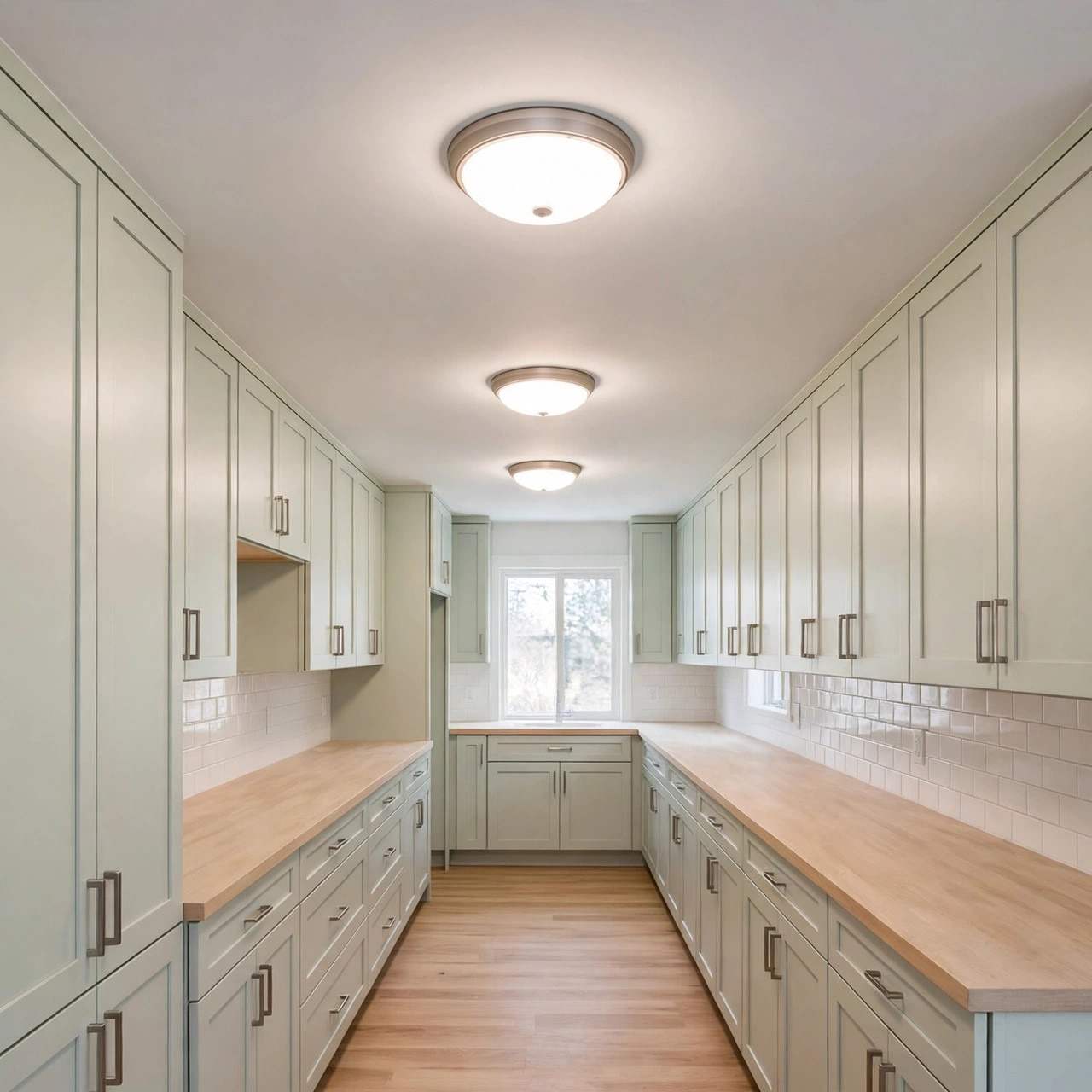
Long kitchens often have one sad fitting at each end and gloom in the middle. A row of three matching flush mounts evens everything out, and identical shallow fittings look deliberate overhead.
Best for:
- Long or L-shaped kitchens
- Even light, no dead zones
- A tidy ceiling line
Tip: match the row’s spacing to your cabinet runs, so lights land where you stand.
How to Plan the Layers Without Losing Headroom
Start by measuring your ceiling height honestly: anything hanging more than about 15 centimetres is probably too much. Plan three layers instead — flat ceiling light for brightness, under-cabinet light for tasks, and one soft glow layer for atmosphere. Put task light where you cook and wash up first; the ceiling layer fills the gaps.
Surfaces are the cheapest layer of all. A pale ceiling, glossy splashback and light worktops make modest fittings feel generous. If you are refreshing the splashback anyway, these DIY kitchen backsplash ideas on a budget include plenty of pale, light-bouncing finishes that suit a low room.
Mistakes That Make a Low Ceiling Feel Even Lower
The classic mistake is one big pendant hung out of habit, swinging at forehead height and shouting about the ceiling’s lowness. Dark fittings on a white ceiling do similar damage: every dark shape overhead pulls the eye — and the ceiling — down. A single central bulb is the third trap, leaving worktops in shadow.
Also watch bulb colour. Mixing warm and cold white bulbs makes a small kitchen feel unsettled. Pick one colour temperature, keep it everywhere, and let dimmers change the mood.
Conclusion
A low ceiling is not a problem to hide; it is simply a brief to design to. Flat fittings, honest layers and reflective surfaces make the room brighter and calmer — and, surprisingly, often cosier than a tall kitchen manages.
You do not have to try all 32 ideas at once. Start with the missing layer: under-cabinet strips if worktops are gloomy, a statement flush mount if the room lacks a focal point.
For more kitchen inspiration before you begin, Homes & Gardens is always worth a browse. Now measure that ceiling, choose your first fitting, and enjoy a kitchen that finally feels as bright as it cooks.



More Stories
22 Spring Decor Trends to Refresh Your Home
28 Backyard Rule of three Fire Pit Ideas
24 Cozy Cottage Bedroom Ideas to Try