
Introduction
Colour is the fastest way to change a bedroom, and the bedroom rule of three color method makes choosing it simple: pick three colours, give each one a clear job, and repeat them around the room. Instead of shades that never quite settle, the scheme feels planned from the first glance.
It works at every scale, from a full 60-30-10 split to one accent repeated in three small places. If your taste runs soft and restful, these calming bedroom colors show how gentle shades behave in real rooms; here, the focus is on how trios of colour are built.
Here are 32 ways to build a colour scheme in threes — palettes, shade ladders and accent trios to copy or adapt to colours you own.
1) The Classic 60-30-10 Bedroom Rule of Three Color Split
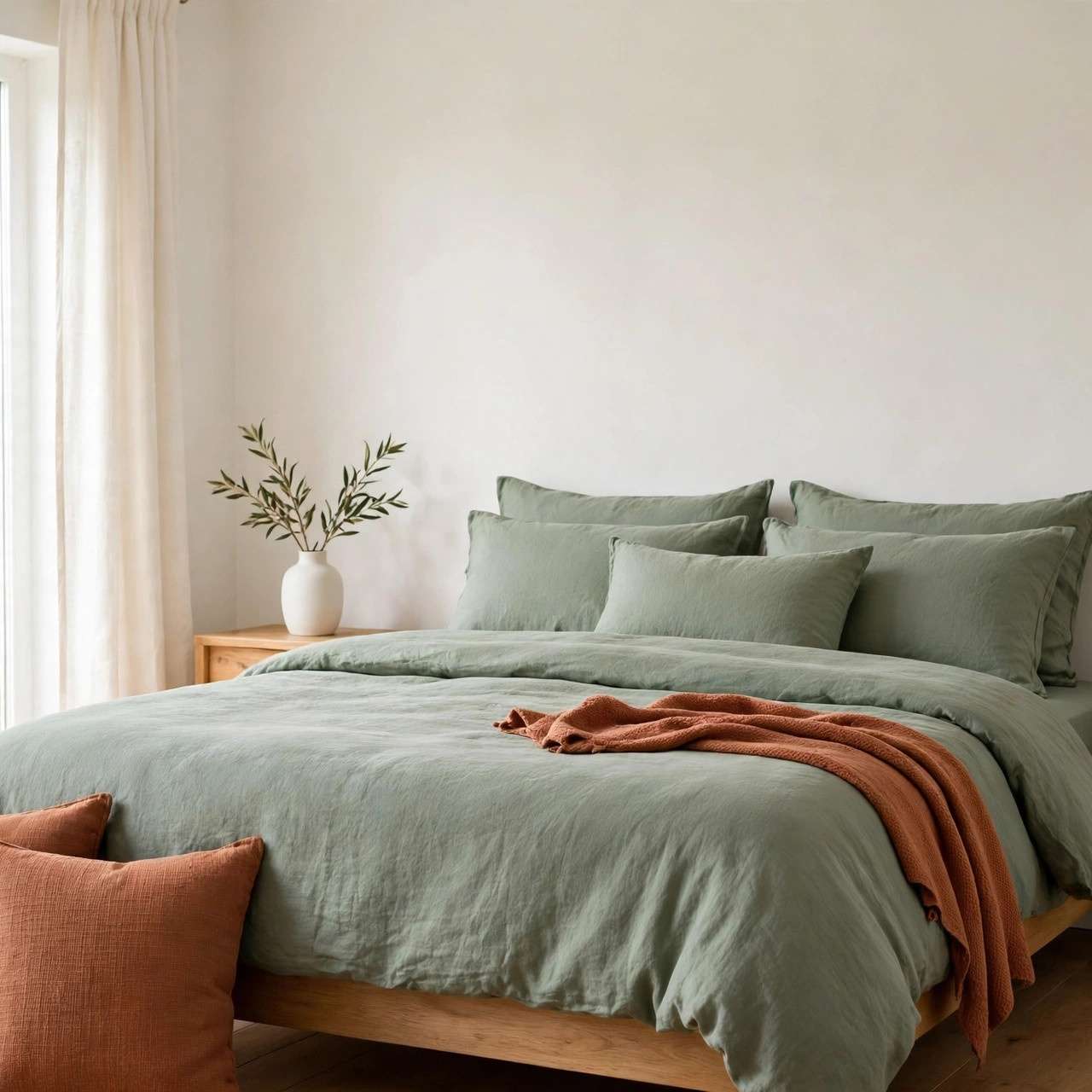
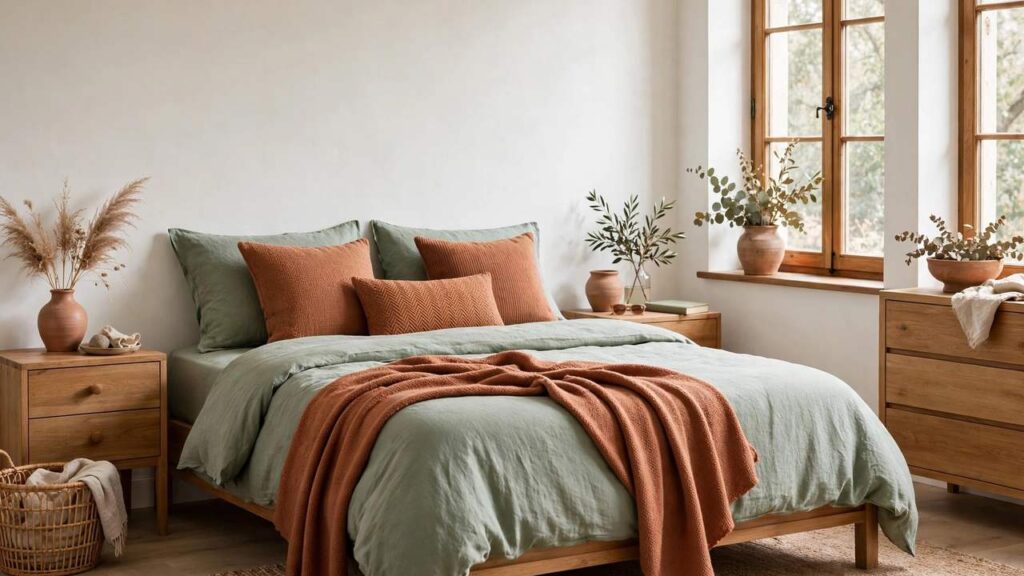
The most reliable trio gives 60 percent of the room to a quiet main colour, 30 percent to a supporting colour and 10 percent to an accent. Try warm white walls, sage bedding and terracotta cushions, and every piece knows its place.
How to use it:
- 60%: walls and the largest surfaces
- 30%: bedding, curtains and rug
- 10%: cushions, throw and small pieces
Tip: if a colour feels too loud, shrink its share before you swap it.
2) Three Shades of Blue, Pale to Midnight
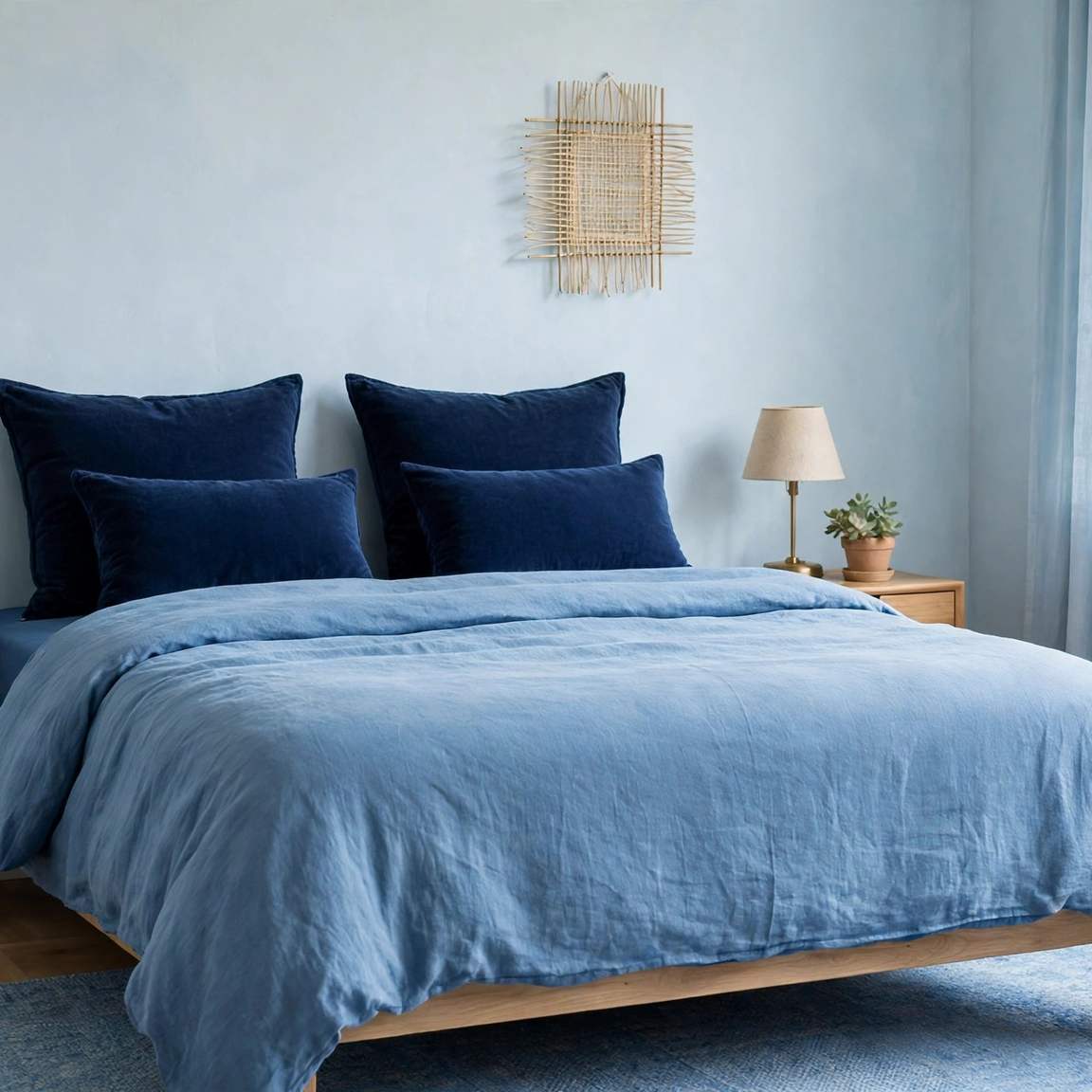
One colour in three strengths is the gentlest trio. Pale blue walls, a mid-blue duvet and deep navy cushions layer like water deepening — calm at the edges, rich in the middle.
Why it works:
- One hue never clashes with itself
- Depth comes from shade, not contrast
- Easy to extend to curtains and rug
Tip: keep all three blues one temperature — all cool, or all slightly warm.
3) One Accent Colour in Three Places
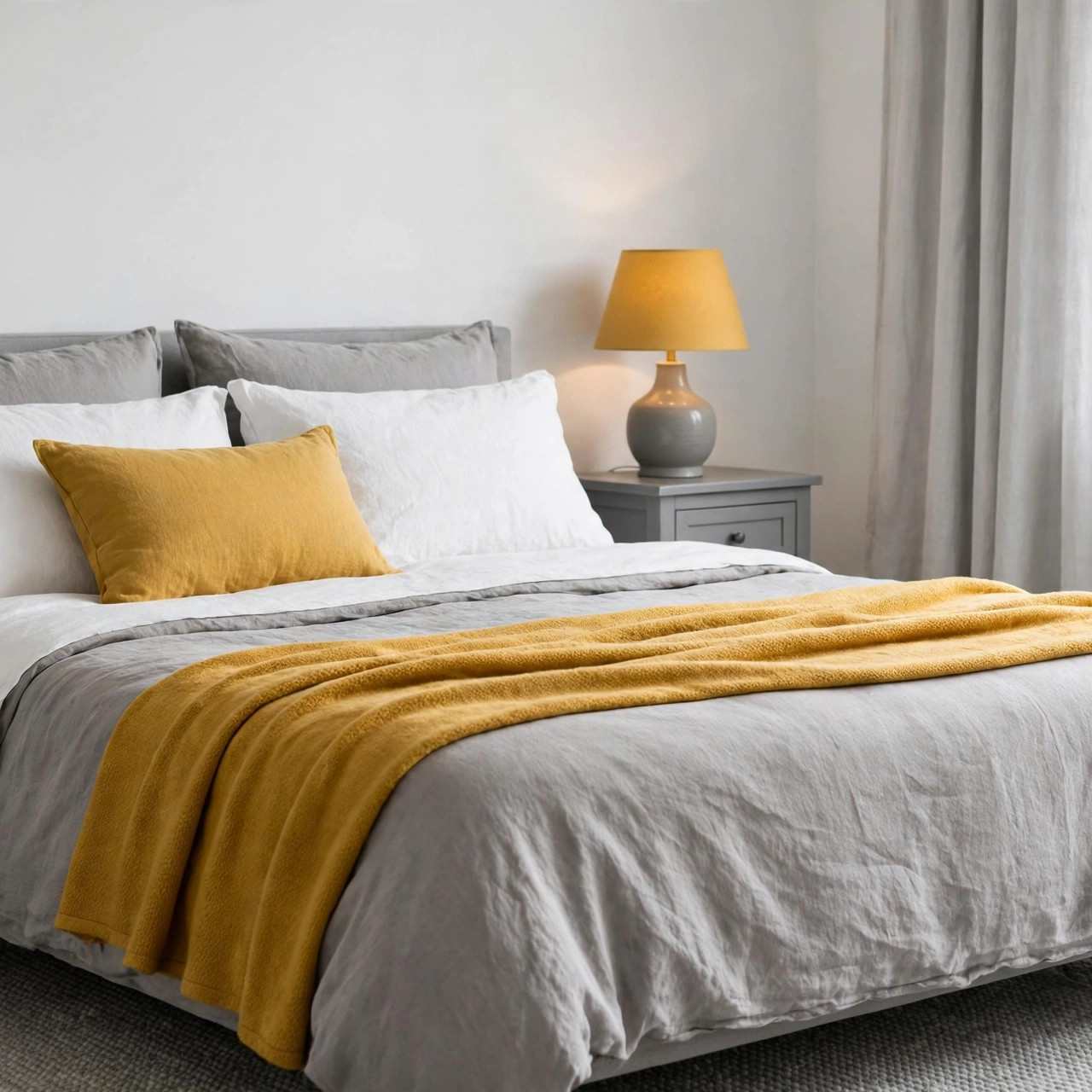
Repeat one accent exactly three times in a white and grey bedroom: a mustard cushion, a mustard throw, a mustard lampshade. The colour travels, and three small doses look intentional rather than scattered.
How to style it:
- Match the shade closely in all three
- Spread the three spots well apart
- Stop at three — a fourth dilutes it
Tip: fabric pieces are easiest; swap them when you fancy a new accent.
4) Blush, Cream and Gold — a Soft Trio
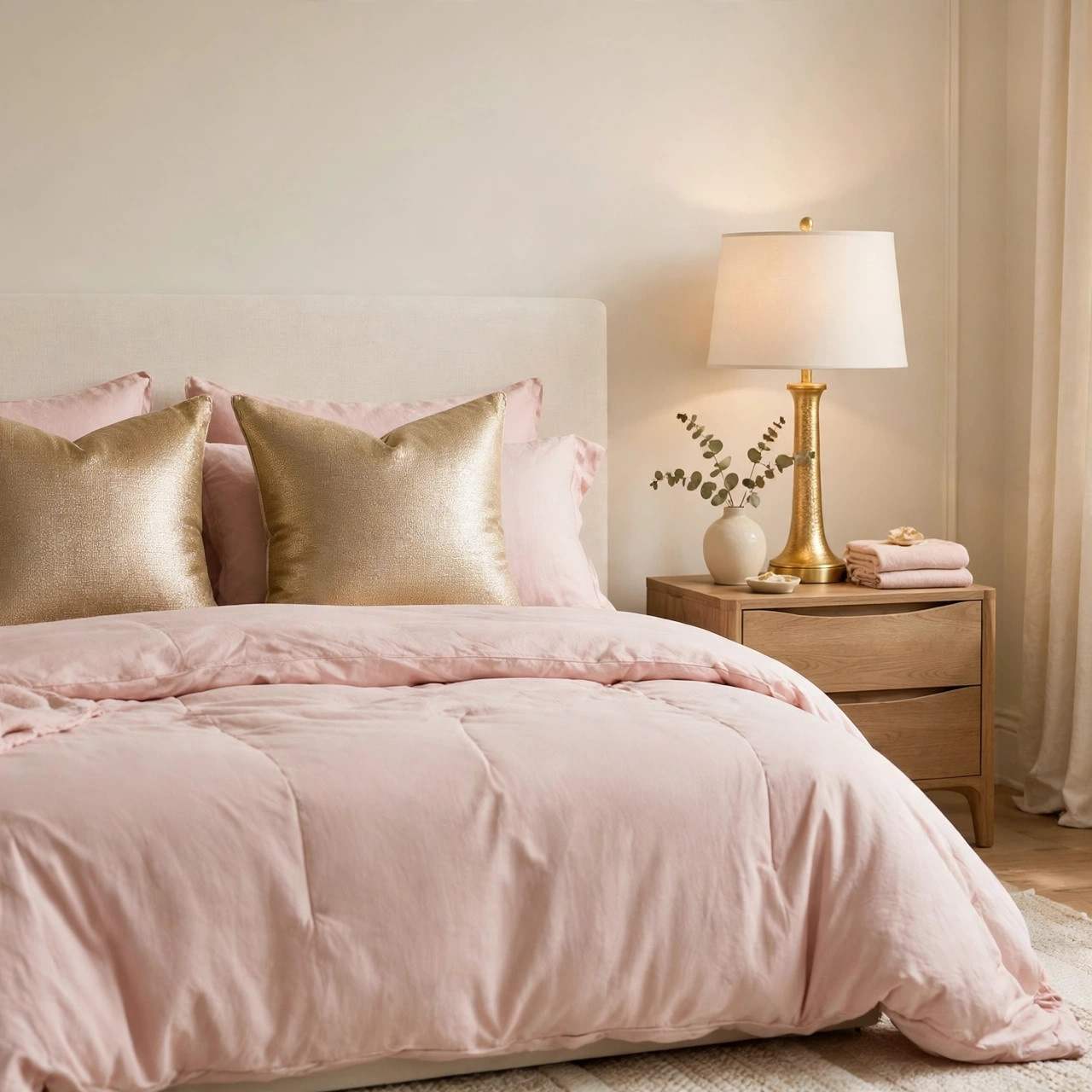
Blush pink can turn sugary on its own, but cream calms it and a little gold warms the pair. Blush bedding, cream walls and gold-toned cushions give gentle glamour without glitter.
Best for:
- Romantic but restful bedrooms
- North-facing rooms needing warmth
- Guest rooms that should feel welcoming
Tip: choose dusty blush, not bubblegum, and keep the gold brushed rather than shiny.
5) Sage, Stone and White for a Calm Scheme
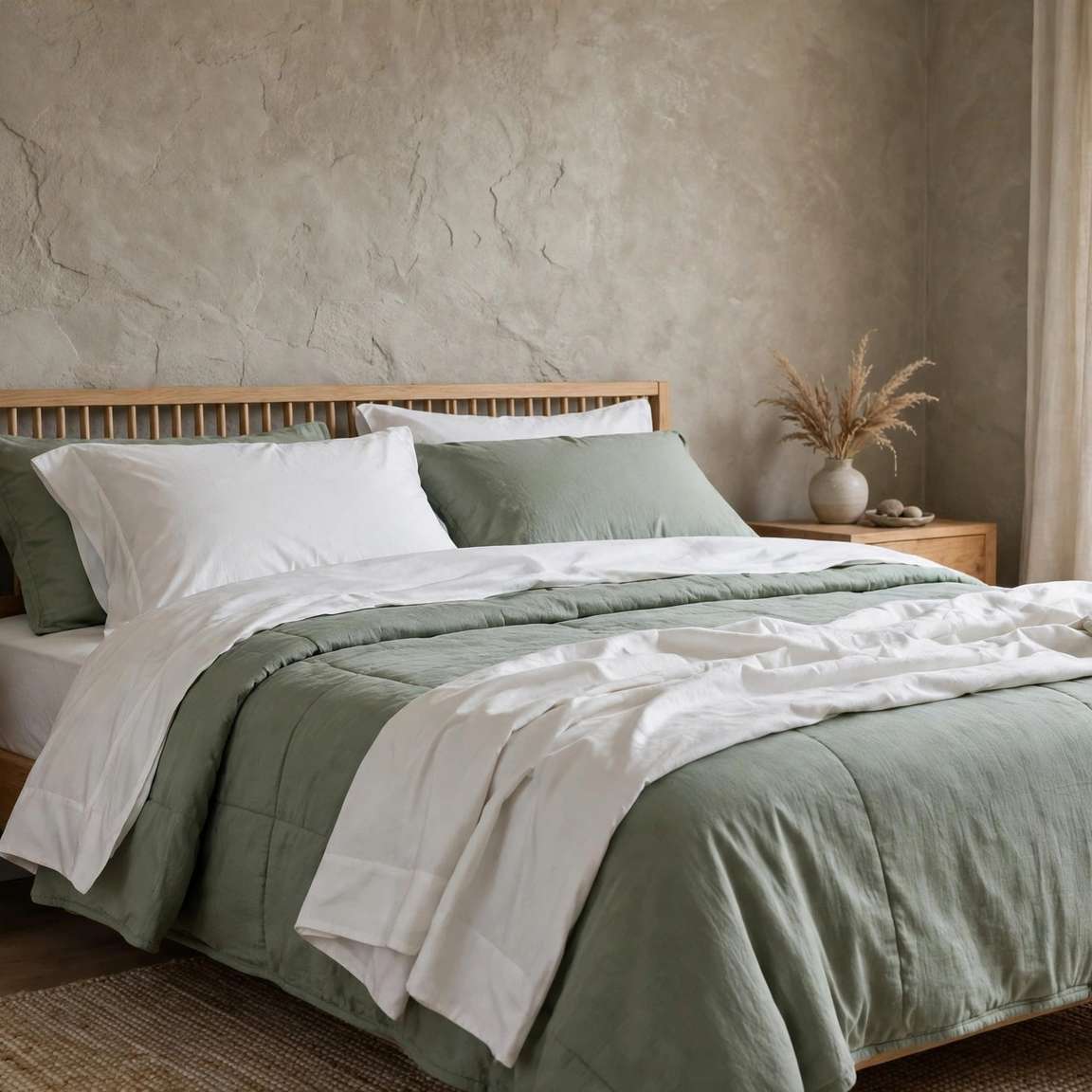
Sage brings the colour, stone brings the warmth and white keeps everything breathing. Sage bedding against stone-coloured walls with white sheets is the trio behind half the calm bedrooms.
Why it works:
- Green and stone are both nature shades
- White stops the pair feeling muddy
- Suits wood of almost any tone
Tip: add the sage a second time — a cushion or a plant pot — to anchor it.
6) Three Neutrals Layered: White, Greige and Charcoal
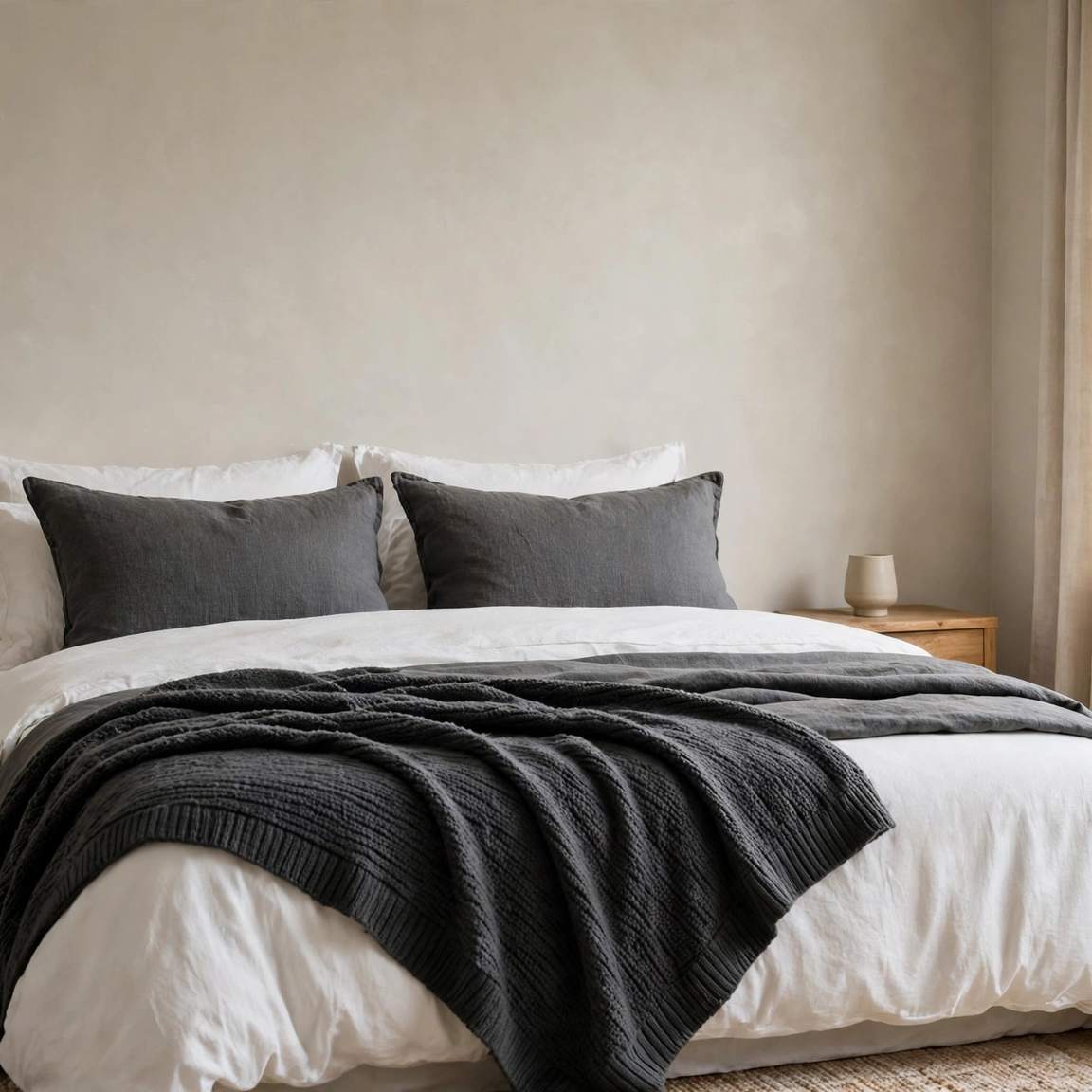
White bedding, greige walls and charcoal cushions or a throw give light, mid and dark values — exactly what stops an all-neutral room looking flat.
How to use it:
- Darkest colour on the smallest area
- Mid tone on the biggest surface
- Repeat each neutral at least twice
Tip: greige is forgiving — it flatters both warm and cool light.
7) Navy, White and Brass — a Crisp Trio
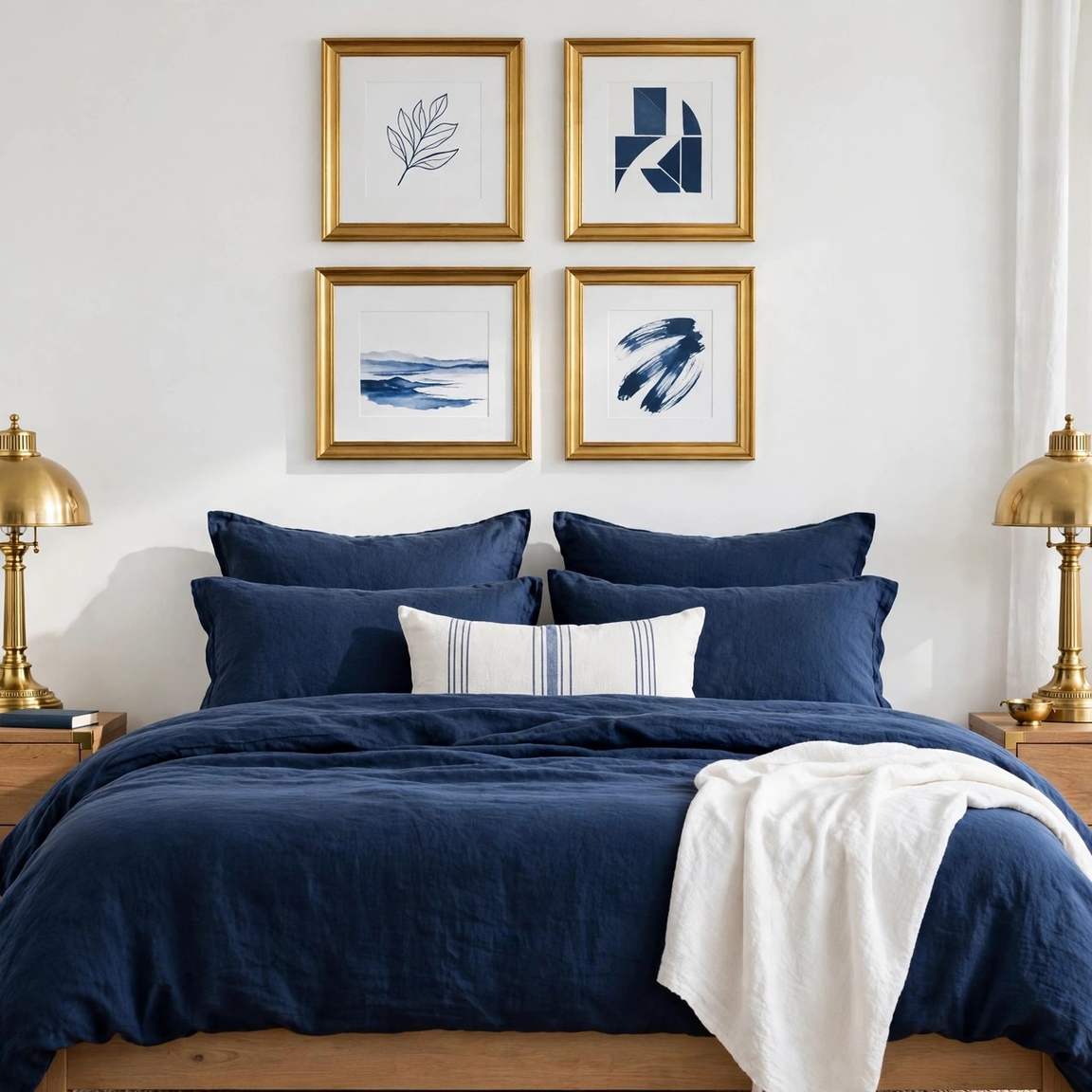
Navy and white is the sharpest pair, and brass is the third colour that warms it. White walls, navy bedding and brass lamps or frames give a tailored, hotel-crisp scheme that never dates.
Why it works:
- Maximum contrast, minimum fuss
- Brass adds the warmth navy lacks
- White stops navy darkening the room
Tip: if a full navy duvet feels too much, run the navy onto cushions only.
8) Terracotta, Sand and Clay — Earthy Warmth in Threes
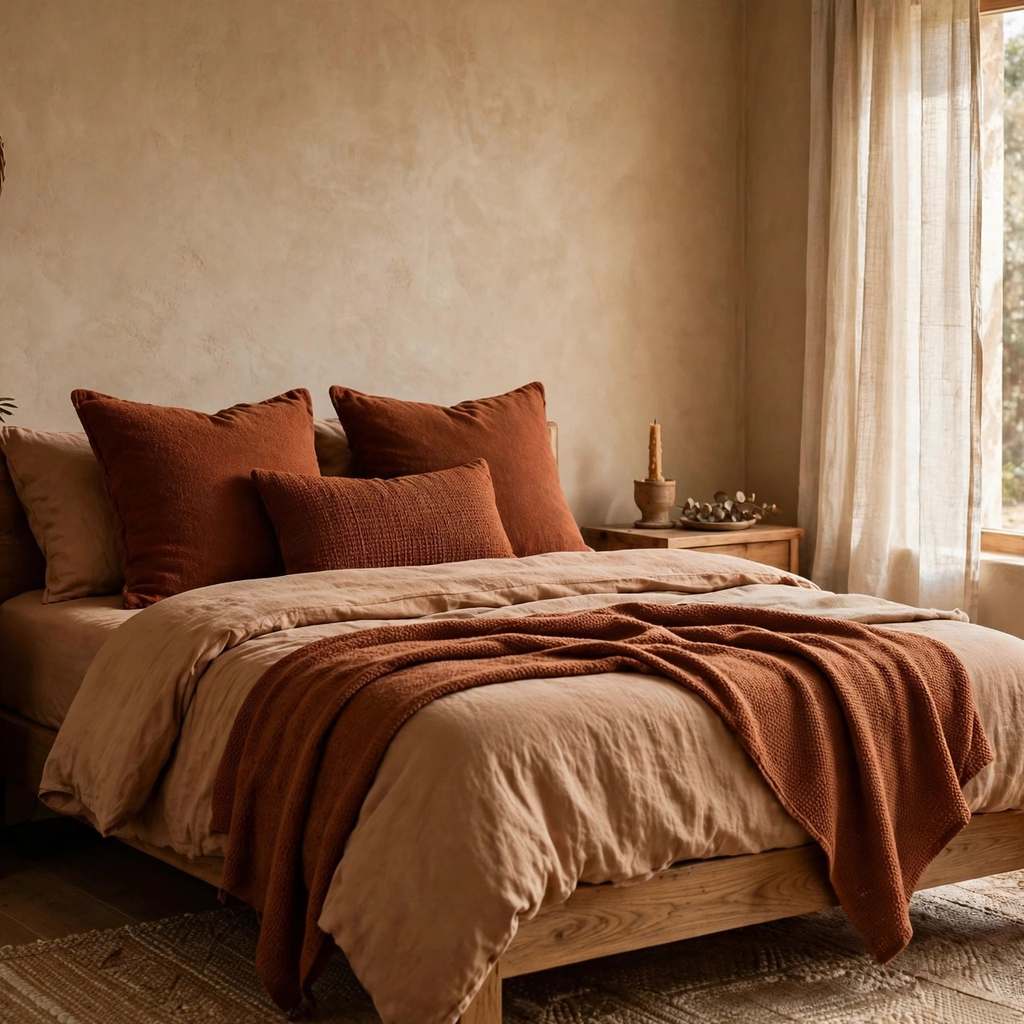
Three shades of baked earth layer beautifully: sand on the walls, clay-coloured bedding and terracotta as the deepest accent. The trio feels sun-warmed and loves natural wood and linen.
Best for:
- Rooms that feel cold or stark
- Boho and Mediterranean tastes
- Pairing with rattan and jute
Tip: keep the terracotta matte — shiny finishes fight the earthy mood.
9) A Bedroom Rule of Three Color Trio of Greens
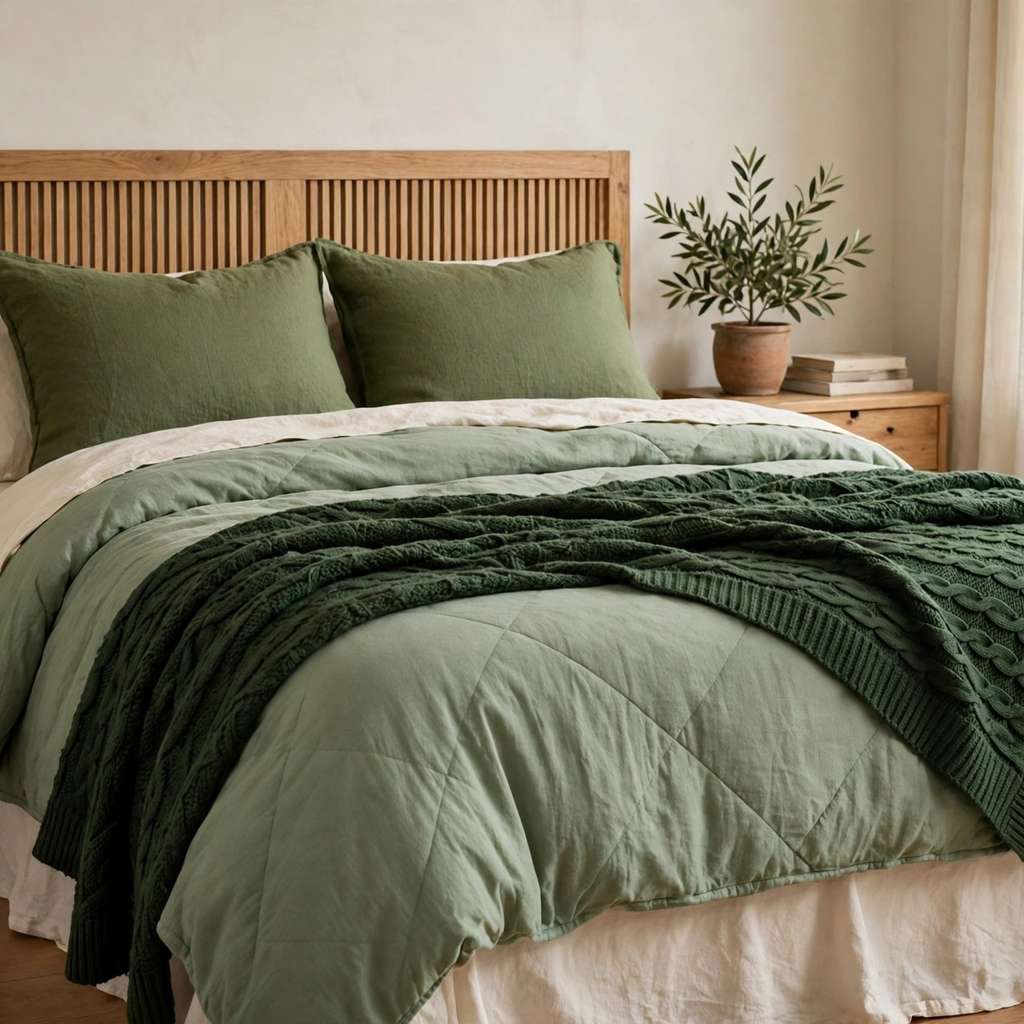
Green on green on green sounds brave, but three greens — sage, olive and forest — layer like a garden. Sage bedding, olive cushions and one deep forest throw give depth without any clashing note.
How to style it:
- Lightest green largest, darkest smallest
- Cream sheets to rest the eye
- One plant to echo the scheme
Tip: all three greens should lean the same way — yellowish or blueish, not mixed.
10) Pastel Trio: Lilac, Powder Blue and Soft Pink
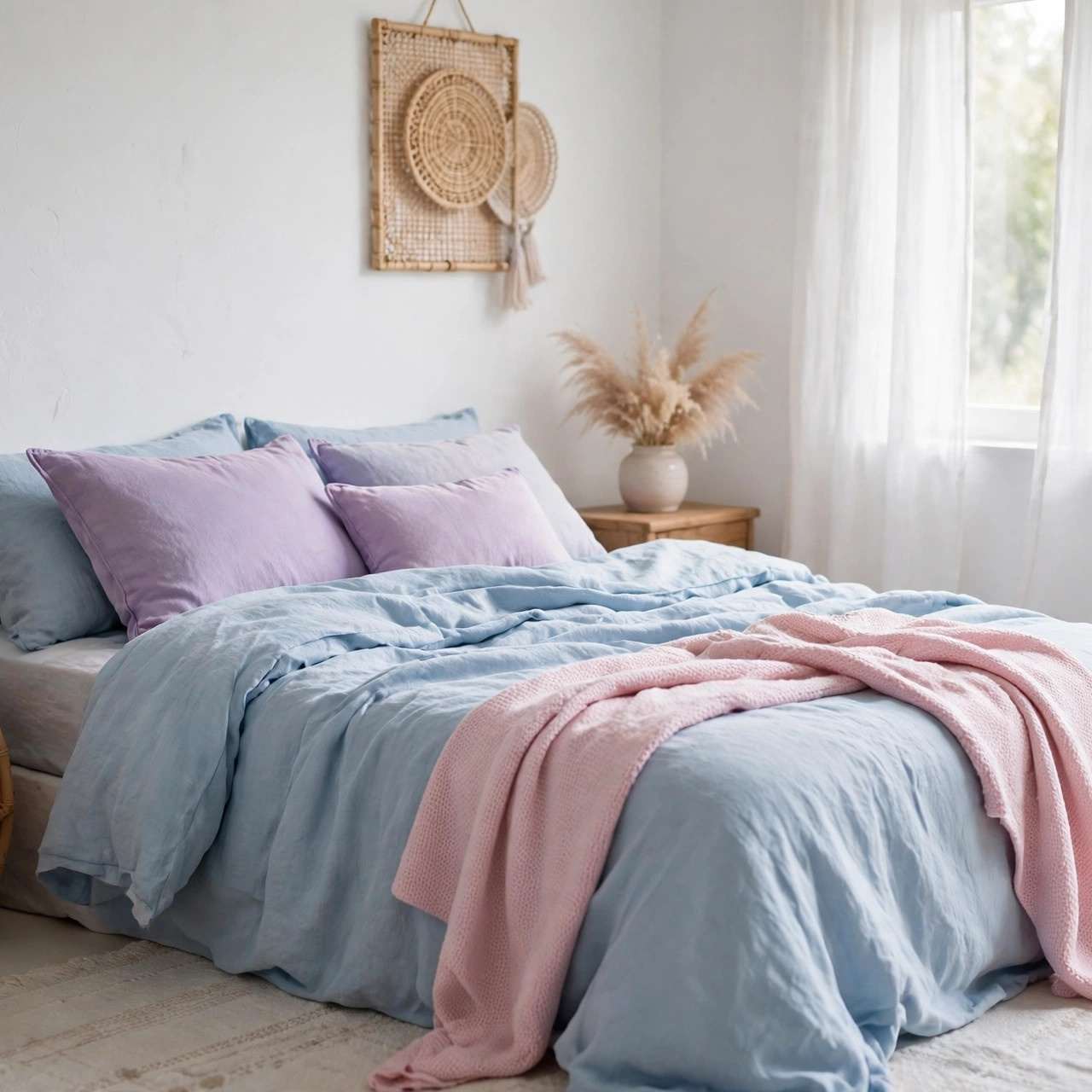
Pastels fail one at a time; in threes they become a palette. Powder blue bedding, lilac cushions and a soft pink throw over white walls read as a dreamy scheme rather than a child’s room.
Why it works:
- Equal softness means nothing shouts
- White walls keep it grown-up
- Each pastel supports the others
Tip: ground the trio with one deeper piece — a grey or navy cushion.
11) Black, White and One Bold Colour
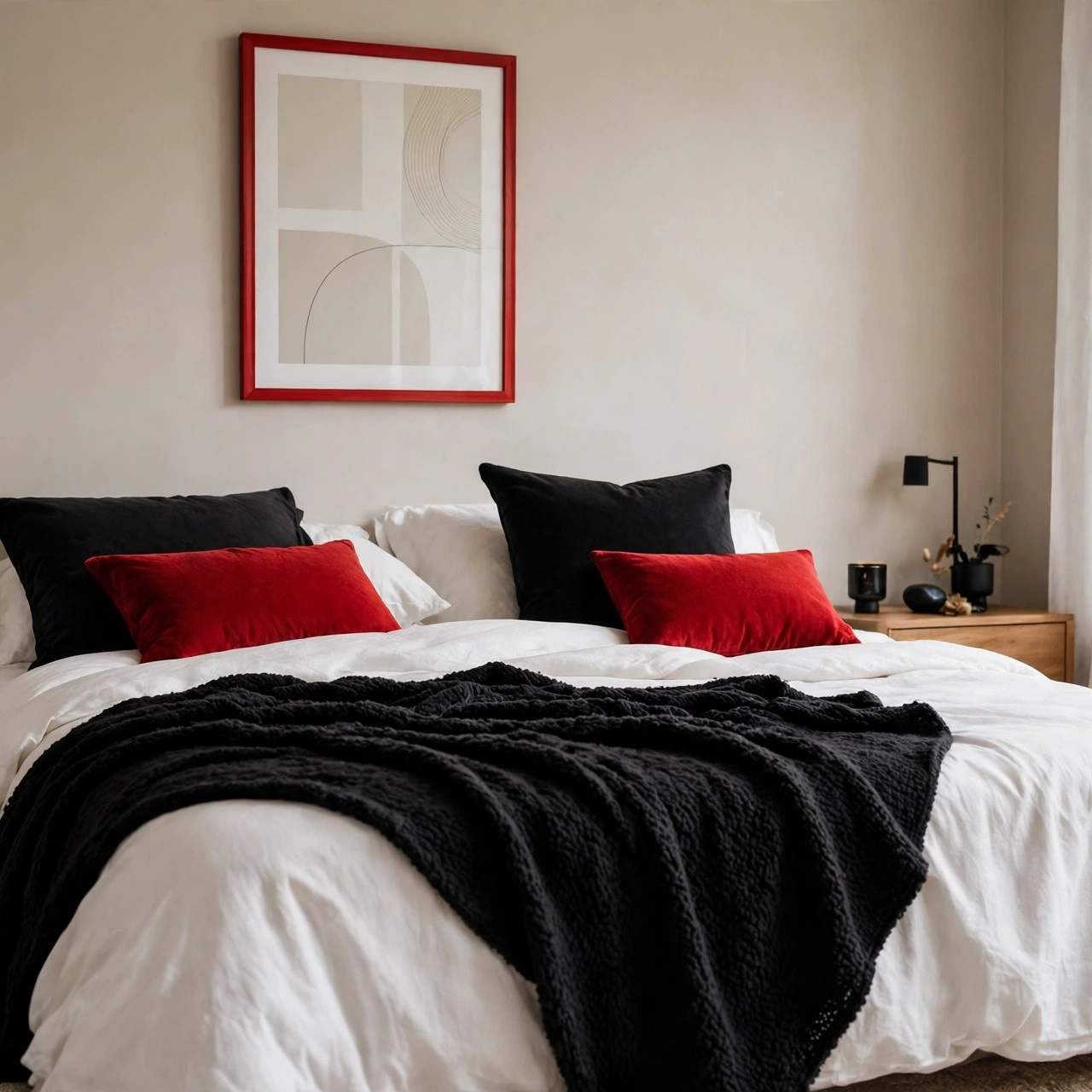
White bedding, black cushions or a black throw, and one confident colour — scarlet, cobalt or emerald — repeated in just two or three small pieces.
How to use it:
- Bold colour in cushions and art only
- Black in at least two places
- Everything else stays white or glass
Tip: the bold colour carries the whole room, so choose one you truly love.
12) Three Warm Whites That Never Clash
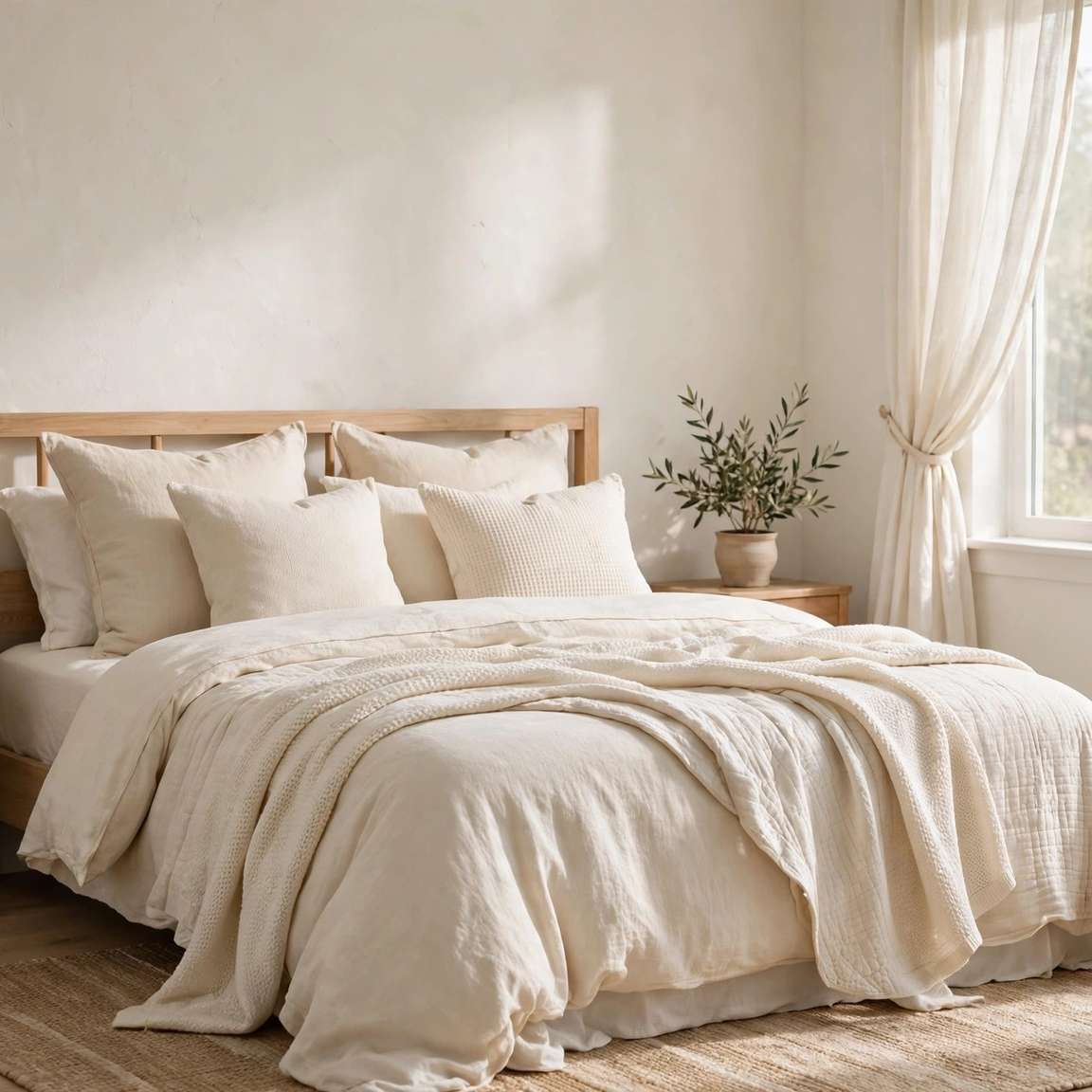
An all-white bedroom works when the whites form a trio: ivory walls, cream bedding and warm white cushions. Three whites from one warm family layer softly; mismatched stark whites just look like a mistake.
Best for:
- Small rooms needing light
- Renters who cannot paint boldly
- A calm base to re-accent seasonally
Tip: test whites together in daylight — family resemblance shows at noon.
13) Mustard, Teal and Cream — a Retro Trio
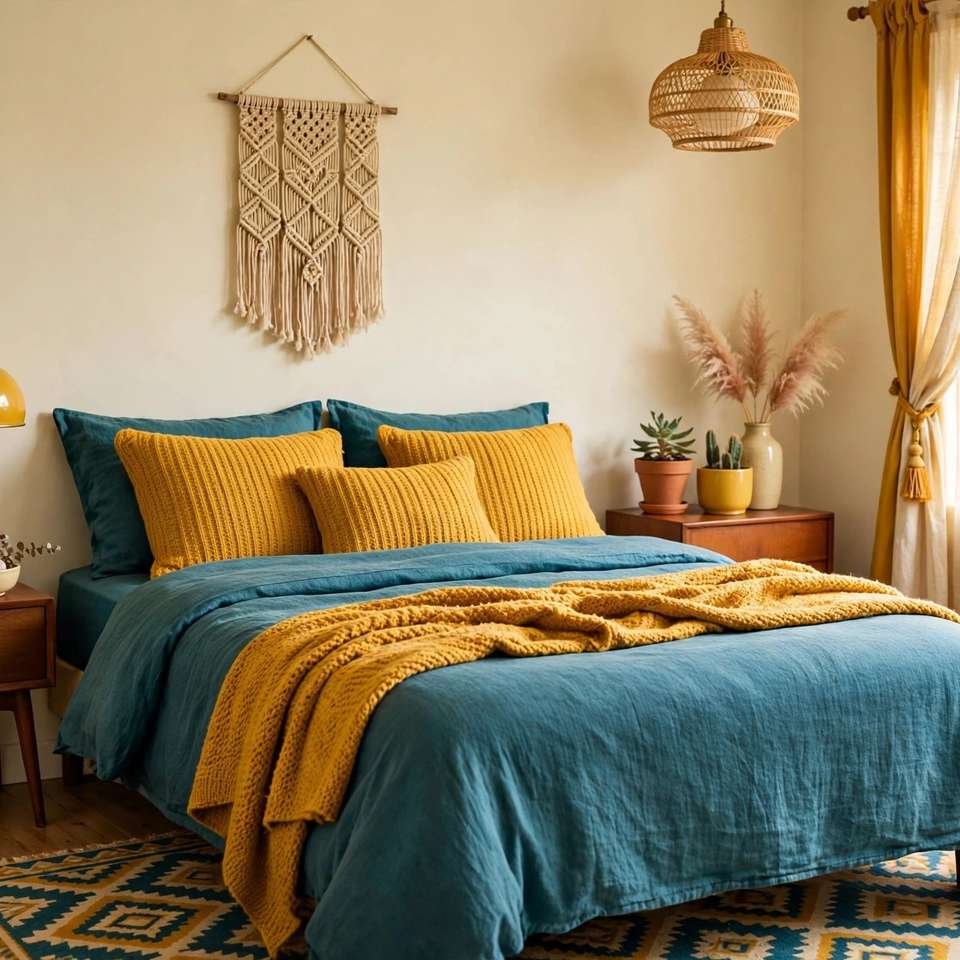
Mustard and teal flatter each other, and cream stops the pair arguing. Teal bedding, mustard cushions and cream walls or sheets give a cheerful, slightly retro scheme.
Why it works:
- Warm and cool balance each other
- Cream gives the eye a rest
- Both colours suit mid-toned wood
Tip: keep mustard to cushions and a throw — a little goes a long way.
14) Three Pinks, From Pale Blush to Deep Rose
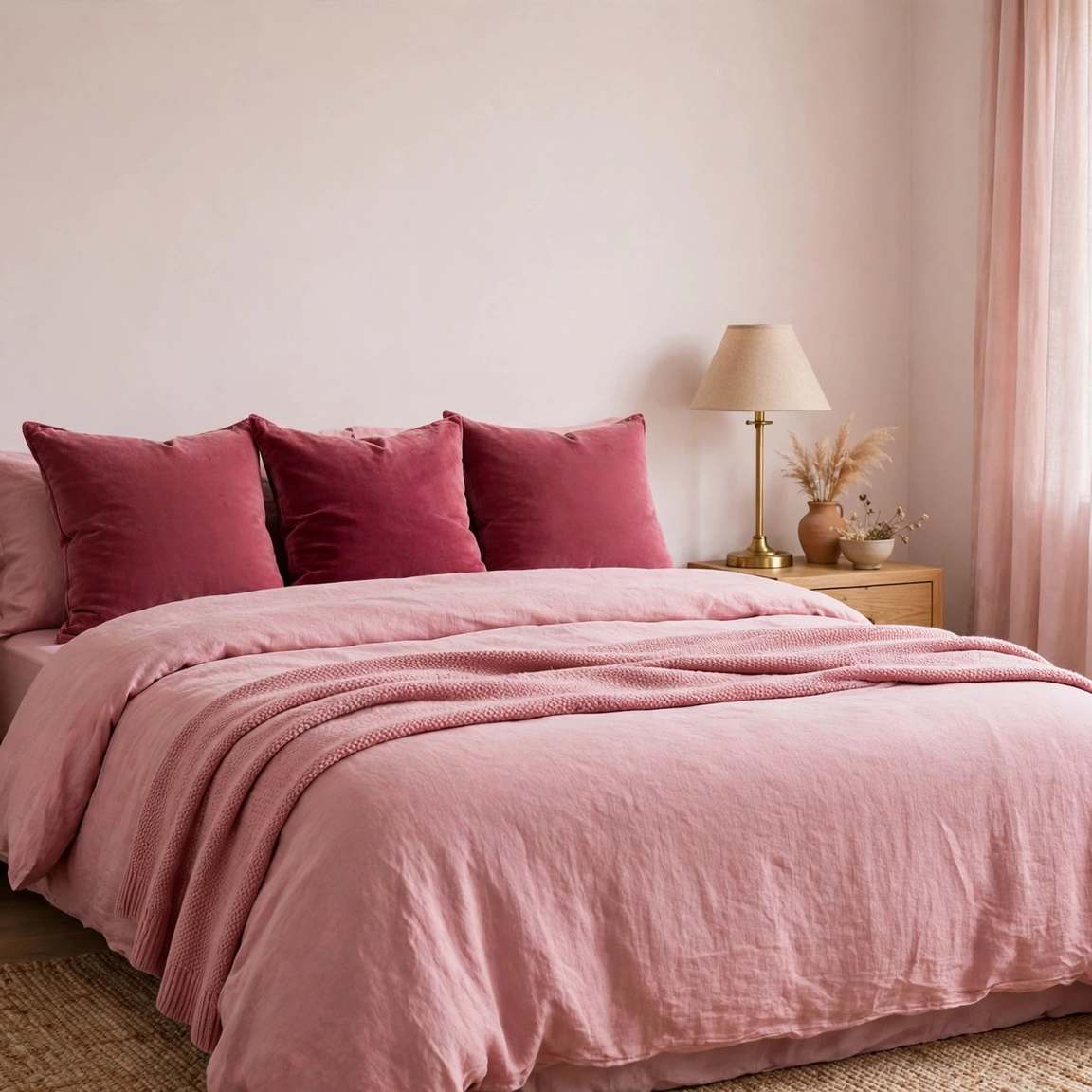
Pink in three strengths: palest blush on the walls, a mid rose on the bedding and deep raspberry cushions. The room reads pink in layers — romantic at the edges, rich where you sleep.
How to style it:
- Deepest pink smallest and lowest
- Cream or white sheets break the layers
- Gold or brass warms the trio
Tip: dusty, greyed pinks layer calmly; candy pinks fight each other.
15) Grey Done in Threes: Light, Mid and Graphite
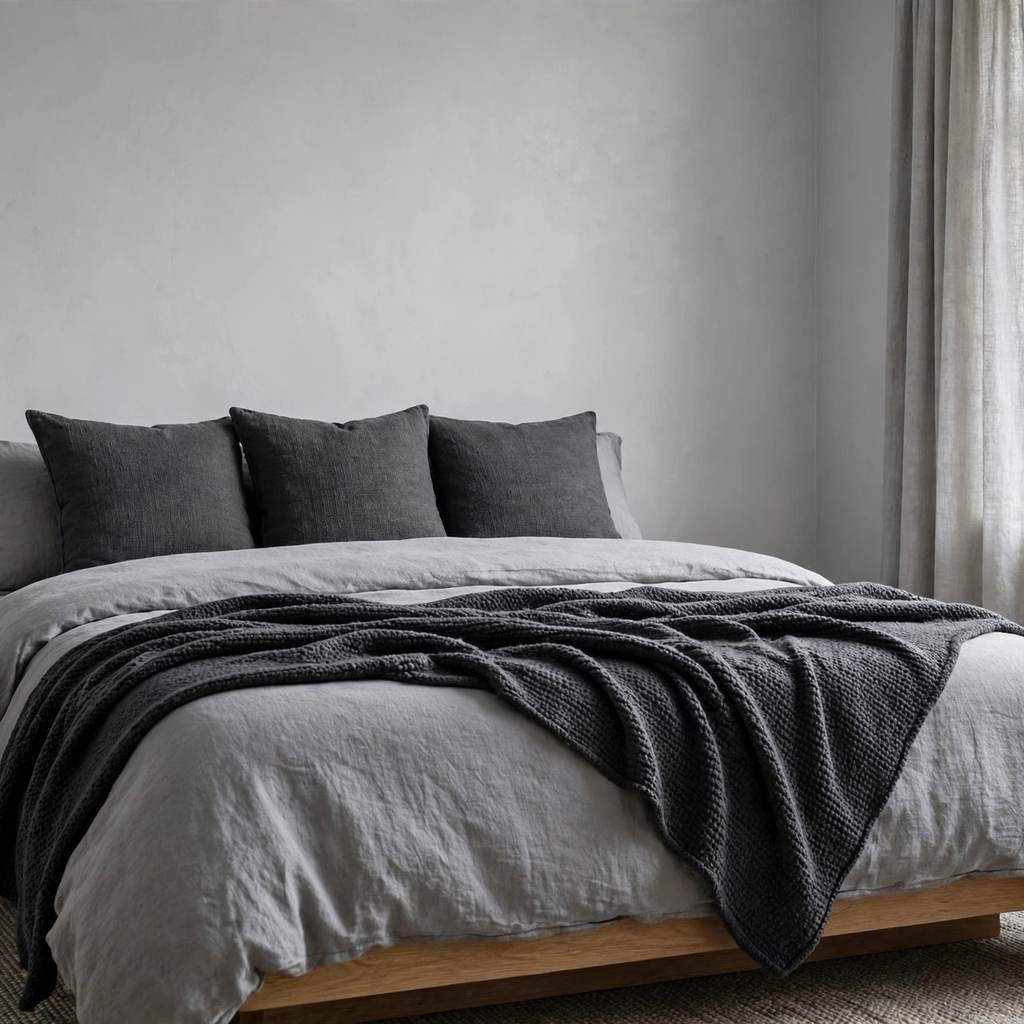
Split grey into three: light grey walls, mid-grey bedding and graphite cushions or a throw — suddenly the family has light, shade and depth.
Why it works:
- Value contrast does the decorating
- Nothing new to match or clash
- A perfect base for one future accent
Tip: add one white piece at each level so every grey reads clearly.
16) A Coastal Trio: Sand, Sea Blue and Driftwood Grey
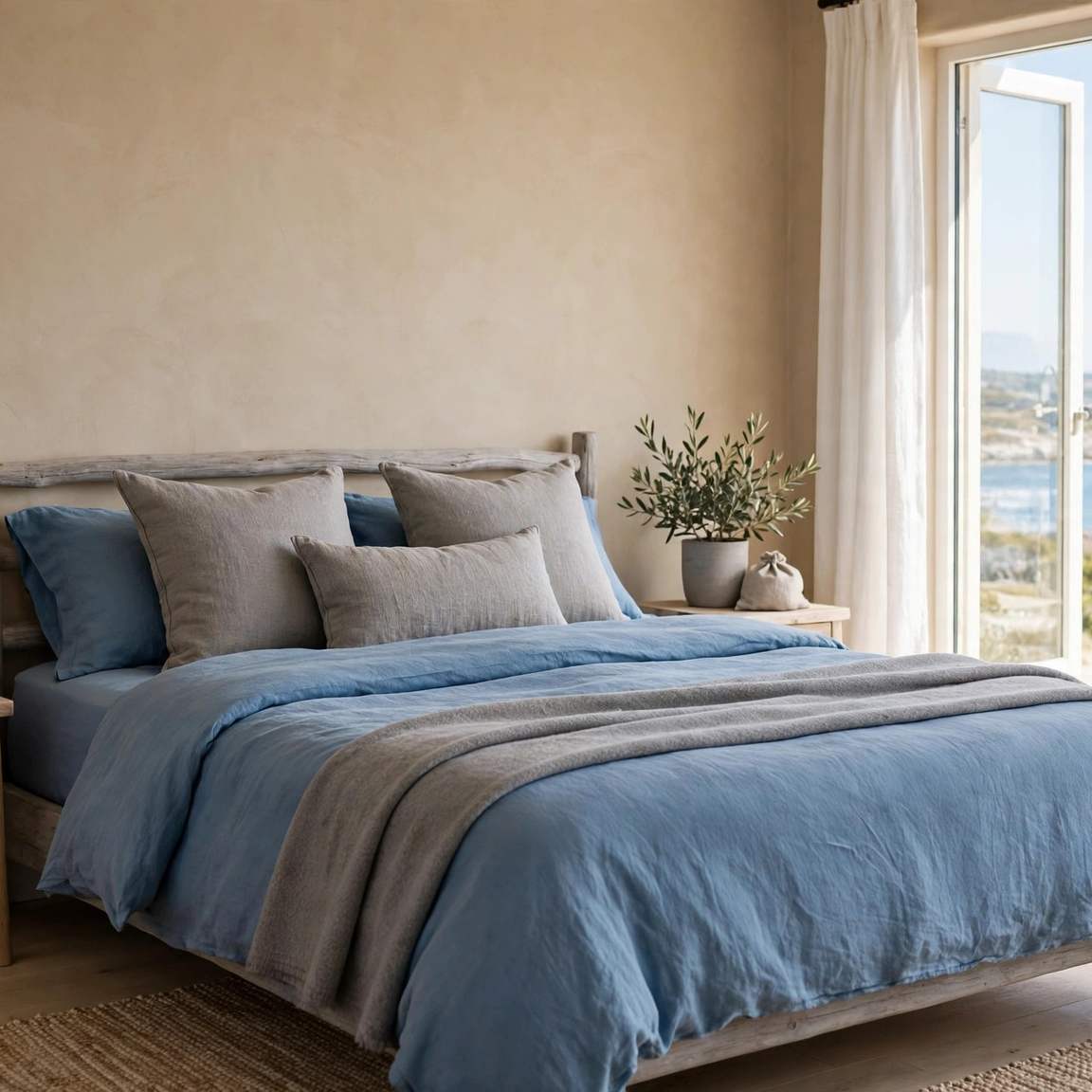
Coastal colour is a trio, not a theme: sand walls, sea-blue bedding and driftwood grey cushions. No anchors, no shells — just three colours from the beach.
Best for:
- Bright rooms with lots of daylight
- A calm holiday feel all year
- Pairing with white-painted furniture
Tip: choose a greyed sea blue; bright turquoise tips the scheme into theme territory.
17) Jewel Tones in Threes: Emerald, Sapphire and Amethyst
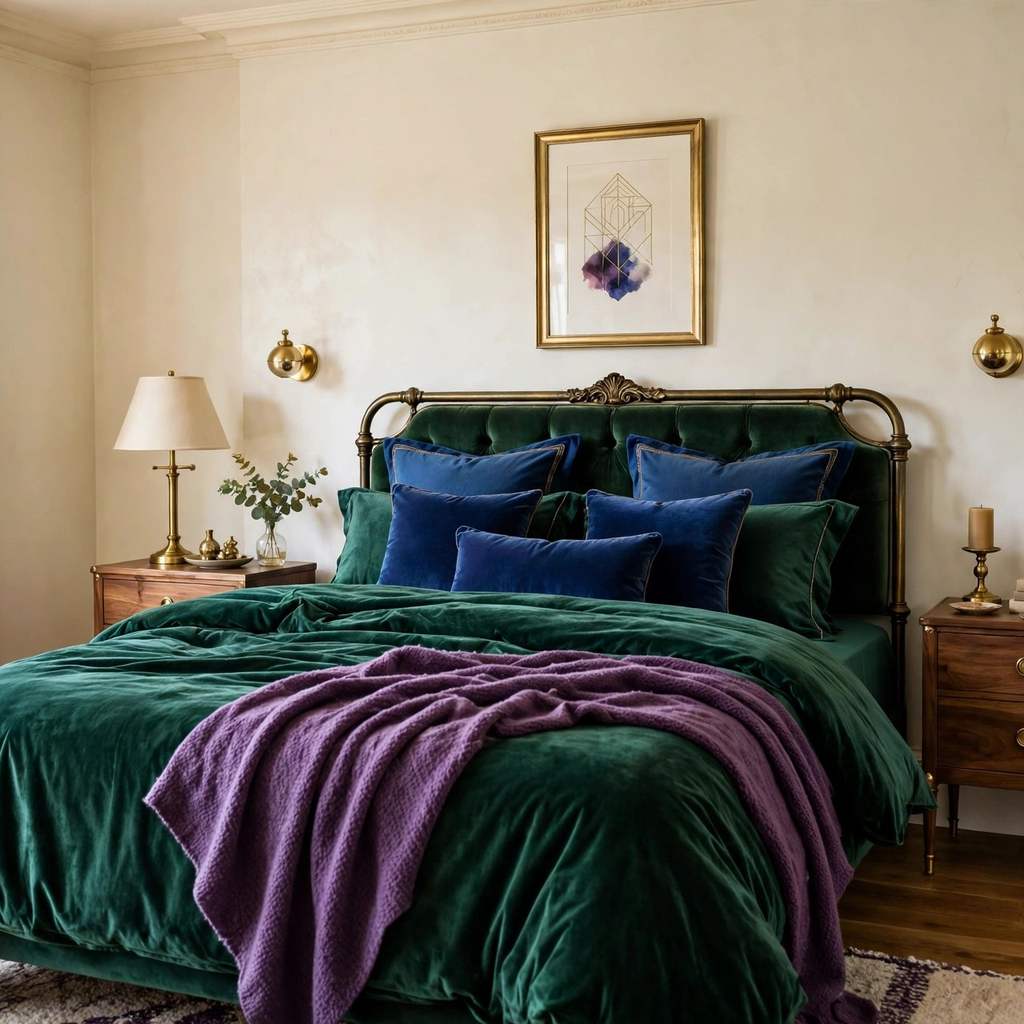
Emerald bedding, sapphire cushions and one amethyst throw over cream walls give a sumptuous evening scheme — three deep colours, none stealing the show.
How to style it:
- Cream or warm white as the backdrop
- One jewel per piece, never mixed
- Brass or gold to lift the depth
Tip: velvet shows jewel tones best.
18) Three Cushions, Three Colours
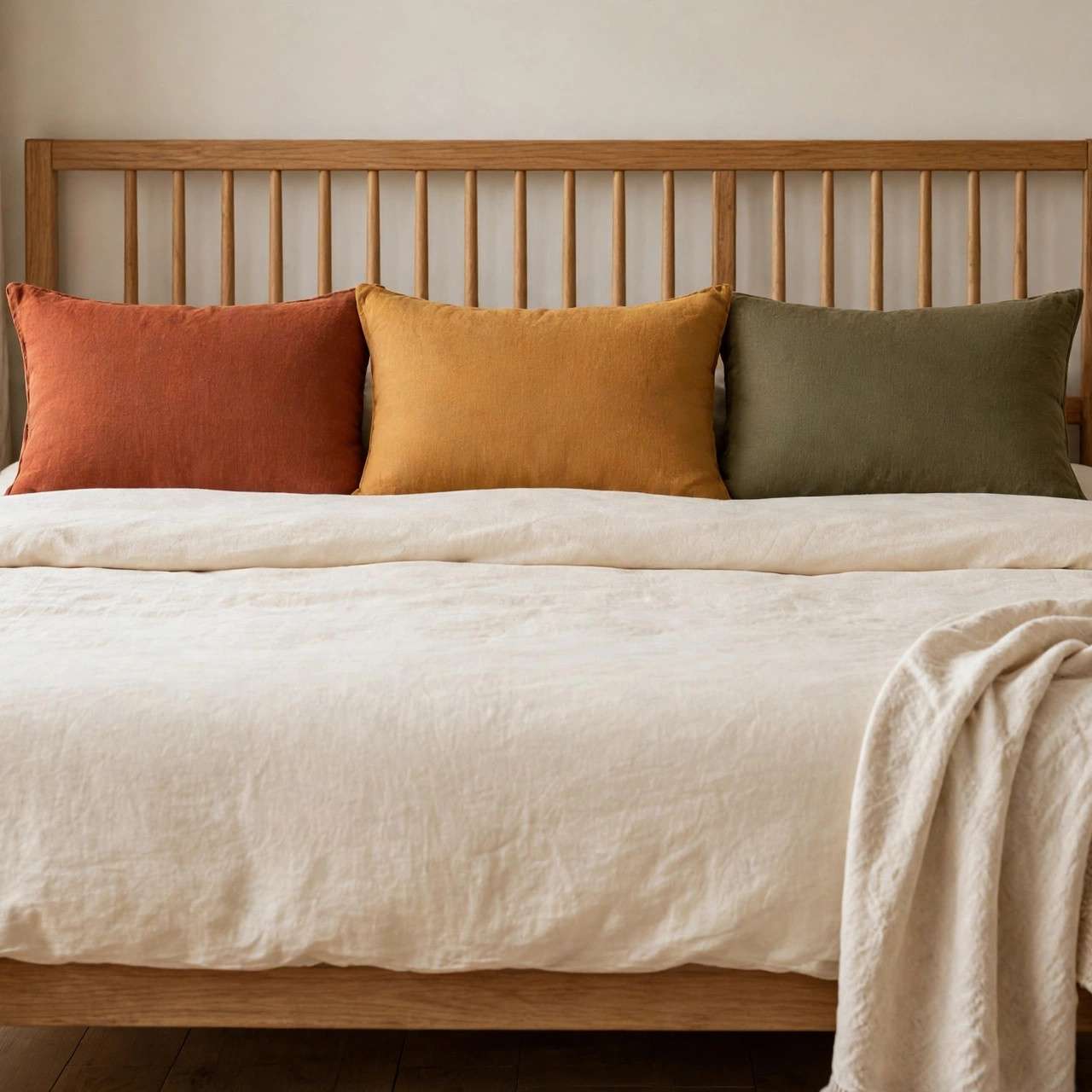
The smallest trio sits on the bed: three cushions in three colours — rust, ochre and olive, say — against plain cream bedding. The bed carries the whole scheme while walls and curtains stay quiet.
How to use it:
- Colours of similar depth and dustiness
- Odd numbers sit naturally together
- Repeat one cushion colour elsewhere, once
Tip: photograph the trio together before buying — phone light tells the truth.
19) Forest Green, Cream and Walnut Brown
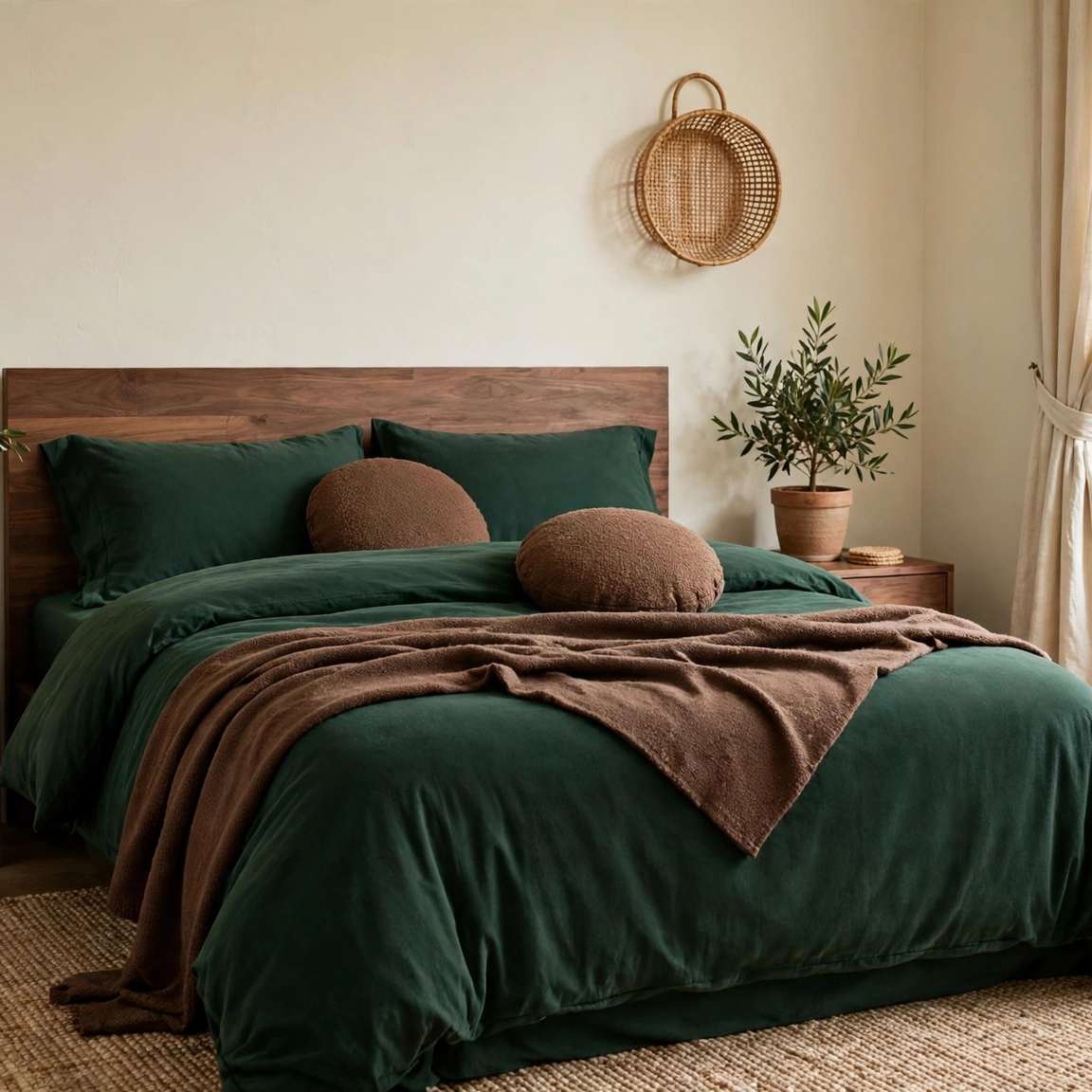
Forest green is deep, cream softens it and walnut brown grounds the pair. Cream walls, forest bedding and a brown throw give a scheme that feels like a library you can sleep in.
Why it works:
- Brown bridges green and cream
- Cream stops green swallowing light
- Both partners flatter wood furniture
Tip: if forest feels too dark, swap the roles — cream bedding, green cushions.
20) One Colour in Three Strengths: the Lavender Ladder
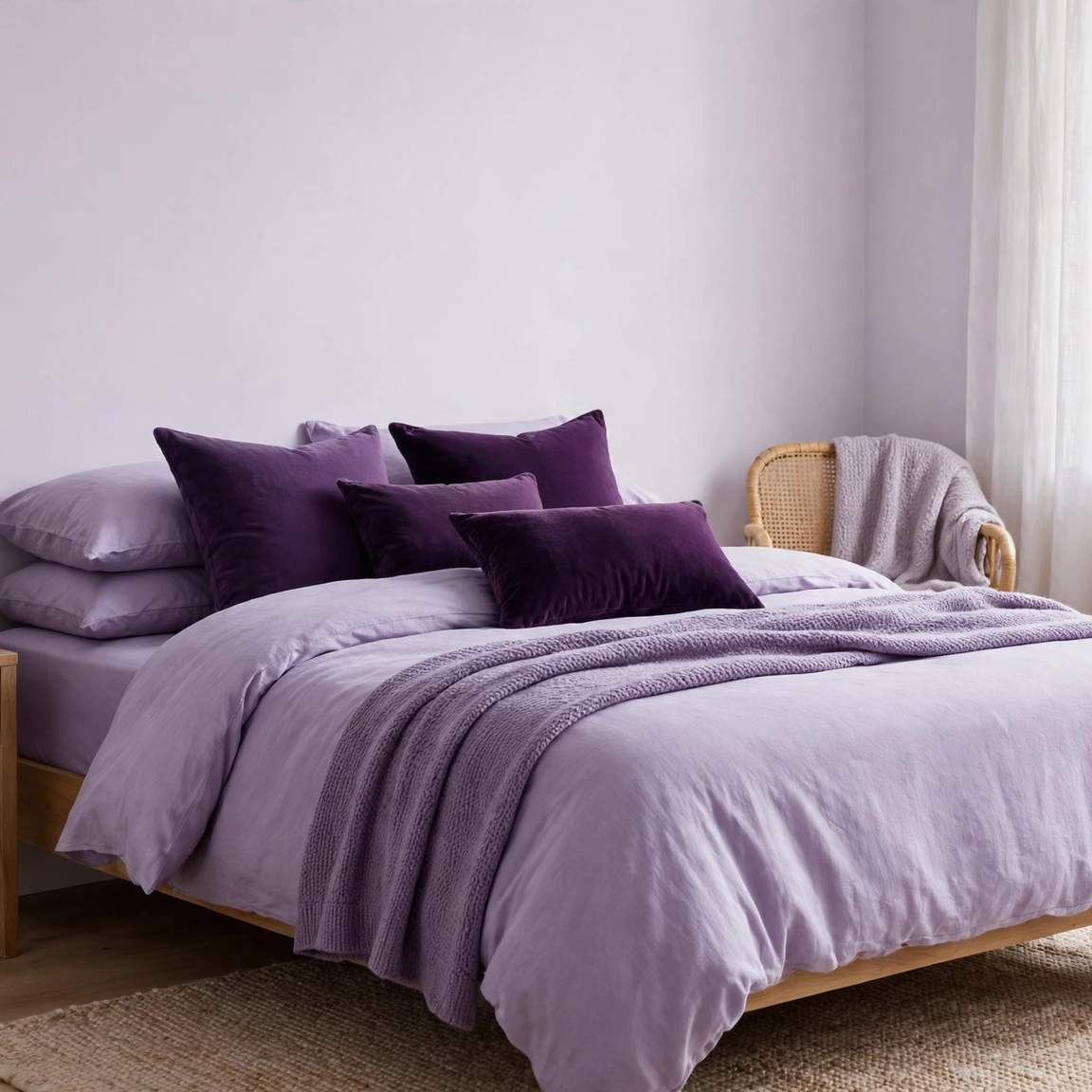
Use one favourite colour’s tint, tone and shade as your three. Palest lavender on the walls, a mid lavender duvet and deep purple cushions make a scheme unmistakably one colour, yet full of movement.
Best for:
- Colour lovers who fear clashing
- Rooms with one obvious favourite shade
- Easy extending to curtains and rugs
Tip: paint cards show the ladder — pick shades three steps apart.
21) Coral, Peach and Apricot — a Sunset Trio
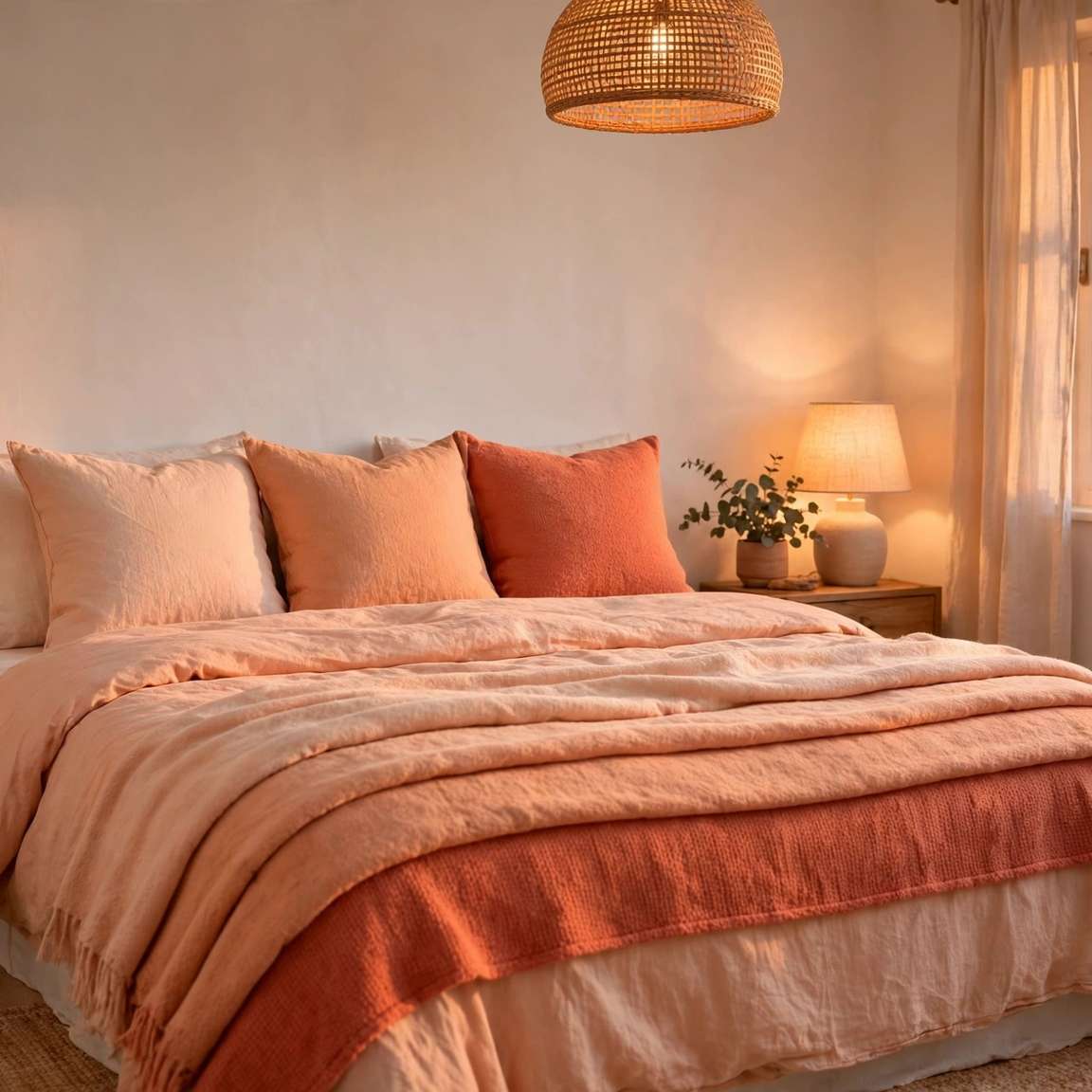
Sunset colours layer like the sky: peach bedding, apricot cushions and coral pieces as the deepest note, over warm white walls. The gradient glows in evening lamplight.
How to style it:
- Palest colour largest, deepest smallest
- Warm white, never blue-white, behind them
- Gold-toned metals echo the warmth
Tip: keep coral to two pieces — it is the loudest voice in the room.
22) Two Wall Colours Plus a Third on the Bed
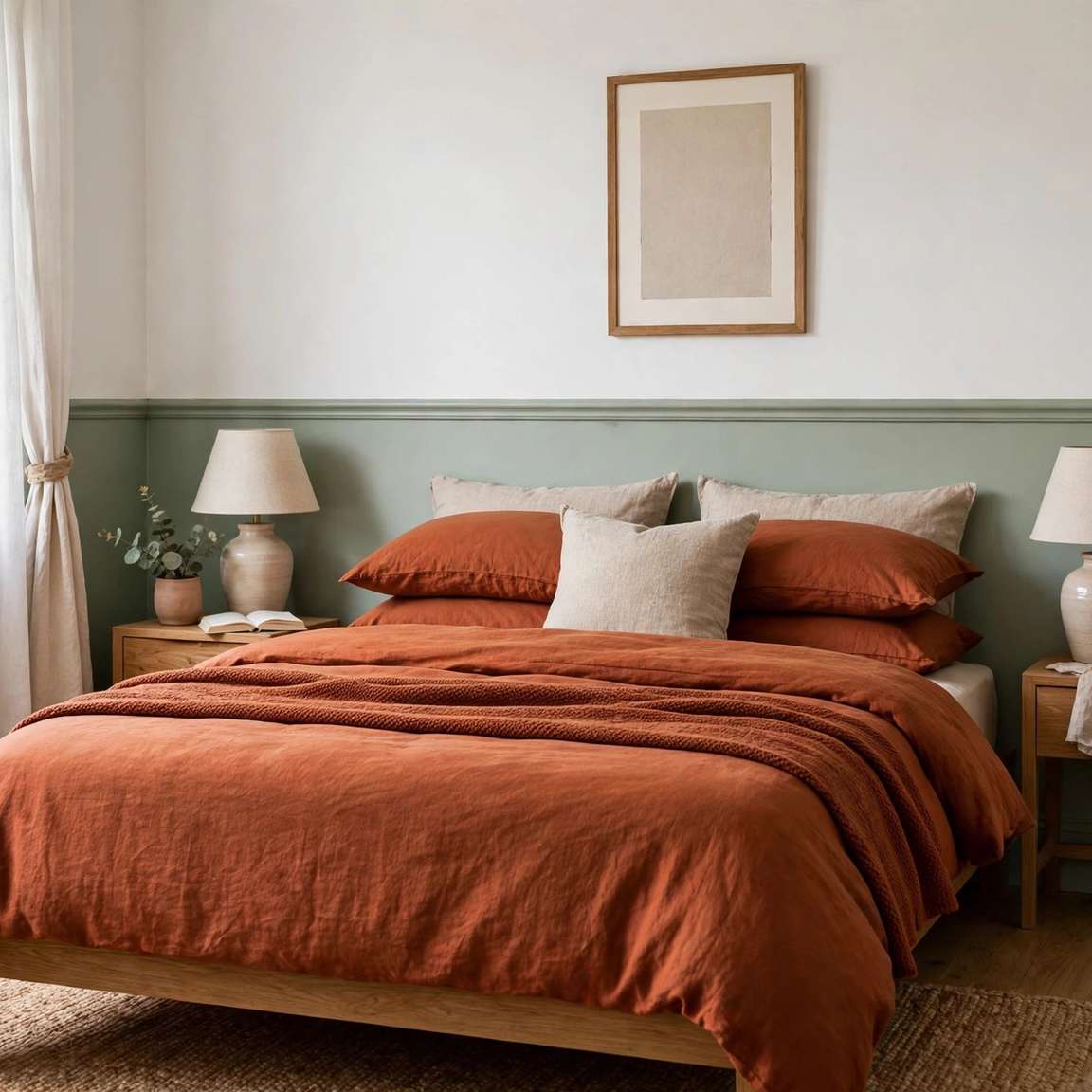
Paint the lower wall sage and the upper wall white, then let rust-coloured bedding be the third colour. The architecture carries two thirds of the scheme for free.
How to use it:
- Darker wall colour below the line
- Bedding colour appears nowhere on walls
- Repeat the bedding colour once, small
Tip: a dado line makes the two-tone split look original.
23) Ochre, Olive and Cream — an Autumn Trio
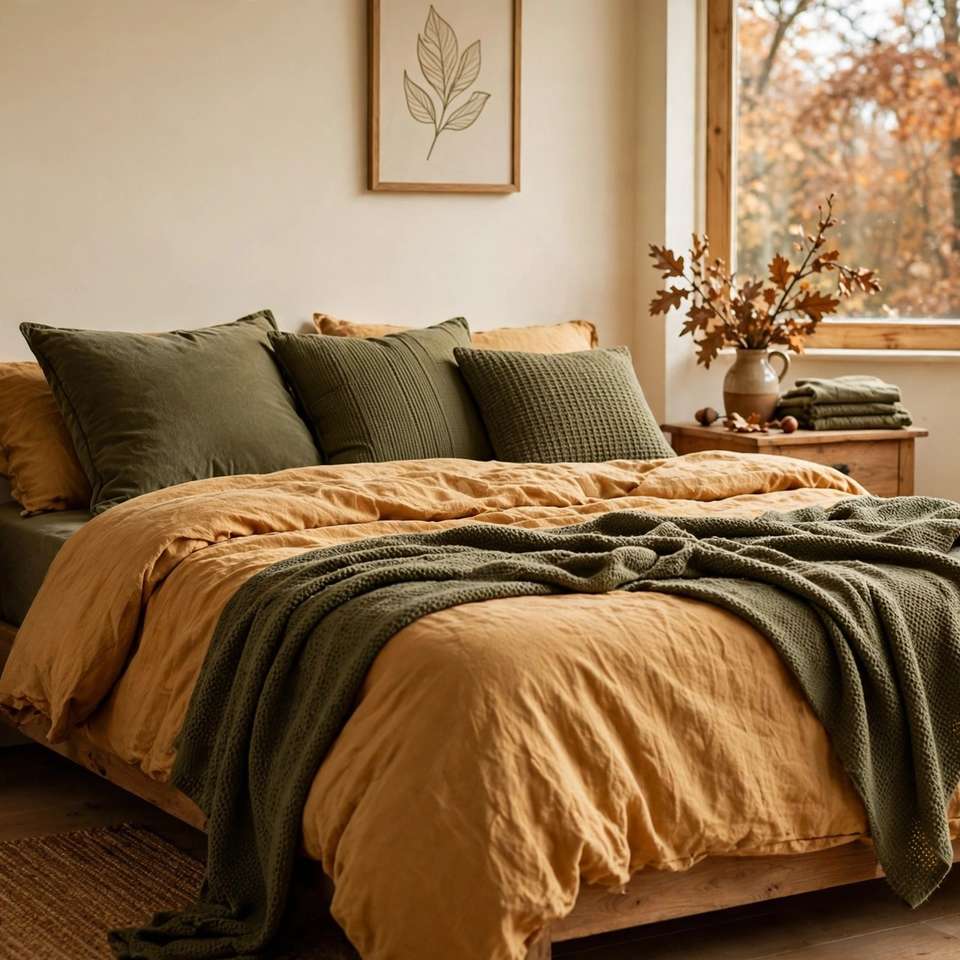
Autumn’s palette is a ready-made trio: ochre bedding, olive cushions and cream walls. The colours are warm without being dark, and they make a bedroom feel gathered-in and generous, September to spring.
Why it works:
- Both colours come from the same season
- Cream keeps the warmth light
- Suits oak, pine and leather tones
Tip: a touch of rust deepens the trio for winter without a repaint.
24) Ice Blue, Silver Grey and White — a Cool Trio
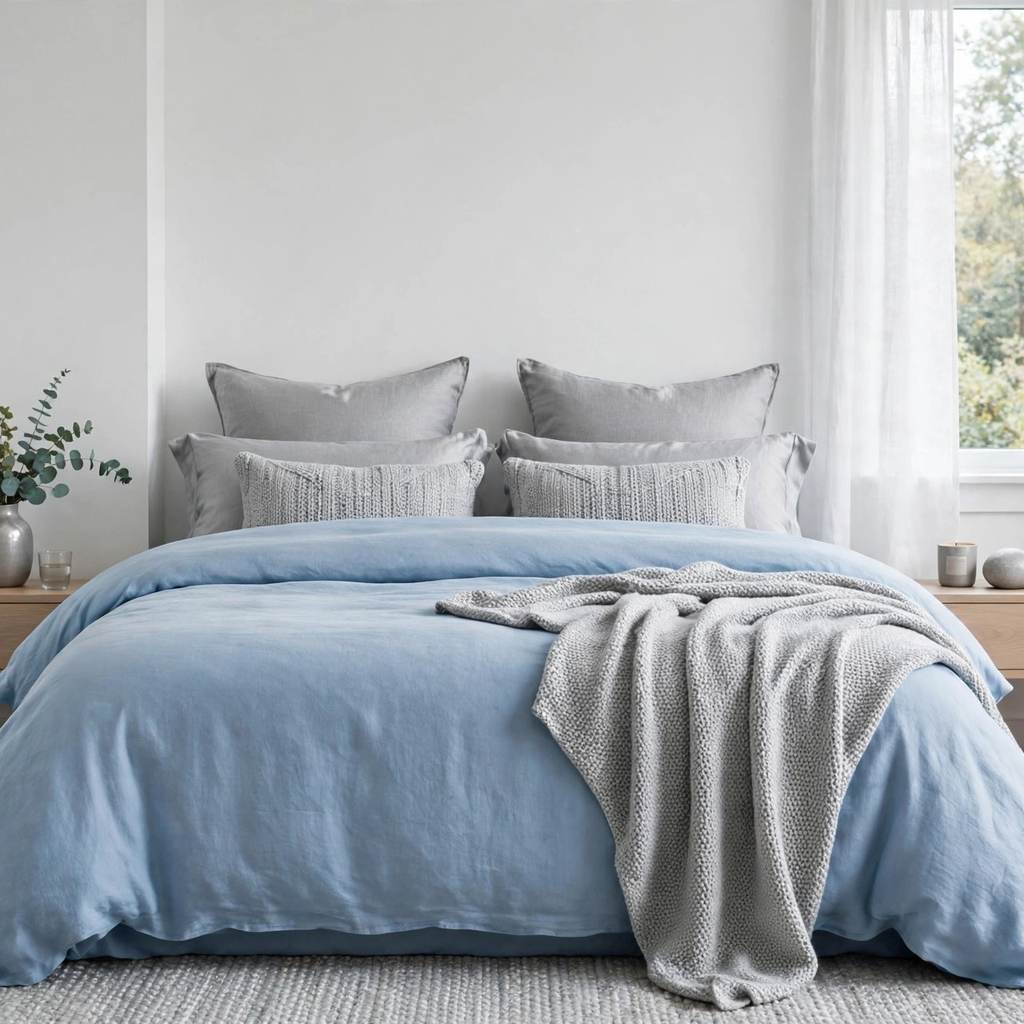
For rooms that run warm, or tastes that prefer cool calm: ice blue bedding, silver grey cushions and white walls. The trio feels like fresh air, and silver-grey keeps blue from reading as nursery.
Best for:
- South-facing rooms that overheat visually
- Minimal, uncluttered tastes
- Rooms with chrome fittings already
Tip: warm this trio with lamp light, not colour — warm bulbs do the job.
25) Three Colours on the Bed Only
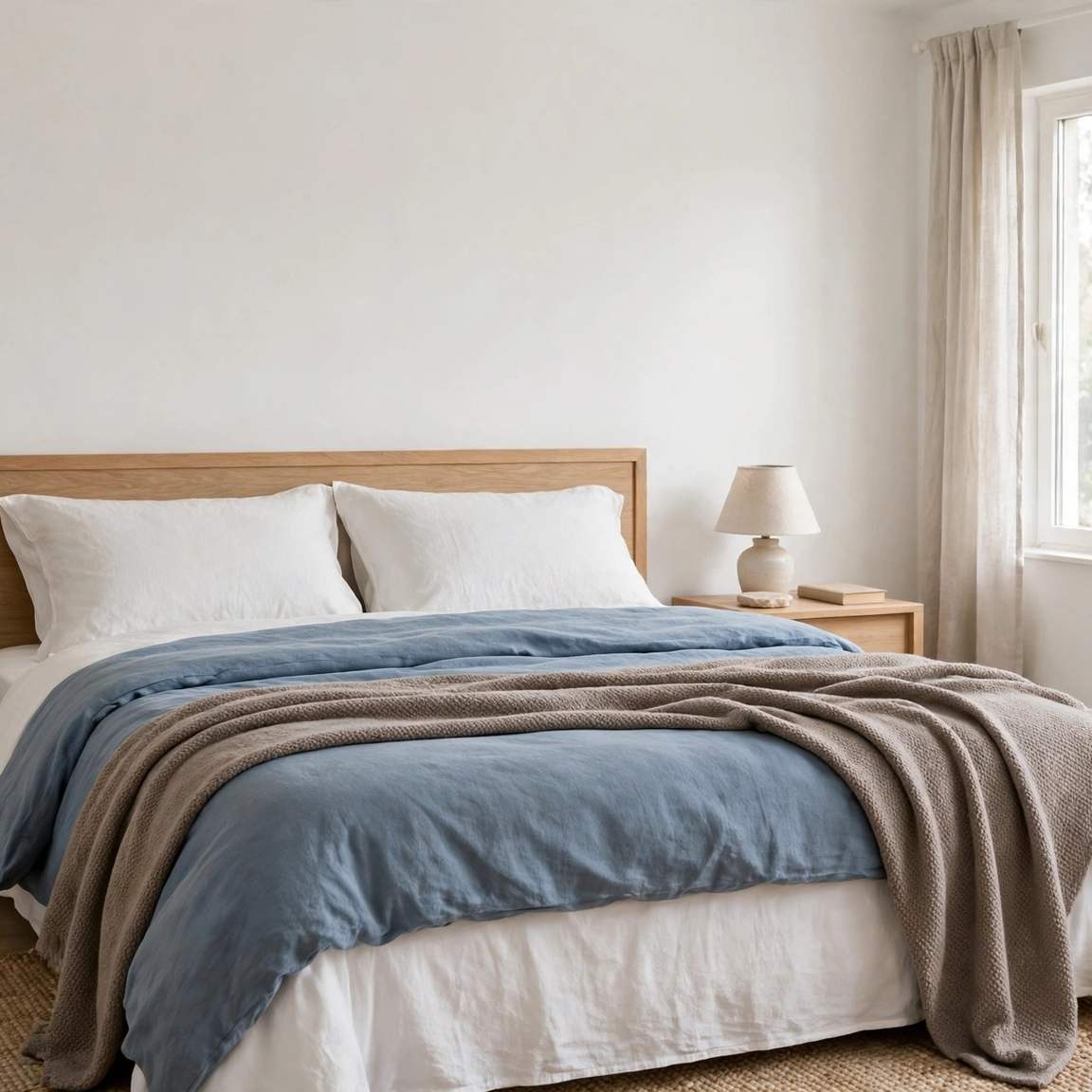
Renters and minimalists can keep the whole trio on the bed: white walls, then bedding layered in dusty blue, white and taupe. The room stays neutral, the bed carries the colour, and a change costs one wash load.
How to style it:
- Sheets white, duvet the colour, throw neutral
- Cushions repeat the duvet colour
- Nothing else in the room changes
Tip: two duvet sets in different trios give you a new room twice a year.
26) Plum, Mauve and Dusty Pink — a Moody Trio
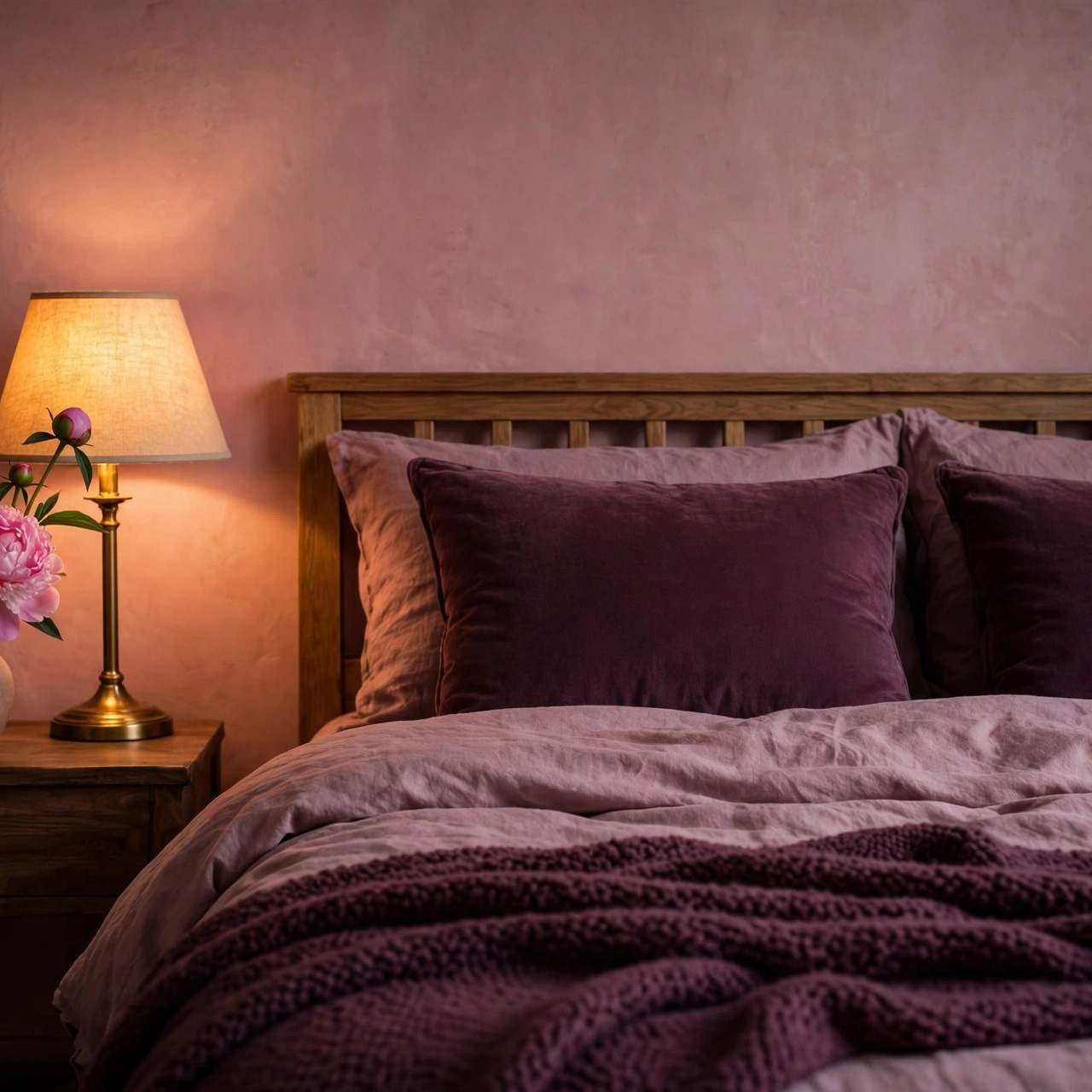
Plum, mauve and dusty pink are one colour family sliding from deep to pale, and they make pink feel moody rather than sweet. Dusty pink walls, mauve bedding and plum cushions give a cocooning, evening-ready scheme.
Why it works:
- One family, three depths — no clash
- Pale walls keep the depth on the bed
- Lovely under warm lamplight
Tip: add cream sheets so the colour family has somewhere to rest.
27) One Colour, Three Small Doses
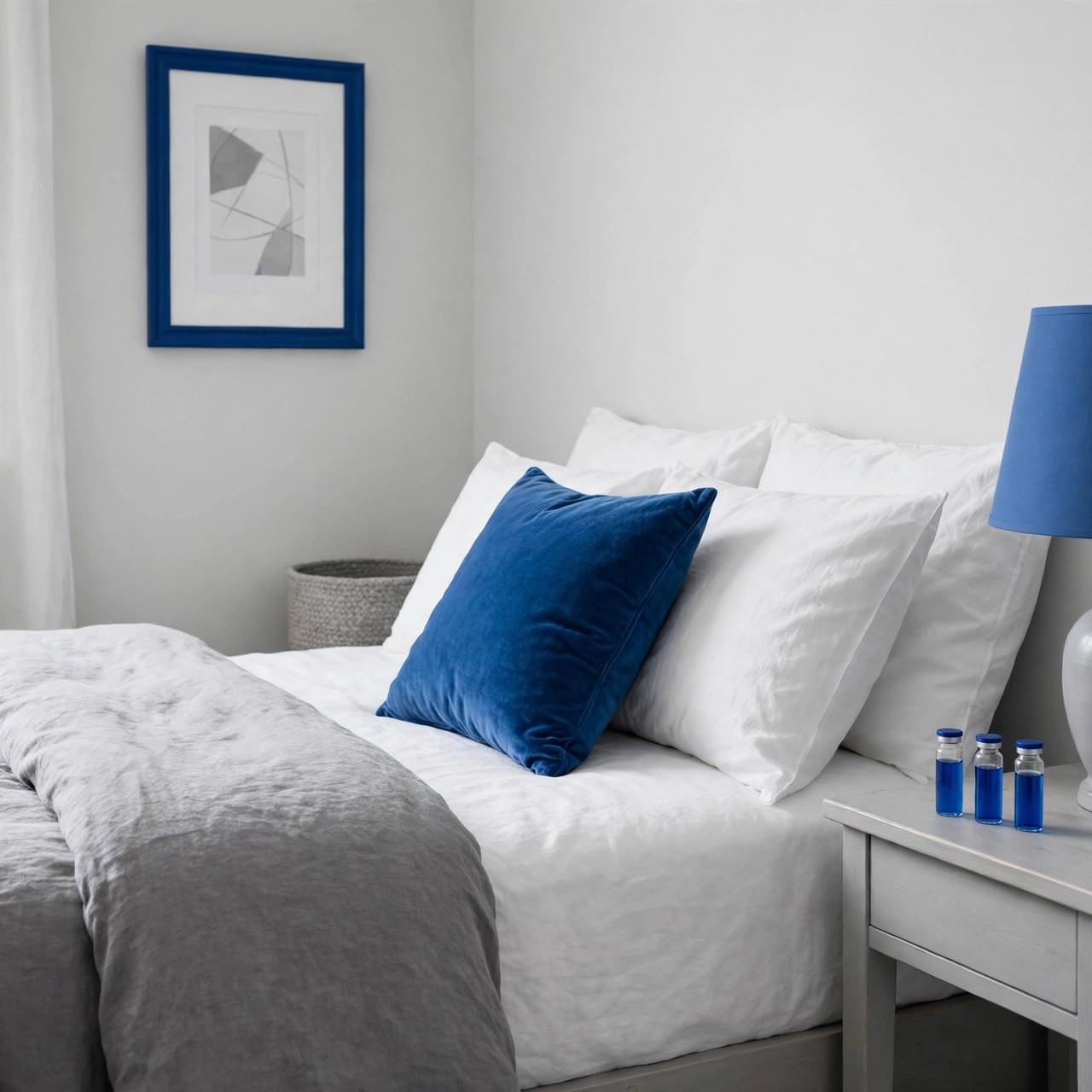
The lightest-touch trio: keep the room white and grey, then dose one colour three times in small pieces — a cobalt cushion, a cobalt lampshade and a cobalt-framed print. Each dose is tiny; together, unmistakably a scheme.
How to use it:
- Doses at three different heights
- Same colour, similar intensity
- Nothing else in that colour anywhere
Tip: this is the cheapest trio to change — three small pieces, new colour.
28) Yellow in Three Strengths: Lemon, Butter and Ochre
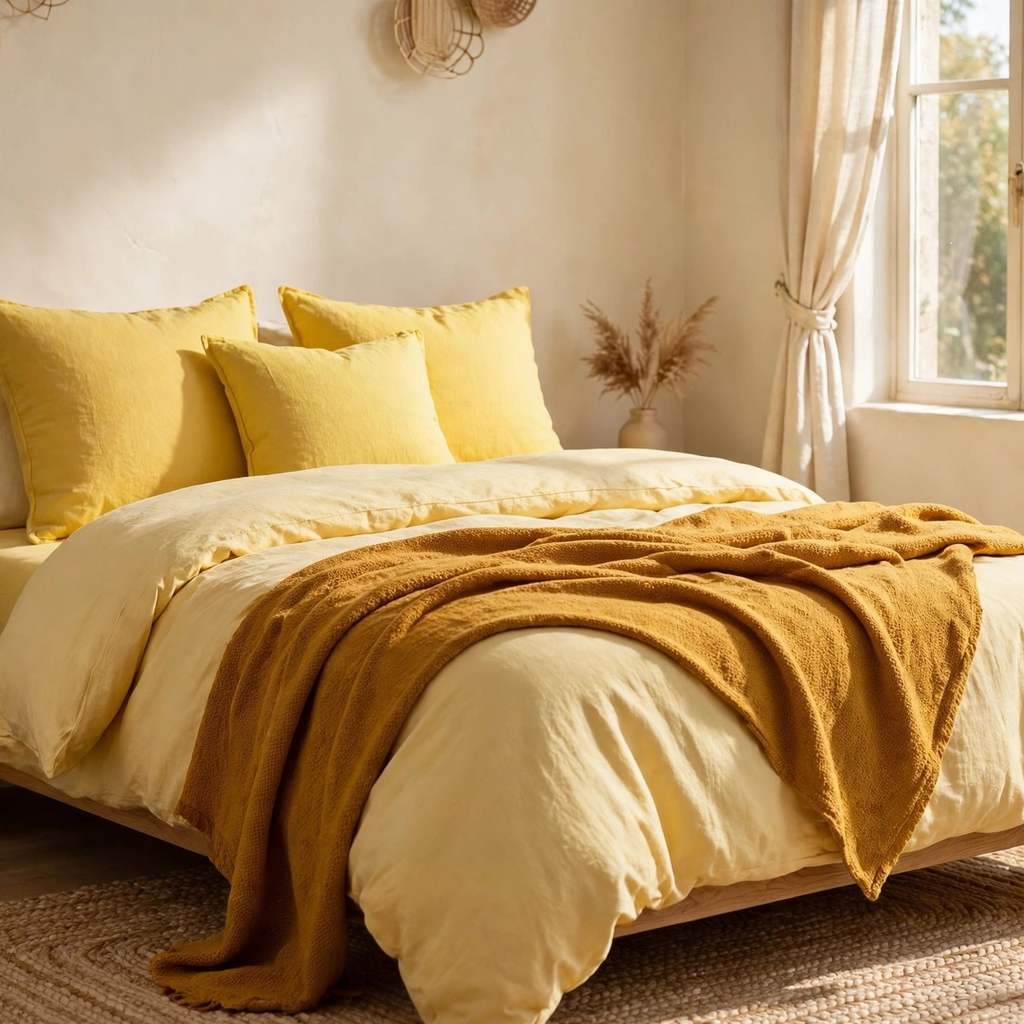
Yellow frightens in one big dose and charms in three small ones. Butter-yellow bedding, lemon cushions and an ochre throw over cream walls give sunshine in layers — cheerful without glare.
Best for:
- Dark rooms needing borrowed light
- Grey climates and north-facing windows
- Lifting plain white furniture
Tip: all three yellows should be warm; a greenish lemon will sour the set.
29) Red, Cream and Denim Blue — a Relaxed Trio
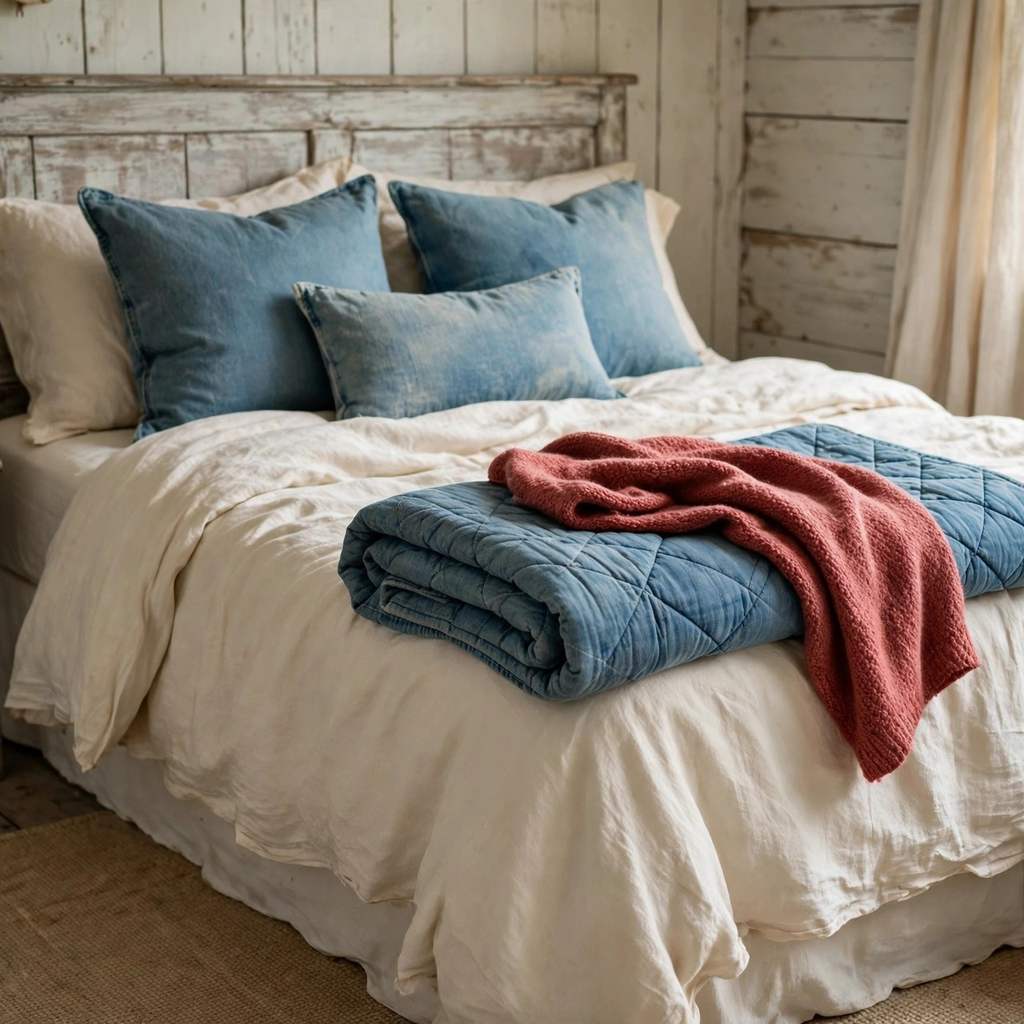
Red, cream and denim blue sounds bold, but in dusty, worn shades it is the palette of old quilts. Cream bedding, denim-blue cushions and one brick-red throw give colour with a lived-in heart.
How to style it:
- Red smallest and softest — brick, not scarlet
- Denim in cushions or a folded quilt
- Cream does most of the work
Tip: faded is the brief — a bright new red turns the whole trio loud.
30) Three Metallics Count as Colours Too
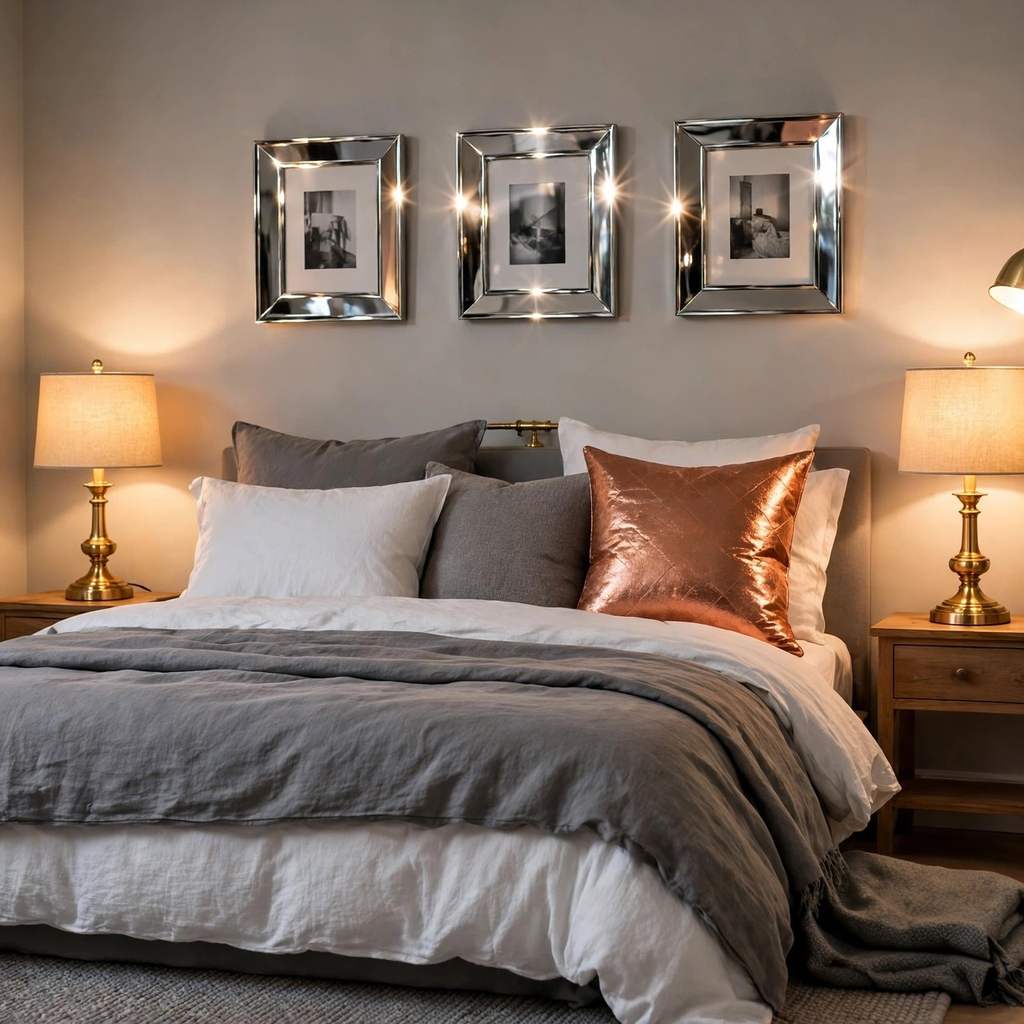
Brass, copper and chrome are colours, and a trio warms a plain scheme without a drop of paint. Over white and grey bedding, brass lamps, a copper cushion and chrome frames give three glints of one metallic palette.
Why it works:
- Metallics add colour without pattern
- Mixed metals look collected, not matched
- They come alive in lamplight
Tip: let one metal lead — two parts brass to one each of the others.
31) A Nature Trio: Moss, Fern and Cream
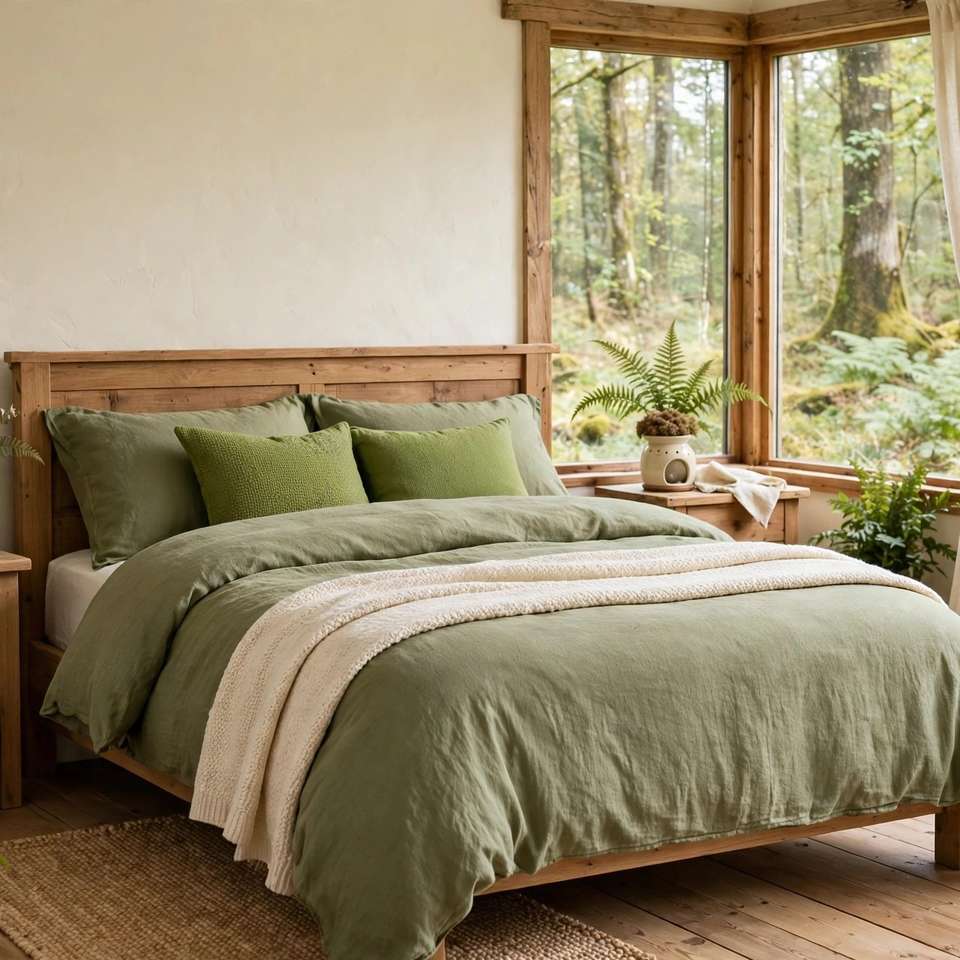
Two greens become a trio when cream joins them: moss bedding, fern-green cushions and cream walls. Moss is greyed and quiet, fern is fresher, and over cream they read as woodland shade, not a garden centre.
How to use it:
- Moss on the largest area, fern as accent
- Cream sheets and walls as the rest stop
- Real plants echo, not add, colours
Tip: brown wood counts as a quiet fourth — keep it mid-toned.
32) Midnight Blue, Blush and Gold — an Evening Trio
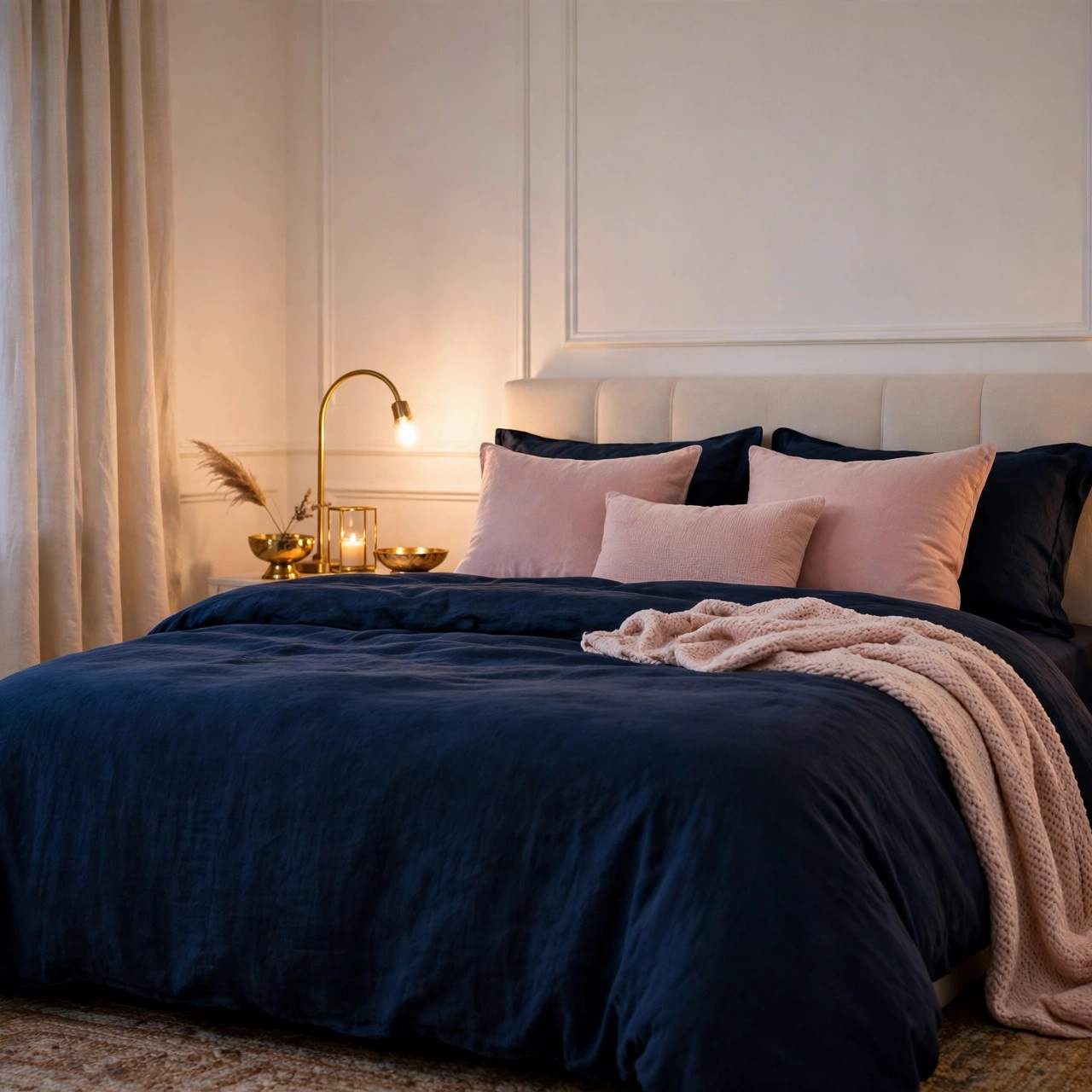
The trio made for lamplight: midnight blue bedding, blush cushions and gold accents over warm white walls. Blue gives depth, blush stops it turning cold and gold catches the light — a bedroom that looks best at the hour you use it.
Best for:
- Bedrooms used mostly in the evening
- A boutique-hotel feeling at home
- Deeper schemes in larger rooms
Tip: test this trio after dark — daylight judges it unfairly.
How to Build Your Own Three-Colour Palette
Start from something you already own — a duvet set, a rug, a cushion. Take its main colour as your 60 or 30, add a partner that sits quietly beside it, then one accent that contrasts. If bold trios feel like a leap, a bedroom rule of three for a neutral look shows the method working with whites, stones and greys — build confidence, then add colour.
Test the trio small first: three cushions in your chosen colours tell you within a day whether the palette sings. Only then let the winner graduate to bedding, curtains and paint, keeping the 60-30-10 shares in mind.
Making Three Colours Feel Calm, Not Busy
Calm trios share three habits: the colours are similar in temperature, each colour appears at least twice, and patterns are rationed to one piece. The schemes in the modern bedroom rule of three follow the same discipline — repetition is what makes three of anything feel settled.
If a scheme feels busy, do not add a fourth colour. Remove the accent’s third appearance instead, or soften the boldest colour by one shade. Three quiet colours always beat four interesting ones in a bedroom.
Conclusion
Three colours are enough. Whether you split them 60-30-10, climb one colour in three shades or dose an accent three times, the rule turns colour from a guessing game into a recipe worth repeating.
Start with the bed, where colour is cheapest to change, and let walls follow when you are sure. For real bedrooms showing these trios at work, Houzz is full of schemes worth borrowing. Pick your three, give each a job, and enjoy a room that agrees with itself.




More Stories
33 Ways to Maximize a Small Backyard
30 Beautiful Bedroom Decor Ideas
35 Kitchen Rule of Three Zones Explained