
Introduction
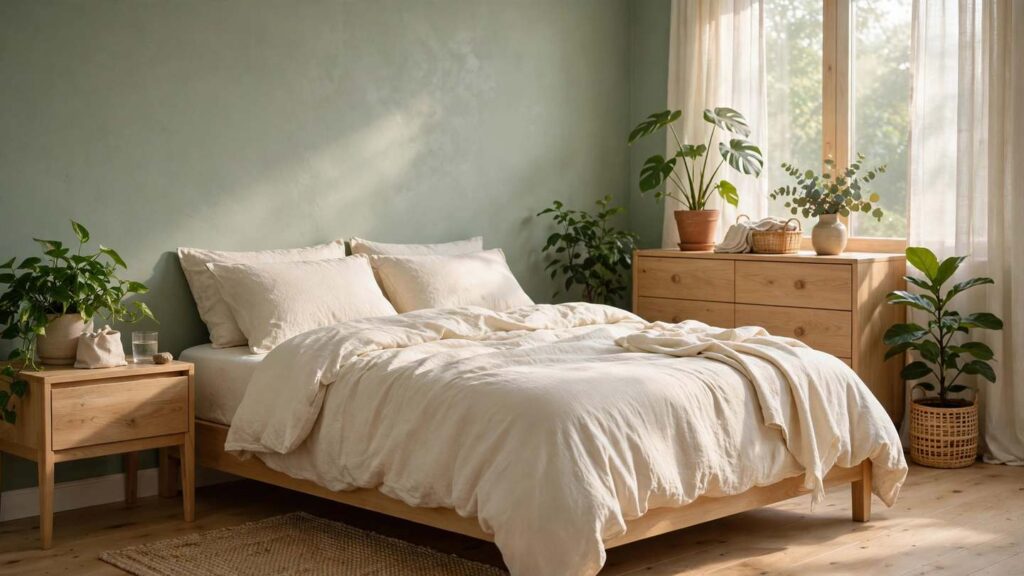
You climb into bed exhausted, yet your mind keeps racing. Sometimes the room itself is part of the problem: loud, busy shades keep your eyes working when they should be resting, while calming bedroom colors quietly tell your whole body the day is over.
Soft, muted tones lower the visual volume and help your bed become the only thing asking for attention. Colour really is one of the simplest ways to change how a bedroom feels.
Once the colour is sorted, styling gets easier too. Small tricks like the ones in our cozy bedroom rule of three ideas help you arrange lamps and cushions so the calm shade can do its work.
In this guide, you will find 28 calming shades, from gentle greens and blues to warm neutrals and soft blush tones. Each includes pairing ideas and a practical tip, so you can pick the one that suits your light, furniture and sleep.
1) Soft Sage Green
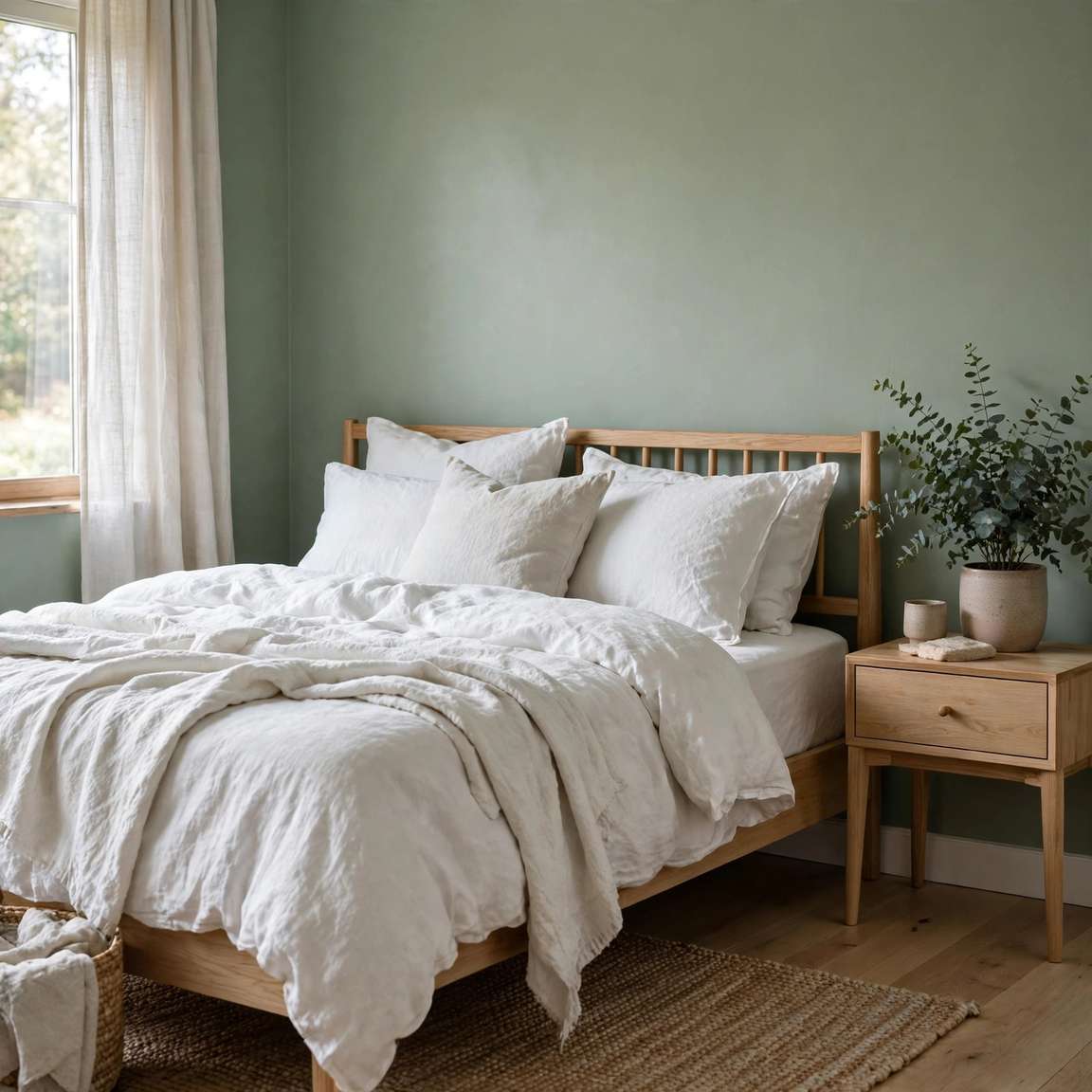
Sage is the colour of a quiet garden, and it brings that stillness indoors. Its grey undertone keeps it grown-up rather than sweet. Pair it with warm white bedding, pale oak and real plants.
Why it works:
- Feels natural, so eyes relax fast
- Works in bright and shaded rooms
- Suits modern, cottage and Scandi styles
Tip: Test sage by your window; in cool north light it can lean greyer.
2) Pale Powder Blue
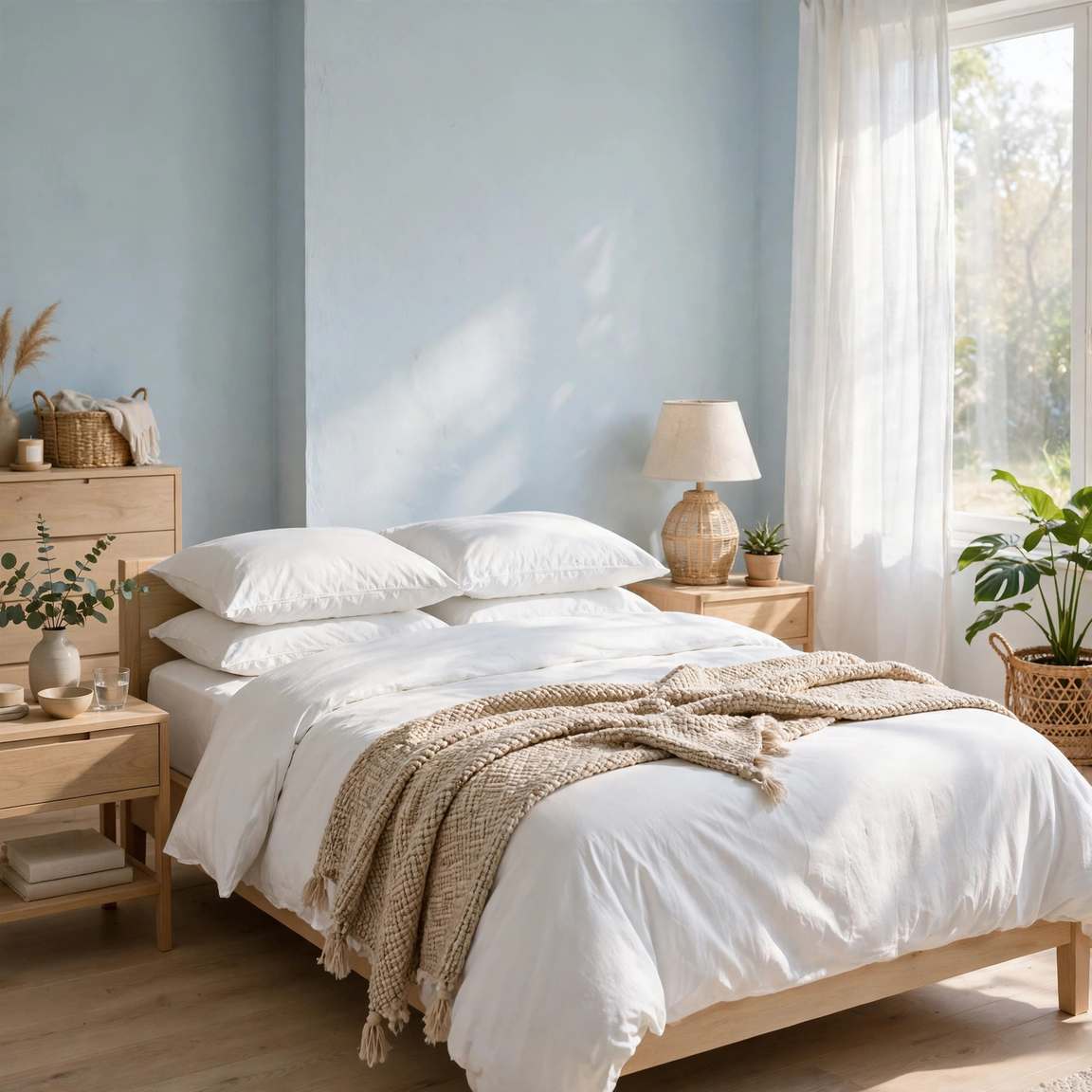
Powder blue is the colour of a clear early sky: open, airy and quietly hopeful. Keep it crisp with white bedding, then warm it with honey-toned wood and a woven throw so it never feels chilly.
Why homeowners love it:
- Visually cools a sunny room
- Makes small bedrooms feel larger
- Pairs with chrome, brass and wood
Tip: In a south-facing room, powder blue balances strong warm sunlight beautifully.
3) Warm Greige
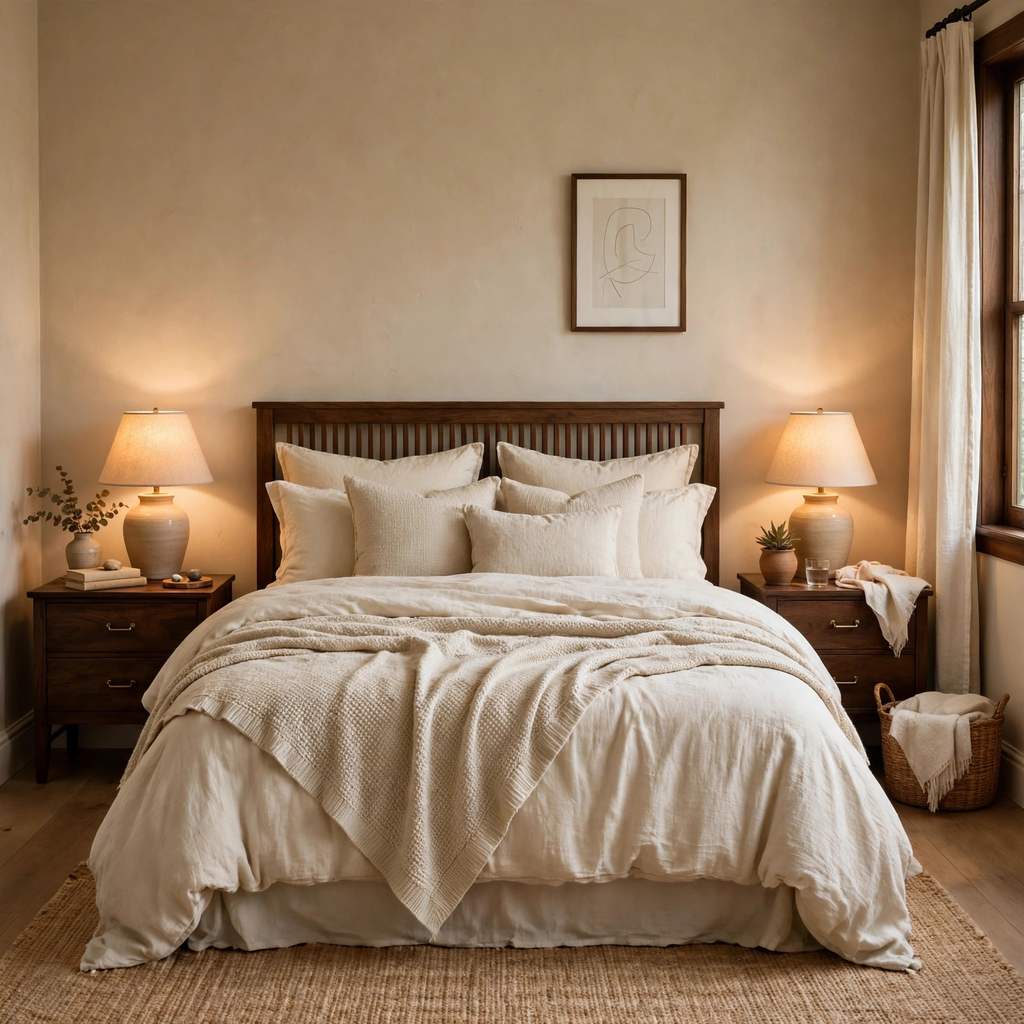
Greige blends grey and beige: the calm of grey without the cold, the warmth of beige without yellow fuss. Almost any furniture sits happily against it, especially with cream and oatmeal bedding.
Best for:
- Rooms that feel cold in grey
- Mixing old and new furniture
- A calm backdrop for colourful art
Tip: Choose a greige with more beige than grey if your room gets little light.
4) Dusty Rose Pink
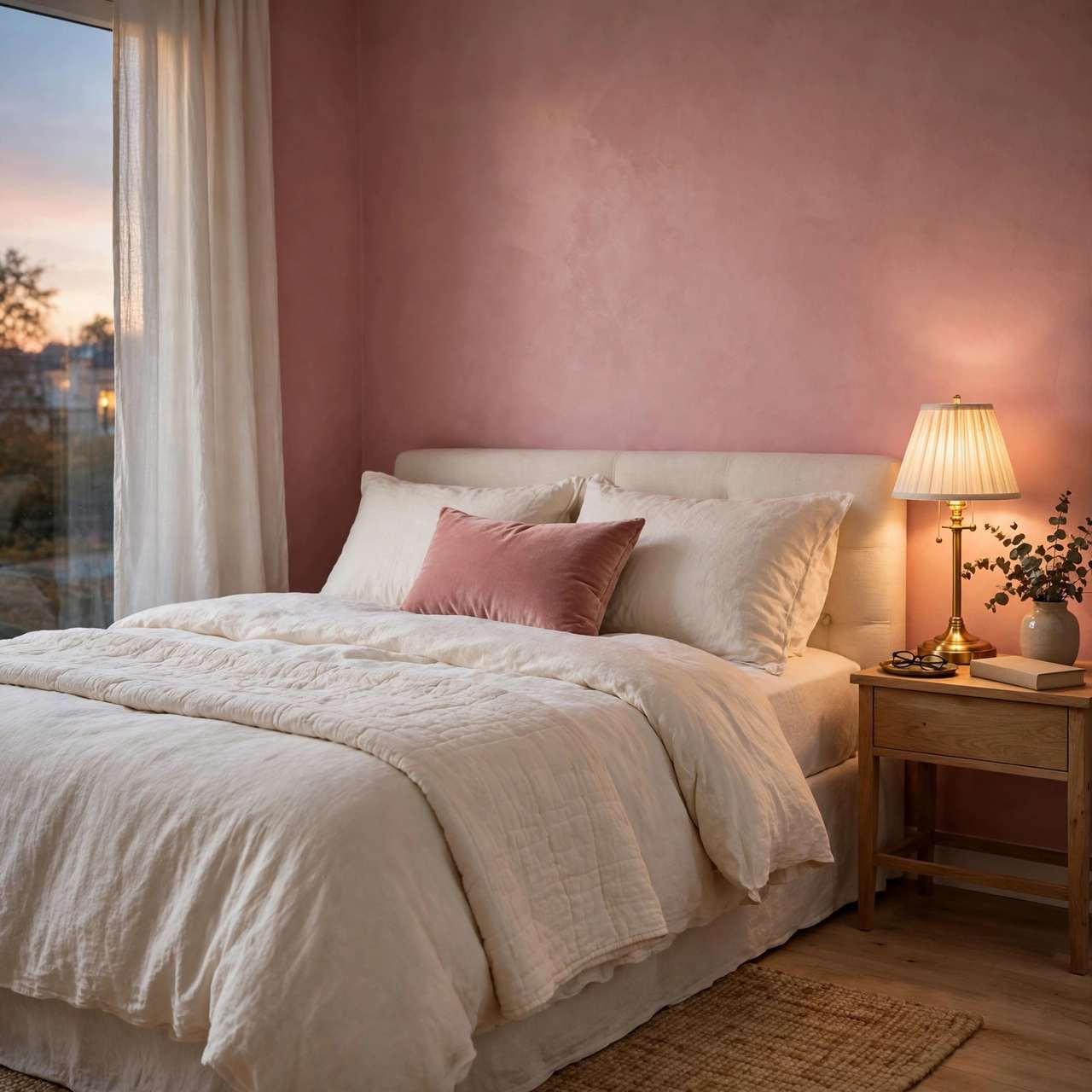
Dusty rose is pink with the volume turned down: muted, romantic, never sugary, and glowing under lamplight. Balance it with ivory bedding, warm brass and one deep accent cushion.
Why it works:
- Creates gentle, enveloping warmth
- Glows under warm evening light
- Romantic without looking childish
Tip: Keep ceilings and trim soft white so the pink stays the star.
5) Creamy Ivory
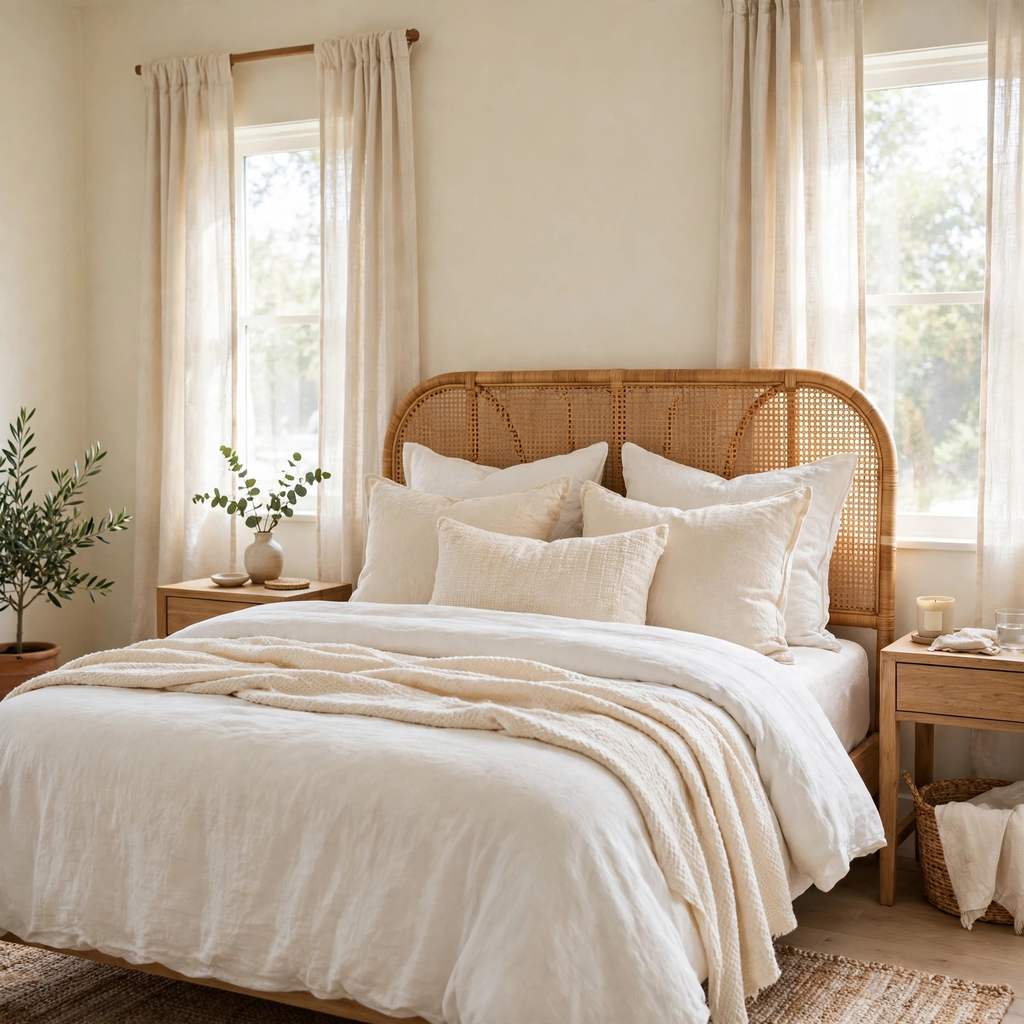
Ivory is white with a warm hug: all the light-bouncing calm of white, minus the stark clinical edge. The secret is texture: layered linen, a rattan headboard and curtains one shade deeper than the walls.
How to style it:
- Layer three off-white tones
- Add rattan, jute and linen
- Use warm bulbs to keep it golden
Tip: Check a large swatch at night; some ivories turn slightly pink under warm bulbs.
6) Misty Grey
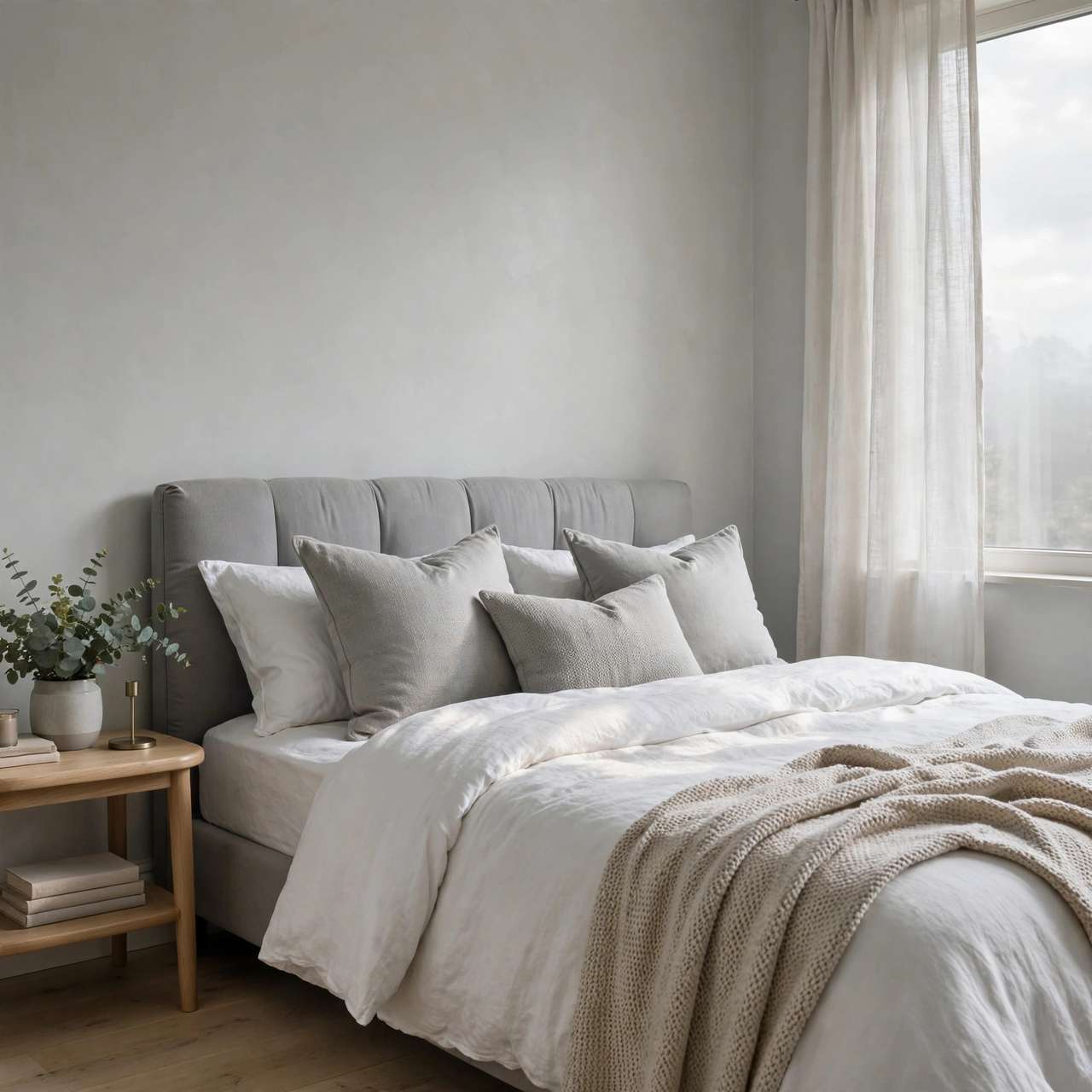
Misty grey is early fog over fields: soft, quiet and endlessly calm, for anyone who finds white too bright. Warm it with a chunky knit throw and an upholstered headboard in a deeper grey.
Why it works:
- Hides the visual noise of clutter
- Backdrop for any bedding colour
- Modern but never harsh
Tip: Pick a grey with a warm undertone to avoid a blue, chilly finish.
7) Lavender Haze
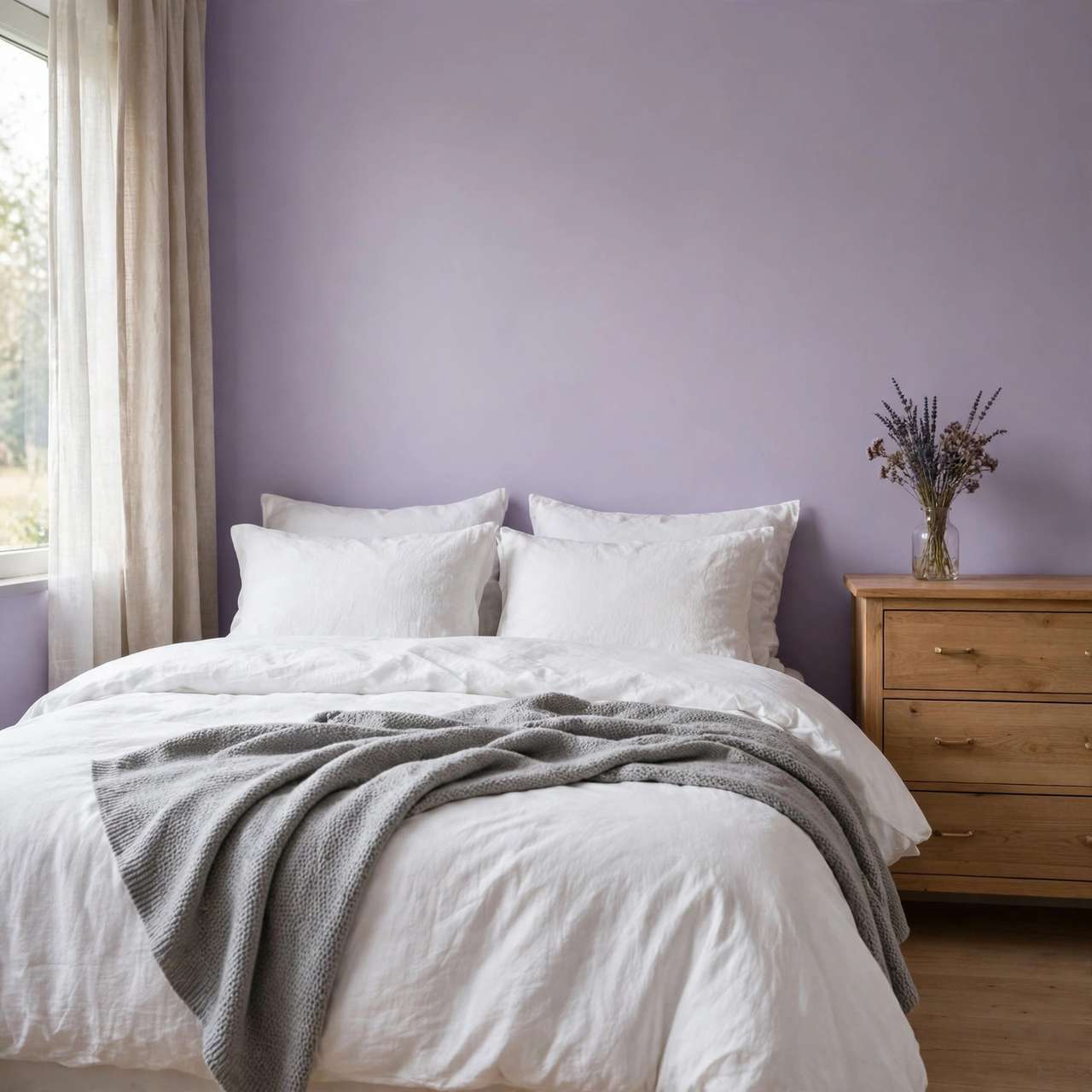
Lavender has been linked with rest for centuries, and this hazy, grey-softened version feels like the last light of a summer evening. Pair it with white bedding, pale grey furniture and dried lavender on the dresser.
Best for:
- Anyone who struggles to switch off
- East-facing rooms with gentle light
- A romantic scheme without pink
Tip: Keep lavender pale; deeper purples energise rather than calm.
8) Seafoam Green
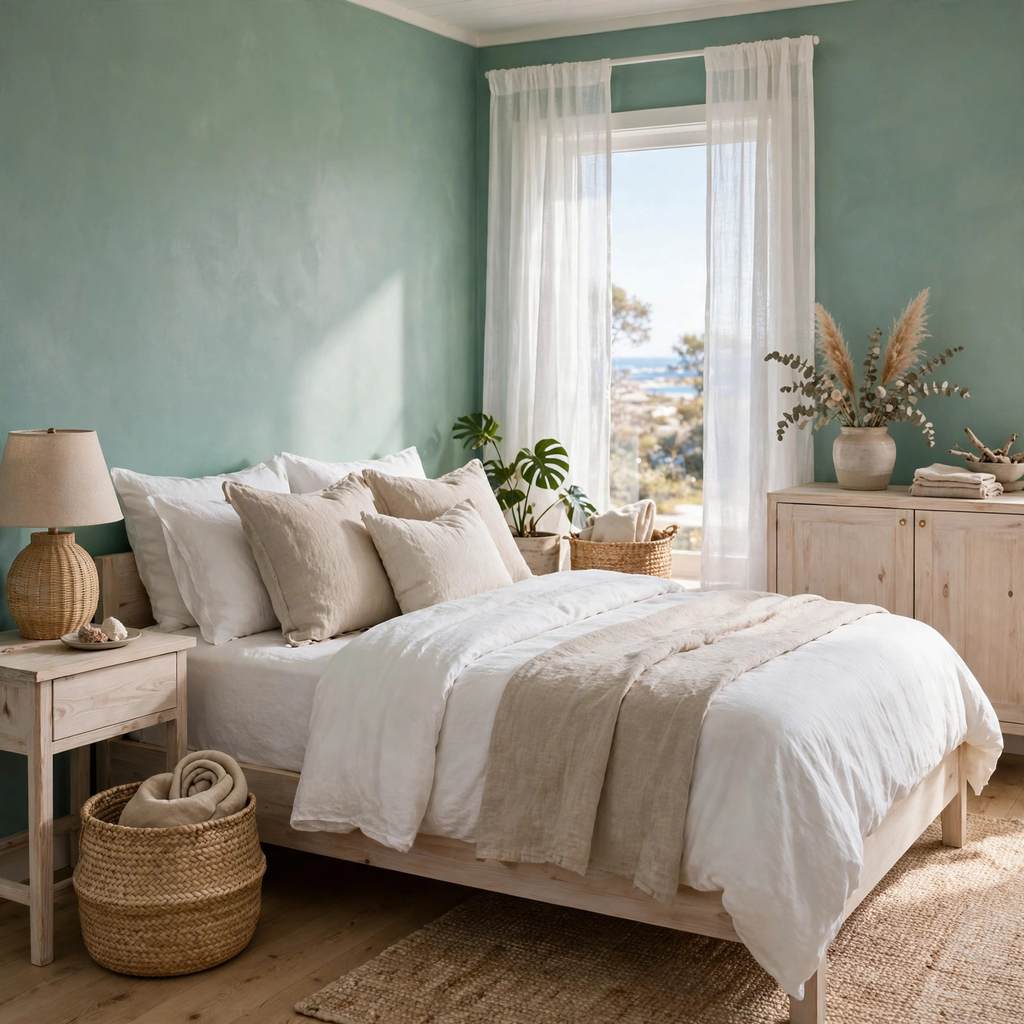
Seafoam sits between green and blue, like shallow water over pale sand, and brings a fresh coastal calm. Team it with white and sandy bedding, bleached wood and woven baskets.
Why homeowners love it:
- Freshens a dark room instantly
- Suits main and guest bedrooms
- Lovely with white or natural wood
Tip: In a dim room, try seafoam behind the bed only, with warm white elsewhere.
9) Blush Beige
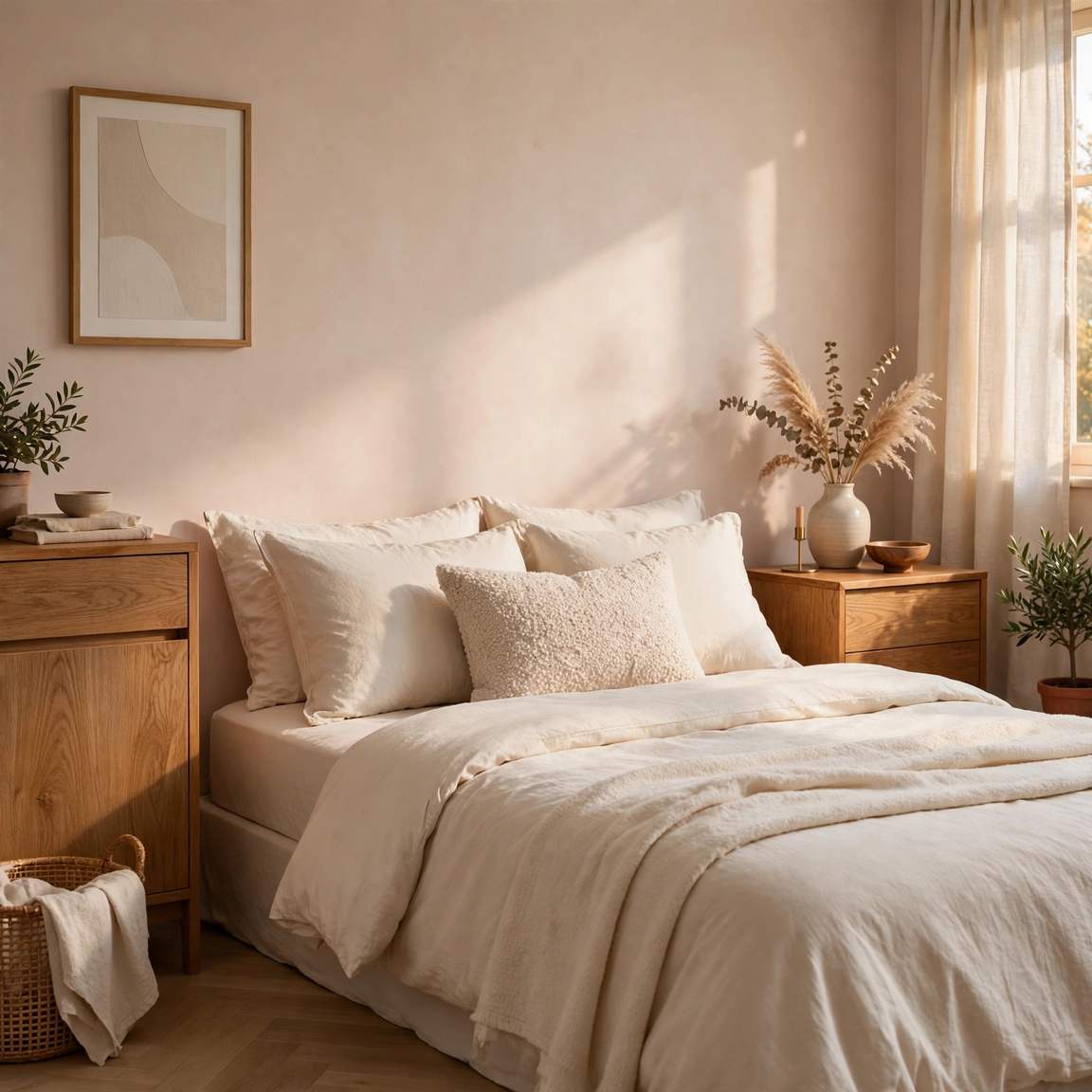
Blush beige is a neutral with a heartbeat: the faintest whisper of pink that warms the whole room. Dress the bed in cream linen, add warm oak furniture and boucle cushions for softness.
Why it works:
- Friendlier than plain beige
- A backdrop that never feels cold
- Suits minimalist and layered styling
Tip: Blush beige and sage are beautiful together; try sage cushions or plants.
10) Slate Blue
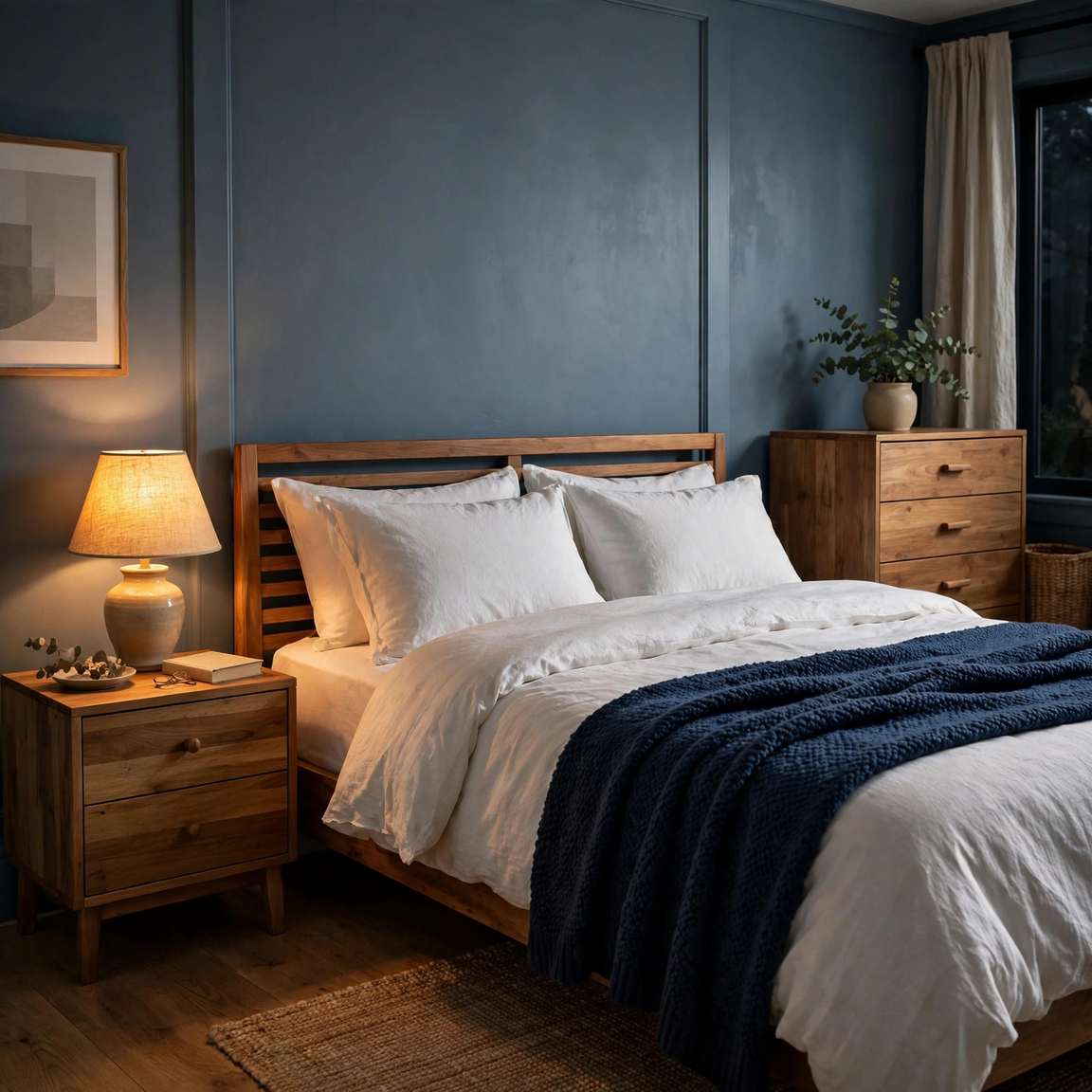
Deeper colours can be calming too. This greyed, dusky blue wraps the room like dusk, making it feel softer and safer for sleep. Balance it with white bedding, lighter wood and warm lamplight.
Best for:
- Large rooms that feel too airy
- A boutique-hotel mood at home
- Anyone who sleeps best in darkness
Tip: Paint just the wall behind the bed slate blue for depth without darkness.
11) Warm Taupe
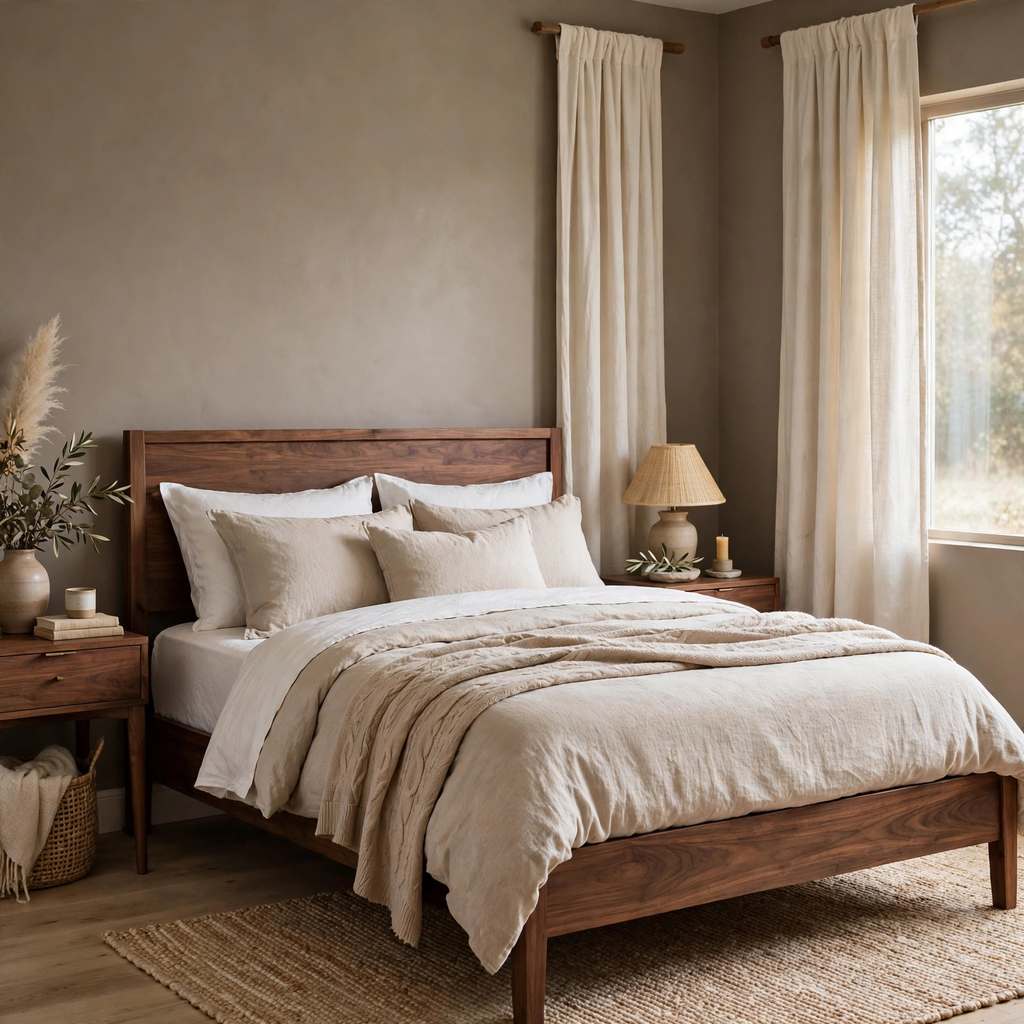
Taupe is the quiet achiever of neutrals: a soft brown-grey that makes everything around it look calmer. It loves texture, so pair it with a walnut bed frame, layered beige bedding and cream curtains.
How to style it:
- Mix smooth and rough textures
- Add one black accent
- Keep bedding lighter than walls
Tip: Taupe shifts with the light; check your swatch morning and evening.
12) Eucalyptus Green
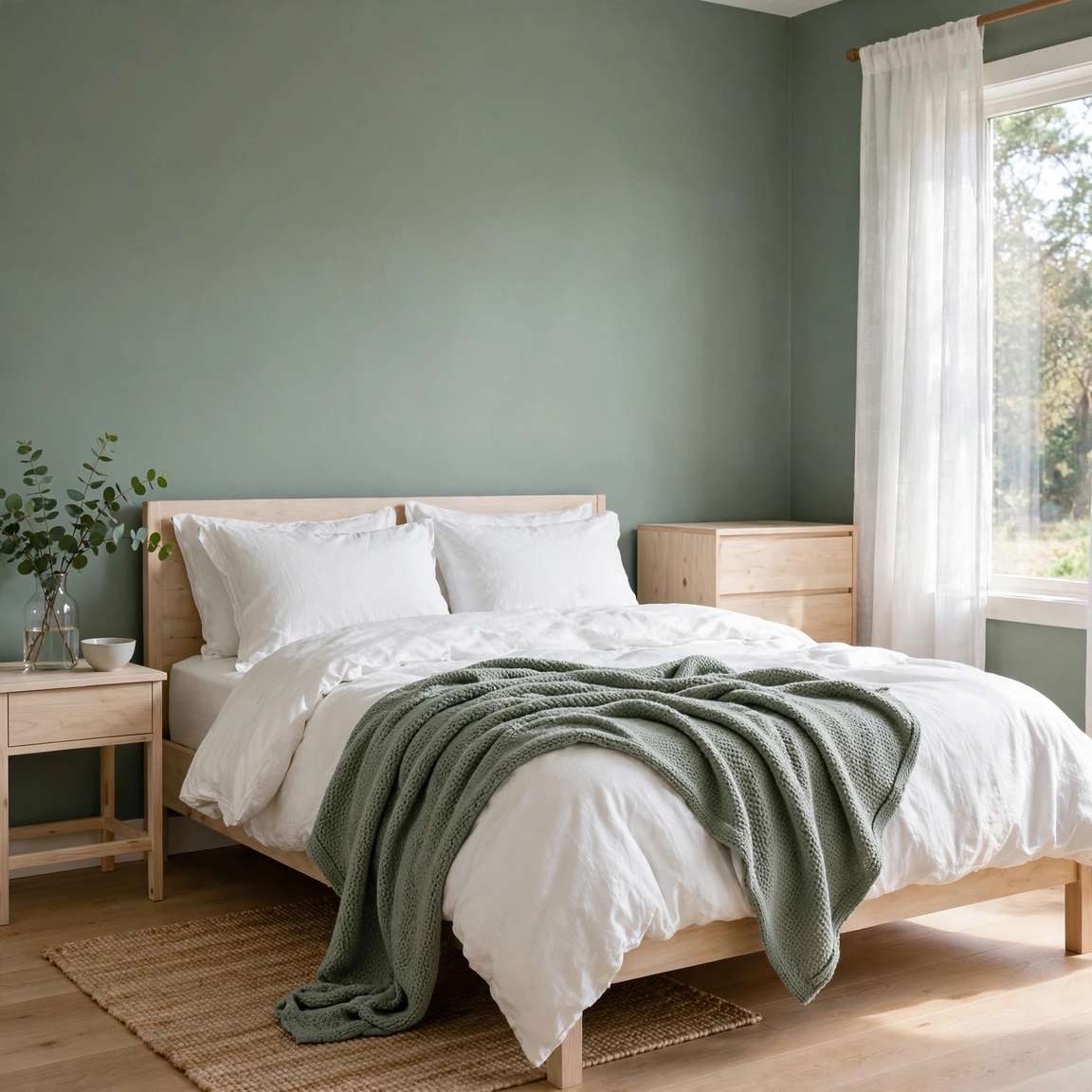
Eucalyptus green is sage’s cooler cousin, with a silvery-blue edge borrowed from the leaves. It feels clean and botanical, like a garden room. White bedding keeps it fresh; pale wood stops it feeling cold.
Why homeowners love it:
- Fresh without being bright
- Beautiful with white furniture
- Calm enough for all four walls
Tip: It can look bluer in photos; always judge from a real swatch.
13) Soft Peach
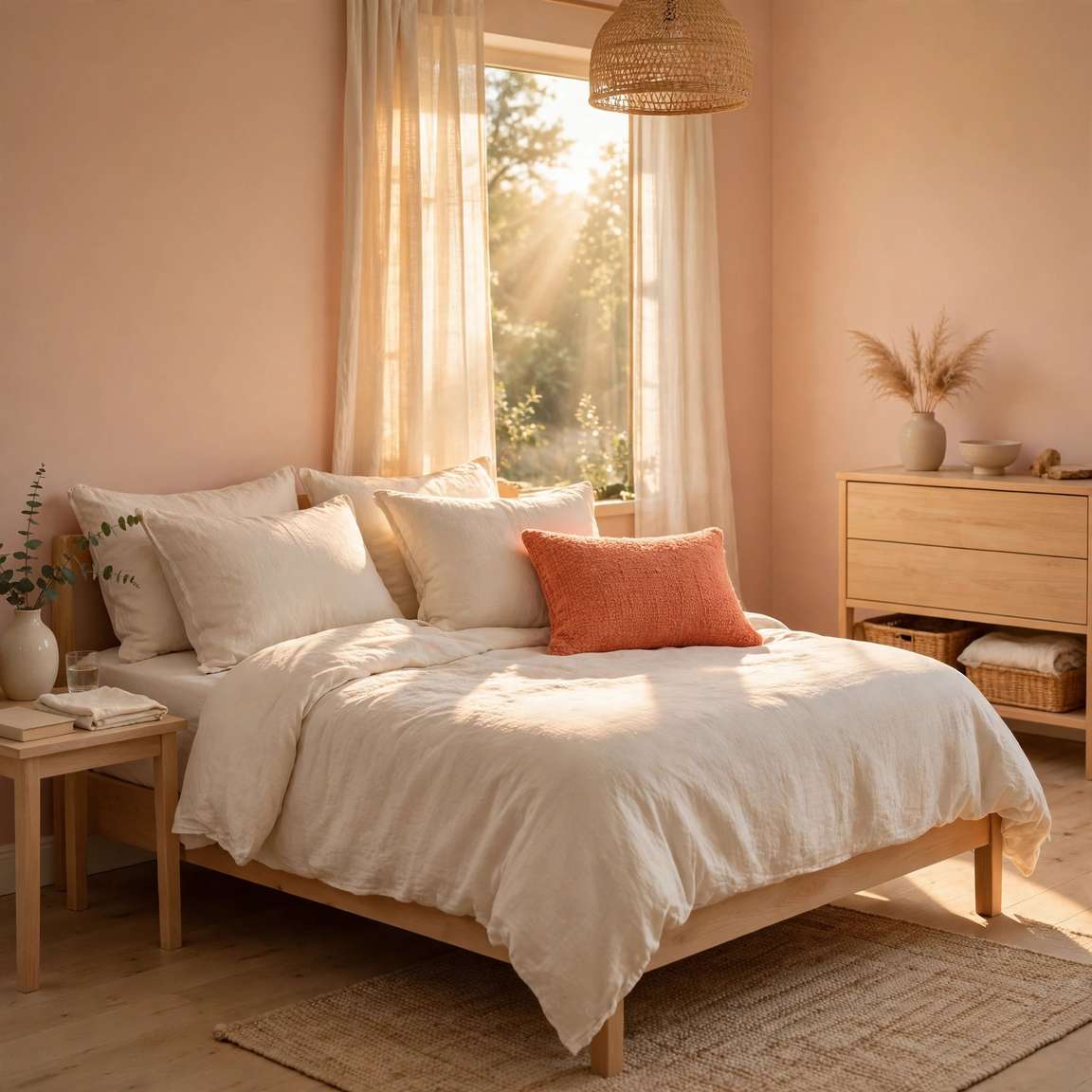
Pale, muted peach brings the warmth of sunrise into the bedroom: cheerful in the softest way. Keep it sophisticated with ivory bedding, light wood and one coral accent, and avoid strong orange.
Best for:
- North-facing rooms needing warmth
- Welcoming guest bedrooms
- Anyone who finds grey cold
Tip: Peach glows in morning light, a lovely choice for early risers.
14) Duck Egg Blue
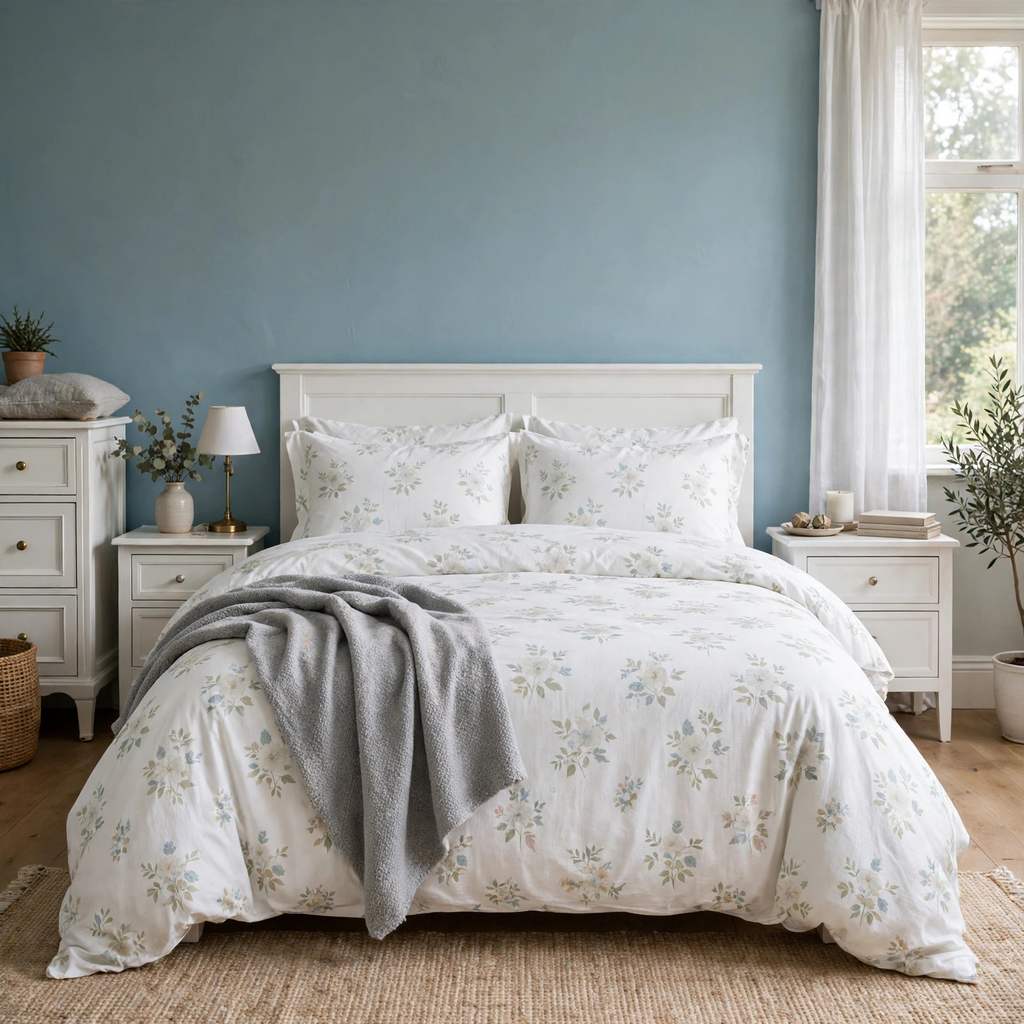
Duck egg blue, the gentle blue-green of country bedrooms, has a vintage softness that never dates. It pairs sweetly with white-painted furniture, the palest floral bedding and a soft grey throw.
Why it works:
- Timeless rather than trendy
- Flatters antique and modern furniture
- Bluer by day, greener by lamplight
Tip: New to colour? Use duck egg on wardrobe doors or a painted chest instead.
15) Pale Dove Grey
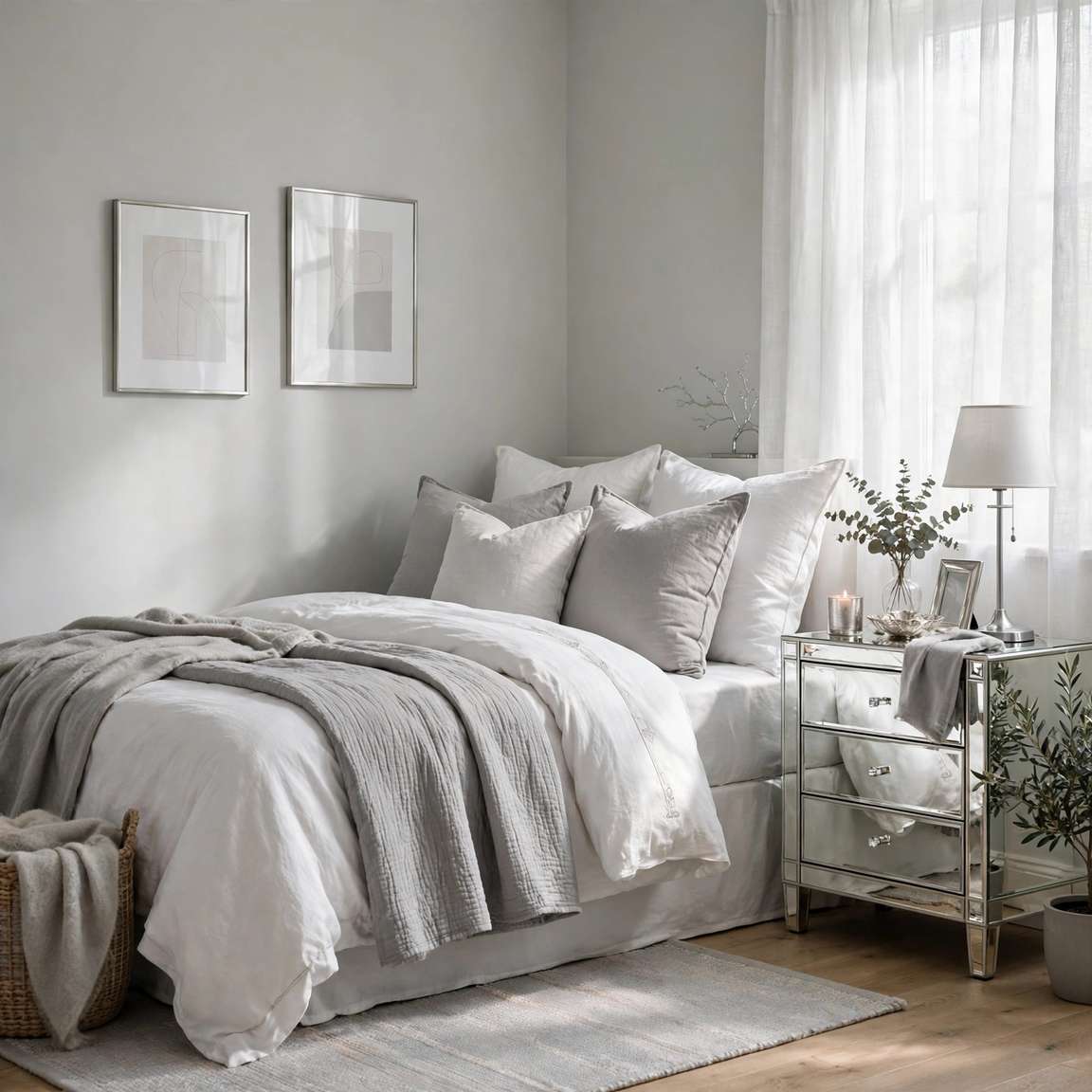
Dove grey is warmer and softer than standard light grey, with a feather-like gentleness made for bedrooms. Add mirrored accents for quiet glamour, or keep it simple with white bedding and one plant.
Why it works:
- Elegant without any effort
- Hides scuffs better than white
- Makes seasonal bedding swaps easy
Tip: Dove grey loves natural light; in a dark room, step one shade lighter.
16) Soft Buttercream
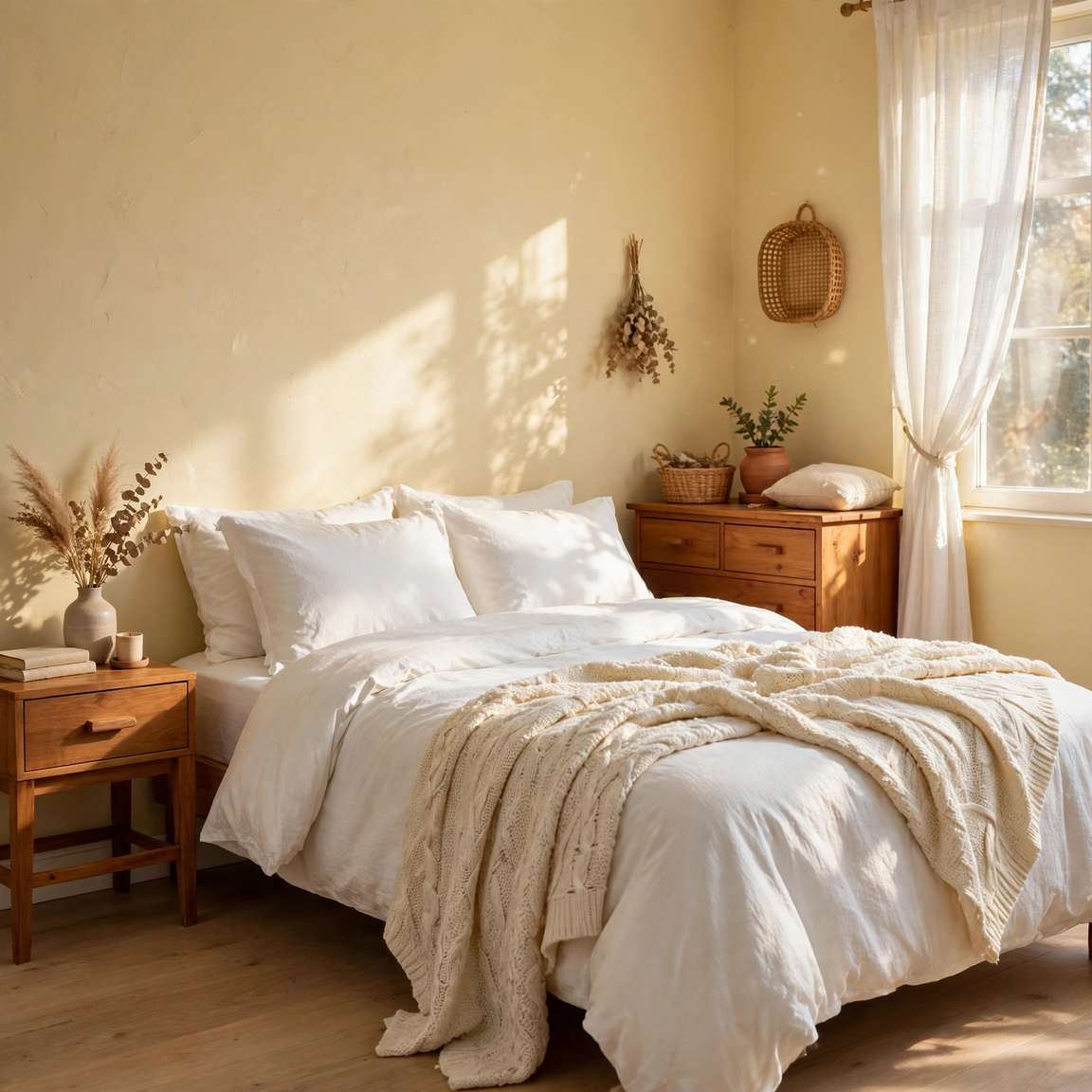
Buttercream is sunshine softened with cream: a barely-there yellow that warms a room gently, without glare. Pair it with white bedding, warm wood and cream knits, and keep other yellows out.
Best for:
- Dark rooms needing a lift
- Cottage and country bedrooms
- Waking up cheerful
Tip: Stay pale. Once buttercream deepens, it energises instead of calming.
17) Muted Teal
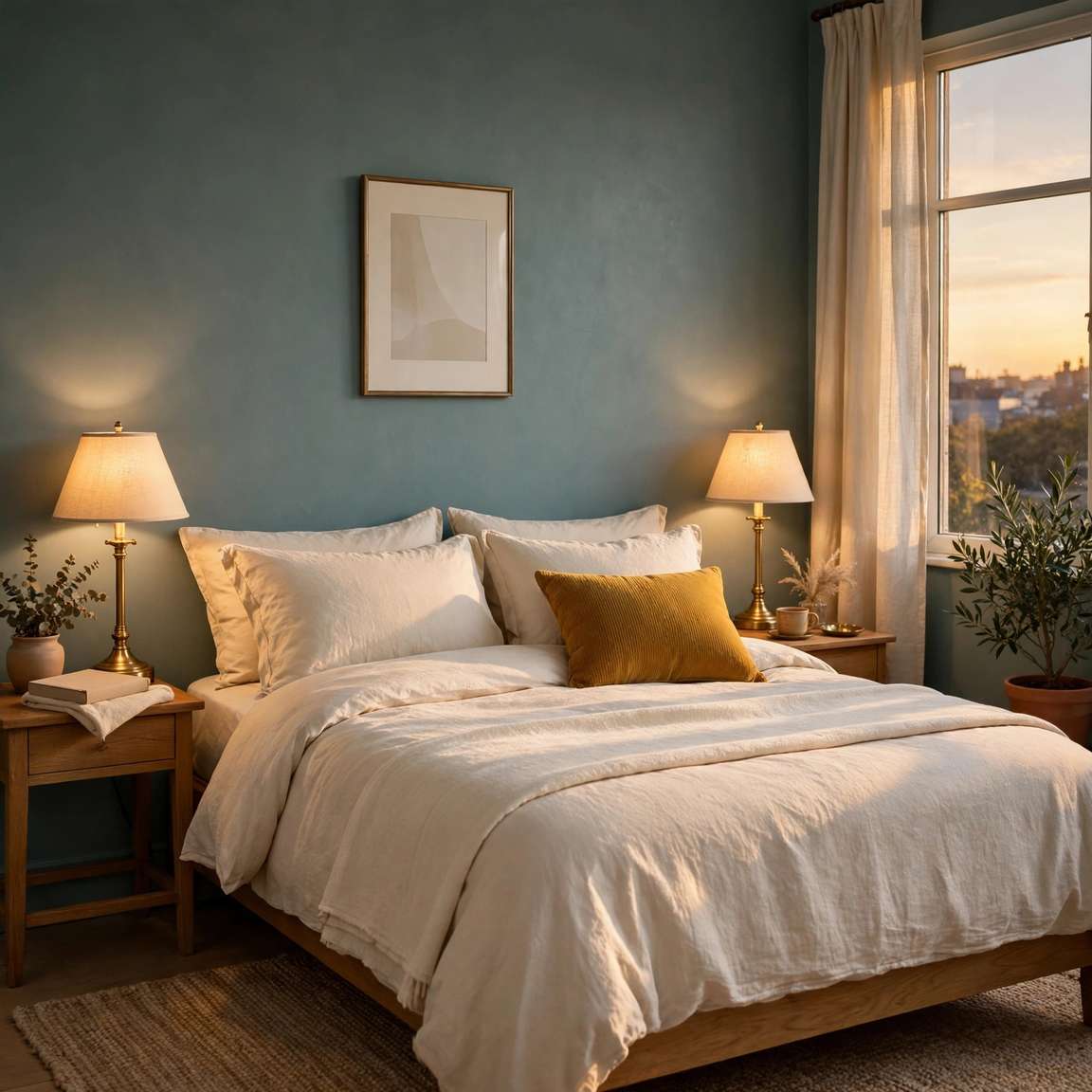
Muted with plenty of grey, teal becomes deeply restful: the calm of blue and the comfort of green in one shade. Soften it with cream bedding, brass lamps and one mustard cushion.
Why homeowners love it:
- Cosy yet fresh
- Stunning with warm metals
- Suits modern and period homes
Tip: Teal drinks light, so use two lamps rather than one.
18) Warm Linen White
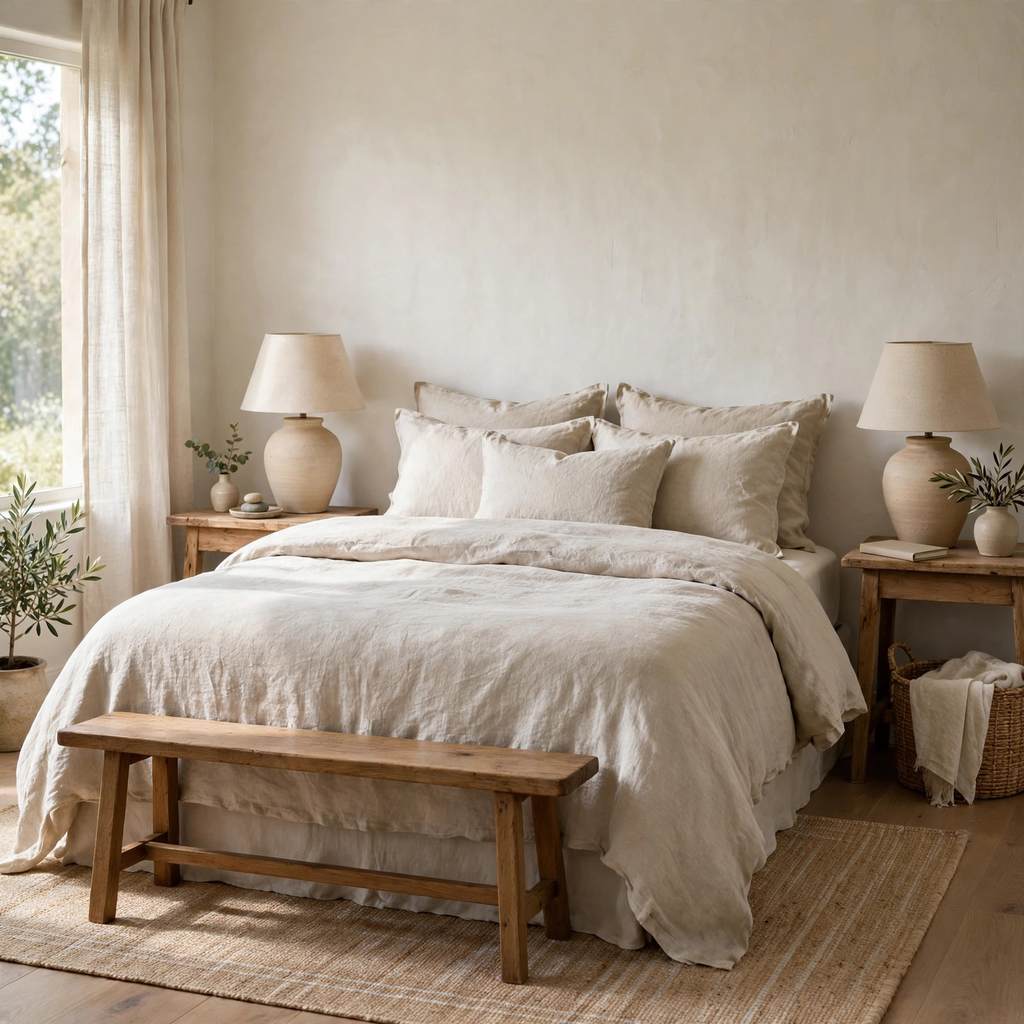
Linen white carries a drop of warm beige, like unbleached fabric, and it is one of the most calming bedroom colors for anyone who wants light without sterility. Build the room from rumpled linen, wood and ceramic.
How to style it:
- Keep every white warm-toned
- Let texture create the interest
- Add greenery for one colour pop
Tip: Hold it against printer paper; the warmth should be just visible.
19) Dusty Lilac
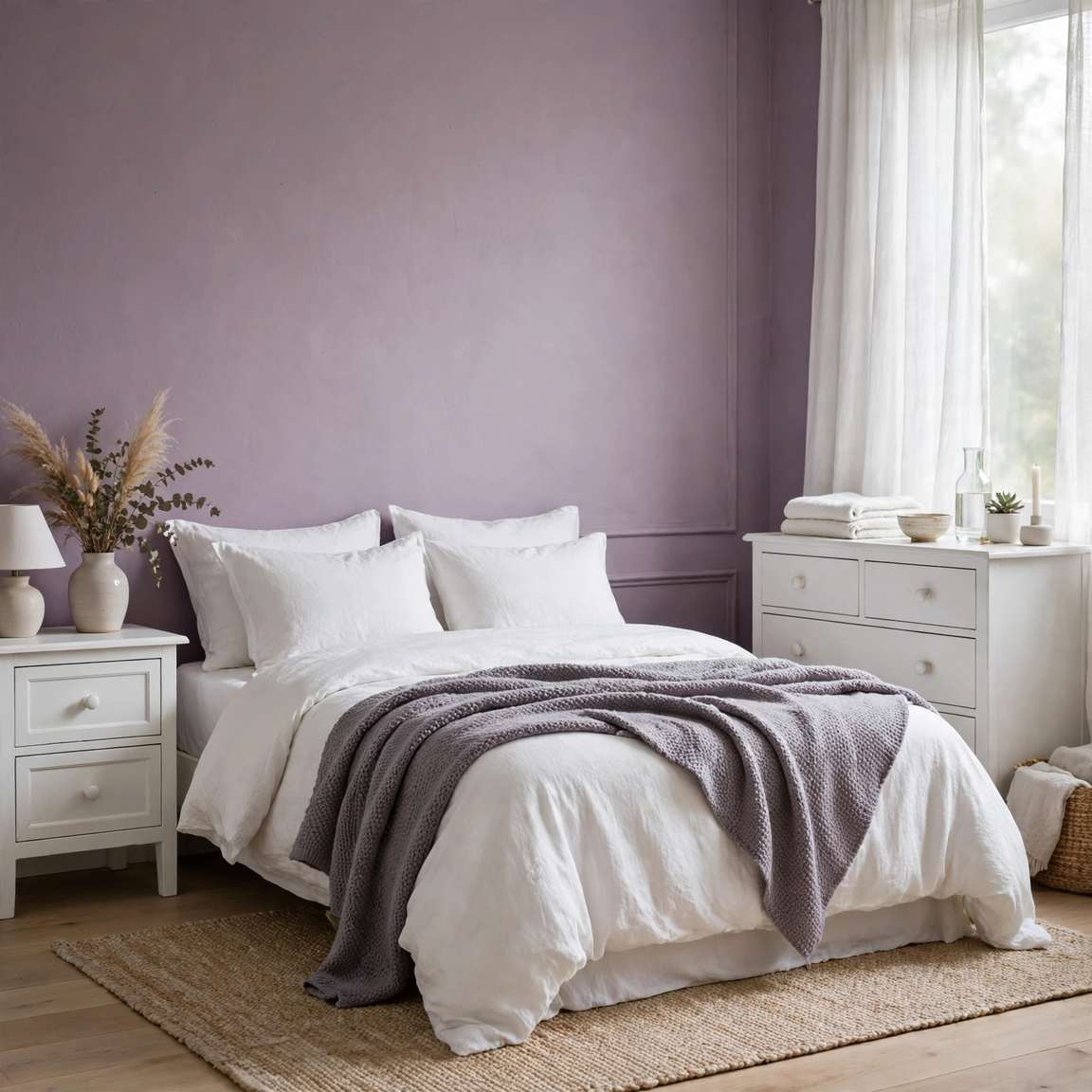
Dusty lilac takes lavender a step moodier: more grey, a hint of sophistication, and quietly dreamy. Pair it with white bedding, white-painted furniture and throws one shade deeper than the walls.
Best for:
- A romantic scheme, modern edge
- Rooms with pale furniture
- Anyone bored of grey
Tip: Lilac can shift pink under warm light; check the swatch with lamps on.
20) Natural Stone
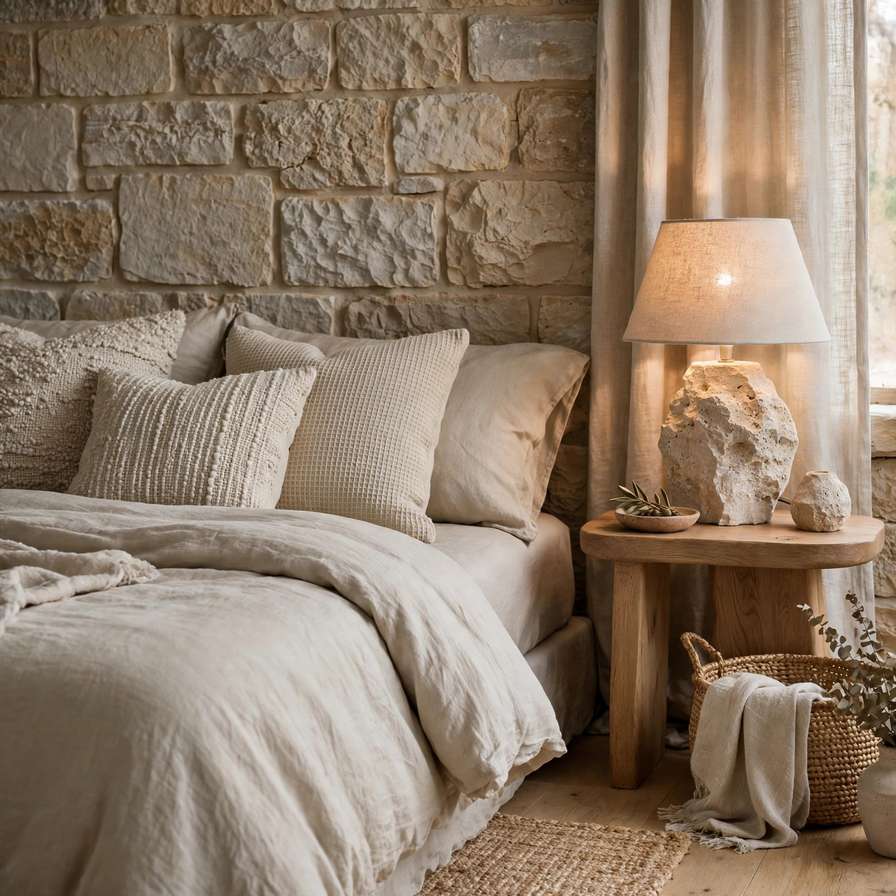
Stone is the colour of cliffs and quiet landscapes: a mid neutral with grey and brown in it. It grounds a bedroom and makes it feel solid and safe, especially with oatmeal bedding and matte finishes.
Why it works:
- Deeply grounding and timeless
- Perfect with natural materials
- Calm in every light
Tip: Stone is mid-toned, so keep ceilings bright white to lift the room.
21) Powder Mint
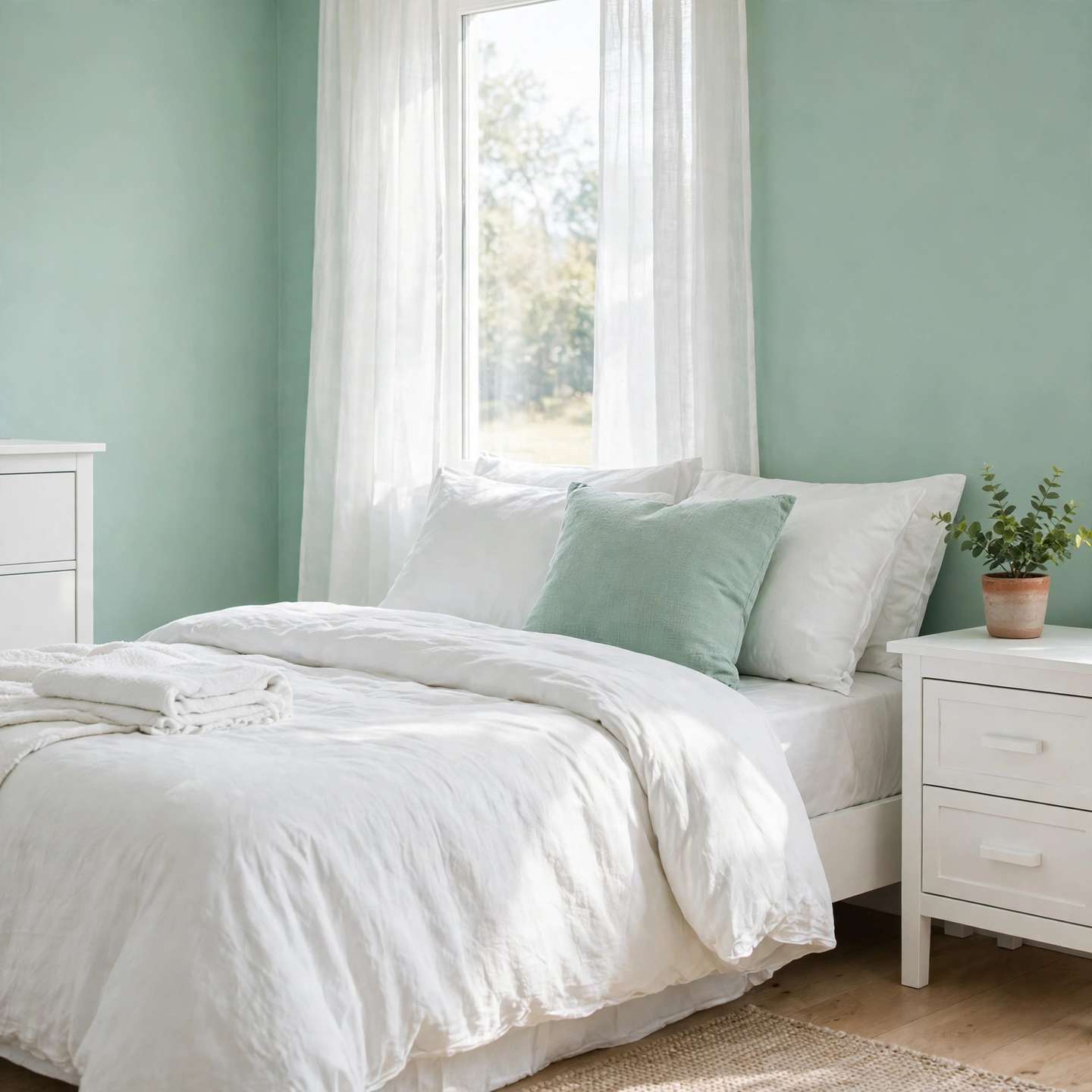
Powder mint is mint with the brightness removed: pale, powdery and fresh as clean sheets. Keep the scheme simple with white bedding and furniture, then repeat the mint in one cushion or painted stool.
Why homeowners love it:
- Makes tiny rooms feel bigger
- Sweet but not childish when pale
- Lovely with white and chrome
Tip: Mint can turn icy in blue-toned light; warm bulbs keep it soft.
22) Muted Clay
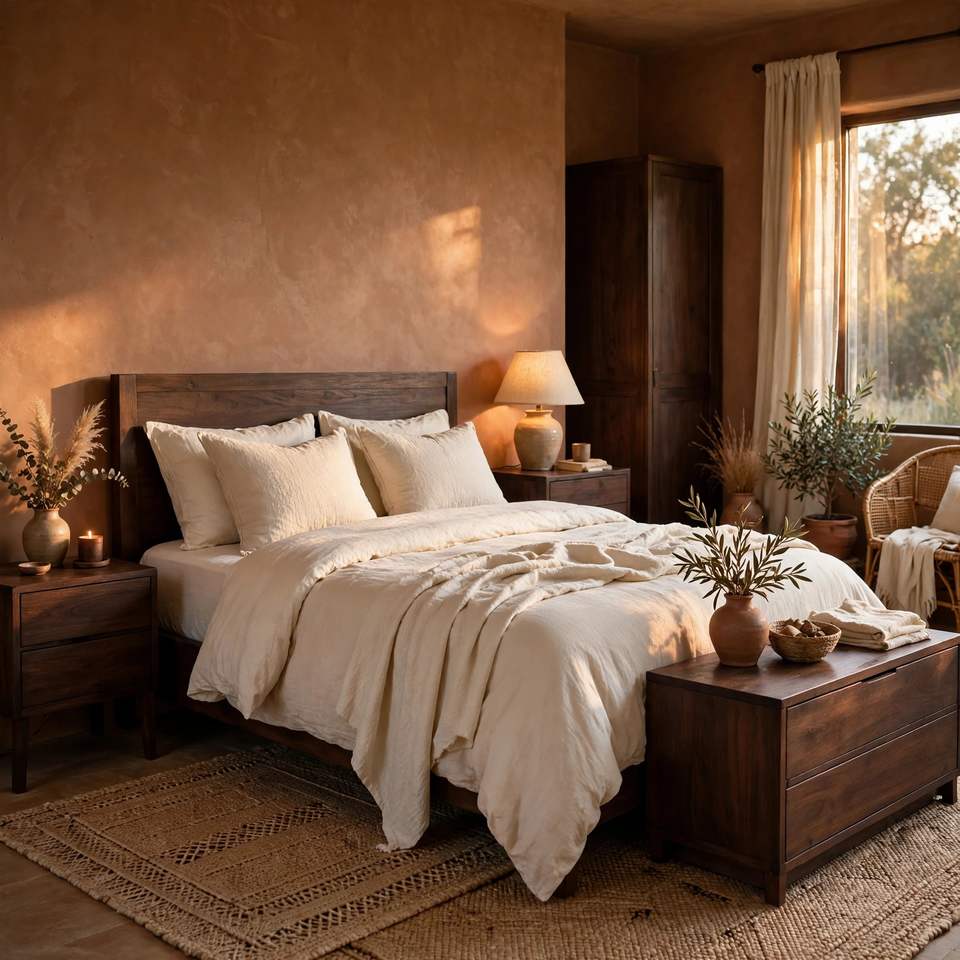
Terracotta’s calm sister, muted clay brings earthy warmth without holiday-villa brightness, like being wrapped in a warm blanket. Balance it with cream bedding, a woven rug, dark wood and a little black.
Best for:
- Cosy, cocooning bedrooms
- Rooms with cold evening light
- Earthy, natural schemes
Tip: In a small room, use clay behind the bed and warm white elsewhere.
23) Foggy Blue Grey
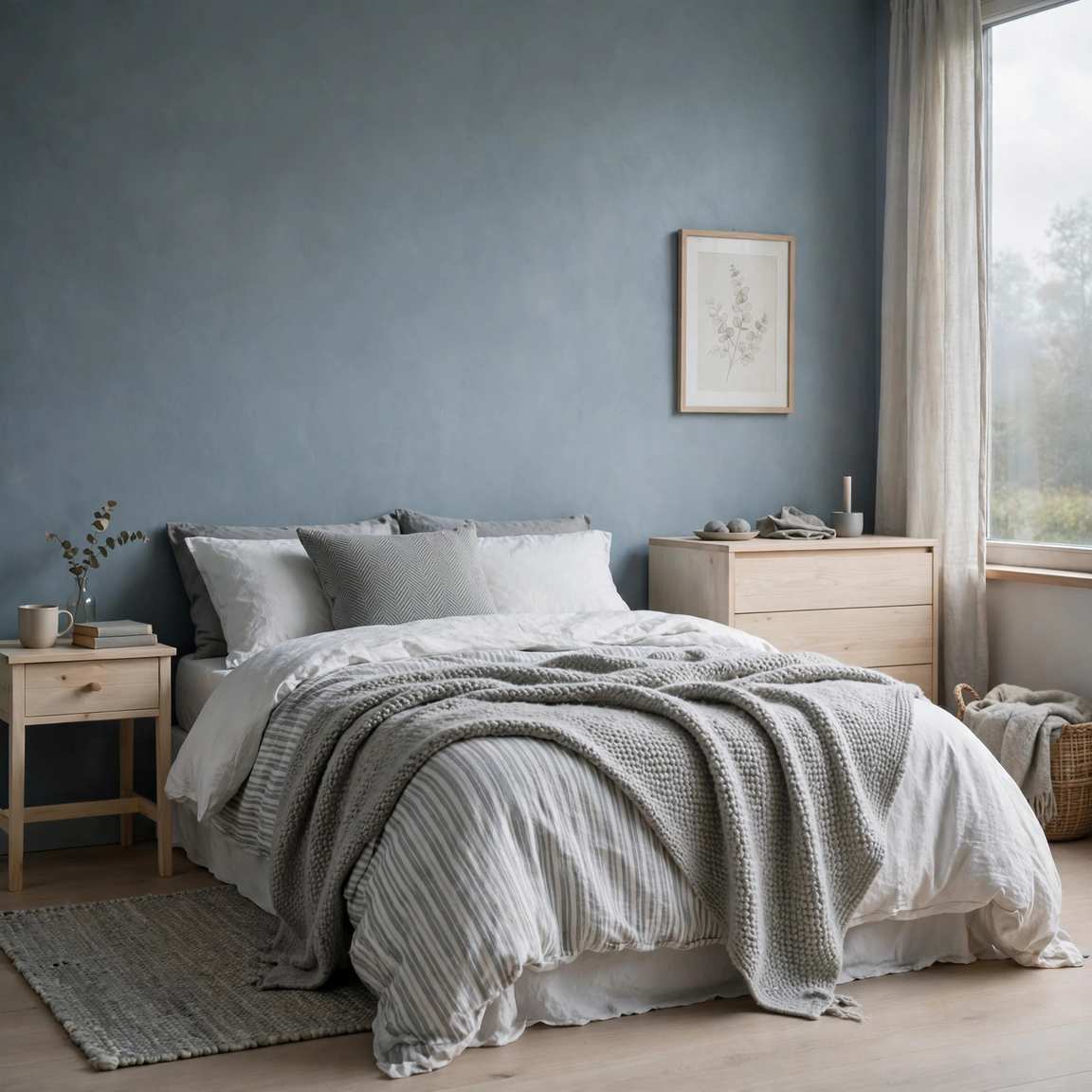
Foggy blue grey is the hushed colour of a misty morning by the sea, soothing for anyone whose mind runs busy at bedtime. Layer white and grey bedding with a wool throw and pale wood.
Why it works:
- Exceptionally restful and quiet
- Beautiful base for grey bedding
- Coastal without any theme
Tip: This shade changes through the day; live with a swatch for 48 hours.
24) Vanilla Cream
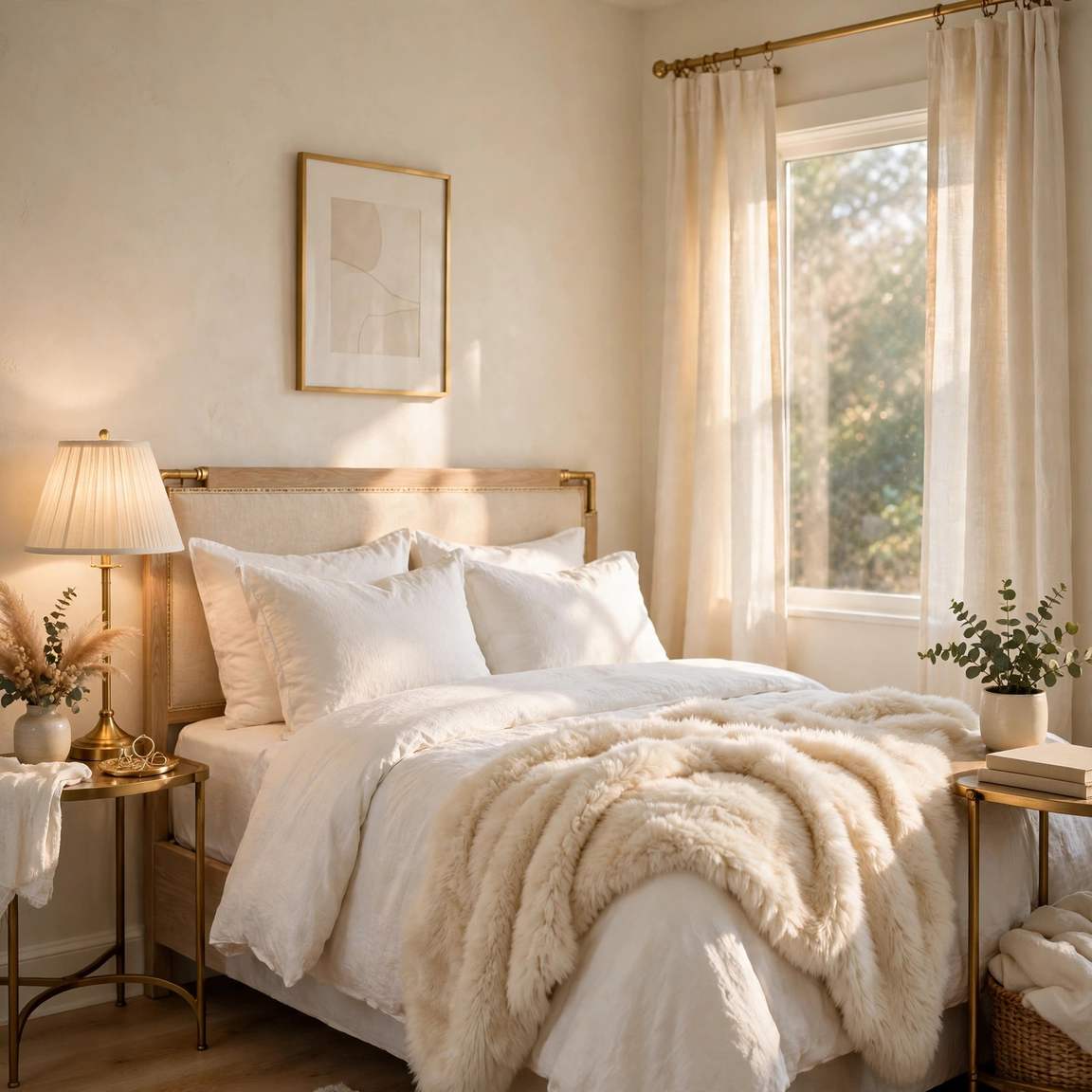
Vanilla cream is warmer than ivory, with a hint of golden sweetness, and it makes a bedroom feel like being tucked in. Add white bedding, a faux-fur throw and small gold-toned accents.
How to style it:
- Layer cream, vanilla and white
- Choose warm metallics over silver
- Keep patterns minimal
Tip: Vanilla cream needs warm lighting; cool bulbs make it look dull.
25) Pale Olive
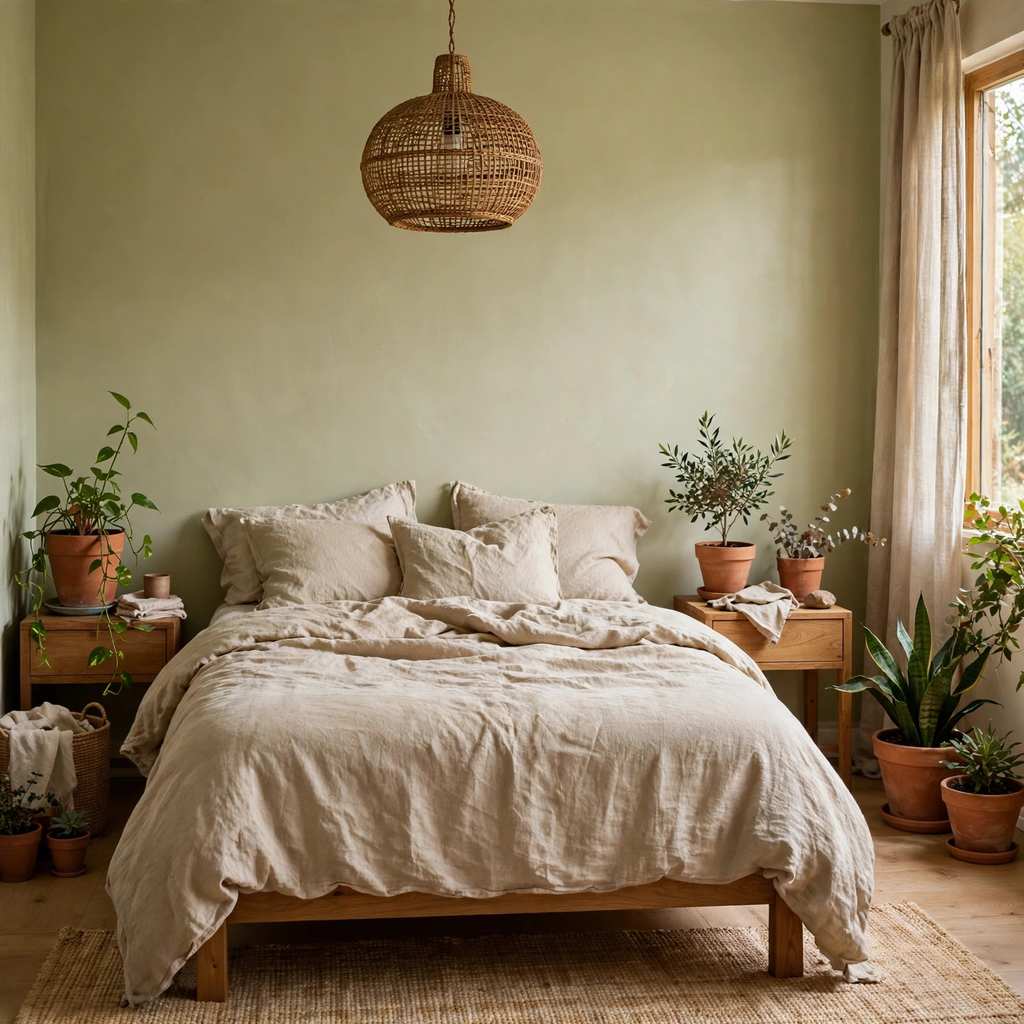
Pale olive is an earthy, yellow-softened green, like lying in the shade of an olive tree. It loves natural linen bedding, rattan lighting and terracotta pots; the room feels like a Mediterranean siesta.
Why homeowners love it:
- Warm for a green
- Beautiful with rustic textures
- Unusual enough to feel personal
Tip: Olive needs warm companions; cool greys make it look muddy.
26) Heather Mauve
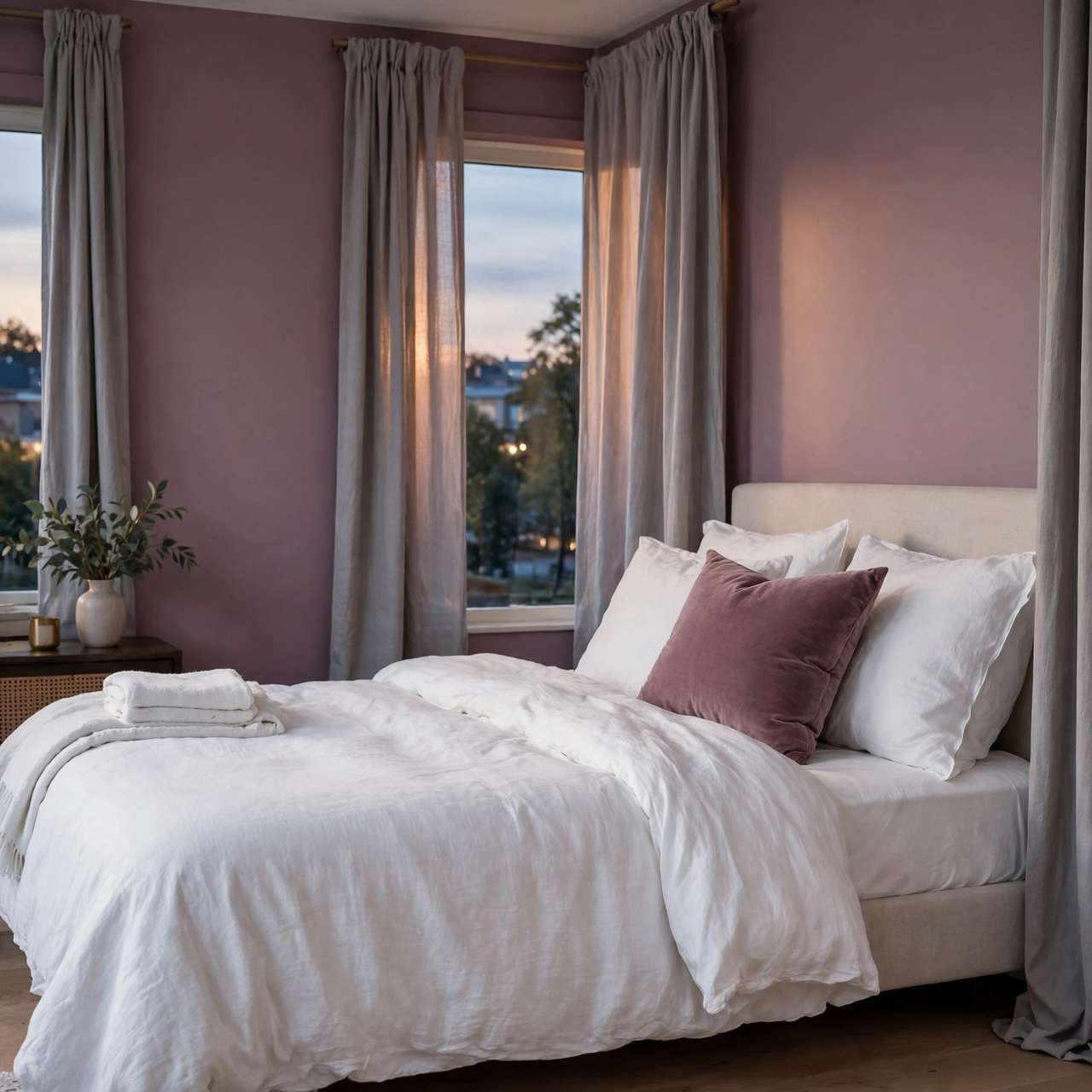
Heather mauve blends purple, pink and grey into a soft moorland tone: romantic, calm and slightly vintage. Dress the bed in white, add mauve velvet cushions and hang soft grey curtains.
Best for:
- Period homes and cottages
- A grown-up feminine scheme
- Antique or painted furniture
Tip: Mauve and sage are natural partners; try a sage throw here.
27) Sky White
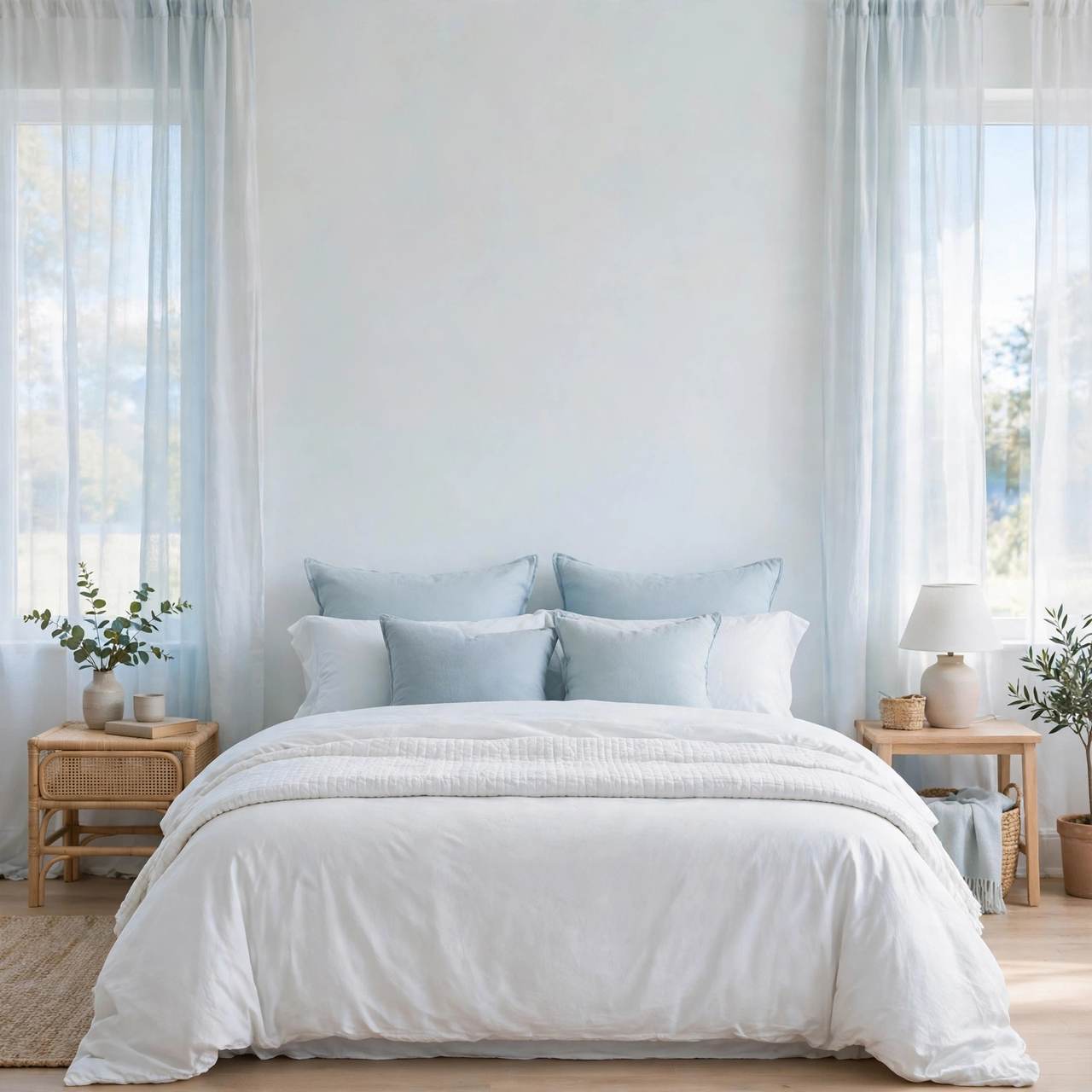
Sky white is white with the faintest breath of blue, like the palest part of the morning sky: clean, bright and quietly uplifting. Add white bedding, pale blue cushions and warm wood to keep it friendly.
Why it works:
- The brightest calm on this list
- Makes low ceilings feel higher
- Fresh base for any accent
Tip: Sky white reveals bulb colour, so choose warm white bulbs.
28) Deep Forest Green
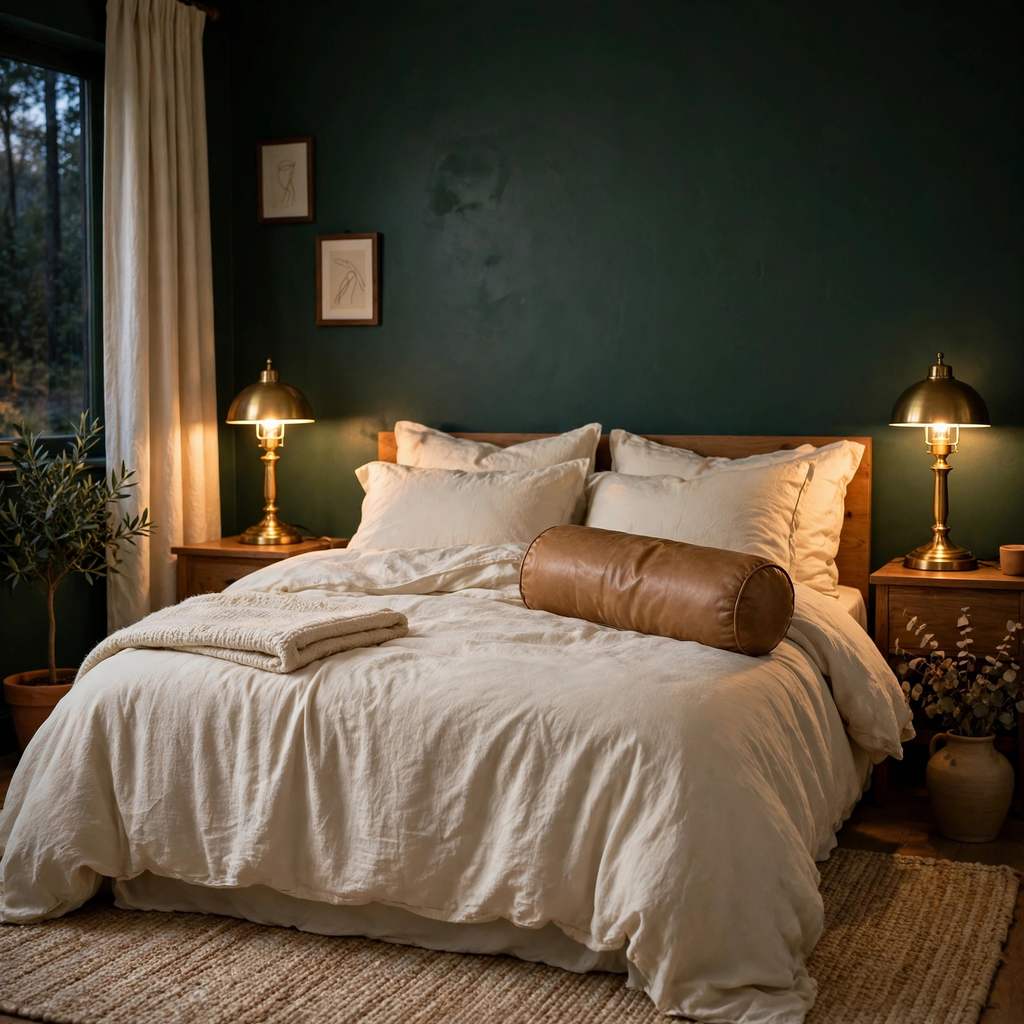
We end with the deepest calm of all. Dark, muted forest green turns a bedroom into a woodland den. The trick is contrast: cream bedding, tan leather or warm wood, and brass lamps pooling golden light.
Why homeowners love it:
- Unbeatable for a sleep-first room
- Makes the bed the hero
- Luxurious with little furniture
Tip: If four walls feel too brave, paint just the headboard wall.
How to Choose Calming Bedroom Colors for Your Room’s Light
The same shade can look completely different from one bedroom to another, and light is usually the reason. North-facing rooms get cool, bluish light, so warmer shades like blush beige, soft peach and warm greige keep them cosy. South-facing rooms get strong warm light, which lets you enjoy cooler calming bedroom colors like powder blue, seafoam and foggy blue grey without any chill.
Always test before you commit: paint a big swatch and check it in the morning, at midday and under your lamps at night, because bedtime is the opinion that counts. Your colour should also comfort you in January, and our winter bedroom decorating ideas show how the same calm walls layer up with throws and lighting when nights draw in. For more expert help comparing shades, the advice at Homes & Gardens is a helpful place to start.
Layering Calming Bedroom Colors With Bedding and Texture
A calm wall colour does half the work; the other half is what you put against it. Try the simple 60-30-10 approach: the wall colour covers most of the room, a softer or deeper version dresses the bedding and curtains, and one gentle accent adds the final touch.
Texture stops a quiet palette feeling flat. Mix smooth cotton with nubby linen, a knitted throw with a velvet cushion, and matte walls with one piece of warm wood. Your eyes read these small differences as richness, even when the colours barely change.
The same soft, layered approach works beyond the bedroom too: our dreamy den ideas turn small rest spaces into retreats with cosy corners and gentle palettes, and when every restful room speaks the same soft language, winding down gets easier everywhere.
Conclusion
A peaceful bedroom rarely needs new furniture or a big budget. More often, it just needs the right colour on the walls: one that lowers your heart rate a little every time you walk through the door.
You do not have to try all 28 ideas at once, and you do not have to repaint the whole room to start. Paint one wall, live with it for a week, and notice how differently the room feels at bedtime.
So pick the shade that made you exhale when you read it, order a sample pot this weekend, and take the first small step toward the calmest room in your house.




More Stories
29 Ways to Create a Calm and Cozy Patio
22 Bedroom Rule of Three Wall Decor Ideas
27 Black Accent Wall Ideas for a Bold Home