
Introduction
A spare room that sits empty most of the year is wasted space, especially in a smaller home. The right guest bedroom home office ideas can turn that one quiet room into a calm place to work all week and a welcoming place to sleep whenever family or friends come to stay.
The trick is not squeezing two rooms into one. It is choosing furniture that happily does two jobs, so a daybed becomes a sofa, a desk folds away, and storage hides the clutter.
In this guide, you will find 29 guest bedroom home office ideas designed for small spaces. Each includes styling notes and a practical tip, so you can start with one change this weekend.
1) Daybed with a Compact Desk Beside It
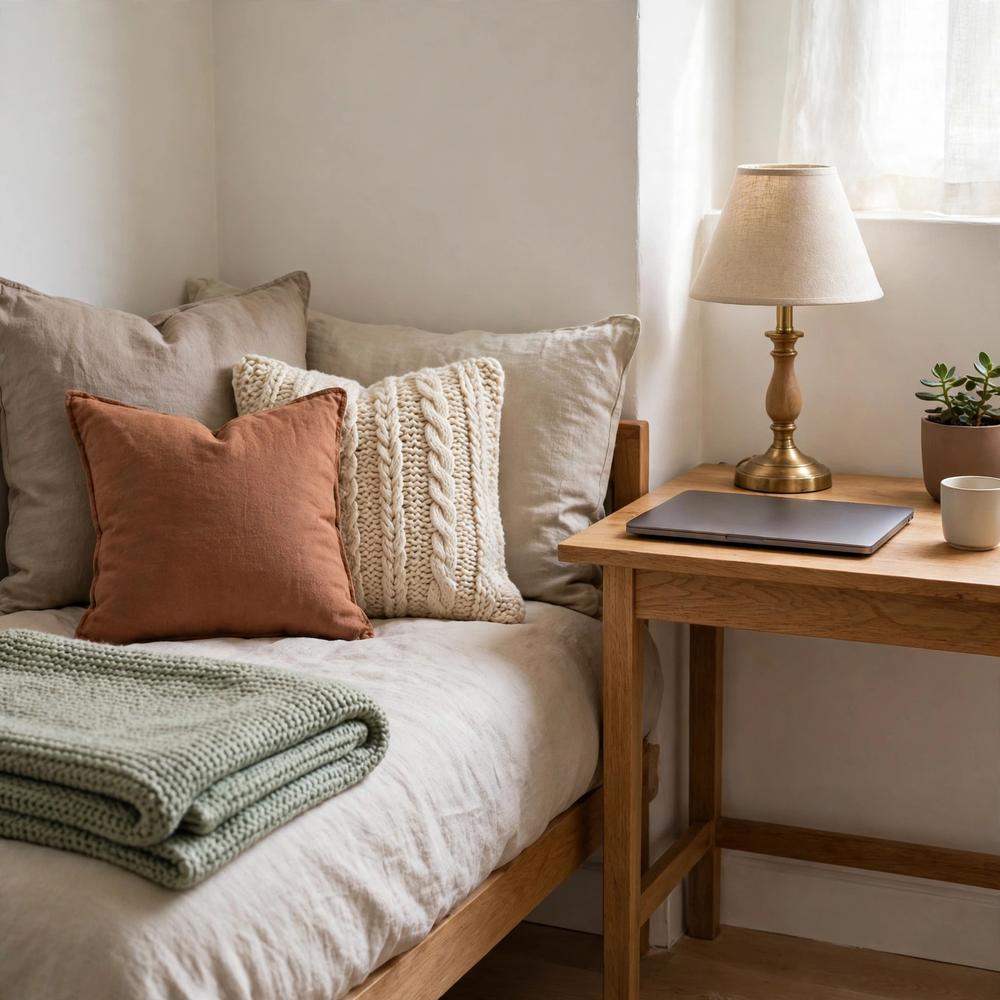
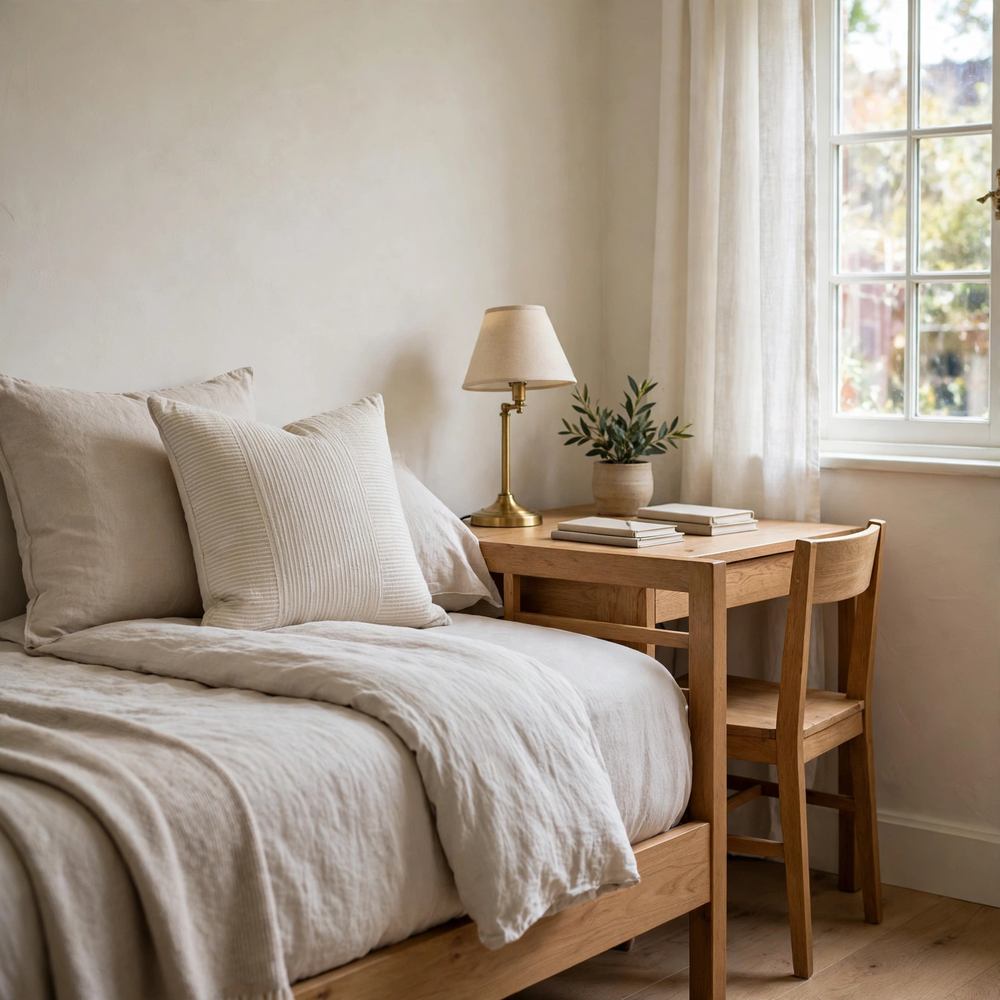
A daybed is the hardest-working piece you can put in a dual-purpose room. Dressed with cushions by day, it reads as a sofa, then becomes a proper single bed in seconds. A compact desk beside it doubles as a bedside table at night.
Why it works:
- Two jobs, one footprint: Seating and sleeping in one piece.
- Desk does double duty: A worktop by day, nightstand by night.
- Clear floor: Everything sits on one wall, centre open.
Tip: Add a mattress topper so guests sleep as well as in a real bed.
2) Fold-Down Wall Desk That Vanishes at Night
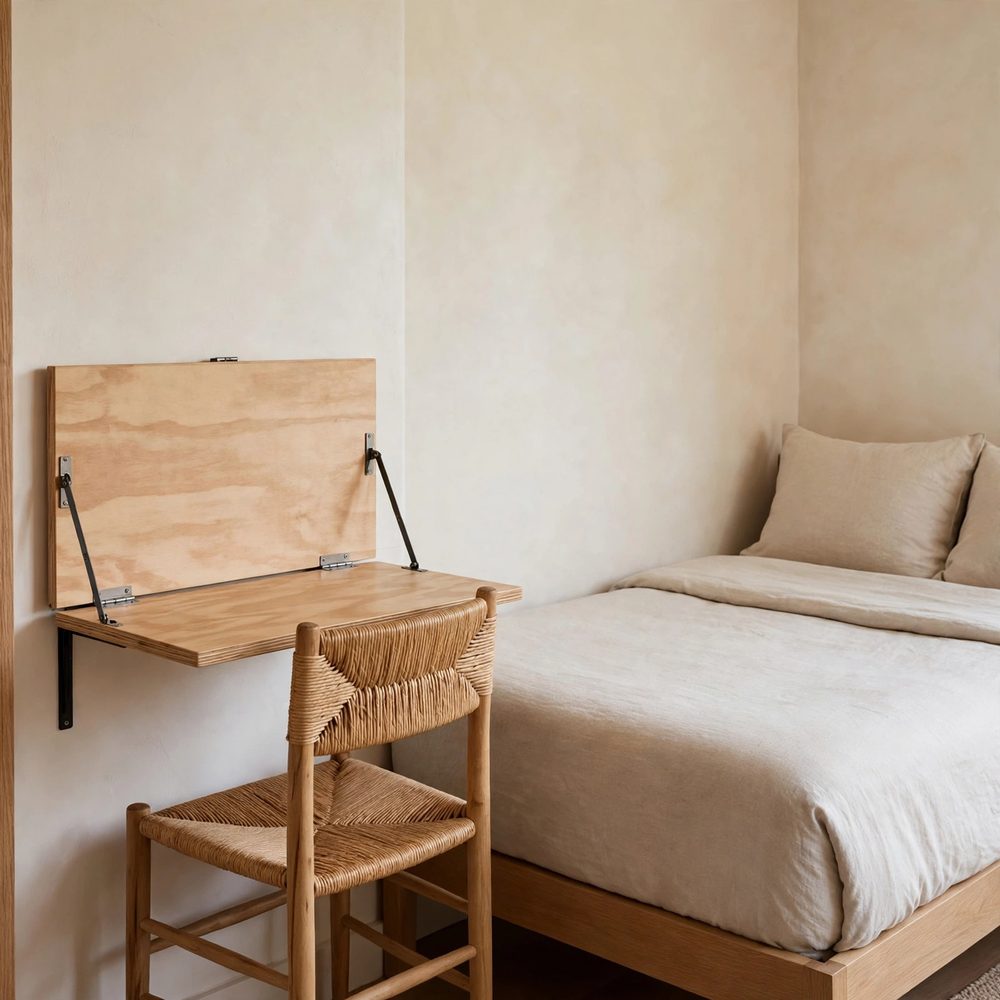
A fold-down wall desk hinges down from a shallow cabinet when you need to work, then folds flat so the room is a peaceful bedroom again. Choose one with a shelf inside for chargers, and paint it to match the wall so it almost disappears.
Best for:
- Very small rooms: No floor space used when folded.
- Part-week workers: Ideal for a few home-working days.
- Tidy minds: Closing the desk ends the working day.
Tip: Fix it into wall studs or solid brick so it stays steady.
3) Guest Bedroom Home Office Ideas with a Sleeper Sofa
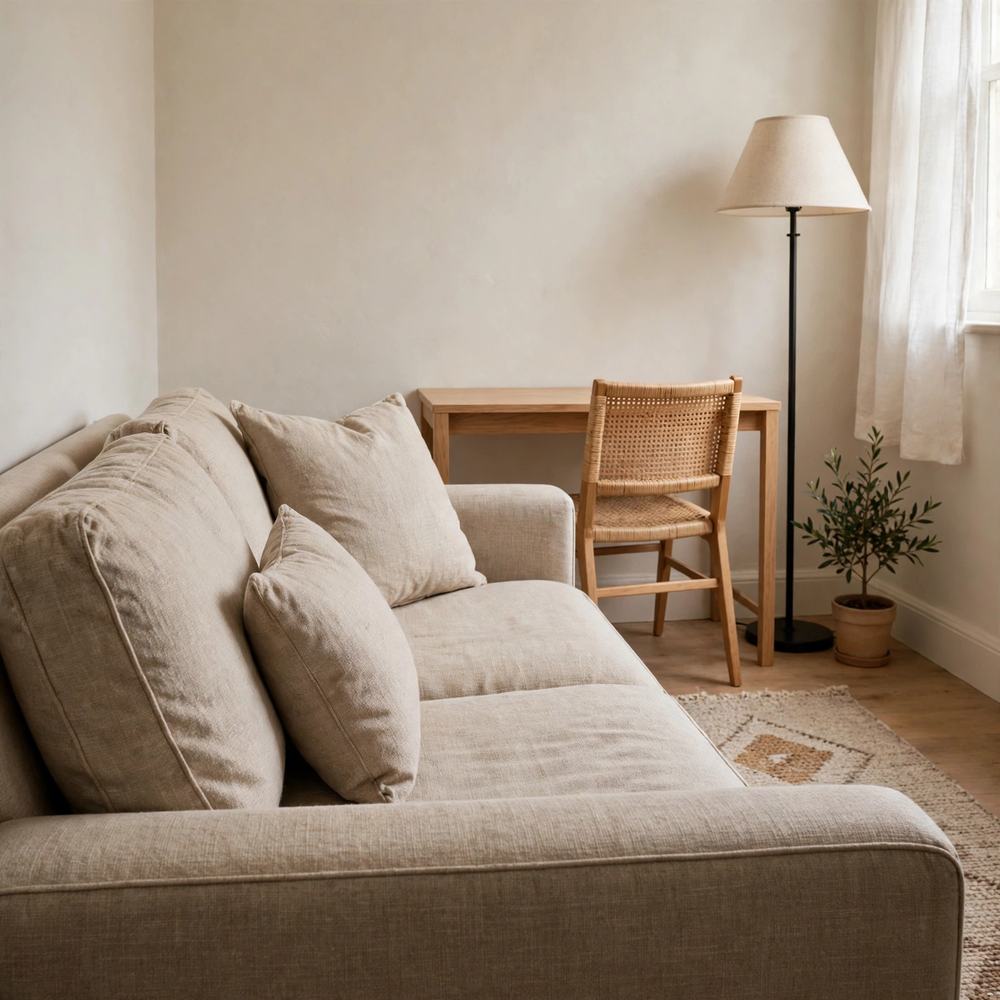
Some of the most flexible guest bedroom home office ideas start with a sleeper sofa. By day the room feels like a relaxed snug, and by night the sofa pulls out into a double bed. Keep the pull-out path clear, with a light desk opposite.
Why homeowners love it:
- Proper double bed: Couples stay comfortably, not just singles.
- Less bedroom-like: Workdays feel like a study, not a spare bed.
- Hidden bedding: Many store pillows and a duvet inside.
Tip: Keep a sheet and duvet folded inside so making the bed takes five minutes.
4) Wall Bed with a Built-In Desk Front
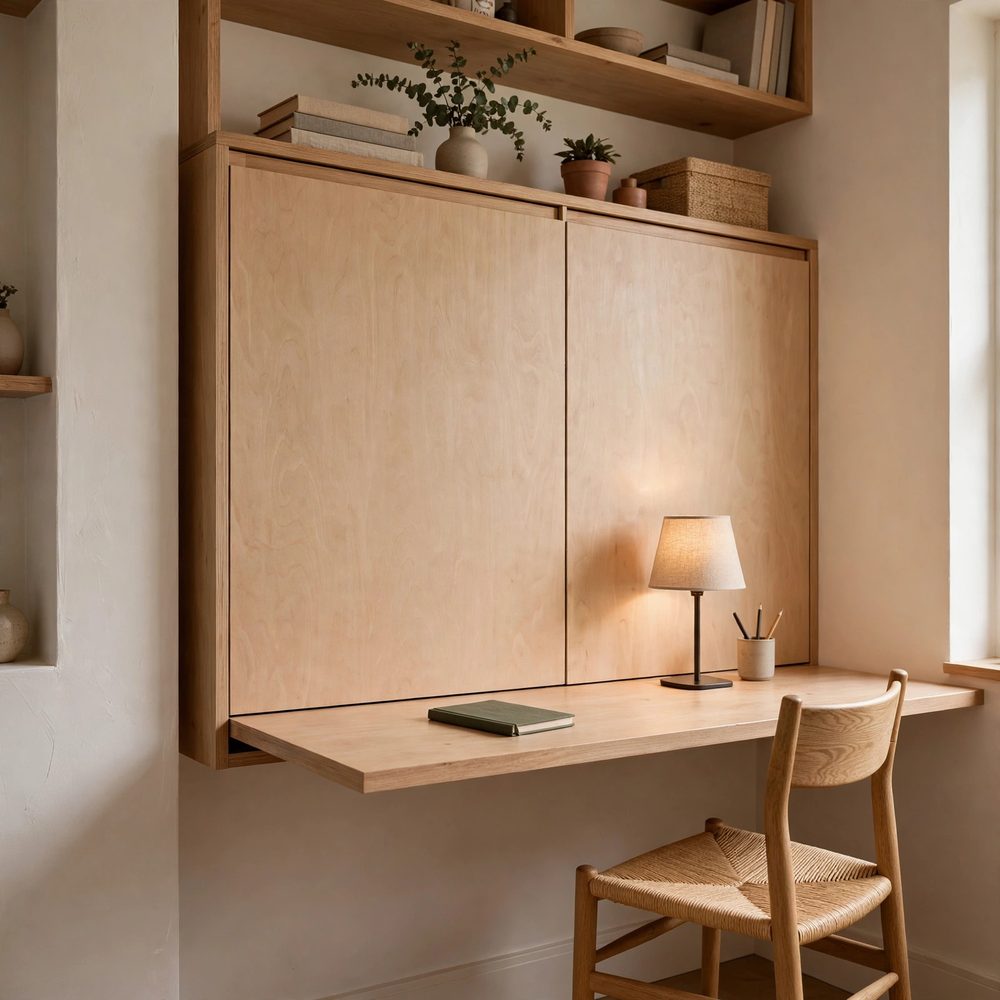
A wall bed folds up into a tall cabinet, freeing the whole floor for working. The cleverest versions carry a desk on the front that stays level as the bed comes down, so your laptop never moves.
How to style it:
- Match the cabinetry: A matching finish looks built in.
- Add shelves alongside: Books by day, guest essentials by night.
- Soft lighting: A desk lamp softens the cabinet look.
Tip: Measure ceiling height and the bed’s swing; keep a clear arc in front.
5) Desk Tucked into a Window Alcove
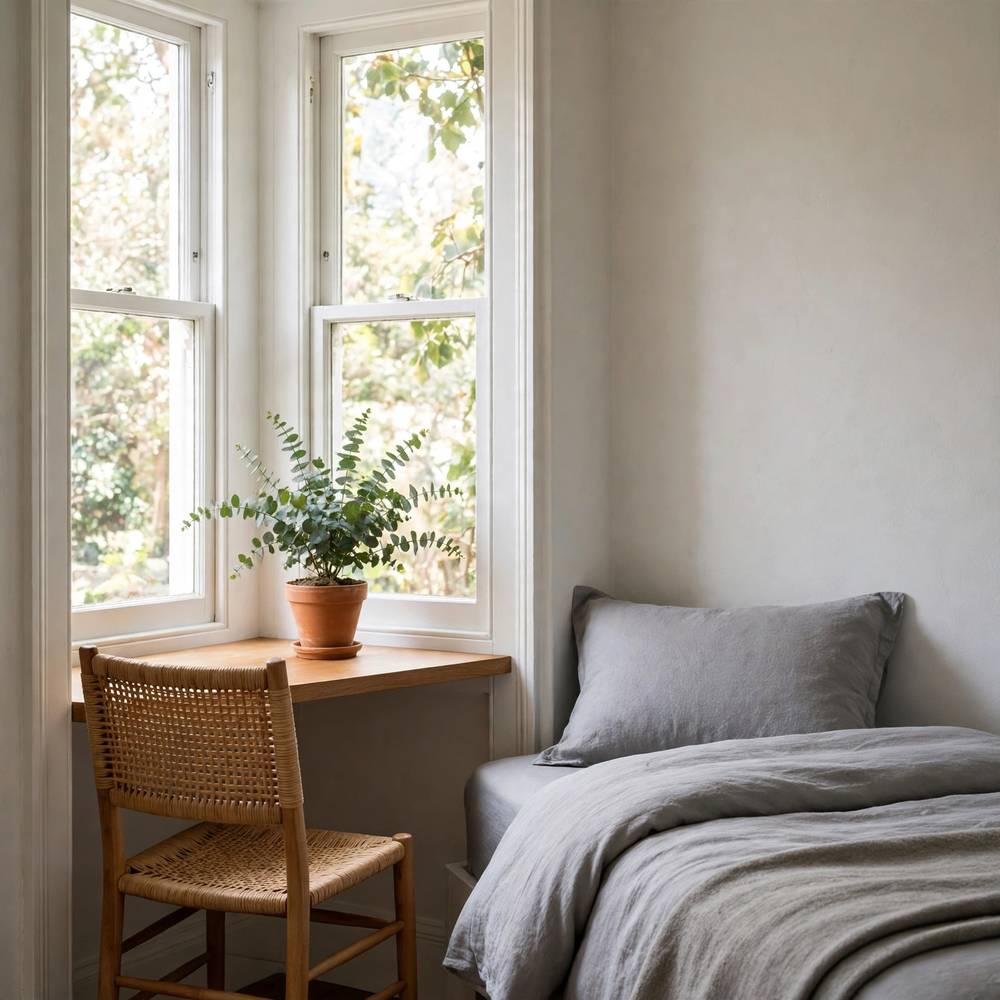
Many small bedrooms have an awkward alcove that only collects clutter. That forgotten corner is often exactly desk-sized, and natural light makes a tiny workspace feel generous. A fitted board cut to its width looks as if it always belonged there.
Why it works:
- Free light: Daylight reduces eye strain and lifts mood.
- Uses dead space: The alcove stops being a dumping ground.
- Separate feel: The nook feels like a different room.
Tip: Fit a small roller blind to soften glare on bright afternoons.
6) Corner Desk Facing the Wall
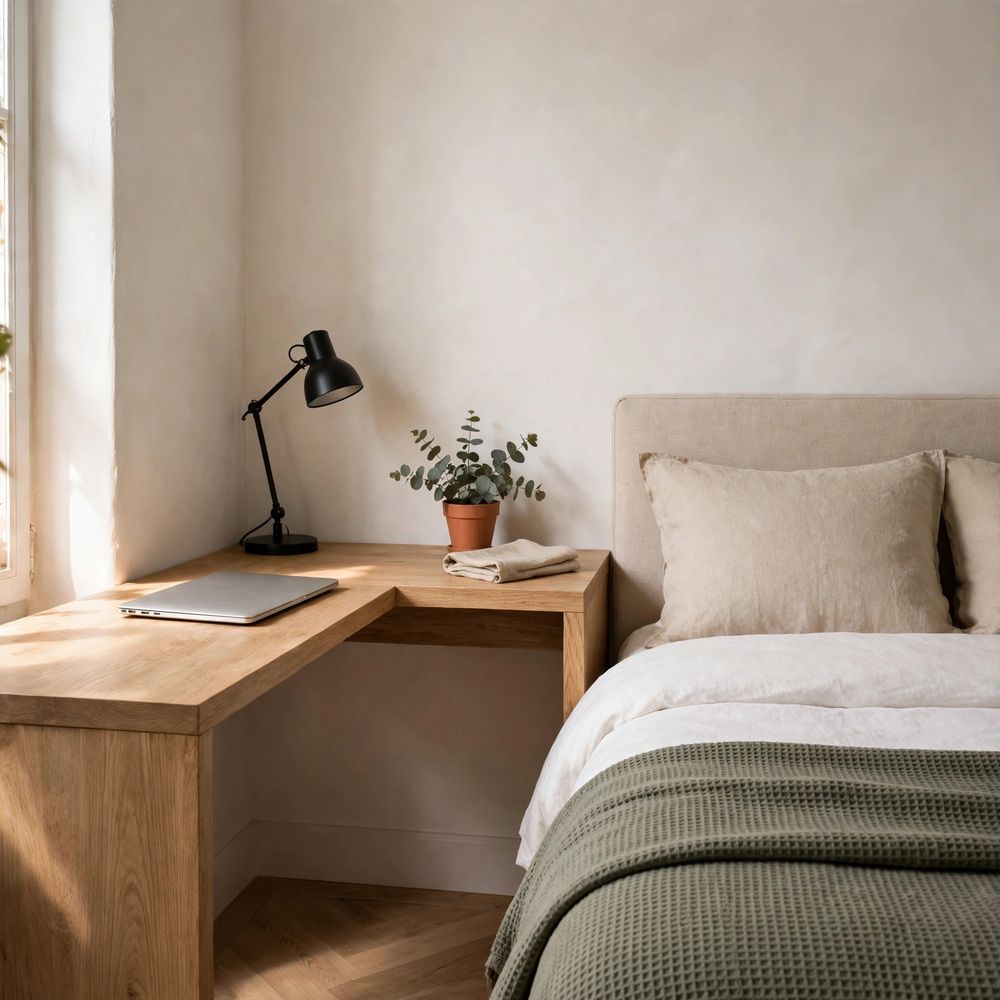
Facing the desk towards the wall is smarter than it sounds. On video calls your background is a calm wall rather than pillows and a duvet, and guests are not faced with your workstation either. An L-shaped desk uses the two shortest walls, leaving the centre free for the bed.
Best for:
- Video calls: A plain wall always looks professional.
- Focus: Facing away from the bed removes nap temptation.
- Shared corners: One side laptop, one side paperwork.
Tip: Hang one calming picture above the desk so the wall feels pleasant, not blank.
7) Storage Ottoman That Hides the Spare Bedding
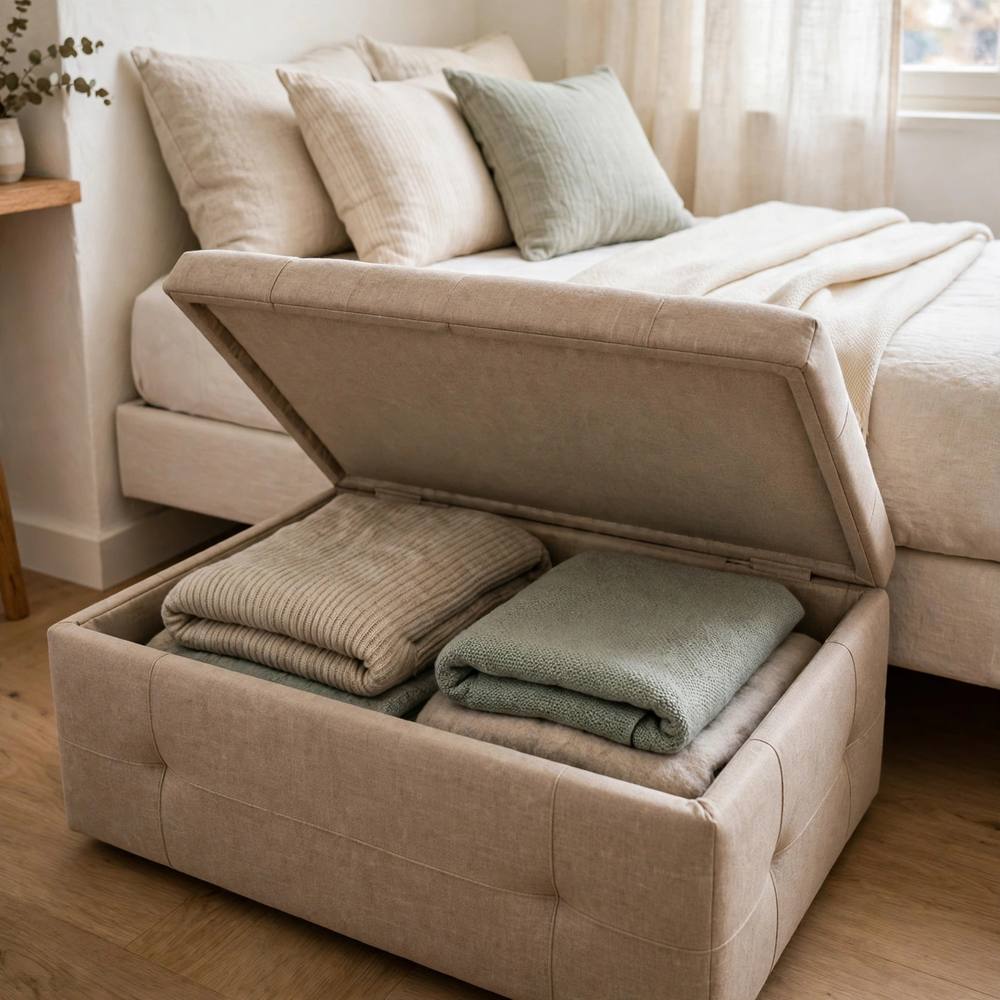
Every dual-purpose room has an awkward pile of extras: spare duvet, guest towels, extra pillow. A storage ottoman swallows all of it and earns its place as a footrest, extra seat or coffee table. Place it at the foot of the bed, never blocking a walkway.
Why it works:
- Hidden storage: Bulky bedding disappears but stays close.
- Extra seating: A sturdy ottoman seats one more person.
- Soft edges: Upholstery softens a room of hard lines.
Tip: Line the inside with a cotton bag so bedding stays dust-free.
8) Slim Console Desk Along the Foot of the Bed
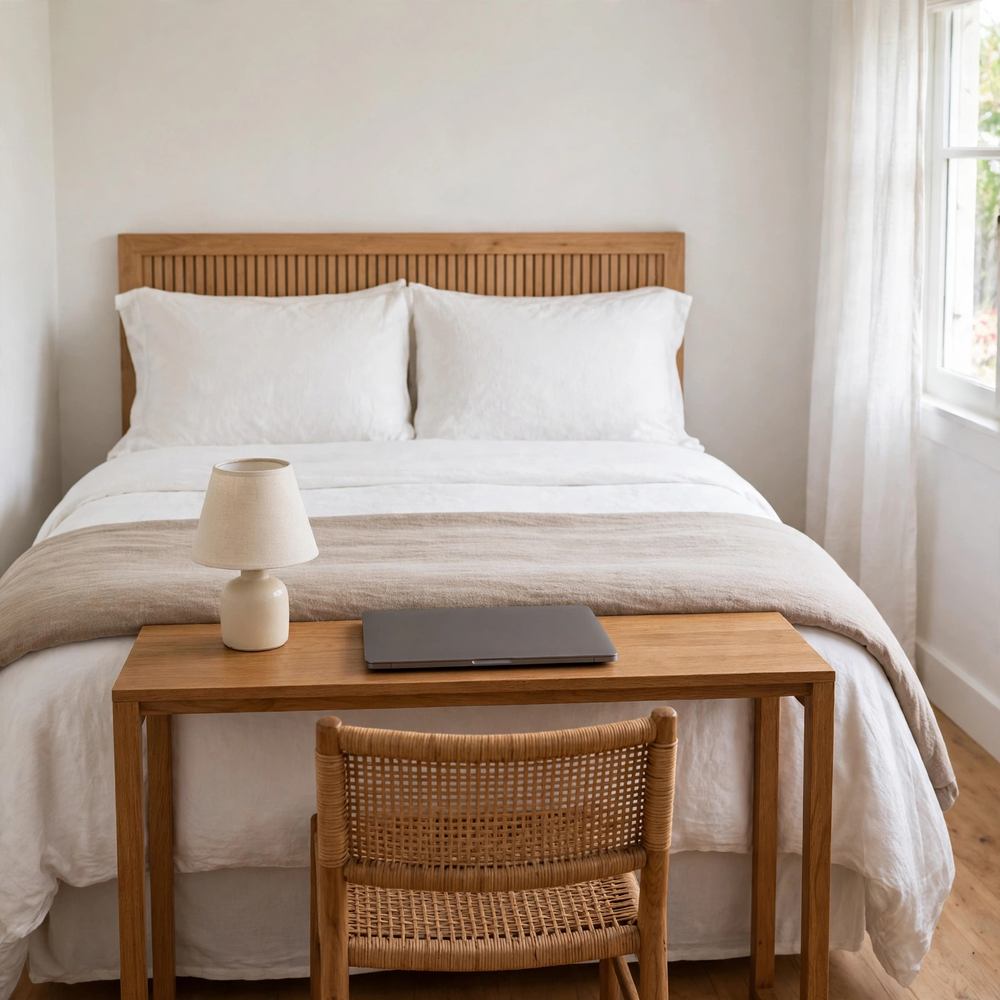
When a room is too narrow for a desk on its own wall, run a slim console table along the foot of the bed. At 30 to 35 centimetres deep, it gives a real work surface in usually wasted space, and a chair sliding underneath makes it almost vanish.
How to style it:
- Keep it shallow: Shallow depth protects the walkway past the bed.
- One lamp, centred: It serves desk by day, bed by night.
- Clear surface rule: Only laptop and lamp live here.
Tip: Choose a console with a lower shelf for a printer, files or guest towels.
9) Guest Bedroom Home Office Ideas Inside a Wardrobe Nook
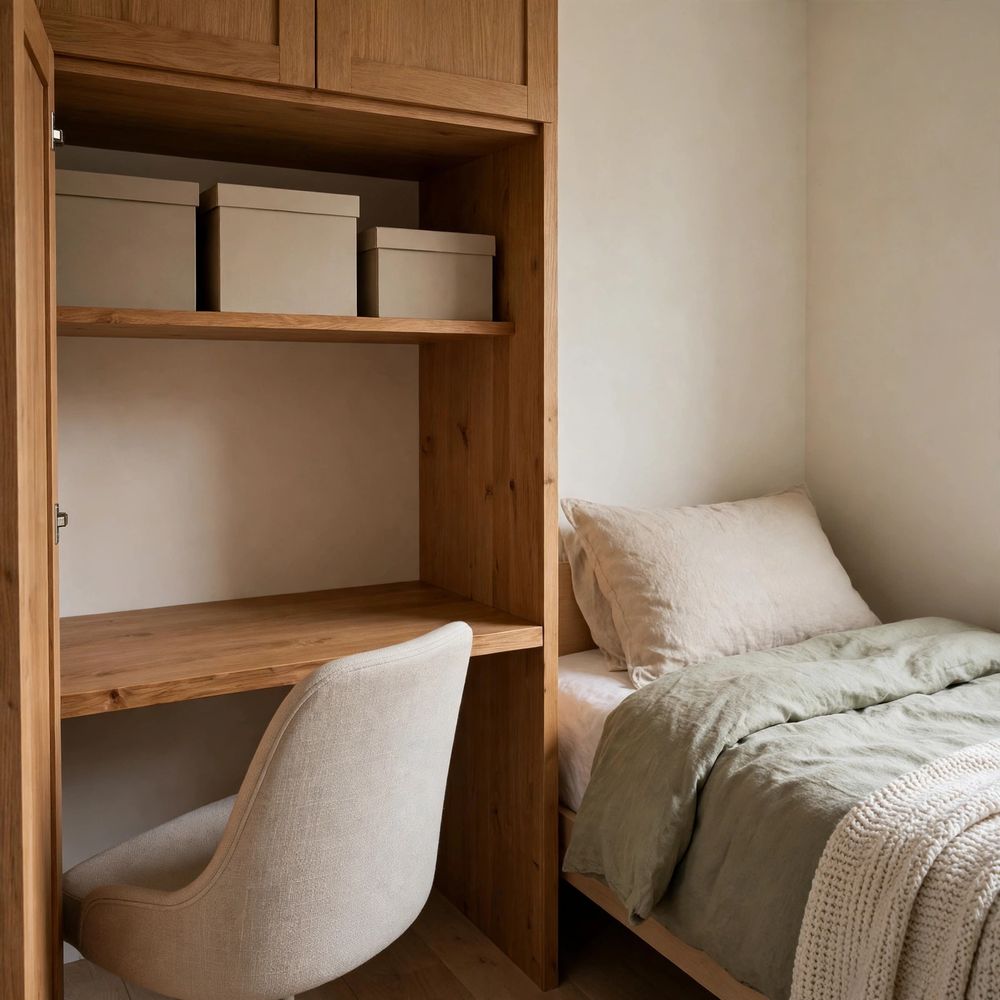
One of the neatest guest bedroom home office ideas for a tiny room is to give the office its own doors. A wardrobe nook can hold a fitted desk shelf, chair and storage boxes, then close away so the bedroom feels restful. Add a power socket and small light inside.
Why homeowners love it:
- Total separation: Guests never feel they sleep in an office.
- No floor space lost: The desk lives inside existing storage.
- Cheap to build: A worktop, shelf and light suffice.
Tip: Choose an armless, low-backed chair so the doors close easily.
10) Trundle Bed That Slides Away by Day
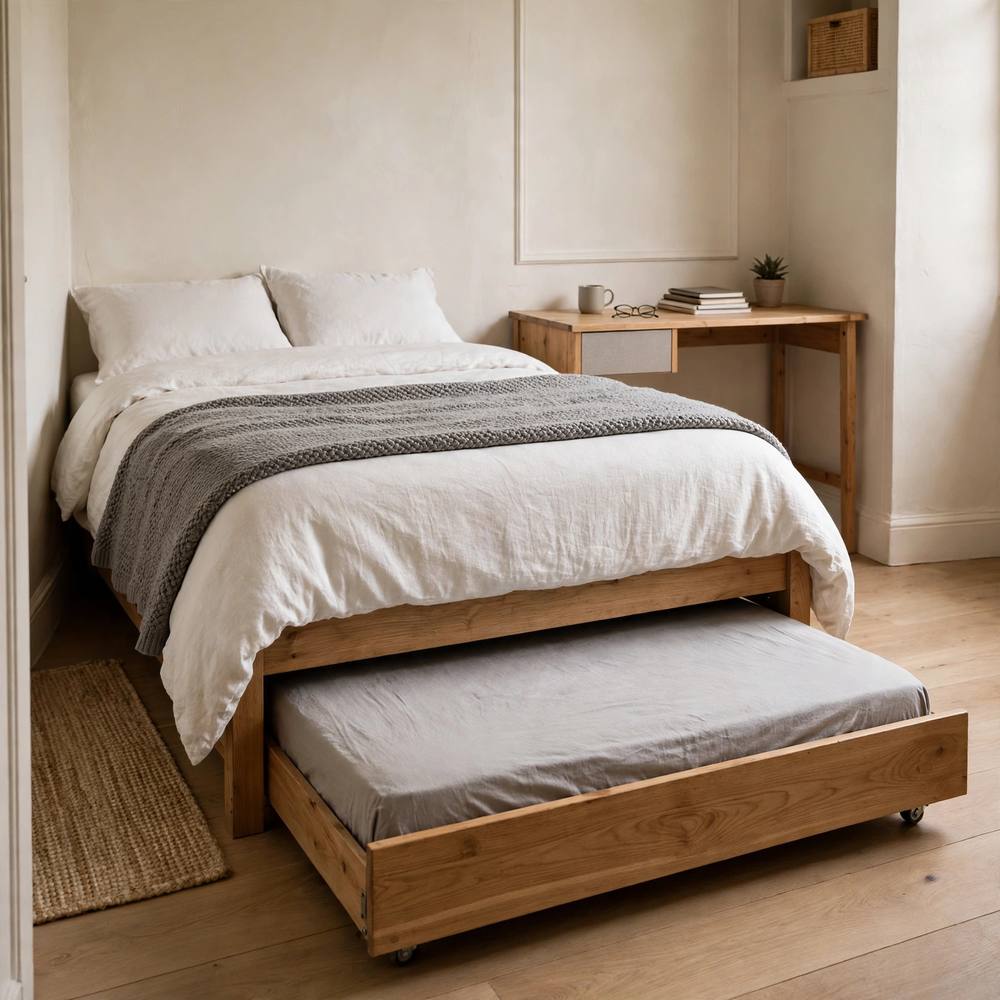
A trundle bed hides a second single bed in a deep drawer beneath the main one. Slide it out when two guests stay, push it away in the morning, and the room returns to its working layout. Between visits, the drawer holds the spare bedding.
Best for:
- Two guests, one bed space: The second bed appears only when needed.
- Low effort: Castors make changeover a one-minute job.
- Child-friendly: The low height feels safe for young visitors.
Tip: Check drawer depth first, as trundle mattresses are thinner and need their own sheets.
11) Rolling Desk on Castors for a Flexible Layout
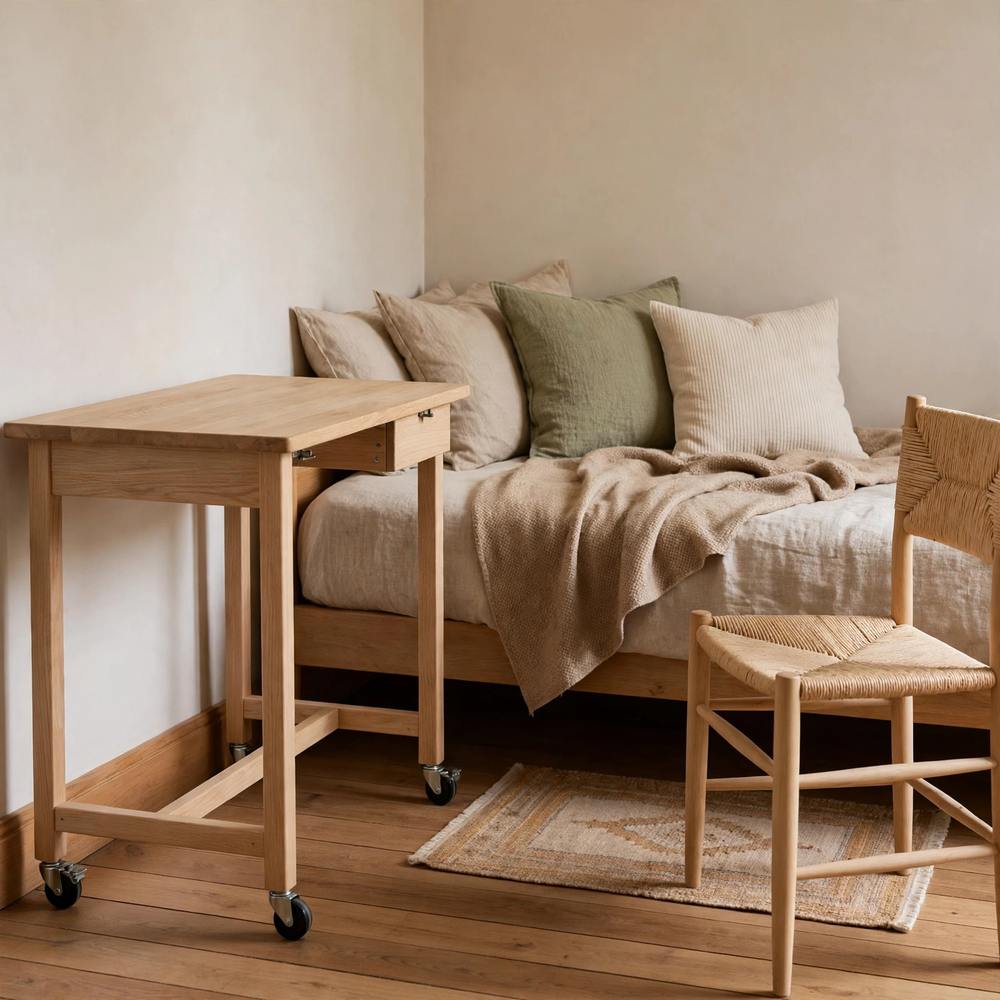
A desk on castors refuses to be pinned down. Roll it against the wall for focused work, towards the window for a change of scene, or into the corner when the bed comes out. Locking castors keep it steady while you type.
Why it works:
- Layout on demand: The room rearranges in minutes.
- Cleaning friendly: Every corner reachable, no dragging.
- Renter friendly: Nothing is fixed to the walls.
Tip: Keep cables in a small box on the desk, so moving it never means rewiring.
12) Open Bookshelf That Divides Sleep and Work Zones
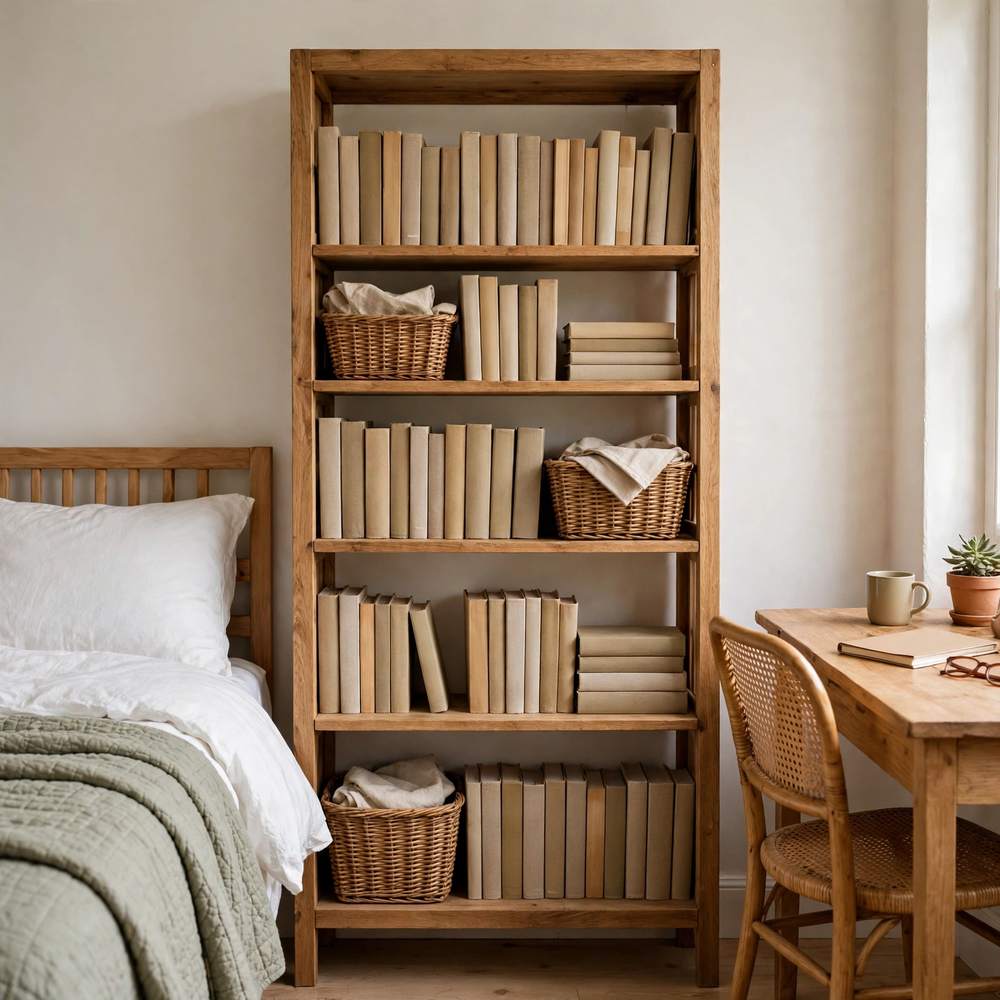
In a slightly longer room, an open-backed bookshelf between bed and desk creates two gentle zones without blocking light. You gain storage serving both sides, and each half feels purposeful. Style it with books, baskets and a plant, leaving gaps so it never looks heavy.
How to style it:
- Two-sided styling: Pretty objects face bed, files face desk.
- Baskets for clutter: Matching baskets hide chargers and notebooks.
- Keep it low: Waist height divides without darkening.
Tip: Anchor a tall bookshelf to the wall for safety, especially with children staying.
13) Luggage Rack and Welcome Tray in the Corner
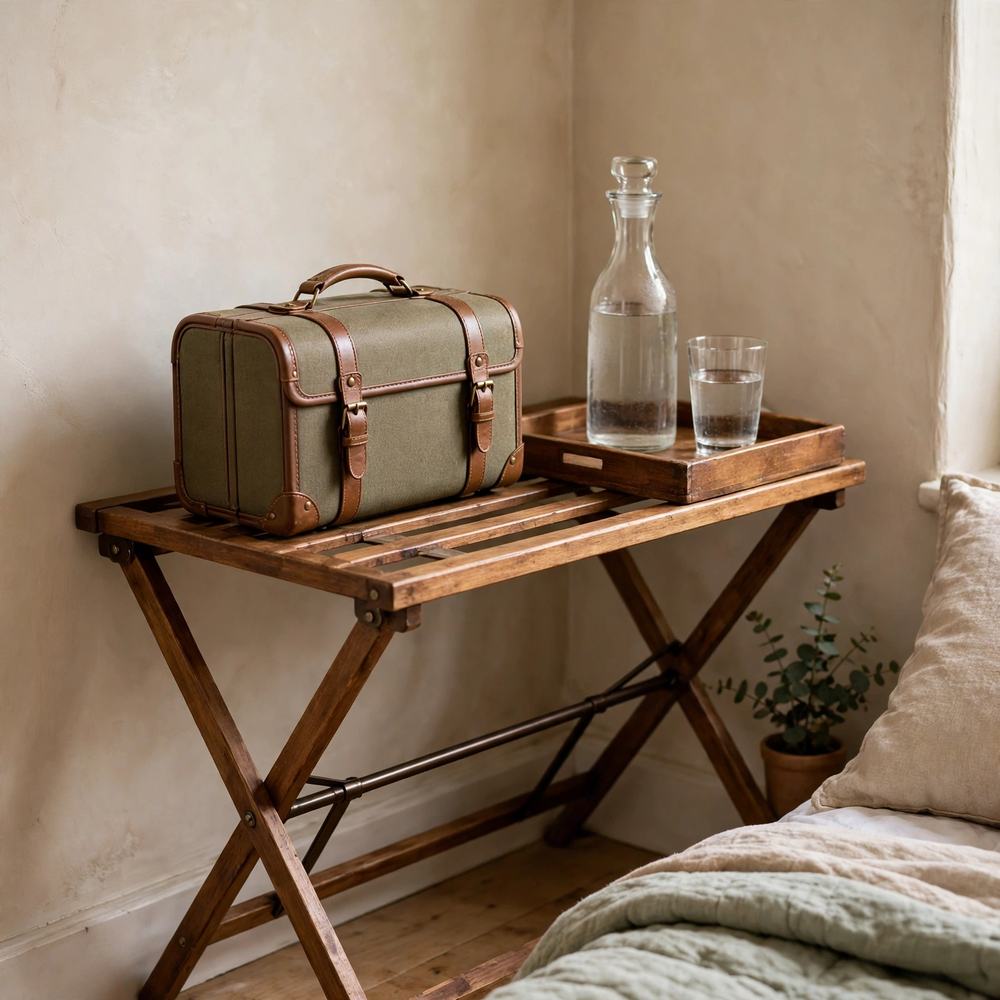
Hotels use luggage racks for a reason: guests prefer a raised case to bending to the floor. A folding rack costs little, folds flat behind the door and makes visitors feel expected. Pair it with a tray holding water, a glass and a spare charger.
Why it works:
- Guest comfort: A raised case is kinder on backs.
- Folds away: It never steals workday floor space.
- Thoughtful signal: A welcome tray says the visit was planned.
Tip: Leave the desk chair clear of work things so guests can drape clothes there.
14) Armchair That Works as a Desk Chair Too
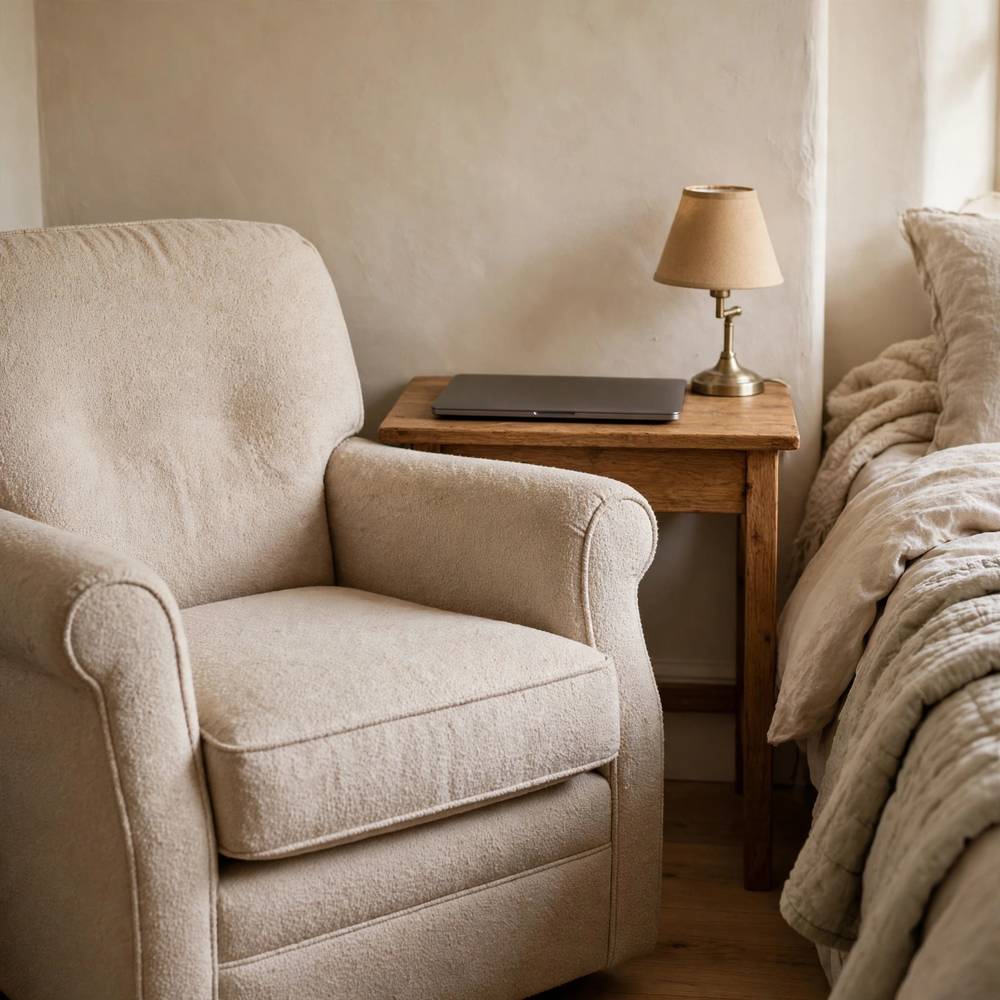
Two chairs rarely fit in a small spare room, so choose one that does both jobs. A supportive upholstered armchair with an upright back works at the desk all day, then turns into an evening reading chair. Look for slim arms that slide under the worktop.
Best for:
- One-chair rooms: No spare chair cluttering the corner.
- Reading time: Guests can relax somewhere besides the bed.
- Softer look: Fabric balances hard desk and screen lines.
Tip: Add a lumbar cushion by day; move it to the bed as a pillow at night.
15) Under-Bed Drawers for Files and Chargers
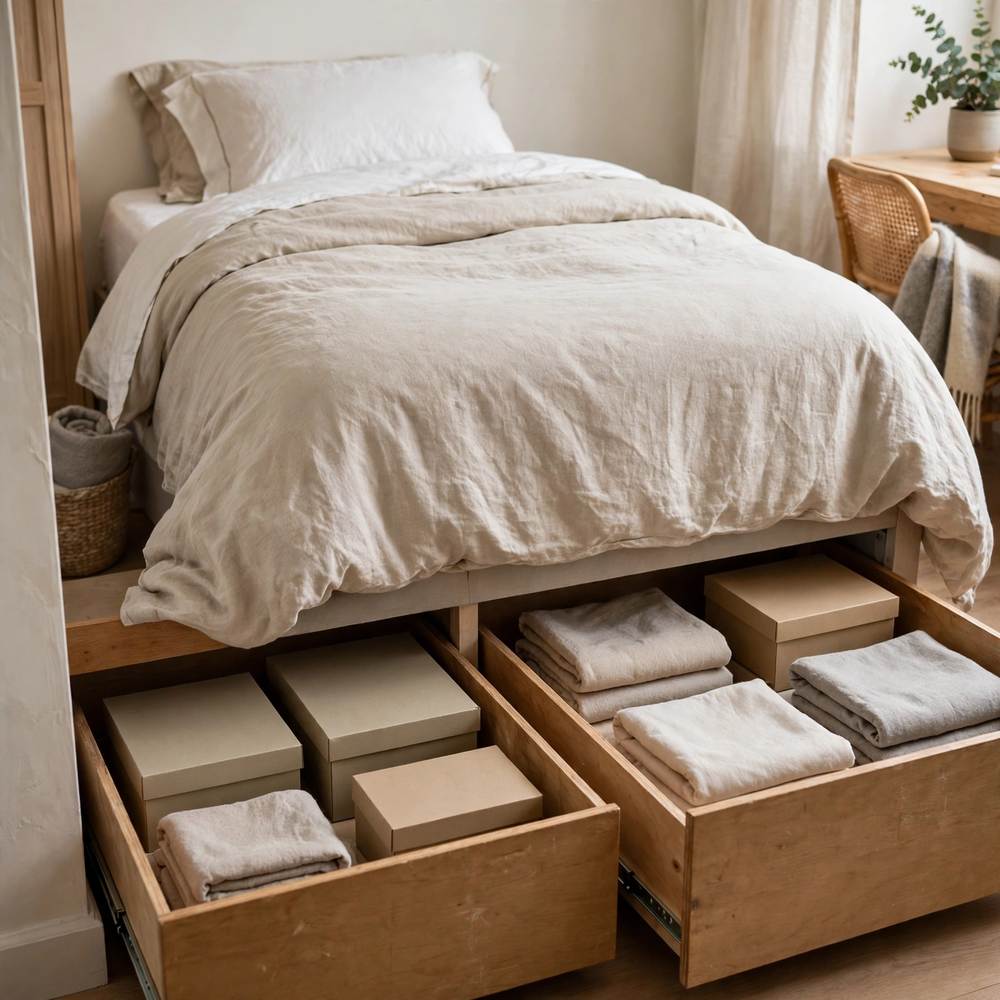
The space under the bed is the largest storage area in a small room, usually holding nothing but dust. Deep drawers on runners turn it into storage for paperwork, cables and spare bedding. Divide them by purpose: office supplies in one, guest linens in another.
Why it works:
- Invisible storage: A cupboard’s worth of unseen space.
- Clear desk: Supplies live below, worktop stays calm.
- Guest-ready: Bedding stored in-room speeds up visits.
Tip: Measure clearance under the frame first, and choose handles easy to grip while kneeling.
16) Floating Shelves Above the Desk
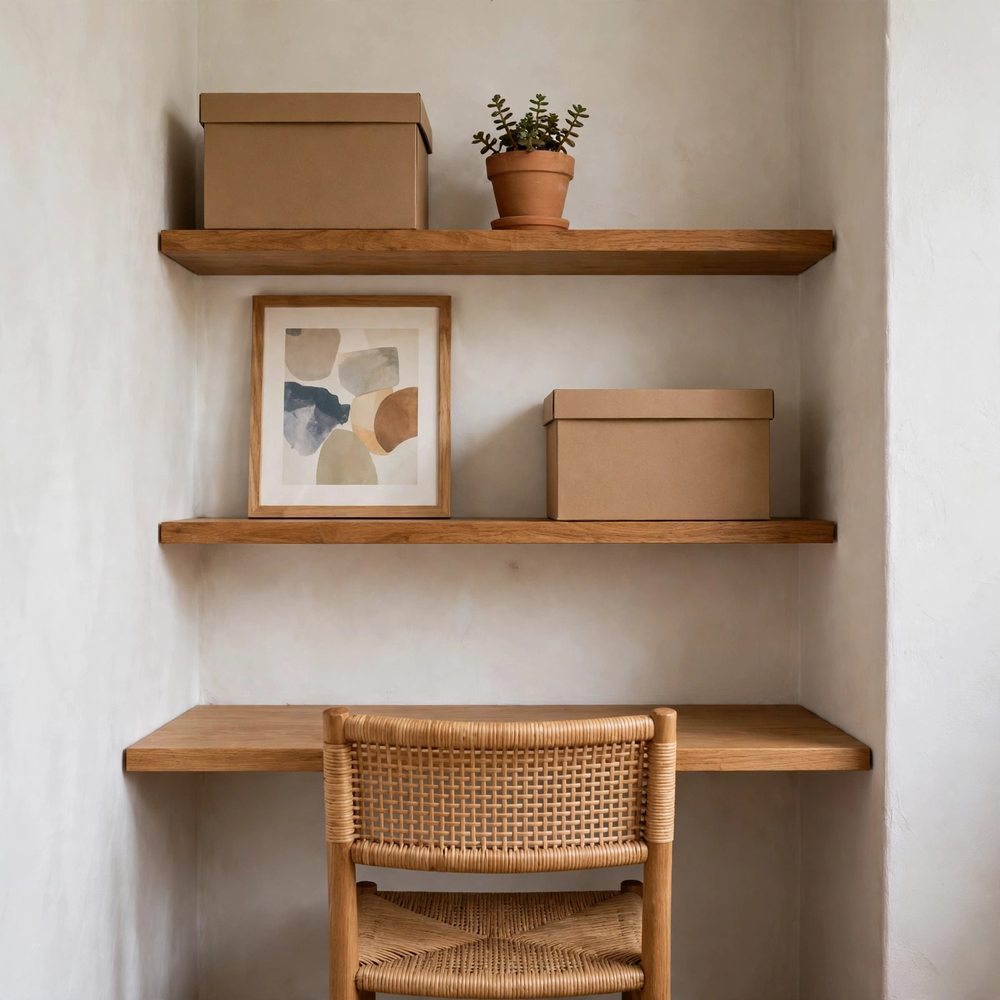
When the desk is small, the wall above it has to work hard. Two floating shelves hold storage boxes, books and a plant, freeing the worktop for just a laptop and a cup of tea. Fit the lowest shelf about 40 centimetres above the desk, heaviest items lowest.
How to style it:
- Boxes that match: Identical boxes look calm, hide clutter.
- One green thing: A trailing plant softens the office feel.
- Leave gaps: Crammed shelves make rooms feel smaller.
Tip: Choose an abstract framed print rather than words, so the wall stays restful from bed.
17) Curtain That Hides the Office After Hours
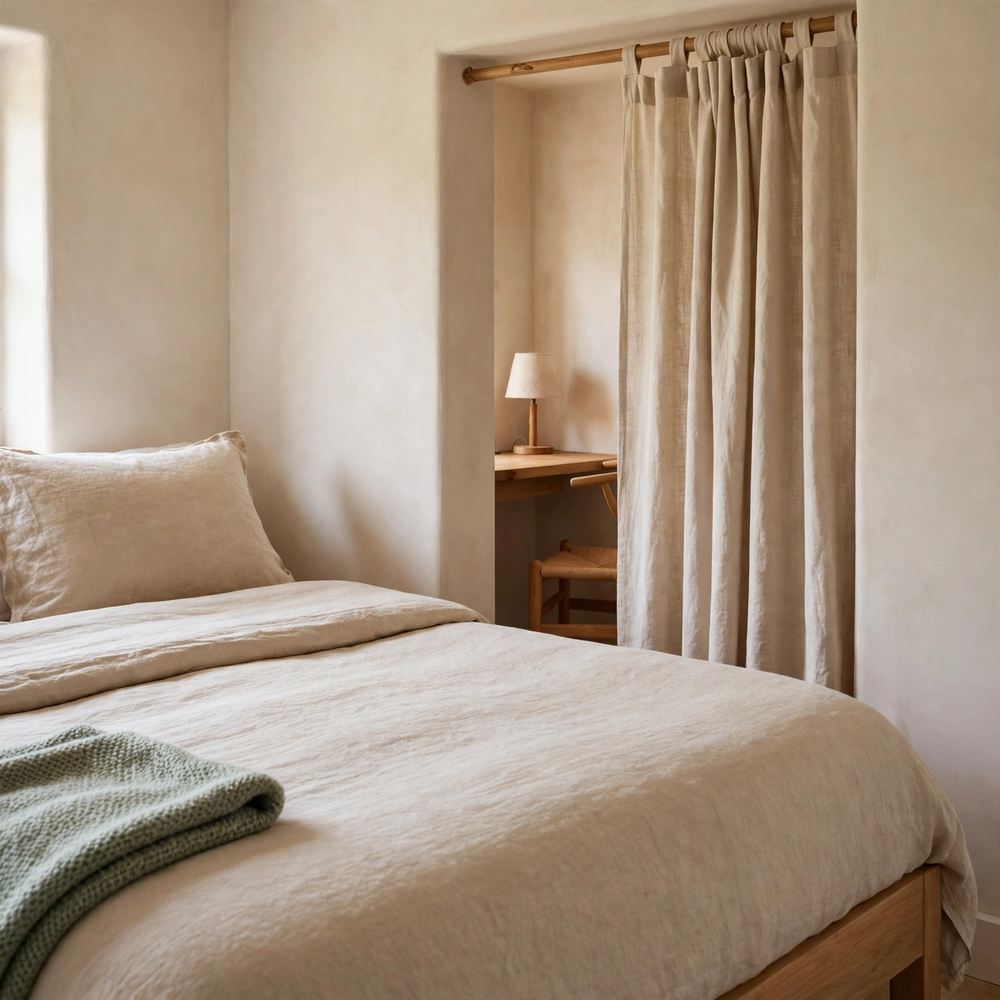
A simple curtain on a ceiling track or tension rod is the softest room divider of all. Draw it across the desk corner at the end of work, and the office vanishes behind soft folds. Choose a fabric that suits the bedding, such as linen in the room’s main colour.
Why homeowners love it:
- Instant switch-off: Closing it ends the working day.
- Softens sound: Fabric absorbs echo, room feels cosier.
- Guest privacy: Visitors never sleep facing paperwork.
Tip: Hang it a few centimetres short of the floor so it sweeps cleanly.
18) Round Side Table That Serves Two Jobs
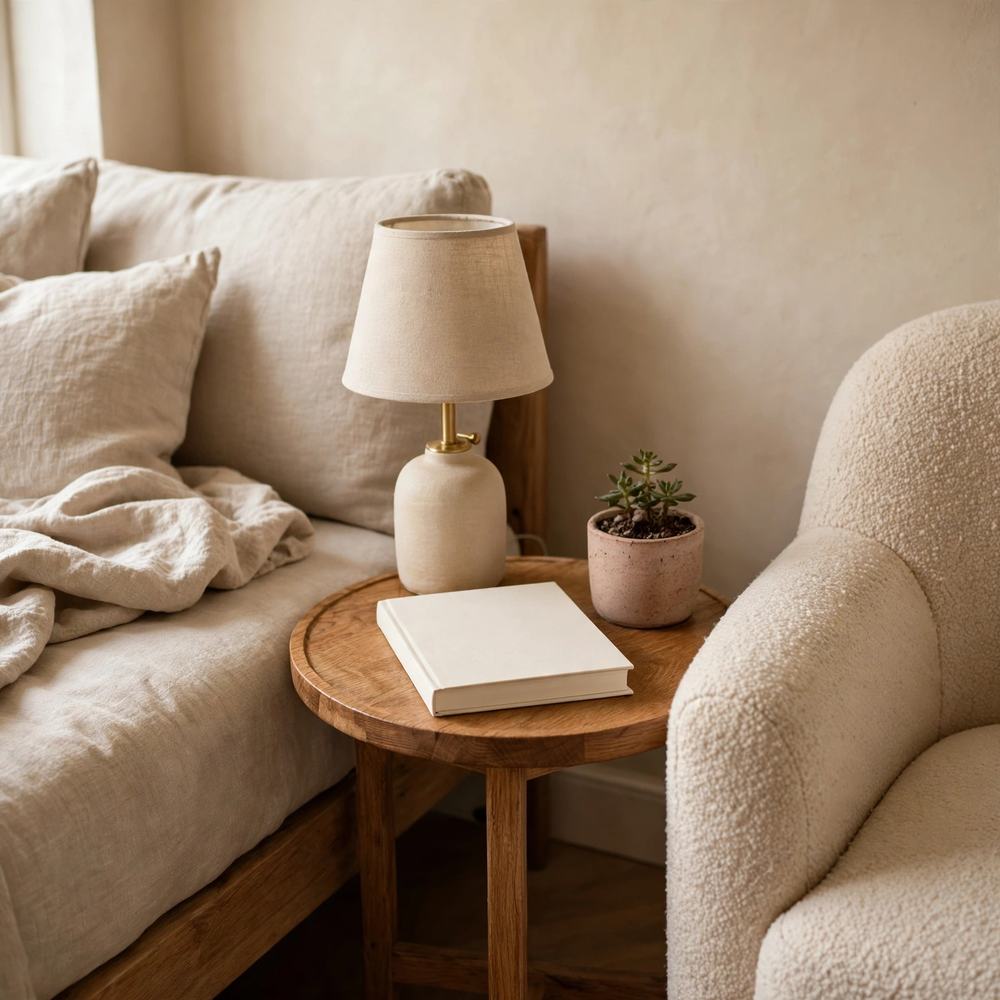
A small round table is a quiet hero in a dual-purpose room. Beside the bed it is a nightstand for a lamp and a book; beside the armchair it holds a laptop or a cup of tea. With no corners, it squeezes into gaps square tables waste.
Best for:
- Tight corners: Circular tops fit where rectangles cannot.
- Flexible use: Moves in seconds from bedside to desk.
- Gentle look: Curves soften straight-edged furniture.
Tip: Pick a table at roughly mattress height so it works in both roles.
19) Fold-Out Chair Bed for One Guest
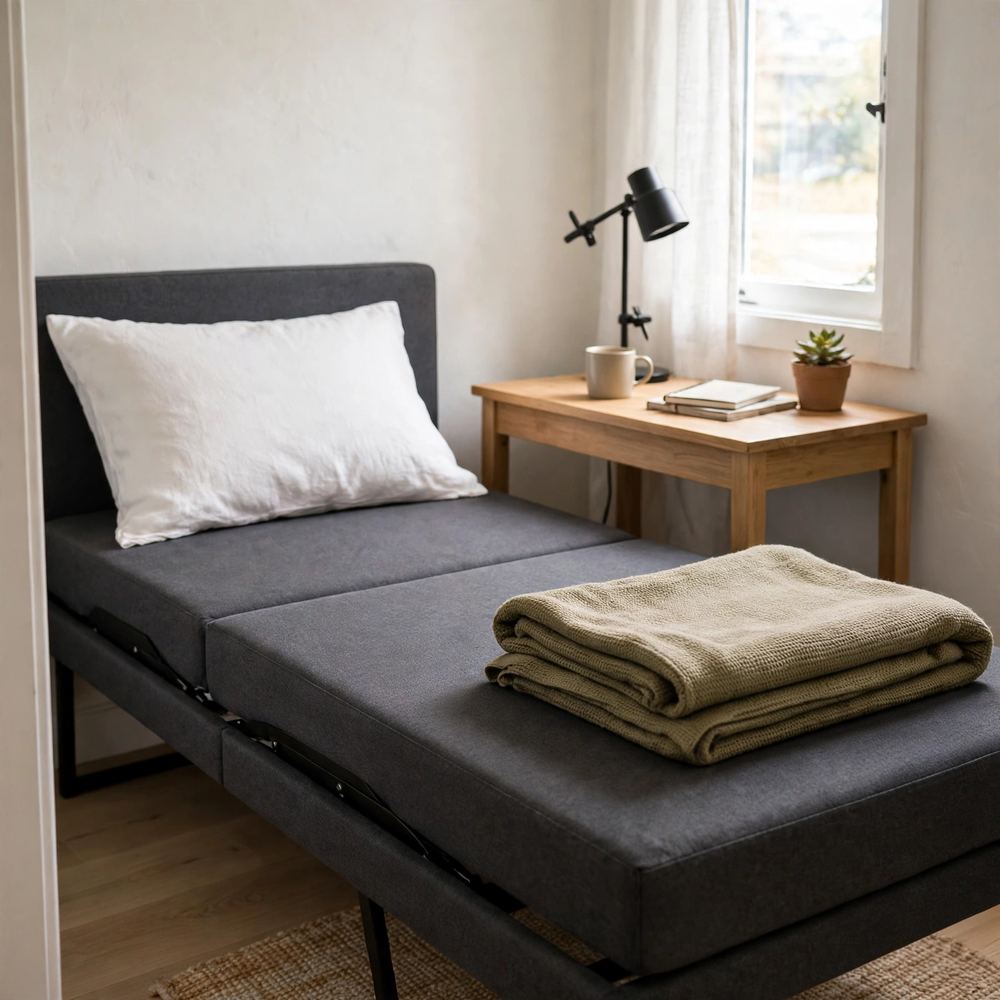
If guests usually come one at a time, a fold-out chair bed may be all the sleeping space you need. It sits in the corner as a reading chair, then unfolds into a single bed without moving anything else, leaving the floor free for a proper desk.
Why it works:
- Smallest footprint: One chair’s space buys a spare bed.
- No rearranging: The desk stays put when bed comes out.
- Everyday use: A reading chair earns its place between visits.
Tip: Keep its bedding in a basket beside it, ready for late arrivals.
20) Pegboard Wall Above a Narrow Desk
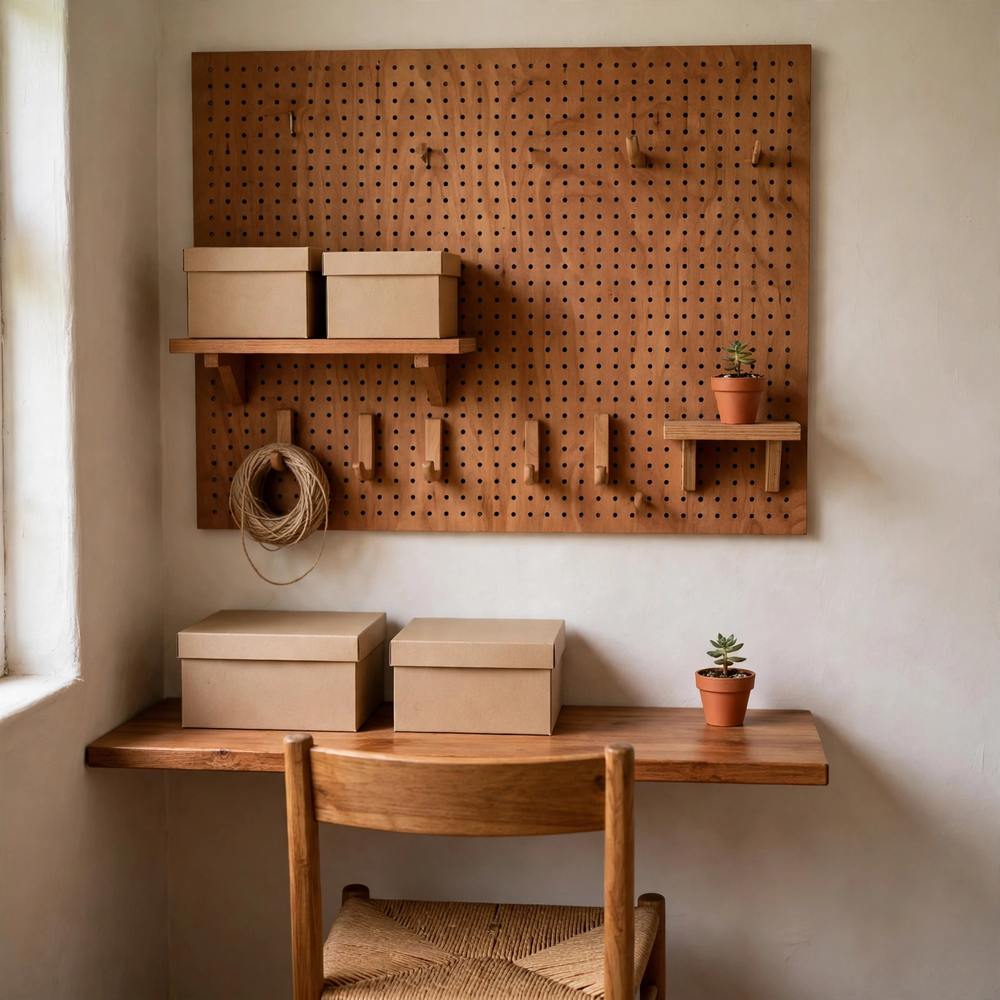
A pegboard turns the wall above a narrow desk into flexible storage that changes whenever you like. Shelves, hooks and pots hold pens, headphones and a plant, all lifted off the worktop. Paint it to match the wall, and swap work items for a vase when guests stay.
How to style it:
- Everything visible: Tools you see are tools you tidy.
- Rearrange freely: Hooks move in seconds as kit changes.
- Soft touches: A tiny plant keeps it bedroom-friendly.
Tip: Leave the bottom row empty so nothing hangs low enough to crowd your screen.
21) Two-Way Lamp for Reading and Working
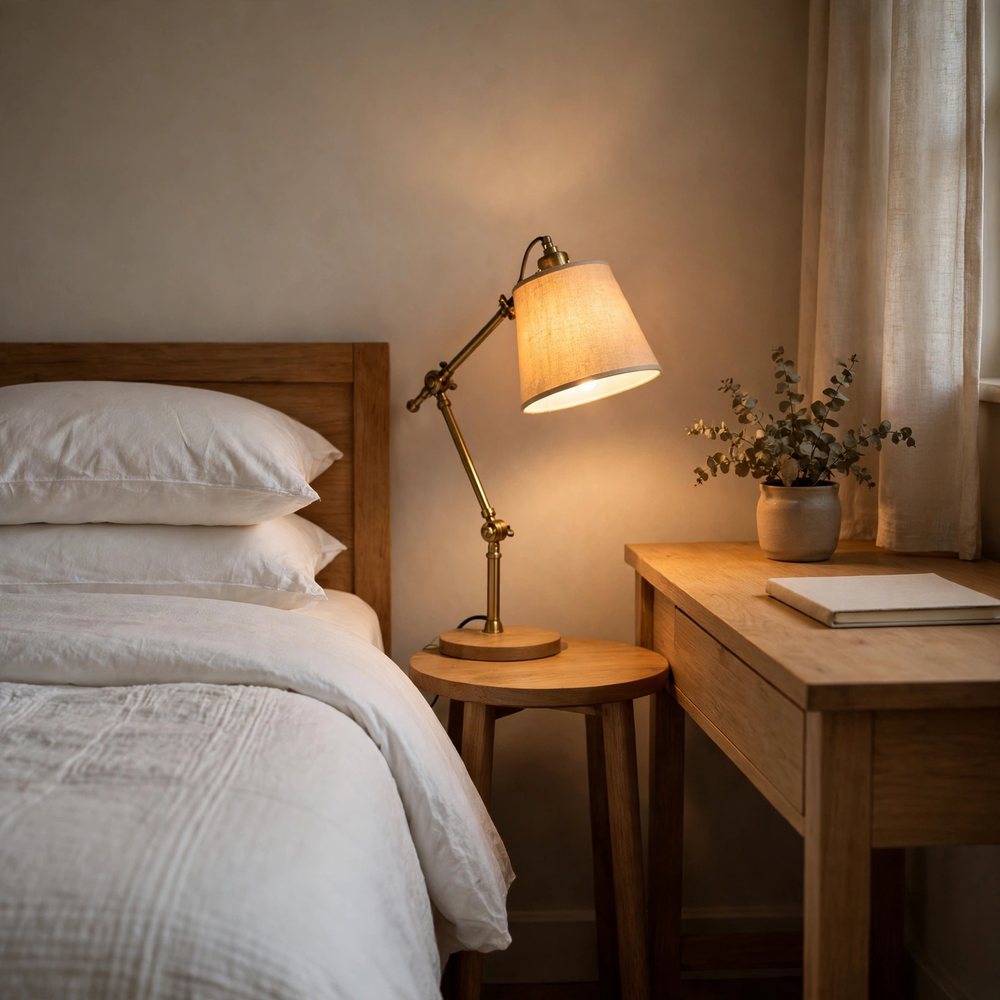
Lighting is where dual-purpose rooms fail: bright enough for work feels harsh at bedtime, while cosy light strains your eyes. A dimmable lamp solves both moods. Place it to serve both zones, its warm setting signalling work is over.
Why it works:
- Two moods, one lamp: Bright by day, soft by night.
- Saves surfaces: One shared lamp crowds tables less.
- Better sleep: Dim light helps guests wind down.
Tip: Keep a spare bulb in the drawer so a blown bulb never ruins a visit.
22) Calm Neutral Bedding That Suits Both Moods
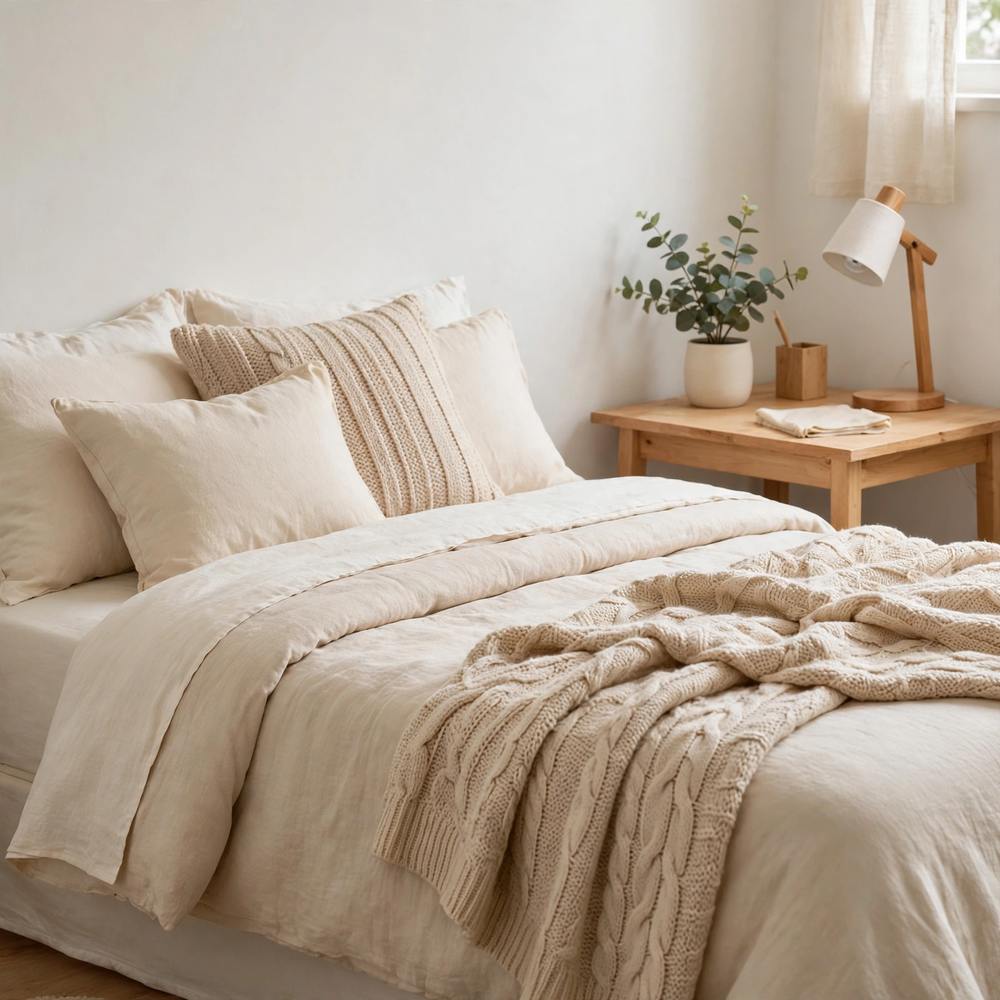
Bedding sets the emotional temperature of the room. Calm neutrals such as cream, beige and pale grey look fresh to guests, feel restful at night and never shout “bedroom” on a work call. Layer textures instead of patterns: plain duvet, knitted throw, cushions in different tones. These cozy bedroom design ideas show how far a few textiles can go.
Why homeowners love it:
- Always appropriate: Neutrals suit work backgrounds and guests.
- Easy to refresh: One new cushion updates the look.
- Forgiving: Pale layers mix without a perfect set.
Tip: Keep a spare set of the same bedding in the room for simple changes.
23) Rug That Marks Out the Sleep Zone
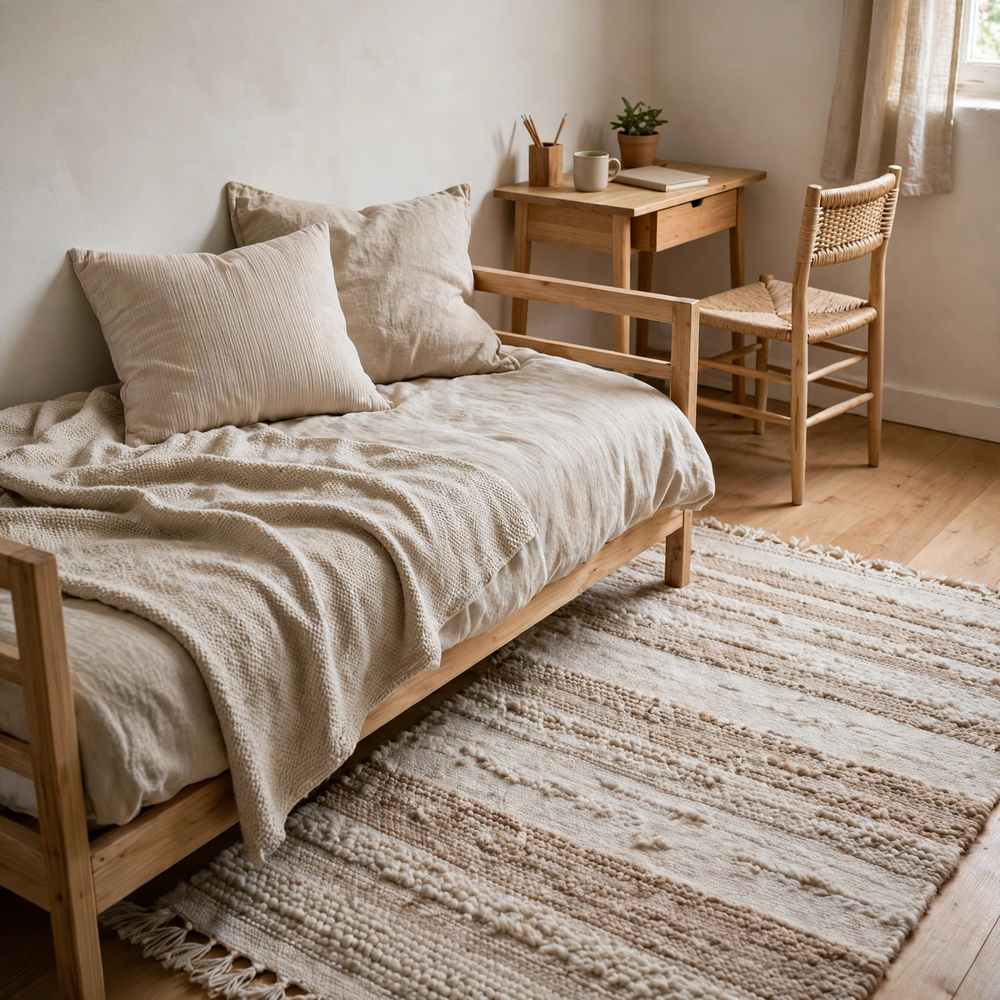
A rug is the simplest zone divider there is. Place a soft rug under and beside the bed, and that patch instantly reads as the sleeping area, while the desk side stays bare-floored work territory. Choose one big enough for bare feet to land on.
Why it works:
- Clear zones: The room explains itself without screens.
- Warmth and quiet: Fabric softens sound and cold floors.
- Colour anchor: The rug can carry the room’s main colour.
Tip: Use a non-slip underlay where the rug edge meets the path to the door.
24) Lap Desk for Working from the Daybed
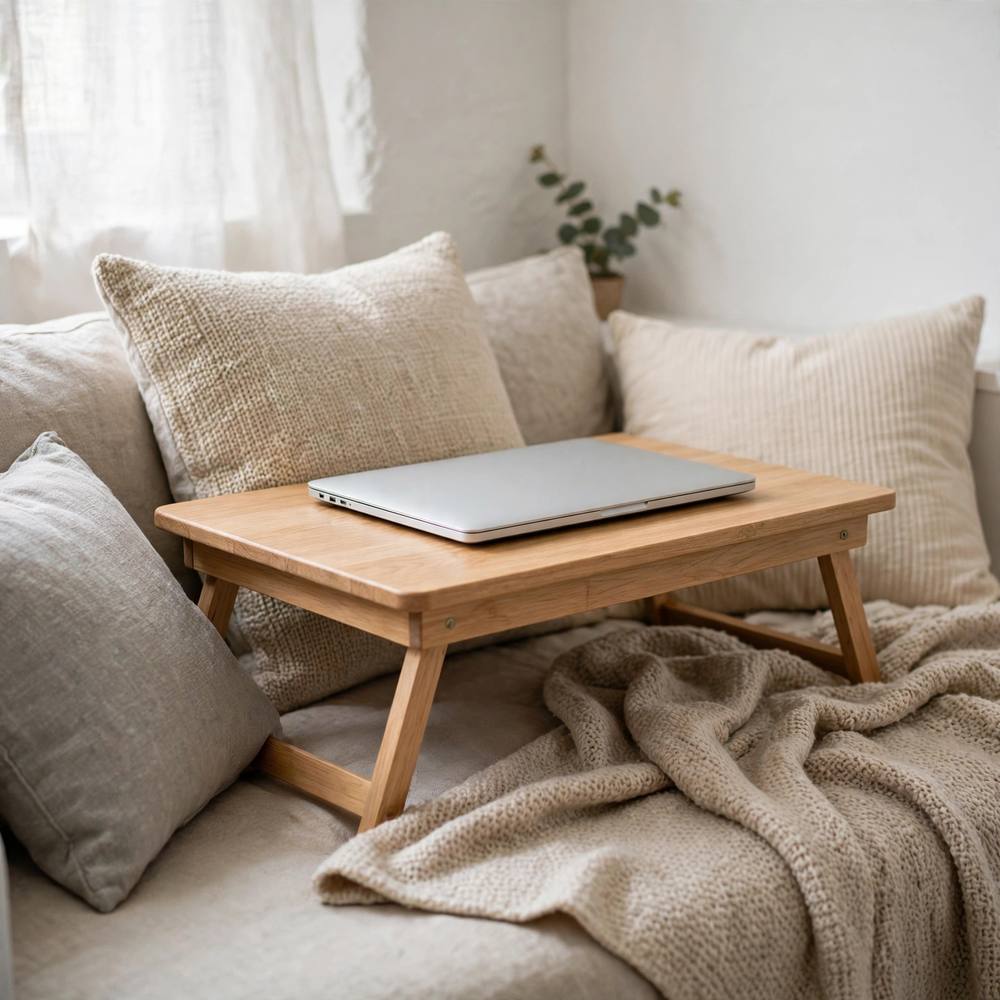
Some days call for a softer seat. A cushioned lap desk lets you work from the daybed with your laptop at a comfortable height, then slides under the bed afterwards. It is also a kind thing to leave for guests reading in bed.
Best for:
- Change of posture: Moving seats is kinder on your back.
- No extra furniture: It stores flat, weighs almost nothing.
- Guest comfort: Reading in bed feels like a treat.
Tip: Pick one wide enough for a mouse beside the laptop.
25) Hidden Charging Station Inside a Drawer
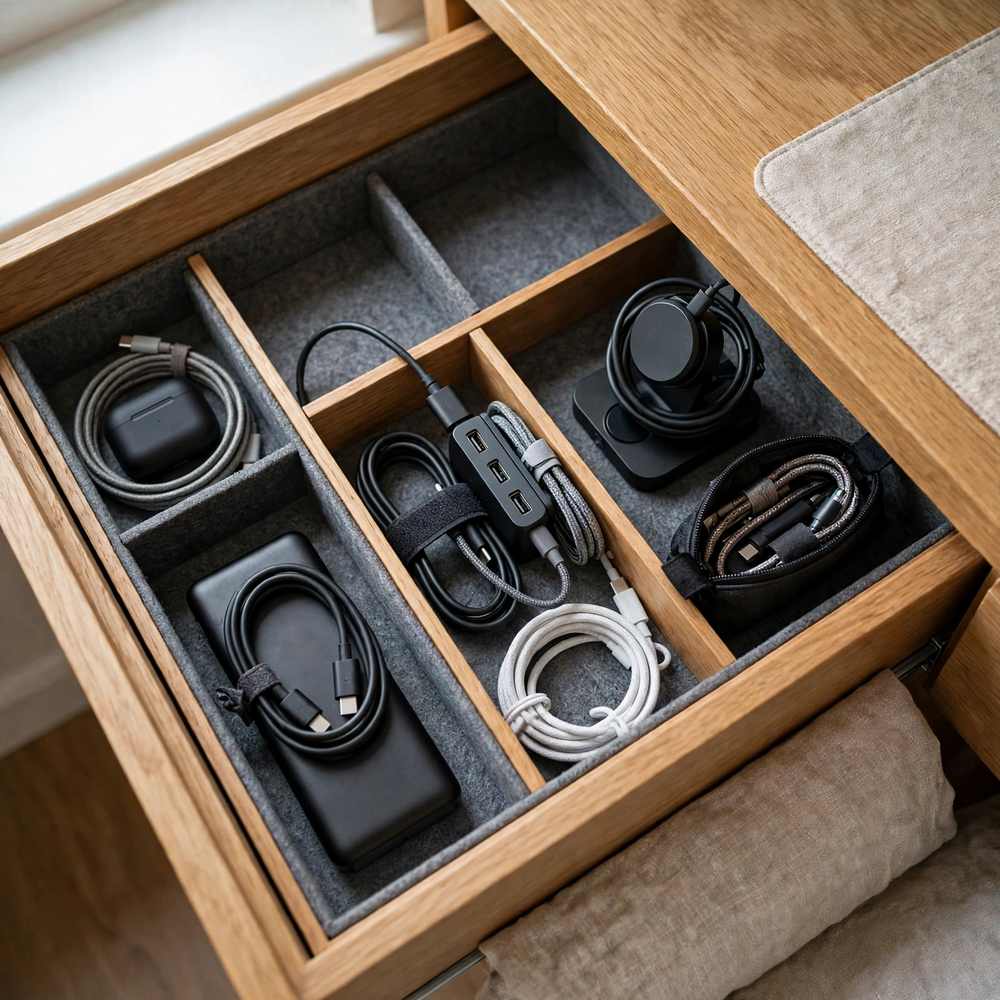
Few things make a small room look messier than cables. A charging station inside a desk drawer, fed by one cable to a multi-socket strip, keeps devices powered while every wire stays hidden. Guests gain a tidy charging spot too.
Why it works:
- Calm surfaces: Clear tables make rooms feel bigger.
- One home for devices: Everything charged by morning.
- Safer floors: No cables crossing walkways at night.
Tip: Leave one spare charging cable in the drawer, labelled for guests.
26) Tall Mirror That Doubles the Light
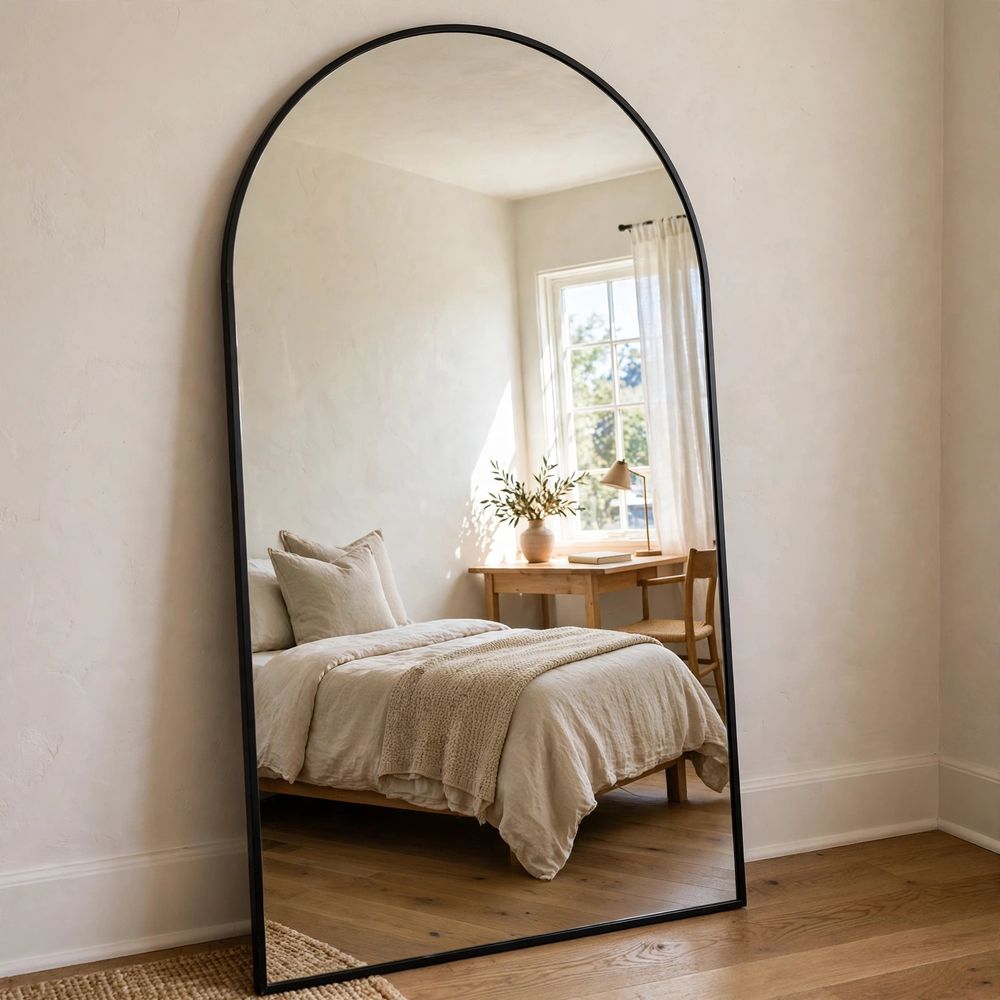
A tall mirror earns its place twice over. It bounces daylight across the room, brightening the desk, and gives guests a full-length mirror spare rooms often lack. Lean one beside the desk, angled to reflect the window, not the bed.
How to style it:
- Reflect the light: Angle towards the window for daylight.
- Frame as furniture: A frame matching the desk feels planned.
- Door option: Over-door mirrors use wasted space.
Tip: Secure a leaning mirror with a wall strap so it can never slide.
27) Green Plant Corner Between the Two Zones
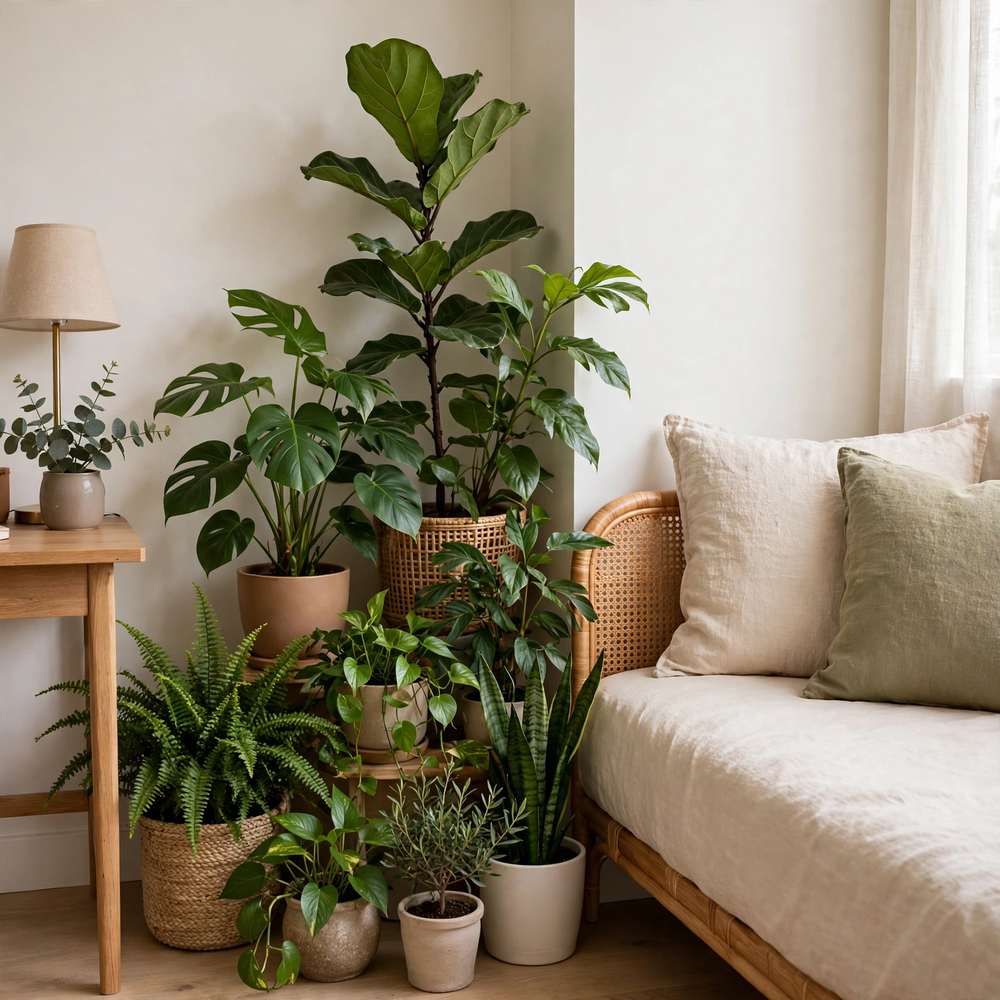
A small cluster of plants makes a gentle, living boundary between desk and bed. Greenery softens office equipment and gives the room a cared-for feeling guests notice straight away. Group three plants at different heights: one floor plant, one on a stand, one trailing.
Why homeowners love it:
- Soft divider: A boundary without blocking light.
- Mood lift: Green makes long workdays feel lighter.
- Welcoming signal: Thriving plants say the room is loved.
Tip: Keep plants where you see them from the desk, so watering becomes routine.
28) Foldable Guest Chair Stored Behind the Door
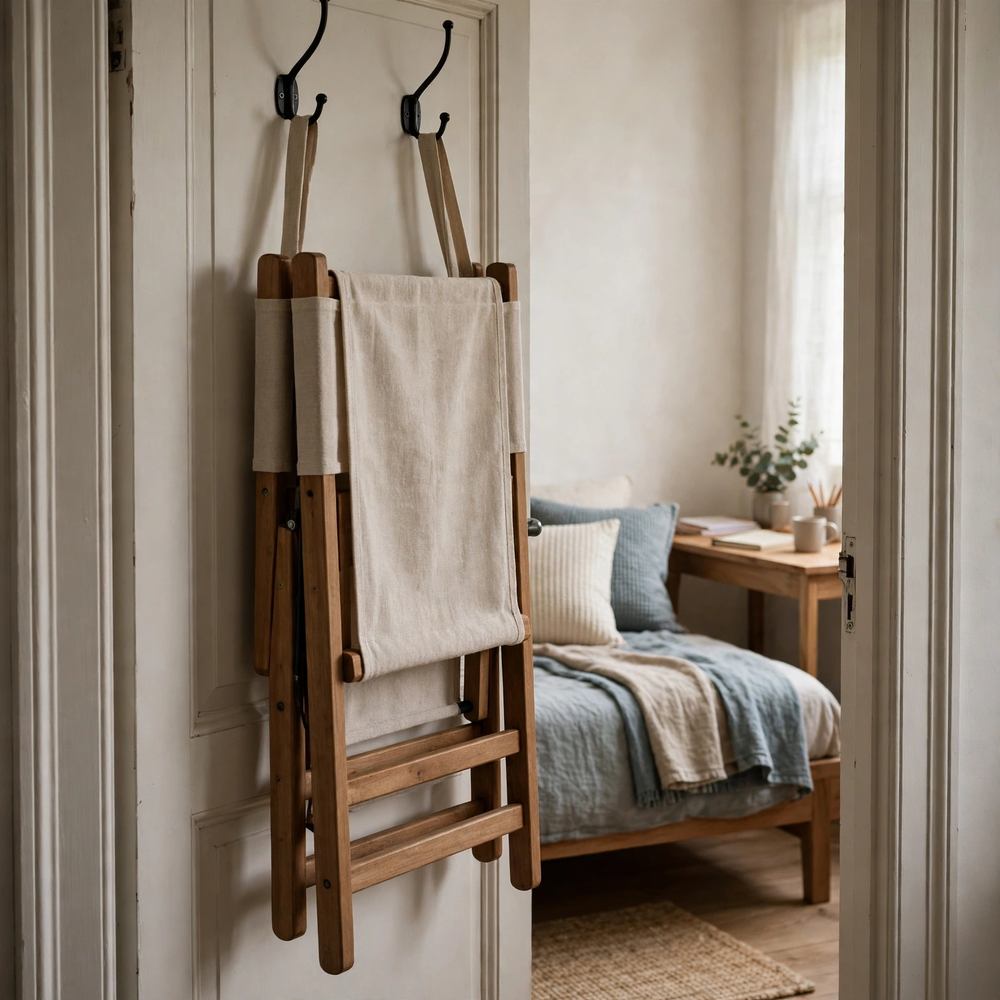
When two guests stay, a second chair can appear from nowhere if one hangs on hooks behind the door. The rest of the time it is invisible and uses no floor. Choose one with a padded seat, as it may be used for hours.
Best for:
- Invisible storage: Dead space behind the door works.
- Ready for company: Extra seating in ten seconds.
- Desk overflow: Helps when a partner works alongside.
Tip: Hang it legs-to-wall so it sits flat and never rattles.
29) One Colour Palette That Ties It All Together
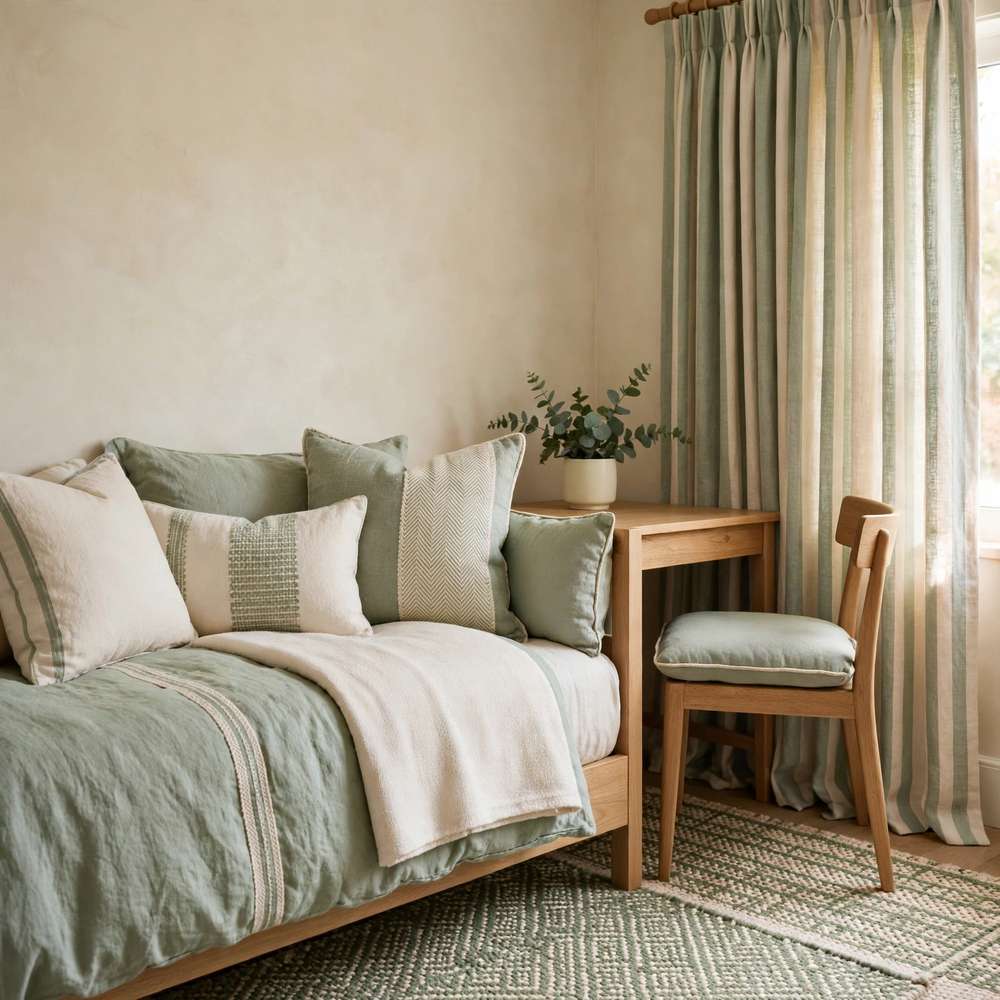
The final idea makes all the others look intentional. When bedding, cushion, rug and curtains share one palette, hard-working furniture reads as a single calm space. Pick two main colours and one accent, such as cream and sage with natural wood, and test every purchase against it.
Why it works:
- Instant calm: Matching tones rest even busy rooms.
- Easier shopping: The palette decides, buying takes minutes.
- Guest impression: Coordinated rooms feel like boutique stays.
Tip: Keep a photo of the room on your phone to check colours while shopping.
How to Get the Room Guest-Ready in 10 Minutes
The best dual-purpose rooms change roles faster than a guest can climb the stairs. Keep a routine: fold the desk away, clear the worktop into its drawer, fetch spare bedding from the ottoman, set out the welcome tray. Dressing the wall above the bed makes the biggest visual difference, and these over the bed decor ideas are full of quick ways to do it. Finish by airing the room, laying folded towels on the bed and standing the luggage rack in its corner. For more inspiration, The Spruce shares dozens of office guest room ideas showing the same tricks in real homes.
Simple Layout Rules for Small Dual-Purpose Rooms
A few layout rules keep any small room working. Keep the path from door to bed clear, so guests never shuffle past the desk at night. Put the bed against the longest wall and arrange everything else around it. Keep the desk near the window but never blocking it, because daylight does half the decorating in a small space. And measure twice: five centimetres too deep separates a room that flows from one that fights you. If you enjoy this kind of thinking, our easy home styling tips collect more small changes with an outsized effect.
Conclusion
A small spare room does not have to choose between being useful and being welcoming. With furniture that folds, rolls, hides and doubles up, the same few square metres can hold focused workdays and restful guest nights.
You do not have to try all 29 ideas at once. Start with one or two, perhaps an ottoman and calmer bedding. Each small change makes the next easier to imagine.
So pick the idea that solves your biggest frustration, and try it this weekend. Your guests, and your working self, will both be glad you did.


More Stories
25 Bedroom Rule of Three Ideas for a Designer Look
27 Kitchen Rule of Three Ideas for a Beautiful Space
28 Fall Outdoor Decorating Ideas for a Cozy Home