
Introduction
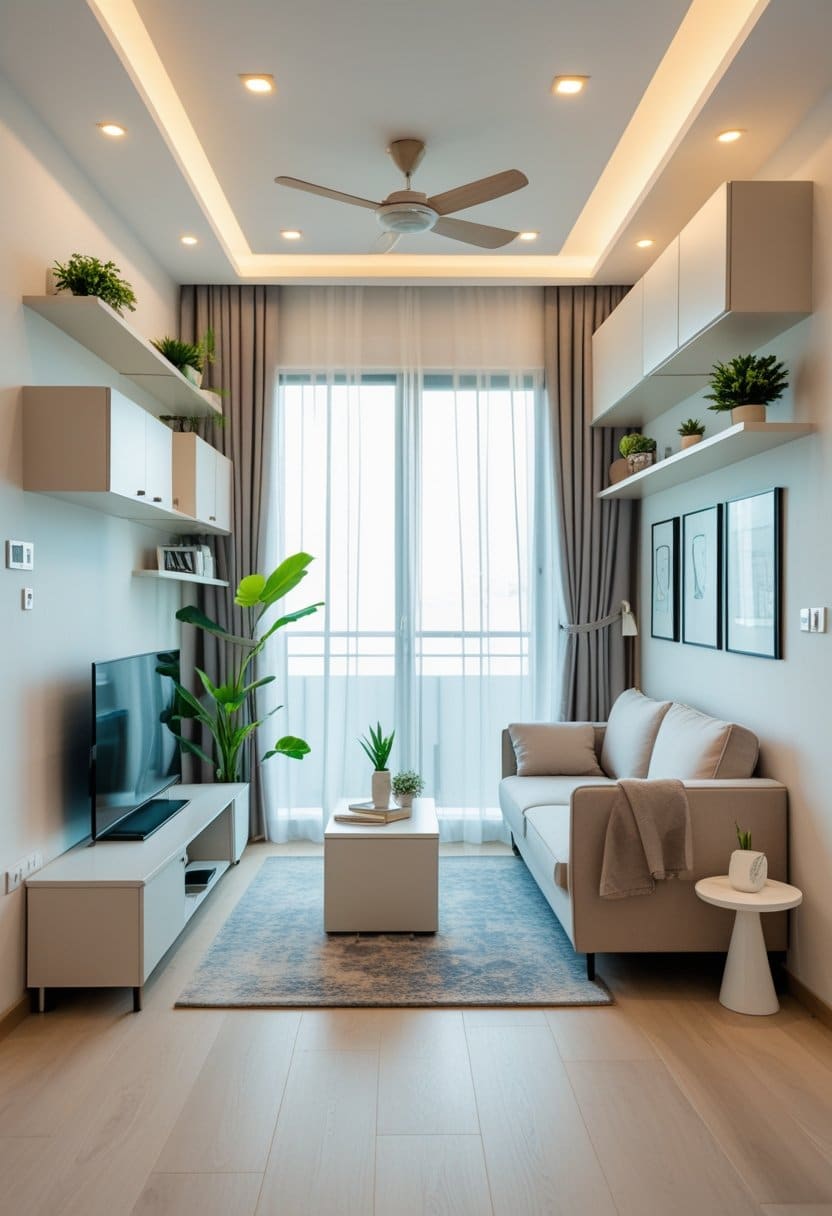
A small living room can feel tricky at first—where do you put everything, how do you keep it from feeling cramped, and how do you make it look stylish without clutter? The good news is that you don’t need extra square footage to get a comfortable, beautiful space. You need smart choices.
In this guide, you’ll find 21 Small Living Room Ideas to Maximize Every Inch—practical, real-life solutions that make your room feel larger, function better, and look more put-together. Each idea is simple enough for anyone to apply, even if you’re not into interior design.
1) Start With a Simple Layout That Protects Walkways
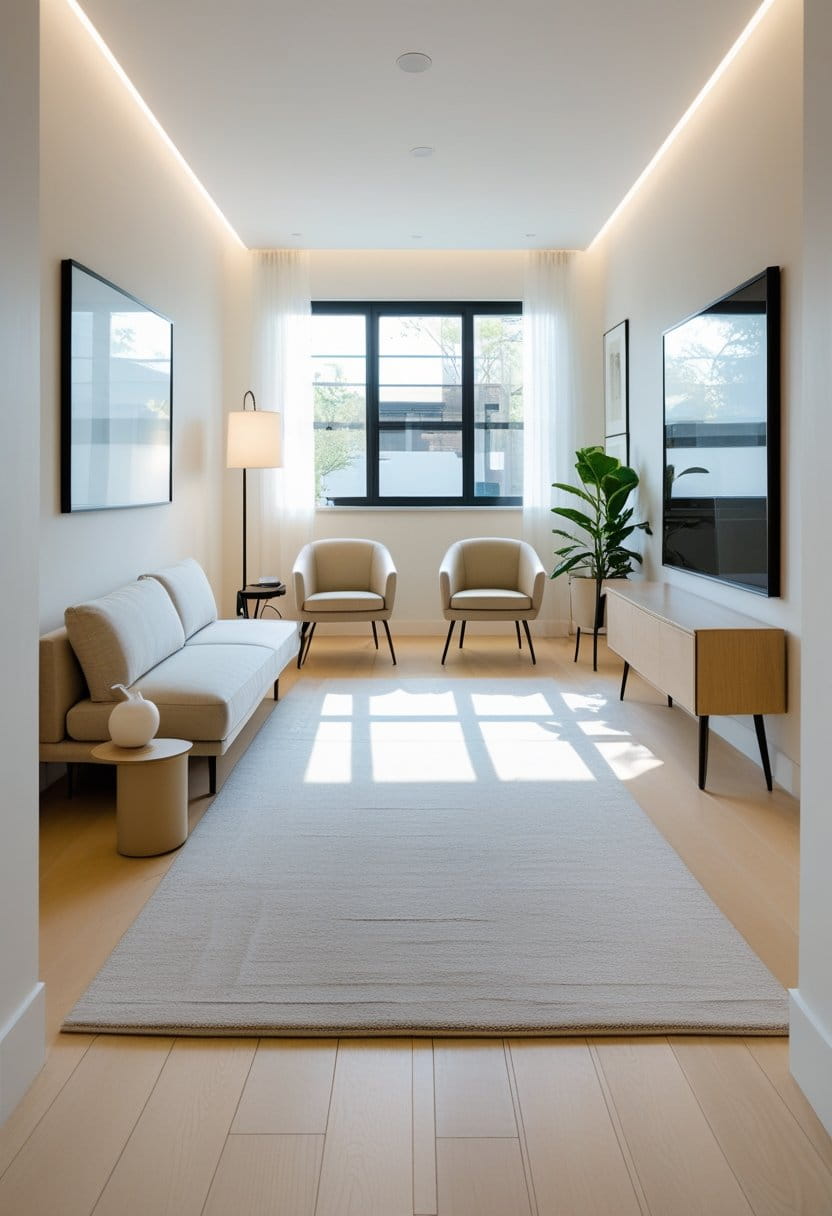
Before buying anything new, make sure the room “flows.” In a small living room, clear walking space matters more than extra furniture.
Try this quick rule:
- Keep main walkways about 30–36 inches wide when possible.
- Place the biggest item (usually the sofa) first, then build around it.
A helpful approach is to float fewer items in the middle and keep more along walls—unless you have an open-plan area that needs zoning (we’ll cover that soon).
2) Choose a Sofa That Fits the Room (Not Your Wish List)
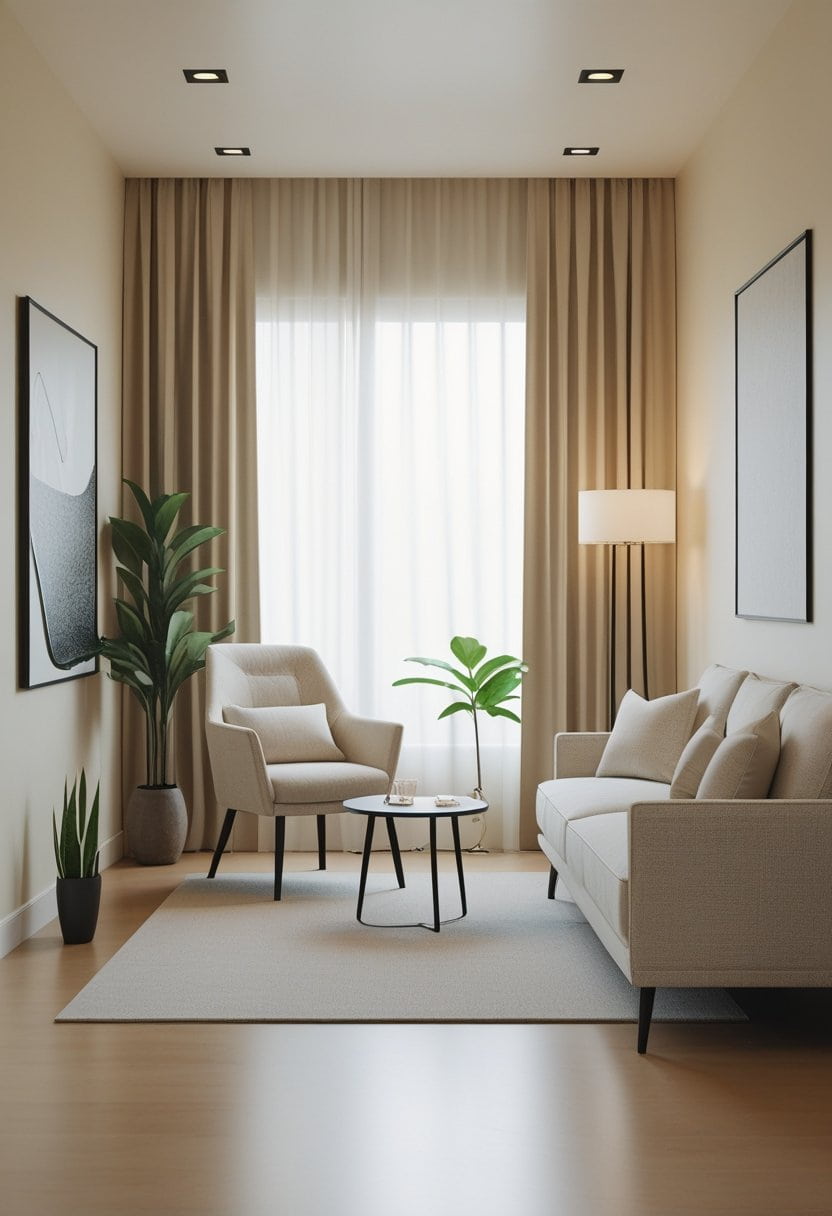
A too-large sofa can swallow a small room. Instead of picking the biggest one you can squeeze in, choose one that matches your space.
Look for:
- Slim arms (they save inches on both sides)
- Raised legs (you’ll see more floor, which feels airier)
- Clean, simple shape (less visual weight)
If you’re torn between a big sofa and a loveseat, consider a loveseat + accent chair combo—it often feels lighter and gives more flexibility.
3) Use Multi-Functional Furniture to Reduce “Extras”
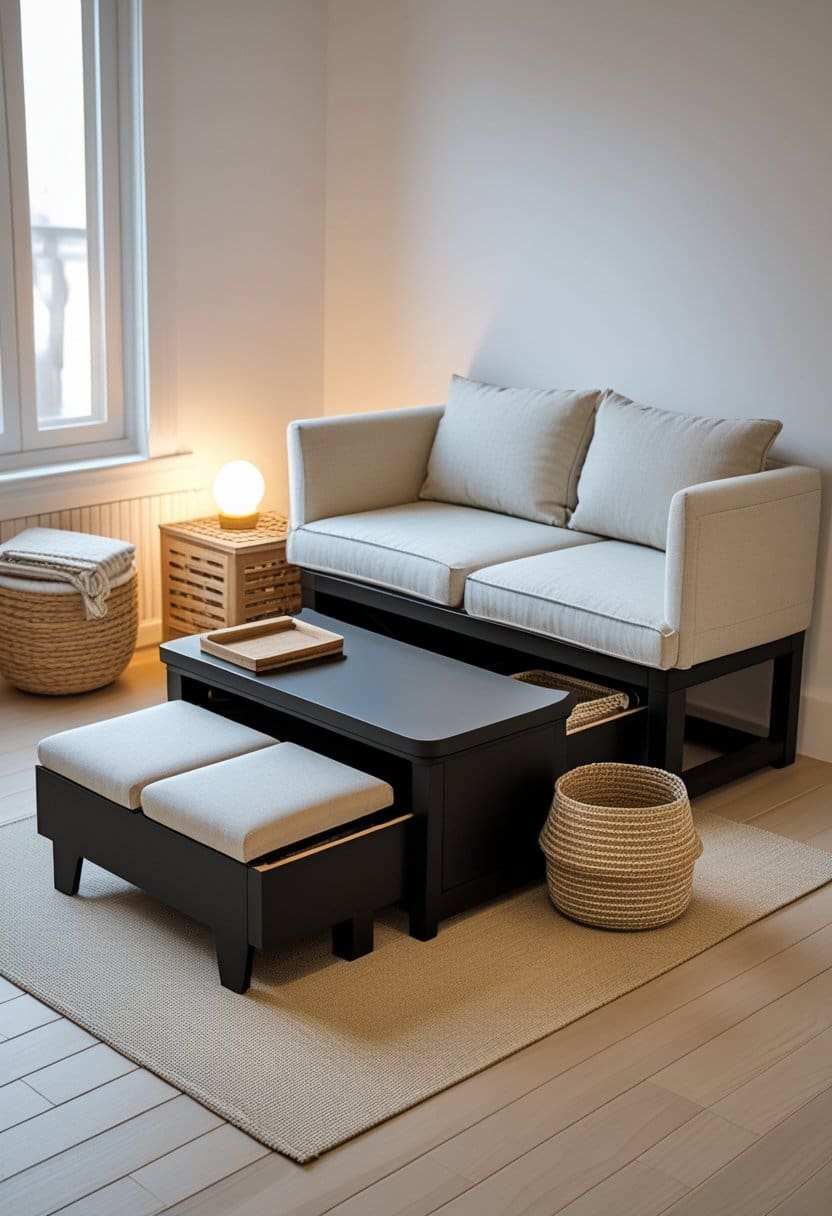
In small living rooms, furniture should earn its place. The easiest way to maximize space is to pick items that do two jobs.
Great options include:
- Storage ottoman (footrest + hidden storage)
- Nesting tables (extra surface only when needed)
- Coffee table with drawers or shelf
- Bench with storage baskets underneath
This reduces the need for extra cabinets or clutter-prone side furniture.
4) Go Vertical: Use Wall Space Like a Pro
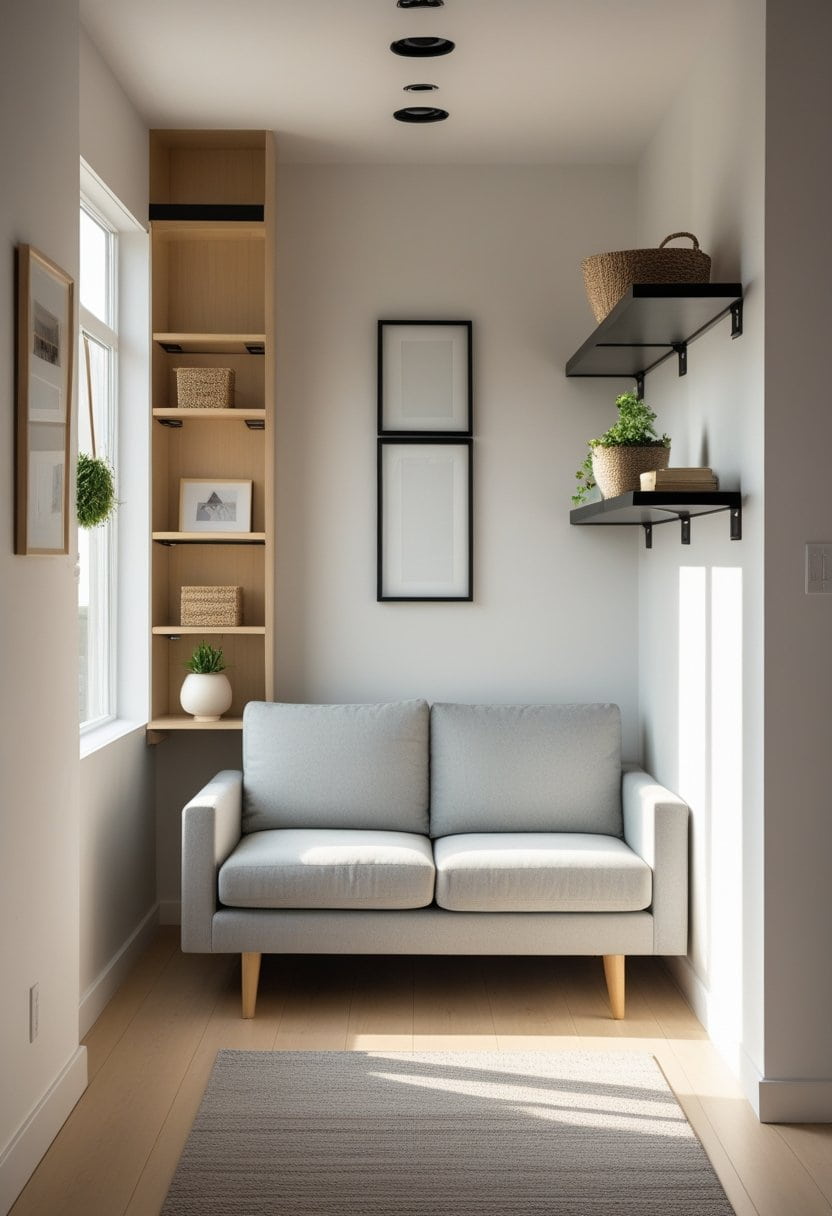
When floor space is limited, the walls become your best storage tool.
Ideas that work well:
- Floating shelves over the sofa or TV wall
- Tall bookcases (narrow but high)
- Wall hooks for baskets, hats, or light accessories
- Picture ledges that hold frames without needing a big gallery wall layout
Think “up,” not “out.”
5) Mount the TV (and Free a Chunk of Floor Space)
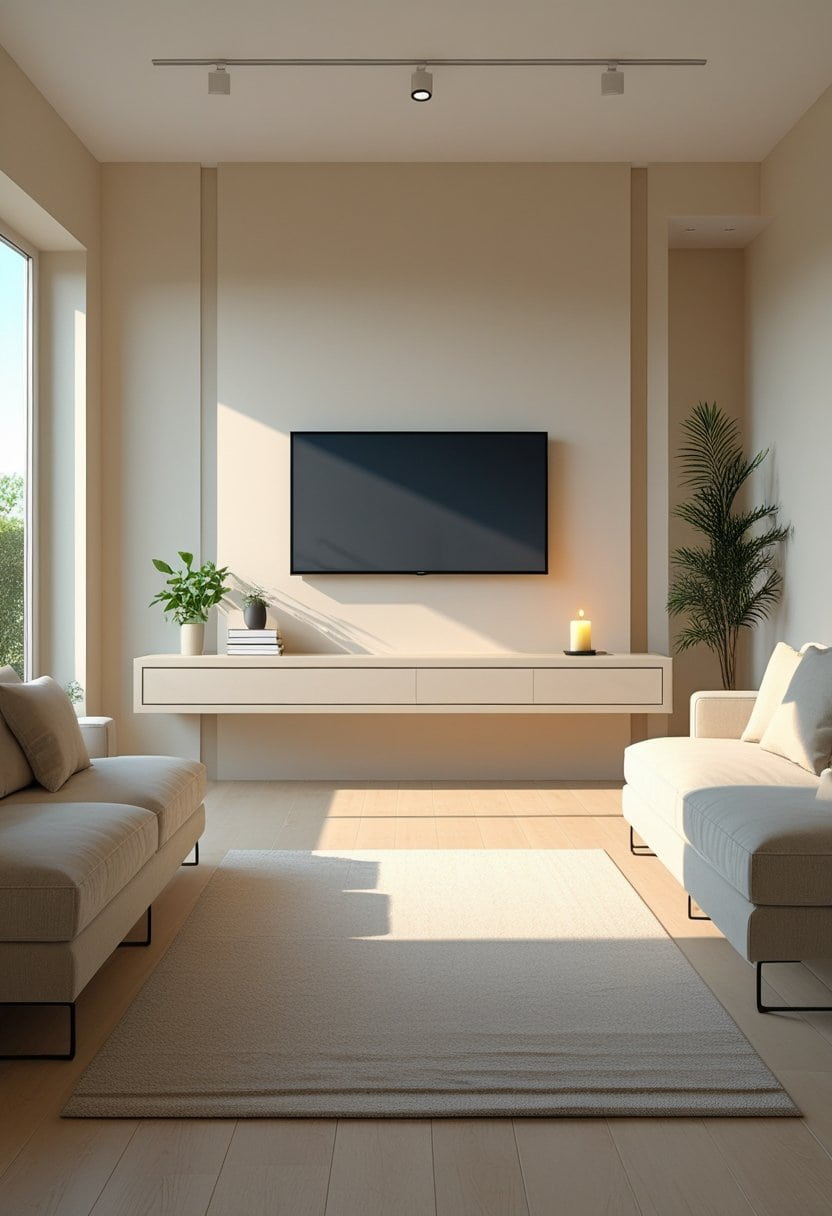
A wall-mounted TV can remove the need for a deep media unit. Even if you still want storage, you can choose a slimmer floating console instead of a bulky cabinet.
Bonus benefits:
- The room looks cleaner
- Cords can be managed and hidden more easily
- Your furniture options open up
If wall mounting isn’t possible, choose a narrow console and keep the surface mostly clear.
6) Pick a Rug That’s the Right Size (Yes, It Matters)
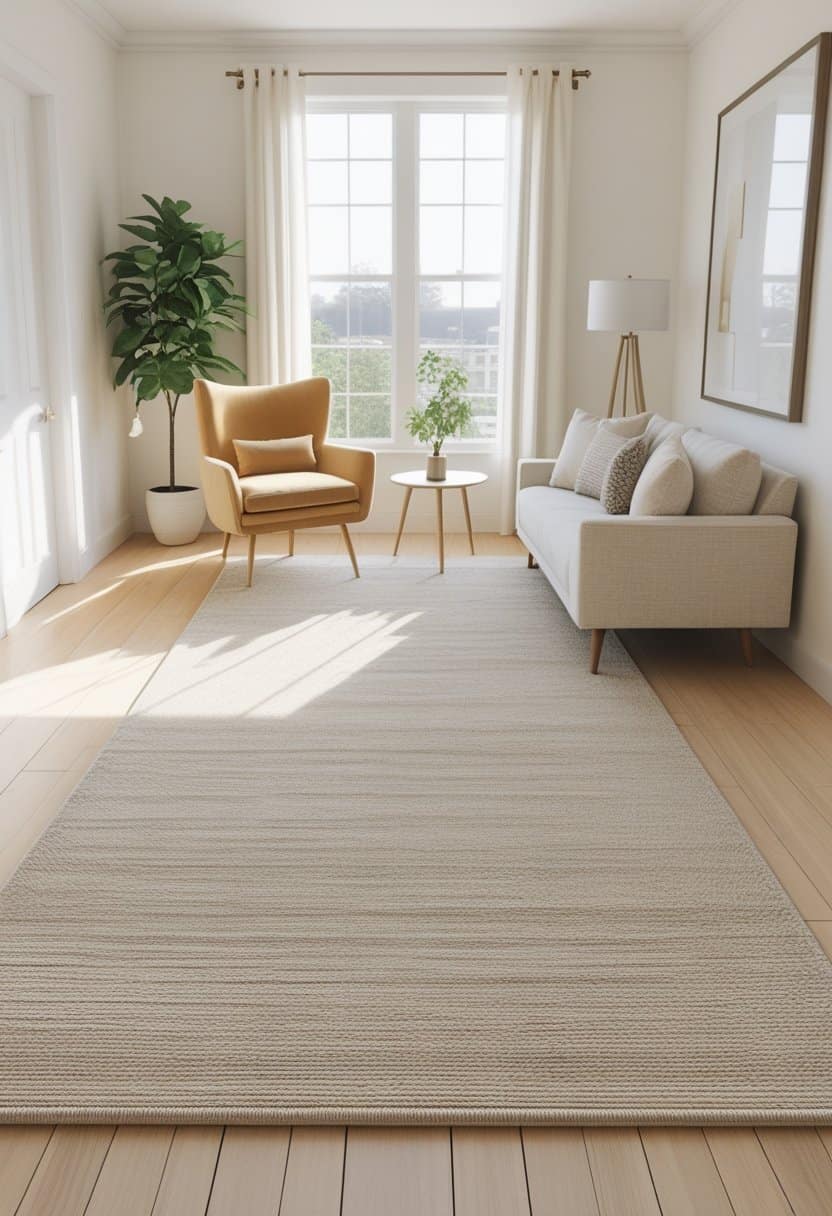
Many small rooms feel even smaller because the rug is too tiny. A small rug makes furniture look squeezed together.
A better approach:
- Choose a rug big enough that front legs of the sofa and chairs sit on it
- If the room is very tight, at least the sofa’s front legs should touch the rug
A properly sized rug visually “stretches” the seating area and makes the room feel more complete.
7) Use Light Colors to Make the Room Feel Open
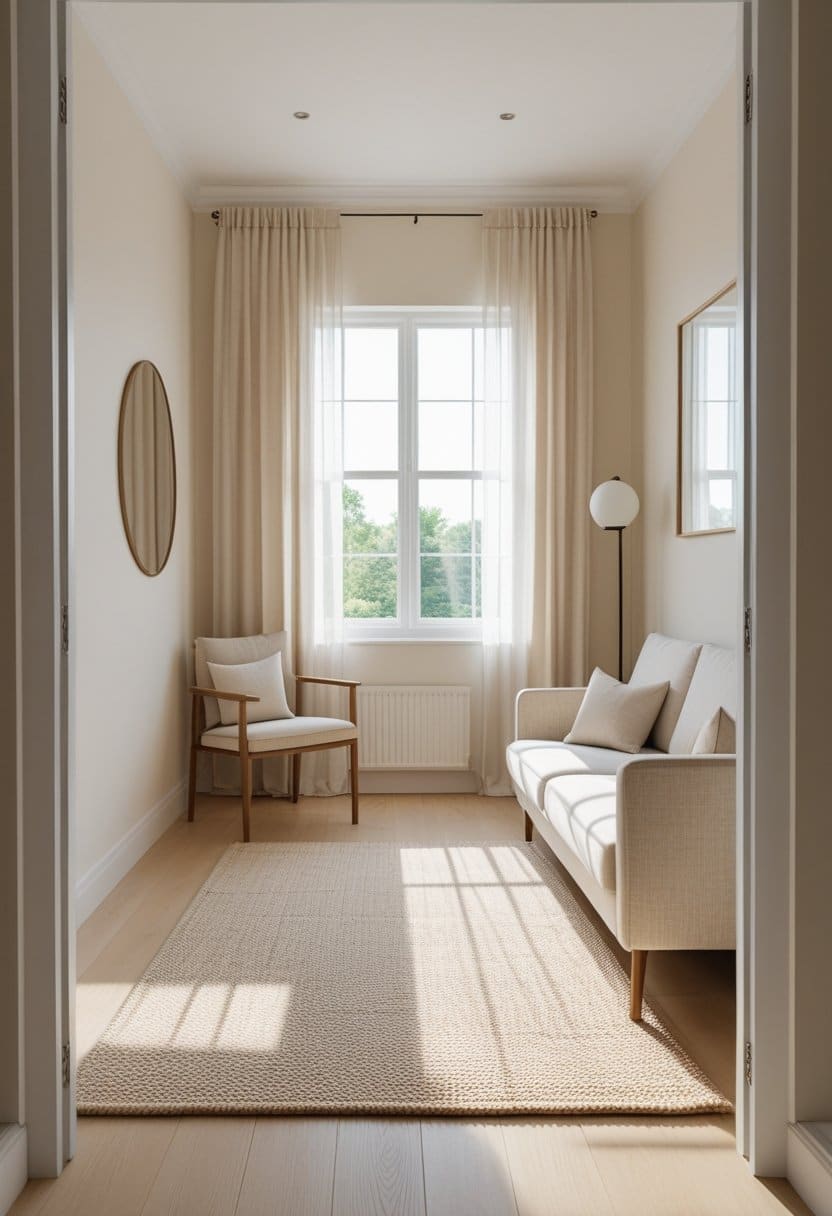
Light colors reflect more light, which helps small rooms feel brighter and larger.
You don’t have to go all white. Consider:
- Warm off-white
- Soft beige
- Light greige
- Pale gray
- Muted pastels
If you love bold color, use it as an accent (pillows, art, a single chair) instead of painting every wall dark.
8) Add One Mirror in the Right Spot
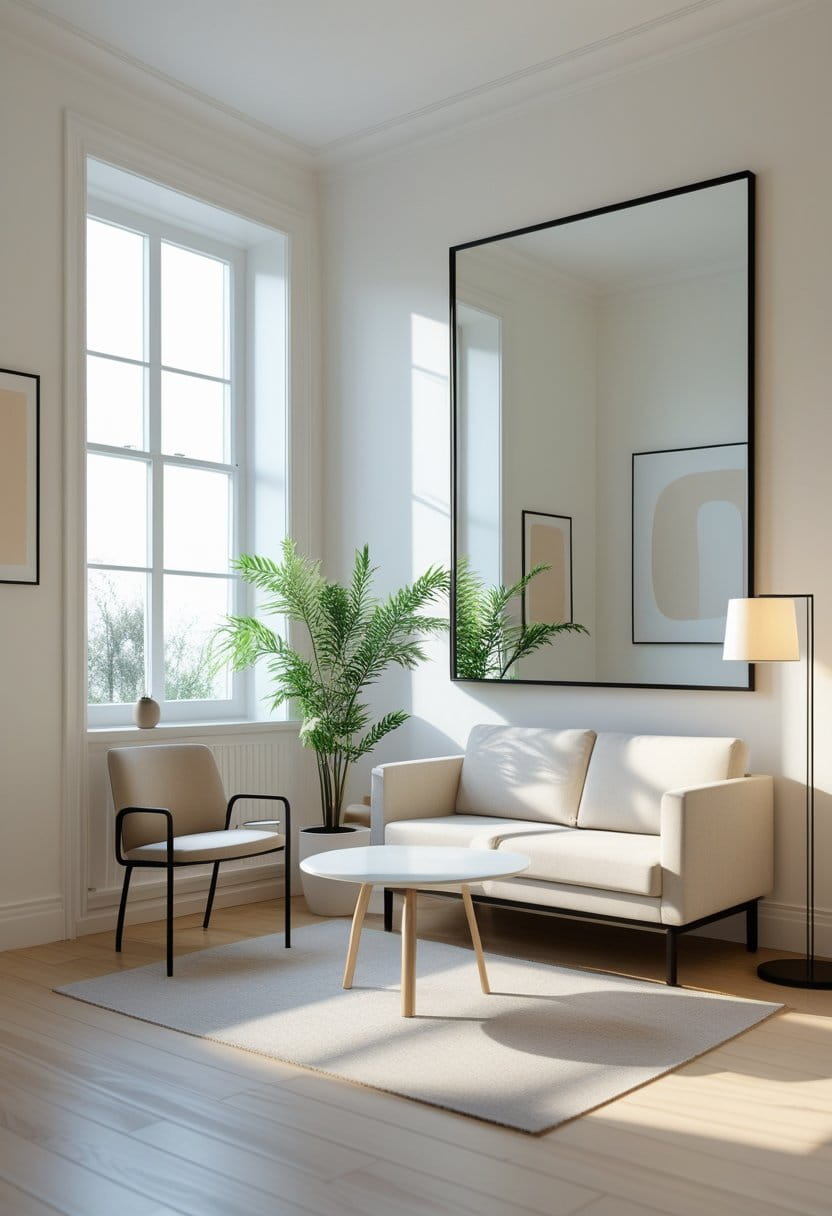
A mirror can make a small living room feel bigger because it reflects light and creates depth.
Best placements:
- Across from a window (reflects natural light)
- Behind a lamp (boosts brightness at night)
- On the longest wall (adds a sense of width)
Keep it simple: one well-placed mirror often works better than several small ones that look busy.
9) Choose Curtains That Create Height
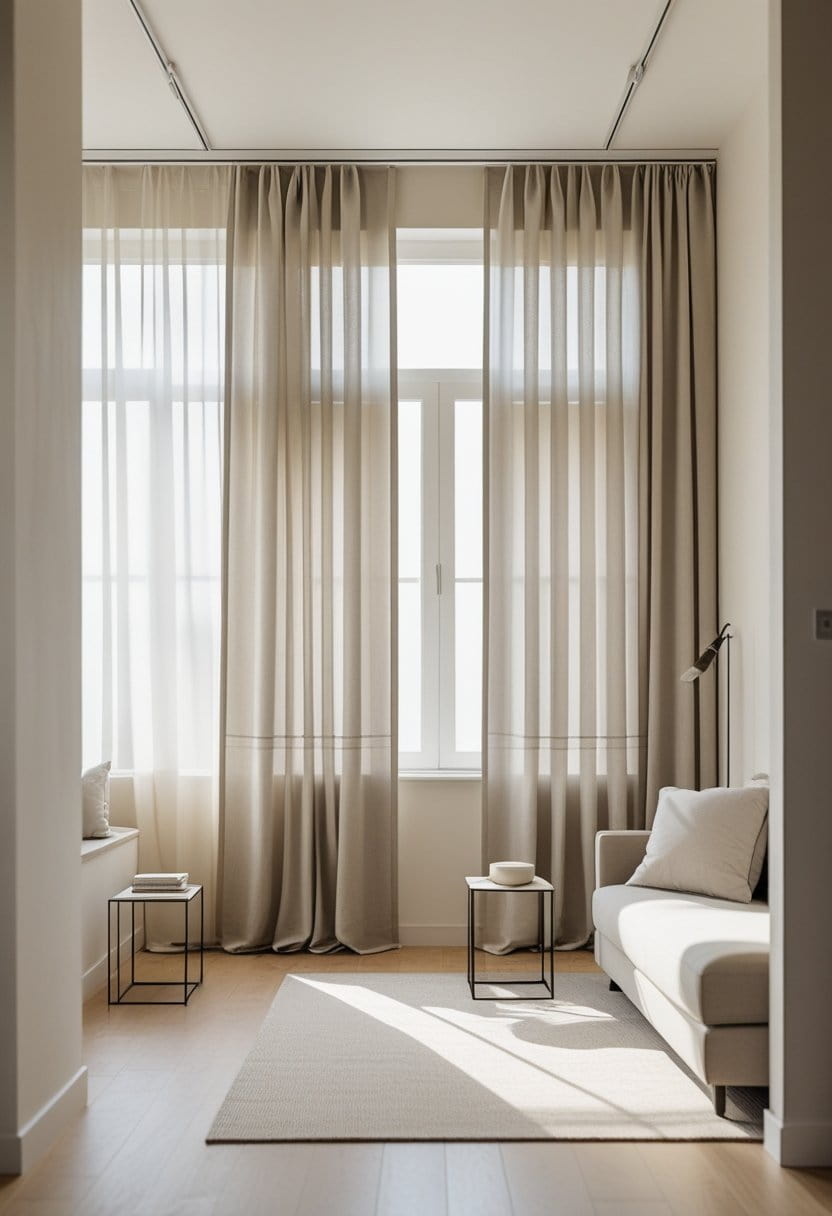
Short curtains or curtains hung too low can make a ceiling feel shorter. A small trick can change the whole vibe:
Do this:
- Hang the rod closer to the ceiling
- Let curtains fall to the floor
This creates vertical lines that make your room feel taller. If privacy isn’t a big issue, sheer curtains can keep things light and airy.
10) Replace Bulky Side Tables With Slim Alternatives
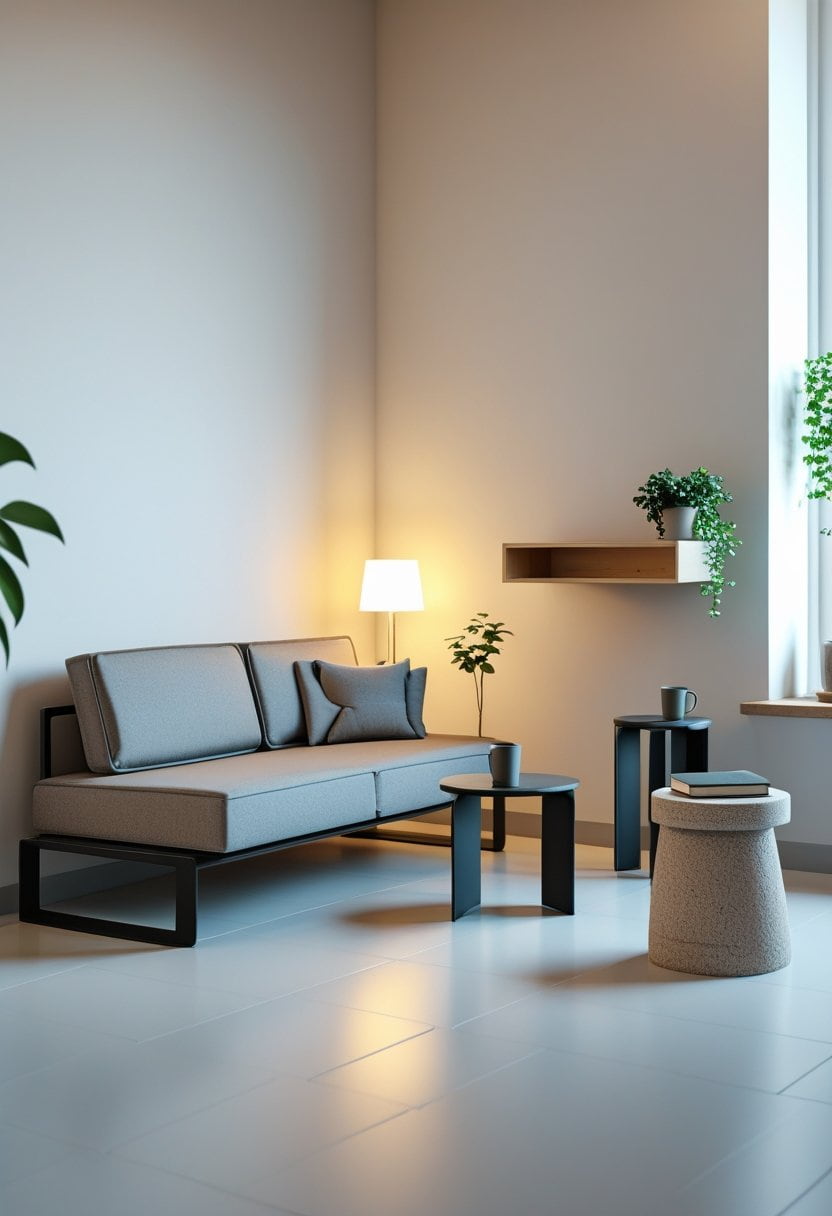
Traditional side tables can take up more space than you realize. In small rooms, try options like:
- C-shaped tables that slide under a sofa
- Wall-mounted shelves as “mini side tables”
- Narrow pedestal tables
- A small stool that doubles as a table
This keeps essentials (phone, tea cup, remote) nearby without crowding the floor.
11) Use Lighting to Make the Room Feel Bigger
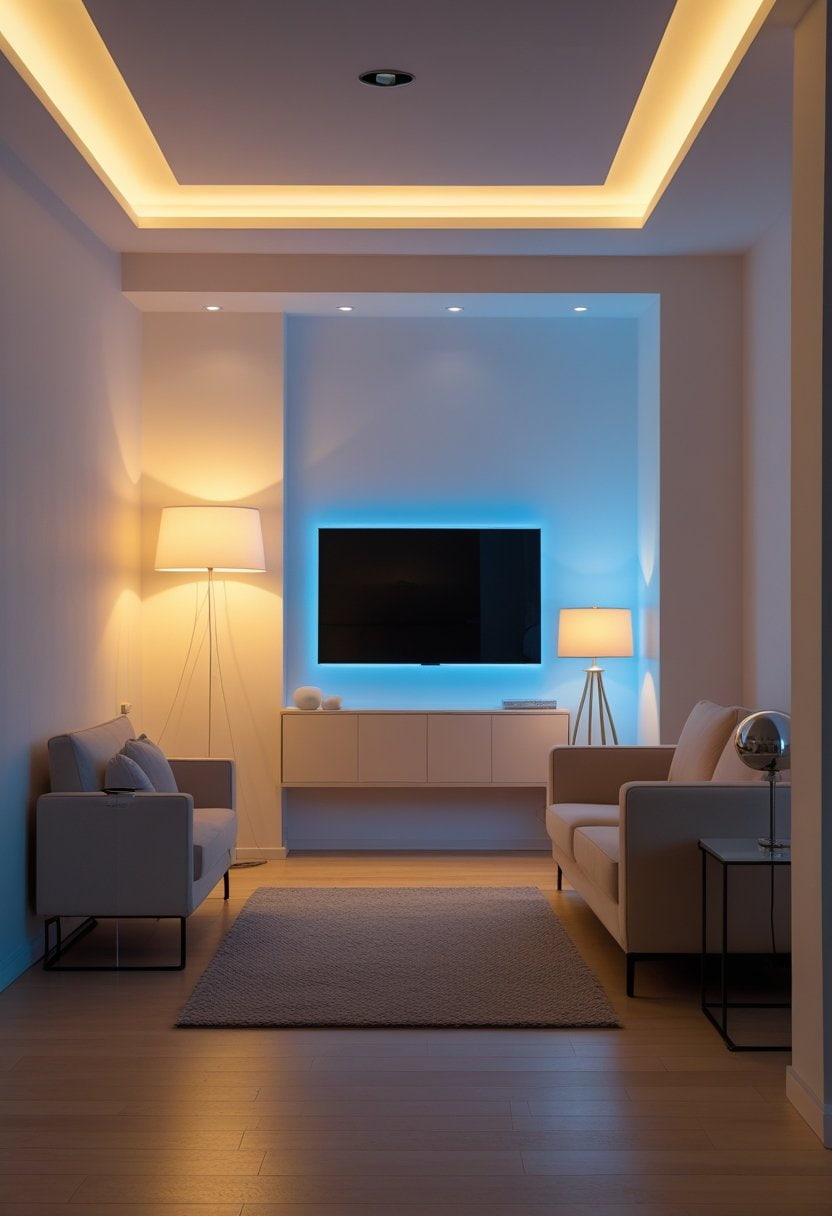
A single ceiling light can leave shadows, and shadows make rooms feel smaller. Better lighting makes everything feel more open.
Try layering light:
- Overhead light for general brightness
- Floor lamp for corners
- Table lamp for warmth
- Optional: LED strip behind TV for soft glow
Fact you can use confidently: LED bulbs use far less energy and last much longer than old-style incandescent bulbs, so you can brighten the space without worrying as much about frequent replacements.
12) Keep the Coffee Table Small—or Skip It
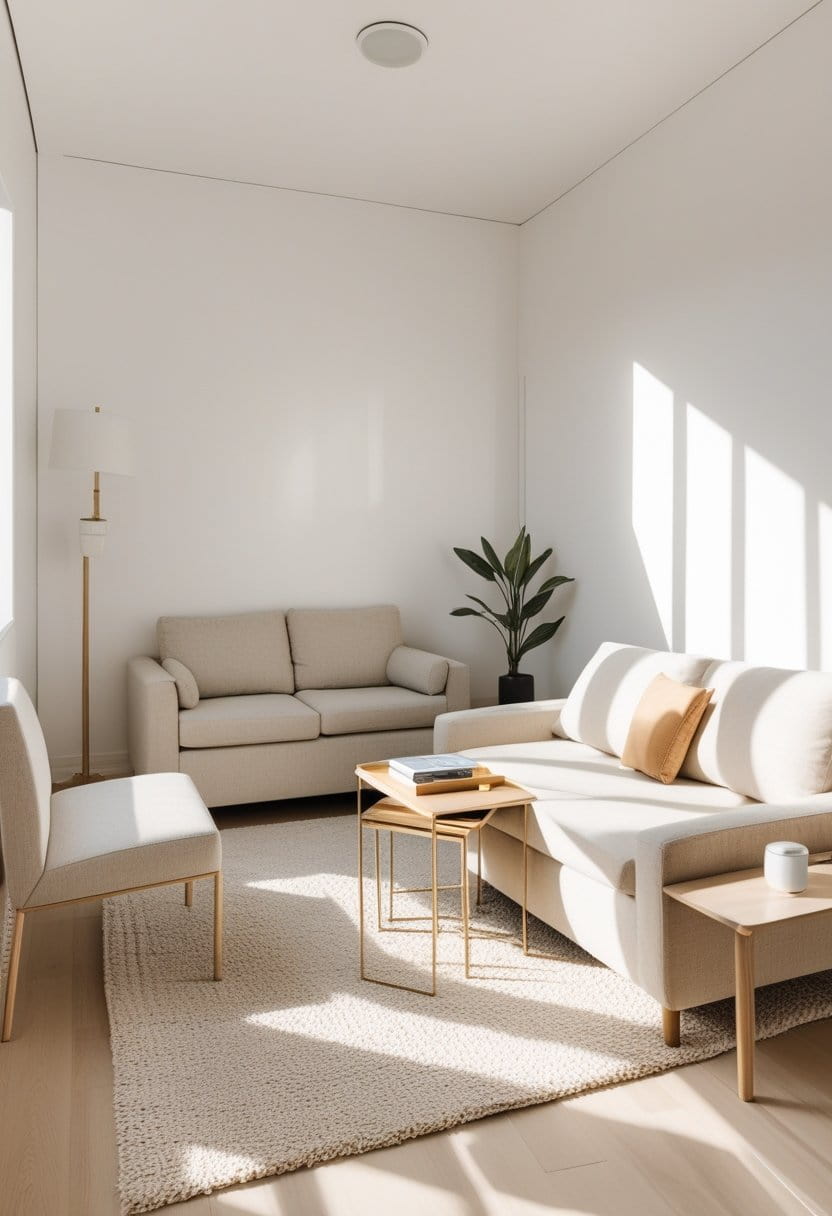
If your living room is tight, a big coffee table may block movement.
Smart alternatives:
- Two small nesting tables
- A round coffee table (easier to walk around)
- A storage ottoman with a tray on top
- No coffee table, just a side table and a small stool
If you keep a coffee table, aim for enough space to pass comfortably around it.
13) Create Storage With Baskets (Without Making It Look Like Storage)
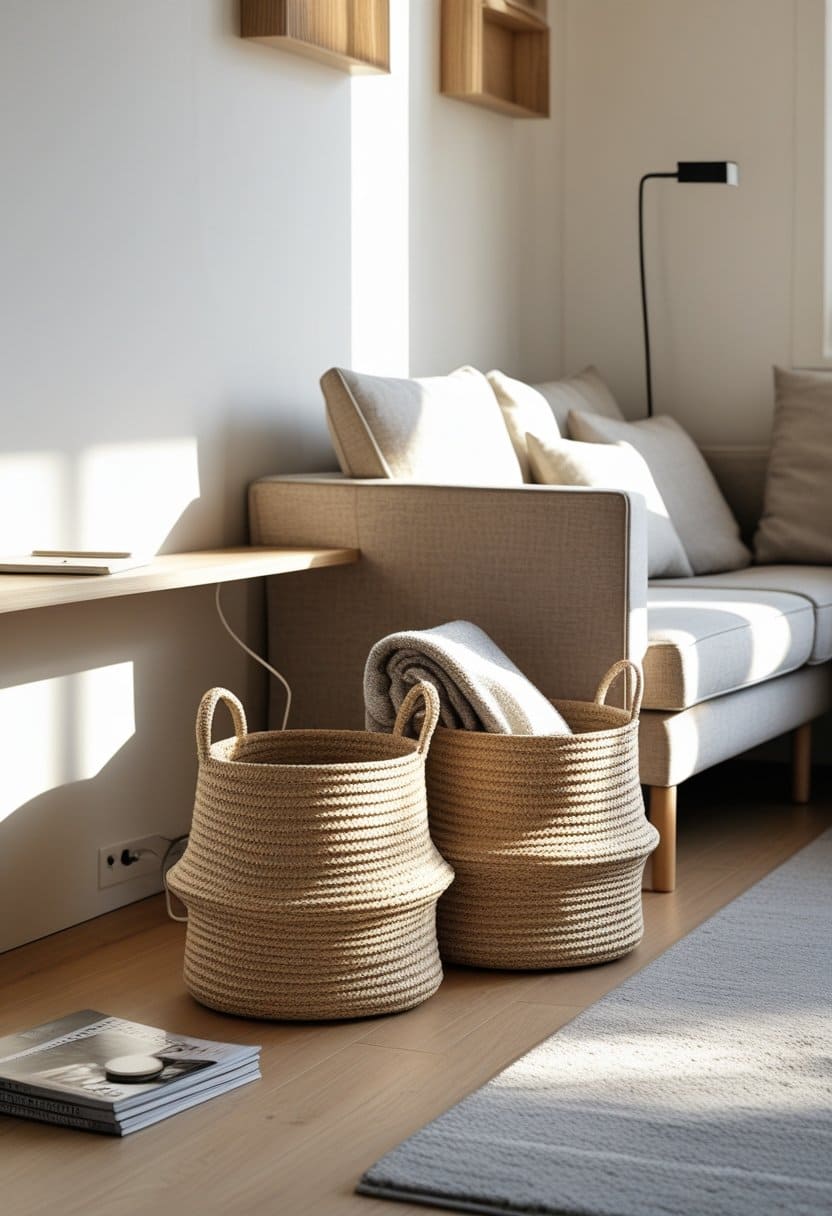
Baskets are a simple way to hide clutter while keeping the room cozy.
Use them for:
- Throw blankets
- Toys
- Extra chargers and cables
- Magazines
- Remote controls
Best tip: Choose matching or coordinated baskets so it looks intentional, not messy.
14) Use Furniture With Legs to “Show More Floor”
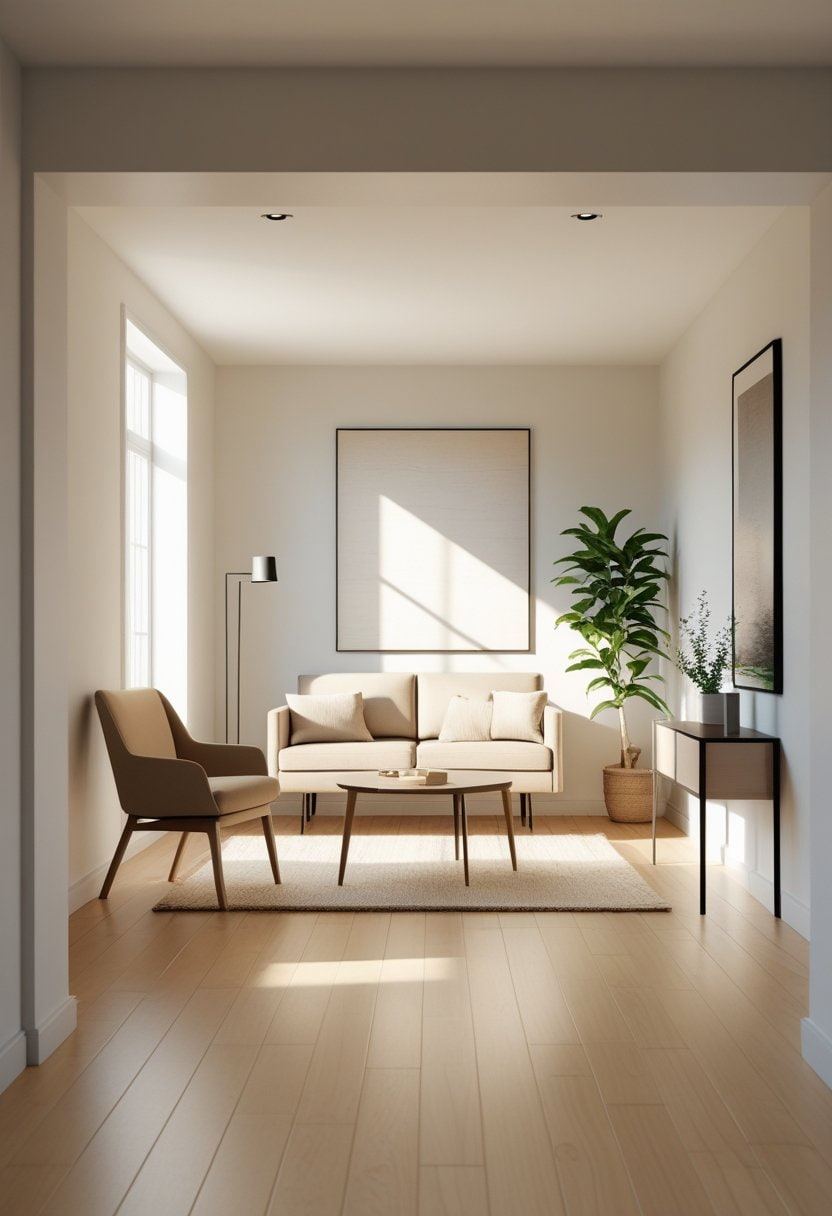
This is one of the easiest visual tricks. When furniture sits directly on the floor (especially bulky pieces), the room can feel heavier.
Try:
- Sofa with raised legs
- Chairs with open bases
- Console with slim legs
Seeing more floor creates the illusion of more space—without changing anything else.
15) Keep Decor in a Tight Color Palette
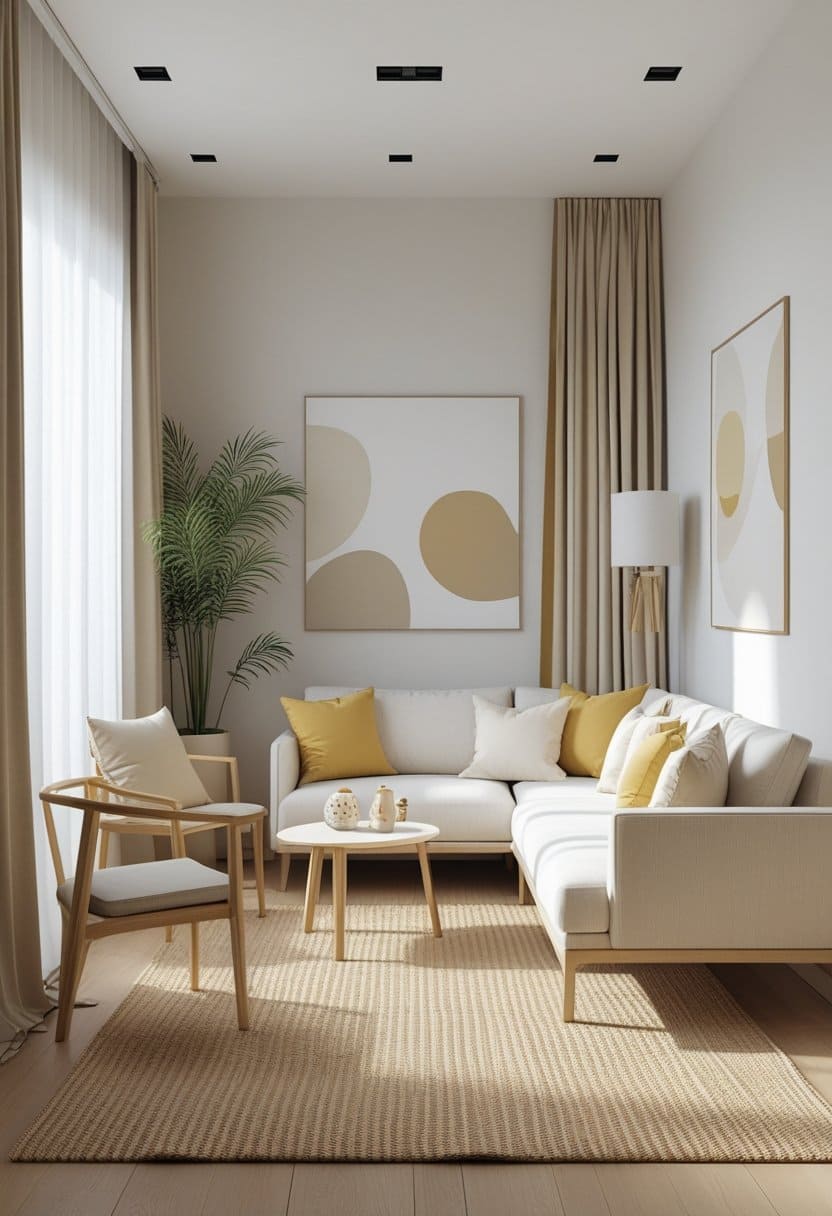
Too many colors in a small space can feel chaotic. A limited palette looks calmer and more spacious.
Simple formula:
- 1 main color (walls + large items)
- 1 secondary color (rug, curtains, chair)
- 1 accent color (pillows, art, small decor)
This makes the room feel “designed,” even if the furniture is basic.
16) Use One Statement Piece Instead of Many Small Ones
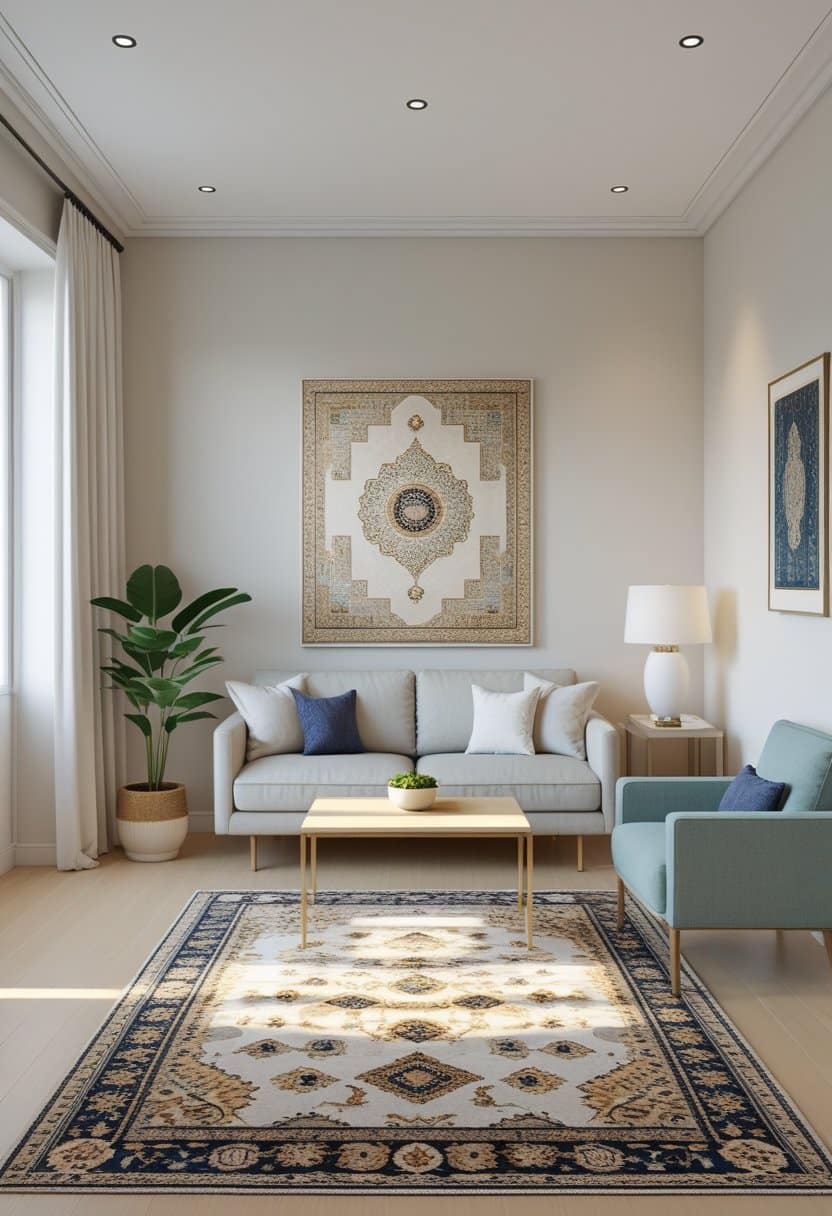
Small decor items can create visual clutter. Instead, choose one “wow” element:
- A large artwork
- A bold rug
- A standout light fixture
- A single accent chair
This gives the eye a focal point, which makes the room feel more organized and less crowded.
17) Try a Corner-Friendly Seating Setup
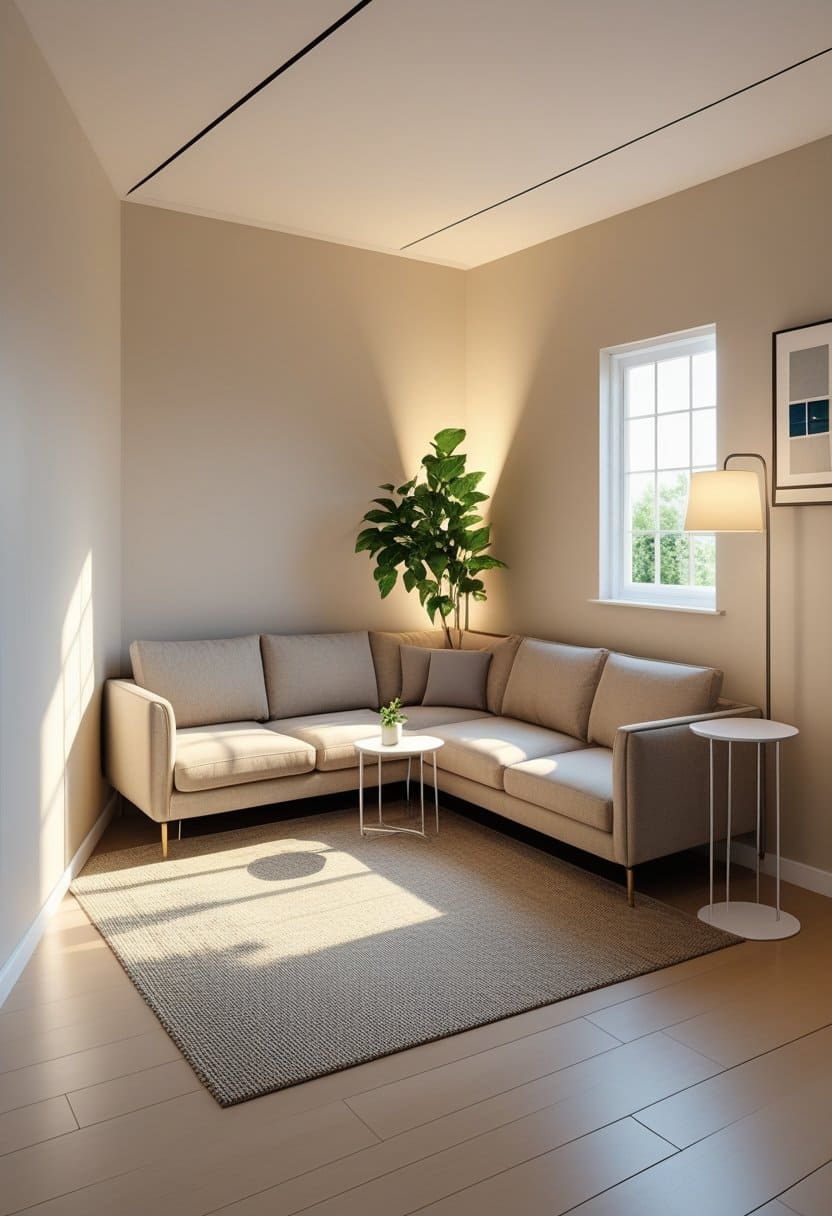
Corners are often wasted space. Use them intentionally:
- L-shaped sectional (only if it’s properly scaled)
- Two chairs angled toward each other
- A loveseat with a slim side table tucked in
If you use a sectional, keep the rest of the furniture minimal so the room doesn’t feel packed.
18) Zone the Room (Especially in Open-Plan Homes)
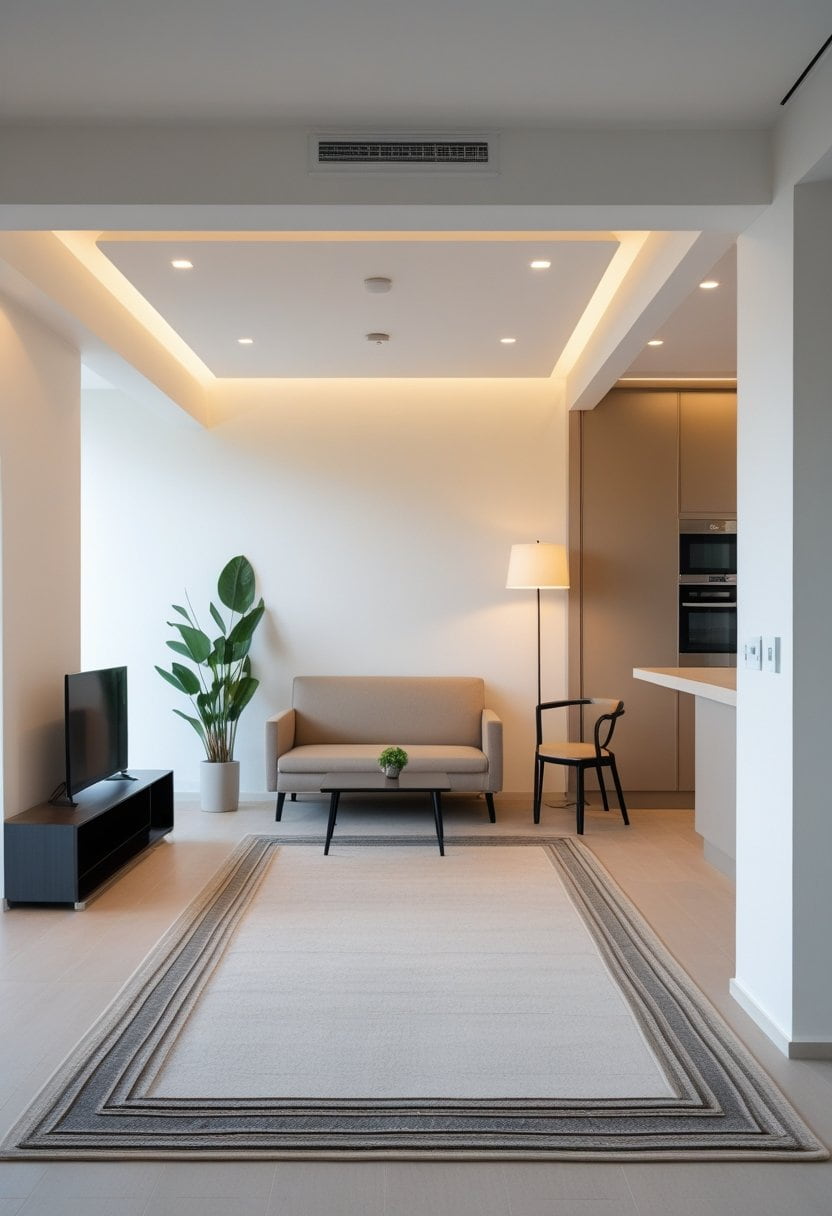
If your small living room is part of a larger open area, zoning helps it feel purposeful.
Easy zoning tools:
- Rug to define the seating area
- Sofa facing inward instead of toward the kitchen
- Narrow console behind sofa to create a boundary
- Floor lamp or plant as a “soft divider”
Even in a tiny space, zoning can make it feel more functional and planned.
19) Add a Floating Shelf Desk or Slim Console for Extra Function
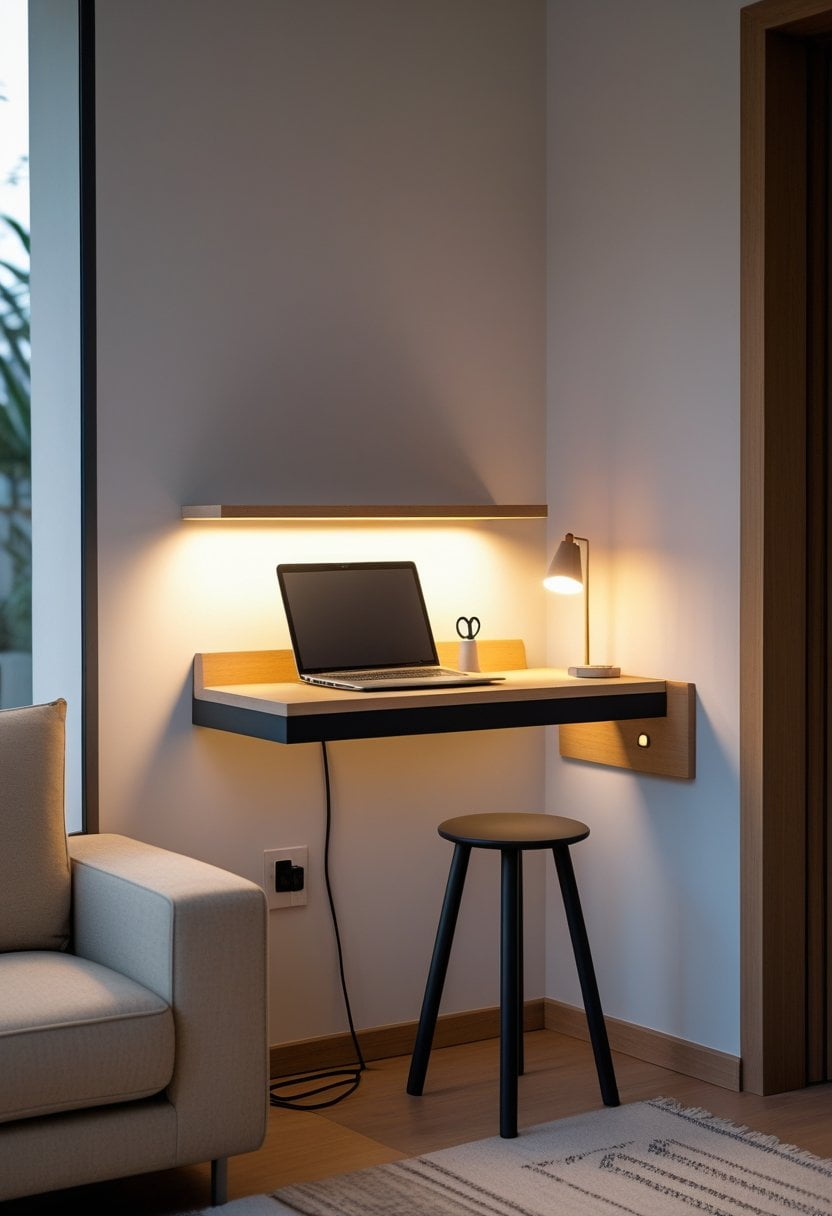
If your living room also needs to act like a mini office or entry space, don’t add a full desk. Add a floating shelf or slim console instead.
You can use it as:
- Laptop spot for quick work
- Key-drop station
- Extra surface for decor or a lamp
Keep it shallow so it doesn’t steal walking space.
20) Control Clutter With a “Daily Reset” Spot
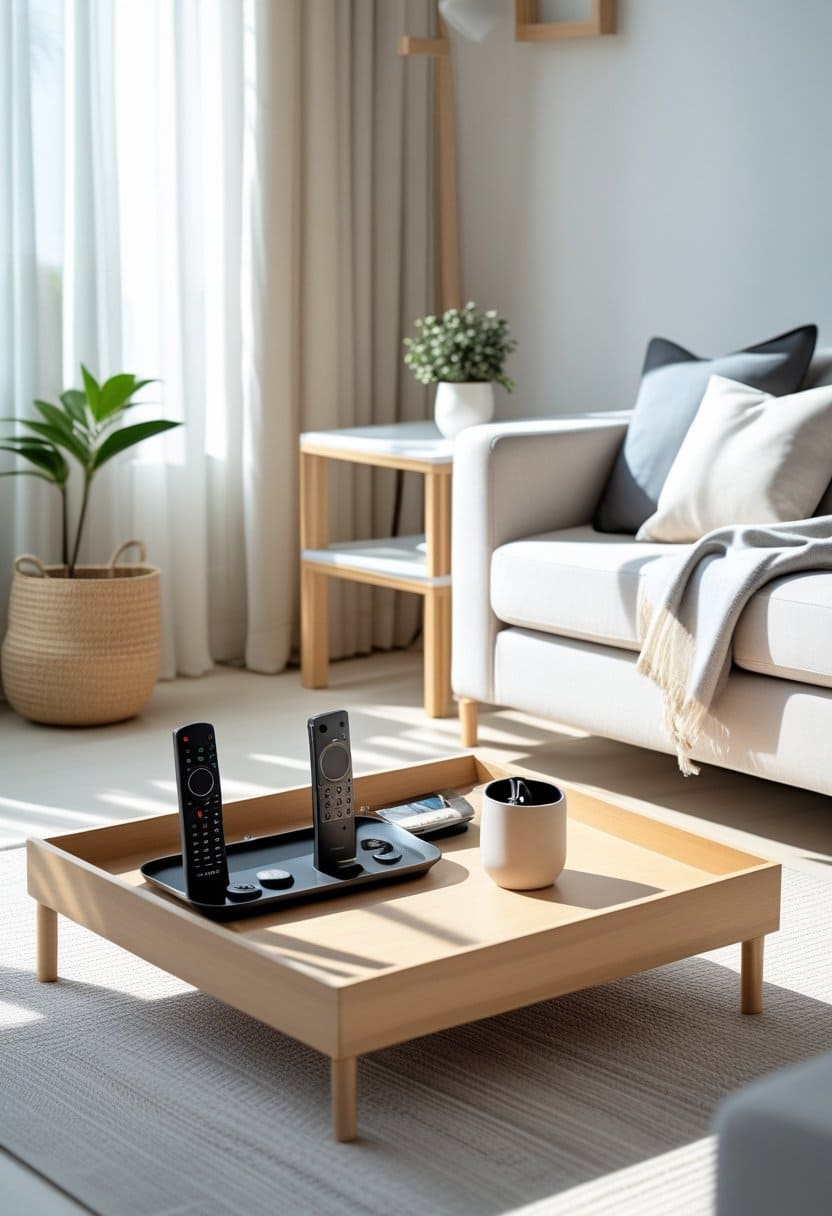
A small living room can go from neat to messy fast. Give clutter a home.
Create one simple reset system:
- A tray for remotes and small items
- One basket for random daily stuff
- A small lidded box for chargers
If everything has a place, the room stays visually calm—and small spaces love calm.
21) Edit the Room Like a Stylist
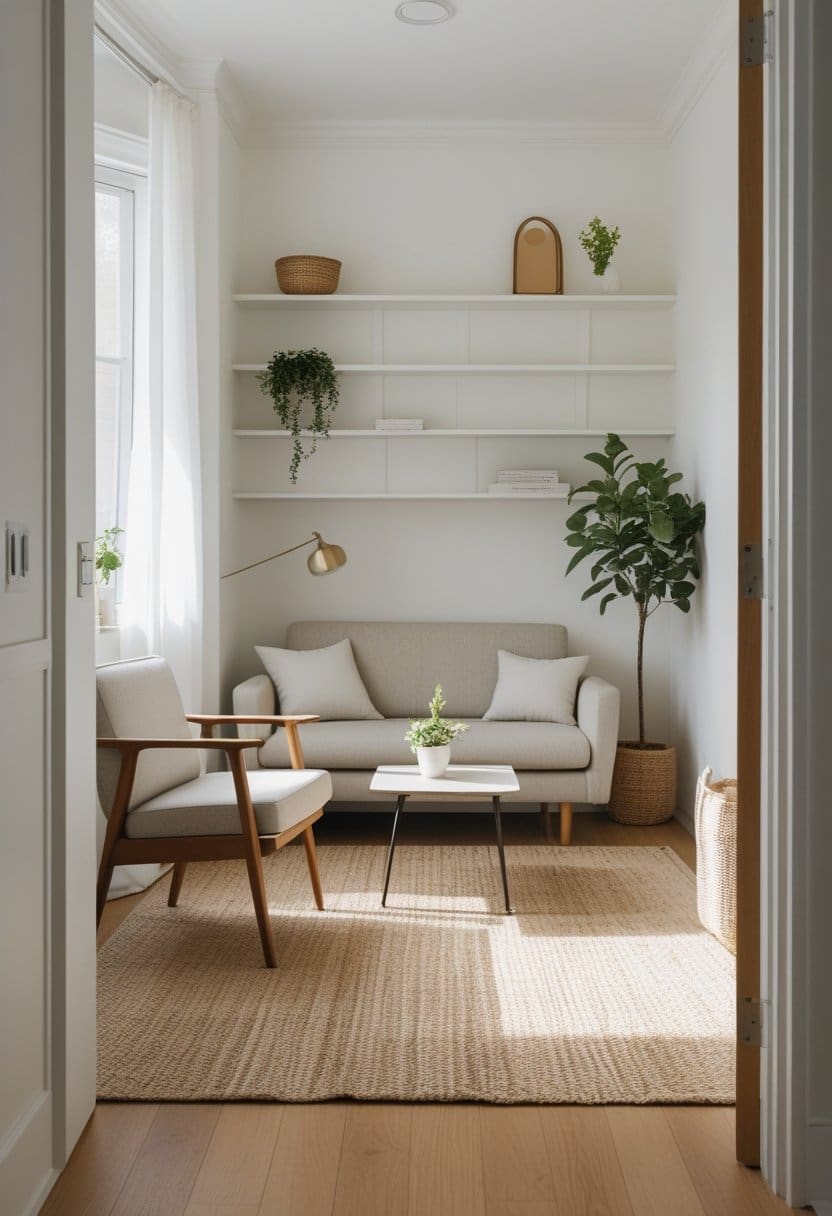
This is the final and most powerful step: remove what you don’t truly need.
Ask yourself:
- Do I use this weekly?
- Does it improve comfort or function?
- Does it make the room look better?
If the answer is “no,” it may be taking space from something more important. Often, the best small-living-room upgrade is simply less stuff.
A Simple Example Setup That Works in Most Small Living Rooms
Here’s a practical combination that suits many small spaces:
- Slim-arm loveseat or compact sofa
- One accent chair (or two small chairs if space allows)
- Round coffee table or storage ottoman
- Wall-mounted TV or slim media console
- One large rug that anchors all front legs
- One mirror across from a window
- Two lighting sources (ceiling + lamp)
- One basket for blankets and extras
This setup feels open, comfortable, and easy to maintain.
Conclusion
You don’t need a bigger home to enjoy a better living room. With the right layout, smart furniture choices, and a few space-stretching tricks, you can create a room that feels open, cozy, and genuinely useful.
If you apply even 5–7 ideas from this list, you’ll notice a big difference. And if your goal is truly to maximize space, remember this: small rooms don’t need more things—they need better decisions.
If you want, I can also write a short “shopping checklist” of what to look for (sizes, shapes, and materials) when buying furniture for a small living room.


More Stories
23 Homemade Christmas Ornament Ideas You’ll Love
30 Festive Christmas Wall Decoration Ideas to Make Your Home Feel Magical
23 Moody Blue Bathroom Ideas That Bring Calm and Timeless Style