
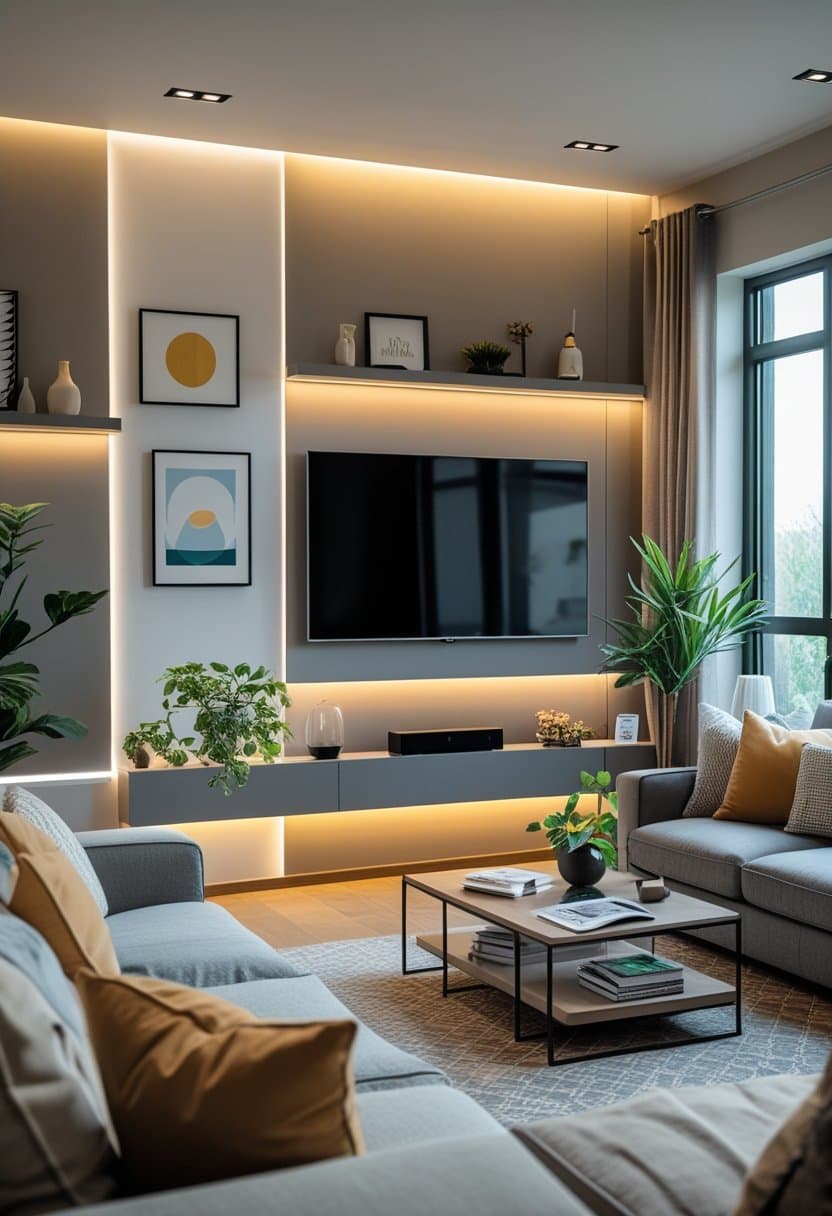
Introduction
A living room TV wall does more than hold a screen. It sets the visual “anchor” of the room, influences where people sit, and can either calm the space or make it feel busy. The best results come from balancing three things: comfort, proportions, and storage.
This guide delivers exactly what you searched for: 19 Living Room TV Wall Inspirations And Layout Tips—written in simple, practical language so anyone can plan a TV wall that looks intentional, hides clutter, and feels comfortable for everyday viewing.
Start With Comfort: The 3 Measurements That Prevent Regret
Before picking materials or décor, lock in comfort. Most “TV wall fails” happen because the screen is too high, too far, or placed where glare ruins the picture.
1) Mounting height (avoid “too high” fatigue)
A widely used rule is to place the center of the TV close to seated eye level, which for many living rooms lands around 42–48 inches from the floor to the screen center.
2) Viewing angle (reduce neck strain)
THX guidance suggests keeping your line of sight roughly aligned with the screen center, aiming for about 15 degrees or less above or below the center.
3) Screen size vs seating distance (make it feel immersive, not tiny)
Instead of guessing, use field-of-view logic (commonly referenced by THX/SMPTE-style guidance): bigger screens feel better when your seating distance supports them.
Quick practical check:
- Sit where you normally watch.
- Look straight ahead (not up).
- If your eyes naturally land around the middle of where the TV will be, you’re close to a comfortable height.
Plan the Wall Like a Designer: A Simple 5-Step Layout
Use this fast framework before you choose an “inspiration style.”
- Choose the focal wall (the one you see first when entering, if possible).
- Decide your TV position: centered, offset, or corner—based on seating and windows.
- Decide storage level: none, light, or heavy (more storage = easier to stay tidy).
- Select a “backdrop” material: paint, paneling, stone-look, plaster, wallpaper, or slats.
- Add soft balance: lighting, art, plants, and texture so the screen isn’t a black rectangle floating on a wall.
1. The Centered Minimalist Wall
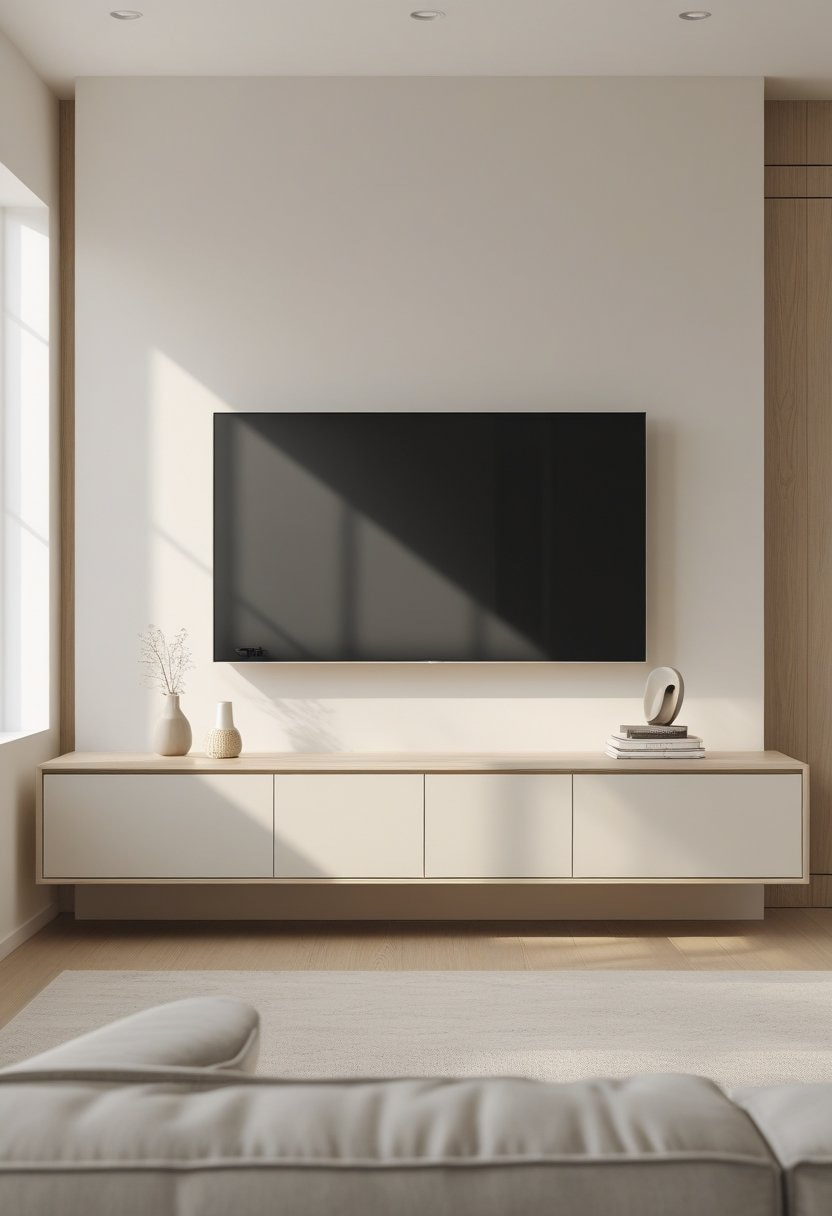
This is the cleanest, most timeless option: TV centered, simple console below, nothing fussy.
Why it works: it looks calm and makes furniture placement easy.
Do this well:
- Use a low console wider than the TV (visually stabilizes the screen).
- Hide cables inside the wall or a paintable cable channel.
- Keep décor to 3–5 items max on the console.
Best for: modern, Scandinavian, small-to-medium rooms.
2. The “Floating Console” Look
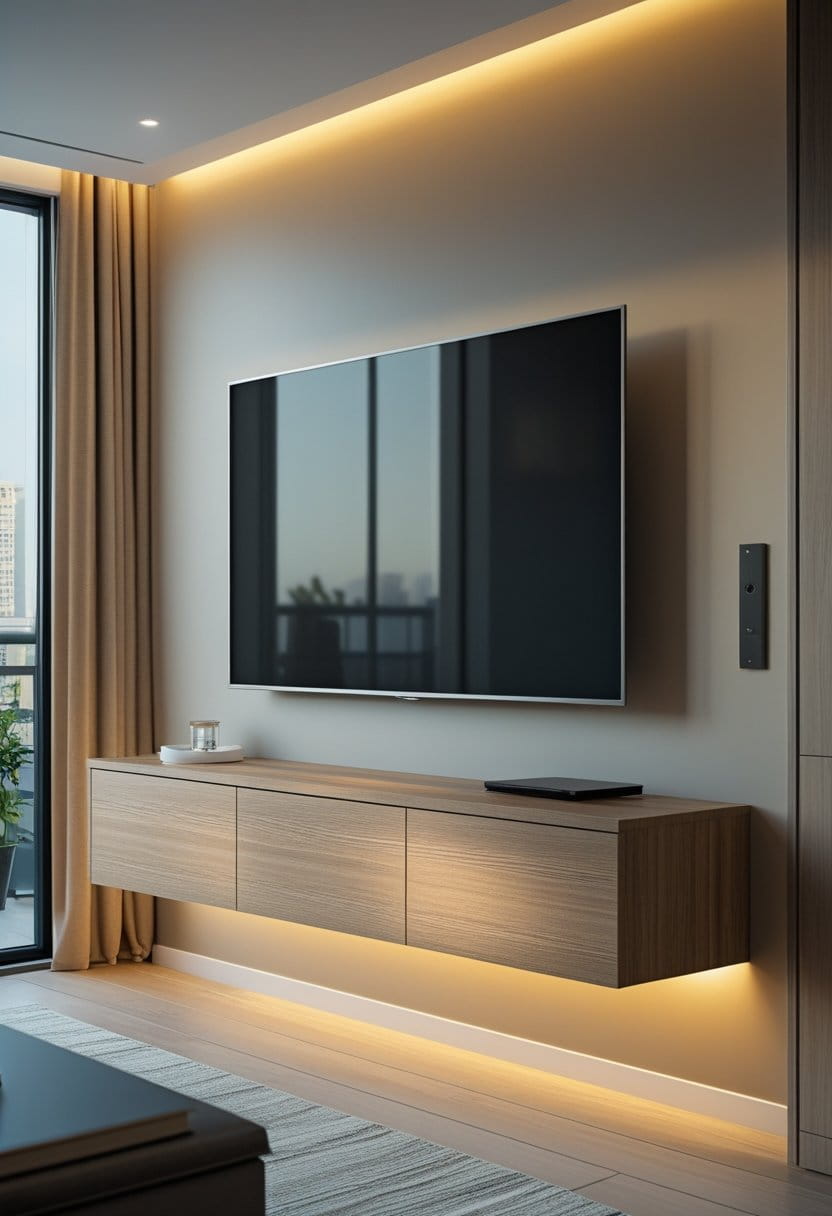
Mount a slim cabinet on the wall under the TV so the floor stays open.
Why it works: it feels spacious and modern, and cleaning becomes easier.
Tips:
- Choose a cabinet with closed doors to hide remotes and chargers.
- Keep 6–10 inches between TV bottom and cabinet top for breathing space.
- Add an LED strip under the cabinet for a “floating” glow.
3. Full Media Wall With Built-In Storage
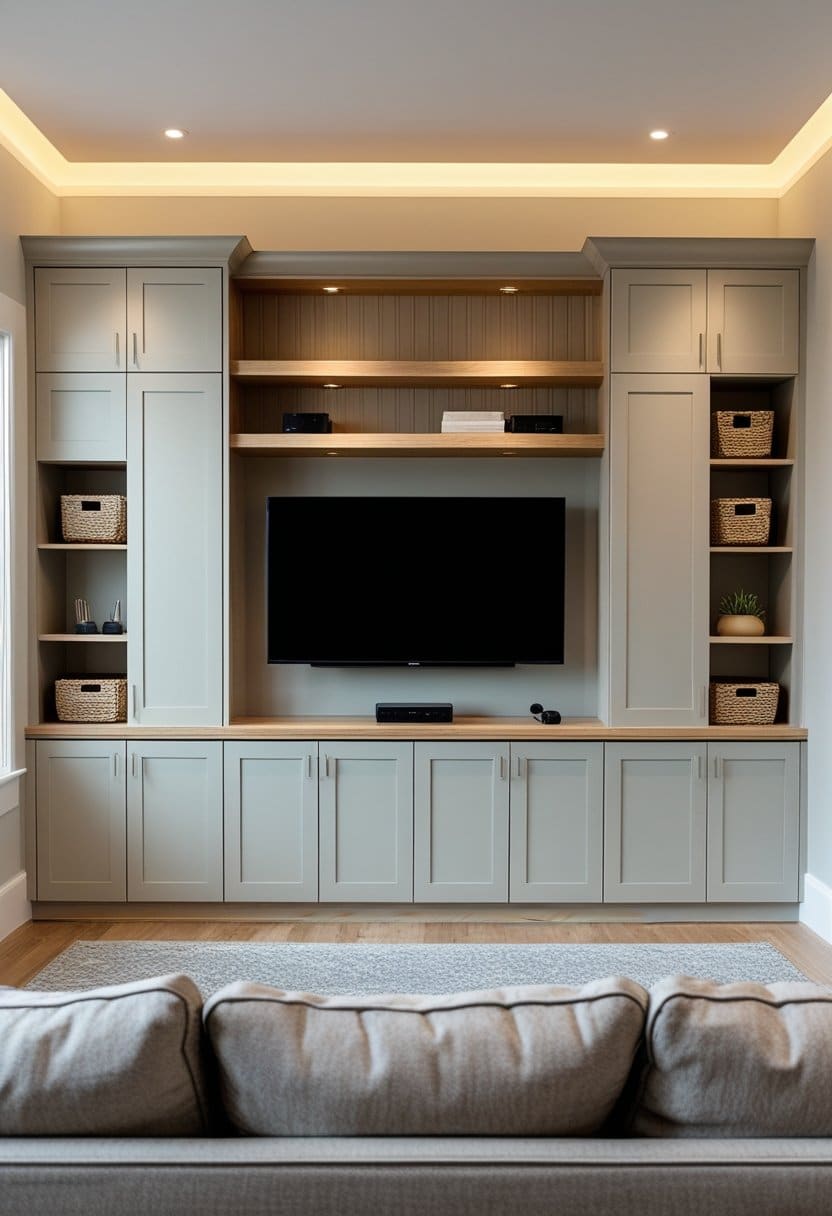
A full media wall frames the TV with cabinets and shelving.
Why it works: it solves clutter and makes the TV feel integrated—not like an afterthought.
Great storage zones:
- Closed cabinets for messy items (routers, controllers, board games)
- Open shelves for books, baskets, and décor
- A tall side cabinet for cleaning supplies or extra throws
Keep it looking expensive: repeat one finish (wood tone or paint color) across all pieces.
4. Vertical Slat Panel Feature Wall
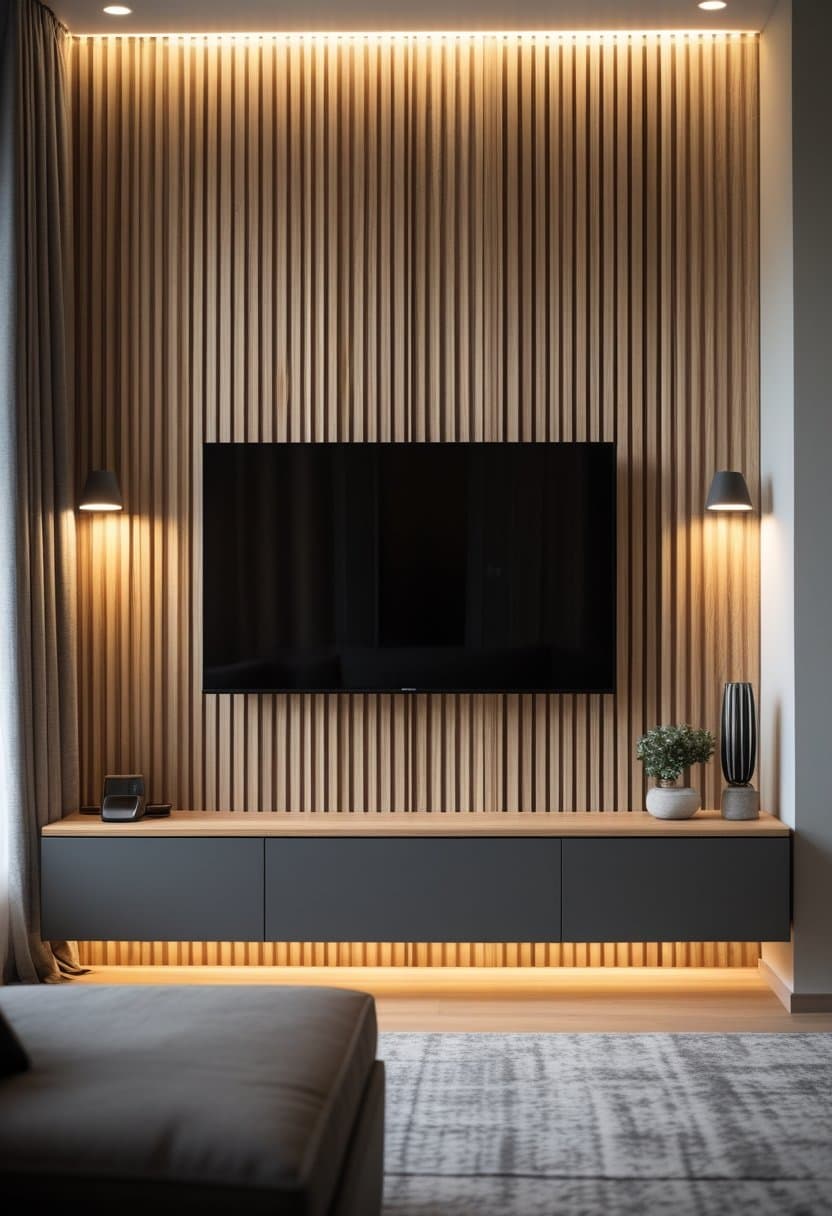
Wood slats (or slat-style panels) behind the TV add texture without chaos.
Why it works: slats soften the black screen and add “designer detail.”
Smart moves:
- Use slats only on a portion of the wall (center panel) to avoid visual overload.
- Combine with a matte console and warm lighting.
- Keep accessories simple so the slats stay the star.
5. Stone-Texture or Stone-Look Backdrop
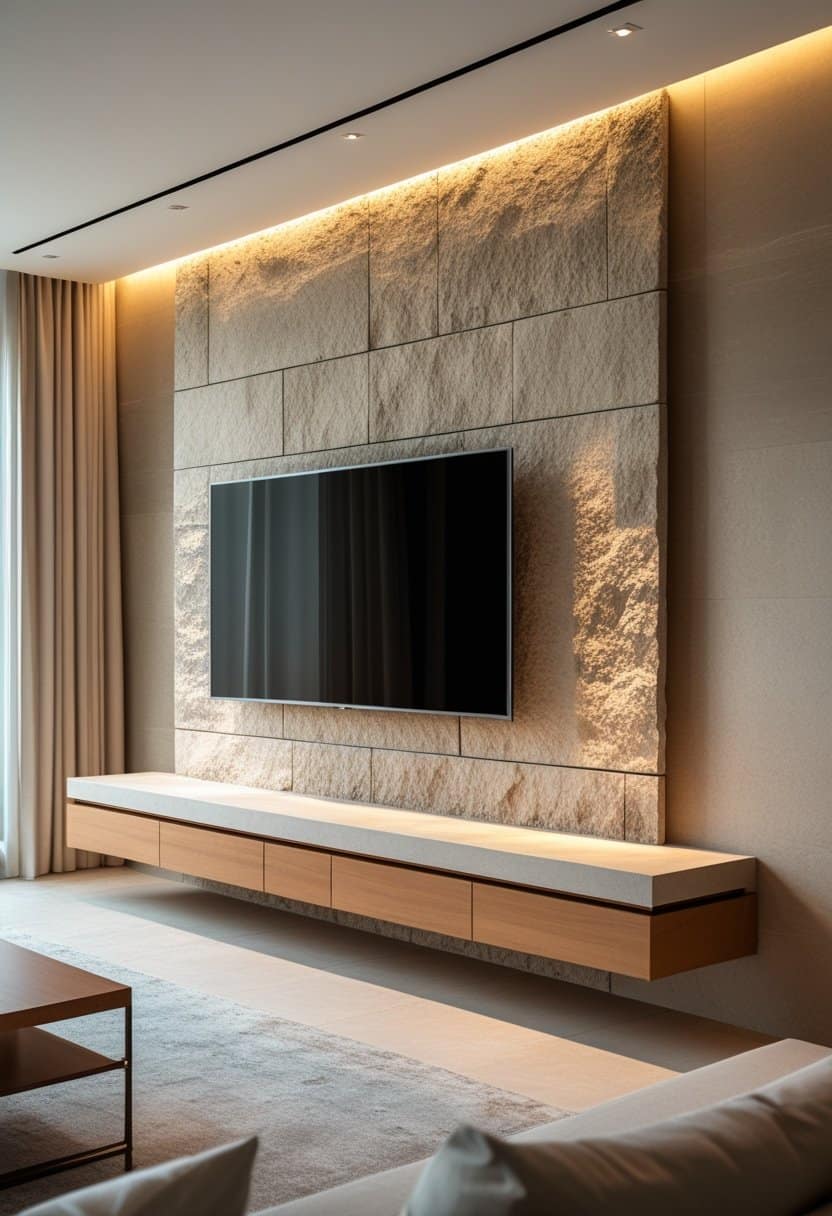
A stone-look panel or textured finish gives a luxury feel.
Why it works: it creates depth and makes the TV wall feel architectural.
Make it practical:
- Choose a matte finish (less glare, more elegant).
- Pair with minimal décor—stone already brings character.
- Add warm side lighting to highlight texture.
6. Painted “TV Frame” Color Block
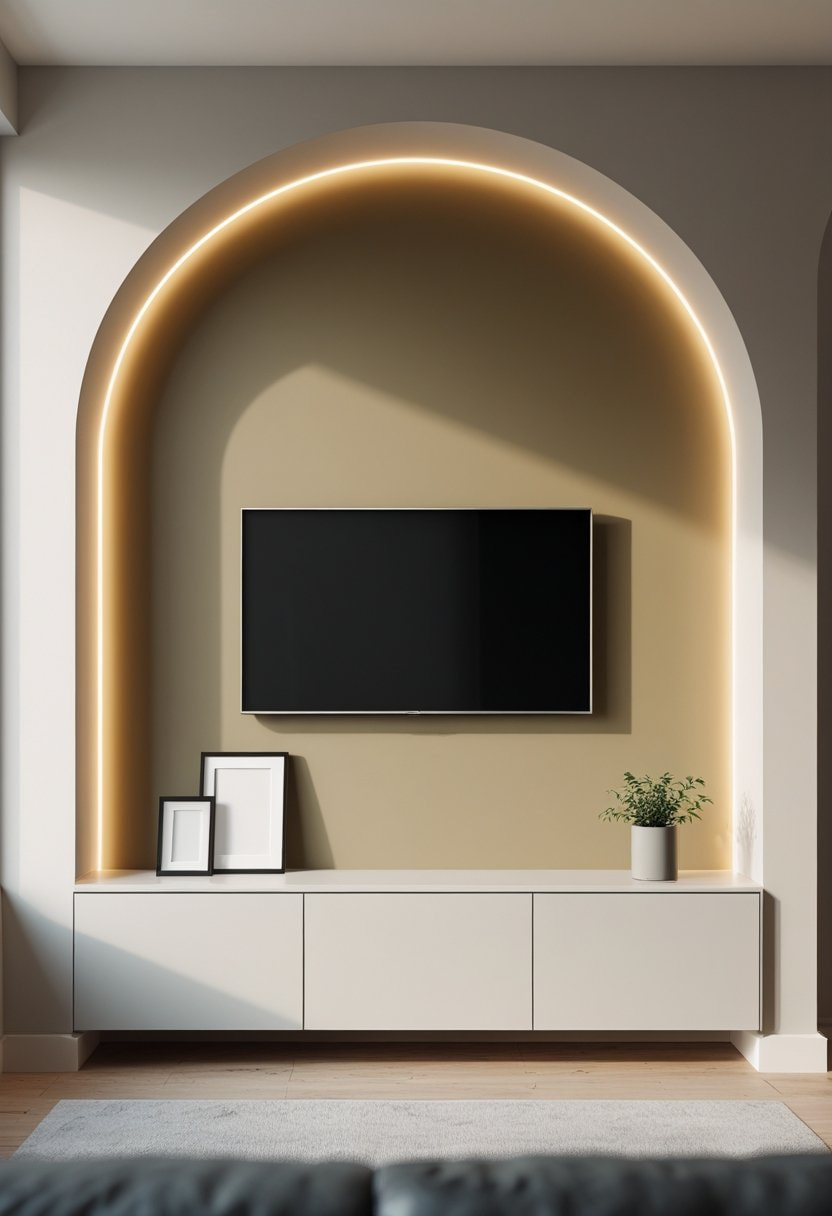
Paint a rectangle (or soft arch shape) behind the TV in a contrasting color.
Why it works: it’s budget-friendly and instantly intentional.
How to nail it:
- Make the painted area wider than the TV.
- Use a muted tone (warm gray, clay, olive, deep beige).
- Add a thin picture ledge below for a clean styling moment.
7. The Symmetry Setup
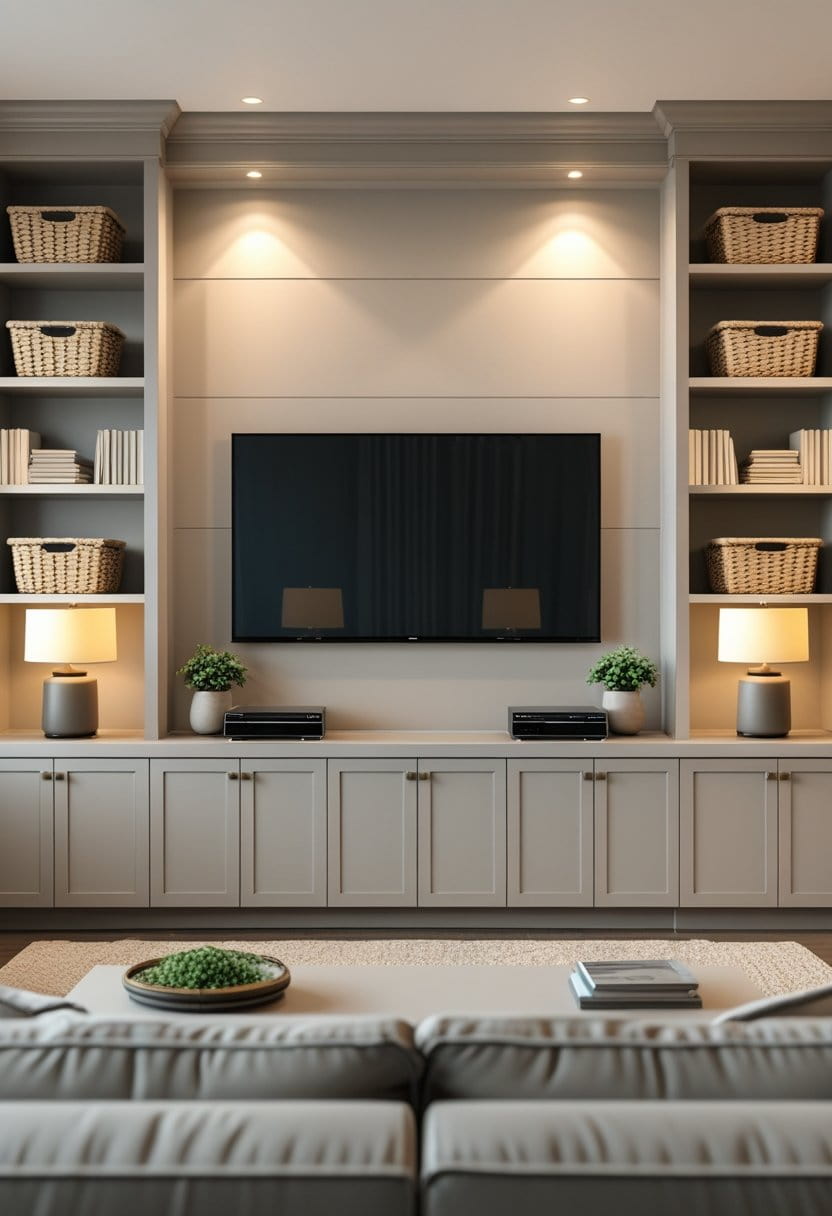
TV centered, matching shelves or cabinets on both sides.
Why it works: symmetry feels organized, calm, and “finished.”
Best styling rules:
- Keep both sides similar in weight (not identical clutter).
- Use matching lamps or matching baskets for balance.
- Repeat 2–3 colors across both sides.
8. The Asymmetry Setup (TV + One-Side Shelving)
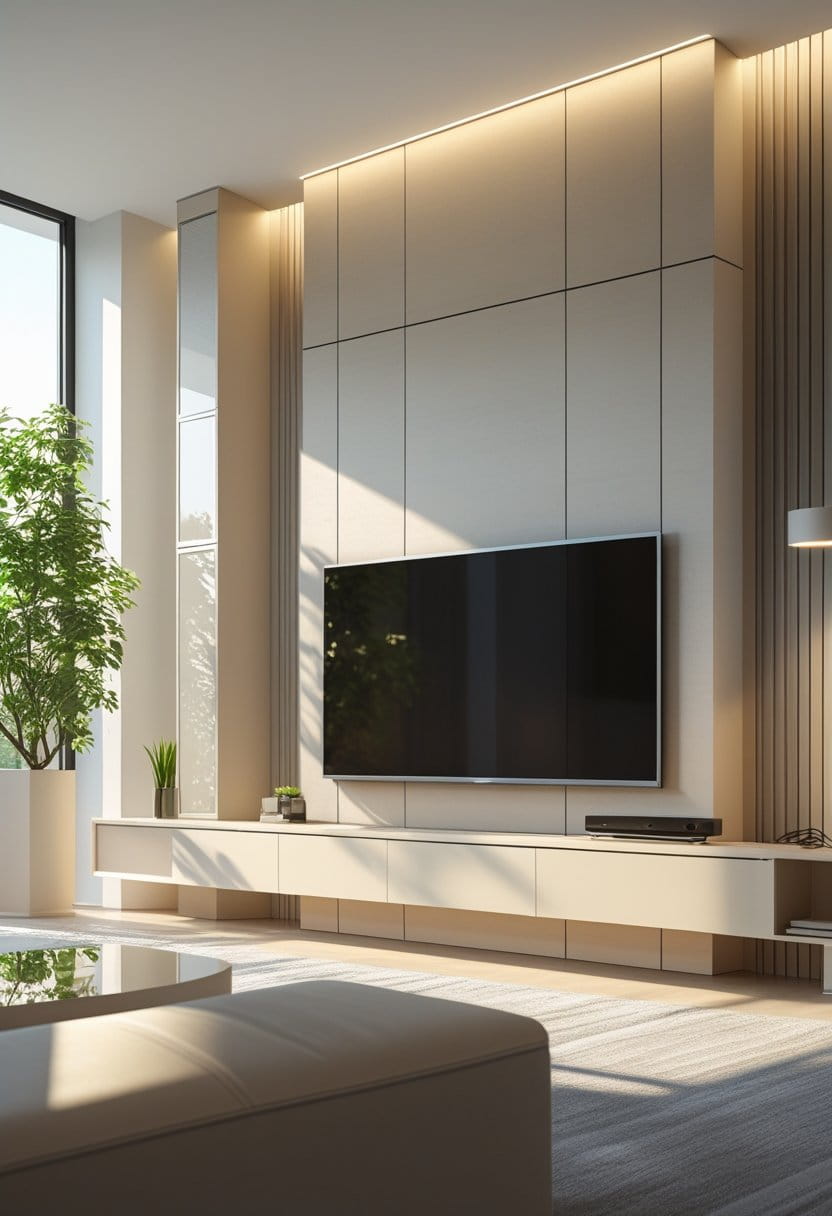
TV slightly offset, with shelving or cabinets on one side only.
Why it works: it feels modern and works well when doors/windows force an off-center TV.
Design trick:
Use a tall plant or floor lamp on the “empty” side to balance the visual weight.
9. Hidden Cable Wall (The “Nothing Visible” Finish)
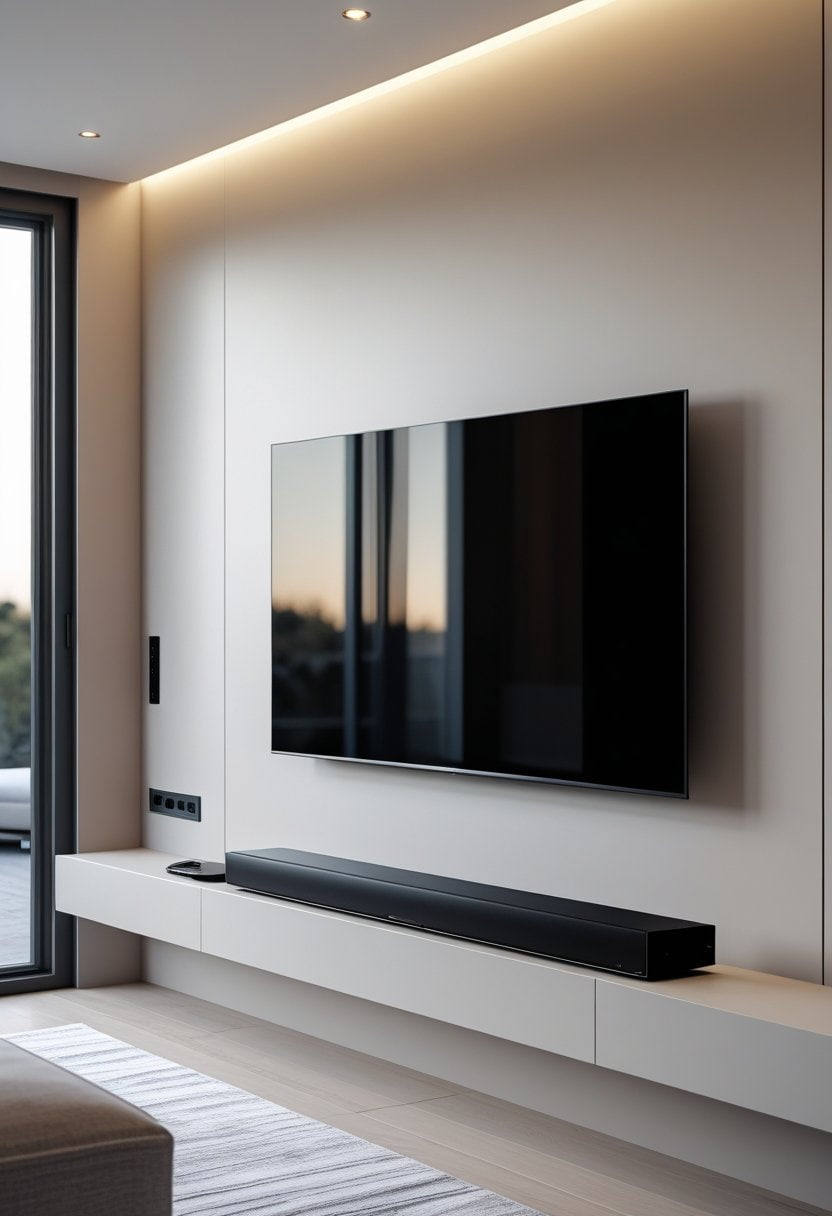
This inspiration isn’t about décor—it’s about the cleanest execution.
Why it works: messy wires make even expensive rooms look unfinished.
Cable-hiding checklist:
- Recessed TV box (power + data behind screen)
- In-wall conduit for future cable upgrades
- Soundbar wiring planned before mounting
- Router location planned so Wi-Fi stays strong
10. TV Wall With Picture Ledges
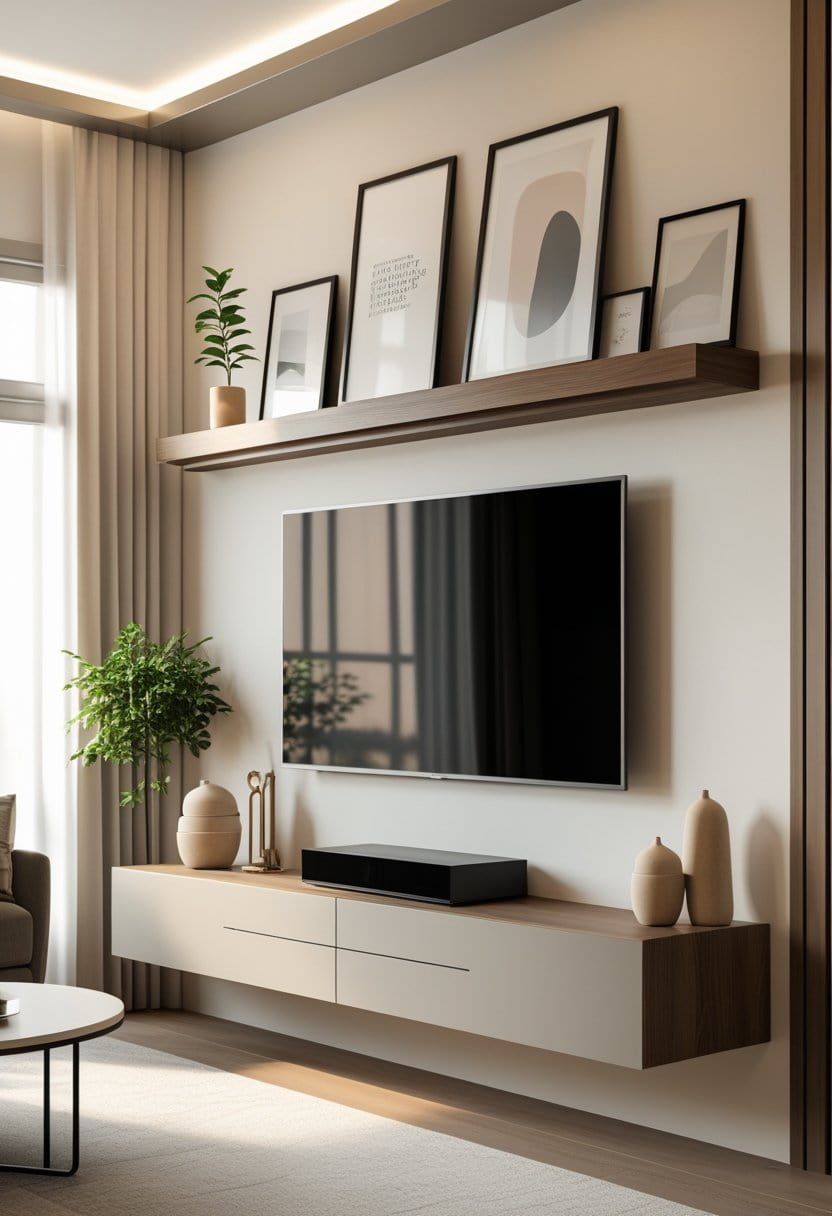
Install one or two picture ledges around the TV (below, or on the side) for flexible styling.
Why it works: you can refresh the look without drilling new holes.
Style it like a pro:
- Mix framed prints, a small plant, and a neutral object.
- Keep at least 30–40% of the ledge empty.
11. The “Gallery Wall Done Right” Around the TV
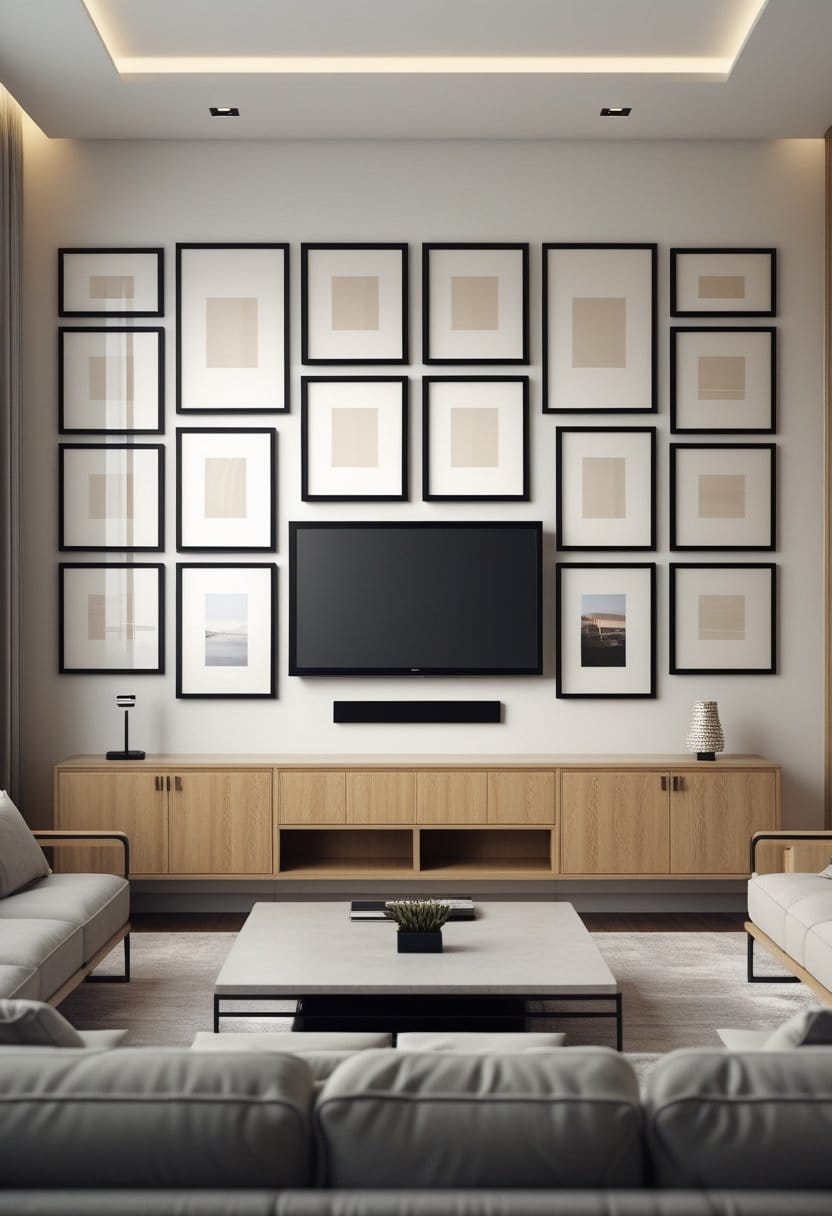
Yes, you can do a gallery wall with a TV—if it’s controlled.
Why it works: it makes the TV feel like part of a larger composition.
Rules that keep it classy:
- Use consistent frame colors (all black, all oak, or all white).
- Keep spacing even.
- Don’t crowd the TV—leave a visual margin around it.
12. Corner TV Wall That Still Looks Intentional
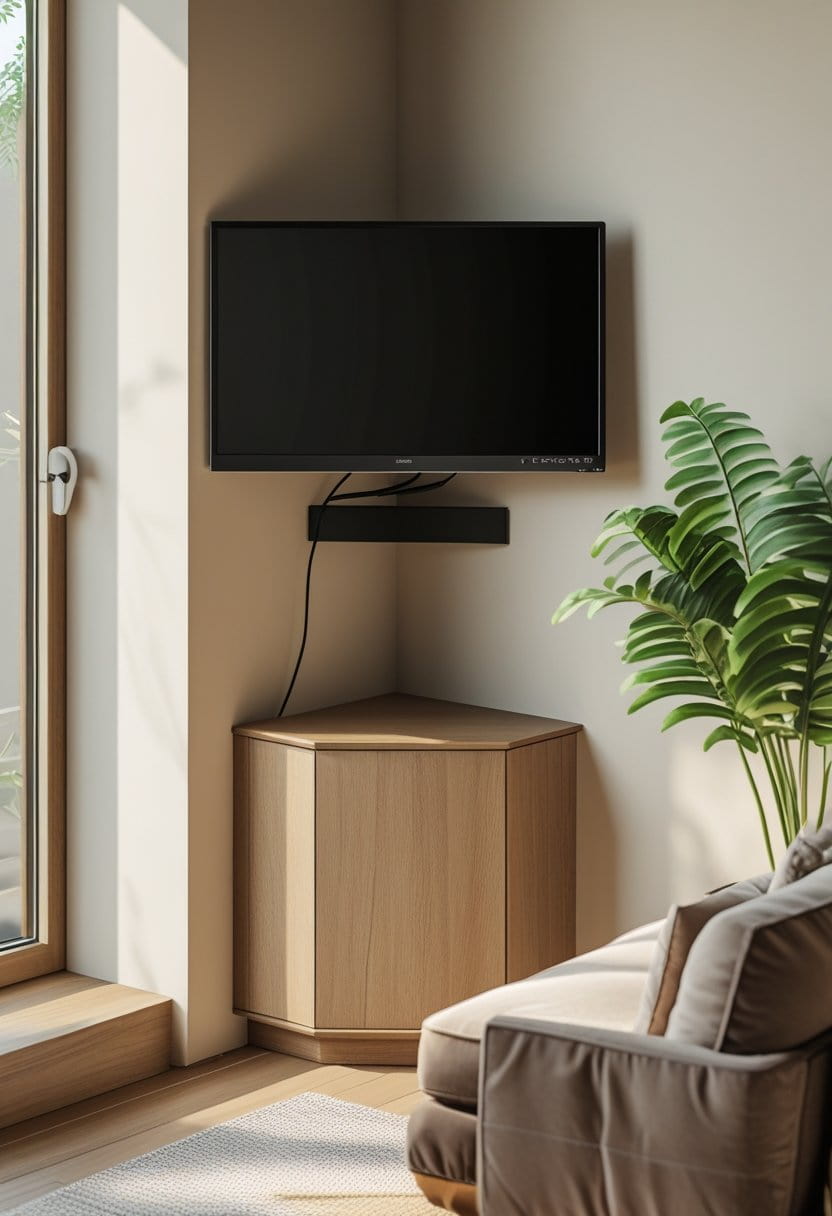
Some rooms demand a corner TV. It can still look good.
Why it works: it respects awkward layouts without fighting them.
Make it feel designed:
- Add a corner console or angled cabinet.
- Use a tall plant behind/near the corner to soften edges.
- Consider a swivel mount for better viewing angles.
13. The “TV Above Console + Tall Bookcase” Hybrid
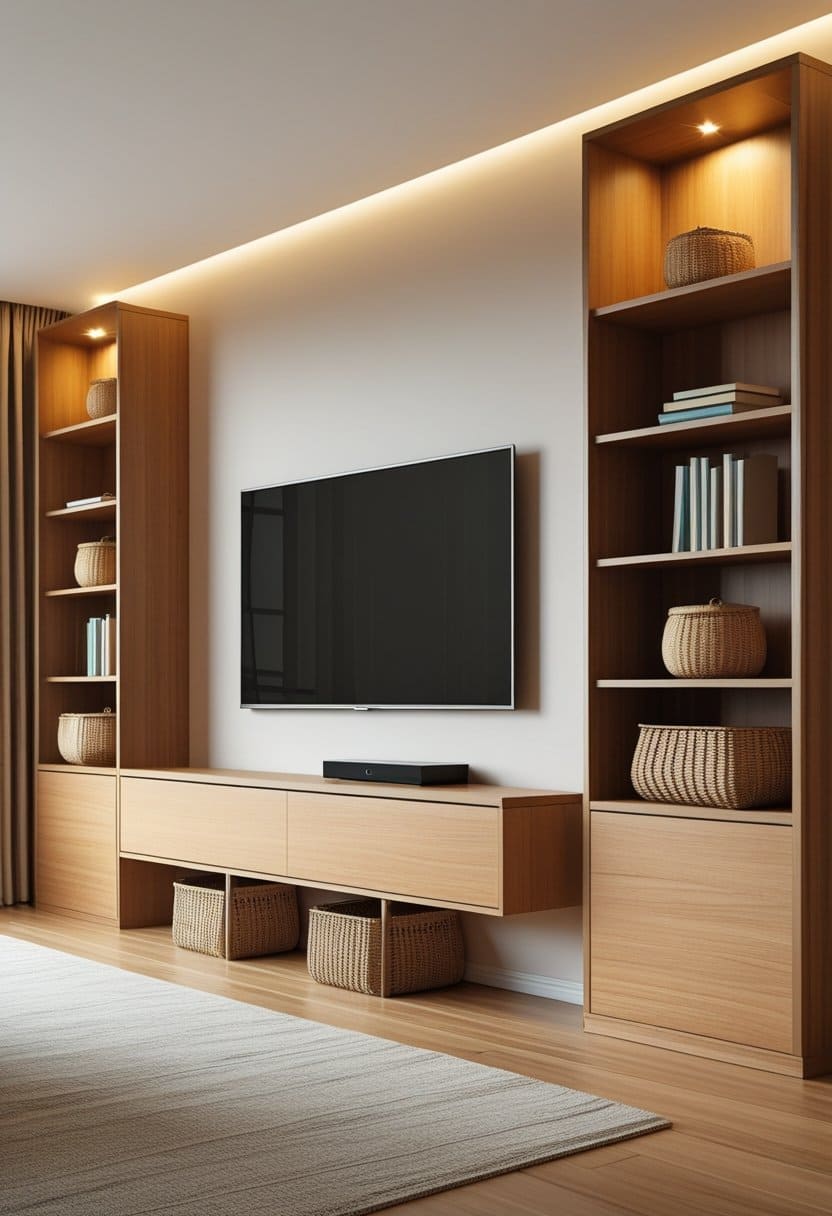
TV centered, console below, one tall bookcase nearby (not necessarily built-in).
Why it works: it adds height and storage without a full renovation.
Tip: match the bookcase finish to the console so it reads as one set.
14. Fireplace + TV Wall (Balanced, Not Overcrowded)
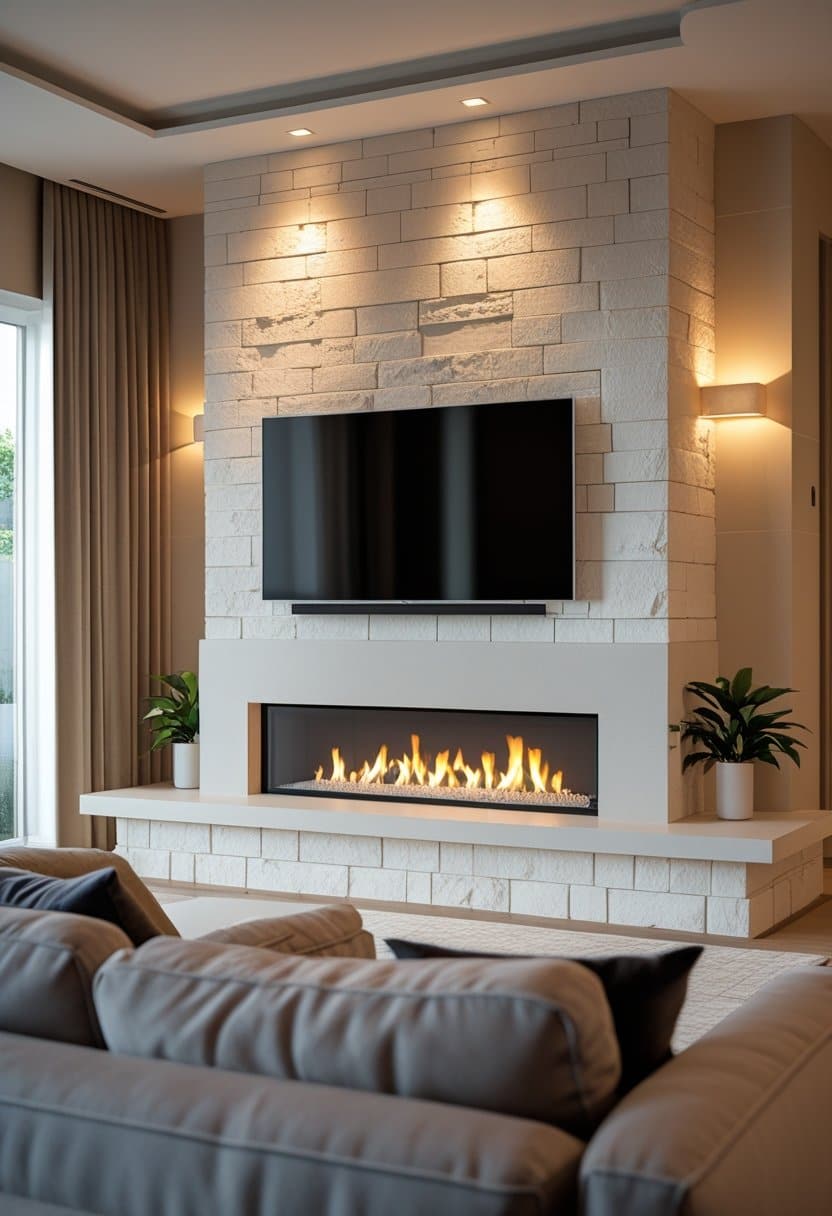
This is popular but easy to get wrong—especially if the TV ends up too high.
Why it works: it creates a strong focal point for cozy living rooms.
Avoid common mistakes:
- If the TV must go above the fireplace, use a mantel mount or tilt solution.
- Keep décor minimal—fireplace + TV is already visually “busy.”
- Make sure heat is managed properly with safe clearances and materials.
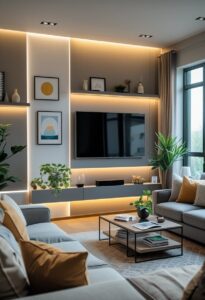
15. TV Wall With Soft Backlighting
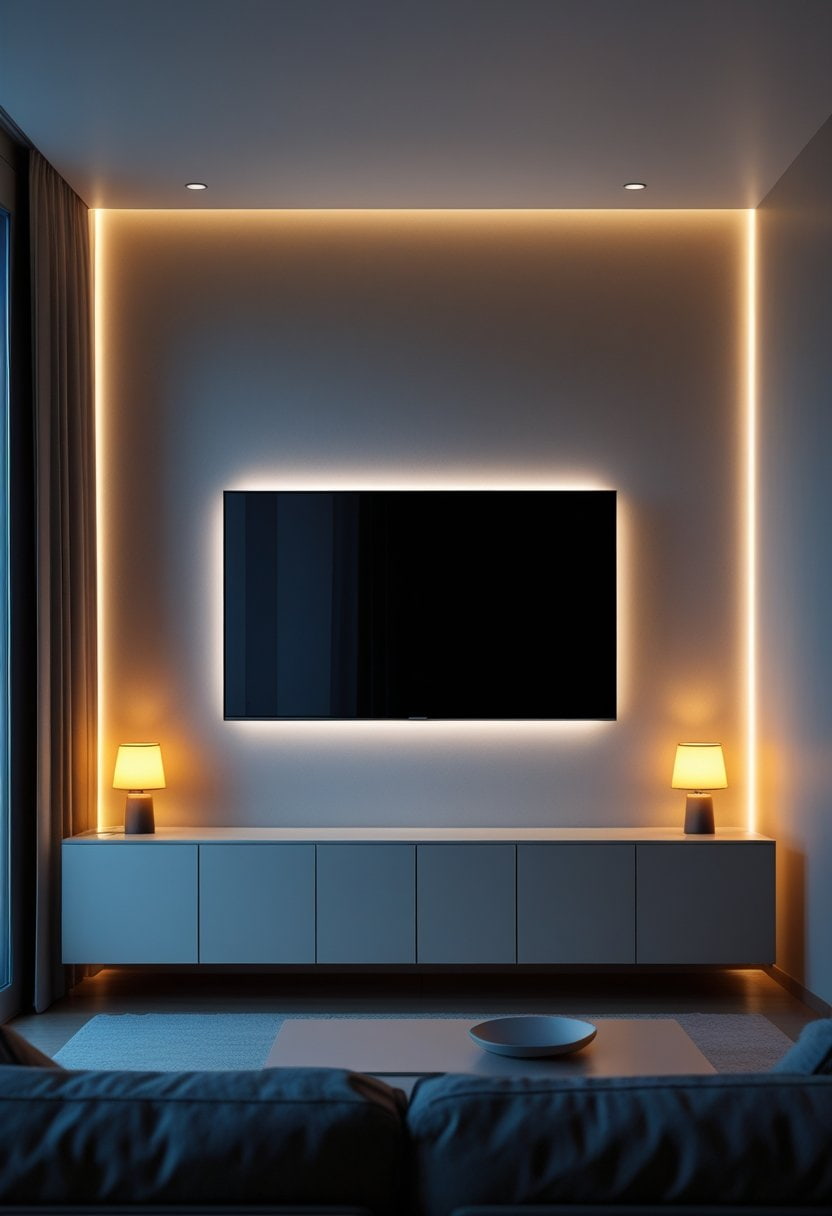
A gentle glow behind the TV can improve comfort and mood.
Why it works: it reduces harsh contrast in darker rooms and makes the wall feel layered.
Do it tastefully:
- Use warm-to-neutral white lighting for a living room feel.
- Hide LED strips so you don’t see dots.
- Keep brightness subtle, not like a gaming setup (unless that’s your goal).
16. The “Frame TV” Art-Forward Wall
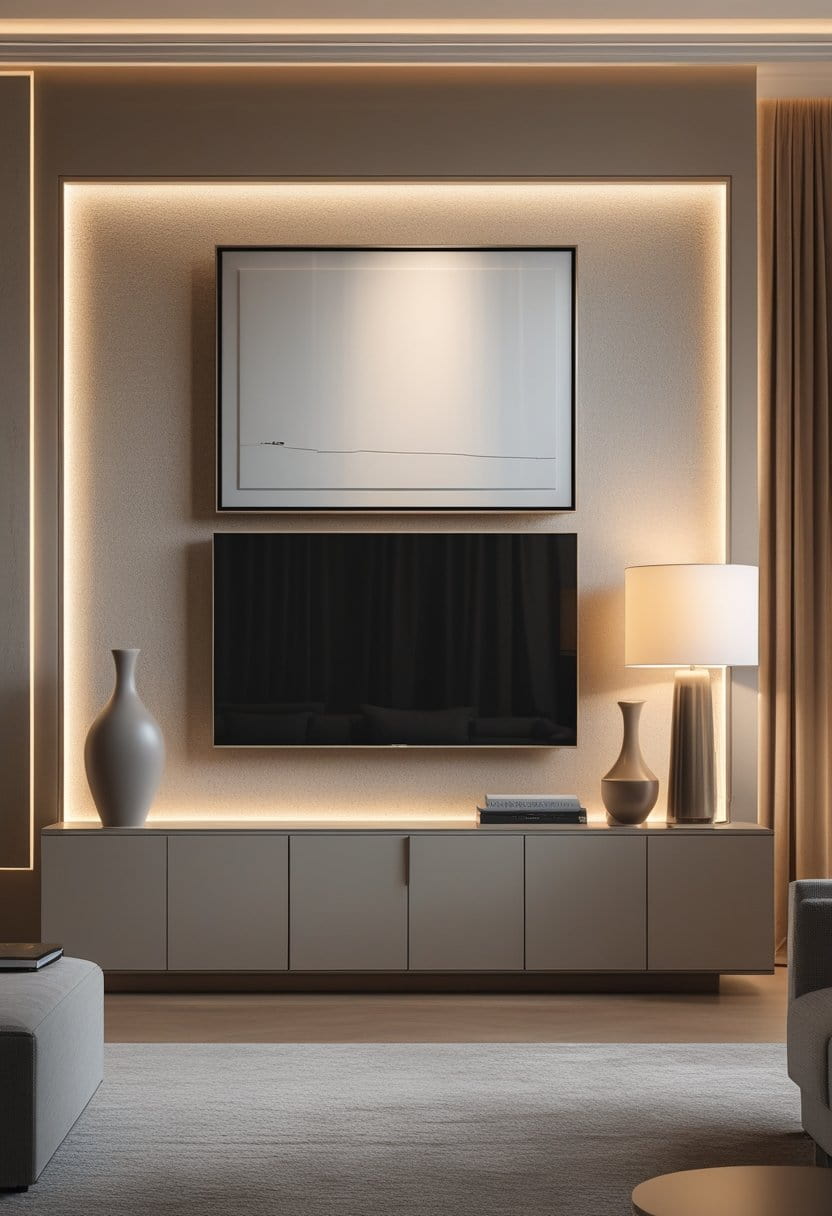
If your TV has an art display mode, lean into it with an art-led wall concept.
Why it works: the screen looks like décor when it’s off.
Simple styling idea:
- One large vase or sculpture on the console
- Two stacked coffee-table books
- One soft lamp to bring warmth
17. Micro-Shelving Around the TV (Functional, Not Bulky)
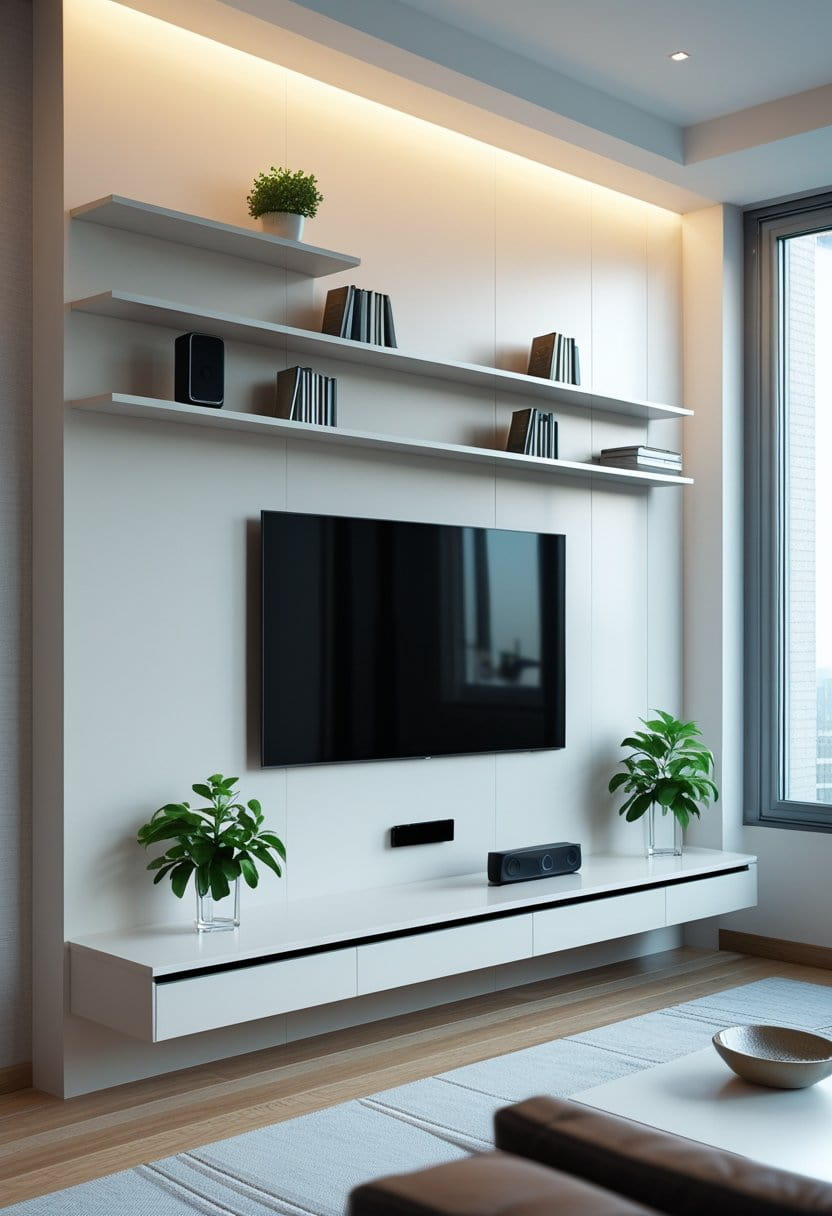
Instead of big bookcases, use narrow shelves for small items.
Why it works: it adds purpose without swallowing the wall.
Use it for:
- A small speaker
- A plant
- A few books
- A decorative bowl for remotes
18. TV Wall With Curtains as a Soft Backdrop
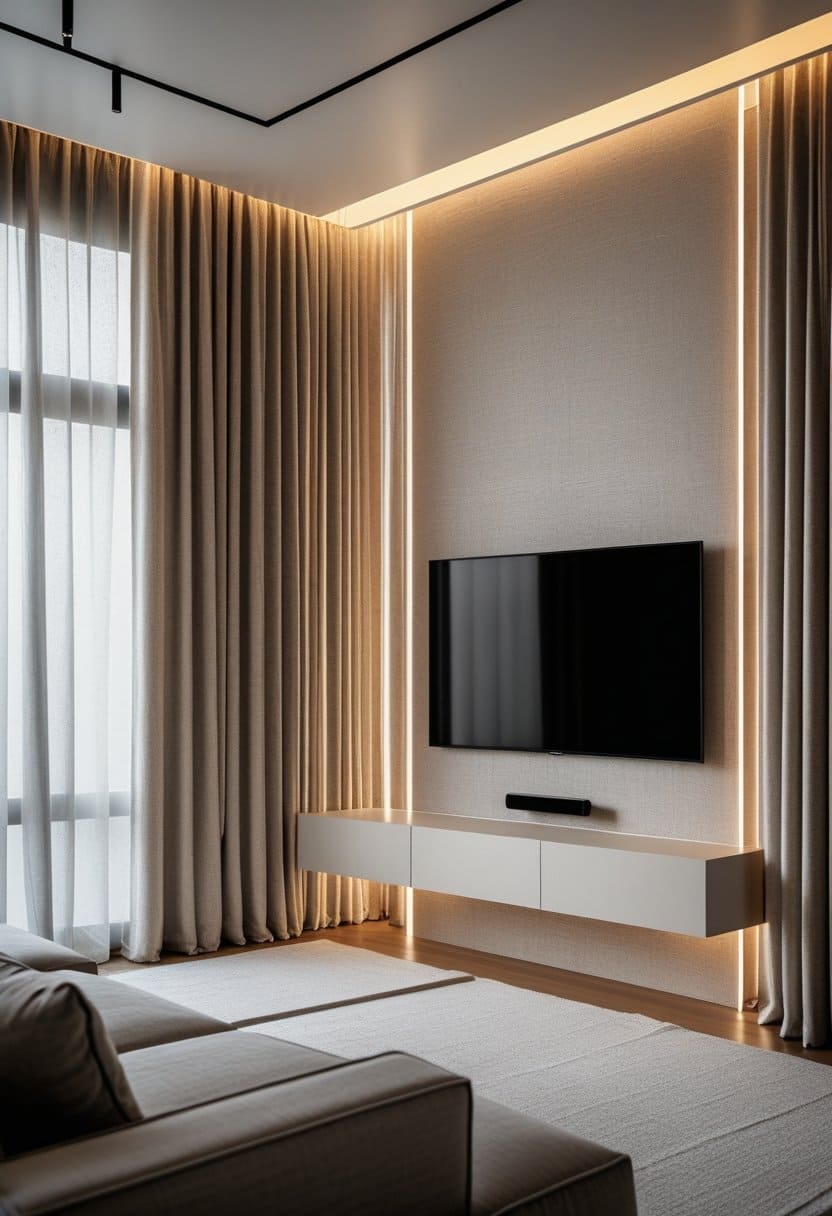
Hang curtains across the TV wall—even if there’s no window there.
Why it works: fabric adds softness, improves acoustics, and feels upscale.
Make it believable:
- Use ceiling-mounted tracks for a “hotel” look.
- Choose textured neutrals (linen-look, woven fabric).
- Keep the TV slightly forward from the curtain line.
19. The “Two-Zone” Wall (TV Zone + Conversation Zone)
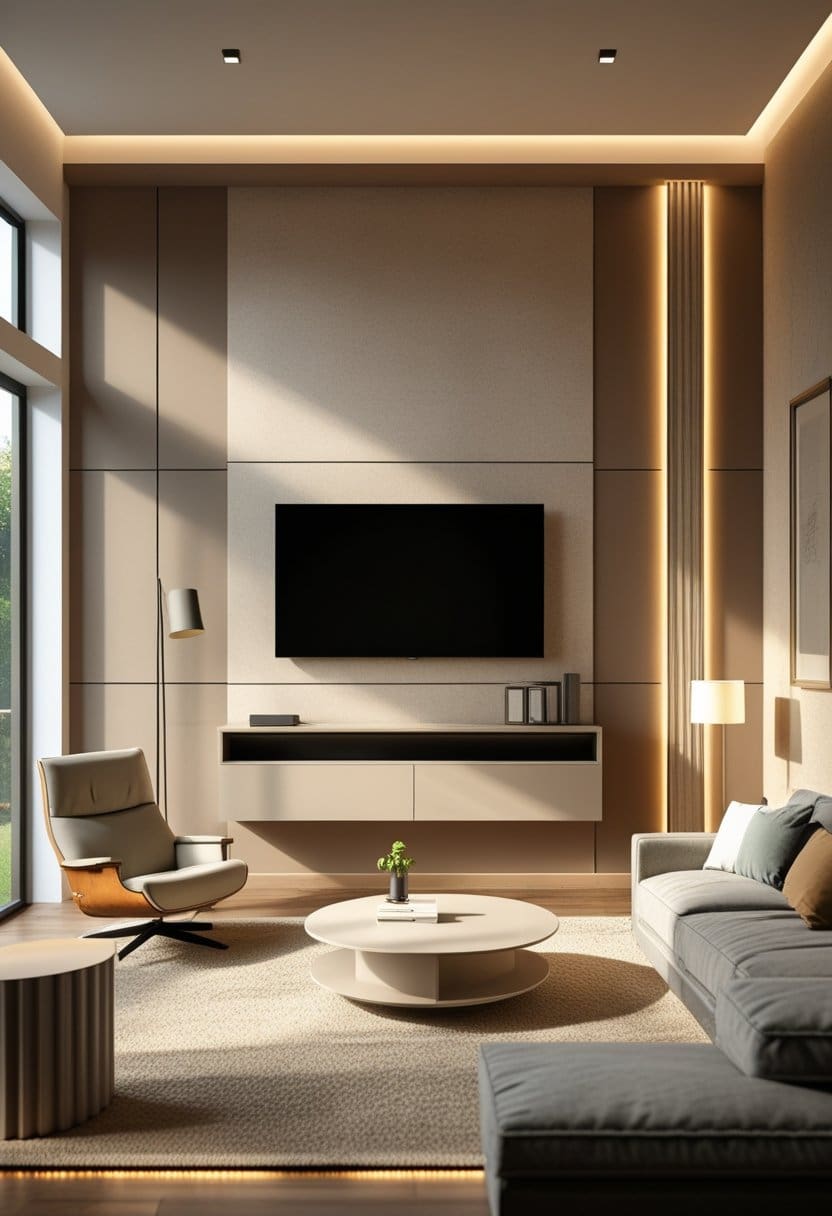
In larger rooms, the TV wall can share space with a reading nook or display zone.
Why it works: it prevents the living room from feeling like a one-purpose “TV room.”
Example layout:
- TV + console centered on the main portion
- A lounge chair + floor lamp + small table on one side
- A slim bookshelf or art piece to connect both zones
Layout Tips That Make Any TV Wall Work
These tips apply no matter which inspiration you choose.
1) Pick the right TV size for the room
People are consistently choosing larger screens. For example, a UK survey found the most preferred next purchase sizes were 44–55 inches, with many also wanting 56–65 inches.
Also, market reporting shows the 46–55 inch bracket taking a large share in 2025 by revenue.
2) Keep the TV at a comfortable height
A common comfort target is keeping the screen center around 42–48 inches from the floor for many seating setups.
3) Balance the “black rectangle” with visual weight
Use any of the following:
- A wider console
- A textured backdrop (slats, stone-look, plaster)
- Side shelves or tall décor (plant, lamp)
- A color block behind the TV
4) Decide what you want to see—and what you want to hide
A tidy TV wall usually has more closed storage than open storage.
Good items to hide:
- Router and cables
- Game controllers
- Extra remotes and batteries
- Random chargers
- Instruction manuals
5) Plan lighting early
Use lighting to reduce harshness and add style:
- Backlight behind the TV for softness
- Side lamps for warmth
- Shelf lighting to create depth
6) Check glare before you mount
During daytime, stand where the TV will go and look for reflections from:
- Windows
- Glossy floors
- Glass tables
- Bright ceiling fixtures
If glare is strong, consider:
- Shifting the TV location
- Using curtains or blinds
- Choosing a tilt mount
- Avoiding glossy wall finishes behind the TV
Common Mistakes to Avoid
A quick “save yourself later” list:
- Mounting the TV too high (looks like a waiting room and strains your neck)
- Using a console that’s too small (TV looks top-heavy)
- Leaving cables visible (instantly lowers the room’s quality)
- Over-decorating shelves (dusty, busy, stressful)
- Ignoring sound placement (soundbar too high or blocked)
- Choosing a bold wall texture and bold décor together (visual conflict)
A Simple Styling Formula That Always Works
If you want a TV wall that looks styled but not cluttered, use this repeatable formula:
- One tall item (lamp, vase, plant)
- One medium item (framed photo, speaker, sculptural object)
- One small item (candle, bowl, coaster stack)
- One soft item nearby (throw blanket, textured pillow, curtain)
Keep colors consistent, and leave some empty space so the wall can “breathe.”
Conclusion
The most impressive TV walls aren’t always expensive—they’re planned. Choose one of the 19 Living Room TV Wall Inspirations And Layout Tips that fits your room size and your storage needs, then focus on the details that make it feel intentional: correct height, balanced proportions, hidden cables, and a clean backdrop.
If you do those things, your TV wall will look right even on an ordinary day—when the remotes are out, the lights are on, and real life is happening in the room.


More Stories
20 Two Tone Kitchen Cabinet Design Inspiration
21 Small Living Room + Dining Layouts That Work
16 Boho Living Room Designs for Relaxed Chic Vibes