
Introduction
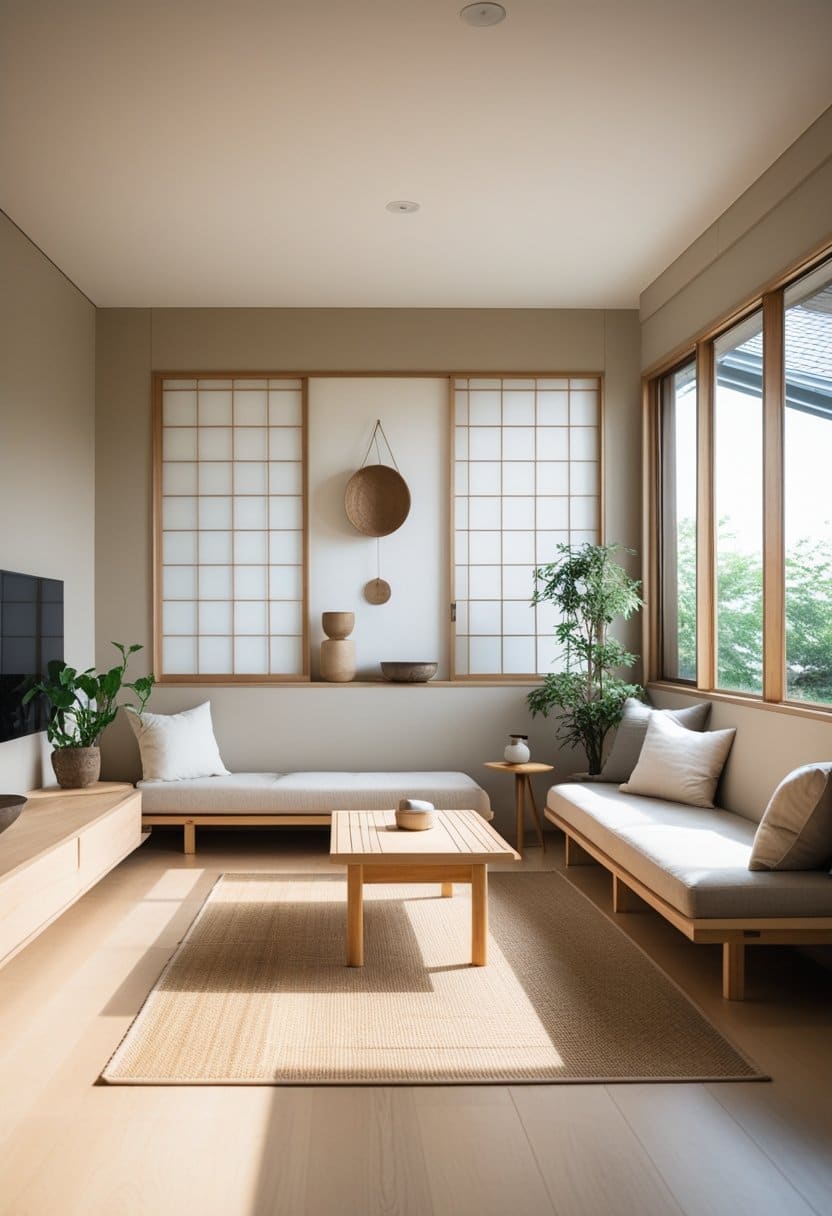
A living room can look beautiful and still feel stressful. Too many colors, too many decor items, too much “stuff” fighting for attention. Japandi design solves that problem in a calm, practical way. It blends Japanese simplicity (clean lines, quiet spaces, purpose) with Scandinavian comfort (warm textures, cozy lighting, everyday ease). The result is a space that feels peaceful, welcoming, and easy to live in.
These Japandi living room ideas for minimal comfort are not about making your home look “perfect.” They’re about making it feel better—more breathable, more relaxed, and more you. You’ll notice a few key themes throughout:
- Less clutter, more space
- Natural materials that age well
- Soft, warm colors that don’t overwhelm
- Furniture that’s comfortable and functional
- Decor that earns its place
Below are 19 ideas you can mix and match, whether you have a large lounge, a small apartment, or a shared family room.
1. Start With a Calm, Neutral Base
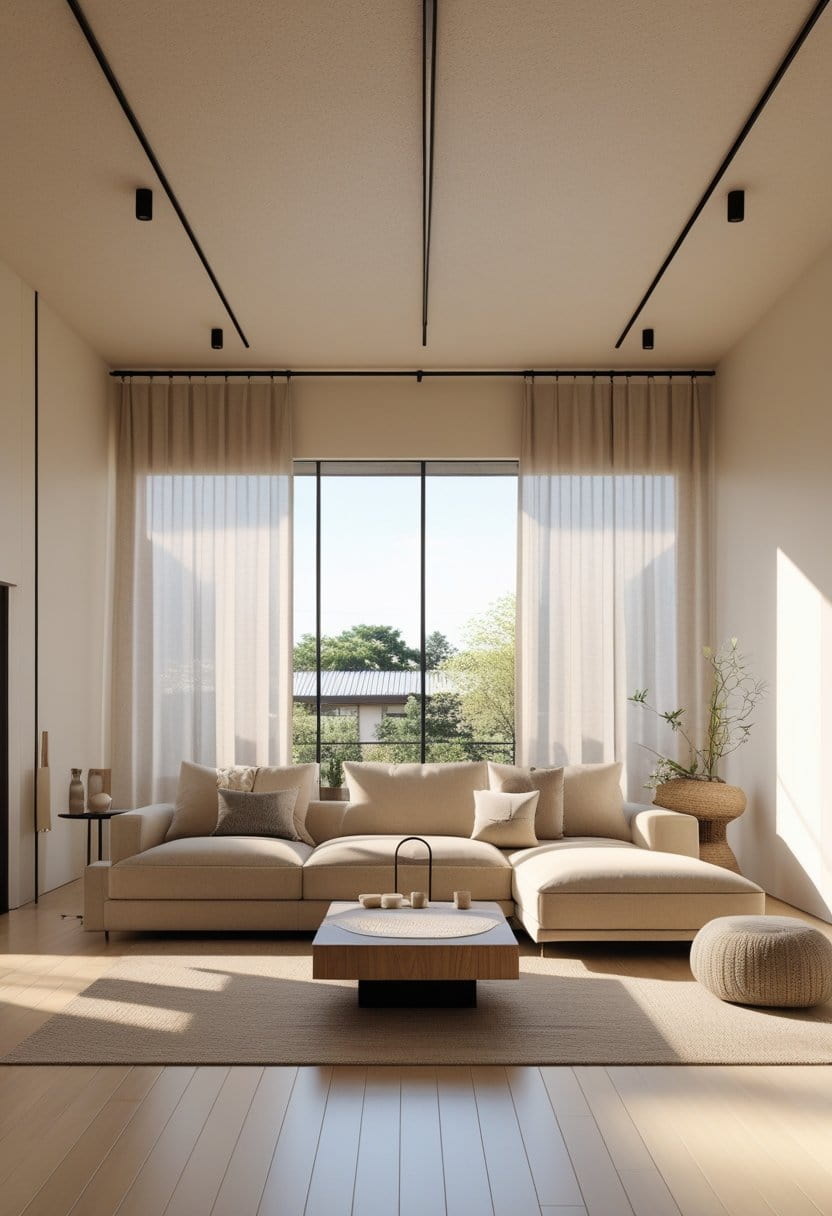
Japandi living rooms usually begin with a soft, quiet background. Think warm white, creamy beige, light greige, or gentle stone tones. A neutral base helps the room feel bigger and more peaceful, and it makes your textures stand out.
Try this simple formula:
- Walls: warm white or light beige
- Large furniture: taupe, oatmeal, charcoal, or soft gray
- Accents: black, wood tones, and muted greens
This is the foundation of minimal comfort: calm first, details later.
2. Choose Low-Profile Seating for a Grounded Feel
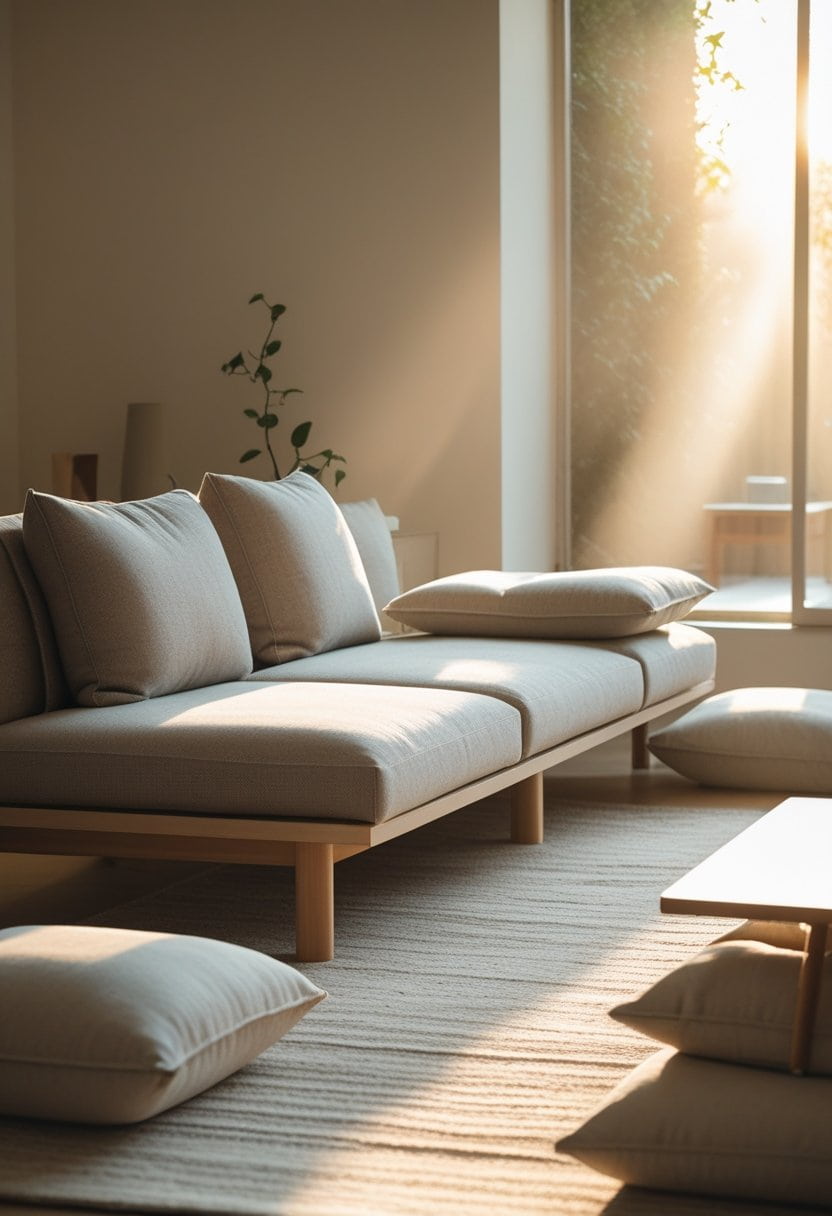
Low seating is a signature Japandi move. It makes the room feel grounded and relaxed, and it visually opens up the space.
Look for:
- A low sofa with clean arms
- A simple bench-style seat
- Floor cushions in a tidy corner (especially great for reading)
Comfort tip: Choose a sofa with supportive cushions, not stiff “showroom” foam. Minimal should still feel good after an hour.
3. Add Warm Wood Tones (Not Too Many)
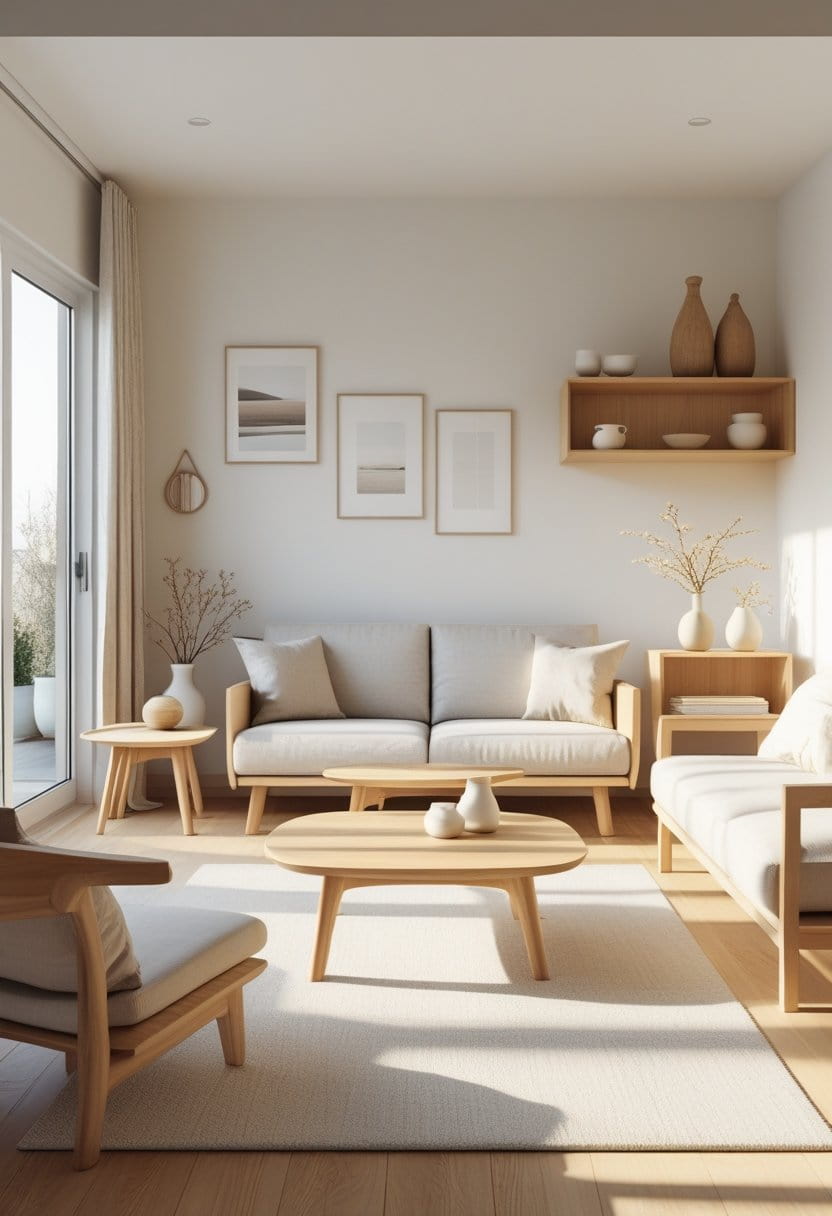
Wood instantly brings life into a minimal room. In Japandi style, the goal is warmth without visual noise.
A good approach:
- Pick one main wood tone (oak, ash, walnut, or bamboo)
- Repeat it in 2–4 places (coffee table, side table, shelves, frames)
Too many wood shades can look messy. Repetition makes it feel intentional.
4. Use Black Accents to Create Quiet Contrast
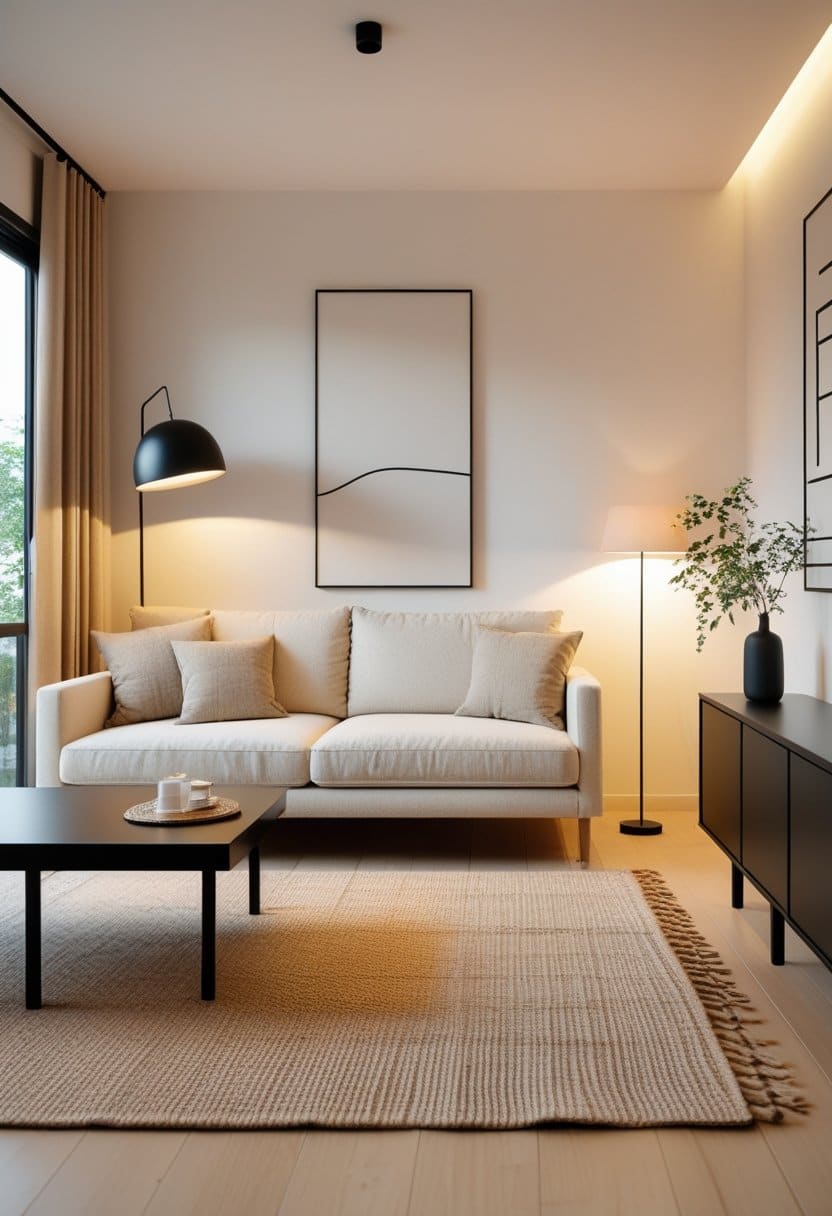
A little black goes a long way. Japandi rooms often use black as a clean outline—like ink on paper—so the space feels crisp, not flat.
Easy black accent ideas:
- Matte black floor lamp
- Black-framed artwork
- Black cabinet handles
- A slim black coffee table leg
Keep it minimal: choose a few black touches, then stop.
5. Keep Your Layout Open and Breathable
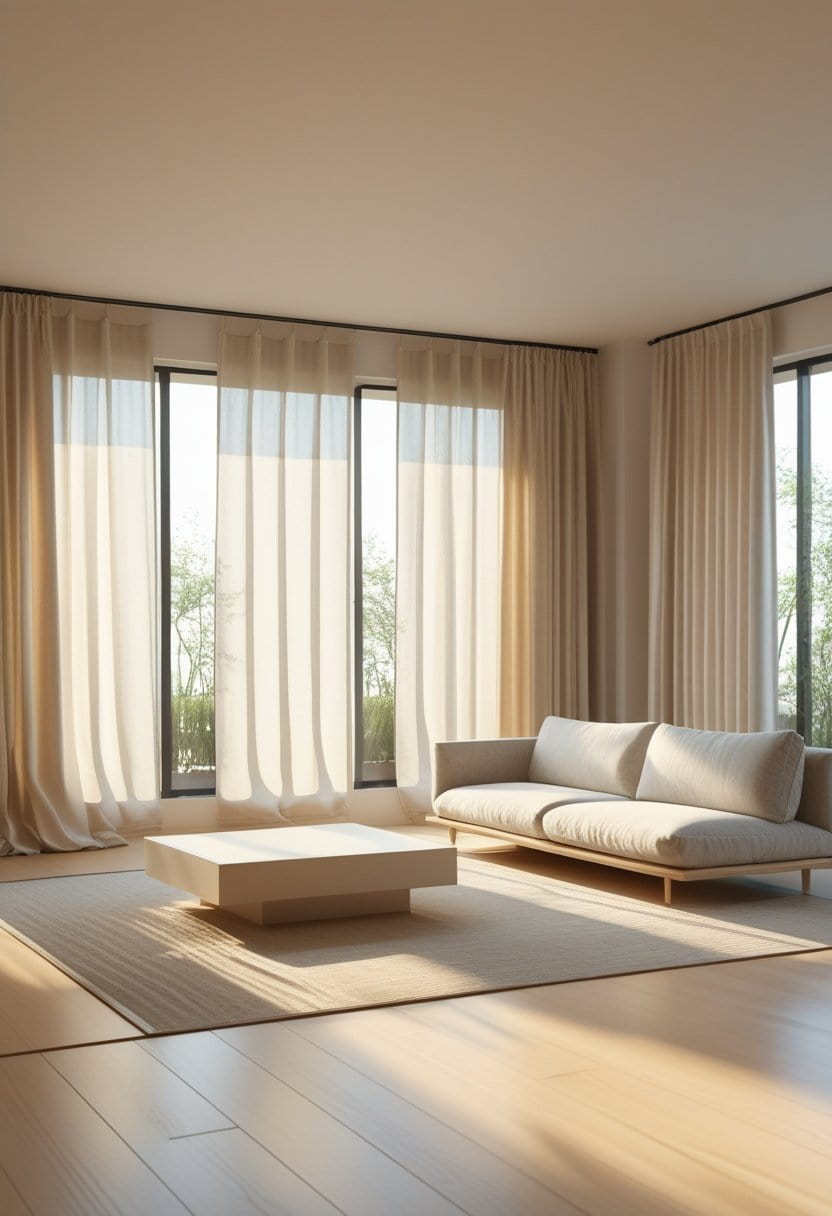
Minimal comfort is not only about what you add—it’s about what you leave out. Japandi living rooms feel good because there’s space to move, space to breathe, and space for your eyes to rest.
A practical spacing guide:
- Leave 30–36 inches for main walkways (when possible)
- Keep 14–18 inches between sofa and coffee table for easy reach
- Avoid blocking windows with tall, heavy furniture
If the room feels tight, remove one piece before buying another.
6. Choose a Simple Coffee Table With Soft Edges
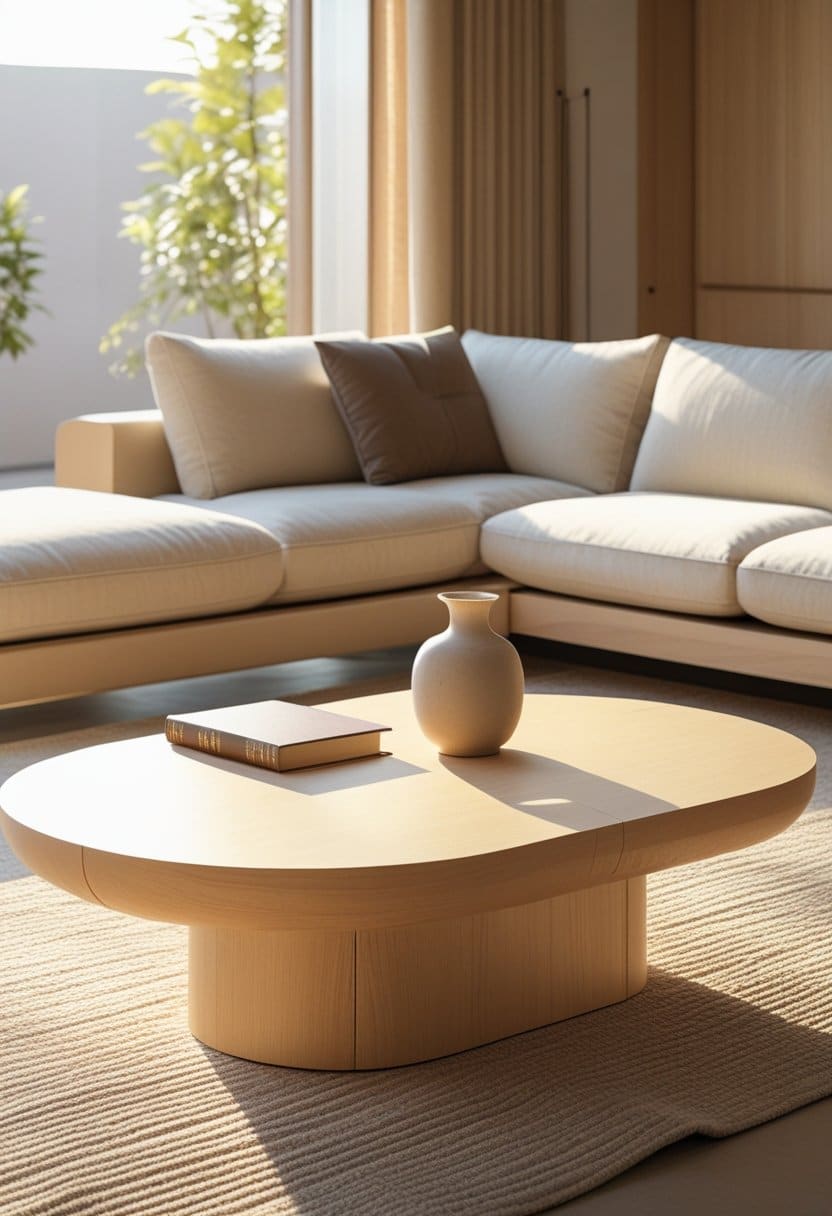
Your coffee table is a daily-use piece, so Japandi style favors clean shapes and natural materials.
Great options:
- Light wood oval table
- Round table (perfect for small spaces)
- Solid wood with smooth corners
- Stone top with slim legs (if you like a modern touch)
Soft curves can balance straight lines and make the room feel more inviting.
7. Layer Textures Instead of Busy Patterns
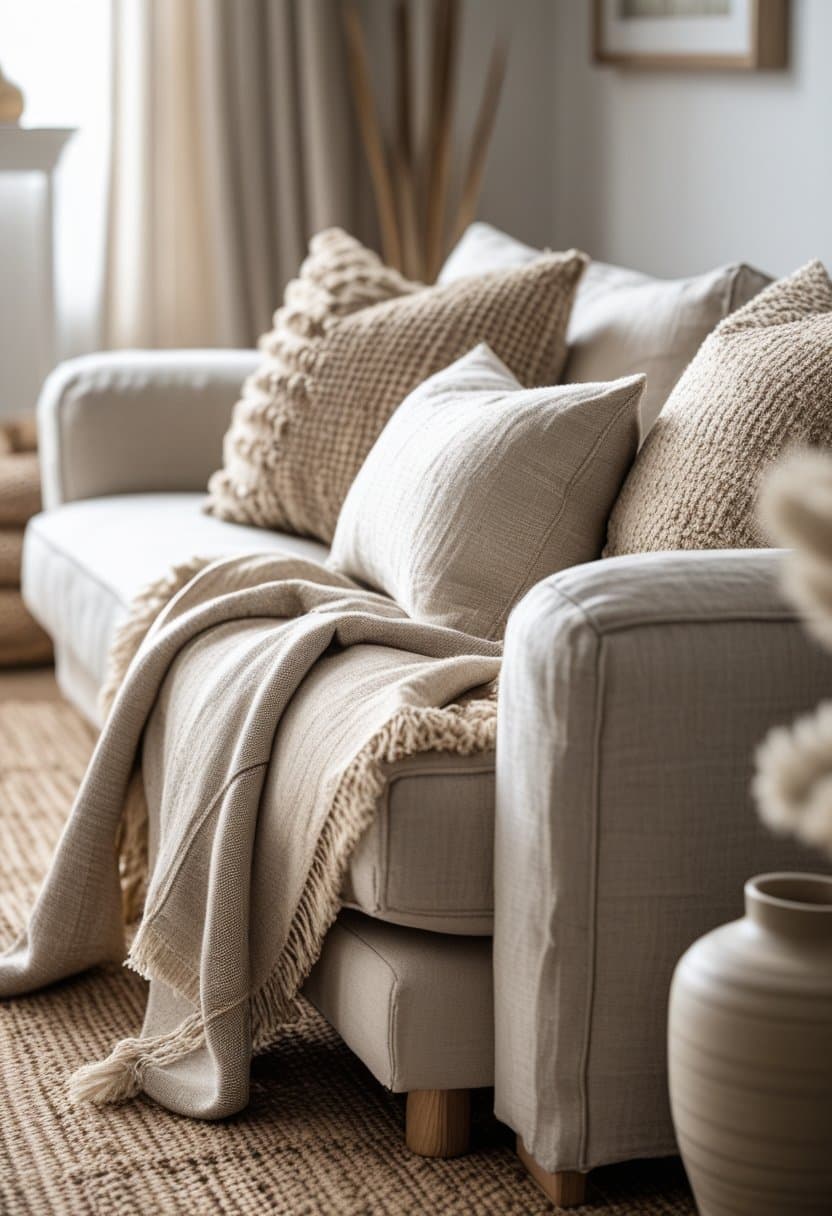
Japandi rooms avoid loud prints. Instead, they feel rich through texture—linen, wool, cotton, wood grain, ceramics, and woven materials.
Try layering like this:
- Linen or cotton sofa cover
- Wool throw in a neutral tone
- Textured cushions (bouclé, knit, or woven)
- Natural fiber rug (jute or wool blend)
The room stays simple, but it doesn’t feel empty.
8. Pick a Rug That Anchors the Space
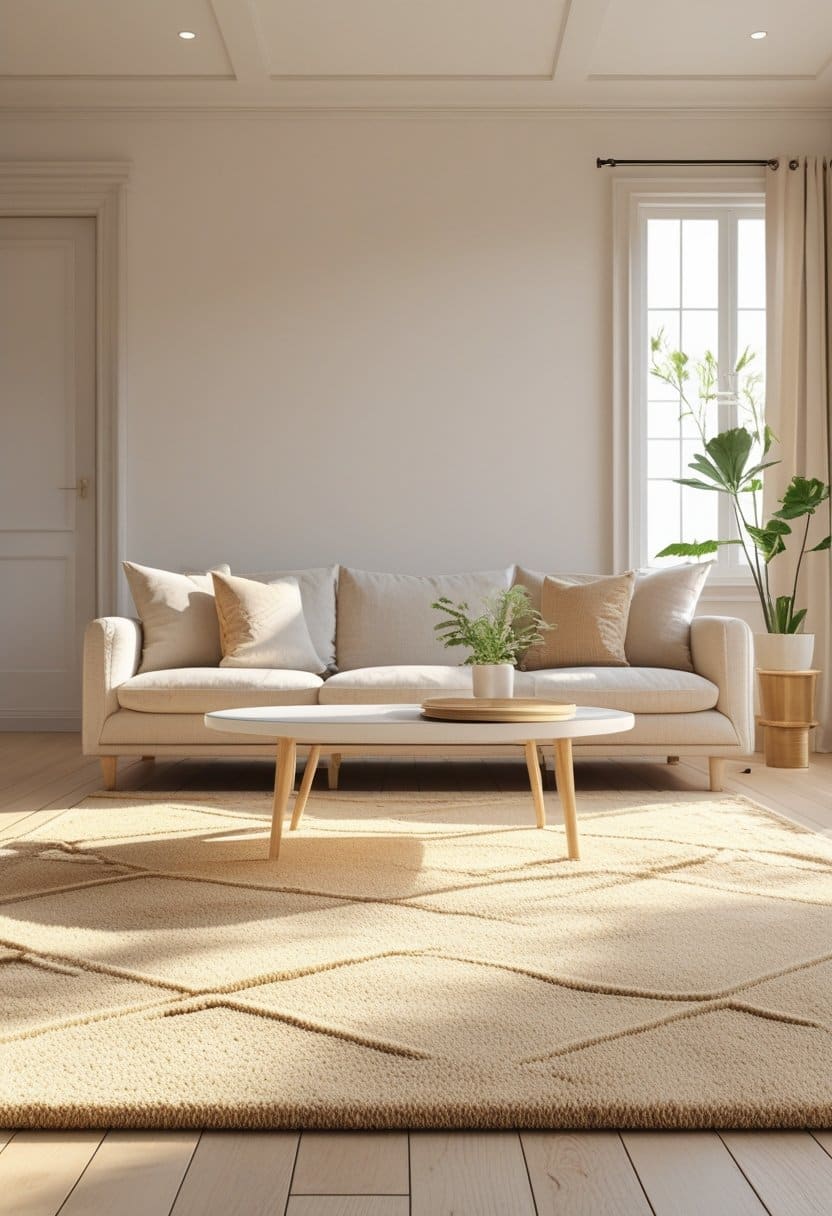
A rug makes a living room feel complete. For Japandi minimal comfort, choose a rug that’s calm in color and comfortable underfoot.
Size tips that work in most homes:
- Ideally, the front legs of the sofa should sit on the rug
- If the rug is too small, the room can feel disconnected
Color ideas:
- Warm ivory
- Sand
- Soft gray
- Muted brown
- Light taupe
Texture is more important than pattern here.
9. Use Soft, Warm Lighting (Not Harsh White)
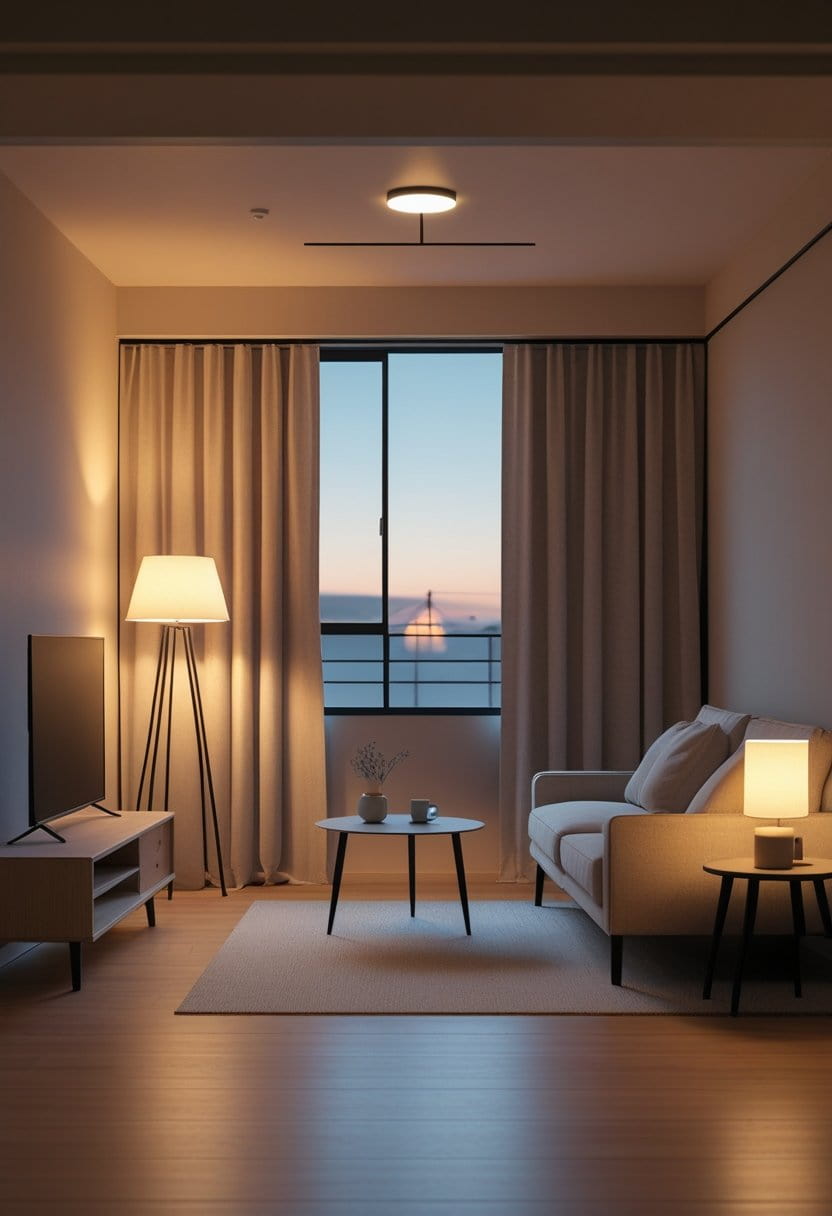
Lighting changes everything. Japandi living rooms feel cozy because the light is warm, gentle, and layered.
Aim for bulbs around:
- 2700K to 3000K for a warm, homey glow
Layer your lighting:
- One overhead light (simple, not flashy)
- One floor lamp
- One table lamp or wall sconce
This makes your room feel comfortable at night, not like an office.
10. Add One Statement Piece—Then Let It Breathe
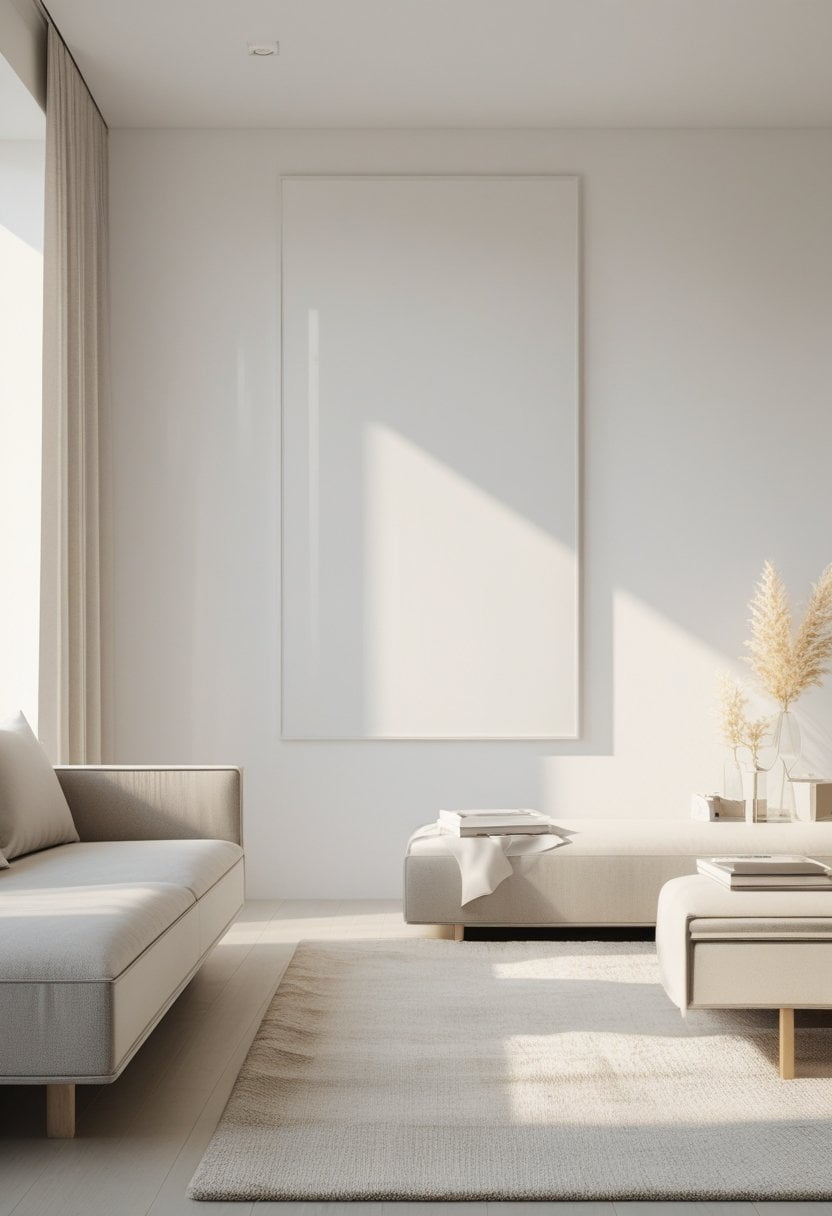
Minimal comfort doesn’t mean “nothing.” It means choosing one strong piece and giving it space to shine.
Statement ideas:
- A large, simple artwork
- A sculptural floor lamp
- A beautiful wood cabinet
- A single oversized plant
If everything is a statement, nothing is. Pick one hero and keep the rest quiet.
11. Bring Nature In With Greenery (Simple, Not Fussy)
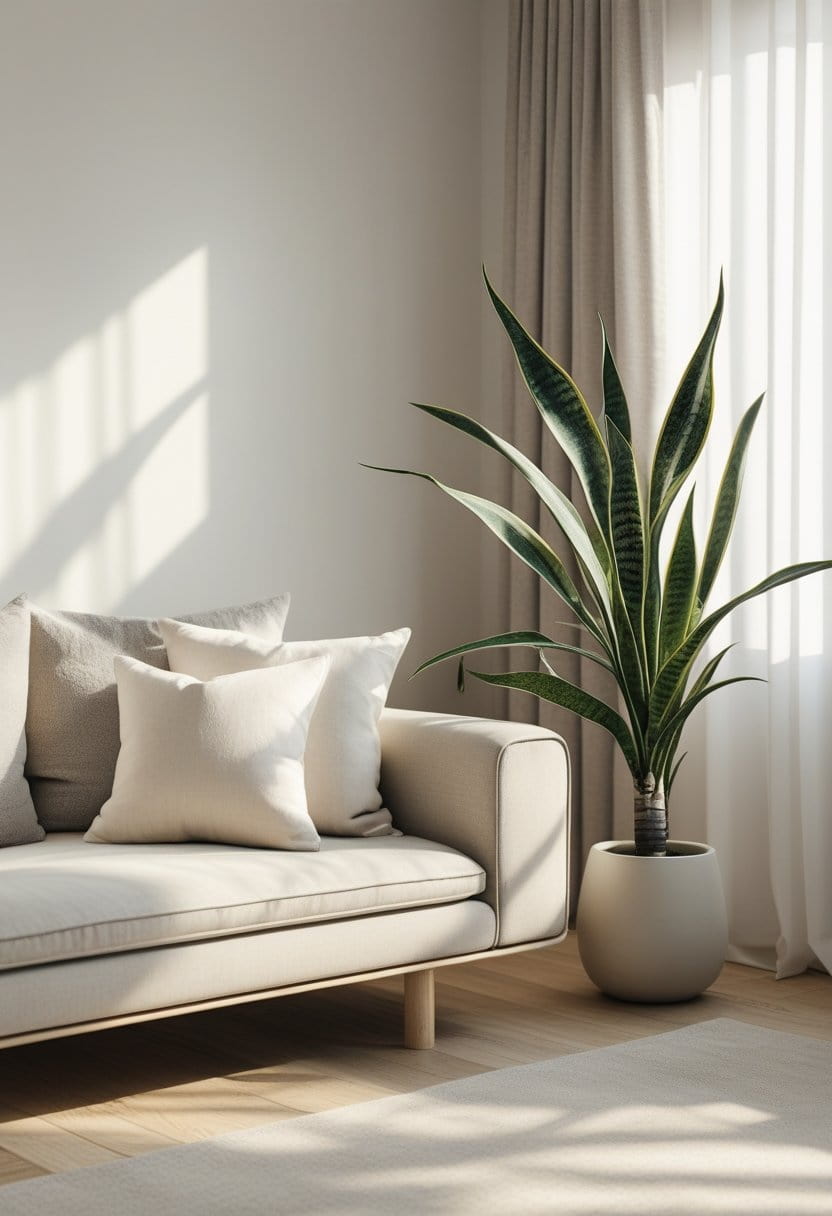
Plants make Japandi style feel alive. Choose plants with clean shapes and easy care.
Good choices:
- Snake plant
- Rubber plant
- Fiddle leaf fig (if you have bright light)
- ZZ plant
- Simple branch arrangement in a vase
Use neutral planters: ceramic, stone, clay, or matte black.
12. Use Natural Curtains That Filter Light
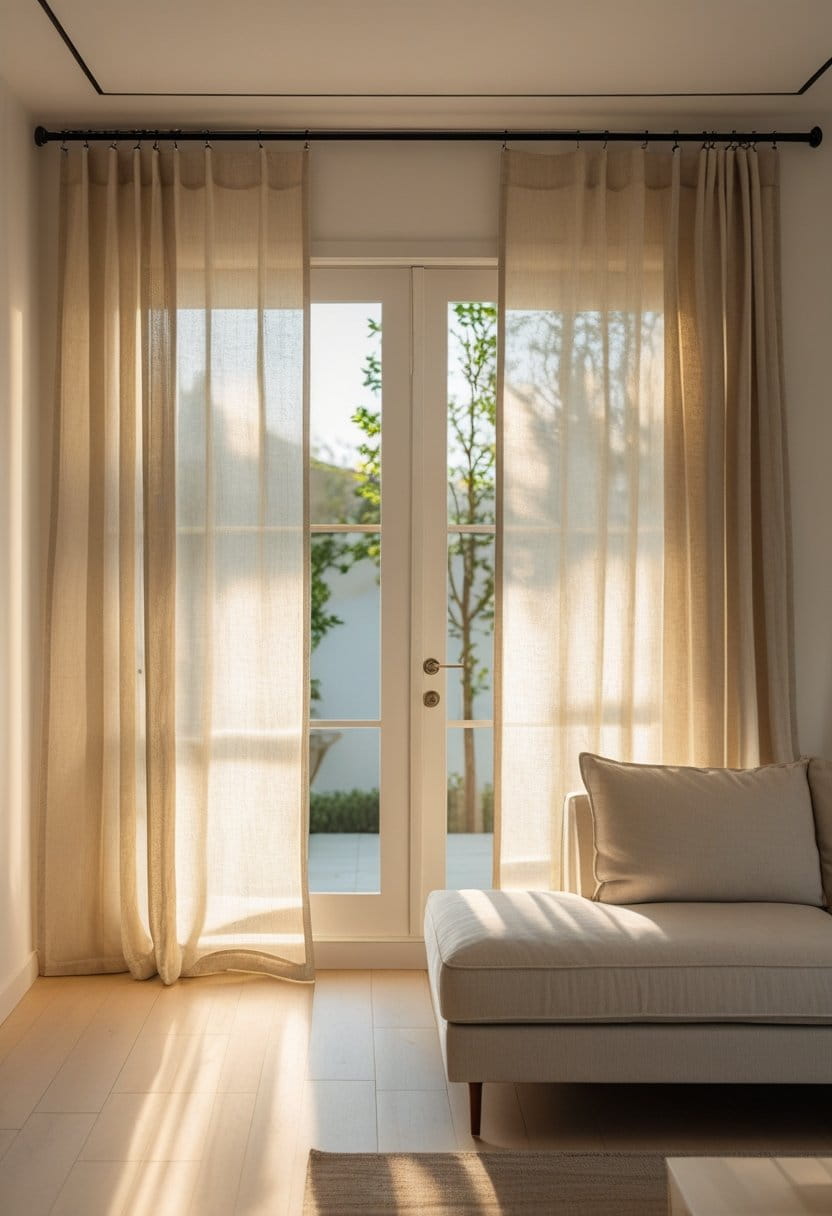
Heavy curtains can make a room feel dark and busy. Japandi living rooms often use light, natural fabrics that soften sunlight.
Try:
- Linen curtains
- Cotton blends
- Soft woven shades
Tip: Hang curtains higher and wider than the window if possible. It makes the room feel taller and calmer.
13. Create a “Quiet Corner” for Reading or Tea
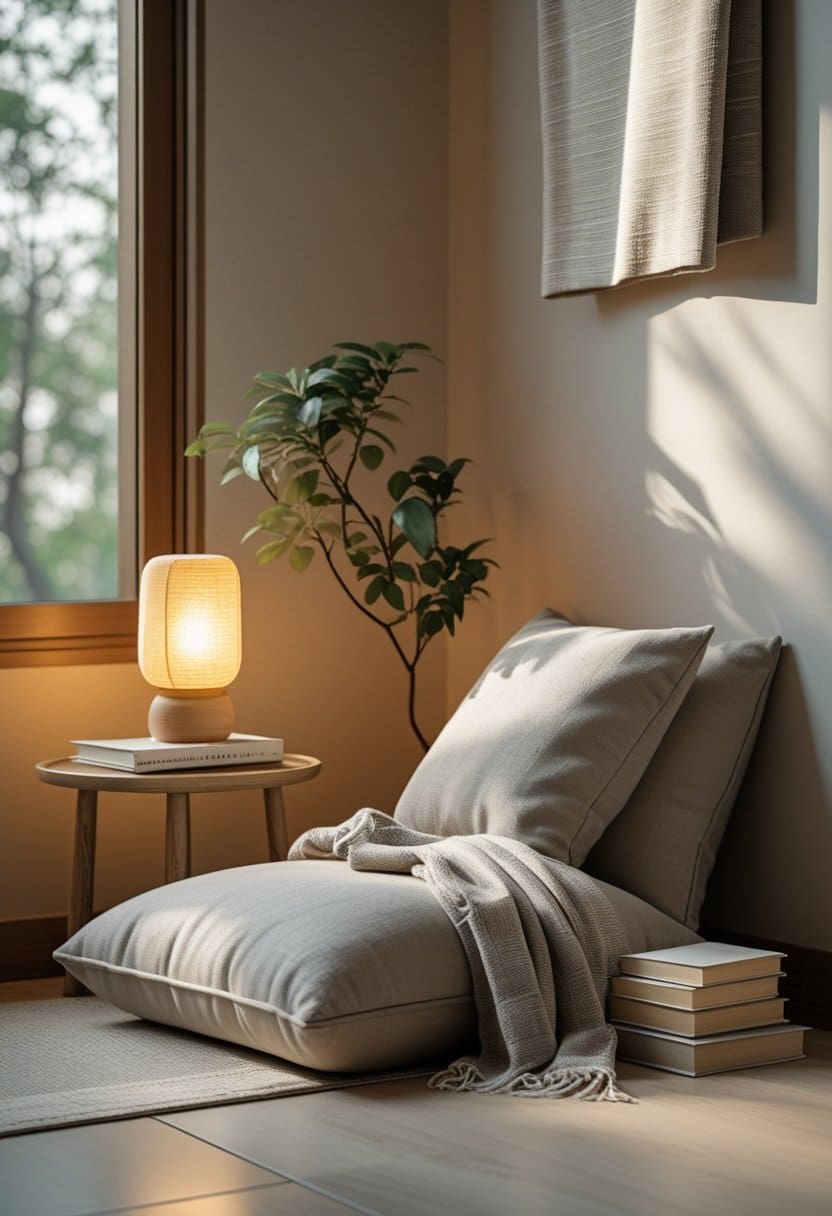
This is one of the best Japandi living room ideas for minimal comfort because it adds a lifestyle feeling, not just a look.
A quiet corner can be:
- A simple chair + small side table
- A floor cushion + low shelf
- A bench by the window
Add:
- A warm lamp
- One small plant
- A soft throw
This corner becomes a daily reset spot.
14. Choose Storage That Hides Visual Clutter
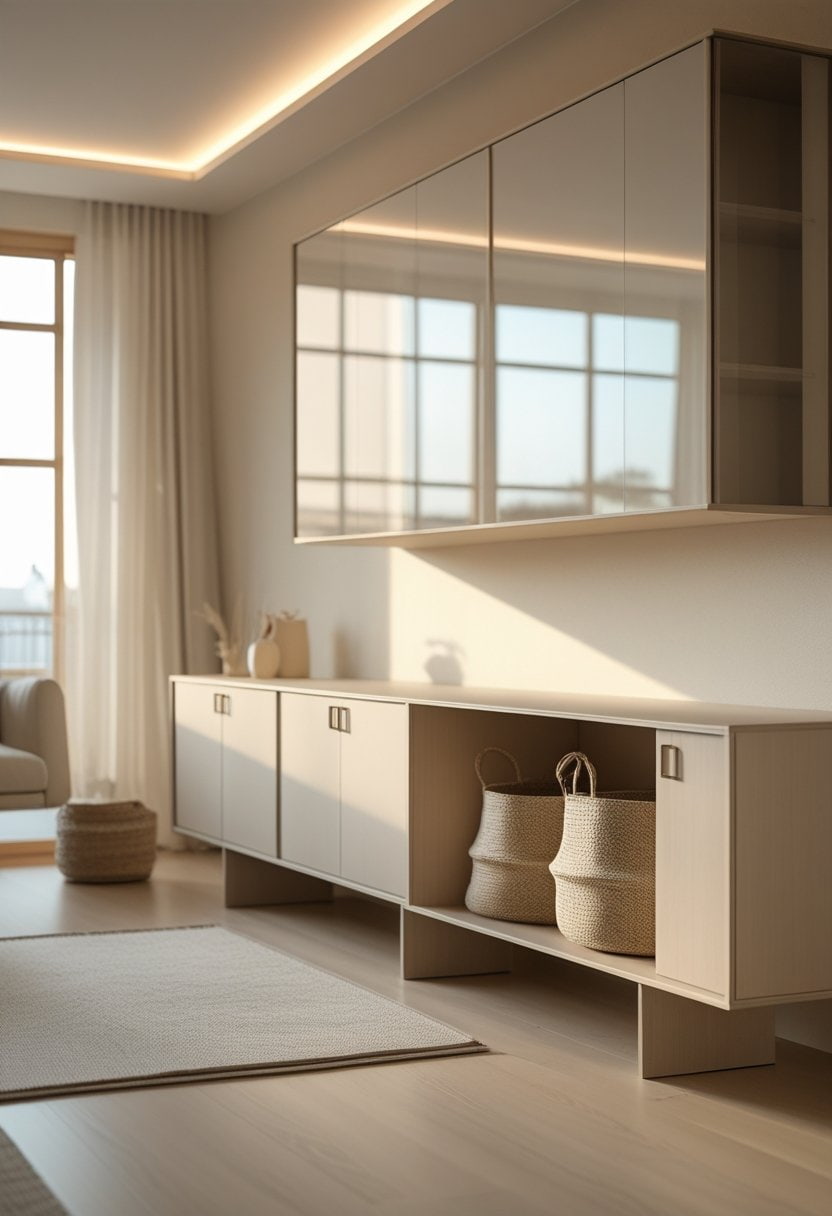
Nothing breaks a calm room faster than visible clutter. Japandi style loves storage that looks clean and intentional.
Smart storage ideas:
- Closed cabinets with flat fronts
- Baskets in natural fiber
- A low console with doors
- Floating shelves (only if styled lightly)
Rule of thumb: Keep most everyday items behind doors, not on display.
15. Display Decor in Small, Curated Groups
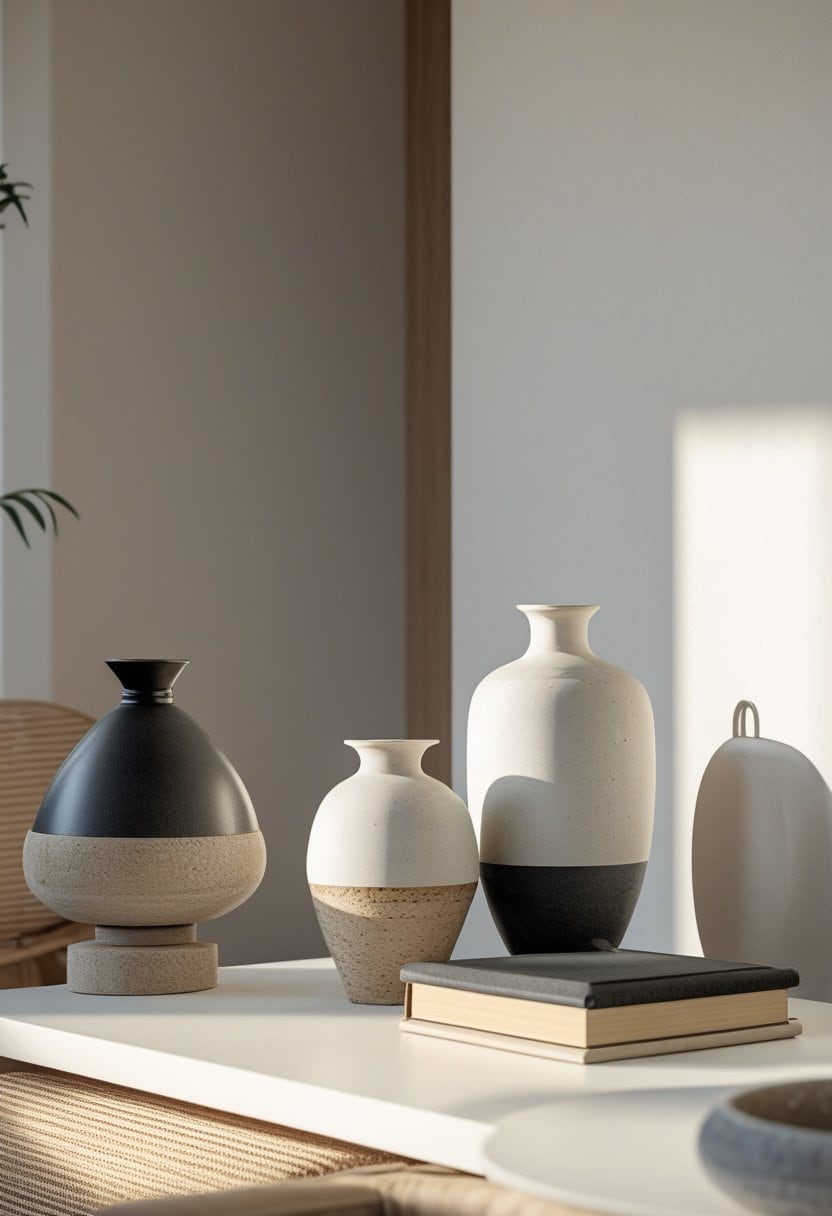
Instead of many little pieces everywhere, Japandi design uses fewer objects with more meaning.
A simple styling method:
- Group items in sets of 3
- Mix heights: tall + medium + small
- Use natural materials: wood, ceramic, stone, glass
Examples:
- A ceramic vase + a small bowl + a book
- A candle + a simple tray + a plant cutting
Leave space around the group so it feels calm.
16. Use Handmade or Wabi-Sabi Details for Warmth
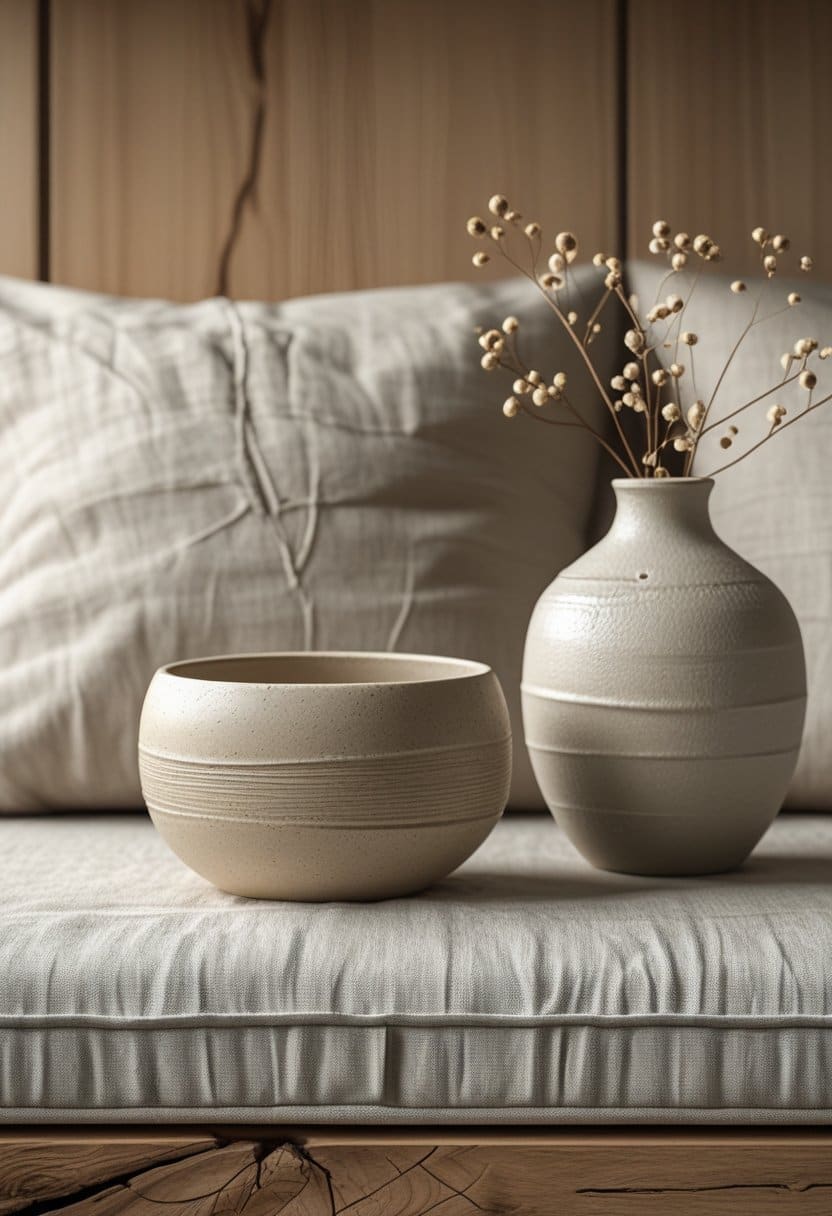
Japandi style often includes a quiet appreciation for natural imperfections—things that feel human, not factory-perfect.
Easy ways to add that feel:
- Hand-thrown ceramic bowl
- Textured vase with uneven glaze
- Slightly irregular linen fabric
- Natural wood with visible grain
These touches make minimal rooms feel personal and soft.
17. Keep Wall Art Large and Simple
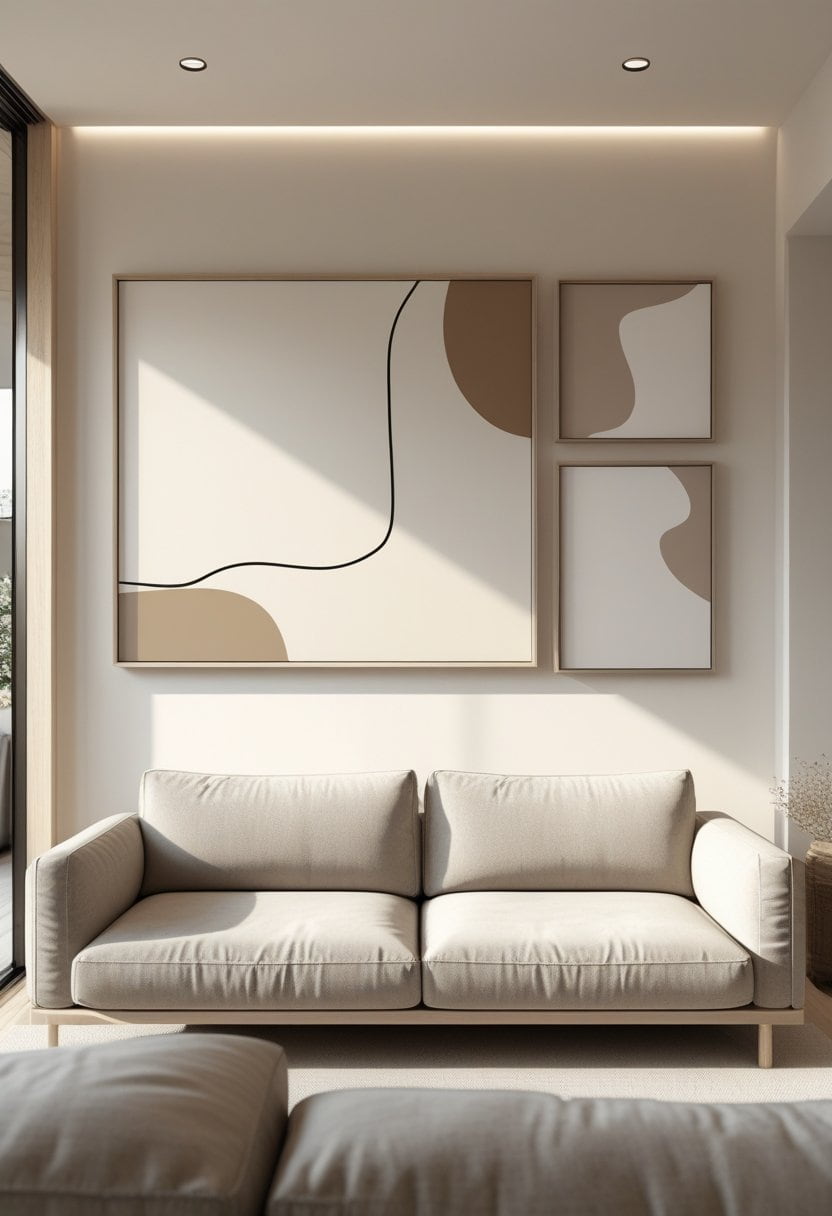
Too many small frames can look busy. Japandi living rooms often use:
- One large art piece
- Or two medium pieces with space between them
Art styles that fit:
- Abstract shapes in neutral tones
- Nature photography
- Ink-style line art
- Soft landscapes
Use simple frames—black, light wood, or thin metal.
18. Mix Scandinavian Softness With Japanese Simplicity
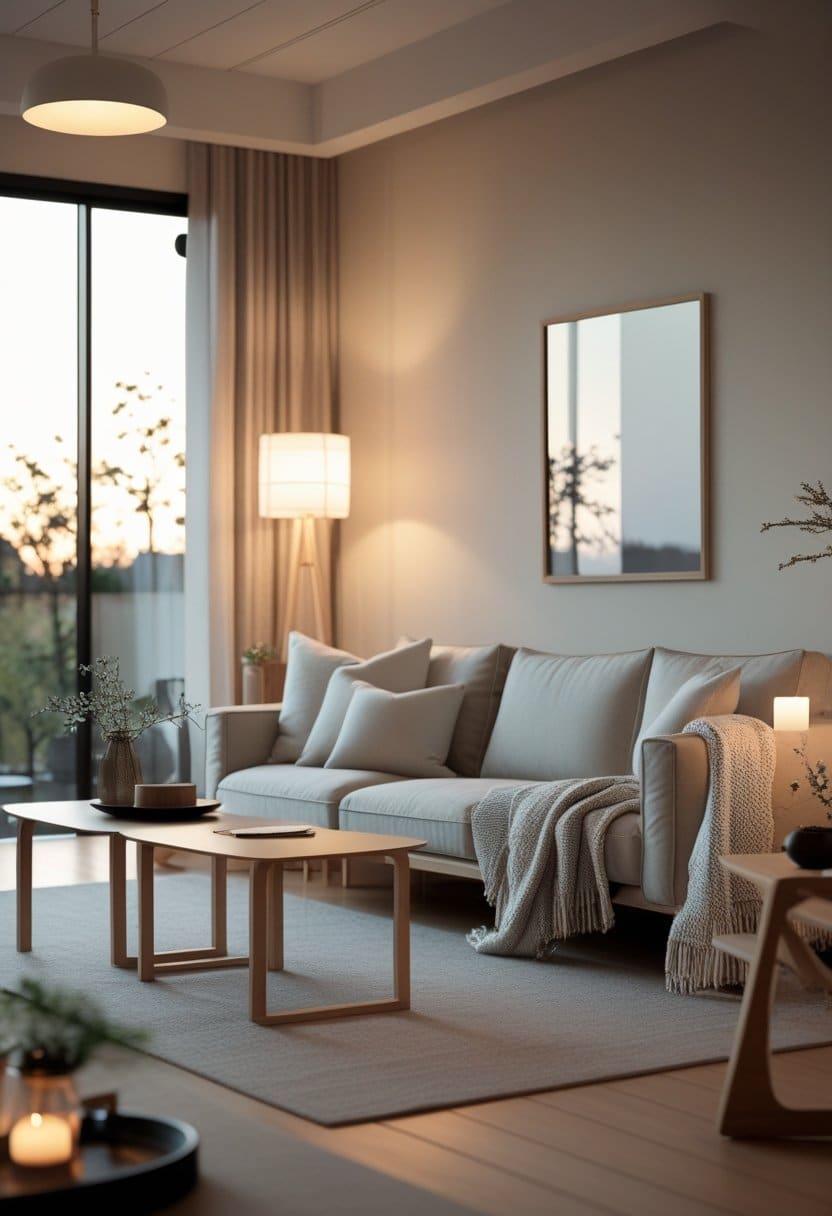
This is the heart of Japandi. If your room feels too cold, add Scandinavian warmth. If it feels too cozy-chaotic, lean into Japanese simplicity.
Balance ideas:
- Japanese: clean lines, fewer items, calm tones
- Scandinavian: plush textiles, warm lighting, comfort-first furniture
If you’re unsure, ask yourself:
- “Does this add comfort?”
- “Does this add clutter?”
Keep what helps, remove what distracts.
19. Choose a Calm Color Accent (Just One or Two)
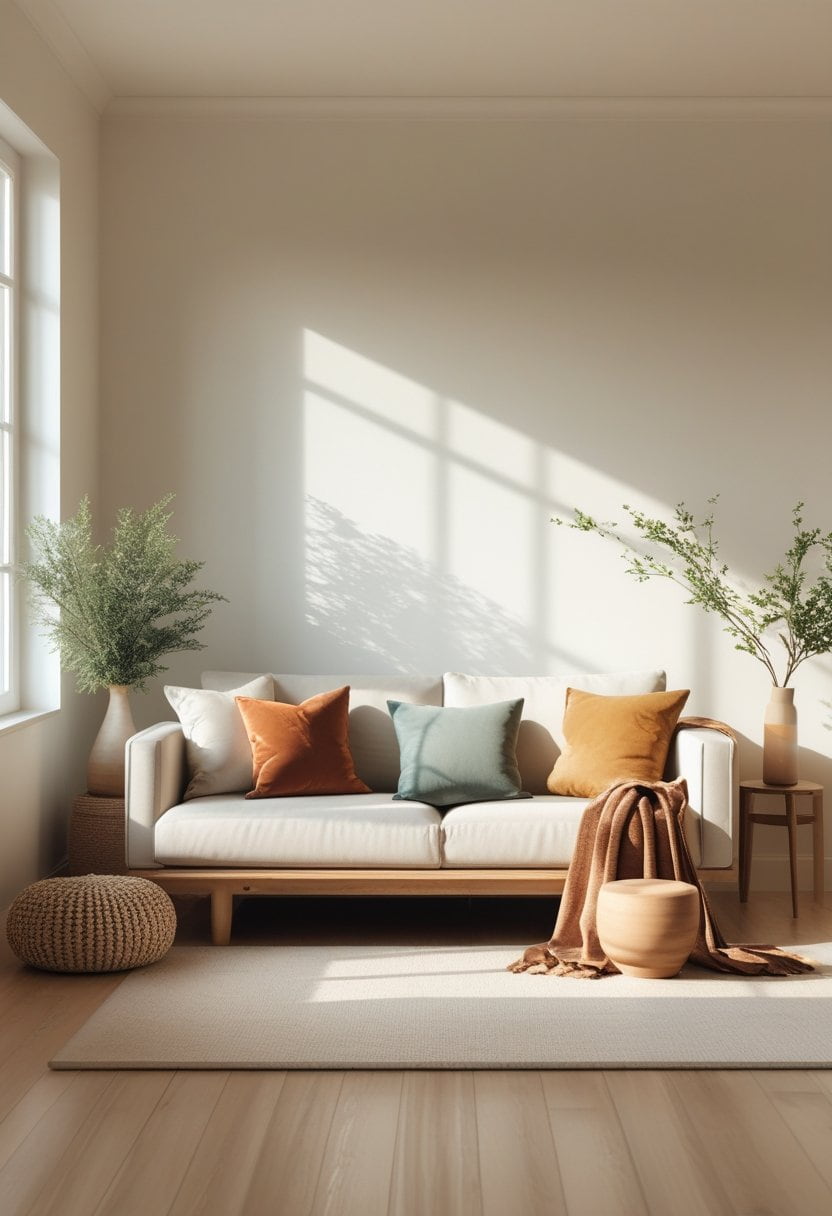
Japandi doesn’t avoid color—it just uses it carefully. One muted accent color can make a neutral room feel alive.
Great Japandi accents:
- Sage green
- Muted olive
- Clay or terracotta
- Dusty blue
- Warm caramel
Where to add it:
- One cushion
- One throw
- One artwork detail
- One vase or bowl
The room stays minimal, but it doesn’t feel bland.
A Simple Japandi Living Room Checklist
Use this checklist to pull everything together without overthinking:
- Neutral walls and large furniture
- One consistent wood tone
- A few black accents for contrast
- Soft, warm lighting (2700K–3000K)
- Natural textiles (linen, wool, cotton)
- Closed storage to hide clutter
- One statement piece (art, plant, or lamp)
- Decor grouped in small, intentional sets
- Plenty of open space
Common Mistakes That Ruin the Japandi Feel
Even with good furniture, these mistakes can make the room feel “off”:
- Too many decorative items (minimal comfort needs breathing room)
- Cold lighting (harsh white light makes the room feel sterile)
- Too many mixed materials (keep it simple: wood, fabric, ceramic)
- Tiny rug sizes (the room won’t feel anchored)
- Over-styling shelves (leave empty space on purpose)
Japandi is calm because it’s edited.
Conclusion
The best Japandi living room isn’t the one that looks like a magazine. It’s the one that makes you exhale the moment you sit down. Use these 19 Japandi living room ideas for minimal comfort as a menu, not a strict rulebook. Start with what matters most—comfort, calm, and function—then build slowly.
If you make just three changes this week, make them these:
- Clear one clutter zone
- Add one warm texture (throw, rug, or cushion)
- Improve lighting with one warm lamp
Small steps create a big shift. And that’s exactly what Japandi is about.


More Stories
21 Bedroom Interior Ideas That Redefine Elegance
20 Kitchen Cabinet Color Ideas for a Fresh Look
22 Japandi Dining Room Ideas for Minimalist Comfort