
Introduction
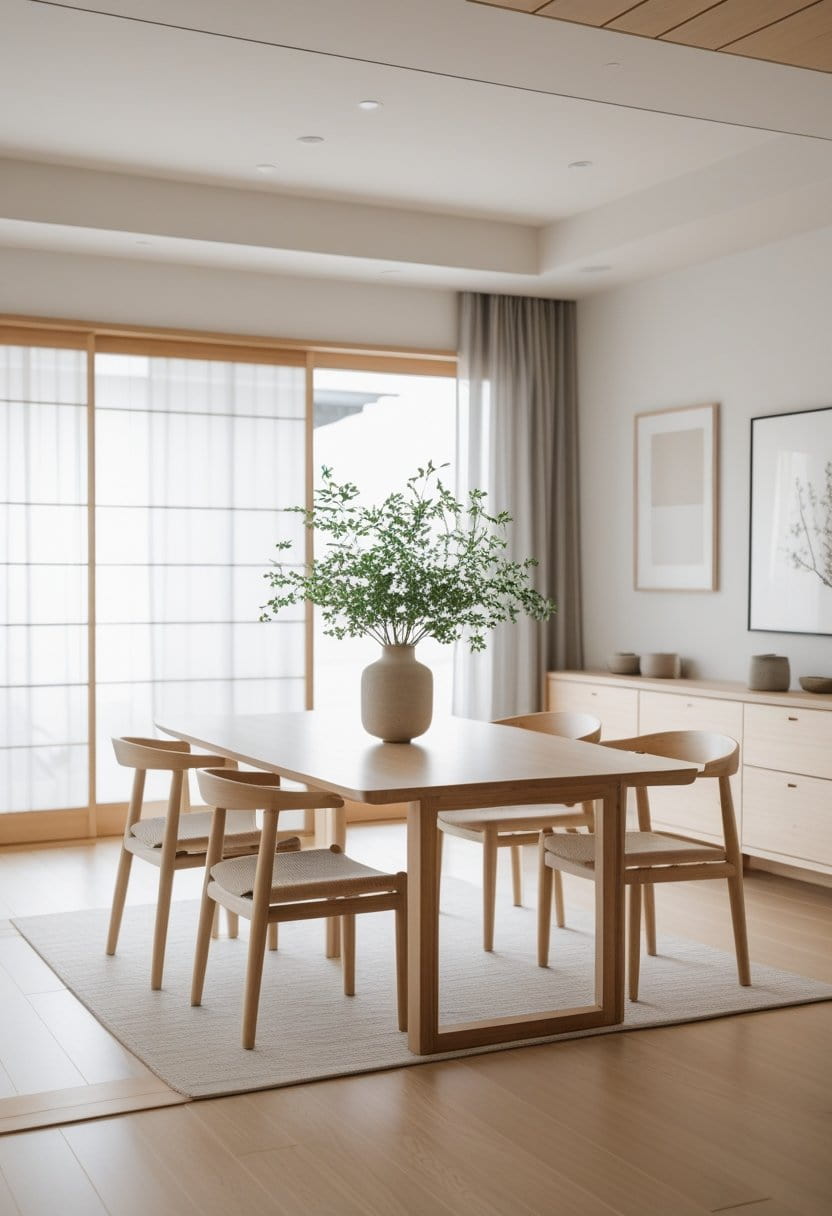
Japandi style is where Japanese calm meets Scandinavian coziness. In a dining room, that mix feels especially natural: you want the space to look clean and uncluttered, but still warm enough to invite people to sit, eat, and stay awhile. That’s why 22 Japandi Dining Room Ideas for Minimalist Comfort can be such a practical guide—Japandi isn’t about “decorating more,” it’s about choosing better.
A Japandi dining room usually has:
- Soft, neutral colors (warm whites, sand, greige, muted wood tones)
- Natural materials (wood, linen, ceramic, rattan, stone)
- Simple shapes with thoughtful details
- A “less but better” approach to furniture and decor
- Comfort that feels quiet, not flashy
Below, you’ll find 22 Japandi dining room ideas you can mix and match. Each one is easy to understand, realistic to try, and designed to create minimalist comfort without making your dining room feel cold or empty.
1) Start With a Calm, Warm Neutral Palette
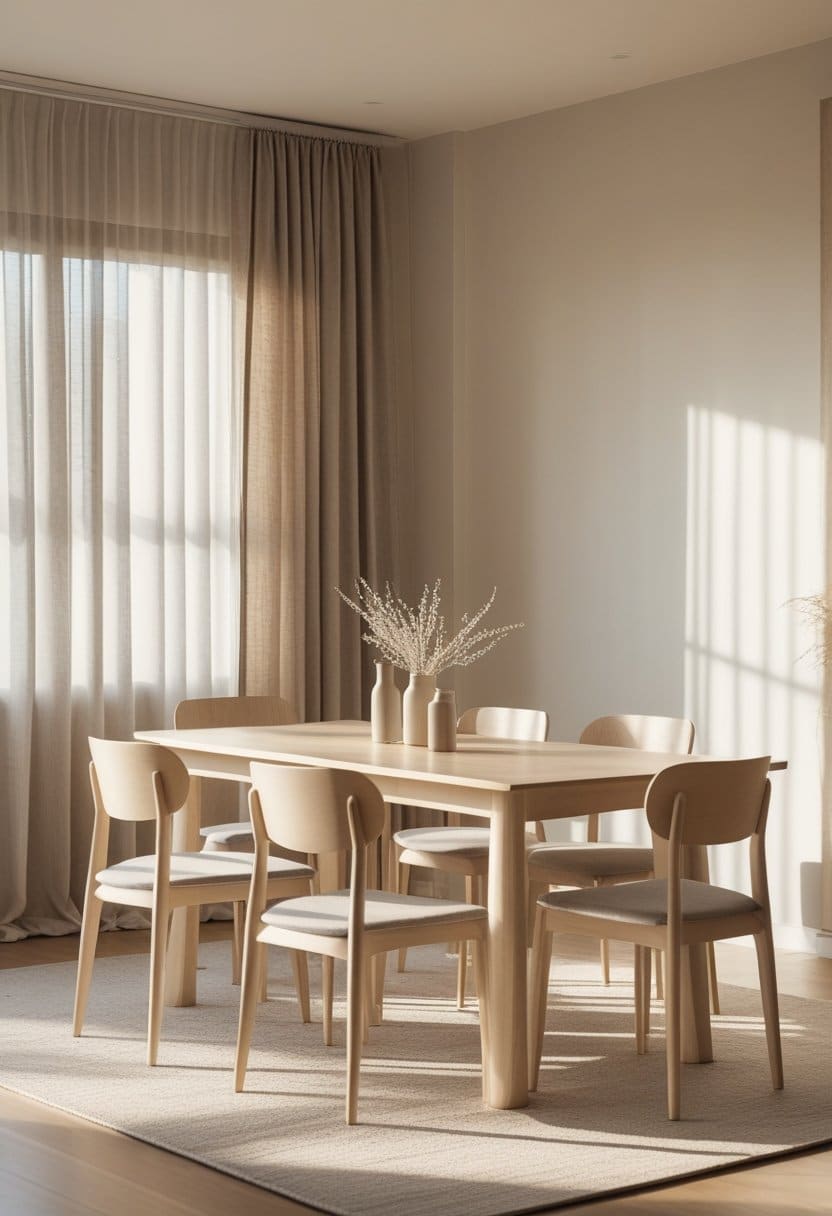
The fastest way to make a dining room feel Japandi is to calm the color story. Think warm and quiet, not bright and loud.
Good base colors include:
- Warm white
- Soft beige
- Light taupe
- Mushroom gray
- Pale oak tones
For contrast, add small touches of:
- Charcoal
- Matte black
- Deep brown
- Muted olive
A simple rule: keep 80–90% of the room in soft neutrals, and use 10–20% for contrast.
2) Choose a Dining Table With Simple Lines and Natural Wood
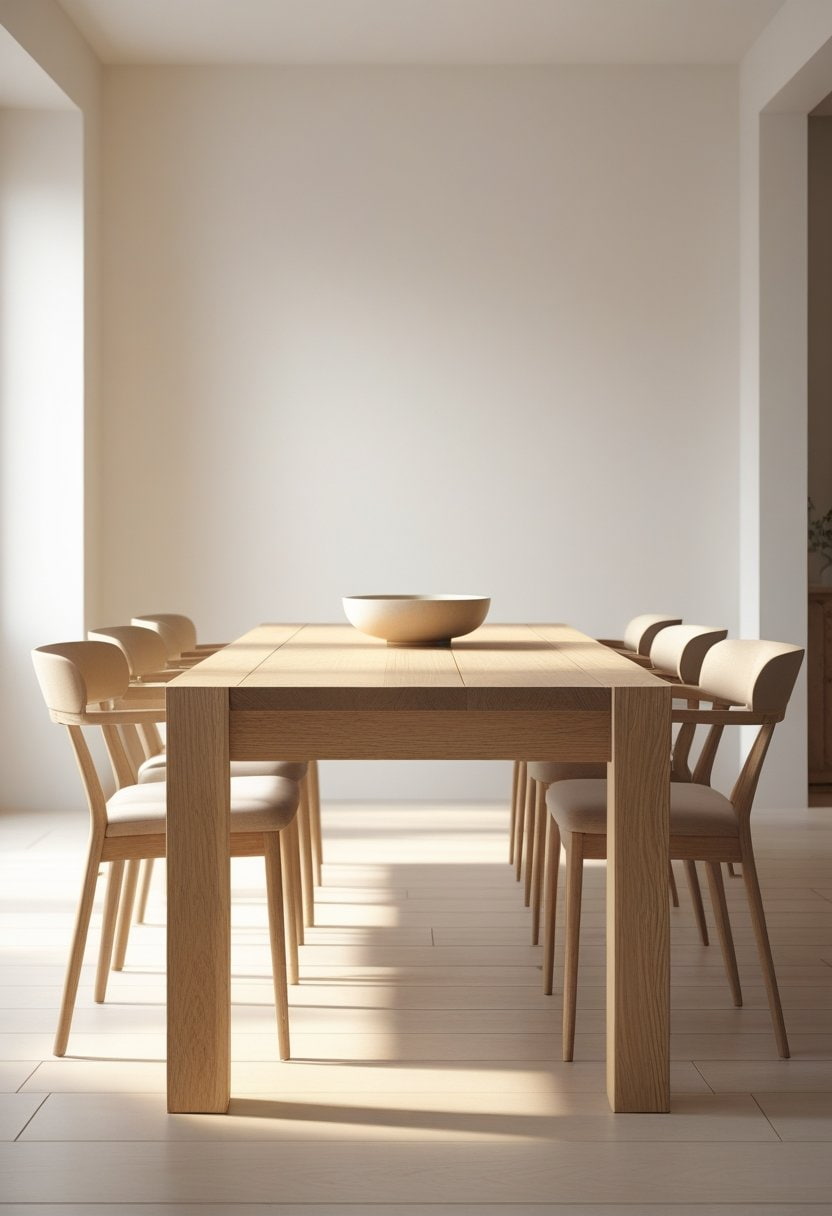
In Japandi, the dining table is the hero. Look for a table that feels honest: real wood, clean edges, and a shape that fits your room.
Popular choices:
- Rectangular oak table with slim legs
- Rounded table for a softer flow
- Light wood top with subtle grain
If you want minimalist comfort, avoid tables with heavy ornamentation or shiny finishes. Matte or satin wood finishes feel calmer and more natural.
3) Mix Chair Styles (But Keep Them Visually Quiet)
Japandi interiors often mix styles, but in a controlled way. Try mixing Scandinavian-style chairs with a Japanese-inspired bench, or combine two chair shapes in the same wood tone.
Examples:
- Two chairs at each side + a bench on one side
- Four matching chairs + two slightly different end chairs
- Woven seats paired with smooth wood backs
Keep the mix cohesive by matching at least one element:
- Wood tone
- Seat color
- Overall height and scale
4) Add a Bench for Soft Minimalism
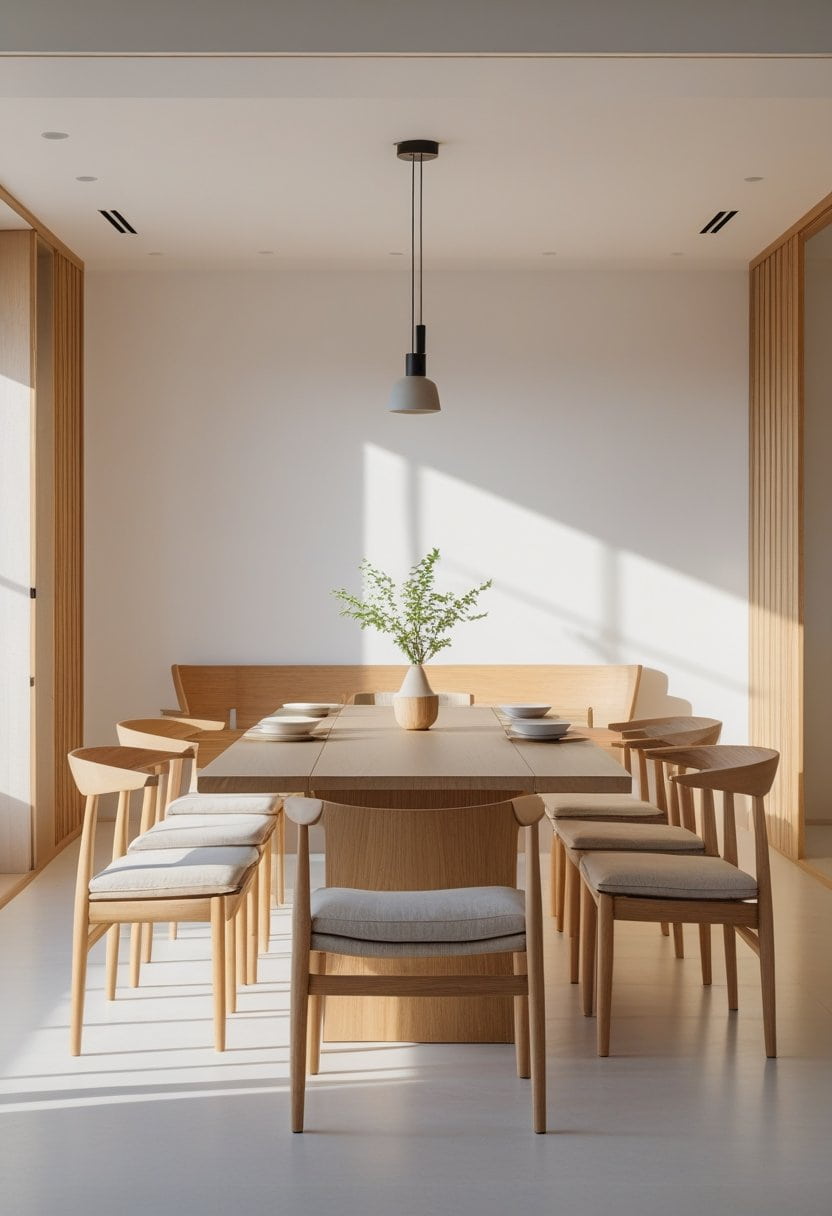
A bench is one of the most practical Japandi dining room ideas because it saves space and looks calm.
Why benches work well:
- They reduce visual clutter (one long line instead of multiple chair backs)
- They feel casual and welcoming
- They can slide fully under the table in smaller rooms
For comfort, add a thin cushion in linen or cotton in a neutral tone.
5) Use One Statement Pendant Light (Not Many Small Ones)
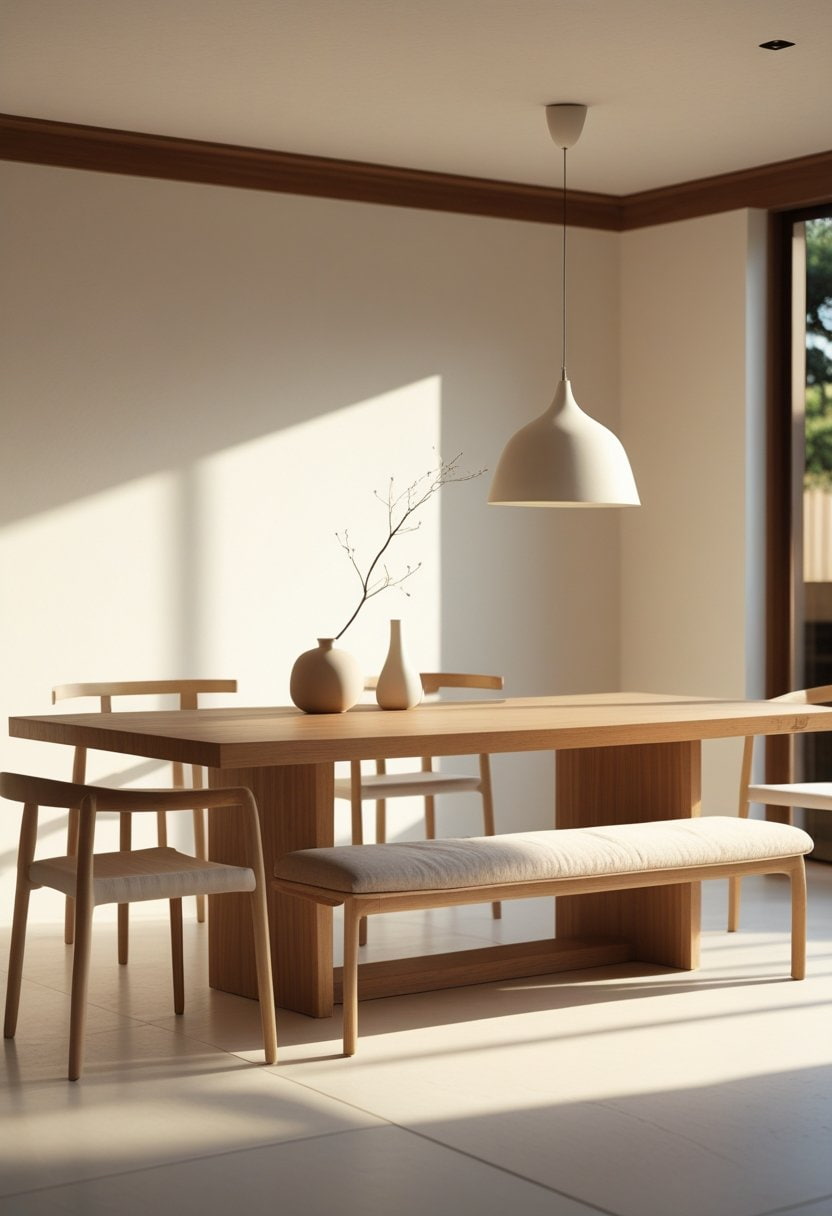
Minimalist comfort is easier when the lighting is simple. Instead of multiple small fixtures competing for attention, choose one pendant light that feels sculptural and calm.
Great Japandi pendant materials:
- Paper lantern style
- Linen shade
- Light wood veneer
- Matte ceramic
Tip: hang your pendant so the bottom sits roughly 30–36 inches above the tabletop. This usually gives good light without blocking conversation.
6) Layer Lighting for Evening Warmth
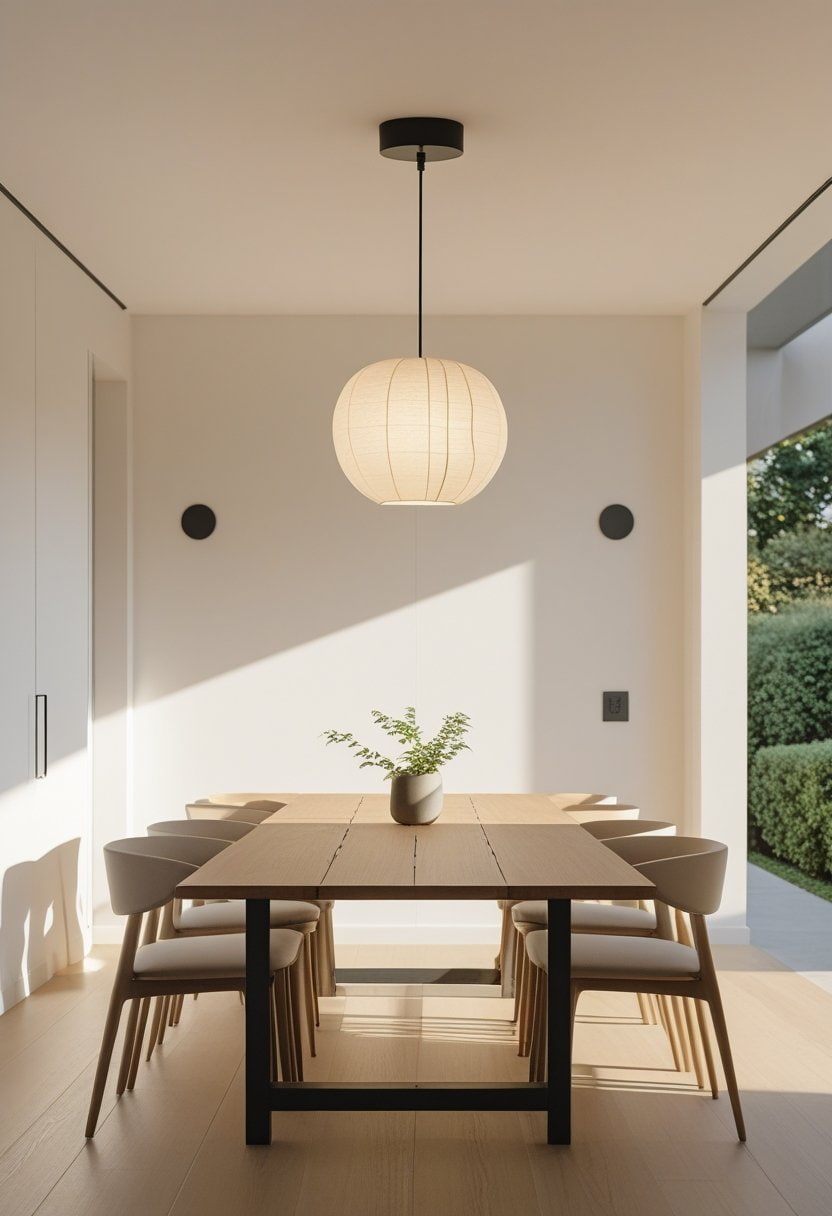
Japandi dining rooms feel best at night when lighting is soft. Use layers so you’re not relying only on overhead light.
Try a simple lighting trio:
- Overhead pendant for general light
- A floor lamp in a corner for glow
- A small sideboard lamp for warmth
Warm bulbs (often described as “warm white”) can instantly make minimalist spaces feel comfortable.
7) Keep Windows Light and Breezy With Linen
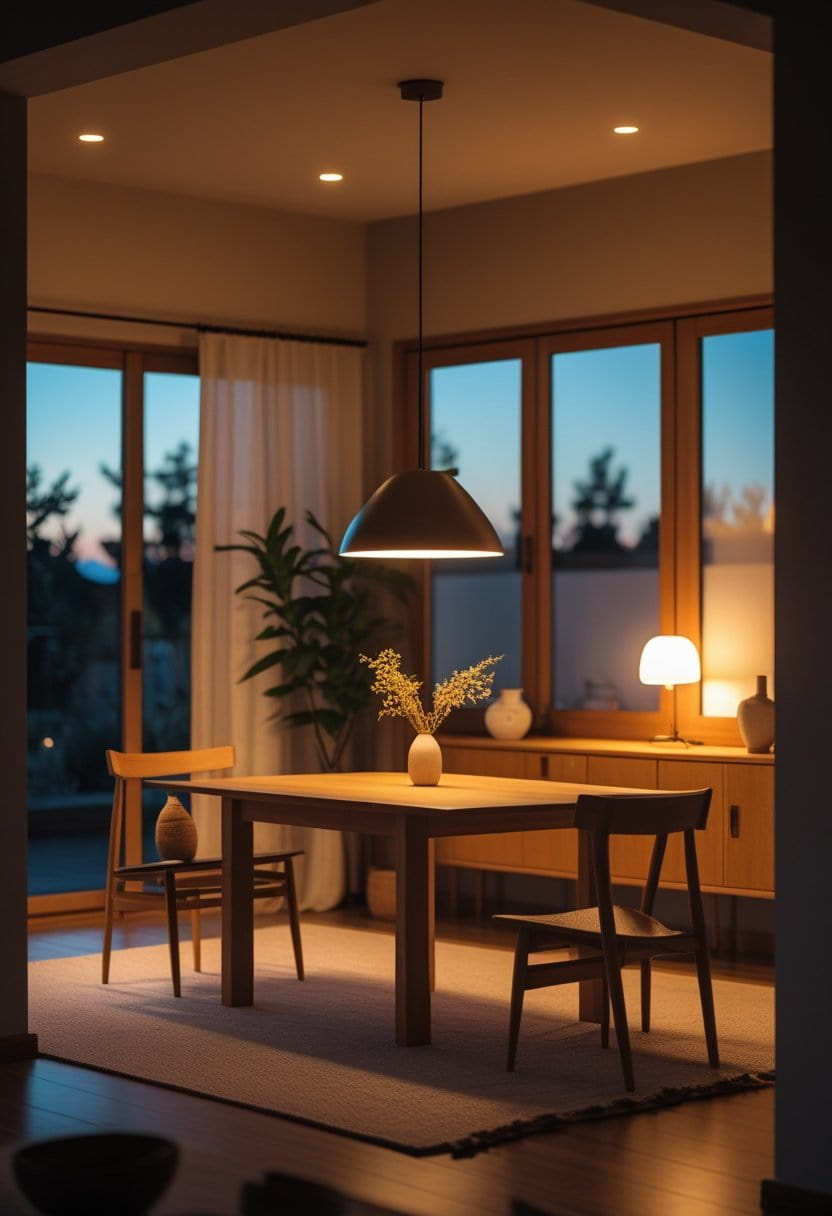
Window treatments matter more than people think. Heavy curtains can feel formal and bulky, while Japandi leans relaxed.
Best options:
- Linen curtains in warm white or beige
- Simple roller shades in a natural weave
- Light-filtering panels for privacy without darkness
The goal is soft light, not harsh glare.
8) Use an Area Rug to Define the Dining Zone
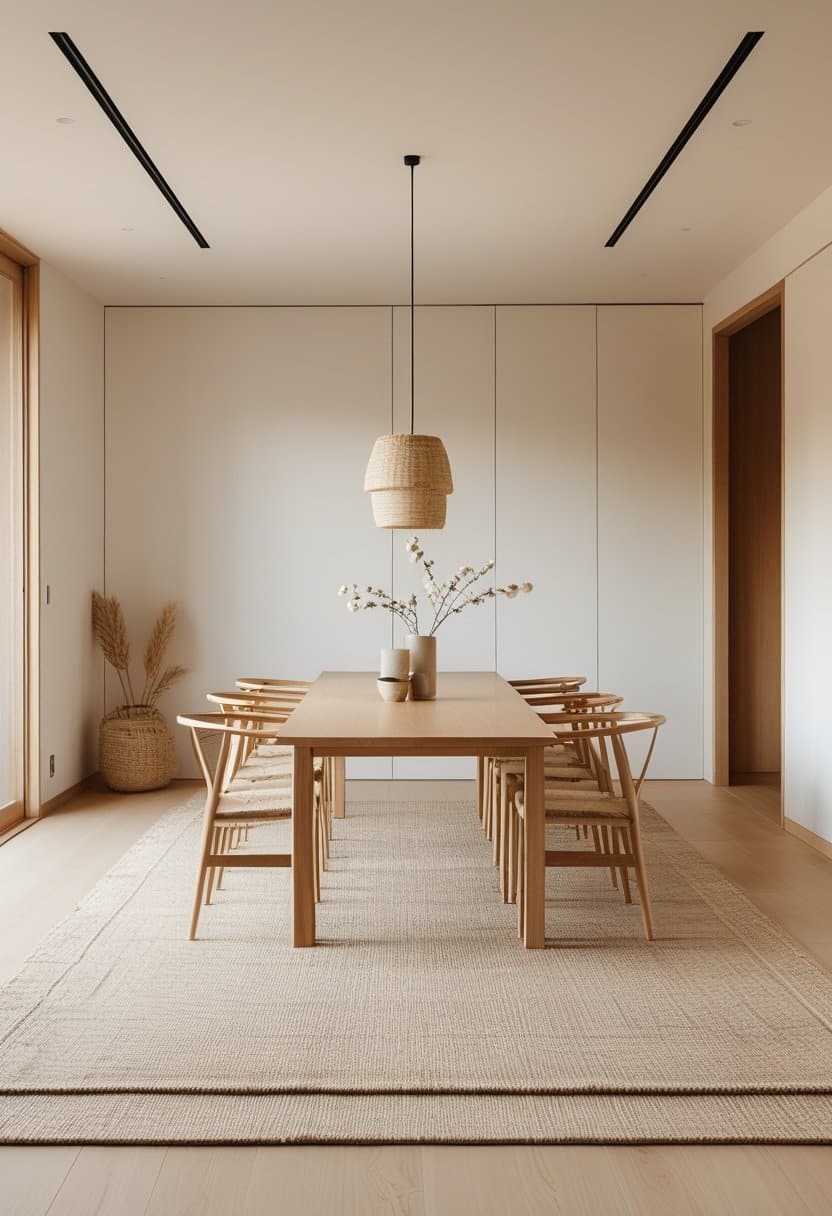
A rug adds warmth and helps the dining area feel “anchored,” especially in open-plan spaces.
Practical guidance:
- Choose a rug big enough so chairs stay on the rug when pulled out
- Flatweave or low-pile rugs are easier for dining rooms
- Neutral patterns work better than loud prints
If you want texture without busy visuals, try a subtle weave or tone-on-tone pattern.
9) Bring in Texture Instead of More Color
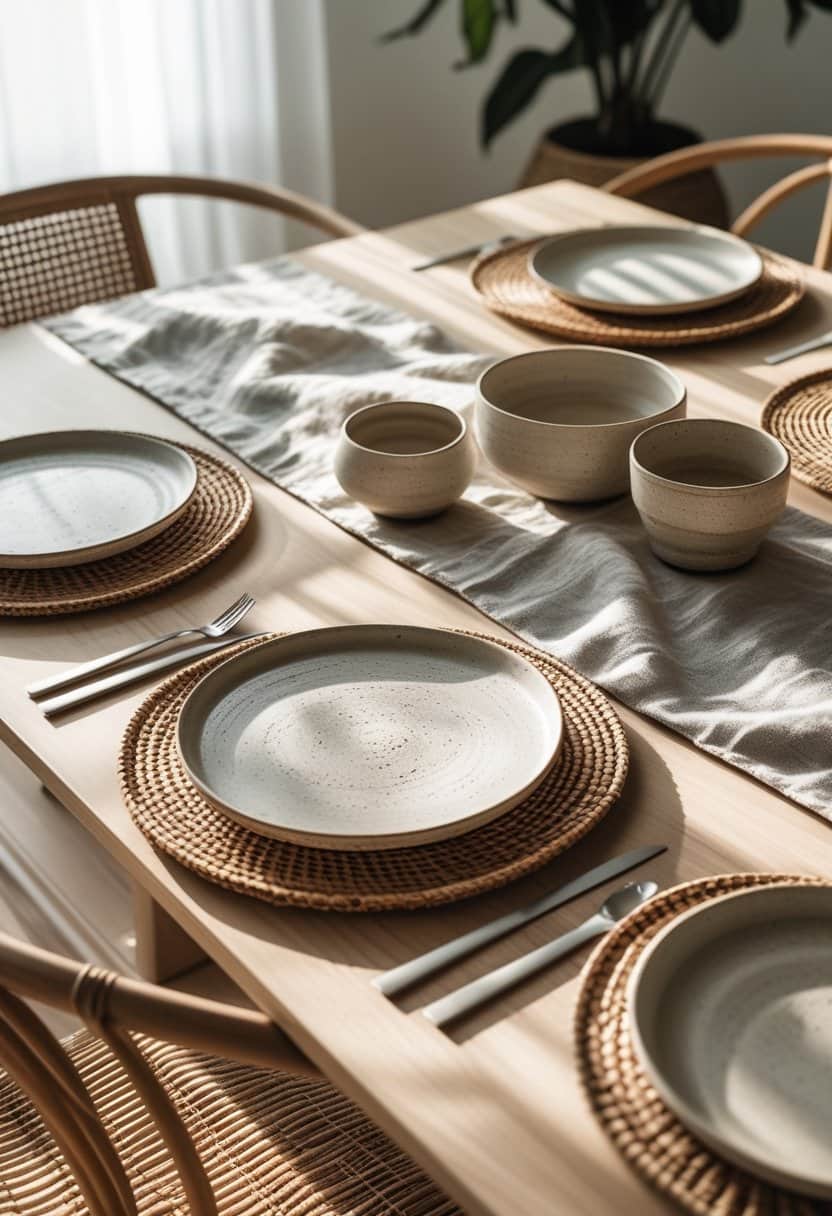
Japandi rooms often use fewer colors, so texture becomes the “interest.” This is key for minimalist comfort: you want the space to feel rich without looking crowded.
Easy texture upgrades:
- Linen table runner
- Woven placemats
- Ceramic dinnerware
- Wood grain
- A rattan chair seat or basket
A good Japandi dining room might look simple at first glance, but it feels detailed up close.
10) Style the Table With Fewer, Better Pieces
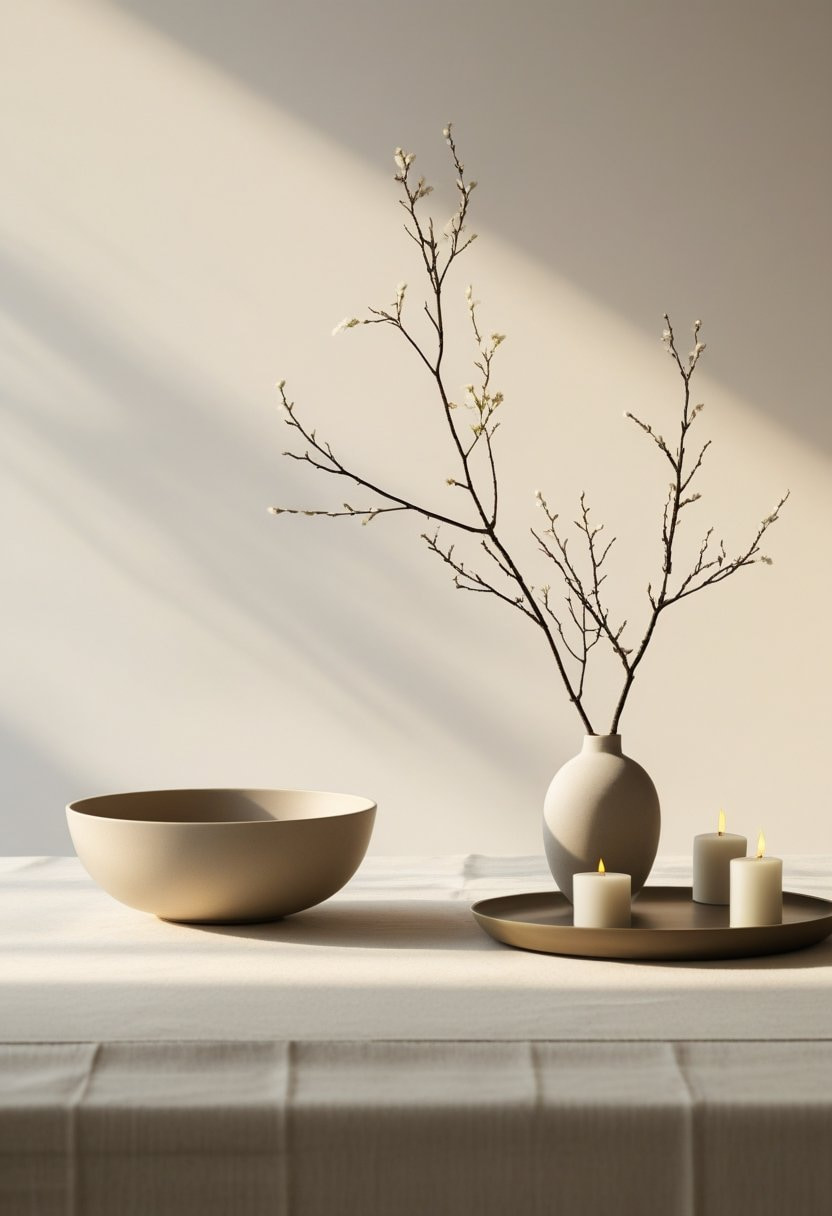
A crowded centerpiece can ruin the calm. Instead, choose a small arrangement that looks intentional.
Simple centerpiece ideas:
- A low ceramic bowl
- A single branch in a vase
- A small tray with candles and a neutral object
Keep it low so people can see each other. Minimalist comfort is also social comfort.
11) Choose Ceramics With an Organic, Handmade Look
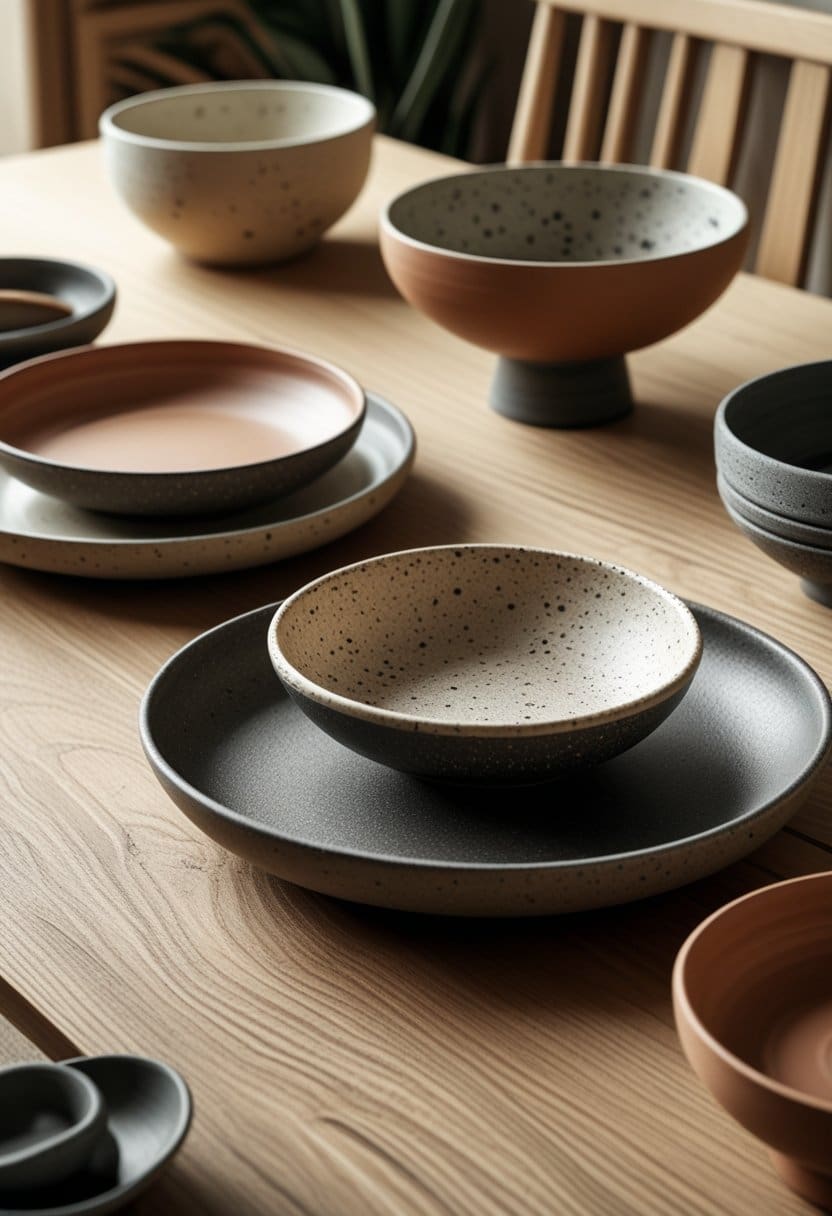
Perfectly glossy, matching sets can feel a bit sterile. Japandi style often favors handmade-looking pieces—slight imperfections feel human and warm.
Look for:
- Matte glazes
- Speckled textures
- Earthy tones (cream, sand, charcoal, terracotta)
Even one set of ceramic mugs or a serving bowl on display can add quiet personality.
12) Create Contrast With Black Accents (Just a Little)
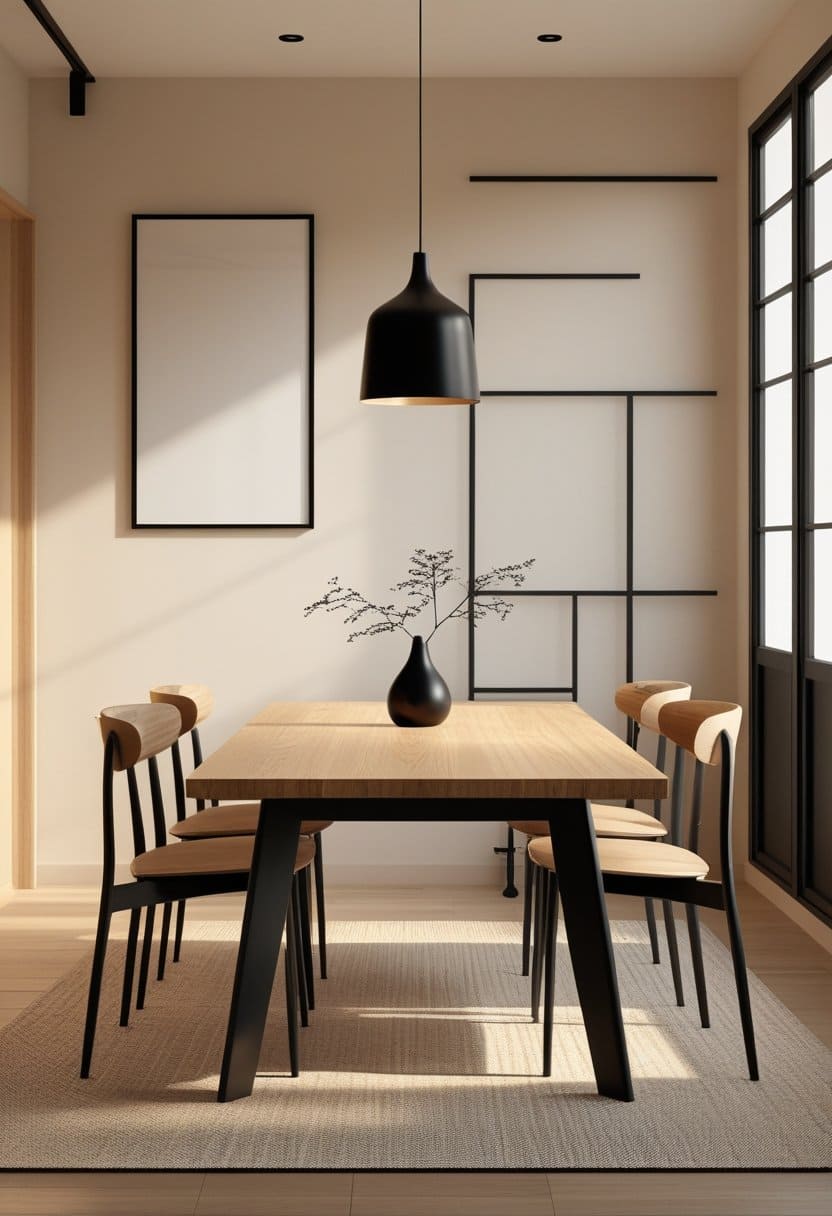
A touch of black gives Japandi its modern edge. The trick is to keep it minimal.
Where black works best:
- Chair legs
- Light fixture hardware
- Picture frames
- A thin vase
- Cabinet pulls
Use black like punctuation, not like a main color.
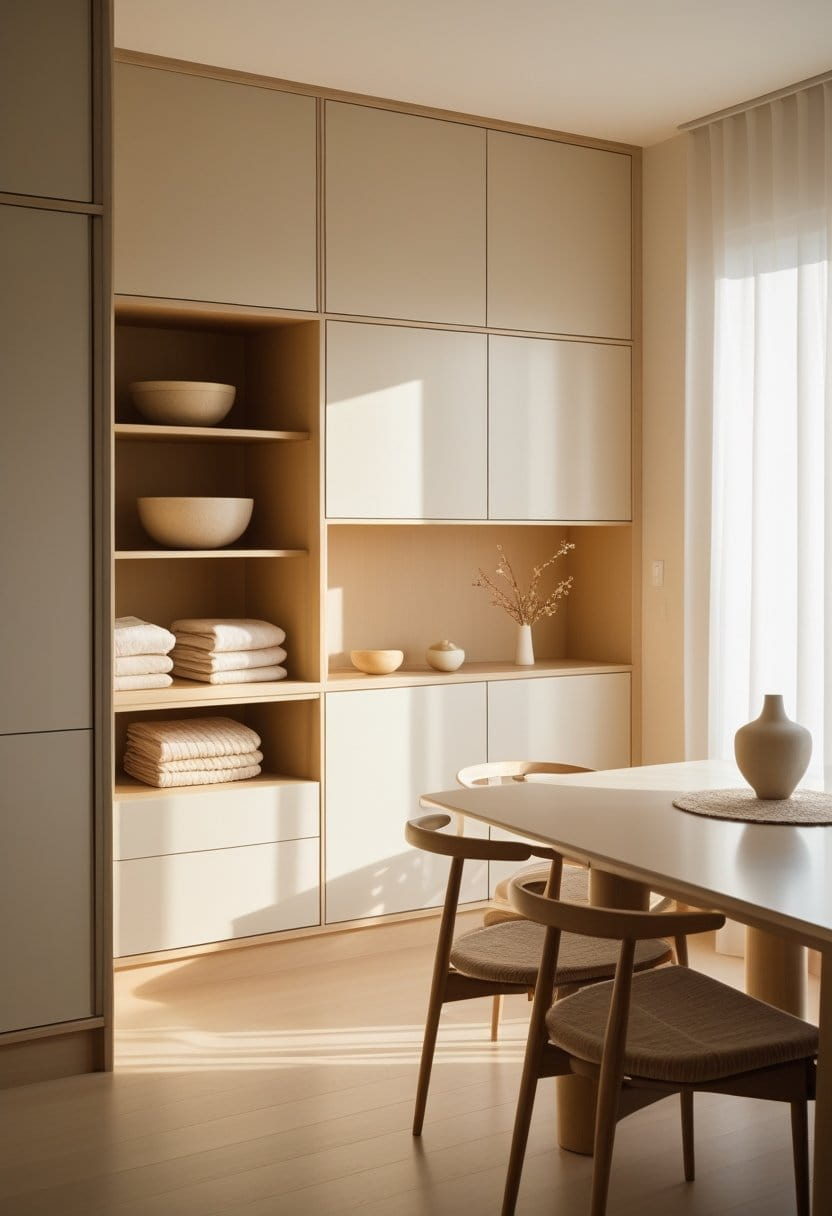
13) Add a Sideboard With Clean, Low Profile Storage
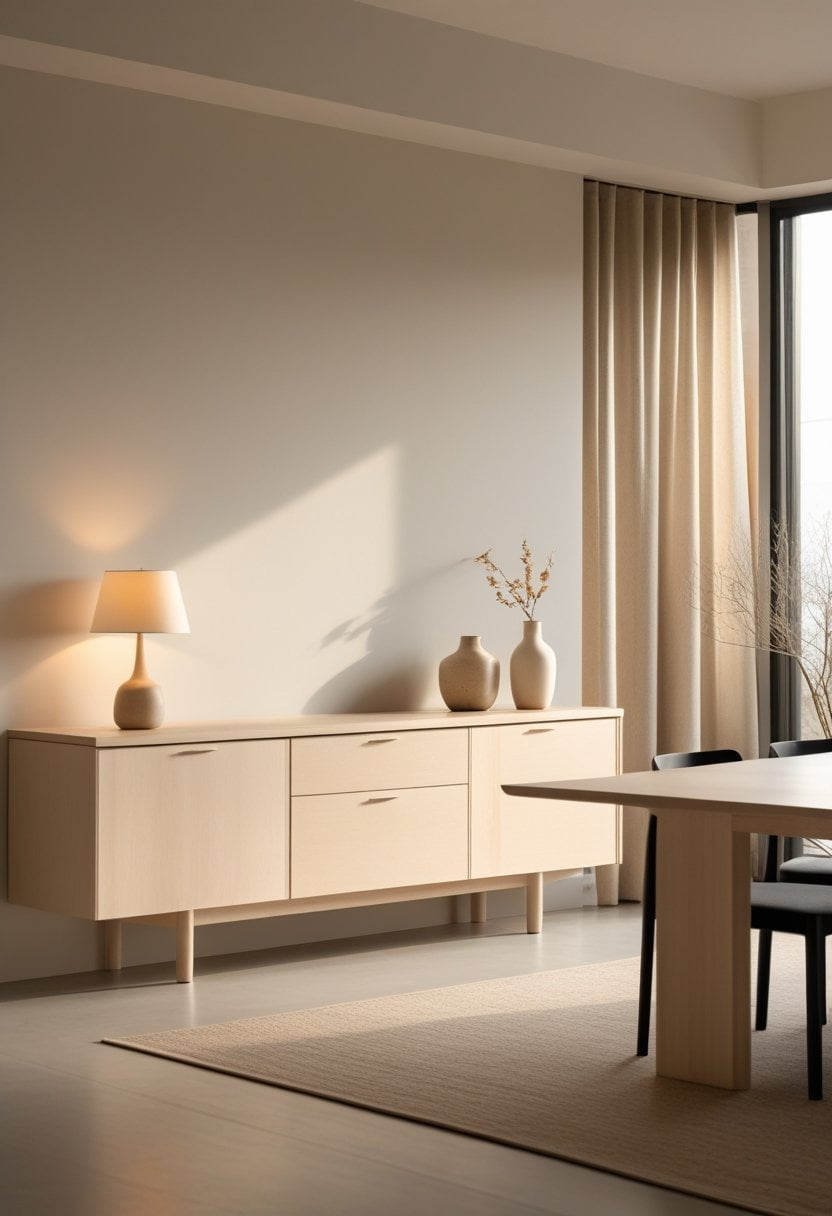
Clutter is the enemy of minimalist comfort. A sideboard gives you a place to hide extra items while keeping the room calm.
What to store inside:
- Table linens
- Candles
- Extra plates and glasses
- Serving pieces
What to style on top (keep it simple):
- One lamp
- One vase or bowl
- One framed print (optional)
14) Use Open Shelving Only If You Can Keep It Curated
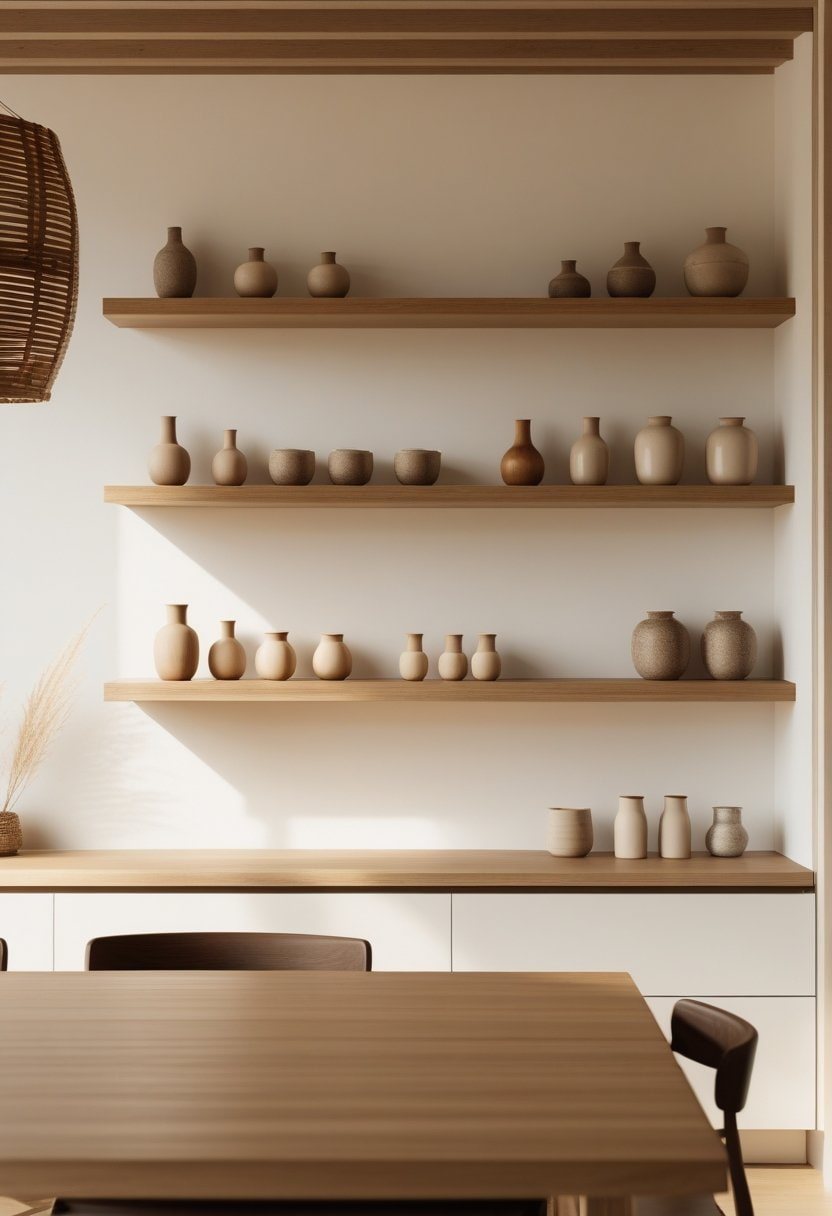
Open shelves look beautiful in Japandi style, but only when they’re not overloaded.
If you do open shelving, aim for:
- 60–70% empty space
- Items grouped in small clusters
- Mostly neutral objects (wood + ceramic is a strong combo)
If you know you prefer “easy maintenance,” closed storage is often the better minimalist choice.
15) Choose Wall Art That Feels Calm and Natural
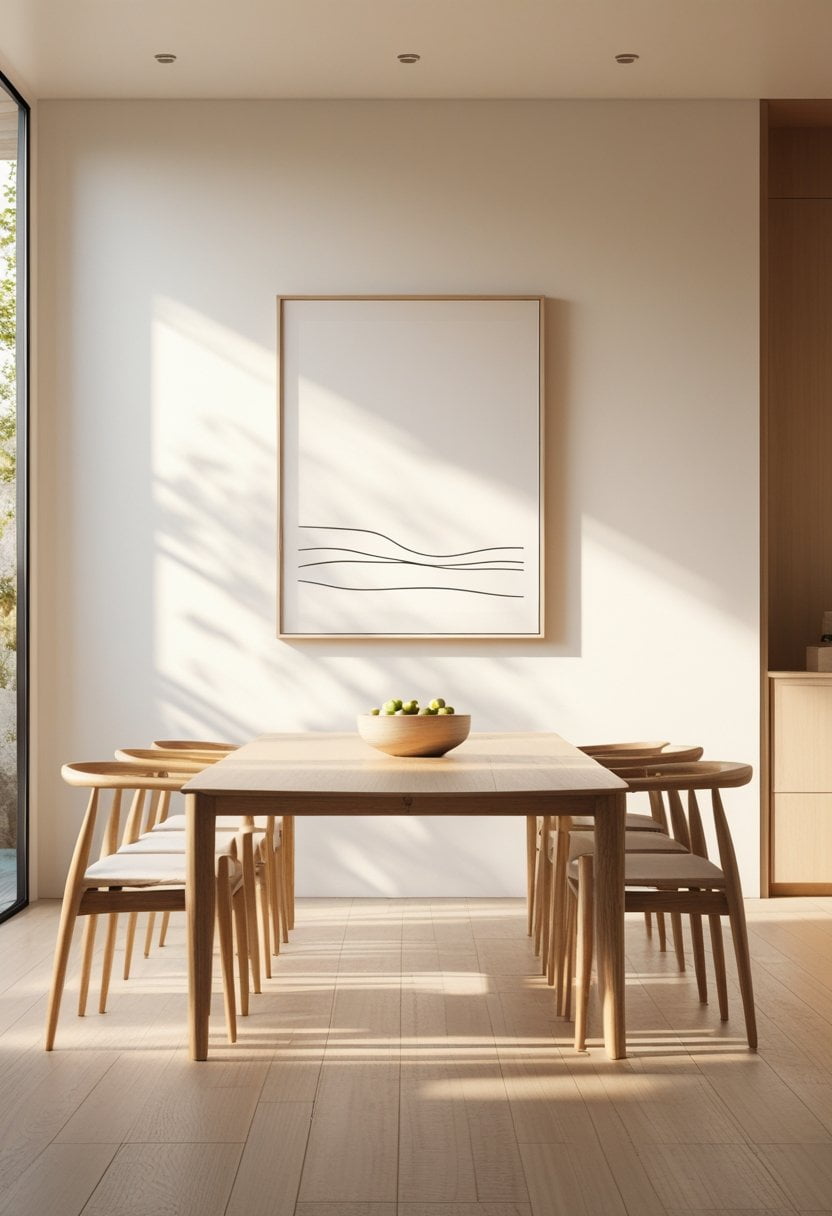
Japandi wall art tends to be subtle. Instead of loud colors or busy scenes, look for gentle shapes and nature-inspired themes.
Good art directions:
- Abstract line art
- Soft landscape photography
- Minimal ink-style prints
- Textural wall pieces in natural fibers
Use fewer frames, larger scale. One well-placed piece often looks calmer than a gallery wall.
16) Add Greenery, But Keep It Sculptural
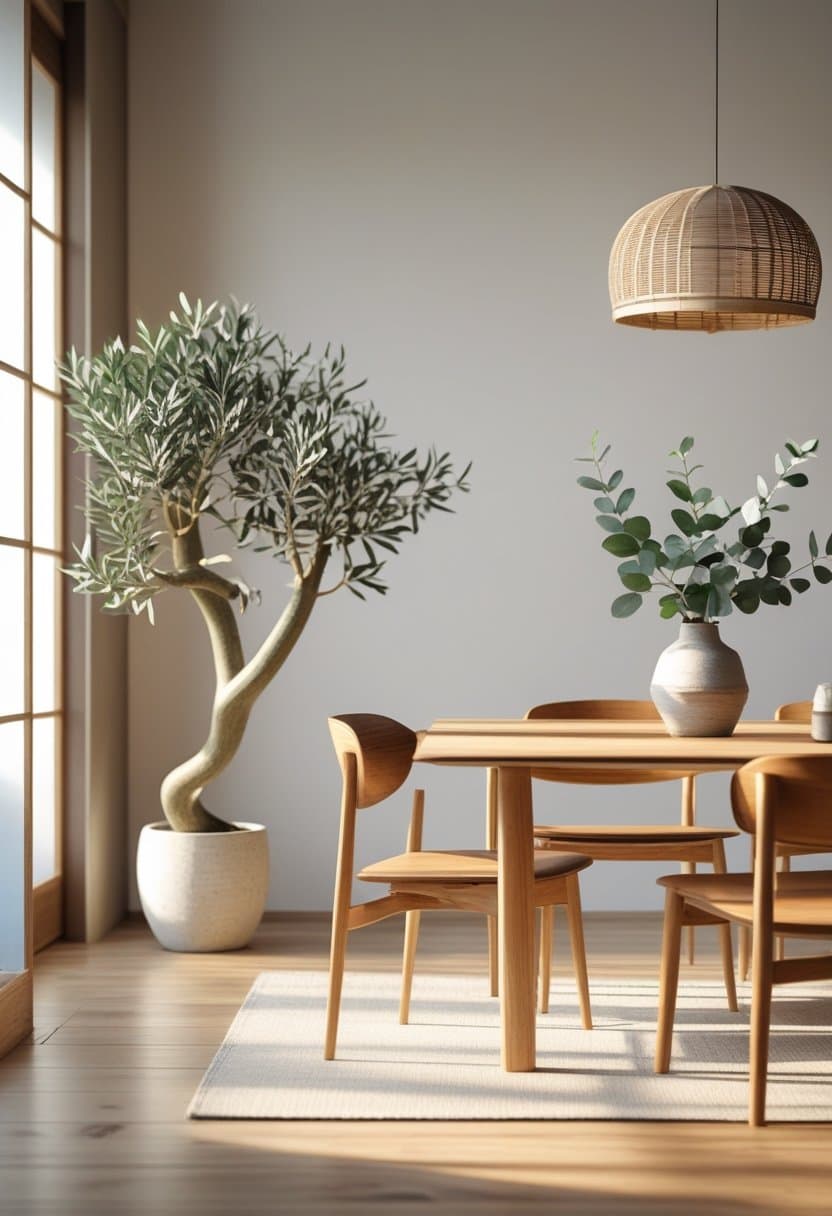
Plants make a dining room feel alive, but Japandi prefers plants with clean forms.
Great plant types for a Japandi look:
- Olive tree (or olive-style branches)
- Snake plant
- Fiddle leaf fig (if you have enough light)
- Simple eucalyptus stems in a vase
A single strong plant can do more than five small ones.
17) Focus on Comfortable Seating (Minimal Doesn’t Mean Hard)
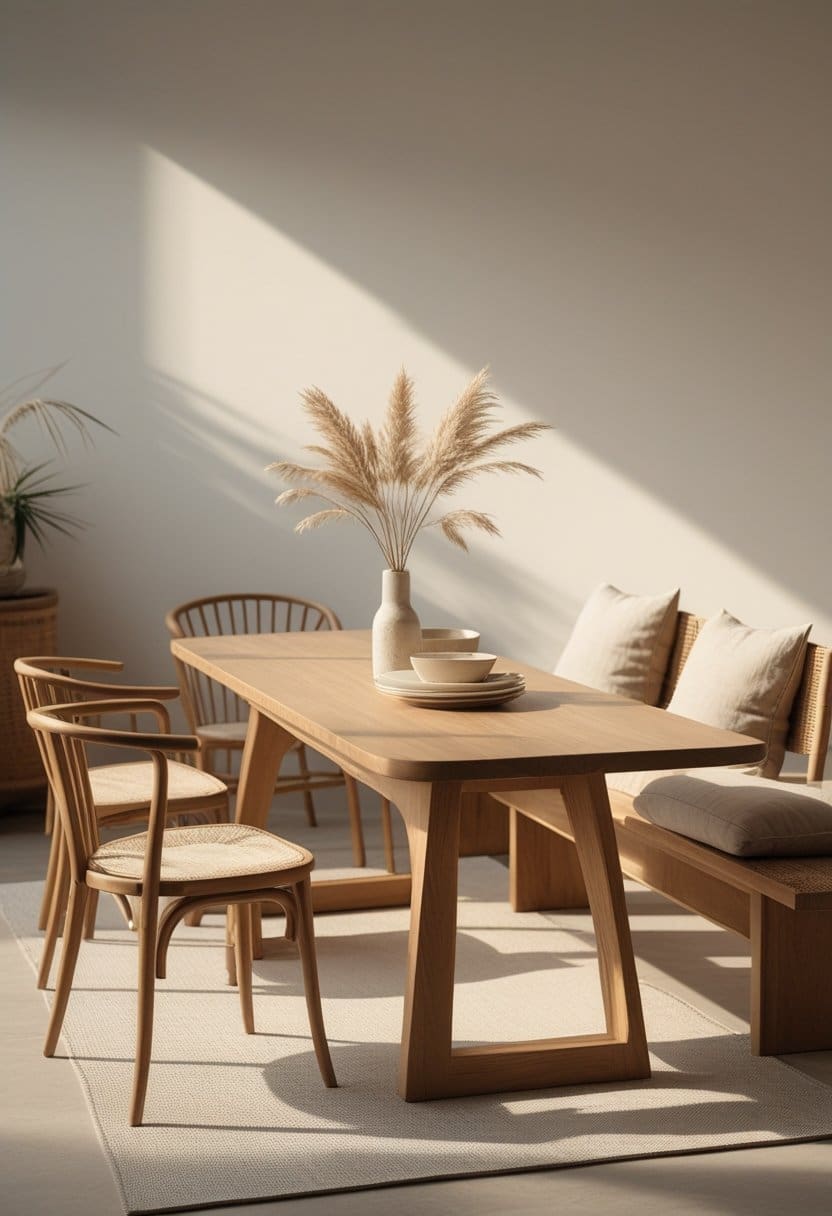
Minimalist comfort is not just visual—it’s physical. If chairs look great but feel uncomfortable, the room won’t get used.
Comfort upgrades that still look Japandi:
- Chairs with gently curved backs
- Seats with natural woven support
- Thin seat cushions in linen
- A bench cushion that matches the palette
A practical seating note: many designers recommend allowing about 24–30 inches of table space per person so everyone feels comfortable, especially during longer meals.
18) Leave Breathing Room Around the Table
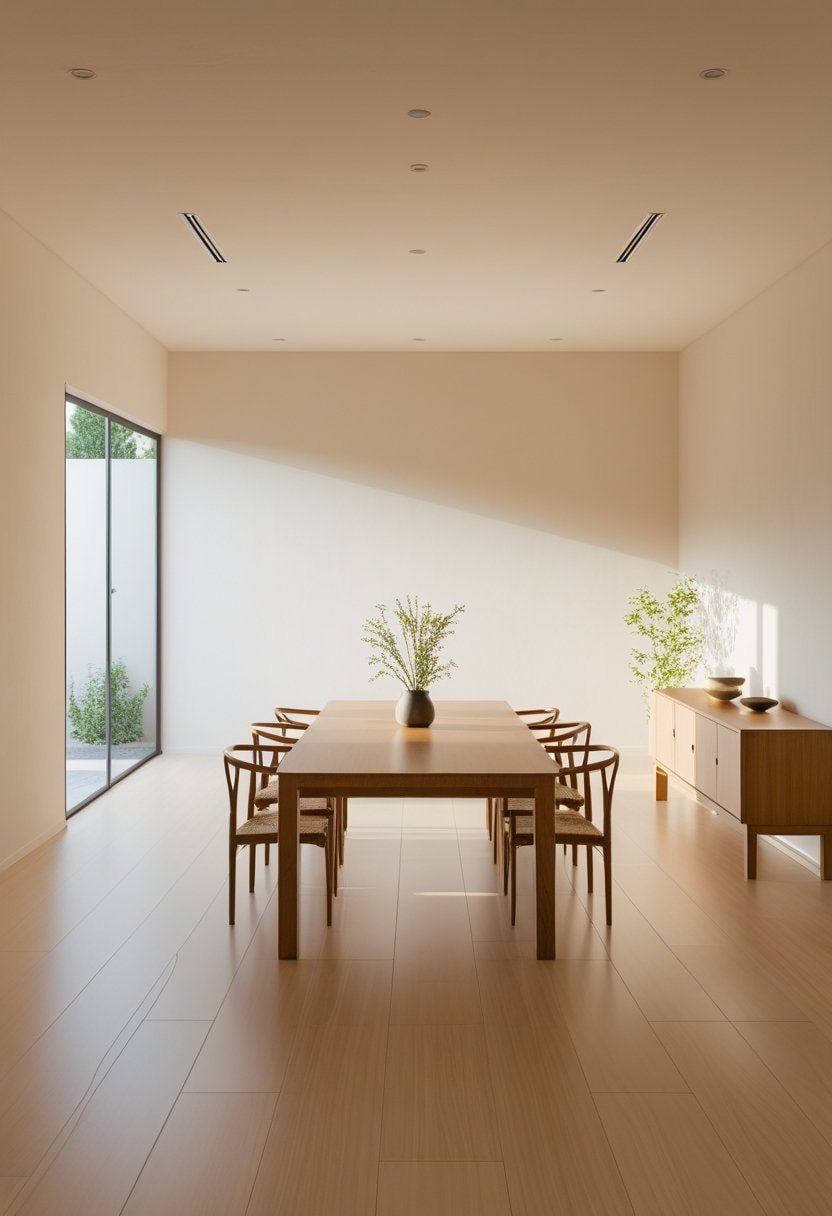
One of the simplest “Japandi secrets” is space. A dining room feels more peaceful when movement is easy.
Common planning guidance:
- Try to keep about 36 inches of clearance around the table where possible
- If space is tight, aim for at least 30 inches on the main walking paths
Even small improvements—like moving a sideboard a few inches—can make the room feel calmer.
19) Use Natural Wood Tones, But Don’t Overmatch
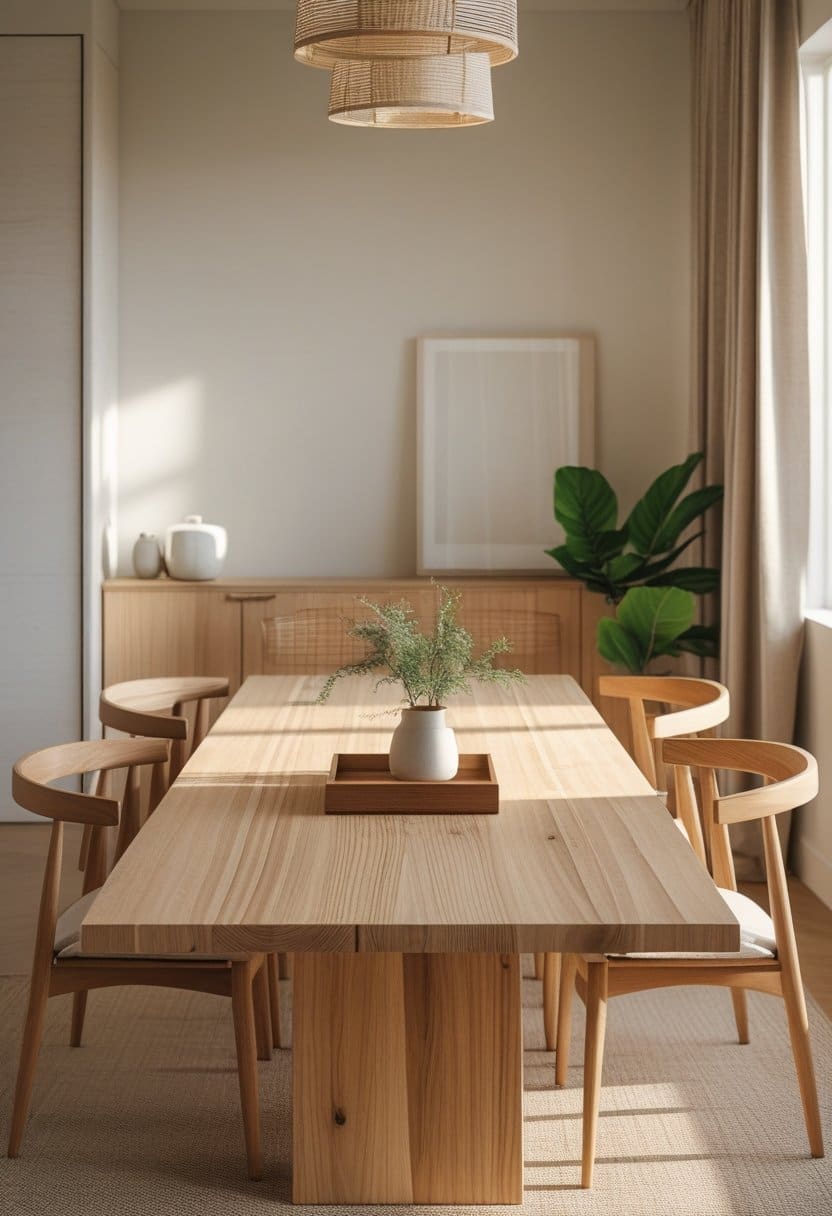
Japandi style loves wood, but it doesn’t require every piece to match perfectly. In fact, slight variation looks more natural.
A balanced approach:
- Keep woods in the same temperature family (warm with warm, cool with cool)
- Mix light oak with medium ash, or light oak with walnut accents
- Avoid mixing too many strong wood tones at once
If you’re unsure, choose one main wood tone for big furniture and use a second tone only for small accents.
20) Add Soft Sound and Comfort With Textiles
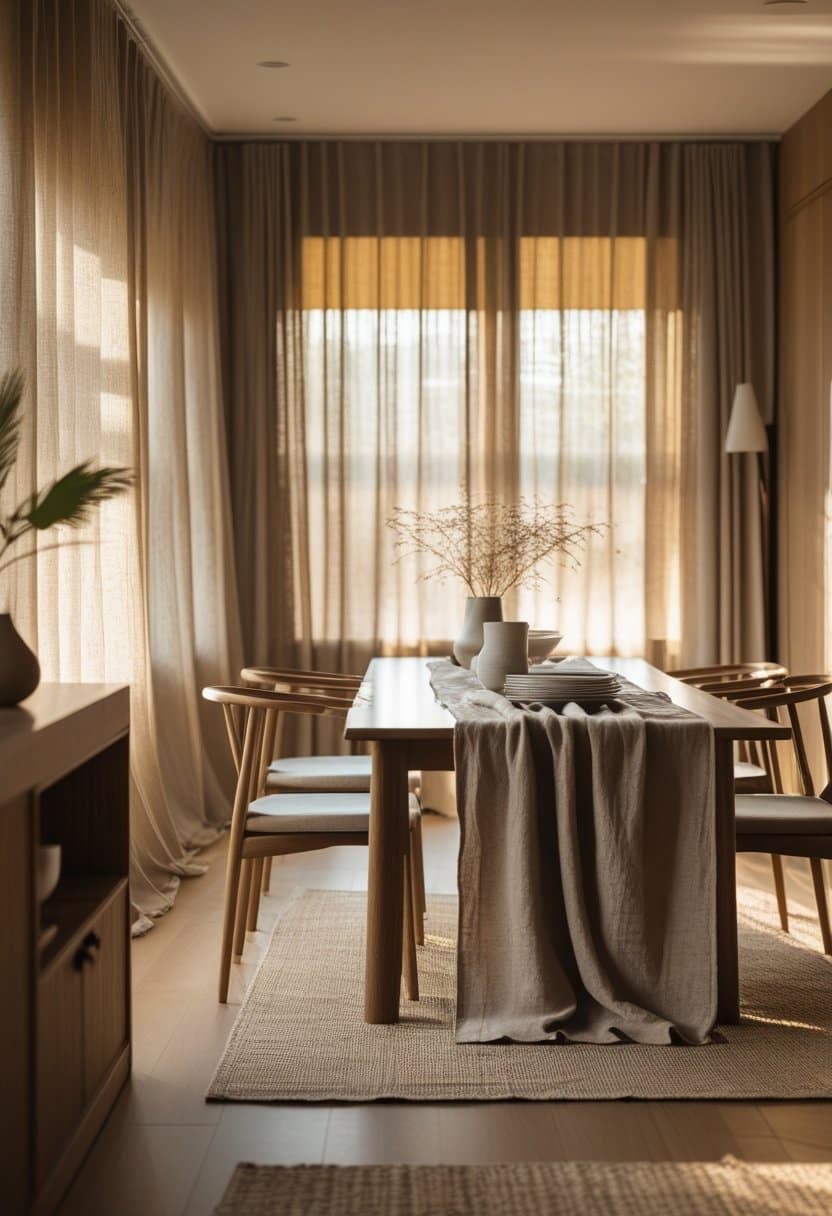
Dining rooms can echo, especially with hard floors and minimal decor. Textiles help sound and comfort without adding clutter.
Easy Japandi textile ideas:
- Linen curtains
- A flatweave rug
- Cloth napkins in neutral tones
- A table runner with texture
These details make the room feel quieter and more relaxed, which supports minimalist comfort.
21) Make a Small “Tea Corner” or Serving Station
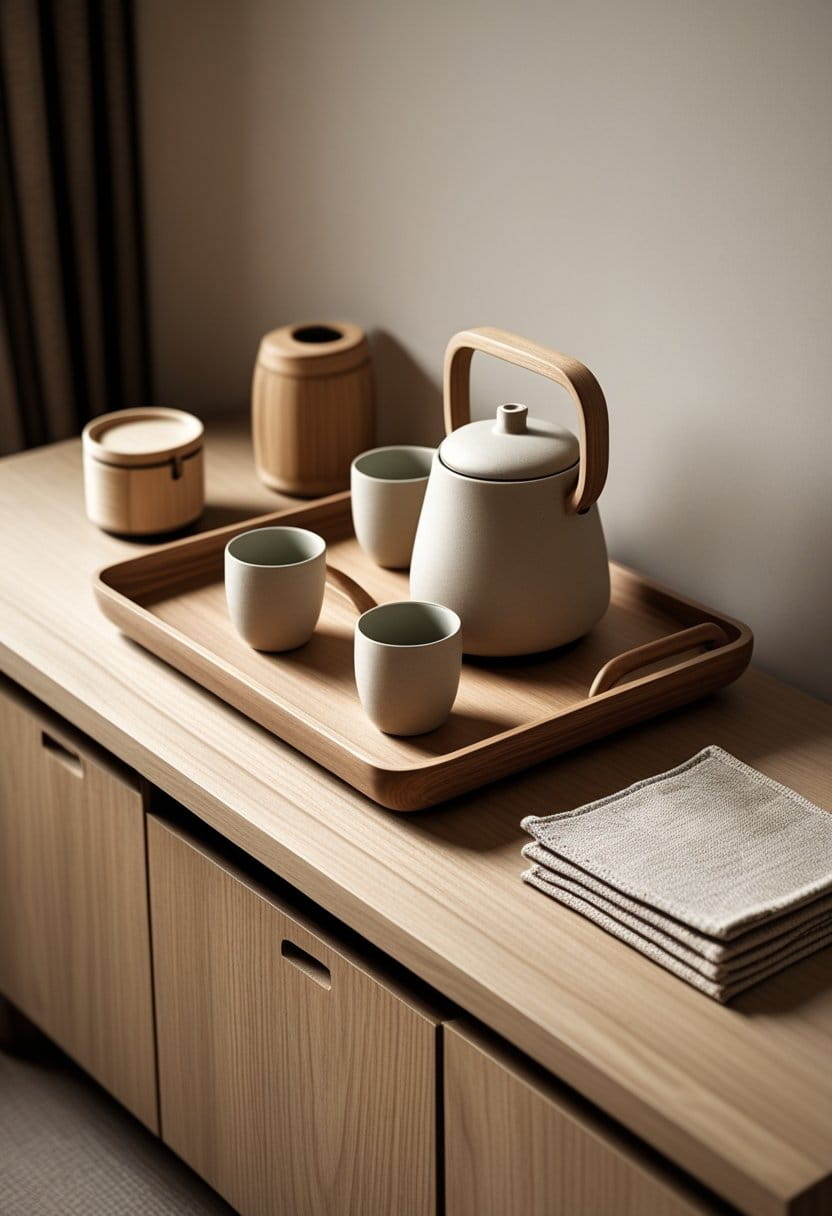
This is a functional Japandi dining room idea that also feels charming. A small tray, kettle, or coffee setup can be both useful and beautiful.
Keep it minimal:
- One tray
- Two to four cups
- One small container for tea or coffee
- A neutral cloth or coaster set
It creates a sense of everyday ritual—very aligned with Japandi living.
22) Use the “One In, One Out” Rule to Maintain the Look
Japandi is easiest to maintain when your habits support it. The room stays calm because you protect the calm.
A simple maintenance routine:
- If you buy a new decor piece, remove one older piece
- Clear the table fully at least once a day
- Keep countertops and sideboards mostly open
- Store seasonal items instead of displaying everything at once
This is how 22 Japandi Dining Room Ideas for Minimalist Comfort becomes more than inspiration—it becomes a lifestyle that actually works.
A Simple Japandi Dining Room Checklist
If you want a quick way to pull everything together, use this checklist:
- Color: warm neutrals + a small amount of black or charcoal
- Furniture: simple shapes, natural wood, comfortable seating
- Lighting: one calm pendant + at least one warm secondary light
- Texture: linen, ceramic, wood grain, woven elements
- Decor: fewer pieces, higher quality, nature-inspired
- Clutter control: sideboard storage + daily reset habit
Sample “Quick Plans” You Can Copy
If you want an easy starting point, here are three simple combinations:
Plan A: Light and Airy
- Light oak table
- Linen pendant
- Warm white walls
- Flatweave neutral rug
- One branch in a ceramic vase
Plan B: Cozy Contrast
- Medium wood table
- Black accent chairs or black legs
- Soft beige walls
- Textured runner + candles
- Sideboard with one lamp
Plan C: Small Space Friendly
- Round table
- Bench on one side
- Wall-mounted light or compact pendant
- Roller shade + minimal art
- One plant for freshness
Conclusion
Japandi design works because it respects real life. It doesn’t ask you to fill every corner. It asks you to choose what matters: comfort, calm, and thoughtful materials. Whether you try two ideas or all 22 Japandi Dining Room Ideas for Minimalist Comfort, the goal is the same—a dining room that feels peaceful, looks timeless, and makes everyday meals feel a little more intentional.

More Stories
21 Bedroom Interior Ideas That Redefine Elegance
20 Kitchen Cabinet Color Ideas for a Fresh Look
24 Modern Living Room Ideas for Contemporary Homes