
Introduction
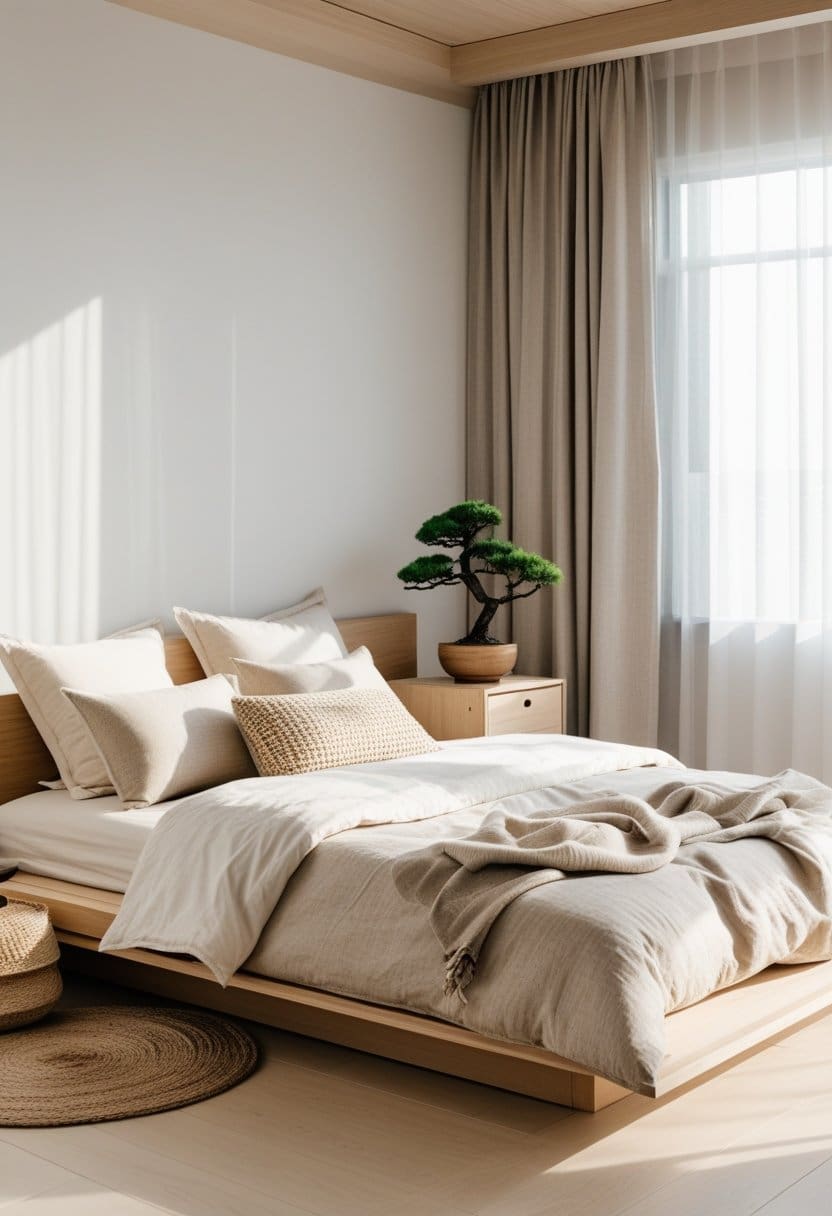
If you’re planning a bedroom refresh, these 19 Japandi bedroom designs are crafted to feel calm, functional, and elegant—without being overly complicated. Japandi is all about blending Japanese simplicity with Scandinavian warmth, creating spaces that are minimalist yet cozy, clean but inviting.
A successful bedroom design starts with two simple goals:
- Make your bedroom a peaceful retreat for rest and relaxation.
- Add minimalist style that feels timeless, natural, and easy to maintain.
Below are 19 Japandi bedroom designs that are trending in 2026 and are practical for long-term living. Pick the ones that fit your lifestyle, space, and budget.
1) Neutral Color Palettes for a Calm Atmosphere
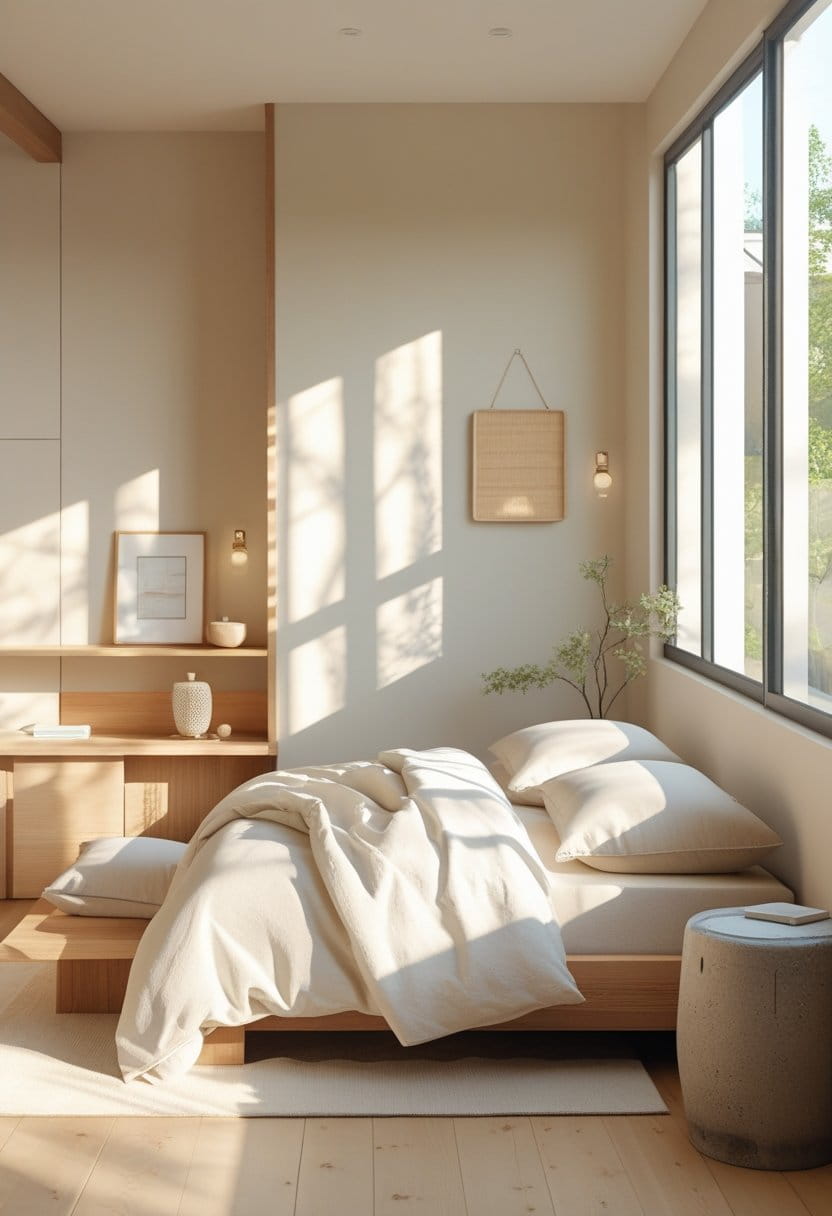
Japandi bedrooms favor soft, natural tones that promote relaxation.
Key colors:
- Warm beige, soft greige, muted whites.
- Natural wood tones and soft stone hues.
- Accents in soft black or muted green for depth.
Neutral walls and bedding create a serene backdrop that lets natural light shine and furniture stand out.
2) Low-Profile Beds for Minimalist Comfort
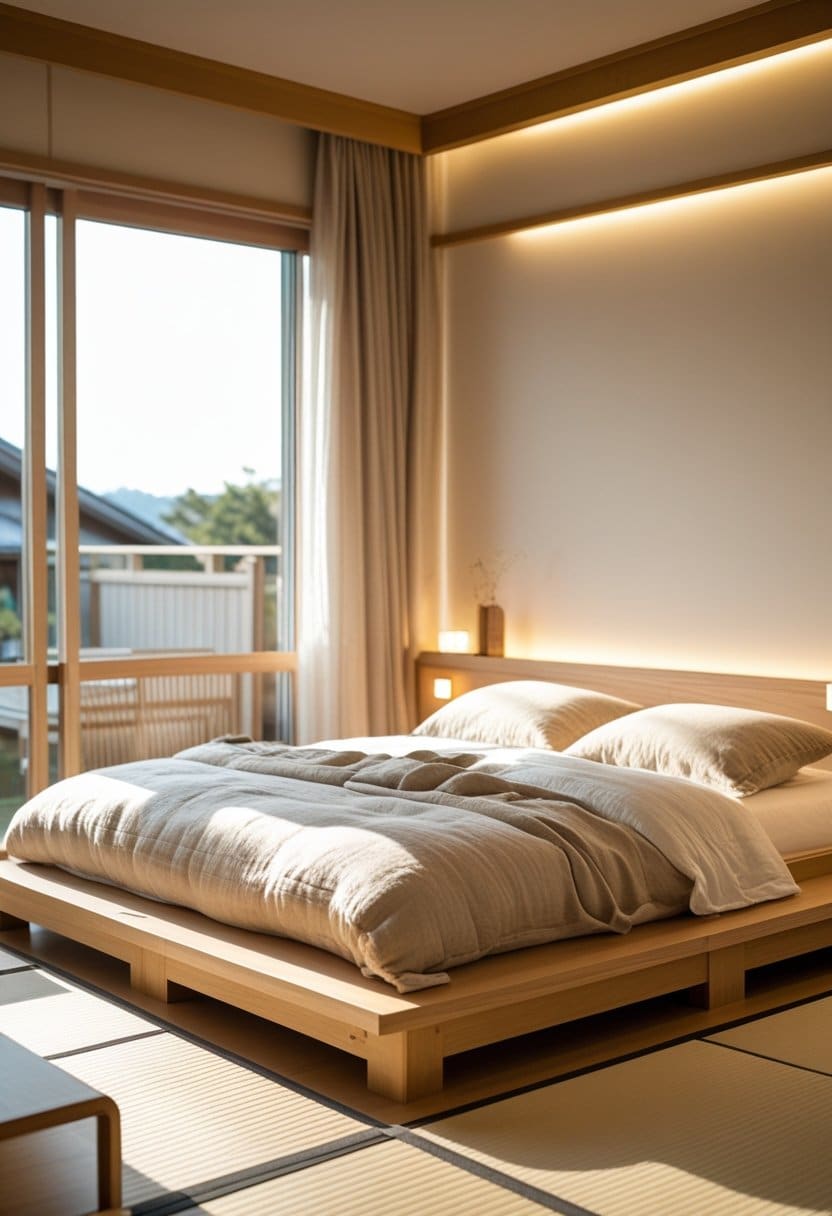
Low, platform-style beds are a Japandi staple, creating a clean and grounded look.
Why they work:
- Promote a sense of calm and simplicity.
- Make rooms feel larger by keeping furniture close to the floor.
- Pair well with tatami mats or Scandinavian-style rugs.
Add minimalist bedding and low-profile bedside tables for balance.
3) Natural Wood Furniture for Warmth
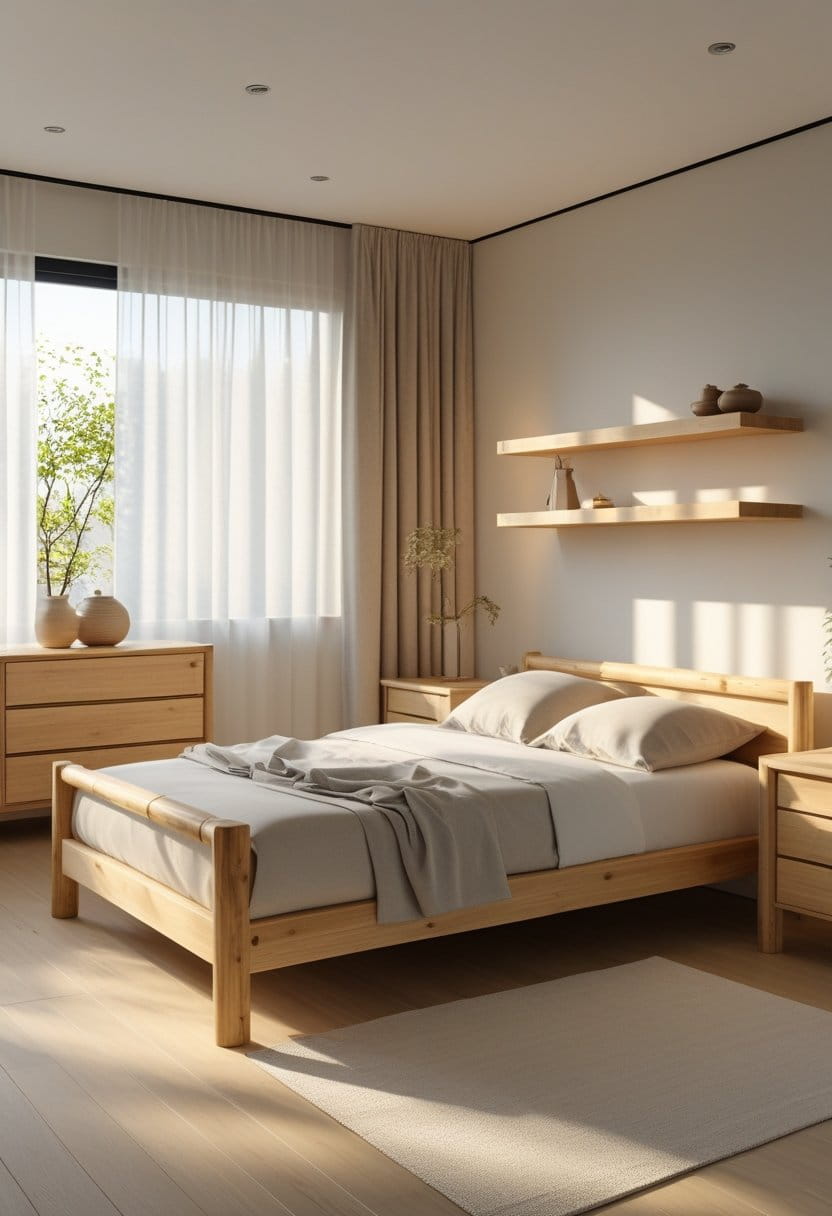
Wood adds warmth and organic texture, softening the minimal lines of Japandi design.
Best practices:
- Use light oak, ash, or bamboo for furniture pieces.
- Keep finishes matte for understated elegance.
- Combine with neutral walls for a cozy yet airy feel.
Natural wood furniture enhances the organic, peaceful vibe central to Japandi interiors.
4) Built-In Storage for Clutter-Free Living
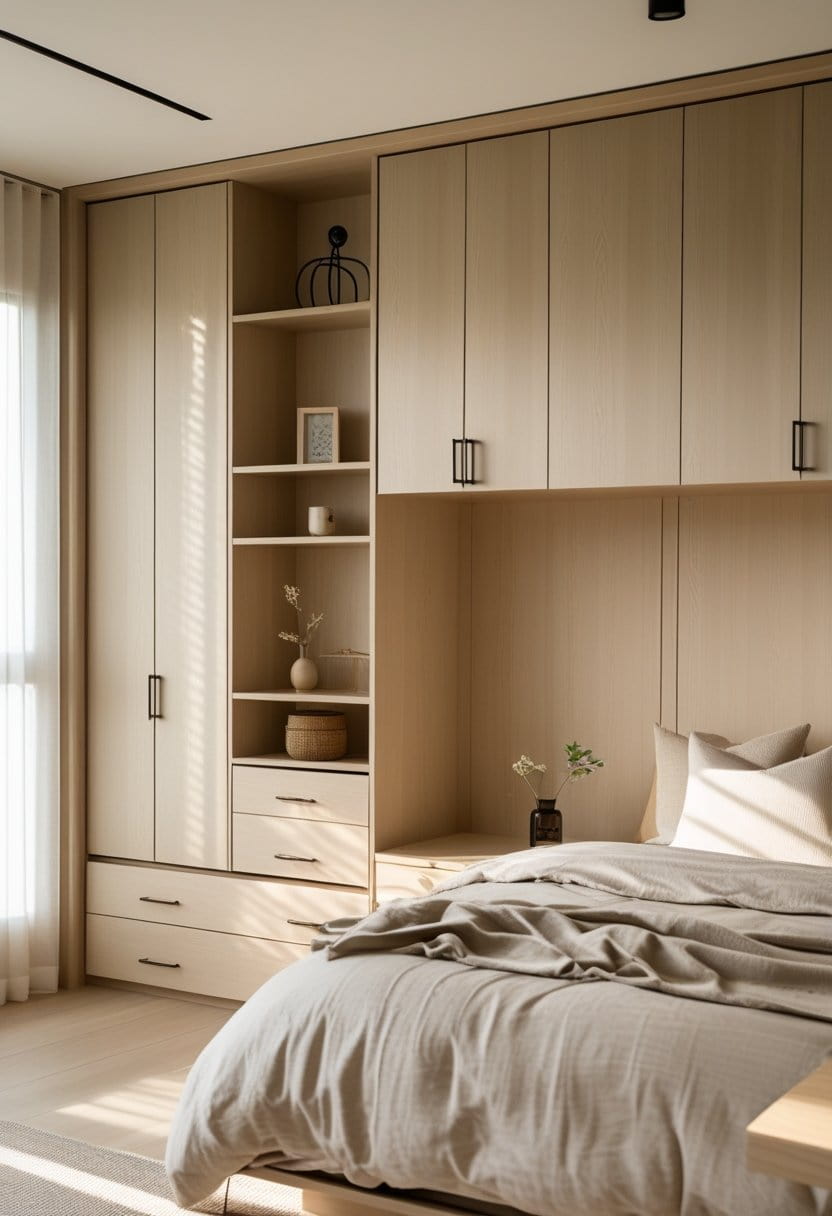
Japandi style emphasizes simplicity, which means clutter-free spaces.
Storage solutions:
- Built-in wardrobes with handle-less doors.
- Floating shelves to keep floors open.
- Under-bed drawers for hidden storage.
Keeping storage integrated maintains the minimalist aesthetic and promotes calm.
5) Textured Bedding for Subtle Depth
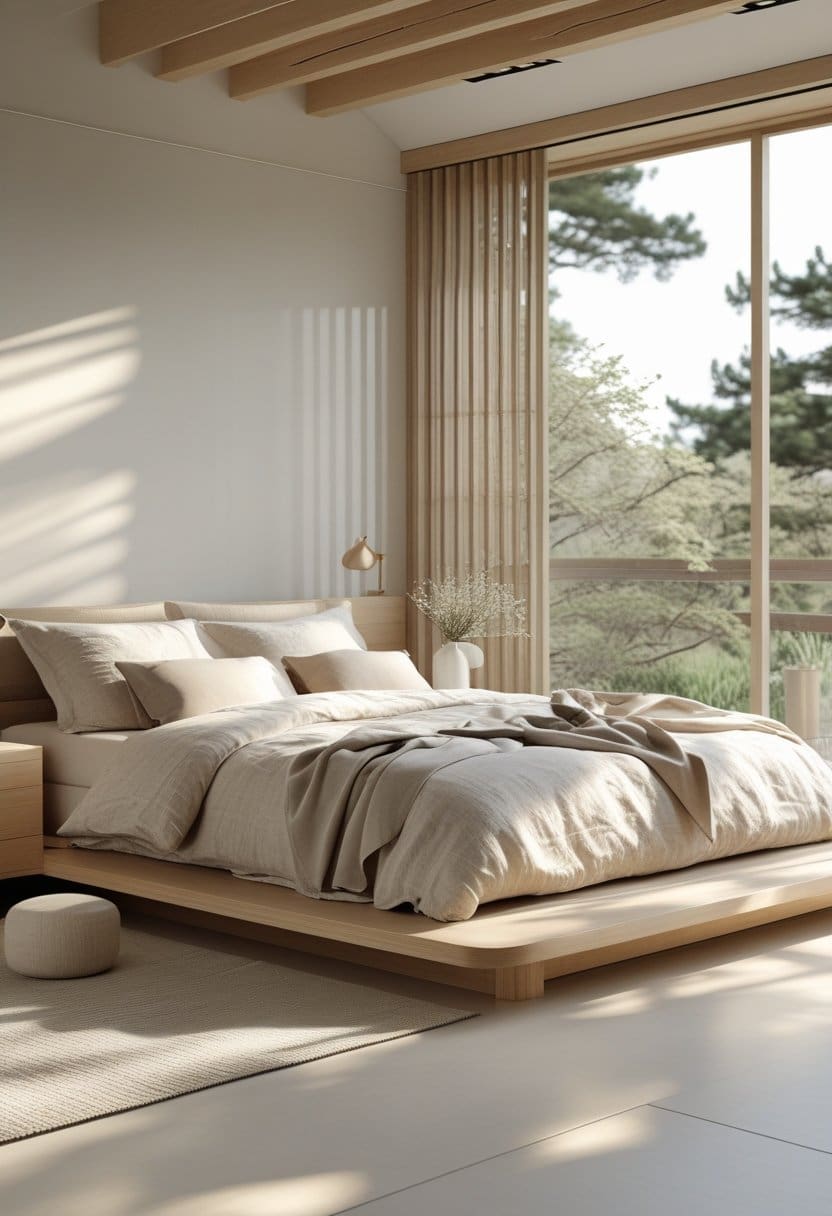
Even minimal spaces benefit from soft textures to create warmth and comfort.
Ideas for bedding:
- Linen or cotton in neutral tones.
- Quilted or lightly textured blankets.
- Layering simple throws adds depth without clutter.
Textured bedding makes the room inviting without breaking minimalism.
6) Statement Headboards for a Focal Point
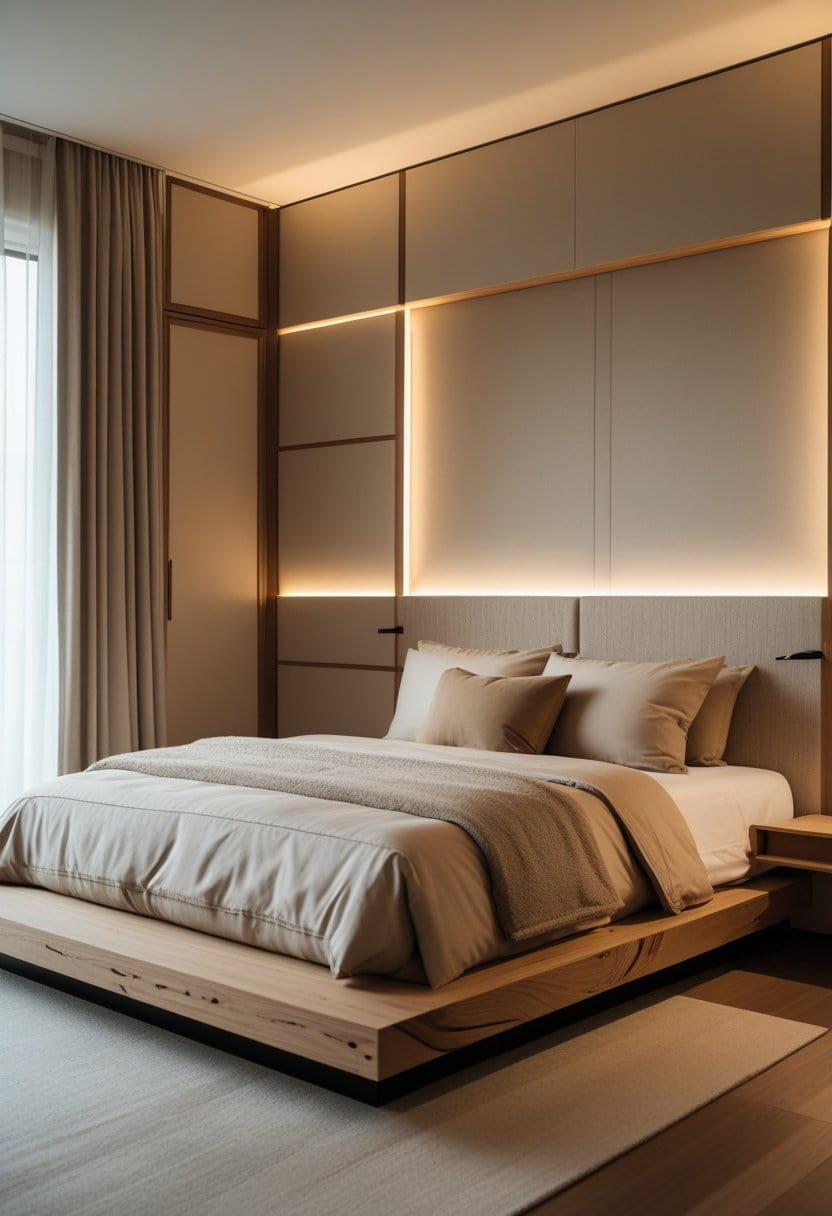
Japandi bedrooms often feature low-profile but impactful headboards.
Design tips:
- Wood panel headboards with subtle grain patterns.
- Upholstered fabric in muted tones for softness.
- Keep lines simple—avoid heavy ornamentation.
A statement headboard can anchor the room while maintaining tranquility.
7) Minimalist Nightstands for Function and Form
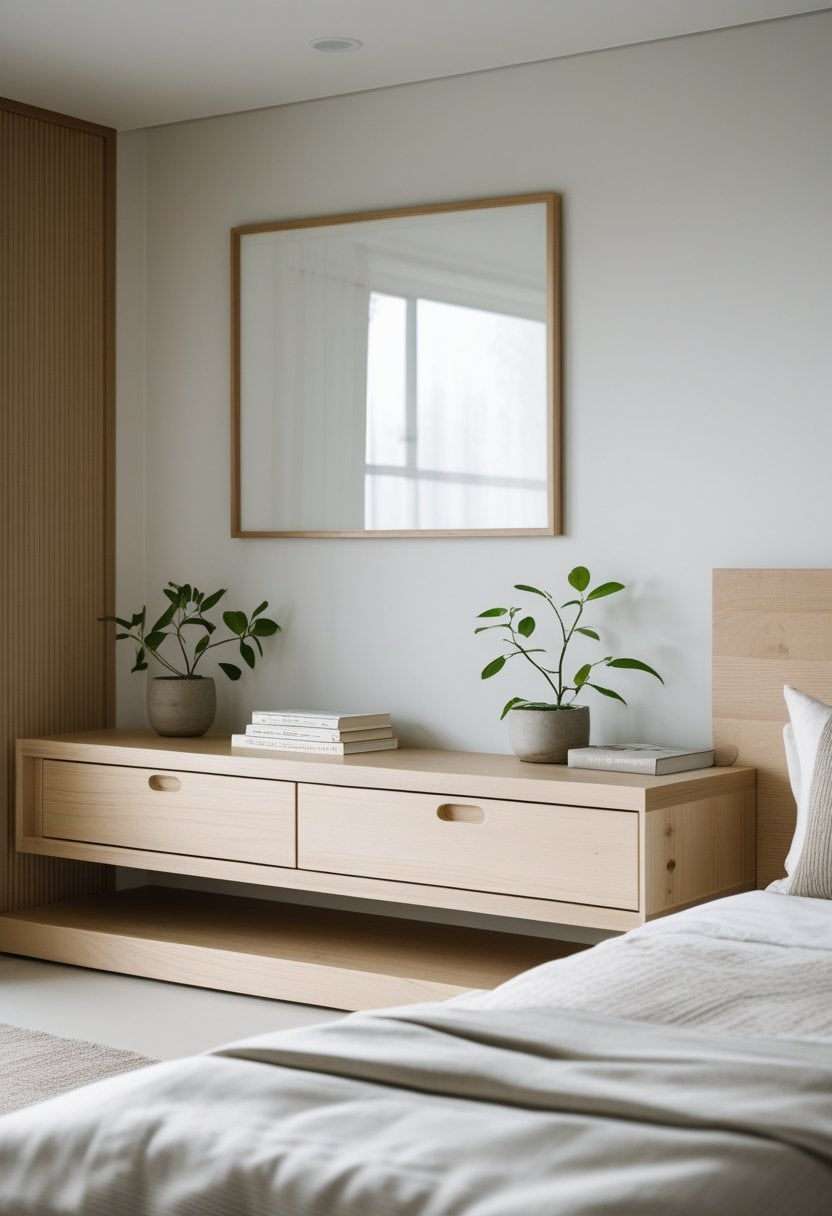
Nightstands in Japandi bedrooms are simple yet functional.
Practical tips:
- Floating nightstands to save floor space.
- Single drawer units for essentials like books or chargers.
- Combine wood and soft matte finishes for elegance.
Functional nightstands keep the bedroom tidy and uncluttered.
8) Low Lighting for a Relaxing Mood
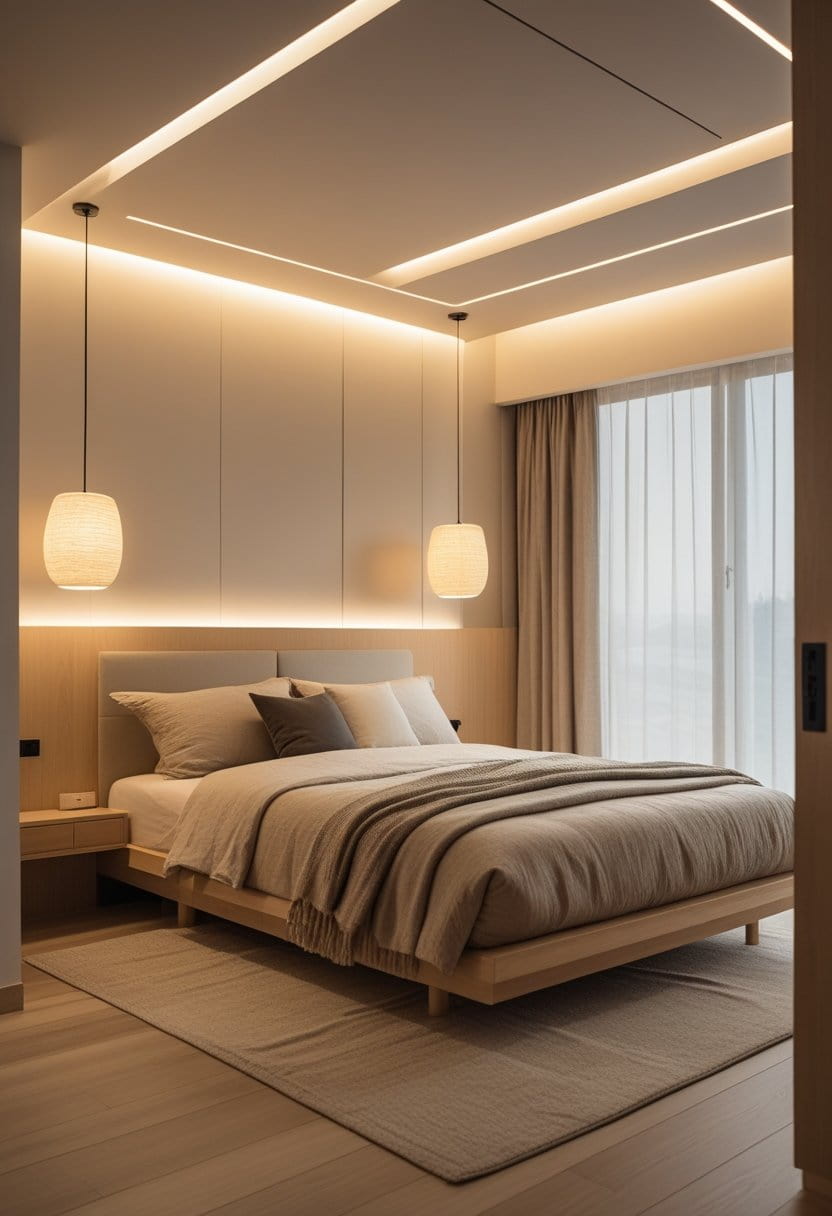
Lighting is key to creating a peaceful bedroom vibe.
Lighting suggestions:
- Soft, warm LED lighting for a cozy glow.
- Bedside pendant lights instead of table lamps.
- Layer lighting with ceiling lights, wall sconces, or floor lamps.
Low, indirect lighting enhances Japandi minimalism and promotes restful sleep.
9) Minimalist Wall Art and Decoration
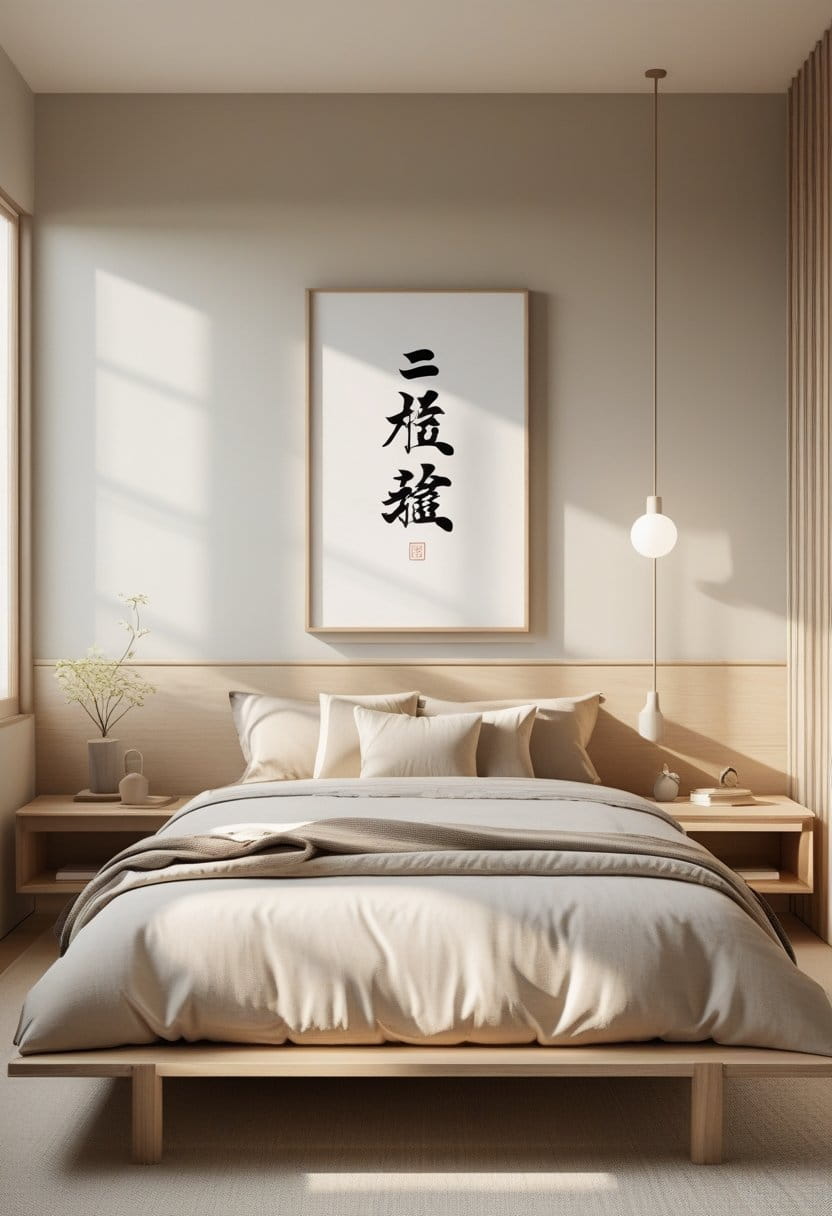
Japandi design favors less but meaningful decoration.
Tips for wall décor:
- Single framed print or calligraphy.
- Natural materials like wood or woven wall hangings.
- Keep decorations in neutral tones to avoid visual clutter.
Decorate sparingly to maintain focus on simplicity and calm.
10) Indoor Plants for Natural Calm
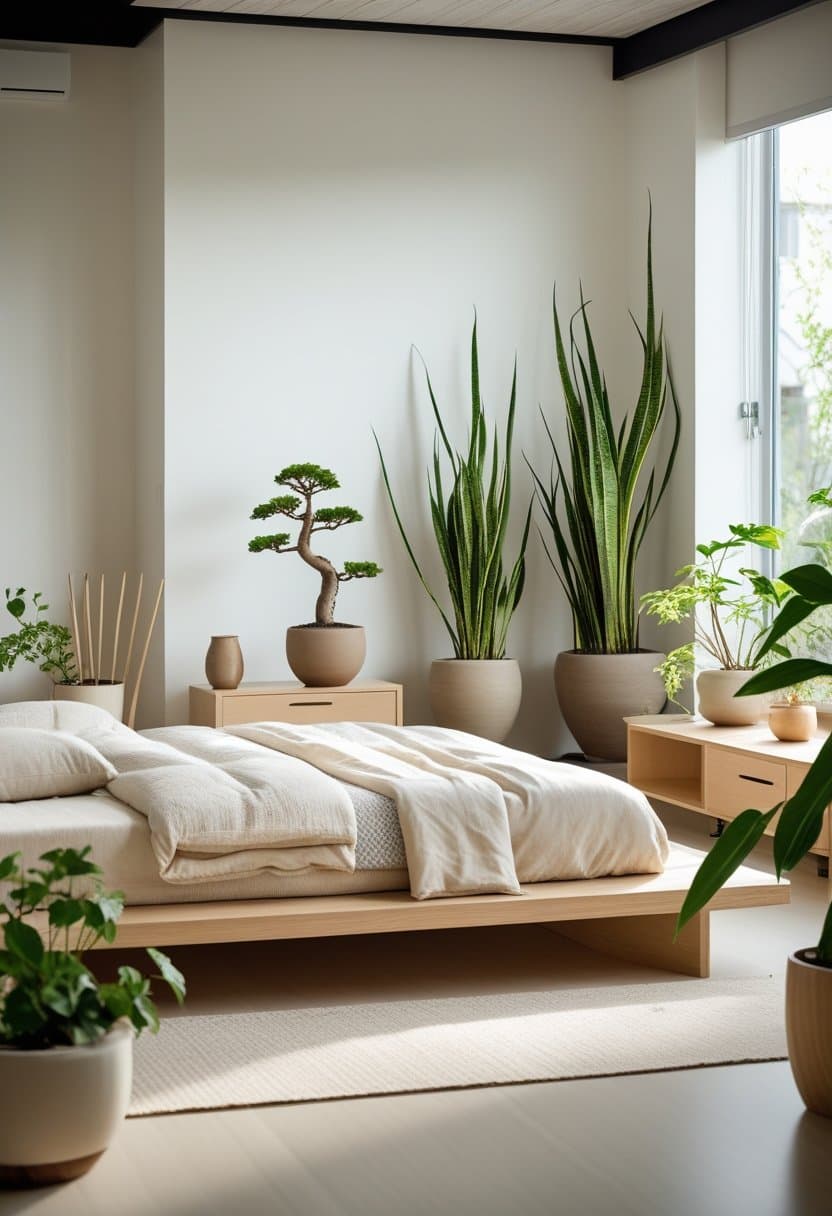
Plants bring life, color, and serenity to Japandi bedrooms.
Best plant choices:
- Bonsai, snake plants, or small leafy plants.
- Use ceramic or wood pots in muted colors.
- Limit to a few plants to maintain minimalist harmony.
Greenery adds freshness and softens the clean lines of furniture.
11) Sliding Doors for a Seamless Look
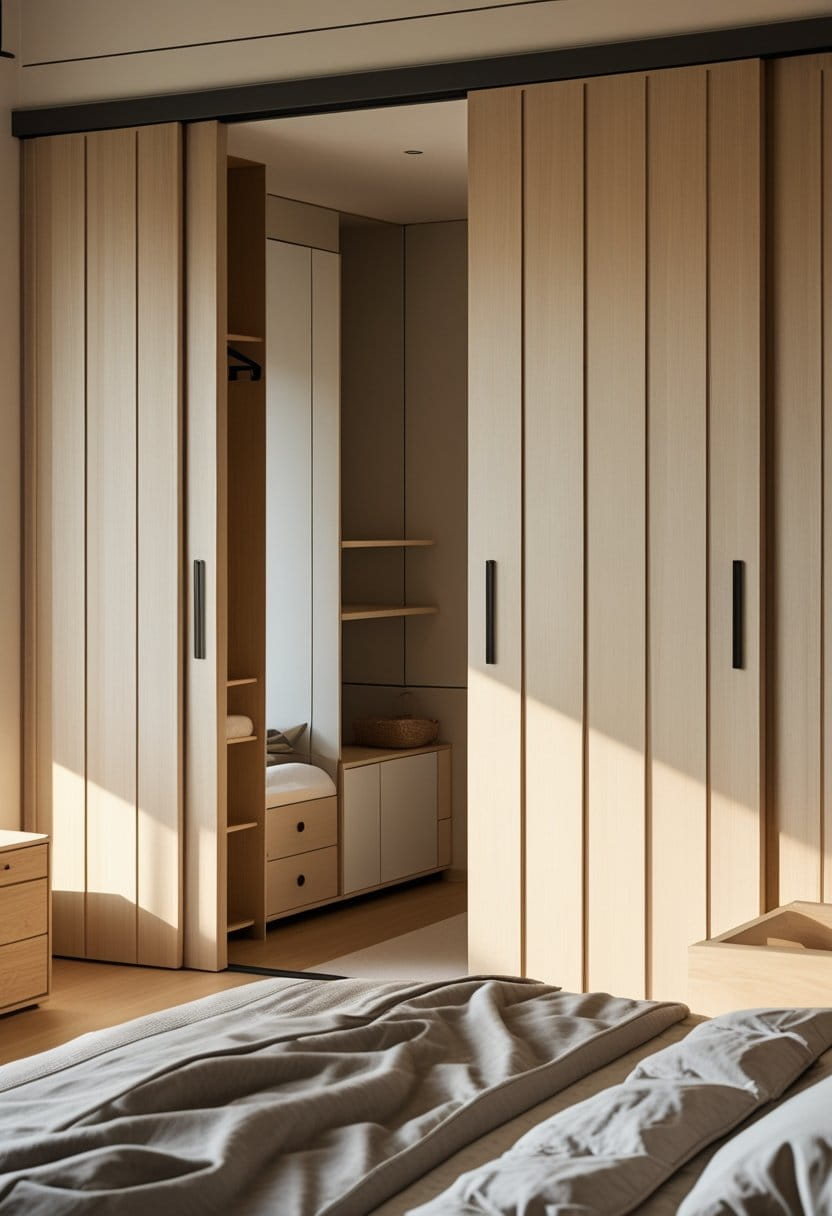
Sliding doors are common in Japandi bedrooms for functionality and style.
Why they’re practical:
- Save space compared to hinged doors.
- Can hide closets or lead to adjoining rooms.
- Simple wooden or matte-panel designs enhance minimal aesthetics.
Sliding doors maintain clean lines while improving room flow.
12) Scandinavian-Style Rugs for Warmth
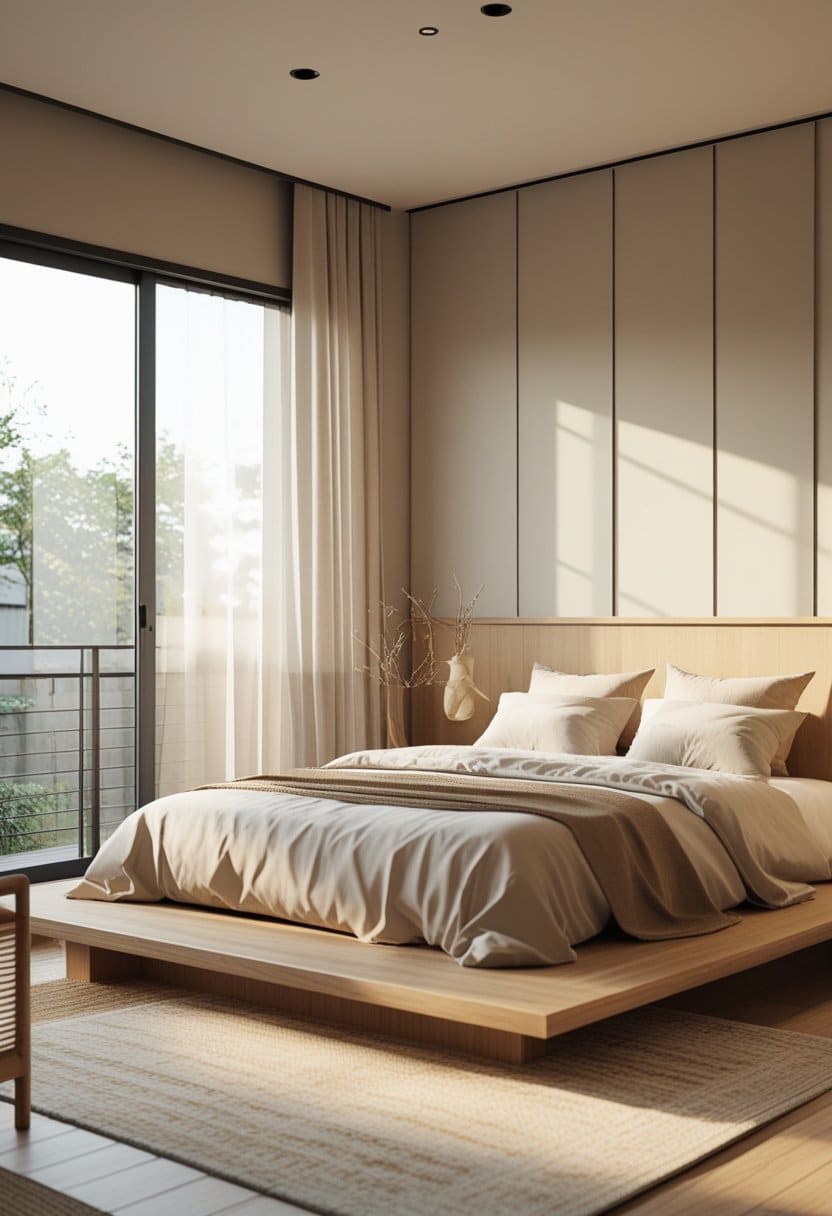
Rugs in soft textures and muted tones add Scandinavian warmth to Japandi bedrooms.
Design ideas:
- Low-pile wool rugs under the bed.
- Neutral shades or subtle patterns.
- Layering rugs for texture without clutter.
Rugs create comfort and visual balance in minimalist spaces.
13) Floating Shelves for Practical Display
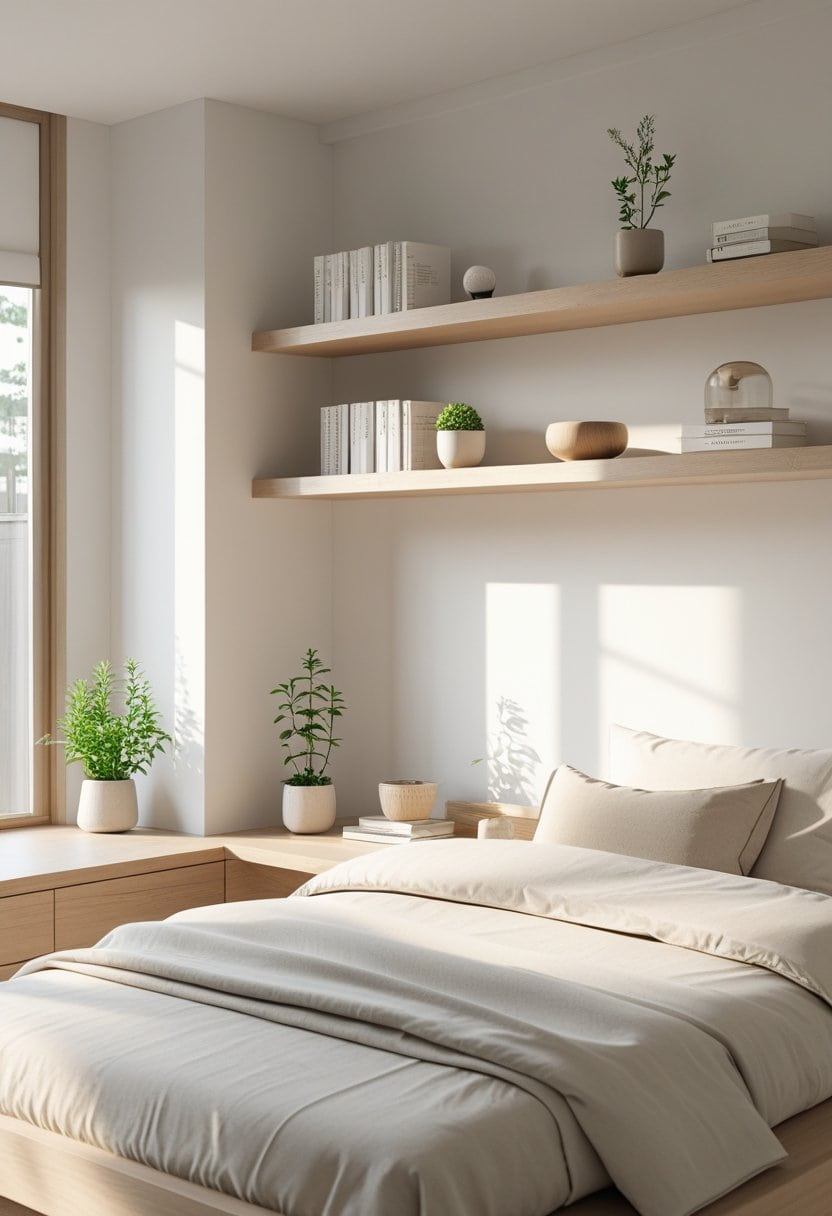
Open shelving in Japandi bedrooms is functional and minimal.
Best uses:
- Display a small selection of books or plants.
- Keep shelves uncluttered with 2–3 items max.
- Natural wood or matte finishes blend with the overall aesthetic.
Floating shelves provide storage and decor without crowding the room.
14) Soft Curtains or Blinds for Serenity
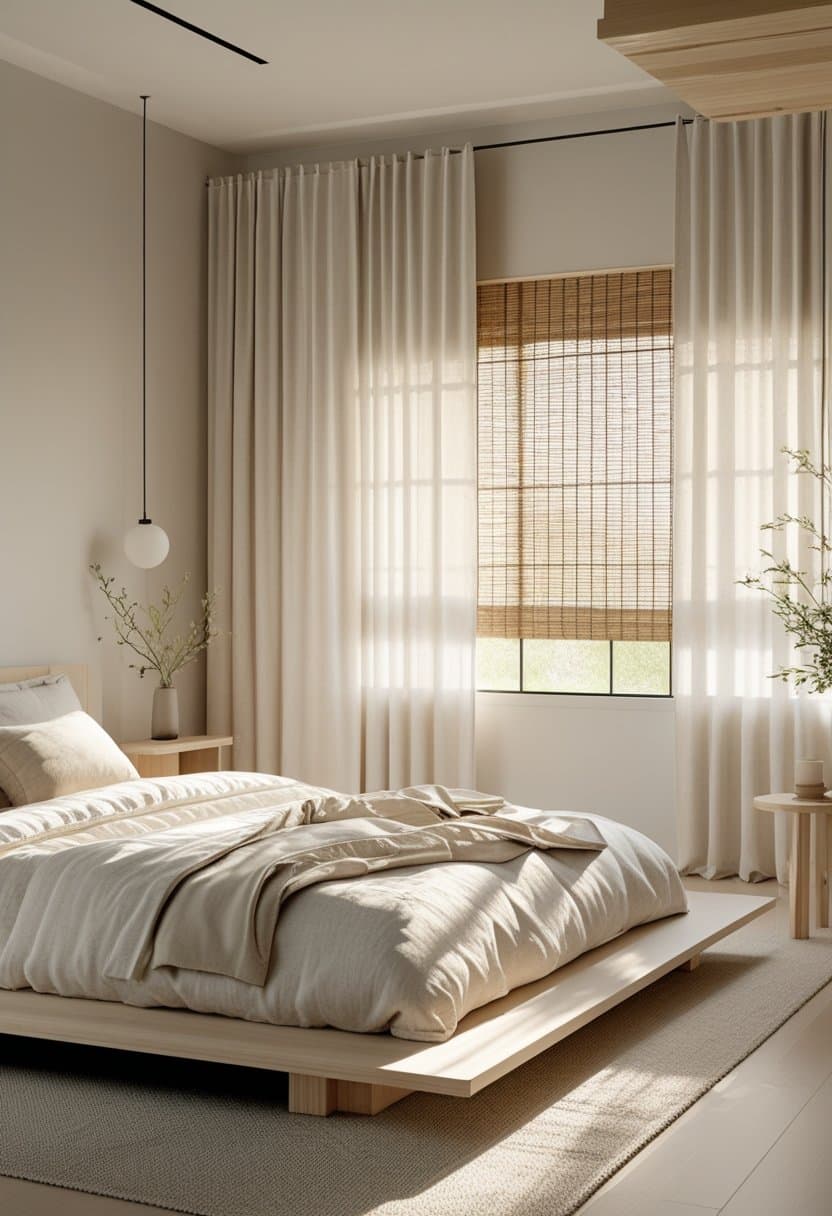
Window treatments should complement the calm vibe of Japandi design.
Suggestions:
- Linen or cotton curtains in light, neutral colors.
- Wooden or bamboo blinds for texture and warmth.
- Avoid heavy, ornate drapes that break minimalism.
Natural light filtered through soft curtains enhances the peaceful atmosphere.
15) Neutral Accent Walls for Depth
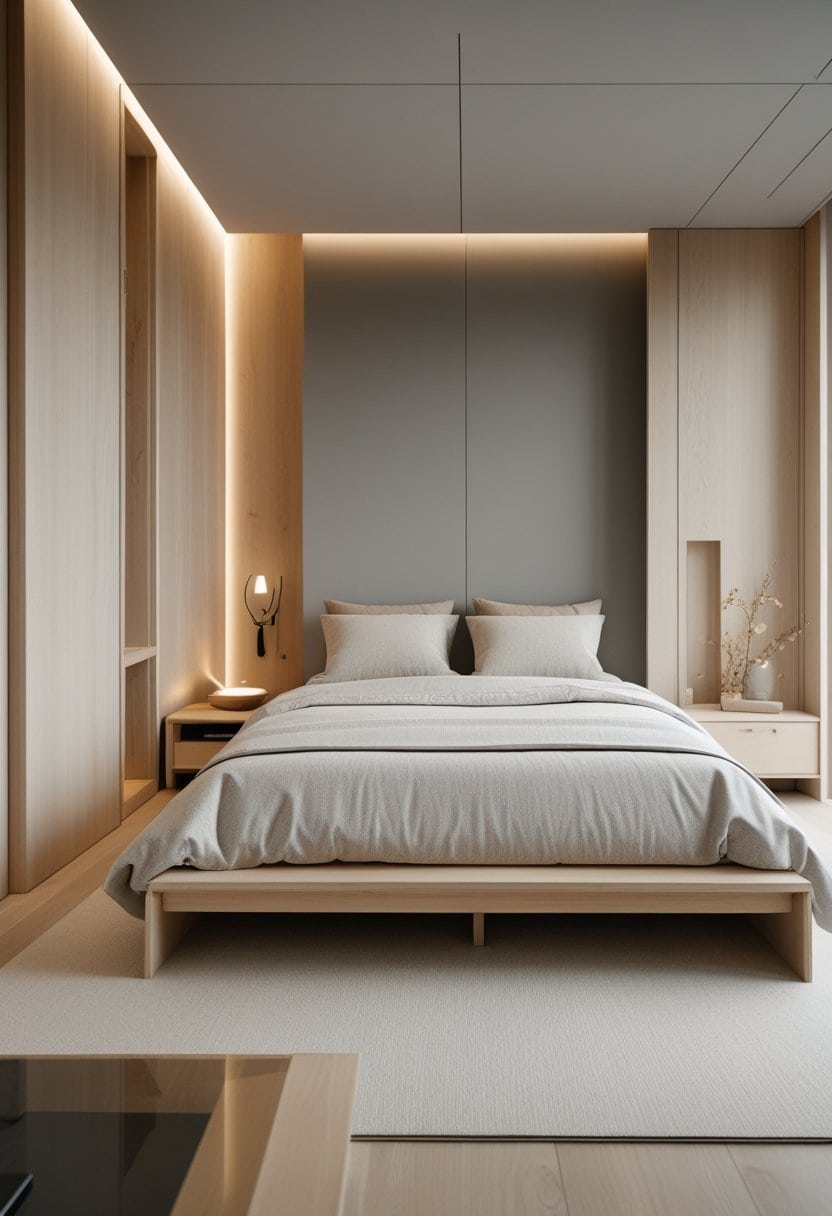
Accent walls can add subtle depth without overpowering minimalism.
Ideas:
- Light wood panel behind the bed.
- Soft gray or beige paint for contrast.
- Keep patterns simple—avoid loud designs.
A neutral accent wall can make the bedroom feel more dimensional and cozy.
16) Multifunctional Furniture for Smart Living
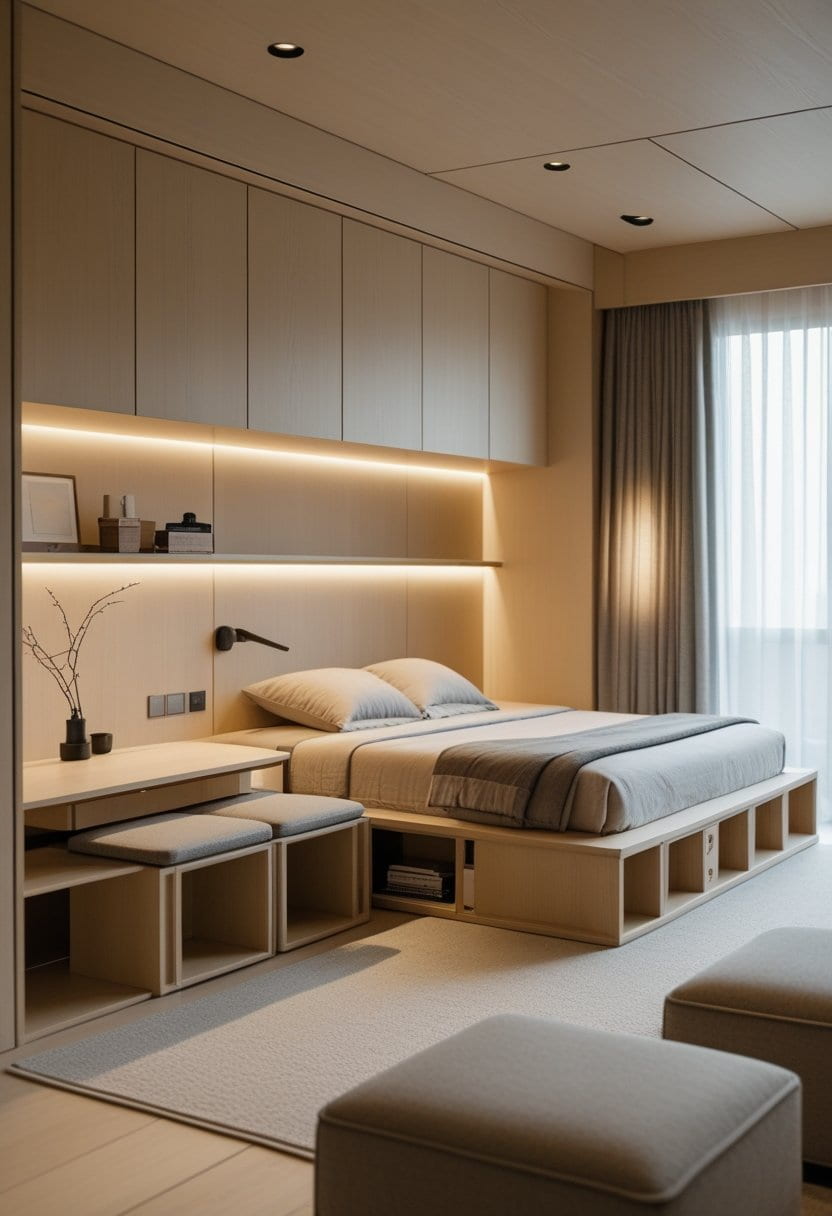
Japandi bedrooms favor furniture that serves multiple purposes.
Examples:
- Benches with hidden storage.
- Foldable desks for work-from-bedroom needs.
- Ottomans that double as seating and storage.
Multifunctional pieces maintain simplicity while adding real-life functionality.
17) Warm Metals for Subtle Luxury
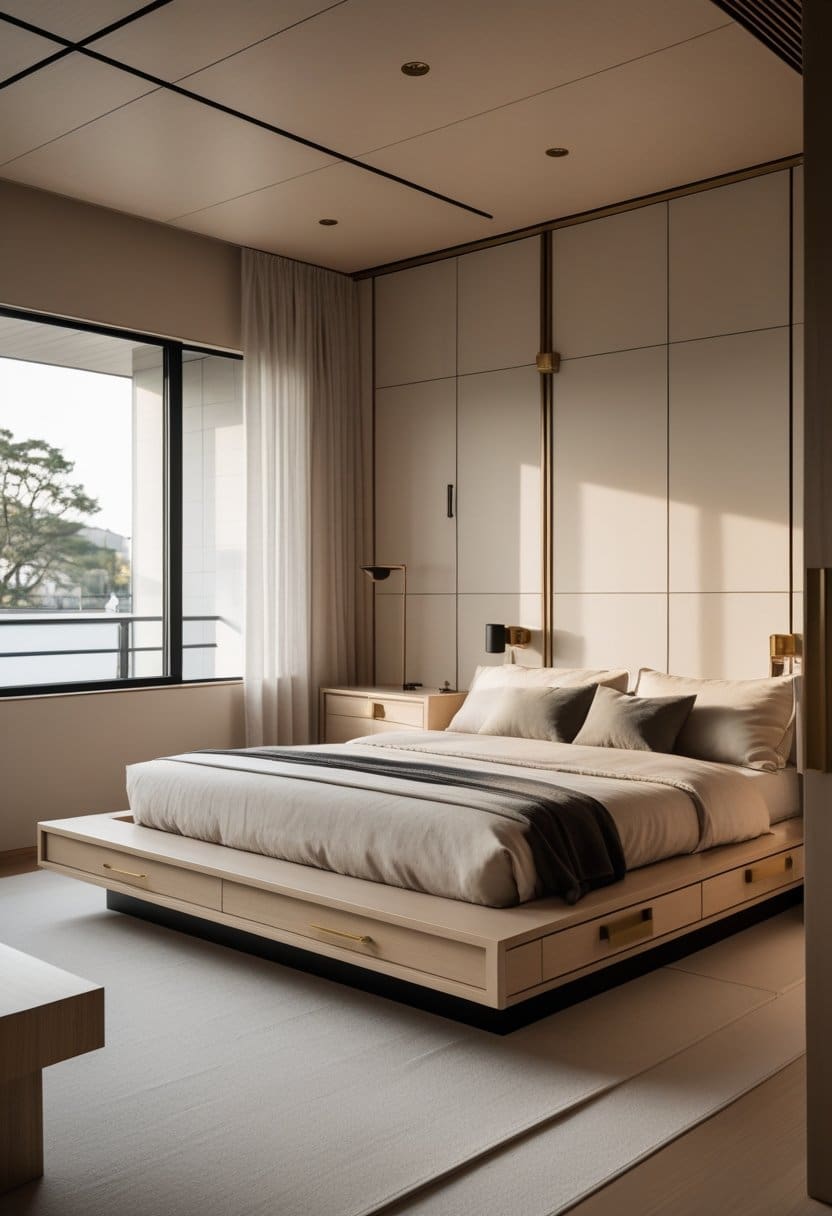
Japandi design often incorporates warm, understated metals.
Usage tips:
- Brushed brass or matte black for handles, lamps, or fixtures.
- Minimal use to avoid cluttering the neutral palette.
- Adds sophistication without overwhelming minimalism.
Small metallic touches elevate the bedroom without breaking calm simplicity.
18) Layered Textures for Cozy Minimalism
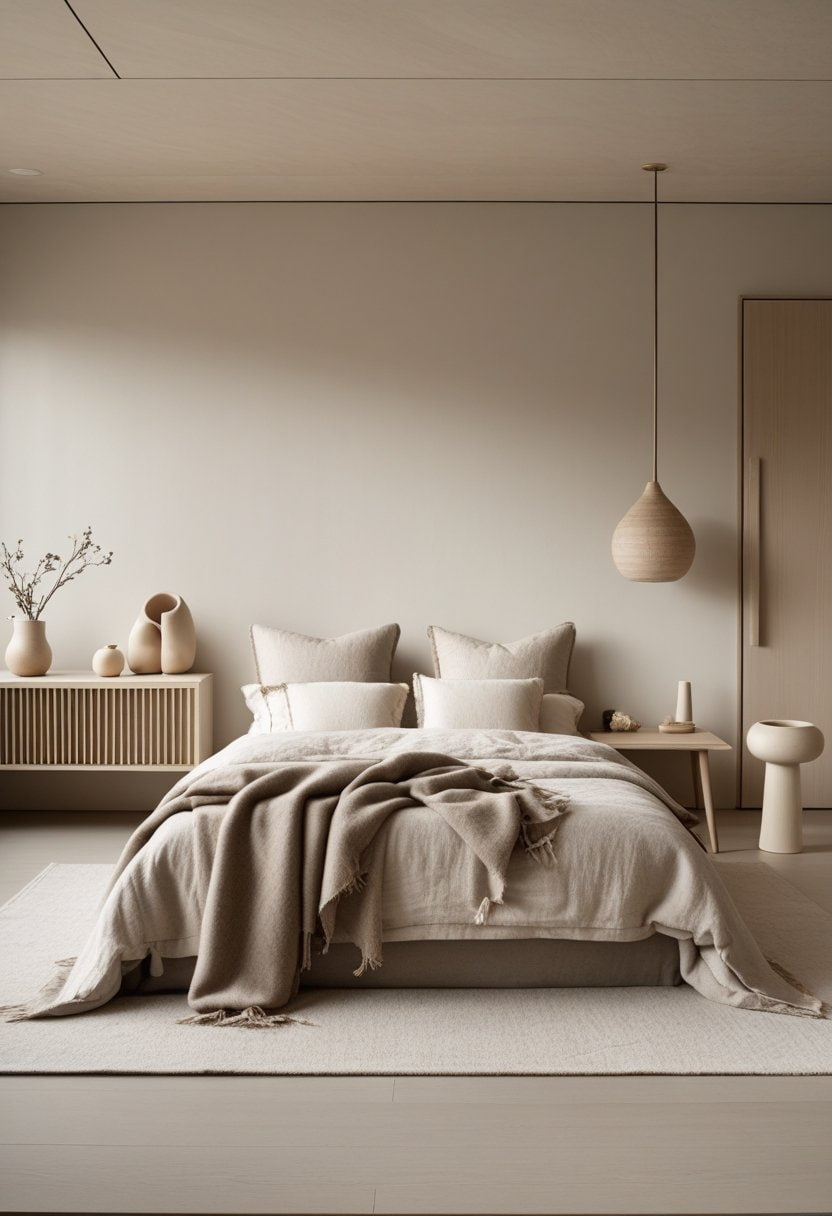
Layering textures brings warmth and tactile comfort to minimal spaces.
Ideas:
- Combine linen bedding with wool throws.
- Wooden furniture with soft rugs.
- Ceramic or clay decorative objects.
Layered textures make the bedroom inviting while keeping the design restrained.
19) Zen-Inspired Layouts for Balance
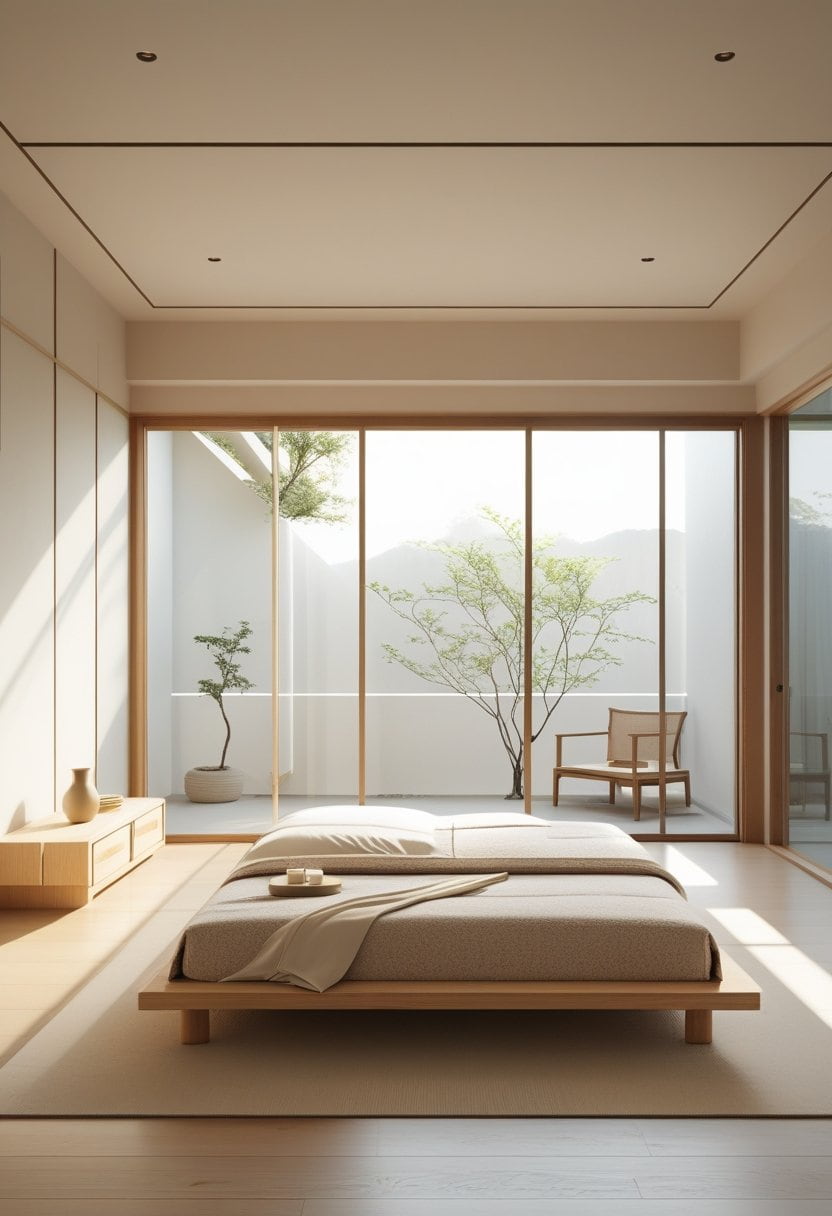
The final key to Japandi comfort is a balanced, clutter-free layout.
Tips for arrangement:
- Keep pathways clear and furniture proportionate to room size.
- Place the bed centrally or facing natural light.
- Limit decorative items to essential, meaningful pieces.
A Zen-inspired layout promotes rest, relaxation, and a feeling of calm in everyday life.
How to Choose the Right Japandi Bedroom Features
With 19 design ideas, it helps to narrow choices using a simple filter:
Ask yourself:
- Do I want warmth, functionality, or visual calm most?
- Will these features make the bedroom easier to live in and maintain?
- Do the materials and textures feel natural and inviting?
Simple priority list:
- Layout and furniture selection (beds, storage, nightstands).
- Natural materials and textures (wood, linen, stone).
- Style accents (lighting, plants, small decorative elements).
- Minimal clutter with functional beauty.
Conclusion
The best Japandi bedroom designs aren’t about following every trend—they’re about creating a space that feels like home. These 19 ideas focus on comfort, simplicity, warmth, and mindfulness.
If you take only one tip from this guide, let it be this: design your bedroom around rest and simplicity, then layer in natural textures and soft accents. That’s how you create a minimalist space that’s both serene and stylish for years to come.
More Stories
25 Classy Living Room Designs for Timeless Elegance
18 Green Bathroom Designs for a Fresh, Calm Look
22 Luxury Kitchen Design Inspirations for High-End Homes