

Introduction
A great room doesn’t start with paint color or décor. It starts with where you put the furniture. Good layout makes a room feel bigger, more comfortable, and easier to live in. Bad layout makes even a large space feel cramped and awkward.
In this guide, we’ll walk through 17 furniture layout ideas you can use in living rooms, bedrooms, dining rooms, home offices, and small spaces. The aim is simple: help you arrange what you already have in a smarter way, using clear, easy-to-follow ideas.
Why Furniture Layout Matters?
Before jumping into the ideas, it helps to know why layout is so important:
- It controls how people move through a room
- It affects how much you use and enjoy the space
- It can make a small room feel bigger or a large room feel cozy
- It helps you decide what furniture you really need (and what you don’t)
Think of layout as the “map” of your home. Once the map is right, everything else – color, décor, style – works much better.
Let’s dive into you can try, one room at a time.
1. Conversation Circle in the Living Room
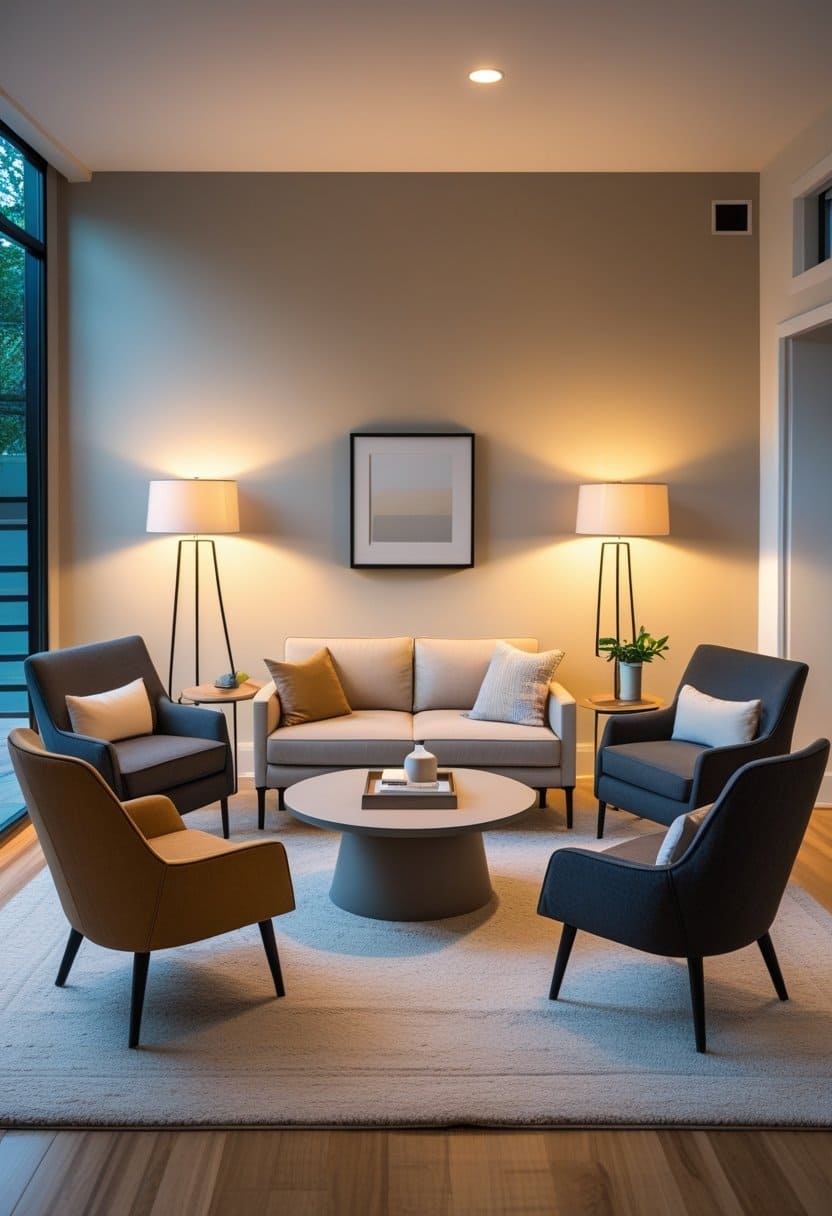
One of the most popular furniture layout ideas is the classic conversation circle. Instead of pointing everything at the TV, focus on people first.
How to do it:
- Place a sofa facing two chairs or a loveseat
- Add a coffee table in the center
- Keep the chairs close enough so people don’t have to shout
- Leave space behind chairs and sofa so people can walk around
Best for:
- Living rooms used for guests and family time
- Homes where talking and connecting matters more than TV
This layout makes every seat feel “included,” and it’s ideal if you love hosting.
2. L-Shaped Seating for Compact Living Rooms
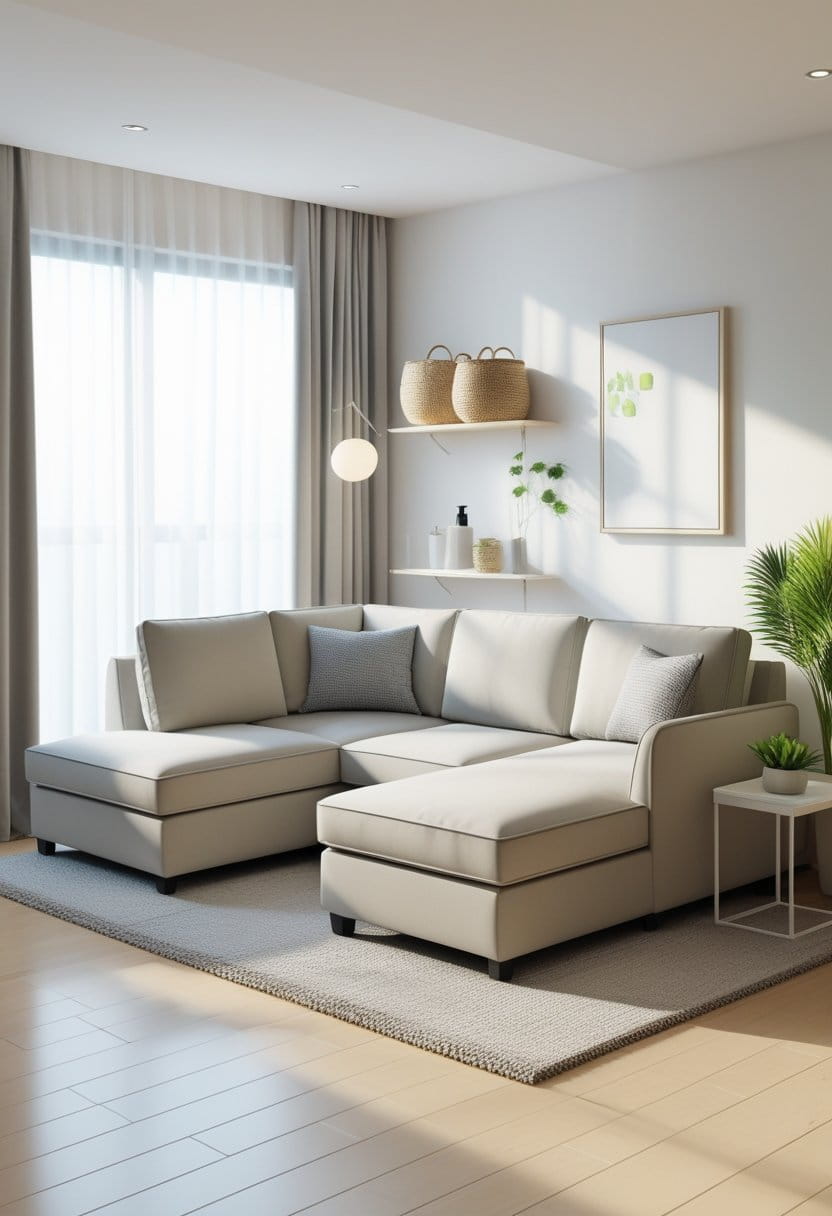
When your living room is small or slightly square, an L-shaped layout can save space and still feel cozy.
How to set it up:
- Use either an L-shaped sectional or a sofa plus a chaise
- Place the “L” in a corner to free up floor space
- Put a small coffee table or ottoman in front
- Add a slim console or shelves behind the sofa if you need storage
Tips:
- Choose a low-profile sectional to avoid making the room feel heavy
- Keep traffic paths clear on at least one side of the “L”
This is one of the 17 furniture layout ideas that works especially well in apartments or small homes.
3. Floating Furniture Away from the Walls
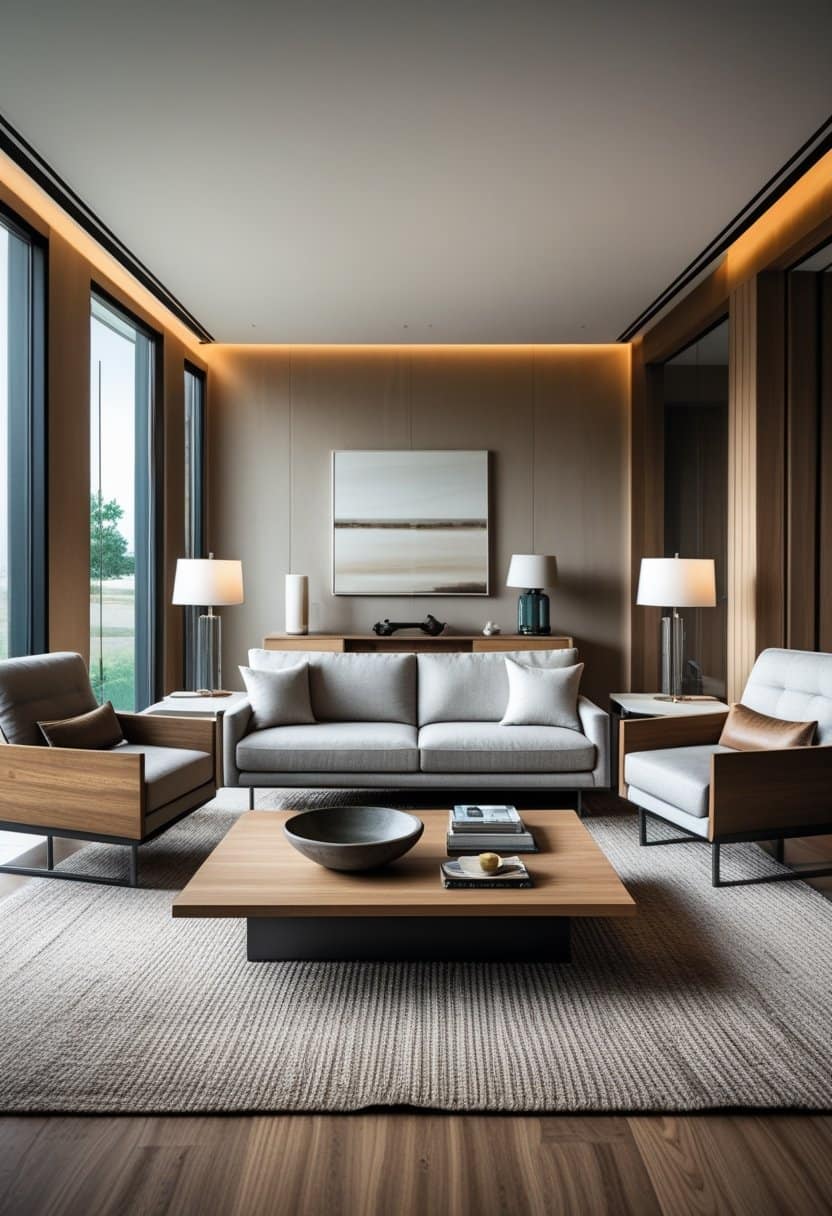
Pushing furniture against the walls is common, but it often makes a room feel empty in the middle. “Floating” your furniture can change that.
What “floating” means:
- The sofa, chairs, or tables sit away from the wall, toward the center
- There is walking space behind the furniture
- A rug can help hold the floating pieces together visually
Why it works:
- Creates a cozy seating zone
- Makes large rooms feel more intimate
- Lets you break up one big space into smaller “areas”
Try this in a big living room: place your sofa and chairs in the middle of the room on a rug, and use a console or shelf behind the sofa.
4. Zoning an Open-Plan Space
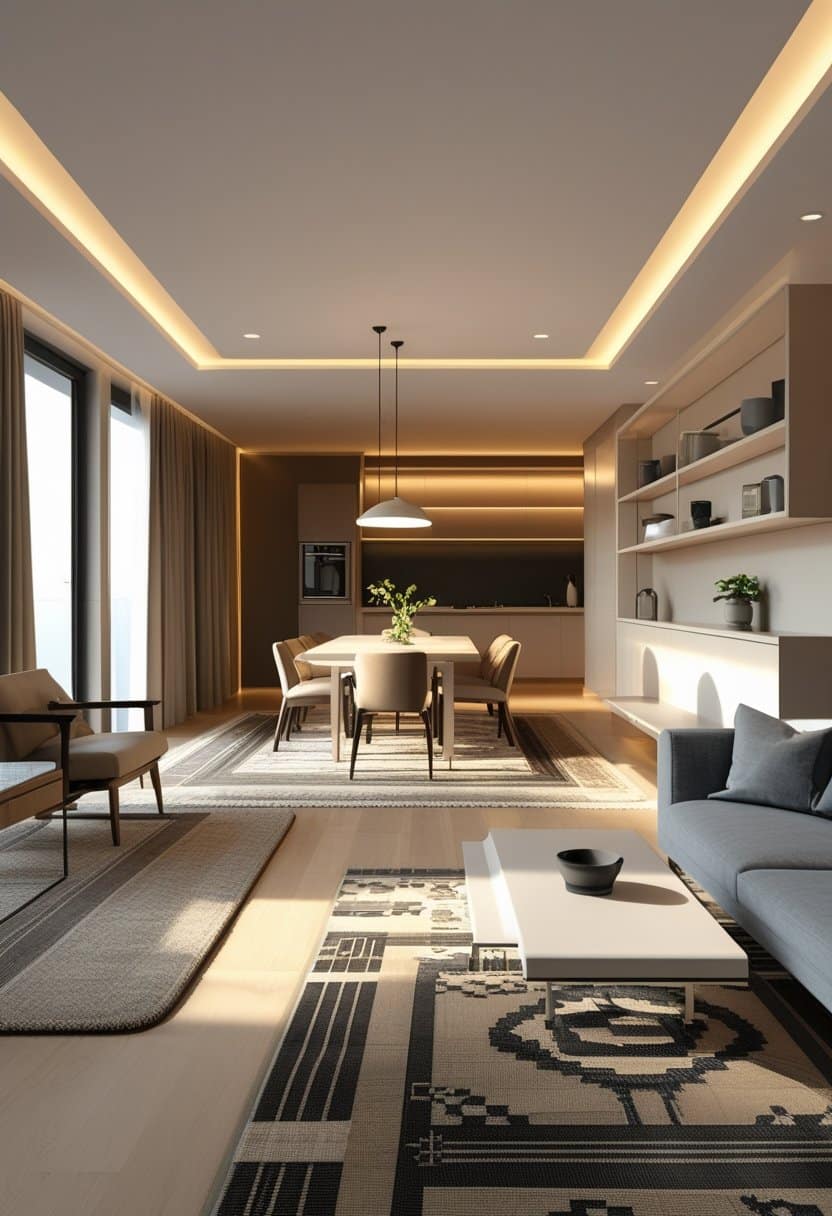
If you have a combined living, dining, and kitchen area, layout can feel tricky. Zoning turns one large space into several smaller “rooms” without walls.
Create zones by using:
- Rugs to define each area (living, dining, workspace)
- The back of a sofa as a soft “divider” between living and dining
- Open shelving to separate spaces while still letting light through
- Consistent colors so everything still feels connected
Example zones in an open-plan room:
- Living area – sofa, chairs, coffee table
- Dining area – table centered under a light fixture
- Work nook – desk in a corner or along a wall
Zoning is one of the most powerful furniture layout ideas for modern homes.
5. Window-Focused Layout for Natural Light
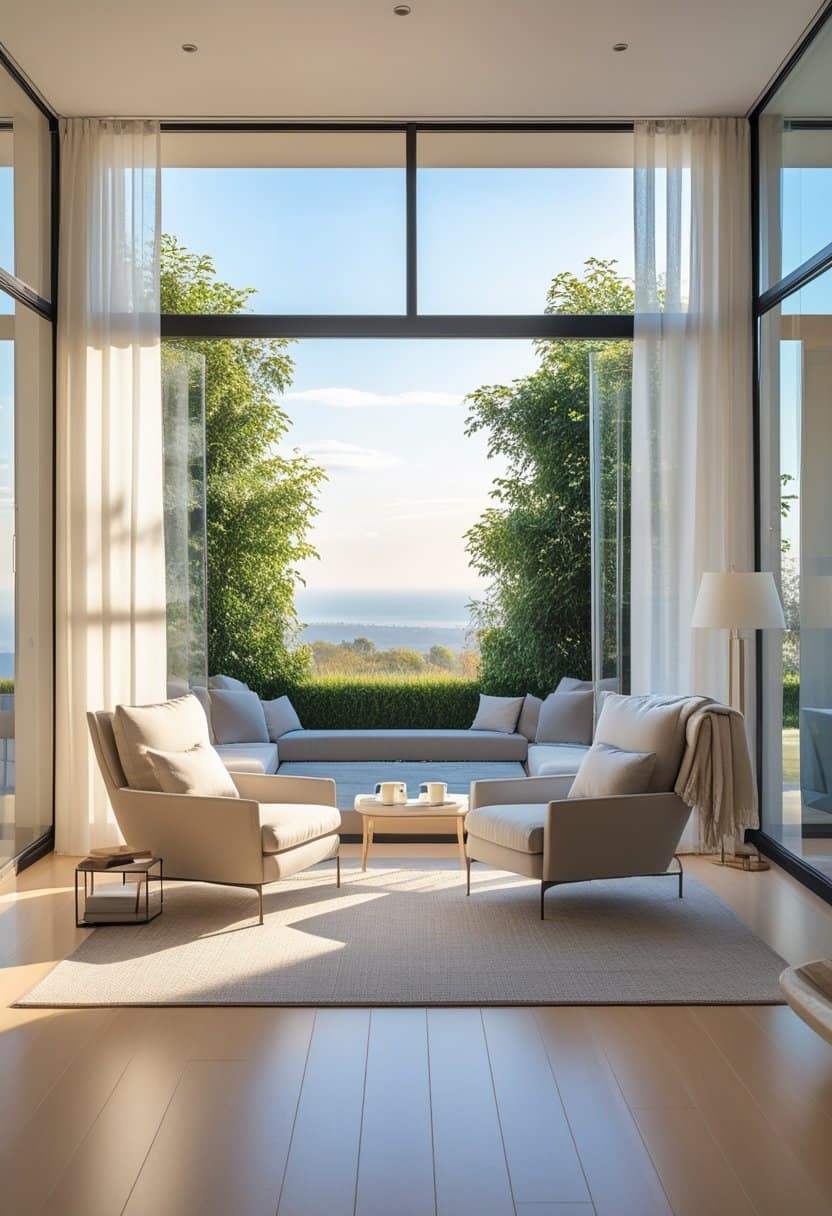
If your room has a beautiful window or view, let it be the star.
How to arrange furniture:
- Place a sofa or pair of chairs facing the window (not the wall)
- Keep low furniture near the window so light still spreads into the room
- Use light fabrics and slim frames to avoid blocking the view
- Add side tables and a floor lamp so the seating is still practical
Best for:
- Living rooms, reading corners, or breakfast nooks
- Rooms with garden, city, or mountain views
This layout naturally draws people toward the light and view, making the room feel more uplifting.
6. TV-Friendly Layout That Still Feels Social
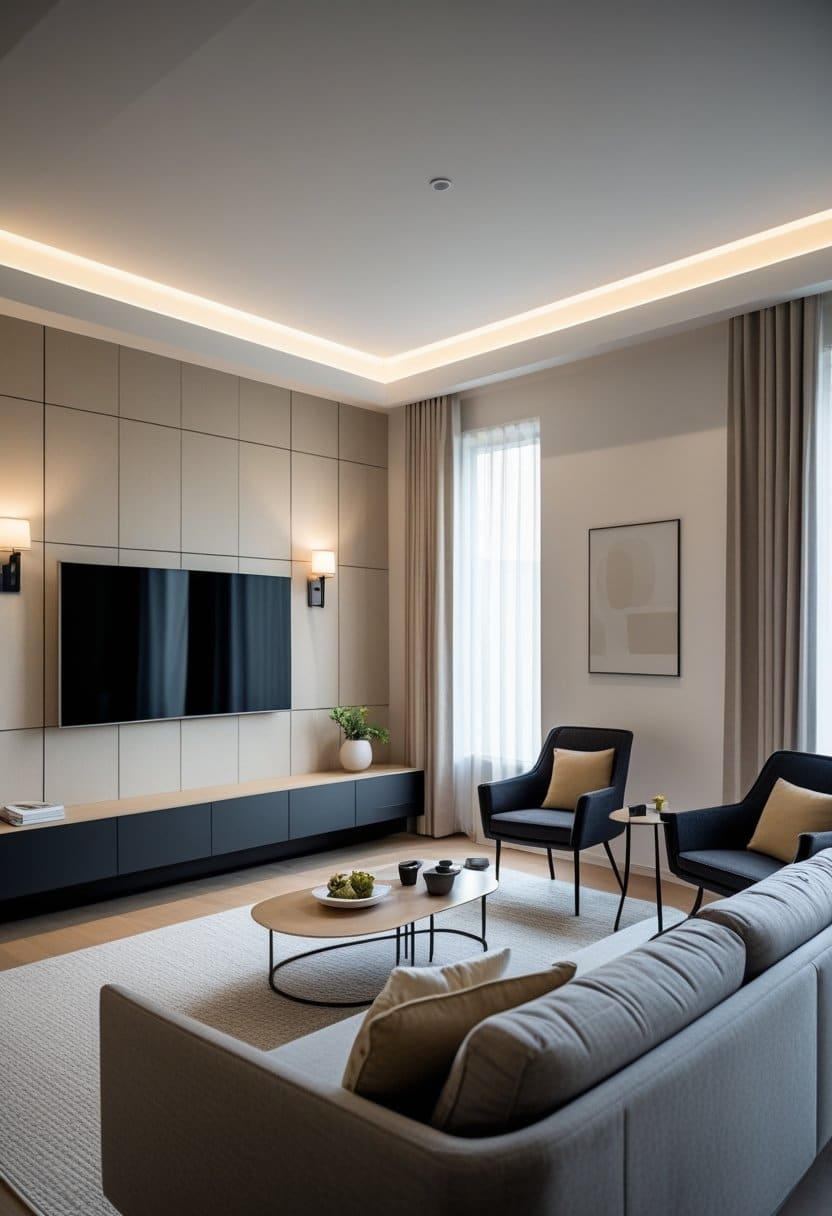
Most homes have a TV, but it doesn’t have to dominate the layout.
Balanced idea:
- Place the TV on a media unit or mounted on the wall
- Put the main sofa facing the TV
- Add chairs at angles so people can talk and watch
- Keep the TV at eye level when seated to prevent neck strain
Tips for comfort:
- Avoid placing the TV opposite a bright window (glare)
- Use a rug to center the seating around the coffee table, not the TV alone
This layout keeps movie nights comfortable while still allowing normal conversation.
7. Multi-Use Layout for a Small Living Room
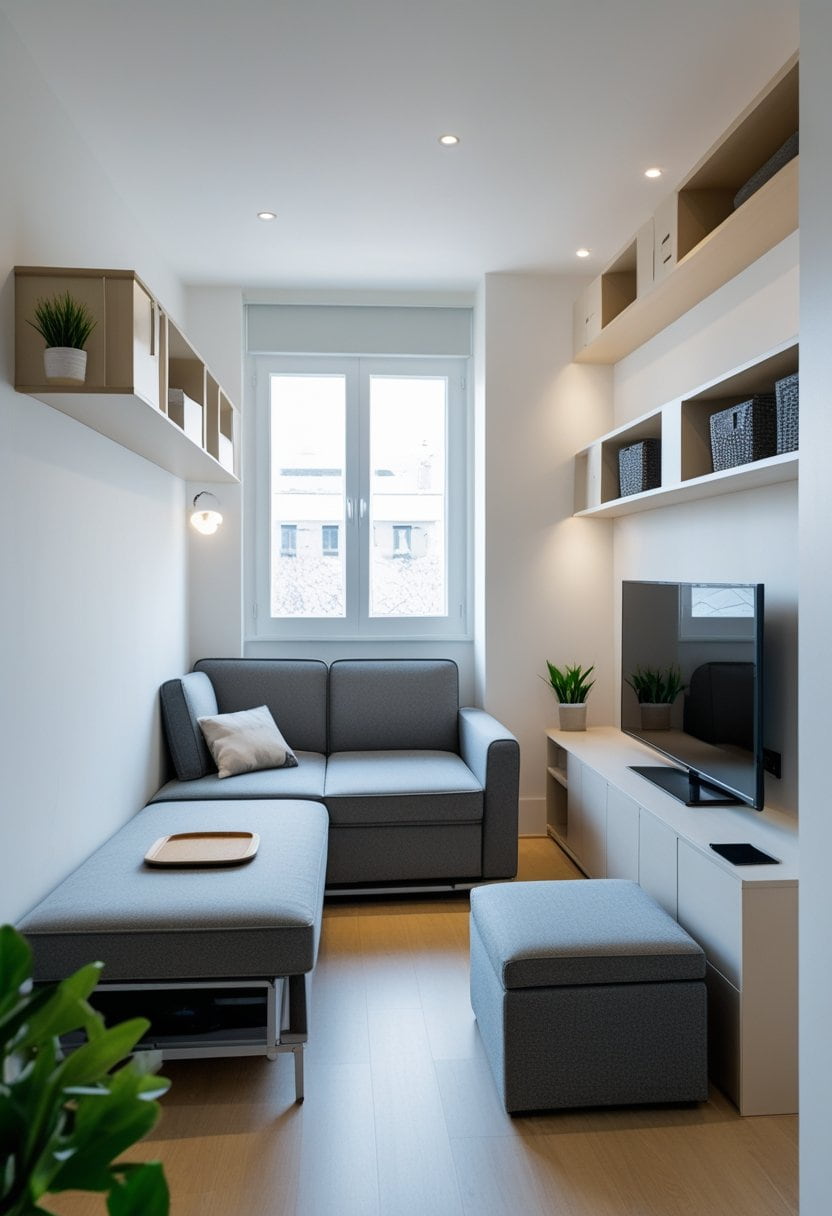
When space is tight, every piece of furniture needs to work harder.
Smart furniture choices:
- A sofa bed that doubles as a guest bed
- An ottoman with storage instead of a bulky coffee table
- Nesting tables that you can pull out only when needed
- Wall-mounted shelves to free floor space
Layout tips:
- Place the sofa against the longest wall
- Keep furniture narrow and raised on legs to show more floor
- Use vertical space for storage instead of large floor cabinets
Among the 17 furniture layout ideas, this one is perfect if you need your living room to act as a guest room, office, or play space too.
8. Layout for a Long, Narrow Room
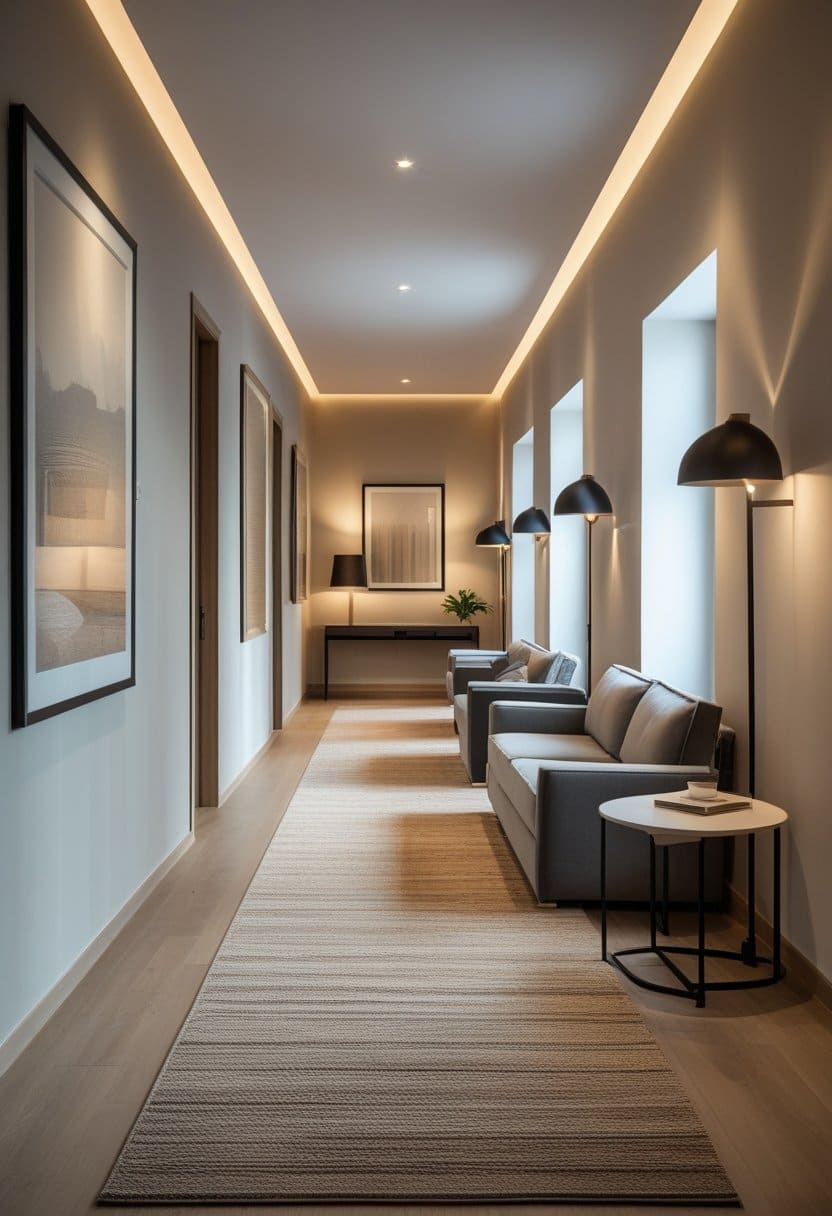
A long, narrow room can feel like a hallway if you’re not careful. The key is to break it up.
Try this approach:
- Divide the room visually into two or three smaller zones
- At one end, create a seating area with a sofa and chairs
- In the middle, use a console table, bench, or small desk
- At the other end, add a reading nook or a second small seating area
Helpful tricks:
- Place furniture slightly away from walls to soften the “tunnel” effect
- Use round tables to break up the straight lines
- Choose rugs that run across the room, not just lengthwise
This layout makes a narrow room feel like a series of cozy spots instead of a long corridor.
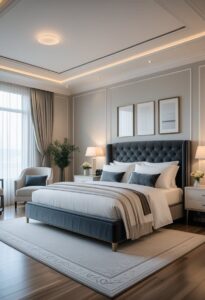
9. Balanced Bedroom Layout with the Bed as the Star
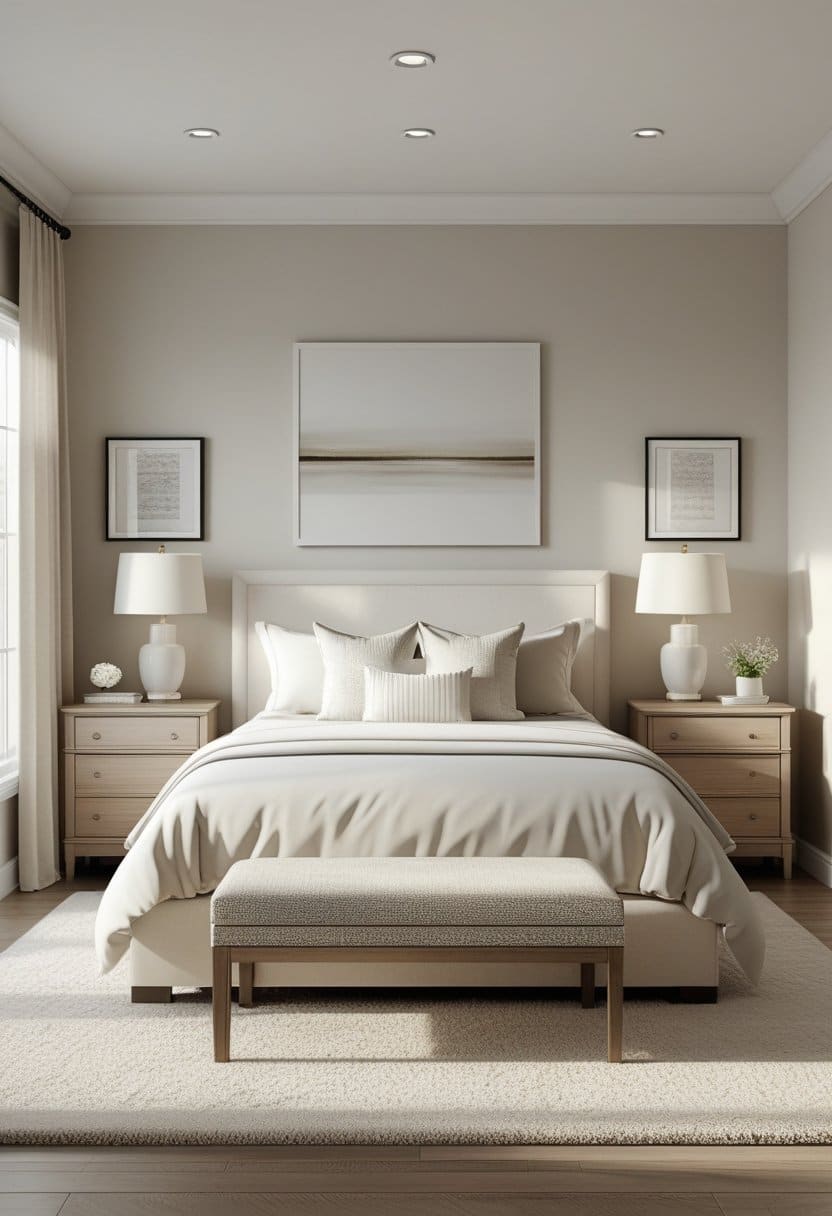
In bedrooms, the bed should usually be the main focus.
Classic setup:
- Place the bed against the longest uninterrupted wall
- Center it so there’s space on both sides
- Add nightstands on each side for balance
- Put a dresser or chest of drawers opposite the bed if space allows
Why it works:
- Looks calm and symmetrical
- Makes it easier for two people to share the room
- Leaves enough space to move around the bed
Add a rug under the bed (ideally showing on three sides) to make the room look more finished and cozy.
10. Hotel-Style Bedroom Layout
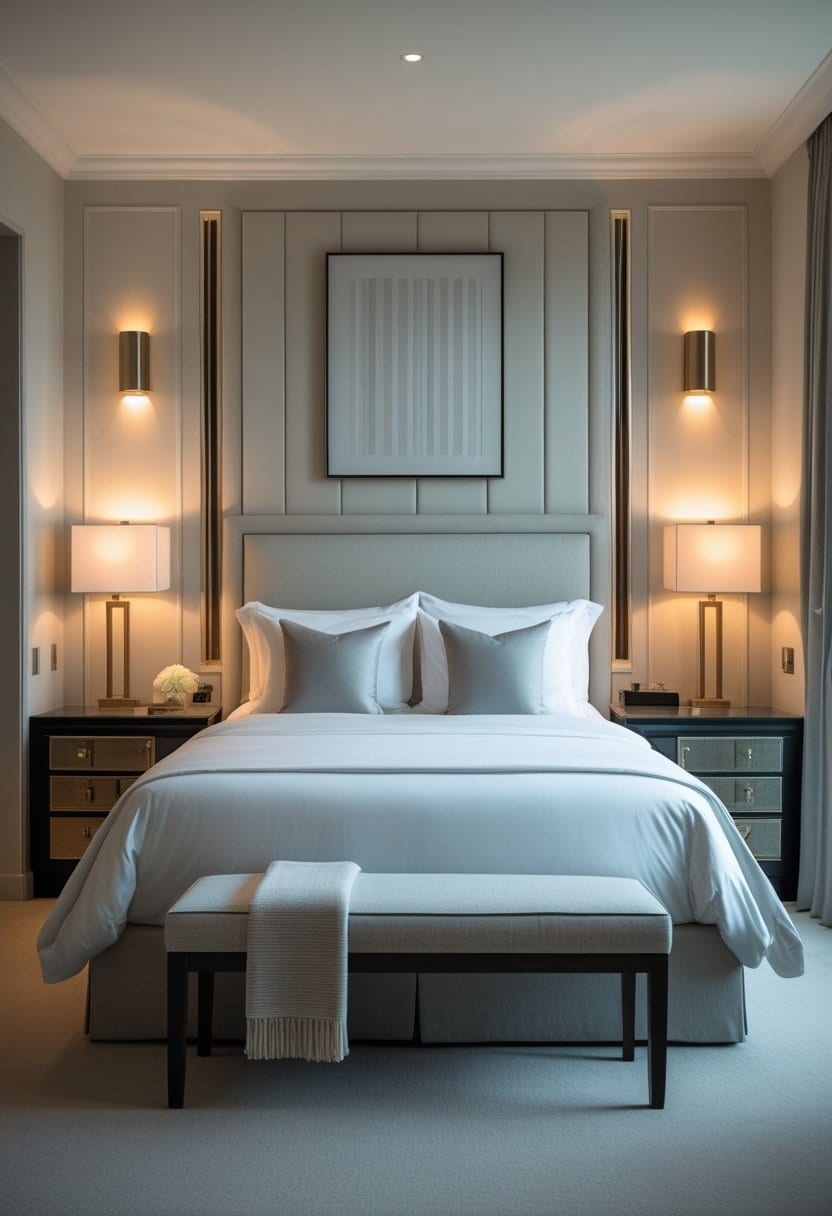
If you like the polished feel of hotel rooms, copy their layout.
Key elements:
- Bed centered on the main wall with a strong headboard
- Matching lamps and nightstands on both sides
- Bench or small seating at the foot of the bed
- Desk or vanity along a side wall, not blocking windows
Small touches:
- Keep surfaces fairly clear to avoid clutter
- Use one or two statement pieces (like a chair or art) instead of many small items
This layout creates a calm, restful space that’s easy to keep tidy.
11. Studio Apartment with Clear Zones
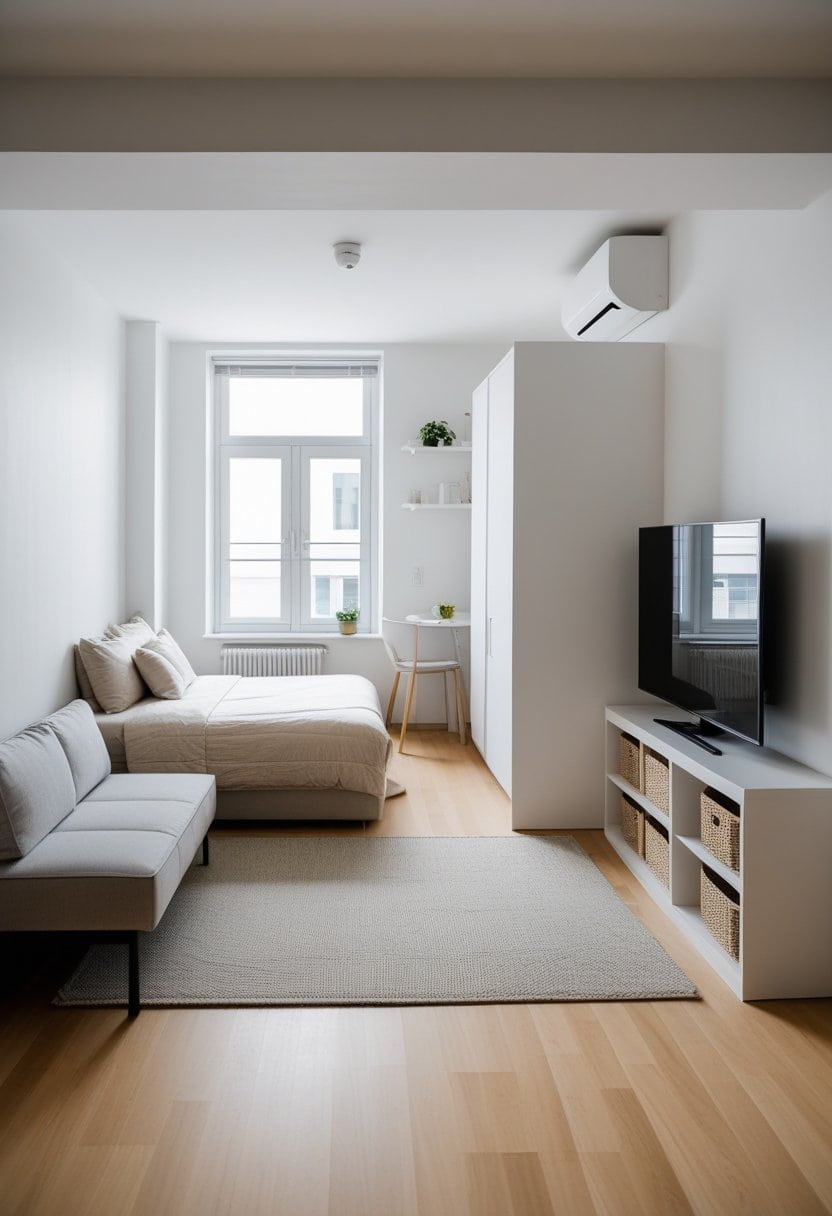
In a studio, your entire life happens in one room. Layout matters more than ever.
Create four main zones:
- Sleeping area – bed against a wall or near a window
- Living area – small sofa or loveseat plus a coffee table
- Dining/work area – small table and chairs that can double as a desk
- Storage area – shelves, wardrobes, or cabinets along one wall
Use these tricks:
- A sofa at the foot of the bed can separate “living” from “sleeping”
- A rug under the bed and another under the sofa helps define each area
- Open shelving or a low bookcase can act like a divider without blocking light
Among all 17 furniture layout ideas, this one has the biggest impact on daily living if you’re in a small studio.
12. Dining Room Layout for Easy Entertaining
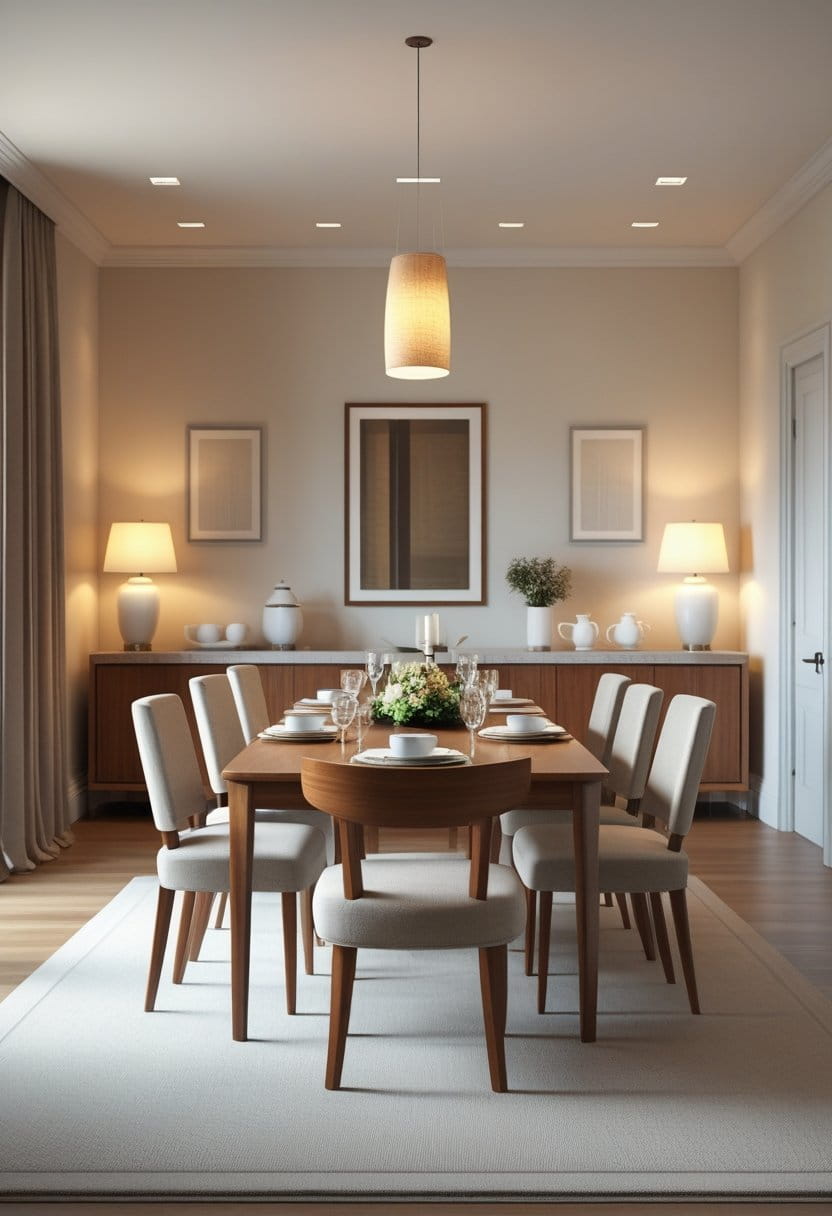
A good dining layout makes serving food and moving around the table simple.
Basic rules:
- Center the table in the room if possible
- Leave enough space (about the width of a chair plus walking room) around all sides
- Place a sideboard or cabinet on one wall for dishes and serving
- Align the table with any overhead light fixture
For large gatherings:
- Use extendable tables so the room can handle guests without feeling cramped daily
- Consider benches on one side if you need to seat more people
Keep walkways clear so guests can move in and out of their chairs easily.
13. Eat-In Kitchen Nook Layout
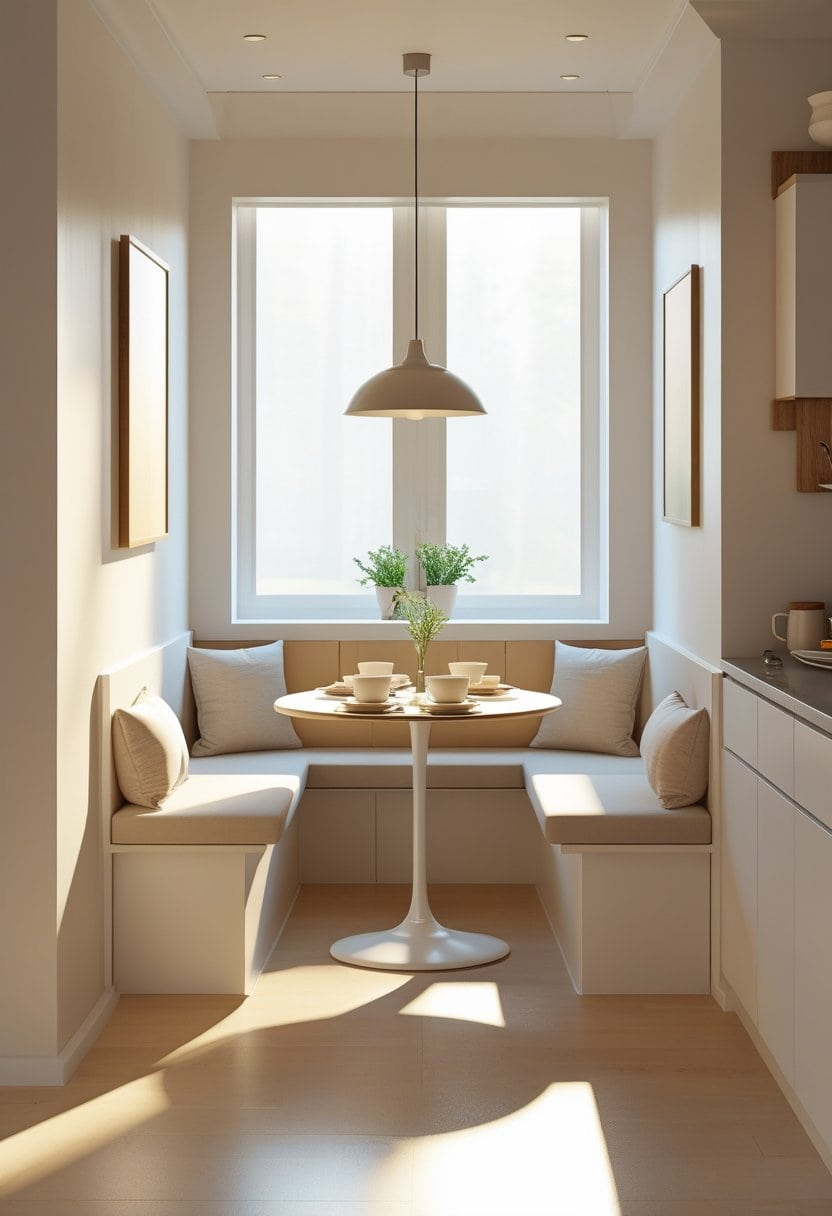
If your kitchen has room for seating, even a small nook can become a favorite spot.
Ideas for a cozy nook:
- Place a small round table in a corner or near a window
- Add a built-in bench along the wall to save space
- Use chairs that tuck fully under the table
- Keep nearby storage slim, like a narrow shelf or bar cart
Why round tables help:
- Easier to move around in tight spaces
- No sharp corners sticking out into walkways
- Flexible for seating different numbers of people
This layout encourages quick breakfasts, coffee breaks, and casual chats.
14. Home Office Corner Layout
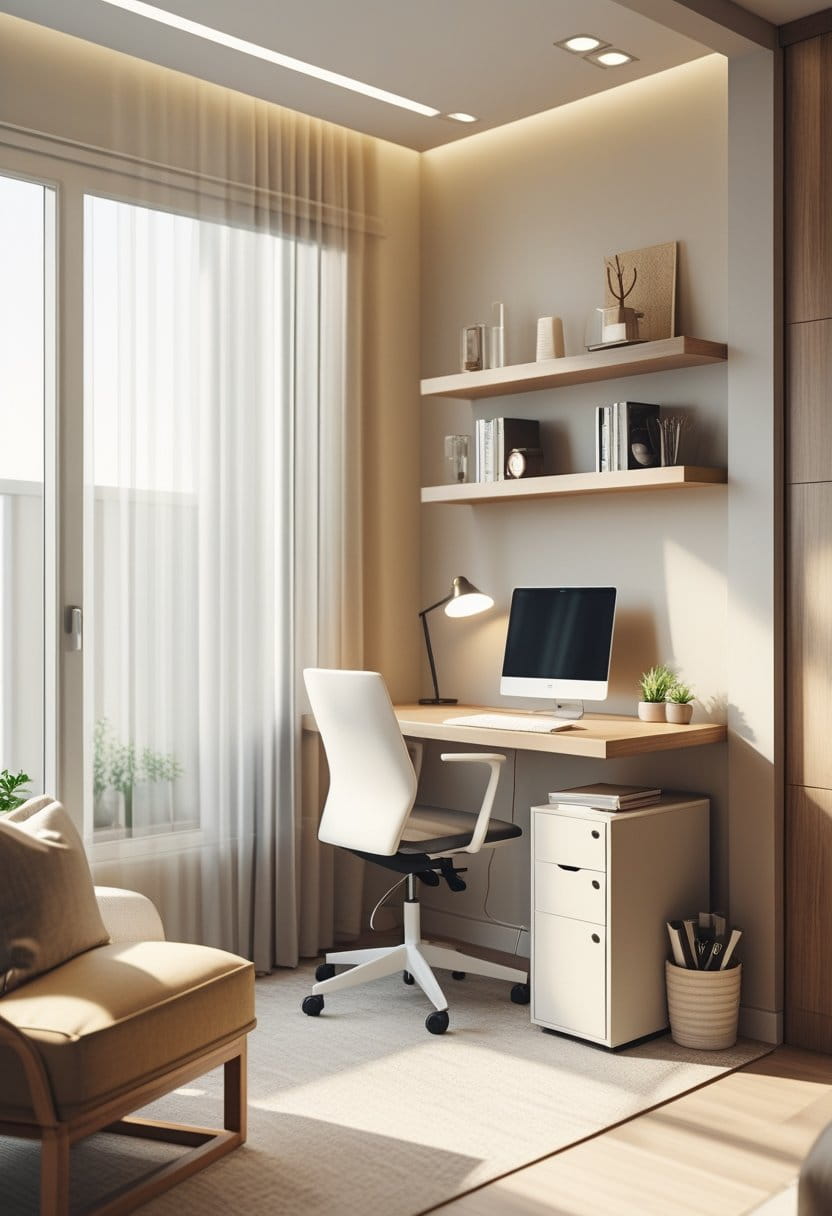
Even if you don’t have a dedicated room, you can carve out a useful home office.
Simple office layout:
- Desk placed against a wall or under a window
- Comfortable chair that supports your back
- Shelves or a small drawer unit beside or under the desk
- A task lamp and cable organizer to keep the area neat
To blend with the room:
- Choose a desk style that matches the rest of your furniture
- Use floating shelves instead of bulky cabinets
- Add a small rug to visually mark the office area
This idea fits well into living rooms, bedrooms, or even hallways.
15. Kid-Friendly Play Area Layout
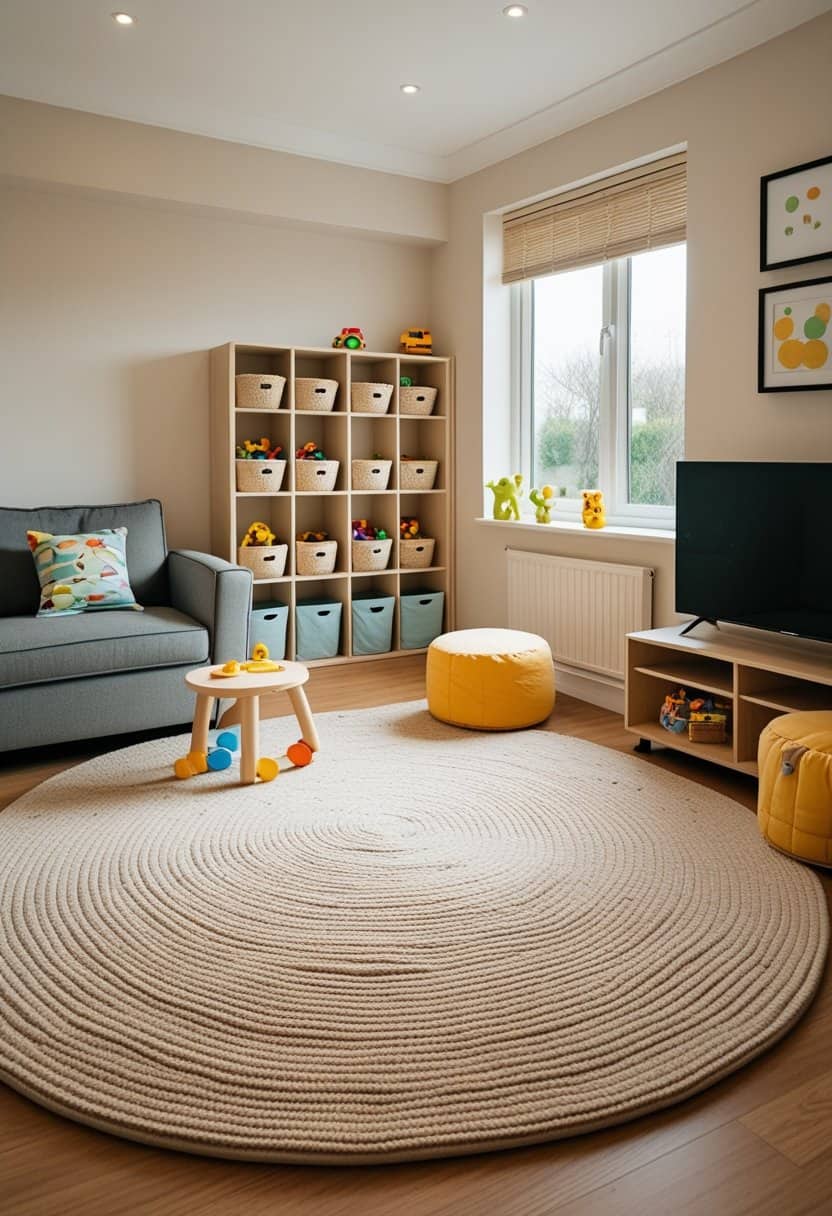
Kids need open floor space and easy access to toys. A well-planned layout can keep the rest of your house calmer.
Set up a play zone:
- Choose a corner of the living room or a section of the kid’s bedroom
- Place a soft rug for playtime on the floor
- Use low, open storage for toys so kids can see and reach them
- Keep large furniture (like sofas and beds) away from active play space
Safety tips:
- Avoid sharp-edged coffee tables in the play area
- Anchor heavy bookcases to the wall
- Keep the main walkway clear so adults don’t trip over toys
This layout lets kids spread out without taking over the entire house.
16. Functional Entryway Layout
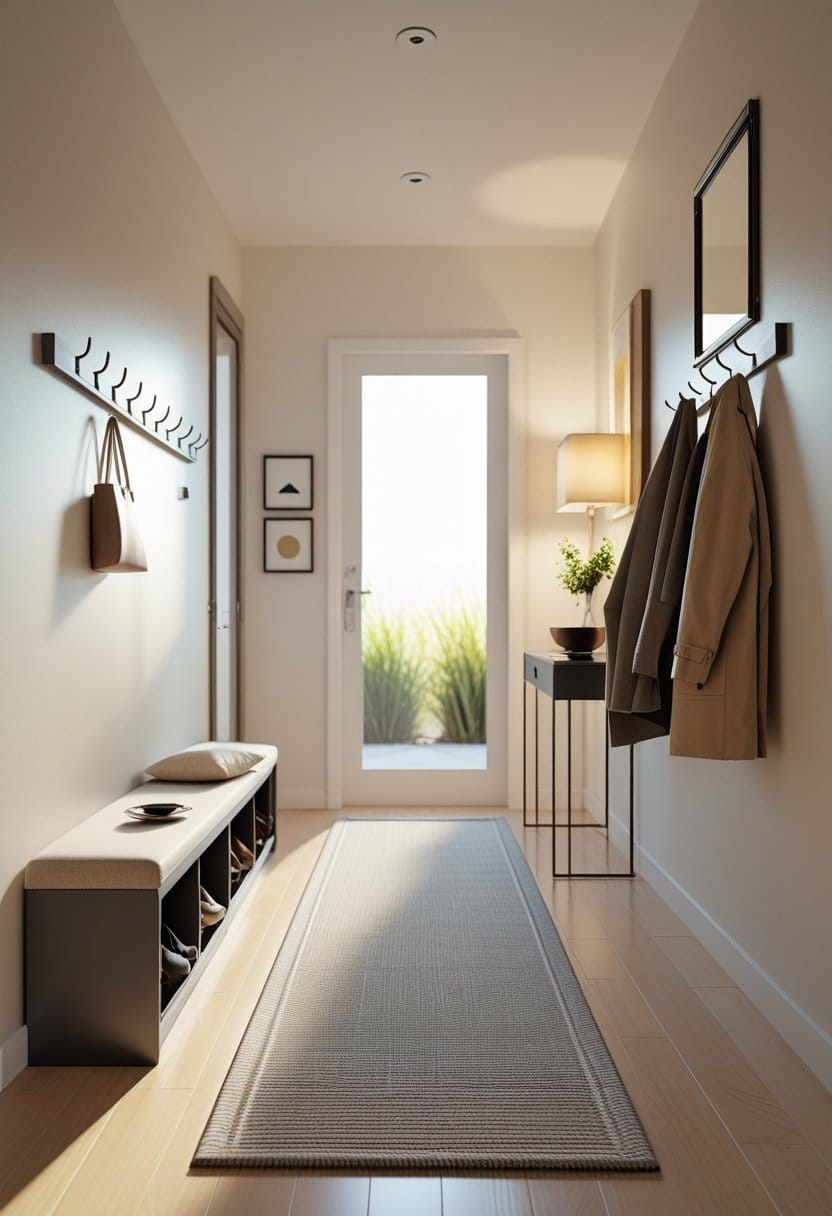
The entry sets the tone for the rest of your home and needs to handle daily traffic.
Entryway essentials:
- A bench or chair where people can sit to remove shoes
- Hooks or a coat rack for jackets and bags
- A console table or shelf for keys, mail, and small items
- A rug to catch dirt and define the area
Layout ideas:
- Place the bench along one wall and hooks above or beside it
- Put a slim console opposite if the hallway is wide enough
- Use vertical storage (hooks, shelves) to avoid floor clutter
Even a tiny entry can feel organized with the right layout.
17. Flexible Layout with Moveable Furniture
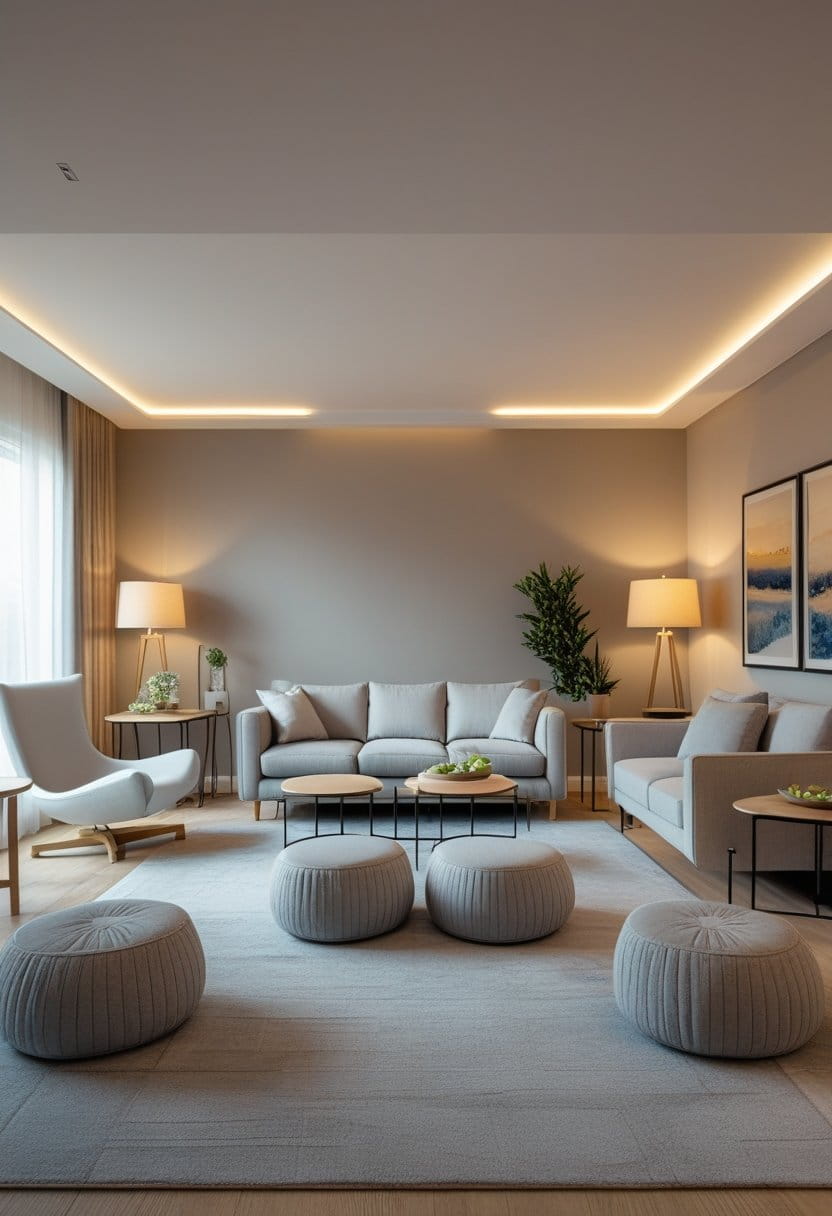
The last of the 17 furniture layout ideas is about flexibility. Rooms don’t have to stay the same all year.
Furniture that makes it easy to change:
- Lightweight chairs that can move from room to room
- Small side tables instead of one heavy coffee table
- Stools and poufs that act as footrests, seats, or side tables
- Folding tables or nesting tables for special occasions
How to plan a flexible layout:
- Start with a strong base: sofa, bed, dining table in the best spots
- Keep smaller pieces easy to move so you can adapt for parties, guests, or seasons
- Avoid cluttering every wall; leave some “empty” space for change
This idea lets your home grow and shift with your life, without constant major makeovers.
How to Choose the Right Layout for Your Home
With so many options, it helps to choose layouts based on your real daily needs.
Ask yourself:
- What do I do most in this room? (Watch TV, talk, work, sleep, eat?)
- How many people use the room at the same time?
- Where are the doors, windows, and main walkways?
- Which pieces of furniture must stay, and which could be replaced?
Then:
- Pick one or two of these 17 furniture layout ideas that match your lifestyle.
- Sketch your room on paper with rough measurements.
- Try moving the lightest furniture first to see how the space feels.
- Live with the new layout for a week before making big changes like buying new pieces.
You don’t need a huge budget to improve your home. Very often, simply rearranging what you already have can make a room feel completely new.
Conclusion
Good furniture layout is about more than looks. It shapes how you move, relax, work, and connect with others at home. By using these 17 Furniture Layout Ideas, you can:
- Make small rooms feel more open
- Turn large spaces into cozy, welcoming areas
- Give each part of your home a clear purpose
- Enjoy your rooms more every single day
Start with one room, try one new layout, and see how it changes the way you feel in your space. Once you experience the difference, you may find yourself rearranging every room in your home—with a much clearer idea of what works and why.
More Stories
18 Half Bathroom Ideas to Maximize Small Spaces
22 Room Decor Ideas to Refresh Your Bedroom Style
19 Farmhouse Living Room Ideas for Rustic Charm