
Introduction
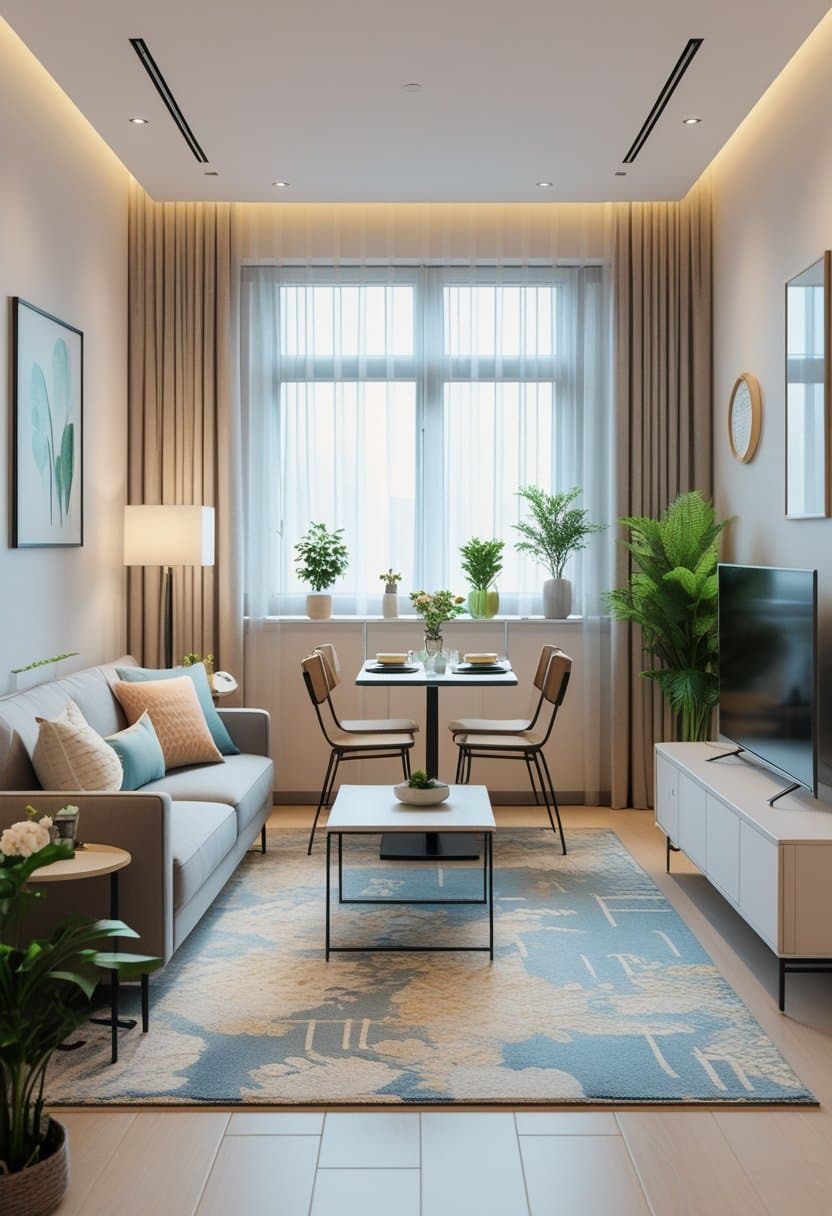
When you’re working with limited space, the layout is everything. A well-planned combined room can feel open, comfortable, and surprisingly flexible—while a poor setup can feel cramped and messy no matter how nice the furniture is.
This guide on 21 Small Living Room + Dining Layouts That Work is designed for real homes: apartments, small houses, studio spaces, and open-plan rooms where the living area and dining area share one footprint. You’ll find practical layouts, simple furniture choices, and easy rules you can apply right away—without needing to be an interior designer.
Before we jump into the layouts, here are a few space facts that help most small rooms feel better:
- A comfortable walkway is usually about 36 inches (90 cm) wide. In tighter rooms, 30 inches (76 cm) can still work.
- Allow about 24 inches (60 cm) per person at a dining table for elbow room.
- Most people sit comfortably when there’s 30–36 inches (76–90 cm) behind a dining chair to slide it out. In small rooms, 24 inches (60 cm) can work if traffic is low.
These aren’t strict rules, but they’re useful targets. Now, let’s explore layouts that actually work in everyday spaces.
Quick Planning Rules for a Combined Living and Dining Room
A small living room dining layout works best when it follows a few clear principles:
- Create zones: Even one area rug or a change in lighting can visually separate “living” from “dining.”
- Keep paths clear: Don’t make people squeeze between chairs and sofas to move around.
- Choose lighter-looking pieces: Open legs, slim arms, and glass/metal details feel less bulky than solid blocks.
- Use multi-purpose furniture: Storage benches, nesting tables, ottomans with lids, and extendable tables are lifesavers.
- Anchor the room with one “main” piece: Usually the sofa or the dining table—then build around it.
Layout 1: Sofa Faces the TV, Dining Behind the Sofa
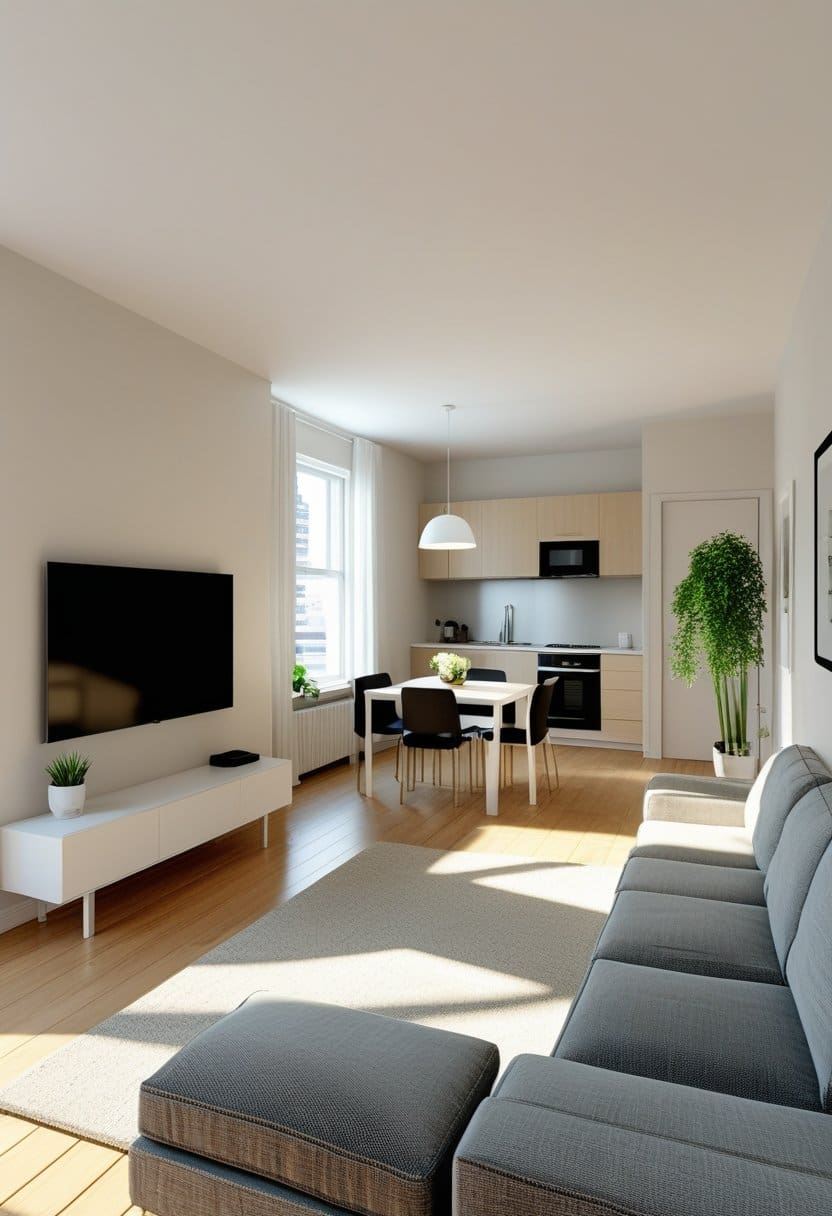
This is one of the most common and successful small open-plan solutions.
How it works:
- Place the sofa facing the TV or a focal wall.
- Put a compact dining table behind the sofa, closer to the kitchen side.
Why it works:
- The sofa becomes a “divider” without building walls.
- It’s easy to walk around both zones.
Best for:
- Rectangular rooms
- Homes where the dining area is near the kitchen
Layout 2: L-Shaped Sectional with a Round Dining Table
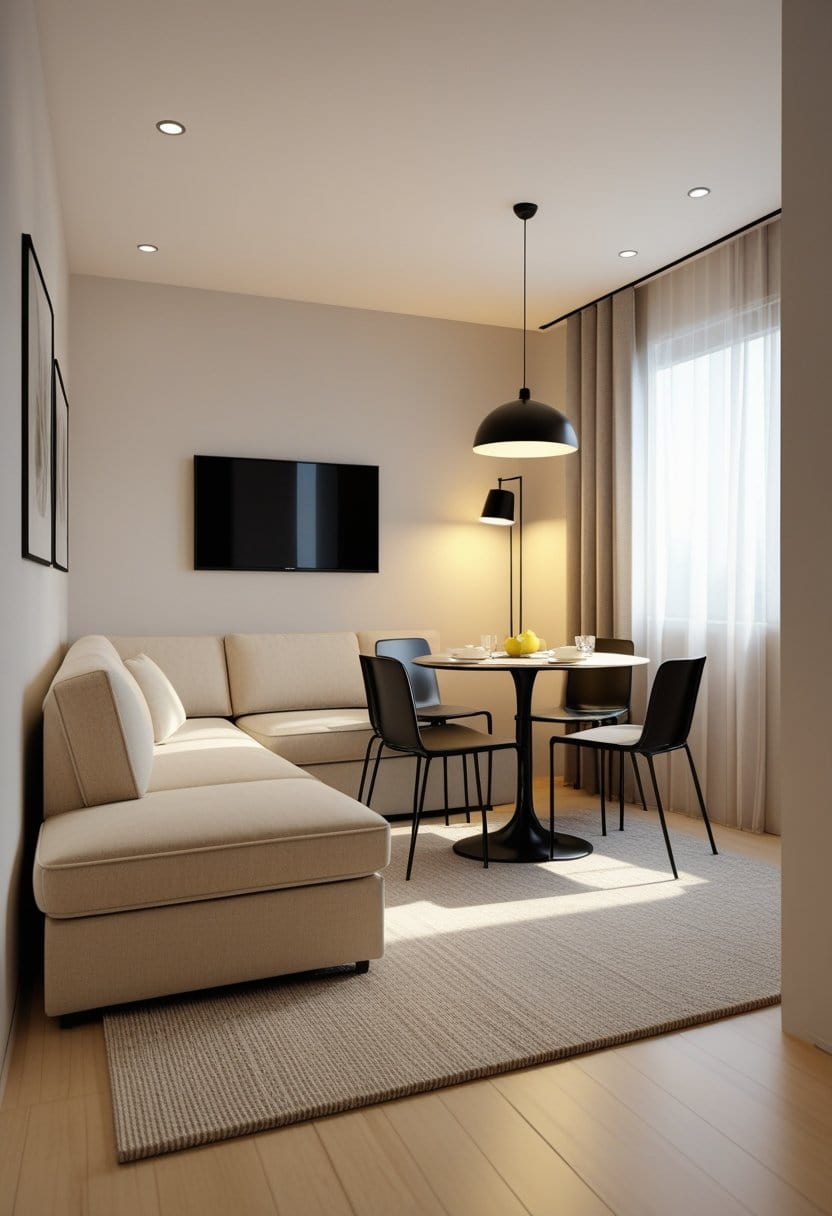
If your living area needs cozy seating, an L-shaped sectional can still work—if you pair it with a space-friendly dining shape.
How it works:
- Put an L-shaped sectional in a corner.
- Use a round dining table in the remaining space.
Why it works:
- Round tables improve traffic flow—no sharp corners to bump into.
- The sectional defines the living area strongly.
Tip:
- Choose a round table with a pedestal base so chairs tuck in more easily.
Layout 3: Two-Seater Sofa + Small Bistro Table
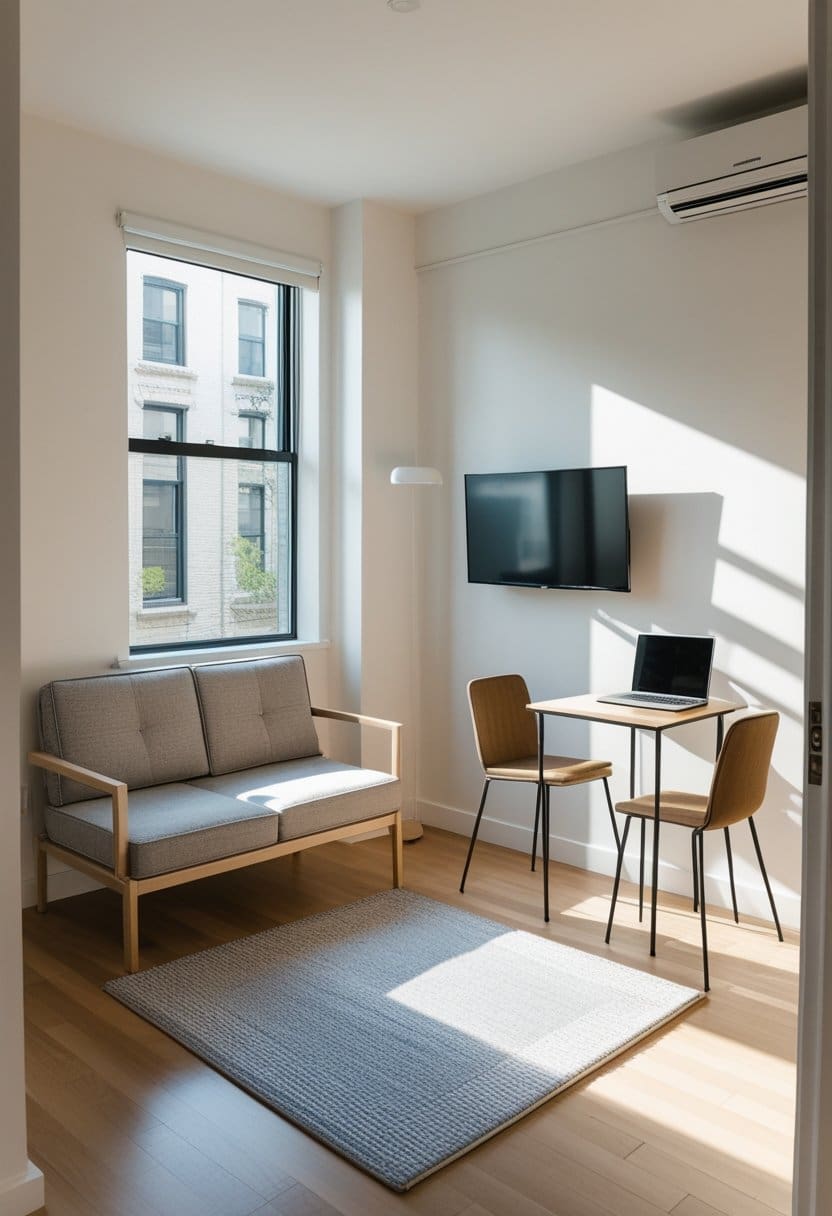
This layout is perfect for very small rooms or studio apartments.
How it works:
- Use a loveseat or two-seater sofa.
- Add a small bistro table (2 chairs) near a wall or window.
Why it works:
- Keeps furniture size in proportion to the room.
- Leaves breathing space for movement.
Extra win:
- A bistro table can double as a laptop/work spot.
Layout 4: Floating Sofa with a Slim Console as Divider
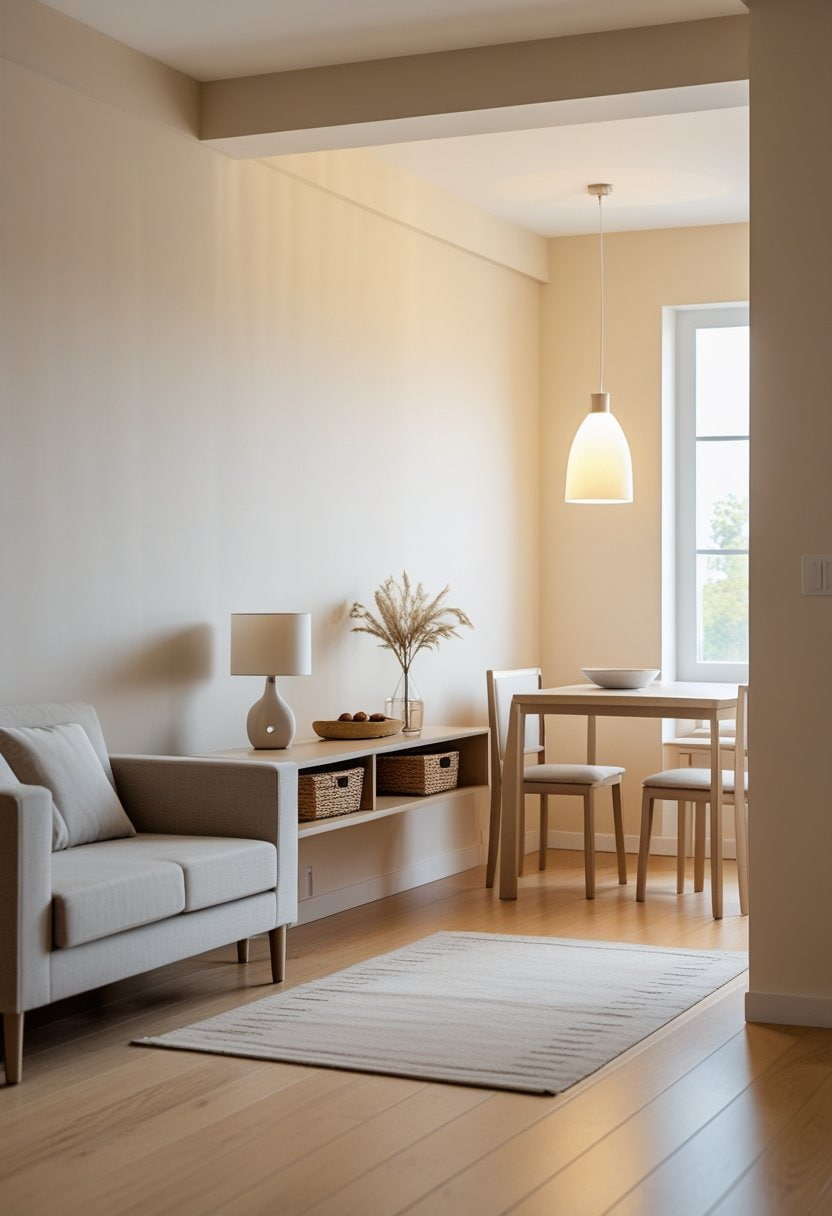
This option looks polished and “designed,” even in a tight space.
How it works:
- Pull the sofa slightly away from the wall (even 6–12 inches helps).
- Place a slim console table behind the sofa.
- Dining goes behind the console.
Why it works:
- The console acts like a soft wall.
- You gain a spot for lighting, décor, or storage baskets.
Layout 5: Dining by the Window, Living Area Centered
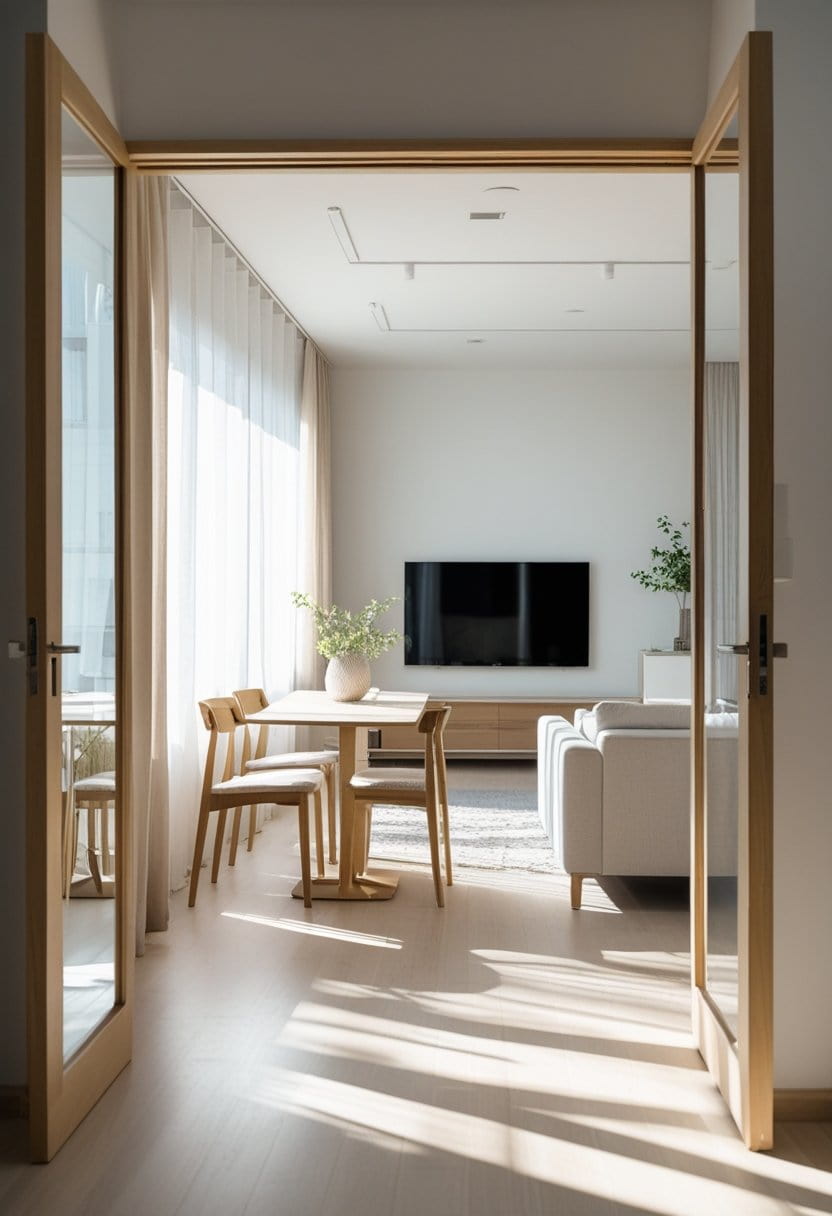
If you have a bright window, using it for dining makes meals feel more open.
How it works:
- Place the dining table near the window.
- Put the sofa in the center zone, facing the TV or feature wall.
Why it works:
- Natural light makes the dining zone feel bigger.
- Living area stays cozy and central.
Good idea:
- Add a mirror near the dining area to bounce light.
Layout 6: Wall-Mounted TV + Drop-Leaf Dining Table
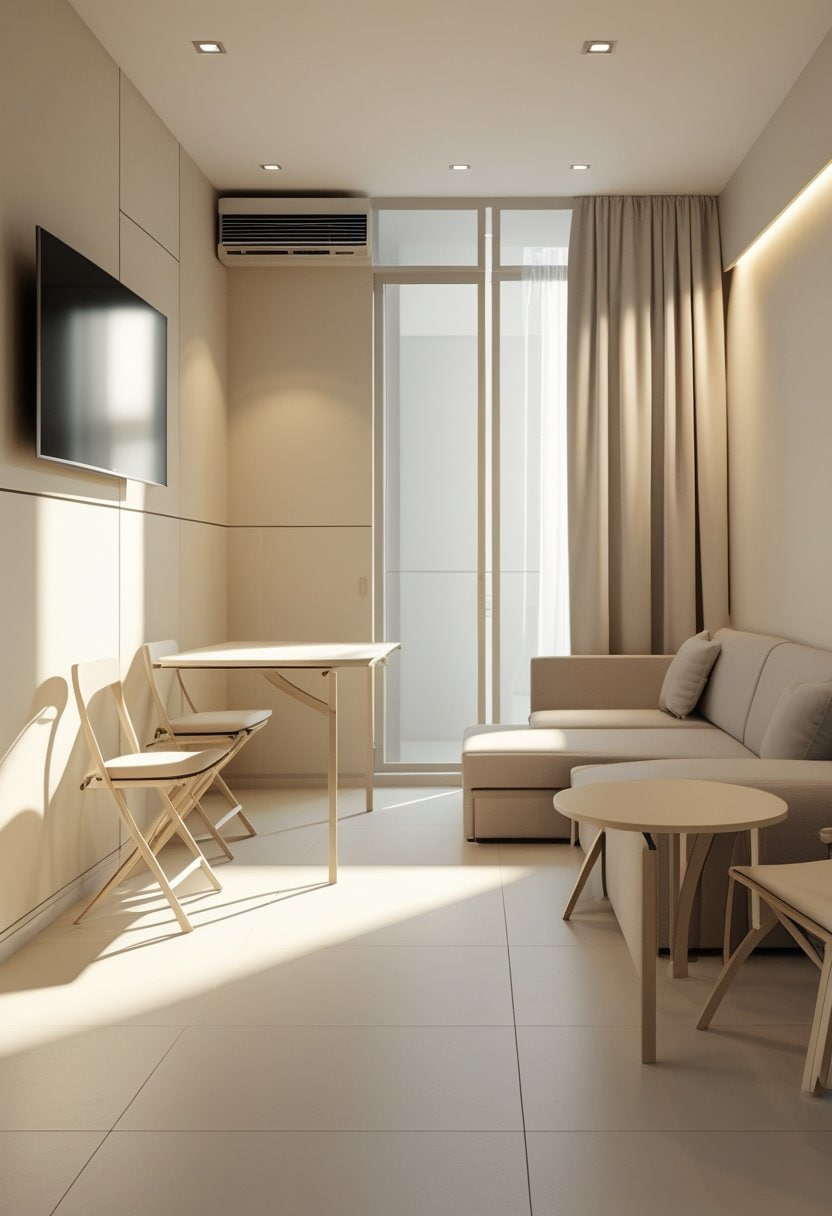
If you need flexibility, this is a smart small living room dining layout.
How it works:
- Mount the TV to free floor space.
- Use a drop-leaf or foldable dining table against the wall.
Why it works:
- You can expand the dining table only when needed.
- The room stays open day-to-day.
Best for:
- People who host occasionally
- Multi-use spaces
Layout 7: Rug Zoning with Sofa + 4-Seater Table
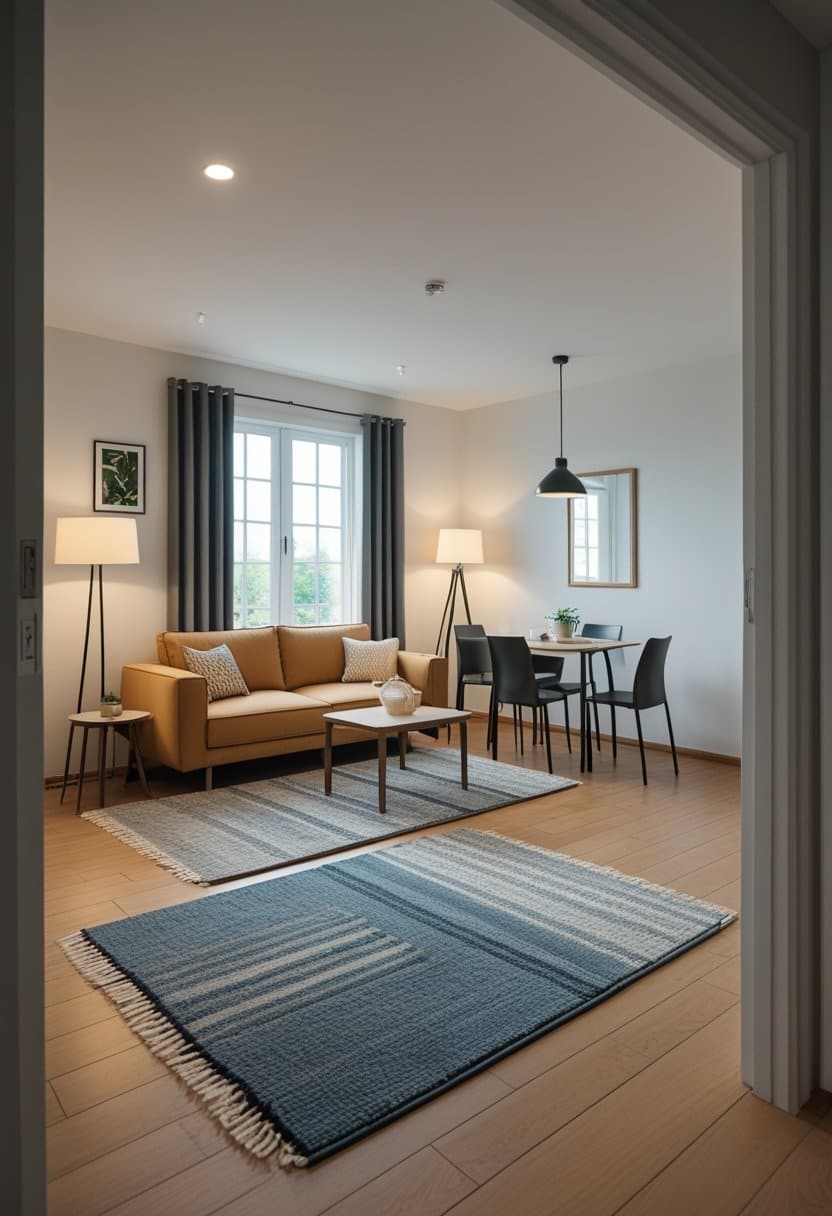
Sometimes the simplest solution is the best.
How it works:
- Place an area rug under the sofa and coffee table.
- Place a separate rug (or no rug) under the dining set.
Why it works:
- Your eyes instantly understand there are two zones.
- It adds structure without adding furniture.
Tip:
- Keep rug sizes proportional. A too-small rug can make the room feel awkward.
Layout 8: Corner Dining Banquette + Compact Living Setup
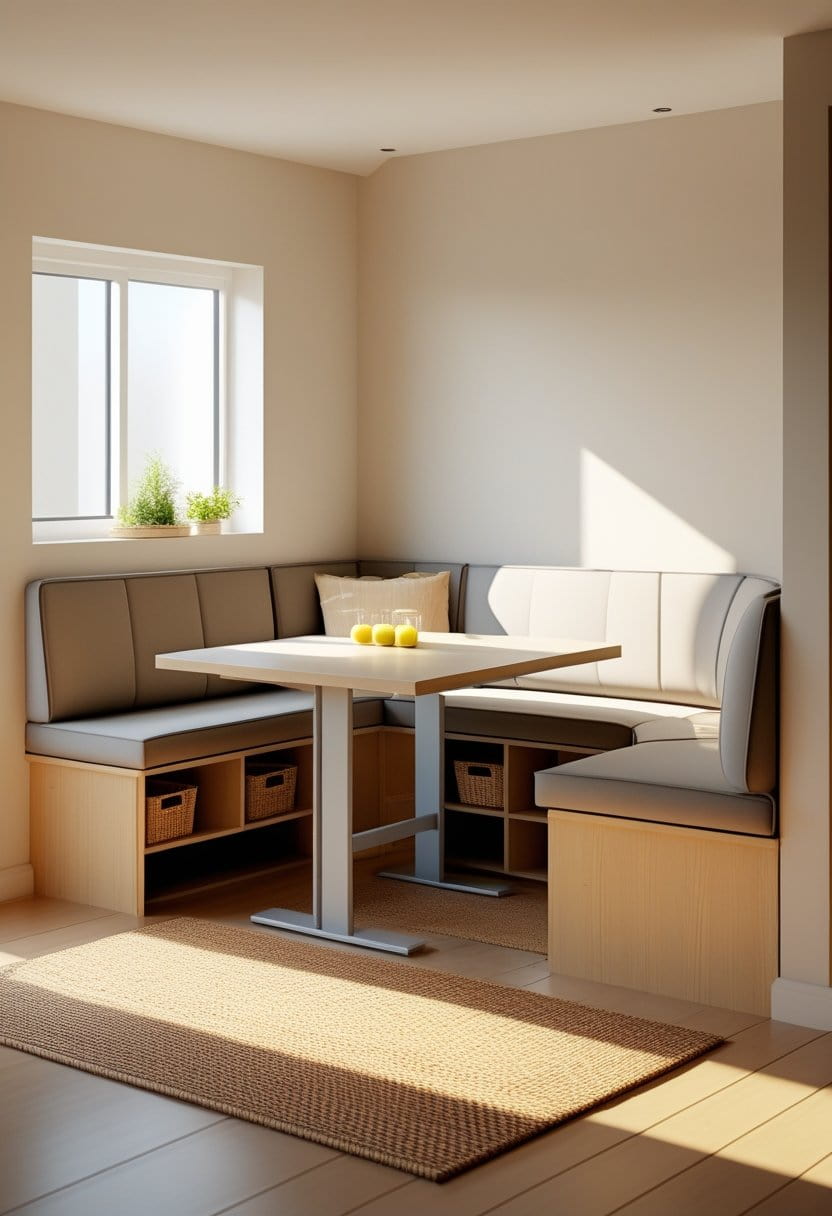
Banquettes (bench seating) are space-efficient and cozy.
How it works:
- Build or buy a corner bench for dining.
- Place the table in front with 1–2 chairs on the open side.
- Living area goes next to it.
Why it works:
- Bench seating reduces the space needed to pull chairs out.
- Adds storage if the bench has hidden compartments.
Best for:
- Families
- Narrow dining corners
Layout 9: Dining Table as the Room Divider
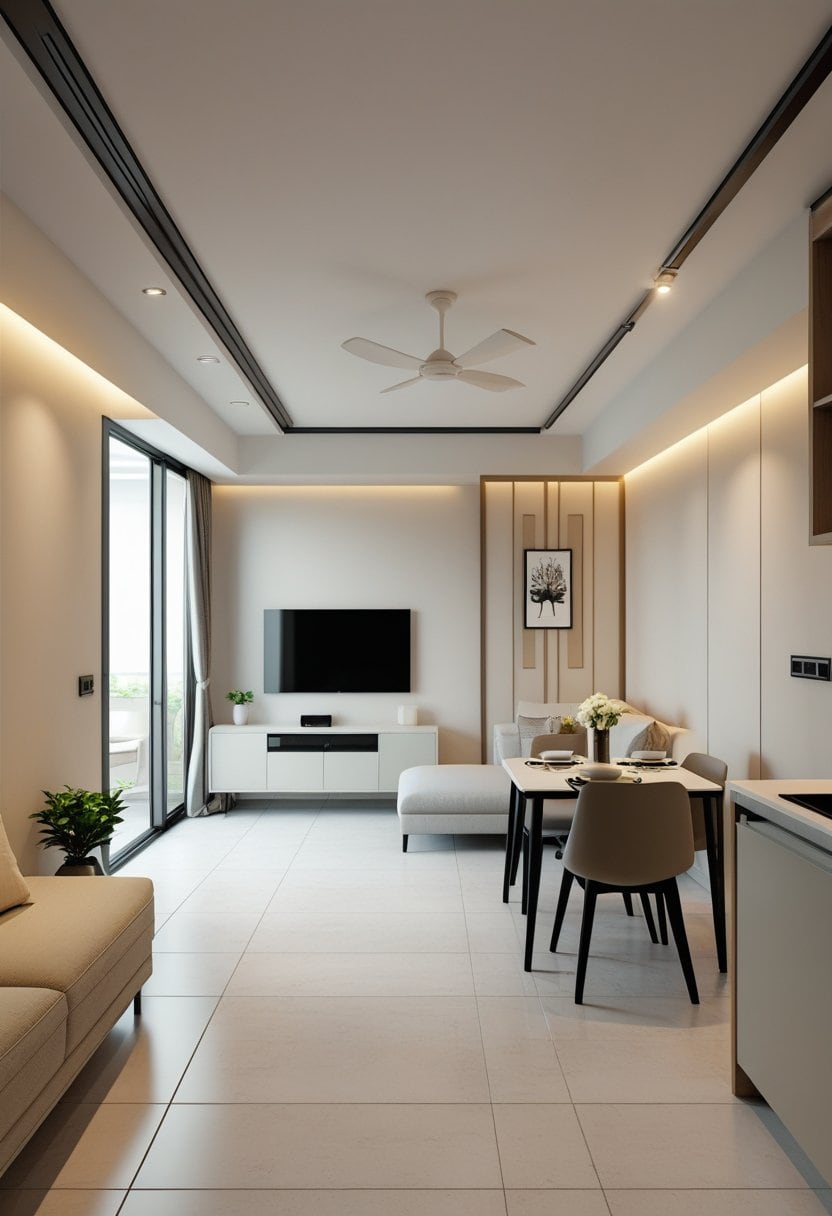
In some rooms, the dining table can separate zones better than the sofa.
How it works:
- Place the dining table roughly in the middle.
- Put the living area on one side and circulation/kitchen path on the other.
Why it works:
- Great when the sofa must stay against a wall.
- Makes the dining area feel like a “destination,” not an afterthought.
Layout 10: Diagonal Layout for Awkward Rooms
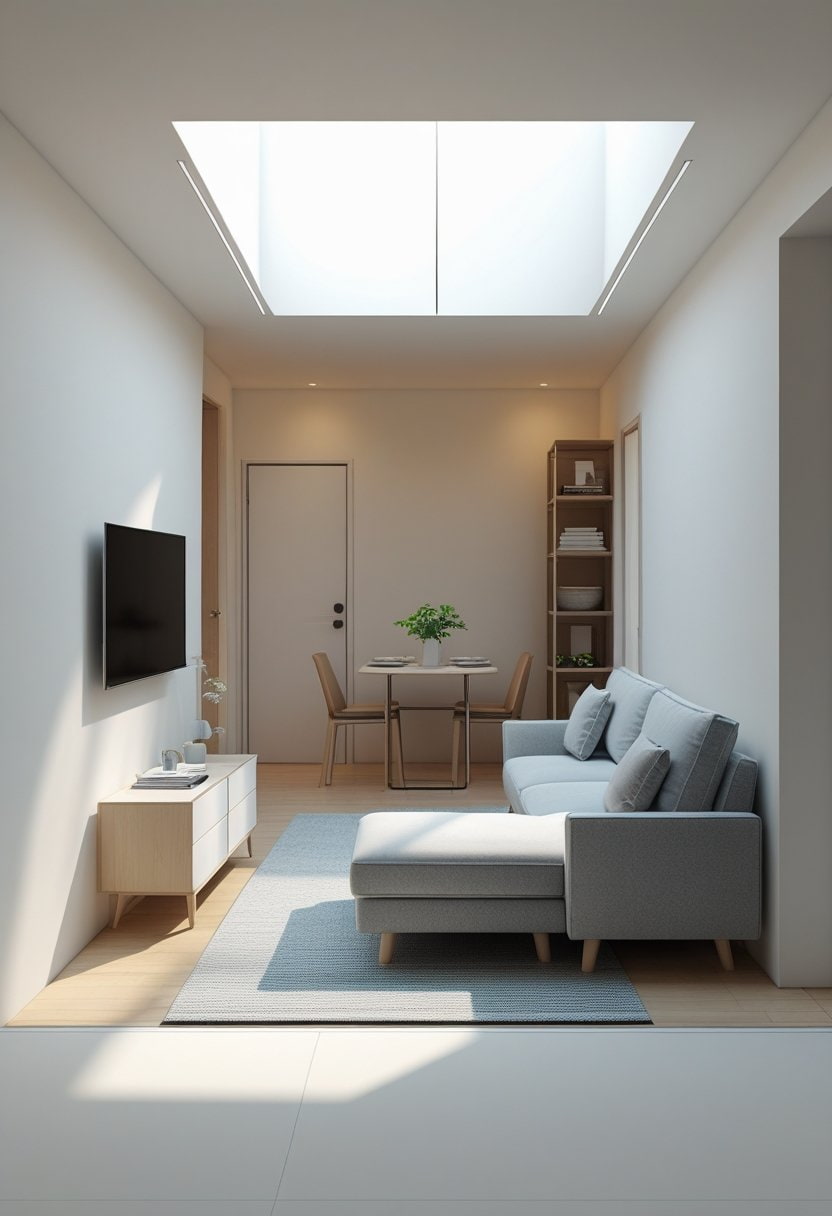
If your room is small and oddly shaped, diagonal placement can fix weird flow.
How it works:
- Angle the sofa slightly toward the focal point.
- Place a small dining table opposite, aligned with room paths.
Why it works:
- Softens harsh corners and tight straight lines.
- Can create more natural walking paths in tricky floorplans.
Use carefully:
- Too many diagonal pieces can look messy—keep it to one main angle.
Layout 11: Two Chairs + Sofa, Dining Along One Wall
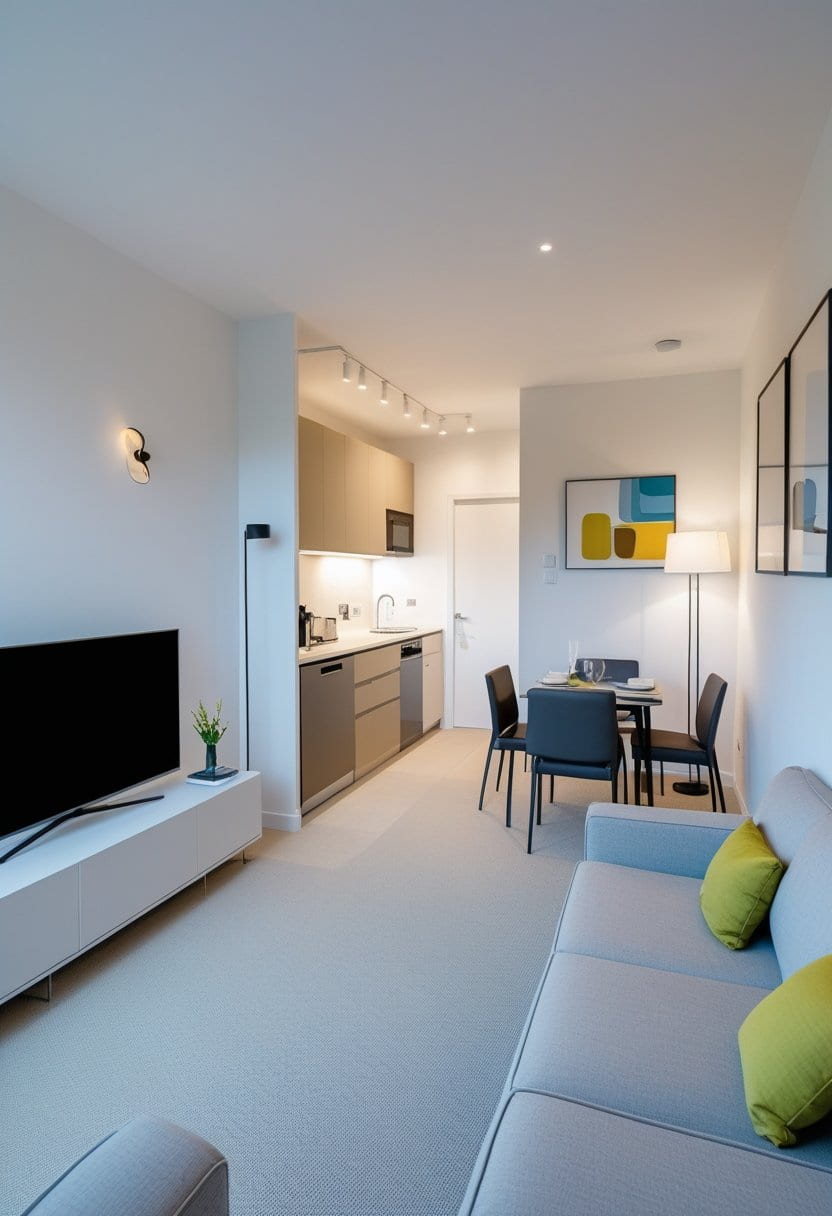
This layout balances seating without oversized furniture.
How it works:
- Sofa faces TV.
- Two slim accent chairs sit opposite or at an angle.
- Dining table sits along a wall, ideally near kitchen.
Why it works:
- Gives more seating without needing a sectional.
- Keeps dining space compact.
Tip:
- Choose armless chairs or slim arms to avoid crowding.
Layout 12: Oval Dining Table + Straight Sofa
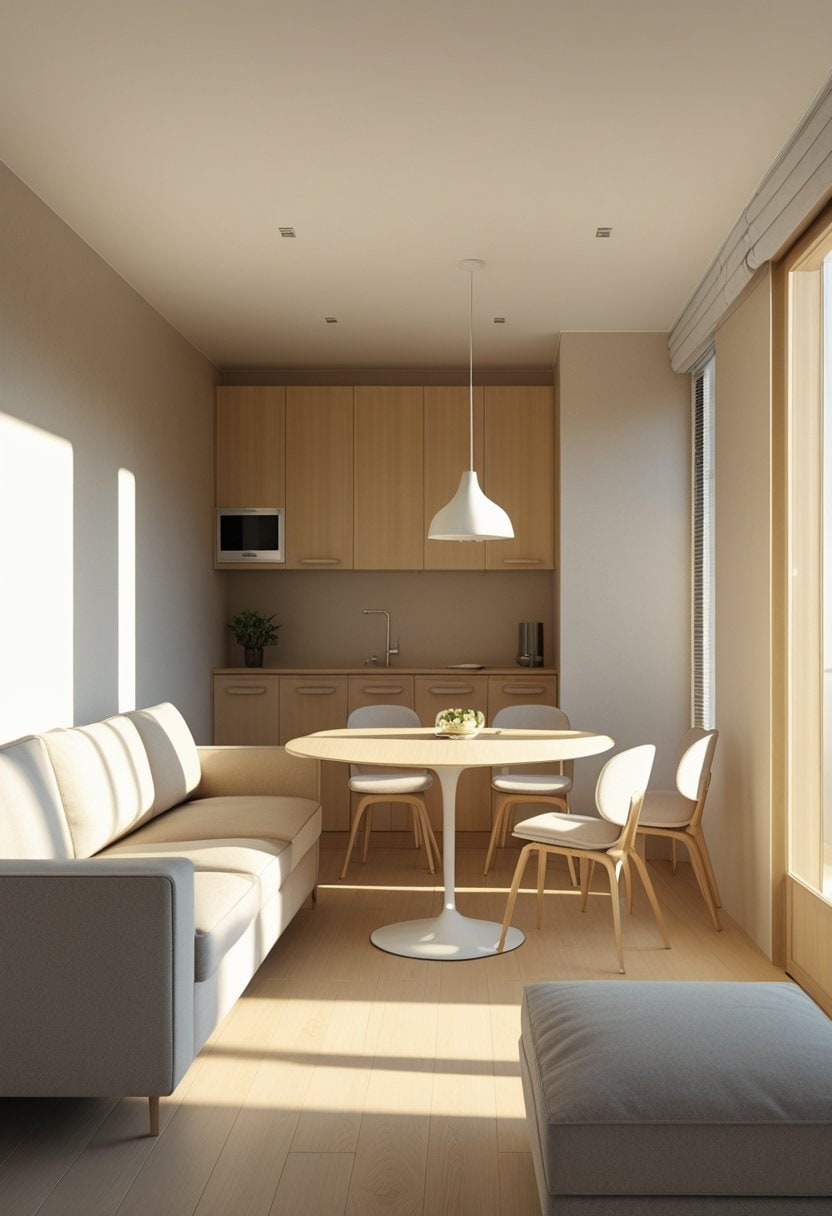
Oval tables are underrated in small spaces.
How it works:
- Use an oval dining table instead of rectangular.
- Keep a standard straight sofa in living zone.
Why it works:
- Oval edges improve movement in tight spaces.
- Seats more people than a round table of similar footprint.
Layout 13: Extendable Dining Table + Minimal Living Zone
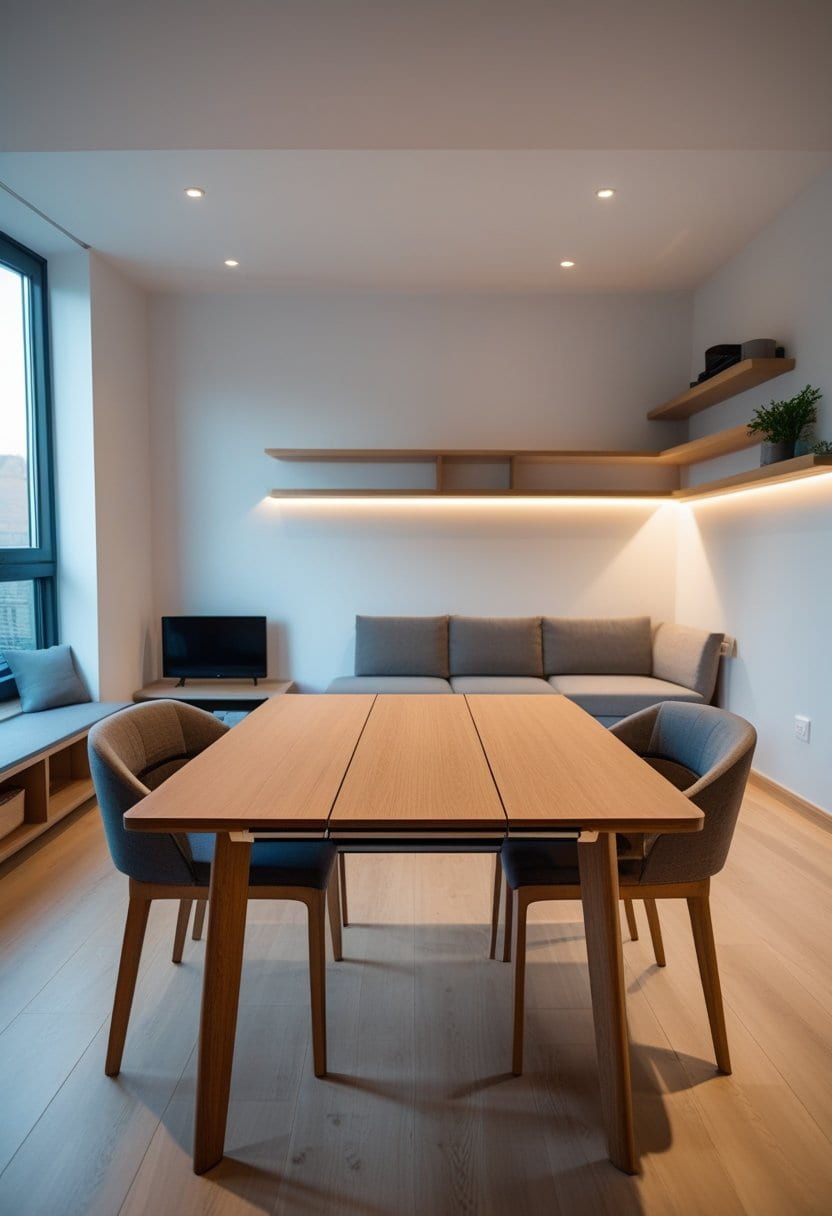
If you value dining more than lounging, prioritize it.
How it works:
- Place an extendable dining table as the main feature.
- Use a compact sofa and wall-mounted shelves for living.
Why it works:
- Your dining table becomes the “heart” of the room.
- Perfect for people who host dinners often.
Helpful pairing:
- Nesting coffee tables that can move aside when the dining table expands.
Layout 14: Storage Ottoman Instead of Coffee Table + Dining Nearby
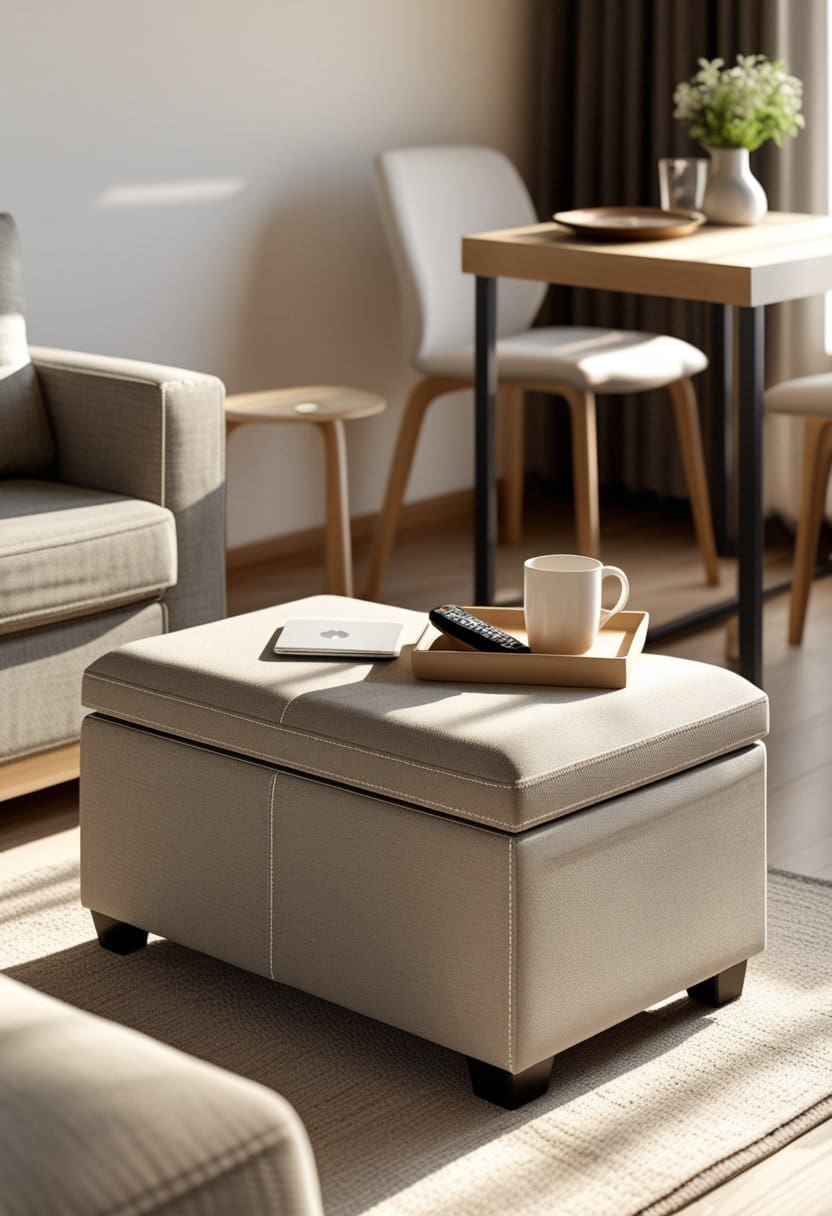
Coffee tables can block movement in small rooms.
How it works:
- Swap the coffee table for a storage ottoman.
- Place dining table close but leave a clean walkway line.
Why it works:
- Ottomans can slide, double as seating, and hide clutter.
- Movement between zones feels smoother.
Layout 15: Console Desk as Dining for Two
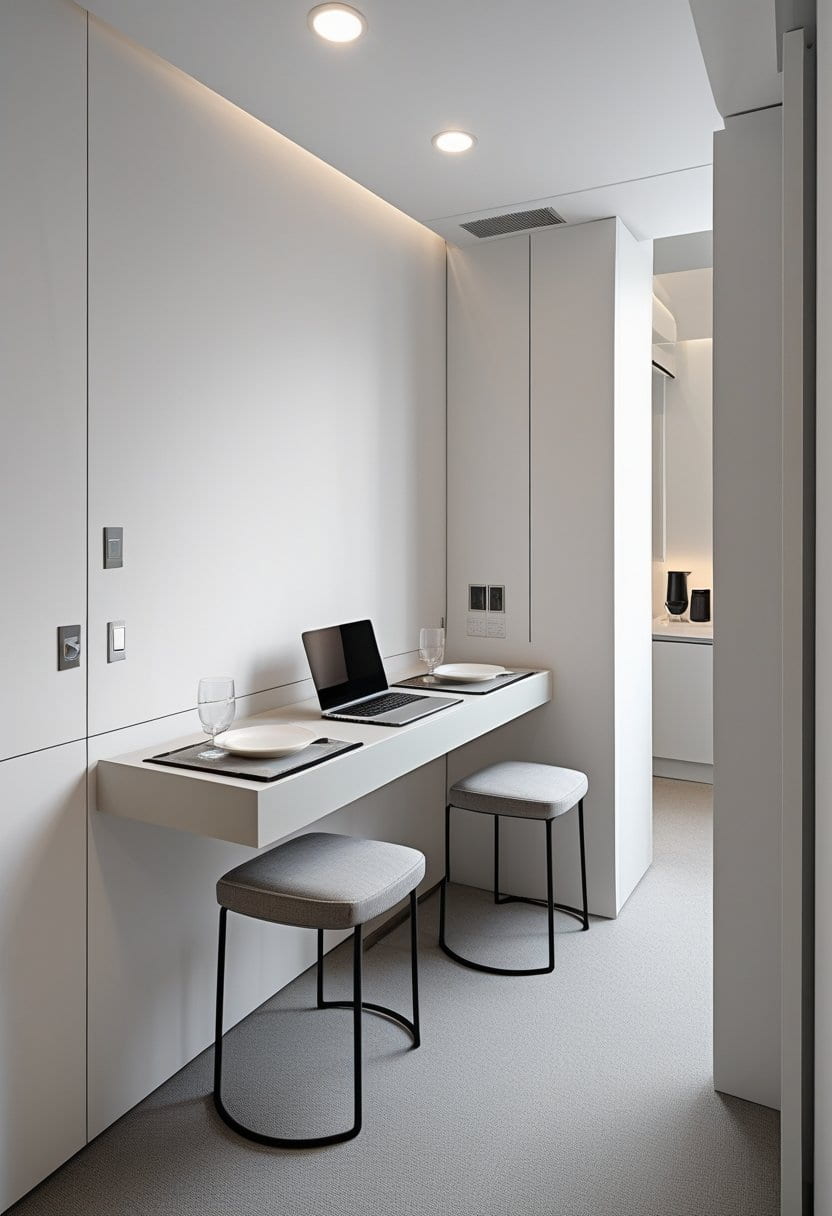
This is a modern, apartment-friendly solution.
How it works:
- Place a narrow console against the wall.
- Add two stools/chairs that tuck fully under it.
- Living area stays open.
Why it works:
- It functions as dining + workspace.
- Very small footprint.
Best for:
- Singles or couples
- Studio living
Layout 16: Dining in the Center, Living on the Ends
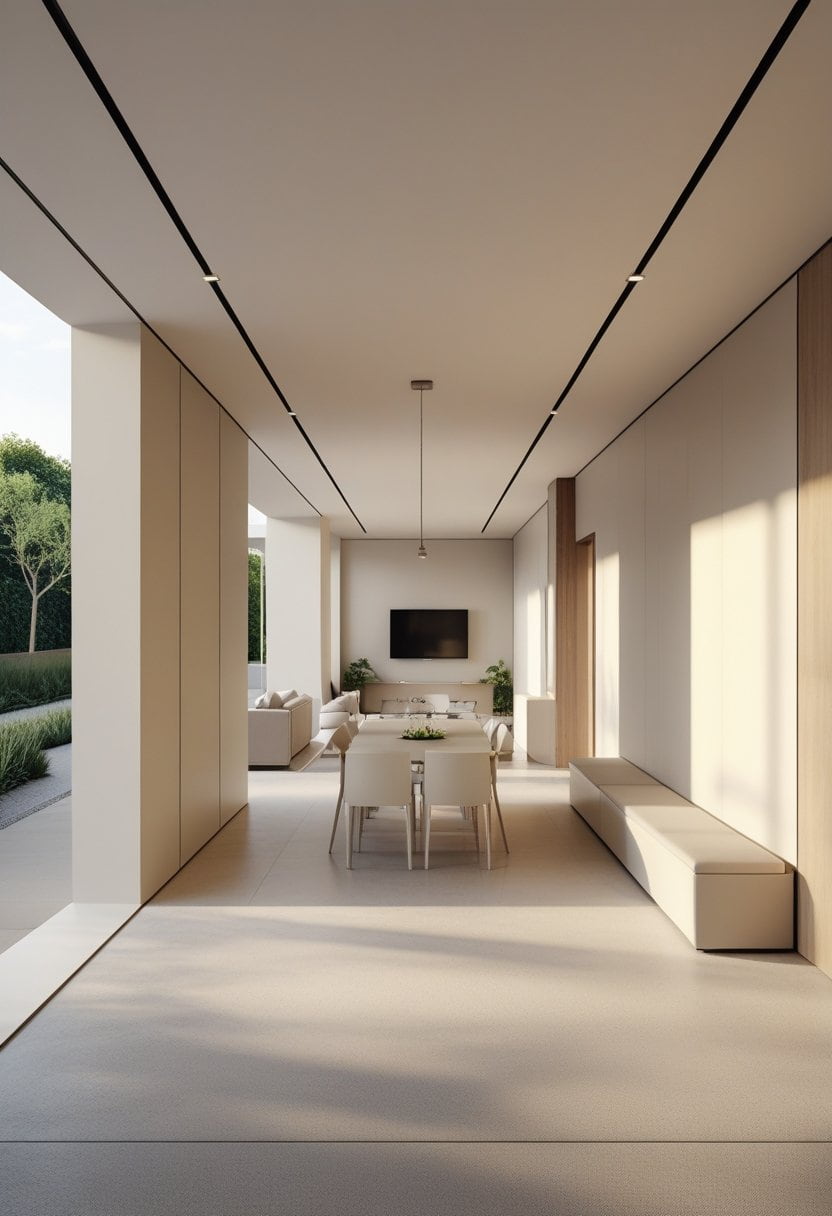
Works especially well in long, narrow rooms.
How it works:
- Put dining table in the middle of the room’s length.
- Place living seating at one end (near TV/focal point).
- Use the other end for storage, entry, or open space.
Why it works:
- Keeps traffic paths on the sides.
- Makes the room feel “organized” rather than stretched.
Layout 17: Sofa Along the Long Wall + Dining Opposite
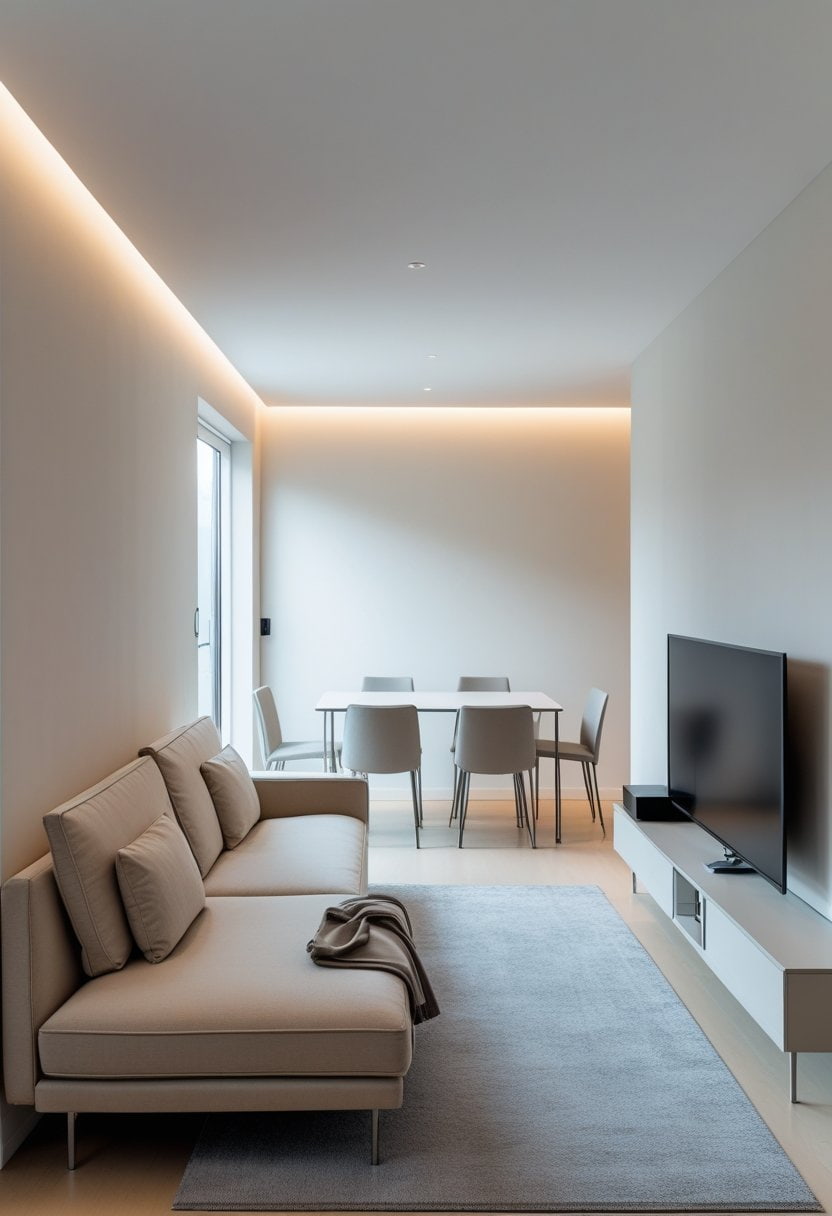
A classic layout for rectangular rooms.
How it works:
- Put the sofa along the longest wall.
- Place dining table on the opposite side or at the far end.
Why it works:
- Maximizes open floor space in the center.
- Keeps furniture aligned and visually calm.
Tip:
- Use a narrow media unit or wall-mount the TV to reduce bulk.
Layout 18: Small U-Shape Living Area + Tiny Dining Set
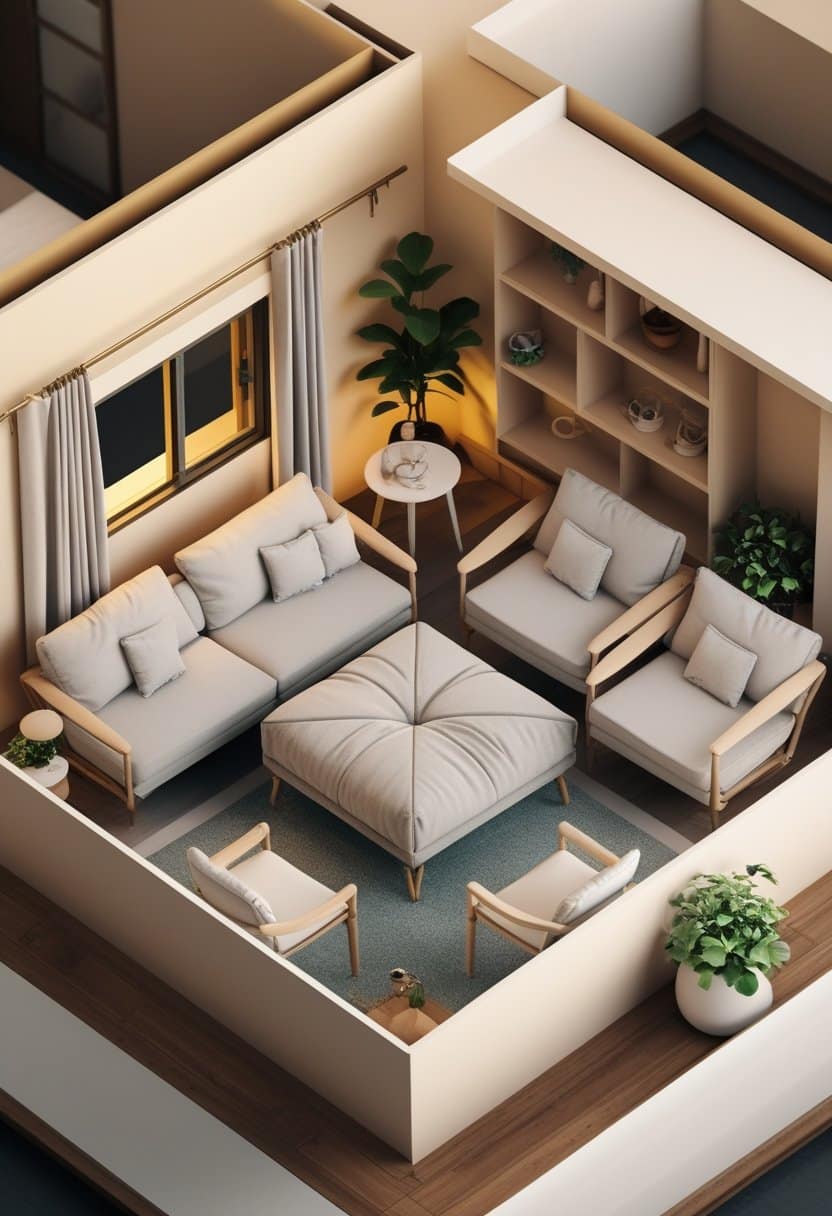
If you want a cozy “living room feel,” create a conversation zone.
How it works:
- Sofa + two compact chairs create a U shape around an ottoman.
- Dining set sits to the side (small round or square).
Why it works:
- Feels welcoming and balanced.
- Great for guests—conversation-friendly.
Keep it light:
- Choose chairs that are visually airy (open legs, slim frames).
Layout 19: Daybed or Sleeper Sofa + Wall Dining
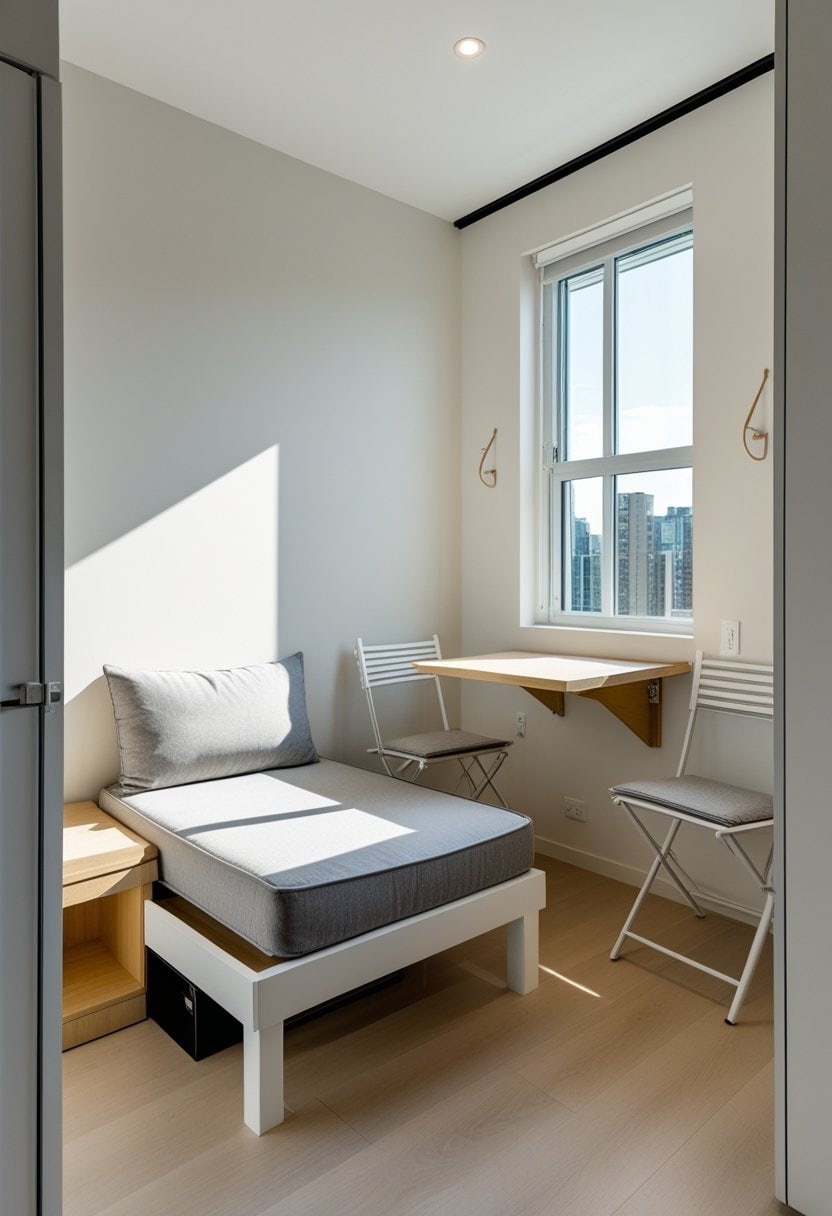
This is ideal for studios or rooms that must do triple duty.
How it works:
- Use a daybed or sleeper sofa as seating.
- Install a wall-mounted drop table or narrow dining ledge.
Why it works:
- Gives a living zone and sleeping option.
- Dining disappears when not needed.
Extra idea:
- Foldable chairs can hang on wall hooks to save space.
Layout 20: Two Small Zones with a Bookcase Divider
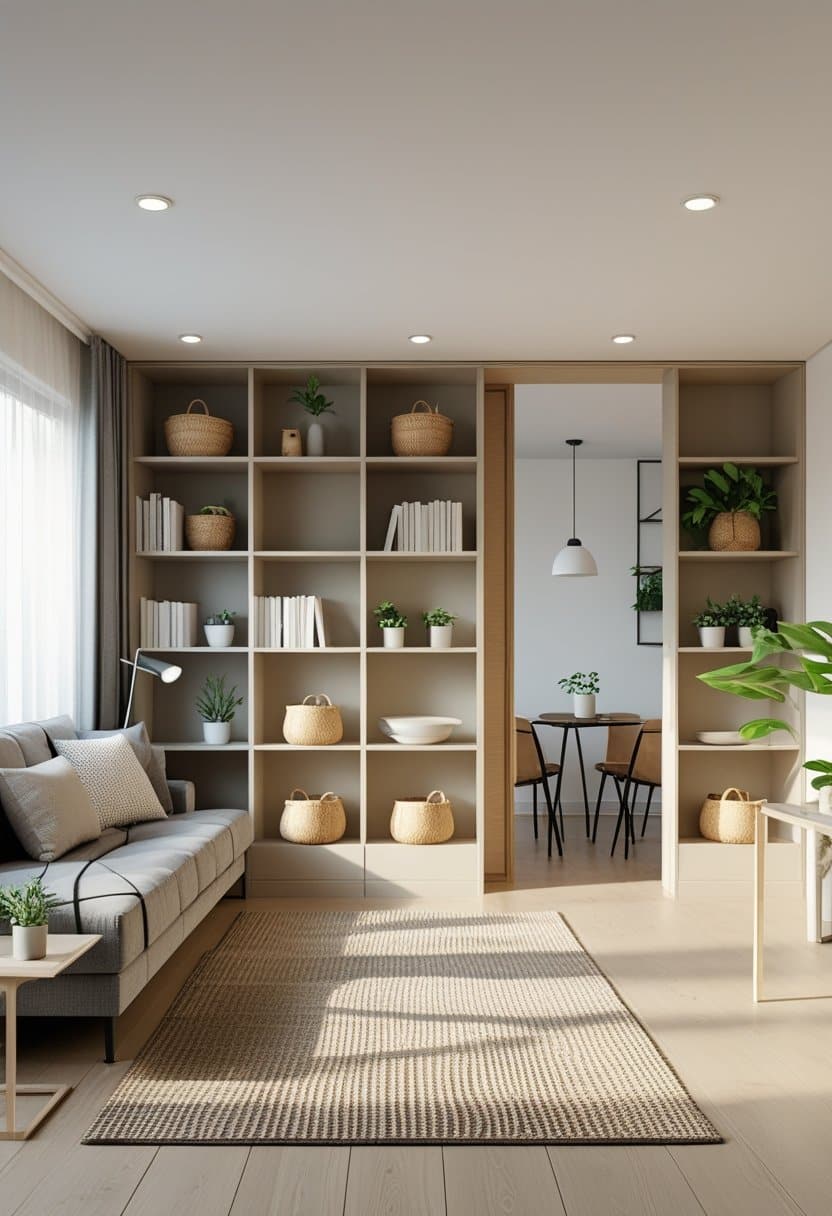
A divider makes the room feel “separate” without construction.
How it works:
- Place a low open bookcase between living and dining.
- Living zone on one side, dining zone on the other.
Why it works:
- Defines zones while still allowing light through.
- Adds storage and style.
Important:
- Use an open-backed piece so the room doesn’t feel boxed in.
Layout 21: Minimalist Layout with One Shared Multi-Use Table
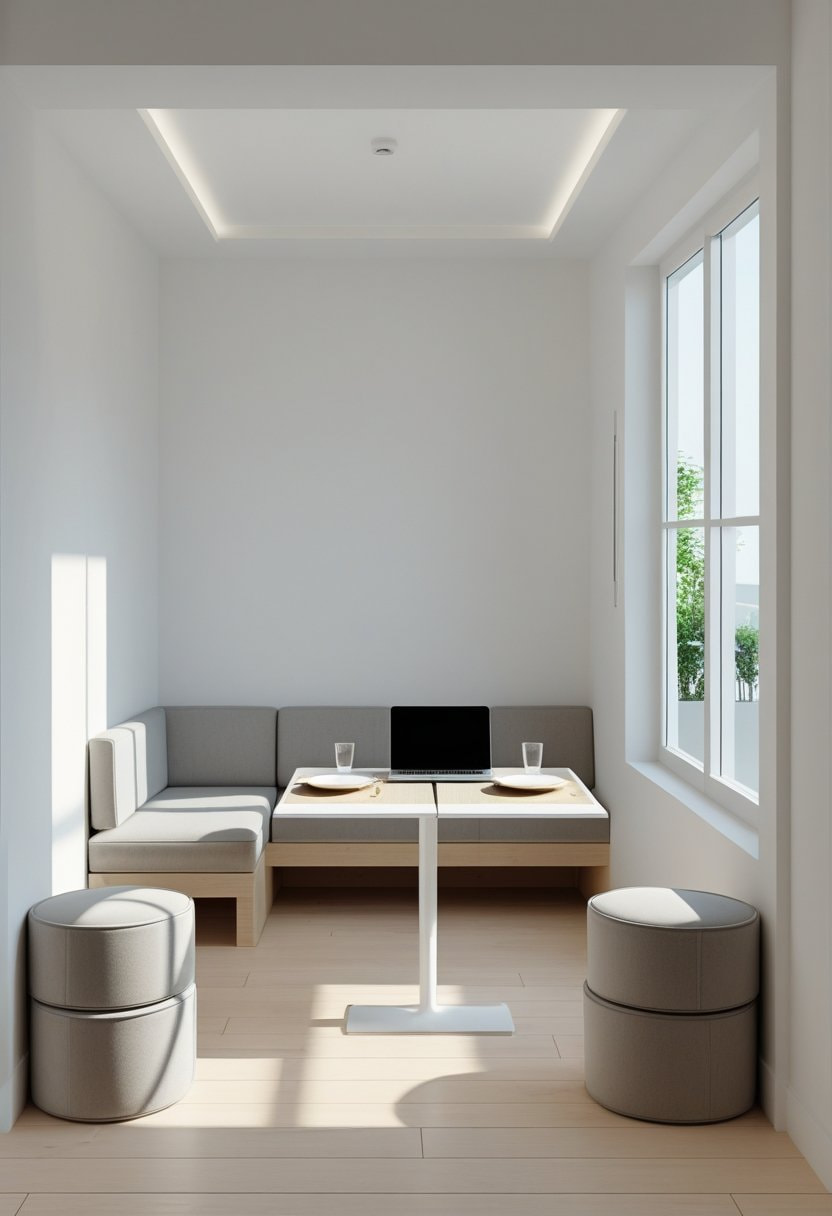
This is bold, simple, and very space-efficient.
How it works:
- Use one table that can serve as dining and work.
- Keep living seating compact and flexible (stacking stools, poufs, or one loveseat).
Why it works:
- Best for people who prefer open space over lots of furniture.
- Easy to clean and rearrange.
Best for:
- Very small apartments
- Minimalist lifestyles
How to Choose the Right Layout for Your Room
If you’re unsure where to start, use this quick decision guide:
- Measure your room
- Length and width
- Door swings
- Window locations
- Radiators, AC units, outlets
- Decide what matters more
- More lounge seating?
- Bigger dining table?
- Extra storage?
- Space to work from home?
- Pick your anchor
- If you watch TV daily → anchor with the sofa/TV zone
- If you host dinners → anchor with the dining table
- If you need flexibility → anchor with clear walking paths
Furniture Choices That Make Small Spaces Feel Bigger
Small living room + dining layouts improve fast with the right furniture style.
Look for:
- Sofas with slim arms (they can save several inches)
- Dining chairs with open backs or lighter frames
- Tables with pedestal bases (more legroom)
- Pieces with legs instead of solid bases
- Storage that goes vertical (tall shelving, wall cabinets)
Avoid when possible:
- Overstuffed recliners in tight rooms
- Bulky square coffee tables that block pathways
- Dining chairs that can’t tuck in fully
Simple Styling Tricks to Separate Living and Dining Areas
You don’t need walls to make zones feel clear. Try these:
- Use two lighting types
- Floor lamp for living
- Pendant or table lamp for dining
- Use color repetition
- Repeat one accent color in both zones (pillows + table runner) for a unified look.
- Use an area rug strategically
- A rug under the living area signals “this is the lounge zone.”
- Add one “bridge” element
- Example: a console table, a slim shelf, or a plant stand between zones.
Common Mistakes to Avoid in a Small Living Room Dining Layout
Even good furniture can fail if the layout ignores flow.
- Blocking the natural walkway from door to kitchen
- Choosing a dining table that’s too deep (wide) for the space
- Placing too many small pieces (it can look cluttered)
- Skipping storage (clutter makes rooms feel smaller fast)
- Using oversized rugs that swallow the room—or tiny rugs that look like islands
A Quick Layout Checklist You Can Use Today
Before you commit to a layout, check these boxes:
- Can you walk through the room without turning sideways?
- Can dining chairs pull out without hitting the sofa?
- Is the TV view comfortable from the main seat?
- Do you have at least one surface for daily items (keys, remote, charger)?
- Is there a clear “living zone” and “dining zone,” even if subtle?
If most answers are “yes,” you’re on the right track.
Conclusion
Small spaces don’t need to feel limiting. With the right furniture scale, clear pathways, and smart zoning, a combined room can feel comfortable, functional, and stylish. Use these 21 Small Living Room + Dining Layouts That Work as a menu of options—pick one that fits your room shape, then adjust it based on your daily routine.


More Stories
25 Classy Living Room Designs for Timeless Elegance
18 Green Bathroom Designs for a Fresh, Calm Look
22 Luxury Kitchen Design Inspirations for High-End Homes