
Introduction
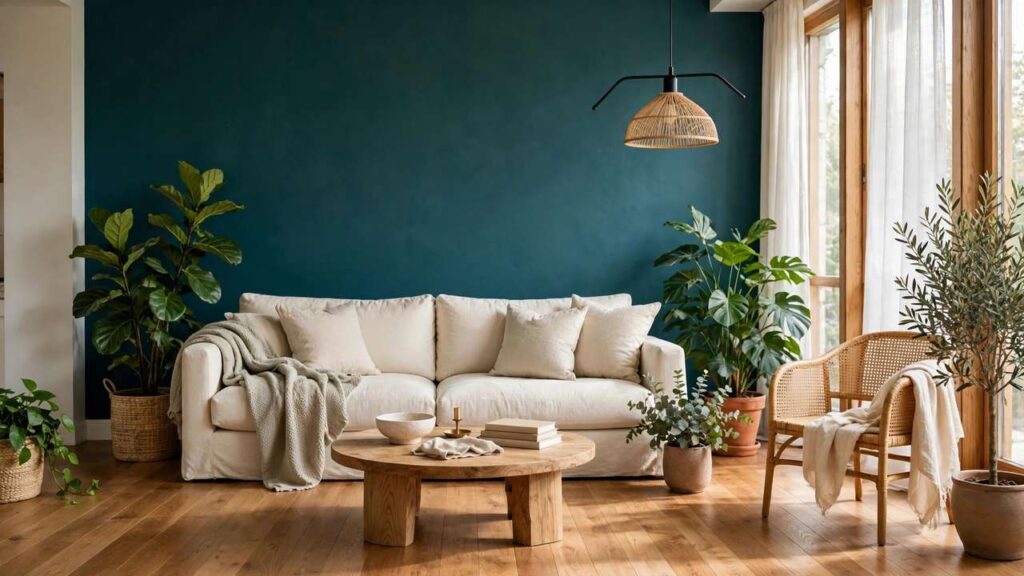
Every home has one wall that quietly does nothing. It is the perfect candidate for a transformation, because the best accent wall ideas ask for just one surface — one weekend, one tin of paint or one roll of wallpaper — and in return the whole room feels designed rather than decorated by accident.
An accent wall gives a room its anchor. It tells your eye where to land, gives furniture something to sit against, and lets you try a bold colour or rich texture without committing every wall to it. If you love warm, cocooning schemes, these cozy accent wall ideas are a lovely starting point for living rooms in particular.
This collection goes room by room: paint, limewash, panelling, wallpaper, brick, stone, slats, tile and fabric across living rooms, bedrooms, hallways, bathrooms and kitchens — 29 ideas, each with why it works and a simple tip. For drama of a different kind, the moody black accent wall ideas prove how powerful a single dark wall can be.
1) Living Room Accent Wall Ideas in Deep Green
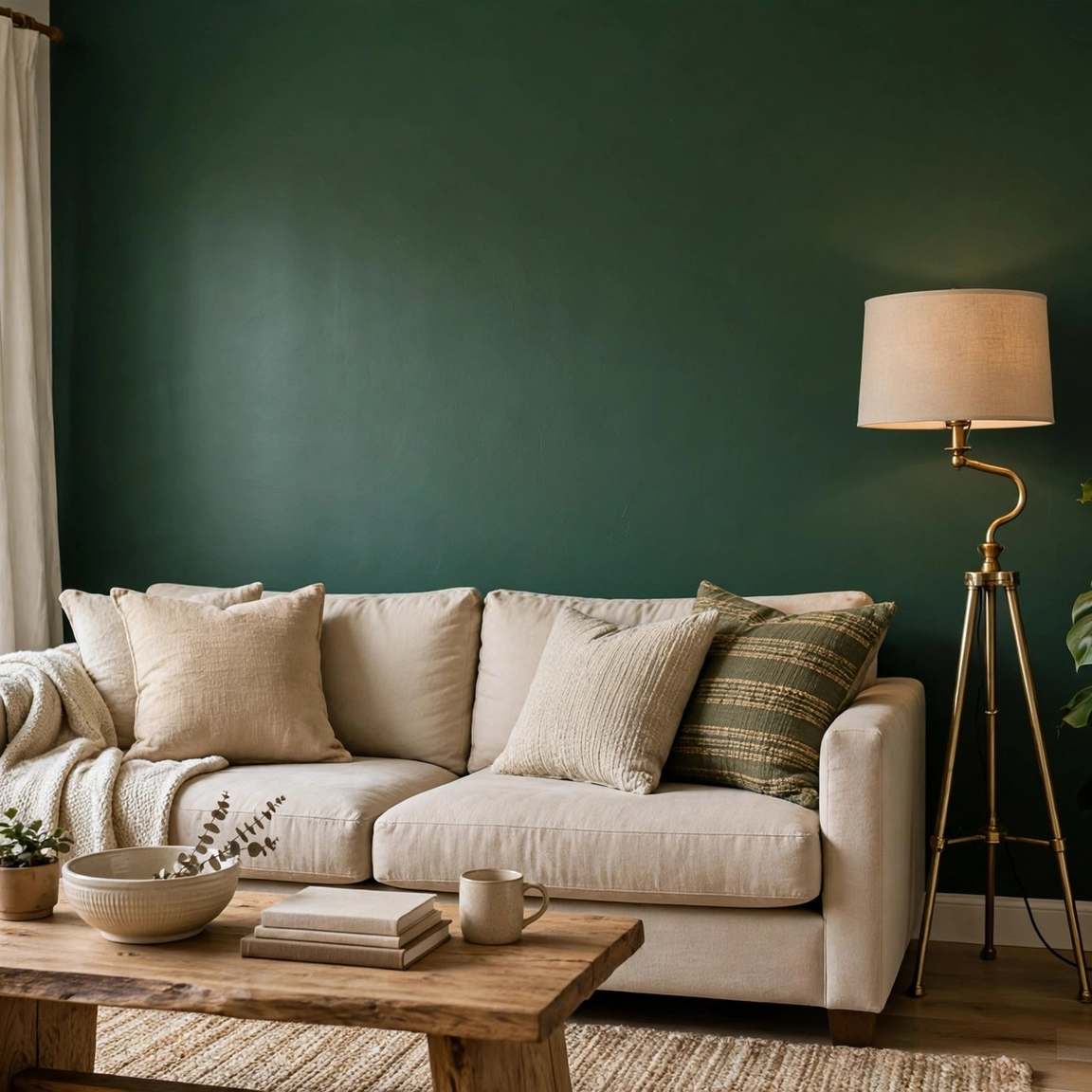
Start with the classic: one living room wall in deep forest green. It is bold without shouting, and it makes cream sofas, tan leather and warm wood look instantly richer.
Why it works:
- Green flatters wood, brass and linen
- Dark tones make the wall recede, oddly enlarging the room
- One tin covers most feature walls
Tip: paint the skirting board the same green for a polished, built-in finish.
2) A Soft Limewash Wall in Warm Clay for the Bedroom
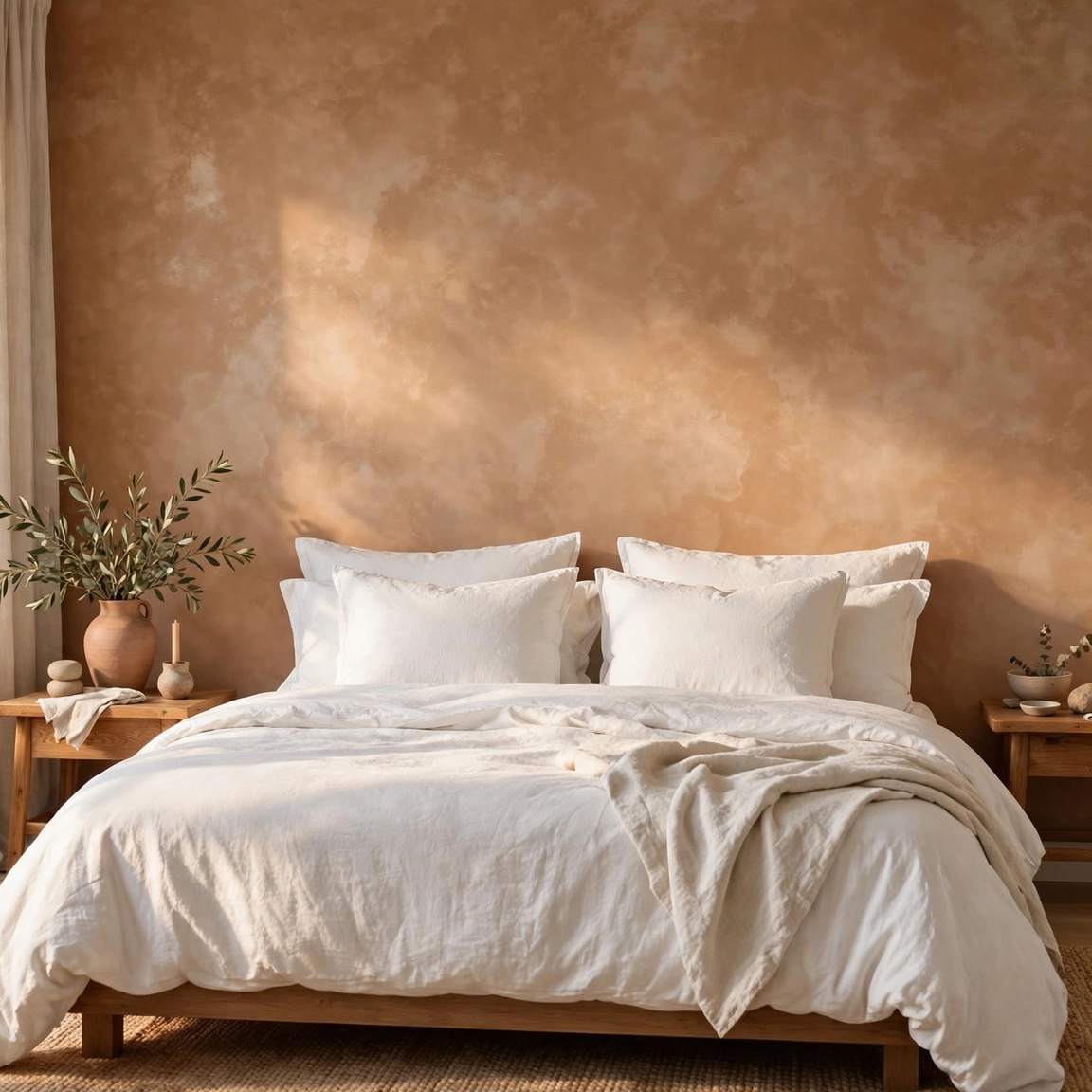
Limewash dries with a cloudy, mottled texture that flat paint cannot copy. In a warm clay tone behind the bed, it feels like a Mediterranean holiday wall — soft, sun-baked and calm.
Why it works:
- Cloudy texture hides minor wall flaws
- Warm clay pairs with white and natural linen
- The finish looks handcrafted, never flat
Tip: apply with big criss-cross brush strokes and embrace the variation; perfection is not the point.
3) Oak Wood Slat Panels in the Living Room
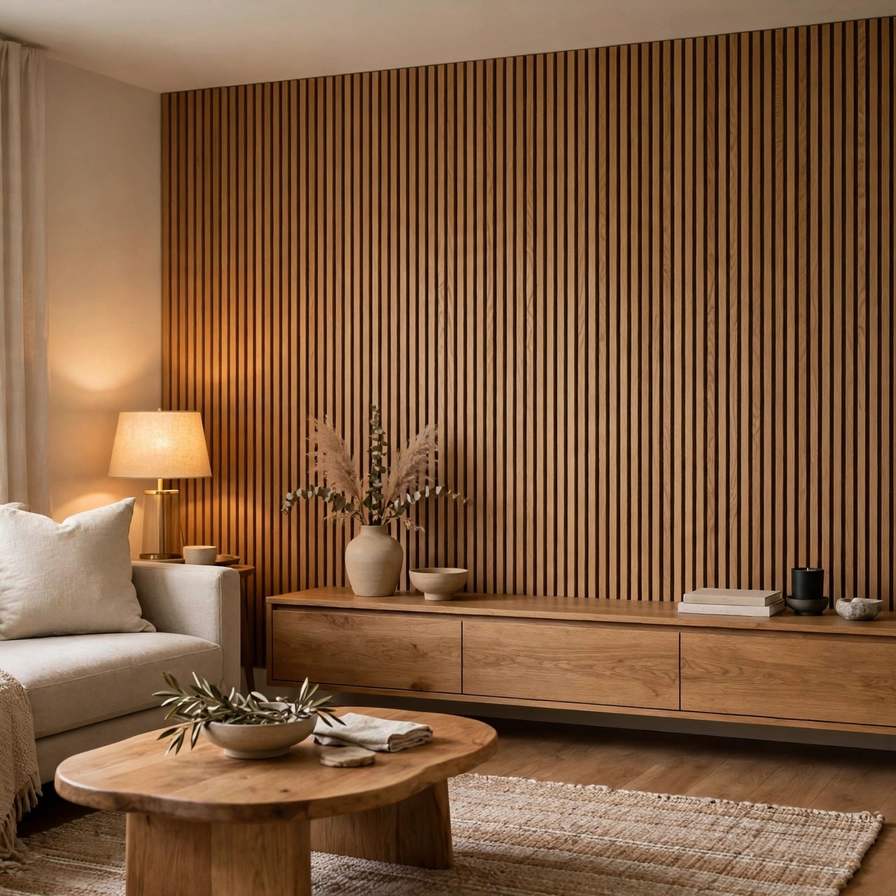
Vertical wood slats bring rhythm and warmth to a plain wall. Behind a television or media unit they turn a blank stretch into architecture, and they soften echo in hard-floored rooms too.
Why it works:
- Vertical lines make ceilings feel higher
- Natural wood warms minimalist rooms
- Panels can hide cables neatly behind
Tip: run a warm LED strip along one edge for a soft evening glow.
4) A Colour-Drenched Navy Hallway
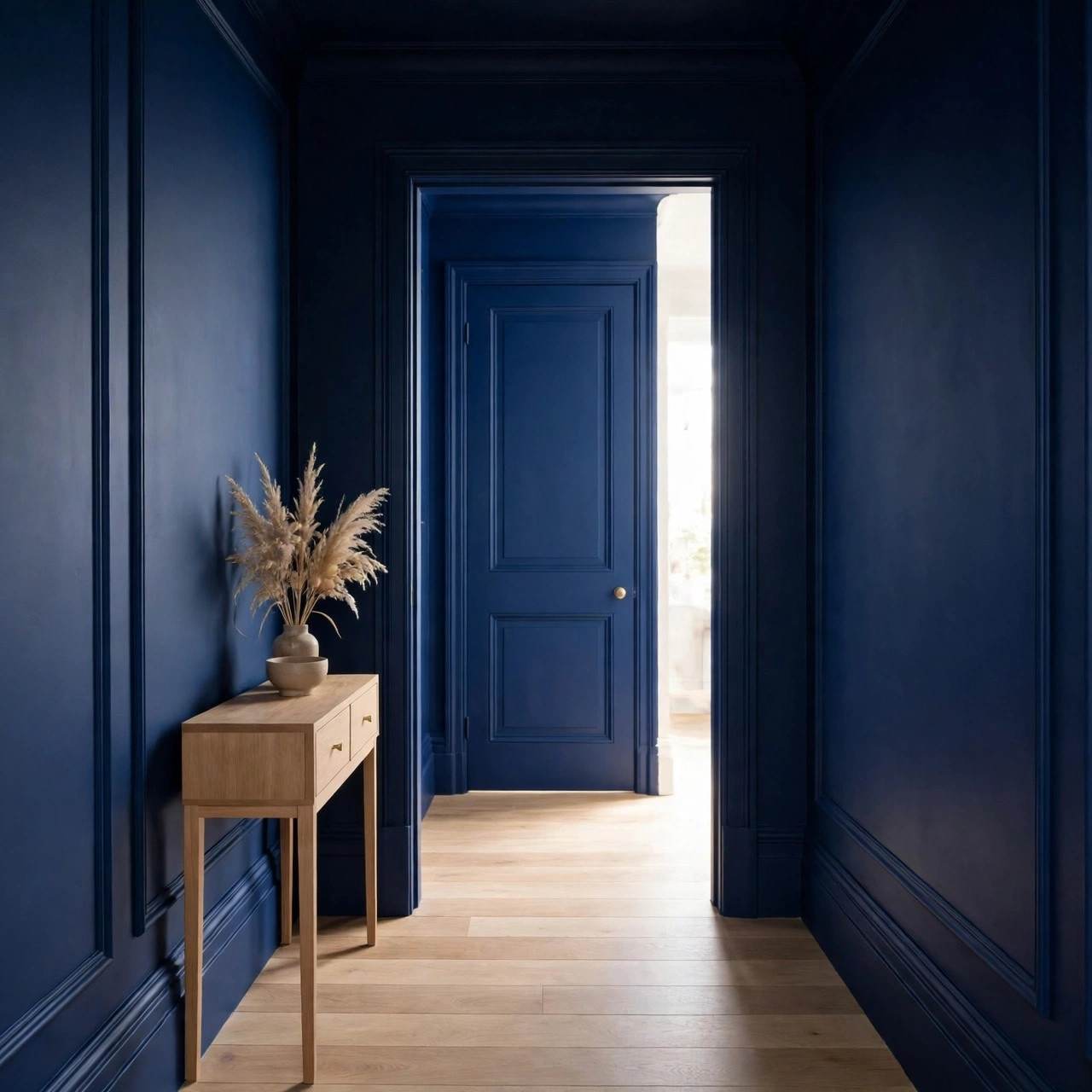
Hallways are pass-through spaces, so they can take drama. Painting one hallway — walls, skirting and woodwork — in deep navy turns a corridor into a moment, and white ceilings keep it crisp.
Why it works:
- Small space, so bold colour feels brave not risky
- Dark walls make adjoining pale rooms look bigger
- Navy suits brass, white and light wood
Tip: keep the floor pale to bounce light back into the space.
5) Large-Format Stone-Look Tiles in the Bathroom
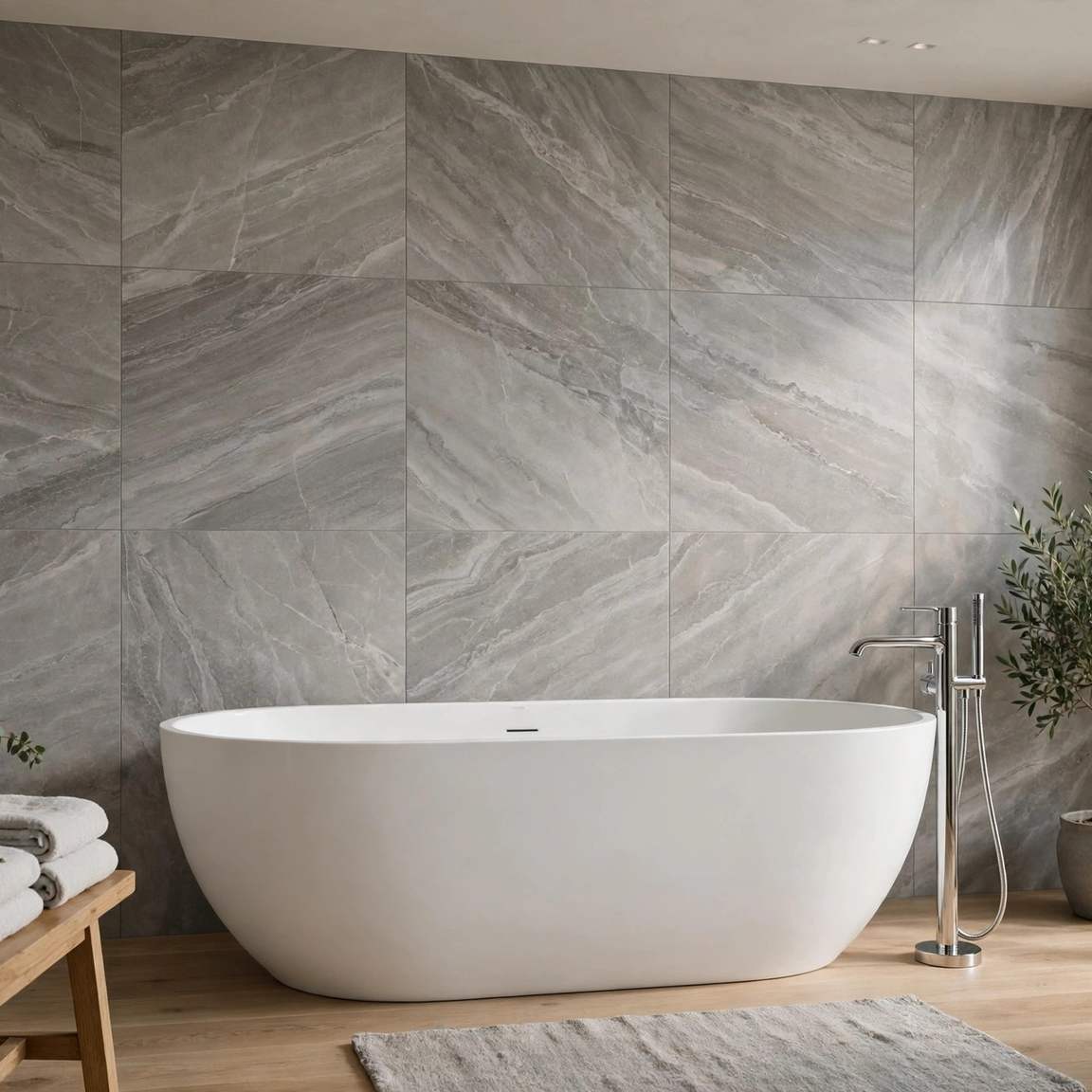
One tiled wall behind the bath gives a bathroom its spa moment. Large-format stone-look porcelain means fewer grout lines and a finish that shrugs off splashes.
Why it works:
- Fewer grout lines look cleaner for longer
- Stone effect reads luxurious at a fraction of the cost
- Fully waterproof and wipeable
Tip: continue the same tile on the floor for a seamless, cocooning effect.
6) Exposed Brick in the Kitchen
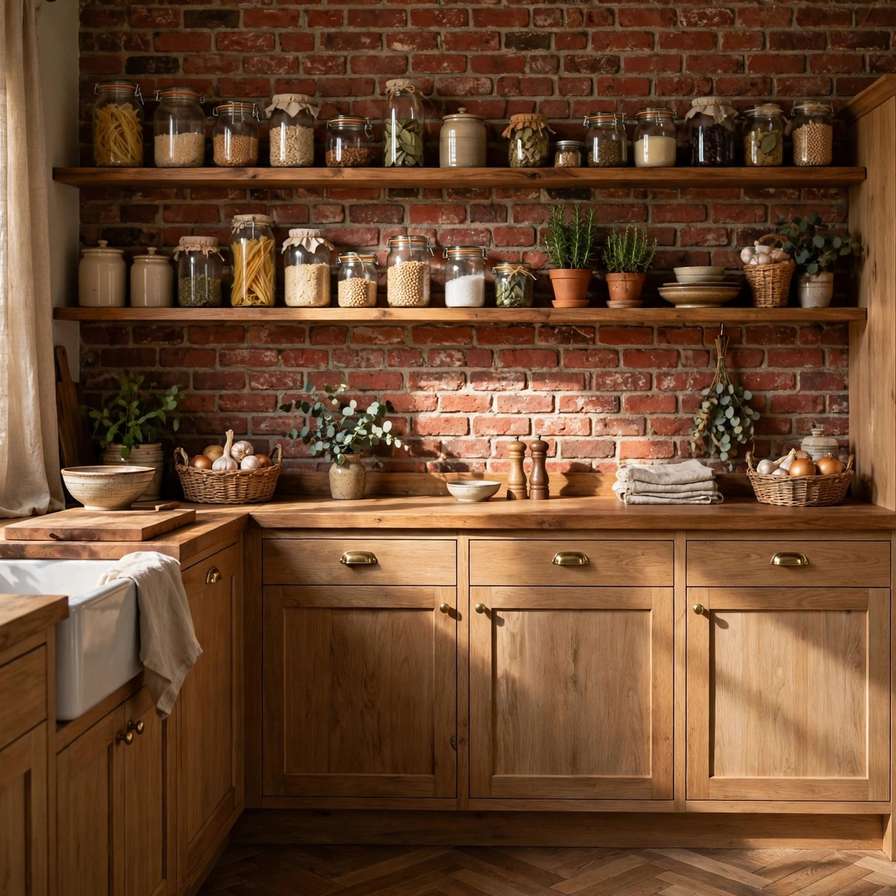
If your kitchen hides real brick under plaster, revealing one wall adds instant soul. No real brick? Brick slips give the same texture in a few centimetres of depth.
Why it works:
- Texture no paint can imitate
- Suits shaker, industrial and country kitchens alike
- Ages gracefully and hides scuffs
Tip: seal the brick with a matt sealer so dust stays put and cleaning stays easy.
7) Picture-Frame Moulding in Plum for the Dining Room
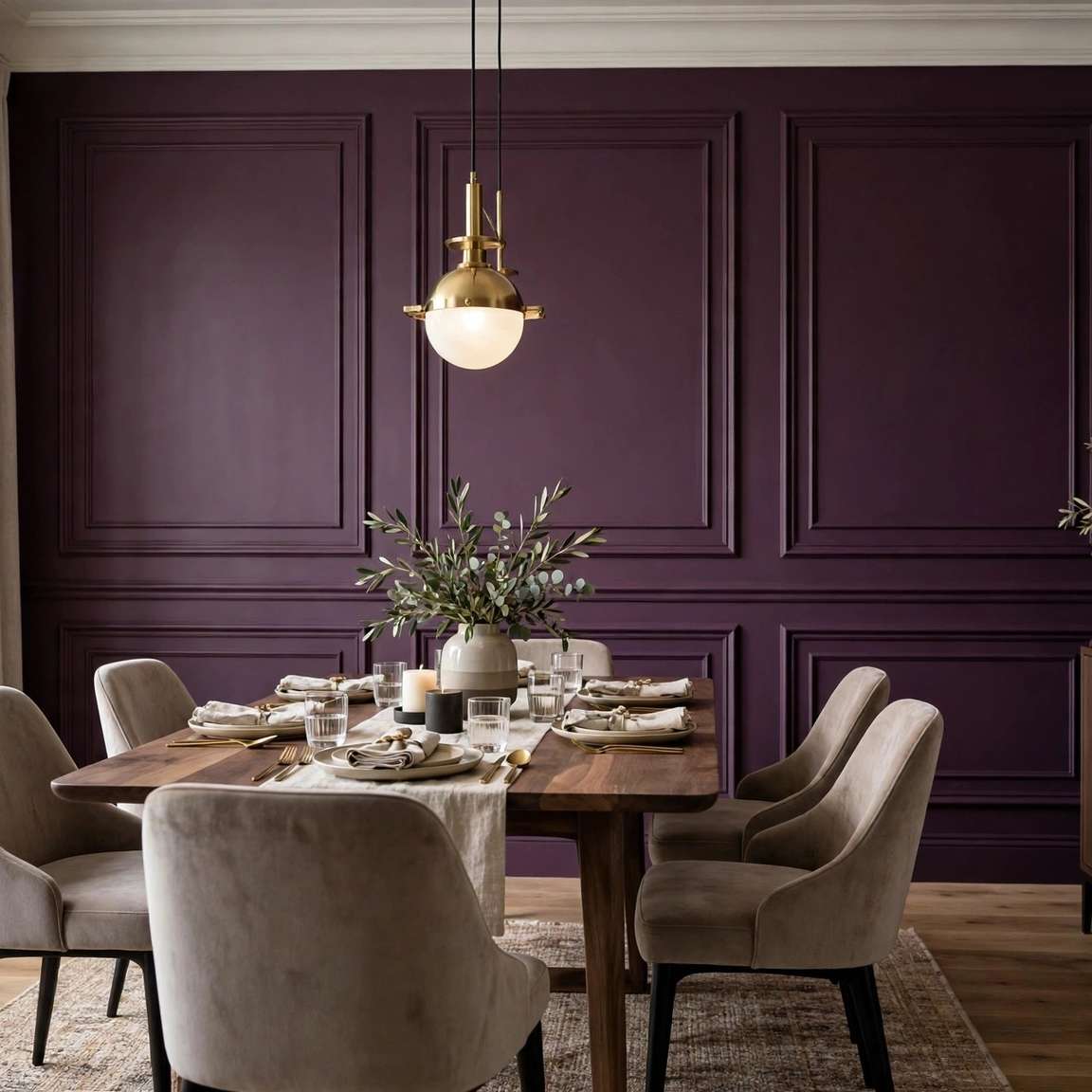
Thin timber strips arranged as rectangles, then painted one rich colour — plum, aubergine or deep berry — give a dining room instant period elegance for the price of a few lengths of beading.
Why it works:
- Adds architecture to a plain box room
- Deep berry tones flatter candlelight and food
- A weekend project with basic tools
Tip: draw the rectangles on the wall first and live with the tape outlines for a day.
8) A Charcoal Backdrop for the Home Office
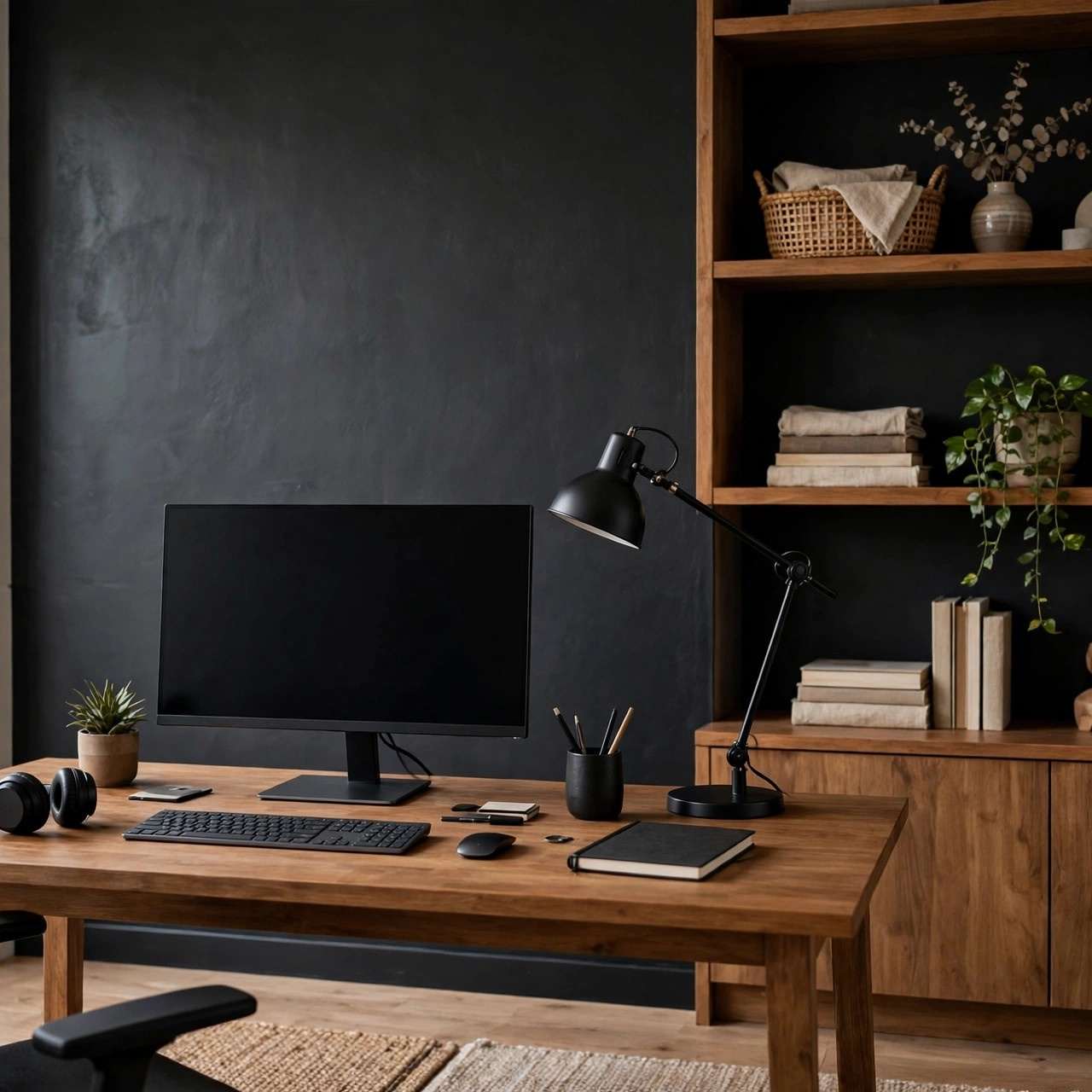
A near-black wall behind your desk is the home office cheat code: video calls look sharp, screens pop, and the dark backdrop helps you focus.
Why it works:
- Screens and faces stand out on calls
- Hides cable runs and monitor edges visually
- Pairs beautifully with oak and white desks
Tip: choose a soft charcoal rather than pure black; it photographs warmer.
9) A Hand-Painted Rainbow in the Nursery
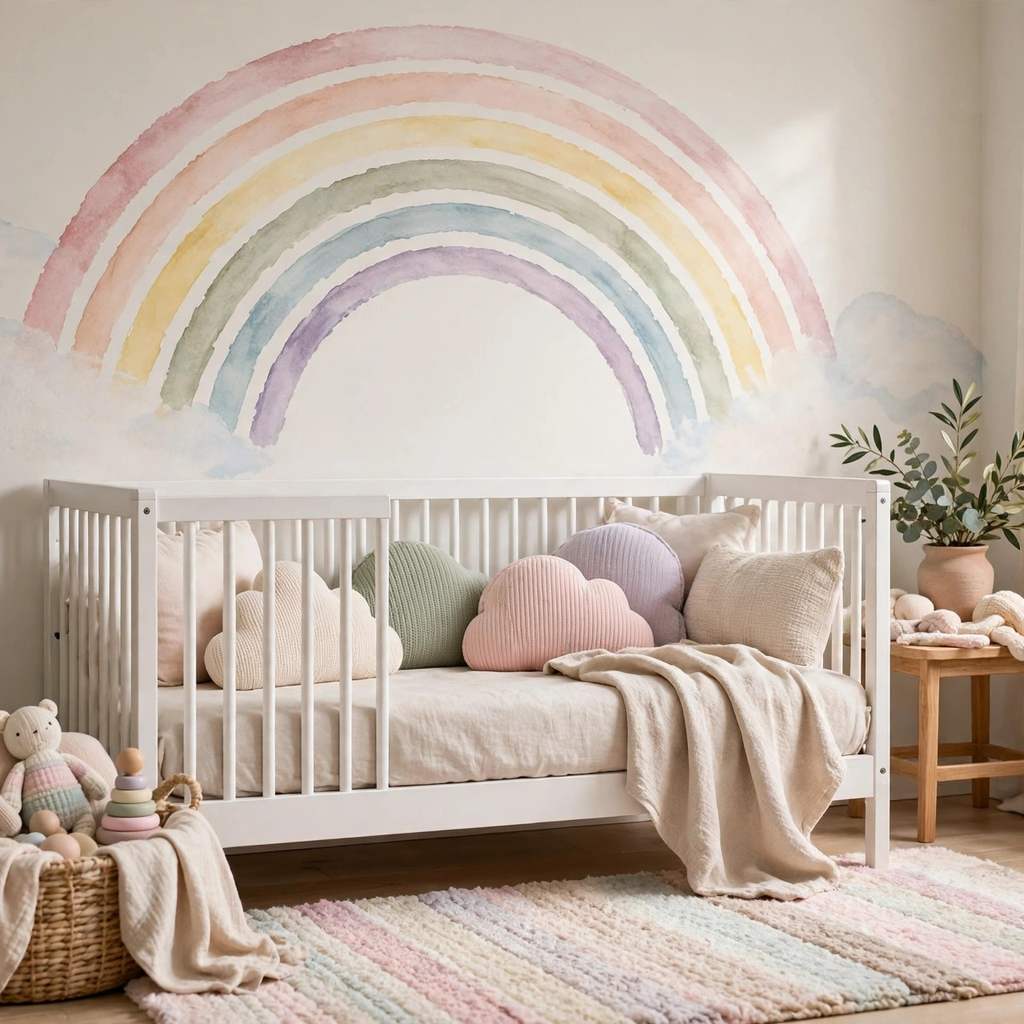
A simple painted rainbow — three or four soft arcs above the cot — costs one tester pot per colour and brings a nursery to life without a single sticker or decal.
Why it works:
- Tester pots make it very cheap
- Soft pastels keep the room restful
- Paints over easily as tastes change
Tip: draw the arcs with string and a pencil tied at the centre point for smooth curves.
10) Board and Batten in Cream for a Calm Living Room
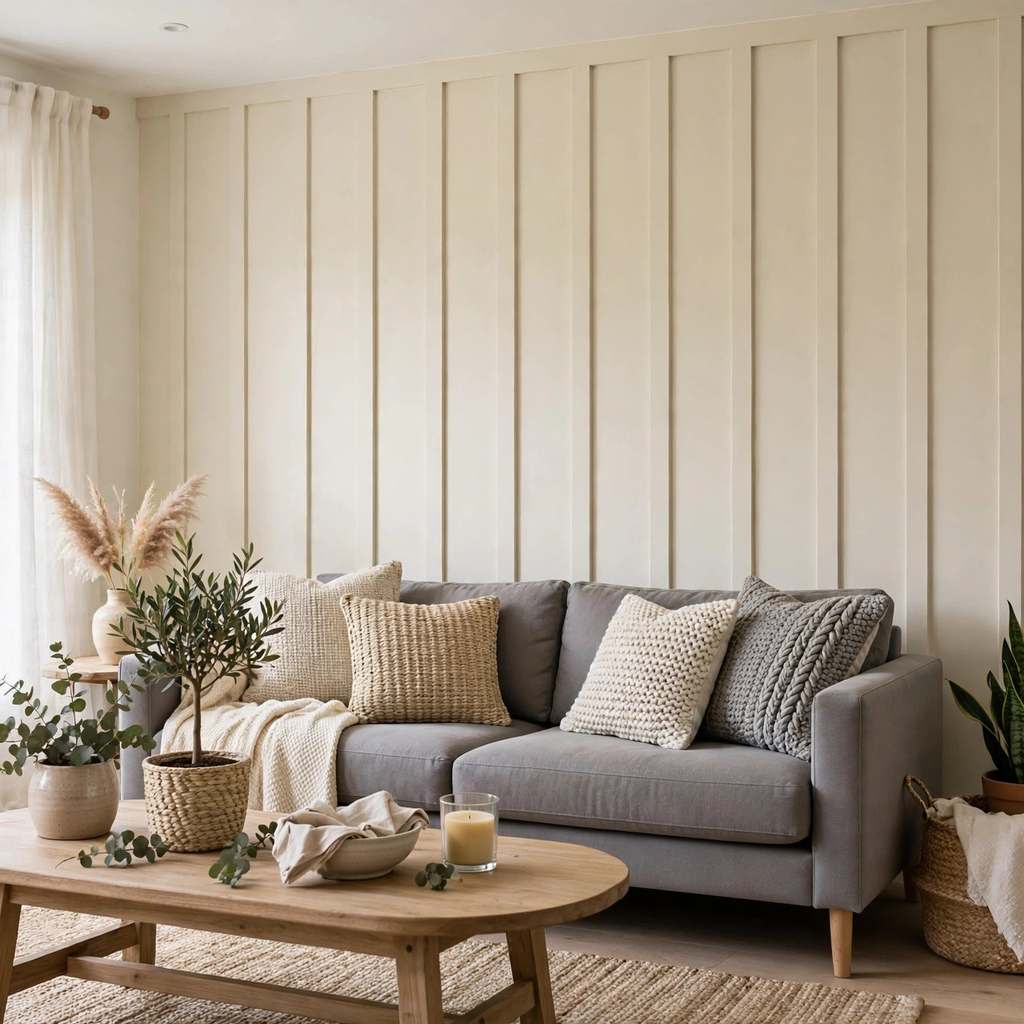
Board and batten — wide boards with narrow battens over the joints — adds gentle shadow lines to a living room wall while staying light and neutral. It suits both cottages and new builds.
Why it works:
- Texture without dark colour
- Protects walls in busy seating areas
- Easy to paint any colour later
Tip: space battens evenly using the wall width divided into equal sections, not guesswork.
11) Bedroom Accent Wall Ideas With Floral Wallpaper
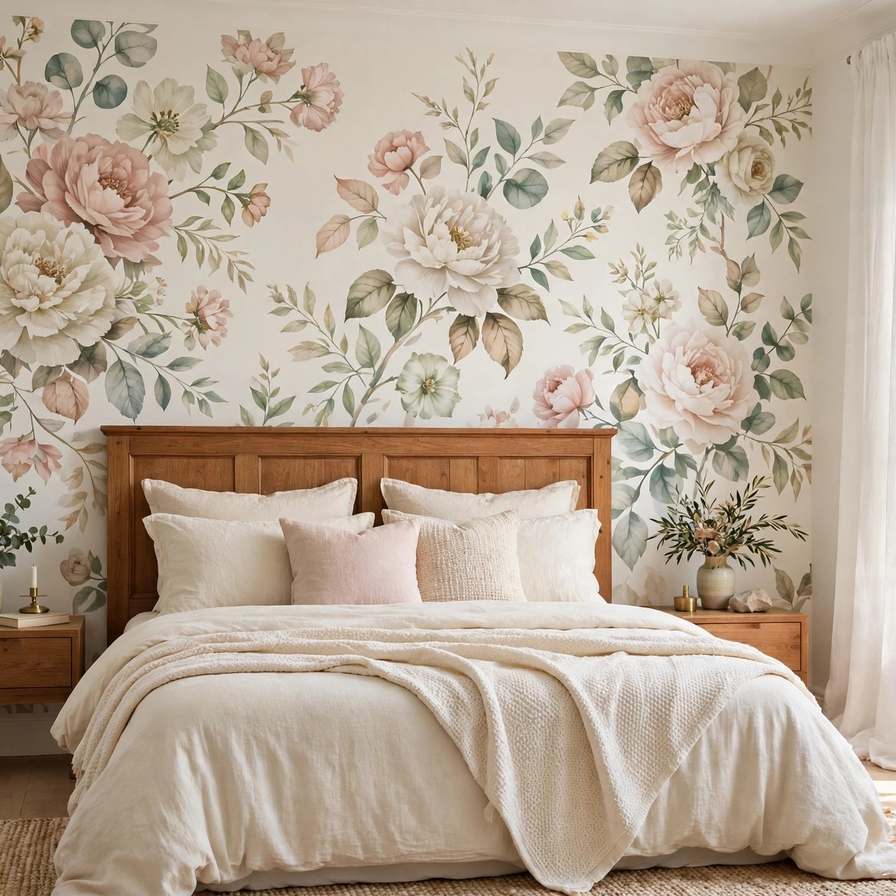
A large-scale floral behind the bed does the work of art, headboard and colour scheme in one. Choose a pattern with breathing room between the blooms so it feels calm, not busy.
Why it works:
- One wall means one or two rolls only
- Pattern sets the room’s whole palette
- No headboard needed against a statement paper
Tip: pull your cushion and throw colours straight from the wallpaper’s smallest details.
12) An Ochre-Painted Stairwell Wall
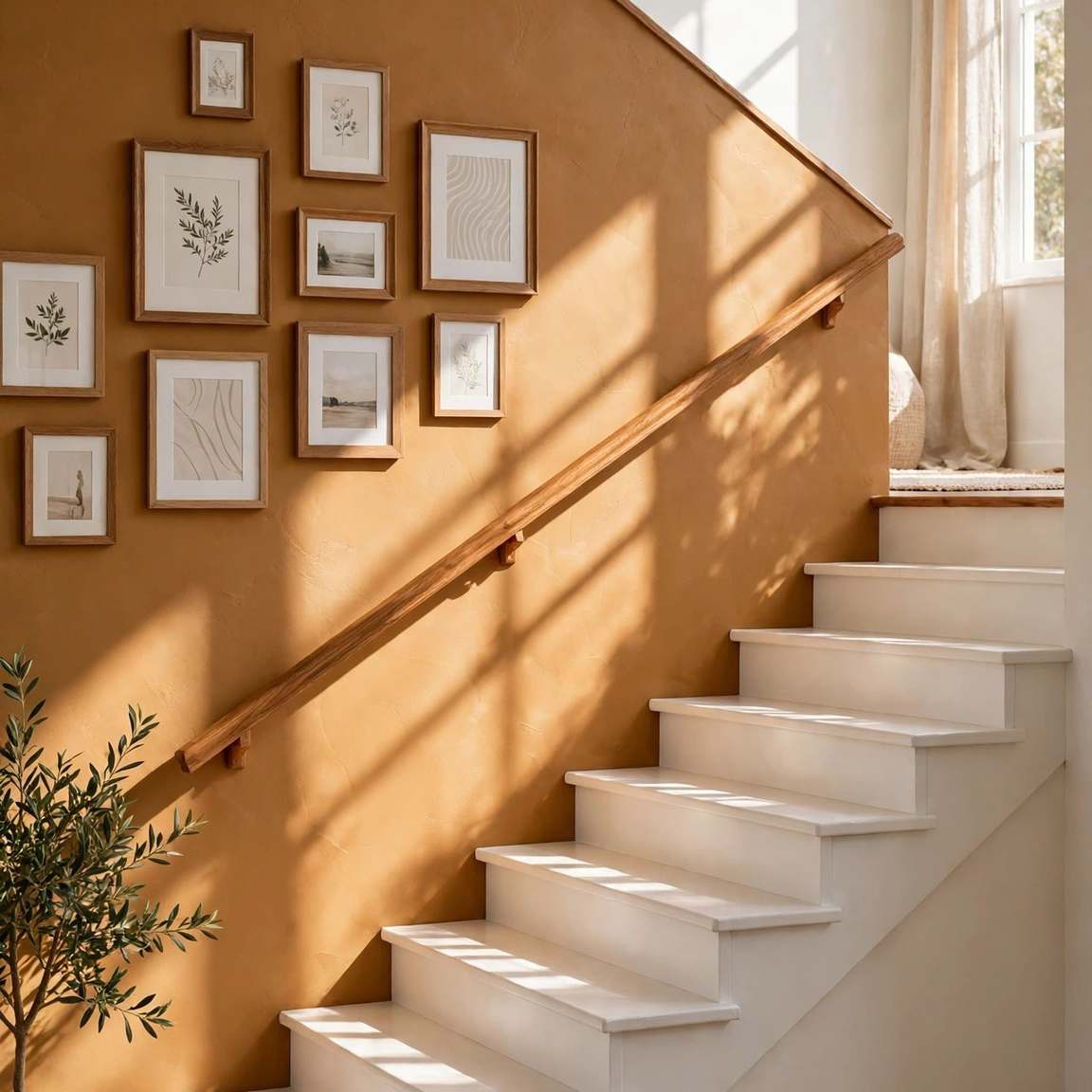
Stairwells are walls you see twenty times a day. A warm ochre or turmeric turns the climb into a golden moment and flatters white woodwork and framed prints beautifully.
Why it works:
- Warm tones glow in borrowed stairwell light
- A single long wall is quick to paint
- Makes picture arrangements look deliberate
Tip: use a durable scrubbable paint — stair walls collect handprints and scuffs.
13) Zellige-Style Glossy Tiles in the Kitchen
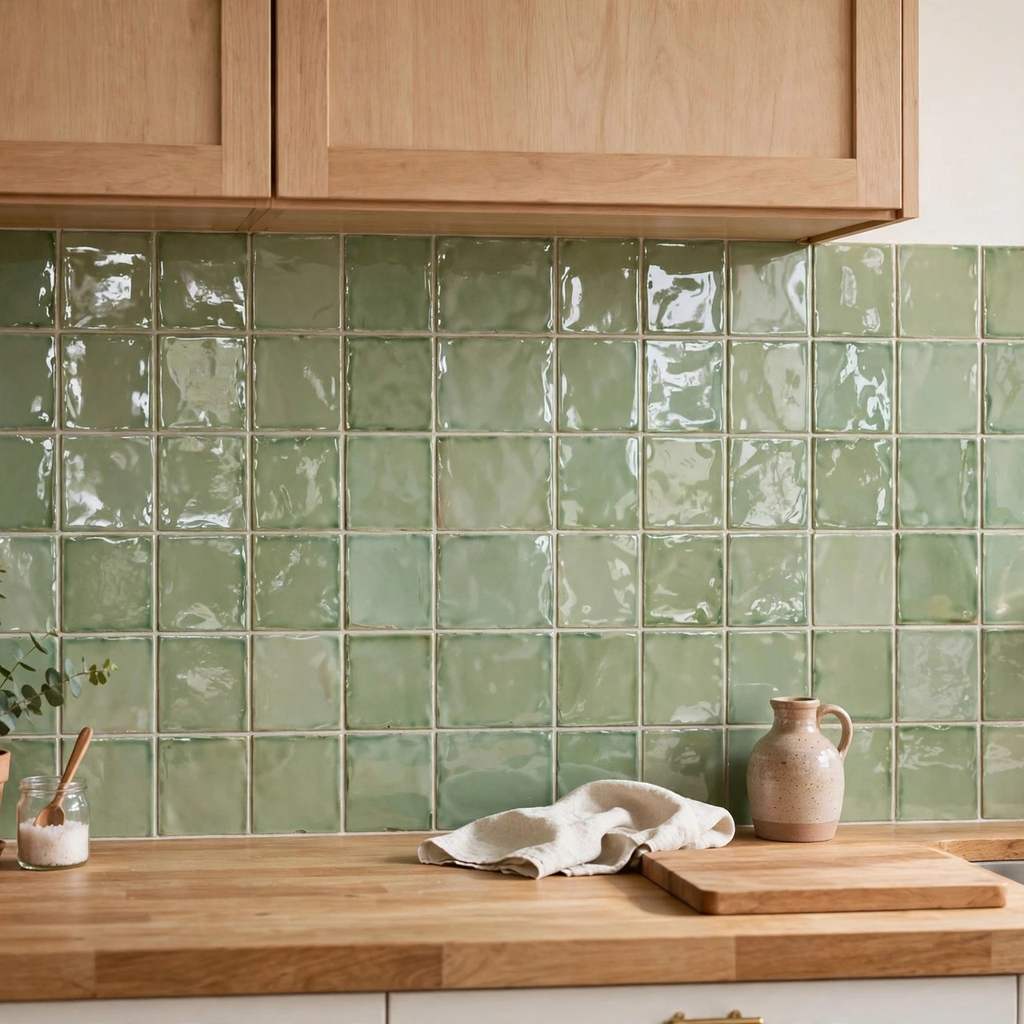
Handmade-look tiles have softly uneven edges that catch the light like water. Run them from worktop to ceiling on one kitchen wall and even plain cabinets look bespoke.
Why it works:
- Rippled glaze hides splashes and smears
- Reflects light around a working kitchen
- Full-height tiling feels custom-made
Tip: choose a grout colour close to the tile for a calm, continuous shimmer.
14) A Microcement Spa Wall in the Bathroom
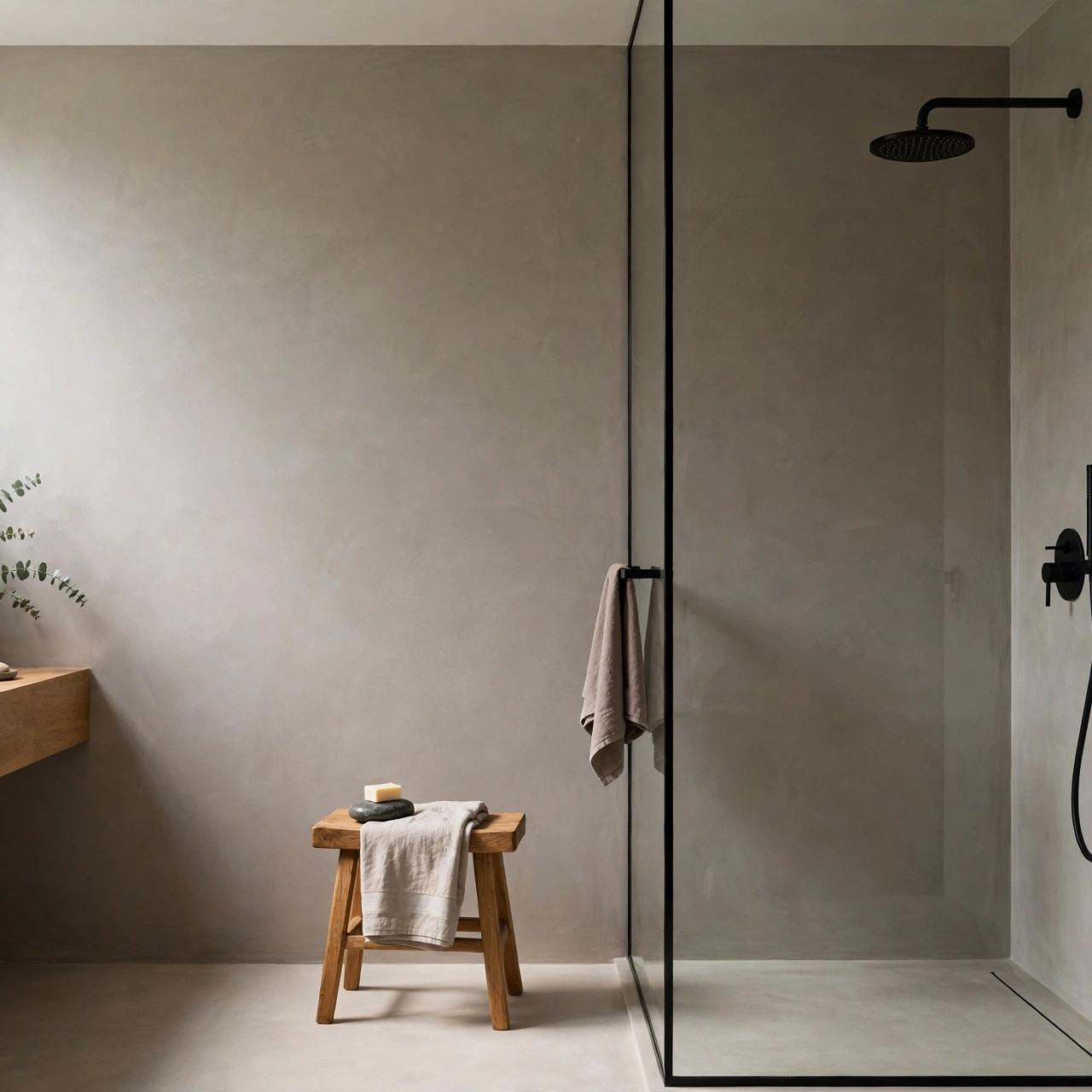
Microcement gives a seamless, plaster-smooth wall with no grout lines at all — warm grey behind a shower turns the bathroom quiet and gallery-like.
Why it works:
- No grout lines to scrub or discolour
- Seamless finish suits small bathrooms
- Works over many existing surfaces
Tip: this one rewards professional application; the prep layers decide the finish.
15) A Stacked Stone Fireplace Wall
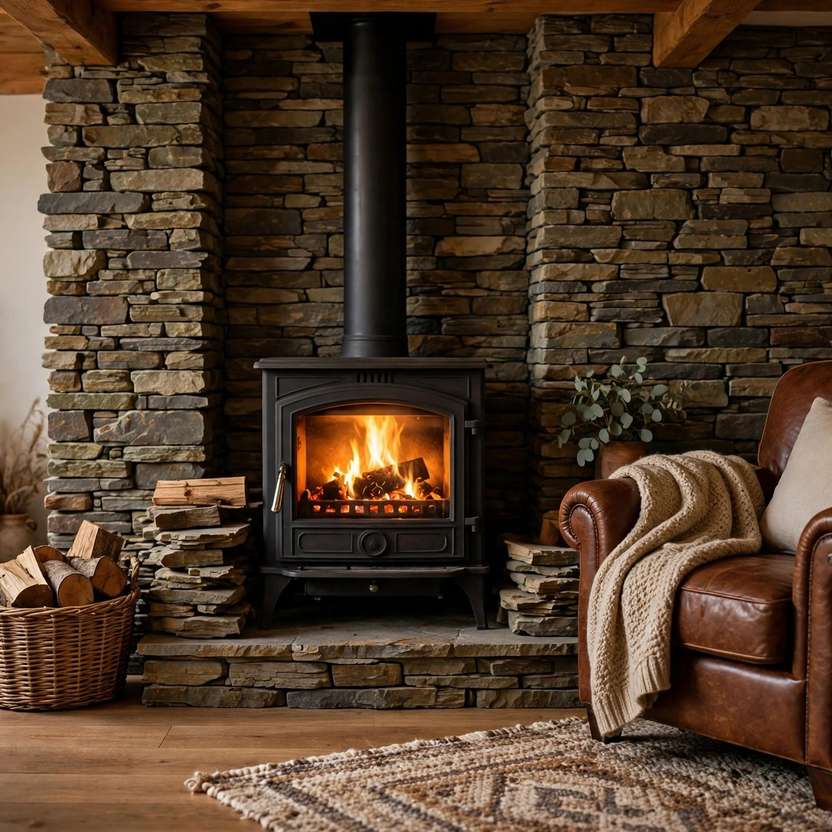
Cladding a chimney breast in stacked stone turns the fireplace into a true focal point. The layered texture begs for firelight, and it anchors rustic and modern schemes alike.
Why it works:
- Real depth and shadow play
- Makes the fire the undeniable centre
- Stone slips are lighter than full stone
Tip: keep the surrounding walls plain so the stone carries all the drama.
16) Metallic Art Deco Wallpaper in the Dining Room
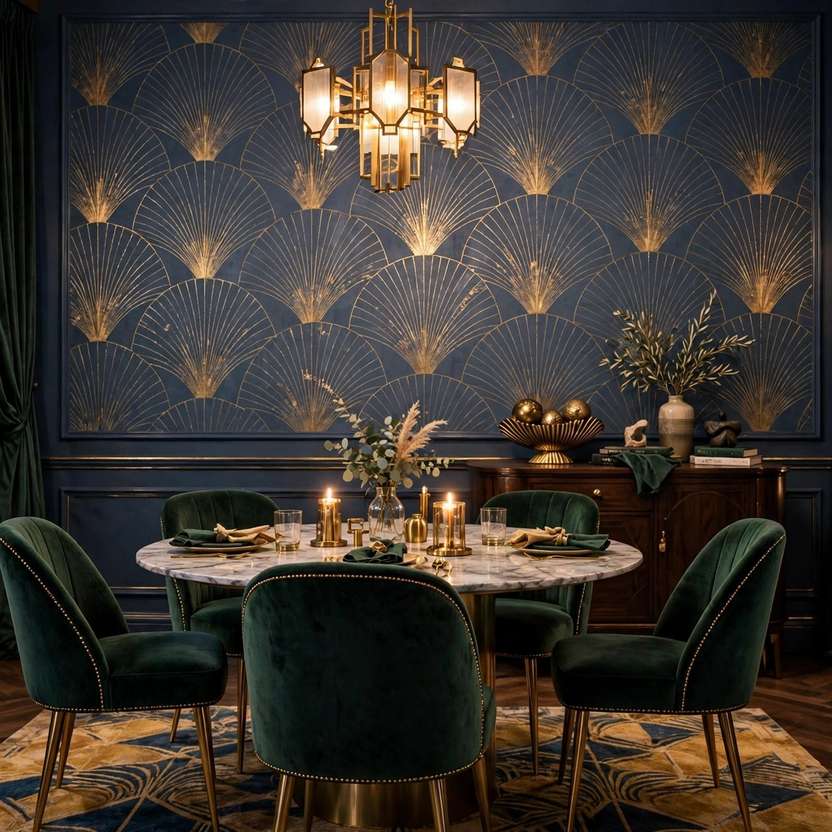
A fan or scallop pattern with a hint of metallic catches lamplight at dinner like nothing else. Dining rooms host evenings, so let the wall dress for them.
Why it works:
- Metallic details shimmer after dark
- Pattern hides a multitude of wall sins
- Instant occasion, even on weeknights
Tip: keep the table styling simple; the wall is already the centrepiece.
17) A Two-Tone Half-Painted Bedroom Wall
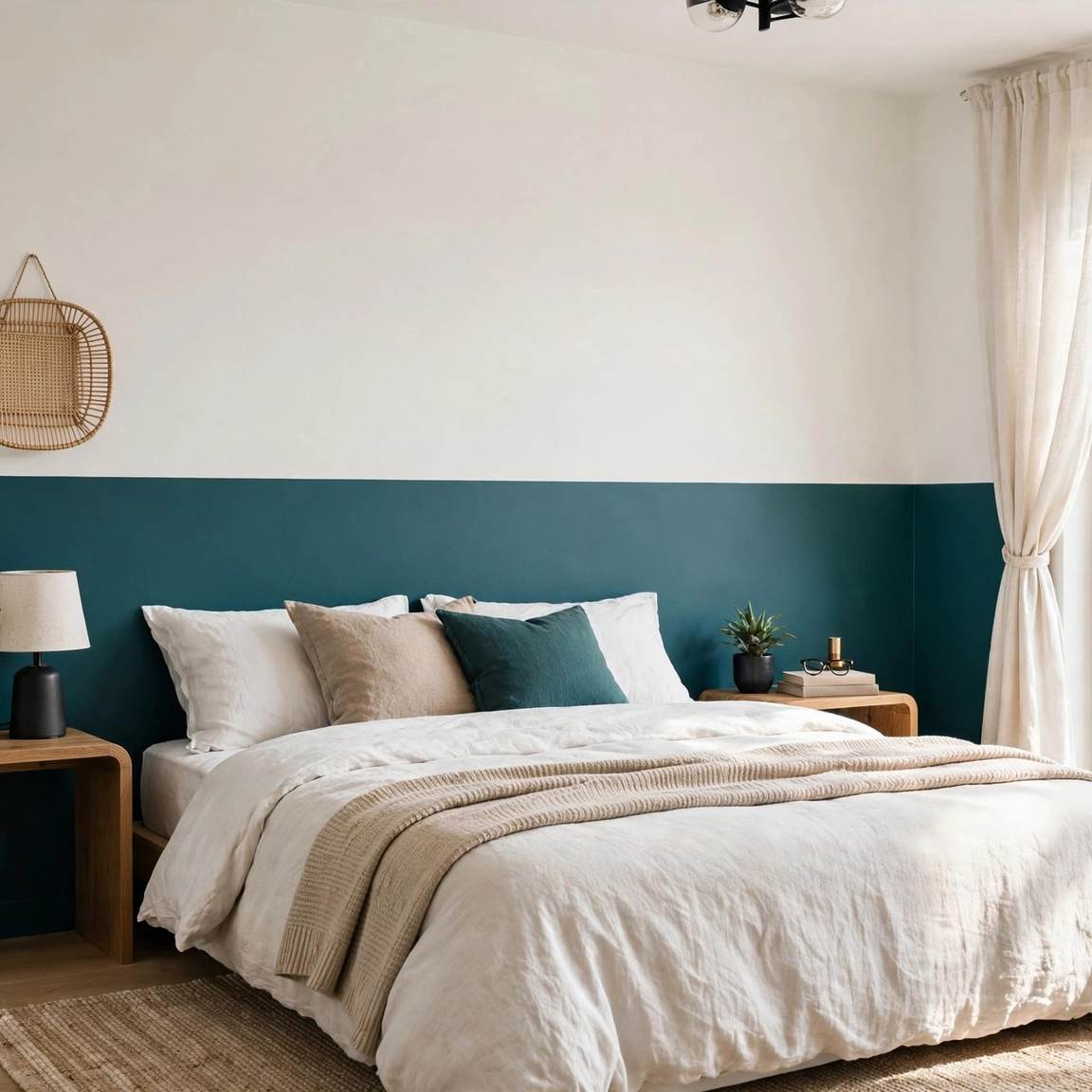
Paint the lower half of the wall a strong colour and leave the top white. The line acts like a headboard, grounds the bed, and uses half the paint of a full wall.
Why it works:
- Colour where it matters, light above
- The line can run at headboard height
- Easy to repaint when you fancy a change
Tip: a laser level and good tape give you that satisfying crisp edge.
18) Vertical Stripe Wallpaper in the Hallway
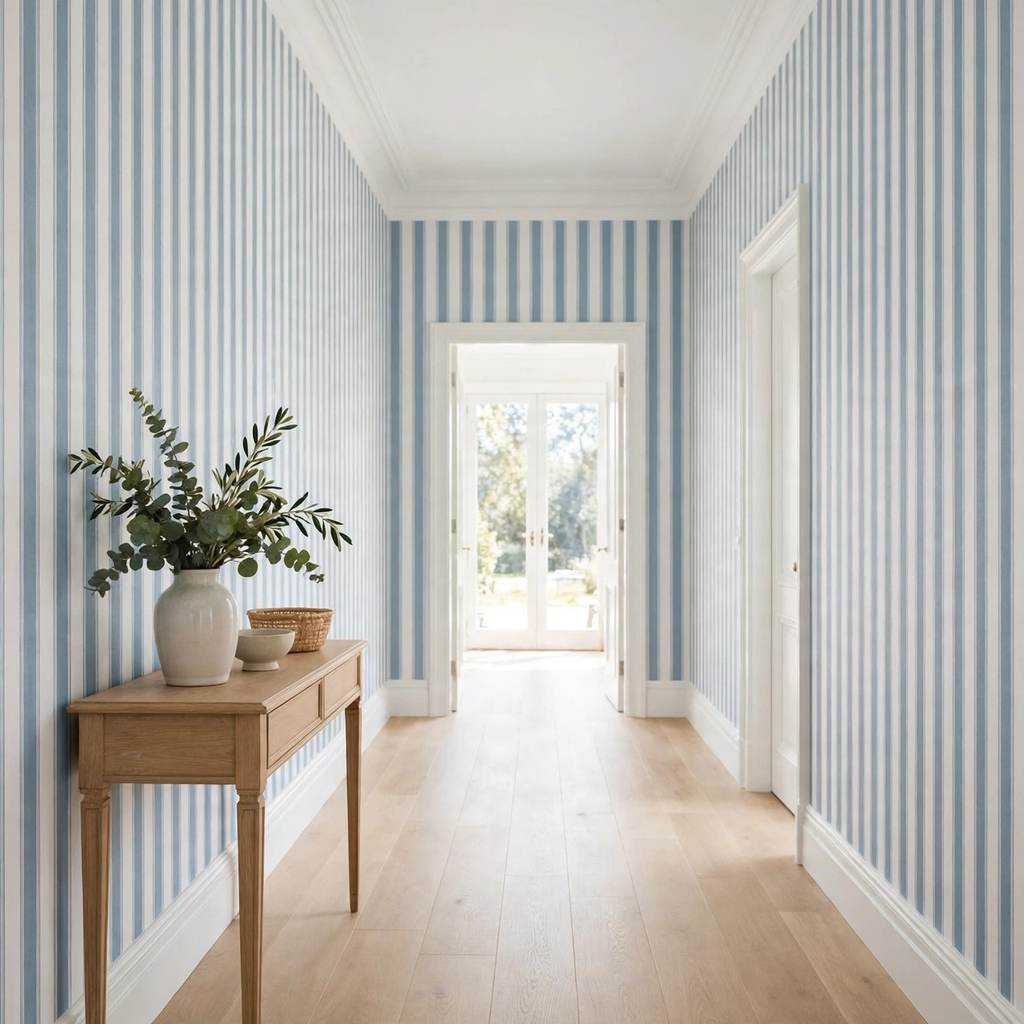
Stripes are the oldest trick for a reason: vertical lines draw the eye up and make a low hallway feel taller, while a soft two-colour stripe stays fresh rather than formal.
Why it works:
- Visually lifts the ceiling
- A classic that never dates
- Narrow halls need little paper
Tip: wider stripes look calmer in small spaces than pinstripes do.
19) A Chalkboard Wall in the Playroom
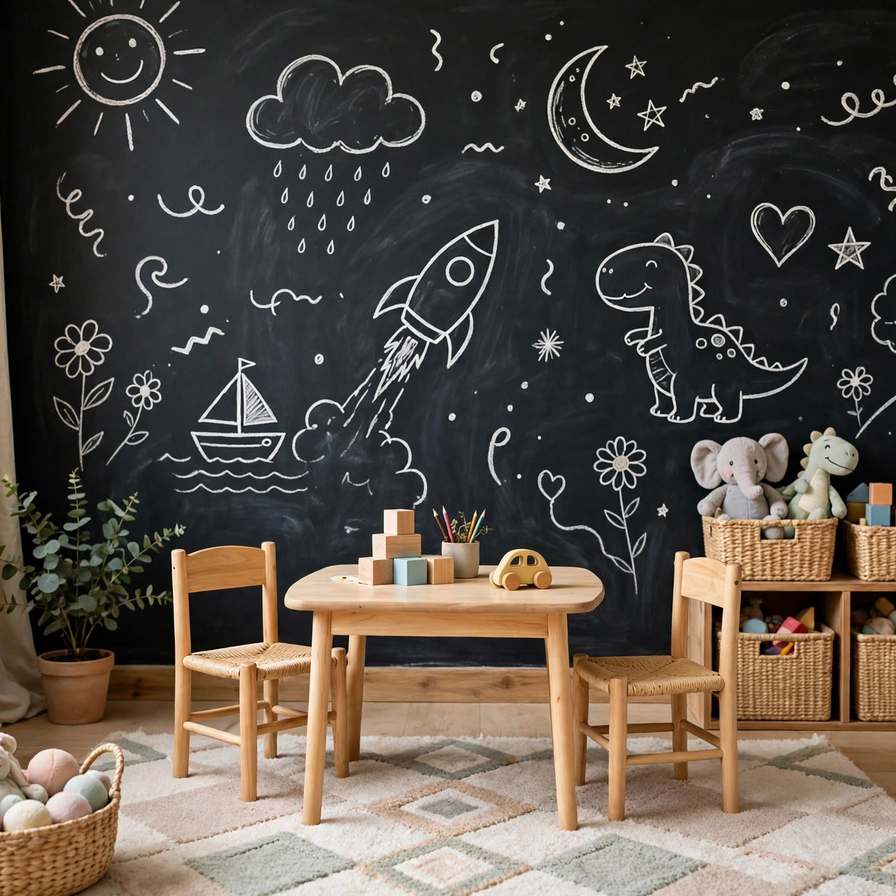
One wall of chalkboard paint gives children a canvas as big as their imagination — and gives your other walls a rest. It wipes clean and starts again daily.
Why it works:
- Endless free entertainment on one wall
- Wipes clean in seconds
- Dark paint hides playroom scuffs brilliantly
Tip: season a new chalkboard wall by rubbing chalk sideways over it, or drawings ghost forever.
20) A Marble-Look Panel Media Wall
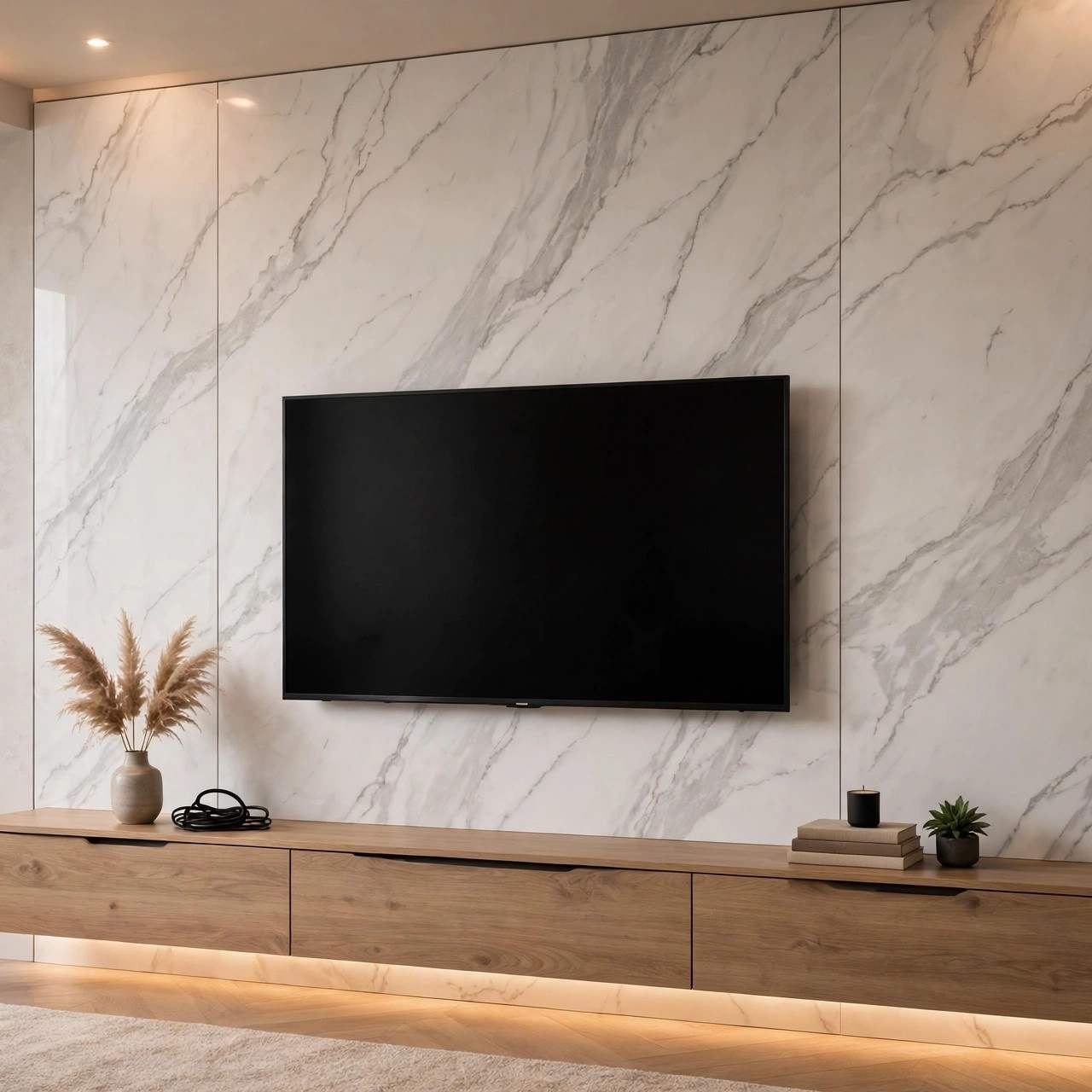
Large marble-look panels behind the television give a five-star hotel backdrop with almost no joins — porcelain versions are tough and far lighter than real slabs.
Why it works:
- Near-seamless luxury finish
- Wipes clean around screens and soundbars
- Veining hides dust surprisingly well
Tip: plan sockets and cable routes before the panels go up; changes afterwards are painful.
21) Velvet Fabric Panels Behind the Bed
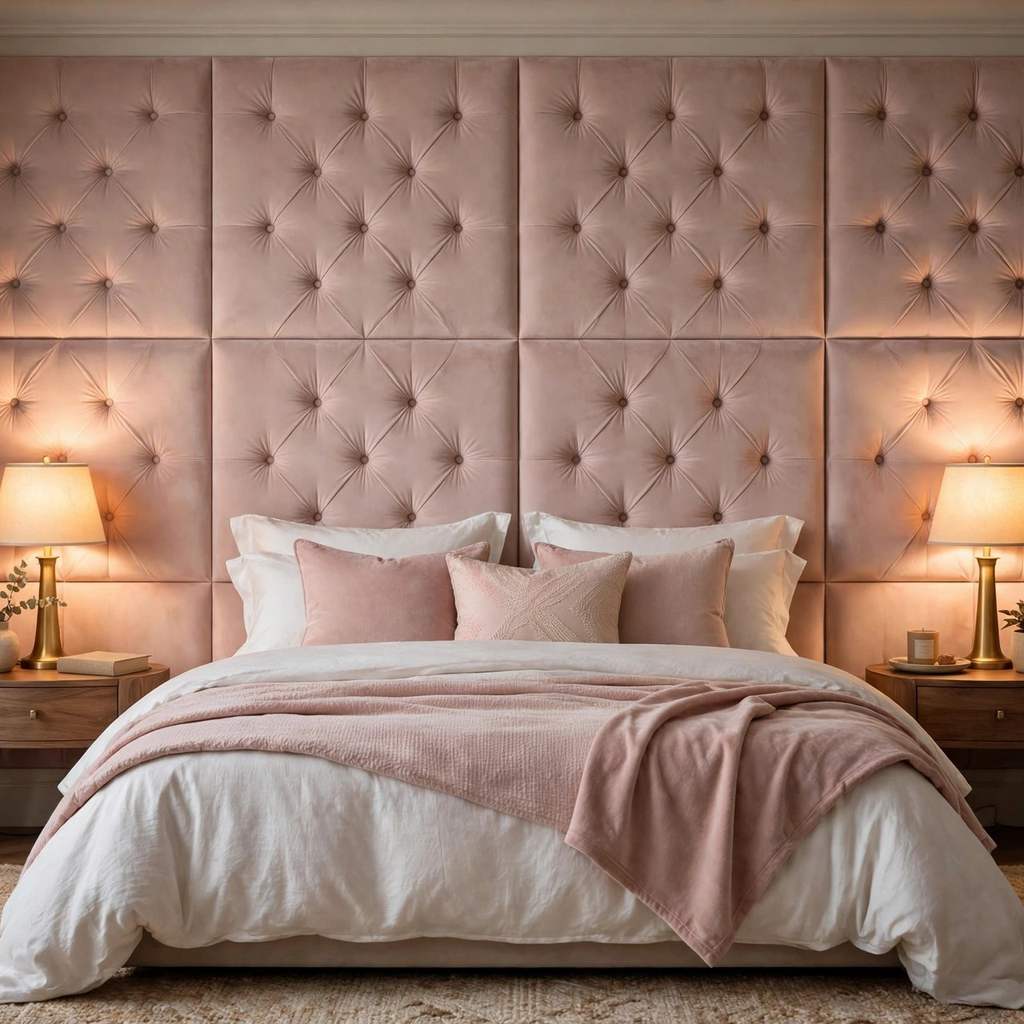
Padded fabric panels turn the wall behind your bed into one giant soft headboard — sound-muffling, lovely to lean against, boutique-hotel smart.
Why it works:
- Softens echo in hard-floored bedrooms
- Replaces a headboard entirely
- Velvet catches light beautifully
Tip: choose a wipeable or removable-cover fabric if little hands or paws share the bed.
22) Sage Tongue-and-Groove Panelling in the Kitchen
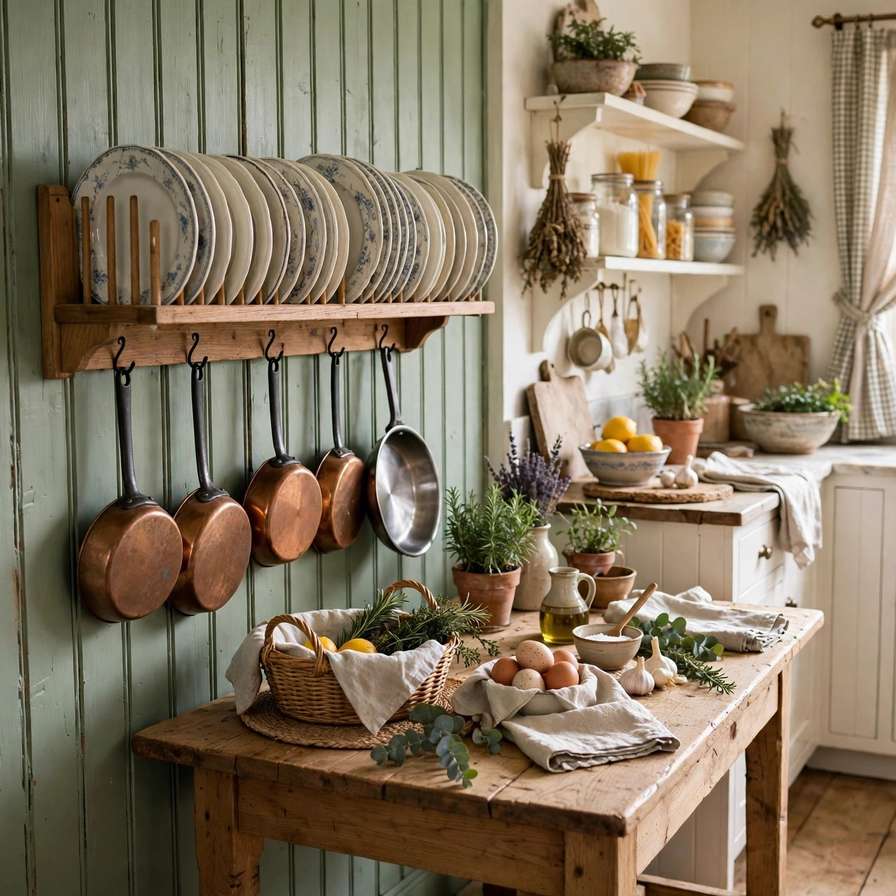
Painted tongue-and-groove in soft sage brings cottage warmth to a kitchen wall, and its vertical grooves shrug off knocks far better than flat plaster does.
Why it works:
- Hard-wearing in a busy room
- Cottage character for new-build kitchens
- Paint refreshes it in an afternoon
Tip: use moisture-resistant boards near sinks and cookers, and seal the top edge.
23) Fluted Ribbed Tiles in the Bathroom
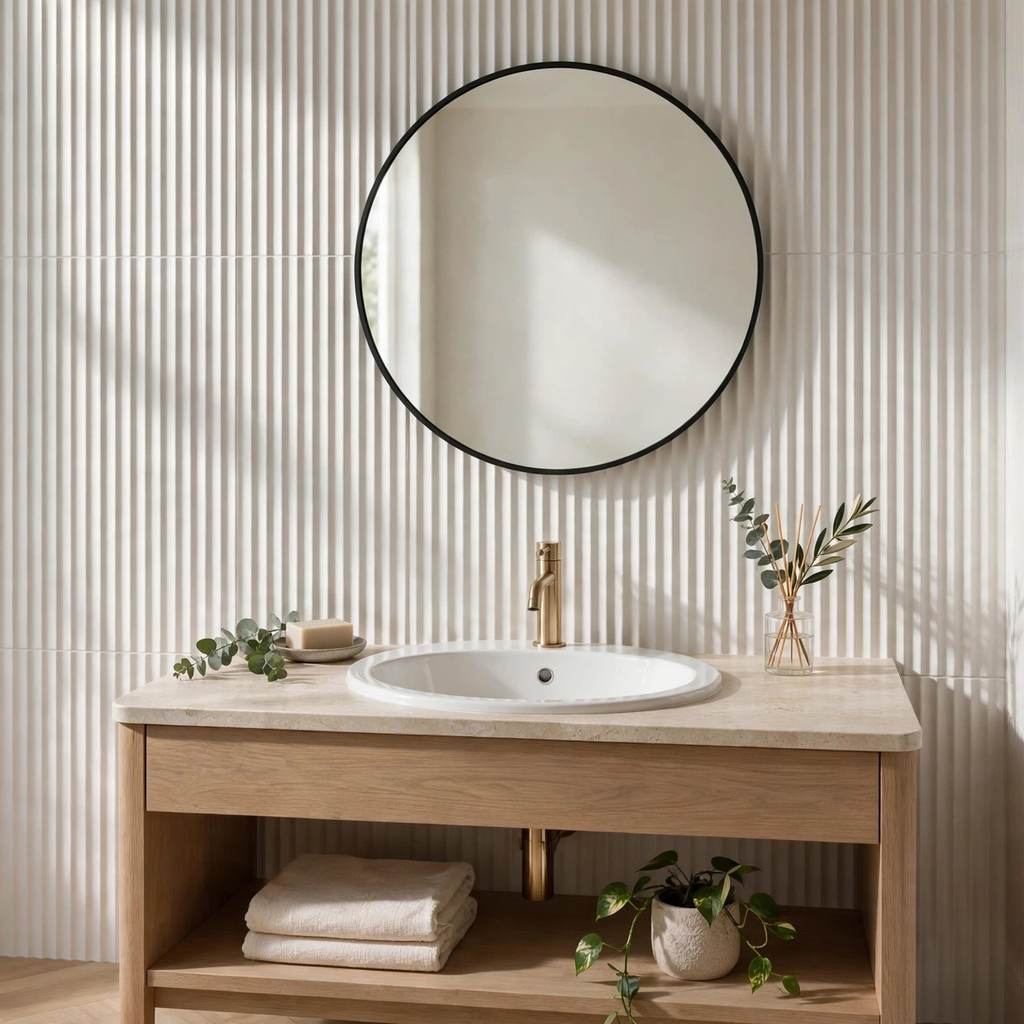
Fluted tiles have fine vertical ridges that ripple with light and shadow. Behind a basin they add spa texture without colour commitment — calm now, easy to restyle later.
Why it works:
- Texture that works with any palette
- Vertical ridges make walls feel taller
- Glazed surface wipes clean
Tip: lighting from the side, not above, shows off the ridges at their best.
24) A Scalloped Half Wall in the Nursery
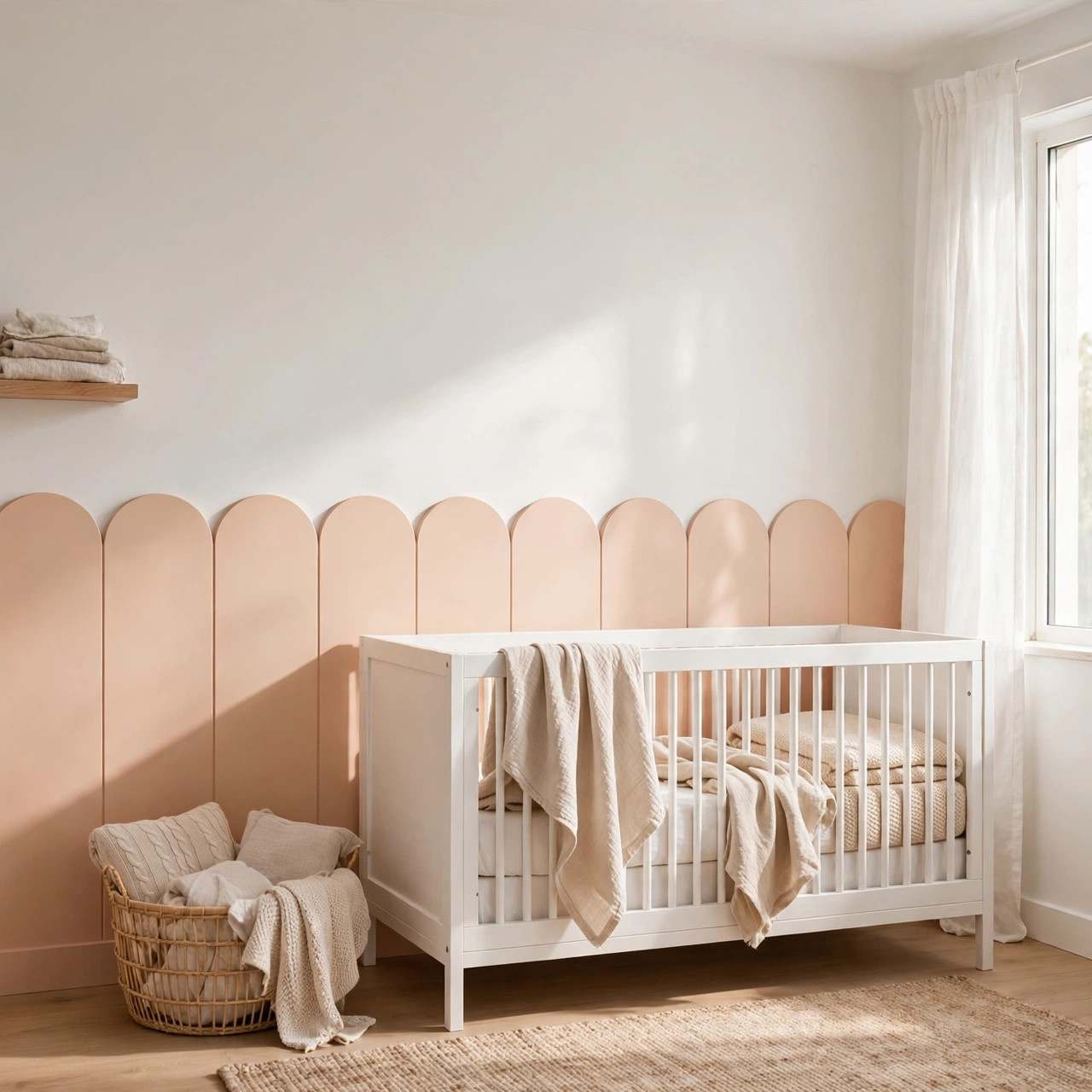
A half wall topped with a row of painted scallops is pure storybook charm. The wavy edge is simply a line of half-circles, drawn with a plate or template before painting.
Why it works:
- Soft shape suits gentle nursery schemes
- Only half a wall to paint
- Doubles as a colour anchor for textiles
Tip: practise the scallops on cardboard first; rhythm matters more than perfection.
25) Panelling Below, Botanical Wallpaper Above in the Entryway

The hardest-working combination in decorating: tough painted panelling where bags and boots knock, pretty botanical paper above where eyes rest — armour below, art above.
Why it works:
- Panelling absorbs daily scuffs
- Wallpaper brings the welcome
- The rail between them holds hooks neatly
Tip: take the panelling colour from a leaf or stem tone in the paper.
26) A Painted Arch Behind the Reading Chair
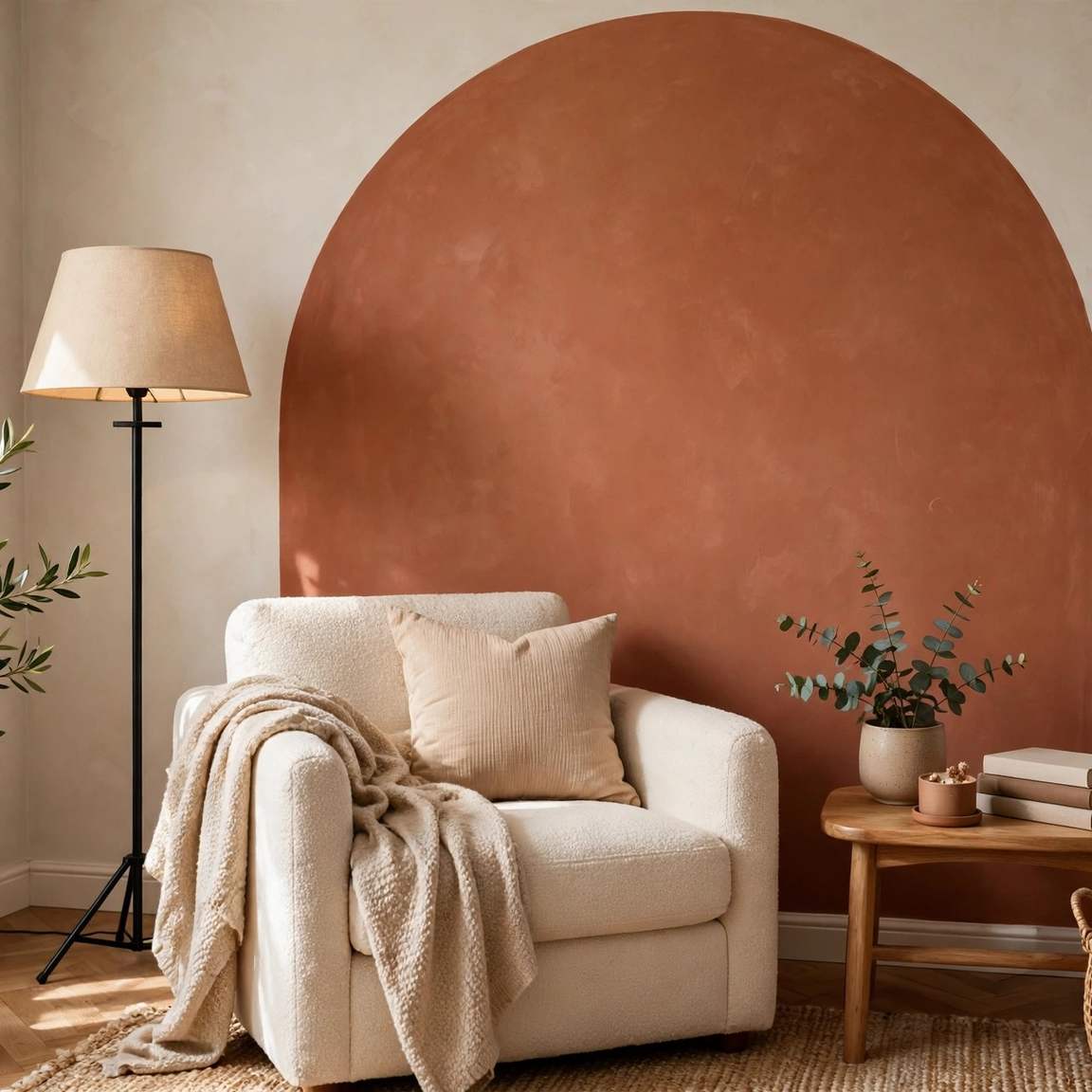
A painted arch — a rectangle topped with a semicircle — frames a chair, desk or shelf like a piece of architecture. It is the fastest colour-block trick there is: one shape, one colour, huge effect.
Why it works:
- Creates a nook without building anything
- One tester pot often covers it
- Frames furniture like artwork
Tip: draw the semicircle with string, a pin and a pencil; step back before committing.
27) Grasscloth Texture in the Dining Room
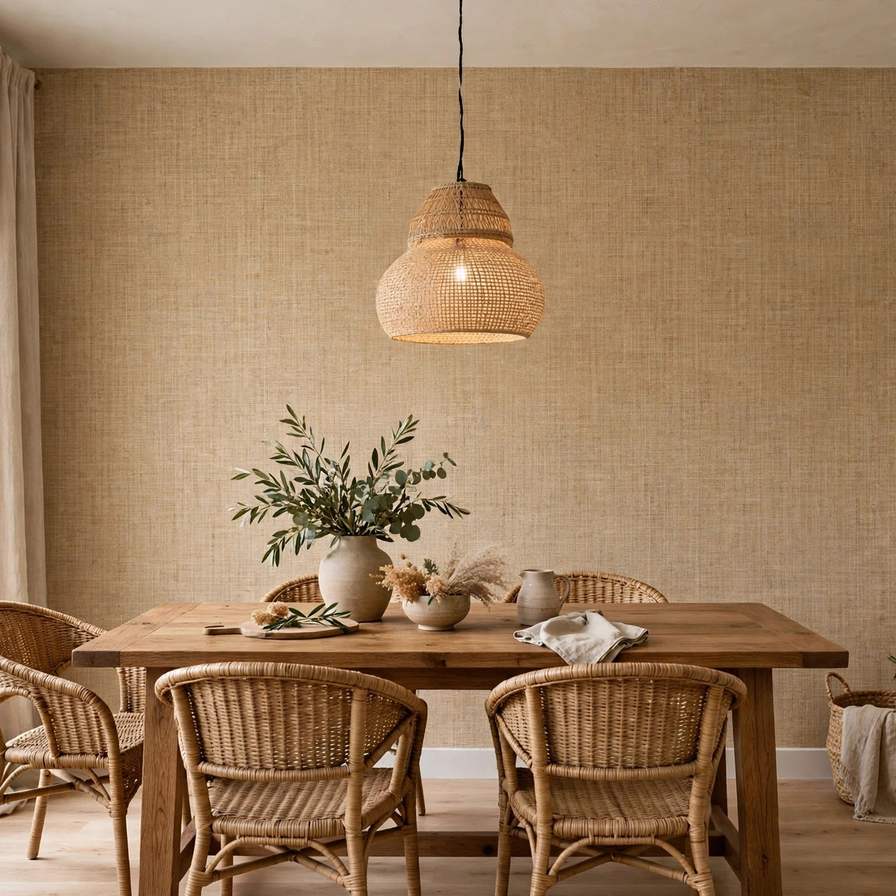
Grasscloth — woven natural fibre on a paper backing — makes a dining room feel layered and grown-up in a way flat paint never quite manages.
Why it works:
- Natural texture warms formal rooms
- Neutral tones suit changing table styling
- Slight irregularity hides wall imperfections
Tip: grasscloth is a dry-room friend; keep it away from steamy bathrooms and direct splashes.
28) A Reclaimed Wood Plank Bedroom Wall
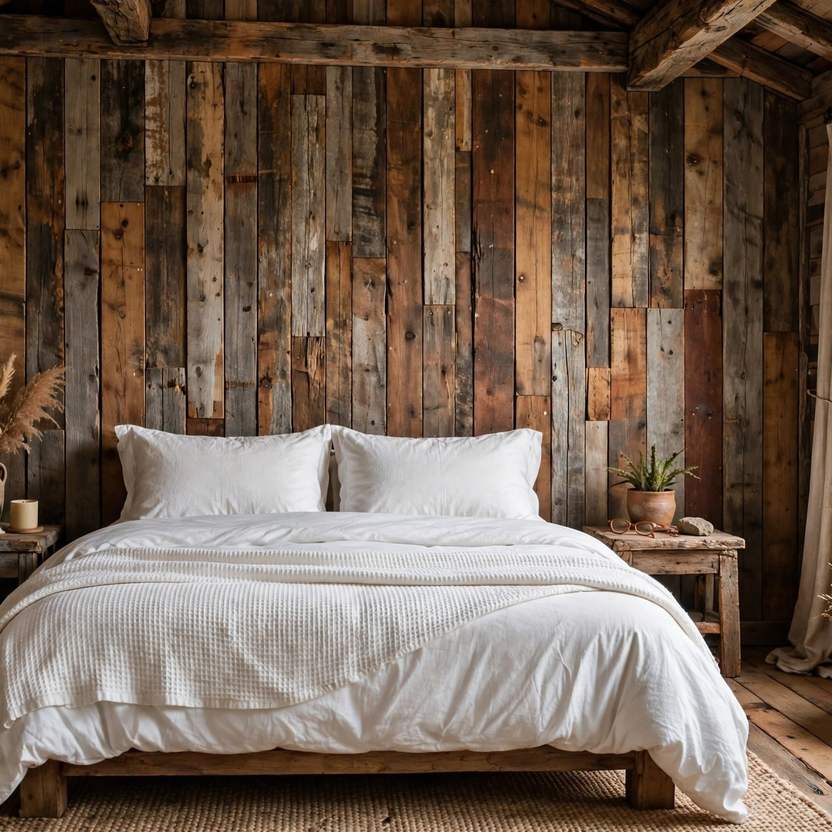
Weathered planks bring history with them, every board a slightly different tone — a cabin-calm backdrop that plain white bedding looks wonderful against.
Why it works:
- Each wall is genuinely one of a kind
- Warm tones suit simple, restful schemes
- Thin planks add little depth to the room
Tip: lay the boards out on the floor first and shuffle them until the tones balance.
29) Bold Patterned Wallpaper in the Tiny Cloakroom
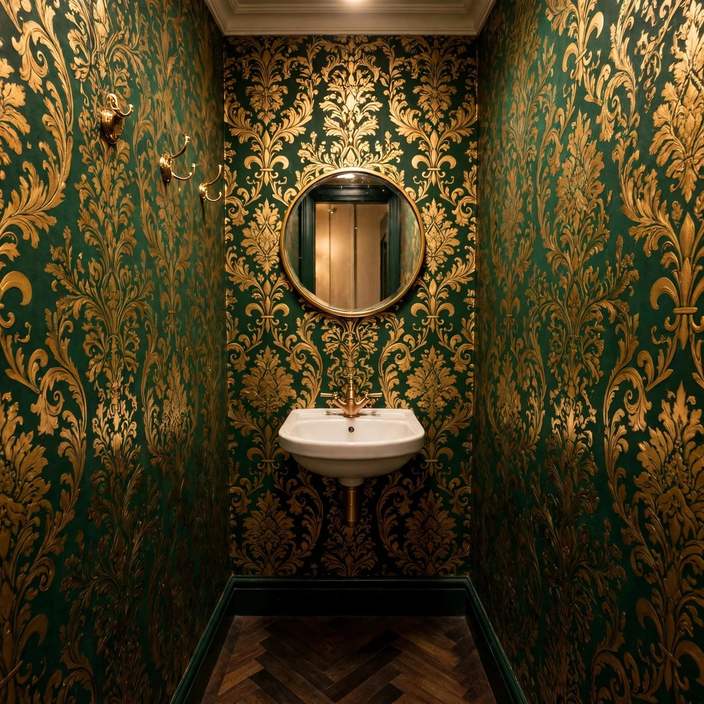
The smallest room in the house is the safest place to go truly bold. A tiny cloakroom wrapped in a big, joyful pattern becomes a jewel box guests talk about — and it needs barely two rolls.
Why it works:
- Small space means small cost, big impact
- Guests see it, so the delight is shared
- No natural light worries; pattern loves lamplight
Tip: keep the basin, mirror and fittings simple so the pattern stays the star.
How to Choose the Right Accent Wall
Pick the wall your eye lands on first when you walk in — usually the one behind the sofa, the bed or the bath. In bedrooms, balance matters as much as colour: these cozy bedroom rule of three ideas show how grouping things in threes keeps a decorated wall feeling calm rather than cluttered.
Then match the finish to the room’s life. Wet and busy rooms want tile, microcement or scrubbable paint; quiet rooms can take grasscloth, fabric and limewash. Always test colour on the actual wall and check it morning and evening — light changes everything.
Mistakes That Make Accent Walls Fall Flat
The commonest mistake is choosing the wrong wall: one chopped up by doors and windows rarely works. Next is a colour that argues with the room — borrow your tone from a cushion, rug or picture already there. And keep edges clean and deliberate; that is what makes the effect look designed.
Conclusion
One wall really can change how a whole home feels. From a navy hallway to a scalloped nursery wall, the ideas above prove an accent does not need a big budget or a big room — just one surface chosen well and finished with confidence.
You do not have to try all 29 at once. Start with the room you use most, live with the change for a week, and let that first success talk you into the next wall.
For more room-by-room inspiration before you begin, Homes & Gardens is a lovely place to browse. Now choose your wall, order the tester pot, and enjoy the moment the room clicks into place.




More Stories
28 Backyard Rule of three Fire Pit Ideas
24 Cozy Cottage Bedroom Ideas to Try
23 Bedroom Rule of three for a Neutral Look