
Introduction
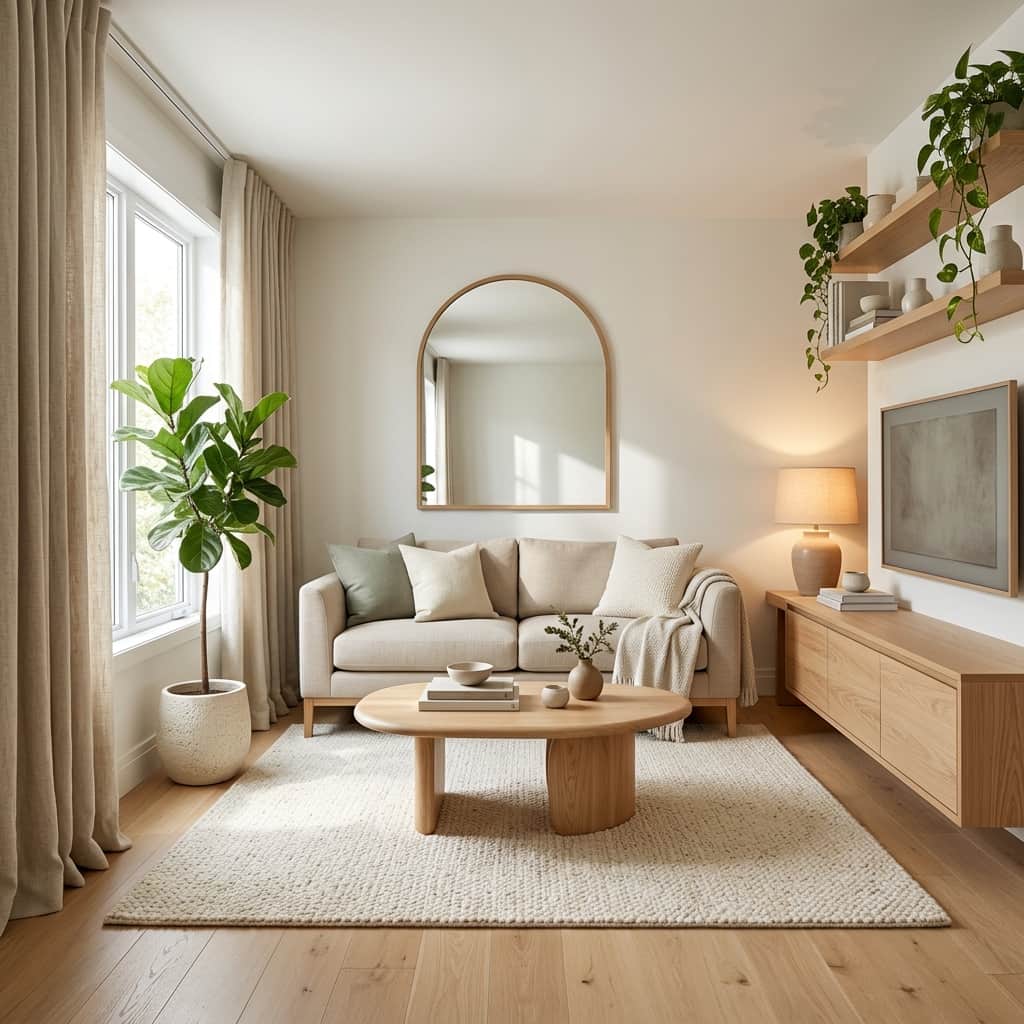
If you have a small living room, you don’t need a bigger home to create a beautiful and comfortable space. The right furniture, colors, lighting, and layout can make even a compact room feel open, welcoming, and stylish. In 2026, small living room design is all about combining comfort with smart solutions that make everyday life easier.
The best small living room inspo ideas focus on more than appearance. They help you organize your belongings, create comfortable seating, improve natural light, and make every corner useful without making the room feel crowded.
Whether you’re decorating a small apartment, updating a narrow living room, or refreshing a cozy family space, these 20 ideas can help you create a room that looks attractive and works for your lifestyle.
You don’t have to use every idea. Start with the changes that solve your biggest problems, then add decorative details that reflect your personal style.
1) Choose a Light and Airy Color Palette
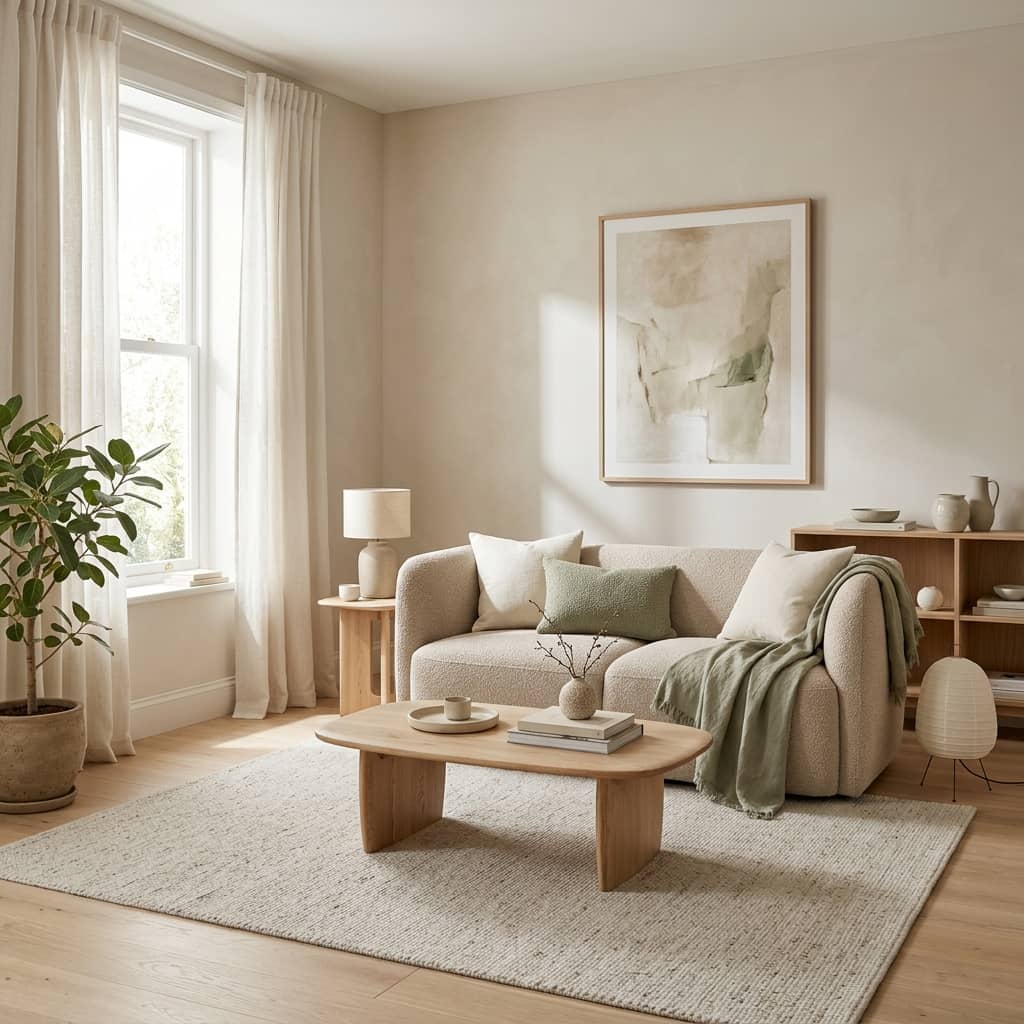
Color can change how a small living room feels. Light shades reflect natural light and help create an open, peaceful atmosphere.
Instead of using only bright white, consider warm and comfortable colors that add character without making the room feel heavy.
Colors worth considering:
- Warm white and cream for a clean, timeless appearance.
- Soft beige and greige for a cozy, modern look.
- Pale sage green for a gentle touch of nature.
- Light gray for a simple contemporary interior.
Practical tip: Use one main color for the walls, a complementary shade for furniture, and a few darker accents in cushions or artwork. This creates visual interest without overwhelming the room.
2) Invest in a Space-Saving Sofa
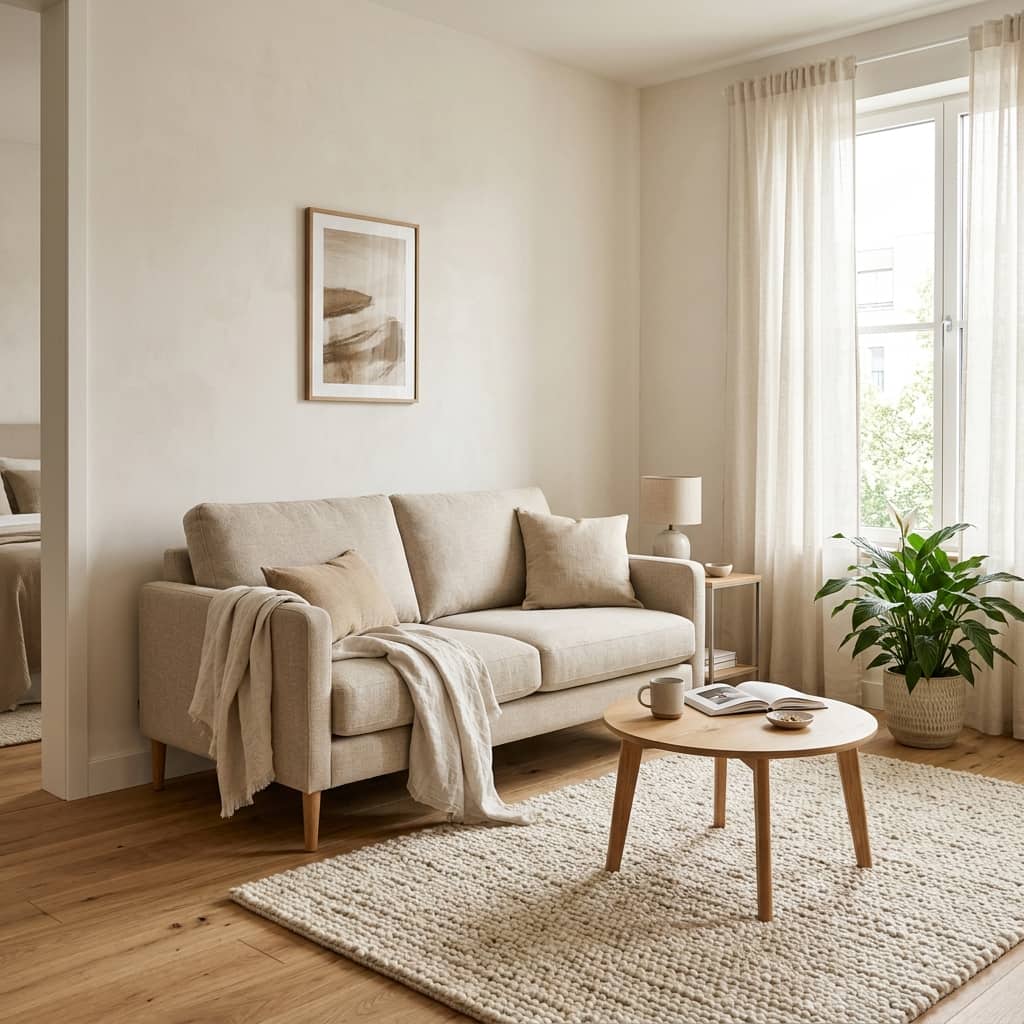
A sofa usually takes up the largest amount of space in a living room, so choosing the right design is essential. An oversized sofa can block walkways and make a small room feel cramped.
Look for a compact sofa that provides enough seating without occupying unnecessary floor space.
Smart sofa options include:
- Two-seater sofas for small apartments.
- Slim-arm sofas that offer more usable seating width.
- Raised-leg sofas that reveal more floor underneath.
- Compact sectionals for rooms with suitable corner space.
Why it works: Furniture with a smaller visual footprint helps the room feel less crowded while maintaining everyday comfort.
Before purchasing, measure the sofa’s width, depth, and height. Also, check whether it can pass through your doorways and hallways.
3) Use Mirrors to Make the Room Feel Bigger
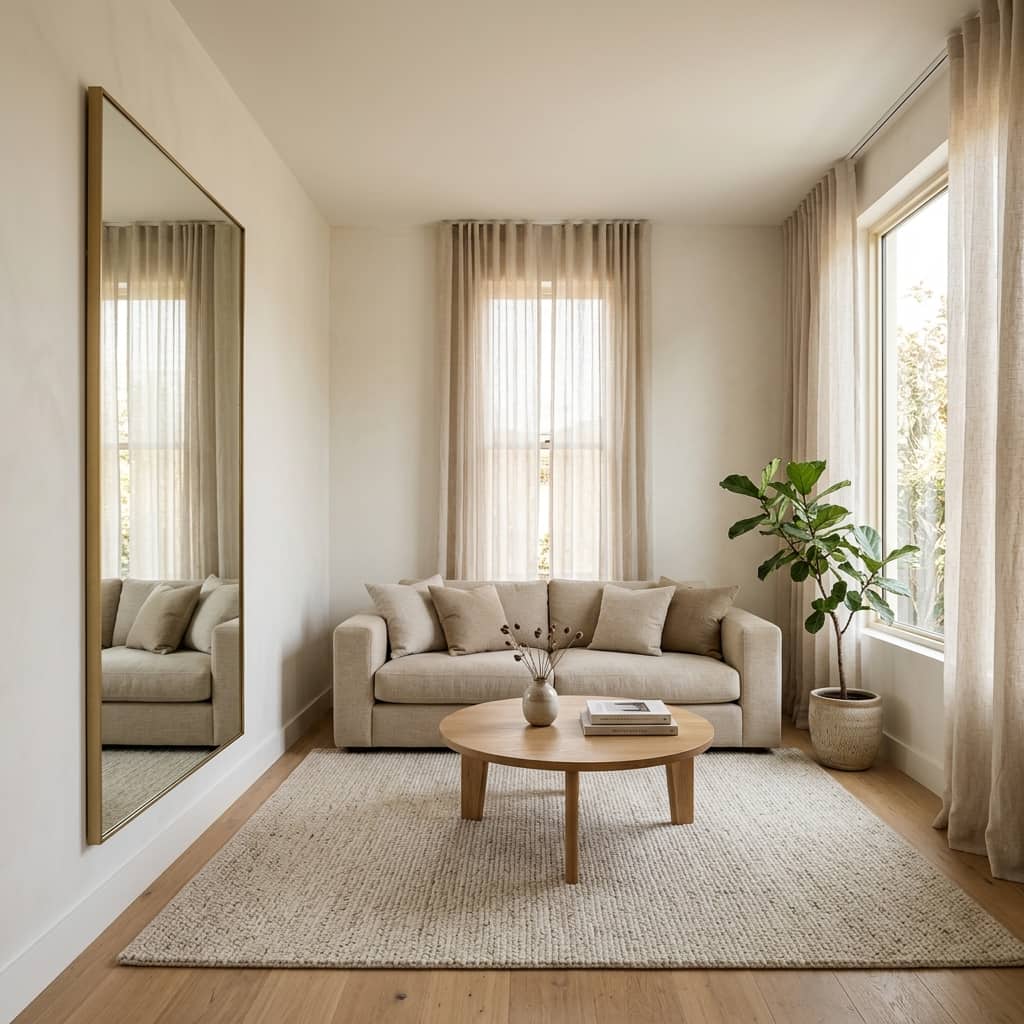
Mirrors are one of the simplest ways to make a small living room feel brighter and more spacious. They reflect light and create the impression of additional depth.
A well-positioned mirror can also become an attractive decorative feature.
Try these ideas:
- Hang a large mirror opposite or near a window.
- Place a tall mirror beside a narrow wall.
- Use a decorative round mirror above a console table.
- Choose mirrored furniture for a subtle reflective effect.
Design tip: A single large mirror often creates a cleaner appearance than several small mirrors scattered across the walls.
Position it where it reflects natural light, greenery, or an attractive part of the room rather than a cluttered corner.
4) Select Multifunctional Furniture
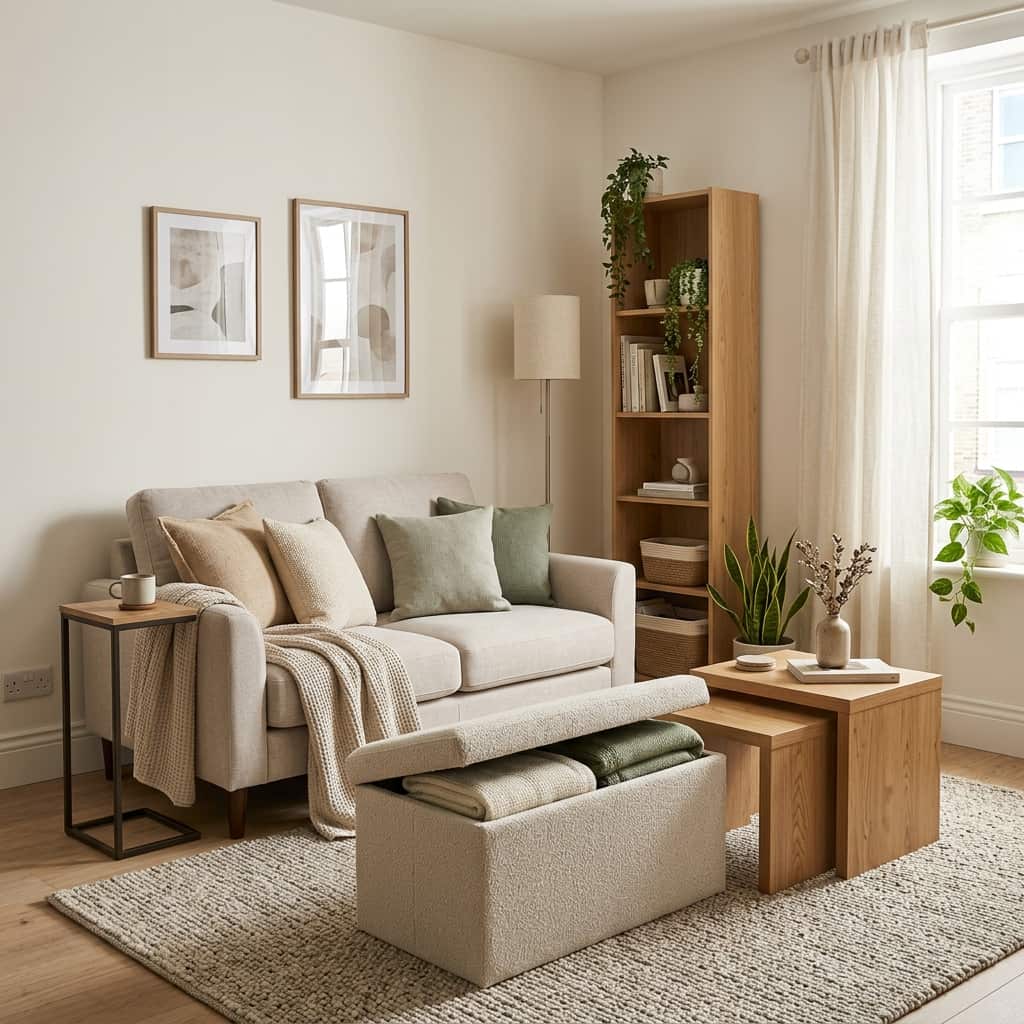
When space is limited, furniture that serves more than one purpose can make a major difference. Instead of filling your living room with separate items, choose pieces that combine practical functions.
Useful multifunctional furniture includes:
- Storage ottomans for blankets, magazines, and remote controls.
- Sofa beds for occasional overnight guests.
- Nesting tables that can be separated when needed.
- Coffee tables with shelves or hidden compartments.
- Benches with storage underneath.
For example, a storage ottoman can provide extra seating, serve as a footrest, and keep everyday items out of sight.
The main benefit: You can enjoy a more organized living room without sacrificing comfort or adding unnecessary furniture.
5) Make the Most of Vertical Space
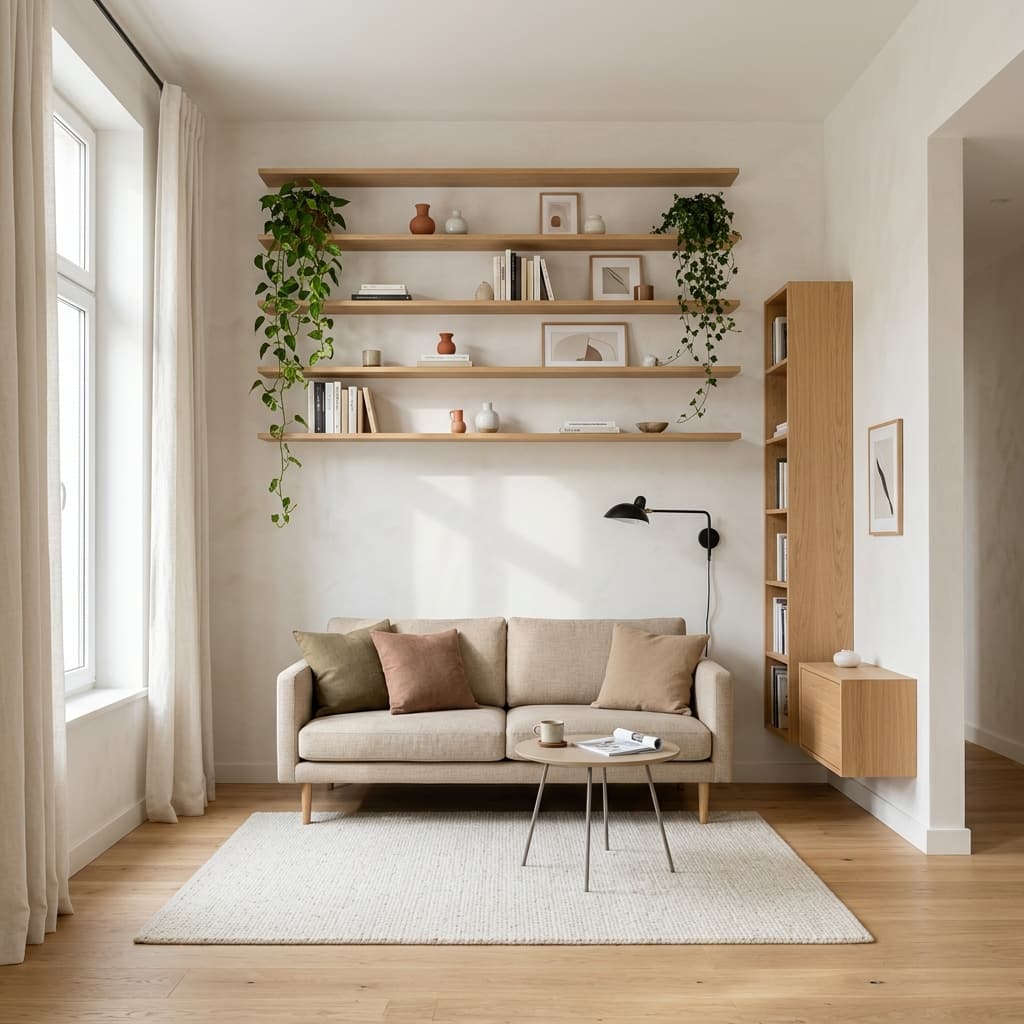
Small living rooms often have unused wall space that could provide valuable storage. Looking upward instead of outward helps you keep the floor clear.
Vertical storage is especially useful in apartments and homes where adding cabinets would make the room feel crowded.
Ways to use vertical space:
- Install floating shelves for books and decorative objects.
- Use tall, narrow bookcases instead of wide cabinets.
- Hang artwork vertically to draw the eye upward.
- Add wall-mounted lighting to free up side tables.
- Install a slim wall cabinet for items you want to keep hidden.
Practical tip: Keep frequently used items within easy reach and place lightweight decorative objects on higher shelves.
Avoid filling every available wall with storage. A little empty space helps the room feel calmer and more balanced.
6) Create a Cozy Corner for Relaxation
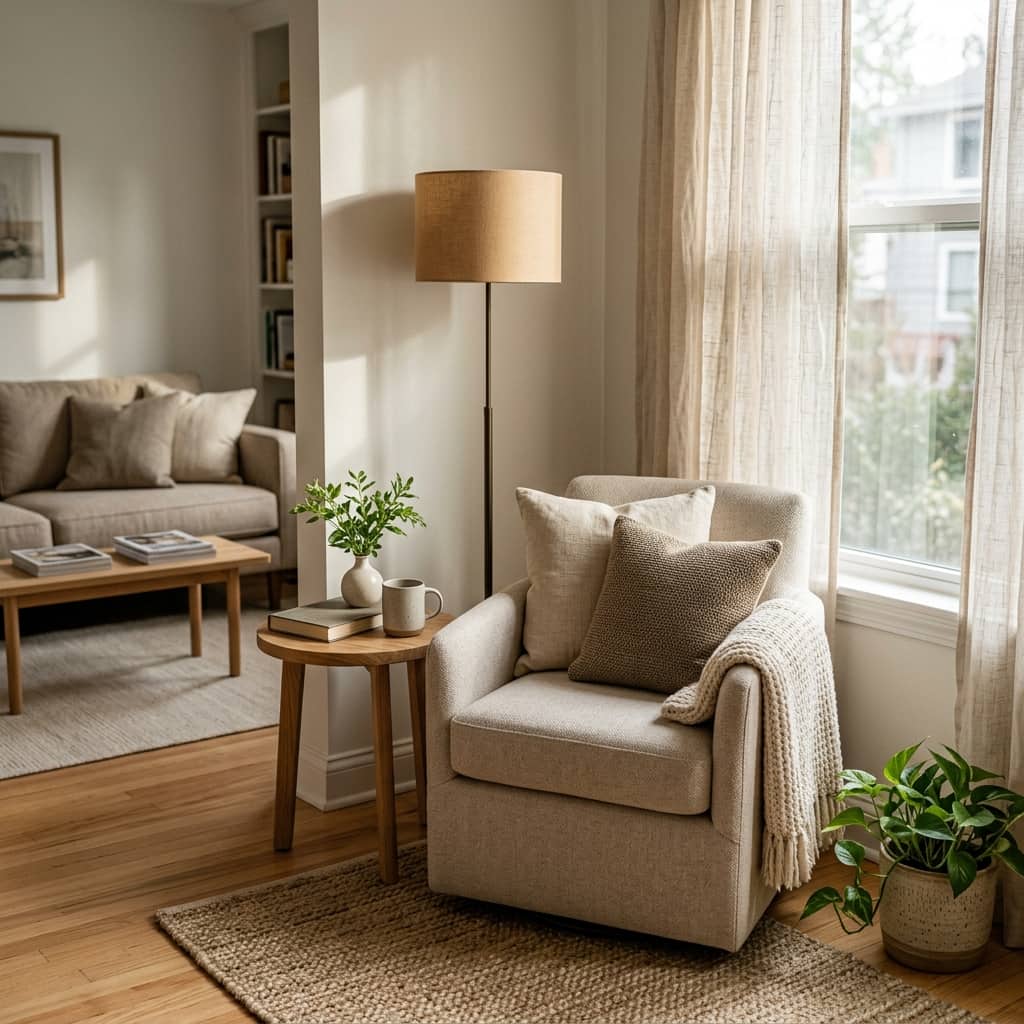
Even the smallest living room can benefit from a dedicated relaxation corner. You don’t need a separate reading room to create a comfortable place for quiet moments.
A well-designed corner can make your living room feel more personal and inviting.
What you need:
- A compact accent chair or comfortable floor cushion.
- A small side table for books or drinks.
- A floor lamp or wall-mounted reading light.
- A soft throw blanket and one or two cushions.
If your room has a window, placing the chair nearby can create a pleasant spot for reading, enjoying morning light, or relaxing after work.
Keep the arrangement simple so it doesn’t interfere with the main seating area.
7) Choose Furniture with Exposed Legs
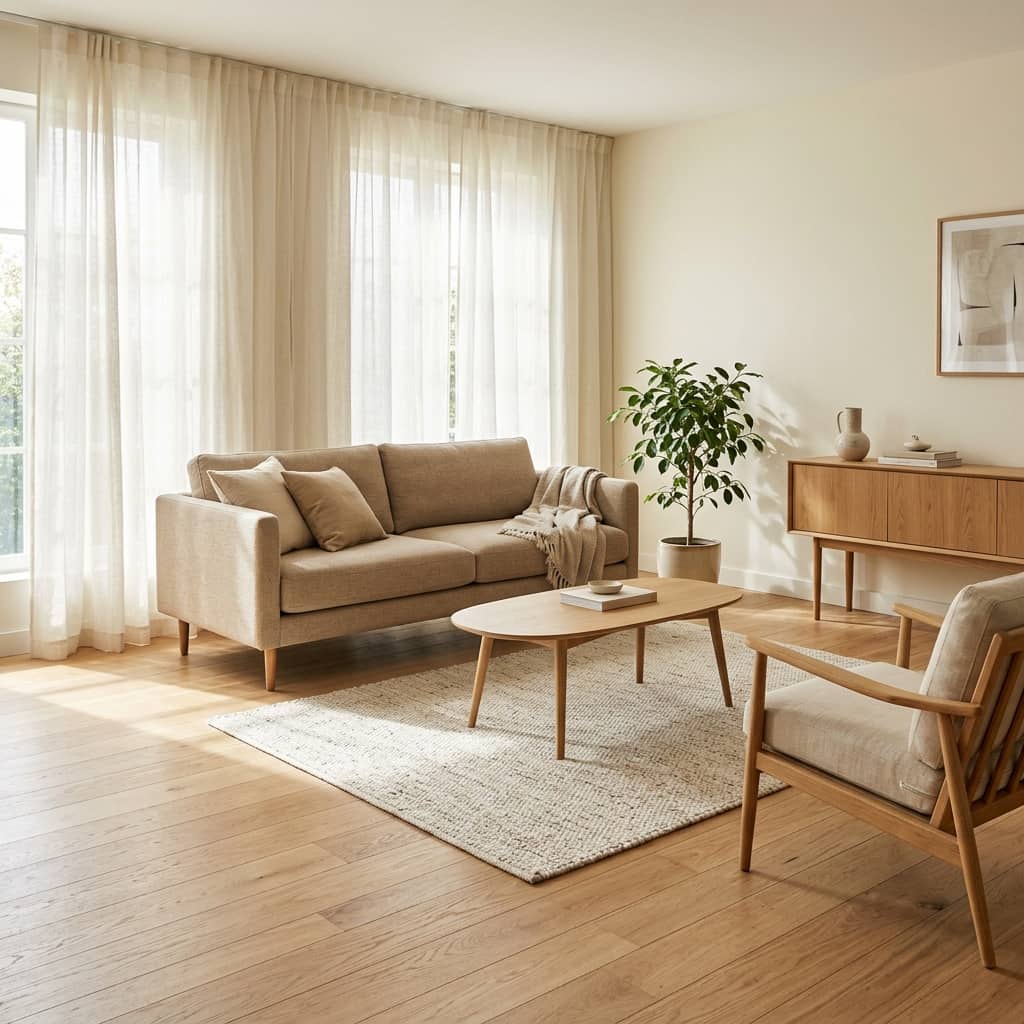
Furniture with exposed legs is a useful choice for small living rooms because it allows more of the floor to remain visible.
When you can see beneath a sofa, chair, or cabinet, the room may feel more open than it would with bulky furniture that sits directly on the floor.
Consider these options:
- Sofas with slim wooden or metal legs.
- Accent chairs with open frames.
- Coffee tables with narrow legs.
- Raised sideboards with simple silhouettes.
Why it matters: Visible floor space creates a lighter visual effect, particularly when paired with good lighting and uncluttered surfaces.
You don’t have to replace every piece of furniture. Choosing a sofa with raised legs may be enough to make a noticeable difference.
8) Add Layered Lighting for a Warm Atmosphere
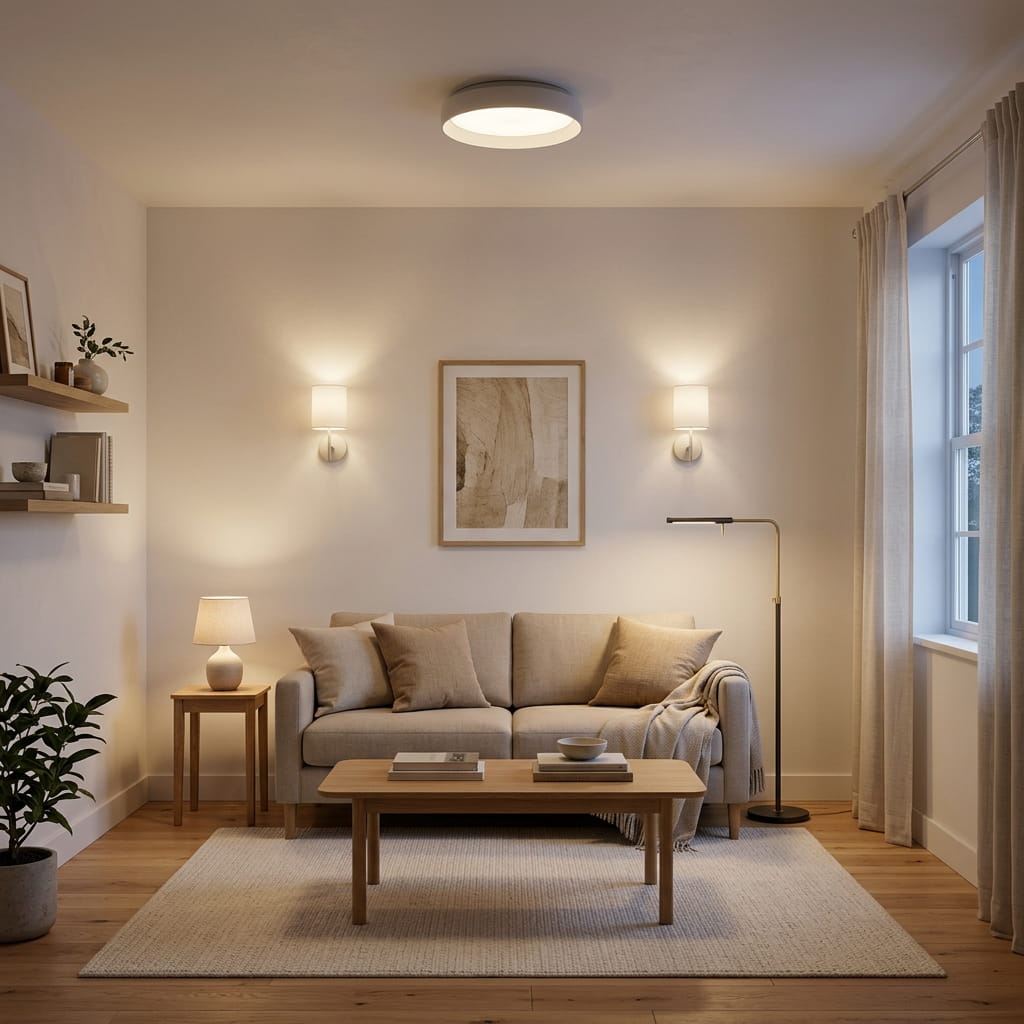
Lighting affects both the appearance and usability of a small living room. A single ceiling light may illuminate the room, but it often fails to create a warm, comfortable atmosphere.
Layered lighting combines different light sources to make the space more functional.
A balanced lighting plan includes:
- Ambient lighting: Ceiling fixtures that provide general illumination.
- Task lighting: Reading lamps or focused lights for specific activities.
- Accent lighting: Wall lights or small lamps that highlight artwork and decorative details.
Warm-white lighting can create a relaxed atmosphere, while brighter task lighting helps when reading or working.
Space-saving tip: Choose wall sconces or slim floor lamps when side-table space is limited.
If possible, use dimmable bulbs so you can adjust the lighting for different activities throughout the day.
9) Use a Large Rug to Define the Living Area
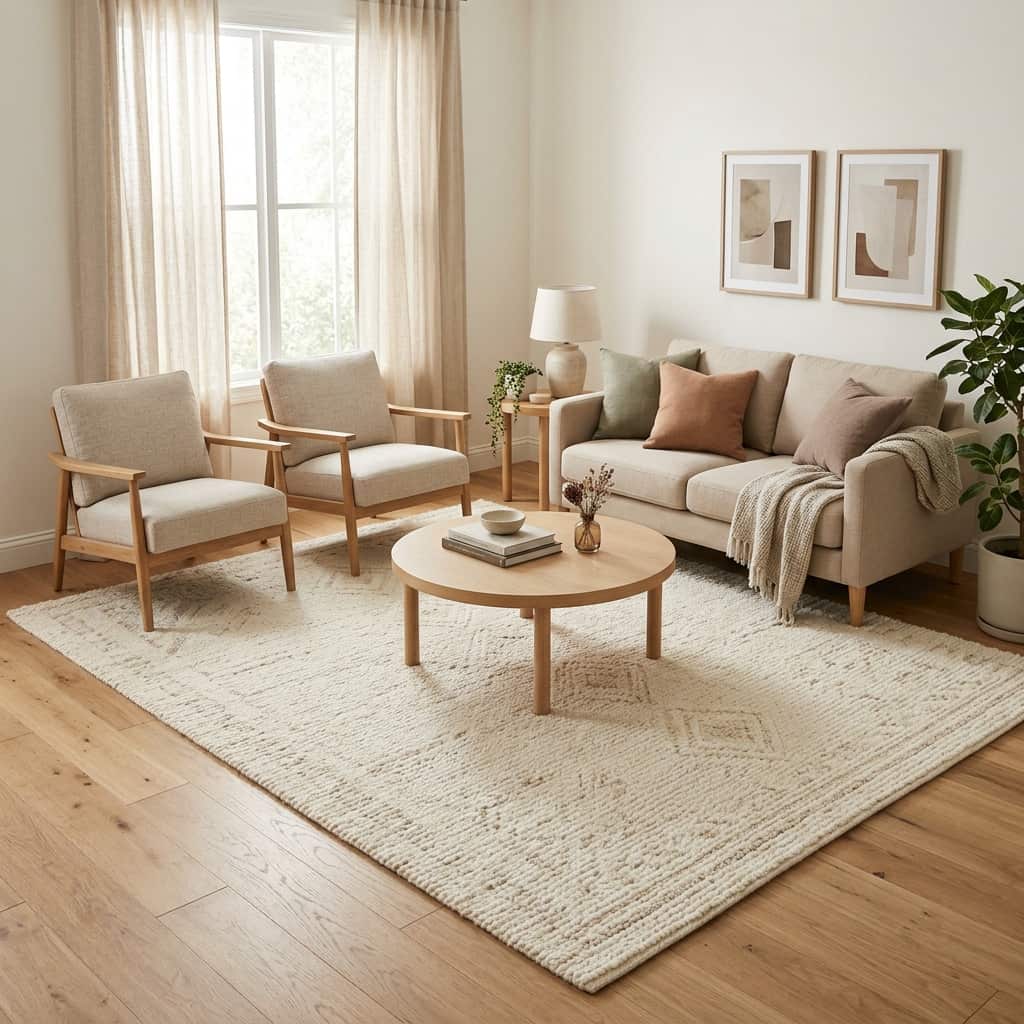
A rug can help a small living room feel organized by visually connecting the seating area. Surprisingly, choosing a rug that is too small can make the furniture arrangement look disconnected.
A properly sized rug creates a foundation for the entire room.
When selecting a rug:
- Choose a size that allows the front legs of the main seating furniture to rest on it.
- Use subtle patterns if you want a calm appearance.
- Consider low-pile rugs for easier cleaning.
- Select colors that complement your sofa and walls.
For a neutral living room, a textured beige or cream rug can add warmth without introducing too many colors.
Important detail: Measure your seating arrangement before buying a rug. The goal is to connect the furniture, not cover every inch of flooring.
10) Try a Minimalist Living Room Layout
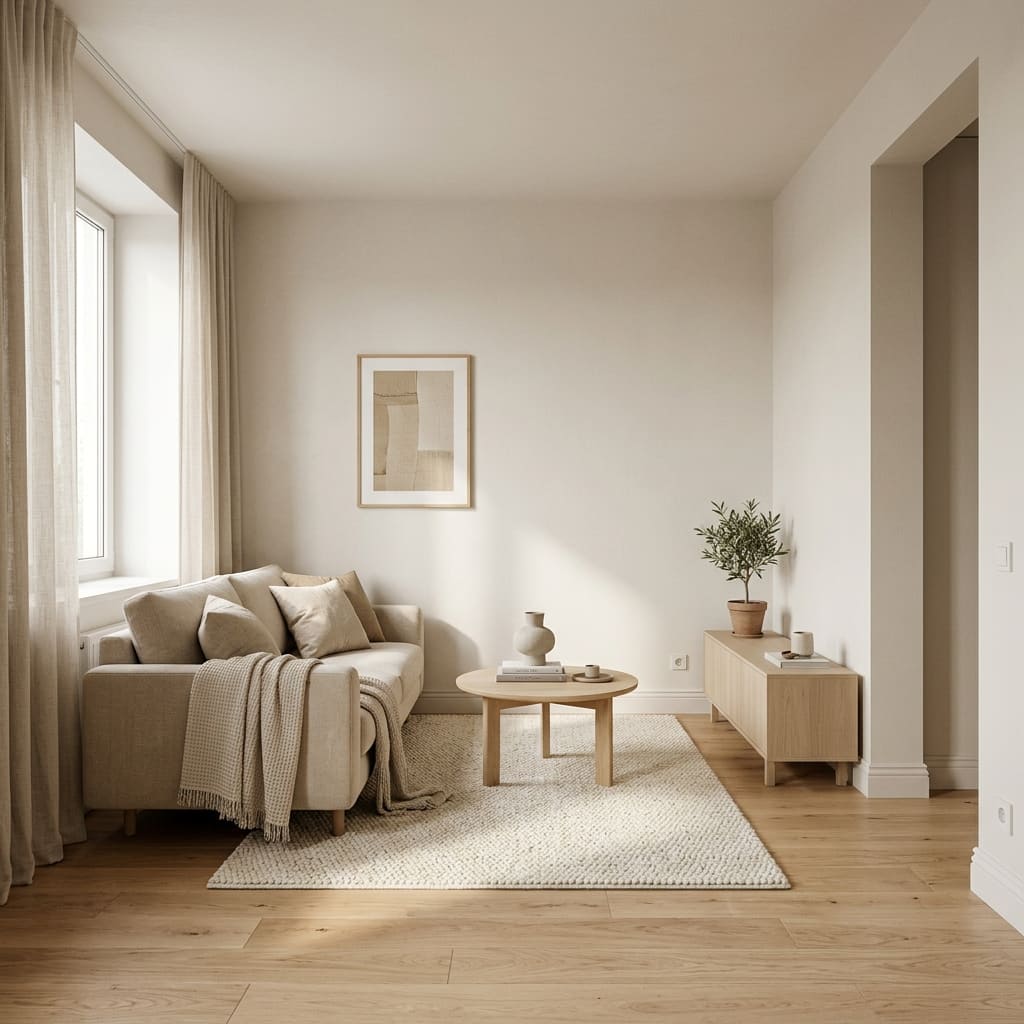
Minimalism doesn’t mean removing everything that makes a room comfortable. It means keeping the items you need and arranging them thoughtfully.
In a small living room, too many decorative objects, bulky tables, and unnecessary chairs can make movement difficult.
A simple minimalist approach:
- Keep the main seating area uncluttered.
- Choose a few meaningful decorative pieces.
- Use closed storage to hide everyday belongings.
- Leave clear pathways between furniture.
- Avoid buying items simply to fill empty corners.
For example, one attractive floor lamp, a textured rug, and a few cushions can create more impact than a crowded collection of accessories.
The result: A living room that feels calmer, easier to clean, and more comfortable to use every day.
11) Bring Nature Indoors with Small Plants
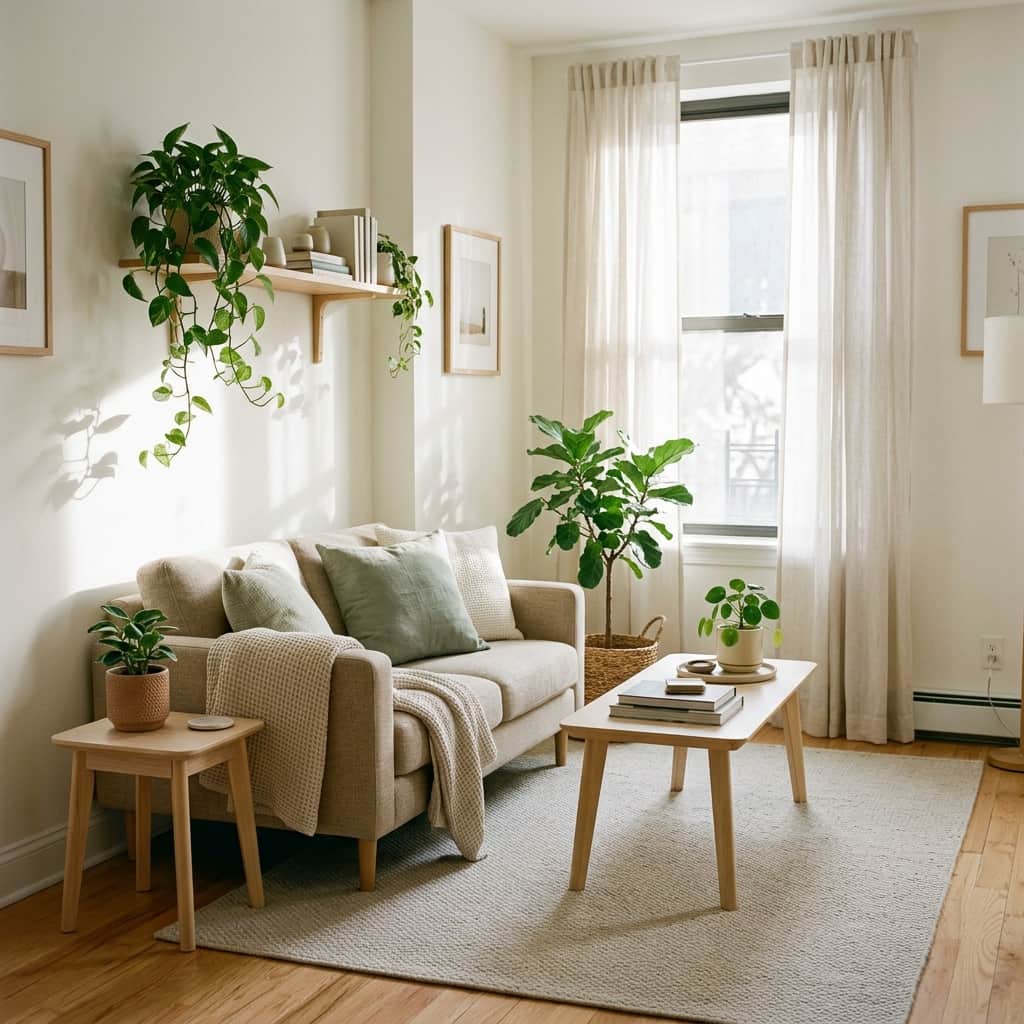
Plants add color, texture, and freshness to a living room. They can soften the appearance of modern furniture and make a compact space feel more welcoming.
You don’t need a large collection of plants to enjoy the effect.
Small living room plant ideas:
- Place a compact plant on a side table.
- Use a hanging planter to save floor space.
- Add a taller plant to an empty corner.
- Arrange small plants on a shelf near a window.
- Choose low-maintenance varieties that suit your home’s light conditions.
If natural light is limited, consider plants that tolerate lower-light environments, while remembering that no plant thrives in complete darkness.
Design tip: Use a similar style of plant pot throughout the room to create a coordinated appearance.
12) Use Curtains to Create a Taller Look
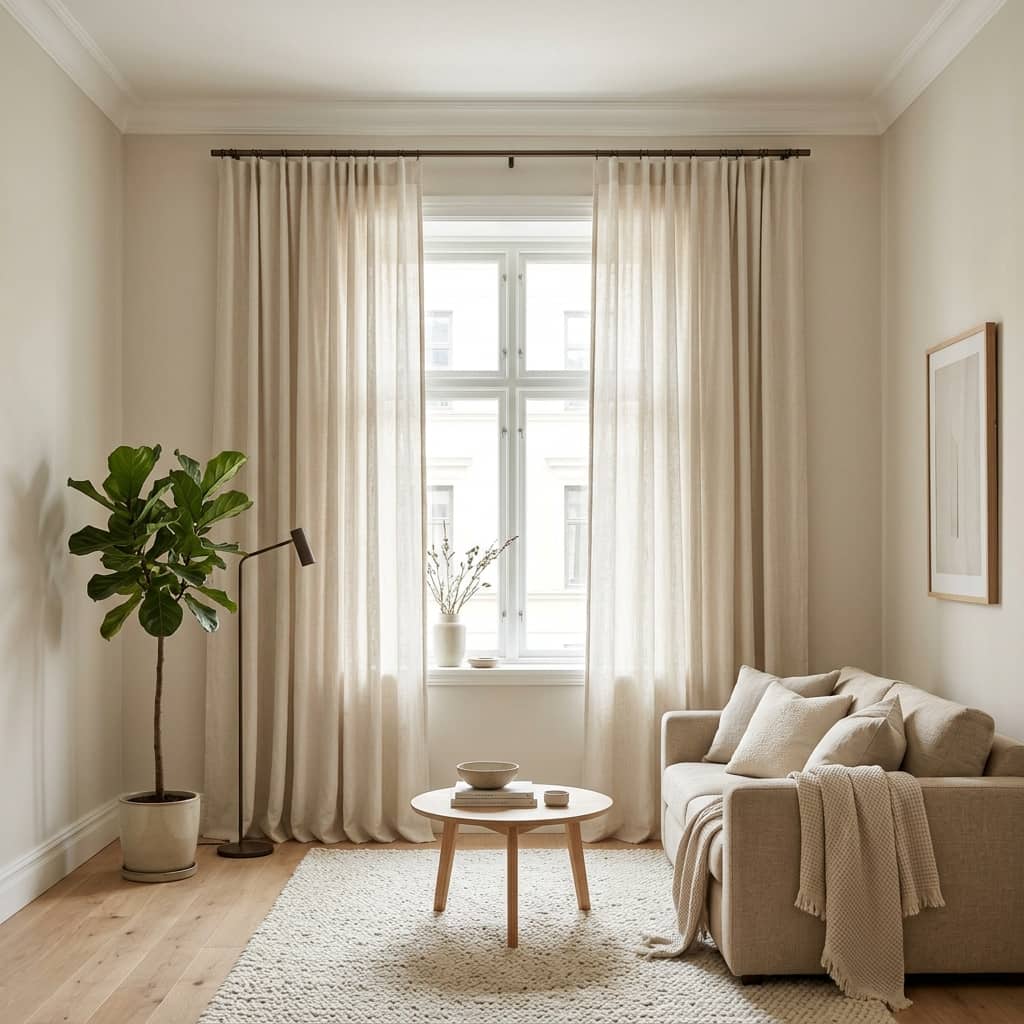
Curtains can change the way your living room’s proportions appear. Hanging them higher than the window frame can draw attention upward and make the walls seem taller.
This is particularly useful in small apartments with limited vertical space.
For the best effect:
- Mount the curtain rod closer to the ceiling.
- Extend the rod beyond the window frame where practical.
- Choose curtains that reach the floor.
- Use lightweight fabrics to maintain an airy appearance.
- Select colors that complement the walls.
Sheer curtains are helpful when you want natural light and privacy during the day, although the level of privacy depends on the fabric and lighting conditions.
For a softer, layered look, combine sheers with heavier curtains that can be closed when needed.
13) Choose a Round Coffee Table
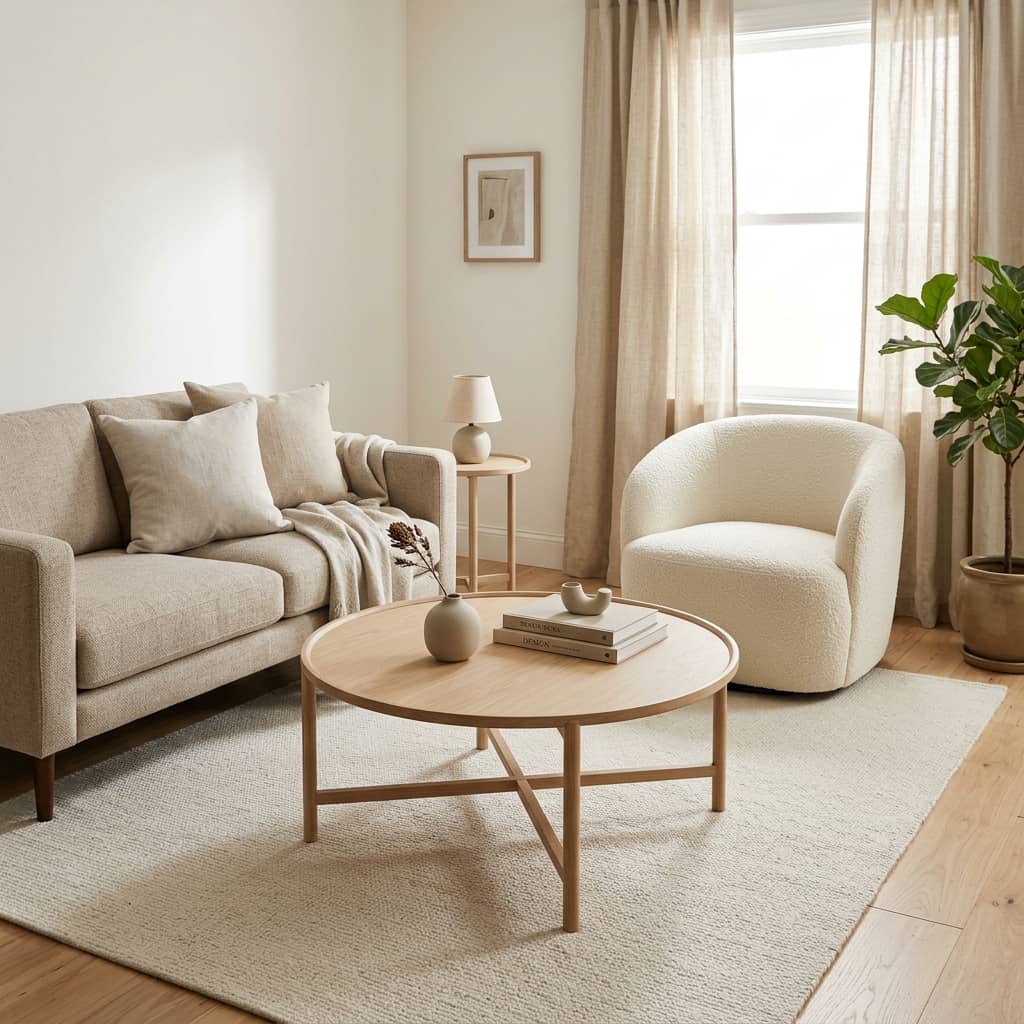
The shape of your coffee table can influence how easily you move around the living room.
Round and oval tables have no sharp corners, making them useful in compact seating arrangements where people frequently walk between the sofa and other furniture.
Benefits of round coffee tables:
- Create a softer visual appearance.
- Make it easier to move around tight corners.
- Work well with curved sofas and accent chairs.
- Offer a balanced contrast to rectangular furniture.
A small round table with a lower shelf can provide space for drinks, books, and decorative objects.
Practical tip: Leave enough room between the table and sofa for comfortable movement. If the table makes the main walkway difficult to use, choose a smaller design.
14) Create a Stylish Two-Tone Color Scheme
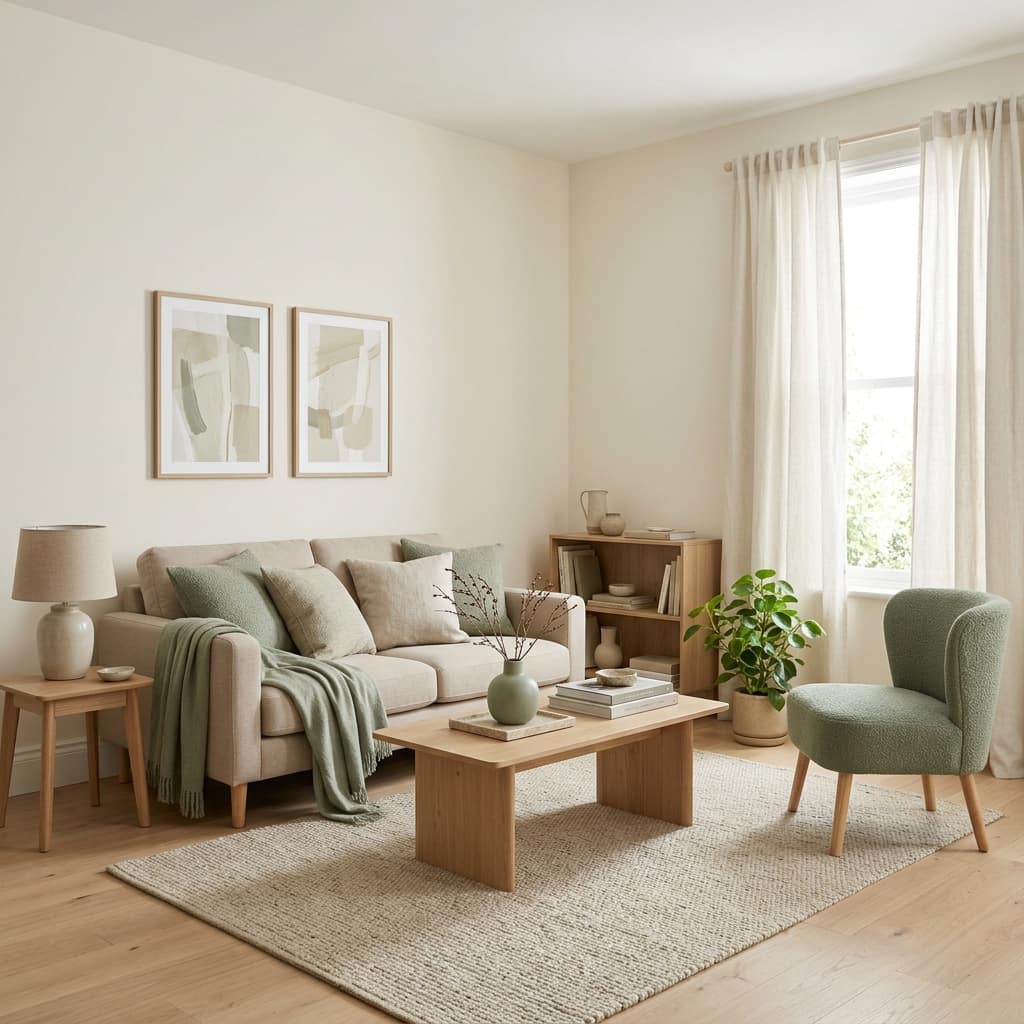
Using two main colors can give a small living room a designed appearance without making it visually complicated.
The key is to balance the colors rather than introducing too many competing shades.
Combinations worth trying:
- Cream and warm brown for a cozy interior.
- Sage green and beige for a natural look.
- White and charcoal for a contemporary style.
- Dusty blue and warm white for a peaceful atmosphere.
- Soft gray and muted wood tones for understated elegance.
You can introduce the second color through cushions, curtains, artwork, or an accent chair instead of repainting the entire room.
Easy rule: Let one color dominate and use the second to add contrast. Repeat both colors in small details to create a coordinated look.
15) Add Built-In or Wall-Mounted Storage
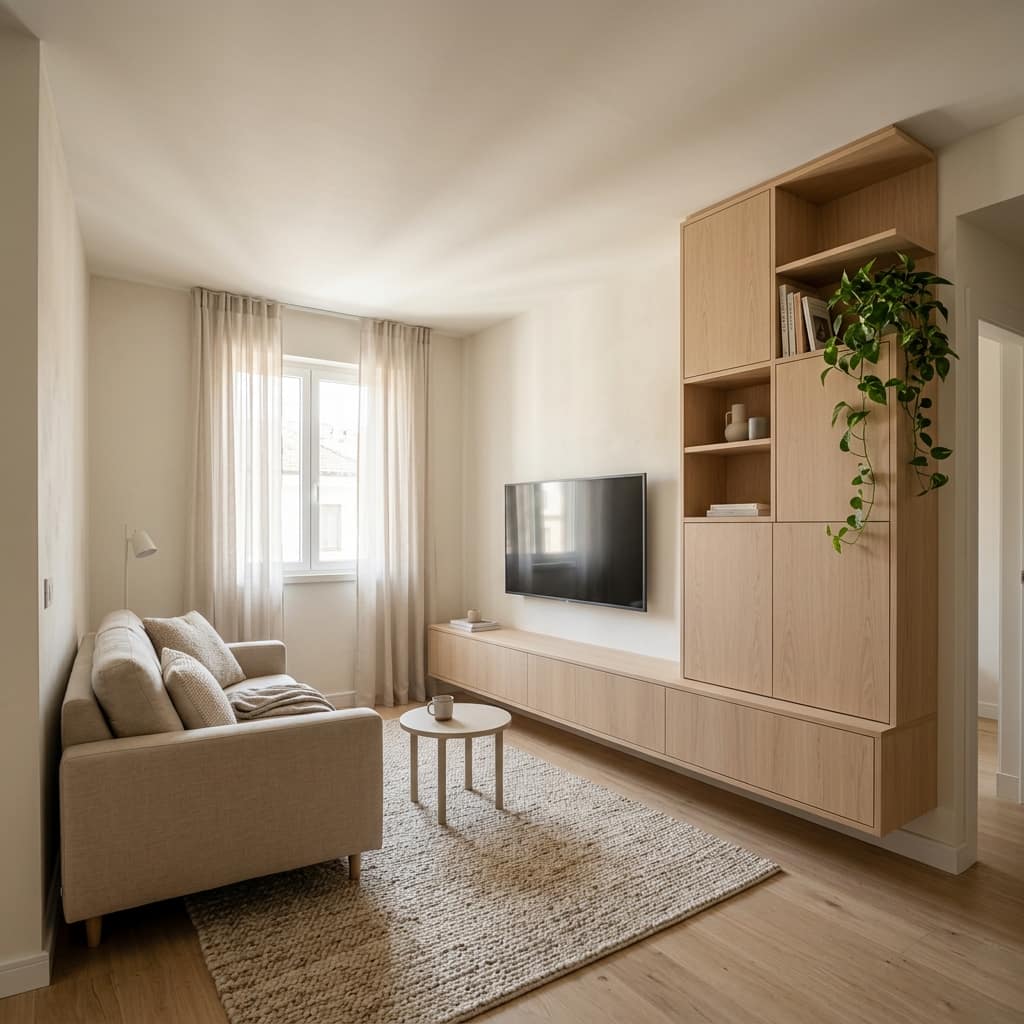
Storage is one of the biggest challenges in a small living room. Without a clear place for everyday items, even a beautifully decorated room can quickly look messy.
Built-in and wall-mounted storage help organize belongings while reducing the need for bulky furniture.
Storage solutions to consider:
- Floating cabinets beneath a television.
- Built-in shelves around a doorway.
- Narrow cabinets beside the sofa.
- Wall-mounted units for books and electronics.
- Closed cupboards for toys, cables, and household items.
If you’re renovating, consider storage that fits the full height of the wall. In a rented home, freestanding shelves or removable wall organizers may be more practical.
Keep in mind: Closed storage is best for items you use regularly but don’t want on display. Open shelves work better for carefully selected books and decorations.
16) Make a Small Living Room Feel Luxurious with Texture
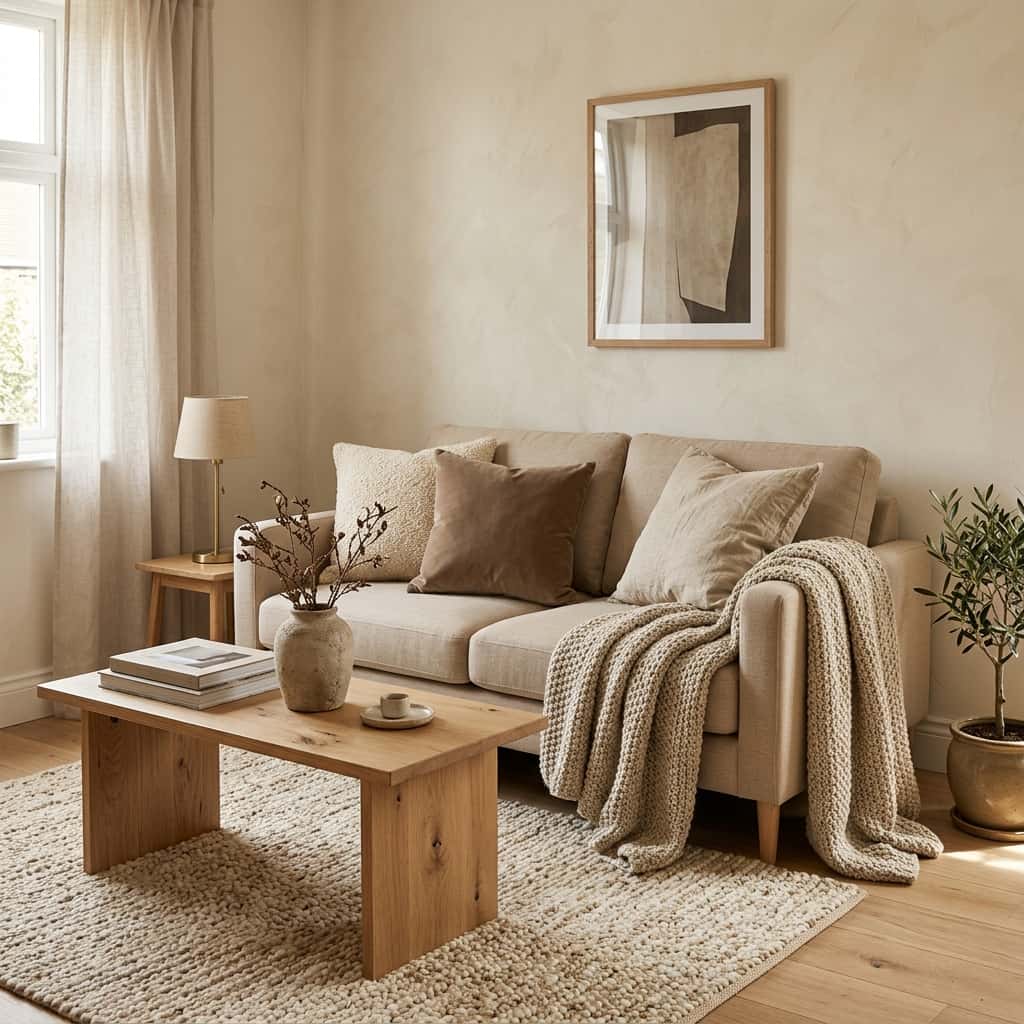
A small living room doesn’t need expensive furniture to look sophisticated. Texture can create a rich, layered appearance even when the color palette is simple.
Combining different materials helps the room feel more interesting without adding visual clutter.
Try combining:
- A soft fabric sofa with a knitted throw.
- Linen curtains with a textured rug.
- Wooden furniture with ceramic accessories.
- Velvet cushions with a simple cotton sofa.
- Woven baskets with smooth, modern surfaces.
The secret is to introduce variety while maintaining balance.
For example, a beige sofa can look more inviting when paired with cushions in different fabrics and shades of cream, brown, and muted green.
Design tip: Mix textures more freely than patterns. This adds depth while keeping the overall room visually calm.
17) Use a Slim Console Table Behind the Sofa
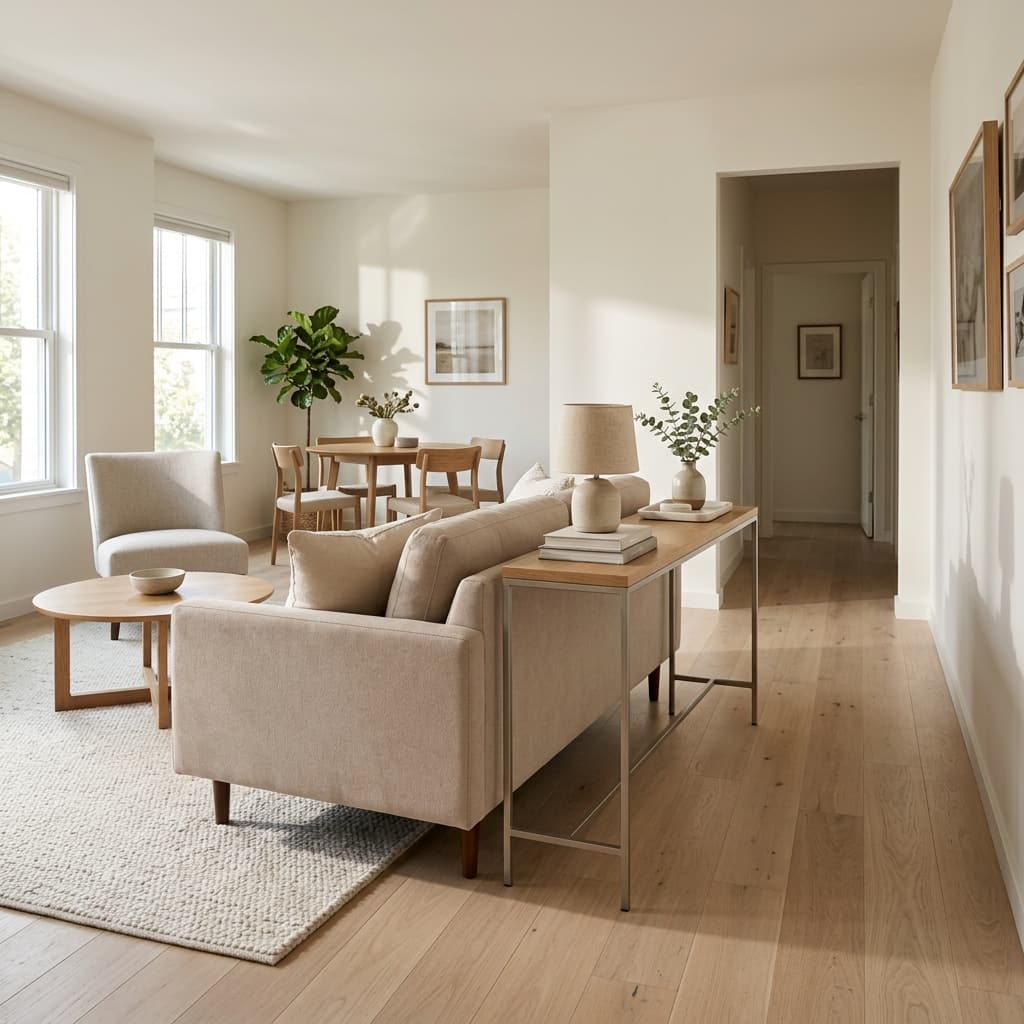
If your sofa sits away from the wall, the space behind it can become useful rather than wasted.
A narrow console table provides a surface for lighting, decorative objects, or everyday essentials without taking up as much room as a deep cabinet.
Useful ways to style it:
- Add a small table lamp for ambient lighting.
- Use a tray to organize keys and small items.
- Display a few books or a small plant.
- Choose a console with drawers for additional storage.
In open-plan apartments, a console table can also help separate the living area from a dining space without blocking the view.
Practical tip: Measure the available space carefully. The table should not interfere with walkways or make it difficult to move around the sofa.
18) Make the Television Area Simple and Organized
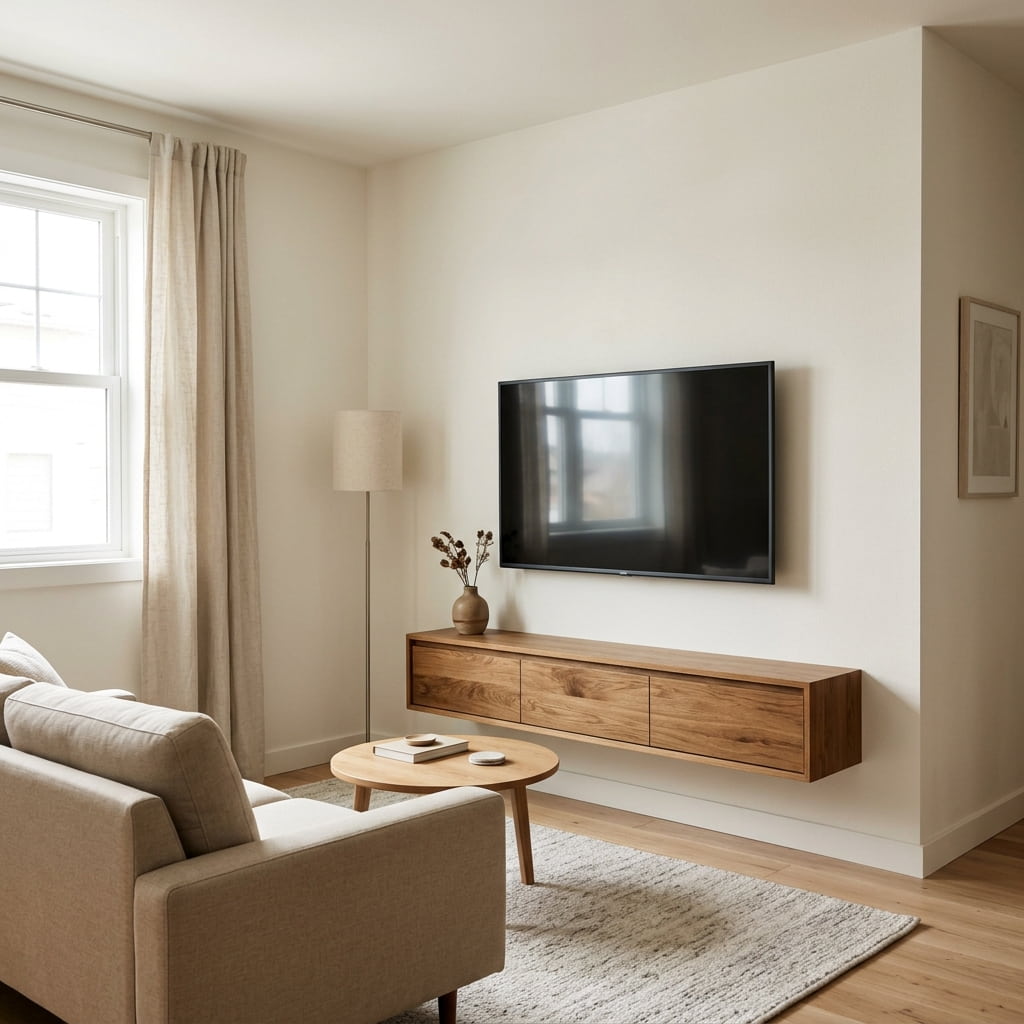
The television wall often becomes a visual focal point in a living room. If cables, devices, and decorative objects are scattered around it, the entire room can feel untidy.
A clean television area creates a more organized appearance.
Easy improvements include:
- Mounting the television on the wall when appropriate.
- Using cable-management covers or concealed cable routes.
- Choosing a slim media console.
- Storing remote controls and accessories in drawers.
- Limiting decorations around the screen.
You can also add a simple wood panel or a painted accent wall to create interest without overcrowding the area.
Important consideration: Position the television at a comfortable viewing height and distance based on its size and your seating arrangement.
The goal is to make the television area functional without allowing it to dominate the entire living room.
19) Experiment with Curved Furniture and Soft Shapes
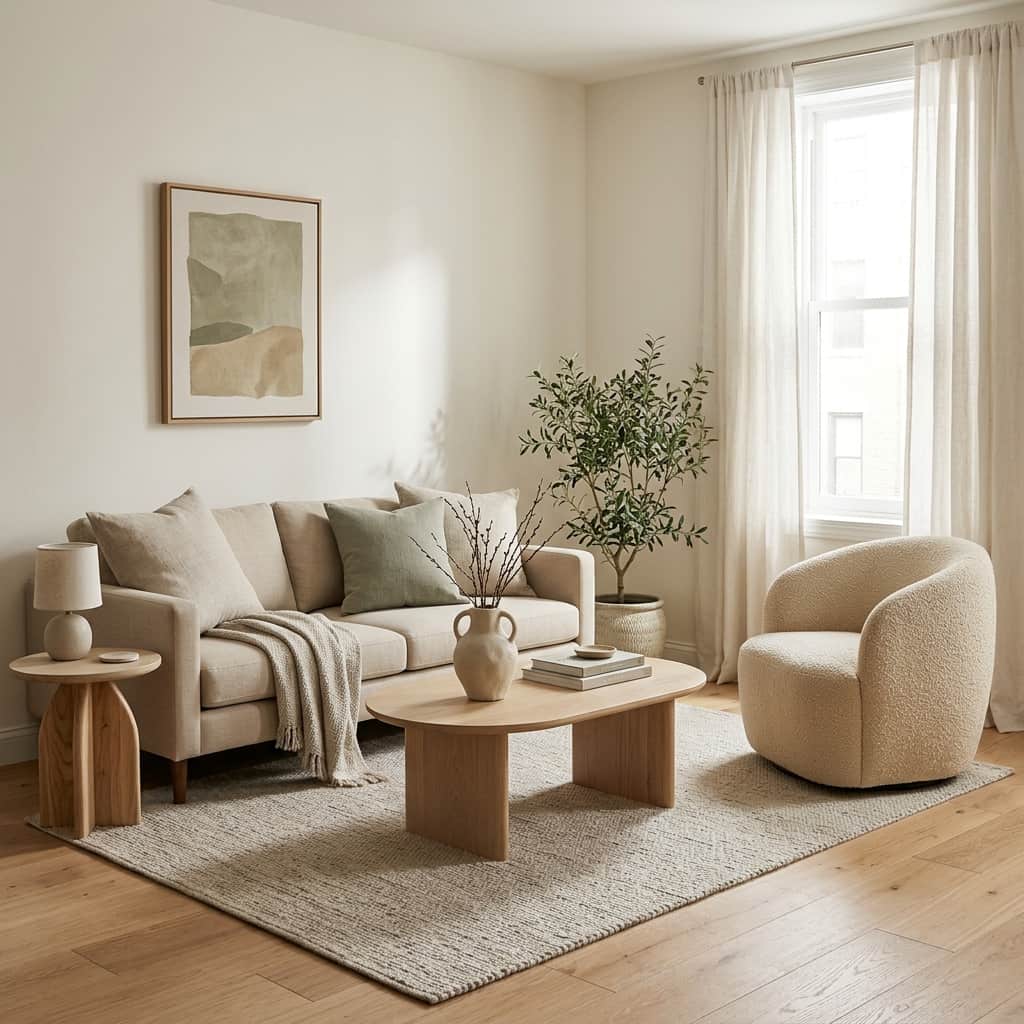
Curved furniture is a useful option when you want a small living room to feel softer and more inviting.
Rounded shapes can balance the straight lines of walls, windows, cabinets, and rectangular sofas.
Ideas to consider:
- A rounded accent chair.
- An oval coffee table.
- A circular side table.
- A curved floor lamp.
- Cushions with soft, organic shapes.
You don’t need to buy a curved sofa to use this design approach. A single rounded piece can provide enough contrast to make the room feel thoughtfully styled.
Best approach: Combine curved furniture with simple, practical pieces. Too many unusual shapes can make a small room difficult to arrange.
20) Personalize the Space with Affordable Decor
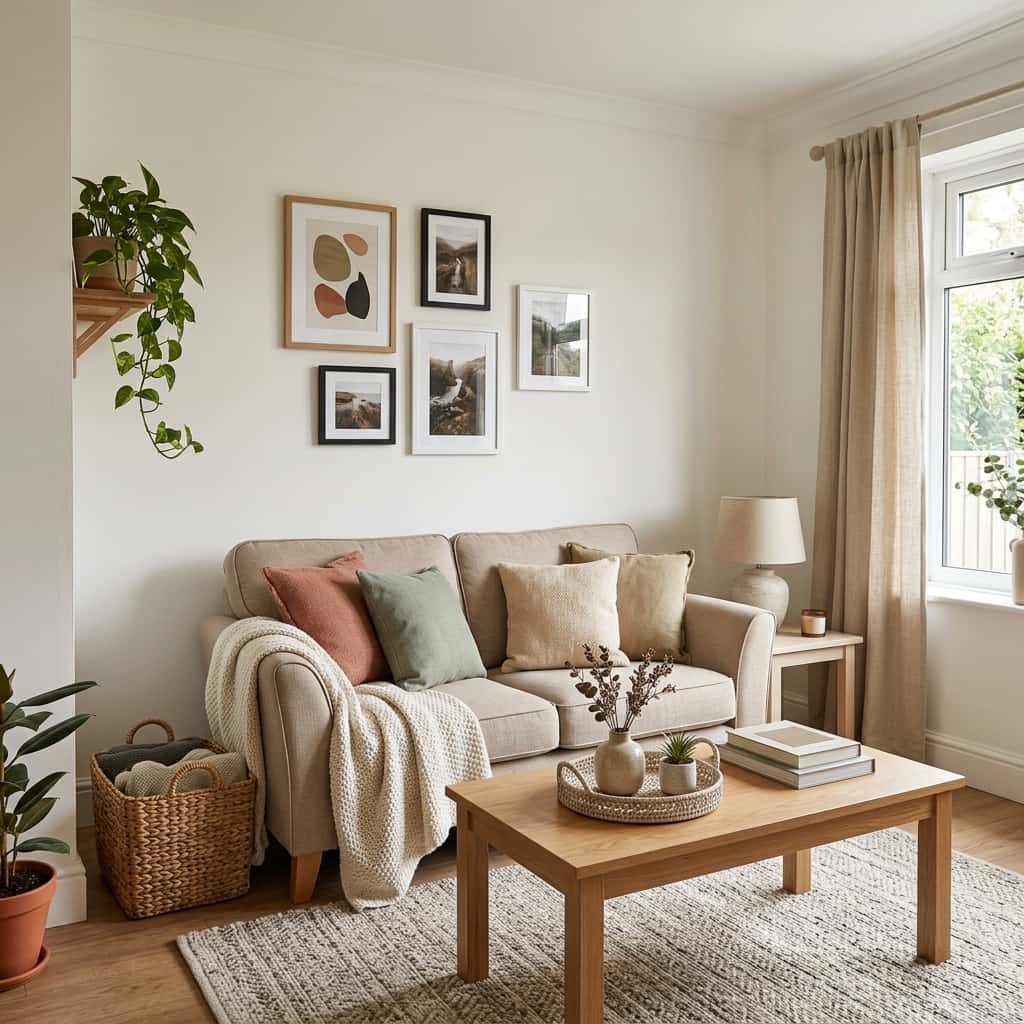
The final step is to make your living room feel like your own. A beautiful room should reflect your interests, memories, and daily habits rather than looking like a furniture showroom.
Personal details can make even a simple living room feel special.
Affordable decorating ideas:
- Display framed family photographs.
- Create a small gallery wall with coordinated artwork.
- Add colorful cushions for seasonal updates.
- Use decorative trays to organize coffee tables.
- Display travel souvenirs or meaningful objects.
- Change cushion covers instead of replacing the sofa.
You can also refresh the room throughout the year. Lightweight fabrics and lighter colors work well for warmer months, while knitted throws and deeper tones can make the space feel cozier in colder weather.
Budget tip: Focus on a few noticeable changes rather than replacing everything at once. Rearranging furniture, improving lighting, and removing clutter can transform a room without a major expense.
How to Choose the Best Small Living Room Ideas for Your Home
With so many small living room inspo ideas available, it helps to identify what your space needs most before buying anything.
Start by looking at your room’s biggest challenges. Is it too dark? Does it lack storage? Is the sofa too large? Or does the furniture arrangement make movement difficult?
Use these questions to guide your decisions:
- Space: Can you move comfortably between the sofa, coffee table, and doorway?
- Storage: Do everyday belongings have a dedicated place?
- Lighting: Does the room receive enough natural and artificial light?
- Comfort: Is there enough seating for your household and regular guests?
- Style: Do your furniture, colors, and accessories work together?
- Budget: Can you achieve the desired result by rearranging existing furniture before purchasing new items?
A practical order of priorities is:
- Improve the layout and walking space.
- Choose appropriately sized furniture.
- Add storage to reduce clutter.
- Improve lighting and window treatments.
- Introduce colors, textures, plants, and accessories.
This order helps you avoid spending money on decorations before solving the problems that affect everyday comfort.
Conclusion
Creating a beautiful small living room is about making thoughtful choices rather than filling the space with expensive furniture. The right sofa, a well-placed mirror, layered lighting, and practical storage can make a noticeable difference in how your room looks and feels.
These 20 small living room inspo ideas for 2026 offer a range of options, from simple decorating updates to more practical furniture and storage improvements. You can use them to create a modern apartment, a cozy family living room, or a compact space that feels open and welcoming.
Remember that every home has different needs. What works in a bright apartment may not work in a narrow room with limited natural light. Measure your space, consider your daily routine, and choose ideas that solve real problems.
More Stories
18 Vintage Kitchen Ideas with Farmhouse Style
15 Budget Friendly Halloween Home Decor Ideas
20 Cozy Halloween Kitchen Decor Ideas