
Introduction
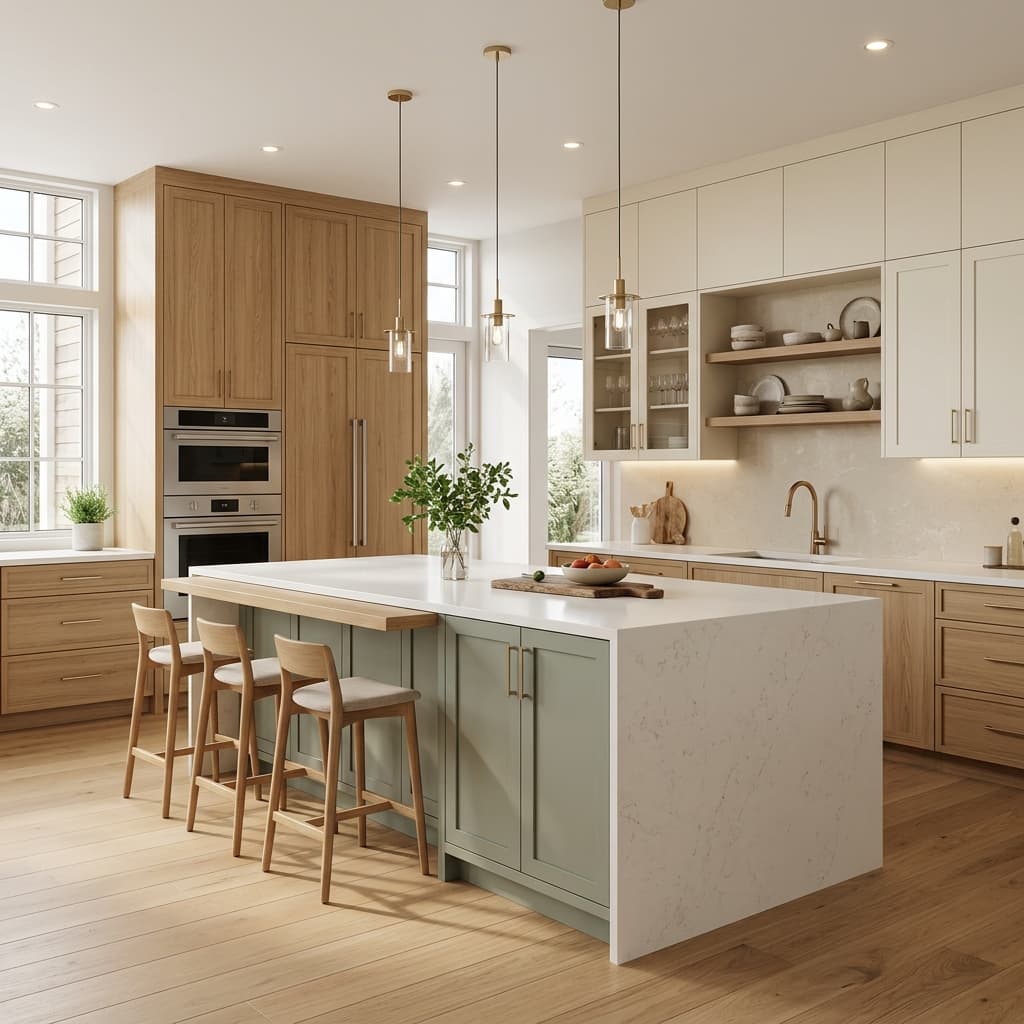
Kitchen cabinets play a major role in how your kitchen looks, feels, and functions. The right design can make a small kitchen feel more spacious, give a traditional kitchen a fresh appearance, and provide better storage for everyday essentials. In 2026, kitchen cabinet designs are focusing on a balance of style, functionality, natural materials, and easy maintenance.
Whether you’re planning a complete kitchen renovation or simply updating your existing cabinets, there are plenty of ideas worth considering. From warm wooden finishes and elegant two-tone cabinets to space-saving storage solutions, the best designs combine visual appeal with practical features.
A successful cabinet makeover starts with three simple goals:
- Improve storage: Make everyday items easier to organize and access.
- Enhance the appearance: Choose colors, finishes, and styles that complement your home.
- Increase functionality: Make cooking, cleaning, and preparing meals more convenient.
Here are 16 kitchen cabinet designs you’ll love in 2026, along with practical tips to help you choose the right option for your space and budget.
1. Warm Wood Kitchen Cabinets for a Natural Look
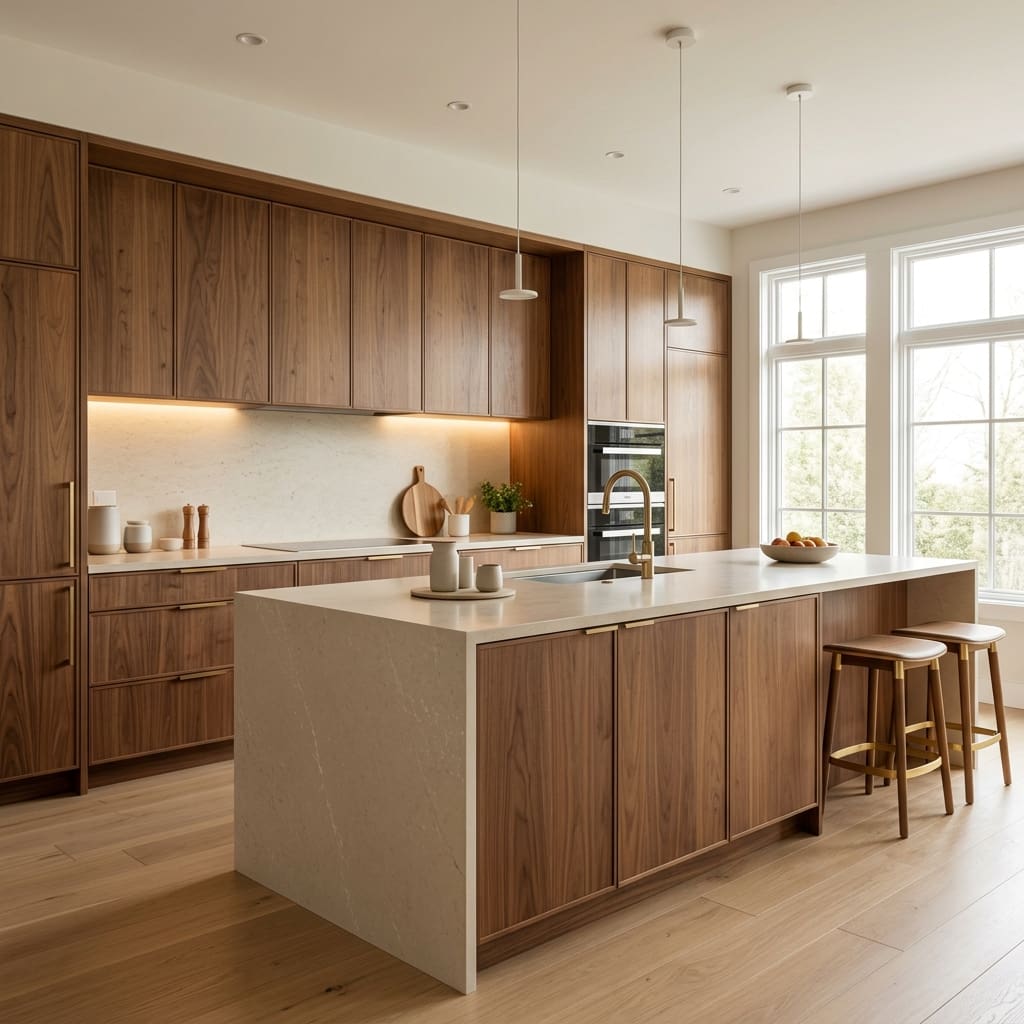
Warm wood cabinets are an excellent choice for homeowners who want a kitchen that feels welcoming and timeless. Unlike overly polished finishes, natural wood brings warmth and character into the room.
Oak, walnut, and maple are popular choices because they offer different colors and grain patterns. Light oak works beautifully in bright, modern kitchens, while walnut creates a richer and more sophisticated appearance.
Why this design works:
- Natural wood grain adds texture and visual interest.
- Warm finishes complement white countertops and neutral walls.
- Quality wood cabinets can remain attractive for many years with proper care.
Practical tip: If solid wood is outside your budget, consider quality wood veneer or wood-look laminate. These alternatives can provide a similar appearance at a lower cost.
2. Two-Tone Kitchen Cabinets for Added Depth
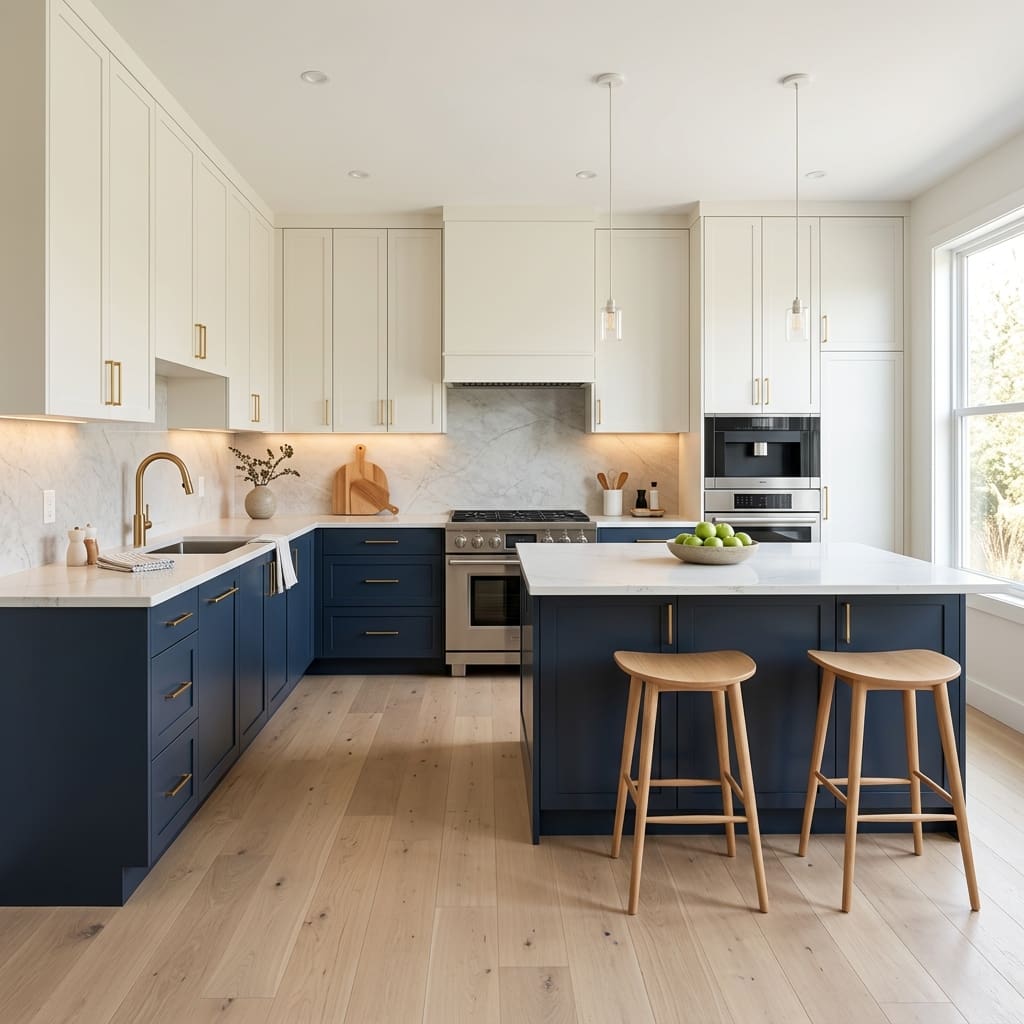
Two-tone cabinets combine two colors or finishes to create a more personalized kitchen. This design is especially useful when you want something more interesting than an entirely white or wooden kitchen.
A popular combination is light upper cabinets with darker lower cabinets. You can also use natural wood for the island and painted cabinets around the rest of the kitchen.
Combinations worth considering:
- White upper cabinets with navy blue lower cabinets.
- Light oak cabinets paired with warm beige.
- Sage green cabinets with natural wood accents.
- Cream cabinets combined with charcoal gray.
The key is to create balance rather than introduce too many competing colors.
Design tip: If your kitchen is small, lighter upper cabinets can help the space feel open, while darker lower cabinets add contrast without making the entire room look heavy.
3. Handleless Cabinets for a Clean, Modern Kitchen
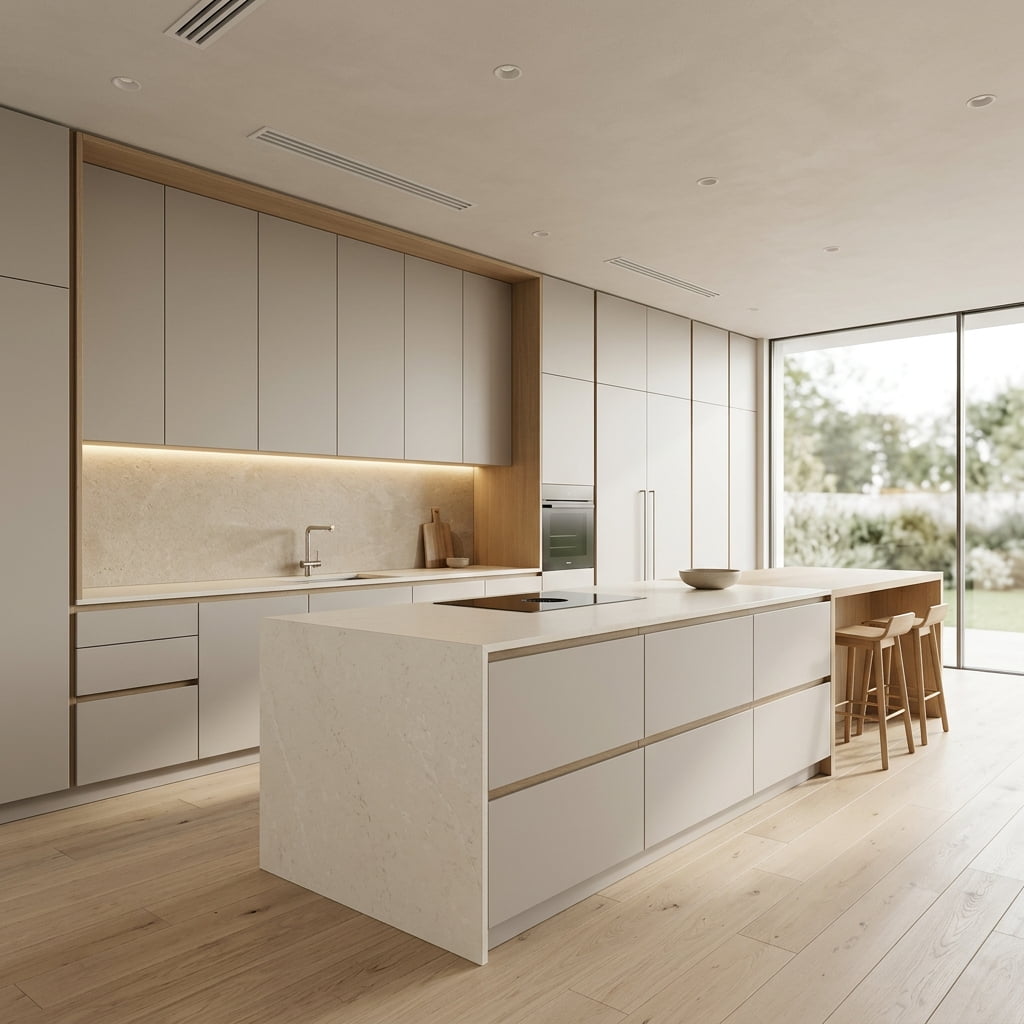
Handleless kitchen cabinets are ideal for homeowners who prefer simple lines and an uncluttered appearance. Instead of traditional knobs or handles, these cabinets use integrated grips, recessed channels, or push-to-open mechanisms.
This design works particularly well in contemporary kitchens, where a smooth finish helps create a calm and organized atmosphere.
Main benefits:
- Creates a streamlined, modern appearance.
- Reduces visual clutter on cabinet fronts.
- Works well with flat-panel doors and minimalist countertops.
However, handleless cabinets still require regular cleaning. Push-to-open doors may collect fingerprints around the opening points, while recessed channels need occasional wiping.
Best choice: Consider handleless cabinets in matte finishes if you want a sophisticated look that doesn’t rely on decorative hardware.
4. Sage Green Cabinets for a Soft, Nature-Inspired Kitchen
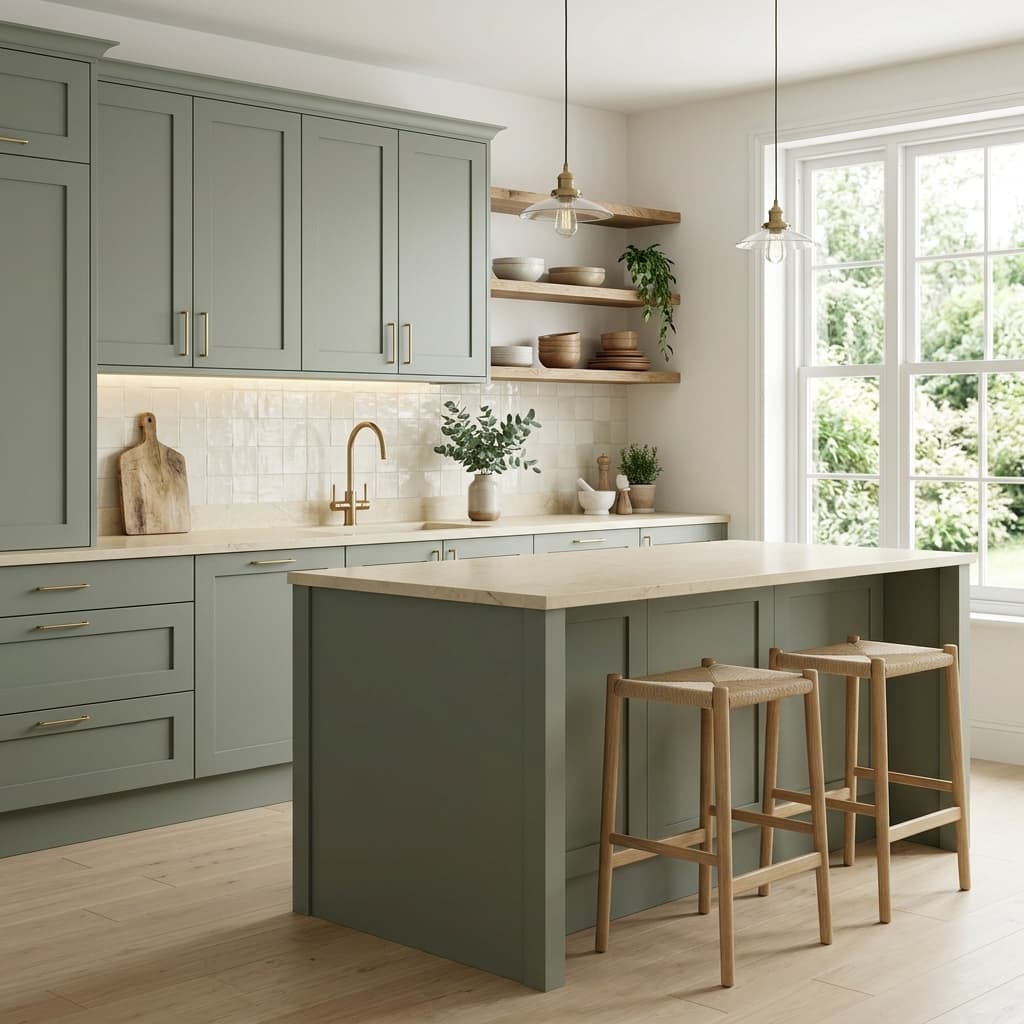
Sage green is a beautiful option for homeowners who want to introduce color without making the kitchen feel overwhelming. Its muted appearance works well with natural materials and neutral finishes.
This shade pairs especially well with wooden shelves, cream countertops, brushed metal hardware, and light-colored backsplashes.
Ways to use sage green:
- Apply it to all lower and upper cabinets for a coordinated look.
- Use it only on the kitchen island.
- Combine it with white upper cabinets for a lighter appearance.
- Pair it with oak accents for a warm, natural finish.
Sage green is versatile enough for modern farmhouse, Scandinavian, and transitional interiors.
Practical tip: Test a cabinet sample under your kitchen’s actual lighting before choosing the final shade. Natural daylight and warm artificial lighting can make the same green appear noticeably different.
5. Shaker Cabinets for Timeless Appeal
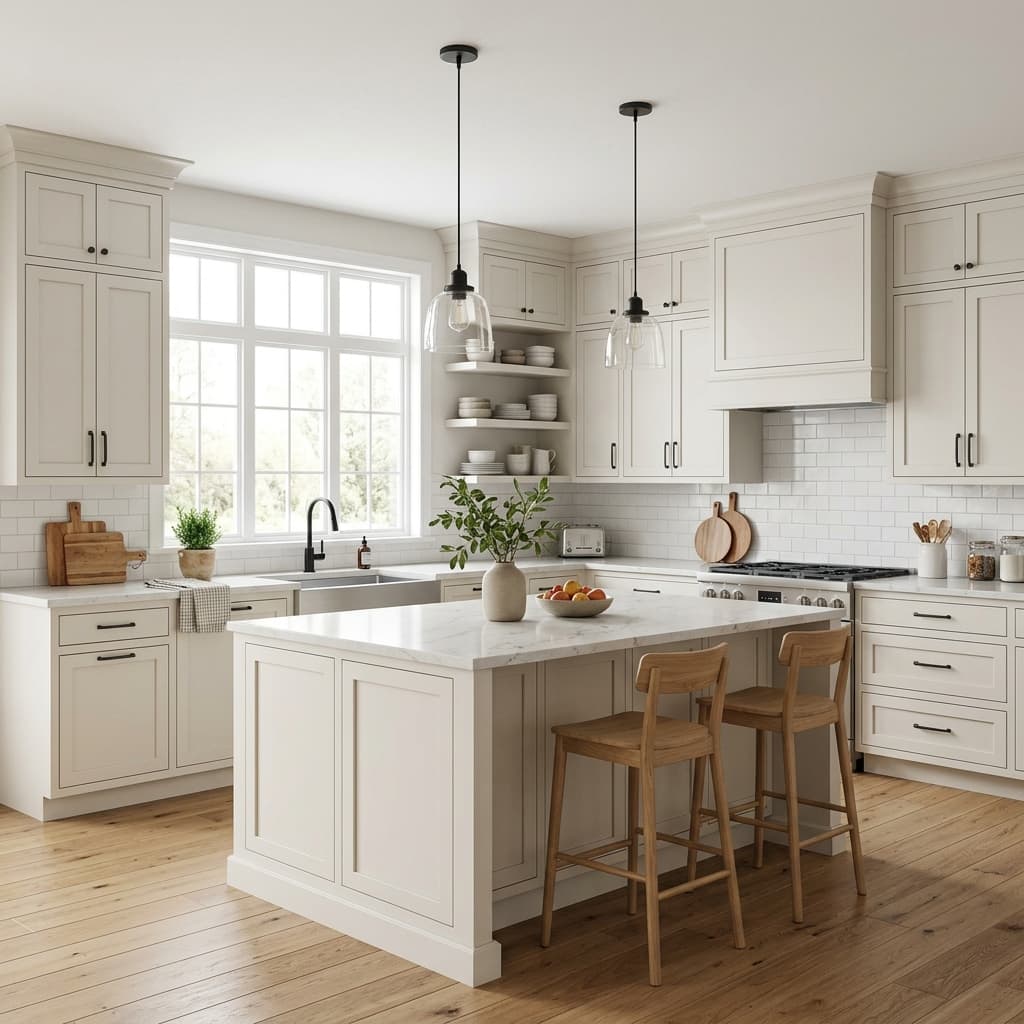
Shaker cabinets feature a simple frame surrounding a flat central panel. Their clean, understated design makes them suitable for traditional, farmhouse, transitional, and modern kitchens.
One reason homeowners continue to choose Shaker cabinets is their versatility. You can change the overall appearance simply by adjusting the color, hardware, countertop, or backsplash.
Why homeowners love them:
- Their design rarely feels outdated.
- They work with both classic and contemporary finishes.
- Painted and wooden versions are widely available.
- Different hardware styles can completely change their appearance.
For example, white Shaker cabinets with black handles create a crisp, modern look. Natural wood Shaker cabinets with brass hardware feel warmer and more traditional.
Best for: Homeowners who want a cabinet style that can adapt to future decorating changes without requiring a complete replacement.
6. Floor-to-Ceiling Cabinets for Maximum Storage
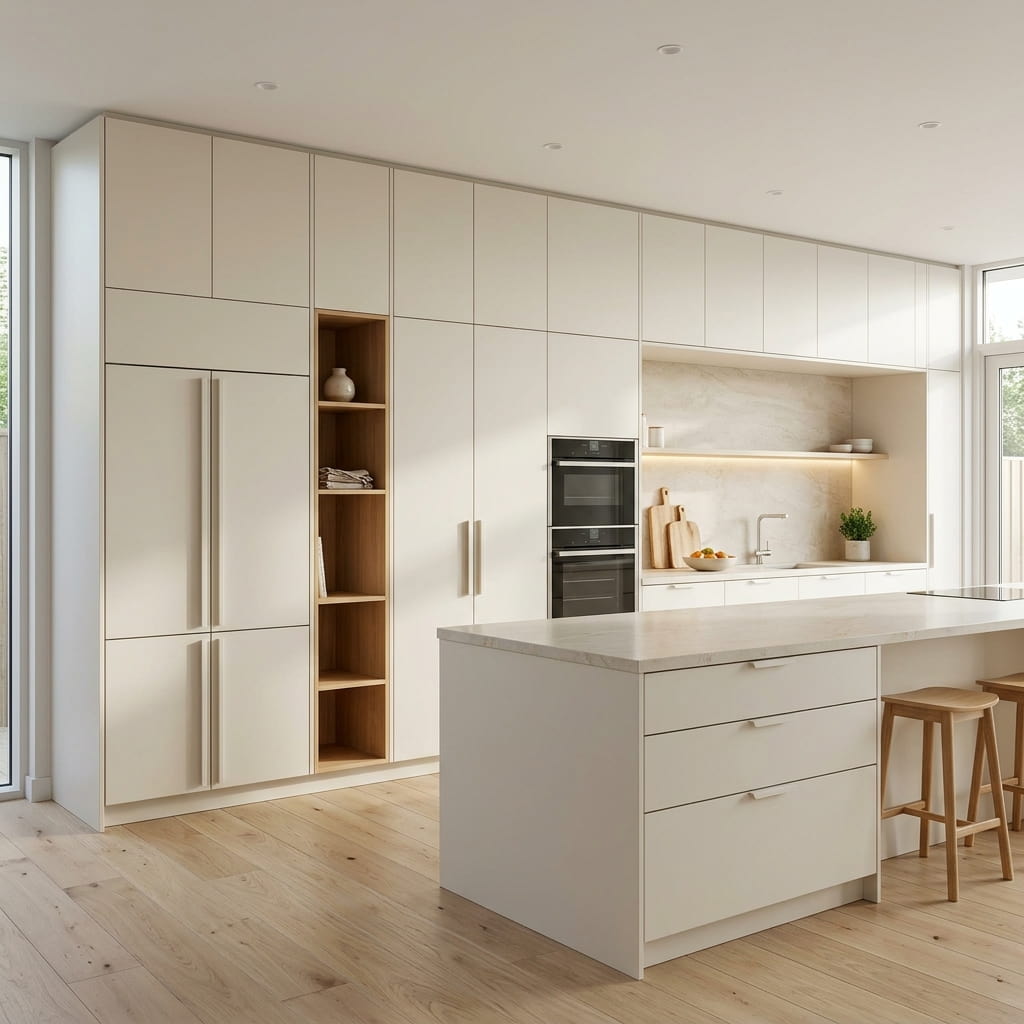
Floor-to-ceiling cabinets make excellent use of vertical space. Instead of leaving a large gap above the upper cabinets, this design extends storage closer to the ceiling.
It is particularly useful in smaller kitchens where every inch matters, as well as larger kitchens that need dedicated storage for appliances, cookware, and pantry items.
What you can store:
- Everyday dishes and glasses.
- Dry food and pantry supplies.
- Small kitchen appliances.
- Serving platters and seasonal items.
Frequently used items should remain on lower, easily accessible shelves. Higher cabinets are better suited to things you use occasionally.
Planning tip: Include pull-out shelves or internal drawers in tall cabinets. They make stored items easier to reach and reduce the need to search through deep spaces.
For safety, use a stable step stool when accessing high shelves rather than climbing on countertops.
7. Glass-Front Cabinets for a Light and Open Feel
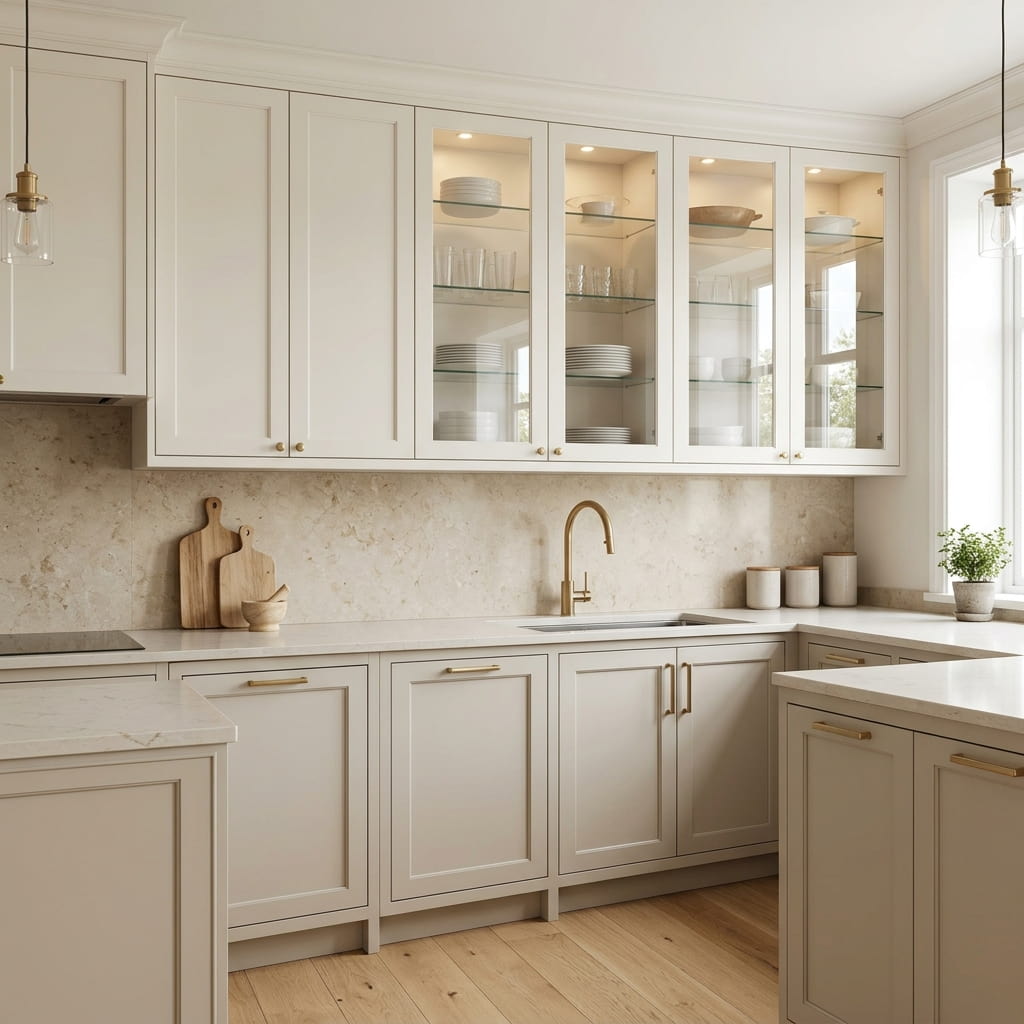
Glass-front cabinets offer an attractive alternative to solid cabinet doors. They allow selected items to remain visible while helping the kitchen feel less visually crowded.
This style is especially useful in kitchens with dark cabinetry, where glass panels can introduce contrast and a lighter appearance.
Popular glass cabinet options:
- Clear glass for displaying attractive dishes.
- Frosted glass for partially concealing stored items.
- Ribbed glass for texture and visual interest.
- Smoked glass for a darker, more contemporary look.
Glass-front cabinets work best when their contents are organized. Matching glasses, coordinated dinnerware, and simple decorative pieces create a cleaner appearance.
Practical tip: Use glass doors on a small section of cabinetry rather than throughout the entire kitchen. This gives you the decorative benefit without making every shelf visible.
8. Matte Black Cabinets for a Bold Statement
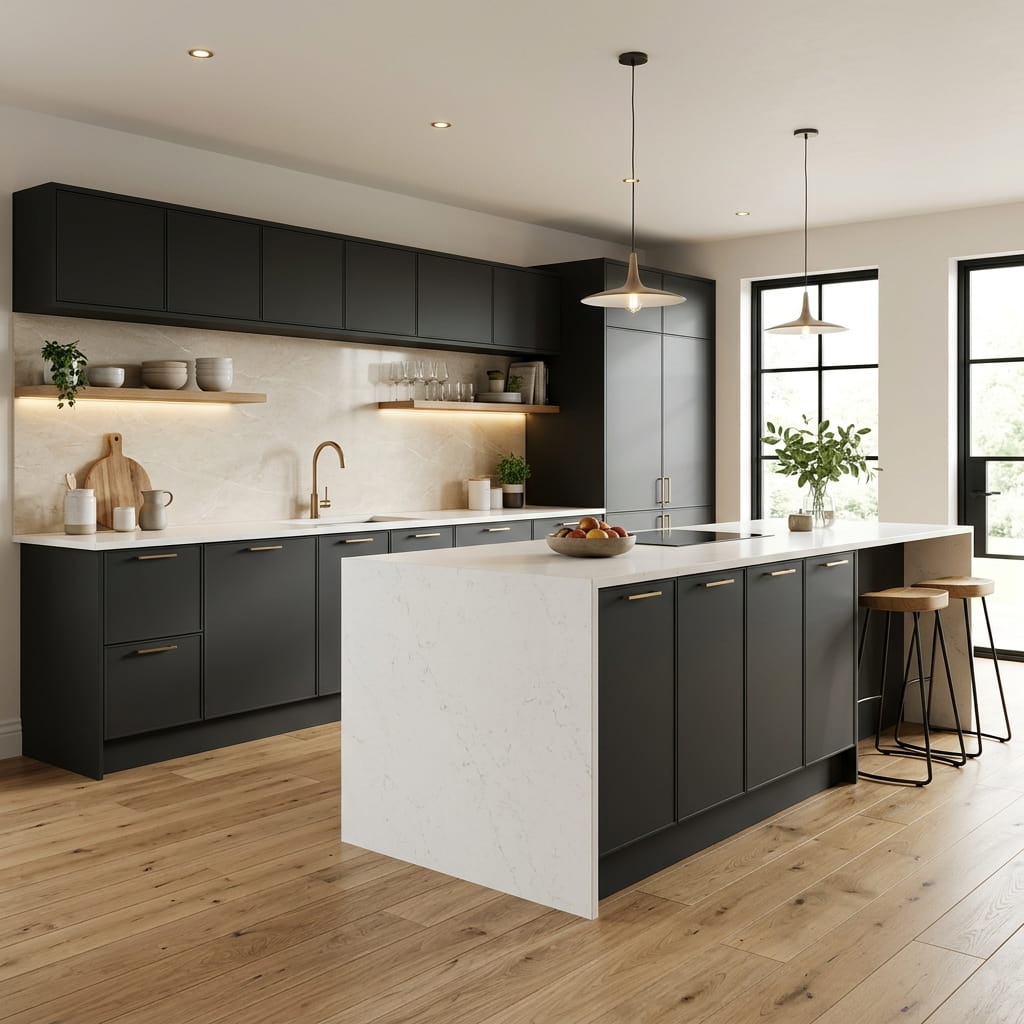
Matte black kitchen cabinets create a dramatic, contemporary appearance. They are particularly effective in kitchens with good natural lighting, contrasting countertops, and carefully selected accent materials.
Black cabinets can work in both small and large kitchens, but the surrounding finishes matter. In a darker room, too much black may make the space feel enclosed.
How to balance black cabinets:
- Pair them with white or light beige countertops.
- Add warm wooden shelves or flooring.
- Choose under-cabinet lighting to brighten work surfaces.
- Use brushed metal hardware for subtle contrast.
Matte finishes can reduce visible glare, although fingerprints and grease marks may still appear depending on the coating.
Design tip: If you’re unsure about using black throughout the kitchen, start with the island or lower cabinets and keep the upper cabinets lighter.
9. Open Shelving Combined With Closed Cabinets
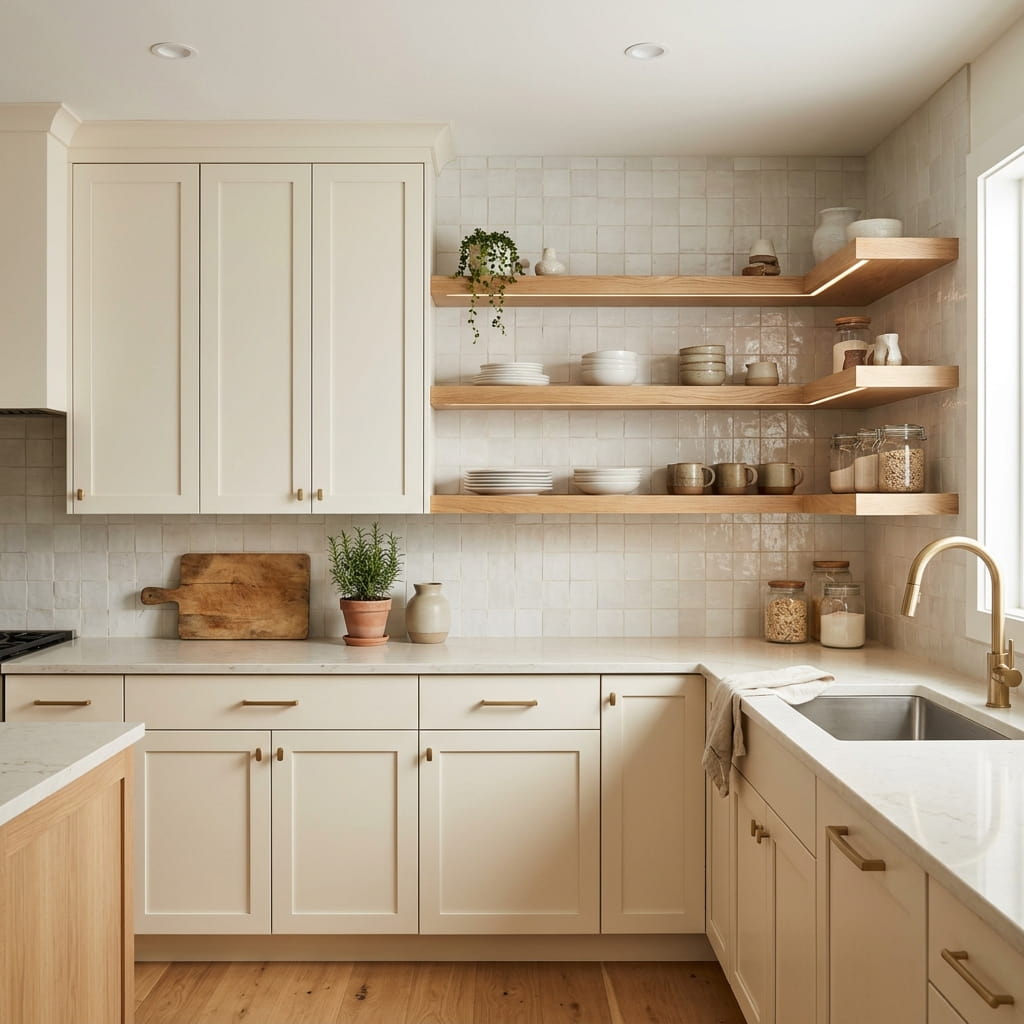
Open shelving provides quick access to everyday items and gives a kitchen a relaxed, personal feel. When combined with closed cabinets, it offers a useful balance between display space and hidden storage.
The key is to use open shelves selectively rather than replacing every cabinet with shelving.
A practical combination includes:
- Closed cabinets for cookware, food packages, and cleaning supplies.
- Open shelves for frequently used plates and cups.
- A decorative shelf for plants, cookbooks, or serving bowls.
This arrangement keeps most kitchen essentials protected from dust while allowing a few attractive items to remain visible.
Maintenance tip: Open shelves near the stove may collect grease more quickly. Place them away from heavy cooking areas whenever possible, and clean displayed items regularly.
For busy households, open shelving works best when it has a clear purpose rather than serving as extra space for miscellaneous objects.
10. Natural Oak Cabinets for a Bright, Airy Kitchen
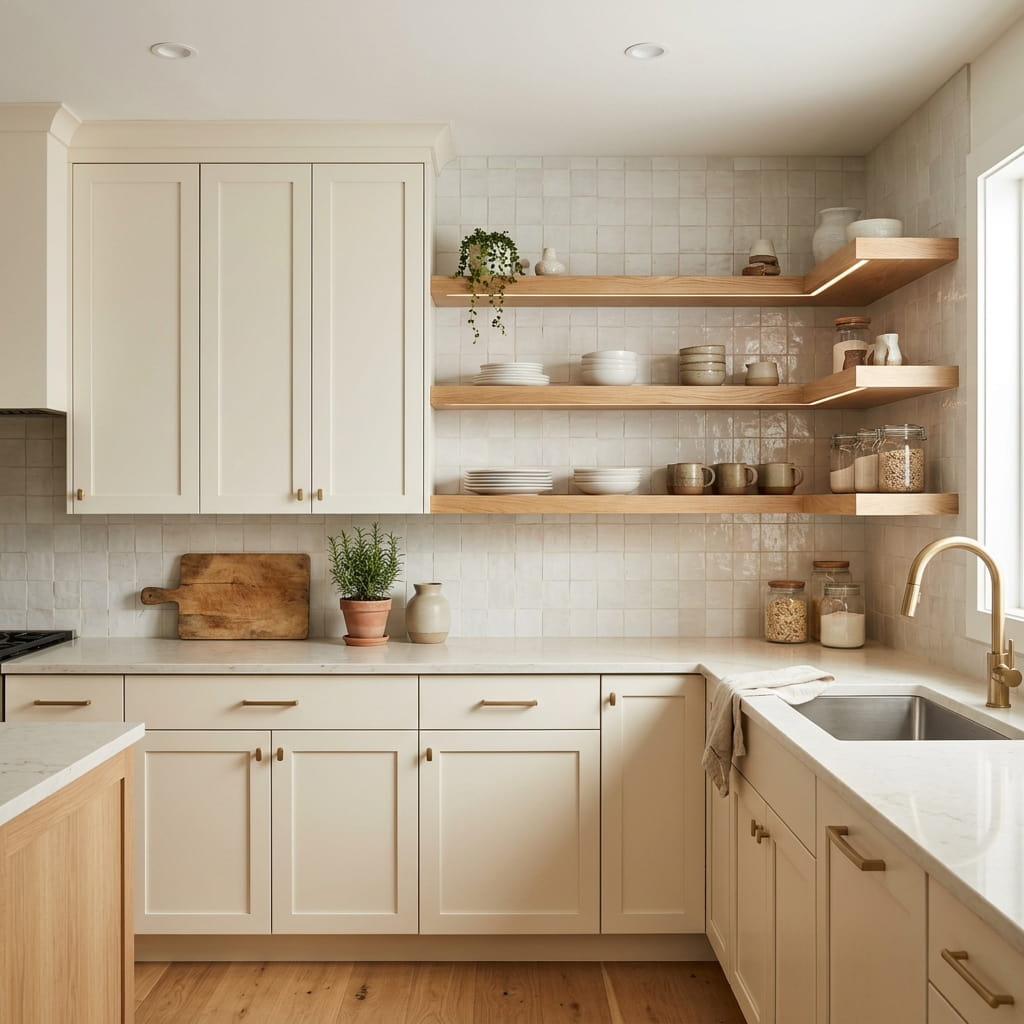
Natural oak cabinets are a strong option for creating a warm kitchen without making the room feel dark. Their distinctive grain adds detail, while lighter finishes help maintain an open and welcoming atmosphere.
Oak works well with neutral walls, stone-look countertops, ceramic backsplashes, and simple hardware.
Why oak cabinets are worth considering:
- They introduce natural texture.
- They complement many interior design styles.
- Light oak can work particularly well in smaller kitchens.
- Their appearance can remain relevant as surrounding décor changes.
You can choose a pale, Scandinavian-inspired finish or a deeper oak tone for a richer look.
Design tip: Avoid combining too many competing wood finishes. If your cabinets have a strong grain pattern, keep nearby wood furniture and flooring reasonably coordinated.
11. Deep Drawer Cabinets for Better Organization
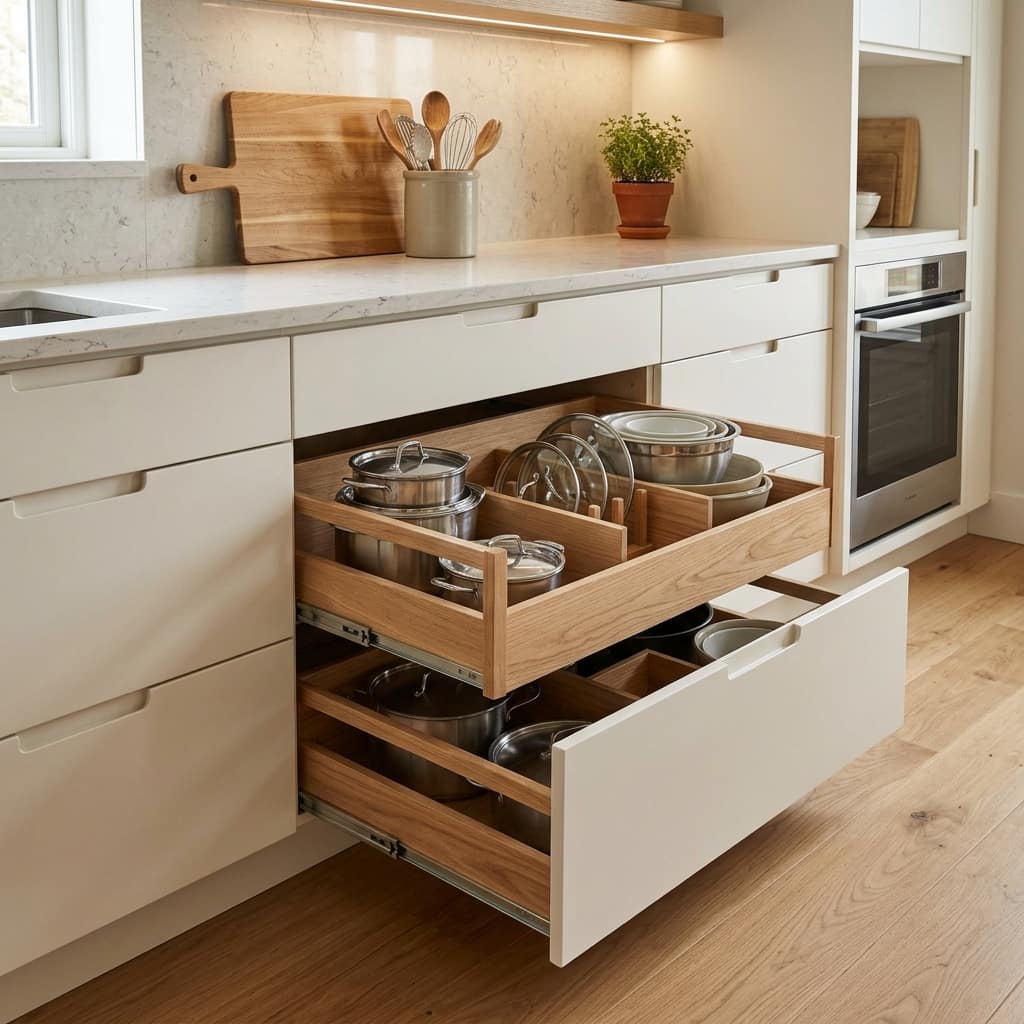
Traditional kitchen cabinets often require you to bend down and reach into deep spaces to find pots, pans, and containers. Deep drawers offer a more convenient alternative.
Instead of stacking everything inside a lower cabinet, you can pull out a drawer and see its contents more easily.
Ideal uses for deep drawers:
- Pots, pans, and lids.
- Mixing bowls and food containers.
- Plates and serving dishes.
- Small kitchen appliances.
Drawer dividers can help separate utensils, while adjustable organizers keep lids and cutting boards upright.
Important detail: Choose drawers with sturdy runners and a suitable weight capacity. Heavy cookware can place considerable stress on low-quality hardware.
For a kitchen that gets used every day, well-designed drawers can make a bigger difference to convenience than decorative cabinet features.
12. Navy Blue Cabinets for Classic Sophistication
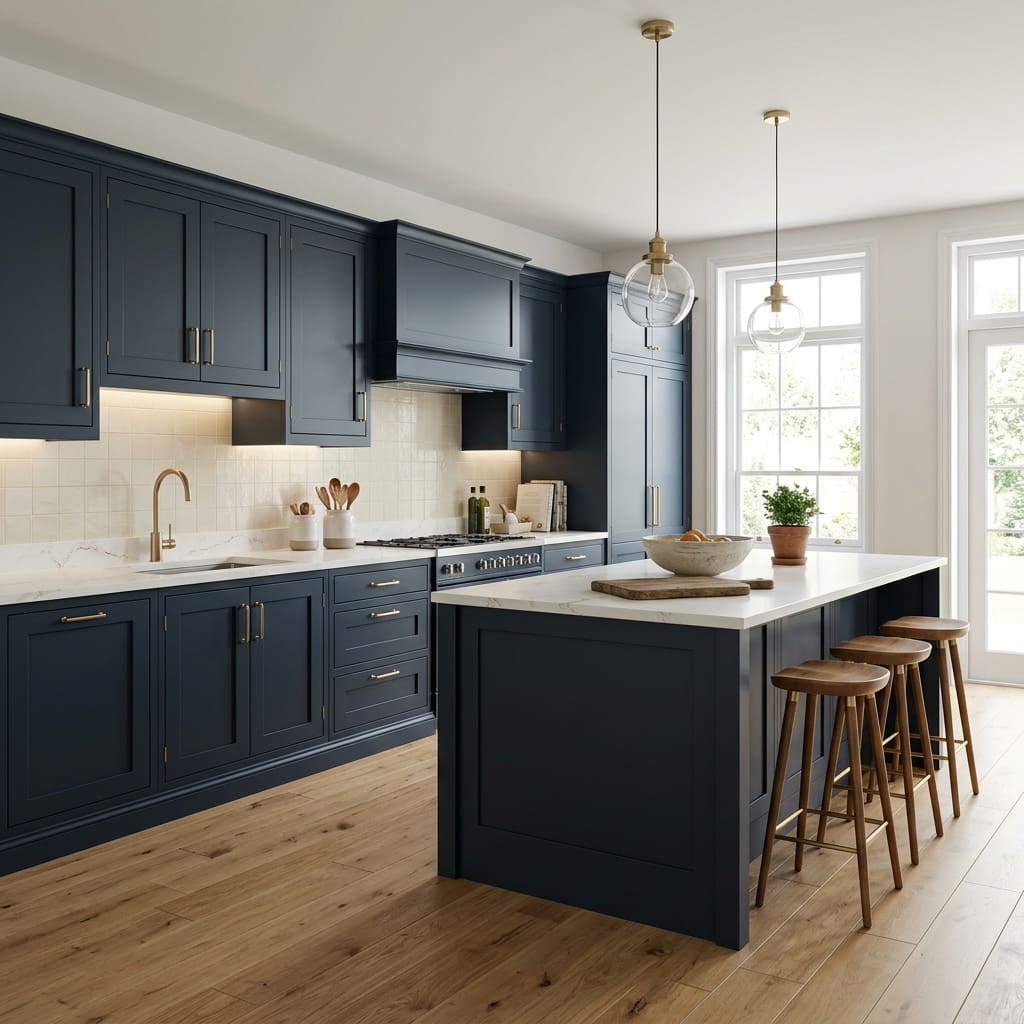
Navy blue cabinets offer a rich color that feels distinctive without being as dramatic as black. They work particularly well with white countertops, light flooring, brass hardware, and natural wood.
This color is suitable for homeowners who want more personality than a neutral kitchen provides.
Ways to incorporate navy blue:
- Use navy on the lower cabinets and white above.
- Make the island the main navy feature.
- Combine navy cabinets with a pale stone-look backsplash.
- Add warm metallic handles for a refined finish.
Navy is especially effective when the kitchen has enough lighting to show the color clearly.
Practical tip: Before committing to a dark blue finish, examine a sample in both daylight and evening lighting. This helps you understand how the shade will look throughout the day.
13. Minimalist Flat-Panel Cabinets for Modern Homes
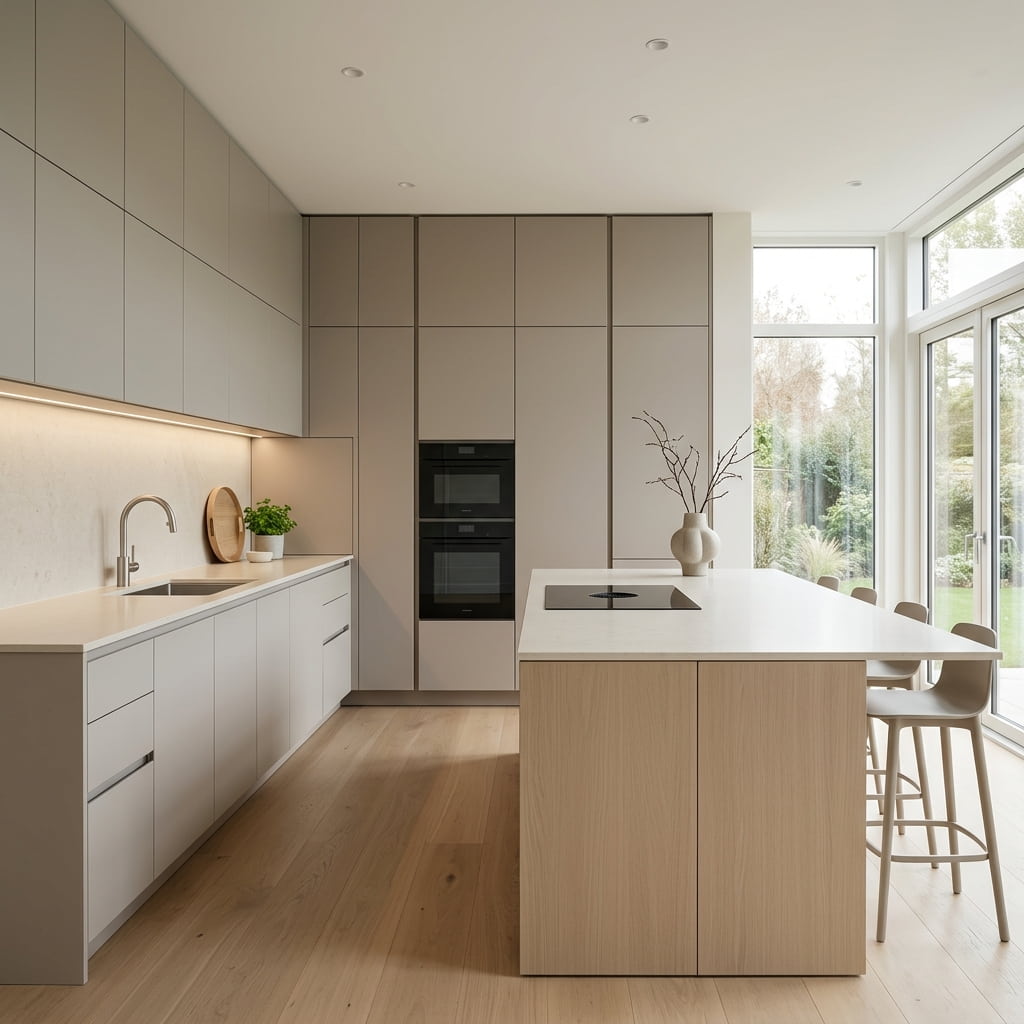
Flat-panel cabinets have smooth, uncomplicated fronts without raised borders or decorative frames. Their simple appearance makes them a natural fit for contemporary and minimalist kitchens.
They are available in painted finishes, wood veneers, laminates, and other cabinet materials.
Key advantages:
- Simple lines create a less cluttered appearance.
- Smooth fronts are generally straightforward to wipe clean.
- They pair well with modern appliances.
- They allow countertops and lighting to become stronger design features.
However, a minimalist kitchen still needs practical storage. Without suitable organizers, even attractive cabinets can become difficult to use.
Design tip: Combine flat-panel cabinets with warm lighting, subtle hardware, and one or two textured materials. This prevents the kitchen from feeling too plain or cold.
14. Textured Cabinets for Added Character
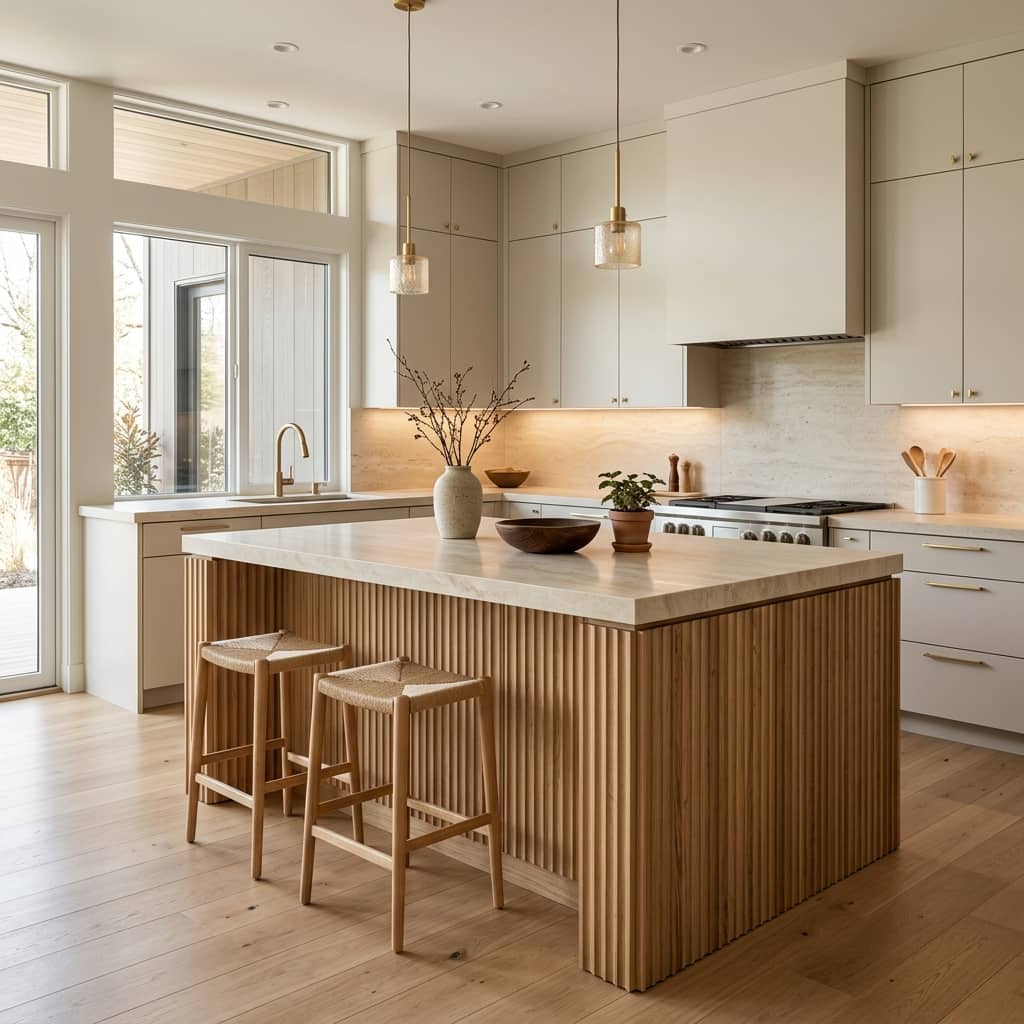
Textured cabinet fronts bring depth and detail to a kitchen without relying on bright colors or complicated patterns.
Options include fluted wood, ribbed surfaces, subtle grooves, and finishes that highlight natural material variations.
These designs are particularly effective on kitchen islands, where texture can create a focal point without overwhelming the entire room.
Popular ways to use texture:
- Fluted wood panels on the island.
- Ribbed cabinet fronts in a breakfast area.
- Wood-grain finishes paired with smooth painted cabinets.
- Subtle textured surfaces in neutral colors.
The main consideration is cleaning. Deep grooves may collect dust or grease, particularly around cooking areas.
Practical tip: Use highly textured finishes on selected cabinet sections and choose smoother surfaces where frequent cleaning is a priority.
15. Two-Tone Wood and White Cabinets for Everyday Versatility
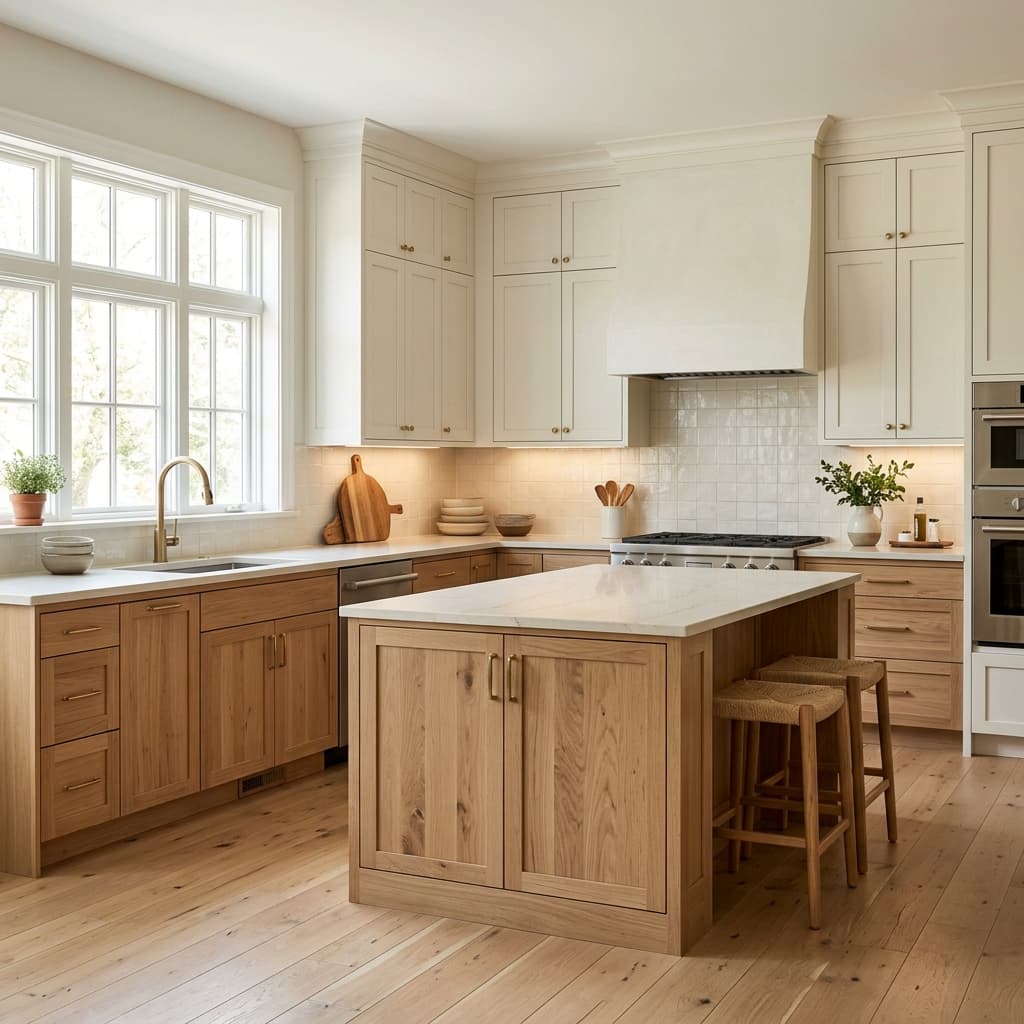
Combining white cabinets with natural wood is a practical way to create a bright kitchen that still feels warm.
White reflects light visually, while wood introduces texture and prevents the design from feeling too uniform. This combination suits many homes, from contemporary apartments to family kitchens.
Ideas to try:
- White upper cabinets with oak lower cabinets.
- A wooden island surrounded by white cabinetry.
- White cabinets with natural wood open shelves.
- Pale wood cabinets paired with warm white panels.
This approach also makes it easier to introduce other materials, including stone-look countertops, ceramic tiles, and metal fixtures.
Design tip: Choose wood tones that complement the floor rather than matching every wooden surface exactly. A little variation adds depth, while strongly conflicting undertones can make the room feel disconnected.
16. Smart Storage Cabinets for a More Functional Kitchen
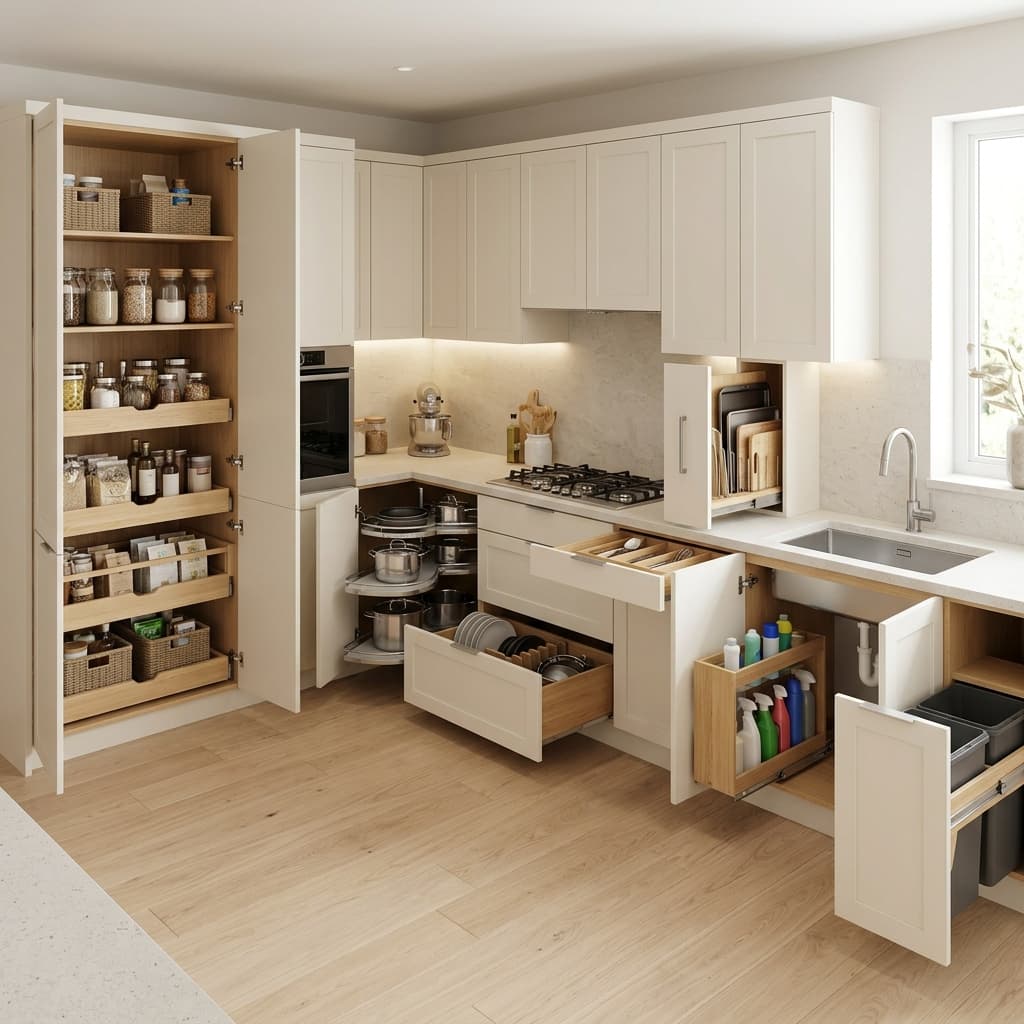
Smart storage cabinets focus on making everyday kitchen tasks easier. Their value comes from practical internal features rather than appearance alone.
Even a beautiful kitchen can feel frustrating if utensils are difficult to reach, food supplies are poorly organized, or cleaning products occupy valuable counter space.
Useful storage features include:
- Pull-out pantry shelves for dry food.
- Corner organizers for awkward cabinet spaces.
- Vertical dividers for baking trays and chopping boards.
- Built-in waste and recycling compartments.
- Under-sink organizers designed around plumbing.
- Drawer inserts for cutlery and cooking tools.
The most effective storage plan places items close to where they are used. Keep cooking utensils near the cooktop, dishes near the dishwasher, and frequently used ingredients near the preparation area.
Budget-friendly tip: You don’t always need new cabinets to improve storage. Adding drawer dividers, shelf inserts, and pull-out organizers to existing cabinets can make a noticeable difference at a lower cost.
How to Choose the Right Kitchen Cabinet Design for Your Home
With so many attractive options available, choosing the right cabinets can feel difficult. The best approach is to start with your kitchen’s size, layout, budget, and daily needs.
Consider these important factors before making a decision.
- Measure your kitchen carefully
Measure the walls, ceiling height, doorways, windows, and appliance spaces before ordering cabinets. Remember to account for doors and drawers that need enough room to open fully.
- Choose materials according to your budget
Solid wood, plywood-based construction, MDF, and laminate each have different costs and performance characteristics. The quality of the construction, finish, and installation matters as much as the material name.
- Think about cleaning and maintenance
Glossy surfaces may show fingerprints, while dark matte finishes can reveal dust or grease. Textured doors may require more detailed cleaning than smooth cabinet fronts.
Choose a finish that suits the amount of time you’re willing to spend on maintenance.
- Plan storage before choosing decorative details
Decide where cookware, dishes, pantry items, and appliances will go. Once your storage needs are clear, you can select cabinet styles that support the layout.
- Coordinate cabinets with other finishes
Your cabinets should work with the countertop, flooring, backsplash, wall color, and lighting. Collect samples and compare them together before making a final decision.
Kitchen Cabinet Design Mistakes to Avoid
A few common mistakes can reduce the comfort and usefulness of even an expensive kitchen renovation.
Watch out for the following:
- Choosing appearance over function: Attractive cabinets won’t solve storage problems if the layout is poorly planned.
- Ignoring lighting: Dark cabinets can make a poorly lit kitchen feel smaller.
- Using too many finishes: Too many colors, textures, and hardware styles can make the room look disorganized.
- Forgetting hardware quality: Cheap hinges and drawer runners may wear out quickly under daily use.
- Leaving storage gaps: Awkward spaces between cabinets can collect dust and waste valuable room.
- Skipping measurements: Incorrect dimensions can lead to expensive adjustments during installation.
A well-planned kitchen should look attractive while making everyday activities easier.
Conclusion
The best kitchen cabinet designs combine lasting style with practical storage and easy maintenance. Whether you prefer warm oak, timeless Shaker doors, elegant navy finishes, or minimalist flat-panel cabinets, the right choice depends on your home’s layout and the way you use your kitchen.
These 16 kitchen cabinet designs offer inspiration for different budgets, room sizes, and decorating preferences. You don’t need to follow every trend or replace everything to create a noticeable improvement.
Start by identifying your biggest needs. If storage is the problem, focus on deep drawers and smart organizers. If the kitchen feels outdated, consider new cabinet colors, updated hardware, or a combination of wood and painted finishes.
More Stories
22 Modern Luxury Bathroom Designs for a Spa Feel